


884 Results
Form:
books
books
Title:
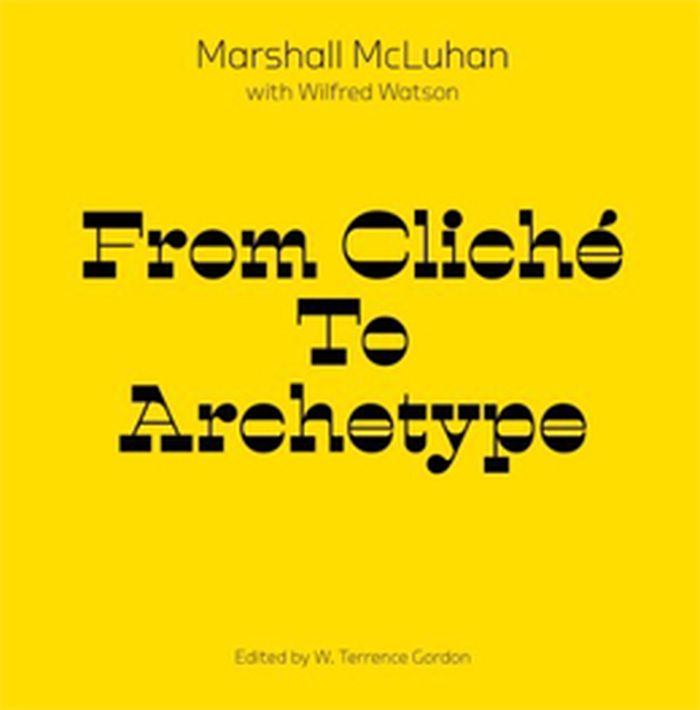
From cliché to archetype
From cliché to archetype
Actions:
Price:
$27.95
(available to order)
Summary:
In this publication, readers learn how to look at stale clichés with fresh eyes, as artists do, and discover that clichés provide the key to understanding Modernism, from the puns of James Joyce to Ionesco’s Theater of the Absurd. McLuhan mines the greats of modern literature, such as Yeats, Eliot, and Pound, and points the way to richer understanding of their work.(...)
$27.95
(available to order)
Summary:
In this publication, readers learn how to look at stale clichés with fresh eyes, as artists do, and discover that clichés provide the key to understanding Modernism, from the puns of James Joyce to Ionesco’s Theater of the Absurd. McLuhan mines the greats of modern literature, such as Yeats, Eliot, and Pound, and points the way to richer understanding of their work.(...)
Title:
From cliché to archetype
Actions:
Price:
$27.95
(available to order)
Summary:
In this publication, readers learn how to look at stale clichés with fresh eyes, as artists do, and discover that clichés provide the key to understanding Modernism, from the puns of James Joyce to Ionesco’s Theater of the Absurd. McLuhan mines the greats of modern literature, such as Yeats, Eliot, and Pound, and points the way to richer understanding of their work. Discussion ranges over conventional topics of literary analysis such as genres, esthetics, rhetoric, paradox, mimesis, and parody, though never in conventional fashion, because McLuhan deliberately stakes his turf in a manner that draws technology and culture together. As a result, the key terms cliché and archetype are not confined to language but are shown to have counterparts in the non-linguistic world.
From cliché to archetype
Actions:
Price:
$27.95
(available to order)
Summary:
In this publication, readers learn how to look at stale clichés with fresh eyes, as artists do, and discover that clichés provide the key to understanding Modernism, from the puns of James Joyce to Ionesco’s Theater of the Absurd. McLuhan mines the greats of modern literature, such as Yeats, Eliot, and Pound, and points the way to richer understanding of their work. Discussion ranges over conventional topics of literary analysis such as genres, esthetics, rhetoric, paradox, mimesis, and parody, though never in conventional fashion, because McLuhan deliberately stakes his turf in a manner that draws technology and culture together. As a result, the key terms cliché and archetype are not confined to language but are shown to have counterparts in the non-linguistic world.
Form:
books
books
Publication:
January 2012
January 2012
Subject:
Critical Theory
Critical Theory
Form:
books
books
Title:
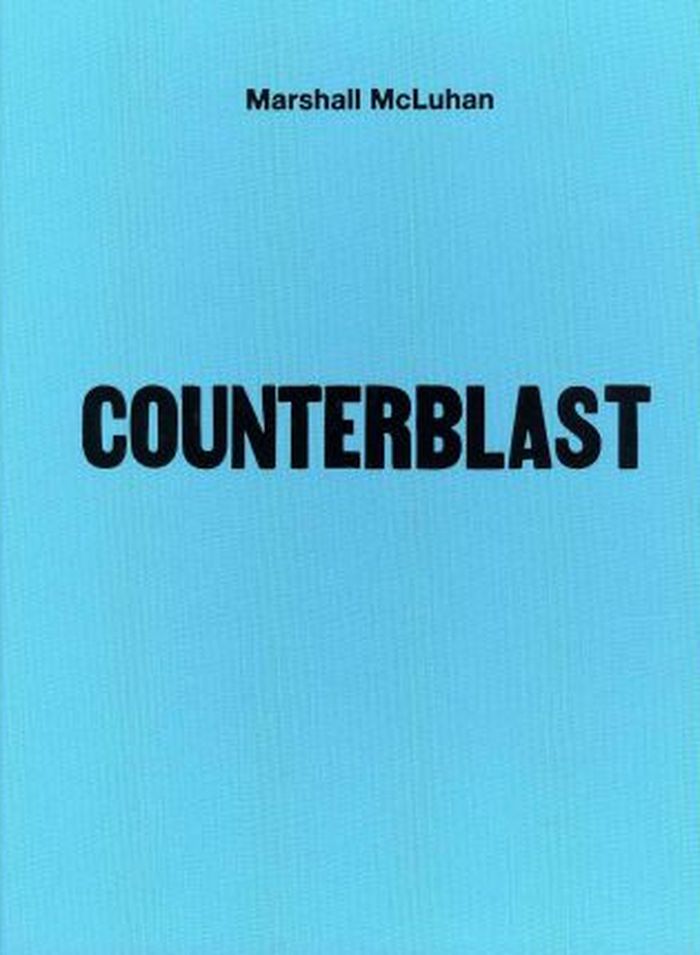
Counterblast, 1954 edition
Counterblast, 1954 edition
Actions:
Price:
$24.95
(available to order)
Summary:
In the same year that Wyndham Lewis published Self Condemned, Marshall McLuhan took inspiration from Lewis’s journal Blast and produced Counterblast, intended, like Self Condemned, to shake the city of Toronto out of its smugness, complacency, and spiritual torpor. This publication spirals beyond its inspiration, pinpointing the paradox of creative and destructive(...)
$24.95
(available to order)
Summary:
In the same year that Wyndham Lewis published Self Condemned, Marshall McLuhan took inspiration from Lewis’s journal Blast and produced Counterblast, intended, like Self Condemned, to shake the city of Toronto out of its smugness, complacency, and spiritual torpor. This publication spirals beyond its inspiration, pinpointing the paradox of creative and destructive(...)
Title:
Counterblast, 1954 edition
Actions:
Price:
$24.95
(available to order)
Summary:
In the same year that Wyndham Lewis published Self Condemned, Marshall McLuhan took inspiration from Lewis’s journal Blast and produced Counterblast, intended, like Self Condemned, to shake the city of Toronto out of its smugness, complacency, and spiritual torpor. This publication spirals beyond its inspiration, pinpointing the paradox of creative and destructive changes issuing from the same social forces, as Lewis had noted, but at the same time revealing the origins of McLuhan’s cultural probes, the basis of the model for media analysis that would find full expression in his writings through more than thirty years following the appearance of Counterblast.
Counterblast, 1954 edition
Actions:
Price:
$24.95
(available to order)
Summary:
In the same year that Wyndham Lewis published Self Condemned, Marshall McLuhan took inspiration from Lewis’s journal Blast and produced Counterblast, intended, like Self Condemned, to shake the city of Toronto out of its smugness, complacency, and spiritual torpor. This publication spirals beyond its inspiration, pinpointing the paradox of creative and destructive changes issuing from the same social forces, as Lewis had noted, but at the same time revealing the origins of McLuhan’s cultural probes, the basis of the model for media analysis that would find full expression in his writings through more than thirty years following the appearance of Counterblast.
Form:
books
books
Publication:
January 2010
January 2010
Subject:
Critical Theory
Critical Theory
Form:
books
books
Actions:
Price:
$27.95
(available to order)
Summary:
Drawing on more than twenty-five years' research, Hugill maps the 'pataphysical presence (partly conscious and acknowledged but largely unconscious and unacknowledged) in literature, theater, music, the visual arts, and the culture at large, and even detects 'pataphysical influence in the social sciences and the sciences. He offers many substantial excerpts from primary(...)
$27.95
(available to order)
Summary:
Drawing on more than twenty-five years' research, Hugill maps the 'pataphysical presence (partly conscious and acknowledged but largely unconscious and unacknowledged) in literature, theater, music, the visual arts, and the culture at large, and even detects 'pataphysical influence in the social sciences and the sciences. He offers many substantial excerpts from primary(...)
Title:
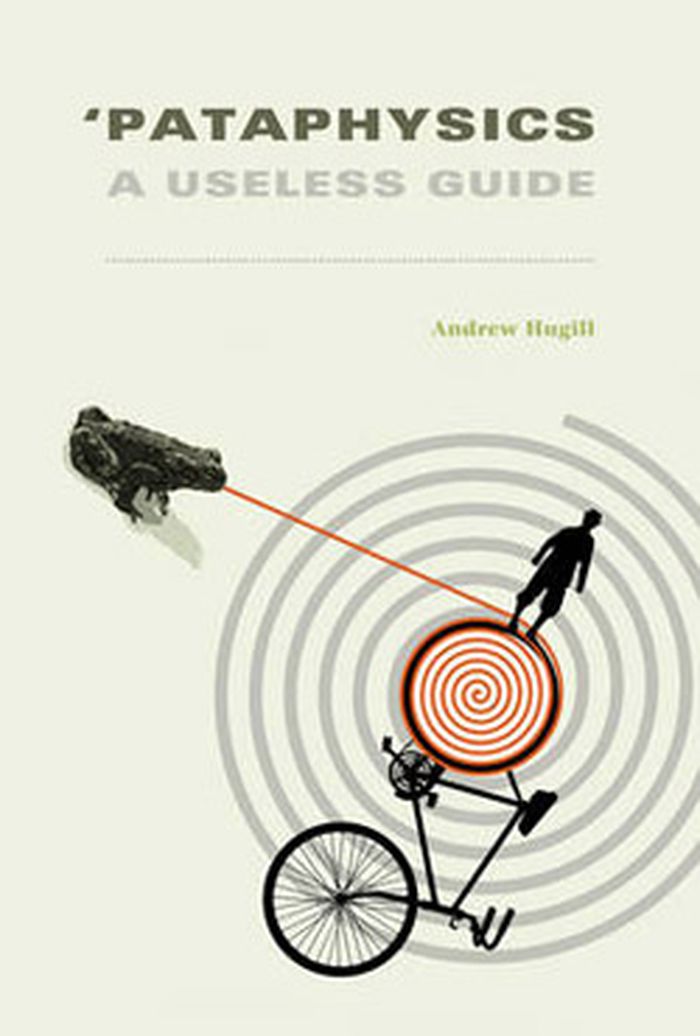
'Pataphysics: a useless guide
Actions:
Price:
$27.95
(available to order)
Summary:
Drawing on more than twenty-five years' research, Hugill maps the 'pataphysical presence (partly conscious and acknowledged but largely unconscious and unacknowledged) in literature, theater, music, the visual arts, and the culture at large, and even detects 'pataphysical influence in the social sciences and the sciences. He offers many substantial excerpts from primary sources, intercalated with a thorough explication of key themes and events of 'pataphysical history. This publication looks specifically at the work of Jean Baudrillard, Georges Perec, Italo Calvino, J. G. Ballard, Asger Jorn, Gilles Deleuze, Roger Shattuck, Jacques Pr vert, Antonin Artaud, Ren Clair, the Marx Brothers, Joan Mir, Max Ernst, Marcel Duchamp, James Joyce, Flann O'Brien, Raymond Roussel, Jean-Pierre Brisset, and many others.
'Pataphysics: a useless guide
Actions:
Price:
$27.95
(available to order)
Summary:
Drawing on more than twenty-five years' research, Hugill maps the 'pataphysical presence (partly conscious and acknowledged but largely unconscious and unacknowledged) in literature, theater, music, the visual arts, and the culture at large, and even detects 'pataphysical influence in the social sciences and the sciences. He offers many substantial excerpts from primary sources, intercalated with a thorough explication of key themes and events of 'pataphysical history. This publication looks specifically at the work of Jean Baudrillard, Georges Perec, Italo Calvino, J. G. Ballard, Asger Jorn, Gilles Deleuze, Roger Shattuck, Jacques Pr vert, Antonin Artaud, Ren Clair, the Marx Brothers, Joan Mir, Max Ernst, Marcel Duchamp, James Joyce, Flann O'Brien, Raymond Roussel, Jean-Pierre Brisset, and many others.
Form:
books
books
Publication:
September 2012
September 2012
Subject:
Critical Theory
Critical Theory
Form:
books
books
Price:
$37.00
(available to order)
Summary:
ACrazy Job - Leading Publishers in Conversation with Juan Cruz Ruiz inaugurates a new collection by Ivorypress entitled Essential Ivorypress. In this book, the Spanish journalist Juan Cruz Ruiz interviews publishers from all over the world about their careers and about the future of books and the profession of publisher in a key moment for the publishing industry. Among(...)
$37.00
(available to order)
Summary:
ACrazy Job - Leading Publishers in Conversation with Juan Cruz Ruiz inaugurates a new collection by Ivorypress entitled Essential Ivorypress. In this book, the Spanish journalist Juan Cruz Ruiz interviews publishers from all over the world about their careers and about the future of books and the profession of publisher in a key moment for the publishing industry. Among(...)
Title:
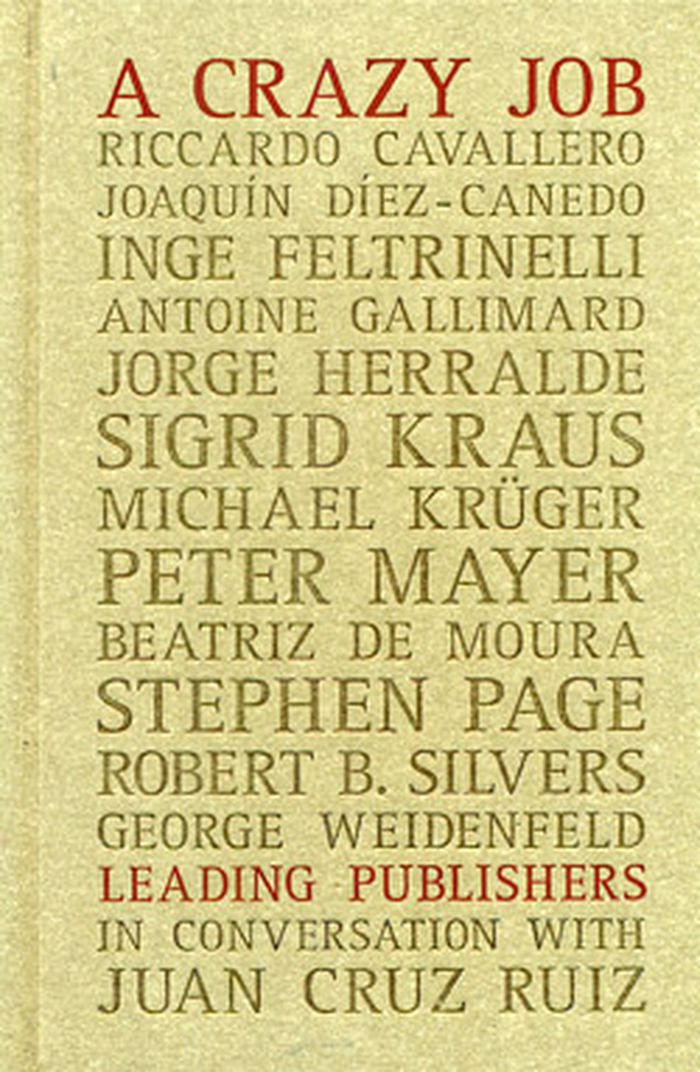
A crazy job : leading publishers in conversation with Juan Cruz Ruiz
Actions:
Price:
$37.00
(available to order)
Summary:
ACrazy Job - Leading Publishers in Conversation with Juan Cruz Ruiz inaugurates a new collection by Ivorypress entitled Essential Ivorypress. In this book, the Spanish journalist Juan Cruz Ruiz interviews publishers from all over the world about their careers and about the future of books and the profession of publisher in a key moment for the publishing industry. Among those interviewed are: Riccardo Cavallero(Mondadori), Joaquín Díez-Canedo (Fondo de Cultura Económico), Inge Feltrinelli (Feltrinelli)and Antoine Gallimard (Éditions Gallimard).
A crazy job : leading publishers in conversation with Juan Cruz Ruiz
Actions:
Price:
$37.00
(available to order)
Summary:
ACrazy Job - Leading Publishers in Conversation with Juan Cruz Ruiz inaugurates a new collection by Ivorypress entitled Essential Ivorypress. In this book, the Spanish journalist Juan Cruz Ruiz interviews publishers from all over the world about their careers and about the future of books and the profession of publisher in a key moment for the publishing industry. Among those interviewed are: Riccardo Cavallero(Mondadori), Joaquín Díez-Canedo (Fondo de Cultura Económico), Inge Feltrinelli (Feltrinelli)and Antoine Gallimard (Éditions Gallimard).
Form:
books
books
Publication:
July 2012
July 2012
Subject:
Critical Theory
Critical Theory
Form:
books
books
Title:
The ecstasy of communication
The ecstasy of communication
Actions:
Price:
$16.95
(available to order)
Summary:
First published in France in 1987, The Ecstasy of Communication was Baudrillard’s summarization of his work for a postdoctoral degree at the Sorbonne : a dense, poetically crystalline essay that boiled down two decades of radical, provocative theory into an aphoristically eloquent swan song to twentieth-century alienation. Baudrillard’s quixotic effort to be recognized by(...)
$16.95
(available to order)
Summary:
First published in France in 1987, The Ecstasy of Communication was Baudrillard’s summarization of his work for a postdoctoral degree at the Sorbonne : a dense, poetically crystalline essay that boiled down two decades of radical, provocative theory into an aphoristically eloquent swan song to twentieth-century alienation. Baudrillard’s quixotic effort to be recognized by(...)
Title:
The ecstasy of communication
Actions:
Price:
$16.95
(available to order)
Summary:
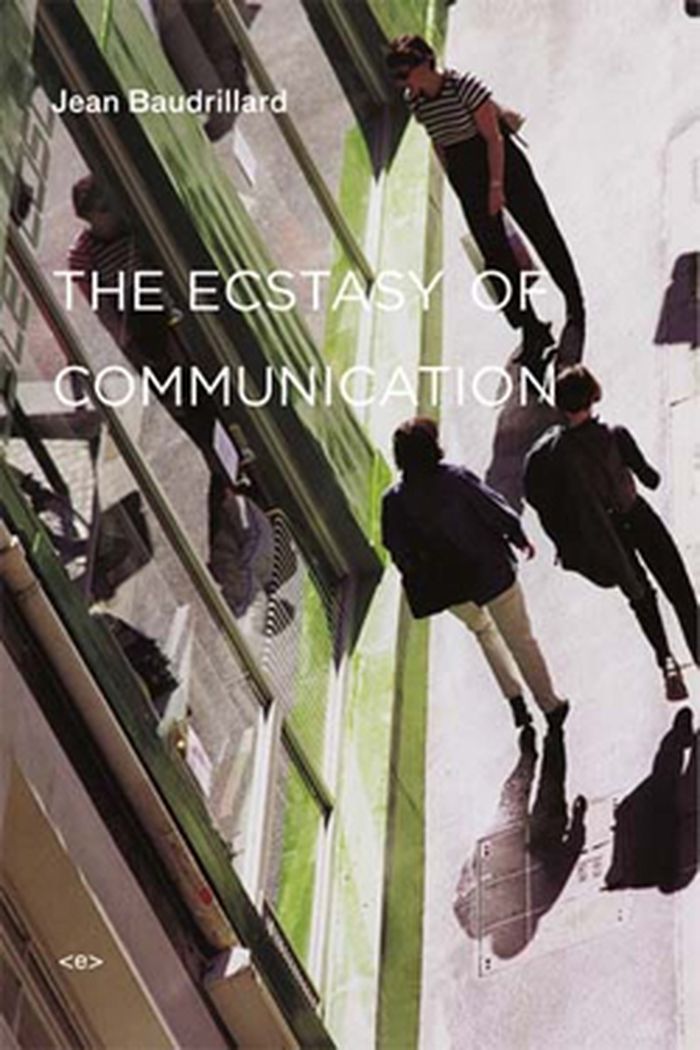
First published in France in 1987, The Ecstasy of Communication was Baudrillard’s summarization of his work for a postdoctoral degree at the Sorbonne : a dense, poetically crystalline essay that boiled down two decades of radical, provocative theory into an aphoristically eloquent swan song to twentieth-century alienation. Baudrillard’s quixotic effort to be recognized by the French intellectual establishment may have been doomed to failure, but this text immediately became a pinnacle to his work, a mid-career assessment that looked both forward and back. By carefully distilling the most radical elements of his previous books, Baudrillard constructed the skeleton key to all of the work that was to come in the second half of his career, and set the scene for what he termed the “obscene”: a world in which alienation has been succeeded by ceaseless communication and information. The Ecstasy of Communication is a decisive, compact description of what it means to be “wired” in our braver-than-brave new world, where sexuality has been superseded by pornography, knowledge by information, hysteria by schizophrenia, subject by object, and violence by terror. The Ecstasy of Communication is an anti-manifesto that confronted and dispensed with such influences as Marshall McLuhan, Guy Debord, and Georges Bataille. It is an essential crib-book, lexicon, and companion piece to any and all of Baudrillard’s books. Twenty-five years after its original publication, it remains not only a prescient portrait of our contemporary condition, but also a dark mirror into which we have not yet dared to look.
The ecstasy of communication
Actions:
Price:
$16.95
(available to order)
Summary:
First published in France in 1987, The Ecstasy of Communication was Baudrillard’s summarization of his work for a postdoctoral degree at the Sorbonne : a dense, poetically crystalline essay that boiled down two decades of radical, provocative theory into an aphoristically eloquent swan song to twentieth-century alienation. Baudrillard’s quixotic effort to be recognized by the French intellectual establishment may have been doomed to failure, but this text immediately became a pinnacle to his work, a mid-career assessment that looked both forward and back. By carefully distilling the most radical elements of his previous books, Baudrillard constructed the skeleton key to all of the work that was to come in the second half of his career, and set the scene for what he termed the “obscene”: a world in which alienation has been succeeded by ceaseless communication and information. The Ecstasy of Communication is a decisive, compact description of what it means to be “wired” in our braver-than-brave new world, where sexuality has been superseded by pornography, knowledge by information, hysteria by schizophrenia, subject by object, and violence by terror. The Ecstasy of Communication is an anti-manifesto that confronted and dispensed with such influences as Marshall McLuhan, Guy Debord, and Georges Bataille. It is an essential crib-book, lexicon, and companion piece to any and all of Baudrillard’s books. Twenty-five years after its original publication, it remains not only a prescient portrait of our contemporary condition, but also a dark mirror into which we have not yet dared to look.
Form:
books
books
Publication:
November 2012
November 2012
Subject:
Critical Theory
Critical Theory
Form:
books
books
Title:
Lost dimension
Lost dimension
Actions:
Price:
$17.95
(available to order)
Summary:
To read these five essays of 1983 is to begin to come to terms with the theoretical cataclysm of the present. In Lost Dimension, Paul Virilio considers the displacement of the concept of dimensional space by Einsteinian space/time as it is related to the transparent boundaries of the postmodern city and contemporary economy. Virilio imagines a coming world of interactive,(...)
$17.95
(available to order)
Summary:
To read these five essays of 1983 is to begin to come to terms with the theoretical cataclysm of the present. In Lost Dimension, Paul Virilio considers the displacement of the concept of dimensional space by Einsteinian space/time as it is related to the transparent boundaries of the postmodern city and contemporary economy. Virilio imagines a coming world of interactive,(...)
Title:
Lost dimension
Actions:
Price:
$17.95
(available to order)
Summary:
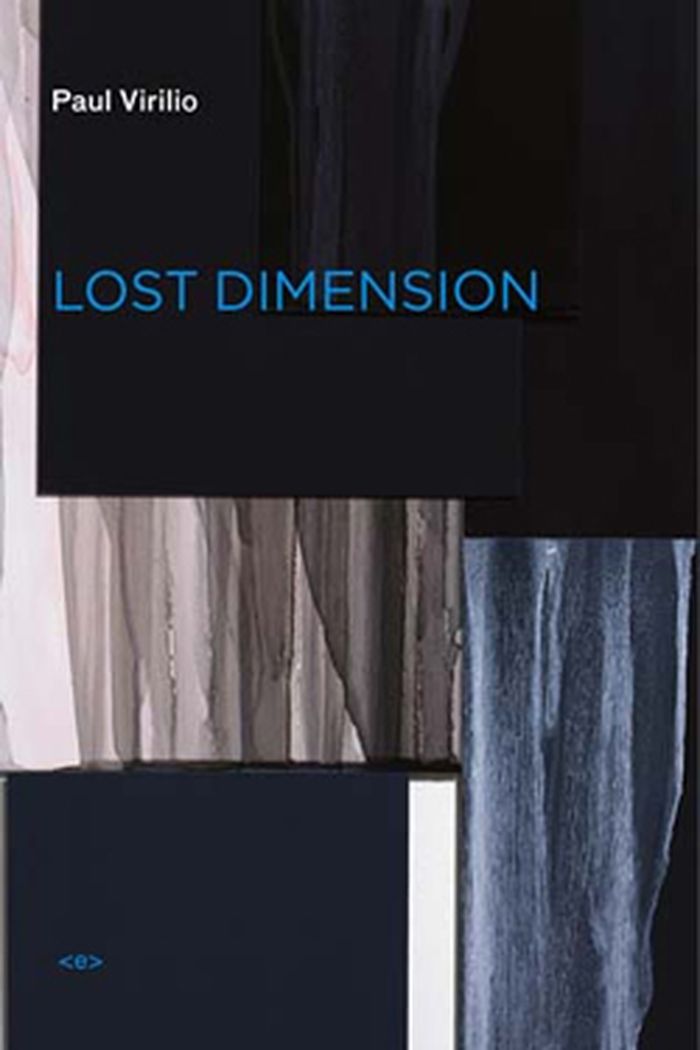
To read these five essays of 1983 is to begin to come to terms with the theoretical cataclysm of the present. In Lost Dimension, Paul Virilio considers the displacement of the concept of dimensional space by Einsteinian space/time as it is related to the transparent boundaries of the postmodern city and contemporary economy. Virilio imagines a coming world of interactive, informational networks offering a prison-house of illusionary transcendence. He pictures global terrorism (perpetrated by and against technological states) filling up the surreal void of an abandoned real. In a multidisciplinary excavation of contemporary physics, architecture, esthetic theory, and sociology, Virilio traces the dystopic unity of the contemporary Western predicament with lightning prescience and clarity.
Lost dimension
Actions:
Price:
$17.95
(available to order)
Summary:
To read these five essays of 1983 is to begin to come to terms with the theoretical cataclysm of the present. In Lost Dimension, Paul Virilio considers the displacement of the concept of dimensional space by Einsteinian space/time as it is related to the transparent boundaries of the postmodern city and contemporary economy. Virilio imagines a coming world of interactive, informational networks offering a prison-house of illusionary transcendence. He pictures global terrorism (perpetrated by and against technological states) filling up the surreal void of an abandoned real. In a multidisciplinary excavation of contemporary physics, architecture, esthetic theory, and sociology, Virilio traces the dystopic unity of the contemporary Western predicament with lightning prescience and clarity.
Form:
books
books
Publication:
November 2012
November 2012
Subject:
Critical Theory
Critical Theory
Form:
books
books

Price:
$18.95
(available to order)
Summary:
Why is it so hard to make up our minds? Adam and Eve set the template : do we or don’t we eat the apple? They chose, half-heartedly, and nothing was ever the same again. With this book, Kenneth Weisbrode offers an introduction to the age-old struggle with ambivalence. Ambivalence results from a basic desire to have it both ways. This is only natural - although(...)
$18.95
(available to order)
Summary:
Why is it so hard to make up our minds? Adam and Eve set the template : do we or don’t we eat the apple? They chose, half-heartedly, and nothing was ever the same again. With this book, Kenneth Weisbrode offers an introduction to the age-old struggle with ambivalence. Ambivalence results from a basic desire to have it both ways. This is only natural - although(...)
Title:
On ambivalence : the problems and pleasures of having it both ways
Actions:
Price:
$18.95
(available to order)
Summary:
Why is it so hard to make up our minds? Adam and Eve set the template : do we or don’t we eat the apple? They chose, half-heartedly, and nothing was ever the same again. With this book, Kenneth Weisbrode offers an introduction to the age-old struggle with ambivalence. Ambivalence results from a basic desire to have it both ways. This is only natural - although insisting upon it against all reason often results not in "both" but in the disappointing "neither." Ambivalence has insinuated itself into our culture as a kind of obligatory reflex, or default position, before practically every choice we make. It affects not only individuals; organizations, societies, and cultures can also be ambivalent. How often have we asked the scornful question, "Are we the Hamlet of nations"? How often have we demanded that our leaders appear decisive, judicious, and stalwart? And how eager have we been to censure them when they hesitate or waver? Weisbrode traces the concept of ambivalence, from the Garden of Eden to Freud and beyond. The Obama era, he says, may be America’s own era of ambivalence: neither red nor blue but a multicolored kaleidoscope. Ambivalence, he argues, need not be destructive. We must learn to distinguish it from its symptoms - selfishness, ambiguity, and indecision - and accept that frustration, guilt, and paralysis felt by individuals need not lead automatically to a collective pathology. Drawing upon examples from philosophy, history, literature, and the social sciences, On Ambivalence is a pocket-sized portrait of a complex human condition.
On ambivalence : the problems and pleasures of having it both ways
Actions:
Price:
$18.95
(available to order)
Summary:
Why is it so hard to make up our minds? Adam and Eve set the template : do we or don’t we eat the apple? They chose, half-heartedly, and nothing was ever the same again. With this book, Kenneth Weisbrode offers an introduction to the age-old struggle with ambivalence. Ambivalence results from a basic desire to have it both ways. This is only natural - although insisting upon it against all reason often results not in "both" but in the disappointing "neither." Ambivalence has insinuated itself into our culture as a kind of obligatory reflex, or default position, before practically every choice we make. It affects not only individuals; organizations, societies, and cultures can also be ambivalent. How often have we asked the scornful question, "Are we the Hamlet of nations"? How often have we demanded that our leaders appear decisive, judicious, and stalwart? And how eager have we been to censure them when they hesitate or waver? Weisbrode traces the concept of ambivalence, from the Garden of Eden to Freud and beyond. The Obama era, he says, may be America’s own era of ambivalence: neither red nor blue but a multicolored kaleidoscope. Ambivalence, he argues, need not be destructive. We must learn to distinguish it from its symptoms - selfishness, ambiguity, and indecision - and accept that frustration, guilt, and paralysis felt by individuals need not lead automatically to a collective pathology. Drawing upon examples from philosophy, history, literature, and the social sciences, On Ambivalence is a pocket-sized portrait of a complex human condition.
Form:
books
books
Publication:
January 2012
January 2012
Subject:
Critical Theory
Critical Theory
Form:
books
books
Actions:
Price:
$31.95
(available to order)
Summary:
The relationship of art to work and the conditions of artistic production has long engaged many in the field of visual art. Work is a broad concept, the meaning of which has changed radically as a result of the social and technological transformations that have taken place over the past century. What, then, is “work” today and what is its relation to art? What is the(...)
$31.95
(available to order)
Summary:
The relationship of art to work and the conditions of artistic production has long engaged many in the field of visual art. Work is a broad concept, the meaning of which has changed radically as a result of the social and technological transformations that have taken place over the past century. What, then, is “work” today and what is its relation to art? What is the(...)
Title:
Work, work, work: a reader on art and labour
Actions:
Price:
$31.95
(available to order)
Summary:
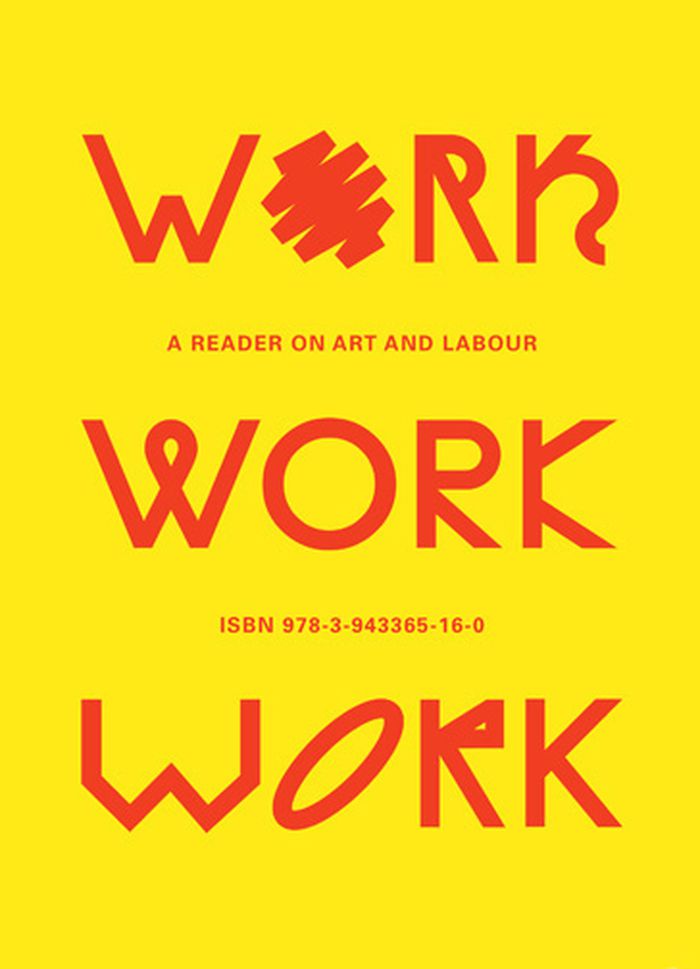
The relationship of art to work and the conditions of artistic production has long engaged many in the field of visual art. Work is a broad concept, the meaning of which has changed radically as a result of the social and technological transformations that have taken place over the past century. What, then, is “work” today and what is its relation to art? What is the position of the artist if “creativity” has become a commodity? How can the artist’s conditions of production be described, and what role can art and architecture play in societal change?
Work, work, work: a reader on art and labour
Actions:
Price:
$31.95
(available to order)
Summary:
The relationship of art to work and the conditions of artistic production has long engaged many in the field of visual art. Work is a broad concept, the meaning of which has changed radically as a result of the social and technological transformations that have taken place over the past century. What, then, is “work” today and what is its relation to art? What is the position of the artist if “creativity” has become a commodity? How can the artist’s conditions of production be described, and what role can art and architecture play in societal change?
Form:
books
books
Publication:
August 2012
August 2012
Subject:
Critical Theory
Critical Theory
Form:
books
books
Actions:
Price:
$19.95
(available to order)
$19.95
(available to order)
Title:
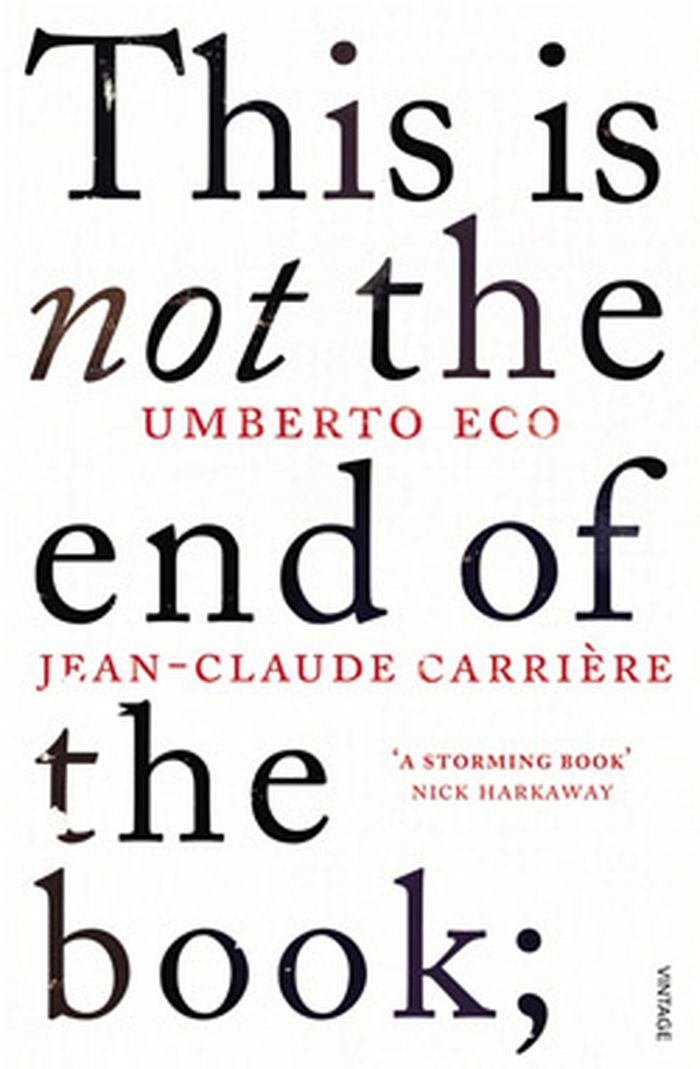
This is not the end of the book : a conversation curated byJean-Philippe de Tonnac
Actions:
Price:
$19.95
(available to order)
Summary:
This is not the end of the book : a conversation curated byJean-Philippe de Tonnac
Actions:
Price:
$19.95
(available to order)
Summary:
Form:
books
books
Publication:
September 2012
September 2012
Subject:
Critical Theory
Critical Theory
Form:
books
books
Actions:
Price:
$24.95
(available in store)
Summary:
From Occupy Wall Street activists and corporate adbusters to online hackers and guerilla street artists, the influence of the Situationist International (SI) is written large across our contemporary cultural landscape. Formed in 1957 asa merger of four European avant garde groups with backgrounds in Marxism and Lettrism, the SI would over the next decade introduce many(...)
$24.95
(available in store)
Summary:
From Occupy Wall Street activists and corporate adbusters to online hackers and guerilla street artists, the influence of the Situationist International (SI) is written large across our contemporary cultural landscape. Formed in 1957 asa merger of four European avant garde groups with backgrounds in Marxism and Lettrism, the SI would over the next decade introduce many(...)
Title:
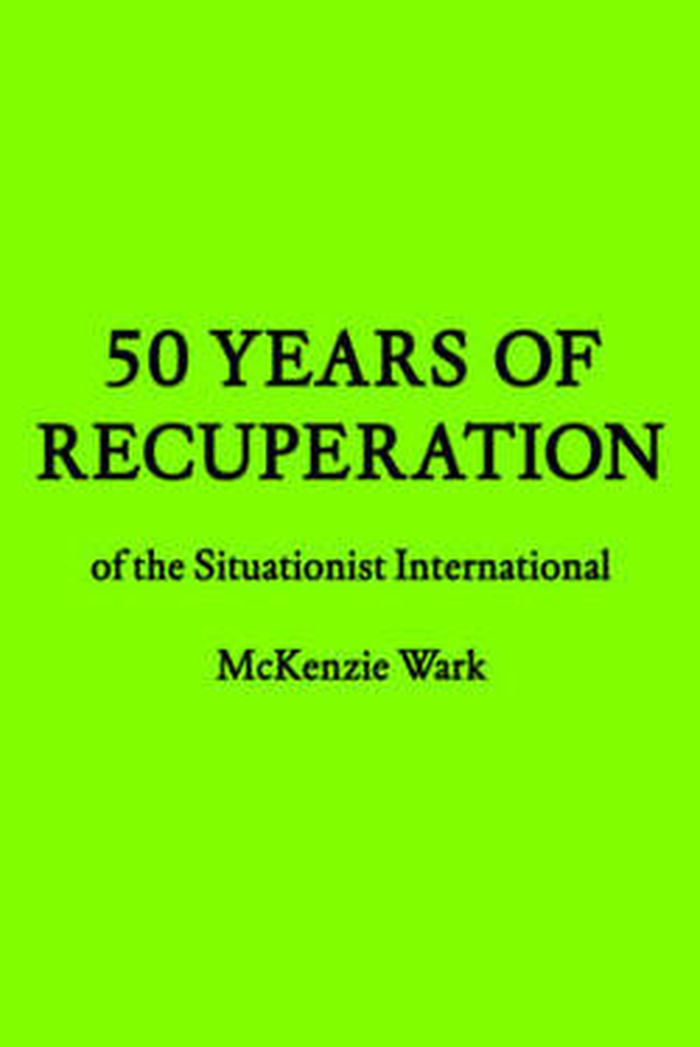
50 years of recuperation of the situationist international
Actions:
Price:
$24.95
(available in store)
Summary:
From Occupy Wall Street activists and corporate adbusters to online hackers and guerilla street artists, the influence of the Situationist International (SI) is written large across our contemporary cultural landscape. Formed in 1957 asa merger of four European avant garde groups with backgrounds in Marxism and Lettrism, the SI would over the next decade introduce many key intellectual and artistic concepts to us. In 50 Years of Recuperation, now available in paperback, critically acclaimed author McKenzie Wark explores how our contemporaryunderstanding of art, politics, andeven reality itself has been shaped by these original culture jammers.
50 years of recuperation of the situationist international
Actions:
Price:
$24.95
(available in store)
Summary:
From Occupy Wall Street activists and corporate adbusters to online hackers and guerilla street artists, the influence of the Situationist International (SI) is written large across our contemporary cultural landscape. Formed in 1957 asa merger of four European avant garde groups with backgrounds in Marxism and Lettrism, the SI would over the next decade introduce many key intellectual and artistic concepts to us. In 50 Years of Recuperation, now available in paperback, critically acclaimed author McKenzie Wark explores how our contemporaryunderstanding of art, politics, andeven reality itself has been shaped by these original culture jammers.
Form:
books
books
Publication:
August 2012
August 2012


