


2221 Results
Form:
books
books
Actions:
Price:
$115.00
(available to order)
Summary:
For ''The Poetics of Reason'' exhibition, the Lisbon Architectural Triennale published in partnership with the Barcelona based publisher Polígrafa a book series as unique editions of architecture, focusing on the several themes of the main exhibitions in a compilation. Pocketsize, this limited collection was edited by the curatorial team. The collection includes the(...)
$115.00
(available to order)
Summary:
For ''The Poetics of Reason'' exhibition, the Lisbon Architectural Triennale published in partnership with the Barcelona based publisher Polígrafa a book series as unique editions of architecture, focusing on the several themes of the main exhibitions in a compilation. Pocketsize, this limited collection was edited by the curatorial team. The collection includes the(...)
Title:
The poetics of reason. Lisbon Architecture Triennale
Actions:
Price:
$115.00
(available to order)
Summary:
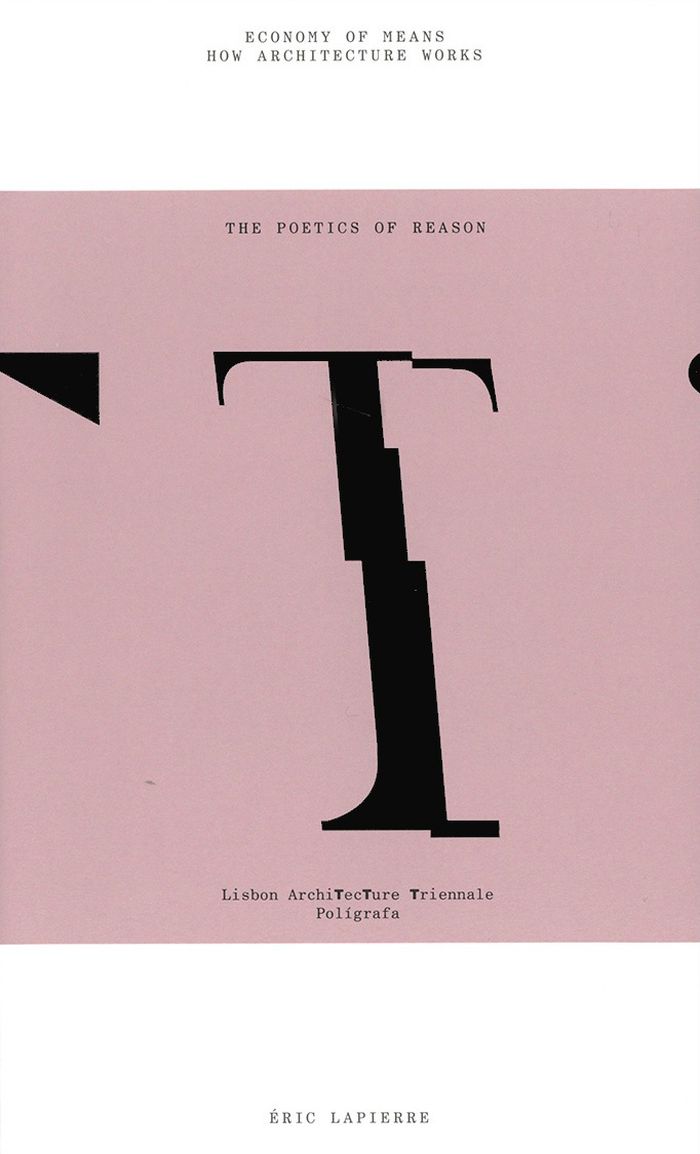
For ''The Poetics of Reason'' exhibition, the Lisbon Architectural Triennale published in partnership with the Barcelona based publisher Polígrafa a book series as unique editions of architecture, focusing on the several themes of the main exhibitions in a compilation. Pocketsize, this limited collection was edited by the curatorial team. The collection includes the titles ''Economy of means'', ''What is ornament?'', ''Inner space'', ''Taking the country's side: Agriculture and architecture'' and ''Natural Beauty,''
The poetics of reason. Lisbon Architecture Triennale
Actions:
Price:
$115.00
(available to order)
Summary:
For ''The Poetics of Reason'' exhibition, the Lisbon Architectural Triennale published in partnership with the Barcelona based publisher Polígrafa a book series as unique editions of architecture, focusing on the several themes of the main exhibitions in a compilation. Pocketsize, this limited collection was edited by the curatorial team. The collection includes the titles ''Economy of means'', ''What is ornament?'', ''Inner space'', ''Taking the country's side: Agriculture and architecture'' and ''Natural Beauty,''
Form:
books
books
Publication:
August 2019
August 2019
Subject:
Architectural Theory
Architectural Theory
Form:
books
books
Actions:
Price:
$47.95
(available to order)
Summary:
The future is not as far away as it might seem. What seemed a problem of the next generation now has become a problem of tomorrow. We are accelerating towards a future that is evermore present, guided by political and economic forces that seem unintelligible. Is this quick-paced intangible progression, the role of the architect is at stake. How can architecture keep up(...)
$47.95
(available to order)
Summary:
The future is not as far away as it might seem. What seemed a problem of the next generation now has become a problem of tomorrow. We are accelerating towards a future that is evermore present, guided by political and economic forces that seem unintelligible. Is this quick-paced intangible progression, the role of the architect is at stake. How can architecture keep up(...)
Subject:
Architectural Theory
Architectural Theory
Publication:
June 2018
June 2018
Title:
Future Real: Kersten Geers, Michael Young, David Erdman
Actions:
Price:
$47.95
(available to order)
Summary:
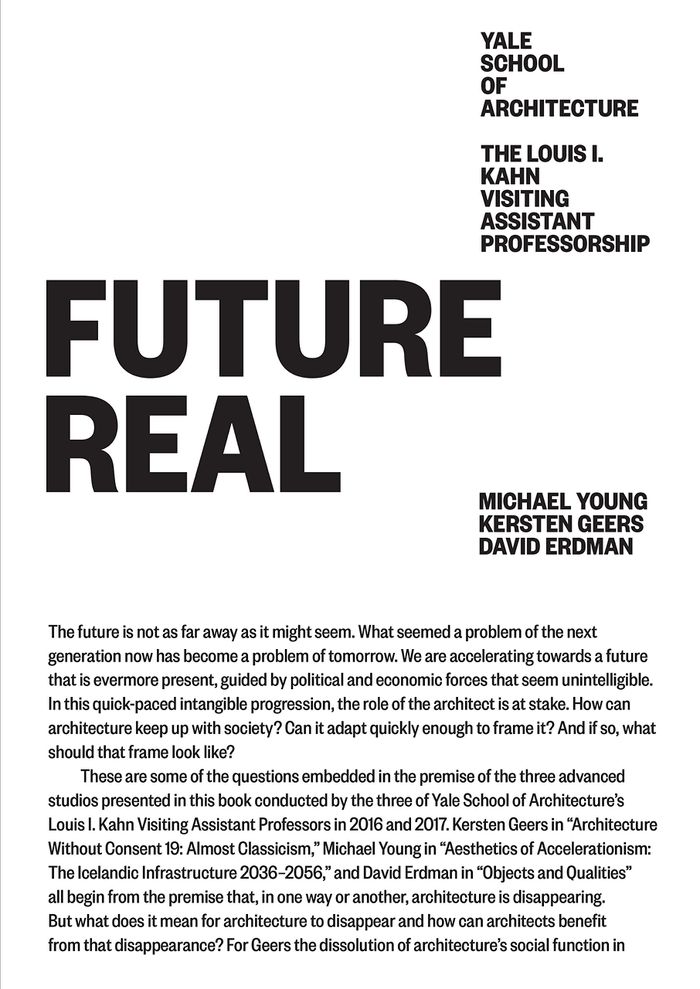
The future is not as far away as it might seem. What seemed a problem of the next generation now has become a problem of tomorrow. We are accelerating towards a future that is evermore present, guided by political and economic forces that seem unintelligible. Is this quick-paced intangible progression, the role of the architect is at stake. How can architecture keep up with society? Can it adapt quickly enough to frame it? And is so, what should that frame look like? These are some of the questions embedded in the premise of the three advanced studios presented in this book conducted by the three of Yale School of Architecture's Louis I. Kahn Visiting Assistant Professors in 2016 and 2017. Michael Young investigates the past from the future in "Aesthetics of Accelerationism: The Icelandic Infrastructure 2036-2056." Kersten Geers analyzes visions for agricultural ensembles for communal living in "Architecture Without Consent 19: Almost Classicism." And David Erdman looks to the potential of building on top of housing estates in Hong Kong in "Objects and Qualities." The book features interviews with the professors and essays on their specific studio topics.
Future Real: Kersten Geers, Michael Young, David Erdman
Actions:
Price:
$47.95
(available to order)
Summary:
The future is not as far away as it might seem. What seemed a problem of the next generation now has become a problem of tomorrow. We are accelerating towards a future that is evermore present, guided by political and economic forces that seem unintelligible. Is this quick-paced intangible progression, the role of the architect is at stake. How can architecture keep up with society? Can it adapt quickly enough to frame it? And is so, what should that frame look like? These are some of the questions embedded in the premise of the three advanced studios presented in this book conducted by the three of Yale School of Architecture's Louis I. Kahn Visiting Assistant Professors in 2016 and 2017. Michael Young investigates the past from the future in "Aesthetics of Accelerationism: The Icelandic Infrastructure 2036-2056." Kersten Geers analyzes visions for agricultural ensembles for communal living in "Architecture Without Consent 19: Almost Classicism." And David Erdman looks to the potential of building on top of housing estates in Hong Kong in "Objects and Qualities." The book features interviews with the professors and essays on their specific studio topics.
Form:
books
books
Publication:
June 2018
June 2018
Subject:
Architectural Theory
Architectural Theory
Form:
books
books
Actions:
Price:
$46.95
(available in store)
Summary:
Cet ouvrage se tient en équilibre entre pratique expérimentale et réflexions théoriques. C'est d'abord l'histoire d'un rêve qui finit par devenir réalité, tout au long d'une série de projets qui utilisent l'air comme matériau de construction. C'est ensuite une réflexion sur l'architecture énergétique. On ne le sait pas assez, mais l'histoire fourmille d'exemples(...)
$46.95
(available in store)
Summary:
Cet ouvrage se tient en équilibre entre pratique expérimentale et réflexions théoriques. C'est d'abord l'histoire d'un rêve qui finit par devenir réalité, tout au long d'une série de projets qui utilisent l'air comme matériau de construction. C'est ensuite une réflexion sur l'architecture énergétique. On ne le sait pas assez, mais l'histoire fourmille d'exemples(...)
Title:
L'architecture de la bulle d'air
Actions:
Price:
$46.95
(available in store)
Summary:
Cet ouvrage se tient en équilibre entre pratique expérimentale et réflexions théoriques. C'est d'abord l'histoire d'un rêve qui finit par devenir réalité, tout au long d'une série de projets qui utilisent l'air comme matériau de construction. C'est ensuite une réflexion sur l'architecture énergétique. On ne le sait pas assez, mais l'histoire fourmille d'exemples d'expérimentations dans l'utilisation de l'air, visant à la maîtrise de l'environnement et à la construction d'un climat protégé. Le moment est peut-être venu d'en commencer l'inventaire. Après la présentation de quelques exemples d'espaces d'architecture conçus grâce à des appareils parmi les plus surprenants, ce livre se poursuit par la formulation d'un « Manifeste de l'architecture de l'air ». Il se conclut par une réflexion autour de « l'architecture de la bulle d'air », après la mise au point d'une expérience d'architecture énergétique intermittente.
L'architecture de la bulle d'air
Actions:
Price:
$46.95
(available in store)
Summary:
Cet ouvrage se tient en équilibre entre pratique expérimentale et réflexions théoriques. C'est d'abord l'histoire d'un rêve qui finit par devenir réalité, tout au long d'une série de projets qui utilisent l'air comme matériau de construction. C'est ensuite une réflexion sur l'architecture énergétique. On ne le sait pas assez, mais l'histoire fourmille d'exemples d'expérimentations dans l'utilisation de l'air, visant à la maîtrise de l'environnement et à la construction d'un climat protégé. Le moment est peut-être venu d'en commencer l'inventaire. Après la présentation de quelques exemples d'espaces d'architecture conçus grâce à des appareils parmi les plus surprenants, ce livre se poursuit par la formulation d'un « Manifeste de l'architecture de l'air ». Il se conclut par une réflexion autour de « l'architecture de la bulle d'air », après la mise au point d'une expérience d'architecture énergétique intermittente.
Form:
books
books
Publication:
January 2020
January 2020
Subject:
Architectural Theory
Architectural Theory
Form:
books
books
Price:
$36.95
(available to order)
Summary:
A multidisciplinary investigation of the interrelations of space and time, memory, architecture and urban planning through and beyond Henri Lefebvre's concept of Rhythmanalysis.
$36.95
(available to order)
Summary:
A multidisciplinary investigation of the interrelations of space and time, memory, architecture and urban planning through and beyond Henri Lefebvre's concept of Rhythmanalysis.
Subject:
Architectural Theory
Architectural Theory
Publication:
January 2020
January 2020
Title:
I will draw a map of what you never see: endeavours in rhythmanalysis
Actions:
Price:
$36.95
(available to order)
Summary:
A multidisciplinary investigation of the interrelations of space and time, memory, architecture and urban planning through and beyond Henri Lefebvre's concept of Rhythmanalysis.
I will draw a map of what you never see: endeavours in rhythmanalysis
Actions:
Price:
$36.95
(available to order)
Summary:
A multidisciplinary investigation of the interrelations of space and time, memory, architecture and urban planning through and beyond Henri Lefebvre's concept of Rhythmanalysis.
Form:
books
books
Publication:
January 2020
January 2020
Subject:
Architectural Theory
Architectural Theory
Form:
books
books
Title:
Essays on Adolf Loos
Essays on Adolf Loos
Actions:
Price:
$35.00
(available to order)
Summary:
In this collection of essays, noted architectural historian and University of Texas professor Christopher Long (author of Adolf Loos on Trial) examines some of the many influences that shaped the work of the great architect Adolf Loos (1870–1933). Long’s finely tuned essays on subjects such as Loos' time in America, his famous essay "Ornament and Crime" and other(...)
$35.00
(available to order)
Summary:
In this collection of essays, noted architectural historian and University of Texas professor Christopher Long (author of Adolf Loos on Trial) examines some of the many influences that shaped the work of the great architect Adolf Loos (1870–1933). Long’s finely tuned essays on subjects such as Loos' time in America, his famous essay "Ornament and Crime" and other(...)
Title:
Essays on Adolf Loos
Actions:
Price:
$35.00
(available to order)
Summary:
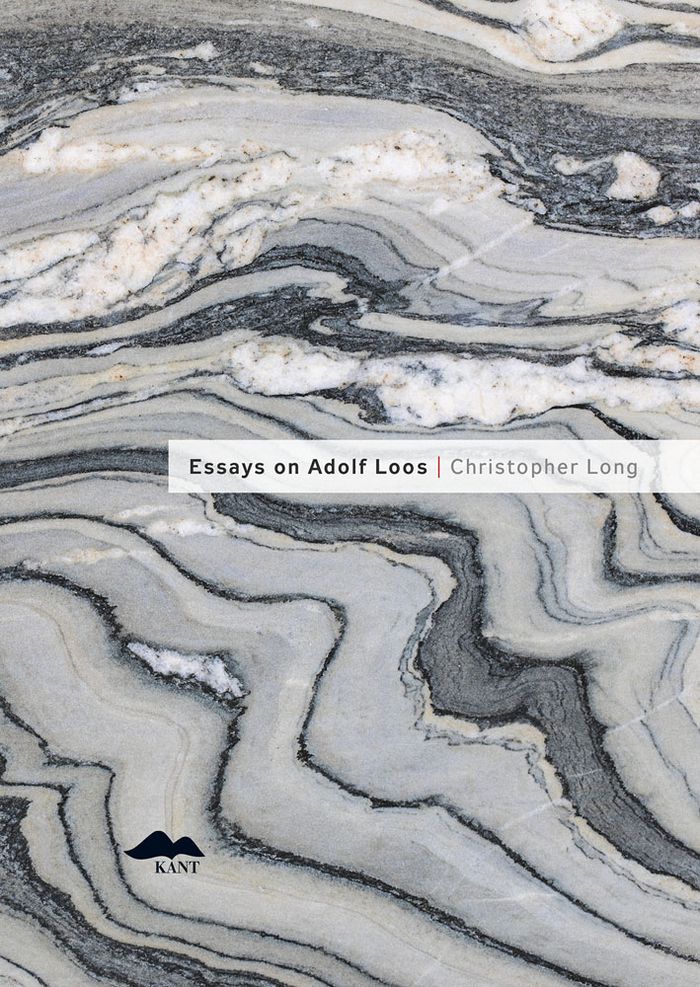
In this collection of essays, noted architectural historian and University of Texas professor Christopher Long (author of Adolf Loos on Trial) examines some of the many influences that shaped the work of the great architect Adolf Loos (1870–1933). Long’s finely tuned essays on subjects such as Loos' time in America, his famous essay "Ornament and Crime" and other subjects, are at once brief excursions into Loos’ rich and complex intellectual world, and an attempt to shed light on an important time in the history of architecture and design. Long is deeply interested in Loos as an architect, but he is even more drawn to his profound and unique intellect, and to the clarity of mind with which Loos managed to probe and understand the realities of modern life. Loos, as Long writes, saw that “the problem of modernism was not the problem of style, but the problem of understanding how the world was changing.”
Essays on Adolf Loos
Actions:
Price:
$35.00
(available to order)
Summary:
In this collection of essays, noted architectural historian and University of Texas professor Christopher Long (author of Adolf Loos on Trial) examines some of the many influences that shaped the work of the great architect Adolf Loos (1870–1933). Long’s finely tuned essays on subjects such as Loos' time in America, his famous essay "Ornament and Crime" and other subjects, are at once brief excursions into Loos’ rich and complex intellectual world, and an attempt to shed light on an important time in the history of architecture and design. Long is deeply interested in Loos as an architect, but he is even more drawn to his profound and unique intellect, and to the clarity of mind with which Loos managed to probe and understand the realities of modern life. Loos, as Long writes, saw that “the problem of modernism was not the problem of style, but the problem of understanding how the world was changing.”
Form:
books
books
Publication:
April 2020
April 2020
Subject:
Architectural Theory
Architectural Theory
Form:
books
books
Actions:
Price:
$56.00
(available to order)
Summary:
This instalment in the series takes the architectural model as its focus. It includes short, informative interviews with 46 architects and offices from around the world in which each expresses their views and offers insight on why the model is so essential for their respective practice. Among the participating architects are UNStudio, David Garcia Studio, J. Mayer H.(...)
$56.00
(available to order)
Summary:
This instalment in the series takes the architectural model as its focus. It includes short, informative interviews with 46 architects and offices from around the world in which each expresses their views and offers insight on why the model is so essential for their respective practice. Among the participating architects are UNStudio, David Garcia Studio, J. Mayer H.(...)
Title:
Architectural model: essential discussion tool
Actions:
Price:
$56.00
(available to order)
Summary:
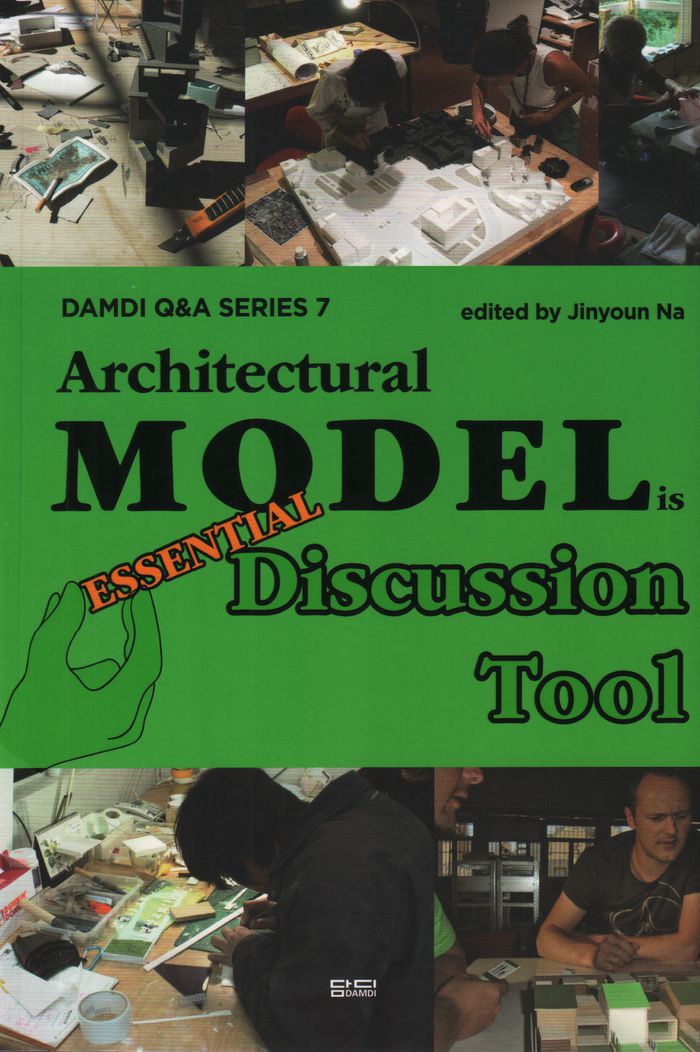
This instalment in the series takes the architectural model as its focus. It includes short, informative interviews with 46 architects and offices from around the world in which each expresses their views and offers insight on why the model is so essential for their respective practice. Among the participating architects are UNStudio, David Garcia Studio, J. Mayer H. Architects, Willy Müller, ECDM, Manuelle Gautrand, NL Architects, Grupo Aranea, b4 architects, and many more.
Architectural model: essential discussion tool
Actions:
Price:
$56.00
(available to order)
Summary:
This instalment in the series takes the architectural model as its focus. It includes short, informative interviews with 46 architects and offices from around the world in which each expresses their views and offers insight on why the model is so essential for their respective practice. Among the participating architects are UNStudio, David Garcia Studio, J. Mayer H. Architects, Willy Müller, ECDM, Manuelle Gautrand, NL Architects, Grupo Aranea, b4 architects, and many more.
Form:
books
books
Publication:
December 2019
December 2019
Subject:
Architectural Theory
Architectural Theory
Form:
books
books
Actions:
Price:
$69.95
(available to order)
Summary:
The world's growing vulnerability to planet-sized risks invites action on a global scale. The World as an Architectural Project shows how for more than a century architects have imagined the future of the planet through world-scale projects. With fifty speculative projects by Patrick Geddes, Alison and Peter Smithson, Kiyonori Kikutake, Saverio Muratori, Takis Zenetos,(...)
$69.95
(available to order)
Summary:
The world's growing vulnerability to planet-sized risks invites action on a global scale. The World as an Architectural Project shows how for more than a century architects have imagined the future of the planet through world-scale projects. With fifty speculative projects by Patrick Geddes, Alison and Peter Smithson, Kiyonori Kikutake, Saverio Muratori, Takis Zenetos,(...)
Title:
The world as an architectural project
Actions:
Price:
$69.95
(available to order)
Summary:
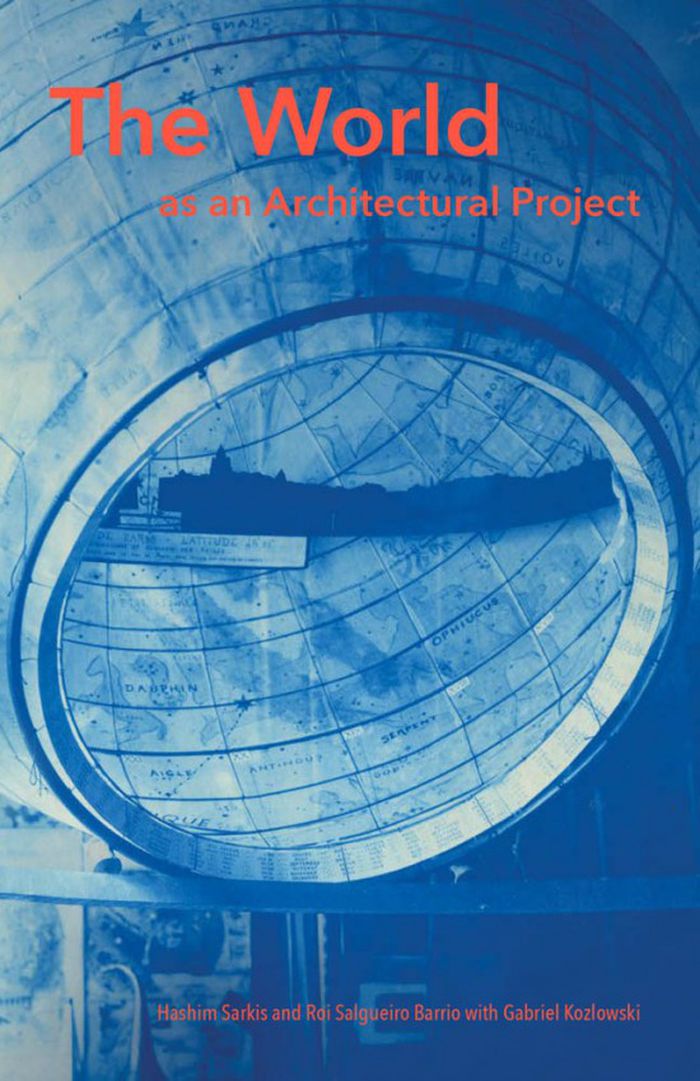
The world's growing vulnerability to planet-sized risks invites action on a global scale. The World as an Architectural Project shows how for more than a century architects have imagined the future of the planet through world-scale projects. With fifty speculative projects by Patrick Geddes, Alison and Peter Smithson, Kiyonori Kikutake, Saverio Muratori, Takis Zenetos, Sergio Bernardes, Juan Navarro Baldeweg, Luc Deleu, and many others, documented in text and images, this ambitious and wide-ranging book is the first compilation of its kind. Interestingly, architects begin to address the world as a project long before the advent of contemporary globalism and its assorted anxieties. The Spanish urban theorist and entrepreneur Arturo Soria y Mata, for example, in 1882 envisions a system that connects the entire planet in a linear urban network. In 1927, Buckminster Fuller's “World Town Plan—4D Tower” proposes to solve global housing problems with mobile structures delivered and installed by a Zeppelin. And Joyce Hsiang and Bimal Mendis visualize the conditions of a worldwide “City of Seven Billion” in a 2015–2019 project. Rather than indulging the cliché of the megalomaniac architect, this volume presents a discipline reflecting on its own responsibilities.
The world as an architectural project
Actions:
Price:
$69.95
(available to order)
Summary:
The world's growing vulnerability to planet-sized risks invites action on a global scale. The World as an Architectural Project shows how for more than a century architects have imagined the future of the planet through world-scale projects. With fifty speculative projects by Patrick Geddes, Alison and Peter Smithson, Kiyonori Kikutake, Saverio Muratori, Takis Zenetos, Sergio Bernardes, Juan Navarro Baldeweg, Luc Deleu, and many others, documented in text and images, this ambitious and wide-ranging book is the first compilation of its kind. Interestingly, architects begin to address the world as a project long before the advent of contemporary globalism and its assorted anxieties. The Spanish urban theorist and entrepreneur Arturo Soria y Mata, for example, in 1882 envisions a system that connects the entire planet in a linear urban network. In 1927, Buckminster Fuller's “World Town Plan—4D Tower” proposes to solve global housing problems with mobile structures delivered and installed by a Zeppelin. And Joyce Hsiang and Bimal Mendis visualize the conditions of a worldwide “City of Seven Billion” in a 2015–2019 project. Rather than indulging the cliché of the megalomaniac architect, this volume presents a discipline reflecting on its own responsibilities.
Form:
books
books
Publication:
April 2020
April 2020
Subject:
Architectural Theory
Architectural Theory
Form:
books
books
Actions:
Price:
$41.95
(available to order)
Summary:
How do designers in research-driven practices differentiate themselves from each other and form distinctive platforms for future practice? The research presented in this second edition and carried out in Australia as part of an Australian Research Council Discovery Program is of significance for design practice, review, and our deeper understanding of the design of(...)
$41.95
(available to order)
Summary:
How do designers in research-driven practices differentiate themselves from each other and form distinctive platforms for future practice? The research presented in this second edition and carried out in Australia as part of an Australian Research Council Discovery Program is of significance for design practice, review, and our deeper understanding of the design of(...)
Subject:
Architectural Theory
Architectural Theory
Publication:
March 2020
March 2020
Title:
The practice of spatial thinking
Actions:
Price:
$41.95
(available to order)
Summary:
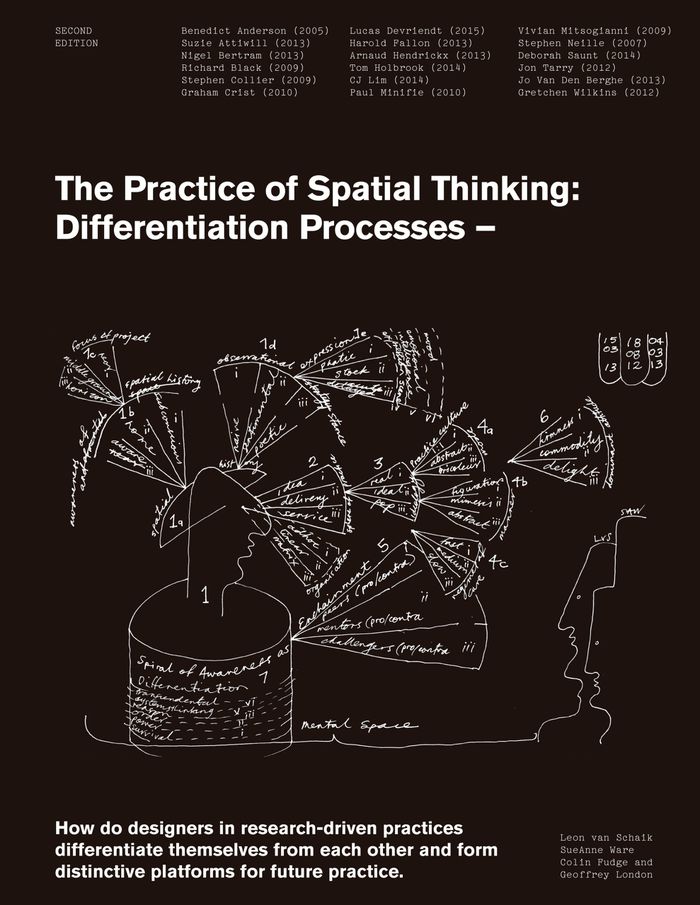
How do designers in research-driven practices differentiate themselves from each other and form distinctive platforms for future practice? The research presented in this second edition and carried out in Australia as part of an Australian Research Council Discovery Program is of significance for design practice, review, and our deeper understanding of the design of space and spaces. In continuing the exploration of spatial intelligence,” this research further develops our understanding of designers, how they work and what they draw on through their lives that shapes their spatial thinking, and their practice. The research also provides broader insights into a more public understanding and acknowledgement of our collective spatial intelligence. It shows how this could be developed and enhanced to provide more spatial and design literacy in our communities, and how these can engage with their changing environments.
The practice of spatial thinking
Actions:
Price:
$41.95
(available to order)
Summary:
How do designers in research-driven practices differentiate themselves from each other and form distinctive platforms for future practice? The research presented in this second edition and carried out in Australia as part of an Australian Research Council Discovery Program is of significance for design practice, review, and our deeper understanding of the design of space and spaces. In continuing the exploration of spatial intelligence,” this research further develops our understanding of designers, how they work and what they draw on through their lives that shapes their spatial thinking, and their practice. The research also provides broader insights into a more public understanding and acknowledgement of our collective spatial intelligence. It shows how this could be developed and enhanced to provide more spatial and design literacy in our communities, and how these can engage with their changing environments.
Form:
books
books
Publication:
March 2020
March 2020
Subject:
Architectural Theory
Architectural Theory
Form:
books
books
Price:
$36.99
(available in store)
Summary:
One of the nation's chief architecture critics reveals how the environments we build profoundly shape our feelings, memories, and well-being, and argues that we must harness this knowledge to construct a world better suited to human experience. Taking us on a fascinating journey through some of the world's best and worst landscapes, buildings, and cityscapes, Sarah(...)
$36.99
(available in store)
Summary:
One of the nation's chief architecture critics reveals how the environments we build profoundly shape our feelings, memories, and well-being, and argues that we must harness this knowledge to construct a world better suited to human experience. Taking us on a fascinating journey through some of the world's best and worst landscapes, buildings, and cityscapes, Sarah(...)
Title:
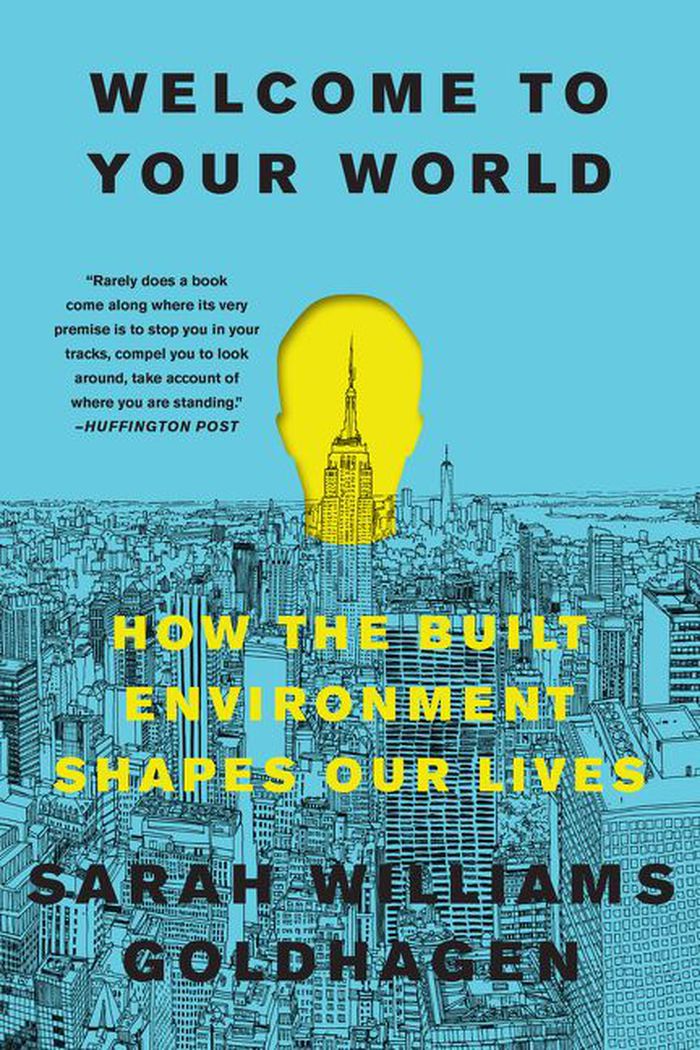
Welcome to your world: How the built environment shapes our lives
Actions:
Price:
$36.99
(available in store)
Summary:
One of the nation's chief architecture critics reveals how the environments we build profoundly shape our feelings, memories, and well-being, and argues that we must harness this knowledge to construct a world better suited to human experience. Taking us on a fascinating journey through some of the world's best and worst landscapes, buildings, and cityscapes, Sarah Williams Goldhagen draws from recent research in cognitive neuroscience and psychology to demonstrate how people's experiences of the places they build are central to their well-being, their physical health, their communal and social lives, and even their very sense of themselves. From this foundation, Goldhagen presents a powerful case that societies must use this knowledge to rethink what and how they build: the world needs better-designed, healthier environments that address the complex range of human individual and social needs.
Welcome to your world: How the built environment shapes our lives
Actions:
Price:
$36.99
(available in store)
Summary:
One of the nation's chief architecture critics reveals how the environments we build profoundly shape our feelings, memories, and well-being, and argues that we must harness this knowledge to construct a world better suited to human experience. Taking us on a fascinating journey through some of the world's best and worst landscapes, buildings, and cityscapes, Sarah Williams Goldhagen draws from recent research in cognitive neuroscience and psychology to demonstrate how people's experiences of the places they build are central to their well-being, their physical health, their communal and social lives, and even their very sense of themselves. From this foundation, Goldhagen presents a powerful case that societies must use this knowledge to rethink what and how they build: the world needs better-designed, healthier environments that address the complex range of human individual and social needs.
Form:
books
books
Publication:
March 2020
March 2020
Subject:
Architectural Theory
Architectural Theory
Form:
books
books
Title:
Autour de la maison
Autour de la maison
Actions:
Price:
$42.95
(available to order)
Summary:
Heinrich Tessenow publie la première édition de son ''Hausbau und dergleichen'' en 1916, en pleine Première Guerre mondiale. Et, à l'image de ses projets et édifices bâtis, cette œuvre aussi brève que lumineuse ne manquera pas de susciter l'admiration des grands protagonistes de l'architecture européenne de l'époque. La construction de maisons dans ses déclinaisons les(...)
$42.95
(available to order)
Summary:
Heinrich Tessenow publie la première édition de son ''Hausbau und dergleichen'' en 1916, en pleine Première Guerre mondiale. Et, à l'image de ses projets et édifices bâtis, cette œuvre aussi brève que lumineuse ne manquera pas de susciter l'admiration des grands protagonistes de l'architecture européenne de l'époque. La construction de maisons dans ses déclinaisons les(...)
Title:
Autour de la maison
Actions:
Price:
$42.95
(available to order)
Summary:
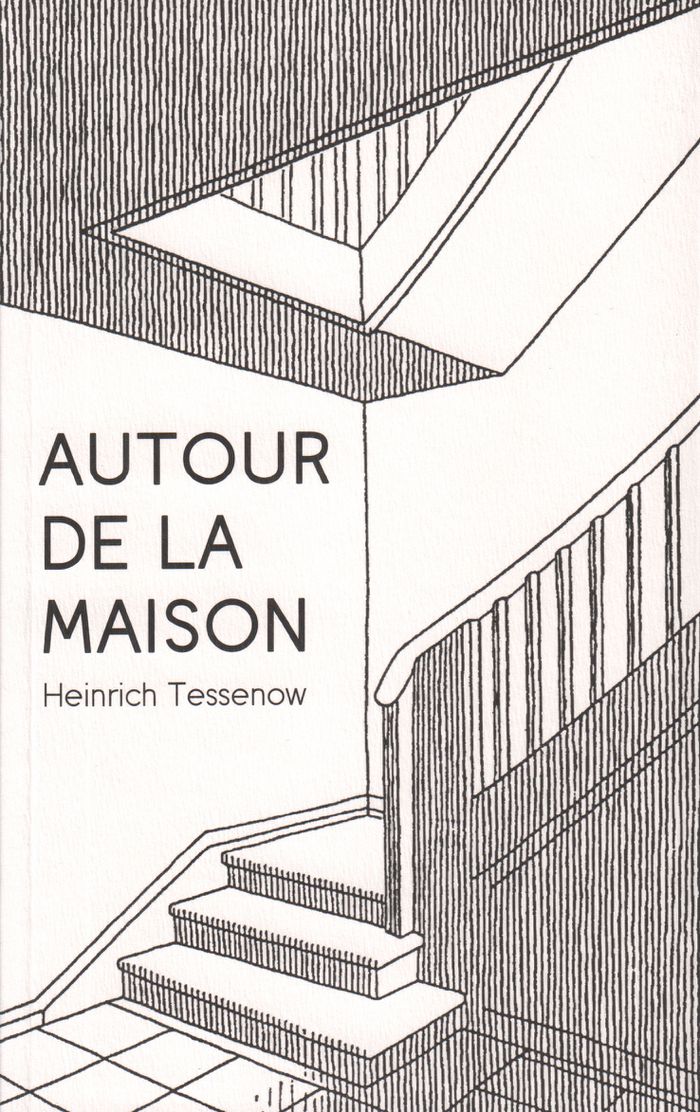
Heinrich Tessenow publie la première édition de son ''Hausbau und dergleichen'' en 1916, en pleine Première Guerre mondiale. Et, à l'image de ses projets et édifices bâtis, cette œuvre aussi brève que lumineuse ne manquera pas de susciter l'admiration des grands protagonistes de l'architecture européenne de l'époque. La construction de maisons dans ses déclinaisons les plus modestes (maisons ouvrières ou pour la petite bourgeoisie) lui offre un terreau fertile pour questionner les principes fondamentaux de la composition. Accompagnée de ses légendaires dessins au trait, la voix simple et claire de Tessenow s'écarte ainsi discrètement des slogans de l'avant-garde dans l'intense débat qui anime les premières décennies du XXe siècle. C'est peut-être ce qui lui a valu d'être laissé en marge des grands récits de la modernité architecturale. Or, un siècle plus tard, à l'heure où l'on se met à repenser les limites d'un concept de ''modernité'' souvent trop étroit, la posture originale et inimitable de cette architecture, plaçant l'habitation au centre de la réflexion, trouvera plus que jamais, dans cette première édition française, l'écho qu'elle mérite.
Autour de la maison
Actions:
Price:
$42.95
(available to order)
Summary:
Heinrich Tessenow publie la première édition de son ''Hausbau und dergleichen'' en 1916, en pleine Première Guerre mondiale. Et, à l'image de ses projets et édifices bâtis, cette œuvre aussi brève que lumineuse ne manquera pas de susciter l'admiration des grands protagonistes de l'architecture européenne de l'époque. La construction de maisons dans ses déclinaisons les plus modestes (maisons ouvrières ou pour la petite bourgeoisie) lui offre un terreau fertile pour questionner les principes fondamentaux de la composition. Accompagnée de ses légendaires dessins au trait, la voix simple et claire de Tessenow s'écarte ainsi discrètement des slogans de l'avant-garde dans l'intense débat qui anime les premières décennies du XXe siècle. C'est peut-être ce qui lui a valu d'être laissé en marge des grands récits de la modernité architecturale. Or, un siècle plus tard, à l'heure où l'on se met à repenser les limites d'un concept de ''modernité'' souvent trop étroit, la posture originale et inimitable de cette architecture, plaçant l'habitation au centre de la réflexion, trouvera plus que jamais, dans cette première édition française, l'écho qu'elle mérite.
Form:
books
books
Publication:
November 2019
November 2019
Subject:
Architectural Theory
Architectural Theory


