


2221 Results
Form:
books
books
Price:
$13.95
(available to order)
Summary:
Forty years after Michel Foucault's groundbreaking 1975 study, Discipline and Punish, the available tools of scrutiny, supervision, and discipline are far more capable and insidious than Foucault dreamed, and yet less effective than Bentham hoped. Public squares, container ports, terrorist holding cells, and social networks all bristle with cameras, sensors, and trackers.(...)
$13.95
(available to order)
Summary:
Forty years after Michel Foucault's groundbreaking 1975 study, Discipline and Punish, the available tools of scrutiny, supervision, and discipline are far more capable and insidious than Foucault dreamed, and yet less effective than Bentham hoped. Public squares, container ports, terrorist holding cells, and social networks all bristle with cameras, sensors, and trackers.(...)
Title:
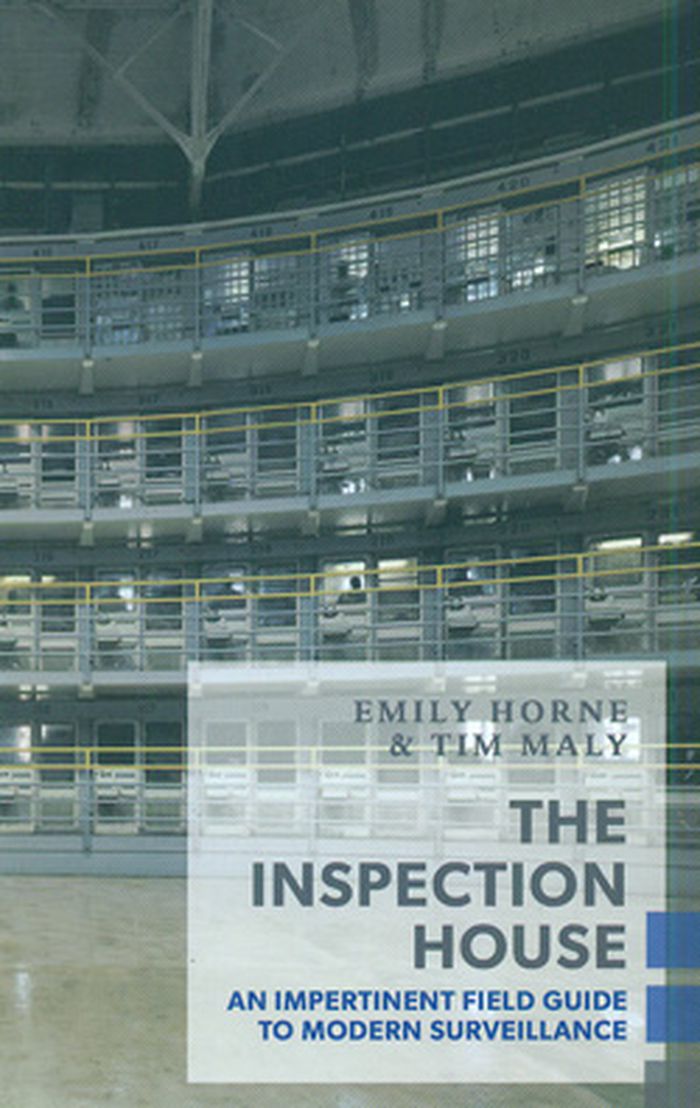
The inspection house : an impertinent field guide to modern surveillance
Actions:
Price:
$13.95
(available to order)
Summary:
Forty years after Michel Foucault's groundbreaking 1975 study, Discipline and Punish, the available tools of scrutiny, supervision, and discipline are far more capable and insidious than Foucault dreamed, and yet less effective than Bentham hoped. Public squares, container ports, terrorist holding cells, and social networks all bristle with cameras, sensors, and trackers. But, crucially, they are also rife with resistance and prime opportunities for revolution. The Inspection House is a tour through several of these sites — from Guantánamo Bay to the Occupy Oakland camp and the authors' own mobile devices — providing a stark, vivid portrait of our contemporary surveillance state and its opponents.
The inspection house : an impertinent field guide to modern surveillance
Actions:
Price:
$13.95
(available to order)
Summary:
Forty years after Michel Foucault's groundbreaking 1975 study, Discipline and Punish, the available tools of scrutiny, supervision, and discipline are far more capable and insidious than Foucault dreamed, and yet less effective than Bentham hoped. Public squares, container ports, terrorist holding cells, and social networks all bristle with cameras, sensors, and trackers. But, crucially, they are also rife with resistance and prime opportunities for revolution. The Inspection House is a tour through several of these sites — from Guantánamo Bay to the Occupy Oakland camp and the authors' own mobile devices — providing a stark, vivid portrait of our contemporary surveillance state and its opponents.
Form:
books
books
Publication:
September 2014
September 2014
Subject:
Architectural Theory
Architectural Theory
Form:
books
books
Actions:
Price:
$69.95
(available to order)
Summary:
In 1969 and 1970, Louis I. Kahn (1901–1974) participated in a series of interviews with a young German architectural historian, Heinrich Klotz, then a visiting professor at Yale University, and John W. Cook, who was teaching architecture at the Yale Divinity School. Louis I. Kahn in Conversation provides the first full edited transcript of these candid, illuminating(...)
$69.95
(available to order)
Summary:
In 1969 and 1970, Louis I. Kahn (1901–1974) participated in a series of interviews with a young German architectural historian, Heinrich Klotz, then a visiting professor at Yale University, and John W. Cook, who was teaching architecture at the Yale Divinity School. Louis I. Kahn in Conversation provides the first full edited transcript of these candid, illuminating(...)
Subject:
Architectural Theory
Architectural Theory
Publication:
November 2014
November 2014
Title:
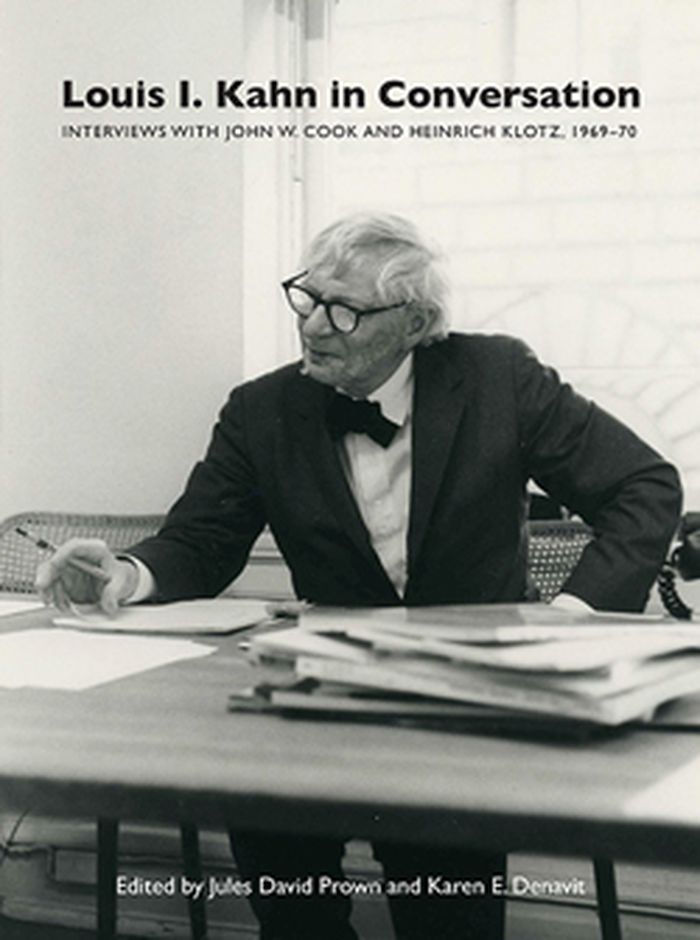
Louis I. Kahn in conversation: interviews with John W. Cook and Heinrich Klotz, 1969–70
Actions:
Price:
$69.95
(available to order)
Summary:
In 1969 and 1970, Louis I. Kahn (1901–1974) participated in a series of interviews with a young German architectural historian, Heinrich Klotz, then a visiting professor at Yale University, and John W. Cook, who was teaching architecture at the Yale Divinity School. Louis I. Kahn in Conversation provides the first full edited transcript of these candid, illuminating interviews, which provide insights into Kahn’s philosophy of architecture. The conversations touch on many of his iconic works, including the unbuilt City Tower Project for Philadelphia, the Yale University Art Gallery, the First Unitarian Church in Rochester, and major international projects then under construction, as well as the Yale Center for British Art, Kahn’s final building, on which he was beginning work at the time. Illustrated with dozens of plans, drawings, and photographs, the book also features an introduction by Jules David Prown, the first director of the Yale Center for British Art, who recommended Kahn as its architect.
Louis I. Kahn in conversation: interviews with John W. Cook and Heinrich Klotz, 1969–70
Actions:
Price:
$69.95
(available to order)
Summary:
In 1969 and 1970, Louis I. Kahn (1901–1974) participated in a series of interviews with a young German architectural historian, Heinrich Klotz, then a visiting professor at Yale University, and John W. Cook, who was teaching architecture at the Yale Divinity School. Louis I. Kahn in Conversation provides the first full edited transcript of these candid, illuminating interviews, which provide insights into Kahn’s philosophy of architecture. The conversations touch on many of his iconic works, including the unbuilt City Tower Project for Philadelphia, the Yale University Art Gallery, the First Unitarian Church in Rochester, and major international projects then under construction, as well as the Yale Center for British Art, Kahn’s final building, on which he was beginning work at the time. Illustrated with dozens of plans, drawings, and photographs, the book also features an introduction by Jules David Prown, the first director of the Yale Center for British Art, who recommended Kahn as its architect.
Form:
books
books
Publication:
November 2014
November 2014
Subject:
Architectural Theory
Architectural Theory
Form:
books
books
Title:
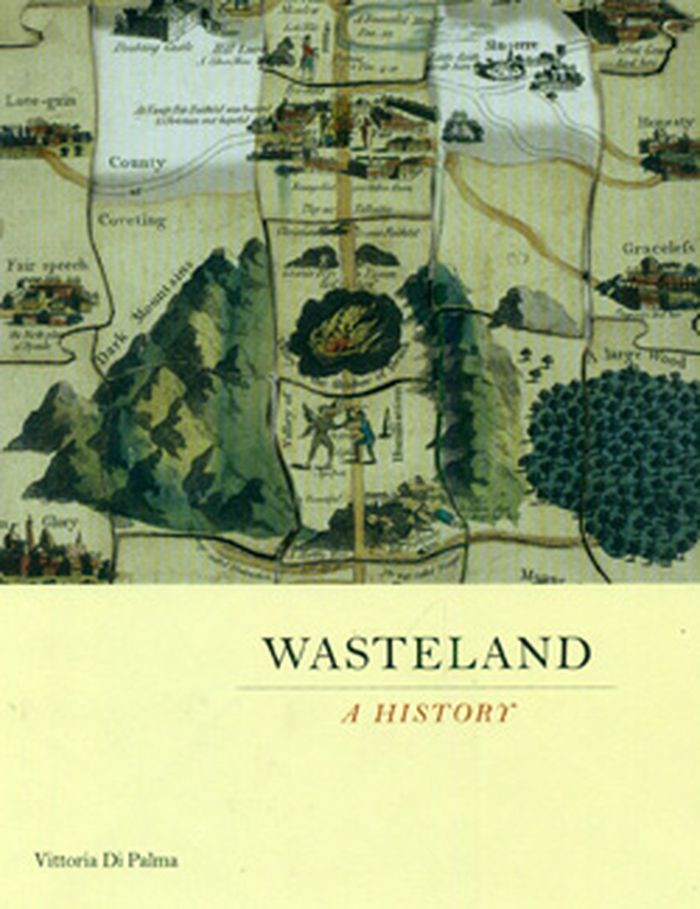
Wasteland: a history
Wasteland: a history
Actions:
Price:
$50.00
(available to order)
Summary:
In Wasteland, Vittoria Di Palma takes on the “anti-picturesque,” offering an account of landscapes that have traditionally drawn fear and contempt. Di Palma argues that a convergence of beliefs, technologies, institutions, and individuals in 18th-century England resulted in the formulation of cultural attitudes that continue to shape the ways we evaluate landscape today.
$50.00
(available to order)
Summary:
In Wasteland, Vittoria Di Palma takes on the “anti-picturesque,” offering an account of landscapes that have traditionally drawn fear and contempt. Di Palma argues that a convergence of beliefs, technologies, institutions, and individuals in 18th-century England resulted in the formulation of cultural attitudes that continue to shape the ways we evaluate landscape today.
Title:
Wasteland: a history
Actions:
Price:
$50.00
(available to order)
Summary:
In Wasteland, Vittoria Di Palma takes on the “anti-picturesque,” offering an account of landscapes that have traditionally drawn fear and contempt. Di Palma argues that a convergence of beliefs, technologies, institutions, and individuals in 18th-century England resulted in the formulation of cultural attitudes that continue to shape the ways we evaluate landscape today.
Wasteland: a history
Actions:
Price:
$50.00
(available to order)
Summary:
In Wasteland, Vittoria Di Palma takes on the “anti-picturesque,” offering an account of landscapes that have traditionally drawn fear and contempt. Di Palma argues that a convergence of beliefs, technologies, institutions, and individuals in 18th-century England resulted in the formulation of cultural attitudes that continue to shape the ways we evaluate landscape today.
Form:
books
books
Publication:
August 2014
August 2014
Subject:
Architectural Theory
Architectural Theory
Form:
books
books
Price:
$46.95
(available to order)
Summary:
Expansion, convergence, adjacency, projection, rapport, and intersection are a few of the terms used to redraw the boundaries between art and architecture during the last thirty-five years. If modernists invented the model of an ostensible “synthesis of the arts,” their postmodern progeny promoted the semblance of pluralist fusion. In 1979, reacting against contemporary(...)
$46.95
(available to order)
Summary:
Expansion, convergence, adjacency, projection, rapport, and intersection are a few of the terms used to redraw the boundaries between art and architecture during the last thirty-five years. If modernists invented the model of an ostensible “synthesis of the arts,” their postmodern progeny promoted the semblance of pluralist fusion. In 1979, reacting against contemporary(...)
Title:
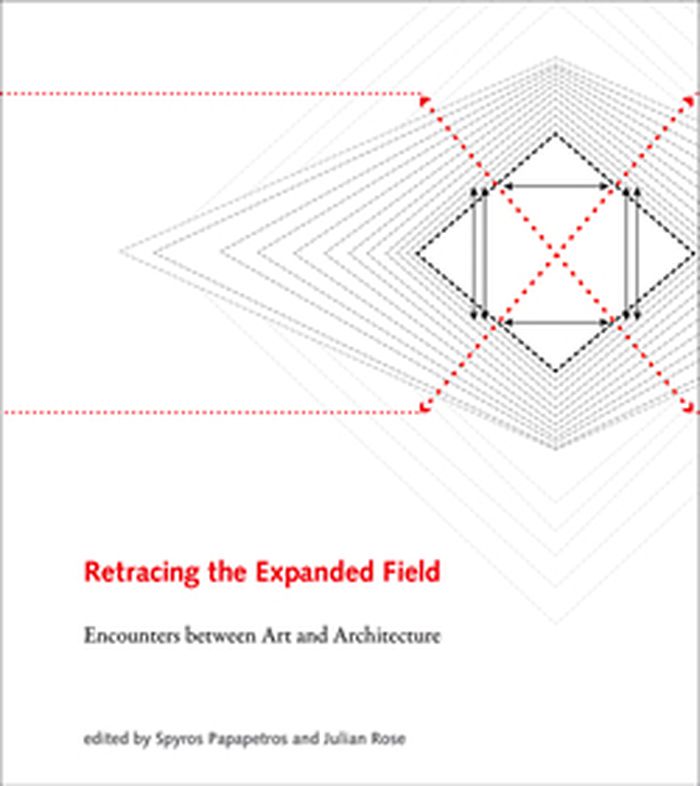
Retracing the expanded field: encounters between art and architecture
Actions:
Price:
$46.95
(available to order)
Summary:
Expansion, convergence, adjacency, projection, rapport, and intersection are a few of the terms used to redraw the boundaries between art and architecture during the last thirty-five years. If modernists invented the model of an ostensible “synthesis of the arts,” their postmodern progeny promoted the semblance of pluralist fusion. In 1979, reacting against contemporary art’s transformation of modernist medium-specificity into postmodernist medium multiplicity, the art historian Rosalind Krauss published an essay, “Sculpture in the Expanded Field,” that laid out in a precise diagram the structural parameters of sculpture, architecture, and landscape art. The essay soon assumed a canonical status and affected subsequent developments in all three fields. Retracing the Expanded Field revisits Krauss’s hugely influential text and maps the ensuing interactions between art and architecture.
Retracing the expanded field: encounters between art and architecture
Actions:
Price:
$46.95
(available to order)
Summary:
Expansion, convergence, adjacency, projection, rapport, and intersection are a few of the terms used to redraw the boundaries between art and architecture during the last thirty-five years. If modernists invented the model of an ostensible “synthesis of the arts,” their postmodern progeny promoted the semblance of pluralist fusion. In 1979, reacting against contemporary art’s transformation of modernist medium-specificity into postmodernist medium multiplicity, the art historian Rosalind Krauss published an essay, “Sculpture in the Expanded Field,” that laid out in a precise diagram the structural parameters of sculpture, architecture, and landscape art. The essay soon assumed a canonical status and affected subsequent developments in all three fields. Retracing the Expanded Field revisits Krauss’s hugely influential text and maps the ensuing interactions between art and architecture.
Form:
books
books
Publication:
September 2014
September 2014
Subject:
Architectural Theory
Architectural Theory
Form:
books
books
Actions:
Price:
$42.00
(available to order)
Summary:
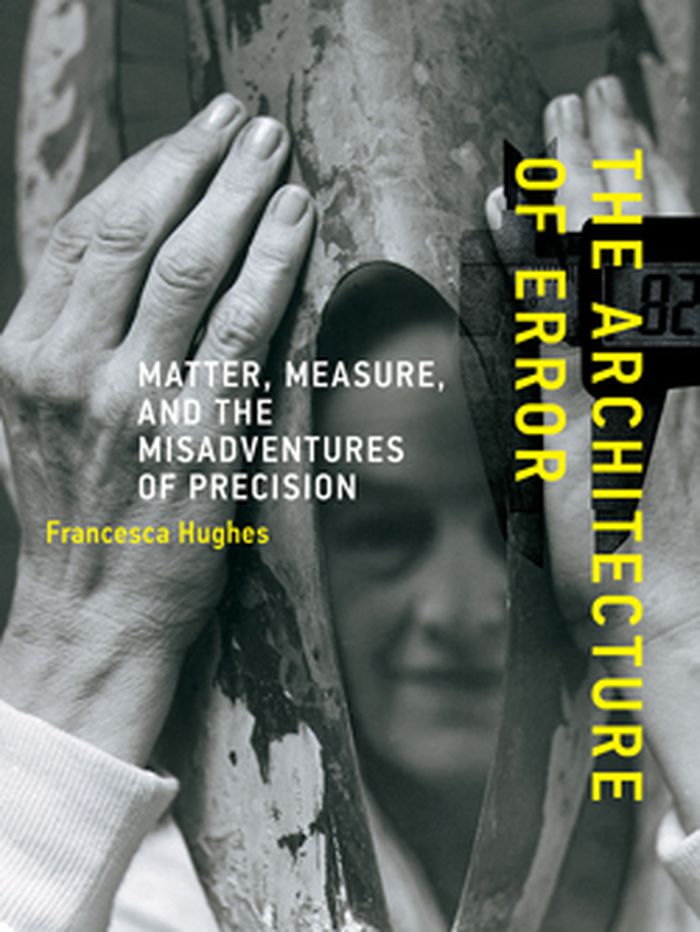
In The Architecture of Error Francesca Hughes argues that behind the architect’s acute fetishization of redundant precision lies a special fear of physical error. What if we were to consider the pivotal cultural and technological transformations of modernism to have been driven not so much by the causes its narratives declare, she asks, as by an unspoken horror of loss of(...)
$42.00
(available to order)
Summary:
In The Architecture of Error Francesca Hughes argues that behind the architect’s acute fetishization of redundant precision lies a special fear of physical error. What if we were to consider the pivotal cultural and technological transformations of modernism to have been driven not so much by the causes its narratives declare, she asks, as by an unspoken horror of loss of(...)
Title:
The architecture of error: matter, measure, and the misadventures of precision
Actions:
Price:
$42.00
(available to order)
Summary:
In The Architecture of Error Francesca Hughes argues that behind the architect’s acute fetishization of redundant precision lies a special fear of physical error. What if we were to consider the pivotal cultural and technological transformations of modernism to have been driven not so much by the causes its narratives declare, she asks, as by an unspoken horror of loss of control over error, material life, and everything that matter stands for? Hughes traces the rising intolerance of material vagaries—from the removal of ornament to digitalized fabrication—that produced the blind rejection of organic materials, the proliferation of material testing, and the rhetorical obstacles that blighted cybernetics. Why is it, she asks, that the more we cornered physical error, the more we feared it?
The architecture of error: matter, measure, and the misadventures of precision
Actions:
Price:
$42.00
(available to order)
Summary:
In The Architecture of Error Francesca Hughes argues that behind the architect’s acute fetishization of redundant precision lies a special fear of physical error. What if we were to consider the pivotal cultural and technological transformations of modernism to have been driven not so much by the causes its narratives declare, she asks, as by an unspoken horror of loss of control over error, material life, and everything that matter stands for? Hughes traces the rising intolerance of material vagaries—from the removal of ornament to digitalized fabrication—that produced the blind rejection of organic materials, the proliferation of material testing, and the rhetorical obstacles that blighted cybernetics. Why is it, she asks, that the more we cornered physical error, the more we feared it?
Form:
books
books
Publication:
November 2014
November 2014
Subject:
Architectural Theory
Architectural Theory
Form:
books
books
Title:
Play matters
Play matters
Actions:
Price:
$22.95
(available to order)
Summary:
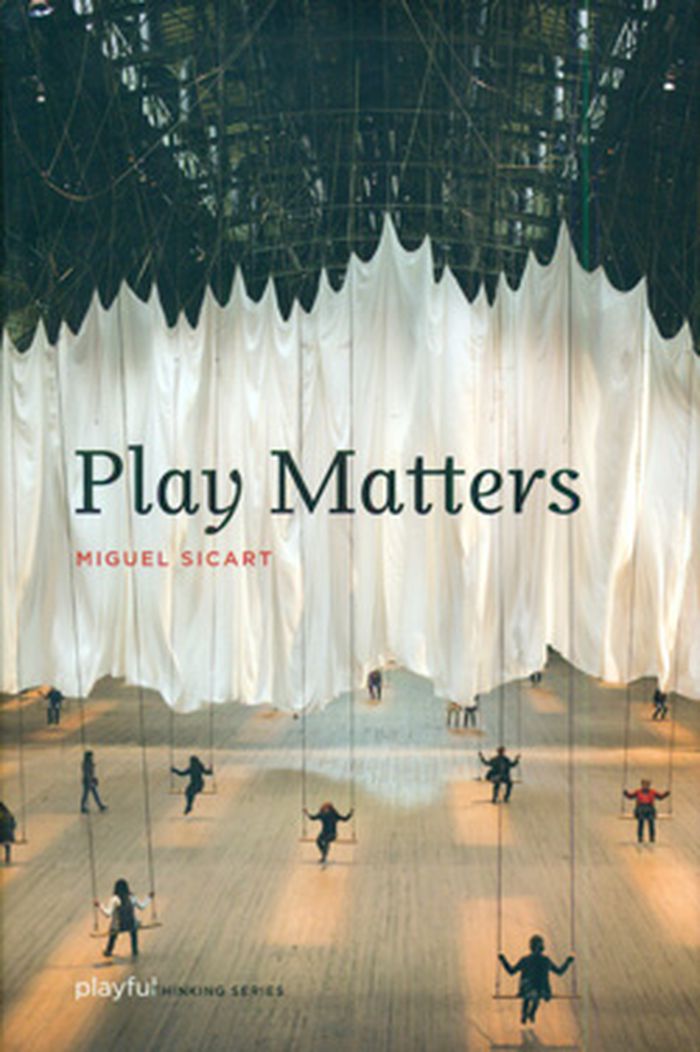
In Play Matters, Miguel Sicart argues that to play is to be in the world; playing is a form of understanding what surrounds us and a way of engaging with others. Play goes beyond games; it is a mode of being human. We play games, but we also play with toys, on playgrounds, with technologies and design. Sicart proposes a theory of play that doesn't derive from a particular(...)
$22.95
(available to order)
Summary:
In Play Matters, Miguel Sicart argues that to play is to be in the world; playing is a form of understanding what surrounds us and a way of engaging with others. Play goes beyond games; it is a mode of being human. We play games, but we also play with toys, on playgrounds, with technologies and design. Sicart proposes a theory of play that doesn't derive from a particular(...)
Title:
Play matters
Actions:
Price:
$22.95
(available to order)
Summary:
In Play Matters, Miguel Sicart argues that to play is to be in the world; playing is a form of understanding what surrounds us and a way of engaging with others. Play goes beyond games; it is a mode of being human. We play games, but we also play with toys, on playgrounds, with technologies and design. Sicart proposes a theory of play that doesn't derive from a particular object or activity but is a portable tool for being--not tied to objects but brought by people to the complex interactions that form their daily lives.
Play matters
Actions:
Price:
$22.95
(available to order)
Summary:
In Play Matters, Miguel Sicart argues that to play is to be in the world; playing is a form of understanding what surrounds us and a way of engaging with others. Play goes beyond games; it is a mode of being human. We play games, but we also play with toys, on playgrounds, with technologies and design. Sicart proposes a theory of play that doesn't derive from a particular object or activity but is a portable tool for being--not tied to objects but brought by people to the complex interactions that form their daily lives.
Form:
books
books
Publication:
September 2014
September 2014
Subject:
Architectural Theory
Architectural Theory
Form:
books
books
Title:
SMQ. The quantified home
SMQ. The quantified home
Actions:
Price:
$45.00
(available to order)
Summary:
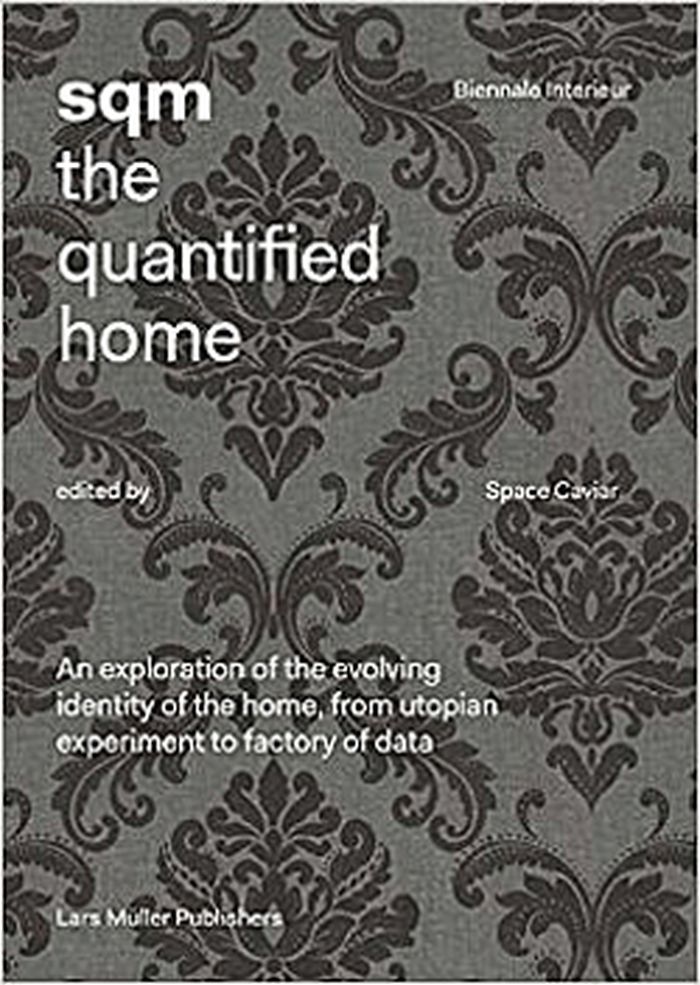
The way we live is rapidly changing under pressure from multiple forces financial, environmental, technological, geopolitical. What we used to call home may not even exist anymore, having transmuted into a financial commodity of which the square meter is the basic unit. Yet, domesticity and the domestic space ceased long ago to be present in the architectural agenda. SQM,(...)
$45.00
(available to order)
Summary:
The way we live is rapidly changing under pressure from multiple forces financial, environmental, technological, geopolitical. What we used to call home may not even exist anymore, having transmuted into a financial commodity of which the square meter is the basic unit. Yet, domesticity and the domestic space ceased long ago to be present in the architectural agenda. SQM,(...)
Title:
SMQ. The quantified home
Actions:
Price:
$45.00
(available to order)
Summary:
The way we live is rapidly changing under pressure from multiple forces financial, environmental, technological, geopolitical. What we used to call home may not even exist anymore, having transmuted into a financial commodity of which the square meter is the basic unit. Yet, domesticity and the domestic space ceased long ago to be present in the architectural agenda. SQM, produced for the 2014 Biennale Interieur in Kortrijk, Belgium, charts the scale of this change using data, fiction, and a critical selection of homes and their interiors from Osama bin Laden s compound to apartment living in the age of Airbnb.
SMQ. The quantified home
Actions:
Price:
$45.00
(available to order)
Summary:
The way we live is rapidly changing under pressure from multiple forces financial, environmental, technological, geopolitical. What we used to call home may not even exist anymore, having transmuted into a financial commodity of which the square meter is the basic unit. Yet, domesticity and the domestic space ceased long ago to be present in the architectural agenda. SQM, produced for the 2014 Biennale Interieur in Kortrijk, Belgium, charts the scale of this change using data, fiction, and a critical selection of homes and their interiors from Osama bin Laden s compound to apartment living in the age of Airbnb.
Form:
books
books
Publication:
October 2014
October 2014
Subject:
Architectural Theory
Architectural Theory
Form:
books
books
Actions:
Price:
$86.95
(available to order)
Summary:
This publication presents French architect, urban planner, teacher, and writer Fernand Pouillon (1912–86). Among the essays are ones from architectural critic and historian Jacques Lucan offering a rich analysis of Pouillon’s postwar urbanism and its critique of mainstream modernism and Adam Caruso delving into Pouillon’s use of materials. The book also features(...)
$86.95
(available to order)
Summary:
This publication presents French architect, urban planner, teacher, and writer Fernand Pouillon (1912–86). Among the essays are ones from architectural critic and historian Jacques Lucan offering a rich analysis of Pouillon’s postwar urbanism and its critique of mainstream modernism and Adam Caruso delving into Pouillon’s use of materials. The book also features(...)
Title:
The stones of Fernand Pouillon
Actions:
Price:
$86.95
(available to order)
Summary:
This publication presents French architect, urban planner, teacher, and writer Fernand Pouillon (1912–86). Among the essays are ones from architectural critic and historian Jacques Lucan offering a rich analysis of Pouillon’s postwar urbanism and its critique of mainstream modernism and Adam Caruso delving into Pouillon’s use of materials. The book also features photographs of Pouillon’s key projects.
The stones of Fernand Pouillon
Actions:
Price:
$86.95
(available to order)
Summary:
This publication presents French architect, urban planner, teacher, and writer Fernand Pouillon (1912–86). Among the essays are ones from architectural critic and historian Jacques Lucan offering a rich analysis of Pouillon’s postwar urbanism and its critique of mainstream modernism and Adam Caruso delving into Pouillon’s use of materials. The book also features photographs of Pouillon’s key projects.
Form:
books
books
Publication:
August 2014
August 2014
Subject:
Architectural Theory
Architectural Theory
Form:
books
books
Actions:
Price:
$31.95
(available to order)
Summary:
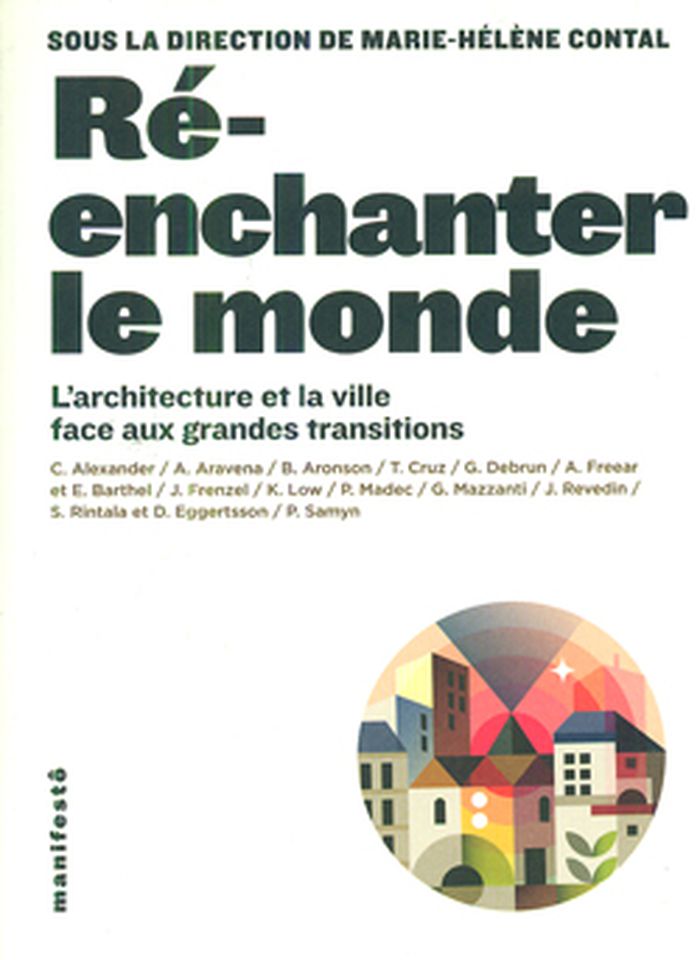
Pour les 12 architectes contributeurs de cet ouvrage prix lauréats des Global Awards, être architecte consiste à produire des objets en étant concerné par l'état réel du monde habité : sur-consommation des ressources, misère de l'habitat populaire, violence d'une urbanisation mondiale livrée aux seules forces du marché. Parce qu'ils sont architectes, eux veulent au(...)
$31.95
(available to order)
Summary:
Pour les 12 architectes contributeurs de cet ouvrage prix lauréats des Global Awards, être architecte consiste à produire des objets en étant concerné par l'état réel du monde habité : sur-consommation des ressources, misère de l'habitat populaire, violence d'une urbanisation mondiale livrée aux seules forces du marché. Parce qu'ils sont architectes, eux veulent au(...)
Title:
Ré-enchanter le monde: l'architecture et la ville face aux grandes transitions
Actions:
Price:
$31.95
(available to order)
Summary:
Pour les 12 architectes contributeurs de cet ouvrage prix lauréats des Global Awards, être architecte consiste à produire des objets en étant concerné par l'état réel du monde habité : sur-consommation des ressources, misère de l'habitat populaire, violence d'une urbanisation mondiale livrée aux seules forces du marché. Parce qu'ils sont architectes, eux veulent au contraire reconstruire un projet de civilisation urbaine, à partir du monde tel qu'il est, pour ré-enchanter la condition humaine.
Ré-enchanter le monde: l'architecture et la ville face aux grandes transitions
Actions:
Price:
$31.95
(available to order)
Summary:
Pour les 12 architectes contributeurs de cet ouvrage prix lauréats des Global Awards, être architecte consiste à produire des objets en étant concerné par l'état réel du monde habité : sur-consommation des ressources, misère de l'habitat populaire, violence d'une urbanisation mondiale livrée aux seules forces du marché. Parce qu'ils sont architectes, eux veulent au contraire reconstruire un projet de civilisation urbaine, à partir du monde tel qu'il est, pour ré-enchanter la condition humaine.
Form:
books
books
Publication:
July 2014
July 2014
Subject:
Architectural Theory
Architectural Theory
Form:
books
books
Actions:
Price:
$19.95
(available to order)
Summary:
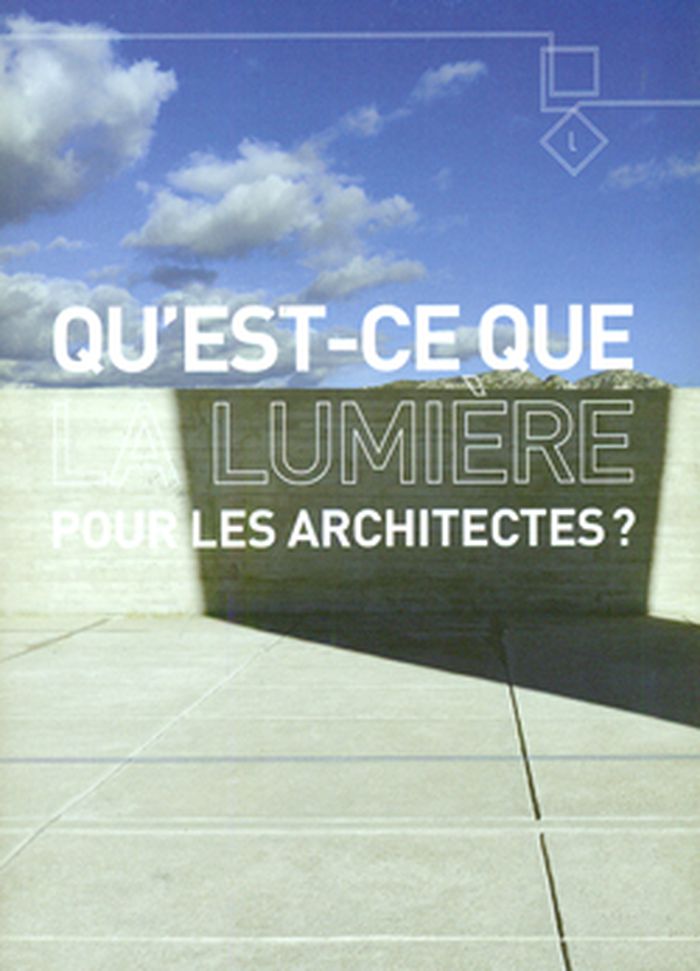
Cet ouvrage rassemble plusieurs textes de différents architectes.
$19.95
(available to order)
Summary:
Cet ouvrage rassemble plusieurs textes de différents architectes.
Title:
Qu'est-ce que la lumière pour les architectes?
Actions:
Price:
$19.95
(available to order)
Summary:
Cet ouvrage rassemble plusieurs textes de différents architectes.
Qu'est-ce que la lumière pour les architectes?
Actions:
Price:
$19.95
(available to order)
Summary:
Cet ouvrage rassemble plusieurs textes de différents architectes.
Form:
books
books
Publication:
July 2014
July 2014
Subject:
Architectural Theory
Architectural Theory


