


2221 Results
Form:
books
books
Actions:
Price:
$37.95
(available to order)
Summary:
The passage of time and the reality of an aging survivor population have made it increasingly urgent to document and give expression to testimony, experience, and memory of the Holocaust. At the same time, artists have struggled to find a language to describe and retell a legacy often considered "unimaginable." Contrary to those who insist that the Holocaust defies(...)
$37.95
(available to order)
Summary:
The passage of time and the reality of an aging survivor population have made it increasingly urgent to document and give expression to testimony, experience, and memory of the Holocaust. At the same time, artists have struggled to find a language to describe and retell a legacy often considered "unimaginable." Contrary to those who insist that the Holocaust defies(...)
Subject:
Architectural Theory
Architectural Theory
Publication:
December 2002, Bloomington and Indianapolis
December 2002, Bloomington and Indianapolis
Title:
Image and remembrance : representation and the Holocaust
Actions:
Price:
$37.95
(available to order)
Summary:
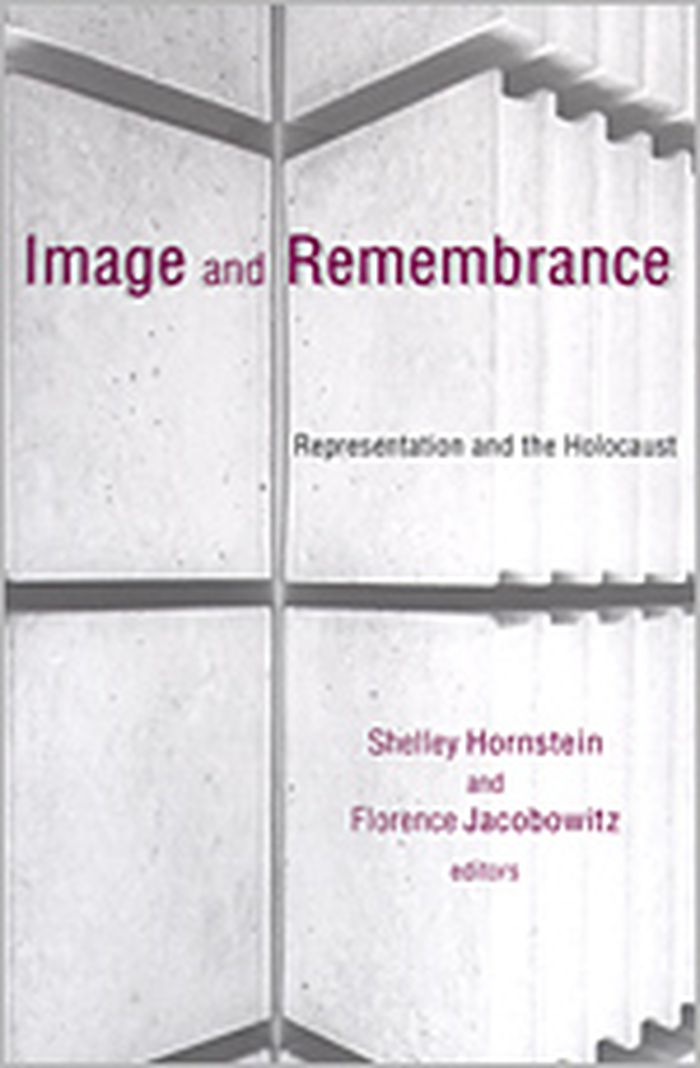
The passage of time and the reality of an aging survivor population have made it increasingly urgent to document and give expression to testimony, experience, and memory of the Holocaust. At the same time, artists have struggled to find a language to describe and retell a legacy often considered "unimaginable." Contrary to those who insist that the Holocaust defies representation, Image and Remembrance demonstrates that artistic representations are central to the practice of remembrance and commemoration. Including essays on representations of the Holocaust in film, architecture, painting, photography, memorials, and monuments, this thought-provoking volume considers ways in which visual artists have given form to the experience of the Holocaust and addresses the role that imagination plays in shaping historical memory. Among works discussed are Daniel Libeskind's Jewish Museum in Berlin, Rachel Whiteread's Holocaust Memorial in Vienna, Morris Louis's series of paintings Charred Journal, photographer Shimon Attie's Writing on the Wall, and Mikael Levin's series Untitled. Image and Remembrance provides a thoughtful site for personal reflection and commemoration as well as a context for reconsidering the processes of art making and the cultural significance of artistic images.
Image and remembrance : representation and the Holocaust
Actions:
Price:
$37.95
(available to order)
Summary:
The passage of time and the reality of an aging survivor population have made it increasingly urgent to document and give expression to testimony, experience, and memory of the Holocaust. At the same time, artists have struggled to find a language to describe and retell a legacy often considered "unimaginable." Contrary to those who insist that the Holocaust defies representation, Image and Remembrance demonstrates that artistic representations are central to the practice of remembrance and commemoration. Including essays on representations of the Holocaust in film, architecture, painting, photography, memorials, and monuments, this thought-provoking volume considers ways in which visual artists have given form to the experience of the Holocaust and addresses the role that imagination plays in shaping historical memory. Among works discussed are Daniel Libeskind's Jewish Museum in Berlin, Rachel Whiteread's Holocaust Memorial in Vienna, Morris Louis's series of paintings Charred Journal, photographer Shimon Attie's Writing on the Wall, and Mikael Levin's series Untitled. Image and Remembrance provides a thoughtful site for personal reflection and commemoration as well as a context for reconsidering the processes of art making and the cultural significance of artistic images.
Form:
books
books
Publication:
December 2002, Bloomington and Indianapolis
December 2002, Bloomington and Indianapolis
Subject:
Architectural Theory
Architectural Theory
Form:
books
books
Actions:
Price:
$39.95
(available in store)
Summary:
Épuisé / out of print
$39.95
(available in store)
Summary:
Épuisé / out of print
Subject:
Architectural Theory
Architectural Theory
Publication:
September 2002, Berlin
September 2002, Berlin
Title:
Rethinking : space, time, architecture - a dialogue between art and architecture
Actions:
Price:
$39.95
(available in store)
Summary:
Épuisé / out of print
Rethinking : space, time, architecture - a dialogue between art and architecture
Actions:
Price:
$39.95
(available in store)
Summary:
Épuisé / out of print
Form:
books
books
Publication:
September 2002, Berlin
September 2002, Berlin
Subject:
Architectural Theory
Architectural Theory
Form:
books
books
Actions:
Price:
$67.50
(available to order)
Summary:
Vincent Scully has shaped not only how we view the evolution of architecture in the twentieth century but also the course of that evolution itself. Combining the modes of historian and critic in unique and compelling ways--with an audience that reaches from students and scholars to professional architects and ardent amateurs--Scully has profoundly influenced the way(...)
$67.50
(available to order)
Summary:
Vincent Scully has shaped not only how we view the evolution of architecture in the twentieth century but also the course of that evolution itself. Combining the modes of historian and critic in unique and compelling ways--with an audience that reaches from students and scholars to professional architects and ardent amateurs--Scully has profoundly influenced the way(...)
Title:
Modern architecture and other essays
Actions:
Price:
$67.50
(available to order)
Summary:
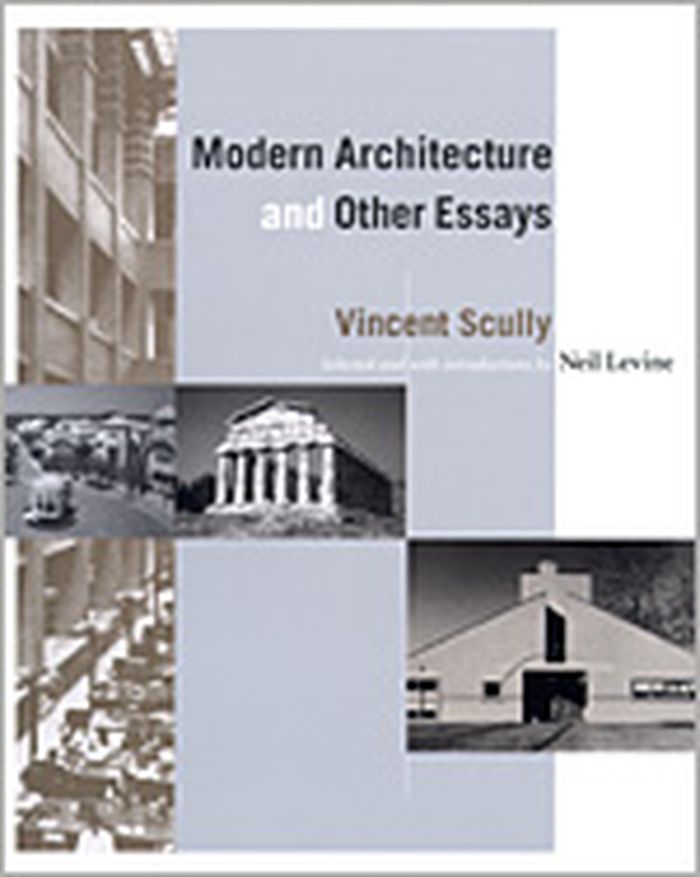
Vincent Scully has shaped not only how we view the evolution of architecture in the twentieth century but also the course of that evolution itself. Combining the modes of historian and critic in unique and compelling ways--with an audience that reaches from students and scholars to professional architects and ardent amateurs--Scully has profoundly influenced the way architecture is thought about and made. This extensively illustrated volume distills Scully's incalculable contribution. Neil Levine, a former student of Scully's, selects twenty essays that reveal the breadth and depth of Scully's work from the 1950s through the 1990s.
Modern architecture and other essays
Actions:
Price:
$67.50
(available to order)
Summary:
Vincent Scully has shaped not only how we view the evolution of architecture in the twentieth century but also the course of that evolution itself. Combining the modes of historian and critic in unique and compelling ways--with an audience that reaches from students and scholars to professional architects and ardent amateurs--Scully has profoundly influenced the way architecture is thought about and made. This extensively illustrated volume distills Scully's incalculable contribution. Neil Levine, a former student of Scully's, selects twenty essays that reveal the breadth and depth of Scully's work from the 1950s through the 1990s.
Form:
books
books
Publication:
January 2003, Princeton
January 2003, Princeton
Subject:
Architectural Theory
Architectural Theory
Form:
books
books
Actions:
Price:
$37.50
(available to order)
Summary:
Art, Culture, and Media Under the Third Reich explores the ways in which Nazi Germany used art and media to portray their country as a champion of Kultur and civilization. Rather than focusing strictly on the role of the arts in state-supported propaganda as other studies do, this volume reveals how multiple domains of cultural activity served to conceptually dehumanize(...)
$37.50
(available to order)
Summary:
Art, Culture, and Media Under the Third Reich explores the ways in which Nazi Germany used art and media to portray their country as a champion of Kultur and civilization. Rather than focusing strictly on the role of the arts in state-supported propaganda as other studies do, this volume reveals how multiple domains of cultural activity served to conceptually dehumanize(...)
Title:
Art, culture, and media under the Third Reich
Actions:
Price:
$37.50
(available to order)
Summary:
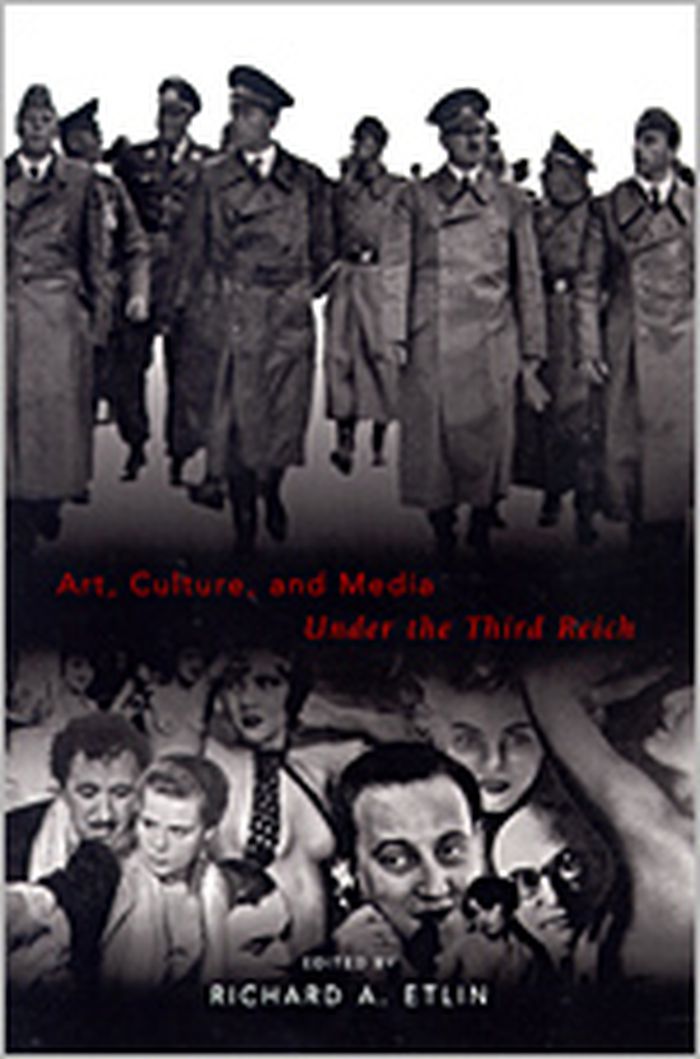
Art, Culture, and Media Under the Third Reich explores the ways in which Nazi Germany used art and media to portray their country as a champion of Kultur and civilization. Rather than focusing strictly on the role of the arts in state-supported propaganda as other studies do, this volume reveals how multiple domains of cultural activity served to conceptually dehumanize Jews and other groups, sowing the psychological seeds for the Holocaust to come. Topics covered by the essays range from the design of the Nuremberg Party Rally Grounds to Nazi experiments with radio. Contributors address nearly every facet of the arts and mass media under the Third Reich-efforts to define degenerate music; the promotion of race hatred and warfare through film, architecture, and public assemblies; visual iconography and style; views of the racially ideal garden and landscape; portrayal and reception of art and culture abroad; the treatment of exiled artists; and issues of territory, conquest, and cult. Anyone studying the history of Nazi Germany or the role of the arts in nationalist projects will benefit from this book.
Art, culture, and media under the Third Reich
Actions:
Price:
$37.50
(available to order)
Summary:
Art, Culture, and Media Under the Third Reich explores the ways in which Nazi Germany used art and media to portray their country as a champion of Kultur and civilization. Rather than focusing strictly on the role of the arts in state-supported propaganda as other studies do, this volume reveals how multiple domains of cultural activity served to conceptually dehumanize Jews and other groups, sowing the psychological seeds for the Holocaust to come. Topics covered by the essays range from the design of the Nuremberg Party Rally Grounds to Nazi experiments with radio. Contributors address nearly every facet of the arts and mass media under the Third Reich-efforts to define degenerate music; the promotion of race hatred and warfare through film, architecture, and public assemblies; visual iconography and style; views of the racially ideal garden and landscape; portrayal and reception of art and culture abroad; the treatment of exiled artists; and issues of territory, conquest, and cult. Anyone studying the history of Nazi Germany or the role of the arts in nationalist projects will benefit from this book.
Form:
books
books
Publication:
October 2002, Chicago
October 2002, Chicago
Subject:
Architectural Theory
Architectural Theory
Form:
books
books
Price:
$31.50
(available to order)
Summary:
Ce livre parle de la maison isolée, et des territoires directement associés à la vie de ses habitants. Construite de plus en plus loin des parties denses de la ville, la " villa " participe à l’étalement urbain, transforme les espaces ruraux en " campagnes urbaines " et contribue à l’augmentation des déplacement dans les agglomérations. Mais cette maison dépend de la(...)
$31.50
(available to order)
Summary:
Ce livre parle de la maison isolée, et des territoires directement associés à la vie de ses habitants. Construite de plus en plus loin des parties denses de la ville, la " villa " participe à l’étalement urbain, transforme les espaces ruraux en " campagnes urbaines " et contribue à l’augmentation des déplacement dans les agglomérations. Mais cette maison dépend de la(...)
Title:
La maison et ses territoires : de la villa à la ville diffuse
Actions:
Price:
$31.50
(available to order)
Summary:
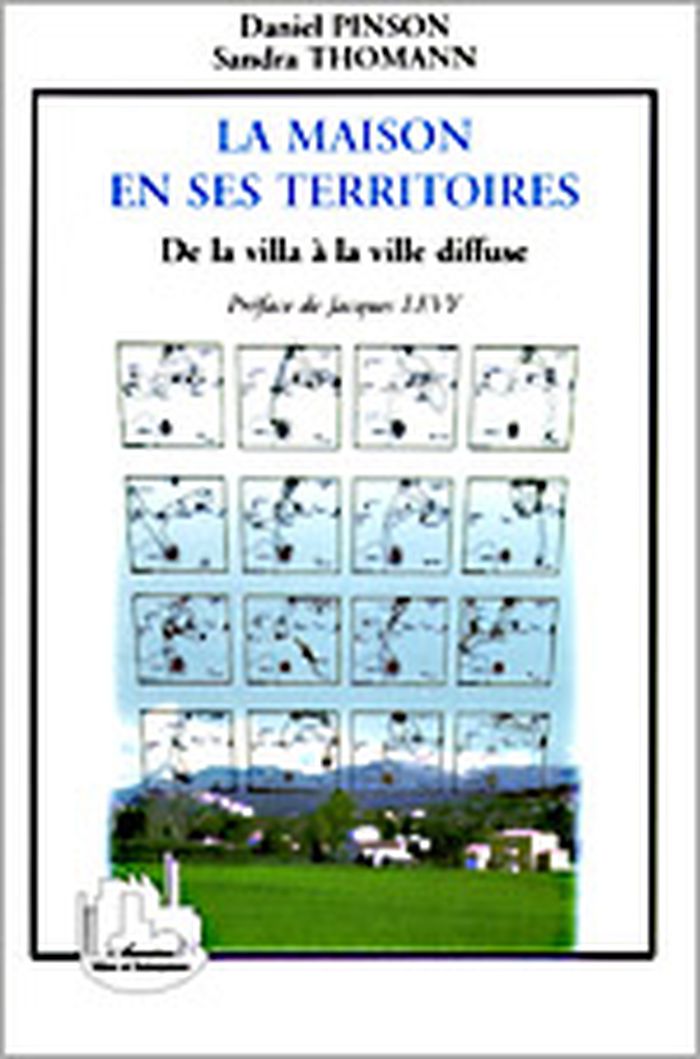
Ce livre parle de la maison isolée, et des territoires directement associés à la vie de ses habitants. Construite de plus en plus loin des parties denses de la ville, la " villa " participe à l’étalement urbain, transforme les espaces ruraux en " campagnes urbaines " et contribue à l’augmentation des déplacement dans les agglomérations. Mais cette maison dépend de la ville plus qu’en aucune autre époque, car il lui faut s’alimenter de ressources matérielles et immatérielles. Le rapport de l’espace de résidence à l’espace urbain devient dès lors de plus en plus complexe. Préface de Jacques LEVY.
La maison et ses territoires : de la villa à la ville diffuse
Actions:
Price:
$31.50
(available to order)
Summary:
Ce livre parle de la maison isolée, et des territoires directement associés à la vie de ses habitants. Construite de plus en plus loin des parties denses de la ville, la " villa " participe à l’étalement urbain, transforme les espaces ruraux en " campagnes urbaines " et contribue à l’augmentation des déplacement dans les agglomérations. Mais cette maison dépend de la ville plus qu’en aucune autre époque, car il lui faut s’alimenter de ressources matérielles et immatérielles. Le rapport de l’espace de résidence à l’espace urbain devient dès lors de plus en plus complexe. Préface de Jacques LEVY.
Form:
books
books
Publication:
June 2002, Paris
June 2002, Paris
Subject:
Architectural Theory
Architectural Theory
Form:
books
books
Actions:
Price:
$79.95
(available to order)
Summary:
This book reveals that historic sites and buildings have much to tell us about women's history. It documents women's contributions to the historic preservation movement at places such as Mount Vernon and explores women's history at several existing landmarks such as historic homes, as wells as in a wider array of cultural landscapes ranging from nurses' residences in(...)
$79.95
(available to order)
Summary:
This book reveals that historic sites and buildings have much to tell us about women's history. It documents women's contributions to the historic preservation movement at places such as Mount Vernon and explores women's history at several existing landmarks such as historic homes, as wells as in a wider array of cultural landscapes ranging from nurses' residences in(...)
Subject:
Architectural Theory
Architectural Theory
Publication:
November 2002, Baltimore
November 2002, Baltimore
Title:
Restoring womens' history through historic preservation
Actions:
Price:
$79.95
(available to order)
Summary:
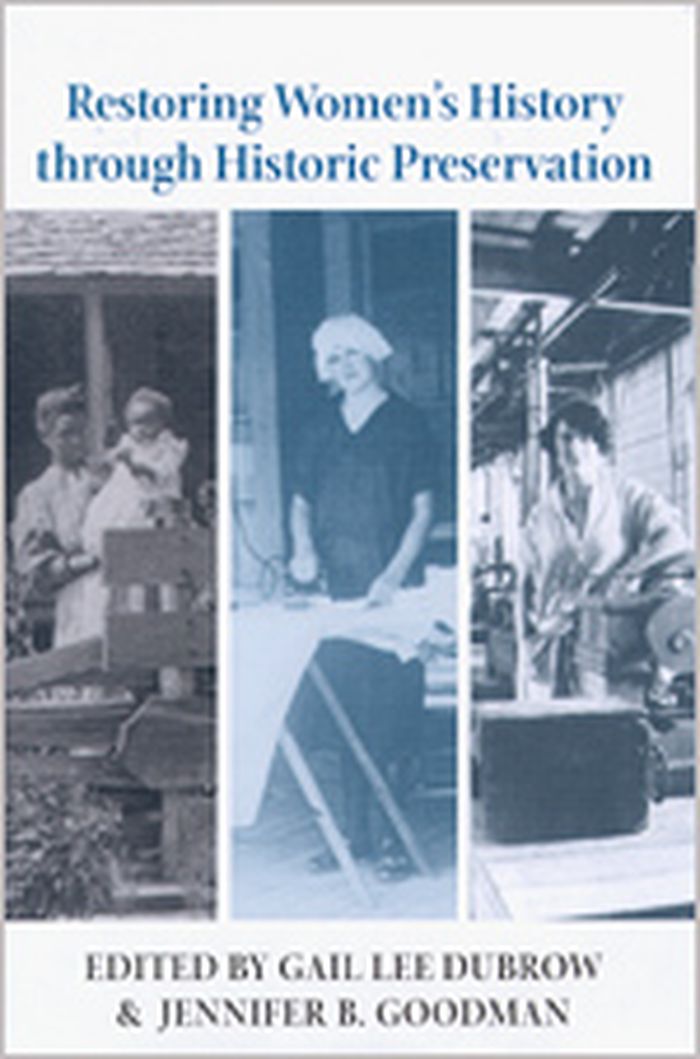
This book reveals that historic sites and buildings have much to tell us about women's history. It documents women's contributions to the historic preservation movement at places such as Mount Vernon and explores women's history at several existing landmarks such as historic homes, as wells as in a wider array of cultural landscapes ranging from nurses' residences in Montreal to prostitutes' quarters in Los Angeles. The book includes essays on six exemplary projects that have advanced the integration of women's history into historic preservation and closes with three perspectives on preservation policy and practice. National in scope but applicable in any locality, Restoring Women's History through Historic Preservation combines the most important recently published information with the best new research and covers many national, state, and local initiatives of the past decade. It collects in one volume the seminal work of twenty academic historians, preservationists, and professionals at parks and monuments throughout the country who examine practical ways to represent women's history through historic preservation programs. Over the past several decades, work in the areas of women's history and historic preservation has done much to change not only how we regard history but also how we might broaden the very notion of what we consider historical. This volume reflects a growing commitment to historic preservation and shows how practitioners in both fields can benefit from an exchange of insights and create more effective public history.
Restoring womens' history through historic preservation
Actions:
Price:
$79.95
(available to order)
Summary:
This book reveals that historic sites and buildings have much to tell us about women's history. It documents women's contributions to the historic preservation movement at places such as Mount Vernon and explores women's history at several existing landmarks such as historic homes, as wells as in a wider array of cultural landscapes ranging from nurses' residences in Montreal to prostitutes' quarters in Los Angeles. The book includes essays on six exemplary projects that have advanced the integration of women's history into historic preservation and closes with three perspectives on preservation policy and practice. National in scope but applicable in any locality, Restoring Women's History through Historic Preservation combines the most important recently published information with the best new research and covers many national, state, and local initiatives of the past decade. It collects in one volume the seminal work of twenty academic historians, preservationists, and professionals at parks and monuments throughout the country who examine practical ways to represent women's history through historic preservation programs. Over the past several decades, work in the areas of women's history and historic preservation has done much to change not only how we regard history but also how we might broaden the very notion of what we consider historical. This volume reflects a growing commitment to historic preservation and shows how practitioners in both fields can benefit from an exchange of insights and create more effective public history.
Form:
books
books
Publication:
November 2002, Baltimore
November 2002, Baltimore
Subject:
Architectural Theory
Architectural Theory
Form:
books
books
Price:
$63.00
(available to order)
Summary:
This book, which accompanies a major exhibition at the Center for New Art and Media (ZKM) in Karlsruhe, Germany, invokes three disparate realms in which images have assumed the role of cultural weapons. Monotheistic religions, scientific theories, and contemporary arts have struggled with the contradictory urge to produce and also destroy images and emblems. Moving(...)
$63.00
(available to order)
Summary:
This book, which accompanies a major exhibition at the Center for New Art and Media (ZKM) in Karlsruhe, Germany, invokes three disparate realms in which images have assumed the role of cultural weapons. Monotheistic religions, scientific theories, and contemporary arts have struggled with the contradictory urge to produce and also destroy images and emblems. Moving(...)
Subject:
Architectural Theory
Architectural Theory
Publication:
July 2002, Cambridge, Mass.
July 2002, Cambridge, Mass.
Title:
Iconoclash : beyond the image wars in science, religion, and art
Actions:
Price:
$63.00
(available to order)
Summary:
This book, which accompanies a major exhibition at the Center for New Art and Media (ZKM) in Karlsruhe, Germany, invokes three disparate realms in which images have assumed the role of cultural weapons. Monotheistic religions, scientific theories, and contemporary arts have struggled with the contradictory urge to produce and also destroy images and emblems. Moving beyond the image wars, ICONOCLASH shows that image destruction has always coexisted with a cascade of image production, visible in traditional Christian images as well as in scientific laboratories and the various experiments of contemporary art, music, cinema, and architecture. While iconoclasts have struggled against icon worshippers, another history of iconophily has always been at work. Investigating this alternative to the Western obsession with image worship and destruction allows useful comparisons with other cultures, in which images play a very different role. ICONOCLASH offers a variety of experiments on how to suspend the iconoclastic gesture and to renew the movement of images against any freeze-framing. The book includes major works by Art & Language, Willi Baumeister, Christian Boltanski, Daniel Buren, Lucas Cranach, Max Dean, Marcel Duchamp, Albrecht Dürer, Lucio Fontana, Francisco Goya, Hans Haacke, Richard Hamilton, Young Hay, Arata Isozaki, Asger Jorn, Martin Kippenberger, Imi Knoebel, Komar & Melamid, Joseph Kosuth, Gordon Matta-Clark, Tracey Moffat, Nam June Paik, Sigmar Polke, Stephen Prina, Man Ray, Sophie Ristelhueber, Hiroshi Sugimoto, and many others.
Iconoclash : beyond the image wars in science, religion, and art
Actions:
Price:
$63.00
(available to order)
Summary:
This book, which accompanies a major exhibition at the Center for New Art and Media (ZKM) in Karlsruhe, Germany, invokes three disparate realms in which images have assumed the role of cultural weapons. Monotheistic religions, scientific theories, and contemporary arts have struggled with the contradictory urge to produce and also destroy images and emblems. Moving beyond the image wars, ICONOCLASH shows that image destruction has always coexisted with a cascade of image production, visible in traditional Christian images as well as in scientific laboratories and the various experiments of contemporary art, music, cinema, and architecture. While iconoclasts have struggled against icon worshippers, another history of iconophily has always been at work. Investigating this alternative to the Western obsession with image worship and destruction allows useful comparisons with other cultures, in which images play a very different role. ICONOCLASH offers a variety of experiments on how to suspend the iconoclastic gesture and to renew the movement of images against any freeze-framing. The book includes major works by Art & Language, Willi Baumeister, Christian Boltanski, Daniel Buren, Lucas Cranach, Max Dean, Marcel Duchamp, Albrecht Dürer, Lucio Fontana, Francisco Goya, Hans Haacke, Richard Hamilton, Young Hay, Arata Isozaki, Asger Jorn, Martin Kippenberger, Imi Knoebel, Komar & Melamid, Joseph Kosuth, Gordon Matta-Clark, Tracey Moffat, Nam June Paik, Sigmar Polke, Stephen Prina, Man Ray, Sophie Ristelhueber, Hiroshi Sugimoto, and many others.
Form:
books
books
Publication:
July 2002, Cambridge, Mass.
July 2002, Cambridge, Mass.
Subject:
Architectural Theory
Architectural Theory
Form:
books
books
Price:
$32.95
(available to order)
Summary:
"Peeking through the Keyhole" is about transformations in the way we live and the places we call home. Until the past few decades, transitions in the style of homes and types of households were slow and gradual. With today's instant communication, the way we observe other people, other cultures, and other times has altered, and been altered by, the homes we live in.(...)
$32.95
(available to order)
Summary:
"Peeking through the Keyhole" is about transformations in the way we live and the places we call home. Until the past few decades, transitions in the style of homes and types of households were slow and gradual. With today's instant communication, the way we observe other people, other cultures, and other times has altered, and been altered by, the homes we live in.(...)
Subject:
Architectural Theory
Architectural Theory
Publication:
January 2002, Montréal
January 2002, Montréal
Title:
Peeking through the keyhole : the evolution of North American homes
Actions:
Price:
$32.95
(available to order)
Summary:
"Peeking through the Keyhole" is about transformations in the way we live and the places we call home. Until the past few decades, transitions in the style of homes and types of households were slow and gradual. With today's instant communication, the way we observe other people, other cultures, and other times has altered, and been altered by, the homes we live in. Avi Friedman and David Krawitz guide the reader through the trends and changes that have influenced residential design and construction over the last fifty years. From kitchens to home offices to entire neighbourhoods, they unravel the effect of technology and consumerism on the way we perceive and use domestic space, arguing that the home is no longer a product of pure design but a response to factors and forces beyond the control of designers, builders, and users. Each chapter approaches the theme of home from a different vantage point: the first three chapters focus on food and kitchens, communication, construction and renovation; the middle chapters deal with childhood and aging; and the final chapters examine our ideas of home in the context of the broader community and as an object of commerce. The authors demonstrate how much life has changed in the years following the Second World War, showing how transformations in society, the economy, and lifestyles are reflected in our homes.
Peeking through the keyhole : the evolution of North American homes
Actions:
Price:
$32.95
(available to order)
Summary:
"Peeking through the Keyhole" is about transformations in the way we live and the places we call home. Until the past few decades, transitions in the style of homes and types of households were slow and gradual. With today's instant communication, the way we observe other people, other cultures, and other times has altered, and been altered by, the homes we live in. Avi Friedman and David Krawitz guide the reader through the trends and changes that have influenced residential design and construction over the last fifty years. From kitchens to home offices to entire neighbourhoods, they unravel the effect of technology and consumerism on the way we perceive and use domestic space, arguing that the home is no longer a product of pure design but a response to factors and forces beyond the control of designers, builders, and users. Each chapter approaches the theme of home from a different vantage point: the first three chapters focus on food and kitchens, communication, construction and renovation; the middle chapters deal with childhood and aging; and the final chapters examine our ideas of home in the context of the broader community and as an object of commerce. The authors demonstrate how much life has changed in the years following the Second World War, showing how transformations in society, the economy, and lifestyles are reflected in our homes.
Form:
books
books
Publication:
January 2002, Montréal
January 2002, Montréal
Subject:
Architectural Theory
Architectural Theory
Form:
books
books
Actions:
Price:
$79.95
(available in store)
Summary:
Qu’ai-je découvert après trois années d’enquête? La plupart des maladresses engendrent des architectures médiocres, voire nulles. D’autres, les bonnes maladresses, provoquent une impression indéfinissable de je-ne-sais-quoi, qui a des affinités avec l’imaginaire. Fugitives, elles peuvent apparaître ou disparaître. C’est en cherchant l’erreur, la rupture que l’on arrive à(...)
$79.95
(available in store)
Summary:
Qu’ai-je découvert après trois années d’enquête? La plupart des maladresses engendrent des architectures médiocres, voire nulles. D’autres, les bonnes maladresses, provoquent une impression indéfinissable de je-ne-sais-quoi, qui a des affinités avec l’imaginaire. Fugitives, elles peuvent apparaître ou disparaître. C’est en cherchant l’erreur, la rupture que l’on arrive à(...)
Title:
La maladresse en architecture : À l'aune du je-ne-sais-quoi
Actions:
Price:
$79.95
(available in store)
Summary:
Qu’ai-je découvert après trois années d’enquête? La plupart des maladresses engendrent des architectures médiocres, voire nulles. D’autres, les bonnes maladresses, provoquent une impression indéfinissable de je-ne-sais-quoi, qui a des affinités avec l’imaginaire. Fugitives, elles peuvent apparaître ou disparaître. C’est en cherchant l’erreur, la rupture que l’on arrive à les entrevoir. La maladresse est souvent accidentelle. Elle serait le diable et l’habileté serait plutôt angélique. Entre maladresse et habileté, les frontières sont ténues. Il n’y a pas loin du Capitole à la roche Tarpéienne.
La maladresse en architecture : À l'aune du je-ne-sais-quoi
Actions:
Price:
$79.95
(available in store)
Summary:
Qu’ai-je découvert après trois années d’enquête? La plupart des maladresses engendrent des architectures médiocres, voire nulles. D’autres, les bonnes maladresses, provoquent une impression indéfinissable de je-ne-sais-quoi, qui a des affinités avec l’imaginaire. Fugitives, elles peuvent apparaître ou disparaître. C’est en cherchant l’erreur, la rupture que l’on arrive à les entrevoir. La maladresse est souvent accidentelle. Elle serait le diable et l’habileté serait plutôt angélique. Entre maladresse et habileté, les frontières sont ténues. Il n’y a pas loin du Capitole à la roche Tarpéienne.
Form:
books
books
Publication:
May 2023
May 2023
Subject:
Architectural Theory
Architectural Theory
Form:
books
books

Actions:
Price:
$26.00
(available in store)
Summary:
Diplômé de l’École polytechnique, journaliste, éditeur et homme politique, Victor Considerant (1808-1893) consacra l'essentiel de sa vie à résumer et à présenter l'œuvre de Charles Fourier – dont le phalanstère. Néologisme inventé en 1822 combinant «phalange» et «monastère», son économat, esquissé dès 1808 mais dont la description architecturale restera toujours sommaire,(...)
$26.00
(available in store)
Summary:
Diplômé de l’École polytechnique, journaliste, éditeur et homme politique, Victor Considerant (1808-1893) consacra l'essentiel de sa vie à résumer et à présenter l'œuvre de Charles Fourier – dont le phalanstère. Néologisme inventé en 1822 combinant «phalange» et «monastère», son économat, esquissé dès 1808 mais dont la description architecturale restera toujours sommaire,(...)
Title:
Description du phalanstère et considérations sociales sur l'architectonique
Actions:
Price:
$26.00
(available in store)
Summary:
Diplômé de l’École polytechnique, journaliste, éditeur et homme politique, Victor Considerant (1808-1893) consacra l'essentiel de sa vie à résumer et à présenter l'œuvre de Charles Fourier – dont le phalanstère. Néologisme inventé en 1822 combinant «phalange» et «monastère», son économat, esquissé dès 1808 mais dont la description architecturale restera toujours sommaire, entend reprogrammer l’édifice social en un «palais des familles» voué à la mécanique des passions. Devenu chef de file du fouriérisme après la mort du fondateur en 1837, Victor Considerant, six mois après la Révolution de Février (1848), fait paraître à la Librairie phalanstérienne de Paris le présent opuscule, alors que souffle dans toute l'Europe un vent de socialismes...
Description du phalanstère et considérations sociales sur l'architectonique
Actions:
Price:
$26.00
(available in store)
Summary:
Diplômé de l’École polytechnique, journaliste, éditeur et homme politique, Victor Considerant (1808-1893) consacra l'essentiel de sa vie à résumer et à présenter l'œuvre de Charles Fourier – dont le phalanstère. Néologisme inventé en 1822 combinant «phalange» et «monastère», son économat, esquissé dès 1808 mais dont la description architecturale restera toujours sommaire, entend reprogrammer l’édifice social en un «palais des familles» voué à la mécanique des passions. Devenu chef de file du fouriérisme après la mort du fondateur en 1837, Victor Considerant, six mois après la Révolution de Février (1848), fait paraître à la Librairie phalanstérienne de Paris le présent opuscule, alors que souffle dans toute l'Europe un vent de socialismes...
Form:
books
books
Publication:
June 2023
June 2023
Subject:
Architectural Theory
Architectural Theory


