


1200 Results
Form:
books
books
Actions:
Price:
$17.75
(available to order)
Summary:
Qui sont les antimodernes ? Non pas les conservateurs, les académiques, les frileux, les pompiers, les réactionnaires, mais les modernes à contre-cœur, malgré eux, à leur corps défendant, ceux qui avancent en regardant dans le rétroviseur, comme Sartre disait de Baudelaire. Ce livre poursuit le filon de la résistance à la modernité qui traverse toute la modernité et qui(...)
$17.75
(available to order)
Summary:
Qui sont les antimodernes ? Non pas les conservateurs, les académiques, les frileux, les pompiers, les réactionnaires, mais les modernes à contre-cœur, malgré eux, à leur corps défendant, ceux qui avancent en regardant dans le rétroviseur, comme Sartre disait de Baudelaire. Ce livre poursuit le filon de la résistance à la modernité qui traverse toute la modernité et qui(...)
Title:
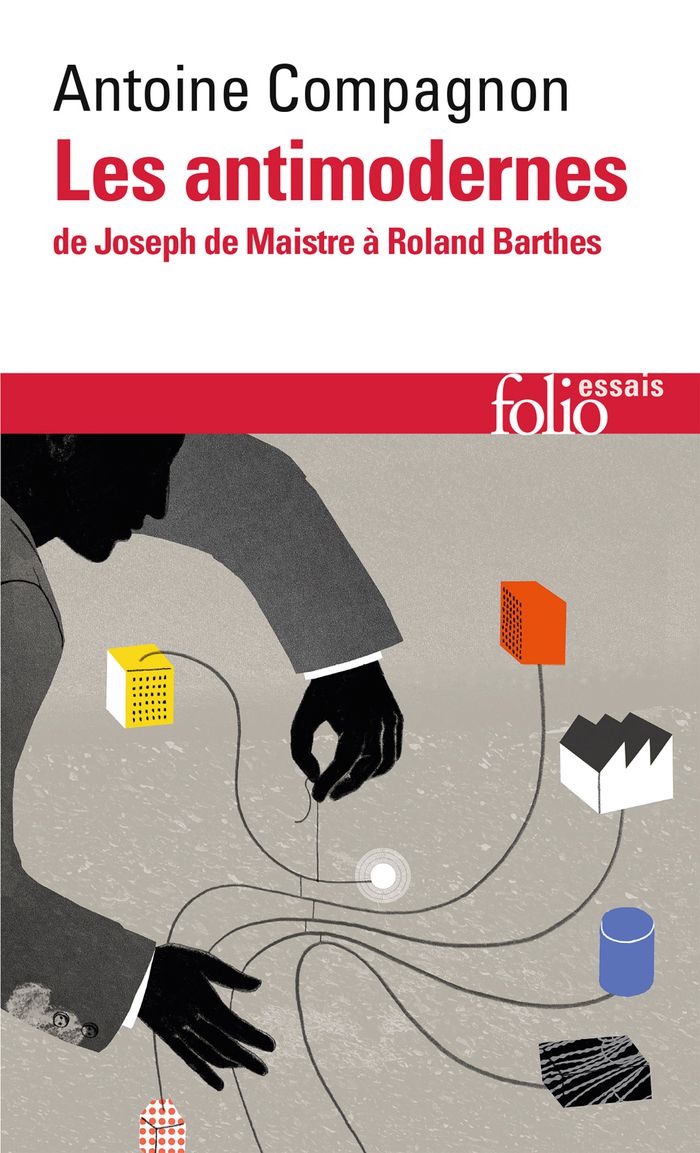
Les antimodernes : de Joseph de Maistre à Roland Barthes
Actions:
Price:
$17.75
(available to order)
Summary:
Qui sont les antimodernes ? Non pas les conservateurs, les académiques, les frileux, les pompiers, les réactionnaires, mais les modernes à contre-cœur, malgré eux, à leur corps défendant, ceux qui avancent en regardant dans le rétroviseur, comme Sartre disait de Baudelaire. Ce livre poursuit le filon de la résistance à la modernité qui traverse toute la modernité et qui en quelque manière la définit, en la distinguant d'un modernisme naïf, zélateur du progrès.
Les antimodernes : de Joseph de Maistre à Roland Barthes
Actions:
Price:
$17.75
(available to order)
Summary:
Qui sont les antimodernes ? Non pas les conservateurs, les académiques, les frileux, les pompiers, les réactionnaires, mais les modernes à contre-cœur, malgré eux, à leur corps défendant, ceux qui avancent en regardant dans le rétroviseur, comme Sartre disait de Baudelaire. Ce livre poursuit le filon de la résistance à la modernité qui traverse toute la modernité et qui en quelque manière la définit, en la distinguant d'un modernisme naïf, zélateur du progrès.
Form:
books
books
Publication:
May 2016
May 2016
Subject:
Art Theory
Art Theory
Form:
books
books
Price:
$22.99
(available to order)
Summary:
Curator Hans Ulrich Obrist, Lives of the Artists, Lives of the Architects offers a unique opportunity to learn about the lives and creativity of the world's leading artists Hans Ulrich Obrist has been conducting ongoing conversations with the world's greatest living artists since he began in Switzerland, aged 19, with Fischli and Weiss. Here he chooses nineteen of the(...)
$22.99
(available to order)
Summary:
Curator Hans Ulrich Obrist, Lives of the Artists, Lives of the Architects offers a unique opportunity to learn about the lives and creativity of the world's leading artists Hans Ulrich Obrist has been conducting ongoing conversations with the world's greatest living artists since he began in Switzerland, aged 19, with Fischli and Weiss. Here he chooses nineteen of the(...)
Title:
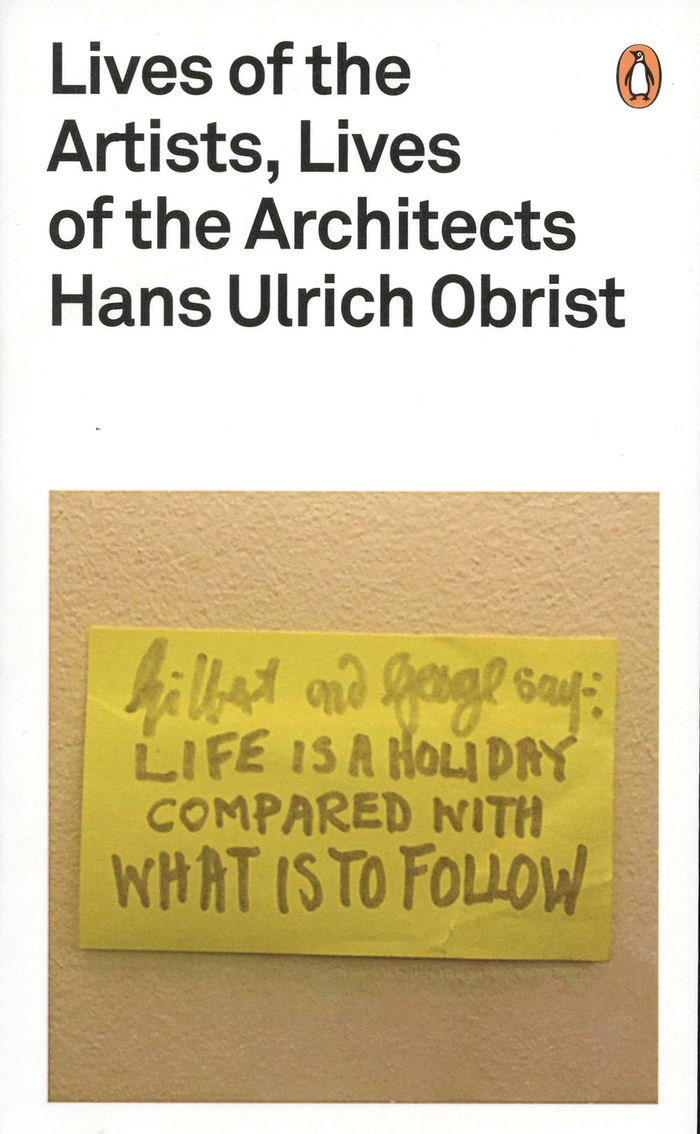
Lives of the artists, lives of the architects. paperback edition
Actions:
Price:
$22.99
(available to order)
Summary:
Curator Hans Ulrich Obrist, Lives of the Artists, Lives of the Architects offers a unique opportunity to learn about the lives and creativity of the world's leading artists Hans Ulrich Obrist has been conducting ongoing conversations with the world's greatest living artists since he began in Switzerland, aged 19, with Fischli and Weiss. Here he chooses nineteen of the greatest figures and presents their conversations, offering the reader intimacy with the artists and insight into their creative processes. Inspired by the great Vasari, Lives of the Artists, Lives of the Architects explores the meaning of art and artists today, their varying approaches to creating, and a sense of how their thinking evolves over time. Including David Hockney, Gilbert and George, Gerhard Richter, Louise Bourgeois, Rem Koolhaas, and Oscar Niemeyer, this is a wonderful and unique book for those interested in modern art.
Lives of the artists, lives of the architects. paperback edition
Actions:
Price:
$22.99
(available to order)
Summary:
Curator Hans Ulrich Obrist, Lives of the Artists, Lives of the Architects offers a unique opportunity to learn about the lives and creativity of the world's leading artists Hans Ulrich Obrist has been conducting ongoing conversations with the world's greatest living artists since he began in Switzerland, aged 19, with Fischli and Weiss. Here he chooses nineteen of the greatest figures and presents their conversations, offering the reader intimacy with the artists and insight into their creative processes. Inspired by the great Vasari, Lives of the Artists, Lives of the Architects explores the meaning of art and artists today, their varying approaches to creating, and a sense of how their thinking evolves over time. Including David Hockney, Gilbert and George, Gerhard Richter, Louise Bourgeois, Rem Koolhaas, and Oscar Niemeyer, this is a wonderful and unique book for those interested in modern art.
Form:
books
books
Publication:
October 2016
October 2016
Subject:
Art Theory
Art Theory
Form:
books
books
Actions:
Price:
$105.00
(available to order)
Summary:
This book is a giid introduction to art history, from the earliest cave paintings to art of the twentieth century, a masterpiece of clarity and personal insight. This classic book is currently in its 16th edition and has been translated into more than 30 languages, and published in numerous formats and editions. Now, for the first time, this Luxury Edition is the ultimate(...)
$105.00
(available to order)
Summary:
This book is a giid introduction to art history, from the earliest cave paintings to art of the twentieth century, a masterpiece of clarity and personal insight. This classic book is currently in its 16th edition and has been translated into more than 30 languages, and published in numerous formats and editions. Now, for the first time, this Luxury Edition is the ultimate(...)
Title:
The story of art, luxury edition
Actions:
Price:
$105.00
(available to order)
Summary:
This book is a giid introduction to art history, from the earliest cave paintings to art of the twentieth century, a masterpiece of clarity and personal insight. This classic book is currently in its 16th edition and has been translated into more than 30 languages, and published in numerous formats and editions. Now, for the first time, this Luxury Edition is the ultimate gift purchase for all art lovers – a perfect keepsake to treasure, and to inspire future generations.
The story of art, luxury edition
Actions:
Price:
$105.00
(available to order)
Summary:
This book is a giid introduction to art history, from the earliest cave paintings to art of the twentieth century, a masterpiece of clarity and personal insight. This classic book is currently in its 16th edition and has been translated into more than 30 languages, and published in numerous formats and editions. Now, for the first time, this Luxury Edition is the ultimate gift purchase for all art lovers – a perfect keepsake to treasure, and to inspire future generations.
Form:
books
books
Publication:
November 2016
November 2016
Subject:
Art Theory
Art Theory
Form:
books
books
Actions:
Price:
$57.00
(available to order)
Summary:
This book tells a new story of the twentieth century's most influential artist, recounted not so much through his artwork as through his "non-art" work. Marcel Duchamp is largely understood in critical and popular discourse in terms of the objects he produced, whether readymade or meticulously fabricated. Elena Filipovic asks us instead to understand Duchamp's art through(...)
$57.00
(available to order)
Summary:
This book tells a new story of the twentieth century's most influential artist, recounted not so much through his artwork as through his "non-art" work. Marcel Duchamp is largely understood in critical and popular discourse in terms of the objects he produced, whether readymade or meticulously fabricated. Elena Filipovic asks us instead to understand Duchamp's art through(...)
Title:
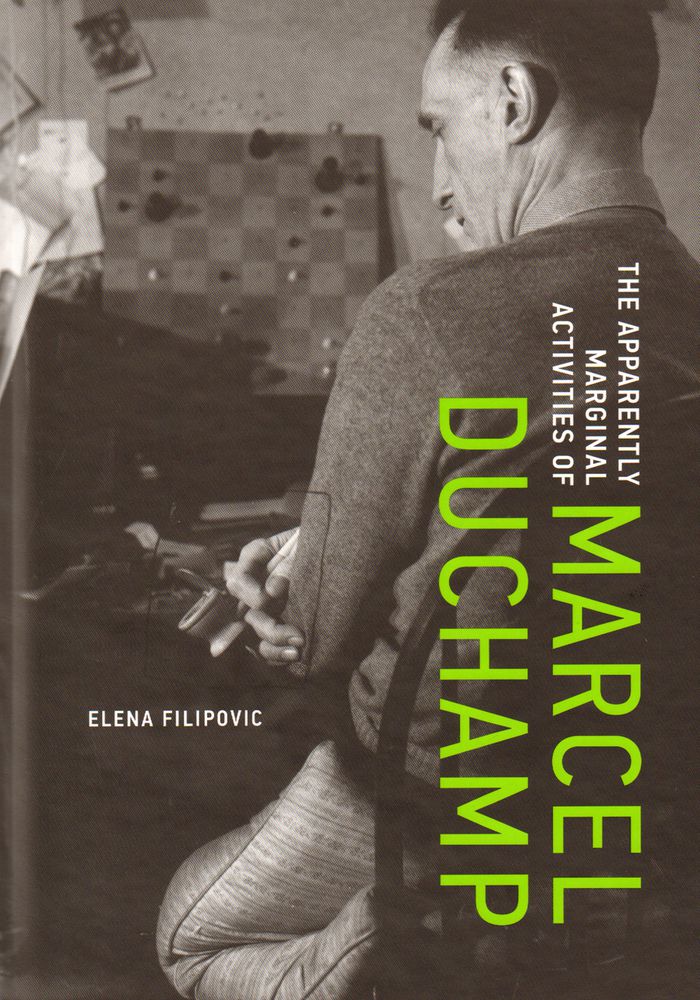
The apparently marginal activities of Marcel Duchamp
Actions:
Price:
$57.00
(available to order)
Summary:
This book tells a new story of the twentieth century's most influential artist, recounted not so much through his artwork as through his "non-art" work. Marcel Duchamp is largely understood in critical and popular discourse in terms of the objects he produced, whether readymade or meticulously fabricated. Elena Filipovic asks us instead to understand Duchamp's art through activities not normally seen as artistic -- from exhibition making and art dealing to administrating and publicizing.
The apparently marginal activities of Marcel Duchamp
Actions:
Price:
$57.00
(available to order)
Summary:
This book tells a new story of the twentieth century's most influential artist, recounted not so much through his artwork as through his "non-art" work. Marcel Duchamp is largely understood in critical and popular discourse in terms of the objects he produced, whether readymade or meticulously fabricated. Elena Filipovic asks us instead to understand Duchamp's art through activities not normally seen as artistic -- from exhibition making and art dealing to administrating and publicizing.
Form:
books
books
Publication:
October 2016
October 2016
Subject:
Art Theory
Art Theory
Form:
books
books
Title:
Art as therapy
Art as therapy
Actions:
Price:
$22.95
(available to order)
Summary:
This book proposes a new way of looking at art, suggesting that it can be useful, relevant, and therapeutic. Through practical examples, the world-renowned authors argue that certain great works of art have clues as to how to manage the tensions and confusions of modern life. Chapters on love, nature, money, and politics show how art can help with many common(...)
$22.95
(available to order)
Summary:
This book proposes a new way of looking at art, suggesting that it can be useful, relevant, and therapeutic. Through practical examples, the world-renowned authors argue that certain great works of art have clues as to how to manage the tensions and confusions of modern life. Chapters on love, nature, money, and politics show how art can help with many common(...)
Title:
Art as therapy
Actions:
Price:
$22.95
(available to order)
Summary:
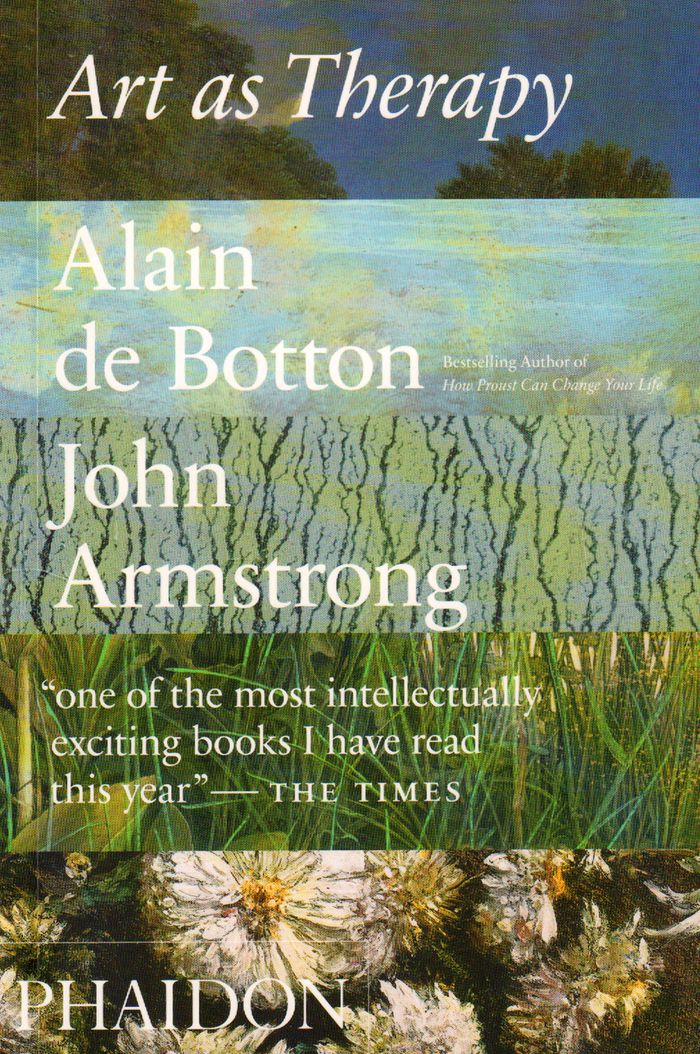
This book proposes a new way of looking at art, suggesting that it can be useful, relevant, and therapeutic. Through practical examples, the world-renowned authors argue that certain great works of art have clues as to how to manage the tensions and confusions of modern life. Chapters on love, nature, money, and politics show how art can help with many common difficulties, from forging good relationships to coming to terms with mortality.
Art as therapy
Actions:
Price:
$22.95
(available to order)
Summary:
This book proposes a new way of looking at art, suggesting that it can be useful, relevant, and therapeutic. Through practical examples, the world-renowned authors argue that certain great works of art have clues as to how to manage the tensions and confusions of modern life. Chapters on love, nature, money, and politics show how art can help with many common difficulties, from forging good relationships to coming to terms with mortality.
Form:
books
books
Publication:
October 2016
October 2016
Subject:
Art Theory
Art Theory
Form:
books
books
Actions:
Price:
$32.95
(available to order)
Summary:
Featuring the most inspirational and insightful collection of quotes by artists through the ages and across the globe, this exquisite keepsake is the ideal book for artists, collectors, and armchair enthusiasts. As painters, sculptors, photographers, and other visual artists see and experience the world through a unique lens, Art Is the Highest Form of Hope & Other Quotes(...)
$32.95
(available to order)
Summary:
Featuring the most inspirational and insightful collection of quotes by artists through the ages and across the globe, this exquisite keepsake is the ideal book for artists, collectors, and armchair enthusiasts. As painters, sculptors, photographers, and other visual artists see and experience the world through a unique lens, Art Is the Highest Form of Hope & Other Quotes(...)
Title:
Art Is the highest form of hope & other quotes by artists
Actions:
Price:
$32.95
(available to order)
Summary:
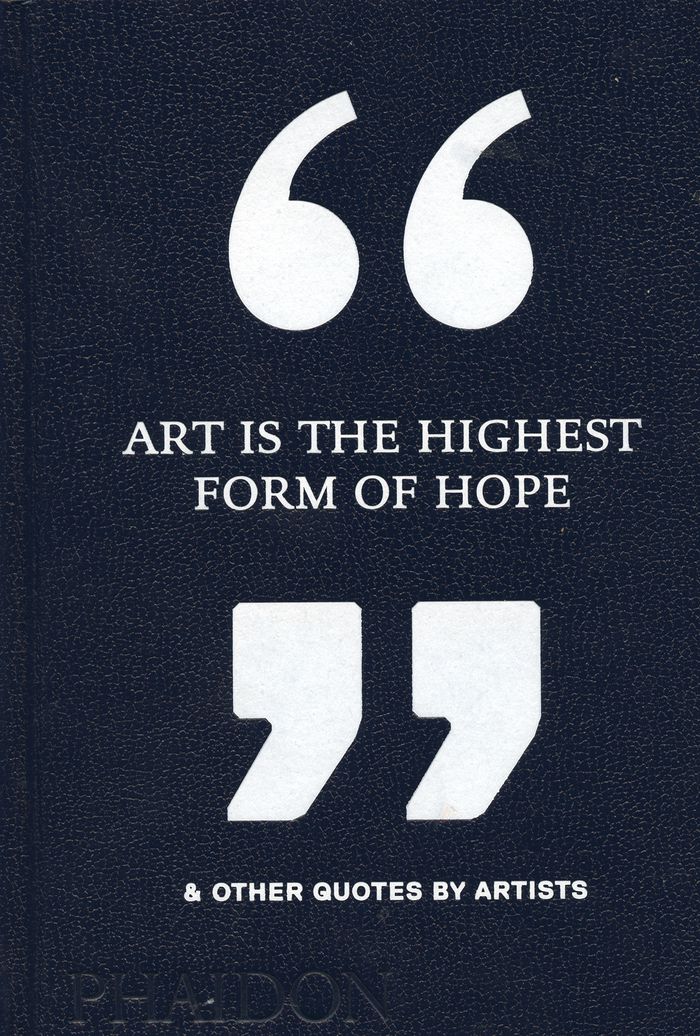
Featuring the most inspirational and insightful collection of quotes by artists through the ages and across the globe, this exquisite keepsake is the ideal book for artists, collectors, and armchair enthusiasts. As painters, sculptors, photographers, and other visual artists see and experience the world through a unique lens, Art Is the Highest Form of Hope & Other Quotes by Artists shows that their life lessons, private revelations, and frank, often irreverent, opinions can guide us all.
Art Is the highest form of hope & other quotes by artists
Actions:
Price:
$32.95
(available to order)
Summary:
Featuring the most inspirational and insightful collection of quotes by artists through the ages and across the globe, this exquisite keepsake is the ideal book for artists, collectors, and armchair enthusiasts. As painters, sculptors, photographers, and other visual artists see and experience the world through a unique lens, Art Is the Highest Form of Hope & Other Quotes by Artists shows that their life lessons, private revelations, and frank, often irreverent, opinions can guide us all.
Form:
books
books
Publication:
September 2016
September 2016
Subject:
Art Theory
Art Theory
Form:
books
books
Actions:
Price:
$61.95
(available to order)
Summary:
Concepts such as “new genre public art,” “social practice,” or “socially engaged art” may imply a synergy between the role of art and the role of government in providing social services. Yet the arts and social services differ crucially in terms of their methods and metrics. Socially engaged artists need not be aligned (and may often be opposed) to the public sector and(...)
$61.95
(available to order)
Summary:
Concepts such as “new genre public art,” “social practice,” or “socially engaged art” may imply a synergy between the role of art and the role of government in providing social services. Yet the arts and social services differ crucially in terms of their methods and metrics. Socially engaged artists need not be aligned (and may often be opposed) to the public sector and(...)
Subject:
Art Theory
Art Theory
Publication:
September 2016
September 2016
Title:
Public servants: and the crisis of the common good
Actions:
Price:
$61.95
(available to order)
Summary:
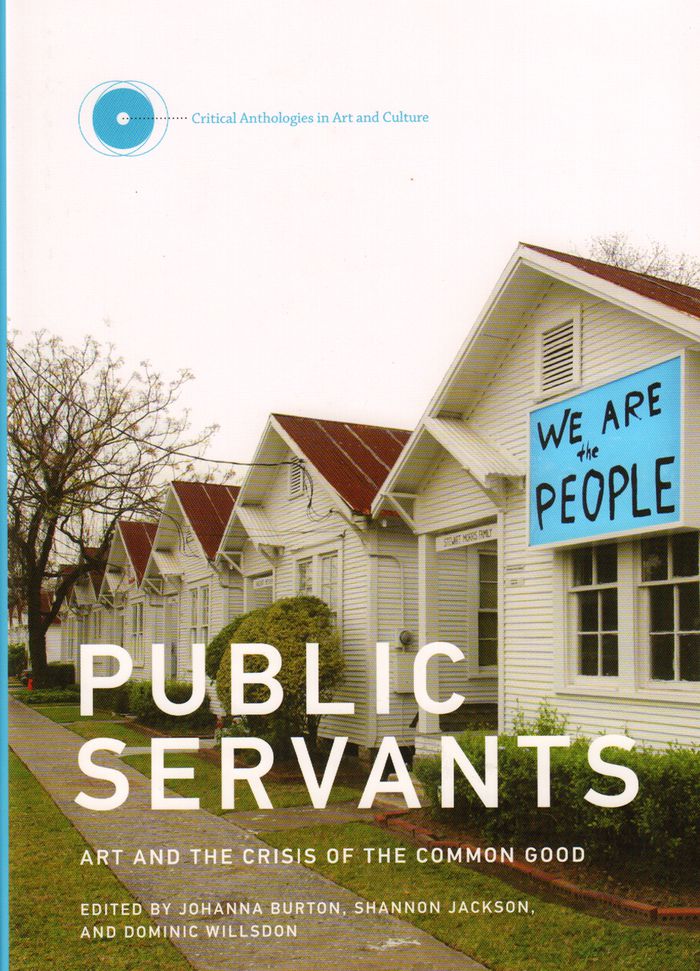
Concepts such as “new genre public art,” “social practice,” or “socially engaged art” may imply a synergy between the role of art and the role of government in providing social services. Yet the arts and social services differ crucially in terms of their methods and metrics. Socially engaged artists need not be aligned (and may often be opposed) to the public sector and to institutionalized systems. In many countries, structures of democratic governance and public responsibility are shifting, eroding, and being remade in profound ways—driven by radical economic, political, and global forces. According to what terms and through what means can art engage with these changes? This volume gathers essays, dialogues, and art projects—some previously published and some newly commissioned—to illuminate the ways the arts shape and reshape a rapidly changing social and governmental landscape. An artist portfolio section presents original statements and projects by some of the key figures grappling with these ideas.
Public servants: and the crisis of the common good
Actions:
Price:
$61.95
(available to order)
Summary:
Concepts such as “new genre public art,” “social practice,” or “socially engaged art” may imply a synergy between the role of art and the role of government in providing social services. Yet the arts and social services differ crucially in terms of their methods and metrics. Socially engaged artists need not be aligned (and may often be opposed) to the public sector and to institutionalized systems. In many countries, structures of democratic governance and public responsibility are shifting, eroding, and being remade in profound ways—driven by radical economic, political, and global forces. According to what terms and through what means can art engage with these changes? This volume gathers essays, dialogues, and art projects—some previously published and some newly commissioned—to illuminate the ways the arts shape and reshape a rapidly changing social and governmental landscape. An artist portfolio section presents original statements and projects by some of the key figures grappling with these ideas.
Form:
books
books
Publication:
September 2016
September 2016
Subject:
Art Theory
Art Theory
Form:
books
books
Actions:
Price:
$46.95
(available to order)
Summary:
Hans Haacke’s art articulates the interdependence of multiple elements. An artwork is not merely an object but is also its context—the economic, social, and political conditions of the art world and the world at large. Among his best-known works are MoMA-Poll (1970), which polled museumgoers on their opinions about Nelson Rockefeller and the Nixon administration’s(...)
$46.95
(available to order)
Summary:
Hans Haacke’s art articulates the interdependence of multiple elements. An artwork is not merely an object but is also its context—the economic, social, and political conditions of the art world and the world at large. Among his best-known works are MoMA-Poll (1970), which polled museumgoers on their opinions about Nelson Rockefeller and the Nixon administration’s(...)
Title:
Working conditions: the writings of Hans Haacke
Actions:
Price:
$46.95
(available to order)
Summary:
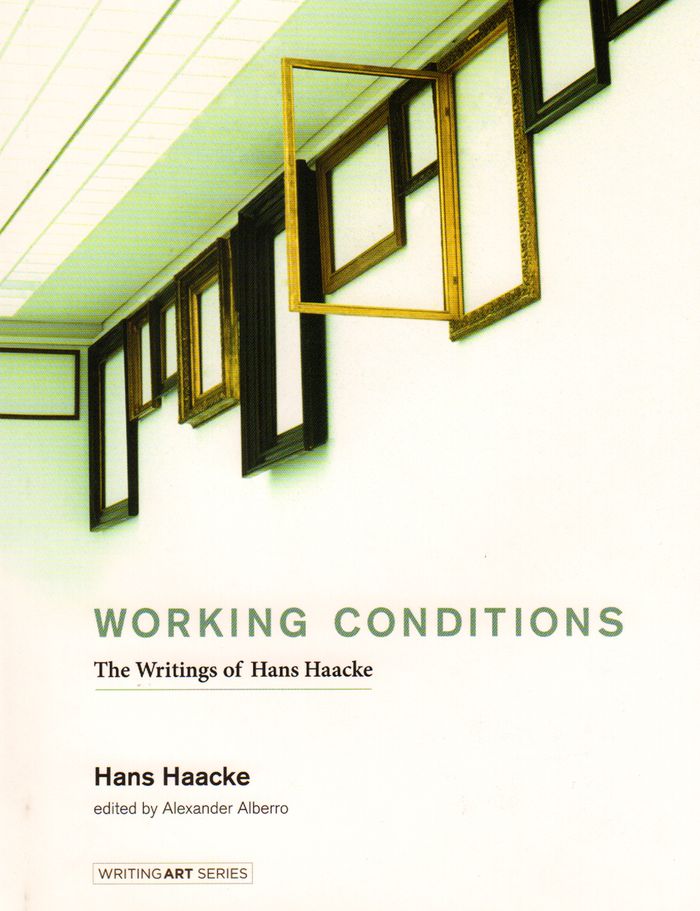
Hans Haacke’s art articulates the interdependence of multiple elements. An artwork is not merely an object but is also its context—the economic, social, and political conditions of the art world and the world at large. Among his best-known works are MoMA-Poll (1970), which polled museumgoers on their opinions about Nelson Rockefeller and the Nixon administration’s Indochina policy; Gallery-Goers’ Birthplace and Residence Profile (1969), which canvassed visitors to the Howard Wise Gallery in Manhattan; and the famously canceled 1971 solo exhibition at the Guggenheim Museum, which was meant to display, among other things, works on two New York real estate empires. This volume collects writings by Haacke that explain and document his practice. The texts, some of which have never before been published, run from straightforward descriptions to wide-ranging reflections and full-throated polemics. They include correspondence with MoMA and the Guggenheim and a letter refusing to represent the United States at the 1969 São Paulo Biennial; the title piece, “Working Conditions,” which discusses corporate influence on the art world; Haacke’s thinking about “real-time social systems”; and texts written for museum catalogs on various artworks, including GERMANIA, in the German Pavilion of the 1993 Venice Biennial; DER BEVÖLKERUNG (To the Population) of 2000 at the Berlin Reichstag; Mixed Messages, an exhibition of objects from the Victoria and Albert Museum (2001); and Gift Horse, unveiled on the fourth plinth in Trafalgar Square in 2015.
Working conditions: the writings of Hans Haacke
Actions:
Price:
$46.95
(available to order)
Summary:
Hans Haacke’s art articulates the interdependence of multiple elements. An artwork is not merely an object but is also its context—the economic, social, and political conditions of the art world and the world at large. Among his best-known works are MoMA-Poll (1970), which polled museumgoers on their opinions about Nelson Rockefeller and the Nixon administration’s Indochina policy; Gallery-Goers’ Birthplace and Residence Profile (1969), which canvassed visitors to the Howard Wise Gallery in Manhattan; and the famously canceled 1971 solo exhibition at the Guggenheim Museum, which was meant to display, among other things, works on two New York real estate empires. This volume collects writings by Haacke that explain and document his practice. The texts, some of which have never before been published, run from straightforward descriptions to wide-ranging reflections and full-throated polemics. They include correspondence with MoMA and the Guggenheim and a letter refusing to represent the United States at the 1969 São Paulo Biennial; the title piece, “Working Conditions,” which discusses corporate influence on the art world; Haacke’s thinking about “real-time social systems”; and texts written for museum catalogs on various artworks, including GERMANIA, in the German Pavilion of the 1993 Venice Biennial; DER BEVÖLKERUNG (To the Population) of 2000 at the Berlin Reichstag; Mixed Messages, an exhibition of objects from the Victoria and Albert Museum (2001); and Gift Horse, unveiled on the fourth plinth in Trafalgar Square in 2015.
Form:
books
books
Publication:
October 2016
October 2016
Subject:
Art Theory
Art Theory
Form:
books
books
Price:
$35.50
(available to order)
Summary:
Animals have become the focus of much recent art, informing numerous works and projects featured at major exhibitions including dOCUMENTA (13) (2013), the 10th Shanghai Biennale (2014), and the 56th Venice Biennale (2015). Contemporary art has emerged as a privileged terrain for exploring interspecies relationships, providing the conditions for diverse disciplines and(...)
$35.50
(available to order)
Summary:
Animals have become the focus of much recent art, informing numerous works and projects featured at major exhibitions including dOCUMENTA (13) (2013), the 10th Shanghai Biennale (2014), and the 56th Venice Biennale (2015). Contemporary art has emerged as a privileged terrain for exploring interspecies relationships, providing the conditions for diverse disciplines and(...)
Title:
Animals
Actions:
Price:
$35.50
(available to order)
Summary:
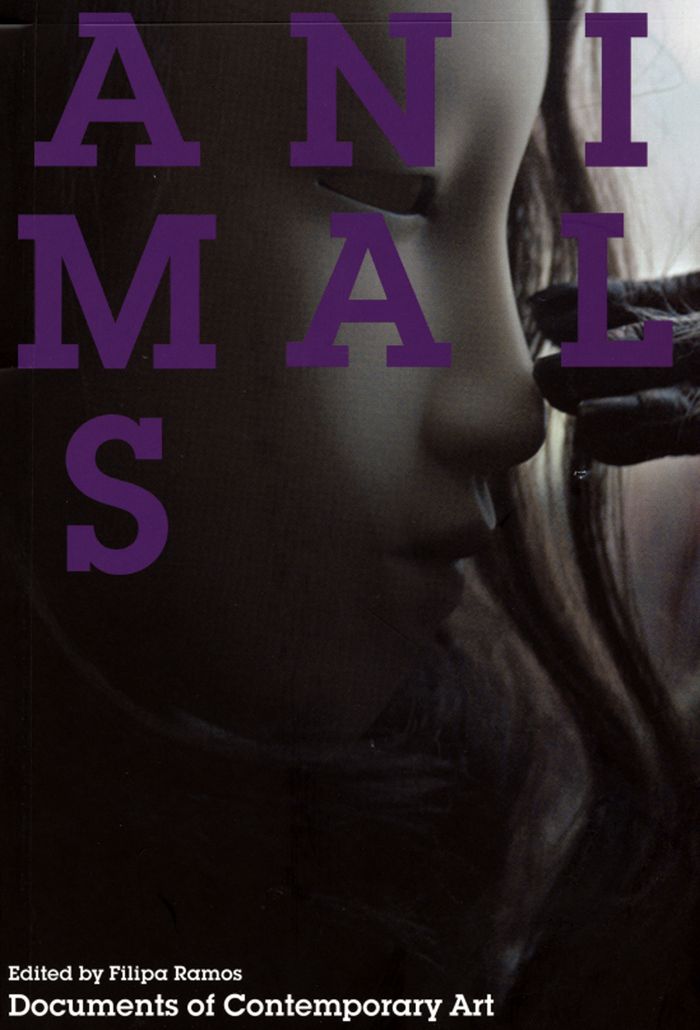
Animals have become the focus of much recent art, informing numerous works and projects featured at major exhibitions including dOCUMENTA (13) (2013), the 10th Shanghai Biennale (2014), and the 56th Venice Biennale (2015). Contemporary art has emerged as a privileged terrain for exploring interspecies relationships, providing the conditions for diverse disciplines and theoretical positions to engage with animal behavior and consciousness. Centered on contemporary artworks, this anthology attests to the trans-disciplinary nature of this subject, with art as one of the principal points of convergence.
Animals
Actions:
Price:
$35.50
(available to order)
Summary:
Animals have become the focus of much recent art, informing numerous works and projects featured at major exhibitions including dOCUMENTA (13) (2013), the 10th Shanghai Biennale (2014), and the 56th Venice Biennale (2015). Contemporary art has emerged as a privileged terrain for exploring interspecies relationships, providing the conditions for diverse disciplines and theoretical positions to engage with animal behavior and consciousness. Centered on contemporary artworks, this anthology attests to the trans-disciplinary nature of this subject, with art as one of the principal points of convergence.
Form:
books
books
Publication:
September 2016
September 2016
Subject:
Art Theory
Art Theory
Form:
books
books
Title:
Information
Information
Actions:
Price:
$32.95
(available to order)
Summary:
This anthology provides the first art-historical reassessment of information-based art in relation to data structures and exhibition curation. It examines such landmark exhibitions as "Information" at The Museum of Modern Art, New York, in 1970, and the equally influential "Les Immatériaux," initiated by the philosopher Jean-François Lyotard at the Centre Pompidou, Paris,(...)
$32.95
(available to order)
Summary:
This anthology provides the first art-historical reassessment of information-based art in relation to data structures and exhibition curation. It examines such landmark exhibitions as "Information" at The Museum of Modern Art, New York, in 1970, and the equally influential "Les Immatériaux," initiated by the philosopher Jean-François Lyotard at the Centre Pompidou, Paris,(...)
Title:
Information
Actions:
Price:
$32.95
(available to order)
Summary:
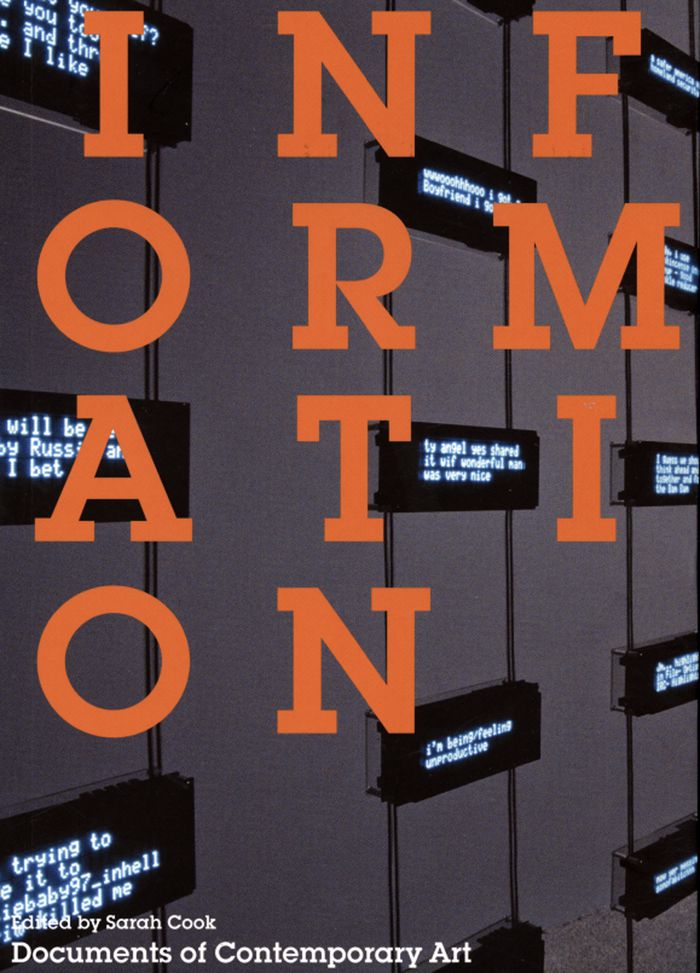
This anthology provides the first art-historical reassessment of information-based art in relation to data structures and exhibition curation. It examines such landmark exhibitions as "Information" at The Museum of Modern Art, New York, in 1970, and the equally influential "Les Immatériaux," initiated by the philosopher Jean-François Lyotard at the Centre Pompidou, Paris, in 1984. It reexamines work by artists of the 1960s to early 1980s, from Les Levine and N. E. Thing Co. to General Idea and Jenny Holzer, whose prescient grasp of information's significance resonates today. It also reinscribes into the narrative of art history technologically critical artworks that for years have circulated within new media festivals rather than in galleries.
Information
Actions:
Price:
$32.95
(available to order)
Summary:
This anthology provides the first art-historical reassessment of information-based art in relation to data structures and exhibition curation. It examines such landmark exhibitions as "Information" at The Museum of Modern Art, New York, in 1970, and the equally influential "Les Immatériaux," initiated by the philosopher Jean-François Lyotard at the Centre Pompidou, Paris, in 1984. It reexamines work by artists of the 1960s to early 1980s, from Les Levine and N. E. Thing Co. to General Idea and Jenny Holzer, whose prescient grasp of information's significance resonates today. It also reinscribes into the narrative of art history technologically critical artworks that for years have circulated within new media festivals rather than in galleries.
Form:
books
books
Publication:
September 2016
September 2016
Subject:
Art Theory
Art Theory


