


1928 Results
Form:
books
books
Title:
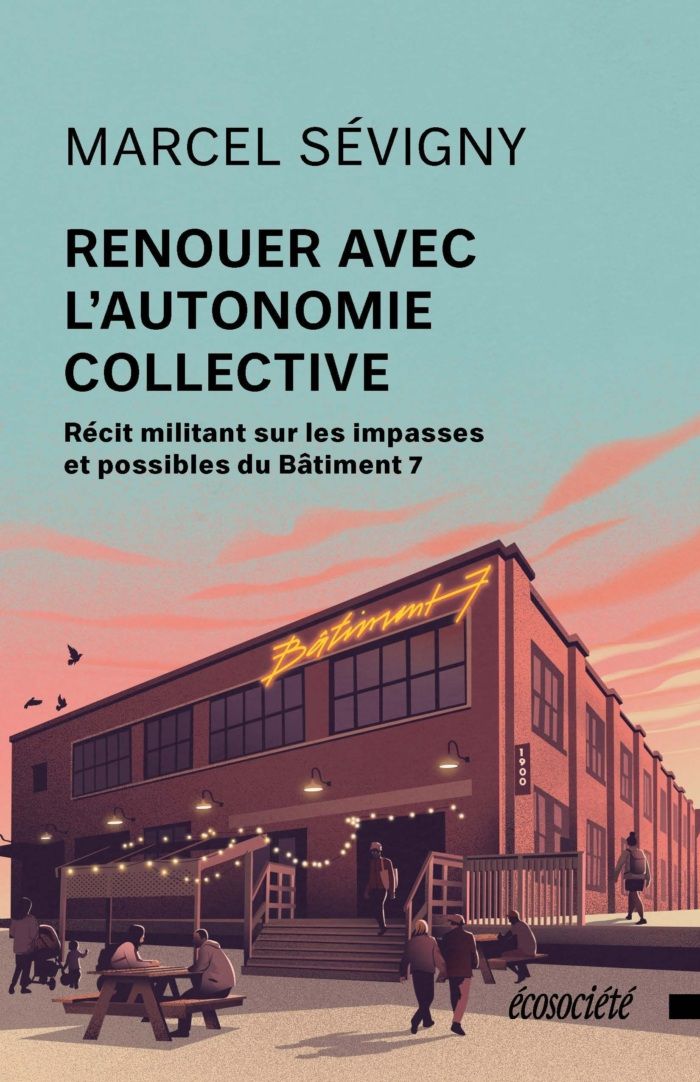
Renouer avec l'autonomie collective : Récit militant sur les impasses et possibles du Bâtiment 7
Renouer avec l'autonomie collective : Récit militant sur les impasses et possibles du Bâtiment 7
Actions:
Price:
$29.00
(available in store)
Summary:
Depuis son ouverture dans le quartier Pointe-Saint-Charles, à Montréal, en 2018, le Bâtiment 7 est devenu une référence dans le paysage militant québécois. Présenté comme une « fabrique d’autonomie collective », le B7 est systématiquement cité dans les discussions autour des communs et des expériences d’«?alternatives » anticapitalistes. Mais jusqu’ici, aucun bilan(...)
Title:
Renouer avec l'autonomie collective : Récit militant sur les impasses et possibles du Bâtiment 7
Actions:
Price:
$29.00
(available in store)
Summary:
Depuis son ouverture dans le quartier Pointe-Saint-Charles, à Montréal, en 2018, le Bâtiment 7 est devenu une référence dans le paysage militant québécois. Présenté comme une « fabrique d’autonomie collective », le B7 est systématiquement cité dans les discussions autour des communs et des expériences d’«?alternatives » anticapitalistes. Mais jusqu’ici, aucun bilan significatif et critique de ce projet autogéré n’avait été produit. C’est à cet exercice délicat que se livre ici Marcel Sévigny. Ayant été au cœur de la lutte qui a mené à l’obtention du bâtiment industriel désaffecté, il a constaté au fil des ans une déconnexion grandissante entre le projet B7, né de cette expropriation populaire, et l’héritage de 60 ans de luttes populaires locales. Revenant sur plus de quinze ans d’engagement et d’expérimentations collectives, son récit militant relate à la fois les réussites et les principales embûches auxquelles le projet a dû faire face, notamment la difficulté de discuter ouvertement des enjeux de pouvoir et des clivages politiques.
Form:
books
books
Publication:
October 2026
October 2026
Subject:
Urban Theory
Urban Theory
Form:
books
books
Title:
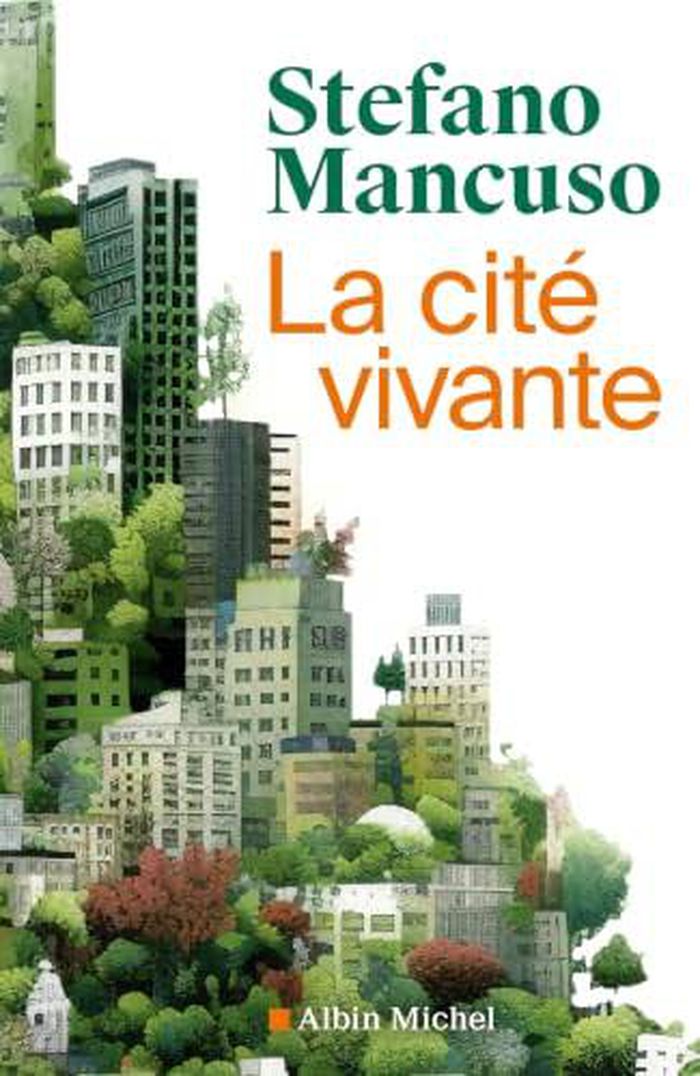
La cité vivante
La cité vivante
Actions:
Price:
$32.95
(available in store)
Summary:
Et si les plantes détenaient les clés des villes de demain ? Dans cet essai aussi visionnaire qu'essentiel, Stefano Mancuso nous invite à repenser profondément nos villes. Pollution, canicules, crises sanitaires : nos métropoles, conçues selon un schéma centralisé et fragile, ne sont pas prêtes à surmonter les défis de notre siècle. S'appuyant sur les découvertes les plus(...)
Title:
La cité vivante
Actions:
Price:
$32.95
(available in store)
Summary:
Et si les plantes détenaient les clés des villes de demain ? Dans cet essai aussi visionnaire qu'essentiel, Stefano Mancuso nous invite à repenser profondément nos villes. Pollution, canicules, crises sanitaires : nos métropoles, conçues selon un schéma centralisé et fragile, ne sont pas prêtes à surmonter les défis de notre siècle. S'appuyant sur les découvertes les plus récentes en biologie, en écologie et en urbanisme, Stefano Mancuso démontre que les plantes offrent un modèle unique de résilience, de coopération et d'adaptation. A travers des exemples venus du monde entier et des réflexions mêlant sciences, philosophie et architecture, il imagine une "phytopolis" : une ville qui, redevenue un écosystème, est capable de rafraîchir, protéger et régénérer nos milieux de vie.
Form:
books
books
Publication:
October 2026
October 2026
Subject:
Urban Theory
Urban Theory
Form:
books
books
Actions:
Price:
$41.50
(available to order)
Summary:
Historian Max Page argues that New York City, at the early part of the 20th century, was dominated by the politics of destruction and rebuilding. He examines the dichotomies inherent in the label "creative destruction", itself an oxymoron of sorts. The book is well illustrated with vintage photographs, drawings, and paintings.
Title:
The creative destruction of Manhattan 1900-1940
Actions:
Price:
$41.50
(available to order)
Summary:
Historian Max Page argues that New York City, at the early part of the 20th century, was dominated by the politics of destruction and rebuilding. He examines the dichotomies inherent in the label "creative destruction", itself an oxymoron of sorts. The book is well illustrated with vintage photographs, drawings, and paintings.
Form:
books
books
Publication:
November 1999, Chicago
November 1999, Chicago
Subject:
Urban Theory
Urban Theory
Form:
books
books
Actions:
Price:
$33.95
(available to order)
Summary:
Picking up where his best-selling City of Bits left off, Mitchell argues that we must extend the definitions of architecture and urban design to encompass virtual places as well as physical ones, and interconnection by means of telecommunication links as well as by pedestrian (...)
Title:
E-topia : "Urban life, Jim -- but not as we know it"
Actions:
Price:
$33.95
(available to order)
Summary:
Picking up where his best-selling City of Bits left off, Mitchell argues that we must extend the definitions of architecture and urban design to encompass virtual places as well as physical ones, and interconnection by means of telecommunication links as well as by pedestrian circulation and mechanized transportation systems. He proposes strategies for the creation of cities that not only will be sustainable but will make economic, social, and cultural sense in an electronically interconnected and global world. The new settlement patterns of the twenty-first century will be characterized by live/work dwellings, 24-hour pedestrian-scale neighborhoods rich in social relationships, and vigorous local community life, complemented by far-flung configurations of electronic meeting places and decentralized production, marketing, and distribution systems. Neither digiphile nor digiphobe, Mitchell advocates the creation of e-topias--cities that work smarter, not harder.
Form:
books
books
Publication:
October 1999, Cambridge
October 1999, Cambridge
Subject:
Urban Theory
Urban Theory
Form:
books
books
Price:
$47.00
(available to order)
Summary:
Founders of the Congress for the New Urbanism, Andres Duany and Elizabeth Plater-Zyberk are at the forefront of this movement, and in Suburban Nation they assess sprawl's costs to society, be they ecological, economic, aesthetic, or social. It is a lively, thorough, critical lament, and an entertaining lesson on(...)
Subject:
Urban Theory
Urban Theory
Publication:
January 2000, New York
January 2000, New York
Title:
Suburban nation : the rise of sprawl and the decline of the American dream
Actions:
Price:
$47.00
(available to order)
Summary:
Founders of the Congress for the New Urbanism, Andres Duany and Elizabeth Plater-Zyberk are at the forefront of this movement, and in Suburban Nation they assess sprawl's costs to society, be they ecological, economic, aesthetic, or social. It is a lively, thorough, critical lament, and an entertaining lesson on the distinctions between postwar suburbia-characterized by housing clusters, strip malls, office parks, and parking lots-and the traditional neighborhoods that were built as a matter of course until mid-century. It is an indictment of the entire development community, including governments, for the fact that America no longer builds towns.
Form:
books
books
Publication:
January 2000, New York
January 2000, New York
Subject:
Urban Theory
Urban Theory
Form:
books
books
Actions:
Price:
$26.95
(available to order)
Summary:
"The Promise of the City" proposes a new theoretical framework for the study of cities and urban life. Finding the contemporary urban scene too complex to be captured by radical or conventional approaches, Kian Tajbakhsh offers a threefold, interdisciplinary (...)
Title:
The promise of the city : space, identity, and politics in contemporary social thought
Actions:
Price:
$26.95
(available to order)
Summary:
"The Promise of the City" proposes a new theoretical framework for the study of cities and urban life. Finding the contemporary urban scene too complex to be captured by radical or conventional approaches, Kian Tajbakhsh offers a threefold, interdisciplinary approach linking agency, space, and structure. First, he says, urban identities cannot be understood through individualistic, communitarian, or class perspectives but rather through the shifting spectrum of cultural, political, and economic influences. Second, the layered, unfinished city spaces we inhabit and within which we create meaning are best represented not by the image of bounded physical spaces but rather by overlapping and shifting boundaries. And third, the macro forces shaping urban society include bureaucratic and governmental interventions not captured by a purely economic paradigm. Tajbakhsh examines these dimensions in the work of three major critical urban theorists of recent decades: Manuel Castells, David Harvey, and Ira Katznelson. He shows why the answers offered by Marxian urban theory to the questions of identity, space, and structure are unsatisfactory and why the perspectives of other intellectual traditions such as poststructuralism, feminism, Habermasian Critical Theory, and pragmatism can help us better understand the challenges facing contemporary cities.
Form:
books
books
Publication:
December 2000, Los Angeles
December 2000, Los Angeles
Subject:
Urban Theory
Urban Theory
Form:
books
books
Price:
$64.25
(available to order)
Summary:
Le processus planétaire d'urbanisation accélérée sur tous les continents, et en particulier au Sud, s'inscrit dans une globalisation économique et technologique uniformisante dominée par la "pensée unique". Un monde viable et vivable ne peut plus s'accommoder de paysages urbains tels que ceux de l'âge haussmanien, ou ceux de la ville-chantier ou de la(...)
Subject:
Urban Theory
Urban Theory
Publication:
March 1999, Namur
March 1999, Namur
Title:
Urbanisation et développement pour une planète viable et vivable
Actions:
Price:
$64.25
(available to order)
Summary:
Le processus planétaire d'urbanisation accélérée sur tous les continents, et en particulier au Sud, s'inscrit dans une globalisation économique et technologique uniformisante dominée par la "pensée unique". Un monde viable et vivable ne peut plus s'accommoder de paysages urbains tels que ceux de l'âge haussmanien, ou ceux de la ville-chantier ou de la ville-machine cassée d'un bout à l'autre. Cette publication fait suite au troisième Sommet des gouverneurs et des maires des grandes villes du monde sur "Le développement urbain durable" tenu à Montréal.
Form:
books
books
Publication:
March 1999, Namur
March 1999, Namur
Subject:
Urban Theory
Urban Theory
Form:
books
books
Actions:
Price:
$32.95
(available to order)
Summary:
This book examines how the automobile has ravaged America's cities and landscape over the past 100 years together with a compelling strategy for reversing our automobile dependency. Jane Holtz Kay provides a history of the rapid spread of the automobile and documents the huge subsidies commanded by the highway lobby, to the detriment of once-efficient forms of mass(...)
Subject:
Urban Theory
Urban Theory
Publication:
November 1998, Berkeley, Los Angeles, London
November 1998, Berkeley, Los Angeles, London
Title:
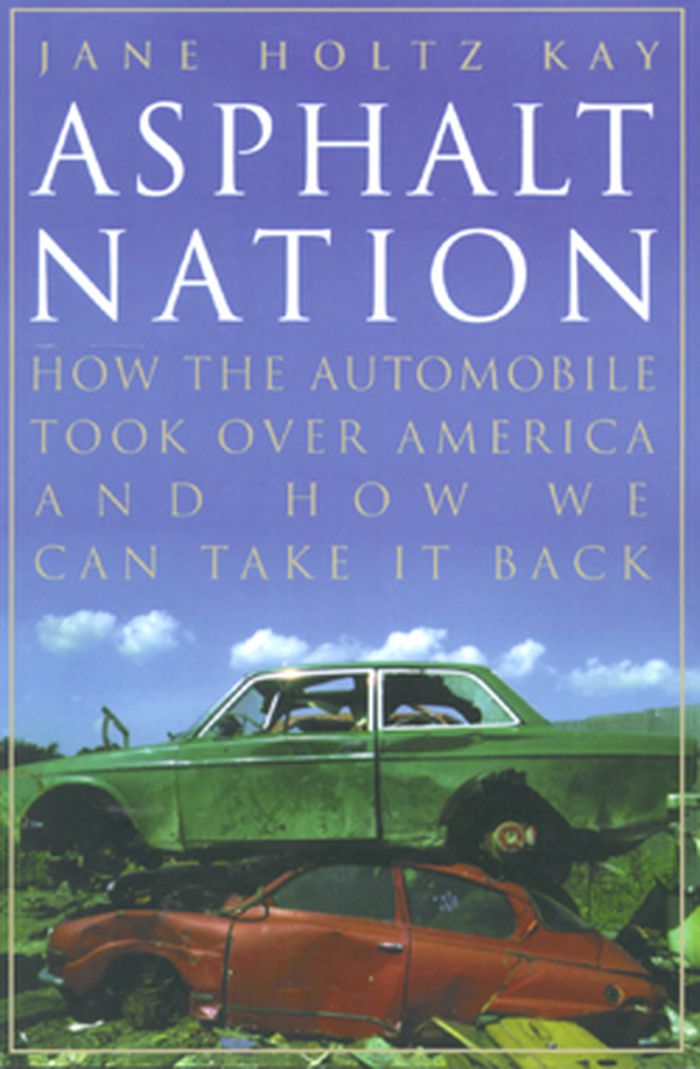
Asphalt nation : how the automobile took over America and how we can take it back
Actions:
Price:
$32.95
(available to order)
Summary:
This book examines how the automobile has ravaged America's cities and landscape over the past 100 years together with a compelling strategy for reversing our automobile dependency. Jane Holtz Kay provides a history of the rapid spread of the automobile and documents the huge subsidies commanded by the highway lobby, to the detriment of once-efficient forms of mass transportation. Demonstrating that there are economic, political, architectural, and personal solutions to the problem, she shows that radical change is entirely possible.
Form:
books
books
Publication:
November 1998, Berkeley, Los Angeles, London
November 1998, Berkeley, Los Angeles, London
Subject:
Urban Theory
Urban Theory
Form:
books
books
Actions:
Price:
$33.50
(available to order)
Summary:
À propos de la ville contemporaine, le constat de crise s'impose. Des artistes, des philosophes, des sociologues, des historiens de l'art s'interrogent sur ce qu'est la rue, sur ce qu'elle pourrait être : élément déterminant de sociabilité de la cité, lieu de plaisir esthétique et d'imagination politique, oeuvre d'art polysensorielle. Textes de Marc(...)
Subject:
Urban Theory
Urban Theory
Publication:
May 1998, Paris
May 1998, Paris
Title:
L'esthétique de la rue : colloque d'Amiens
Actions:
Price:
$33.50
(available to order)
Summary:
À propos de la ville contemporaine, le constat de crise s'impose. Des artistes, des philosophes, des sociologues, des historiens de l'art s'interrogent sur ce qu'est la rue, sur ce qu'elle pourrait être : élément déterminant de sociabilité de la cité, lieu de plaisir esthétique et d'imagination politique, oeuvre d'art polysensorielle. Textes de Marc Angenot, Daniel Buren, Anne Cauquelin, Annie Honnorat et Pierre Sansot, Henri Gaudin et plusieurs autres.
Form:
books
books
Publication:
May 1998, Paris
May 1998, Paris
Subject:
Urban Theory
Urban Theory
Form:
books
books
Title:
Postmodern urbanism
Postmodern urbanism
Actions:
Price:
$35.50
(available to order)
Summary:
Since the 1960s, many architects and urban planners have reacted against the drab universalism and inhuman scale of modern architecture and urbanism, seeking instead to recover a sense of community and place. It is apparent to these architects and planners, as well as (...)
Title:
Postmodern urbanism
Actions:
Price:
$35.50
(available to order)
Summary:
Since the 1960s, many architects and urban planners have reacted against the drab universalism and inhuman scale of modern architecture and urbanism, seeking instead to recover a sense of community and place. It is apparent to these architects and planners, as well as segments of the general public, that something needs to be done to improve the physical landscape and the sense of desolation it arouses. Efforts to do so have been grouped under the rubric "postmodern urbanism." While this late- twentieth-century quest for meaning has elicited nostalgia for cities of the past, it has not been accompanied by a desire to relinquish technological innovations that raise the standard of living, or the pursuit of progress and modernity. "Postmodern Urbanism" examines these important and complex issues that directly affect our cities and neighborhoods.
Form:
books
books
Publication:
February 1999, New York
February 1999, New York
Subject:
Urban Theory
Urban Theory


