


1912 Results
Form:
books
books
Actions:
Price:
$34.95
(available to order)
Summary:
Reyner Banham examined the built environment of Los Angeles in a way no architectural historian before him had done, looking with fresh eyes at its manifestations of popular taste and industrial ingenuity, as well as its more traditional modes of residential and commercial building. His construct of "four ecologies" examined the ways Angelenos relate to the beach, the(...)
$34.95
(available to order)
Summary:
Reyner Banham examined the built environment of Los Angeles in a way no architectural historian before him had done, looking with fresh eyes at its manifestations of popular taste and industrial ingenuity, as well as its more traditional modes of residential and commercial building. His construct of "four ecologies" examined the ways Angelenos relate to the beach, the(...)
Title:
Los Angeles: the architecture of four ecologies
Actions:
Price:
$34.95
(available to order)
Summary:
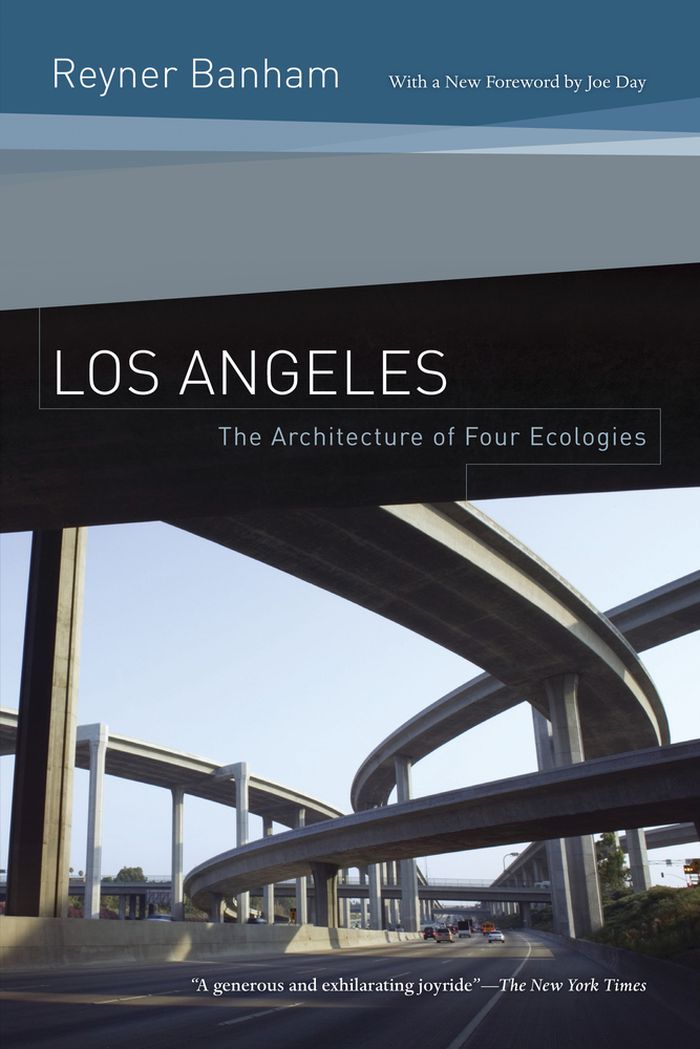
Reyner Banham examined the built environment of Los Angeles in a way no architectural historian before him had done, looking with fresh eyes at its manifestations of popular taste and industrial ingenuity, as well as its more traditional modes of residential and commercial building. His construct of "four ecologies" examined the ways Angelenos relate to the beach, the freeways, the flatlands, and the foothills. Banham delighted in this mobile city and identified it as an exemplar of the posturban future. In a spectacular new foreword, architect and scholar Joe Day explores how the structure of Los Angeles, the concept of "ecology," and the relevance of Banham's ideas have changed over the past thirty-five years.
Los Angeles: the architecture of four ecologies
Actions:
Price:
$34.95
(available to order)
Summary:
Reyner Banham examined the built environment of Los Angeles in a way no architectural historian before him had done, looking with fresh eyes at its manifestations of popular taste and industrial ingenuity, as well as its more traditional modes of residential and commercial building. His construct of "four ecologies" examined the ways Angelenos relate to the beach, the freeways, the flatlands, and the foothills. Banham delighted in this mobile city and identified it as an exemplar of the posturban future. In a spectacular new foreword, architect and scholar Joe Day explores how the structure of Los Angeles, the concept of "ecology," and the relevance of Banham's ideas have changed over the past thirty-five years.
Form:
books
books
Publication:
March 2009
March 2009
Subject:
Urban Theory
Urban Theory
Form:
books
books
Actions:
Price:
$27.95
(available to order)
Summary:
Investigating three case studies, that involve economic redevelopment, historic preservation, and redistricting in San Diego, New York, and Los Angeles, Saito illustrates the enduring presence of racial considerations and inequality in public policy. Individuals and groups who may sincerely characterize themselves as free of racial prejudice still participate, though(...)
$27.95
(available to order)
Summary:
Investigating three case studies, that involve economic redevelopment, historic preservation, and redistricting in San Diego, New York, and Los Angeles, Saito illustrates the enduring presence of racial considerations and inequality in public policy. Individuals and groups who may sincerely characterize themselves as free of racial prejudice still participate, though(...)
Title:
The politics of exclusion: the failure of race-neutral policies in urban America
Actions:
Price:
$27.95
(available to order)
Summary:
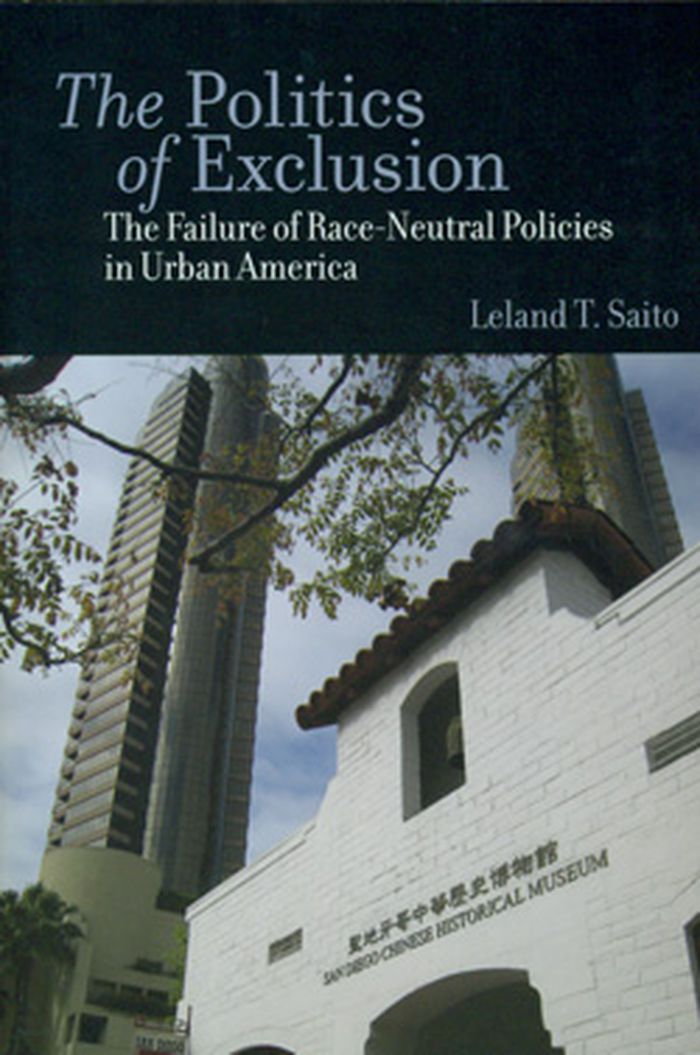
Investigating three case studies, that involve economic redevelopment, historic preservation, and redistricting in San Diego, New York, and Los Angeles, Saito illustrates the enduring presence of racial considerations and inequality in public policy. Individuals and groups who may sincerely characterize themselves as free of racial prejudice still participate, though perhaps unwittingly, in practices that have racialized outcomes.
The politics of exclusion: the failure of race-neutral policies in urban America
Actions:
Price:
$27.95
(available to order)
Summary:
Investigating three case studies, that involve economic redevelopment, historic preservation, and redistricting in San Diego, New York, and Los Angeles, Saito illustrates the enduring presence of racial considerations and inequality in public policy. Individuals and groups who may sincerely characterize themselves as free of racial prejudice still participate, though perhaps unwittingly, in practices that have racialized outcomes.
Form:
books
books
Publication:
January 1900, Stanford
January 1900, Stanford
Subject:
Urban Theory
Urban Theory
Form:
books
books
Price:
$33.95
(available to order)
Summary:
Architect Alexander D'Hooghe believes urban design has lost its way. Once among the most articulate and avant-garde of disciplines, the field now lacks, he suggests, the confidence necessary to address its most critical challenge sprawl. In this publication, the author argues that architecture and urbanism must boldly intervene in city planning and growth management.
$33.95
(available to order)
Summary:
Architect Alexander D'Hooghe believes urban design has lost its way. Once among the most articulate and avant-garde of disciplines, the field now lacks, he suggests, the confidence necessary to address its most critical challenge sprawl. In this publication, the author argues that architecture and urbanism must boldly intervene in city planning and growth management.
Title:
The Liberal monument: urban design and the late modern project
Actions:
Price:
$33.95
(available to order)
Summary:
Architect Alexander D'Hooghe believes urban design has lost its way. Once among the most articulate and avant-garde of disciplines, the field now lacks, he suggests, the confidence necessary to address its most critical challenge sprawl. In this publication, the author argues that architecture and urbanism must boldly intervene in city planning and growth management.
The Liberal monument: urban design and the late modern project
Actions:
Price:
$33.95
(available to order)
Summary:
Architect Alexander D'Hooghe believes urban design has lost its way. Once among the most articulate and avant-garde of disciplines, the field now lacks, he suggests, the confidence necessary to address its most critical challenge sprawl. In this publication, the author argues that architecture and urbanism must boldly intervene in city planning and growth management.
Form:
books
books
Publication:
October 2010
October 2010
Subject:
Urban Theory
Urban Theory
Form:
books
books
Price:
$51.95
(available to order)
Summary:
In this publication trendy pragmatism coincides with the improvisation of jazz music. The result is a plan of action to constructively deal with disorder in urbanism. Improvisation acknowledges disorder and works with existing potentials. Improvisation means, therefore, to work with reality but at the same time, create reality.
$51.95
(available to order)
Summary:
In this publication trendy pragmatism coincides with the improvisation of jazz music. The result is a plan of action to constructively deal with disorder in urbanism. Improvisation acknowledges disorder and works with existing potentials. Improvisation means, therefore, to work with reality but at the same time, create reality.
Title:
Improvisations on urbanity: Trendy pragmatism in a climate of change
Actions:
Price:
$51.95
(available to order)
Summary:
In this publication trendy pragmatism coincides with the improvisation of jazz music. The result is a plan of action to constructively deal with disorder in urbanism. Improvisation acknowledges disorder and works with existing potentials. Improvisation means, therefore, to work with reality but at the same time, create reality.
Improvisations on urbanity: Trendy pragmatism in a climate of change
Actions:
Price:
$51.95
(available to order)
Summary:
In this publication trendy pragmatism coincides with the improvisation of jazz music. The result is a plan of action to constructively deal with disorder in urbanism. Improvisation acknowledges disorder and works with existing potentials. Improvisation means, therefore, to work with reality but at the same time, create reality.
Form:
books
books
Publication:
January 2009
January 2009
Subject:
Urban Theory
Urban Theory
Form:
books
books
Title:
The New York 2030 notebook
The New York 2030 notebook
Actions:
Price:
$34.95
(available in store)
Summary:
This book provides a diverse range of responses to New York's PlaNYC, the first strategic plan for the city since 1969 released by Mayor Bloomberg in 2007. The Notebook includes presentations by local policymakers explaining the approach to the plan and responses by local urban enthusiasts from a symposium held in November, 2007 by the Institute for Urban Design. These(...)
$34.95
(available in store)
Summary:
This book provides a diverse range of responses to New York's PlaNYC, the first strategic plan for the city since 1969 released by Mayor Bloomberg in 2007. The Notebook includes presentations by local policymakers explaining the approach to the plan and responses by local urban enthusiasts from a symposium held in November, 2007 by the Institute for Urban Design. These(...)
Title:
The New York 2030 notebook
Actions:
Price:
$34.95
(available in store)
Summary:
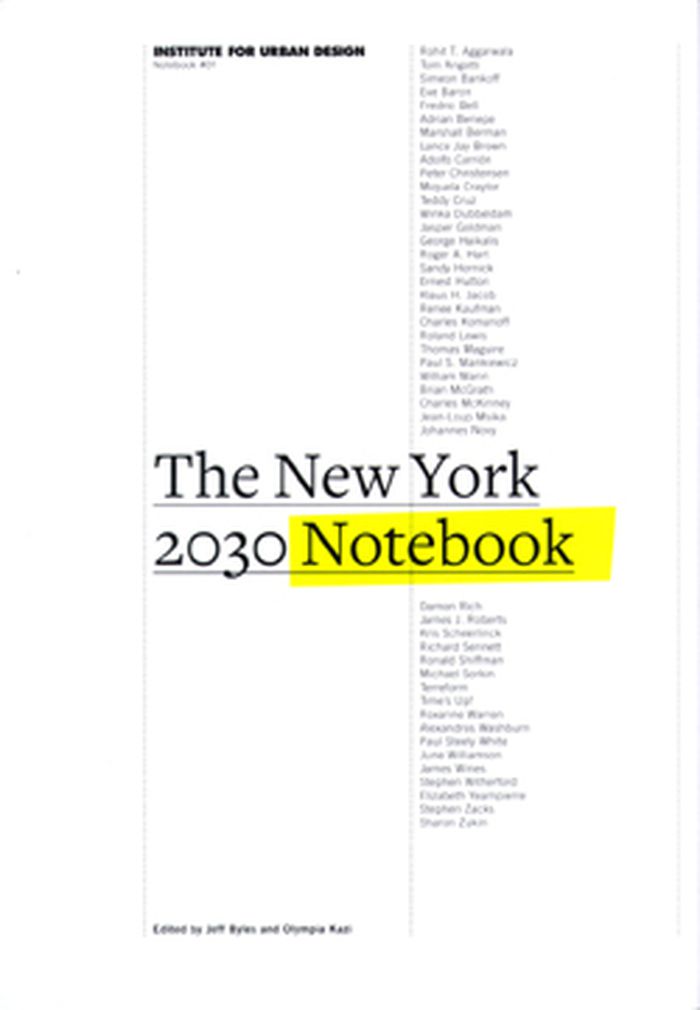
This book provides a diverse range of responses to New York's PlaNYC, the first strategic plan for the city since 1969 released by Mayor Bloomberg in 2007. The Notebook includes presentations by local policymakers explaining the approach to the plan and responses by local urban enthusiasts from a symposium held in November, 2007 by the Institute for Urban Design. These help to put the plan into some context, and precede a section of critical and analytical responses by prominent authors, designers, and theorists commissioned since. Contributors include Richard Sennett, Michael Sorkin, James Wines, Sharon Zukin, Marshall Berman, Winka Dubbeldam, Teddy Cruz, and Stephen Witherford alongside a number of other distinguished figures.
The New York 2030 notebook
Actions:
Price:
$34.95
(available in store)
Summary:
This book provides a diverse range of responses to New York's PlaNYC, the first strategic plan for the city since 1969 released by Mayor Bloomberg in 2007. The Notebook includes presentations by local policymakers explaining the approach to the plan and responses by local urban enthusiasts from a symposium held in November, 2007 by the Institute for Urban Design. These help to put the plan into some context, and precede a section of critical and analytical responses by prominent authors, designers, and theorists commissioned since. Contributors include Richard Sennett, Michael Sorkin, James Wines, Sharon Zukin, Marshall Berman, Winka Dubbeldam, Teddy Cruz, and Stephen Witherford alongside a number of other distinguished figures.
Form:
books
books
Publication:
October 2008, New York
October 2008, New York
Subject:
Urban Theory
Urban Theory
Form:
books
books
Actions:
Price:
$83.50
(available to order)
Summary:
Cities after the Fall of Communism traces the cultural reorientation of East European cities since 1989. Analyzing the architecture, commemorative practices, and urban planning of cities such as Lviv, Vilnius, and Odessa, the contributors to this volume demonstrate how history may be selectively re-imagined in light of present political and cultural realities. These(...)
$83.50
(available to order)
Summary:
Cities after the Fall of Communism traces the cultural reorientation of East European cities since 1989. Analyzing the architecture, commemorative practices, and urban planning of cities such as Lviv, Vilnius, and Odessa, the contributors to this volume demonstrate how history may be selectively re-imagined in light of present political and cultural realities. These(...)
Subject:
Urban Theory
Urban Theory
Publication:
March 2009, Washington, D.C., Baltimore
March 2009, Washington, D.C., Baltimore
Title:
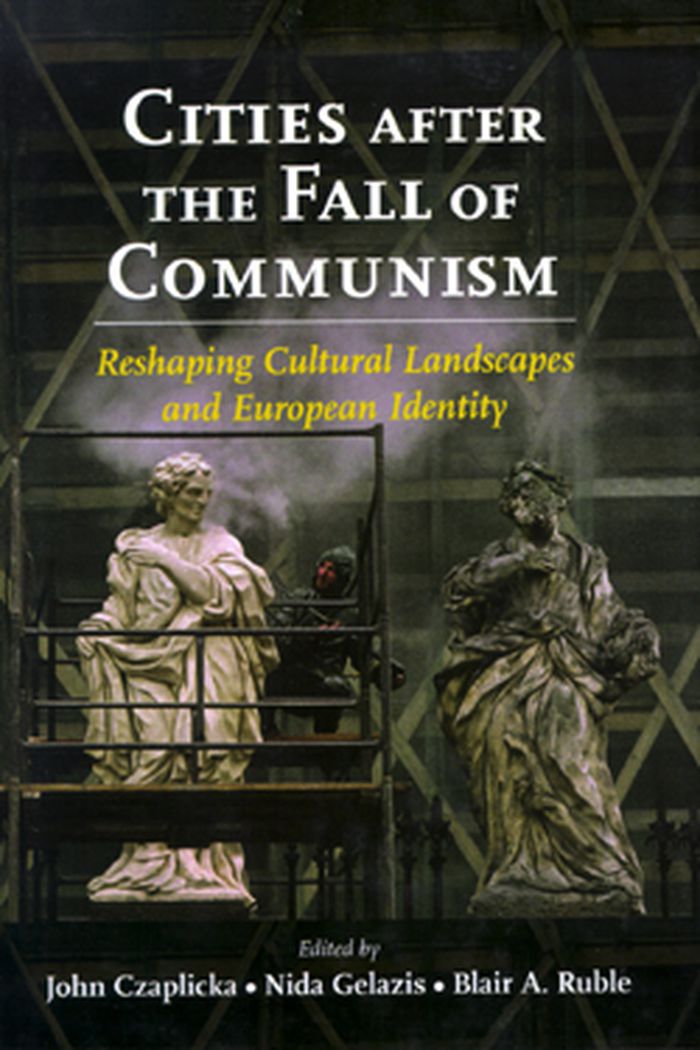
Cities at the fall of communism : reshaping cultural landscapes and European identity
Actions:
Price:
$83.50
(available to order)
Summary:
Cities after the Fall of Communism traces the cultural reorientation of East European cities since 1989. Analyzing the architecture, commemorative practices, and urban planning of cities such as Lviv, Vilnius, and Odessa, the contributors to this volume demonstrate how history may be selectively re-imagined in light of present political and cultural realities. These essays show that while East European cities gravitate nostalgically toward Habsburg, Baltic, Imperial Russian, and Germanic pasts, they are also embracing new urban identities grounded in ethnic-national, European, Western, and global contexts.
Cities at the fall of communism : reshaping cultural landscapes and European identity
Actions:
Price:
$83.50
(available to order)
Summary:
Cities after the Fall of Communism traces the cultural reorientation of East European cities since 1989. Analyzing the architecture, commemorative practices, and urban planning of cities such as Lviv, Vilnius, and Odessa, the contributors to this volume demonstrate how history may be selectively re-imagined in light of present political and cultural realities. These essays show that while East European cities gravitate nostalgically toward Habsburg, Baltic, Imperial Russian, and Germanic pasts, they are also embracing new urban identities grounded in ethnic-national, European, Western, and global contexts.
Form:
books
books
Publication:
March 2009, Washington, D.C., Baltimore
March 2009, Washington, D.C., Baltimore
Subject:
Urban Theory
Urban Theory
Form:
books
books
Actions:
Price:
$67.99
(available to order)
Summary:
Jennifer S. Light finds in the rise and fall of the American conservation movement a new understanding of the history of urban renewal in the United States. The author examines came to view America's urban landscapes as ecological communities requiring scientific management on par with forests and farms. This book brings together environmental and urban history to reveal(...)
$67.99
(available to order)
Summary:
Jennifer S. Light finds in the rise and fall of the American conservation movement a new understanding of the history of urban renewal in the United States. The author examines came to view America's urban landscapes as ecological communities requiring scientific management on par with forests and farms. This book brings together environmental and urban history to reveal(...)
Title:
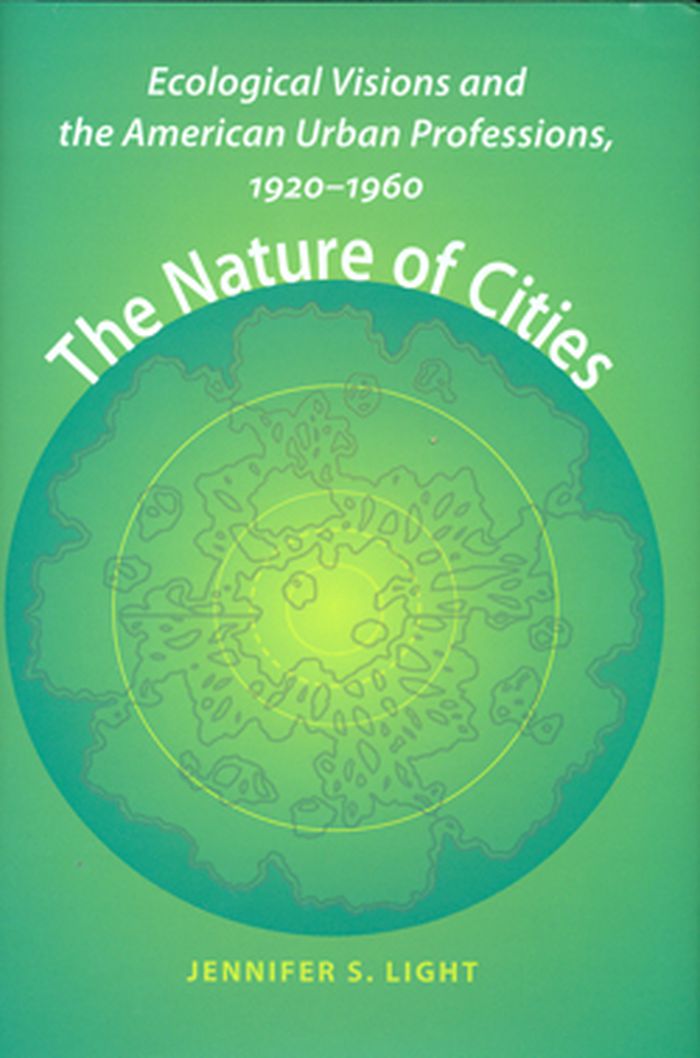
The nature of cities : ecological visions and the American urban professions, 1920-1960
Actions:
Price:
$67.99
(available to order)
Summary:
Jennifer S. Light finds in the rise and fall of the American conservation movement a new understanding of the history of urban renewal in the United States. The author examines came to view America's urban landscapes as ecological communities requiring scientific management on par with forests and farms. This book brings together environmental and urban history to reveal how, over four decades, this ecological vision shaped the development of cities around the nation.
The nature of cities : ecological visions and the American urban professions, 1920-1960
Actions:
Price:
$67.99
(available to order)
Summary:
Jennifer S. Light finds in the rise and fall of the American conservation movement a new understanding of the history of urban renewal in the United States. The author examines came to view America's urban landscapes as ecological communities requiring scientific management on par with forests and farms. This book brings together environmental and urban history to reveal how, over four decades, this ecological vision shaped the development of cities around the nation.
Form:
books
books
Publication:
June 2009
June 2009
Subject:
Urban Theory
Urban Theory
Form:
books
books
Actions:
Price:
$35.50
(available to order)
Summary:
«Peut-on faire en sorte que les dimensions physique, sociale et numérique soient mises au service d'une ville à la fois plus attentive à chacun, et plus familière à tous?»
$35.50
(available to order)
Summary:
«Peut-on faire en sorte que les dimensions physique, sociale et numérique soient mises au service d'une ville à la fois plus attentive à chacun, et plus familière à tous?»
Title:
La ville 2.0, complexe... et familière
Actions:
Price:
$35.50
(available to order)
Summary:
«Peut-on faire en sorte que les dimensions physique, sociale et numérique soient mises au service d'une ville à la fois plus attentive à chacun, et plus familière à tous?»
La ville 2.0, complexe... et familière
Actions:
Price:
$35.50
(available to order)
Summary:
«Peut-on faire en sorte que les dimensions physique, sociale et numérique soient mises au service d'une ville à la fois plus attentive à chacun, et plus familière à tous?»
Form:
books
books
Publication:
March 2009, Limoges
March 2009, Limoges
Subject:
Urban Theory
Urban Theory
Form:
books
books
Actions:
Price:
$32.95
(available in store)
Summary:
This essay opens up multiple dimensions of the oncept from architectural, political, philosophical, and technological points of view. There is some historical analysis here, but the contributors are more focused on the future of public space under conditions of growing urbanization and democratic confusion. The added interest offered by non-academic work—visual art,(...)
$32.95
(available in store)
Summary:
This essay opens up multiple dimensions of the oncept from architectural, political, philosophical, and technological points of view. There is some historical analysis here, but the contributors are more focused on the future of public space under conditions of growing urbanization and democratic confusion. The added interest offered by non-academic work—visual art,(...)
Title:
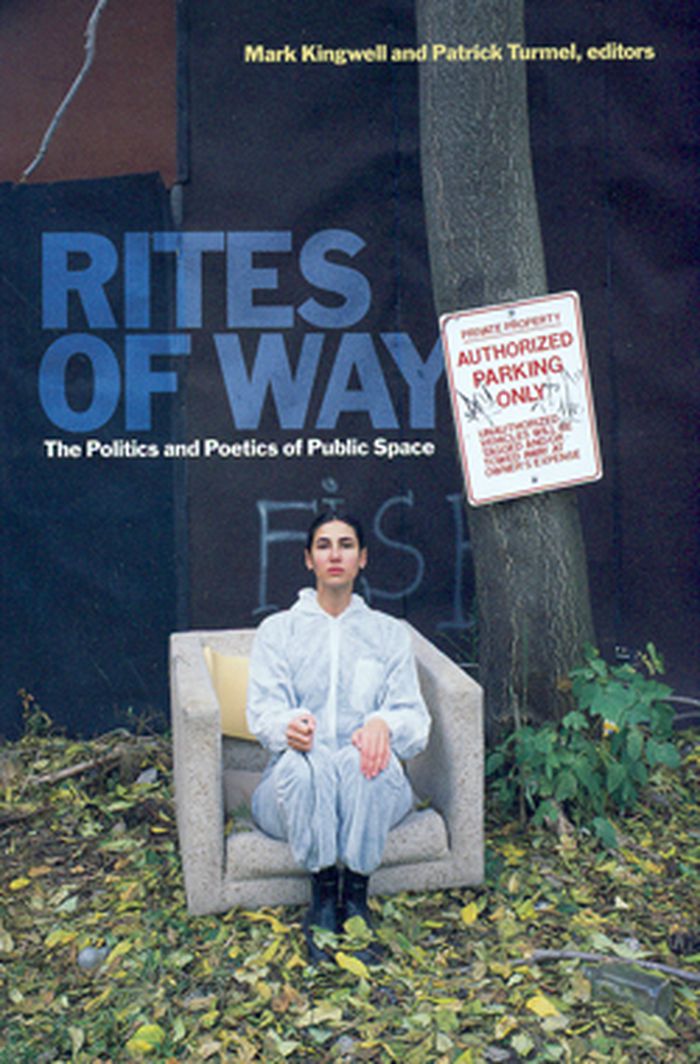
Rites of way : the politics and poetics of public space
Actions:
Price:
$32.95
(available in store)
Summary:
This essay opens up multiple dimensions of the oncept from architectural, political, philosophical, and technological points of view. There is some historical analysis here, but the contributors are more focused on the future of public space under conditions of growing urbanization and democratic confusion. The added interest offered by non-academic work—visual art, fiction, poetry, and drama—is in part an admission that this is a topic too important to be left only to theorists. It also makes an implicit argument for the crucial role that art, not just public art, plays in a thriving public realm.
Rites of way : the politics and poetics of public space
Actions:
Price:
$32.95
(available in store)
Summary:
This essay opens up multiple dimensions of the oncept from architectural, political, philosophical, and technological points of view. There is some historical analysis here, but the contributors are more focused on the future of public space under conditions of growing urbanization and democratic confusion. The added interest offered by non-academic work—visual art, fiction, poetry, and drama—is in part an admission that this is a topic too important to be left only to theorists. It also makes an implicit argument for the crucial role that art, not just public art, plays in a thriving public realm.
Form:
books
books
Publication:
May 2009
May 2009
Form:
books
books
Price:
$40.95
(available to order)
Summary:
Providing expert insight into the ways the nation's metropolitan areas are changing, this book explores the land use issues that affect quality of life and makes recommendations for reducing sprawl dependence on cars , encouraging sustainability, investing on infrastructure, availability of workforce housing, shopping and leadership in land use.
$40.95
(available to order)
Summary:
Providing expert insight into the ways the nation's metropolitan areas are changing, this book explores the land use issues that affect quality of life and makes recommendations for reducing sprawl dependence on cars , encouraging sustainability, investing on infrastructure, availability of workforce housing, shopping and leadership in land use.
Title:
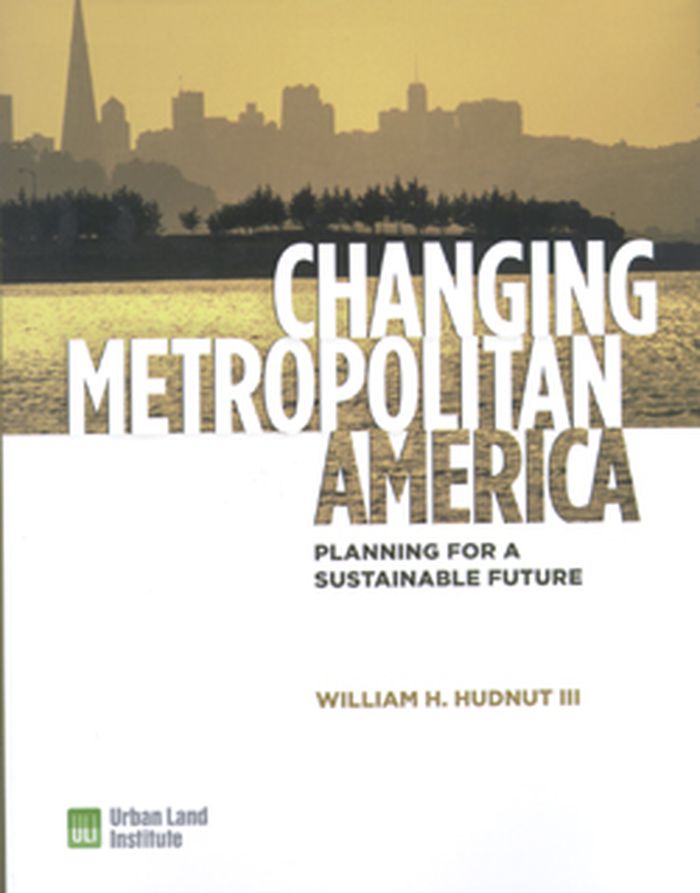
Changing metropolitan America: planning for a sustainable future
Actions:
Price:
$40.95
(available to order)
Summary:
Providing expert insight into the ways the nation's metropolitan areas are changing, this book explores the land use issues that affect quality of life and makes recommendations for reducing sprawl dependence on cars , encouraging sustainability, investing on infrastructure, availability of workforce housing, shopping and leadership in land use.
Changing metropolitan America: planning for a sustainable future
Actions:
Price:
$40.95
(available to order)
Summary:
Providing expert insight into the ways the nation's metropolitan areas are changing, this book explores the land use issues that affect quality of life and makes recommendations for reducing sprawl dependence on cars , encouraging sustainability, investing on infrastructure, availability of workforce housing, shopping and leadership in land use.
Form:
books
books
Publication:
November 2008, Washington
November 2008, Washington
Subject:
Urban Theory
Urban Theory


