


452 Results
Form:
books
books
Actions:
Price:
$15.95
(available to order)
Summary:
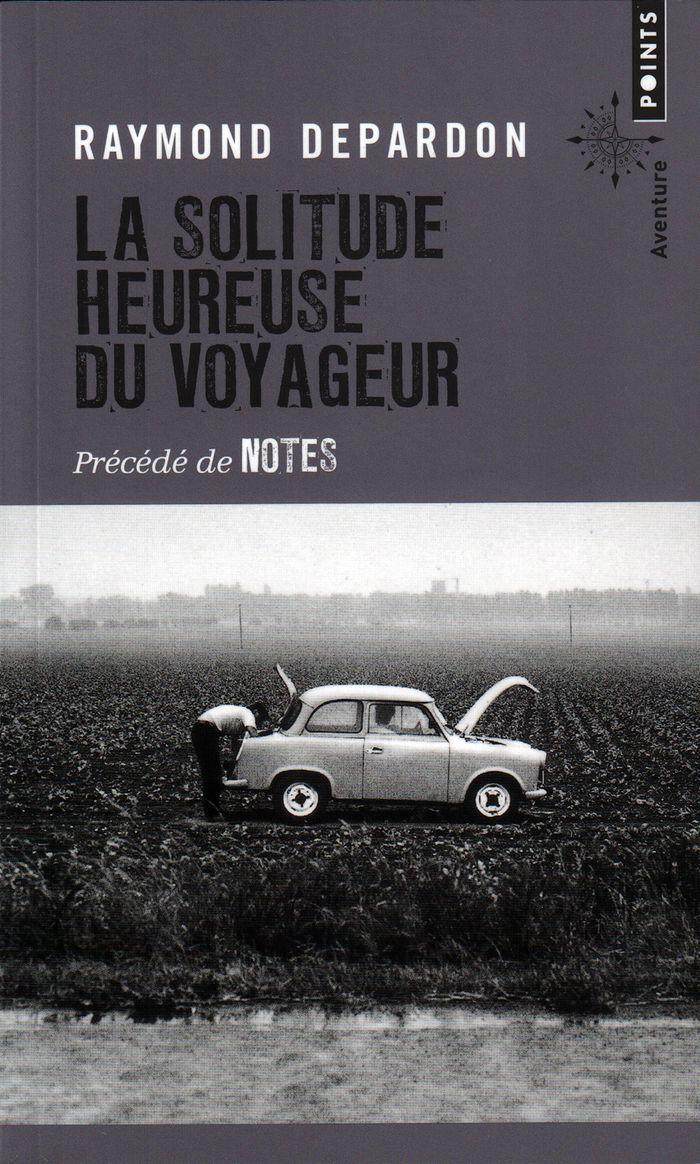
""La solitude heureuse du voyageur" est un choix de photographies tiré de mes voyages, rempli de déserts, de villes et de chambres d'hôtel. Comme pour "Notes", mon premier livre fondateur, il y a toujours la place d'une femme aimée au bord du cadre, comme si je photographiais mon désir et que le paysage me renvoyait un moi enfin apaisé." R. Depardon
$15.95
(available to order)
Summary:
""La solitude heureuse du voyageur" est un choix de photographies tiré de mes voyages, rempli de déserts, de villes et de chambres d'hôtel. Comme pour "Notes", mon premier livre fondateur, il y a toujours la place d'une femme aimée au bord du cadre, comme si je photographiais mon désir et que le paysage me renvoyait un moi enfin apaisé." R. Depardon
Title:
La solitude heureuse du voyageur
Actions:
Price:
$15.95
(available to order)
Summary:
""La solitude heureuse du voyageur" est un choix de photographies tiré de mes voyages, rempli de déserts, de villes et de chambres d'hôtel. Comme pour "Notes", mon premier livre fondateur, il y a toujours la place d'une femme aimée au bord du cadre, comme si je photographiais mon désir et que le paysage me renvoyait un moi enfin apaisé." R. Depardon
La solitude heureuse du voyageur
Actions:
Price:
$15.95
(available to order)
Summary:
""La solitude heureuse du voyageur" est un choix de photographies tiré de mes voyages, rempli de déserts, de villes et de chambres d'hôtel. Comme pour "Notes", mon premier livre fondateur, il y a toujours la place d'une femme aimée au bord du cadre, comme si je photographiais mon désir et que le paysage me renvoyait un moi enfin apaisé." R. Depardon
Form:
books
books
Publication:
July 2017
July 2017
Subject:
Theory of Photography
Theory of Photography
Form:
books
books
Title:
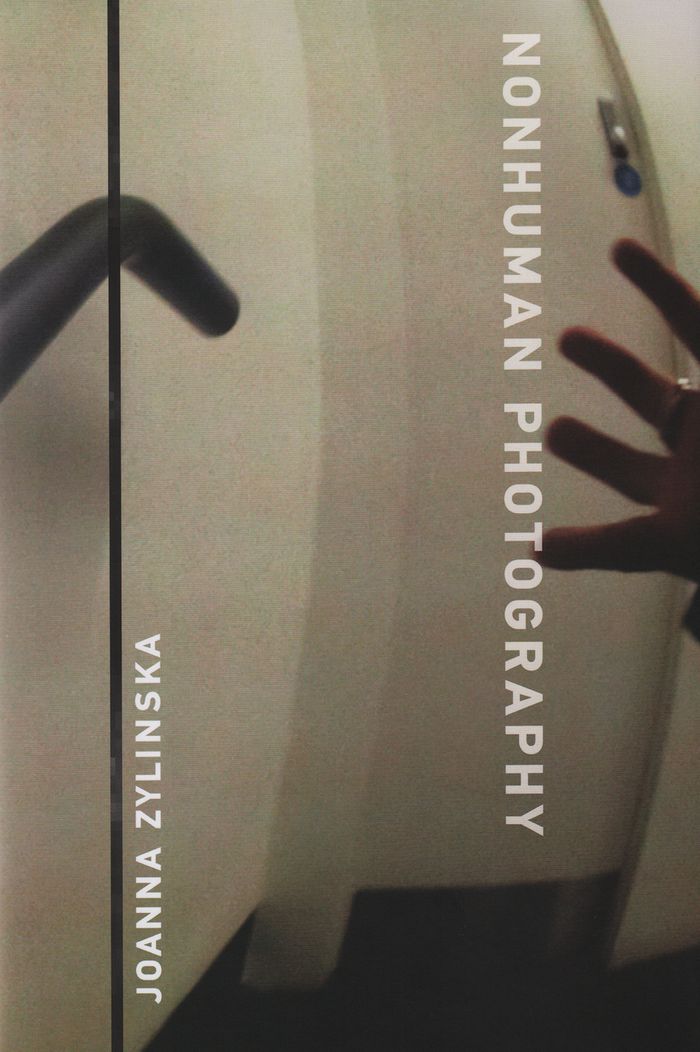
Nonhuman photography
Nonhuman photography
Actions:
Price:
$49.95
(available to order)
Summary:
Today, in the age of CCTV, drones, medical body scans, and satellite images, photography is increasingly decoupled from human agency and human vision. In Nonhuman Photography, Joanna Zylinska offers a new philosophy of photography, going beyond the human-centric view to consider imaging practices from which the human is absent. Zylinska argues further that even those(...)
$49.95
(available to order)
Summary:
Today, in the age of CCTV, drones, medical body scans, and satellite images, photography is increasingly decoupled from human agency and human vision. In Nonhuman Photography, Joanna Zylinska offers a new philosophy of photography, going beyond the human-centric view to consider imaging practices from which the human is absent. Zylinska argues further that even those(...)
Title:
Nonhuman photography
Actions:
Price:
$49.95
(available to order)
Summary:
Today, in the age of CCTV, drones, medical body scans, and satellite images, photography is increasingly decoupled from human agency and human vision. In Nonhuman Photography, Joanna Zylinska offers a new philosophy of photography, going beyond the human-centric view to consider imaging practices from which the human is absent. Zylinska argues further that even those images produced by humans, whether artists or amateurs, entail a nonhuman, mechanical element—that is, they involve the execution of technical and cultural algorithms that shape our image-making devices as well as our viewing practices. At the same time, she notes, photography is increasingly mobilized to document the precariousness of the human habitat and tasked with helping us imagine a better tomorrow. With its conjoined human-nonhuman agency and vision, Zylinska claims, photography functions as both a form of control and a life-shaping force.
Nonhuman photography
Actions:
Price:
$49.95
(available to order)
Summary:
Today, in the age of CCTV, drones, medical body scans, and satellite images, photography is increasingly decoupled from human agency and human vision. In Nonhuman Photography, Joanna Zylinska offers a new philosophy of photography, going beyond the human-centric view to consider imaging practices from which the human is absent. Zylinska argues further that even those images produced by humans, whether artists or amateurs, entail a nonhuman, mechanical element—that is, they involve the execution of technical and cultural algorithms that shape our image-making devices as well as our viewing practices. At the same time, she notes, photography is increasingly mobilized to document the precariousness of the human habitat and tasked with helping us imagine a better tomorrow. With its conjoined human-nonhuman agency and vision, Zylinska claims, photography functions as both a form of control and a life-shaping force.
Form:
books
books
Publication:
November 2017
November 2017
Subject:
Theory of Photography
Theory of Photography
Form:
books
books
Title:
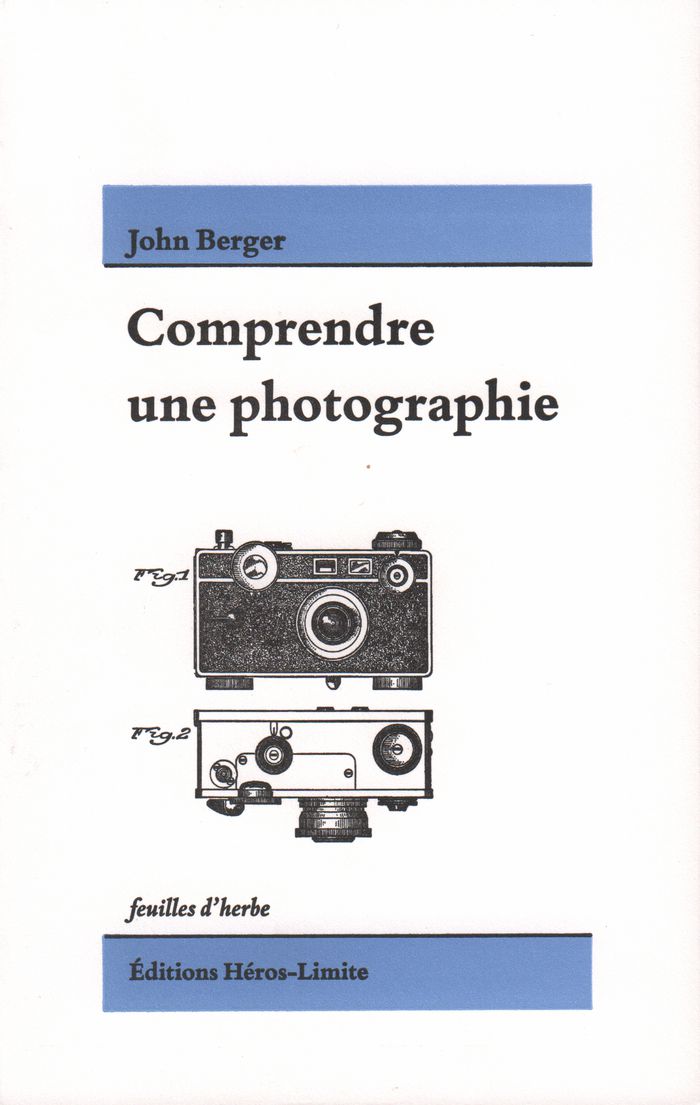
Comprendre une photographie
Comprendre une photographie
Actions:
Price:
$29.95
(available to order)
Summary:
Regroupant des textes issus de catalogues d’artistes, expositions, articles, etc., Comprendre une photographie est un voyage à travers les oeuvres de photographes divers, d’ André Kertész à Jitka Hanzlová, en passant par Marc Trivier, Jean Mohr ou Martine Franck. Certains des articles regroupés ici ont déjà fait partie de choix de textes de John Berger publiés notamment(...)
$29.95
(available to order)
Summary:
Regroupant des textes issus de catalogues d’artistes, expositions, articles, etc., Comprendre une photographie est un voyage à travers les oeuvres de photographes divers, d’ André Kertész à Jitka Hanzlová, en passant par Marc Trivier, Jean Mohr ou Martine Franck. Certains des articles regroupés ici ont déjà fait partie de choix de textes de John Berger publiés notamment(...)
Title:
Comprendre une photographie
Actions:
Price:
$29.95
(available to order)
Summary:
Regroupant des textes issus de catalogues d’artistes, expositions, articles, etc., Comprendre une photographie est un voyage à travers les oeuvres de photographes divers, d’ André Kertész à Jitka Hanzlová, en passant par Marc Trivier, Jean Mohr ou Martine Franck. Certains des articles regroupés ici ont déjà fait partie de choix de textes de John Berger publiés notamment aux éditions de L’Arche, Champ- Vallon ou Le Temps des Cerises, tandis que d’autres sont traduits en français pour la première fois. La présente sélection reprend l’édition anglaise intitulée Understanding a Photograph, établie par Geoff Dyer et publiée en 2013 chez Penguin Books.
Comprendre une photographie
Actions:
Price:
$29.95
(available to order)
Summary:
Regroupant des textes issus de catalogues d’artistes, expositions, articles, etc., Comprendre une photographie est un voyage à travers les oeuvres de photographes divers, d’ André Kertész à Jitka Hanzlová, en passant par Marc Trivier, Jean Mohr ou Martine Franck. Certains des articles regroupés ici ont déjà fait partie de choix de textes de John Berger publiés notamment aux éditions de L’Arche, Champ- Vallon ou Le Temps des Cerises, tandis que d’autres sont traduits en français pour la première fois. La présente sélection reprend l’édition anglaise intitulée Understanding a Photograph, établie par Geoff Dyer et publiée en 2013 chez Penguin Books.
Form:
books
books
Publication:
October 2017
October 2017
Form:
books
books
Actions:
Price:
$25.95
(available to order)
Summary:
Engagé dans un projet artistique, Philippe Bazin prend parti et analyse des oeuvres de Lewis Baltz, Allan Sekula, Martha Rosler ou encore Bruno Serralongue, ainsi que de photographes moins connus comme Géraldine Millo, David Marié ou Mahaut Lavoine. Les textes rassemblés créent une unité de réflexion autour d'une photographie critique des contextes historiques,(...)
$25.95
(available to order)
Summary:
Engagé dans un projet artistique, Philippe Bazin prend parti et analyse des oeuvres de Lewis Baltz, Allan Sekula, Martha Rosler ou encore Bruno Serralongue, ainsi que de photographes moins connus comme Géraldine Millo, David Marié ou Mahaut Lavoine. Les textes rassemblés créent une unité de réflexion autour d'une photographie critique des contextes historiques,(...)
Title:
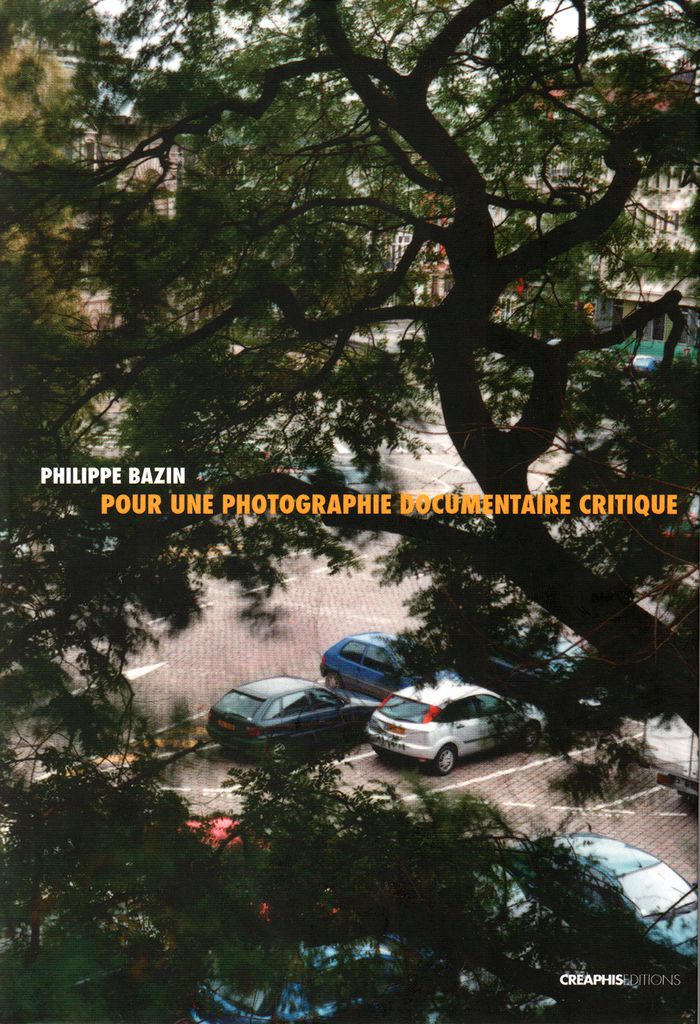
Pour une photographie documentaire critique
Actions:
Price:
$25.95
(available to order)
Summary:
Engagé dans un projet artistique, Philippe Bazin prend parti et analyse des oeuvres de Lewis Baltz, Allan Sekula, Martha Rosler ou encore Bruno Serralongue, ainsi que de photographes moins connus comme Géraldine Millo, David Marié ou Mahaut Lavoine. Les textes rassemblés créent une unité de réflexion autour d'une photographie critique des contextes historiques, esthétiques et idéologiques dans lesquels elle se crée aujourd'hui, une "photographie documentaire critique". Chaque texte ouvre une nouvelle facette de cette photographie, alors que l'ensemble est introduit par un texte qui entend proposer une méthodologie de travail, une "attitude documentaire". Le livre explore ainsi les apports d'une posture critique, dans tous les sens du terme - appréciation, épreuve, seuil, distance, tension, crise, analyse - et s'achève par la formulation d'un "manifeste documentaire" (écrit avec la philosophe Christiane Vollaire).
Pour une photographie documentaire critique
Actions:
Price:
$25.95
(available to order)
Summary:
Engagé dans un projet artistique, Philippe Bazin prend parti et analyse des oeuvres de Lewis Baltz, Allan Sekula, Martha Rosler ou encore Bruno Serralongue, ainsi que de photographes moins connus comme Géraldine Millo, David Marié ou Mahaut Lavoine. Les textes rassemblés créent une unité de réflexion autour d'une photographie critique des contextes historiques, esthétiques et idéologiques dans lesquels elle se crée aujourd'hui, une "photographie documentaire critique". Chaque texte ouvre une nouvelle facette de cette photographie, alors que l'ensemble est introduit par un texte qui entend proposer une méthodologie de travail, une "attitude documentaire". Le livre explore ainsi les apports d'une posture critique, dans tous les sens du terme - appréciation, épreuve, seuil, distance, tension, crise, analyse - et s'achève par la formulation d'un "manifeste documentaire" (écrit avec la philosophe Christiane Vollaire).
Form:
books
books
Publication:
October 2017
October 2017
Subject:
Theory of Photography
Theory of Photography
Form:
books
books
Price:
$54.95
(available to order)
Summary:
Réalité éminemment subjective, objet vivant et évolutif, le paysage reflète aussi à travers ses mutations les transformations de la société. Ancré historiquement dans l’art des jardins, le projet de paysage a rencontré plus récemment de nouvelles échelles avec l’aménagement des villes et des territoires, suscitant argumentations et débats. Dès ses origines, la(...)
$54.95
(available to order)
Summary:
Réalité éminemment subjective, objet vivant et évolutif, le paysage reflète aussi à travers ses mutations les transformations de la société. Ancré historiquement dans l’art des jardins, le projet de paysage a rencontré plus récemment de nouvelles échelles avec l’aménagement des villes et des territoires, suscitant argumentations et débats. Dès ses origines, la(...)
Title:
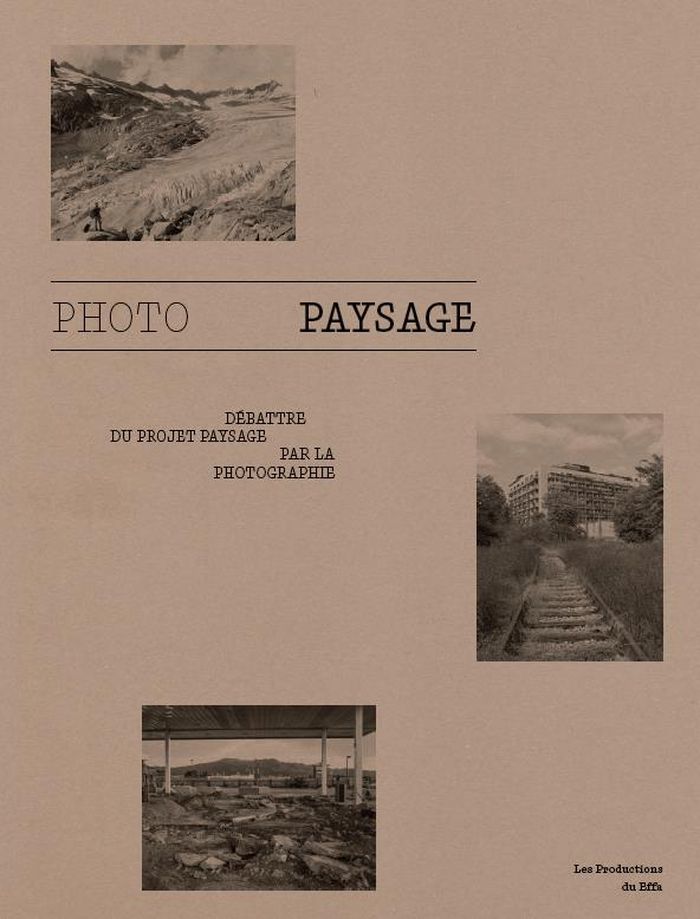
Photopaysage : débattre du projet de paysage par la photographie
Actions:
Price:
$54.95
(available to order)
Summary:
Réalité éminemment subjective, objet vivant et évolutif, le paysage reflète aussi à travers ses mutations les transformations de la société. Ancré historiquement dans l’art des jardins, le projet de paysage a rencontré plus récemment de nouvelles échelles avec l’aménagement des villes et des territoires, suscitant argumentations et débats. Dès ses origines, la photographie a été associée au paysage pour le documenter, témoigner de ses évolutions, le promouvoir, le défendre. Le rôle de la photographie est bien sûr variable en fonction des contextes culturels et des périodes historiques et renvoie à des situations de commande variées.
Photopaysage : débattre du projet de paysage par la photographie
Actions:
Price:
$54.95
(available to order)
Summary:
Réalité éminemment subjective, objet vivant et évolutif, le paysage reflète aussi à travers ses mutations les transformations de la société. Ancré historiquement dans l’art des jardins, le projet de paysage a rencontré plus récemment de nouvelles échelles avec l’aménagement des villes et des territoires, suscitant argumentations et débats. Dès ses origines, la photographie a été associée au paysage pour le documenter, témoigner de ses évolutions, le promouvoir, le défendre. Le rôle de la photographie est bien sûr variable en fonction des contextes culturels et des périodes historiques et renvoie à des situations de commande variées.
Form:
books
books
Publication:
February 2018
February 2018
Subject:
Theory of Photography
Theory of Photography
Form:
books
books
Actions:
Price:
$90.00
(available to order)
Summary:
Dyer takes the viewer/reader on a wildly original journey through both iconic and unseen images from the archive, including eighteen previously unpublished color photographs. The book encompasses most of Winogrand’s themes and subjects and remains broadly faithful to the chronological and geographical facts of his life, but Dyer’s responses to the photographs are(...)
$90.00
(available to order)
Summary:
Dyer takes the viewer/reader on a wildly original journey through both iconic and unseen images from the archive, including eighteen previously unpublished color photographs. The book encompasses most of Winogrand’s themes and subjects and remains broadly faithful to the chronological and geographical facts of his life, but Dyer’s responses to the photographs are(...)
Title:
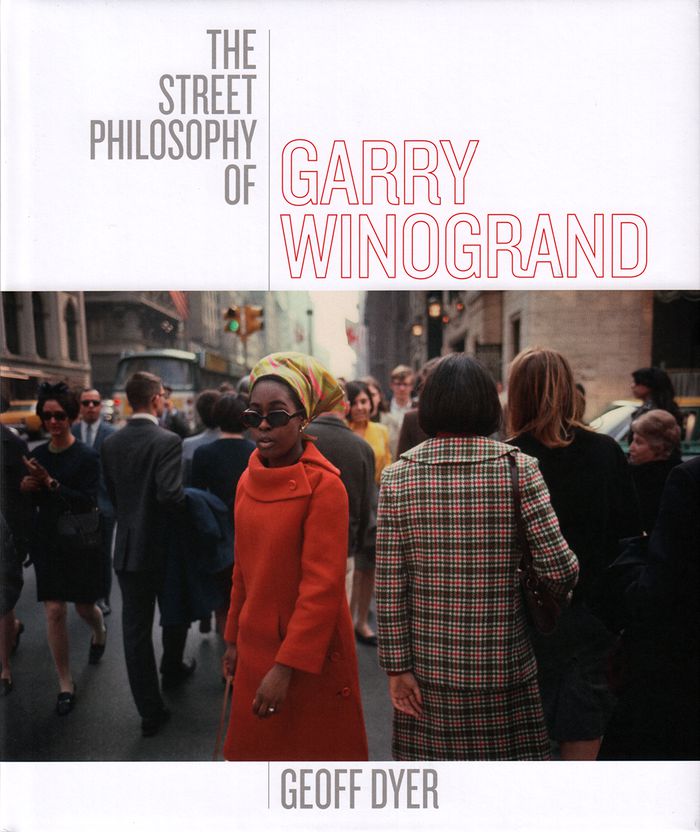
The street philosophy of Garry Winogrand
Actions:
Price:
$90.00
(available to order)
Summary:
Dyer takes the viewer/reader on a wildly original journey through both iconic and unseen images from the archive, including eighteen previously unpublished color photographs. The book encompasses most of Winogrand’s themes and subjects and remains broadly faithful to the chronological and geographical facts of his life, but Dyer’s responses to the photographs are unorthodox, eye-opening, and often hilarious. This inimitable combination of photographer and writer, images and text, itself offers what Dyer claims for Winogrand’s photography—an education in seeing.
The street philosophy of Garry Winogrand
Actions:
Price:
$90.00
(available to order)
Summary:
Dyer takes the viewer/reader on a wildly original journey through both iconic and unseen images from the archive, including eighteen previously unpublished color photographs. The book encompasses most of Winogrand’s themes and subjects and remains broadly faithful to the chronological and geographical facts of his life, but Dyer’s responses to the photographs are unorthodox, eye-opening, and often hilarious. This inimitable combination of photographer and writer, images and text, itself offers what Dyer claims for Winogrand’s photography—an education in seeing.
Form:
books
books
Publication:
March 2018
March 2018
Subject:
Theory of Photography
Theory of Photography
Form:
books
books
Actions:
Price:
$35.95
(available to order)
Summary:
La publication Alt. +1000 présente le travail photographique de huit artistes proposant un regard personnel sur l’environnement Alpin. Aux images de Vanessa Püntener sur le monde paysan d’aujourd’hui et celles de Thomas Flechtner montrant la montagne dans sa dimension la plus pure s’ajoutent les travaux de six jeunes photographes suisses et français. Leur démarche(...)
$35.95
(available to order)
Summary:
La publication Alt. +1000 présente le travail photographique de huit artistes proposant un regard personnel sur l’environnement Alpin. Aux images de Vanessa Püntener sur le monde paysan d’aujourd’hui et celles de Thomas Flechtner montrant la montagne dans sa dimension la plus pure s’ajoutent les travaux de six jeunes photographes suisses et français. Leur démarche(...)
Title:
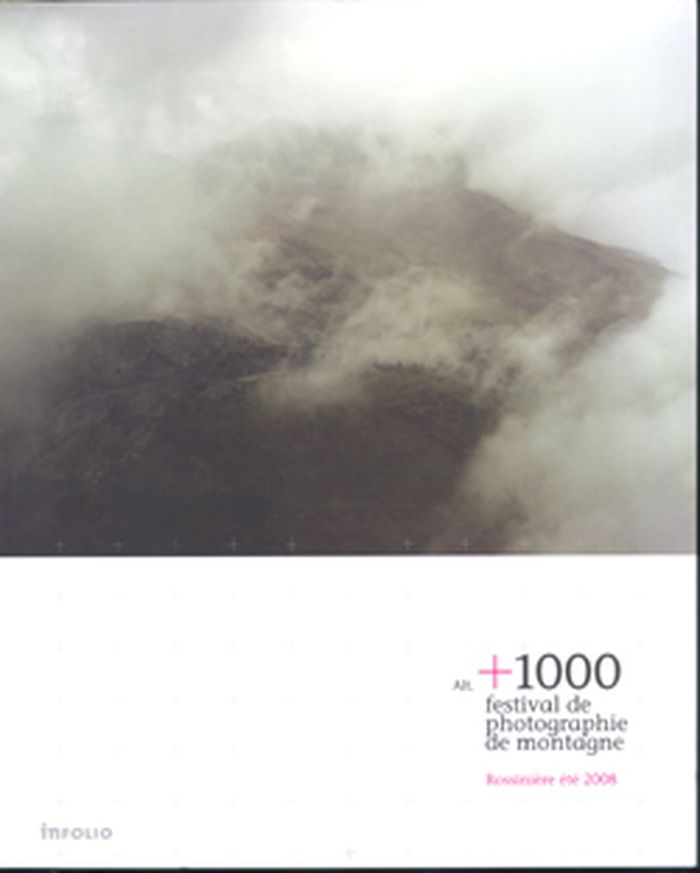
Alt + 1000 festival de photographie de montagne
Actions:
Price:
$35.95
(available to order)
Summary:
La publication Alt. +1000 présente le travail photographique de huit artistes proposant un regard personnel sur l’environnement Alpin. Aux images de Vanessa Püntener sur le monde paysan d’aujourd’hui et celles de Thomas Flechtner montrant la montagne dans sa dimension la plus pure s’ajoutent les travaux de six jeunes photographes suisses et français. Leur démarche invite à contempler la montagne sous un angle nouveau. Loin de la carte postale touristique, ces artistes évoquent la montagne sous des facettes inattendues : effrayante, spectaculaire, domptée, abandonnée, décalée, féerique. Parallèlement, les rencontres entre reporters et plasticiens permettent de proposer une lecture multiple du monde. Le spectateur est amené à déplacer son point de vue et à réévaluer la question des critères esthétiques. En un temps où l’image stéréotypée de la montagne-ski ou de la montagne-performance en est venue à écoeurer le public au point qu’il se détourne du monde alpin, ce livre est une excellente occasion de promouvoir une révolution du regard.
Alt + 1000 festival de photographie de montagne
Actions:
Price:
$35.95
(available to order)
Summary:
La publication Alt. +1000 présente le travail photographique de huit artistes proposant un regard personnel sur l’environnement Alpin. Aux images de Vanessa Püntener sur le monde paysan d’aujourd’hui et celles de Thomas Flechtner montrant la montagne dans sa dimension la plus pure s’ajoutent les travaux de six jeunes photographes suisses et français. Leur démarche invite à contempler la montagne sous un angle nouveau. Loin de la carte postale touristique, ces artistes évoquent la montagne sous des facettes inattendues : effrayante, spectaculaire, domptée, abandonnée, décalée, féerique. Parallèlement, les rencontres entre reporters et plasticiens permettent de proposer une lecture multiple du monde. Le spectateur est amené à déplacer son point de vue et à réévaluer la question des critères esthétiques. En un temps où l’image stéréotypée de la montagne-ski ou de la montagne-performance en est venue à écoeurer le public au point qu’il se détourne du monde alpin, ce livre est une excellente occasion de promouvoir une révolution du regard.
Form:
books
books
Publication:
September 2008, Rossinière
September 2008, Rossinière
Subject:
Theory of Photography
Theory of Photography
Form:
books
books
Price:
$40.00
(available to order)
Summary:
In this book, the author provides a comprehensive history of the significant presence of California farmworkers in the visual culture of America. Also, he spans 150 years and sheds a new perspective on some of America’s photographic masters, such as Carleton E. Watkins, Ansel Adams, and Dorothea Lange, and brings to light heretofore unknown and unheralded work by(...)
$40.00
(available to order)
Summary:
In this book, the author provides a comprehensive history of the significant presence of California farmworkers in the visual culture of America. Also, he spans 150 years and sheds a new perspective on some of America’s photographic masters, such as Carleton E. Watkins, Ansel Adams, and Dorothea Lange, and brings to light heretofore unknown and unheralded work by(...)
Title:
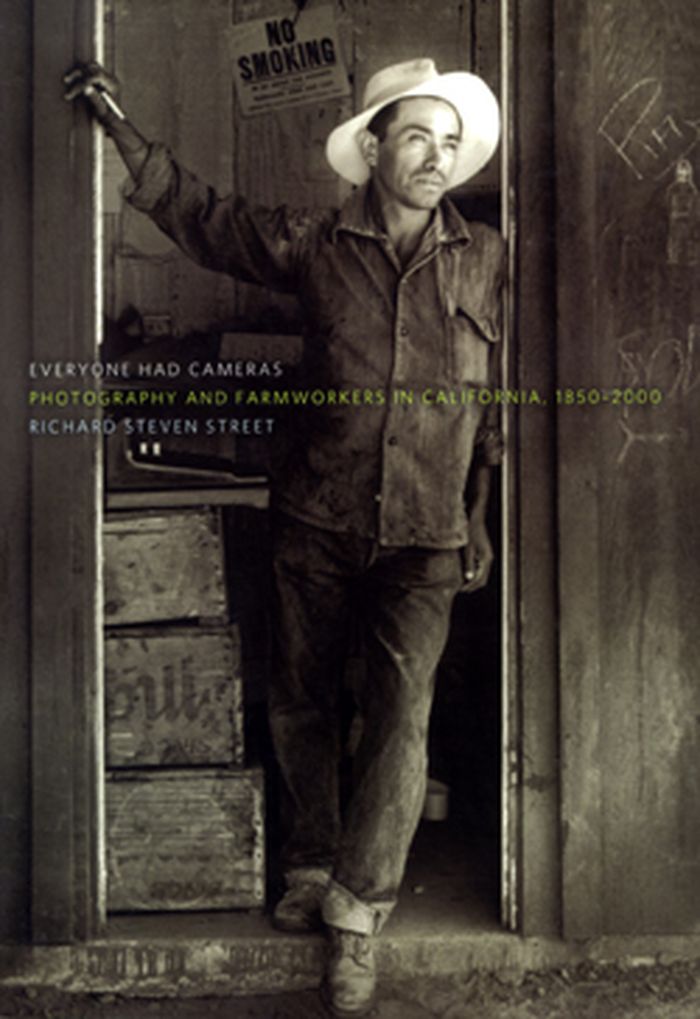
Everyone had camera, photography and frameworkers in California, 1850-2000
Actions:
Price:
$40.00
(available to order)
Summary:
In this book, the author provides a comprehensive history of the significant presence of California farmworkers in the visual culture of America. Also, he spans 150 years and sheds a new perspective on some of America’s photographic masters, such as Carleton E. Watkins, Ansel Adams, and Dorothea Lange, and brings to light heretofore unknown and unheralded work by perceptive amateurs, socially committed journeymen, digital documentarians, commercial propagandists, and left-wing critics.
Everyone had camera, photography and frameworkers in California, 1850-2000
Actions:
Price:
$40.00
(available to order)
Summary:
In this book, the author provides a comprehensive history of the significant presence of California farmworkers in the visual culture of America. Also, he spans 150 years and sheds a new perspective on some of America’s photographic masters, such as Carleton E. Watkins, Ansel Adams, and Dorothea Lange, and brings to light heretofore unknown and unheralded work by perceptive amateurs, socially committed journeymen, digital documentarians, commercial propagandists, and left-wing critics.
Form:
books
books
Publication:
October 2008, Minneapolis
October 2008, Minneapolis
Subject:
Theory of Photography
Theory of Photography
Form:
books
books

Actions:
Price:
$40.00
(available to order)
Summary:
Since 2003, photographer Abdi Roble and writer Doug Rutledge have been documenting the lives of Somali immigrants in the United States and of the people forced into the vast refugee camps that were set up in Kenya in the wake of the 1991 civil war in Somalia.
$40.00
(available to order)
Summary:
Since 2003, photographer Abdi Roble and writer Doug Rutledge have been documenting the lives of Somali immigrants in the United States and of the people forced into the vast refugee camps that were set up in Kenya in the wake of the 1991 civil war in Somalia.
Subject:
Theory of Photography
Theory of Photography
Publication:
September 2008, Minneapolis
September 2008, Minneapolis
Title:
The Somalie diaspora : a journey away
Actions:
Price:
$40.00
(available to order)
Summary:
Since 2003, photographer Abdi Roble and writer Doug Rutledge have been documenting the lives of Somali immigrants in the United States and of the people forced into the vast refugee camps that were set up in Kenya in the wake of the 1991 civil war in Somalia.
The Somalie diaspora : a journey away
Actions:
Price:
$40.00
(available to order)
Summary:
Since 2003, photographer Abdi Roble and writer Doug Rutledge have been documenting the lives of Somali immigrants in the United States and of the people forced into the vast refugee camps that were set up in Kenya in the wake of the 1991 civil war in Somalia.
Form:
books
books
Publication:
September 2008, Minneapolis
September 2008, Minneapolis
Subject:
Theory of Photography
Theory of Photography
Form:
books
books
Actions:
Price:
$50.00
(available to order)
Summary:
This book examines a recurrent question in recent literature on the use of the photographic medium in contemporary art. It is concerned with the multiformity of ways the photograph manifests itself in diverse artistic practices today, and with the consequences of this situation for photography’s critical potential. Central to this discussion is the question whether(...)
$50.00
(available to order)
Summary:
This book examines a recurrent question in recent literature on the use of the photographic medium in contemporary art. It is concerned with the multiformity of ways the photograph manifests itself in diverse artistic practices today, and with the consequences of this situation for photography’s critical potential. Central to this discussion is the question whether(...)
Subject:
Theory of Photography
Theory of Photography
Publication:
September 2008, Leuven
September 2008, Leuven
Title:
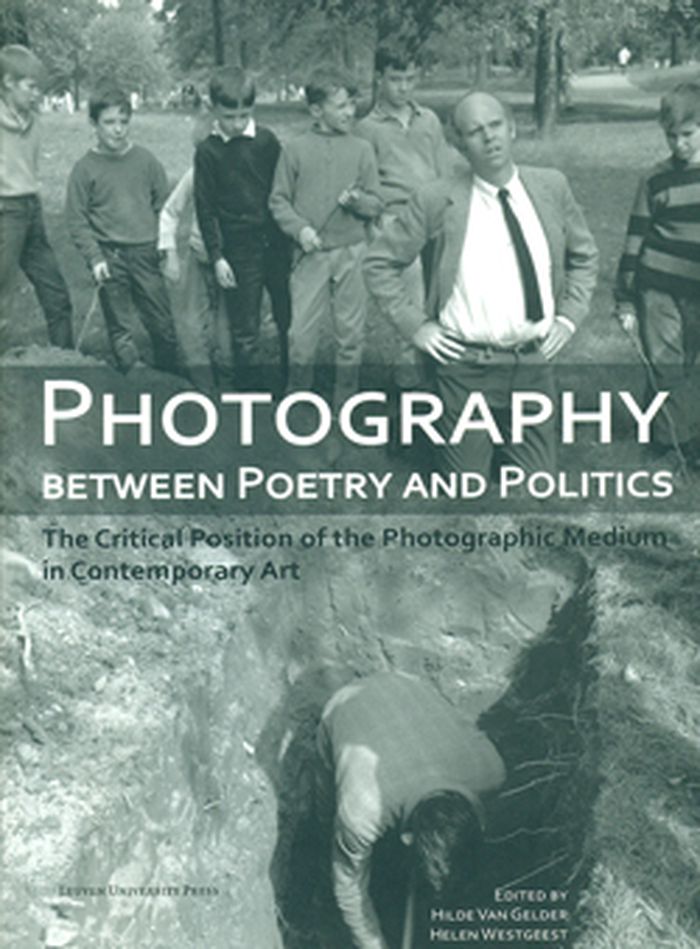
Photography between poetry and politics: the critical position of the photographic medium in contemporary art
Actions:
Price:
$50.00
(available to order)
Summary:
This book examines a recurrent question in recent literature on the use of the photographic medium in contemporary art. It is concerned with the multiformity of ways the photograph manifests itself in diverse artistic practices today, and with the consequences of this situation for photography’s critical potential. Central to this discussion is the question whether photography has a hybrid or chameleonic character because it can be part of entirely different mixed-media works of art. The book also raises such questions as: Does the photo-image nowadays serve mainly as a useful tool to make a renewed kind of tableau, often marked by a rather noncommittal and ‘poetic’ visual imagery? When photographic practices aim at raising a critical debate on the internal workings of the artistic system itself or on broader social problems, is the photograph then able to distinguish itself from a merely ‘political’ statement or a pamphlet? A distinguished variety of authors, all specialists in the field of contemporary photography, offer their viewpoints on this debate.
Photography between poetry and politics: the critical position of the photographic medium in contemporary art
Actions:
Price:
$50.00
(available to order)
Summary:
This book examines a recurrent question in recent literature on the use of the photographic medium in contemporary art. It is concerned with the multiformity of ways the photograph manifests itself in diverse artistic practices today, and with the consequences of this situation for photography’s critical potential. Central to this discussion is the question whether photography has a hybrid or chameleonic character because it can be part of entirely different mixed-media works of art. The book also raises such questions as: Does the photo-image nowadays serve mainly as a useful tool to make a renewed kind of tableau, often marked by a rather noncommittal and ‘poetic’ visual imagery? When photographic practices aim at raising a critical debate on the internal workings of the artistic system itself or on broader social problems, is the photograph then able to distinguish itself from a merely ‘political’ statement or a pamphlet? A distinguished variety of authors, all specialists in the field of contemporary photography, offer their viewpoints on this debate.
Form:
books
books
Publication:
September 2008, Leuven
September 2008, Leuven
Subject:
Theory of Photography
Theory of Photography


