


452 Results
Form:
books
books
Actions:
Price:
$75.00
(available to order)
Summary:
Accompanying the British Army during its decisive foray into China in 1860, Felice Beato was the first photographer to document a military campaign in progress. He captured not only the immediacy of war, the aftermath of battle, and strategic military positions, but also the sumptuous new Summer Palace before its destruction by the British. His(...)
$75.00
(available to order)
Summary:
Accompanying the British Army during its decisive foray into China in 1860, Felice Beato was the first photographer to document a military campaign in progress. He captured not only the immediacy of war, the aftermath of battle, and strategic military positions, but also the sumptuous new Summer Palace before its destruction by the British. His(...)
Title:
Of battle and beauty : Felice Beato's photographs of China
Actions:
Price:
$75.00
(available to order)
Summary:
Accompanying the British Army during its decisive foray into China in 1860, Felice Beato was the first photographer to document a military campaign in progress. He captured not only the immediacy of war, the aftermath of battle, and strategic military positions, but also the sumptuous new Summer Palace before its destruction by the British. His photographic record of the Second Opium War consisted of approximately 100 images, including a number of panoramic views, which survive in the form of private albums orignally compiled by British officers as a record of their victorious campaign. In addition to providing a strikingly beautiful glimpse of nineteenth-century China, these images also reveal how photography functioned as an integral component of British imperialism by shaping perceptions about a distant country and its culture. This publication accompanies a major exhibition of Beato's work in China.
Of battle and beauty : Felice Beato's photographs of China
Actions:
Price:
$75.00
(available to order)
Summary:
Accompanying the British Army during its decisive foray into China in 1860, Felice Beato was the first photographer to document a military campaign in progress. He captured not only the immediacy of war, the aftermath of battle, and strategic military positions, but also the sumptuous new Summer Palace before its destruction by the British. His photographic record of the Second Opium War consisted of approximately 100 images, including a number of panoramic views, which survive in the form of private albums orignally compiled by British officers as a record of their victorious campaign. In addition to providing a strikingly beautiful glimpse of nineteenth-century China, these images also reveal how photography functioned as an integral component of British imperialism by shaping perceptions about a distant country and its culture. This publication accompanies a major exhibition of Beato's work in China.
Form:
books
books
Publication:
November 1999, Santa Barbara
November 1999, Santa Barbara
Subject:
Theory of Photography
Theory of Photography
Form:
books
books
Actions:
Price:
$44.95
(available to order)
Summary:
Focusing on early nineteenth-century England, and on the works and texts of the inventor of paper photography, William Henry Fox Talbot, Singular Images, Failed Copies historicizes the conceptualization of photography in that era as part of a major historical change. Treating photography not merely as a medium or a system of representation but also as an epistemology,(...)
$44.95
(available to order)
Summary:
Focusing on early nineteenth-century England, and on the works and texts of the inventor of paper photography, William Henry Fox Talbot, Singular Images, Failed Copies historicizes the conceptualization of photography in that era as part of a major historical change. Treating photography not merely as a medium or a system of representation but also as an epistemology,(...)
Title:
Singular images, failed copies: William Henry Fox Talbot and the early photograph
Actions:
Price:
$44.95
(available to order)
Summary:
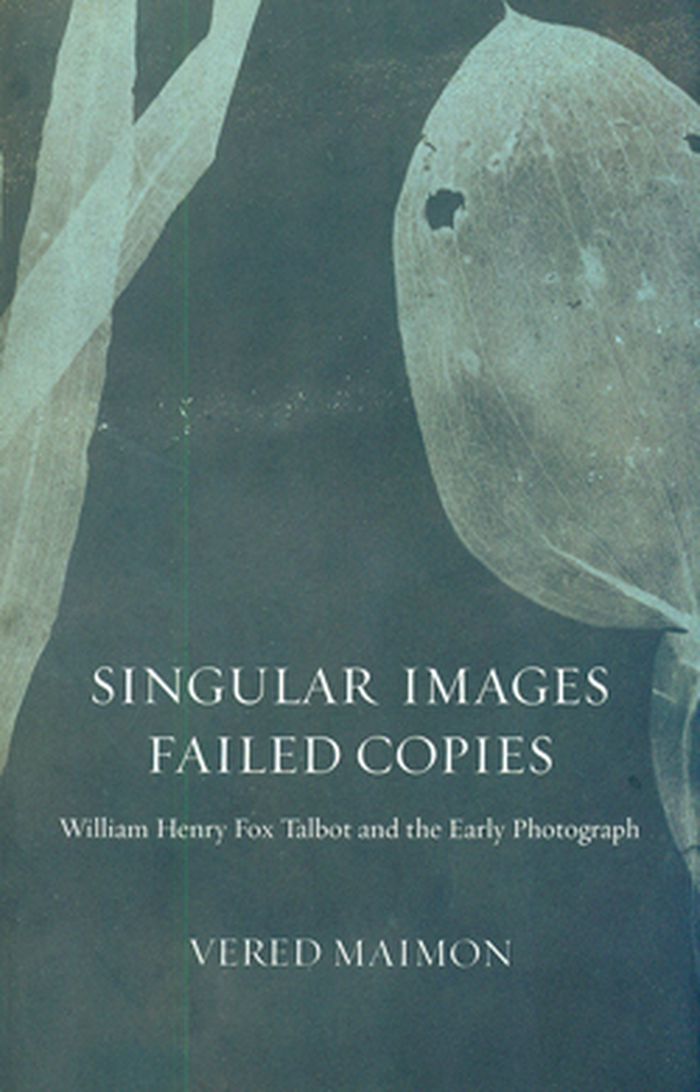
Focusing on early nineteenth-century England, and on the works and texts of the inventor of paper photography, William Henry Fox Talbot, Singular Images, Failed Copies historicizes the conceptualization of photography in that era as part of a major historical change. Treating photography not merely as a medium or a system of representation but also as an epistemology, Vered Maimon challenges today's prevalent association of the early photograph with the camera obscura. Instead, she points to material, formal, and conceptual differences between those two types of images by considering the philosophical and aesthetic premises linked with early photography. Through this analysis she argues that the emphasis in Talbot's accounts on the removal of the artist's hand in favor of the pencil of nature did not mark a shift from manual to mechanical and more accurate or objective systems of representation. In Singular Images, Failed Copies, Maimon shows that the perception of the photographic image in the 1830s and 1840s was in fact symptomatic of a crisis in the epistemological framework that had informed philosophical, scientific, and aesthetic thought for two centuries.
Singular images, failed copies: William Henry Fox Talbot and the early photograph
Actions:
Price:
$44.95
(available to order)
Summary:
Focusing on early nineteenth-century England, and on the works and texts of the inventor of paper photography, William Henry Fox Talbot, Singular Images, Failed Copies historicizes the conceptualization of photography in that era as part of a major historical change. Treating photography not merely as a medium or a system of representation but also as an epistemology, Vered Maimon challenges today's prevalent association of the early photograph with the camera obscura. Instead, she points to material, formal, and conceptual differences between those two types of images by considering the philosophical and aesthetic premises linked with early photography. Through this analysis she argues that the emphasis in Talbot's accounts on the removal of the artist's hand in favor of the pencil of nature did not mark a shift from manual to mechanical and more accurate or objective systems of representation. In Singular Images, Failed Copies, Maimon shows that the perception of the photographic image in the 1830s and 1840s was in fact symptomatic of a crisis in the epistemological framework that had informed philosophical, scientific, and aesthetic thought for two centuries.
Form:
books
books
Publication:
December 2015
December 2015
Subject:
Theory of Photography
Theory of Photography
Form:
books
books
Actions:
Price:
$45.00
(available to order)
Summary:
L'ère post-photographique se caractérise par le massification des images de même que par leur circulation et leur disponibilité sur Internet. Aux fractures ontologiques que la technologie numérique fait subir à la photographie s'ajoutent des mutations profondes de ses valeurs sociales et fonctionnelles. La culture visuelle post-photographique est ainsi marquée, d'un côté,(...)
$45.00
(available to order)
Summary:
L'ère post-photographique se caractérise par le massification des images de même que par leur circulation et leur disponibilité sur Internet. Aux fractures ontologiques que la technologie numérique fait subir à la photographie s'ajoutent des mutations profondes de ses valeurs sociales et fonctionnelles. La culture visuelle post-photographique est ainsi marquée, d'un côté,(...)
Title:
La condition post-photographique
Actions:
Price:
$45.00
(available to order)
Summary:
L'ère post-photographique se caractérise par le massification des images de même que par leur circulation et leur disponibilité sur Internet. Aux fractures ontologiques que la technologie numérique fait subir à la photographie s'ajoutent des mutations profondes de ses valeurs sociales et fonctionnelles. La culture visuelle post-photographique est ainsi marquée, d'un côté, par une virulente remise en question de la notion d'auteur et, de l'autre, par la légitimation des pratiques appropriationistes. Dans ce nouveau contexte, La condition post-photographique nous invite à nous interroger sur la nature de la création et sur les critères de l'«artisticité».
La condition post-photographique
Actions:
Price:
$45.00
(available to order)
Summary:
L'ère post-photographique se caractérise par le massification des images de même que par leur circulation et leur disponibilité sur Internet. Aux fractures ontologiques que la technologie numérique fait subir à la photographie s'ajoutent des mutations profondes de ses valeurs sociales et fonctionnelles. La culture visuelle post-photographique est ainsi marquée, d'un côté, par une virulente remise en question de la notion d'auteur et, de l'autre, par la légitimation des pratiques appropriationistes. Dans ce nouveau contexte, La condition post-photographique nous invite à nous interroger sur la nature de la création et sur les critères de l'«artisticité».
Form:
books
books
Publication:
December 2015
December 2015
Form:
books
books
Actions:
Price:
$45.00
(available to order)
Summary:
For its 14th edition, Le Mois de la Photo à Montréal has produced a major reference book, edited by Joan Fontcuberta and illustrated with the works of the 29 artists exhibited in the biennial. In addition, leading experts in the field critically investigate the post-photographic condition, exploring communication and transmission of visual data in cyberspace, the(...)
$45.00
(available to order)
Summary:
For its 14th edition, Le Mois de la Photo à Montréal has produced a major reference book, edited by Joan Fontcuberta and illustrated with the works of the 29 artists exhibited in the biennial. In addition, leading experts in the field critically investigate the post-photographic condition, exploring communication and transmission of visual data in cyberspace, the(...)
Title:
The post-photographic condition
Actions:
Price:
$45.00
(available to order)
Summary:
For its 14th edition, Le Mois de la Photo à Montréal has produced a major reference book, edited by Joan Fontcuberta and illustrated with the works of the 29 artists exhibited in the biennial. In addition, leading experts in the field critically investigate the post-photographic condition, exploring communication and transmission of visual data in cyberspace, the boundaries of virtual reality, as well as the Internet as a new public space in which the proliferation of images reflect and shape the world. This publication challenges us to re-examine what photography is today. With essays by Joan Fontcuberta, Derrick de Kerckhove, Suzanne Paquet, Fred Ritchin, David Tomas.
The post-photographic condition
Actions:
Price:
$45.00
(available to order)
Summary:
For its 14th edition, Le Mois de la Photo à Montréal has produced a major reference book, edited by Joan Fontcuberta and illustrated with the works of the 29 artists exhibited in the biennial. In addition, leading experts in the field critically investigate the post-photographic condition, exploring communication and transmission of visual data in cyberspace, the boundaries of virtual reality, as well as the Internet as a new public space in which the proliferation of images reflect and shape the world. This publication challenges us to re-examine what photography is today. With essays by Joan Fontcuberta, Derrick de Kerckhove, Suzanne Paquet, Fred Ritchin, David Tomas.
Form:
books
books
Publication:
December 2015
December 2015
Form:
books
books
Actions:
Price:
$32.50
(available in store)
Summary:
In the spring of 2010, the Brooklyn-based quarterly magazine Cabinet invited poet and cultural critic Wayne Koestenbaum to begin writing a regular column. Entitled "Legend," the column had a highly unusual premise. Every three months, the editors of the magazine would ask Koestenbaum to write one or more extended captions for a single photograph with which they had(...)
$32.50
(available in store)
Summary:
In the spring of 2010, the Brooklyn-based quarterly magazine Cabinet invited poet and cultural critic Wayne Koestenbaum to begin writing a regular column. Entitled "Legend," the column had a highly unusual premise. Every three months, the editors of the magazine would ask Koestenbaum to write one or more extended captions for a single photograph with which they had(...)
Title:
Notes on glaze: 18 photographic investigations
Actions:
Price:
$32.50
(available in store)
Summary:
In the spring of 2010, the Brooklyn-based quarterly magazine Cabinet invited poet and cultural critic Wayne Koestenbaum to begin writing a regular column. Entitled "Legend," the column had a highly unusual premise. Every three months, the editors of the magazine would ask Koestenbaum to write one or more extended captions for a single photograph with which they had provided him; drawn from obscure vernacular, commercial and scientific sources, all of the images were unfamiliar to the author. After 18 installments, Koestenbaum concluded his column in the winter of 2015. 'Notes on Glaze', featuring an introductory essay by the author, collects all the "Legend" columns, as well as their accompanying photographs. Refusing the distancing language of critical disinterest, Koestenbaum’s columns always locate the author in intimate proximity to the subjects portrayed in the photographs and to the impossibly variegated cast of characters—ranging from Debbie Reynolds to Duccio, the Dalai Lama to Barbra Streisand; from Hegel to Pee-wee Herman, and Emily Dickinson to Cicciolina—that pass through these texts.
Notes on glaze: 18 photographic investigations
Actions:
Price:
$32.50
(available in store)
Summary:
In the spring of 2010, the Brooklyn-based quarterly magazine Cabinet invited poet and cultural critic Wayne Koestenbaum to begin writing a regular column. Entitled "Legend," the column had a highly unusual premise. Every three months, the editors of the magazine would ask Koestenbaum to write one or more extended captions for a single photograph with which they had provided him; drawn from obscure vernacular, commercial and scientific sources, all of the images were unfamiliar to the author. After 18 installments, Koestenbaum concluded his column in the winter of 2015. 'Notes on Glaze', featuring an introductory essay by the author, collects all the "Legend" columns, as well as their accompanying photographs. Refusing the distancing language of critical disinterest, Koestenbaum’s columns always locate the author in intimate proximity to the subjects portrayed in the photographs and to the impossibly variegated cast of characters—ranging from Debbie Reynolds to Duccio, the Dalai Lama to Barbra Streisand; from Hegel to Pee-wee Herman, and Emily Dickinson to Cicciolina—that pass through these texts.
Form:
books
books
Publication:
April 2016
April 2016
Subject:
Theory of Photography
Theory of Photography
Form:
books
books
Price:
$34.00
(available to order)
Summary:
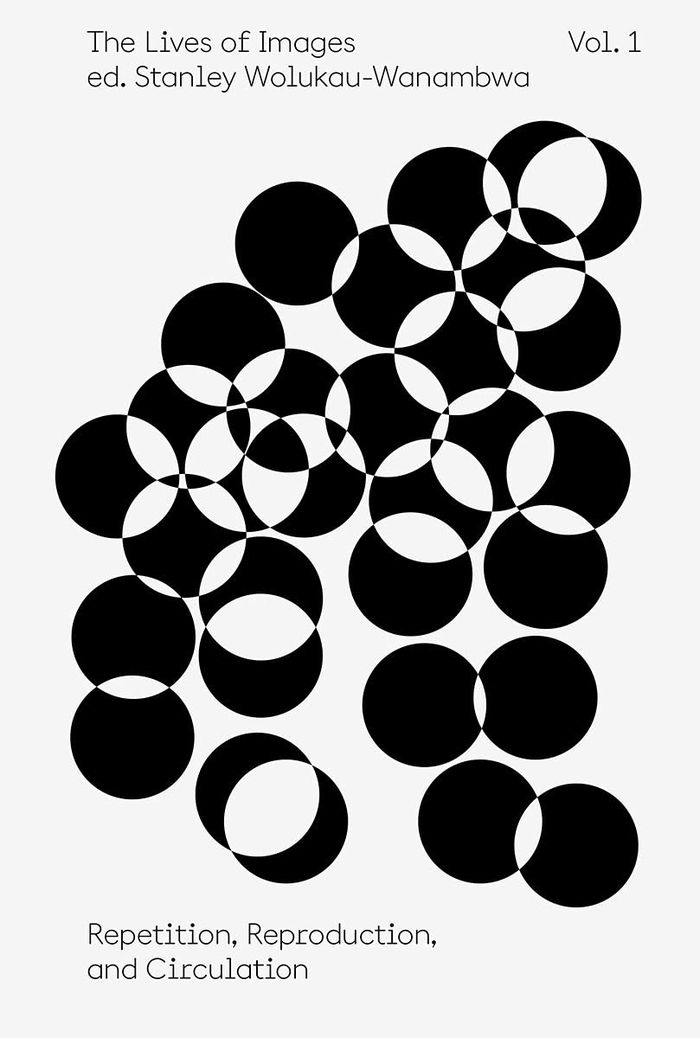
''The lives of images,'' edited by Stanley Wolukau-Wanambwa, is a set of contemporary thematic readers designed for educators, students, practicing photographers, and others interested in the ways images function within a wider set of cultural practices. The series tracks the many movements and 'lives' of images—their tendency to accumulate, circulate, and transform(...)
$34.00
(available to order)
Summary:
''The lives of images,'' edited by Stanley Wolukau-Wanambwa, is a set of contemporary thematic readers designed for educators, students, practicing photographers, and others interested in the ways images function within a wider set of cultural practices. The series tracks the many movements and 'lives' of images—their tendency to accumulate, circulate, and transform(...)
Subject:
Theory of Photography
Theory of Photography
Publication:
September 2021
September 2021
Title:
The lives of images, vol. 1 : repetition, reproduction and circulation
Actions:
Price:
$34.00
(available to order)
Summary:
''The lives of images,'' edited by Stanley Wolukau-Wanambwa, is a set of contemporary thematic readers designed for educators, students, practicing photographers, and others interested in the ways images function within a wider set of cultural practices. The series tracks the many movements and 'lives' of images—their tendency to accumulate, circulate, and transform through different geographies, cultures, processes, institutions, states, uses, and times. Volume 1 of the series, ''Repetition, reproduction, and circulation,'' addresses the multiple life cycles of the image—its modes of dispersion, reception, consumption, and aggregation—and the significance of technological reproduction for contemporary forms of social, cultural, and political life. The image is considered as both a tool for liberation and a means of repression within the evolving structures of modern life. The essays consider the implications of the nature and effect of the reproducible image on the categories, shapes, and aims of contemporary art and society. Further grounded by two interviews with practitioners in the field, ''Repetition, reproduction, and circulation'' promises to be an accessible, rigorous, and timely resource for all students, educators, and practitioners of photography.
The lives of images, vol. 1 : repetition, reproduction and circulation
Actions:
Price:
$34.00
(available to order)
Summary:
''The lives of images,'' edited by Stanley Wolukau-Wanambwa, is a set of contemporary thematic readers designed for educators, students, practicing photographers, and others interested in the ways images function within a wider set of cultural practices. The series tracks the many movements and 'lives' of images—their tendency to accumulate, circulate, and transform through different geographies, cultures, processes, institutions, states, uses, and times. Volume 1 of the series, ''Repetition, reproduction, and circulation,'' addresses the multiple life cycles of the image—its modes of dispersion, reception, consumption, and aggregation—and the significance of technological reproduction for contemporary forms of social, cultural, and political life. The image is considered as both a tool for liberation and a means of repression within the evolving structures of modern life. The essays consider the implications of the nature and effect of the reproducible image on the categories, shapes, and aims of contemporary art and society. Further grounded by two interviews with practitioners in the field, ''Repetition, reproduction, and circulation'' promises to be an accessible, rigorous, and timely resource for all students, educators, and practitioners of photography.
Form:
books
books
Publication:
September 2021
September 2021
Subject:
Theory of Photography
Theory of Photography
Form:
books
books

Price:
$34.00
(available to order)
Summary:
This volume addresses the complex relationships that the reproducible image creates with its viewers, their bodies, their minds, and their sense of the physical and metaphysical world. The selection addresses the image’s role in the social constitution of individual and collective identity, in social practices of resistance to the structural violences of racism, or in(...)
$34.00
(available to order)
Summary:
This volume addresses the complex relationships that the reproducible image creates with its viewers, their bodies, their minds, and their sense of the physical and metaphysical world. The selection addresses the image’s role in the social constitution of individual and collective identity, in social practices of resistance to the structural violences of racism, or in(...)
Subject:
Theory of Photography
Theory of Photography
Publication:
October 2021
October 2021
Title:
The lives of images, vol. 2 : analogy, attunement and attention
Actions:
Price:
$34.00
(available to order)
Summary:
This volume addresses the complex relationships that the reproducible image creates with its viewers, their bodies, their minds, and their sense of the physical and metaphysical world. The selection addresses the image’s role in the social constitution of individual and collective identity, in social practices of resistance to the structural violences of racism, or in relation to state exercises of power. Of particular importance in this volume are questions of our changing relationship to space and to selfhood as mediated by the image and by the many networked technologies and norms built around it. Essays in the volume ask: what modes of attention are required of us as viewers and agents of image circulation? The question of how image technologies provide us with an array of freedoms is here combined with and read against the many ways images are deployed to reorient, repress, or reduce our field of vision—thus affecting our capacity to see and to act in social space.
The lives of images, vol. 2 : analogy, attunement and attention
Actions:
Price:
$34.00
(available to order)
Summary:
This volume addresses the complex relationships that the reproducible image creates with its viewers, their bodies, their minds, and their sense of the physical and metaphysical world. The selection addresses the image’s role in the social constitution of individual and collective identity, in social practices of resistance to the structural violences of racism, or in relation to state exercises of power. Of particular importance in this volume are questions of our changing relationship to space and to selfhood as mediated by the image and by the many networked technologies and norms built around it. Essays in the volume ask: what modes of attention are required of us as viewers and agents of image circulation? The question of how image technologies provide us with an array of freedoms is here combined with and read against the many ways images are deployed to reorient, repress, or reduce our field of vision—thus affecting our capacity to see and to act in social space.
Form:
books
books
Publication:
October 2021
October 2021
Subject:
Theory of Photography
Theory of Photography
Form:
books
books

Actions:
Price:
$48.95
(available to order)
Summary:
ee/Saw is an illuminating history of how photographs frame and change our perspectives. Starting from single images by the world's most important photographers - from Eugène Atget to Alex Webb - Geoff Dyer shows us how to read a photograph, as he takes us through a series of close readings that are by turns moving, funny, prescient and surprising. Following Dyer's(...)
$48.95
(available to order)
Summary:
ee/Saw is an illuminating history of how photographs frame and change our perspectives. Starting from single images by the world's most important photographers - from Eugène Atget to Alex Webb - Geoff Dyer shows us how to read a photograph, as he takes us through a series of close readings that are by turns moving, funny, prescient and surprising. Following Dyer's(...)
Title:
See/saw: Looking at photographs
Actions:
Price:
$48.95
(available to order)
Summary:
ee/Saw is an illuminating history of how photographs frame and change our perspectives. Starting from single images by the world's most important photographers - from Eugène Atget to Alex Webb - Geoff Dyer shows us how to read a photograph, as he takes us through a series of close readings that are by turns moving, funny, prescient and surprising. Following Dyer's previous books on photography, ''The ongoing moment'' and ''The street philosophy of Garry Winogrand,'' ''See/saw'' brilliantly combines visual scrutiny and stylistic flair. It shows us how a photograph can simultaneously record and invent the world, and reveals a master seer at work. In the spirit of the intellectual curiosity of Berger, Sontag and Didion, Geoff Dyer helps us to see the world around us, and within us, afresh.
See/saw: Looking at photographs
Actions:
Price:
$48.95
(available to order)
Summary:
ee/Saw is an illuminating history of how photographs frame and change our perspectives. Starting from single images by the world's most important photographers - from Eugène Atget to Alex Webb - Geoff Dyer shows us how to read a photograph, as he takes us through a series of close readings that are by turns moving, funny, prescient and surprising. Following Dyer's previous books on photography, ''The ongoing moment'' and ''The street philosophy of Garry Winogrand,'' ''See/saw'' brilliantly combines visual scrutiny and stylistic flair. It shows us how a photograph can simultaneously record and invent the world, and reveals a master seer at work. In the spirit of the intellectual curiosity of Berger, Sontag and Didion, Geoff Dyer helps us to see the world around us, and within us, afresh.
Form:
books
books
Publication:
April 2021
April 2021
Subject:
Theory of Photography
Theory of Photography
Form:
books
books

Title:
Dark mirrors
Dark mirrors
Actions:
Price:
$50.00
(available in store)
Summary:
''Dark mirrors'' assembles sixteen essays by photographer and critic Stanley Wolukau-Wanambwa focusing on contemporary fine art photographic and video practices that are principally, though not exclusively, rooted in the United States, written between 2015 and 2021. Wolukau-Wanambwa analyses the image’s relationship to the urgent and complex questions that define our era,(...)
$50.00
(available in store)
Summary:
''Dark mirrors'' assembles sixteen essays by photographer and critic Stanley Wolukau-Wanambwa focusing on contemporary fine art photographic and video practices that are principally, though not exclusively, rooted in the United States, written between 2015 and 2021. Wolukau-Wanambwa analyses the image’s relationship to the urgent and complex questions that define our era,(...)
Title:
Dark mirrors
Actions:
Price:
$50.00
(available in store)
Summary:
''Dark mirrors'' assembles sixteen essays by photographer and critic Stanley Wolukau-Wanambwa focusing on contemporary fine art photographic and video practices that are principally, though not exclusively, rooted in the United States, written between 2015 and 2021. Wolukau-Wanambwa analyses the image’s relationship to the urgent and complex questions that define our era, through the lens of artistic practices and works which insightfully engage with the ongoing contemporaneity of disparate histories and the ever-changing status of the visual in social life. The book sets out an argument that one of the most dynamic sites of artistic invention in photographic practice over the past decade has been the photographic book, and thus many of the essays in the volume assess artistic works as they are bodied forth in that form. Among the recurrent themes that emerge from these rigorous, probing essays are the complex interrelationship of anti-blackness and visuality, the fragility and complexity of embodied difference in portraiture, the potency of verbal and visual media as social forms, and the politics of attention.
Dark mirrors
Actions:
Price:
$50.00
(available in store)
Summary:
''Dark mirrors'' assembles sixteen essays by photographer and critic Stanley Wolukau-Wanambwa focusing on contemporary fine art photographic and video practices that are principally, though not exclusively, rooted in the United States, written between 2015 and 2021. Wolukau-Wanambwa analyses the image’s relationship to the urgent and complex questions that define our era, through the lens of artistic practices and works which insightfully engage with the ongoing contemporaneity of disparate histories and the ever-changing status of the visual in social life. The book sets out an argument that one of the most dynamic sites of artistic invention in photographic practice over the past decade has been the photographic book, and thus many of the essays in the volume assess artistic works as they are bodied forth in that form. Among the recurrent themes that emerge from these rigorous, probing essays are the complex interrelationship of anti-blackness and visuality, the fragility and complexity of embodied difference in portraiture, the potency of verbal and visual media as social forms, and the politics of attention.
Form:
books
books
Publication:
October 2021
October 2021
Subject:
Theory of Photography
Theory of Photography
Form:
books
books
Actions:
Price:
$28.00
(available in store)
Summary:
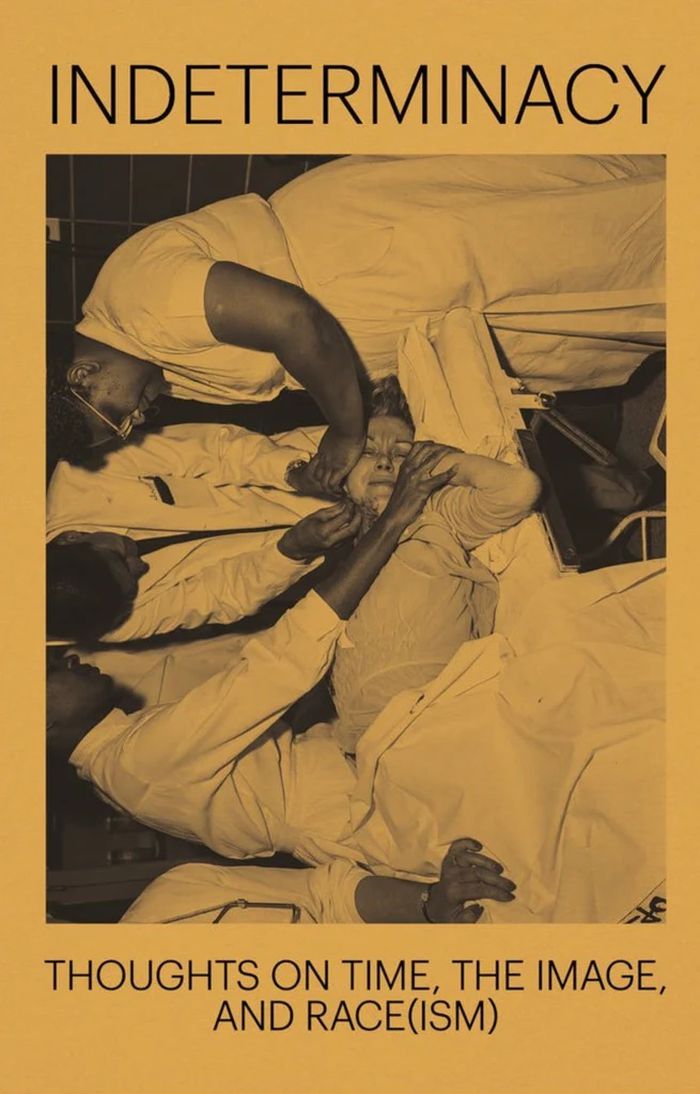
In a series of written exchanges, David Campany and Stanley Wolukau-Wanambwa consider the options for photography in resisting the oppressive orthodoxies of racial capital, conservative history, and neoliberal visual culture. How does the essential indeterminacy of photography square with the need to work out alternative practices? How is visibility achieved beyond the(...)
$28.00
(available in store)
Summary:
In a series of written exchanges, David Campany and Stanley Wolukau-Wanambwa consider the options for photography in resisting the oppressive orthodoxies of racial capital, conservative history, and neoliberal visual culture. How does the essential indeterminacy of photography square with the need to work out alternative practices? How is visibility achieved beyond the(...)
Subject:
Theory of Photography
Theory of Photography
Publication:
June 2022
June 2022
Title:
Indeterminacy: Thoughts on time, the image and race(ism)
Actions:
Price:
$28.00
(available in store)
Summary:
In a series of written exchanges, David Campany and Stanley Wolukau-Wanambwa consider the options for photography in resisting the oppressive orthodoxies of racial capital, conservative history, and neoliberal visual culture. How does the essential indeterminacy of photography square with the need to work out alternative practices? How is visibility achieved beyond the consensual categories of the mass media and the commodification of art? What models are there for the making and reception of photographic books and exhibitions that might cultivate an active spectatorship beyond boutique consumerism? These urgent questions and more are discussed in a spirit of speculation and possibility, in the light of signal events that have shaped the recent past.
Indeterminacy: Thoughts on time, the image and race(ism)
Actions:
Price:
$28.00
(available in store)
Summary:
In a series of written exchanges, David Campany and Stanley Wolukau-Wanambwa consider the options for photography in resisting the oppressive orthodoxies of racial capital, conservative history, and neoliberal visual culture. How does the essential indeterminacy of photography square with the need to work out alternative practices? How is visibility achieved beyond the consensual categories of the mass media and the commodification of art? What models are there for the making and reception of photographic books and exhibitions that might cultivate an active spectatorship beyond boutique consumerism? These urgent questions and more are discussed in a spirit of speculation and possibility, in the light of signal events that have shaped the recent past.
Form:
books
books
Publication:
June 2022
June 2022
Subject:
Theory of Photography
Theory of Photography


