


452 Results
Form:
books
books
Title:
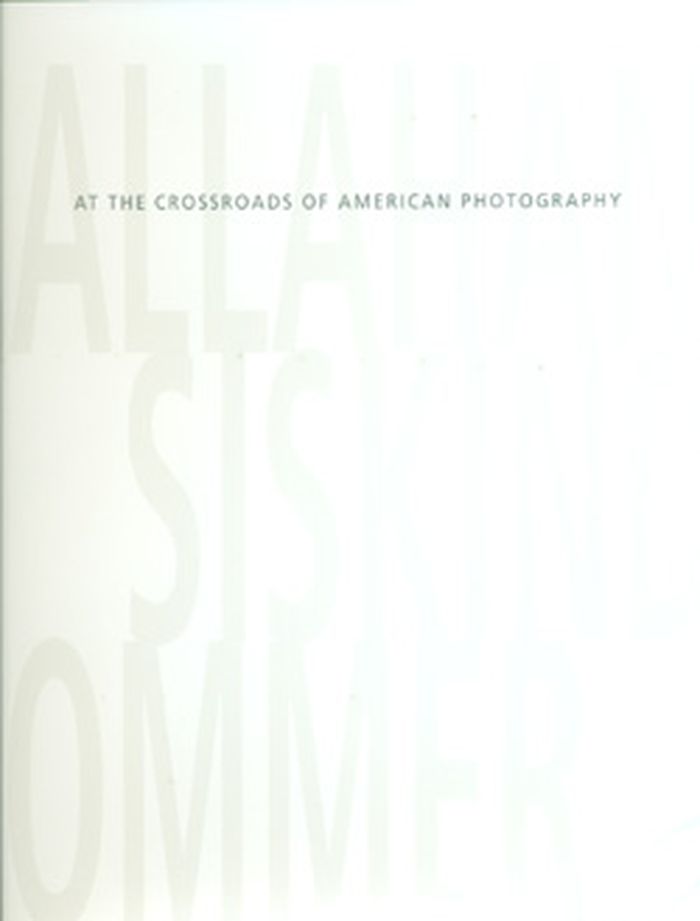
Callahan, Siskind, Sommer
Callahan, Siskind, Sommer
Actions:
Price:
$63.00
(available to order)
Summary:
This exquisitely produced exhibition catalogue highlights the powerful role of such camaraderie in shaping photography at this seminal time, before the emergence of a market for photography and before widespread artistic acceptance of the medium. It brings to light contrasting philosophies of the artist/photographer's role (influenced by Existentialism for Siskind and by(...)
$63.00
(available to order)
Summary:
This exquisitely produced exhibition catalogue highlights the powerful role of such camaraderie in shaping photography at this seminal time, before the emergence of a market for photography and before widespread artistic acceptance of the medium. It brings to light contrasting philosophies of the artist/photographer's role (influenced by Existentialism for Siskind and by(...)
Title:
Callahan, Siskind, Sommer
Actions:
Price:
$63.00
(available to order)
Summary:
This exquisitely produced exhibition catalogue highlights the powerful role of such camaraderie in shaping photography at this seminal time, before the emergence of a market for photography and before widespread artistic acceptance of the medium. It brings to light contrasting philosophies of the artist/photographer's role (influenced by Existentialism for Siskind and by the writings of Spinoza for Sommer), the interest in chance as an artistic process, the expressive potential of photographic found objects and collage, experimental abstraction, close affiliations with fine art movements (New Bauhaus, Abstract Expressionism and Surrealism), and changing attitudes toward the fine-print tradition.
Callahan, Siskind, Sommer
Actions:
Price:
$63.00
(available to order)
Summary:
This exquisitely produced exhibition catalogue highlights the powerful role of such camaraderie in shaping photography at this seminal time, before the emergence of a market for photography and before widespread artistic acceptance of the medium. It brings to light contrasting philosophies of the artist/photographer's role (influenced by Existentialism for Siskind and by the writings of Spinoza for Sommer), the interest in chance as an artistic process, the expressive potential of photographic found objects and collage, experimental abstraction, close affiliations with fine art movements (New Bauhaus, Abstract Expressionism and Surrealism), and changing attitudes toward the fine-print tradition.
Form:
books
books
Publication:
January 2009, New York
January 2009, New York
Subject:
Theory of Photography
Theory of Photography
Form:
books
books
Actions:
Price:
$51.00
(available to order)
Summary:
Into the Sunset examines how photography has pictured, established and transformed the idea of the American West, from 1850 to the present. The development of photography coincided with the exploration and settlement of the West, and this simultaneous growth resulted in a complex relationship that has shaped the perception of that region's physical and social landscape to(...)
$51.00
(available to order)
Summary:
Into the Sunset examines how photography has pictured, established and transformed the idea of the American West, from 1850 to the present. The development of photography coincided with the exploration and settlement of the West, and this simultaneous growth resulted in a complex relationship that has shaped the perception of that region's physical and social landscape to(...)
Title:
Into the sunset: photography's image of the american west
Actions:
Price:
$51.00
(available to order)
Summary:
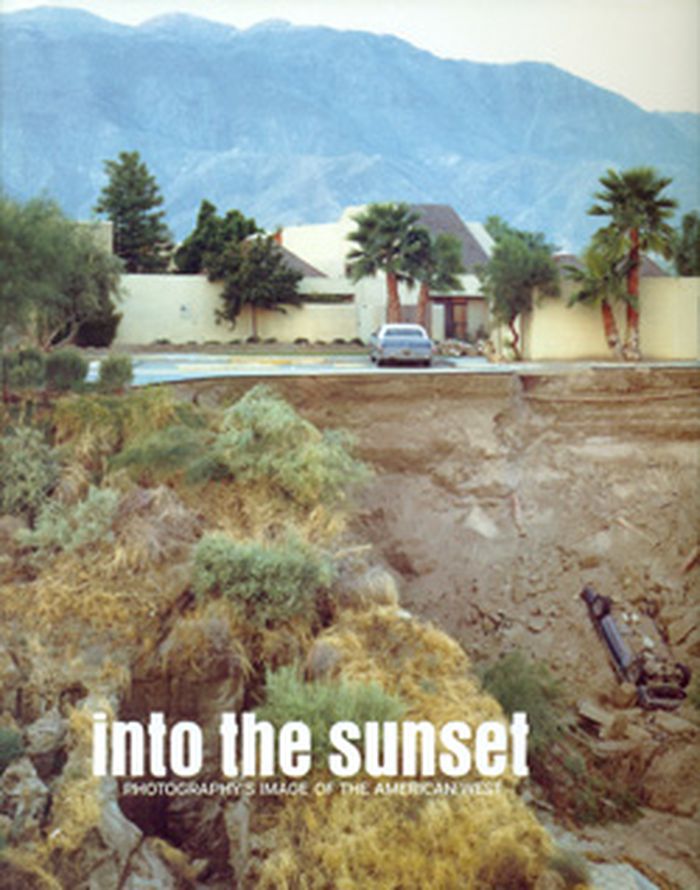
Into the Sunset examines how photography has pictured, established and transformed the idea of the American West, from 1850 to the present. The development of photography coincided with the exploration and settlement of the West, and this simultaneous growth resulted in a complex relationship that has shaped the perception of that region's physical and social landscape to this day. Published to accompany a major exhibition at The Museum of Modern Art, New York, Into the Sunset charts changing myths and cultural attitudes about the West through photographs dating from the nineteenth to the twenty-first centuries. An expansive and dynamic survey, it brings together photographers as diverse as Carleton E. Watkins and Stephen Shore, Darius Kinsey and Dorothea Lange, Robert Frank and Cindy Sherman, an unknown daguerreotypist and Richard Prince. More than 120 works are organized thematically to highlight the artists' differing views of the West's land and people.
Into the sunset: photography's image of the american west
Actions:
Price:
$51.00
(available to order)
Summary:
Into the Sunset examines how photography has pictured, established and transformed the idea of the American West, from 1850 to the present. The development of photography coincided with the exploration and settlement of the West, and this simultaneous growth resulted in a complex relationship that has shaped the perception of that region's physical and social landscape to this day. Published to accompany a major exhibition at The Museum of Modern Art, New York, Into the Sunset charts changing myths and cultural attitudes about the West through photographs dating from the nineteenth to the twenty-first centuries. An expansive and dynamic survey, it brings together photographers as diverse as Carleton E. Watkins and Stephen Shore, Darius Kinsey and Dorothea Lange, Robert Frank and Cindy Sherman, an unknown daguerreotypist and Richard Prince. More than 120 works are organized thematically to highlight the artists' differing views of the West's land and people.
Form:
books
books
Publication:
January 2009, New York
January 2009, New York
Subject:
Theory of Photography
Theory of Photography
Form:
books
books
Title:
William Wylie: Carrara
William Wylie: Carrara
Actions:
Price:
$64.95
(available to order)
Summary:
The legendary Cava di Gioia quarry in Carrara, Italy, was the source of the luminous white marble used by Michelangelo, Bernini, Henry Moore, and other renowned sculptors. Carrara, a volume of stunning photographs by William Wylie, reveals that the beauty of the quarry itself can be as alluring as the sculptures carved from its stone. Wylie is the first photographer to(...)
$64.95
(available to order)
Summary:
The legendary Cava di Gioia quarry in Carrara, Italy, was the source of the luminous white marble used by Michelangelo, Bernini, Henry Moore, and other renowned sculptors. Carrara, a volume of stunning photographs by William Wylie, reveals that the beauty of the quarry itself can be as alluring as the sculptures carved from its stone. Wylie is the first photographer to(...)
Title:
William Wylie: Carrara
Actions:
Price:
$64.95
(available to order)
Summary:
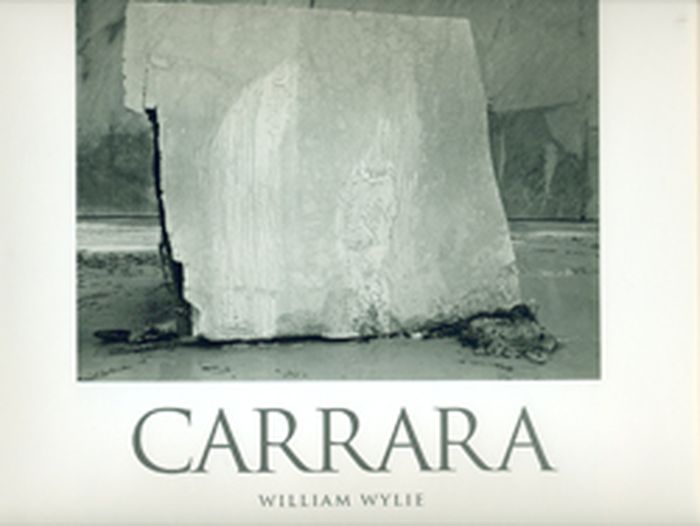
The legendary Cava di Gioia quarry in Carrara, Italy, was the source of the luminous white marble used by Michelangelo, Bernini, Henry Moore, and other renowned sculptors. Carrara, a volume of stunning photographs by William Wylie, reveals that the beauty of the quarry itself can be as alluring as the sculptures carved from its stone. Wylie is the first photographer to document Cava di Gioia since Ilario Besi, early in the twentieth century. For six years, Wylie photographed the changing landscape of the quarry, and his images capture the intense physical scale of the site, the dramatic setting, and the character of the stonecutters, or cavatori, who have worked the quarry for generations. Wylie’s astonishing photographs present a remarkable panorama carved by more than twenty centuries of excavation. As well, his images of the stonecutters are sensitive portraits of men shaped by their occupation, toughened and enlivened by their work.
William Wylie: Carrara
Actions:
Price:
$64.95
(available to order)
Summary:
The legendary Cava di Gioia quarry in Carrara, Italy, was the source of the luminous white marble used by Michelangelo, Bernini, Henry Moore, and other renowned sculptors. Carrara, a volume of stunning photographs by William Wylie, reveals that the beauty of the quarry itself can be as alluring as the sculptures carved from its stone. Wylie is the first photographer to document Cava di Gioia since Ilario Besi, early in the twentieth century. For six years, Wylie photographed the changing landscape of the quarry, and his images capture the intense physical scale of the site, the dramatic setting, and the character of the stonecutters, or cavatori, who have worked the quarry for generations. Wylie’s astonishing photographs present a remarkable panorama carved by more than twenty centuries of excavation. As well, his images of the stonecutters are sensitive portraits of men shaped by their occupation, toughened and enlivened by their work.
Form:
books
books
Publication:
March 2009
March 2009
Form:
books
books
Actions:
Price:
$39.95
(available to order)
Summary:
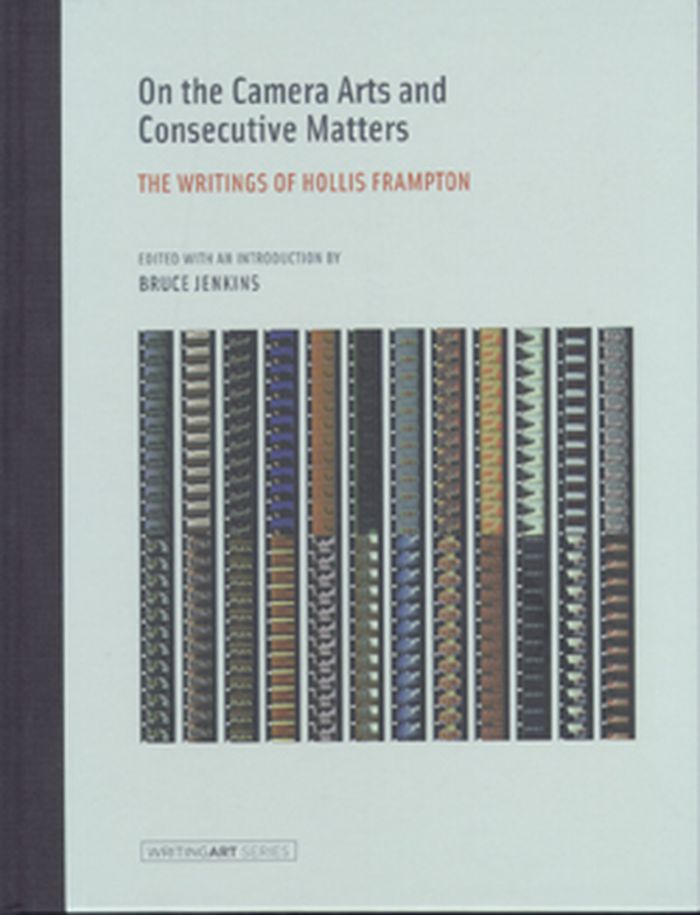
This collection of Frampton's writings presents his critical essays (many written for Artforum and October) along with additional material, including lectures, correspondence, interviews, production notes, and scripts. It replaces—and supersedes—the long-unavailable Circles of Confusion, published in 1983.
$39.95
(available to order)
Summary:
This collection of Frampton's writings presents his critical essays (many written for Artforum and October) along with additional material, including lectures, correspondence, interviews, production notes, and scripts. It replaces—and supersedes—the long-unavailable Circles of Confusion, published in 1983.
Subject:
Theory of Photography
Theory of Photography
Publication:
April 2009, Cambridge, London
April 2009, Cambridge, London
Title:
On the camera arts and consecutive matters: the writtings of Hollis Frampton
Actions:
Price:
$39.95
(available to order)
Summary:
This collection of Frampton's writings presents his critical essays (many written for Artforum and October) along with additional material, including lectures, correspondence, interviews, production notes, and scripts. It replaces—and supersedes—the long-unavailable Circles of Confusion, published in 1983.
On the camera arts and consecutive matters: the writtings of Hollis Frampton
Actions:
Price:
$39.95
(available to order)
Summary:
This collection of Frampton's writings presents his critical essays (many written for Artforum and October) along with additional material, including lectures, correspondence, interviews, production notes, and scripts. It replaces—and supersedes—the long-unavailable Circles of Confusion, published in 1983.
Form:
books
books
Publication:
April 2009, Cambridge, London
April 2009, Cambridge, London
Subject:
Theory of Photography
Theory of Photography
Form:
books
books
Actions:
Price:
$13.95
(available to order)
Summary:
Paru pour la première fois en 1977, Sur la photographie est devenu le livre culte sur le sujet.
$13.95
(available to order)
Summary:
Paru pour la première fois en 1977, Sur la photographie est devenu le livre culte sur le sujet.
Title:
Sur la photographie: oeuvre complète
Actions:
Price:
$13.95
(available to order)
Summary:
Paru pour la première fois en 1977, Sur la photographie est devenu le livre culte sur le sujet.
Sur la photographie: oeuvre complète
Actions:
Price:
$13.95
(available to order)
Summary:
Paru pour la première fois en 1977, Sur la photographie est devenu le livre culte sur le sujet.
Form:
books
books
Publication:
January 1900, Paris
January 1900, Paris
Subject:
Theory of Photography
Theory of Photography
Form:
books
books
Title:
Javier Vallhonrat: acaso
Javier Vallhonrat: acaso
Actions:
Price:
$80.00
(available in store)
Summary:
In the separate lexicon, installed at the beginning of this well conceived photographic book, Vallhonrat provides nine notes on how the images should be interpreted. Among them it is clear that his photographs explore ‘objects, places and actions,' along with ideas such as belonging, identity, and the processes of construction and transformation. Furthermore, these(...)
$80.00
(available in store)
Summary:
In the separate lexicon, installed at the beginning of this well conceived photographic book, Vallhonrat provides nine notes on how the images should be interpreted. Among them it is clear that his photographs explore ‘objects, places and actions,' along with ideas such as belonging, identity, and the processes of construction and transformation. Furthermore, these(...)
Title:
Javier Vallhonrat: acaso
Actions:
Price:
$80.00
(available in store)
Summary:
In the separate lexicon, installed at the beginning of this well conceived photographic book, Vallhonrat provides nine notes on how the images should be interpreted. Among them it is clear that his photographs explore ‘objects, places and actions,' along with ideas such as belonging, identity, and the processes of construction and transformation. Furthermore, these actions, objects and places shown in the images ‘find themselves in a no-mans land between reality, dreams and the fantasy found in children's stories.' Rich and mysterious, the 45 full colour photographs come printed, uninterrupted, one on each double page.
Javier Vallhonrat: acaso
Actions:
Price:
$80.00
(available in store)
Summary:
In the separate lexicon, installed at the beginning of this well conceived photographic book, Vallhonrat provides nine notes on how the images should be interpreted. Among them it is clear that his photographs explore ‘objects, places and actions,' along with ideas such as belonging, identity, and the processes of construction and transformation. Furthermore, these actions, objects and places shown in the images ‘find themselves in a no-mans land between reality, dreams and the fantasy found in children's stories.' Rich and mysterious, the 45 full colour photographs come printed, uninterrupted, one on each double page.
Form:
books
books
Publication:
October 2009, Madrid
October 2009, Madrid
Subject:
Theory of Photography
Theory of Photography
Form:
books
books

Title:
On photography, n.e.
On photography, n.e.
Actions:
Price:
$25.00
(available in store)
Summary:
A new edition of Susan Sontag’s groundbreaking critique of photography—its problems, politics, and possibilities. “To photograph is to appropriate the thing photographed,” Sontag writes in the opening pages of ''On Photography'', which went on to influence generations of theorists, film critics, and readers everywhere. Originally published in the 1970s, her(...)
$25.00
(available in store)
Summary:
A new edition of Susan Sontag’s groundbreaking critique of photography—its problems, politics, and possibilities. “To photograph is to appropriate the thing photographed,” Sontag writes in the opening pages of ''On Photography'', which went on to influence generations of theorists, film critics, and readers everywhere. Originally published in the 1970s, her(...)
Title:
On photography, n.e.
Actions:
Price:
$25.00
(available in store)
Summary:
A new edition of Susan Sontag’s groundbreaking critique of photography—its problems, politics, and possibilities. “To photograph is to appropriate the thing photographed,” Sontag writes in the opening pages of ''On Photography'', which went on to influence generations of theorists, film critics, and readers everywhere. Originally published in the 1970s, her groundbreaking collection remains uncannily prescient and profoundly precise. With her singular searching eye, and her refusal to buckle under received wisdom, she presents a rousing critique of the functions of imagery—to seduce, to advertise, to evoke, to commemorate, to conspire, to conceal—across six essays. The result is a damning portrait of the ways we use imagery to manufacture reality and authority that feels as if it were written today.
On photography, n.e.
Actions:
Price:
$25.00
(available in store)
Summary:
A new edition of Susan Sontag’s groundbreaking critique of photography—its problems, politics, and possibilities. “To photograph is to appropriate the thing photographed,” Sontag writes in the opening pages of ''On Photography'', which went on to influence generations of theorists, film critics, and readers everywhere. Originally published in the 1970s, her groundbreaking collection remains uncannily prescient and profoundly precise. With her singular searching eye, and her refusal to buckle under received wisdom, she presents a rousing critique of the functions of imagery—to seduce, to advertise, to evoke, to commemorate, to conspire, to conceal—across six essays. The result is a damning portrait of the ways we use imagery to manufacture reality and authority that feels as if it were written today.
Form:
books
books
Publication:
April 2025
April 2025
Subject:
Theory of Photography
Theory of Photography
Form:
books
books

Actions:
Price:
$25.00
(available to order)
Summary:
Considered one of the greatest critics of her generation, Susan Sontag followed up her monumental ''On Photography'' with an extended study of human violence, reflecting on a question first posed by Virginia Woolf in ''Three Guineas'': How in your opinion are we to prevent war? “For a long time some people believed that if the horror could be made vivid enough, most(...)
$25.00
(available to order)
Summary:
Considered one of the greatest critics of her generation, Susan Sontag followed up her monumental ''On Photography'' with an extended study of human violence, reflecting on a question first posed by Virginia Woolf in ''Three Guineas'': How in your opinion are we to prevent war? “For a long time some people believed that if the horror could be made vivid enough, most(...)
Title:
Regarding the pain of others, n.e.
Actions:
Price:
$25.00
(available to order)
Summary:
Considered one of the greatest critics of her generation, Susan Sontag followed up her monumental ''On Photography'' with an extended study of human violence, reflecting on a question first posed by Virginia Woolf in ''Three Guineas'': How in your opinion are we to prevent war? “For a long time some people believed that if the horror could be made vivid enough, most people would finally take in the outrageousness, the insanity of war.” One of the distinguishing features of modern life is that it supplies countless opportunities for regarding (at a distance, through the medium of photography) horrors taking place throughout the world. But are viewers inured—or incited—to violence by the depiction of cruelty? Is the viewer’s perception of reality eroded by the daily barrage of such images? What does it mean to care about the suffering of others far away? First published more than twenty years after her now-classic book ''On Photography'', which changed how we understand the very condition of being modern, Regarding the Pain of Others challenges our thinking not only about the uses and means of images, but about how war itself is waged (and understood) in our time, the limits of sympathy, and the obligations of conscience.
Regarding the pain of others, n.e.
Actions:
Price:
$25.00
(available to order)
Summary:
Considered one of the greatest critics of her generation, Susan Sontag followed up her monumental ''On Photography'' with an extended study of human violence, reflecting on a question first posed by Virginia Woolf in ''Three Guineas'': How in your opinion are we to prevent war? “For a long time some people believed that if the horror could be made vivid enough, most people would finally take in the outrageousness, the insanity of war.” One of the distinguishing features of modern life is that it supplies countless opportunities for regarding (at a distance, through the medium of photography) horrors taking place throughout the world. But are viewers inured—or incited—to violence by the depiction of cruelty? Is the viewer’s perception of reality eroded by the daily barrage of such images? What does it mean to care about the suffering of others far away? First published more than twenty years after her now-classic book ''On Photography'', which changed how we understand the very condition of being modern, Regarding the Pain of Others challenges our thinking not only about the uses and means of images, but about how war itself is waged (and understood) in our time, the limits of sympathy, and the obligations of conscience.
Form:
books
books
Publication:
July 2025
July 2025
Subject:
Theory of Photography
Theory of Photography
Form:
books
books
Actions:
Price:
$37.50
(available to order)
Summary:
One hundred photographs from the Mariners' Museum in Newport News, Virginia, selected and introduced by John Szarkowski with essays by Richard Benson.
$37.50
(available to order)
Summary:
One hundred photographs from the Mariners' Museum in Newport News, Virginia, selected and introduced by John Szarkowski with essays by Richard Benson.
Subject:
Theory of Photography
Theory of Photography
Publication:
October 1999, New Haven
October 1999, New Haven
Title:
A maritime album: 100 photographs and their stories
Actions:
Price:
$37.50
(available to order)
Summary:
One hundred photographs from the Mariners' Museum in Newport News, Virginia, selected and introduced by John Szarkowski with essays by Richard Benson.
A maritime album: 100 photographs and their stories
Actions:
Price:
$37.50
(available to order)
Summary:
One hundred photographs from the Mariners' Museum in Newport News, Virginia, selected and introduced by John Szarkowski with essays by Richard Benson.
Form:
books
books
Publication:
October 1999, New Haven
October 1999, New Haven
Subject:
Theory of Photography
Theory of Photography
Form:
books
books
Actions:
Price:
$45.00
(available to order)
Summary:
Through photographs, paintings, sculpture, installations, architectural drawings and plans, videos, and film excerpts, this book examines the ways in which the Bronx has been constructed in the public imagination. More than 40 artists are represented including Sophie Calle, Maya Lin, Gordon Matta-Clark, Aldo Rossi, and Camilo Vergara.
$45.00
(available to order)
Summary:
Through photographs, paintings, sculpture, installations, architectural drawings and plans, videos, and film excerpts, this book examines the ways in which the Bronx has been constructed in the public imagination. More than 40 artists are represented including Sophie Calle, Maya Lin, Gordon Matta-Clark, Aldo Rossi, and Camilo Vergara.
Title:
Urban mythologies : the Bronx represented since the 1960s
Actions:
Price:
$45.00
(available to order)
Summary:
Through photographs, paintings, sculpture, installations, architectural drawings and plans, videos, and film excerpts, this book examines the ways in which the Bronx has been constructed in the public imagination. More than 40 artists are represented including Sophie Calle, Maya Lin, Gordon Matta-Clark, Aldo Rossi, and Camilo Vergara.
Urban mythologies : the Bronx represented since the 1960s
Actions:
Price:
$45.00
(available to order)
Summary:
Through photographs, paintings, sculpture, installations, architectural drawings and plans, videos, and film excerpts, this book examines the ways in which the Bronx has been constructed in the public imagination. More than 40 artists are represented including Sophie Calle, Maya Lin, Gordon Matta-Clark, Aldo Rossi, and Camilo Vergara.
Form:
books
books
Publication:
August 1999, New York
August 1999, New York
Subject:
Theory of Photography
Theory of Photography


