


448 Results
Form:
books
books

Actions:
Price:
$59.95
(available in store)
Summary:
The Lebanese photographer Marie al-Khazen not only documented her travels around tourist sites in Lebanon but also sought creative experimentation with her camera by staging scenes, manipulating shadows, and superimposing negatives to produce different effects in her prints. Within her photographs, bedouins and European friends, peasants and landlords, men and women(...)
$59.95
(available in store)
Summary:
The Lebanese photographer Marie al-Khazen not only documented her travels around tourist sites in Lebanon but also sought creative experimentation with her camera by staging scenes, manipulating shadows, and superimposing negatives to produce different effects in her prints. Within her photographs, bedouins and European friends, peasants and landlords, men and women(...)
Title:
Reading Marie al-Khazen’s photographs: Gender, photography, Mandate Lebanon
Actions:
Price:
$59.95
(available in store)
Summary:
The Lebanese photographer Marie al-Khazen not only documented her travels around tourist sites in Lebanon but also sought creative experimentation with her camera by staging scenes, manipulating shadows, and superimposing negatives to produce different effects in her prints. Within her photographs, bedouins and European friends, peasants and landlords, men and women comfortably share the same space. Her photographs include an intriguing collection portraying her family and friends living their everyday lives in 1920s and '30s Zgharta, a village in the north of Lebanon. Yasmine Nachabe Taan explores these photographs, emphasizing the ways in which notions of gender and class are inscribed within them and revealing how they are charged with symbols of women's emancipation to today's viewers, through women's presence as individuals, separate from family restrictions of that time.
Reading Marie al-Khazen’s photographs: Gender, photography, Mandate Lebanon
Actions:
Price:
$59.95
(available in store)
Summary:
The Lebanese photographer Marie al-Khazen not only documented her travels around tourist sites in Lebanon but also sought creative experimentation with her camera by staging scenes, manipulating shadows, and superimposing negatives to produce different effects in her prints. Within her photographs, bedouins and European friends, peasants and landlords, men and women comfortably share the same space. Her photographs include an intriguing collection portraying her family and friends living their everyday lives in 1920s and '30s Zgharta, a village in the north of Lebanon. Yasmine Nachabe Taan explores these photographs, emphasizing the ways in which notions of gender and class are inscribed within them and revealing how they are charged with symbols of women's emancipation to today's viewers, through women's presence as individuals, separate from family restrictions of that time.
Form:
books
books
Publication:
August 2022
August 2022
Subject:
Theory of Photography
Theory of Photography
Form:
books
books
Price:
$39.95
(available in store)
Summary:
Newspaper articles, speeches, and essays show Sunil Gupta’s crucial role at the center of grassroots queer and postcolonial organizing throughout an artistic career lived between Canada, the UK, and India. In his pieces about homosexuality in Indian cities, the AIDS crisis, the Black Arts Movement, or key figures including Joy Gregory and Robert Mapplethorpe, Gupta(...)
$39.95
(available in store)
Summary:
Newspaper articles, speeches, and essays show Sunil Gupta’s crucial role at the center of grassroots queer and postcolonial organizing throughout an artistic career lived between Canada, the UK, and India. In his pieces about homosexuality in Indian cities, the AIDS crisis, the Black Arts Movement, or key figures including Joy Gregory and Robert Mapplethorpe, Gupta(...)
Title:
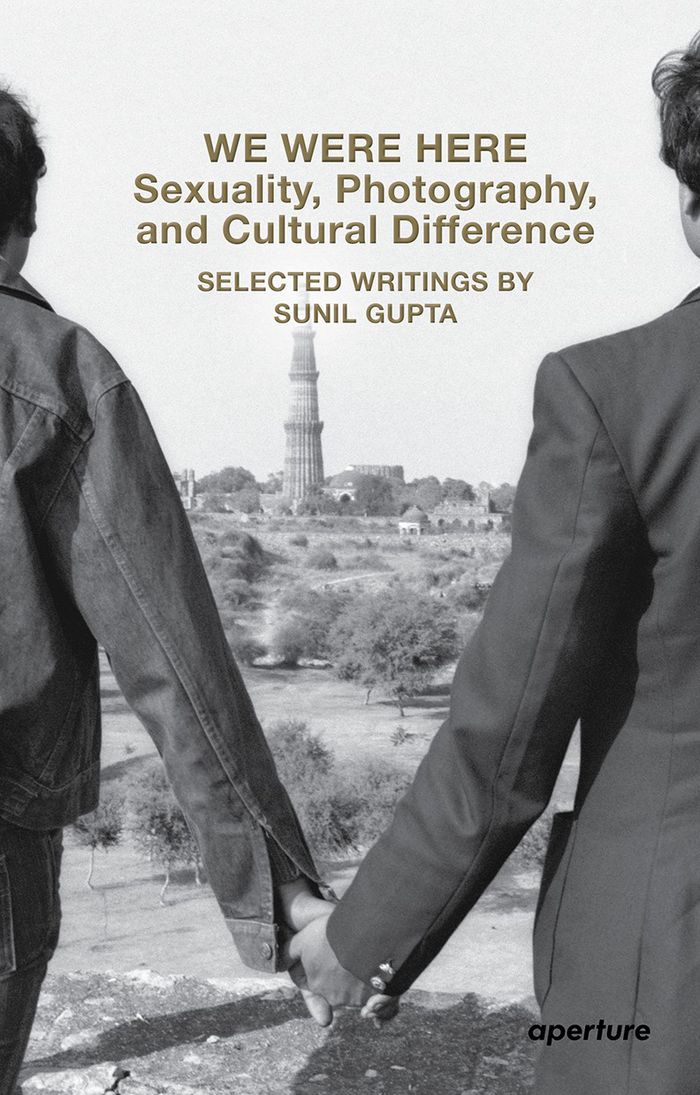
We were here: Sexuality, photography, and cultural difference
Actions:
Price:
$39.95
(available in store)
Summary:
Newspaper articles, speeches, and essays show Sunil Gupta’s crucial role at the center of grassroots queer and postcolonial organizing throughout an artistic career lived between Canada, the UK, and India. In his pieces about homosexuality in Indian cities, the AIDS crisis, the Black Arts Movement, or key figures including Joy Gregory and Robert Mapplethorpe, Gupta foregrounds the power of cultural activism in the politically fraught contexts of London and Delhi, and illuminates the essential connections between queer migration and self-discovery. Continually questioning given forms of identity, Gupta offers artists and curators multiple strategies of resistance, carving out space for new ways of imagining what it might mean to live, love, and create.
We were here: Sexuality, photography, and cultural difference
Actions:
Price:
$39.95
(available in store)
Summary:
Newspaper articles, speeches, and essays show Sunil Gupta’s crucial role at the center of grassroots queer and postcolonial organizing throughout an artistic career lived between Canada, the UK, and India. In his pieces about homosexuality in Indian cities, the AIDS crisis, the Black Arts Movement, or key figures including Joy Gregory and Robert Mapplethorpe, Gupta foregrounds the power of cultural activism in the politically fraught contexts of London and Delhi, and illuminates the essential connections between queer migration and self-discovery. Continually questioning given forms of identity, Gupta offers artists and curators multiple strategies of resistance, carving out space for new ways of imagining what it might mean to live, love, and create.
Form:
books
books
Publication:
November 2022
November 2022
Form:
books
books
Actions:
Price:
$34.95
(available to order)
Summary:
This book collects writer-photographer Nicholas Muellner’s textual and visual essays created between 2009 and 2019. Intertwining memoir, reportage, fiction and theory, he asks: what is existentially at stake today in the making and viewing of photographs? In a time when nearly everyone has become a photographer, Muellner explores how images have become a means through(...)
$34.95
(available to order)
Summary:
This book collects writer-photographer Nicholas Muellner’s textual and visual essays created between 2009 and 2019. Intertwining memoir, reportage, fiction and theory, he asks: what is existentially at stake today in the making and viewing of photographs? In a time when nearly everyone has become a photographer, Muellner explores how images have become a means through(...)
Title:
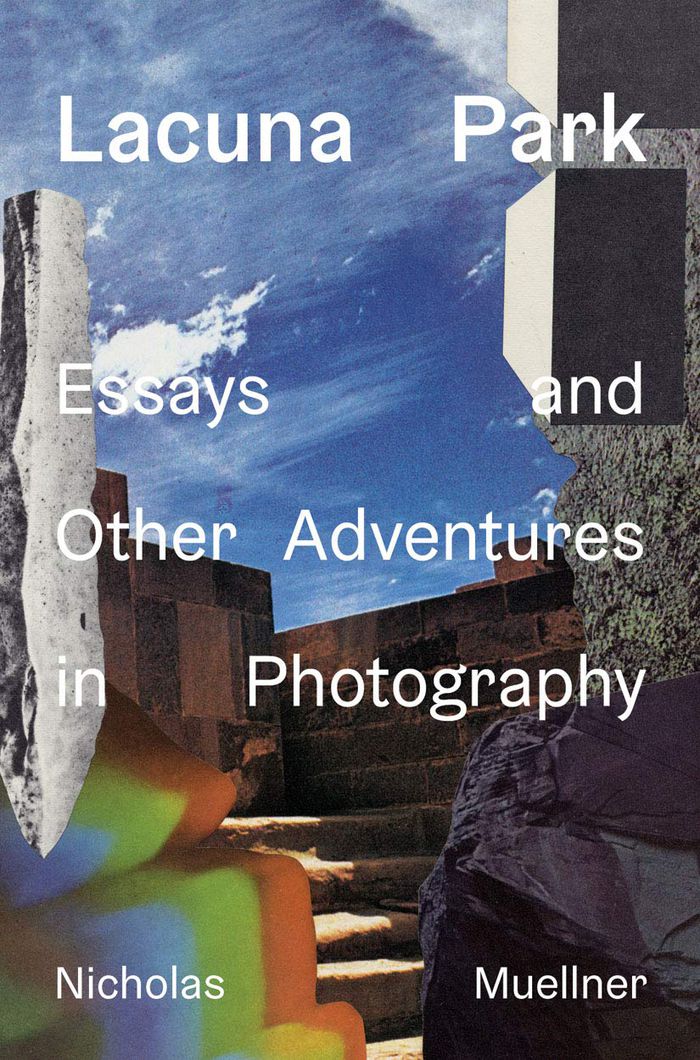
Lacuna Park: Essays and other adventures in photography by Nicholas Muellner
Actions:
Price:
$34.95
(available to order)
Summary:
This book collects writer-photographer Nicholas Muellner’s textual and visual essays created between 2009 and 2019. Intertwining memoir, reportage, fiction and theory, he asks: what is existentially at stake today in the making and viewing of photographs? In a time when nearly everyone has become a photographer, Muellner explores how images have become a means through which we control and care and lose and desire, and most of all, adapt and compensate, forget, remember, and keep going.
Lacuna Park: Essays and other adventures in photography by Nicholas Muellner
Actions:
Price:
$34.95
(available to order)
Summary:
This book collects writer-photographer Nicholas Muellner’s textual and visual essays created between 2009 and 2019. Intertwining memoir, reportage, fiction and theory, he asks: what is existentially at stake today in the making and viewing of photographs? In a time when nearly everyone has become a photographer, Muellner explores how images have become a means through which we control and care and lose and desire, and most of all, adapt and compensate, forget, remember, and keep going.
Form:
books
books
Publication:
September 2019
September 2019
Subject:
Theory of Photography
Theory of Photography
Form:
books
books
Actions:
Price:
$66.95
(available to order)
Summary:
Maurice Scheltens has built up a photographic oeuvre based on still life photography. His work is playful and highly personalised, with work ranging from unique pieces, to applied projects and editorial commissions. Rearranged and re-edited for this publication that reproduces each work on full-gloss paper, the photographs here represent a survey of Scheltens’ work(...)
$66.95
(available to order)
Summary:
Maurice Scheltens has built up a photographic oeuvre based on still life photography. His work is playful and highly personalised, with work ranging from unique pieces, to applied projects and editorial commissions. Rearranged and re-edited for this publication that reproduces each work on full-gloss paper, the photographs here represent a survey of Scheltens’ work(...)
Title:
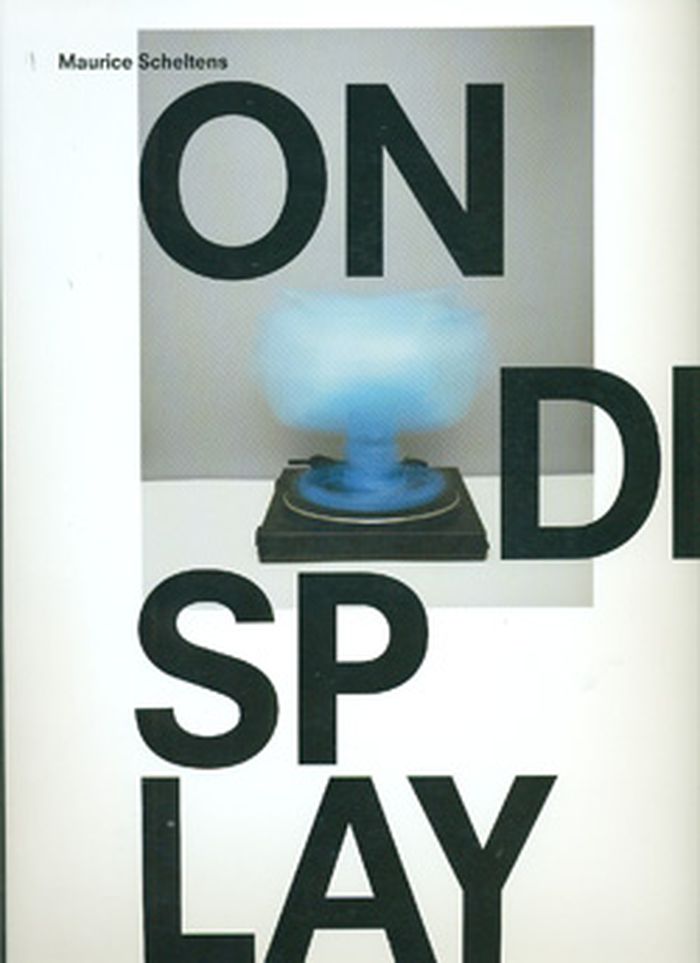
Maurice Scheltens: on display
Actions:
Price:
$66.95
(available to order)
Summary:
Maurice Scheltens has built up a photographic oeuvre based on still life photography. His work is playful and highly personalised, with work ranging from unique pieces, to applied projects and editorial commissions. Rearranged and re-edited for this publication that reproduces each work on full-gloss paper, the photographs here represent a survey of Scheltens’ work produced over the last ten years. Commissions for Vitra, Nike, Fantastic Man and Wallpaper are presented alongside pieces produced for galleries and museums, and accompanied by a short essay.
Maurice Scheltens: on display
Actions:
Price:
$66.95
(available to order)
Summary:
Maurice Scheltens has built up a photographic oeuvre based on still life photography. His work is playful and highly personalised, with work ranging from unique pieces, to applied projects and editorial commissions. Rearranged and re-edited for this publication that reproduces each work on full-gloss paper, the photographs here represent a survey of Scheltens’ work produced over the last ten years. Commissions for Vitra, Nike, Fantastic Man and Wallpaper are presented alongside pieces produced for galleries and museums, and accompanied by a short essay.
Form:
books
books
Publication:
July 2009
July 2009
Subject:
Theory of Photography
Theory of Photography
Form:
books
books

Title:
Inside out
Inside out
Actions:
Price:
$49.95
(available to order)
Summary:
This publication presents the fruits of a ten year long investigation into the windows found in various psychiatric institutions, hospitals, sanatoriums, first aid camps, concentration camps and juvenile prisons. In so doing, Hiroki Inoue focuses at the same time on the memories of the scenes where tragic events occurred and the physical spaces where people currently(...)
$49.95
(available to order)
Summary:
This publication presents the fruits of a ten year long investigation into the windows found in various psychiatric institutions, hospitals, sanatoriums, first aid camps, concentration camps and juvenile prisons. In so doing, Hiroki Inoue focuses at the same time on the memories of the scenes where tragic events occurred and the physical spaces where people currently(...)
Title:
Inside out
Actions:
Price:
$49.95
(available to order)
Summary:
This publication presents the fruits of a ten year long investigation into the windows found in various psychiatric institutions, hospitals, sanatoriums, first aid camps, concentration camps and juvenile prisons. In so doing, Hiroki Inoue focuses at the same time on the memories of the scenes where tragic events occurred and the physical spaces where people currently live. The viewer is charmed by the melodious beauty of the monochrome contrast of light and shade that is framed and filtered by the windows while being constantly reminded of the painful confines of institutional space. A total of 60, thought-provoking, colour photographs are presented one to a page or over double spreads and accompanied by a short essay by Reiko Kokatsu.
Inside out
Actions:
Price:
$49.95
(available to order)
Summary:
This publication presents the fruits of a ten year long investigation into the windows found in various psychiatric institutions, hospitals, sanatoriums, first aid camps, concentration camps and juvenile prisons. In so doing, Hiroki Inoue focuses at the same time on the memories of the scenes where tragic events occurred and the physical spaces where people currently live. The viewer is charmed by the melodious beauty of the monochrome contrast of light and shade that is framed and filtered by the windows while being constantly reminded of the painful confines of institutional space. A total of 60, thought-provoking, colour photographs are presented one to a page or over double spreads and accompanied by a short essay by Reiko Kokatsu.
Form:
books
books
Publication:
July 2009
July 2009
Subject:
Theory of Photography
Theory of Photography
Form:
books
books
Price:
$34.99
(available to order)
Summary:
Roland Barthes's 1980 book Camera Lucida is perhaps the most influential book ever published on photography. The terms studium and punctum, coined by Barthes for two different ways of responding to photographs, are part of the standard lexicon for discussions of photography; Barthes's understanding of photographic time and the relationship he forges between photography(...)
$34.99
(available to order)
Summary:
Roland Barthes's 1980 book Camera Lucida is perhaps the most influential book ever published on photography. The terms studium and punctum, coined by Barthes for two different ways of responding to photographs, are part of the standard lexicon for discussions of photography; Barthes's understanding of photographic time and the relationship he forges between photography(...)
Title:
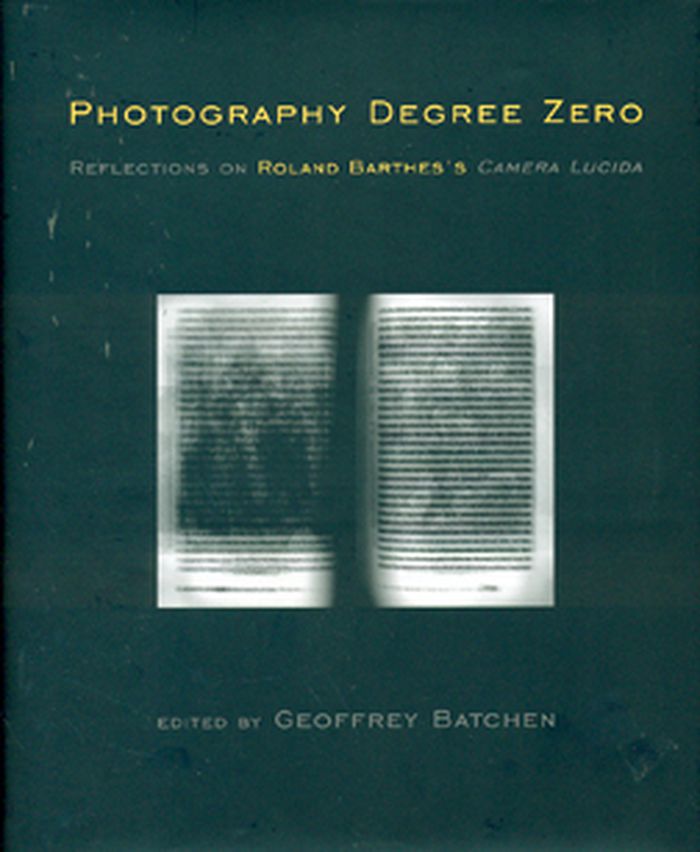
Photography degree zero, reflections on Roland Barthes's camera lucida
Actions:
Price:
$34.99
(available to order)
Summary:
Roland Barthes's 1980 book Camera Lucida is perhaps the most influential book ever published on photography. The terms studium and punctum, coined by Barthes for two different ways of responding to photographs, are part of the standard lexicon for discussions of photography; Barthes's understanding of photographic time and the relationship he forges between photography and death have been invoked countless times in photographic discourse; and the current interest in vernacular photographs and the ubiquity of subjective, even novelistic, ways of writing about photography both owe something to Barthes.
Photography degree zero, reflections on Roland Barthes's camera lucida
Actions:
Price:
$34.99
(available to order)
Summary:
Roland Barthes's 1980 book Camera Lucida is perhaps the most influential book ever published on photography. The terms studium and punctum, coined by Barthes for two different ways of responding to photographs, are part of the standard lexicon for discussions of photography; Barthes's understanding of photographic time and the relationship he forges between photography and death have been invoked countless times in photographic discourse; and the current interest in vernacular photographs and the ubiquity of subjective, even novelistic, ways of writing about photography both owe something to Barthes.
Form:
books
books
Publication:
October 2009
October 2009
Subject:
Theory of Photography
Theory of Photography
Form:
books
books
Actions:
Price:
$10.00
(available to order)
Summary:
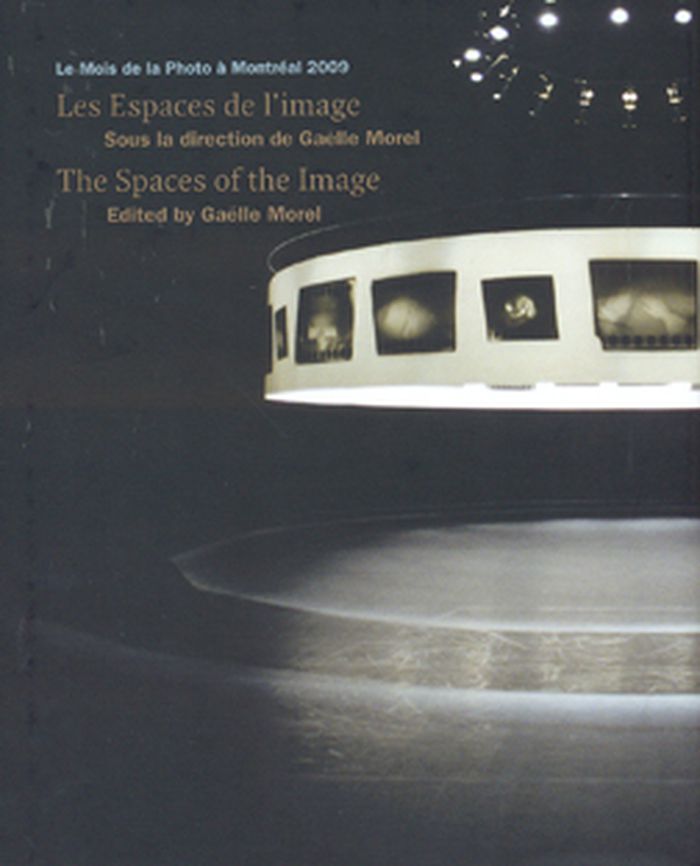
Sous la direction de Gaëlle Morel, la publication du Mois de la Photo à Montréal 2009, intitulée Les Espaces de l’image, regroupera les contributions inédites d’historiens de l’art et de critiques intéressés par la question des enjeux scénographiques. Seront ainsi abordées l’histoire de la projection comme procédé installatif et l’histoire des expositions de photographie(...)
$10.00
(available to order)
Summary:
Sous la direction de Gaëlle Morel, la publication du Mois de la Photo à Montréal 2009, intitulée Les Espaces de l’image, regroupera les contributions inédites d’historiens de l’art et de critiques intéressés par la question des enjeux scénographiques. Seront ainsi abordées l’histoire de la projection comme procédé installatif et l’histoire des expositions de photographie(...)
Publication:
August 2009
August 2009
Title:
Les espaces de l'image, Mois de la photo à Montréal 2009,
Actions:
Price:
$10.00
(available to order)
Summary:
Sous la direction de Gaëlle Morel, la publication du Mois de la Photo à Montréal 2009, intitulée Les Espaces de l’image, regroupera les contributions inédites d’historiens de l’art et de critiques intéressés par la question des enjeux scénographiques. Seront ainsi abordées l’histoire de la projection comme procédé installatif et l’histoire des expositions de photographie montrant la richesse des solutions spatiales envisagées au XXe siècle.
Les espaces de l'image, Mois de la photo à Montréal 2009,
Actions:
Price:
$10.00
(available to order)
Summary:
Sous la direction de Gaëlle Morel, la publication du Mois de la Photo à Montréal 2009, intitulée Les Espaces de l’image, regroupera les contributions inédites d’historiens de l’art et de critiques intéressés par la question des enjeux scénographiques. Seront ainsi abordées l’histoire de la projection comme procédé installatif et l’histoire des expositions de photographie montrant la richesse des solutions spatiales envisagées au XXe siècle.
Form:
books
books
Publication:
August 2009
August 2009
Form:
books
books
Actions:
Price:
$54.00
(available to order)
Summary:
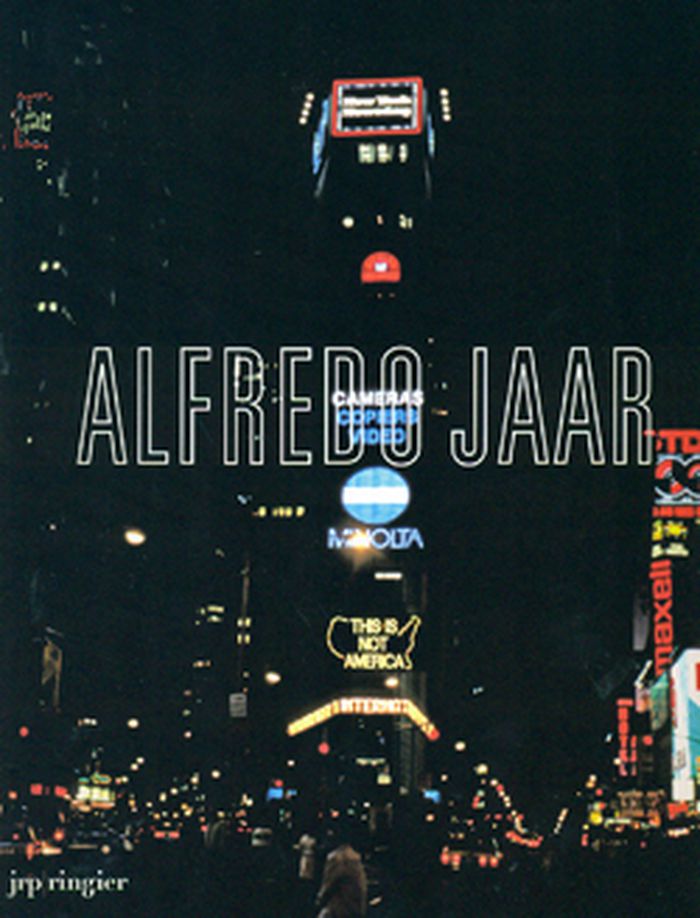
Spanning from the 1970s until today, this monograph traces the development of the Chilean-born, New York-based conceptualist--from his earliest public interventions to his latest installations. Working with public interventions, installations, photography and video, Jaar examines the nature of images and their viewers' relationships to them. His work tackles the very(...)
$54.00
(available to order)
Summary:
Spanning from the 1970s until today, this monograph traces the development of the Chilean-born, New York-based conceptualist--from his earliest public interventions to his latest installations. Working with public interventions, installations, photography and video, Jaar examines the nature of images and their viewers' relationships to them. His work tackles the very(...)
Subject:
Theory of Photography
Theory of Photography
Publication:
September 2009
September 2009
Title:
Alfredo Jaar: la politique des images
Actions:
Price:
$54.00
(available to order)
Summary:
Spanning from the 1970s until today, this monograph traces the development of the Chilean-born, New York-based conceptualist--from his earliest public interventions to his latest installations. Working with public interventions, installations, photography and video, Jaar examines the nature of images and their viewers' relationships to them. His work tackles the very possibility of producing art based on events that we would prefer to ignore, and of creating images in a context characterized both by their over-abundance and, paradoxically, by their invisibility.
Alfredo Jaar: la politique des images
Actions:
Price:
$54.00
(available to order)
Summary:
Spanning from the 1970s until today, this monograph traces the development of the Chilean-born, New York-based conceptualist--from his earliest public interventions to his latest installations. Working with public interventions, installations, photography and video, Jaar examines the nature of images and their viewers' relationships to them. His work tackles the very possibility of producing art based on events that we would prefer to ignore, and of creating images in a context characterized both by their over-abundance and, paradoxically, by their invisibility.
Form:
books
books
Publication:
September 2009
September 2009
Subject:
Theory of Photography
Theory of Photography
Form:
books
books
Actions:
Price:
$28.95
(available to order)
Summary:
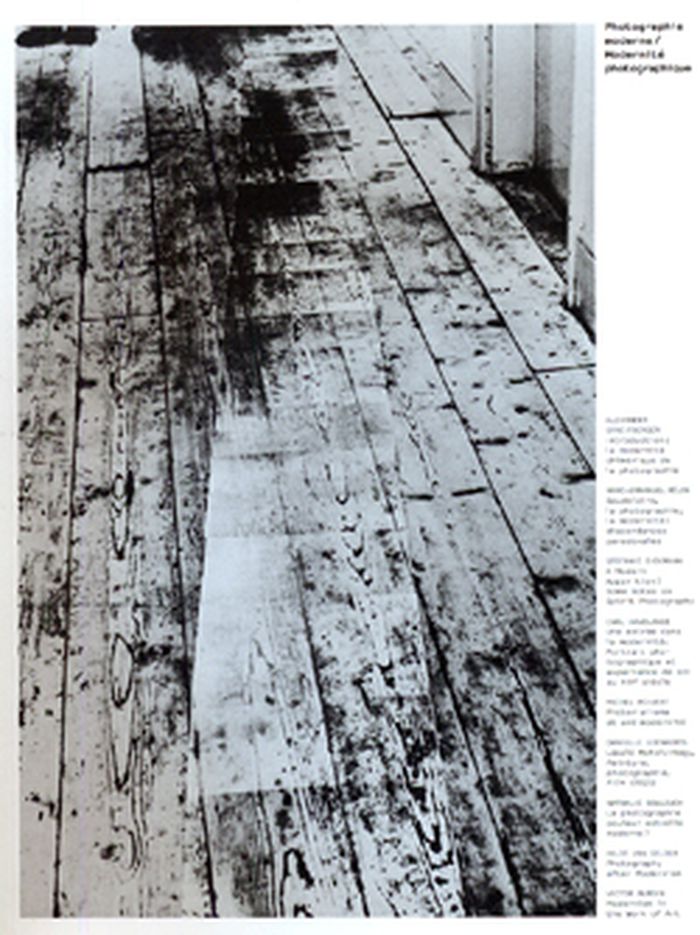
Un recueil d'articles consacrés aux rapports entre photographie, art, vie et perception modernes. Marc-Emmanuel Mélon : Baudelaire, la photographie, la modernité : discordances paradoxales. Stephanie Diekmann : A Modern Apparition ? Some Notes on Spirit Photography. Carl Havelange : Une entrée dans la modernité. Portrait photographique et expérience de soi(...)
$28.95
(available to order)
Summary:
Un recueil d'articles consacrés aux rapports entre photographie, art, vie et perception modernes. Marc-Emmanuel Mélon : Baudelaire, la photographie, la modernité : discordances paradoxales. Stephanie Diekmann : A Modern Apparition ? Some Notes on Spirit Photography. Carl Havelange : Une entrée dans la modernité. Portrait photographique et expérience de soi(...)
Title:
Photographie moderne / modernité photographique
Actions:
Price:
$28.95
(available to order)
Summary:
Un recueil d'articles consacrés aux rapports entre photographie, art, vie et perception modernes. Marc-Emmanuel Mélon : Baudelaire, la photographie, la modernité : discordances paradoxales. Stephanie Diekmann : A Modern Apparition ? Some Notes on Spirit Photography. Carl Havelange : Une entrée dans la modernité. Portrait photographique et expérience de soi au XIXe siècle. Michel Poivert : Pictorialisme et antimodernité. Danielle Leenaerts, Laszlo Moholy-Nagy, « Peinture, photographie, film » (1925) : la valorisation de la technique comme déclencheur de l’exigence moderniste et sa mise en perspective avec la pensée de Bernard Stiegler. Nathalie Boulouch : La photographie couleur est-elle moderne ? Hilde van Gelder : Photography after Modernism. Victor Burgin : Modernism in the work of art.
Photographie moderne / modernité photographique
Actions:
Price:
$28.95
(available to order)
Summary:
Un recueil d'articles consacrés aux rapports entre photographie, art, vie et perception modernes. Marc-Emmanuel Mélon : Baudelaire, la photographie, la modernité : discordances paradoxales. Stephanie Diekmann : A Modern Apparition ? Some Notes on Spirit Photography. Carl Havelange : Une entrée dans la modernité. Portrait photographique et expérience de soi au XIXe siècle. Michel Poivert : Pictorialisme et antimodernité. Danielle Leenaerts, Laszlo Moholy-Nagy, « Peinture, photographie, film » (1925) : la valorisation de la technique comme déclencheur de l’exigence moderniste et sa mise en perspective avec la pensée de Bernard Stiegler. Nathalie Boulouch : La photographie couleur est-elle moderne ? Hilde van Gelder : Photography after Modernism. Victor Burgin : Modernism in the work of art.
Form:
books
books
Publication:
October 2009
October 2009
Subject:
Theory of Photography
Theory of Photography
Form:
books
books

Actions:
Price:
$59.99
(available to order)
Summary:
The essays in this publication provide a succinct overview of Burgin's multifaceted work during the last forty years—from its origins in debates within conceptual art to its present concern with everyday perception in the environment of global media. The selection includes such classic essays as "Situational Aesthetics" and "Photographic Practice and Art Theory," together(...)
$59.99
(available to order)
Summary:
The essays in this publication provide a succinct overview of Burgin's multifaceted work during the last forty years—from its origins in debates within conceptual art to its present concern with everyday perception in the environment of global media. The selection includes such classic essays as "Situational Aesthetics" and "Photographic Practice and Art Theory," together(...)
Title:
Situational aesthetics: selected writings by Victor Burgin
Actions:
Price:
$59.99
(available to order)
Summary:
The essays in this publication provide a succinct overview of Burgin's multifaceted work during the last forty years—from its origins in debates within conceptual art to its present concern with everyday perception in the environment of global media. The selection includes such classic essays as "Situational Aesthetics" and "Photographic Practice and Art Theory," together with less widely known articles as "Work and Commentary" and the previously unpublished essays "Shadows, Time, and Family Pictures" and "Monument and Melancholia."
Situational aesthetics: selected writings by Victor Burgin
Actions:
Price:
$59.99
(available to order)
Summary:
The essays in this publication provide a succinct overview of Burgin's multifaceted work during the last forty years—from its origins in debates within conceptual art to its present concern with everyday perception in the environment of global media. The selection includes such classic essays as "Situational Aesthetics" and "Photographic Practice and Art Theory," together with less widely known articles as "Work and Commentary" and the previously unpublished essays "Shadows, Time, and Family Pictures" and "Monument and Melancholia."
Form:
books
books
Publication:
February 2010
February 2010
Subject:
Theory of Photography
Theory of Photography


