


1923 Results
Form:
books
books
Actions:
Price:
$74.95
(available to order)
Summary:
This Reader comprises sections on urban social theory, racial and social difference in the city, culture in everyday life, culture and the urban economy, globalization and transnational social relations and the regulation of urban space. Drawing together seminal selections covering the nineteenth to the twenty-first centuries, this publication includes forty-three(...)
$74.95
(available to order)
Summary:
This Reader comprises sections on urban social theory, racial and social difference in the city, culture in everyday life, culture and the urban economy, globalization and transnational social relations and the regulation of urban space. Drawing together seminal selections covering the nineteenth to the twenty-first centuries, this publication includes forty-three(...)
Title:
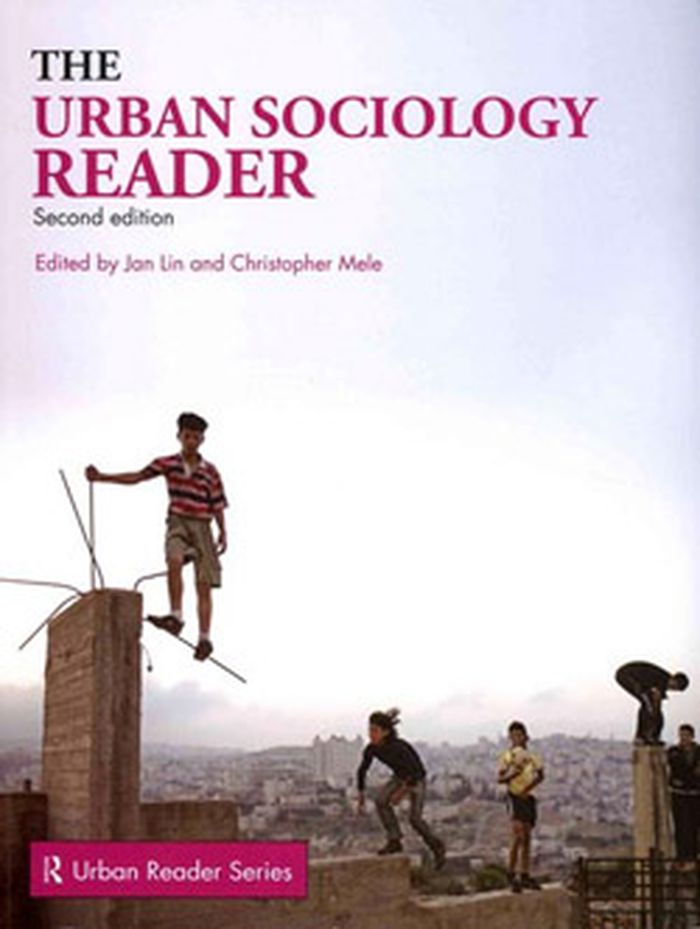
The urban sociology reader, second edition
Actions:
Price:
$74.95
(available to order)
Summary:
This Reader comprises sections on urban social theory, racial and social difference in the city, culture in everyday life, culture and the urban economy, globalization and transnational social relations and the regulation of urban space. Drawing together seminal selections covering the nineteenth to the twenty-first centuries, this publication includes forty-three writings from eminent names such as Simmel, Wirth, Park, Burgess, DuBois, Zukin, Sassen, and Harvey. The 2nd edition illuminates more recent urban issues such as sprawl, sustainability, immigration and urban protest. Selections are predominantly sociological, but some readings cross disciplinary boundaries.
The urban sociology reader, second edition
Actions:
Price:
$74.95
(available to order)
Summary:
This Reader comprises sections on urban social theory, racial and social difference in the city, culture in everyday life, culture and the urban economy, globalization and transnational social relations and the regulation of urban space. Drawing together seminal selections covering the nineteenth to the twenty-first centuries, this publication includes forty-three writings from eminent names such as Simmel, Wirth, Park, Burgess, DuBois, Zukin, Sassen, and Harvey. The 2nd edition illuminates more recent urban issues such as sprawl, sustainability, immigration and urban protest. Selections are predominantly sociological, but some readings cross disciplinary boundaries.
Form:
books
books
Publication:
March 2012
March 2012
Subject:
Urban Theory
Urban Theory
Form:
books
books
Title:
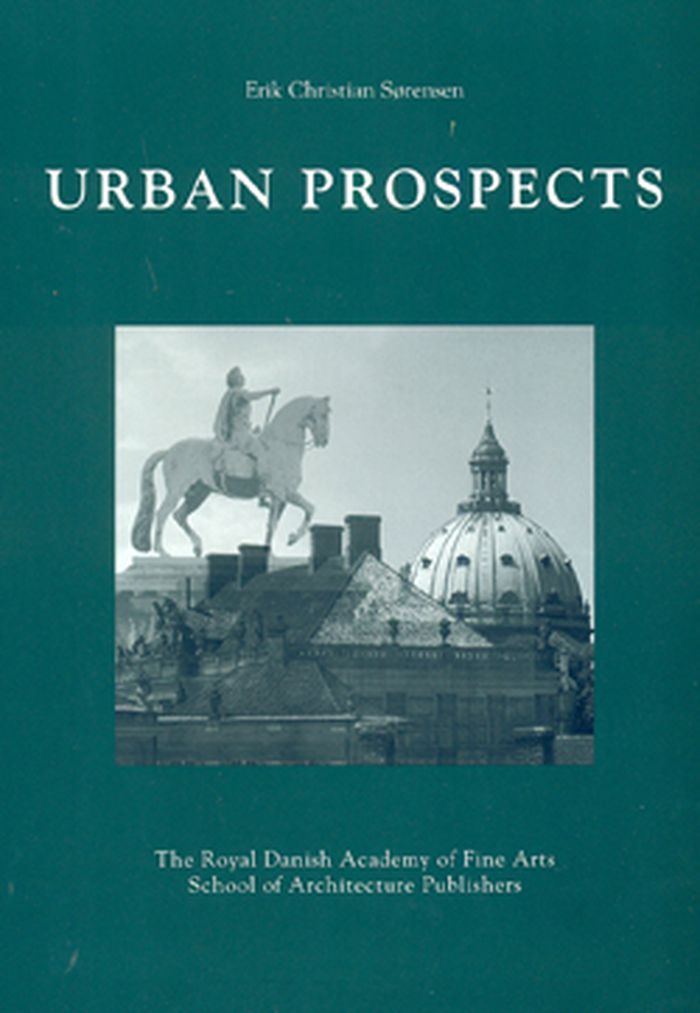
Urban prospects
Urban prospects
Actions:
Price:
$60.00
(available to order)
Summary:
Urban Prospects today are of a paramount importance, the estimated population on our planet shall by mid 21st century number ca nine billion individuals. Up from six late 20st century. Up from one year 1800. By acting prudently societies can avoid disarraying disastres. In the meantime this also will embrace an insistence on a creation of both functional and if possible(...)
$60.00
(available to order)
Summary:
Urban Prospects today are of a paramount importance, the estimated population on our planet shall by mid 21st century number ca nine billion individuals. Up from six late 20st century. Up from one year 1800. By acting prudently societies can avoid disarraying disastres. In the meantime this also will embrace an insistence on a creation of both functional and if possible(...)
Title:
Urban prospects
Actions:
Price:
$60.00
(available to order)
Summary:
Urban Prospects today are of a paramount importance, the estimated population on our planet shall by mid 21st century number ca nine billion individuals. Up from six late 20st century. Up from one year 1800. By acting prudently societies can avoid disarraying disastres. In the meantime this also will embrace an insistence on a creation of both functional and if possible beautiful settings for the contemporary life.
Urban prospects
Actions:
Price:
$60.00
(available to order)
Summary:
Urban Prospects today are of a paramount importance, the estimated population on our planet shall by mid 21st century number ca nine billion individuals. Up from six late 20st century. Up from one year 1800. By acting prudently societies can avoid disarraying disastres. In the meantime this also will embrace an insistence on a creation of both functional and if possible beautiful settings for the contemporary life.
Form:
books
books
Publication:
September 2011
September 2011
Subject:
Urban Theory
Urban Theory
Form:
books
books
Actions:
Price:
$70.00
(available to order)
Summary:
Ce livre présente les travaux exposés et partagés lors de la deuxième réunion annuelle du réseau en 2010.
$70.00
(available to order)
Summary:
Ce livre présente les travaux exposés et partagés lors de la deuxième réunion annuelle du réseau en 2010.
Title:
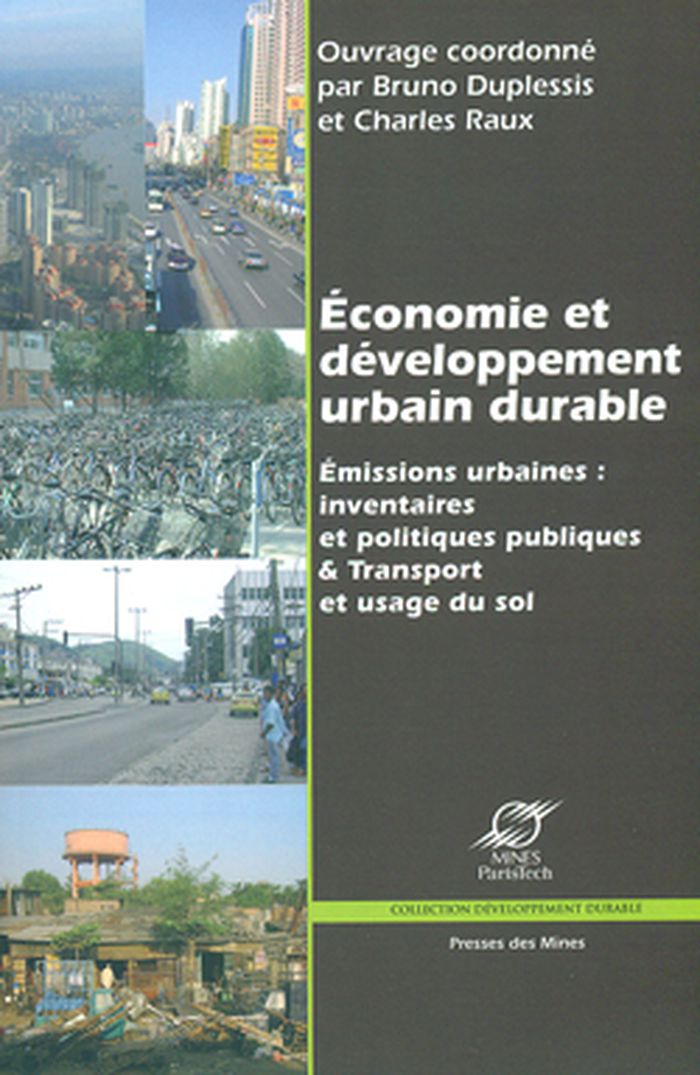
Économie et développement urbain durable
Actions:
Price:
$70.00
(available to order)
Summary:
Ce livre présente les travaux exposés et partagés lors de la deuxième réunion annuelle du réseau en 2010.
Économie et développement urbain durable
Actions:
Price:
$70.00
(available to order)
Summary:
Ce livre présente les travaux exposés et partagés lors de la deuxième réunion annuelle du réseau en 2010.
Form:
books
books
Publication:
September 2011
September 2011
Subject:
Urban Theory
Urban Theory
Form:
books
books
Title:
Expérimenter la
Expérimenter la
Actions:
Price:
$51.95
(available to order)
Summary:
La "ville durable" est devenue un référentiel de l'action collective. L'idée s'est diffusée à l'échelle planétaire en quelques décennies. Cet ouvrage se concentre sur cette perception de la ville au sud de la Méditerranée: une aire qui n'est pas précurseur, loin s'en faut, dans ce domaine. Aussi tente-t-il de faire le point des débats sur cette question au Maroc, en(...)
$51.95
(available to order)
Summary:
La "ville durable" est devenue un référentiel de l'action collective. L'idée s'est diffusée à l'échelle planétaire en quelques décennies. Cet ouvrage se concentre sur cette perception de la ville au sud de la Méditerranée: une aire qui n'est pas précurseur, loin s'en faut, dans ce domaine. Aussi tente-t-il de faire le point des débats sur cette question au Maroc, en(...)
Title:
Expérimenter la
Actions:
Price:
$51.95
(available to order)
Summary:
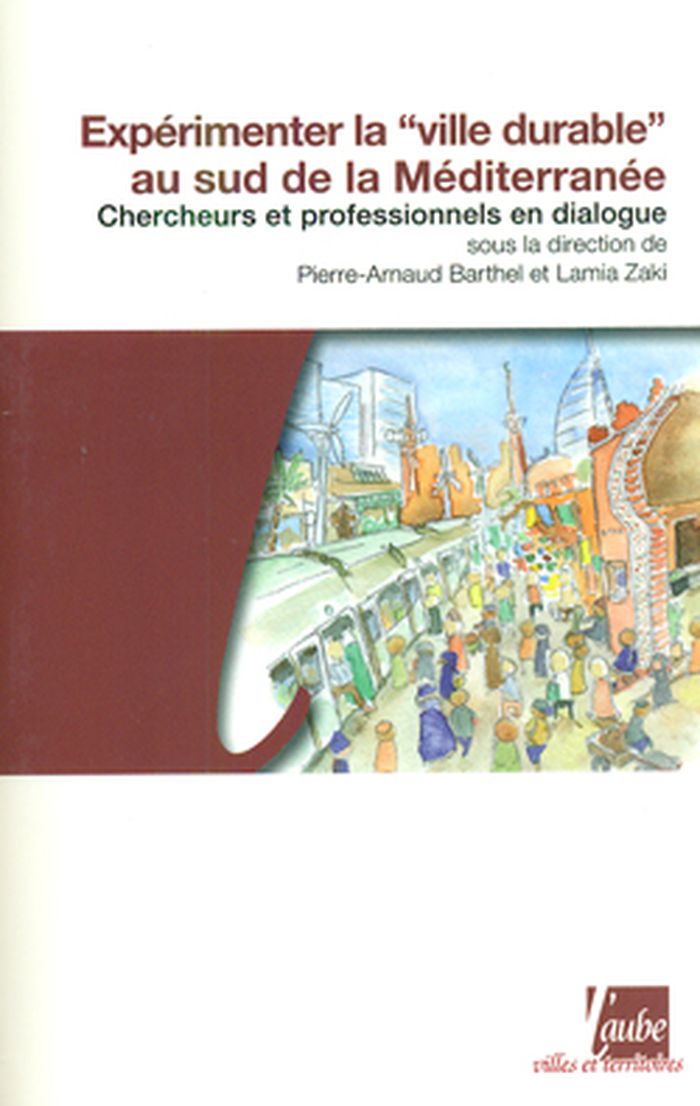
La "ville durable" est devenue un référentiel de l'action collective. L'idée s'est diffusée à l'échelle planétaire en quelques décennies. Cet ouvrage se concentre sur cette perception de la ville au sud de la Méditerranée: une aire qui n'est pas précurseur, loin s'en faut, dans ce domaine. Aussi tente-t-il de faire le point des débats sur cette question au Maroc, en Algérie, en Tunisie, en Égypte, en Jordanie, en Syrie et en Turquie.Une série d'articles scientifiques se mêle à des paroles de professionnels pour voir quels sens y prend la "ville durable" dans chacun de ces pays. Une démarche originale.
Expérimenter la
Actions:
Price:
$51.95
(available to order)
Summary:
La "ville durable" est devenue un référentiel de l'action collective. L'idée s'est diffusée à l'échelle planétaire en quelques décennies. Cet ouvrage se concentre sur cette perception de la ville au sud de la Méditerranée: une aire qui n'est pas précurseur, loin s'en faut, dans ce domaine. Aussi tente-t-il de faire le point des débats sur cette question au Maroc, en Algérie, en Tunisie, en Égypte, en Jordanie, en Syrie et en Turquie.Une série d'articles scientifiques se mêle à des paroles de professionnels pour voir quels sens y prend la "ville durable" dans chacun de ces pays. Une démarche originale.
Form:
books
books
Publication:
September 2011
September 2011
Subject:
Urban Theory
Urban Theory
Form:
books
books
Actions:
Price:
$37.95
(available to order)
Summary:
Si l'automobile, puis les transports en commun ont longtemps été privilégiés par les politiques de mobilité des grandes villes européennes, la marche se trouve aujourd'hui au coeur des réflexions, comme réponse aux enjeux du développement durable. Cette ouvrage éclaire la façon dont le piéton trouve sa place dans le processus de rééquilibrage de l'espace public et comment(...)
$37.95
(available to order)
Summary:
Si l'automobile, puis les transports en commun ont longtemps été privilégiés par les politiques de mobilité des grandes villes européennes, la marche se trouve aujourd'hui au coeur des réflexions, comme réponse aux enjeux du développement durable. Cette ouvrage éclaire la façon dont le piéton trouve sa place dans le processus de rééquilibrage de l'espace public et comment(...)
Title:
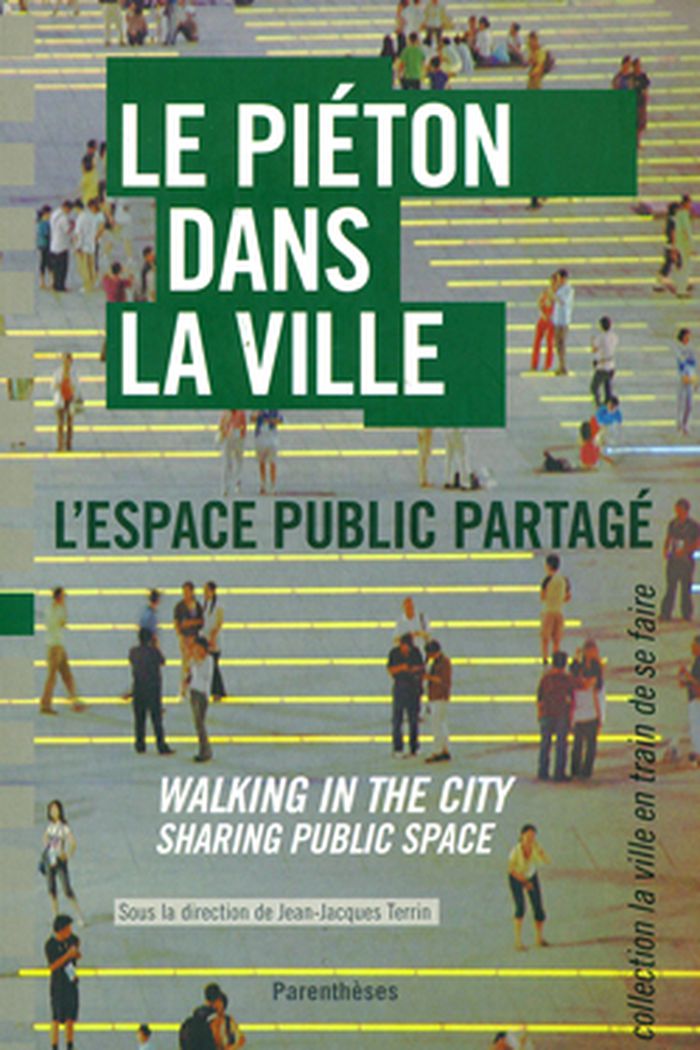
Le piéton dans la ville: l'espace public partagé
Actions:
Price:
$37.95
(available to order)
Summary:
Si l'automobile, puis les transports en commun ont longtemps été privilégiés par les politiques de mobilité des grandes villes européennes, la marche se trouve aujourd'hui au coeur des réflexions, comme réponse aux enjeux du développement durable. Cette ouvrage éclaire la façon dont le piéton trouve sa place dans le processus de rééquilibrage de l'espace public et comment la lenteur peut représenter une culture garante d'une certaine qualité de vie.
Le piéton dans la ville: l'espace public partagé
Actions:
Price:
$37.95
(available to order)
Summary:
Si l'automobile, puis les transports en commun ont longtemps été privilégiés par les politiques de mobilité des grandes villes européennes, la marche se trouve aujourd'hui au coeur des réflexions, comme réponse aux enjeux du développement durable. Cette ouvrage éclaire la façon dont le piéton trouve sa place dans le processus de rééquilibrage de l'espace public et comment la lenteur peut représenter une culture garante d'une certaine qualité de vie.
Form:
books
books
Publication:
October 2011
October 2011
Subject:
Urban Theory
Urban Theory
Form:
books
books
Actions:
Price:
$39.99
(available to order)
Summary:
Why Don't American Cities Burn? traces the collision of urban transformation with the rightward-moving social politics of late twentieth- and early twenty-first-century America. He shows how the bifurcation of black social structures produced a new African American inequality and traces the shift from images of a pathological black "underclass" to praise of the(...)
$39.99
(available to order)
Summary:
Why Don't American Cities Burn? traces the collision of urban transformation with the rightward-moving social politics of late twentieth- and early twenty-first-century America. He shows how the bifurcation of black social structures produced a new African American inequality and traces the shift from images of a pathological black "underclass" to praise of the(...)
Title:
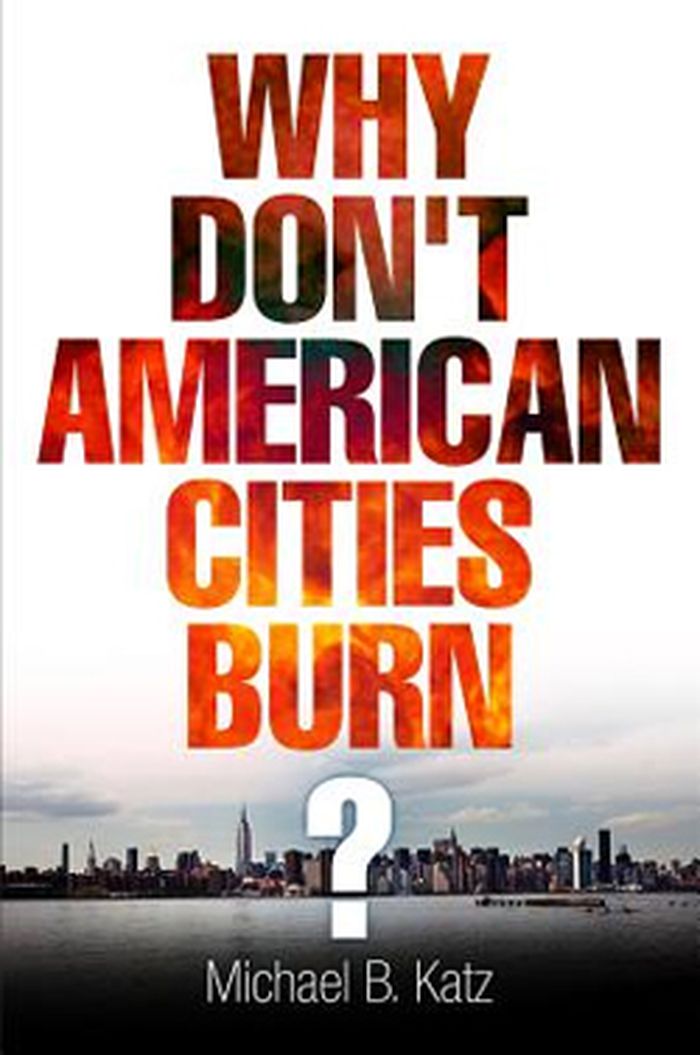
Why don't American cities burn?
Actions:
Price:
$39.99
(available to order)
Summary:
Why Don't American Cities Burn? traces the collision of urban transformation with the rightward-moving social politics of late twentieth- and early twenty-first-century America. He shows how the bifurcation of black social structures produced a new African American inequality and traces the shift from images of a pathological black "underclass" to praise of the entrepreneurial poor who take advantage of new technologies of poverty work to find the beginning of the path to the middle class. He explores the reasons American cities since the early 1970s have remained relatively free of collective violence while black men in bleak inner-city neighborhoods have turned their rage inward on one another rather than on the agents and symbols of a culture and political economy that exclude them. The book ends with a meditation on how the political left and right have come to believe that urban transformation is inevitably one of failure and decline abetted by the response of government to deindustrialization, poverty, and race. How, Katz asks, can we construct a new narrative that acknowledges the dark side of urban history even as it demonstrates the capacity of government to address the problems of cities and their residents? How can we create a politics of modest hope?
Why don't American cities burn?
Actions:
Price:
$39.99
(available to order)
Summary:
Why Don't American Cities Burn? traces the collision of urban transformation with the rightward-moving social politics of late twentieth- and early twenty-first-century America. He shows how the bifurcation of black social structures produced a new African American inequality and traces the shift from images of a pathological black "underclass" to praise of the entrepreneurial poor who take advantage of new technologies of poverty work to find the beginning of the path to the middle class. He explores the reasons American cities since the early 1970s have remained relatively free of collective violence while black men in bleak inner-city neighborhoods have turned their rage inward on one another rather than on the agents and symbols of a culture and political economy that exclude them. The book ends with a meditation on how the political left and right have come to believe that urban transformation is inevitably one of failure and decline abetted by the response of government to deindustrialization, poverty, and race. How, Katz asks, can we construct a new narrative that acknowledges the dark side of urban history even as it demonstrates the capacity of government to address the problems of cities and their residents? How can we create a politics of modest hope?
Form:
books
books
Publication:
October 2011
October 2011
Subject:
Urban Theory
Urban Theory
Form:
books
books
Price:
$31.25
(available in store)
Summary:
"Art and the City" explores the contentious relationship between civic politics and visual culture in Los Angeles. Struggles between civic leaders and modernist artists to define civic identity and control public space highlight the significance of the arts as a site of political contest in the twentieth century.
$31.25
(available in store)
Summary:
"Art and the City" explores the contentious relationship between civic politics and visual culture in Los Angeles. Struggles between civic leaders and modernist artists to define civic identity and control public space highlight the significance of the arts as a site of political contest in the twentieth century.
Title:
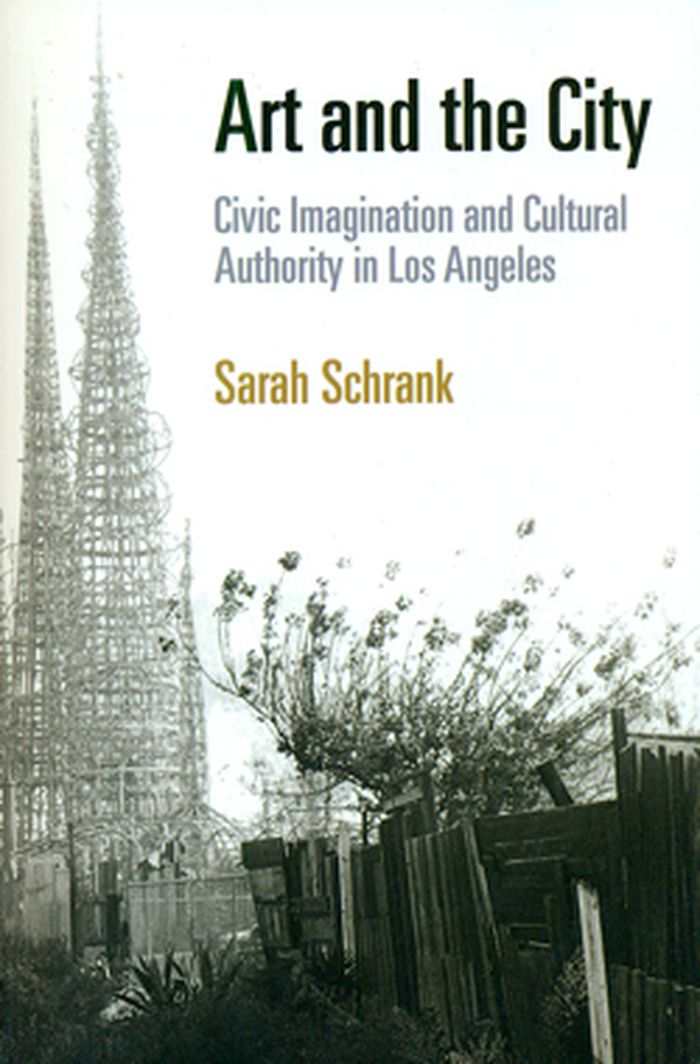
Art and the city : civic imagination and cultural authority in Los Angeles
Actions:
Price:
$31.25
(available in store)
Summary:
"Art and the City" explores the contentious relationship between civic politics and visual culture in Los Angeles. Struggles between civic leaders and modernist artists to define civic identity and control public space highlight the significance of the arts as a site of political contest in the twentieth century.
Art and the city : civic imagination and cultural authority in Los Angeles
Actions:
Price:
$31.25
(available in store)
Summary:
"Art and the City" explores the contentious relationship between civic politics and visual culture in Los Angeles. Struggles between civic leaders and modernist artists to define civic identity and control public space highlight the significance of the arts as a site of political contest in the twentieth century.
Form:
books
books
Publication:
June 2011
June 2011
Subject:
Urban Theory
Urban Theory
Form:
books
books
Actions:
Price:
$22.95
(available to order)
Summary:
L'abécédaire de Marcel Roncayolo est le résultat d'une série d'entretiens entre Isabelle Chesneau et Marcel Roncayolo, un des maîtres de l'urbanisme contemporain. L'interviewer a proposé à l'interviewé une série de thèmes présentés dans l'ordre alphabétique, meilleur moyen de présenter une pensée sans en faire un système. L'ouvrage pose la question des choix(...)
$22.95
(available to order)
Summary:
L'abécédaire de Marcel Roncayolo est le résultat d'une série d'entretiens entre Isabelle Chesneau et Marcel Roncayolo, un des maîtres de l'urbanisme contemporain. L'interviewer a proposé à l'interviewé une série de thèmes présentés dans l'ordre alphabétique, meilleur moyen de présenter une pensée sans en faire un système. L'ouvrage pose la question des choix(...)
Title:
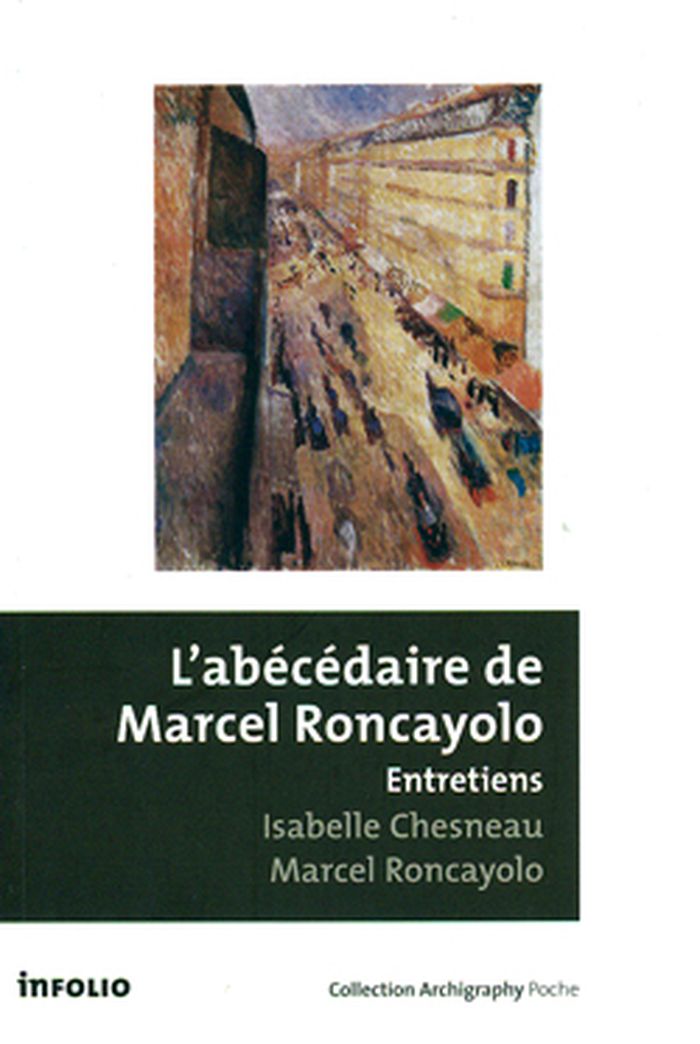
L'abécédaire de Marcel Roncayolo
Actions:
Price:
$22.95
(available to order)
Summary:
L'abécédaire de Marcel Roncayolo est le résultat d'une série d'entretiens entre Isabelle Chesneau et Marcel Roncayolo, un des maîtres de l'urbanisme contemporain. L'interviewer a proposé à l'interviewé une série de thèmes présentés dans l'ordre alphabétique, meilleur moyen de présenter une pensée sans en faire un système. L'ouvrage pose la question des choix méthodologiques et conceptuels de Roncayolo, et celle de la validité de leur transfert d'une discipline à l'autre.
L'abécédaire de Marcel Roncayolo
Actions:
Price:
$22.95
(available to order)
Summary:
L'abécédaire de Marcel Roncayolo est le résultat d'une série d'entretiens entre Isabelle Chesneau et Marcel Roncayolo, un des maîtres de l'urbanisme contemporain. L'interviewer a proposé à l'interviewé une série de thèmes présentés dans l'ordre alphabétique, meilleur moyen de présenter une pensée sans en faire un système. L'ouvrage pose la question des choix méthodologiques et conceptuels de Roncayolo, et celle de la validité de leur transfert d'une discipline à l'autre.
Form:
books
books
Publication:
November 2011
November 2011
Subject:
Urban Theory
Urban Theory
Form:
books
books
Actions:
Price:
$34.95
(available to order)
Summary:
Il fut une époque, du XVe siècle au début du XXe, où les architectes avaient pour mission d’ennoblir les palais, les lieux de culte et les résidences des puissants en les embellissant. La maîtrise des projections mathématiques, et de la perspective qui en découle, donnait aux artistes et aux architectes un pouvoir nouveau ; l’idéal platonicien du beau faisait accepter par(...)
$34.95
(available to order)
Summary:
Il fut une époque, du XVe siècle au début du XXe, où les architectes avaient pour mission d’ennoblir les palais, les lieux de culte et les résidences des puissants en les embellissant. La maîtrise des projections mathématiques, et de la perspective qui en découle, donnait aux artistes et aux architectes un pouvoir nouveau ; l’idéal platonicien du beau faisait accepter par(...)
Title:
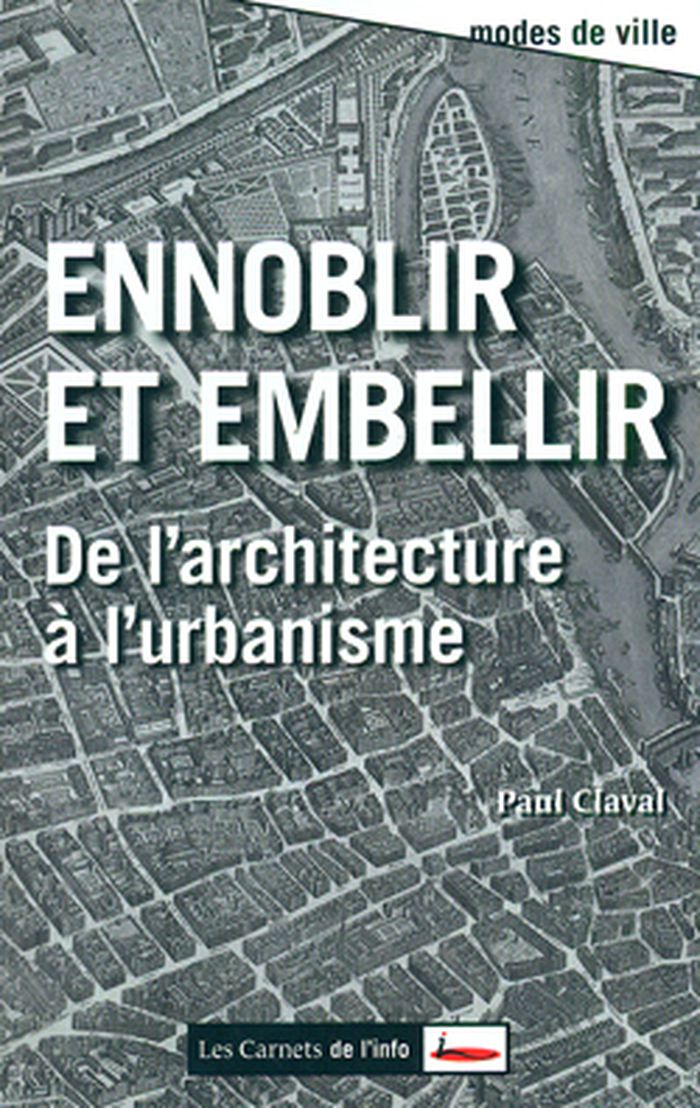
Ennoblir et embellir: de l'architecture à l'urbanisme
Actions:
Price:
$34.95
(available to order)
Summary:
Il fut une époque, du XVe siècle au début du XXe, où les architectes avaient pour mission d’ennoblir les palais, les lieux de culte et les résidences des puissants en les embellissant. La maîtrise des projections mathématiques, et de la perspective qui en découle, donnait aux artistes et aux architectes un pouvoir nouveau ; l’idéal platonicien du beau faisait accepter par tous une grammaire universelle des formes.A partir du XVIIIe siècle, les conditions se transforment : la société s’urbanise, s’industrialise et devient plus mobile : l’esthétique d’inspiration platonicienne est critiquée ; le principe du beau est désormais recherché du côté de la raison ou de l’histoire. Un compromis incarné par Jacques-Nicolas-Louis Durand est imaginé à la jointure du XVIIIe et du XIXe siècle. Il concilie la volonté d’embellissement, dont entendent désormais bénéficier les classes moyennes, avec le souci d’efficacité fonctionnelle.Cette façon de concevoir l’aménagement des villes s’efface au début du XXe siècle, au moment où s’impose le terme d’urbanisme et le programme qu’il désigne : l’amélioration des conditions de vie de tous les citadins. L’art d’ennoblir pour embellir a cependant légué à l’urbanisme de tradition européenne un rêve : celui d’harmoniser les formes bâties.
Ennoblir et embellir: de l'architecture à l'urbanisme
Actions:
Price:
$34.95
(available to order)
Summary:
Il fut une époque, du XVe siècle au début du XXe, où les architectes avaient pour mission d’ennoblir les palais, les lieux de culte et les résidences des puissants en les embellissant. La maîtrise des projections mathématiques, et de la perspective qui en découle, donnait aux artistes et aux architectes un pouvoir nouveau ; l’idéal platonicien du beau faisait accepter par tous une grammaire universelle des formes.A partir du XVIIIe siècle, les conditions se transforment : la société s’urbanise, s’industrialise et devient plus mobile : l’esthétique d’inspiration platonicienne est critiquée ; le principe du beau est désormais recherché du côté de la raison ou de l’histoire. Un compromis incarné par Jacques-Nicolas-Louis Durand est imaginé à la jointure du XVIIIe et du XIXe siècle. Il concilie la volonté d’embellissement, dont entendent désormais bénéficier les classes moyennes, avec le souci d’efficacité fonctionnelle.Cette façon de concevoir l’aménagement des villes s’efface au début du XXe siècle, au moment où s’impose le terme d’urbanisme et le programme qu’il désigne : l’amélioration des conditions de vie de tous les citadins. L’art d’ennoblir pour embellir a cependant légué à l’urbanisme de tradition européenne un rêve : celui d’harmoniser les formes bâties.
Form:
books
books
Publication:
November 2011
November 2011
Subject:
Urban Theory
Urban Theory
Form:
books
books
Actions:
Price:
$114.00
(available to order)
Summary:
The architecture and built environment of African cities are documented in photographs by architect David Adjaye,renowned for his highly acclaimed buildings in Europe and the United States. Of Tanzanian descent but raised and educated in London, he has found endless inspiration for his modern buildings in Africa. This book is the culmination of a personal quest--a(...)
$114.00
(available to order)
Summary:
The architecture and built environment of African cities are documented in photographs by architect David Adjaye,renowned for his highly acclaimed buildings in Europe and the United States. Of Tanzanian descent but raised and educated in London, he has found endless inspiration for his modern buildings in Africa. This book is the culmination of a personal quest--a(...)
Title:
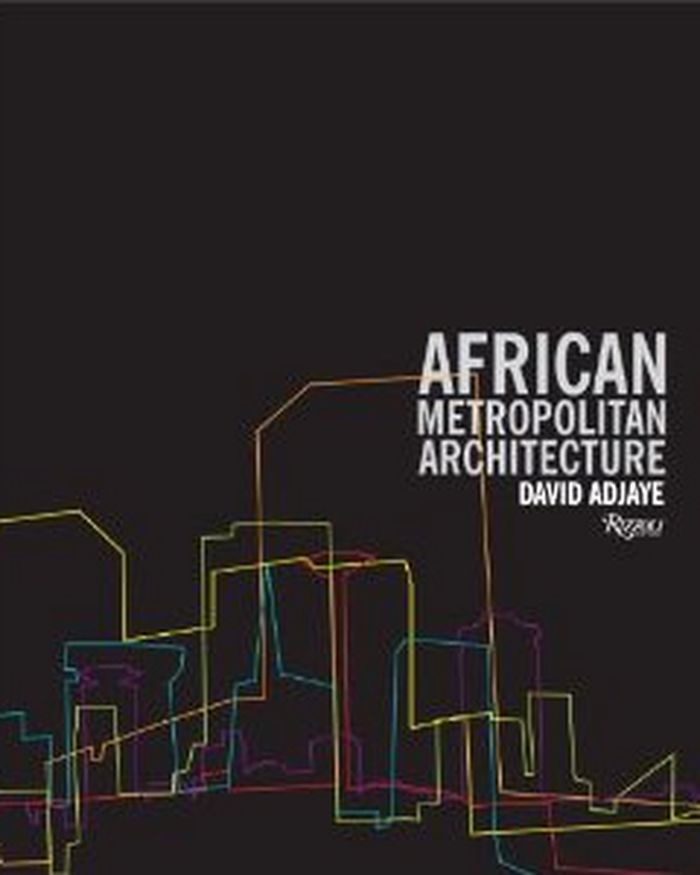
African metropolitan architecture
Actions:
Price:
$114.00
(available to order)
Summary:
The architecture and built environment of African cities are documented in photographs by architect David Adjaye,renowned for his highly acclaimed buildings in Europe and the United States. Of Tanzanian descent but raised and educated in London, he has found endless inspiration for his modern buildings in Africa. This book is the culmination of a personal quest--a decadelong project to document the built environment of every major African city.
African metropolitan architecture
Actions:
Price:
$114.00
(available to order)
Summary:
The architecture and built environment of African cities are documented in photographs by architect David Adjaye,renowned for his highly acclaimed buildings in Europe and the United States. Of Tanzanian descent but raised and educated in London, he has found endless inspiration for his modern buildings in Africa. This book is the culmination of a personal quest--a decadelong project to document the built environment of every major African city.
Form:
books
books
Publication:
November 2011
November 2011
Subject:
Urban Theory
Urban Theory


