


1923 Results
Form:
books
books
Title:
Overlooked america
Overlooked america
Actions:
Price:
$49.95
(available to order)
Summary:
In the aftermath of Hurricane Katrina, America was horrified by an onslaught of media accounts about those left stranded, homeless, or dead in New Orleans. And as further investigation made clear, residents of impoverished neighborhoods were the most vulnerable to disaster. In short, they were overlooked - much like the homeless, jobless, poor, and disabled victims of the(...)
$49.95
(available to order)
Summary:
In the aftermath of Hurricane Katrina, America was horrified by an onslaught of media accounts about those left stranded, homeless, or dead in New Orleans. And as further investigation made clear, residents of impoverished neighborhoods were the most vulnerable to disaster. In short, they were overlooked - much like the homeless, jobless, poor, and disabled victims of the(...)
Title:
Overlooked america
Actions:
Price:
$49.95
(available to order)
Summary:
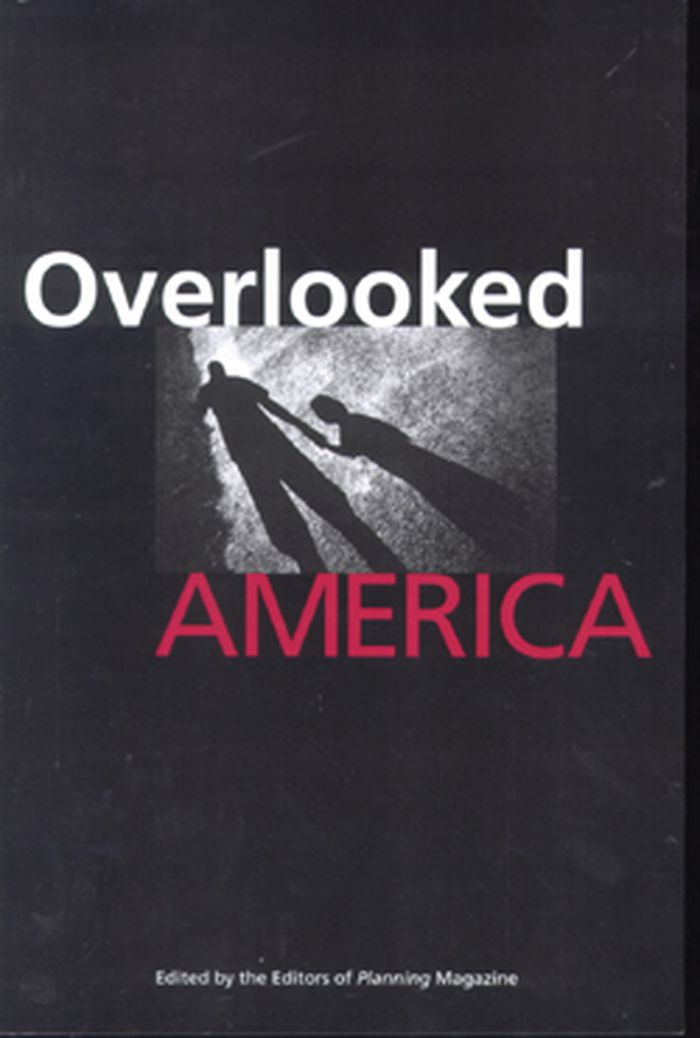
In the aftermath of Hurricane Katrina, America was horrified by an onslaught of media accounts about those left stranded, homeless, or dead in New Orleans. And as further investigation made clear, residents of impoverished neighborhoods were the most vulnerable to disaster. In short, they were overlooked - much like the homeless, jobless, poor, and disabled victims of the everyday disasters of poverty and neglect whose lives are explored in "Overlooked America".A compilation of articles published in "Planning" magazine between 2006 and 2008, this eye-opening anthology offers a fresh look at how planners and communities affect the everyday lives of marginalized citizens. Featuring on-the-ground perspectives and expert interpretations, "Overlooked America" tackles a broad range of social problems to ask why a nation replete with resources is home to so many needy individuals and families. This ambitious volume is both a chronicle of systemic disaster and a plea for change.
Overlooked america
Actions:
Price:
$49.95
(available to order)
Summary:
In the aftermath of Hurricane Katrina, America was horrified by an onslaught of media accounts about those left stranded, homeless, or dead in New Orleans. And as further investigation made clear, residents of impoverished neighborhoods were the most vulnerable to disaster. In short, they were overlooked - much like the homeless, jobless, poor, and disabled victims of the everyday disasters of poverty and neglect whose lives are explored in "Overlooked America".A compilation of articles published in "Planning" magazine between 2006 and 2008, this eye-opening anthology offers a fresh look at how planners and communities affect the everyday lives of marginalized citizens. Featuring on-the-ground perspectives and expert interpretations, "Overlooked America" tackles a broad range of social problems to ask why a nation replete with resources is home to so many needy individuals and families. This ambitious volume is both a chronicle of systemic disaster and a plea for change.
Form:
books
books
Publication:
August 2008, Chicago, Washington
August 2008, Chicago, Washington
Subject:
Urban Theory
Urban Theory
Form:
books
books
Actions:
Price:
$48.00
(available to order)
Summary:
The idea of public spaces—city parks, waterfront bike paths, and bustling squares—has long been associated with urban environments. Public Spheres After Socialism challenges this idea in light of the end of the cold war and the disintegration of the Soviet Union. Drawing together experiences from across Europe, this innovative volume reconsiders the public sphere as a(...)
$48.00
(available to order)
Summary:
The idea of public spaces—city parks, waterfront bike paths, and bustling squares—has long been associated with urban environments. Public Spheres After Socialism challenges this idea in light of the end of the cold war and the disintegration of the Soviet Union. Drawing together experiences from across Europe, this innovative volume reconsiders the public sphere as a(...)
Subject:
Urban Theory
Urban Theory
Publication:
October 2008, Bristol, Chicago
October 2008, Bristol, Chicago
Title:
Public spheres after socialism
Actions:
Price:
$48.00
(available to order)
Summary:
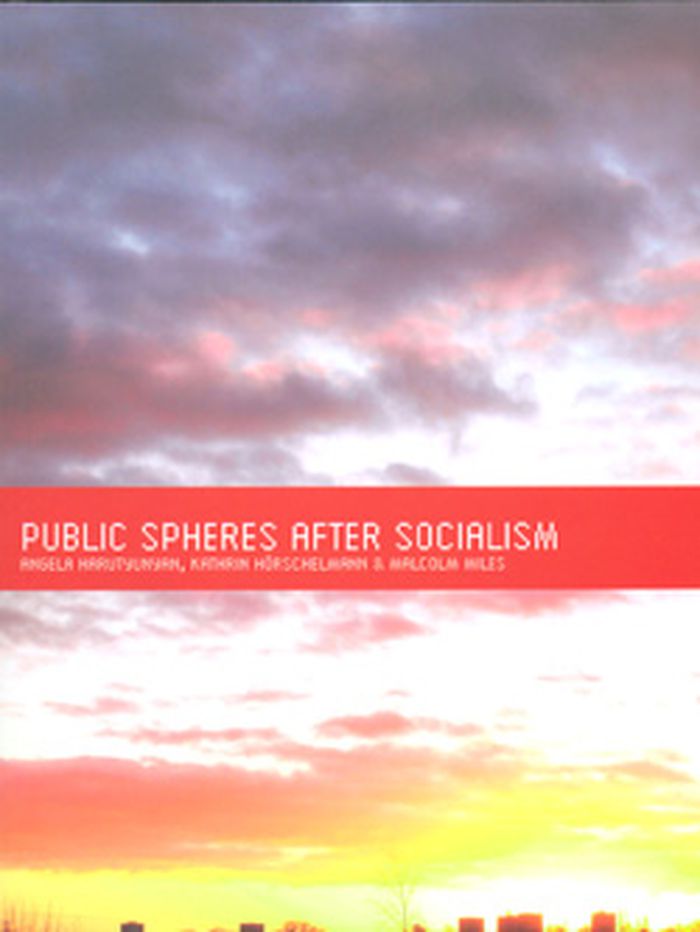
The idea of public spaces—city parks, waterfront bike paths, and bustling squares—has long been associated with urban environments. Public Spheres After Socialism challenges this idea in light of the end of the cold war and the disintegration of the Soviet Union. Drawing together experiences from across Europe, this innovative volume reconsiders the public sphere as a figurative, or mythical, location where members of society shape and determine its values. This book examines monuments, reconstruction, film, and new media to ask whether public spaces are viable in an age of globalized consumerism.
Public spheres after socialism
Actions:
Price:
$48.00
(available to order)
Summary:
The idea of public spaces—city parks, waterfront bike paths, and bustling squares—has long been associated with urban environments. Public Spheres After Socialism challenges this idea in light of the end of the cold war and the disintegration of the Soviet Union. Drawing together experiences from across Europe, this innovative volume reconsiders the public sphere as a figurative, or mythical, location where members of society shape and determine its values. This book examines monuments, reconstruction, film, and new media to ask whether public spaces are viable in an age of globalized consumerism.
Form:
books
books
Publication:
October 2008, Bristol, Chicago
October 2008, Bristol, Chicago
Subject:
Urban Theory
Urban Theory
Form:
books
books
Title:
The city at its limits
The city at its limits
Actions:
Price:
$25.00
(available to order)
Summary:
In 1996, against the backdrop of Alberto Fujimori’s increasingly corrupt national politics, an older woman in Lima, Peru—part of a group of women street sweepers protesting the privatization of the city’s cleaning services—stripped to the waist in full view of the crowd that surrounded her. Lima had just launched a campaign to revitalize its historic districts, and this(...)
$25.00
(available to order)
Summary:
In 1996, against the backdrop of Alberto Fujimori’s increasingly corrupt national politics, an older woman in Lima, Peru—part of a group of women street sweepers protesting the privatization of the city’s cleaning services—stripped to the waist in full view of the crowd that surrounded her. Lima had just launched a campaign to revitalize its historic districts, and this(...)
Title:
The city at its limits
Actions:
Price:
$25.00
(available to order)
Summary:
In 1996, against the backdrop of Alberto Fujimori’s increasingly corrupt national politics, an older woman in Lima, Peru—part of a group of women street sweepers protesting the privatization of the city’s cleaning services—stripped to the waist in full view of the crowd that surrounded her. Lima had just launched a campaign to revitalize its historic districts, and this shockingly transgressive act was just one of a series of events that challenged the norms of order, cleanliness, and beauty that the renewal effort promoted. The City at Its Limits employs a novel and fluid interweaving of essays and field diary entries as Daniella Gandolfo analyzes the ramifications of this act within the city’s conflicted history and across its class divisions. She builds on the work of Georges Bataille to explore the relation between taboo and transgression, while Peruvian novelist and anthropologist José María Arguedas’s writings inspire her to reflect on her return to her native city in movingly intimate detail. With its multiple perspectives—personal, sociological, historical, and theoretical—The City at Its Limits is a pioneering work on the cutting edge of ethnography.
The city at its limits
Actions:
Price:
$25.00
(available to order)
Summary:
In 1996, against the backdrop of Alberto Fujimori’s increasingly corrupt national politics, an older woman in Lima, Peru—part of a group of women street sweepers protesting the privatization of the city’s cleaning services—stripped to the waist in full view of the crowd that surrounded her. Lima had just launched a campaign to revitalize its historic districts, and this shockingly transgressive act was just one of a series of events that challenged the norms of order, cleanliness, and beauty that the renewal effort promoted. The City at Its Limits employs a novel and fluid interweaving of essays and field diary entries as Daniella Gandolfo analyzes the ramifications of this act within the city’s conflicted history and across its class divisions. She builds on the work of Georges Bataille to explore the relation between taboo and transgression, while Peruvian novelist and anthropologist José María Arguedas’s writings inspire her to reflect on her return to her native city in movingly intimate detail. With its multiple perspectives—personal, sociological, historical, and theoretical—The City at Its Limits is a pioneering work on the cutting edge of ethnography.
Form:
books
books
Publication:
January 2009
January 2009
Subject:
Urban Theory
Urban Theory
Form:
books
books
Actions:
Price:
$29.95
(available in store)
Summary:
Fondée sur une claire distinction entre espace privé et espace public, la ville ancienne s’est imposée aux temps modernes avec son bâti homogène, ses places et les jardins de ses souverains, désormais accessibles au public. Malmené par l’industrialisation, mis au ban par les adeptes des nouvelles fonctionnalités urbaines, l’urbanisme classique a fait long feu aux 19e et(...)
$29.95
(available in store)
Summary:
Fondée sur une claire distinction entre espace privé et espace public, la ville ancienne s’est imposée aux temps modernes avec son bâti homogène, ses places et les jardins de ses souverains, désormais accessibles au public. Malmené par l’industrialisation, mis au ban par les adeptes des nouvelles fonctionnalités urbaines, l’urbanisme classique a fait long feu aux 19e et(...)
Title:
Les temps de l'espace public urbain: construction, transformation et utilisation
Actions:
Price:
$29.95
(available in store)
Summary:
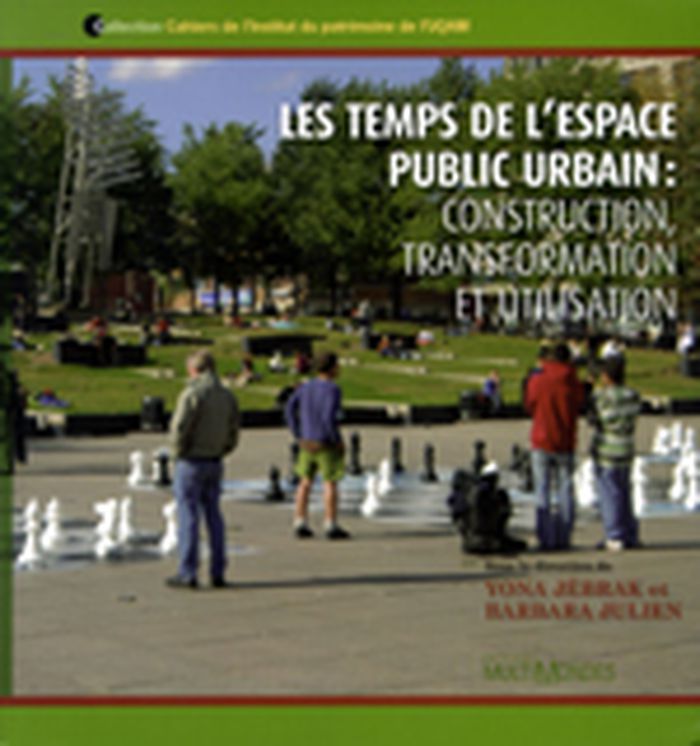
Fondée sur une claire distinction entre espace privé et espace public, la ville ancienne s’est imposée aux temps modernes avec son bâti homogène, ses places et les jardins de ses souverains, désormais accessibles au public. Malmené par l’industrialisation, mis au ban par les adeptes des nouvelles fonctionnalités urbaines, l’urbanisme classique a fait long feu aux 19e et 20e siècles. Mais tant les préoccupations hygiénistes que les utopies sociales ont jalousement couvé le souvenir d’espaces urbains généreux, celui aussi des grandes plages vertes léguées par l’histoire. En effet, s’il est apparu évident qu’il fallait réinventer l’habiter pour loger plus et mieux, ce qui a souvent donné lieu à une tabula rasa, la relation entre les creux et les pleins de la ville n’a cessé d’interpeller les créateurs et acteurs de la polis. À tous ceux-là, les développements de la science aidant, l’espace public s’est plutôt posé comme «lieu de» représentation et d’appropriation que comme figure urbaine canoniquement figée. Depuis lors, l’espace public urbain est devenu une notion équivoque, englobant de nombreuses réalités, convoquant autant d’images que d’imaginaires. Aujourd’hui, un fait s’impose: la ville du XXIe siècle se définira par ses espaces publics. Leurs figures spécifiques et les pratiques urbaines auxquelles la ville se prête sont de puissants révélateurs identitaires. Par-delà les approches disciplinaires, cet ouvrage propose de (re)penser les rapports entre le bâti et la société. Les auteurs des textes montrent en effet à quel point la réflexion sur les espaces publics urbains est plus que jamais d’actualité; ils soulignent la place que ces lieux d’ancrage occupent dans les constructions identitaires, révèlent les discours interprétatifs auxquels ils donnent lieu en explorant, notamment, le lien qui, en ces lieux, unit créativité et quotidienneté. Du Québec au Viêt-nam en passant par la France et l’Angleterre, chaque auteur livre un regard neuf sur la ville et ses espaces.
Les temps de l'espace public urbain: construction, transformation et utilisation
Actions:
Price:
$29.95
(available in store)
Summary:
Fondée sur une claire distinction entre espace privé et espace public, la ville ancienne s’est imposée aux temps modernes avec son bâti homogène, ses places et les jardins de ses souverains, désormais accessibles au public. Malmené par l’industrialisation, mis au ban par les adeptes des nouvelles fonctionnalités urbaines, l’urbanisme classique a fait long feu aux 19e et 20e siècles. Mais tant les préoccupations hygiénistes que les utopies sociales ont jalousement couvé le souvenir d’espaces urbains généreux, celui aussi des grandes plages vertes léguées par l’histoire. En effet, s’il est apparu évident qu’il fallait réinventer l’habiter pour loger plus et mieux, ce qui a souvent donné lieu à une tabula rasa, la relation entre les creux et les pleins de la ville n’a cessé d’interpeller les créateurs et acteurs de la polis. À tous ceux-là, les développements de la science aidant, l’espace public s’est plutôt posé comme «lieu de» représentation et d’appropriation que comme figure urbaine canoniquement figée. Depuis lors, l’espace public urbain est devenu une notion équivoque, englobant de nombreuses réalités, convoquant autant d’images que d’imaginaires. Aujourd’hui, un fait s’impose: la ville du XXIe siècle se définira par ses espaces publics. Leurs figures spécifiques et les pratiques urbaines auxquelles la ville se prête sont de puissants révélateurs identitaires. Par-delà les approches disciplinaires, cet ouvrage propose de (re)penser les rapports entre le bâti et la société. Les auteurs des textes montrent en effet à quel point la réflexion sur les espaces publics urbains est plus que jamais d’actualité; ils soulignent la place que ces lieux d’ancrage occupent dans les constructions identitaires, révèlent les discours interprétatifs auxquels ils donnent lieu en explorant, notamment, le lien qui, en ces lieux, unit créativité et quotidienneté. Du Québec au Viêt-nam en passant par la France et l’Angleterre, chaque auteur livre un regard neuf sur la ville et ses espaces.
Form:
books
books
Publication:
April 2008, Montréal
April 2008, Montréal
Subject:
Urban Theory
Urban Theory
Form:
books
books
Actions:
Price:
$12.00
(available to order)
Summary:
"Urban Margins" explores the complex processes through which citizens produce and negotiate these marginalized landscapes and in turn are informed by them. Focusing on Douala in Cameroon and Dakar in Senegal, one essay discusses how the state's failure to provide for its citizens has led many to turn to informal networks and affiliations--whether kin-based, local,(...)
$12.00
(available to order)
Summary:
"Urban Margins" explores the complex processes through which citizens produce and negotiate these marginalized landscapes and in turn are informed by them. Focusing on Douala in Cameroon and Dakar in Senegal, one essay discusses how the state's failure to provide for its citizens has led many to turn to informal networks and affiliations--whether kin-based, local,(...)
Title:
Urban margins: envisioning the contemporary global south
Actions:
Price:
$12.00
(available to order)
Summary:
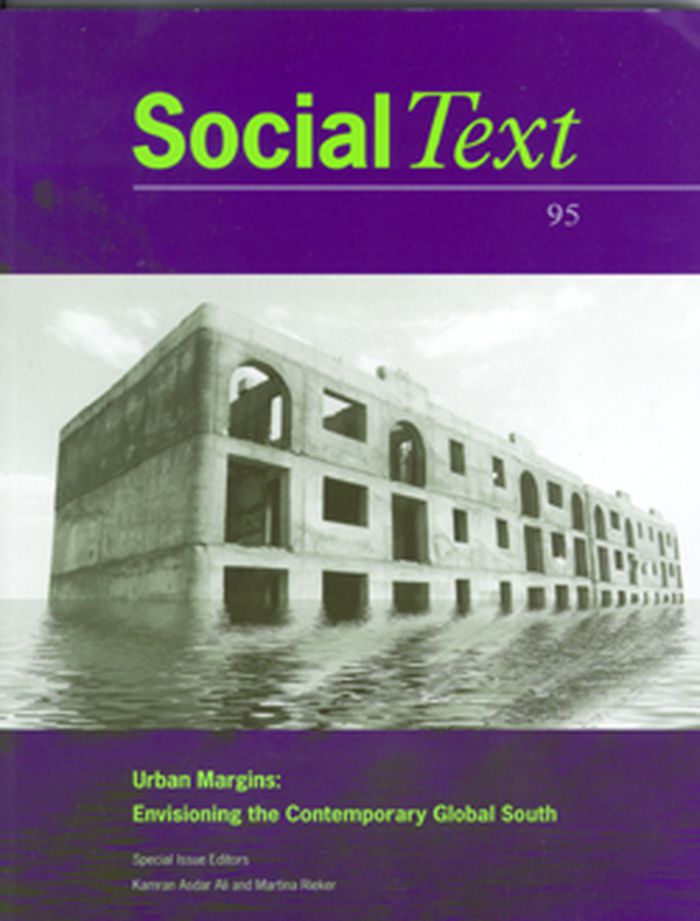
"Urban Margins" explores the complex processes through which citizens produce and negotiate these marginalized landscapes and in turn are informed by them. Focusing on Douala in Cameroon and Dakar in Senegal, one essay discusses how the state's failure to provide for its citizens has led many to turn to informal networks and affiliations--whether kin-based, local, translocal, gendered, religious, or secular--for survival. Rendering the urban landscape of these cities in terms of these networks and the ways that they shape a citizen's interaction with the city, the essay considers the political possibilities for African cities where diverse multilingual and ethnic populations face the challenges, pitfalls, and compromises of coexistence.
Urban margins: envisioning the contemporary global south
Actions:
Price:
$12.00
(available to order)
Summary:
"Urban Margins" explores the complex processes through which citizens produce and negotiate these marginalized landscapes and in turn are informed by them. Focusing on Douala in Cameroon and Dakar in Senegal, one essay discusses how the state's failure to provide for its citizens has led many to turn to informal networks and affiliations--whether kin-based, local, translocal, gendered, religious, or secular--for survival. Rendering the urban landscape of these cities in terms of these networks and the ways that they shape a citizen's interaction with the city, the essay considers the political possibilities for African cities where diverse multilingual and ethnic populations face the challenges, pitfalls, and compromises of coexistence.
Form:
books
books
Publication:
May 2008, New York
May 2008, New York
Subject:
Urban Theory
Urban Theory
Form:
books
books
Price:
$56.50
(available to order)
Summary:
In an effort to create a secure urban environment in which residents can work, live, and prosper with minimal disruption, New York and London established a network of laws, policing, and municipal government in the nineteenth century aimed at building the confidence of the citizenry and creating stability for economic growth. At the same time, these two world cities(...)
$56.50
(available to order)
Summary:
In an effort to create a secure urban environment in which residents can work, live, and prosper with minimal disruption, New York and London established a network of laws, policing, and municipal government in the nineteenth century aimed at building the confidence of the citizenry and creating stability for economic growth. At the same time, these two world cities(...)
Title:
Triumph of order, democracy and public space in New York and London
Actions:
Price:
$56.50
(available to order)
Summary:
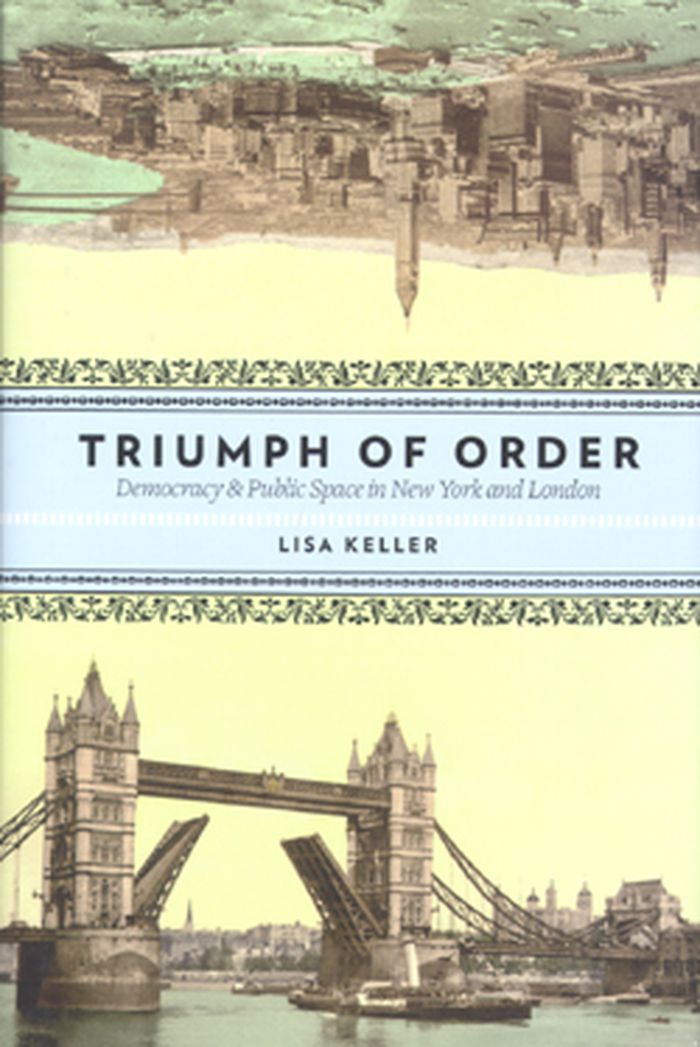
In an effort to create a secure urban environment in which residents can work, live, and prosper with minimal disruption, New York and London established a network of laws, policing, and municipal government in the nineteenth century aimed at building the confidence of the citizenry and creating stability for economic growth. At the same time, these two world cities attempted to maintain an expansive level of free speech and assembly, concepts deeply ingrained in both national cultures. As democracy expanded in tandem with the size of the cities themselves, the two goals clashed, resulting in tensions over their compatibility. The results of this clash continue to resonate in our society today. Treating nineteenth-century London and New York as case studies, Lisa Keller examines the critical development of sanctioned free speech, controlled public assembly, new urban regulations, and the quelling of riots, all in the name of a proper regard for order. Drawing on rich archival sources that include the unpublished correspondence of government officials and ordinary citizens, Keller paints an intimate portrait of daily life in these two cities and the intricacies of their emerging bureaucracies. She finds that New York eventually settled on a policy of preempting disruption before it occurred, while London chose a path of greater tolerance toward street activities.
Triumph of order, democracy and public space in New York and London
Actions:
Price:
$56.50
(available to order)
Summary:
In an effort to create a secure urban environment in which residents can work, live, and prosper with minimal disruption, New York and London established a network of laws, policing, and municipal government in the nineteenth century aimed at building the confidence of the citizenry and creating stability for economic growth. At the same time, these two world cities attempted to maintain an expansive level of free speech and assembly, concepts deeply ingrained in both national cultures. As democracy expanded in tandem with the size of the cities themselves, the two goals clashed, resulting in tensions over their compatibility. The results of this clash continue to resonate in our society today. Treating nineteenth-century London and New York as case studies, Lisa Keller examines the critical development of sanctioned free speech, controlled public assembly, new urban regulations, and the quelling of riots, all in the name of a proper regard for order. Drawing on rich archival sources that include the unpublished correspondence of government officials and ordinary citizens, Keller paints an intimate portrait of daily life in these two cities and the intricacies of their emerging bureaucracies. She finds that New York eventually settled on a policy of preempting disruption before it occurred, while London chose a path of greater tolerance toward street activities.
Form:
books
books
Publication:
November 2008, New -York
November 2008, New -York
Subject:
Urban Theory
Urban Theory
Form:
books
books
Actions:
Price:
$34.95
(available to order)
Summary:
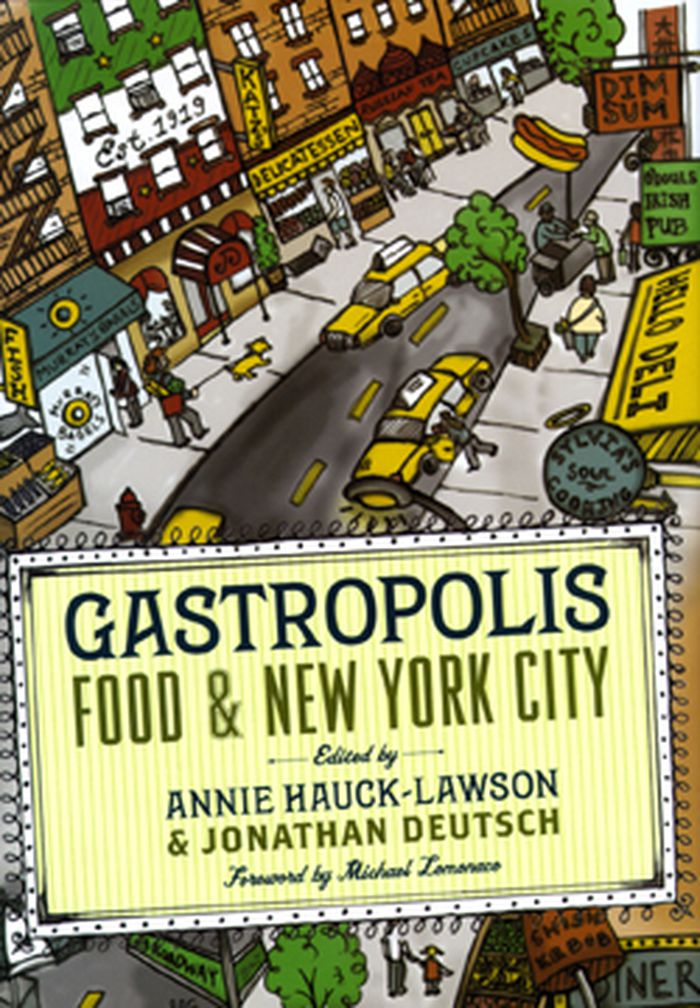
Touching on everything from religion, nutrition, and agriculture to economics, politics, and psychology, Gastropolis tells a story of immigration, amalgamation, and assimilation. This rich interplay between tradition and change, individual and society, and identity and community could happen only in New York.
$34.95
(available to order)
Summary:
Touching on everything from religion, nutrition, and agriculture to economics, politics, and psychology, Gastropolis tells a story of immigration, amalgamation, and assimilation. This rich interplay between tradition and change, individual and society, and identity and community could happen only in New York.
Subject:
Urban Theory
Urban Theory
Publication:
November 2008, New York
November 2008, New York
Title:
Gastropolis: food & New York city
Actions:
Price:
$34.95
(available to order)
Summary:
Touching on everything from religion, nutrition, and agriculture to economics, politics, and psychology, Gastropolis tells a story of immigration, amalgamation, and assimilation. This rich interplay between tradition and change, individual and society, and identity and community could happen only in New York.
Gastropolis: food & New York city
Actions:
Price:
$34.95
(available to order)
Summary:
Touching on everything from religion, nutrition, and agriculture to economics, politics, and psychology, Gastropolis tells a story of immigration, amalgamation, and assimilation. This rich interplay between tradition and change, individual and society, and identity and community could happen only in New York.
Form:
books
books
Publication:
November 2008, New York
November 2008, New York
Subject:
Urban Theory
Urban Theory
Form:
books
books
Title:
The almanac of New York city
The almanac of New York city
Actions:
Price:
$21.00
(available to order)
Summary:
The Almanac of New York City is an innovative companion for urban enthusiasts. Nowhere else will you find the name of the city's first comptroller (Selah Strong) and Staten Island's most recently designated historic district (Our Lady of Mount Carmel Grotto) next to the city's best-attended cultural institution (The Metropolitan Museum of Art, with five million visitors(...)
$21.00
(available to order)
Summary:
The Almanac of New York City is an innovative companion for urban enthusiasts. Nowhere else will you find the name of the city's first comptroller (Selah Strong) and Staten Island's most recently designated historic district (Our Lady of Mount Carmel Grotto) next to the city's best-attended cultural institution (The Metropolitan Museum of Art, with five million visitors(...)
Title:
The almanac of New York city
Actions:
Price:
$21.00
(available to order)
Summary:
The Almanac of New York City is an innovative companion for urban enthusiasts. Nowhere else will you find the name of the city's first comptroller (Selah Strong) and Staten Island's most recently designated historic district (Our Lady of Mount Carmel Grotto) next to the city's best-attended cultural institution (The Metropolitan Museum of Art, with five million visitors annually) and its lowest recorded temperature (15 degrees below zero in February 1934). The Almanac identifies the borough with the most residents who relocate to Palm Beach (Queens) and the borough with the highest number of Panamanian immigrants (Brooklyn). It lists where New York currently ranks in the cost of apartment rentals, the rate of obesity in each borough, the details of executions dating back to 1639, per capita income by borough, the longest-running Broadway shows, the winners of the Wanamaker Mile, and the location of celebrated grave sites. Compiled by two longtime historians of the city, The Almanac treats readers to a real New York story, a tale that will delight anyone seeking a deeper understanding of the Big Apple's complex core.
The almanac of New York city
Actions:
Price:
$21.00
(available to order)
Summary:
The Almanac of New York City is an innovative companion for urban enthusiasts. Nowhere else will you find the name of the city's first comptroller (Selah Strong) and Staten Island's most recently designated historic district (Our Lady of Mount Carmel Grotto) next to the city's best-attended cultural institution (The Metropolitan Museum of Art, with five million visitors annually) and its lowest recorded temperature (15 degrees below zero in February 1934). The Almanac identifies the borough with the most residents who relocate to Palm Beach (Queens) and the borough with the highest number of Panamanian immigrants (Brooklyn). It lists where New York currently ranks in the cost of apartment rentals, the rate of obesity in each borough, the details of executions dating back to 1639, per capita income by borough, the longest-running Broadway shows, the winners of the Wanamaker Mile, and the location of celebrated grave sites. Compiled by two longtime historians of the city, The Almanac treats readers to a real New York story, a tale that will delight anyone seeking a deeper understanding of the Big Apple's complex core.
Form:
books
books
Publication:
October 2008, New York
October 2008, New York
Subject:
Urban Theory
Urban Theory
Form:
books
books
Title:
The city's end: two centuries of fantasies, fears, and premonitions of new york's destruction
The city's end: two centuries of fantasies, fears, and premonitions of new york's destruction
Actions:
Price:
$37.50
(available to order)
Summary:
From nineteenth-century paintings of fires raging through New York City to scenes of Manhattan engulfed by a gigantic wave in the 1998 movie Deep Impact, images of the city’s end have been prolific and diverse. Why have Americans repeatedly imagined New York’s destruction? What do the fantasies of annihilation played out in virtually every form of literature and art mean?(...)
$37.50
(available to order)
Summary:
From nineteenth-century paintings of fires raging through New York City to scenes of Manhattan engulfed by a gigantic wave in the 1998 movie Deep Impact, images of the city’s end have been prolific and diverse. Why have Americans repeatedly imagined New York’s destruction? What do the fantasies of annihilation played out in virtually every form of literature and art mean?(...)
Title:
The city's end: two centuries of fantasies, fears, and premonitions of new york's destruction
Actions:
Price:
$37.50
(available to order)
Summary:
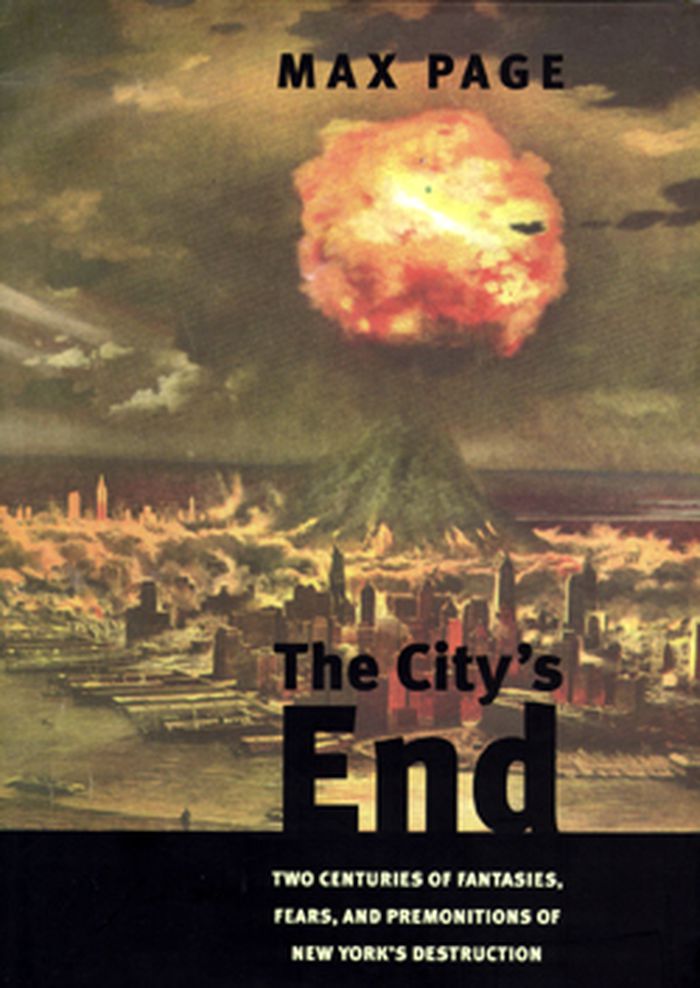
From nineteenth-century paintings of fires raging through New York City to scenes of Manhattan engulfed by a gigantic wave in the 1998 movie Deep Impact, images of the city’s end have been prolific and diverse. Why have Americans repeatedly imagined New York’s destruction? What do the fantasies of annihilation played out in virtually every form of literature and art mean? This book is the first to investigate two centuries of imagined cataclysms visited upon New York, and to provide a critical historical perspective to our understanding of the events of September 11, 2001.
The city's end: two centuries of fantasies, fears, and premonitions of new york's destruction
Actions:
Price:
$37.50
(available to order)
Summary:
From nineteenth-century paintings of fires raging through New York City to scenes of Manhattan engulfed by a gigantic wave in the 1998 movie Deep Impact, images of the city’s end have been prolific and diverse. Why have Americans repeatedly imagined New York’s destruction? What do the fantasies of annihilation played out in virtually every form of literature and art mean? This book is the first to investigate two centuries of imagined cataclysms visited upon New York, and to provide a critical historical perspective to our understanding of the events of September 11, 2001.
Form:
books
books
Publication:
September 2008, New Haven & London
September 2008, New Haven & London
Subject:
Urban Theory
Urban Theory
Form:
books
books
Title:
Unbuilding cities
Unbuilding cities
Actions:
Price:
$19.00
(available to order)
Summary:
Hommels provides a new framework for exploring the dynamic tensions between the malleability and fixity of the contemporary city. In particular, she provides a rich empirical and conceptual understanding of the strategies for unbuilding cities that gives symmetrical treatment to the technological and social issues involved in these dynamics.
$19.00
(available to order)
Summary:
Hommels provides a new framework for exploring the dynamic tensions between the malleability and fixity of the contemporary city. In particular, she provides a rich empirical and conceptual understanding of the strategies for unbuilding cities that gives symmetrical treatment to the technological and social issues involved in these dynamics.
Title:
Unbuilding cities
Actions:
Price:
$19.00
(available to order)
Summary:
Hommels provides a new framework for exploring the dynamic tensions between the malleability and fixity of the contemporary city. In particular, she provides a rich empirical and conceptual understanding of the strategies for unbuilding cities that gives symmetrical treatment to the technological and social issues involved in these dynamics.
Unbuilding cities
Actions:
Price:
$19.00
(available to order)
Summary:
Hommels provides a new framework for exploring the dynamic tensions between the malleability and fixity of the contemporary city. In particular, she provides a rich empirical and conceptual understanding of the strategies for unbuilding cities that gives symmetrical treatment to the technological and social issues involved in these dynamics.
Form:
books
books
Publication:
September 2008, Cambridge
September 2008, Cambridge
Subject:
Urban Theory
Urban Theory


