


1923 Results
Form:
books
books
Price:
$125.95
(available to order)
Summary:
This critique of towns and cities draws on examples form across Western Europe, South Africa, and the U.S.A. to examine both public and private sector development practices, controls, and policies.
$125.95
(available to order)
Summary:
This critique of towns and cities draws on examples form across Western Europe, South Africa, and the U.S.A. to examine both public and private sector development practices, controls, and policies.
Title:
Planning for urban quality : urban design in towns and cities
Actions:
Price:
$125.95
(available to order)
Summary:
This critique of towns and cities draws on examples form across Western Europe, South Africa, and the U.S.A. to examine both public and private sector development practices, controls, and policies.
Planning for urban quality : urban design in towns and cities
Actions:
Price:
$125.95
(available to order)
Summary:
This critique of towns and cities draws on examples form across Western Europe, South Africa, and the U.S.A. to examine both public and private sector development practices, controls, and policies.
Form:
books
books
Publication:
October 1997, London
October 1997, London
Subject:
Urban Theory
Urban Theory
Form:
books
books
Actions:
Price:
$48.95
(available to order)
Summary:
Alphabetically arranged entries on history, geography, automobile culture, sports, architecture, arts, politics, neighbourhoods, opening with Kareem Abdul-Jabbar and ending with Zuma County beach.
$48.95
(available to order)
Summary:
Alphabetically arranged entries on history, geography, automobile culture, sports, architecture, arts, politics, neighbourhoods, opening with Kareem Abdul-Jabbar and ending with Zuma County beach.
Title:
Los Angeles A to Z : an encyclopedia of the city and country
Actions:
Price:
$48.95
(available to order)
Summary:
Alphabetically arranged entries on history, geography, automobile culture, sports, architecture, arts, politics, neighbourhoods, opening with Kareem Abdul-Jabbar and ending with Zuma County beach.
Los Angeles A to Z : an encyclopedia of the city and country
Actions:
Price:
$48.95
(available to order)
Summary:
Alphabetically arranged entries on history, geography, automobile culture, sports, architecture, arts, politics, neighbourhoods, opening with Kareem Abdul-Jabbar and ending with Zuma County beach.
Form:
books
books
Publication:
October 1997, Berkeley
October 1997, Berkeley
Subject:
Urban Theory
Urban Theory
Form:
books
books
Actions:
Price:
$32.00
(available to order)
Summary:
Michael Herzfeld focuses on Rome’s historic Monti district and the wrenching dislocation caused by rapid economical, political, and social change. Evicted from Eternity tells the story of the gentrification of Monti—once the architecturally stunning home of a community of artisans and shopkeepers now displaced by an invasion of rapacious real estate speculators, corrupt(...)
$32.00
(available to order)
Summary:
Michael Herzfeld focuses on Rome’s historic Monti district and the wrenching dislocation caused by rapid economical, political, and social change. Evicted from Eternity tells the story of the gentrification of Monti—once the architecturally stunning home of a community of artisans and shopkeepers now displaced by an invasion of rapacious real estate speculators, corrupt(...)
Title:
Evicted from eternity: the restructuring of modern rome
Actions:
Price:
$32.00
(available to order)
Summary:
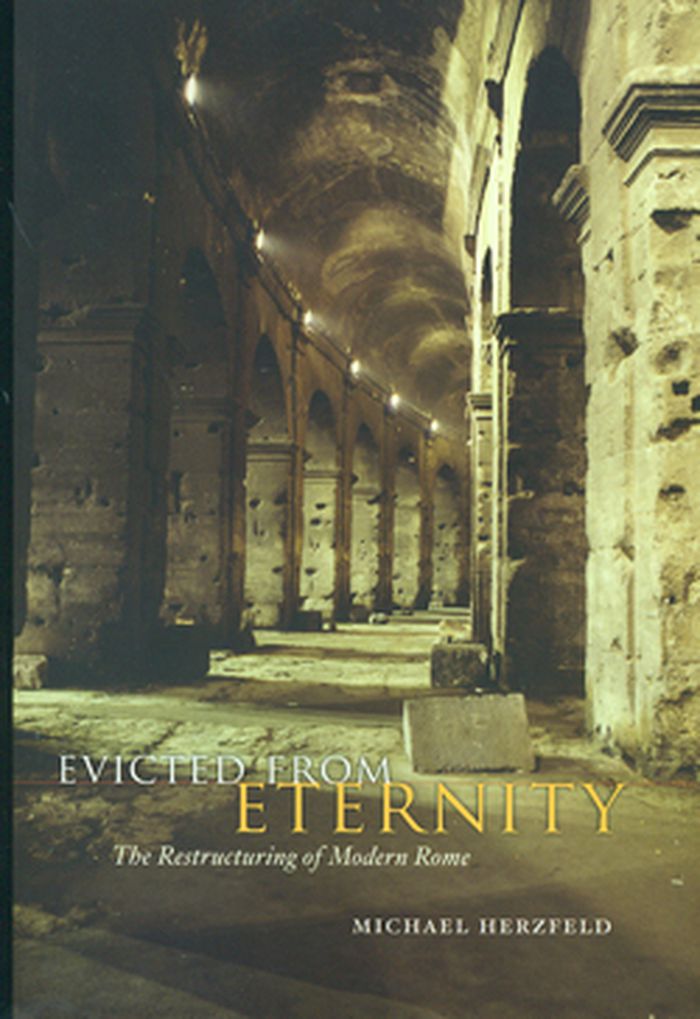
Michael Herzfeld focuses on Rome’s historic Monti district and the wrenching dislocation caused by rapid economical, political, and social change. Evicted from Eternity tells the story of the gentrification of Monti—once the architecturally stunning home of a community of artisans and shopkeepers now displaced by an invasion of rapacious real estate speculators, corrupt officials, dithering politicians, deceptive clerics, and shady thugs. As Herzfeld picks apart the messy story of Monti’s transformation, he ranges widely over many aspects of life there and in the rest of the city, richly depicting the uniquely local landscape of globalization in Rome.
Evicted from eternity: the restructuring of modern rome
Actions:
Price:
$32.00
(available to order)
Summary:
Michael Herzfeld focuses on Rome’s historic Monti district and the wrenching dislocation caused by rapid economical, political, and social change. Evicted from Eternity tells the story of the gentrification of Monti—once the architecturally stunning home of a community of artisans and shopkeepers now displaced by an invasion of rapacious real estate speculators, corrupt officials, dithering politicians, deceptive clerics, and shady thugs. As Herzfeld picks apart the messy story of Monti’s transformation, he ranges widely over many aspects of life there and in the rest of the city, richly depicting the uniquely local landscape of globalization in Rome.
Form:
books
books
Publication:
March 2009
March 2009
Subject:
Urban Theory
Urban Theory
Form:
books
books
Title:
Concrete island / a novel
Concrete island / a novel
Actions:
Price:
$15.00
(available to order)
Summary:
On a day in April, just after three o'clock in the afternoon, Robert Maitland's car crashes over the concrete parapet of a high-speed highway onto the island below, where he is injured and, finally, trapped. What begins as an almost ludicrous predicament soon turns into horror as Maitland—a wickedly modern Robinson Crusoe—realizes that, despite evidence of other(...)
$15.00
(available to order)
Summary:
On a day in April, just after three o'clock in the afternoon, Robert Maitland's car crashes over the concrete parapet of a high-speed highway onto the island below, where he is injured and, finally, trapped. What begins as an almost ludicrous predicament soon turns into horror as Maitland—a wickedly modern Robinson Crusoe—realizes that, despite evidence of other(...)
Title:
Concrete island / a novel
Actions:
Price:
$15.00
(available to order)
Summary:
On a day in April, just after three o'clock in the afternoon, Robert Maitland's car crashes over the concrete parapet of a high-speed highway onto the island below, where he is injured and, finally, trapped. What begins as an almost ludicrous predicament soon turns into horror as Maitland—a wickedly modern Robinson Crusoe—realizes that, despite evidence of other inhabitants, this doomed terrain has become a mirror of his own mind. Seeking the dark outer rim of the everyday, Ballard weaves private catastrophe into an intensely specular allegory.
Concrete island / a novel
Actions:
Price:
$15.00
(available to order)
Summary:
On a day in April, just after three o'clock in the afternoon, Robert Maitland's car crashes over the concrete parapet of a high-speed highway onto the island below, where he is injured and, finally, trapped. What begins as an almost ludicrous predicament soon turns into horror as Maitland—a wickedly modern Robinson Crusoe—realizes that, despite evidence of other inhabitants, this doomed terrain has become a mirror of his own mind. Seeking the dark outer rim of the everyday, Ballard weaves private catastrophe into an intensely specular allegory.
Form:
books
books
Publication:
January 1900
January 1900
Subject:
Urban Theory
Urban Theory
Form:
books
books
Actions:
Price:
$17.95
(available to order)
Summary:
Objet d'une urbanisation sans précédent, le Chicago des années 1920 constitue un gigantesque " laboratoire social ". Fascinés par le comportement de l'homme dans son nouveau milieu urbain, des sociologues, dont Robert Park, Ernest Burgess, Roderick Mackenzie, William Thomas et Louis Wirth, jettent les bases d'une "approche écologique de la ville". Groupes sociaux,(...)
$17.95
(available to order)
Summary:
Objet d'une urbanisation sans précédent, le Chicago des années 1920 constitue un gigantesque " laboratoire social ". Fascinés par le comportement de l'homme dans son nouveau milieu urbain, des sociologues, dont Robert Park, Ernest Burgess, Roderick Mackenzie, William Thomas et Louis Wirth, jettent les bases d'une "approche écologique de la ville". Groupes sociaux,(...)
Title:
L'école de Chicago : naissance de l'écologie urbaine
Actions:
Price:
$17.95
(available to order)
Summary:
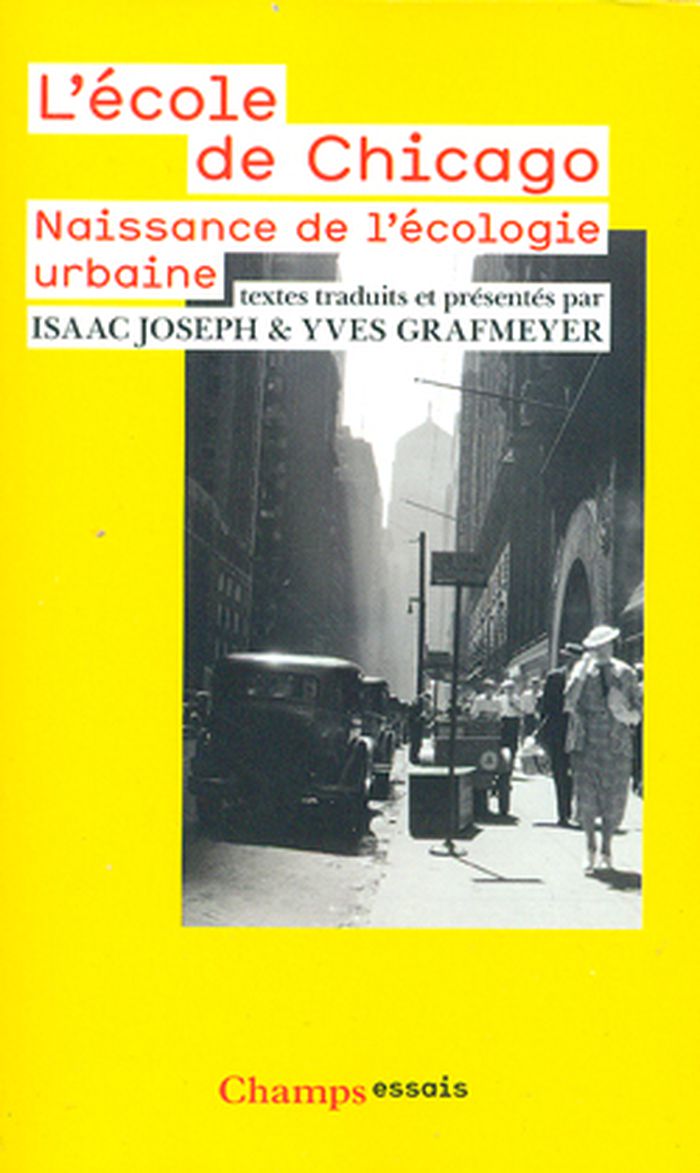
Objet d'une urbanisation sans précédent, le Chicago des années 1920 constitue un gigantesque " laboratoire social ". Fascinés par le comportement de l'homme dans son nouveau milieu urbain, des sociologues, dont Robert Park, Ernest Burgess, Roderick Mackenzie, William Thomas et Louis Wirth, jettent les bases d'une "approche écologique de la ville". Groupes sociaux, territoires, ségrégation; mobilité; réseaux de relations, mentalités, sociabilité : pour la première fois, la ville est pensée comme société, comme culture et, finalement, comme état d'esprit. Grâce à ces nouveaux concepts, les sociologues de Chicago se donnent pour objectif de produire des connaissances utiles au règlement des problèmes sociaux concrets, particulièrement ceux de l'assimilation de millions d'immigrants à la société américaine. Leurs méthodes de travail, annonçant la sociologie qualitative, vont profondément marquer la recherche sociologique. Cet ouvrage rassemble les textes fondateurs de ce courant, ainsi qu'un article de Maurice Halbwachs sur la croissance de Chicago et son caractère exemplaire de creuset ethnique et culturel, et des textes de Georg Simmel, qui esquissait, dès 1903, la spécificité d'une personnalité urbaine.
L'école de Chicago : naissance de l'écologie urbaine
Actions:
Price:
$17.95
(available to order)
Summary:
Objet d'une urbanisation sans précédent, le Chicago des années 1920 constitue un gigantesque " laboratoire social ". Fascinés par le comportement de l'homme dans son nouveau milieu urbain, des sociologues, dont Robert Park, Ernest Burgess, Roderick Mackenzie, William Thomas et Louis Wirth, jettent les bases d'une "approche écologique de la ville". Groupes sociaux, territoires, ségrégation; mobilité; réseaux de relations, mentalités, sociabilité : pour la première fois, la ville est pensée comme société, comme culture et, finalement, comme état d'esprit. Grâce à ces nouveaux concepts, les sociologues de Chicago se donnent pour objectif de produire des connaissances utiles au règlement des problèmes sociaux concrets, particulièrement ceux de l'assimilation de millions d'immigrants à la société américaine. Leurs méthodes de travail, annonçant la sociologie qualitative, vont profondément marquer la recherche sociologique. Cet ouvrage rassemble les textes fondateurs de ce courant, ainsi qu'un article de Maurice Halbwachs sur la croissance de Chicago et son caractère exemplaire de creuset ethnique et culturel, et des textes de Georg Simmel, qui esquissait, dès 1903, la spécificité d'une personnalité urbaine.
Form:
books
books
Publication:
July 2009
July 2009
Form:
books
books
Price:
$20.95
(available in store)
Summary:
" Pour mortels et dangereux qu'ils soient, les bidonvilles ont devant eux un avenir resplendissant. " Des taudis de Lima aux collines d'ordures de Manille, des bidonvilles marécageux de Lagos à la Vieille Ville de Pékin, on assiste à l'extension exponentielle des mégalopoles du tiers monde, produits d'un exode rural mal maîtrisé. Le big bang de la pauvreté des années 1970(...)
$20.95
(available in store)
Summary:
" Pour mortels et dangereux qu'ils soient, les bidonvilles ont devant eux un avenir resplendissant. " Des taudis de Lima aux collines d'ordures de Manille, des bidonvilles marécageux de Lagos à la Vieille Ville de Pékin, on assiste à l'extension exponentielle des mégalopoles du tiers monde, produits d'un exode rural mal maîtrisé. Le big bang de la pauvreté des années 1970(...)
Title:
Le pire des mondes possibles: de l'explosion urbaine au bidonville global
Actions:
Price:
$20.95
(available in store)
Summary:
" Pour mortels et dangereux qu'ils soient, les bidonvilles ont devant eux un avenir resplendissant. " Des taudis de Lima aux collines d'ordures de Manille, des bidonvilles marécageux de Lagos à la Vieille Ville de Pékin, on assiste à l'extension exponentielle des mégalopoles du tiers monde, produits d'un exode rural mal maîtrisé. Le big bang de la pauvreté des années 1970 et 1980 - dopé par les thérapies de choc imposées par le FMI et la Banque mondiale - a ainsi transformé les bidonvilles traditionnels en " mégabidonvilles " tentaculaires, où domine le travail informel, " musée vivant de l'exploitation humaine Un milliard de personnes survivent dans les bidonvilles du monde, lieux de reproduction de la misère, à laquelle les gouvernements n'apportent aucune réponse adaptée. Désormais, les habitants mettent en péril leur vie clans des zones dangereuses, instables ou polluées. Bien loin des villes de lumière imaginées par les urbanistes, le monde urbain du XXIe siècle ressemblera de plus en plus à celui du XIXe, avec ses quartiers sordides dépeints par Dickens, Zola ou Gorki. Le Pire des mondes possibles explore cette réalité urbaine méconnue et explosive, laissant entrevoir, à l'échelle planétaire, un avenir cauchemardesque.
Le pire des mondes possibles: de l'explosion urbaine au bidonville global
Actions:
Price:
$20.95
(available in store)
Summary:
" Pour mortels et dangereux qu'ils soient, les bidonvilles ont devant eux un avenir resplendissant. " Des taudis de Lima aux collines d'ordures de Manille, des bidonvilles marécageux de Lagos à la Vieille Ville de Pékin, on assiste à l'extension exponentielle des mégalopoles du tiers monde, produits d'un exode rural mal maîtrisé. Le big bang de la pauvreté des années 1970 et 1980 - dopé par les thérapies de choc imposées par le FMI et la Banque mondiale - a ainsi transformé les bidonvilles traditionnels en " mégabidonvilles " tentaculaires, où domine le travail informel, " musée vivant de l'exploitation humaine Un milliard de personnes survivent dans les bidonvilles du monde, lieux de reproduction de la misère, à laquelle les gouvernements n'apportent aucune réponse adaptée. Désormais, les habitants mettent en péril leur vie clans des zones dangereuses, instables ou polluées. Bien loin des villes de lumière imaginées par les urbanistes, le monde urbain du XXIe siècle ressemblera de plus en plus à celui du XIXe, avec ses quartiers sordides dépeints par Dickens, Zola ou Gorki. Le Pire des mondes possibles explore cette réalité urbaine méconnue et explosive, laissant entrevoir, à l'échelle planétaire, un avenir cauchemardesque.
Form:
books
books
Publication:
October 2006
October 2006
Subject:
Urban Theory
Urban Theory
Form:
books
books
Actions:
Price:
$27.95
(available to order)
Summary:
Un matin de septembre 1920, à New York, un anarchiste italien du nom de Mario Buda, gare à l'angle de Wall Street un véhicule bourré d'explosifs : il a inventé la première voiture piégée. Cet événement fondateur est le point de départ d'un récit qui nous mène jusqu'à l'Irak contemporain, en passant par les attentats sionistes contre les Britanniques en Palestine en 1947,(...)
$27.95
(available to order)
Summary:
Un matin de septembre 1920, à New York, un anarchiste italien du nom de Mario Buda, gare à l'angle de Wall Street un véhicule bourré d'explosifs : il a inventé la première voiture piégée. Cet événement fondateur est le point de départ d'un récit qui nous mène jusqu'à l'Irak contemporain, en passant par les attentats sionistes contre les Britanniques en Palestine en 1947,(...)
Title:
Petite histoire de la voiture piégée
Actions:
Price:
$27.95
(available to order)
Summary:
Un matin de septembre 1920, à New York, un anarchiste italien du nom de Mario Buda, gare à l'angle de Wall Street un véhicule bourré d'explosifs : il a inventé la première voiture piégée. Cet événement fondateur est le point de départ d'un récit qui nous mène jusqu'à l'Irak contemporain, en passant par les attentats sionistes contre les Britanniques en Palestine en 1947, par les attentats de l'IRA en Grande-Bretagne et ceux des tigres tamouls au Sri Lanka. Arme furtive, spectaculaire, bon marché, simple d'utilisation, aveuglément meurtrière, sûre et anonyme, la voiture piégée s'impose notamment comme l'arme idéale pour des groupuscules marginaux auxquelles elle fournit une force de frappe sans rapport avec leur poids politique. Autant de caractéristiques qui font de ce " bombardier du pauvre " la base fondamentale du terrorisme moderne, " une arme intrinsèquement fasciste qui assure à ceux qui l'emploient un bain de sang de victimes innocentes ".
Petite histoire de la voiture piégée
Actions:
Price:
$27.95
(available to order)
Summary:
Un matin de septembre 1920, à New York, un anarchiste italien du nom de Mario Buda, gare à l'angle de Wall Street un véhicule bourré d'explosifs : il a inventé la première voiture piégée. Cet événement fondateur est le point de départ d'un récit qui nous mène jusqu'à l'Irak contemporain, en passant par les attentats sionistes contre les Britanniques en Palestine en 1947, par les attentats de l'IRA en Grande-Bretagne et ceux des tigres tamouls au Sri Lanka. Arme furtive, spectaculaire, bon marché, simple d'utilisation, aveuglément meurtrière, sûre et anonyme, la voiture piégée s'impose notamment comme l'arme idéale pour des groupuscules marginaux auxquelles elle fournit une force de frappe sans rapport avec leur poids politique. Autant de caractéristiques qui font de ce " bombardier du pauvre " la base fondamentale du terrorisme moderne, " une arme intrinsèquement fasciste qui assure à ceux qui l'emploient un bain de sang de victimes innocentes ".
Form:
books
books
Publication:
October 2007
October 2007
Subject:
Urban Theory
Urban Theory
Form:
books
books
Actions:
Price:
$22.00
(available to order)
Summary:
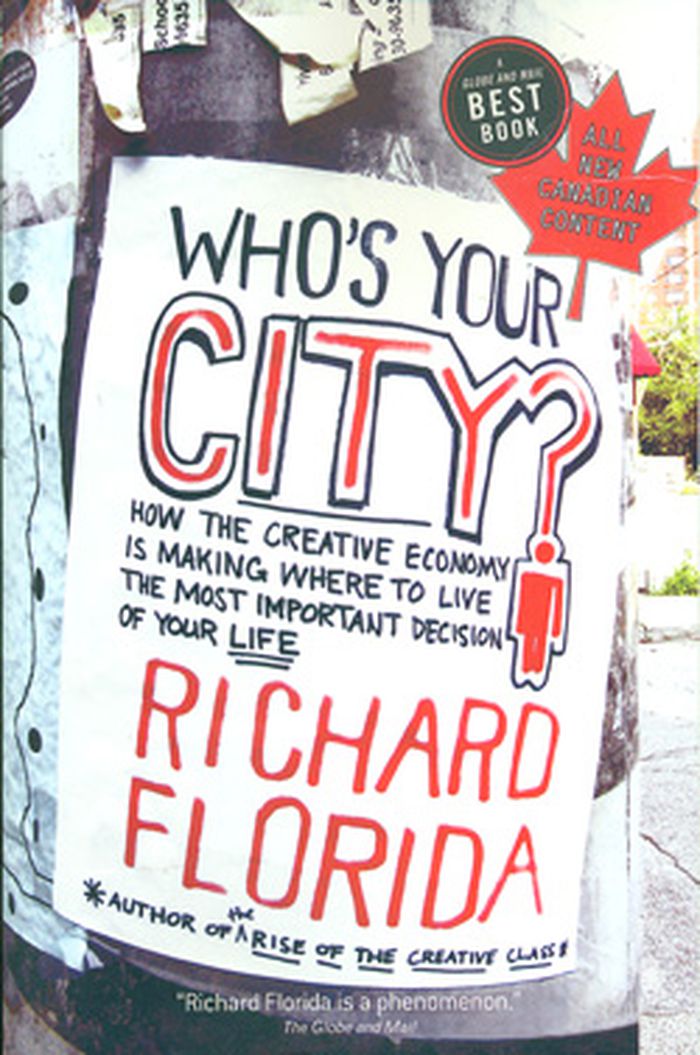
In this book, Richard Florida shows that where we live is increasingly a crucial factor in our lives, one that fundamentally affects our professional and personal prospects. As well as explaining why place matters now more than ever, this book provides tools to help you choose the right place for you.
$22.00
(available to order)
Summary:
In this book, Richard Florida shows that where we live is increasingly a crucial factor in our lives, one that fundamentally affects our professional and personal prospects. As well as explaining why place matters now more than ever, this book provides tools to help you choose the right place for you.
Title:
Who's your city? : how the creative economy is making where to live the most important decision of your life
Actions:
Price:
$22.00
(available to order)
Summary:
In this book, Richard Florida shows that where we live is increasingly a crucial factor in our lives, one that fundamentally affects our professional and personal prospects. As well as explaining why place matters now more than ever, this book provides tools to help you choose the right place for you.
Who's your city? : how the creative economy is making where to live the most important decision of your life
Actions:
Price:
$22.00
(available to order)
Summary:
In this book, Richard Florida shows that where we live is increasingly a crucial factor in our lives, one that fundamentally affects our professional and personal prospects. As well as explaining why place matters now more than ever, this book provides tools to help you choose the right place for you.
Form:
books
books
Publication:
March 2009, Toronto
March 2009, Toronto
Subject:
Urban Theory
Urban Theory
Form:
books
books
Actions:
Price:
$41.95
(available to order)
Summary:
The concept of "the city" — as well as "the state" and "the nation state" — is passé, agree contributors to this insightful book. The new scale for considering economic strength and growth opportunities is "the megaregion", a network of metropolitan centers and their surrounding areas that are spatially and functionally linked through environmental, economic, and(...)
$41.95
(available to order)
Summary:
The concept of "the city" — as well as "the state" and "the nation state" — is passé, agree contributors to this insightful book. The new scale for considering economic strength and growth opportunities is "the megaregion", a network of metropolitan centers and their surrounding areas that are spatially and functionally linked through environmental, economic, and(...)
Title:
Megaregions ; planning for global competitiveness
Actions:
Price:
$41.95
(available to order)
Summary:
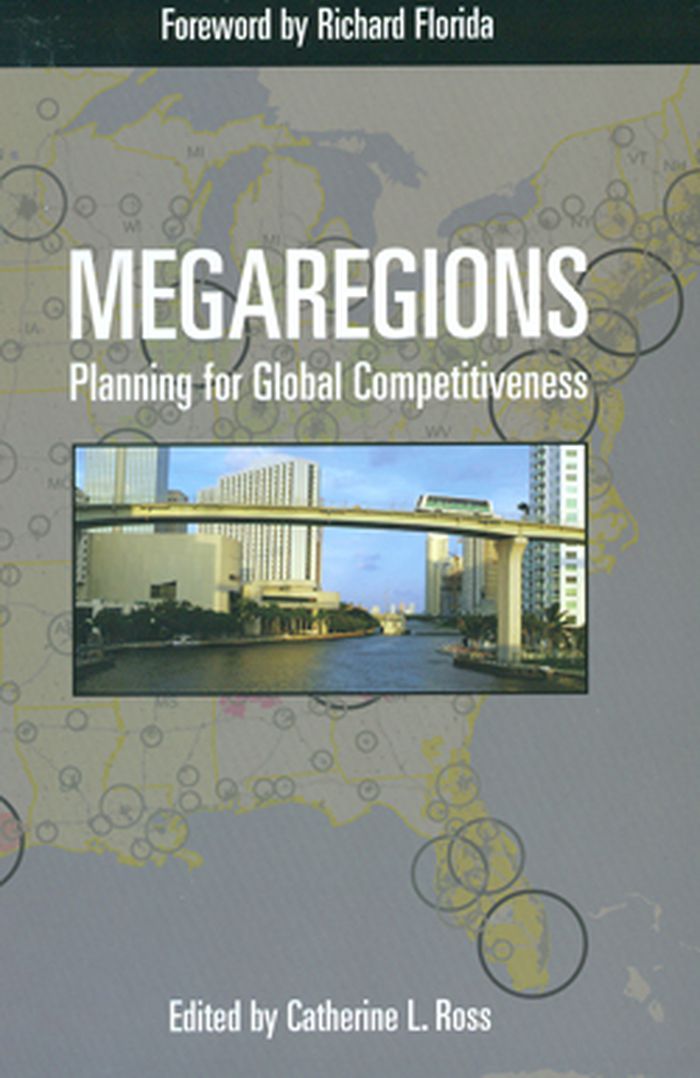
The concept of "the city" — as well as "the state" and "the nation state" — is passé, agree contributors to this insightful book. The new scale for considering economic strength and growth opportunities is "the megaregion", a network of metropolitan centers and their surrounding areas that are spatially and functionally linked through environmental, economic, and infrastructure interactions. Recently a great deal of attention has been focused on the emergence of the European Union and on European spatial planning, which has boosted the region’s competitiveness. Megaregions applies these emerging concepts in an American context. It addresses critical questions for our future : What are the spatial implications of local, regional, national, and global trends within the context of sustainability, economic competitiveness, and social equity? How can we address housing, transportation, and infrastructure needs in growing megaregions? How can we develop and implement the policy changes necessary to make viable, livable megaregions? By the year 2050, megaregions will contain two-thirds of the U.S. population. Given the projected growth of the U.S. population and the accompanying geographic changes, this forward-looking book argues that U.S. planners and policymakers must examine and implement the megaregion as a new and appropriate framework. Contributors, all of whom are leaders in their academic and professional specialties, address the most critical issues confronting the U.S. over the next fifty years. At the same time, they examine ways in which the idea of megaregions might help address our concerns about equity, the economy, and the environment. Together, these essays define the theoretical, analytical, and operational underpinnings of a new structure that could respond to the anticipated upheavals in U.S. population and living patterns.
Megaregions ; planning for global competitiveness
Actions:
Price:
$41.95
(available to order)
Summary:
The concept of "the city" — as well as "the state" and "the nation state" — is passé, agree contributors to this insightful book. The new scale for considering economic strength and growth opportunities is "the megaregion", a network of metropolitan centers and their surrounding areas that are spatially and functionally linked through environmental, economic, and infrastructure interactions. Recently a great deal of attention has been focused on the emergence of the European Union and on European spatial planning, which has boosted the region’s competitiveness. Megaregions applies these emerging concepts in an American context. It addresses critical questions for our future : What are the spatial implications of local, regional, national, and global trends within the context of sustainability, economic competitiveness, and social equity? How can we address housing, transportation, and infrastructure needs in growing megaregions? How can we develop and implement the policy changes necessary to make viable, livable megaregions? By the year 2050, megaregions will contain two-thirds of the U.S. population. Given the projected growth of the U.S. population and the accompanying geographic changes, this forward-looking book argues that U.S. planners and policymakers must examine and implement the megaregion as a new and appropriate framework. Contributors, all of whom are leaders in their academic and professional specialties, address the most critical issues confronting the U.S. over the next fifty years. At the same time, they examine ways in which the idea of megaregions might help address our concerns about equity, the economy, and the environment. Together, these essays define the theoretical, analytical, and operational underpinnings of a new structure that could respond to the anticipated upheavals in U.S. population and living patterns.
Form:
books
books
Publication:
June 2009
June 2009
Subject:
Urban Theory
Urban Theory
Form:
books
books
Actions:
Price:
$39.95
(available to order)
Summary:
Ce premier titre de la collection "La ville en train de se faire" présente les données et résultats obtenus à la suite d'un programme mis en oeuvre par la Plate-forme d'observation des projets et stratégies urbaines (Popsu) au sein de sept grandes villes françaises: Nantes, Bordeaux, Lille, Lyon, Montpellier, Marseille et Toulouse. En mariant l'expertise des acteurs(...)
$39.95
(available to order)
Summary:
Ce premier titre de la collection "La ville en train de se faire" présente les données et résultats obtenus à la suite d'un programme mis en oeuvre par la Plate-forme d'observation des projets et stratégies urbaines (Popsu) au sein de sept grandes villes françaises: Nantes, Bordeaux, Lille, Lyon, Montpellier, Marseille et Toulouse. En mariant l'expertise des acteurs(...)
Title:
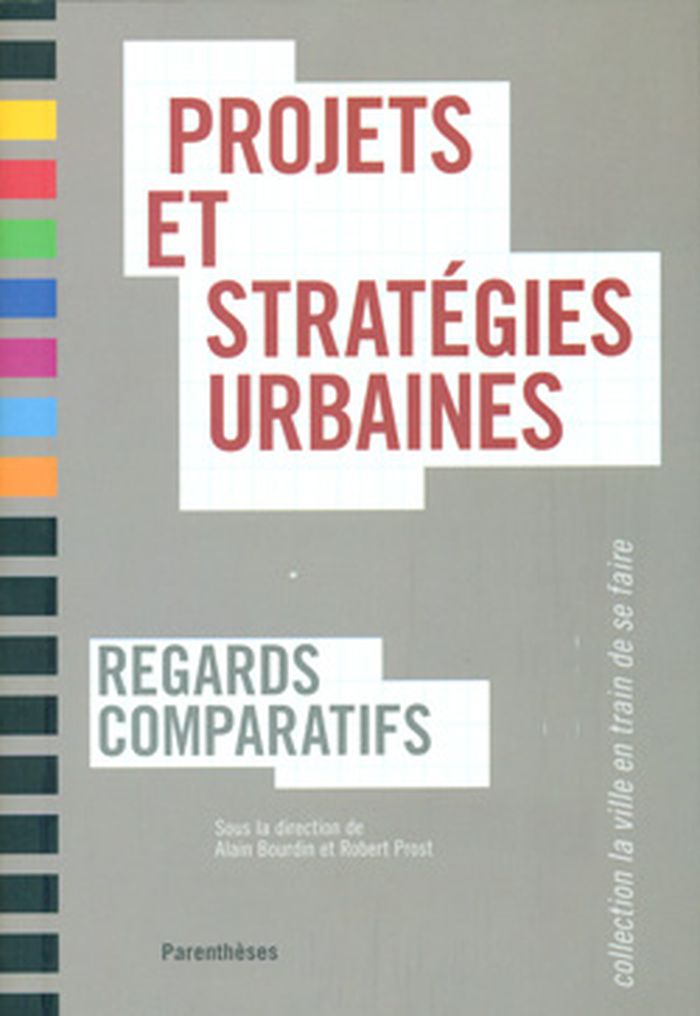
Projets et stratégies urbaines: regards comparatifs
Actions:
Price:
$39.95
(available to order)
Summary:
Ce premier titre de la collection "La ville en train de se faire" présente les données et résultats obtenus à la suite d'un programme mis en oeuvre par la Plate-forme d'observation des projets et stratégies urbaines (Popsu) au sein de sept grandes villes françaises: Nantes, Bordeaux, Lille, Lyon, Montpellier, Marseille et Toulouse. En mariant l'expertise des acteurs locaux et le savoir d'équipes d'une cinquantaine de chercheurs, cette analyse comparative a souhaité décrypter les mécaniques mises en place au sein des villes à travers deux notions fondamentales : les projets et les stratégies urbaines. La volonté étant de comprendre comment se transforme l'espace urbanisé au début du XXIè siècle. Les cinq grandes thématiques qui ont fondé la base de cette étude - le développement durable, le développement économique, le logement, la gouvernance et les formes urbaines - orchestrent également les pages de ce livre. Ce titre général ouvre la voie à une série de sept ouvrages spécifiques à chacune des villes ayant participé au programme, permettant ainsi de faire un état des lieux des politiques urbaines et des enjeux particuliers qui orientent discours et réalité.
Projets et stratégies urbaines: regards comparatifs
Actions:
Price:
$39.95
(available to order)
Summary:
Ce premier titre de la collection "La ville en train de se faire" présente les données et résultats obtenus à la suite d'un programme mis en oeuvre par la Plate-forme d'observation des projets et stratégies urbaines (Popsu) au sein de sept grandes villes françaises: Nantes, Bordeaux, Lille, Lyon, Montpellier, Marseille et Toulouse. En mariant l'expertise des acteurs locaux et le savoir d'équipes d'une cinquantaine de chercheurs, cette analyse comparative a souhaité décrypter les mécaniques mises en place au sein des villes à travers deux notions fondamentales : les projets et les stratégies urbaines. La volonté étant de comprendre comment se transforme l'espace urbanisé au début du XXIè siècle. Les cinq grandes thématiques qui ont fondé la base de cette étude - le développement durable, le développement économique, le logement, la gouvernance et les formes urbaines - orchestrent également les pages de ce livre. Ce titre général ouvre la voie à une série de sept ouvrages spécifiques à chacune des villes ayant participé au programme, permettant ainsi de faire un état des lieux des politiques urbaines et des enjeux particuliers qui orientent discours et réalité.
Form:
books
books
Publication:
January 1900, Paris
January 1900, Paris
Subject:
Urban Theory
Urban Theory


