


1923 Results
Form:
books
books
Actions:
Price:
$25.95
(available to order)
Summary:
Comment organiser, gérer de la façon la plus égalitaire qu'il soit un territoire que l'on ne connaît encore pas ? Lorsque Thomas Jefferson imagine, en 1785, cette vaste grille orthogonale régulière qui, pendant tout le XIXe siècle, va progressivement s'étendre sur le continent nord-américain, l'Union des Etats-Unis n'est alors constituée que des treize premières colonies(...)
$25.95
(available to order)
Summary:
Comment organiser, gérer de la façon la plus égalitaire qu'il soit un territoire que l'on ne connaît encore pas ? Lorsque Thomas Jefferson imagine, en 1785, cette vaste grille orthogonale régulière qui, pendant tout le XIXe siècle, va progressivement s'étendre sur le continent nord-américain, l'Union des Etats-Unis n'est alors constituée que des treize premières colonies(...)
Title:
Thomas Jefferson et le projet du Nouveau Monde
Actions:
Price:
$25.95
(available to order)
Summary:
Comment organiser, gérer de la façon la plus égalitaire qu'il soit un territoire que l'on ne connaît encore pas ? Lorsque Thomas Jefferson imagine, en 1785, cette vaste grille orthogonale régulière qui, pendant tout le XIXe siècle, va progressivement s'étendre sur le continent nord-américain, l'Union des Etats-Unis n'est alors constituée que des treize premières colonies bordant la côte atlantique. La "grille" sera cet outil par lequel l'Amérique du Nord prendra corps et existence, dévoilant ce territoire immense du Nouveau Monde à la connaissance et conscience du monde contemporain. Sa construction nécessitera les compétences des scientifiques les plus accomplis, la structure "simple" du quadrillage se révélant être des plus complexes appliquée à grande échelle sur la surface courbe de la Terre.
Thomas Jefferson et le projet du Nouveau Monde
Actions:
Price:
$25.95
(available to order)
Summary:
Comment organiser, gérer de la façon la plus égalitaire qu'il soit un territoire que l'on ne connaît encore pas ? Lorsque Thomas Jefferson imagine, en 1785, cette vaste grille orthogonale régulière qui, pendant tout le XIXe siècle, va progressivement s'étendre sur le continent nord-américain, l'Union des Etats-Unis n'est alors constituée que des treize premières colonies bordant la côte atlantique. La "grille" sera cet outil par lequel l'Amérique du Nord prendra corps et existence, dévoilant ce territoire immense du Nouveau Monde à la connaissance et conscience du monde contemporain. Sa construction nécessitera les compétences des scientifiques les plus accomplis, la structure "simple" du quadrillage se révélant être des plus complexes appliquée à grande échelle sur la surface courbe de la Terre.
Form:
books
books
Publication:
November 2007, Paris
November 2007, Paris
Subject:
Urban Theory
Urban Theory
Form:
books
books
Actions:
Price:
$39.95
(available to order)
Summary:
La fabrique de la «ville» en tant que démarche concrète allant de la conception à la réalisation des projets se renouvelle sans cesse. Les démarches s'enrichissent mais diffèrent en fonction des pays, des villes, des acteurs, des perceptions et du «style» des concepteurs. Elles se différencient surtout en fonction des échelles et des temporalités propres à chaque acteur.
$39.95
(available to order)
Summary:
La fabrique de la «ville» en tant que démarche concrète allant de la conception à la réalisation des projets se renouvelle sans cesse. Les démarches s'enrichissent mais diffèrent en fonction des pays, des villes, des acteurs, des perceptions et du «style» des concepteurs. Elles se différencient surtout en fonction des échelles et des temporalités propres à chaque acteur.
Title:
Échelles et temporalités des projets urbains
Actions:
Price:
$39.95
(available to order)
Summary:
La fabrique de la «ville» en tant que démarche concrète allant de la conception à la réalisation des projets se renouvelle sans cesse. Les démarches s'enrichissent mais diffèrent en fonction des pays, des villes, des acteurs, des perceptions et du «style» des concepteurs. Elles se différencient surtout en fonction des échelles et des temporalités propres à chaque acteur.
Échelles et temporalités des projets urbains
Actions:
Price:
$39.95
(available to order)
Summary:
La fabrique de la «ville» en tant que démarche concrète allant de la conception à la réalisation des projets se renouvelle sans cesse. Les démarches s'enrichissent mais diffèrent en fonction des pays, des villes, des acteurs, des perceptions et du «style» des concepteurs. Elles se différencient surtout en fonction des échelles et des temporalités propres à chaque acteur.
Form:
books
books
Publication:
October 2007, Paris
October 2007, Paris
Subject:
Urban Theory
Urban Theory
Form:
books
books
Actions:
Price:
$49.95
(available to order)
Summary:
20 ans, la belle âge ? Europan ne cesse d'aller de l'avant. Ce concours d'architecture et d'urbanisme d'un genre unique marie de multiples dimensions. Européen, il s'est ouvert à de plus en plus de pays (19 en 2006); en attirant 45000 concepteurs et en présentant 15000 projets, il est devenu un espace de débat à grande échelle ; à la fois concours d'idées et de projets,(...)
$49.95
(available to order)
Summary:
20 ans, la belle âge ? Europan ne cesse d'aller de l'avant. Ce concours d'architecture et d'urbanisme d'un genre unique marie de multiples dimensions. Européen, il s'est ouvert à de plus en plus de pays (19 en 2006); en attirant 45000 concepteurs et en présentant 15000 projets, il est devenu un espace de débat à grande échelle ; à la fois concours d'idées et de projets,(...)
Title:
Europan France 1988-2007 : Innover dialoguer réaliser
Actions:
Price:
$49.95
(available to order)
Summary:
20 ans, la belle âge ? Europan ne cesse d'aller de l'avant. Ce concours d'architecture et d'urbanisme d'un genre unique marie de multiples dimensions. Européen, il s'est ouvert à de plus en plus de pays (19 en 2006); en attirant 45000 concepteurs et en présentant 15000 projets, il est devenu un espace de débat à grande échelle ; à la fois concours d'idées et de projets, il incite à l'innovation tout en cherchant la réalisation; réservé aux jeunes professionnels, il valorise l'imagination et l'enthousiasme autant que le talent ; d'abord focalisé sur le logement et l'architecture, il a étendu son champ d'étude de l'habitat à l'urbain, explorateur de thèmes inscrits dans les modes de vie contemporains, partenaire de villes en mutation. Grâce à cette richesse, Europan interroge l'urbanité européenne et sa modernité. Destiné à conter les tenants de cette aventure à un large public, en particulier les partenaires d'Europan - villes, maîtres d'ouvrages, concepteurs - cet ouvrage, coordonné par Frédérique de Gravelaine, regroupe les contributions de spécialistes : Frédéric Bonnet, Jean-Pierre Chupin, Nicole Eleb-Harlé, Amélie Flamand, François Magendie, Rafaël Magrou, Béatrice Mariolle, Frédéric Mialet, Alain Pélissier, Juliette Pommier, Didier Rebois, Jean-Louis Violeau, Henri Wacrenier, Chris Younès.
Europan France 1988-2007 : Innover dialoguer réaliser
Actions:
Price:
$49.95
(available to order)
Summary:
20 ans, la belle âge ? Europan ne cesse d'aller de l'avant. Ce concours d'architecture et d'urbanisme d'un genre unique marie de multiples dimensions. Européen, il s'est ouvert à de plus en plus de pays (19 en 2006); en attirant 45000 concepteurs et en présentant 15000 projets, il est devenu un espace de débat à grande échelle ; à la fois concours d'idées et de projets, il incite à l'innovation tout en cherchant la réalisation; réservé aux jeunes professionnels, il valorise l'imagination et l'enthousiasme autant que le talent ; d'abord focalisé sur le logement et l'architecture, il a étendu son champ d'étude de l'habitat à l'urbain, explorateur de thèmes inscrits dans les modes de vie contemporains, partenaire de villes en mutation. Grâce à cette richesse, Europan interroge l'urbanité européenne et sa modernité. Destiné à conter les tenants de cette aventure à un large public, en particulier les partenaires d'Europan - villes, maîtres d'ouvrages, concepteurs - cet ouvrage, coordonné par Frédérique de Gravelaine, regroupe les contributions de spécialistes : Frédéric Bonnet, Jean-Pierre Chupin, Nicole Eleb-Harlé, Amélie Flamand, François Magendie, Rafaël Magrou, Béatrice Mariolle, Frédéric Mialet, Alain Pélissier, Juliette Pommier, Didier Rebois, Jean-Louis Violeau, Henri Wacrenier, Chris Younès.
Form:
books
books
Publication:
October 2007, Paris
October 2007, Paris
Subject:
Urban Theory
Urban Theory
Form:
books
books
Title:
Profession Urbanisme
Profession Urbanisme
Actions:
Price:
$9.95
(available in store)
Summary:
Quel est le rôle, dans la Cité, des chercheurs, des intellectuels, des professeurs, des universitaires en général? Qui sont-ils et que font-ils exactement? Quel a été leur parcours intellectuel? La collection «Profession» répond à ces questions.
$9.95
(available in store)
Summary:
Quel est le rôle, dans la Cité, des chercheurs, des intellectuels, des professeurs, des universitaires en général? Qui sont-ils et que font-ils exactement? Quel a été leur parcours intellectuel? La collection «Profession» répond à ces questions.
Title:
Profession Urbanisme
Actions:
Price:
$9.95
(available in store)
Summary:
Quel est le rôle, dans la Cité, des chercheurs, des intellectuels, des professeurs, des universitaires en général? Qui sont-ils et que font-ils exactement? Quel a été leur parcours intellectuel? La collection «Profession» répond à ces questions.
Profession Urbanisme
Actions:
Price:
$9.95
(available in store)
Summary:
Quel est le rôle, dans la Cité, des chercheurs, des intellectuels, des professeurs, des universitaires en général? Qui sont-ils et que font-ils exactement? Quel a été leur parcours intellectuel? La collection «Profession» répond à ces questions.
Form:
books
books
Publication:
September 2007, Montréal
September 2007, Montréal
Subject:
Urban Theory
Urban Theory
Form:
books
books
Price:
$19.95
(available to order)
Summary:
�This book is based on my experiences as secretary of the interior up to the time I left office with the coming of a new administration in 2001. It makes the case, through the use of specific examples, for a more assertive and meaningful federal role in land use planning. And the book illustrates how that goal can be achieved, not by a lot of new legislation, but by(...)
$19.95
(available to order)
Summary:
�This book is based on my experiences as secretary of the interior up to the time I left office with the coming of a new administration in 2001. It makes the case, through the use of specific examples, for a more assertive and meaningful federal role in land use planning. And the book illustrates how that goal can be achieved, not by a lot of new legislation, but by(...)
Title:
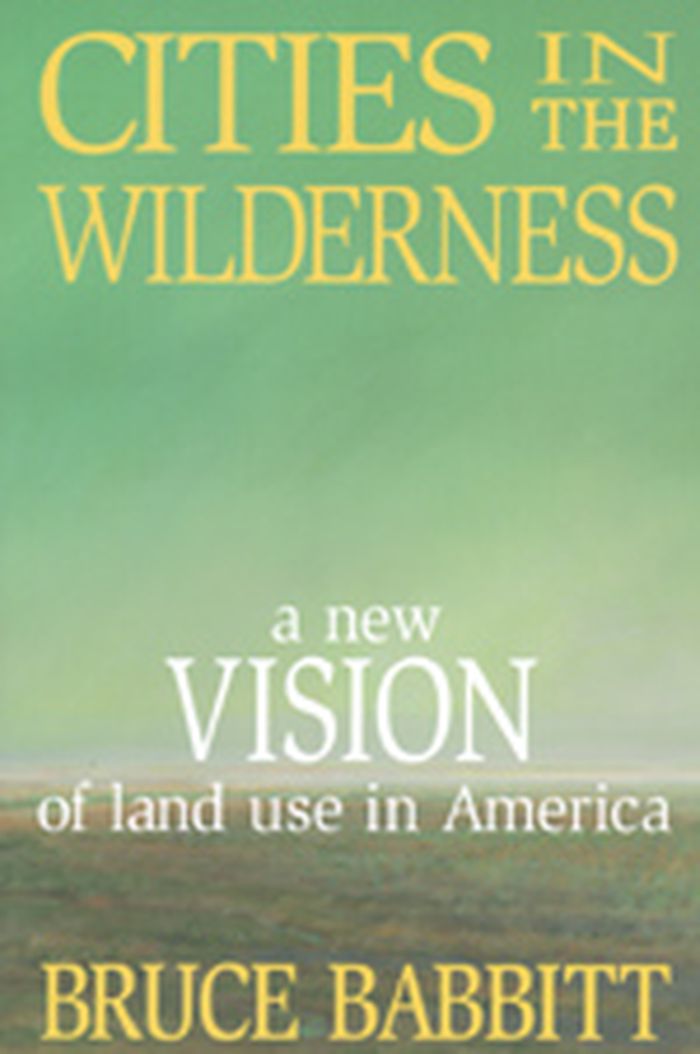
Cities in the wilderness : a new vision of land use in America
Actions:
Price:
$19.95
(available to order)
Summary:
�This book is based on my experiences as secretary of the interior up to the time I left office with the coming of a new administration in 2001. It makes the case, through the use of specific examples, for a more assertive and meaningful federal role in land use planning. And the book illustrates how that goal can be achieved, not by a lot of new legislation, but by reshaping existing federal programs that affect the way we use and develop our land and water resources- highway programs, farm programs, flood control, energy development, and urban programs to provide incentives for states to prepare land use and water resource plans that include open space, hazard mitigation, sustainable water supplies, and interconnected landscapes that sustain both wildlife and the human spirit.
Cities in the wilderness : a new vision of land use in America
Actions:
Price:
$19.95
(available to order)
Summary:
�This book is based on my experiences as secretary of the interior up to the time I left office with the coming of a new administration in 2001. It makes the case, through the use of specific examples, for a more assertive and meaningful federal role in land use planning. And the book illustrates how that goal can be achieved, not by a lot of new legislation, but by reshaping existing federal programs that affect the way we use and develop our land and water resources- highway programs, farm programs, flood control, energy development, and urban programs to provide incentives for states to prepare land use and water resource plans that include open space, hazard mitigation, sustainable water supplies, and interconnected landscapes that sustain both wildlife and the human spirit.
Form:
books
books
Publication:
February 2007, Washington, Covelo, London
February 2007, Washington, Covelo, London
Subject:
Urban Theory
Urban Theory
Form:
books
books
Actions:
Price:
$21.00
(available to order)
Summary:
Planetizen contemporary debates in urban planning is a fascinating rewiew of the major issues discussed in the field of urban planning, assembled by editors at Planetizen, the web's leading source of news and information for the planning and development community.
$21.00
(available to order)
Summary:
Planetizen contemporary debates in urban planning is a fascinating rewiew of the major issues discussed in the field of urban planning, assembled by editors at Planetizen, the web's leading source of news and information for the planning and development community.
Title:
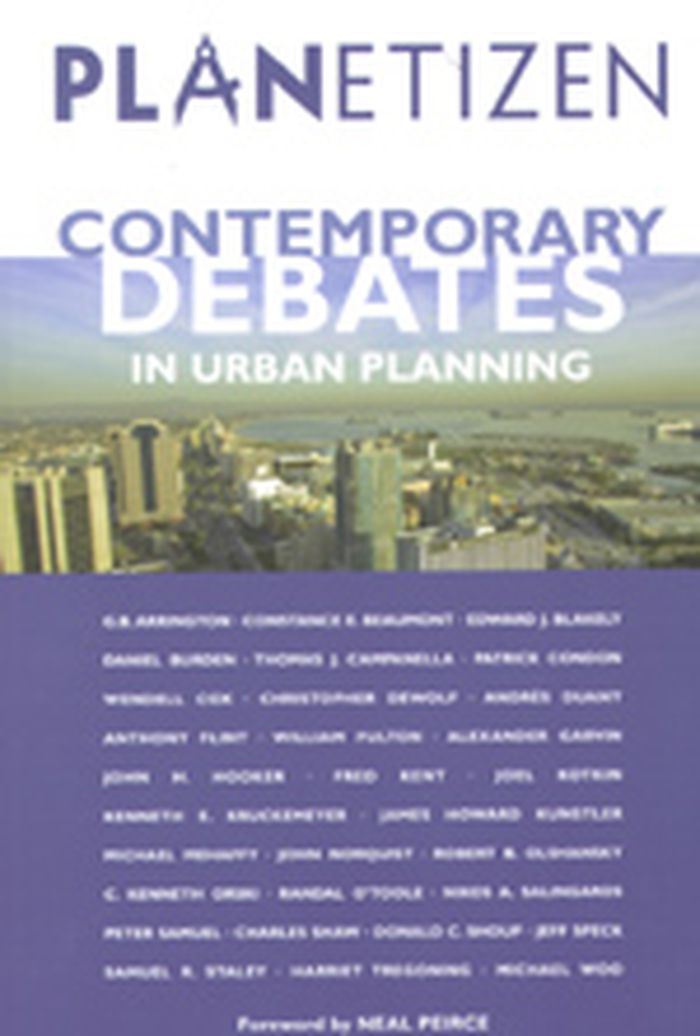
Planetizen : Contemporary debates in urban planning
Actions:
Price:
$21.00
(available to order)
Summary:
Planetizen contemporary debates in urban planning is a fascinating rewiew of the major issues discussed in the field of urban planning, assembled by editors at Planetizen, the web's leading source of news and information for the planning and development community.
Planetizen : Contemporary debates in urban planning
Actions:
Price:
$21.00
(available to order)
Summary:
Planetizen contemporary debates in urban planning is a fascinating rewiew of the major issues discussed in the field of urban planning, assembled by editors at Planetizen, the web's leading source of news and information for the planning and development community.
Form:
books
books
Publication:
March 2007, Washington, Covelo, London
March 2007, Washington, Covelo, London
Subject:
Urban Theory
Urban Theory
Form:
books
books
Actions:
Price:
$69.95
(available to order)
Summary:
More and more people are moving into towns and cities to live and work, which is altering the urban/rural balance of countries worldwide. THE Endless City is an unparalleled study of the growth of six of the world's international cities (New York, Shanghai, London, Mexico City, Johannesburg, and Berlin), exploring key structural, social, and economic factors. This book(...)
$69.95
(available to order)
Summary:
More and more people are moving into towns and cities to live and work, which is altering the urban/rural balance of countries worldwide. THE Endless City is an unparalleled study of the growth of six of the world's international cities (New York, Shanghai, London, Mexico City, Johannesburg, and Berlin), exploring key structural, social, and economic factors. This book(...)
Title:
The endless city: The Urban Age Project by the London School of Economics and Deutsche Bank 's Alfred Herrhausen Society
Actions:
Price:
$69.95
(available to order)
Summary:
More and more people are moving into towns and cities to live and work, which is altering the urban/rural balance of countries worldwide. THE Endless City is an unparalleled study of the growth of six of the world's international cities (New York, Shanghai, London, Mexico City, Johannesburg, and Berlin), exploring key structural, social, and economic factors. This book was overseen by the London School of Economics, and features extensive research and coherent texts by world-renowned professionals in the field of urban planning and development. The information is presented in a comprehensive and visually compelling sequence, enabling quick and efficient reference as well as offering material that is exciting to study. Each city is examined individually in its own chapter as well as being analyzed comparatively in an observational chapter. THE Endless City is authoritatively edited by Ricky Burdett and Deyan Sudjic in collaboration with the London School of Economics and the Urban Age Project, an expanding international organization seeking a new urban agenda for global cities.
The endless city: The Urban Age Project by the London School of Economics and Deutsche Bank 's Alfred Herrhausen Society
Actions:
Price:
$69.95
(available to order)
Summary:
More and more people are moving into towns and cities to live and work, which is altering the urban/rural balance of countries worldwide. THE Endless City is an unparalleled study of the growth of six of the world's international cities (New York, Shanghai, London, Mexico City, Johannesburg, and Berlin), exploring key structural, social, and economic factors. This book was overseen by the London School of Economics, and features extensive research and coherent texts by world-renowned professionals in the field of urban planning and development. The information is presented in a comprehensive and visually compelling sequence, enabling quick and efficient reference as well as offering material that is exciting to study. Each city is examined individually in its own chapter as well as being analyzed comparatively in an observational chapter. THE Endless City is authoritatively edited by Ricky Burdett and Deyan Sudjic in collaboration with the London School of Economics and the Urban Age Project, an expanding international organization seeking a new urban agenda for global cities.
Form:
books
books
Publication:
November 2007, London
November 2007, London
Subject:
Urban Theory
Urban Theory
Form:
books
books
Title:
Step by step
Step by step
Actions:
Price:
$25.00
(available to order)
Summary:
Step by Step is based on in-depth interviews Augoyard conducted with the inhabitants of l’Arlequin, a new town on the outskirts of Grenoble. A resident of l’Arlequin himself, Augoyard sought to understand how his neighbors used its passages, streets, and parks. He begins with a detailed investigation of the inhabitants’ daily walks before going on to consider how the(...)
$25.00
(available to order)
Summary:
Step by Step is based on in-depth interviews Augoyard conducted with the inhabitants of l’Arlequin, a new town on the outskirts of Grenoble. A resident of l’Arlequin himself, Augoyard sought to understand how his neighbors used its passages, streets, and parks. He begins with a detailed investigation of the inhabitants’ daily walks before going on to consider how the(...)
Title:
Step by step
Actions:
Price:
$25.00
(available to order)
Summary:
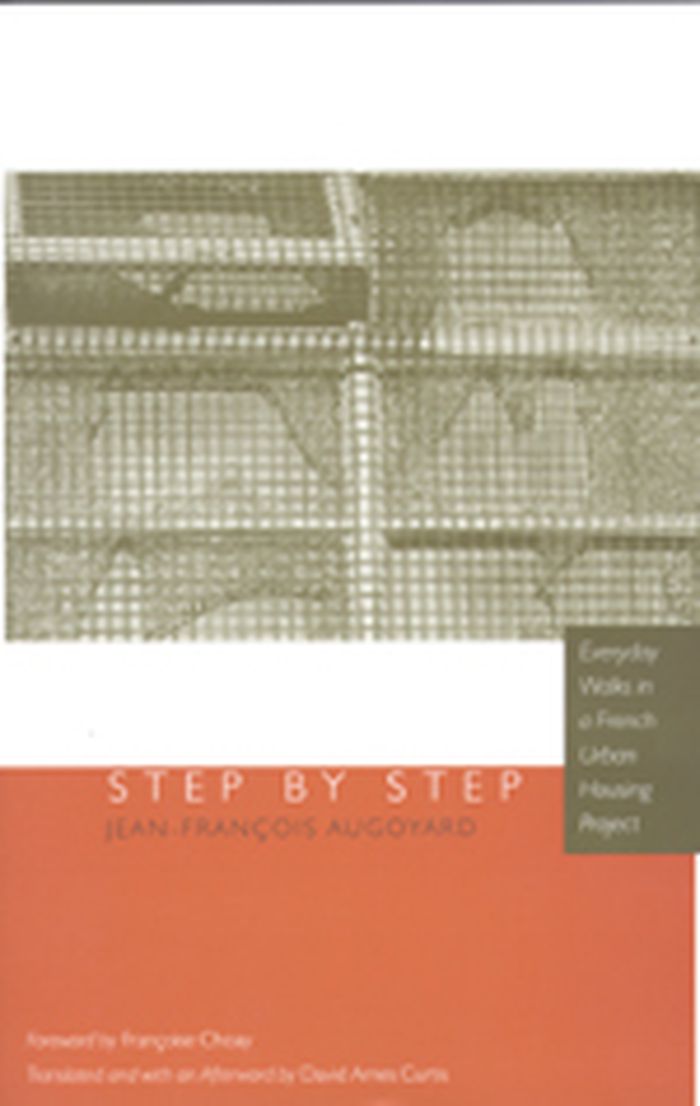
Step by Step is based on in-depth interviews Augoyard conducted with the inhabitants of l’Arlequin, a new town on the outskirts of Grenoble. A resident of l’Arlequin himself, Augoyard sought to understand how his neighbors used its passages, streets, and parks. He begins with a detailed investigation of the inhabitants’ daily walks before going on to consider how the built environment is personalized through place-names and shared memories, the ways in which sensory impressions define the atmosphere of a place and how, through individual and collective imagination, residents transformed l’Arlequin from a concept into a lived space.
Step by step
Actions:
Price:
$25.00
(available to order)
Summary:
Step by Step is based on in-depth interviews Augoyard conducted with the inhabitants of l’Arlequin, a new town on the outskirts of Grenoble. A resident of l’Arlequin himself, Augoyard sought to understand how his neighbors used its passages, streets, and parks. He begins with a detailed investigation of the inhabitants’ daily walks before going on to consider how the built environment is personalized through place-names and shared memories, the ways in which sensory impressions define the atmosphere of a place and how, through individual and collective imagination, residents transformed l’Arlequin from a concept into a lived space.
Form:
books
books
Publication:
November 2007, Minneapolis
November 2007, Minneapolis
Subject:
Urban Theory
Urban Theory
Form:
books
books
Price:
$24.95
(available to order)
Summary:
Le quartier de Firminy-Vert est un quartier singulier, ceint de quatre œuvres attribuées à Le Corbusier, dont un centre culturel (seule œuvre terminée du vivant de Le Corbusier), un stade, la dernière unité d'habitation et l'église Saint-Pierre, qui fut inaugurée en novembre 2006. L'œuvre de l'architecte, célébrée en vue de la faire accéder au rang du patrimoine mondial,(...)
$24.95
(available to order)
Summary:
Le quartier de Firminy-Vert est un quartier singulier, ceint de quatre œuvres attribuées à Le Corbusier, dont un centre culturel (seule œuvre terminée du vivant de Le Corbusier), un stade, la dernière unité d'habitation et l'église Saint-Pierre, qui fut inaugurée en novembre 2006. L'œuvre de l'architecte, célébrée en vue de la faire accéder au rang du patrimoine mondial,(...)
Title:
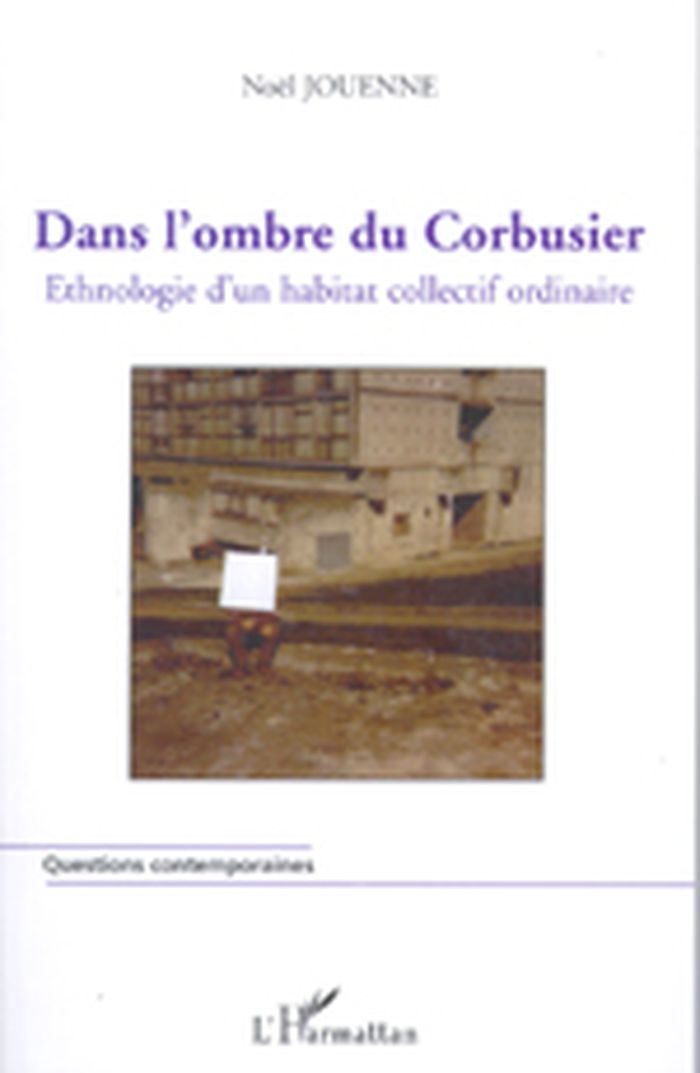
Dans l'ombre du Corbusier: ethnologie d'un habitat collectif ordinaire
Actions:
Price:
$24.95
(available to order)
Summary:
Le quartier de Firminy-Vert est un quartier singulier, ceint de quatre œuvres attribuées à Le Corbusier, dont un centre culturel (seule œuvre terminée du vivant de Le Corbusier), un stade, la dernière unité d'habitation et l'église Saint-Pierre, qui fut inaugurée en novembre 2006. L'œuvre de l'architecte, célébrée en vue de la faire accéder au rang du patrimoine mondial, laisse planer une ombre qui masque la perception des vies ordinaires du quartier. L'immeuble collectif dont il est question ici ressemble à l'unité d'habitation Le Corbusier. Toutefois, il n'en a que l'apparence. L'enquête ethnologique qui débuta au Corbusier, dernière unité d'habitation, s'est déplacée afin d'observer et d'écouter les locataires d'un habitat collectif ordinaire dont la vie s'estompe derrière le feu sacré du patrimoine Le Corbusier. Un regard porté sur la vie ordinaire des habitants du « grand H » amorce un questionnement sur les enjeux liés à notre mémoire, à son statut et à la nécessité d'une collecte sans concession.
Dans l'ombre du Corbusier: ethnologie d'un habitat collectif ordinaire
Actions:
Price:
$24.95
(available to order)
Summary:
Le quartier de Firminy-Vert est un quartier singulier, ceint de quatre œuvres attribuées à Le Corbusier, dont un centre culturel (seule œuvre terminée du vivant de Le Corbusier), un stade, la dernière unité d'habitation et l'église Saint-Pierre, qui fut inaugurée en novembre 2006. L'œuvre de l'architecte, célébrée en vue de la faire accéder au rang du patrimoine mondial, laisse planer une ombre qui masque la perception des vies ordinaires du quartier. L'immeuble collectif dont il est question ici ressemble à l'unité d'habitation Le Corbusier. Toutefois, il n'en a que l'apparence. L'enquête ethnologique qui débuta au Corbusier, dernière unité d'habitation, s'est déplacée afin d'observer et d'écouter les locataires d'un habitat collectif ordinaire dont la vie s'estompe derrière le feu sacré du patrimoine Le Corbusier. Un regard porté sur la vie ordinaire des habitants du « grand H » amorce un questionnement sur les enjeux liés à notre mémoire, à son statut et à la nécessité d'une collecte sans concession.
Form:
books
books
Publication:
September 2007, Paris
September 2007, Paris
Subject:
Urban Theory
Urban Theory
Form:
books
books
Actions:
Price:
$32.00
(available to order)
Summary:
Nearly one in six Americans lives in "Megalopolis," an area of the northeastern United States along the I-95 corridor that includes the cities of Washington, Baltimore, Philadelphia, New York, and Boston. Liquid City is the first book to examine the major changes that have taken place in this "Main Street of the Nation" over the last half century. In 1957, geographer(...)
$32.00
(available to order)
Summary:
Nearly one in six Americans lives in "Megalopolis," an area of the northeastern United States along the I-95 corridor that includes the cities of Washington, Baltimore, Philadelphia, New York, and Boston. Liquid City is the first book to examine the major changes that have taken place in this "Main Street of the Nation" over the last half century. In 1957, geographer(...)
Title:
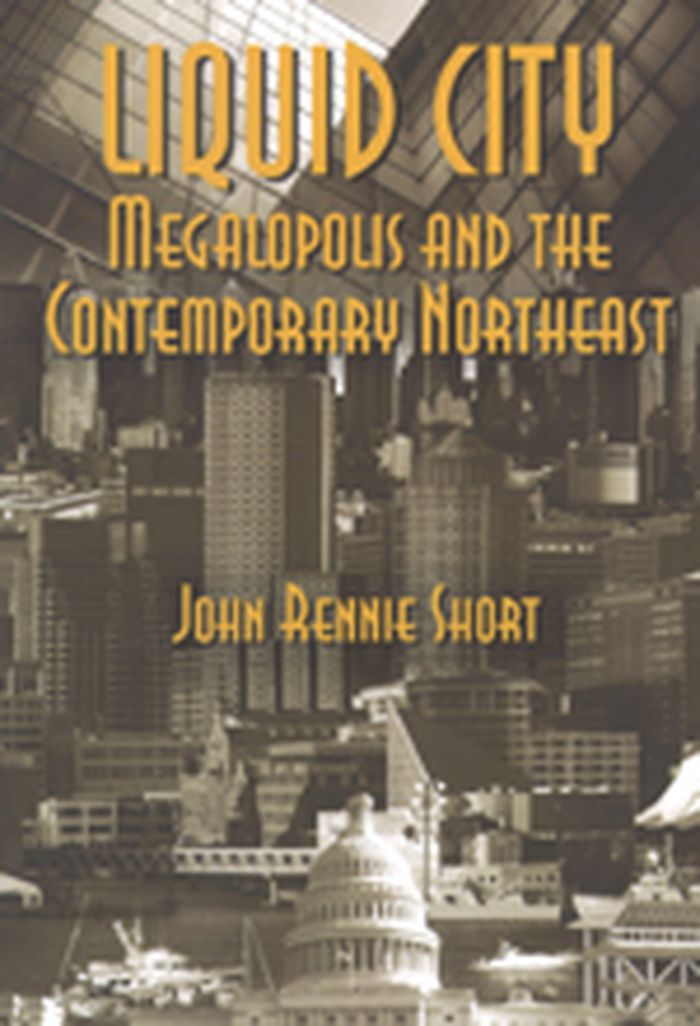
Liquid city : Megalopolos and the contemporary northeast
Actions:
Price:
$32.00
(available to order)
Summary:
Nearly one in six Americans lives in "Megalopolis," an area of the northeastern United States along the I-95 corridor that includes the cities of Washington, Baltimore, Philadelphia, New York, and Boston. Liquid City is the first book to examine the major changes that have taken place in this "Main Street of the Nation" over the last half century. In 1957, geographer Jean Gottman used the term "Megalopolis" to denote the Boston-to-Washington corridor. His seminal book, Megalopolis: The Urbanized Northeastern Seaboard of the United States, described the social, economic, and demographic characteristics of one of the largest city regions in the world. John Rennie Short juxtaposes Gottman's work with his own examination, providing a comprehensive assessment of the region's evolution. Particularly important is Short's use of the 2000 census data and his discussion of Megalopolis as a source of identity for the area's forty-nine million inhabitants. This clear and accessible book focuses on five main aspects of change in the region: population redistribution from cities to suburbs; economic restructuring as exemplified by the suburbanization of employment; the role of immigration; patterns of racial/ethnic segregation; and the processes of globalization that have made Megalopolis one of the world's most influential economies.
Liquid city : Megalopolos and the contemporary northeast
Actions:
Price:
$32.00
(available to order)
Summary:
Nearly one in six Americans lives in "Megalopolis," an area of the northeastern United States along the I-95 corridor that includes the cities of Washington, Baltimore, Philadelphia, New York, and Boston. Liquid City is the first book to examine the major changes that have taken place in this "Main Street of the Nation" over the last half century. In 1957, geographer Jean Gottman used the term "Megalopolis" to denote the Boston-to-Washington corridor. His seminal book, Megalopolis: The Urbanized Northeastern Seaboard of the United States, described the social, economic, and demographic characteristics of one of the largest city regions in the world. John Rennie Short juxtaposes Gottman's work with his own examination, providing a comprehensive assessment of the region's evolution. Particularly important is Short's use of the 2000 census data and his discussion of Megalopolis as a source of identity for the area's forty-nine million inhabitants. This clear and accessible book focuses on five main aspects of change in the region: population redistribution from cities to suburbs; economic restructuring as exemplified by the suburbanization of employment; the role of immigration; patterns of racial/ethnic segregation; and the processes of globalization that have made Megalopolis one of the world's most influential economies.
Form:
books
books
Publication:
July 2007, Washington
July 2007, Washington
Subject:
Urban Theory
Urban Theory


