


1923 Results
Form:
books
books
Actions:
Price:
$46.00
(available to order)
Summary:
City planning initiatives and redesign of urban structures often become mired in debate and delay. Despite the fact that cities are considered to be dynamic and flexible spaces, never finished but always under construction, it is very difficult to change existing urban structures; they become fixed, obdurate, securely anchored in their own histories as well as in the(...)
$46.00
(available to order)
Summary:
City planning initiatives and redesign of urban structures often become mired in debate and delay. Despite the fact that cities are considered to be dynamic and flexible spaces, never finished but always under construction, it is very difficult to change existing urban structures; they become fixed, obdurate, securely anchored in their own histories as well as in the(...)
Subject:
Urban Theory
Urban Theory
Publication:
January 2008, London, Cambridge
January 2008, London, Cambridge
Title:
Urban machinery : inside modern european cities
Actions:
Price:
$46.00
(available to order)
Summary:
City planning initiatives and redesign of urban structures often become mired in debate and delay. Despite the fact that cities are considered to be dynamic and flexible spaces, never finished but always under construction, it is very difficult to change existing urban structures; they become fixed, obdurate, securely anchored in their own histories as well as in the histories of their surroundings. In Unbuilding Cities, Anique Hommels looks at the tension between the malleability of urban space and its obduracy, focusing on sites and structures that have been subjected to 'unbuilding' redesign or reconfiguration.
Urban machinery : inside modern european cities
Actions:
Price:
$46.00
(available to order)
Summary:
City planning initiatives and redesign of urban structures often become mired in debate and delay. Despite the fact that cities are considered to be dynamic and flexible spaces, never finished but always under construction, it is very difficult to change existing urban structures; they become fixed, obdurate, securely anchored in their own histories as well as in the histories of their surroundings. In Unbuilding Cities, Anique Hommels looks at the tension between the malleability of urban space and its obduracy, focusing on sites and structures that have been subjected to 'unbuilding' redesign or reconfiguration.
Form:
books
books
Publication:
January 2008, London, Cambridge
January 2008, London, Cambridge
Subject:
Urban Theory
Urban Theory
Form:
books
books
Actions:
Price:
$58.00
(available to order)
Summary:
Transition is a condition that creates opportunities for architecture and urbanism. Zagreb is the perfect site for examining this generative dynamic: practicing in conditions of continuous instability, its architects and planners developed strategies for creatively engaging the conditional and openended for anticipating and instrumentalizing the condition of irresolution.(...)
$58.00
(available to order)
Summary:
Transition is a condition that creates opportunities for architecture and urbanism. Zagreb is the perfect site for examining this generative dynamic: practicing in conditions of continuous instability, its architects and planners developed strategies for creatively engaging the conditional and openended for anticipating and instrumentalizing the condition of irresolution.(...)
Title:
Project Zagreb: transition as condition, strategy, practice
Actions:
Price:
$58.00
(available to order)
Summary:
Transition is a condition that creates opportunities for architecture and urbanism. Zagreb is the perfect site for examining this generative dynamic: practicing in conditions of continuous instability, its architects and planners developed strategies for creatively engaging the conditional and openended for anticipating and instrumentalizing the condition of irresolution. Moving between texts, maps, and diagrams, Project Zagreb reads the city as an open work, dynamic but coherent, in which architecture plays an active role in the formation of both urban practices and the city itself.
Project Zagreb: transition as condition, strategy, practice
Actions:
Price:
$58.00
(available to order)
Summary:
Transition is a condition that creates opportunities for architecture and urbanism. Zagreb is the perfect site for examining this generative dynamic: practicing in conditions of continuous instability, its architects and planners developed strategies for creatively engaging the conditional and openended for anticipating and instrumentalizing the condition of irresolution. Moving between texts, maps, and diagrams, Project Zagreb reads the city as an open work, dynamic but coherent, in which architecture plays an active role in the formation of both urban practices and the city itself.
Form:
books
books
Publication:
June 2007, Barcelona
June 2007, Barcelona
Subject:
Urban Theory
Urban Theory
Form:
books
books
Actions:
Price:
$37.50
(available in store)
Summary:
"Multi-National city" follows three architectural itineraries through three cities and their histories. Like so many, these cities are caught within the feedback loops of globalization : Silicon Valley in northern California; New York's internal suburbias; and Gurgaon, a burgeoning corporate city outside of New Delhi. Each exhibits a distinct character, while together,(...)
$37.50
(available in store)
Summary:
"Multi-National city" follows three architectural itineraries through three cities and their histories. Like so many, these cities are caught within the feedback loops of globalization : Silicon Valley in northern California; New York's internal suburbias; and Gurgaon, a burgeoning corporate city outside of New Delhi. Each exhibits a distinct character, while together,(...)
Title:
Multi-national city : architectural itineraries
Actions:
Price:
$37.50
(available in store)
Summary:
"Multi-National city" follows three architectural itineraries through three cities and their histories. Like so many, these cities are caught within the feedback loops of globalization : Silicon Valley in northern California; New York's internal suburbias; and Gurgaon, a burgeoning corporate city outside of New Delhi. Each exhibits a distinct character, while together, they also form important nodes in what the authors describe as a single Multi-National city (MNC) stretching across the globe. The itineraries traced through them take the reader on a tour of the architectural monuments of corporate globalization-corporate campuses, high-rise towers, "public" atriums, call centers, and gated communities-that tracks their shared logic, their internal discrepancies, and their undeniable strangeness. Each itinerary concludes with an unannounced stop at an architectural project that applies the lessons of the Multi-National city to itself.
Multi-national city : architectural itineraries
Actions:
Price:
$37.50
(available in store)
Summary:
"Multi-National city" follows three architectural itineraries through three cities and their histories. Like so many, these cities are caught within the feedback loops of globalization : Silicon Valley in northern California; New York's internal suburbias; and Gurgaon, a burgeoning corporate city outside of New Delhi. Each exhibits a distinct character, while together, they also form important nodes in what the authors describe as a single Multi-National city (MNC) stretching across the globe. The itineraries traced through them take the reader on a tour of the architectural monuments of corporate globalization-corporate campuses, high-rise towers, "public" atriums, call centers, and gated communities-that tracks their shared logic, their internal discrepancies, and their undeniable strangeness. Each itinerary concludes with an unannounced stop at an architectural project that applies the lessons of the Multi-National city to itself.
Form:
books
books
Publication:
July 2007, Barcelona
July 2007, Barcelona
Subject:
Urban Theory
Urban Theory
Form:
books
books
Price:
$25.00
(available to order)
Summary:
New York City is home to some of the most recognizable places in the world. As familiar as the sight of New Year’s Eve in Times Square or a protest in front of City Hall may be to us, do we understand who controls what happens there? Kristine Miller delves into six of New York’s most important public spaces to trace how design influences their complicated lives. Miller(...)
$25.00
(available to order)
Summary:
New York City is home to some of the most recognizable places in the world. As familiar as the sight of New Year’s Eve in Times Square or a protest in front of City Hall may be to us, do we understand who controls what happens there? Kristine Miller delves into six of New York’s most important public spaces to trace how design influences their complicated lives. Miller(...)
Title:
Designs on the Public : The private lives of New York's public spaces
Actions:
Price:
$25.00
(available to order)
Summary:
New York City is home to some of the most recognizable places in the world. As familiar as the sight of New Year’s Eve in Times Square or a protest in front of City Hall may be to us, do we understand who controls what happens there? Kristine Miller delves into six of New York’s most important public spaces to trace how design influences their complicated lives. Miller chronicles controversies in the histories of New York locations including Times Square, Trump Tower, the IBM Atrium, and Sony Plaza. The story of each location reveals that public space is not a concrete or fixed reality, but rather a constantly changing situation open to the forces of law, corporations, bureaucracy, and government. The qualities of public spaces we consider essential, including accessibility, public ownership, and ties to democratic life, are, at best, temporary conditions and often completely absent. Design is, in Miller’s view, complicit in regulation of public spaces in New York City to exclude undesirables, restrict activities, and privilege commercial interests, and in this work she shows how design can reactivate public space and public life.
Designs on the Public : The private lives of New York's public spaces
Actions:
Price:
$25.00
(available to order)
Summary:
New York City is home to some of the most recognizable places in the world. As familiar as the sight of New Year’s Eve in Times Square or a protest in front of City Hall may be to us, do we understand who controls what happens there? Kristine Miller delves into six of New York’s most important public spaces to trace how design influences their complicated lives. Miller chronicles controversies in the histories of New York locations including Times Square, Trump Tower, the IBM Atrium, and Sony Plaza. The story of each location reveals that public space is not a concrete or fixed reality, but rather a constantly changing situation open to the forces of law, corporations, bureaucracy, and government. The qualities of public spaces we consider essential, including accessibility, public ownership, and ties to democratic life, are, at best, temporary conditions and often completely absent. Design is, in Miller’s view, complicit in regulation of public spaces in New York City to exclude undesirables, restrict activities, and privilege commercial interests, and in this work she shows how design can reactivate public space and public life.
Form:
books
books
Publication:
December 2007, Minneapolis
December 2007, Minneapolis
Subject:
Urban Theory
Urban Theory
Form:
books
books
Price:
$37.95
(available to order)
Summary:
Depuis la création des grands ensembles jusqu'à leur évolution à l'aune des mutations profondes qui animent la société française pendant les Trente Glorieuses, voici une histoire culturelle de l'ensemble du logement social en France, communément appelé HLM. Au lendemain de la Seconde Guerre mondiale, l'heure est à la reconstruction. Il faut remédier à la grave crise du(...)
$37.95
(available to order)
Summary:
Depuis la création des grands ensembles jusqu'à leur évolution à l'aune des mutations profondes qui animent la société française pendant les Trente Glorieuses, voici une histoire culturelle de l'ensemble du logement social en France, communément appelé HLM. Au lendemain de la Seconde Guerre mondiale, l'heure est à la reconstruction. Il faut remédier à la grave crise du(...)
Title:
Le temps des HLM 1945-1975 : la saga urbaine des Trente Glorieuses
Actions:
Price:
$37.95
(available to order)
Summary:
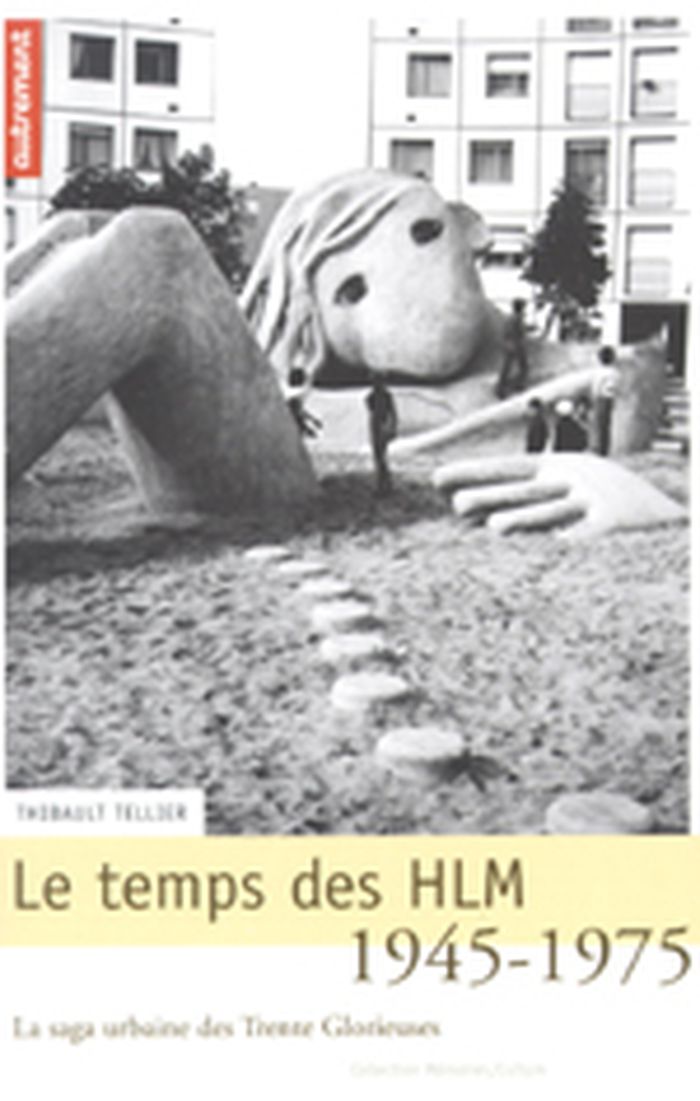
Depuis la création des grands ensembles jusqu'à leur évolution à l'aune des mutations profondes qui animent la société française pendant les Trente Glorieuses, voici une histoire culturelle de l'ensemble du logement social en France, communément appelé HLM. Au lendemain de la Seconde Guerre mondiale, l'heure est à la reconstruction. Il faut remédier à la grave crise du logement qui sévit en France et loger le maximum de Français en un temps record pour des sommes modiques. L'idée des grands ensembles est née. Les habitants découvrent alors l'habitat collectif, la vie en barres. Ces pionniers d'un nouveau genre témoignent d'abord de l'enthousiasme pour cette nouvelle façon d'habiter, fort éloignée de l'éternel rêve pavillonnaire français. Vient ensuite le temps des premières interrogations : Comment créer lien social et vie culturelle dans ces blocs de béton déshumanisés? Que faire pour pallier le manque d'équipements collectifs et de transports en commun? Si le milieu des années 1970 coïncide avec le temps de la rénovation urbaine, se programme déjà la fin des grands ensembles même si le souhait politique d'en finir ne s'accorde pas avec la volonté des habitants de donner une âme à leurs cités et de contrer ainsi l'image péjorative qui leur est allouée. Les projets architecturaux et les politiques des pouvoirs publics sont bien sûr ici décortiqués, mais cet ouvrage fait avant tout la part belle aux habitants, à leur mode de vie et à leurs attentes. La construction des grands ensembles est un épisode décisif de notre histoire contemporaine et ce type d'habitat collectif, témoin de l'évolution des mœurs, a marqué en profondeur notre champ culturel. Il est indispensable aujourd'hui d'en proposer une analyse historique.
Le temps des HLM 1945-1975 : la saga urbaine des Trente Glorieuses
Actions:
Price:
$37.95
(available to order)
Summary:
Depuis la création des grands ensembles jusqu'à leur évolution à l'aune des mutations profondes qui animent la société française pendant les Trente Glorieuses, voici une histoire culturelle de l'ensemble du logement social en France, communément appelé HLM. Au lendemain de la Seconde Guerre mondiale, l'heure est à la reconstruction. Il faut remédier à la grave crise du logement qui sévit en France et loger le maximum de Français en un temps record pour des sommes modiques. L'idée des grands ensembles est née. Les habitants découvrent alors l'habitat collectif, la vie en barres. Ces pionniers d'un nouveau genre témoignent d'abord de l'enthousiasme pour cette nouvelle façon d'habiter, fort éloignée de l'éternel rêve pavillonnaire français. Vient ensuite le temps des premières interrogations : Comment créer lien social et vie culturelle dans ces blocs de béton déshumanisés? Que faire pour pallier le manque d'équipements collectifs et de transports en commun? Si le milieu des années 1970 coïncide avec le temps de la rénovation urbaine, se programme déjà la fin des grands ensembles même si le souhait politique d'en finir ne s'accorde pas avec la volonté des habitants de donner une âme à leurs cités et de contrer ainsi l'image péjorative qui leur est allouée. Les projets architecturaux et les politiques des pouvoirs publics sont bien sûr ici décortiqués, mais cet ouvrage fait avant tout la part belle aux habitants, à leur mode de vie et à leurs attentes. La construction des grands ensembles est un épisode décisif de notre histoire contemporaine et ce type d'habitat collectif, témoin de l'évolution des mœurs, a marqué en profondeur notre champ culturel. Il est indispensable aujourd'hui d'en proposer une analyse historique.
Form:
books
books
Publication:
April 2007, Paris
April 2007, Paris
Subject:
Urban Theory
Urban Theory
Form:
books
books
Price:
$59.95
(available to order)
Summary:
Cet ouvrage retrace l'histoire méconnue d'un secteur du logement populaire à Paris : les «garnis», à savoir les maisons et hôtels meublés à destination des salariés modestes et des ouvriers. Certains drames de l'année 2005 (incendie de l'hôtel Paris-Opéra : 25 morts) ont de nouveau attiré l'attention sur les rares hôtels meublés qui subsistent aujourd'hui, vétustes et(...)
$59.95
(available to order)
Summary:
Cet ouvrage retrace l'histoire méconnue d'un secteur du logement populaire à Paris : les «garnis», à savoir les maisons et hôtels meublés à destination des salariés modestes et des ouvriers. Certains drames de l'année 2005 (incendie de l'hôtel Paris-Opéra : 25 morts) ont de nouveau attiré l'attention sur les rares hôtels meublés qui subsistent aujourd'hui, vétustes et(...)
Title:
Une chambre en ville : hôtels meublés et garnis à Paris, 1860-1990
Actions:
Price:
$59.95
(available to order)
Summary:
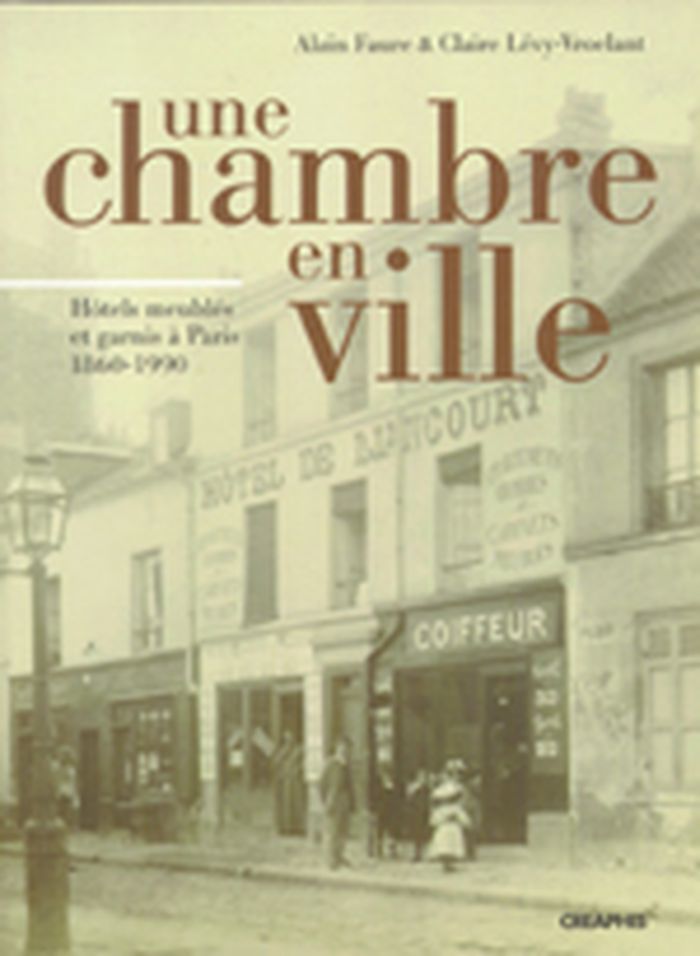
Cet ouvrage retrace l'histoire méconnue d'un secteur du logement populaire à Paris : les «garnis», à savoir les maisons et hôtels meublés à destination des salariés modestes et des ouvriers. Certains drames de l'année 2005 (incendie de l'hôtel Paris-Opéra : 25 morts) ont de nouveau attiré l'attention sur les rares hôtels meublés qui subsistent aujourd'hui, vétustes et surpeuplés, signe de la pénurie de logements pour les plus démunis. Or, jadis, ces établissements pullulaient dans Paris : près de 10000 logeurs en 1880, et près de 200 000 personnes logées ; au tout début des années 1930, avant la crise économique, près de 350 000 Parisiens (11 % de la population de la capitale !) ne vivaient pas dans leurs meubles. Le migrant d'origine provinciale ou étrangère venant à Paris pour travailler s'installait tout naturellement à l'hôtel. Avoir une chambre en ville, c'était le gage banal d'une indépendance minimum. Cette fonction de sas valait surtout pour les hommes; les femmes, à leur arrivée à Paris, occupaient plutôt des emplois où elles étaient nourries et logées. Avec la crise économique des années 1930, le secteur commença un lent déclin. Au moment de la crise du logement des années 1950, l'hôtel meublé retrouva un second souffle. Le déclin s'accéléra ensuite dans les années 1960. Le garni était devenu dans l'opinion et pour l'État synonyme de taudis et de logement insalubre, destructeur de la famille et de la morale et une partie de ses habitants put accéder au logement social de masse. Subsistèrent longtemps des formes particulières d'accueil des plus pauvres : vieilles maisons insalubres du centre et des faubourgs, bidonvilles, foyers de travailleurs, cités de transit... Rôle rempli auparavant - et souvent infiniment mieux - par le garni. Maintenus en vie comme substitut dérisoire au logement social déficient, ou bien transformés en «résidences sociales», les hôtels sont aujourd'hui bien loin de leur rôle ancien d'habitat de transition entre migration et intégration en ville. Leur survivance, signe de la misère des temps, est aussi le gage du maintien des plus pauvres dans la ville.
Une chambre en ville : hôtels meublés et garnis à Paris, 1860-1990
Actions:
Price:
$59.95
(available to order)
Summary:
Cet ouvrage retrace l'histoire méconnue d'un secteur du logement populaire à Paris : les «garnis», à savoir les maisons et hôtels meublés à destination des salariés modestes et des ouvriers. Certains drames de l'année 2005 (incendie de l'hôtel Paris-Opéra : 25 morts) ont de nouveau attiré l'attention sur les rares hôtels meublés qui subsistent aujourd'hui, vétustes et surpeuplés, signe de la pénurie de logements pour les plus démunis. Or, jadis, ces établissements pullulaient dans Paris : près de 10000 logeurs en 1880, et près de 200 000 personnes logées ; au tout début des années 1930, avant la crise économique, près de 350 000 Parisiens (11 % de la population de la capitale !) ne vivaient pas dans leurs meubles. Le migrant d'origine provinciale ou étrangère venant à Paris pour travailler s'installait tout naturellement à l'hôtel. Avoir une chambre en ville, c'était le gage banal d'une indépendance minimum. Cette fonction de sas valait surtout pour les hommes; les femmes, à leur arrivée à Paris, occupaient plutôt des emplois où elles étaient nourries et logées. Avec la crise économique des années 1930, le secteur commença un lent déclin. Au moment de la crise du logement des années 1950, l'hôtel meublé retrouva un second souffle. Le déclin s'accéléra ensuite dans les années 1960. Le garni était devenu dans l'opinion et pour l'État synonyme de taudis et de logement insalubre, destructeur de la famille et de la morale et une partie de ses habitants put accéder au logement social de masse. Subsistèrent longtemps des formes particulières d'accueil des plus pauvres : vieilles maisons insalubres du centre et des faubourgs, bidonvilles, foyers de travailleurs, cités de transit... Rôle rempli auparavant - et souvent infiniment mieux - par le garni. Maintenus en vie comme substitut dérisoire au logement social déficient, ou bien transformés en «résidences sociales», les hôtels sont aujourd'hui bien loin de leur rôle ancien d'habitat de transition entre migration et intégration en ville. Leur survivance, signe de la misère des temps, est aussi le gage du maintien des plus pauvres dans la ville.
Form:
books
books
Publication:
June 2007, Grâne
June 2007, Grâne
Subject:
Urban Theory
Urban Theory
Form:
books
books
Actions:
Price:
$49.95
(available to order)
Summary:
"Ground-up city : play as a design tool" maps the continuing history of an urban design strategy for play in the city. Liane Lefaivre has developed a theoretical model for tackling playgrounds as an urban strategy. She steps off from a historical overview of play and the ludic in art, architecture and urban design, focusing particularly on the post-war playgrounds(...)
$49.95
(available to order)
Summary:
"Ground-up city : play as a design tool" maps the continuing history of an urban design strategy for play in the city. Liane Lefaivre has developed a theoretical model for tackling playgrounds as an urban strategy. She steps off from a historical overview of play and the ludic in art, architecture and urban design, focusing particularly on the post-war playgrounds(...)
Title:
Ground-up city : play as a design tool
Actions:
Price:
$49.95
(available to order)
Summary:
"Ground-up city : play as a design tool" maps the continuing history of an urban design strategy for play in the city. Liane Lefaivre has developed a theoretical model for tackling playgrounds as an urban strategy. She steps off from a historical overview of play and the ludic in art, architecture and urban design, focusing particularly on the post-war playgrounds realized in Amsterdam as joint ventures between Aldo van Eyck, Cornelis van Eesteren and Jakoba Mulder. The architecture firm Döll - Atelier voor Bouwkunst explored the possibility of applying the model in two urban redevelopment areas in Rotterdam, Oude Westen in the inner city and Meeuwenplaat in Hoogvliet, an outlying postwar district, refining it into a practical design strategy. A second layer in the book gives an inspirational and refreshing new look at play in a picture essay with a welter of reference images illustrating play as an urban phenomenon. "Ground-up city" places the playground high on the agenda as an urban design challenge. It also shows how specifying a generic, academic model for a particular situation can lead to a practically applicable design resource.
Ground-up city : play as a design tool
Actions:
Price:
$49.95
(available to order)
Summary:
"Ground-up city : play as a design tool" maps the continuing history of an urban design strategy for play in the city. Liane Lefaivre has developed a theoretical model for tackling playgrounds as an urban strategy. She steps off from a historical overview of play and the ludic in art, architecture and urban design, focusing particularly on the post-war playgrounds realized in Amsterdam as joint ventures between Aldo van Eyck, Cornelis van Eesteren and Jakoba Mulder. The architecture firm Döll - Atelier voor Bouwkunst explored the possibility of applying the model in two urban redevelopment areas in Rotterdam, Oude Westen in the inner city and Meeuwenplaat in Hoogvliet, an outlying postwar district, refining it into a practical design strategy. A second layer in the book gives an inspirational and refreshing new look at play in a picture essay with a welter of reference images illustrating play as an urban phenomenon. "Ground-up city" places the playground high on the agenda as an urban design challenge. It also shows how specifying a generic, academic model for a particular situation can lead to a practically applicable design resource.
Form:
books
books
Publication:
January 2007, Rotterdam
January 2007, Rotterdam
Subject:
Urban Theory
Urban Theory
Form:
books
books
Actions:
Price:
$44.95
(available to order)
Summary:
Los Angeles and New York are ever more crammed with domestic and international migrants; Hartford, St. Louis, Gary, Baltimore and Flint are ever lonelier. This pattern of growth in urban supercenters and flight from midland cities is not just an American phenomenon. The pioneering German project "IBA Urban Redevelopment 2010" begins from the premise that our present(...)
$44.95
(available to order)
Summary:
Los Angeles and New York are ever more crammed with domestic and international migrants; Hartford, St. Louis, Gary, Baltimore and Flint are ever lonelier. This pattern of growth in urban supercenters and flight from midland cities is not just an American phenomenon. The pioneering German project "IBA Urban Redevelopment 2010" begins from the premise that our present(...)
Title:
The Other Cities : vol. 5 instuments
Actions:
Price:
$44.95
(available to order)
Summary:
Los Angeles and New York are ever more crammed with domestic and international migrants; Hartford, St. Louis, Gary, Baltimore and Flint are ever lonelier. This pattern of growth in urban supercenters and flight from midland cities is not just an American phenomenon. The pioneering German project "IBA Urban Redevelopment 2010" begins from the premise that our present methods of urban planning will prove inadequate for the long-term demands of shrinking cities. How can new instruments be developed? What disciplines should be involved? The fifth IBA title on this topic presents the current tools of planning for urban redevelopment--political, developmental and public-private--and suggests new ground; from new methods of information exchange and cooperation to broad interdisciplinary approaches and practical new forms of project communication and quality management.
The Other Cities : vol. 5 instuments
Actions:
Price:
$44.95
(available to order)
Summary:
Los Angeles and New York are ever more crammed with domestic and international migrants; Hartford, St. Louis, Gary, Baltimore and Flint are ever lonelier. This pattern of growth in urban supercenters and flight from midland cities is not just an American phenomenon. The pioneering German project "IBA Urban Redevelopment 2010" begins from the premise that our present methods of urban planning will prove inadequate for the long-term demands of shrinking cities. How can new instruments be developed? What disciplines should be involved? The fifth IBA title on this topic presents the current tools of planning for urban redevelopment--political, developmental and public-private--and suggests new ground; from new methods of information exchange and cooperation to broad interdisciplinary approaches and practical new forms of project communication and quality management.
Form:
books
books
Publication:
April 2007, Berlin
April 2007, Berlin
Subject:
Urban Theory
Urban Theory
Form:
books
books
Price:
$51.95
(available to order)
Summary:
"Olympic cities" provides the first full overview of the changing relationship between cities and the Olympic events since 1896. With eighteen specially commissioned and original essays written by a team of authors from the U.K. and overseas, it explores the historical experience of staging the Olympics from the point of view of the host city.
$51.95
(available to order)
Summary:
"Olympic cities" provides the first full overview of the changing relationship between cities and the Olympic events since 1896. With eighteen specially commissioned and original essays written by a team of authors from the U.K. and overseas, it explores the historical experience of staging the Olympics from the point of view of the host city.
Title:
Olympic cities : city agendas, planning, and the World's games, 1896-2012
Actions:
Price:
$51.95
(available to order)
Summary:
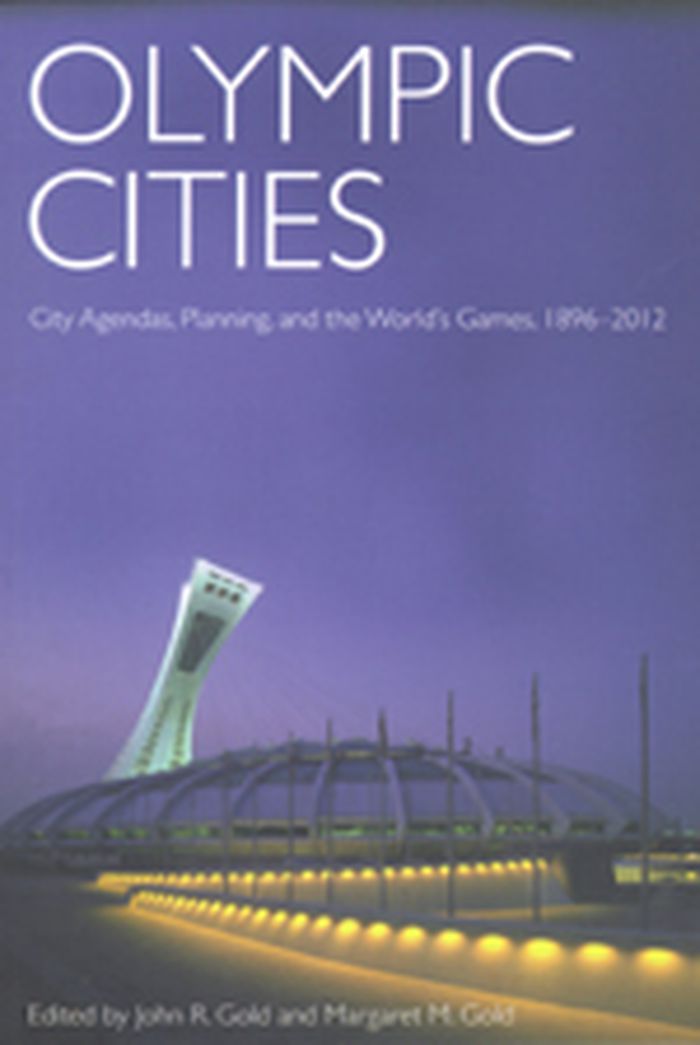
"Olympic cities" provides the first full overview of the changing relationship between cities and the Olympic events since 1896. With eighteen specially commissioned and original essays written by a team of authors from the U.K. and overseas, it explores the historical experience of staging the Olympics from the point of view of the host city.
Olympic cities : city agendas, planning, and the World's games, 1896-2012
Actions:
Price:
$51.95
(available to order)
Summary:
"Olympic cities" provides the first full overview of the changing relationship between cities and the Olympic events since 1896. With eighteen specially commissioned and original essays written by a team of authors from the U.K. and overseas, it explores the historical experience of staging the Olympics from the point of view of the host city.
Form:
books
books
Publication:
July 2007, London, New York
July 2007, London, New York
Subject:
Urban Theory
Urban Theory
Form:
books
books
Actions:
Price:
$60.00
(available to order)
Summary:
Never before have so many people lived in an urban environment: More than half the world's current population does, and that number is expected to rise to two-thirds by 2050. The contemporary city is the arena where all of the diverse forms of power and the far-reaching impacts of globalization must interact. This situation confronts us with issues that are more urgent(...)
$60.00
(available to order)
Summary:
Never before have so many people lived in an urban environment: More than half the world's current population does, and that number is expected to rise to two-thirds by 2050. The contemporary city is the arena where all of the diverse forms of power and the far-reaching impacts of globalization must interact. This situation confronts us with issues that are more urgent(...)
Subject:
Urban Theory
Urban Theory
Publication:
August 2007, Rotterdam
August 2007, Rotterdam
Title:
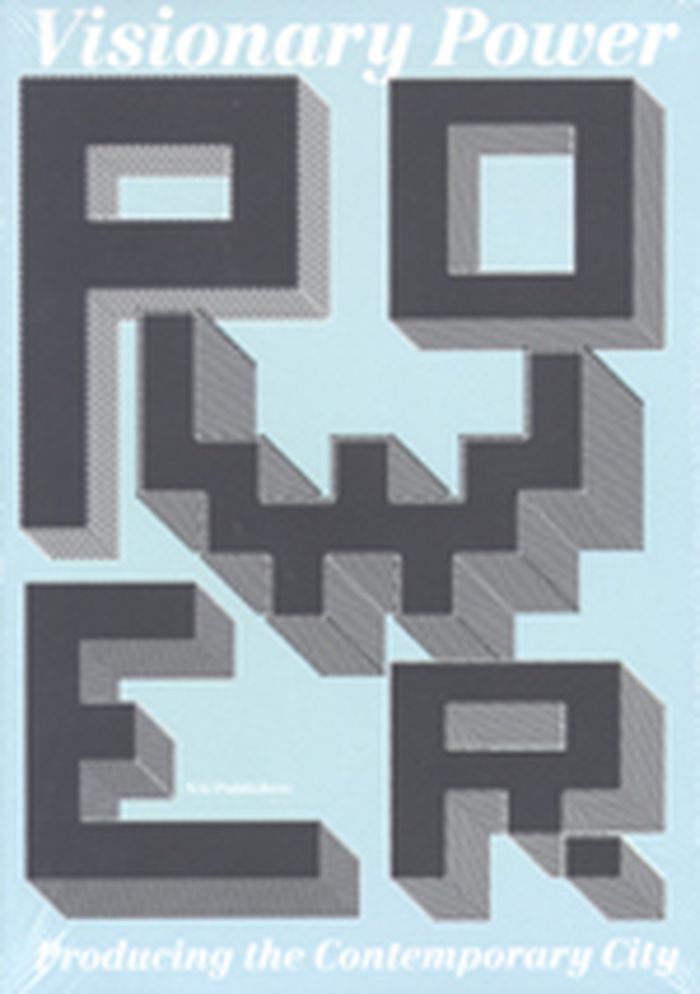
Visionary power : Producing the contemporary city
Actions:
Price:
$60.00
(available to order)
Summary:
Never before have so many people lived in an urban environment: More than half the world's current population does, and that number is expected to rise to two-thirds by 2050. The contemporary city is the arena where all of the diverse forms of power and the far-reaching impacts of globalization must interact. This situation confronts us with issues that are more urgent than ever before: What is the contemporary city? Who and what "produces" it? Which forces steer its development? What is the potential role of the architect?This volume draws together research about the foundations of the contemporary city; discusses forces that have a bearing on its development; formulates the challenges for today's architects and urban planners; and presents strategies with which they can operate in the midst of this interplay of forces, on the basis of topical, coherent visions for the twenty-first century city.
Visionary power : Producing the contemporary city
Actions:
Price:
$60.00
(available to order)
Summary:
Never before have so many people lived in an urban environment: More than half the world's current population does, and that number is expected to rise to two-thirds by 2050. The contemporary city is the arena where all of the diverse forms of power and the far-reaching impacts of globalization must interact. This situation confronts us with issues that are more urgent than ever before: What is the contemporary city? Who and what "produces" it? Which forces steer its development? What is the potential role of the architect?This volume draws together research about the foundations of the contemporary city; discusses forces that have a bearing on its development; formulates the challenges for today's architects and urban planners; and presents strategies with which they can operate in the midst of this interplay of forces, on the basis of topical, coherent visions for the twenty-first century city.
Form:
books
books
Publication:
August 2007, Rotterdam
August 2007, Rotterdam
Subject:
Urban Theory
Urban Theory


