


3928 Results
Form:
events
events
Actions:
Description:
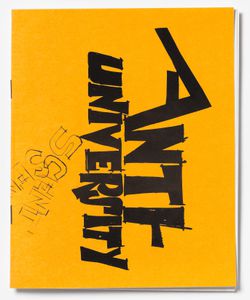
From 1966 to 1968, Shadrach Woods and Cedric Price, two architects and educators in Paris and London, found themselves caught up in a vortex of change in education. Like architecture, the field was searching for new models; thinkers sought to reformulate the basic problems of education, rather than simply seeking new solutions to old questions. In this seminar 2014(...)
From 1966 to 1968, Shadrach Woods and Cedric Price, two architects and educators in Paris and London, found themselves caught up in a vortex of change in education. Like architecture, the field was searching for new models; thinkers sought to reformulate the basic problems of education, rather than simply seeking new solutions to old questions. In this seminar 2014(...)
Location:
Shaughnessy House Keyword(s):
Shadrach Woods, Cedric Price, Visiting Scholar, Federica Doglio
Shaughnessy House Keyword(s):
Shadrach Woods, Cedric Price, Visiting Scholar, Federica Doglio
Date:
24 July 2014, 6pm
24 July 2014, 6pm
Title:
Visiting Scholar Seminar: Federica Doglio
Actions:
Description:
From 1966 to 1968, Shadrach Woods and Cedric Price, two architects and educators in Paris and London, found themselves caught up in a vortex of change in education. Like architecture, the field was searching for new models; thinkers sought to reformulate the basic problems of education, rather than simply seeking new solutions to old questions. In this seminar 2014(...)
Visiting Scholar Seminar: Federica Doglio
Actions:
Description:
From 1966 to 1968, Shadrach Woods and Cedric Price, two architects and educators in Paris and London, found themselves caught up in a vortex of change in education. Like architecture, the field was searching for new models; thinkers sought to reformulate the basic problems of education, rather than simply seeking new solutions to old questions. In this seminar 2014(...)
Form:
events
events
Date:
24 July 2014
6pm
24 July 2014
6pm
Location:
Shaughnessy House Keyword(s):
Shadrach Woods, Cedric Price, Visiting Scholar, Federica Doglio
Shaughnessy House Keyword(s):
Shadrach Woods, Cedric Price, Visiting Scholar, Federica Doglio
Level of archival description:
Sub-series
Sub-series
Title:
Education
Education
Reference number:
CI001.S1.D1
Description:
Hubert Rohault de Fleury studied under Jean-Nicolas-Louis Durand at the École polytechnique and with Julien-David Leroy at the École des beaux-arts. The confluence of their respective pedagogies is evident in albums DR1974:0002:012:001-049 and DR1974:0002:013:001-008 where Durand's` "rationalized" methodology of design is applied to Leroy's vocabulary of antiquity(1). Hubert's two albums of student drawings for the École des Beaux-Arts (DR1974:0002:012:001-049 and DR1974:0002:013:001-008) are complimentary. The former contains competition drawings and programmes for the monthly competitions (Concours d'emulation) as well as drawing, prints, and programmes for the 1800 (2e), 1801, and 1802 (1er) Grand Prix competitions, each of which trace the entire process from "Concours d'essai" and "esquisse", up to and including, studies for final renderings. The latter album contains large-scale final renderings for the 1800, 1801, and possibly the 1798 Grand prix competitions. As in Durand's "mecanisme de la composition", Hubert proceeds from the simple to the complex, often utilizing the graph paper or hand drawn grid particular to Durand's design methodology (codified in his book 'Precis des Lecons' 1802). This process is readily apparent in both Hubert's "Concours d'emulation" drawings, and, more completely, in the drawings for the Grand Prix competitions. The studies for Hubert's winning 1802 Grand Prix entry for a'Foire' indicate that he isolated and studied different building types before combining them into the unified complex evident in his final renderings. The original final renderings of the Grand Prix winners were kept by the École des beaux-arts. Album DR1974:0002:012:001-049 contains only the prints of the final renderings. The success of Hubert in the Grand Prix competitions is not surprising. His large wash final renderings for the 1800 and 1801 competitions (DR1974:0002:013:001-008) indicate that the neo-classical simplicity then favoured by the judges at the École des beaux-arts dovetailed with the notions of economy implicit in Durand's functionalist approach to design. (1) Barry Bergdoll, "Hubert Rohault de Fleury: Architectural Education", 'CCA Research Report', n.d.
CI001.S1.D1
Description:
Hubert Rohault de Fleury studied under Jean-Nicolas-Louis Durand at the École polytechnique and with Julien-David Leroy at the École des beaux-arts. The confluence of their respective pedagogies is evident in albums DR1974:0002:012:001-049 and DR1974:0002:013:001-008 where Durand's` "rationalized" methodology of design is applied to Leroy's vocabulary of antiquity(1). Hubert's two albums of student drawings for the École des Beaux-Arts (DR1974:0002:012:001-049 and DR1974:0002:013:001-008) are complimentary. The former contains competition drawings and programmes for the monthly competitions (Concours d'emulation) as well as drawing, prints, and programmes for the 1800 (2e), 1801, and 1802 (1er) Grand Prix competitions, each of which trace the entire process from "Concours d'essai" and "esquisse", up to and including, studies for final renderings. The latter album contains large-scale final renderings for the 1800, 1801, and possibly the 1798 Grand prix competitions. As in Durand's "mecanisme de la composition", Hubert proceeds from the simple to the complex, often utilizing the graph paper or hand drawn grid particular to Durand's design methodology (codified in his book 'Precis des Lecons' 1802). This process is readily apparent in both Hubert's "Concours d'emulation" drawings, and, more completely, in the drawings for the Grand Prix competitions. The studies for Hubert's winning 1802 Grand Prix entry for a'Foire' indicate that he isolated and studied different building types before combining them into the unified complex evident in his final renderings. The original final renderings of the Grand Prix winners were kept by the École des beaux-arts. Album DR1974:0002:012:001-049 contains only the prints of the final renderings. The success of Hubert in the Grand Prix competitions is not surprising. His large wash final renderings for the 1800 and 1801 competitions (DR1974:0002:013:001-008) indicate that the neo-classical simplicity then favoured by the judges at the École des beaux-arts dovetailed with the notions of economy implicit in Durand's functionalist approach to design. (1) Barry Bergdoll, "Hubert Rohault de Fleury: Architectural Education", 'CCA Research Report', n.d.
People:
Date:
1800-1807
1800-1807
Title:
Education
CI001.S1.D1
Description:
Hubert Rohault de Fleury studied under Jean-Nicolas-Louis Durand at the École polytechnique and with Julien-David Leroy at the École des beaux-arts. The confluence of their respective pedagogies is evident in albums DR1974:0002:012:001-049 and DR1974:0002:013:001-008 where Durand's` "rationalized" methodology of design is applied to Leroy's vocabulary of antiquity(1). Hubert's two albums of student drawings for the École des Beaux-Arts (DR1974:0002:012:001-049 and DR1974:0002:013:001-008) are complimentary. The former contains competition drawings and programmes for the monthly competitions (Concours d'emulation) as well as drawing, prints, and programmes for the 1800 (2e), 1801, and 1802 (1er) Grand Prix competitions, each of which trace the entire process from "Concours d'essai" and "esquisse", up to and including, studies for final renderings. The latter album contains large-scale final renderings for the 1800, 1801, and possibly the 1798 Grand prix competitions. As in Durand's "mecanisme de la composition", Hubert proceeds from the simple to the complex, often utilizing the graph paper or hand drawn grid particular to Durand's design methodology (codified in his book 'Precis des Lecons' 1802). This process is readily apparent in both Hubert's "Concours d'emulation" drawings, and, more completely, in the drawings for the Grand Prix competitions. The studies for Hubert's winning 1802 Grand Prix entry for a'Foire' indicate that he isolated and studied different building types before combining them into the unified complex evident in his final renderings. The original final renderings of the Grand Prix winners were kept by the École des beaux-arts. Album DR1974:0002:012:001-049 contains only the prints of the final renderings. The success of Hubert in the Grand Prix competitions is not surprising. His large wash final renderings for the 1800 and 1801 competitions (DR1974:0002:013:001-008) indicate that the neo-classical simplicity then favoured by the judges at the École des beaux-arts dovetailed with the notions of economy implicit in Durand's functionalist approach to design. (1) Barry Bergdoll, "Hubert Rohault de Fleury: Architectural Education", 'CCA Research Report', n.d.
Education
CI001.S1.D1
Description:
Hubert Rohault de Fleury studied under Jean-Nicolas-Louis Durand at the École polytechnique and with Julien-David Leroy at the École des beaux-arts. The confluence of their respective pedagogies is evident in albums DR1974:0002:012:001-049 and DR1974:0002:013:001-008 where Durand's` "rationalized" methodology of design is applied to Leroy's vocabulary of antiquity(1). Hubert's two albums of student drawings for the École des Beaux-Arts (DR1974:0002:012:001-049 and DR1974:0002:013:001-008) are complimentary. The former contains competition drawings and programmes for the monthly competitions (Concours d'emulation) as well as drawing, prints, and programmes for the 1800 (2e), 1801, and 1802 (1er) Grand Prix competitions, each of which trace the entire process from "Concours d'essai" and "esquisse", up to and including, studies for final renderings. The latter album contains large-scale final renderings for the 1800, 1801, and possibly the 1798 Grand prix competitions. As in Durand's "mecanisme de la composition", Hubert proceeds from the simple to the complex, often utilizing the graph paper or hand drawn grid particular to Durand's design methodology (codified in his book 'Precis des Lecons' 1802). This process is readily apparent in both Hubert's "Concours d'emulation" drawings, and, more completely, in the drawings for the Grand Prix competitions. The studies for Hubert's winning 1802 Grand Prix entry for a'Foire' indicate that he isolated and studied different building types before combining them into the unified complex evident in his final renderings. The original final renderings of the Grand Prix winners were kept by the École des beaux-arts. Album DR1974:0002:012:001-049 contains only the prints of the final renderings. The success of Hubert in the Grand Prix competitions is not surprising. His large wash final renderings for the 1800 and 1801 competitions (DR1974:0002:013:001-008) indicate that the neo-classical simplicity then favoured by the judges at the École des beaux-arts dovetailed with the notions of economy implicit in Durand's functionalist approach to design. (1) Barry Bergdoll, "Hubert Rohault de Fleury: Architectural Education", 'CCA Research Report', n.d.
Level of archival description:
File 1
File 1
Date:
1800-1807
1800-1807
People:
Level of archival description:
Sub-series
Sub-series
Title:
Education
Education
Reference number:
CI001.S2.D1
Description:
Like his father Hubert, Charles Rohault de Fleury also studied at the École polytechnique with Jean-Nicolas-Louis Durand (1820-1821), and at the École des Beaux-Arts (1823-1825), Charles studied under his father and Louis Hippolyte Lebas. The CCA collection contains his printed exercise book from the École polytechnique and an album of drawings of the orders executed at both schools. The printed exercise book (DR1974:0002:001:001-105), primarily dated to 1821, provides an overview of the first year curriculum at the École polytechnique reflecting the emphasis placed on the course in descriptive geometry. The exercises proceed from the simple to the complex; from the analysis of simple shapes to the interpretation of basic architectural elements. Many of the problems have been solved by Charles, and carry the approval seal of his professor. A large engraving included in the album provides a succinct table recording the career paths of graduating students in the various Écoles d'application, a description of the core curriculum, and a historical and chronological outline of the École polytechnique from its inception to 1828. Charles' studies of the architectural orders (DR1974:0002:019:001-033), many of which are copied directly from Charles Normand's 'Nouveau parallele des ordres d'architecture...,' demonstrate the continued application of Durand's methodology applied to typical Beaux-Arts studies. The orders executed at the École polytechnique are pared down to their essential form and porticos are abstracted and grouped according to their tetrastyle, hexastyle, or octastyle configurations, whereas the orders completed at the École des beaux-arts are simplified, but still reflect the traditional mimetic interpretation of classical antiquity, with its fidelity to mouldings and details. The conspicous abscence of the composite order and the addition of the 'Dorique Romain and Moderne', attest to the continued influence of Durand's ''Precis'. The information regarding George's architectural career is limited to twelve drawings for architectural ornament and sculpture (1858-1859) submitted to a newly introduced, and obligatory, 'dessin' Concours d'emulation at the École des beaux-arts (1). (1) R. Chaffe, "The teaching of architecture at the École des Beaux-Arts" in Arthur Drexler ed., 'The Architecture of the École des Beaux-Arts' (New York: MOMA, 1975), p.84 and fn. 120.)
CI001.S2.D1
Description:
Like his father Hubert, Charles Rohault de Fleury also studied at the École polytechnique with Jean-Nicolas-Louis Durand (1820-1821), and at the École des Beaux-Arts (1823-1825), Charles studied under his father and Louis Hippolyte Lebas. The CCA collection contains his printed exercise book from the École polytechnique and an album of drawings of the orders executed at both schools. The printed exercise book (DR1974:0002:001:001-105), primarily dated to 1821, provides an overview of the first year curriculum at the École polytechnique reflecting the emphasis placed on the course in descriptive geometry. The exercises proceed from the simple to the complex; from the analysis of simple shapes to the interpretation of basic architectural elements. Many of the problems have been solved by Charles, and carry the approval seal of his professor. A large engraving included in the album provides a succinct table recording the career paths of graduating students in the various Écoles d'application, a description of the core curriculum, and a historical and chronological outline of the École polytechnique from its inception to 1828. Charles' studies of the architectural orders (DR1974:0002:019:001-033), many of which are copied directly from Charles Normand's 'Nouveau parallele des ordres d'architecture...,' demonstrate the continued application of Durand's methodology applied to typical Beaux-Arts studies. The orders executed at the École polytechnique are pared down to their essential form and porticos are abstracted and grouped according to their tetrastyle, hexastyle, or octastyle configurations, whereas the orders completed at the École des beaux-arts are simplified, but still reflect the traditional mimetic interpretation of classical antiquity, with its fidelity to mouldings and details. The conspicous abscence of the composite order and the addition of the 'Dorique Romain and Moderne', attest to the continued influence of Durand's ''Precis'. The information regarding George's architectural career is limited to twelve drawings for architectural ornament and sculpture (1858-1859) submitted to a newly introduced, and obligatory, 'dessin' Concours d'emulation at the École des beaux-arts (1). (1) R. Chaffe, "The teaching of architecture at the École des Beaux-Arts" in Arthur Drexler ed., 'The Architecture of the École des Beaux-Arts' (New York: MOMA, 1975), p.84 and fn. 120.)
People:
Date:
[1776?]-1868
[1776?]-1868
Title:
Education
CI001.S2.D1
Description:
Like his father Hubert, Charles Rohault de Fleury also studied at the École polytechnique with Jean-Nicolas-Louis Durand (1820-1821), and at the École des Beaux-Arts (1823-1825), Charles studied under his father and Louis Hippolyte Lebas. The CCA collection contains his printed exercise book from the École polytechnique and an album of drawings of the orders executed at both schools. The printed exercise book (DR1974:0002:001:001-105), primarily dated to 1821, provides an overview of the first year curriculum at the École polytechnique reflecting the emphasis placed on the course in descriptive geometry. The exercises proceed from the simple to the complex; from the analysis of simple shapes to the interpretation of basic architectural elements. Many of the problems have been solved by Charles, and carry the approval seal of his professor. A large engraving included in the album provides a succinct table recording the career paths of graduating students in the various Écoles d'application, a description of the core curriculum, and a historical and chronological outline of the École polytechnique from its inception to 1828. Charles' studies of the architectural orders (DR1974:0002:019:001-033), many of which are copied directly from Charles Normand's 'Nouveau parallele des ordres d'architecture...,' demonstrate the continued application of Durand's methodology applied to typical Beaux-Arts studies. The orders executed at the École polytechnique are pared down to their essential form and porticos are abstracted and grouped according to their tetrastyle, hexastyle, or octastyle configurations, whereas the orders completed at the École des beaux-arts are simplified, but still reflect the traditional mimetic interpretation of classical antiquity, with its fidelity to mouldings and details. The conspicous abscence of the composite order and the addition of the 'Dorique Romain and Moderne', attest to the continued influence of Durand's ''Precis'. The information regarding George's architectural career is limited to twelve drawings for architectural ornament and sculpture (1858-1859) submitted to a newly introduced, and obligatory, 'dessin' Concours d'emulation at the École des beaux-arts (1). (1) R. Chaffe, "The teaching of architecture at the École des Beaux-Arts" in Arthur Drexler ed., 'The Architecture of the École des Beaux-Arts' (New York: MOMA, 1975), p.84 and fn. 120.)
Education
CI001.S2.D1
Description:
Like his father Hubert, Charles Rohault de Fleury also studied at the École polytechnique with Jean-Nicolas-Louis Durand (1820-1821), and at the École des Beaux-Arts (1823-1825), Charles studied under his father and Louis Hippolyte Lebas. The CCA collection contains his printed exercise book from the École polytechnique and an album of drawings of the orders executed at both schools. The printed exercise book (DR1974:0002:001:001-105), primarily dated to 1821, provides an overview of the first year curriculum at the École polytechnique reflecting the emphasis placed on the course in descriptive geometry. The exercises proceed from the simple to the complex; from the analysis of simple shapes to the interpretation of basic architectural elements. Many of the problems have been solved by Charles, and carry the approval seal of his professor. A large engraving included in the album provides a succinct table recording the career paths of graduating students in the various Écoles d'application, a description of the core curriculum, and a historical and chronological outline of the École polytechnique from its inception to 1828. Charles' studies of the architectural orders (DR1974:0002:019:001-033), many of which are copied directly from Charles Normand's 'Nouveau parallele des ordres d'architecture...,' demonstrate the continued application of Durand's methodology applied to typical Beaux-Arts studies. The orders executed at the École polytechnique are pared down to their essential form and porticos are abstracted and grouped according to their tetrastyle, hexastyle, or octastyle configurations, whereas the orders completed at the École des beaux-arts are simplified, but still reflect the traditional mimetic interpretation of classical antiquity, with its fidelity to mouldings and details. The conspicous abscence of the composite order and the addition of the 'Dorique Romain and Moderne', attest to the continued influence of Durand's ''Precis'. The information regarding George's architectural career is limited to twelve drawings for architectural ornament and sculpture (1858-1859) submitted to a newly introduced, and obligatory, 'dessin' Concours d'emulation at the École des beaux-arts (1). (1) R. Chaffe, "The teaching of architecture at the École des Beaux-Arts" in Arthur Drexler ed., 'The Architecture of the École des Beaux-Arts' (New York: MOMA, 1975), p.84 and fn. 120.)
Level of archival description:
File 1
File 1
Date:
[1776?]-1868
[1776?]-1868
People:
Form:
textual records
textual records
Form:
textual records
textual records
People:
Form:
articles
articles
Actions:
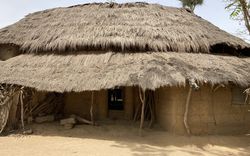
Nzinga B. Mboup identifies the value of Senegal’s architectural heritage with Jean-Augustin Carvalho, Fodé Diop, Andrée Diop-Depret, and Xavier Ricou
Published:
24 February 2025
24 February 2025
Title:
Heritage, Between Education and Practice
Nzinga B. Mboup identifies the value of Senegal’s architectural heritage with Jean-Augustin Carvalho, Fodé Diop, Andrée Diop-Depret, and Xavier Ricou
Actions:
Heritage, Between Education and Practice
Nzinga B. Mboup identifies the value of Senegal’s architectural heritage with Jean-Augustin Carvalho, Fodé Diop, Andrée Diop-Depret, and Xavier Ricou
Actions:
Form:
textual records
textual records
Title:
Esterhazy - Education
Esterhazy - Education
Actions:
Reference number:
ARCH253550
Description:
working papers
ARCH253550
Description:
working papers
People:
Date:
1967-1968
1967-1968
Form:
textual records
textual records
Date:
1967-1968
1967-1968
People:
Form:
articles
articles
Actions:
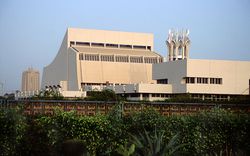
Oussouby Sacko on African architectural identity and his studies in China, interviewed by Cole Roskam
Title:
Architectural Education in the Intermediate Zone
Oussouby Sacko on African architectural identity and his studies in China, interviewed by Cole Roskam
Actions:
Architectural Education in the Intermediate Zone
Oussouby Sacko on African architectural identity and his studies in China, interviewed by Cole Roskam
Actions:
Level of archival description:
Project
Project
Title:
A. Reisen education center
A. Reisen education center
Actions:
Reference number:
AP041.S1.1963.D1
Description:
File documents plans for an education centre in an unidentified location. Includes architectural plans and electrical drawings.
AP041.S1.1963.D1
Description:
File documents plans for an education centre in an unidentified location. Includes architectural plans and electrical drawings.
People:
Date:
1963
1963
Title:
A. Reisen education center
Actions:
AP041.S1.1963.D1
Description:
File documents plans for an education centre in an unidentified location. Includes architectural plans and electrical drawings.
A. Reisen education center
Actions:
AP041.S1.1963.D1
Description:
File documents plans for an education centre in an unidentified location. Includes architectural plans and electrical drawings.
Level of archival description:
Project
Project
Date:
1963
1963
People:
Level of archival description:
Sub-series
Sub-series
Actions:
Reference number:
AP156.S2.SS2
Description:
La sous-série documente la formation de Pierre Jeanneret. Le matériel dans cette sous-série a été produit en 1919 et 1920. La sous-série comprend des documents textuels dont des cahiers d'exercices et une lettre de recommandation. Sub-series document the education and training of Pierre Jeanneret. The material in this sub-series was produced in 1919 and 1920. The sub-series contains textual records including notesbooks and a recommendation letter.
AP156.S2.SS2
Description:
La sous-série documente la formation de Pierre Jeanneret. Le matériel dans cette sous-série a été produit en 1919 et 1920. La sous-série comprend des documents textuels dont des cahiers d'exercices et une lettre de recommandation. Sub-series document the education and training of Pierre Jeanneret. The material in this sub-series was produced in 1919 and 1920. The sub-series contains textual records including notesbooks and a recommendation letter.
People:
Date:
1919-1920
1919-1920
Title:
Formation = Education and training
Actions:
AP156.S2.SS2
Description:
La sous-série documente la formation de Pierre Jeanneret. Le matériel dans cette sous-série a été produit en 1919 et 1920. La sous-série comprend des documents textuels dont des cahiers d'exercices et une lettre de recommandation. Sub-series document the education and training of Pierre Jeanneret. The material in this sub-series was produced in 1919 and 1920. The sub-series contains textual records including notesbooks and a recommendation letter.
Formation = Education and training
Actions:
AP156.S2.SS2
Description:
La sous-série documente la formation de Pierre Jeanneret. Le matériel dans cette sous-série a été produit en 1919 et 1920. La sous-série comprend des documents textuels dont des cahiers d'exercices et une lettre de recommandation. Sub-series document the education and training of Pierre Jeanneret. The material in this sub-series was produced in 1919 and 1920. The sub-series contains textual records including notesbooks and a recommendation letter.
Level of archival description:
Sous-série 2
Sous-série 2
Date:
1919-1920
1919-1920
People:
Form:
textual records
textual records
Title:
An Education in architecture
An Education in architecture
Actions:
Reference number:
AP058.S2.SS2.002
AP058.S2.SS2.002
People:
Date:
1989-1990
1989-1990
Form:
textual records
textual records
Date:
1989-1990
1989-1990
People:


