


3456 Results
Level of archival description:
Sub-series
Sub-series
Reference number:
AP022.S3.SS3
Description:
Sub-series documents public relations, marketing activities and collaborations of the offices of Erickson / Massey and Arthur Erickson Architects in Vancouver, British columbia, and Toronto, Ontario. The material was intended for media and press releases, publications, photographs and information requests, presentations, publicity and marketing brochures, and includes project descriptions, photographs and slides, magazine articles and clippings, publication drawings, galley proofs for books and a Life Magazine article on the Graham House, correspondence, and printing plates for a publicity brochure. Sub-series also documents Erickson / Massey and Arthur Erickson Architects collaboration with Francisco Imported Furniture Ltd the company of Francisco Leopoldo Kripacz (b. 8 April, 1942 - d. 3 August, 2000). Kripacz was born in Caracas, Venezuela, educated in Europe, the United States, and studied design in Vancouver and New York. He also went to the University of British Columbia for a Bachelor of Commerce degree in 1964. He became a resident Canadian in 1961, and a Canadian citizen in 1973. In 1964 he founded an interior design and furniture import business in Vancouver with Arthur Erickson, and opened a showroom in Montreal (550 Sherbrooke St. West), in 1965. Kripacz designed the exhibition unit in Habitat 67 (by architect Moshe Safdie) for the 1967 World Exposition in Montreal, and created interiors for a private clientel as well as for many of Arthur Erickson's buildings. The latter included the Helmut Eppich House and Erickson's own residence in Vancouver, the Hilborn Residence in Ontario, the Prime Minister's office and resdence in Ottawa, the UBC Faculty Club, the Macmillan Blodel Bulding, Vancouver, the Bank of Canada Headquarters in Ottawa, the Student Union Building at Queen's University, Kingston, the Provincial Law Courts in Robson Square, Vancouver, Roy Thomson Hall and the Tech Mining offices in Toronto, the Canadian Chancery in Washington, D.C., amongst others. Material related to Francisco Imported Furniture Ltd Sub-series also contains professional correspondence with Arthur Erickson Architect, financial documents of Francisco Imported Furniture Ltd, furniture design proposals, photographs and personal correspondance files of Francisco Kripacz.
AP022.S3.SS3
Description:
Sub-series documents public relations, marketing activities and collaborations of the offices of Erickson / Massey and Arthur Erickson Architects in Vancouver, British columbia, and Toronto, Ontario. The material was intended for media and press releases, publications, photographs and information requests, presentations, publicity and marketing brochures, and includes project descriptions, photographs and slides, magazine articles and clippings, publication drawings, galley proofs for books and a Life Magazine article on the Graham House, correspondence, and printing plates for a publicity brochure. Sub-series also documents Erickson / Massey and Arthur Erickson Architects collaboration with Francisco Imported Furniture Ltd the company of Francisco Leopoldo Kripacz (b. 8 April, 1942 - d. 3 August, 2000). Kripacz was born in Caracas, Venezuela, educated in Europe, the United States, and studied design in Vancouver and New York. He also went to the University of British Columbia for a Bachelor of Commerce degree in 1964. He became a resident Canadian in 1961, and a Canadian citizen in 1973. In 1964 he founded an interior design and furniture import business in Vancouver with Arthur Erickson, and opened a showroom in Montreal (550 Sherbrooke St. West), in 1965. Kripacz designed the exhibition unit in Habitat 67 (by architect Moshe Safdie) for the 1967 World Exposition in Montreal, and created interiors for a private clientel as well as for many of Arthur Erickson's buildings. The latter included the Helmut Eppich House and Erickson's own residence in Vancouver, the Hilborn Residence in Ontario, the Prime Minister's office and resdence in Ottawa, the UBC Faculty Club, the Macmillan Blodel Bulding, Vancouver, the Bank of Canada Headquarters in Ottawa, the Student Union Building at Queen's University, Kingston, the Provincial Law Courts in Robson Square, Vancouver, Roy Thomson Hall and the Tech Mining offices in Toronto, the Canadian Chancery in Washington, D.C., amongst others. Material related to Francisco Imported Furniture Ltd Sub-series also contains professional correspondence with Arthur Erickson Architect, financial documents of Francisco Imported Furniture Ltd, furniture design proposals, photographs and personal correspondance files of Francisco Kripacz.
People:
Date:
1967-1988
1967-1988
Title:
Public relations, marketing and collaborations
Actions:
AP022.S3.SS3
Description:
Sub-series documents public relations, marketing activities and collaborations of the offices of Erickson / Massey and Arthur Erickson Architects in Vancouver, British columbia, and Toronto, Ontario. The material was intended for media and press releases, publications, photographs and information requests, presentations, publicity and marketing brochures, and includes project descriptions, photographs and slides, magazine articles and clippings, publication drawings, galley proofs for books and a Life Magazine article on the Graham House, correspondence, and printing plates for a publicity brochure. Sub-series also documents Erickson / Massey and Arthur Erickson Architects collaboration with Francisco Imported Furniture Ltd the company of Francisco Leopoldo Kripacz (b. 8 April, 1942 - d. 3 August, 2000). Kripacz was born in Caracas, Venezuela, educated in Europe, the United States, and studied design in Vancouver and New York. He also went to the University of British Columbia for a Bachelor of Commerce degree in 1964. He became a resident Canadian in 1961, and a Canadian citizen in 1973. In 1964 he founded an interior design and furniture import business in Vancouver with Arthur Erickson, and opened a showroom in Montreal (550 Sherbrooke St. West), in 1965. Kripacz designed the exhibition unit in Habitat 67 (by architect Moshe Safdie) for the 1967 World Exposition in Montreal, and created interiors for a private clientel as well as for many of Arthur Erickson's buildings. The latter included the Helmut Eppich House and Erickson's own residence in Vancouver, the Hilborn Residence in Ontario, the Prime Minister's office and resdence in Ottawa, the UBC Faculty Club, the Macmillan Blodel Bulding, Vancouver, the Bank of Canada Headquarters in Ottawa, the Student Union Building at Queen's University, Kingston, the Provincial Law Courts in Robson Square, Vancouver, Roy Thomson Hall and the Tech Mining offices in Toronto, the Canadian Chancery in Washington, D.C., amongst others. Material related to Francisco Imported Furniture Ltd Sub-series also contains professional correspondence with Arthur Erickson Architect, financial documents of Francisco Imported Furniture Ltd, furniture design proposals, photographs and personal correspondance files of Francisco Kripacz.
Public relations, marketing and collaborations
Actions:
AP022.S3.SS3
Description:
Sub-series documents public relations, marketing activities and collaborations of the offices of Erickson / Massey and Arthur Erickson Architects in Vancouver, British columbia, and Toronto, Ontario. The material was intended for media and press releases, publications, photographs and information requests, presentations, publicity and marketing brochures, and includes project descriptions, photographs and slides, magazine articles and clippings, publication drawings, galley proofs for books and a Life Magazine article on the Graham House, correspondence, and printing plates for a publicity brochure. Sub-series also documents Erickson / Massey and Arthur Erickson Architects collaboration with Francisco Imported Furniture Ltd the company of Francisco Leopoldo Kripacz (b. 8 April, 1942 - d. 3 August, 2000). Kripacz was born in Caracas, Venezuela, educated in Europe, the United States, and studied design in Vancouver and New York. He also went to the University of British Columbia for a Bachelor of Commerce degree in 1964. He became a resident Canadian in 1961, and a Canadian citizen in 1973. In 1964 he founded an interior design and furniture import business in Vancouver with Arthur Erickson, and opened a showroom in Montreal (550 Sherbrooke St. West), in 1965. Kripacz designed the exhibition unit in Habitat 67 (by architect Moshe Safdie) for the 1967 World Exposition in Montreal, and created interiors for a private clientel as well as for many of Arthur Erickson's buildings. The latter included the Helmut Eppich House and Erickson's own residence in Vancouver, the Hilborn Residence in Ontario, the Prime Minister's office and resdence in Ottawa, the UBC Faculty Club, the Macmillan Blodel Bulding, Vancouver, the Bank of Canada Headquarters in Ottawa, the Student Union Building at Queen's University, Kingston, the Provincial Law Courts in Robson Square, Vancouver, Roy Thomson Hall and the Tech Mining offices in Toronto, the Canadian Chancery in Washington, D.C., amongst others. Material related to Francisco Imported Furniture Ltd Sub-series also contains professional correspondence with Arthur Erickson Architect, financial documents of Francisco Imported Furniture Ltd, furniture design proposals, photographs and personal correspondance files of Francisco Kripacz.
Level of archival description:
sub-series
sub-series
Date:
1967-1988
1967-1988
People:
Form:
exhibitions
exhibitions
Title:
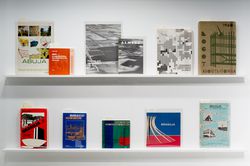
Old Books New Cities
Old Books New Cities
Actions:
Description:
The pressing need to reconstruct cities after the Second World War and the sudden post-war rise in population led the public sector to assume an ever-increasing role in the design and construction of the urban environment. In different political contexts, large urban developments or the construction of entirely new towns were directed by municipal or state powers and(...)
The pressing need to reconstruct cities after the Second World War and the sudden post-war rise in population led the public sector to assume an ever-increasing role in the design and construction of the urban environment. In different political contexts, large urban developments or the construction of entirely new towns were directed by municipal or state powers and(...)
Location:
Hall cases
Hall cases
Date:
12 December 2013 to 15 June 2014
12 December 2013 to 15 June 2014
Title:
Old Books New Cities
Actions:
Description:
The pressing need to reconstruct cities after the Second World War and the sudden post-war rise in population led the public sector to assume an ever-increasing role in the design and construction of the urban environment. In different political contexts, large urban developments or the construction of entirely new towns were directed by municipal or state powers and(...)
Old Books New Cities
Actions:
Description:
The pressing need to reconstruct cities after the Second World War and the sudden post-war rise in population led the public sector to assume an ever-increasing role in the design and construction of the urban environment. In different political contexts, large urban developments or the construction of entirely new towns were directed by municipal or state powers and(...)
Form:
exhibitions
exhibitions
Date:
12 December 2013 to
15 June 2014
12 December 2013 to
15 June 2014
Location:
Hall cases
Hall cases
Level of archival description:
Project
Project
Reference number:
AP075.S1.1957.PR05
Description:
This project series documents Cornelia Hahn Oberlander's landscape project for the garden of Mr & Mrs Wong residence on South Cambie Street in Vancouver. Oberlander worked on this project in 1954-1956 with architect Harry Lee from Duncan McNab’s office. Oberlander’s concept for the landscape was to create a garden with rock outcropping, due to the complicated site on which the house was built. She “designed a main walkway paralleling the side yard property line to connect S. Cambie Street to the rear alley.” [1] The walkway, decorated with flowerpots, leads to a u-shaped paved courtyard with a central lawn area with decorative rocks. Between the expose rock at the front of the property and the façade of the house, she created a lawn area with a pathway of steppingstones at the side of house leading to the backyard. The project series contains only six drawings, including two sketches, two design development drawings of landscape plans, and working drawings for the residence used as reference. The project is also documented through photographs of the residence and the landscaping, and a plant list. Source: [1] Herrington, Susan. Cornelia Hahn Oberlander: Making the Modern Landscape, University of Virginia Press, 2014, 304 pages. p. 88.
AP075.S1.1957.PR05
Description:
This project series documents Cornelia Hahn Oberlander's landscape project for the garden of Mr & Mrs Wong residence on South Cambie Street in Vancouver. Oberlander worked on this project in 1954-1956 with architect Harry Lee from Duncan McNab’s office. Oberlander’s concept for the landscape was to create a garden with rock outcropping, due to the complicated site on which the house was built. She “designed a main walkway paralleling the side yard property line to connect S. Cambie Street to the rear alley.” [1] The walkway, decorated with flowerpots, leads to a u-shaped paved courtyard with a central lawn area with decorative rocks. Between the expose rock at the front of the property and the façade of the house, she created a lawn area with a pathway of steppingstones at the side of house leading to the backyard. The project series contains only six drawings, including two sketches, two design development drawings of landscape plans, and working drawings for the residence used as reference. The project is also documented through photographs of the residence and the landscaping, and a plant list. Source: [1] Herrington, Susan. Cornelia Hahn Oberlander: Making the Modern Landscape, University of Virginia Press, 2014, 304 pages. p. 88.
People:
Date:
1957-1958
1957-1958
Title:
W.K. Wong Residence, Vancouver, British Columbia (1957-1958)
Actions:
AP075.S1.1957.PR05
Description:
This project series documents Cornelia Hahn Oberlander's landscape project for the garden of Mr & Mrs Wong residence on South Cambie Street in Vancouver. Oberlander worked on this project in 1954-1956 with architect Harry Lee from Duncan McNab’s office. Oberlander’s concept for the landscape was to create a garden with rock outcropping, due to the complicated site on which the house was built. She “designed a main walkway paralleling the side yard property line to connect S. Cambie Street to the rear alley.” [1] The walkway, decorated with flowerpots, leads to a u-shaped paved courtyard with a central lawn area with decorative rocks. Between the expose rock at the front of the property and the façade of the house, she created a lawn area with a pathway of steppingstones at the side of house leading to the backyard. The project series contains only six drawings, including two sketches, two design development drawings of landscape plans, and working drawings for the residence used as reference. The project is also documented through photographs of the residence and the landscaping, and a plant list. Source: [1] Herrington, Susan. Cornelia Hahn Oberlander: Making the Modern Landscape, University of Virginia Press, 2014, 304 pages. p. 88.
W.K. Wong Residence, Vancouver, British Columbia (1957-1958)
Actions:
AP075.S1.1957.PR05
Description:
This project series documents Cornelia Hahn Oberlander's landscape project for the garden of Mr & Mrs Wong residence on South Cambie Street in Vancouver. Oberlander worked on this project in 1954-1956 with architect Harry Lee from Duncan McNab’s office. Oberlander’s concept for the landscape was to create a garden with rock outcropping, due to the complicated site on which the house was built. She “designed a main walkway paralleling the side yard property line to connect S. Cambie Street to the rear alley.” [1] The walkway, decorated with flowerpots, leads to a u-shaped paved courtyard with a central lawn area with decorative rocks. Between the expose rock at the front of the property and the façade of the house, she created a lawn area with a pathway of steppingstones at the side of house leading to the backyard. The project series contains only six drawings, including two sketches, two design development drawings of landscape plans, and working drawings for the residence used as reference. The project is also documented through photographs of the residence and the landscaping, and a plant list. Source: [1] Herrington, Susan. Cornelia Hahn Oberlander: Making the Modern Landscape, University of Virginia Press, 2014, 304 pages. p. 88.
Level of archival description:
Project
Project
Date:
1957-1958
1957-1958
People:
Form:
exhibitions
exhibitions

Title:
Architecture as Evidence
Architecture as Evidence
Actions:
Description:
Architecture as Evidence presents a set of materials gathered during a forensic analysis of the architecture of Auschwitz. It assembles plaster casts of blueprints, letters, contractor bills, and photographs, as well as two reconstructed monuments (a gas column and a gas-tight hatch), which together provide tangible evidence that Auschwitz was designed by its architects(...)
Architecture as Evidence presents a set of materials gathered during a forensic analysis of the architecture of Auschwitz. It assembles plaster casts of blueprints, letters, contractor bills, and photographs, as well as two reconstructed monuments (a gas column and a gas-tight hatch), which together provide tangible evidence that Auschwitz was designed by its architects(...)
Location:
Octagonal gallery
Octagonal gallery
Date:
16 June 2016 to 11 September 2016
16 June 2016 to 11 September 2016
Title:
Architecture as Evidence
Actions:
Description:
Architecture as Evidence presents a set of materials gathered during a forensic analysis of the architecture of Auschwitz. It assembles plaster casts of blueprints, letters, contractor bills, and photographs, as well as two reconstructed monuments (a gas column and a gas-tight hatch), which together provide tangible evidence that Auschwitz was designed by its architects(...)
Architecture as Evidence
Actions:
Description:
Architecture as Evidence presents a set of materials gathered during a forensic analysis of the architecture of Auschwitz. It assembles plaster casts of blueprints, letters, contractor bills, and photographs, as well as two reconstructed monuments (a gas column and a gas-tight hatch), which together provide tangible evidence that Auschwitz was designed by its architects(...)
Form:
exhibitions
exhibitions
Date:
16 June 2016 to
11 September 2016
16 June 2016 to
11 September 2016
Location:
Octagonal gallery
Octagonal gallery
Form:
exhibitions
exhibitions
Title:
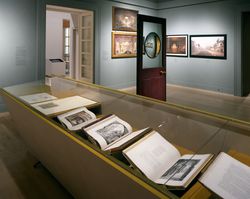
John Soane 1753-1837
John Soane 1753-1837
Actions:
Description:
Described by Henry James as “one of the most curious things in London,” Sir John Soane’s Museum was built as the picturesque and enigmatic home, office, collector’s trove, and personal showplace of one of history’s most innovative architects. This exhibition is a major re-evaluation of Soane’s career, as well as a reconsideration of his importance to the history of modern(...)
Described by Henry James as “one of the most curious things in London,” Sir John Soane’s Museum was built as the picturesque and enigmatic home, office, collector’s trove, and personal showplace of one of history’s most innovative architects. This exhibition is a major re-evaluation of Soane’s career, as well as a reconsideration of his importance to the history of modern(...)
Location:
Main galleries
Main galleries
Date:
16 May 2001 to 3 September 2001
16 May 2001 to 3 September 2001
Title:
John Soane 1753-1837
Actions:
Description:
Described by Henry James as “one of the most curious things in London,” Sir John Soane’s Museum was built as the picturesque and enigmatic home, office, collector’s trove, and personal showplace of one of history’s most innovative architects. This exhibition is a major re-evaluation of Soane’s career, as well as a reconsideration of his importance to the history of modern(...)
John Soane 1753-1837
Actions:
Description:
Described by Henry James as “one of the most curious things in London,” Sir John Soane’s Museum was built as the picturesque and enigmatic home, office, collector’s trove, and personal showplace of one of history’s most innovative architects. This exhibition is a major re-evaluation of Soane’s career, as well as a reconsideration of his importance to the history of modern(...)
Form:
exhibitions
exhibitions
Date:
16 May 2001 to
3 September 2001
16 May 2001 to
3 September 2001
Location:
Main galleries
Main galleries
Form:
exhibitions
exhibitions
Actions:
Description:
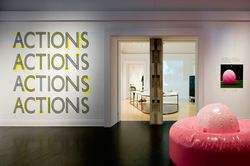
Seemingly common activities such as walking, playing, recycling, and gardening are pushed beyond their usual definition by the international architects, artists, and collectives featured in the exhibition. Their actions push against accepted norms of behaviour in cities, at times even challenging legal limitations. The individuals and groups employ a range of approaches(...)
Seemingly common activities such as walking, playing, recycling, and gardening are pushed beyond their usual definition by the international architects, artists, and collectives featured in the exhibition. Their actions push against accepted norms of behaviour in cities, at times even challenging legal limitations. The individuals and groups employ a range of approaches(...)
Location:
Main galleries
Main galleries
Date:
26 November 2008 to 19 April 2009
26 November 2008 to 19 April 2009
Title:
Actions: What You Can Do With the City
Actions:
Description:
Seemingly common activities such as walking, playing, recycling, and gardening are pushed beyond their usual definition by the international architects, artists, and collectives featured in the exhibition. Their actions push against accepted norms of behaviour in cities, at times even challenging legal limitations. The individuals and groups employ a range of approaches(...)
Actions: What You Can Do With the City
Actions:
Description:
Seemingly common activities such as walking, playing, recycling, and gardening are pushed beyond their usual definition by the international architects, artists, and collectives featured in the exhibition. Their actions push against accepted norms of behaviour in cities, at times even challenging legal limitations. The individuals and groups employ a range of approaches(...)
Form:
exhibitions
exhibitions
Date:
26 November 2008 to
19 April 2009
26 November 2008 to
19 April 2009
Location:
Main galleries
Main galleries
Form:
exhibitions
exhibitions
Actions:
Description:
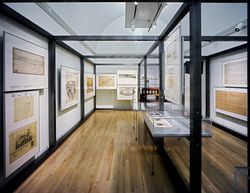
Shaping the Great City explores the role of city-building throughout the Austro-Hungarian Empire, both before and after its dissolution, and expands architectural history by bringing to the fore a rich variety of modernisms. In the years surrounding World War I, these strains of modernism both reflected and shaped the many national and multinational identities of the(...)
Shaping the Great City explores the role of city-building throughout the Austro-Hungarian Empire, both before and after its dissolution, and expands architectural history by bringing to the fore a rich variety of modernisms. In the years surrounding World War I, these strains of modernism both reflected and shaped the many national and multinational identities of the(...)
Location:
Main galleries and hall cases
Main galleries and hall cases
Date:
14 May 2000 to 15 October 2000
14 May 2000 to 15 October 2000
Title:
Shaping the Great City: Modern Architecture in Central Europe, 1890–1937
Actions:
Description:
Shaping the Great City explores the role of city-building throughout the Austro-Hungarian Empire, both before and after its dissolution, and expands architectural history by bringing to the fore a rich variety of modernisms. In the years surrounding World War I, these strains of modernism both reflected and shaped the many national and multinational identities of the(...)
Shaping the Great City: Modern Architecture in Central Europe, 1890–1937
Actions:
Description:
Shaping the Great City explores the role of city-building throughout the Austro-Hungarian Empire, both before and after its dissolution, and expands architectural history by bringing to the fore a rich variety of modernisms. In the years surrounding World War I, these strains of modernism both reflected and shaped the many national and multinational identities of the(...)
Form:
exhibitions
exhibitions
Date:
14 May 2000 to
15 October 2000
14 May 2000 to
15 October 2000
Location:
Main galleries and hall cases
Main galleries and hall cases
Form:
exhibitions
exhibitions
Actions:
Description:
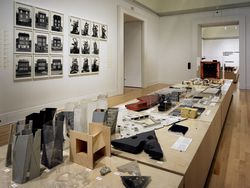
Herzog de Meuron: Archaeology of the Mind presents an exhaustive display of materials from the architects’ archive and from related collections. Referencing a natural history, the exhibition includes study models, books, photographs, toys, fossils, Chinese scholars’ rocks, and significant works of contemporary art, all of which have informed the thinking of the Swiss(...)
Herzog de Meuron: Archaeology of the Mind presents an exhaustive display of materials from the architects’ archive and from related collections. Referencing a natural history, the exhibition includes study models, books, photographs, toys, fossils, Chinese scholars’ rocks, and significant works of contemporary art, all of which have informed the thinking of the Swiss(...)
Location:
Main galleries
Main galleries
Date:
23 October 2002 to 6 April 2003
23 October 2002 to 6 April 2003
Title:
Herzog & de Meuron: Archaeology of the Mind
Actions:
Description:
Herzog de Meuron: Archaeology of the Mind presents an exhaustive display of materials from the architects’ archive and from related collections. Referencing a natural history, the exhibition includes study models, books, photographs, toys, fossils, Chinese scholars’ rocks, and significant works of contemporary art, all of which have informed the thinking of the Swiss(...)
Herzog & de Meuron: Archaeology of the Mind
Actions:
Description:
Herzog de Meuron: Archaeology of the Mind presents an exhaustive display of materials from the architects’ archive and from related collections. Referencing a natural history, the exhibition includes study models, books, photographs, toys, fossils, Chinese scholars’ rocks, and significant works of contemporary art, all of which have informed the thinking of the Swiss(...)
Form:
exhibitions
exhibitions
Date:
23 October 2002 to
6 April 2003
23 October 2002 to
6 April 2003
Location:
Main galleries
Main galleries
Form:
events
events
Title:
Scouting Skateboard Sites
Scouting Skateboard Sites
Actions:
Description:
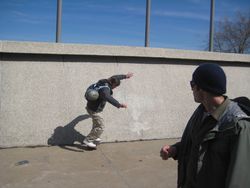
Skateboarder and landscape architect Mathieu Robichaud takes participants on a guided walk, analysing the skateboarding potential of urban spaces. Robichaud, of the firm Bloom Paysage, specialises in the design of skate parks. Inspired by the exhibition Actions: What You Can Do With the City (2008), the CCA hosts a series of workshops devoted to public actions in urban(...)
Skateboarder and landscape architect Mathieu Robichaud takes participants on a guided walk, analysing the skateboarding potential of urban spaces. Robichaud, of the firm Bloom Paysage, specialises in the design of skate parks. Inspired by the exhibition Actions: What You Can Do With the City (2008), the CCA hosts a series of workshops devoted to public actions in urban(...)
Date:
11 April 2009
11 April 2009
Title:
Scouting Skateboard Sites
Actions:
Description:
Skateboarder and landscape architect Mathieu Robichaud takes participants on a guided walk, analysing the skateboarding potential of urban spaces. Robichaud, of the firm Bloom Paysage, specialises in the design of skate parks. Inspired by the exhibition Actions: What You Can Do With the City (2008), the CCA hosts a series of workshops devoted to public actions in urban(...)
Scouting Skateboard Sites
Actions:
Description:
Skateboarder and landscape architect Mathieu Robichaud takes participants on a guided walk, analysing the skateboarding potential of urban spaces. Robichaud, of the firm Bloom Paysage, specialises in the design of skate parks. Inspired by the exhibition Actions: What You Can Do With the City (2008), the CCA hosts a series of workshops devoted to public actions in urban(...)
Form:
events
events
Date:
11 April 2009
11 April 2009
Form:
exhibitions
exhibitions
Actions:
Description:
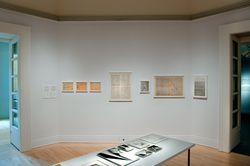
Iannis Xenakis: Composer, Architect, Visionary explores the fundamental role of drawing in the work avant-garde composer Iannis Xenakis. One of the most important figures in late twentieth-century music, Xenakis is also known for his innovative work on Le Corbusier’s La Tourette and Philips Pavilion. Curated by Sharon Kanach and Carey Lovelace, The Drawing Center.(...)
Iannis Xenakis: Composer, Architect, Visionary explores the fundamental role of drawing in the work avant-garde composer Iannis Xenakis. One of the most important figures in late twentieth-century music, Xenakis is also known for his innovative work on Le Corbusier’s La Tourette and Philips Pavilion. Curated by Sharon Kanach and Carey Lovelace, The Drawing Center.(...)
Location:
Octagonal gallery
Octagonal gallery
Date:
17 June 2010 to 17 October 2010
17 June 2010 to 17 October 2010
Title:
Iannis Xenakis: Composer, Architect, Visionary
Actions:
Description:
Iannis Xenakis: Composer, Architect, Visionary explores the fundamental role of drawing in the work avant-garde composer Iannis Xenakis. One of the most important figures in late twentieth-century music, Xenakis is also known for his innovative work on Le Corbusier’s La Tourette and Philips Pavilion. Curated by Sharon Kanach and Carey Lovelace, The Drawing Center.(...)
Iannis Xenakis: Composer, Architect, Visionary
Actions:
Description:
Iannis Xenakis: Composer, Architect, Visionary explores the fundamental role of drawing in the work avant-garde composer Iannis Xenakis. One of the most important figures in late twentieth-century music, Xenakis is also known for his innovative work on Le Corbusier’s La Tourette and Philips Pavilion. Curated by Sharon Kanach and Carey Lovelace, The Drawing Center.(...)
Form:
exhibitions
exhibitions
Date:
17 June 2010 to
17 October 2010
17 June 2010 to
17 October 2010
Location:
Octagonal gallery
Octagonal gallery


