


7817 Results
Level of archival description:
Sub-series
Sub-series
Reference number:
AP207.S2.SS09
Description:
The sub-series documents the exhibition "Radicals. Architettura e design 1960-1975", curated by Pettena and presented in the Italian Pavilion at the Venice Biennale in 1996. This documentary exhibition on the Radical architecture movement in the 1960s and the 1970s, for presented the Radical movement not as "essentially conceptual contribution, as “fantastic” theories and utopian visions of the future" [1] but as "precursors of the most innovative production of the contemporary, international architectural scene." [2] The sub-series contains research material, including photocopies of articles on the Radical movement and research on previous editions of the Venice Biennale. It also contains correspondence for the planning of the exhibition, including with Hans Hollein and the Biennale administration, a draft exhibition proposal, concept development notes by Pettena, proposals for promotional material on the exhibition and press clippings. Source: [1][2] Gianni Pettena website, https://www.giannipettena.it/english/exhibitions/settings/ (last accessed 29 January 2020).
AP207.S2.SS09
Description:
The sub-series documents the exhibition "Radicals. Architettura e design 1960-1975", curated by Pettena and presented in the Italian Pavilion at the Venice Biennale in 1996. This documentary exhibition on the Radical architecture movement in the 1960s and the 1970s, for presented the Radical movement not as "essentially conceptual contribution, as “fantastic” theories and utopian visions of the future" [1] but as "precursors of the most innovative production of the contemporary, international architectural scene." [2] The sub-series contains research material, including photocopies of articles on the Radical movement and research on previous editions of the Venice Biennale. It also contains correspondence for the planning of the exhibition, including with Hans Hollein and the Biennale administration, a draft exhibition proposal, concept development notes by Pettena, proposals for promotional material on the exhibition and press clippings. Source: [1][2] Gianni Pettena website, https://www.giannipettena.it/english/exhibitions/settings/ (last accessed 29 January 2020).
People:
Date:
1992-2010
1992-2010
Title:
Radicals. Architettura e Design 1960-1975 (1992)
Actions:
AP207.S2.SS09
Description:
The sub-series documents the exhibition "Radicals. Architettura e design 1960-1975", curated by Pettena and presented in the Italian Pavilion at the Venice Biennale in 1996. This documentary exhibition on the Radical architecture movement in the 1960s and the 1970s, for presented the Radical movement not as "essentially conceptual contribution, as “fantastic” theories and utopian visions of the future" [1] but as "precursors of the most innovative production of the contemporary, international architectural scene." [2] The sub-series contains research material, including photocopies of articles on the Radical movement and research on previous editions of the Venice Biennale. It also contains correspondence for the planning of the exhibition, including with Hans Hollein and the Biennale administration, a draft exhibition proposal, concept development notes by Pettena, proposals for promotional material on the exhibition and press clippings. Source: [1][2] Gianni Pettena website, https://www.giannipettena.it/english/exhibitions/settings/ (last accessed 29 January 2020).
Radicals. Architettura e Design 1960-1975 (1992)
Actions:
AP207.S2.SS09
Description:
The sub-series documents the exhibition "Radicals. Architettura e design 1960-1975", curated by Pettena and presented in the Italian Pavilion at the Venice Biennale in 1996. This documentary exhibition on the Radical architecture movement in the 1960s and the 1970s, for presented the Radical movement not as "essentially conceptual contribution, as “fantastic” theories and utopian visions of the future" [1] but as "precursors of the most innovative production of the contemporary, international architectural scene." [2] The sub-series contains research material, including photocopies of articles on the Radical movement and research on previous editions of the Venice Biennale. It also contains correspondence for the planning of the exhibition, including with Hans Hollein and the Biennale administration, a draft exhibition proposal, concept development notes by Pettena, proposals for promotional material on the exhibition and press clippings. Source: [1][2] Gianni Pettena website, https://www.giannipettena.it/english/exhibitions/settings/ (last accessed 29 January 2020).
Level of archival description:
Subseries
Subseries
Date:
1992-2010
1992-2010
People:
Level of archival description:
Series
Series
Title:
Photographies = Photographs
Photographies = Photographs
Reference number:
AP156.S4
Description:
La série documente la vie personnelle et professionnelle de Pierre Jeanneret, en Europe et en Inde, ainsi que le projet de la nouvelle ville de Chandigarh, en Inde. La série inclut principalement des photographies de Chandigarh, mais aussi des photographies de familles, des photographies de quelques projets qu'il a réalisé en Europe dans les années 1940. Le matériel de cette série a été produit entre la fin des années 1800 jusqu'au années 1970. La série contient principalement des photographies, donc des épreuves contacts ou des photocollages, ainsi que des négatifs. Series documents the personnal and professional life of Pierre Jeanneret, in Europe and in India, and also the project for the new city of Chandigarh, in India. The series includes predominantly photographs of Chandigarh, but also family photographs and photographs of a few of his projects in Europe in the 1940s. The material in this series was produced between the end of the 1800s to the 1970s. The series contains predominantly photographs, including contact sheets and photocollages, and also negatives.
AP156.S4
Description:
La série documente la vie personnelle et professionnelle de Pierre Jeanneret, en Europe et en Inde, ainsi que le projet de la nouvelle ville de Chandigarh, en Inde. La série inclut principalement des photographies de Chandigarh, mais aussi des photographies de familles, des photographies de quelques projets qu'il a réalisé en Europe dans les années 1940. Le matériel de cette série a été produit entre la fin des années 1800 jusqu'au années 1970. La série contient principalement des photographies, donc des épreuves contacts ou des photocollages, ainsi que des négatifs. Series documents the personnal and professional life of Pierre Jeanneret, in Europe and in India, and also the project for the new city of Chandigarh, in India. The series includes predominantly photographs of Chandigarh, but also family photographs and photographs of a few of his projects in Europe in the 1940s. The material in this series was produced between the end of the 1800s to the 1970s. The series contains predominantly photographs, including contact sheets and photocollages, and also negatives.
People:
Title:
Photographies = Photographs
Actions:
AP156.S4
Description:
La série documente la vie personnelle et professionnelle de Pierre Jeanneret, en Europe et en Inde, ainsi que le projet de la nouvelle ville de Chandigarh, en Inde. La série inclut principalement des photographies de Chandigarh, mais aussi des photographies de familles, des photographies de quelques projets qu'il a réalisé en Europe dans les années 1940. Le matériel de cette série a été produit entre la fin des années 1800 jusqu'au années 1970. La série contient principalement des photographies, donc des épreuves contacts ou des photocollages, ainsi que des négatifs. Series documents the personnal and professional life of Pierre Jeanneret, in Europe and in India, and also the project for the new city of Chandigarh, in India. The series includes predominantly photographs of Chandigarh, but also family photographs and photographs of a few of his projects in Europe in the 1940s. The material in this series was produced between the end of the 1800s to the 1970s. The series contains predominantly photographs, including contact sheets and photocollages, and also negatives.
Photographies = Photographs
Actions:
AP156.S4
Description:
La série documente la vie personnelle et professionnelle de Pierre Jeanneret, en Europe et en Inde, ainsi que le projet de la nouvelle ville de Chandigarh, en Inde. La série inclut principalement des photographies de Chandigarh, mais aussi des photographies de familles, des photographies de quelques projets qu'il a réalisé en Europe dans les années 1940. Le matériel de cette série a été produit entre la fin des années 1800 jusqu'au années 1970. La série contient principalement des photographies, donc des épreuves contacts ou des photocollages, ainsi que des négatifs. Series documents the personnal and professional life of Pierre Jeanneret, in Europe and in India, and also the project for the new city of Chandigarh, in India. The series includes predominantly photographs of Chandigarh, but also family photographs and photographs of a few of his projects in Europe in the 1940s. The material in this series was produced between the end of the 1800s to the 1970s. The series contains predominantly photographs, including contact sheets and photocollages, and also negatives.
Level of archival description:
Série 4
Série 4
People:
Level of archival description:
Series
Series
Title:
Research Library
Research Library
Actions:
Reference number:
AP149.S5
Description:
This series documents Minimum Cost Housing Group's research library. It consists of publications, which as published material is accessible through the CCA library to facilitate description and access. These publications can be found and requested for consultation on the CCA website using the search term "Minimum Cost Housing Group fonds." There are about 908 monographs and 160 periodicals collected since the foundation of the groupe in the early 1970s, until 2017, the year of the donation of the material to the CCA. The publications are mostly from the mid-1930s to the early 2010s and are mainly in English, French, and Spanish, but includes various other languages such as German, Hindi, and Mandarin. The collection includes numerous publications related to sustainable architecture, low-cost construction and housing, and urban agriculture. A major theme across these publications is housing and urban planning in the developing world. These publications are complemented by numerous reports from organizations such as the World Bank and various branches of the United Nations.
AP149.S5
Description:
This series documents Minimum Cost Housing Group's research library. It consists of publications, which as published material is accessible through the CCA library to facilitate description and access. These publications can be found and requested for consultation on the CCA website using the search term "Minimum Cost Housing Group fonds." There are about 908 monographs and 160 periodicals collected since the foundation of the groupe in the early 1970s, until 2017, the year of the donation of the material to the CCA. The publications are mostly from the mid-1930s to the early 2010s and are mainly in English, French, and Spanish, but includes various other languages such as German, Hindi, and Mandarin. The collection includes numerous publications related to sustainable architecture, low-cost construction and housing, and urban agriculture. A major theme across these publications is housing and urban planning in the developing world. These publications are complemented by numerous reports from organizations such as the World Bank and various branches of the United Nations.
People:
Date:
1935-2013
1935-2013
Title:
Research Library
Actions:
AP149.S5
Description:
This series documents Minimum Cost Housing Group's research library. It consists of publications, which as published material is accessible through the CCA library to facilitate description and access. These publications can be found and requested for consultation on the CCA website using the search term "Minimum Cost Housing Group fonds." There are about 908 monographs and 160 periodicals collected since the foundation of the groupe in the early 1970s, until 2017, the year of the donation of the material to the CCA. The publications are mostly from the mid-1930s to the early 2010s and are mainly in English, French, and Spanish, but includes various other languages such as German, Hindi, and Mandarin. The collection includes numerous publications related to sustainable architecture, low-cost construction and housing, and urban agriculture. A major theme across these publications is housing and urban planning in the developing world. These publications are complemented by numerous reports from organizations such as the World Bank and various branches of the United Nations.
Research Library
Actions:
AP149.S5
Description:
This series documents Minimum Cost Housing Group's research library. It consists of publications, which as published material is accessible through the CCA library to facilitate description and access. These publications can be found and requested for consultation on the CCA website using the search term "Minimum Cost Housing Group fonds." There are about 908 monographs and 160 periodicals collected since the foundation of the groupe in the early 1970s, until 2017, the year of the donation of the material to the CCA. The publications are mostly from the mid-1930s to the early 2010s and are mainly in English, French, and Spanish, but includes various other languages such as German, Hindi, and Mandarin. The collection includes numerous publications related to sustainable architecture, low-cost construction and housing, and urban agriculture. A major theme across these publications is housing and urban planning in the developing world. These publications are complemented by numerous reports from organizations such as the World Bank and various branches of the United Nations.
Level of archival description:
Series
Series
Date:
1935-2013
1935-2013
People:
Form:
exhibitions
exhibitions
Description:
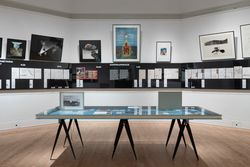
Alongside a growth in decentralized, experimental, and underground cinema at the end of the 1960s and in the early 1970s, many groups operating from inside the field of architecture such as Superstudio, Studio 9999, and Ant Farm explored the short film as a medium to expand architectural discourse, embed their projects with bold reflections and projections of society, and(...)
Alongside a growth in decentralized, experimental, and underground cinema at the end of the 1960s and in the early 1970s, many groups operating from inside the field of architecture such as Superstudio, Studio 9999, and Ant Farm explored the short film as a medium to expand architectural discourse, embed their projects with bold reflections and projections of society, and(...)
Location:
Octagonal gallery
Octagonal gallery
Date:
21 September 2018 to 19 May 2019
21 September 2018 to 19 May 2019
Title:
Scripts for a new world
Actions:
Description:
Alongside a growth in decentralized, experimental, and underground cinema at the end of the 1960s and in the early 1970s, many groups operating from inside the field of architecture such as Superstudio, Studio 9999, and Ant Farm explored the short film as a medium to expand architectural discourse, embed their projects with bold reflections and projections of society, and(...)
Scripts for a new world
Actions:
Description:
Alongside a growth in decentralized, experimental, and underground cinema at the end of the 1960s and in the early 1970s, many groups operating from inside the field of architecture such as Superstudio, Studio 9999, and Ant Farm explored the short film as a medium to expand architectural discourse, embed their projects with bold reflections and projections of society, and(...)
Form:
exhibitions
exhibitions
Date:
21 September 2018 to
19 May 2019
21 September 2018 to
19 May 2019
Location:
Octagonal gallery
Octagonal gallery
Level of archival description:
Project
Project
Reference number:
AP018.S1.1956.PR01
Description:
This project series documents the design of the residence of J.D. Crashley at 3 Old George Place in Toronto, Ontario from 1956-1965. The office identified the project number as 5614. This project consisted of the design for a T-shaped, one storey home for J.D. Crashley, who was a prominent Toronto entrepreneur and president of the Art Gallery of Ontario in the 1970s. Only the garage was visible from the street, with one of the stems of the T extending over into the adjacent ravine, creating two levels to the residence. The exterior of the residence was largely field stone with brick on some walls. The construction of this home is recorded under a separate project number, assigned by the office (see project series AP018.S1.1959.PR03 in this fonds). Today, the house enjoys special heritage status in Ontario, although the highly controversial addition of a second floor was recently completed. The project is recorded through drawings dating from approximately 1956-1959. The majority of these drawings are original design drawings.
AP018.S1.1956.PR01
Description:
This project series documents the design of the residence of J.D. Crashley at 3 Old George Place in Toronto, Ontario from 1956-1965. The office identified the project number as 5614. This project consisted of the design for a T-shaped, one storey home for J.D. Crashley, who was a prominent Toronto entrepreneur and president of the Art Gallery of Ontario in the 1970s. Only the garage was visible from the street, with one of the stems of the T extending over into the adjacent ravine, creating two levels to the residence. The exterior of the residence was largely field stone with brick on some walls. The construction of this home is recorded under a separate project number, assigned by the office (see project series AP018.S1.1959.PR03 in this fonds). Today, the house enjoys special heritage status in Ontario, although the highly controversial addition of a second floor was recently completed. The project is recorded through drawings dating from approximately 1956-1959. The majority of these drawings are original design drawings.
People:
Date:
circa 1956-1959
circa 1956-1959
Title:
J.D. Crashley Residence, Toronto (1956-1965)
Actions:
AP018.S1.1956.PR01
Description:
This project series documents the design of the residence of J.D. Crashley at 3 Old George Place in Toronto, Ontario from 1956-1965. The office identified the project number as 5614. This project consisted of the design for a T-shaped, one storey home for J.D. Crashley, who was a prominent Toronto entrepreneur and president of the Art Gallery of Ontario in the 1970s. Only the garage was visible from the street, with one of the stems of the T extending over into the adjacent ravine, creating two levels to the residence. The exterior of the residence was largely field stone with brick on some walls. The construction of this home is recorded under a separate project number, assigned by the office (see project series AP018.S1.1959.PR03 in this fonds). Today, the house enjoys special heritage status in Ontario, although the highly controversial addition of a second floor was recently completed. The project is recorded through drawings dating from approximately 1956-1959. The majority of these drawings are original design drawings.
J.D. Crashley Residence, Toronto (1956-1965)
Actions:
AP018.S1.1956.PR01
Description:
This project series documents the design of the residence of J.D. Crashley at 3 Old George Place in Toronto, Ontario from 1956-1965. The office identified the project number as 5614. This project consisted of the design for a T-shaped, one storey home for J.D. Crashley, who was a prominent Toronto entrepreneur and president of the Art Gallery of Ontario in the 1970s. Only the garage was visible from the street, with one of the stems of the T extending over into the adjacent ravine, creating two levels to the residence. The exterior of the residence was largely field stone with brick on some walls. The construction of this home is recorded under a separate project number, assigned by the office (see project series AP018.S1.1959.PR03 in this fonds). Today, the house enjoys special heritage status in Ontario, although the highly controversial addition of a second floor was recently completed. The project is recorded through drawings dating from approximately 1956-1959. The majority of these drawings are original design drawings.
Level of archival description:
Project
Project
Date:
circa 1956-1959
circa 1956-1959
People:
Level of archival description:
Project
Project
Actions:
Reference number:
AP018.S1.1959.PR03
Description:
This project series documents the construction of the residence of J.D. Crashley at 3 Old George Place in Toronto, Ontario from 1959-1965. The office identified the project number as 5959. This project consisted of the construction of a T-shaped, one storey home for J.D. Crashley, who was a prominent Toronto entrepreneur and president of the Art Gallery of Ontario in the 1970s. Only the garage was visible from the street, with one of the stems of the T extending over into the adjacent ravine, creating two levels to the residence. The exterior of the residence was largely field stone with brick on some walls. The design of this home is recorded under a separate project number, assigned by the office (see project series AP018.S1.1956.PR01 in this fonds). Today, the house enjoys special heritage status in Ontario, although the highly controversial addition of a second floor was recently completed. The project is recorded through original drawings dating from 1962-1963 The majority of these drawings are for construction.
AP018.S1.1959.PR03
Description:
This project series documents the construction of the residence of J.D. Crashley at 3 Old George Place in Toronto, Ontario from 1959-1965. The office identified the project number as 5959. This project consisted of the construction of a T-shaped, one storey home for J.D. Crashley, who was a prominent Toronto entrepreneur and president of the Art Gallery of Ontario in the 1970s. Only the garage was visible from the street, with one of the stems of the T extending over into the adjacent ravine, creating two levels to the residence. The exterior of the residence was largely field stone with brick on some walls. The design of this home is recorded under a separate project number, assigned by the office (see project series AP018.S1.1956.PR01 in this fonds). Today, the house enjoys special heritage status in Ontario, although the highly controversial addition of a second floor was recently completed. The project is recorded through original drawings dating from 1962-1963 The majority of these drawings are for construction.
People:
Date:
1962-1963
1962-1963
Title:
J.D. Crashley Residence, Toronto (1959)
Actions:
AP018.S1.1959.PR03
Description:
This project series documents the construction of the residence of J.D. Crashley at 3 Old George Place in Toronto, Ontario from 1959-1965. The office identified the project number as 5959. This project consisted of the construction of a T-shaped, one storey home for J.D. Crashley, who was a prominent Toronto entrepreneur and president of the Art Gallery of Ontario in the 1970s. Only the garage was visible from the street, with one of the stems of the T extending over into the adjacent ravine, creating two levels to the residence. The exterior of the residence was largely field stone with brick on some walls. The design of this home is recorded under a separate project number, assigned by the office (see project series AP018.S1.1956.PR01 in this fonds). Today, the house enjoys special heritage status in Ontario, although the highly controversial addition of a second floor was recently completed. The project is recorded through original drawings dating from 1962-1963 The majority of these drawings are for construction.
J.D. Crashley Residence, Toronto (1959)
Actions:
AP018.S1.1959.PR03
Description:
This project series documents the construction of the residence of J.D. Crashley at 3 Old George Place in Toronto, Ontario from 1959-1965. The office identified the project number as 5959. This project consisted of the construction of a T-shaped, one storey home for J.D. Crashley, who was a prominent Toronto entrepreneur and president of the Art Gallery of Ontario in the 1970s. Only the garage was visible from the street, with one of the stems of the T extending over into the adjacent ravine, creating two levels to the residence. The exterior of the residence was largely field stone with brick on some walls. The design of this home is recorded under a separate project number, assigned by the office (see project series AP018.S1.1956.PR01 in this fonds). Today, the house enjoys special heritage status in Ontario, although the highly controversial addition of a second floor was recently completed. The project is recorded through original drawings dating from 1962-1963 The majority of these drawings are for construction.
Level of archival description:
Project
Project
Date:
1962-1963
1962-1963
People:
Form:
events
events
Actions:
Description:
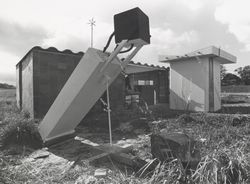
In the Yesterday Today lecture series, Canadian architect and author Witold Rybczynski discusses the roots of Ecol House, a prototype for an autonomous dwelling for use in developing countries. The project was created in Montréal in 1972 by Ecol Operation, a group of architects and students of which he was a member that became an international point of reference for(...)
In the Yesterday Today lecture series, Canadian architect and author Witold Rybczynski discusses the roots of Ecol House, a prototype for an autonomous dwelling for use in developing countries. The project was created in Montréal in 1972 by Ecol Operation, a group of architects and students of which he was a member that became an international point of reference for(...)
Location:
Paul-Desmarais Theatre
Paul-Desmarais Theatre
Date:
29 November 2007
29 November 2007
Title:
Witold Rybczynski: Green Before Green
Actions:
Description:
In the Yesterday Today lecture series, Canadian architect and author Witold Rybczynski discusses the roots of Ecol House, a prototype for an autonomous dwelling for use in developing countries. The project was created in Montréal in 1972 by Ecol Operation, a group of architects and students of which he was a member that became an international point of reference for(...)
Witold Rybczynski: Green Before Green
Actions:
Description:
In the Yesterday Today lecture series, Canadian architect and author Witold Rybczynski discusses the roots of Ecol House, a prototype for an autonomous dwelling for use in developing countries. The project was created in Montréal in 1972 by Ecol Operation, a group of architects and students of which he was a member that became an international point of reference for(...)
Form:
events
events
Date:
29 November 2007
29 November 2007
Location:
Paul-Desmarais Theatre
Paul-Desmarais Theatre
Actions:
Reference number:
PHCON2002:0016:017
Description:
Binder documents correspondence between Anne Alpert's family members during the 1960s and 1970s. Gordon Matta-Clark's letters to his mother during his years as a student at Cornell University in Ithaca, New York and his years as an artist/architect are among those included, as well as letters from his twin brother John Sebastian Matta to various family members. Letters from Roberto Matta and his wife, Malitte Matta, are also found in the binder, along with personal letters addressed to Anne Alpert, miscellaneous memorabilia, and family photographs. Binder contains photographs and textual records.
PHCON2002:0016:017
Description:
Binder documents correspondence between Anne Alpert's family members during the 1960s and 1970s. Gordon Matta-Clark's letters to his mother during his years as a student at Cornell University in Ithaca, New York and his years as an artist/architect are among those included, as well as letters from his twin brother John Sebastian Matta to various family members. Letters from Roberto Matta and his wife, Malitte Matta, are also found in the binder, along with personal letters addressed to Anne Alpert, miscellaneous memorabilia, and family photographs. Binder contains photographs and textual records.
People:
Date:
1964-1976
1964-1976
Title:
Gordon Matta-Clark Mother's papers: Family Letters 1964 to 1976
Actions:
PHCON2002:0016:017
Description:
Binder documents correspondence between Anne Alpert's family members during the 1960s and 1970s. Gordon Matta-Clark's letters to his mother during his years as a student at Cornell University in Ithaca, New York and his years as an artist/architect are among those included, as well as letters from his twin brother John Sebastian Matta to various family members. Letters from Roberto Matta and his wife, Malitte Matta, are also found in the binder, along with personal letters addressed to Anne Alpert, miscellaneous memorabilia, and family photographs. Binder contains photographs and textual records.
Gordon Matta-Clark Mother's papers: Family Letters 1964 to 1976
Actions:
PHCON2002:0016:017
Description:
Binder documents correspondence between Anne Alpert's family members during the 1960s and 1970s. Gordon Matta-Clark's letters to his mother during his years as a student at Cornell University in Ithaca, New York and his years as an artist/architect are among those included, as well as letters from his twin brother John Sebastian Matta to various family members. Letters from Roberto Matta and his wife, Malitte Matta, are also found in the binder, along with personal letters addressed to Anne Alpert, miscellaneous memorabilia, and family photographs. Binder contains photographs and textual records.
Date:
1964-1976
1964-1976
People:
Form:
research
research
Title:
Visiting Scholars 2006
Visiting Scholars 2006
Actions:
Description:
Jean Attali, École Nationale Supérieure dArchitecture de Paris-Malaquais, Paris, France Topic: Figures d’énonciation de la pensée architecturale et spatiale: manifestes et oppositions dans les oeuvres d’Aldo Rossi, Peter Eisenman et Rem Koolhaas Cammy Brothers, University of Virginia, Charlottesville, United States Topic: Drawing from Memory: Giuliano da Sangallo and(...)
Jean Attali, École Nationale Supérieure dArchitecture de Paris-Malaquais, Paris, France Topic: Figures d’énonciation de la pensée architecturale et spatiale: manifestes et oppositions dans les oeuvres d’Aldo Rossi, Peter Eisenman et Rem Koolhaas Cammy Brothers, University of Virginia, Charlottesville, United States Topic: Drawing from Memory: Giuliano da Sangallo and(...)
Date:
10 January 2006 to 15 September 2006
10 January 2006 to 15 September 2006
Title:
Visiting Scholars 2006
Actions:
Description:
Jean Attali, École Nationale Supérieure dArchitecture de Paris-Malaquais, Paris, France Topic: Figures d’énonciation de la pensée architecturale et spatiale: manifestes et oppositions dans les oeuvres d’Aldo Rossi, Peter Eisenman et Rem Koolhaas Cammy Brothers, University of Virginia, Charlottesville, United States Topic: Drawing from Memory: Giuliano da Sangallo and(...)
Visiting Scholars 2006
Actions:
Description:
Jean Attali, École Nationale Supérieure dArchitecture de Paris-Malaquais, Paris, France Topic: Figures d’énonciation de la pensée architecturale et spatiale: manifestes et oppositions dans les oeuvres d’Aldo Rossi, Peter Eisenman et Rem Koolhaas Cammy Brothers, University of Virginia, Charlottesville, United States Topic: Drawing from Memory: Giuliano da Sangallo and(...)
Form:
research
research
Date:
10 January 2006 to
15 September 2006
10 January 2006 to
15 September 2006
Form:
exhibitions
exhibitions
Actions:
Description:
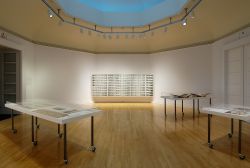
German artist Dieter Appelt presents a major work commissioned by the CCA and inspired by the late nineteenth-century Forth Rail Bridge near Edinburgh, Scotland. Dieter Appelt: Forth Bridge — Cinema. Metric Space is the second of four exhibitions in the Tangent series, which brings contemporary artists into dialogue with the CCA Collection and results in newly(...)
German artist Dieter Appelt presents a major work commissioned by the CCA and inspired by the late nineteenth-century Forth Rail Bridge near Edinburgh, Scotland. Dieter Appelt: Forth Bridge — Cinema. Metric Space is the second of four exhibitions in the Tangent series, which brings contemporary artists into dialogue with the CCA Collection and results in newly(...)
Location:
Octagonal gallery
Octagonal gallery
Date:
9 March 2005 to 22 May 2005
9 March 2005 to 22 May 2005
Title:
Dieter Appelt: Forth Bridge - Cinema. Metric Space
Actions:
Description:
German artist Dieter Appelt presents a major work commissioned by the CCA and inspired by the late nineteenth-century Forth Rail Bridge near Edinburgh, Scotland. Dieter Appelt: Forth Bridge — Cinema. Metric Space is the second of four exhibitions in the Tangent series, which brings contemporary artists into dialogue with the CCA Collection and results in newly(...)
Dieter Appelt: Forth Bridge - Cinema. Metric Space
Actions:
Description:
German artist Dieter Appelt presents a major work commissioned by the CCA and inspired by the late nineteenth-century Forth Rail Bridge near Edinburgh, Scotland. Dieter Appelt: Forth Bridge — Cinema. Metric Space is the second of four exhibitions in the Tangent series, which brings contemporary artists into dialogue with the CCA Collection and results in newly(...)
Form:
exhibitions
exhibitions
Date:
9 March 2005 to
22 May 2005
9 March 2005 to
22 May 2005
Location:
Octagonal gallery
Octagonal gallery


