


1067 Results
Form:
books
books
Title:
All we need
All we need
Actions:
Price:
$39.95
(available to order)
Summary:
On the occasion of Luxemburg European Capital of Culture 2007, the exhibition All We Need is being mounted on the subject of needs, resources, and fairness. The exhibition’s point of departure is the ten needs of every person as formulated by the economist Manfred Max-Neef: subsistence, protection, affection, participation, recreation, creativity, understanding, identity,(...)
$39.95
(available to order)
Summary:
On the occasion of Luxemburg European Capital of Culture 2007, the exhibition All We Need is being mounted on the subject of needs, resources, and fairness. The exhibition’s point of departure is the ten needs of every person as formulated by the economist Manfred Max-Neef: subsistence, protection, affection, participation, recreation, creativity, understanding, identity,(...)
Title:
All we need
Actions:
Price:
$39.95
(available to order)
Summary:
On the occasion of Luxemburg European Capital of Culture 2007, the exhibition All We Need is being mounted on the subject of needs, resources, and fairness. The exhibition’s point of departure is the ten needs of every person as formulated by the economist Manfred Max-Neef: subsistence, protection, affection, participation, recreation, creativity, understanding, identity, freedom, and transcendence. Each of these needs has a single area of the exhibition devoted to it: Survive, Protect, Love, Stand Up, Relax, Create, Understand, Choose, Dream. The book mirrors the exhibition with photographs and texts and provides additional windows on the complex subject with introductory texts on the exhibition, resources, and fairness. An extensive collage of texts and images illustrates the needs, supplemented by journalistic and art-historical images and philosophical quotations that do not appear in the exhibition itself. The catalogue is designed by the well-known graphic designer Emanuel Tschumi.
All we need
Actions:
Price:
$39.95
(available to order)
Summary:
On the occasion of Luxemburg European Capital of Culture 2007, the exhibition All We Need is being mounted on the subject of needs, resources, and fairness. The exhibition’s point of departure is the ten needs of every person as formulated by the economist Manfred Max-Neef: subsistence, protection, affection, participation, recreation, creativity, understanding, identity, freedom, and transcendence. Each of these needs has a single area of the exhibition devoted to it: Survive, Protect, Love, Stand Up, Relax, Create, Understand, Choose, Dream. The book mirrors the exhibition with photographs and texts and provides additional windows on the complex subject with introductory texts on the exhibition, resources, and fairness. An extensive collage of texts and images illustrates the needs, supplemented by journalistic and art-historical images and philosophical quotations that do not appear in the exhibition itself. The catalogue is designed by the well-known graphic designer Emanuel Tschumi.
Form:
books
books
Publication:
June 2007, Luxembourg
June 2007, Luxembourg
Subject:
Architectural Theory
Architectural Theory
Form:
books
books
Actions:
Price:
$44.95
(available to order)
Summary:
Immigrants in the United States send more than $20 billion every year back to Mexico one of the largest flows of such remittances in the world. With The Remittance Landscape, Sarah Lynn Lopez offers the first extended look at what is done with that money, and in particular how the building boom that it has generated has changed Mexican towns and villages. Lopez not(...)
$44.95
(available to order)
Summary:
Immigrants in the United States send more than $20 billion every year back to Mexico one of the largest flows of such remittances in the world. With The Remittance Landscape, Sarah Lynn Lopez offers the first extended look at what is done with that money, and in particular how the building boom that it has generated has changed Mexican towns and villages. Lopez not(...)
Title:
The remittance landscape: spaces of migration in rural Mexico and urban USA
Actions:
Price:
$44.95
(available to order)
Summary:
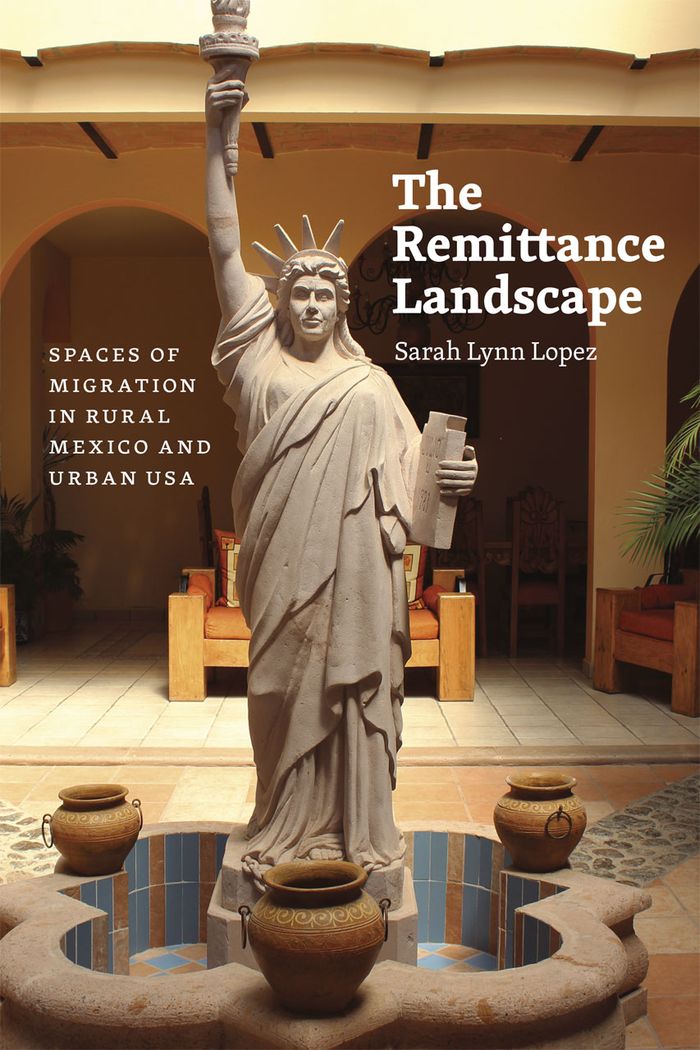
Immigrants in the United States send more than $20 billion every year back to Mexico one of the largest flows of such remittances in the world. With The Remittance Landscape, Sarah Lynn Lopez offers the first extended look at what is done with that money, and in particular how the building boom that it has generated has changed Mexican towns and villages. Lopez not only identifies a clear correspondence between the flow of remittances and the recent building boom in rural Mexico but also proposes that this construction boom itself motivates migration and changes social and cultural life for migrants and their families. At the same time, migrants are changing the landscapes of cities in the United States: for example, Chicago and Los Angeles are home to buildings explicitly created as headquarters for Mexican workers from several Mexican states such as Jalisco, Michoacán, and Zacatecas.
The remittance landscape: spaces of migration in rural Mexico and urban USA
Actions:
Price:
$44.95
(available to order)
Summary:
Immigrants in the United States send more than $20 billion every year back to Mexico one of the largest flows of such remittances in the world. With The Remittance Landscape, Sarah Lynn Lopez offers the first extended look at what is done with that money, and in particular how the building boom that it has generated has changed Mexican towns and villages. Lopez not only identifies a clear correspondence between the flow of remittances and the recent building boom in rural Mexico but also proposes that this construction boom itself motivates migration and changes social and cultural life for migrants and their families. At the same time, migrants are changing the landscapes of cities in the United States: for example, Chicago and Los Angeles are home to buildings explicitly created as headquarters for Mexican workers from several Mexican states such as Jalisco, Michoacán, and Zacatecas.
Form:
books
books
Publication:
October 2015
October 2015
Subject:
Architectural Theory
Architectural Theory
Form:
books
books
Actions:
Price:
$34.95
(available to order)
Summary:
Art museums have emerged in recent decades as the most vibrant and popular of all cultural institutions. Though art museums have never been more popular, their direction and values are now being contested as never before, both in the media and in the art world itself. This engaging thematic history of the art museum from its inception in the eighteenth century to the(...)
$34.95
(available to order)
Summary:
Art museums have emerged in recent decades as the most vibrant and popular of all cultural institutions. Though art museums have never been more popular, their direction and values are now being contested as never before, both in the media and in the art world itself. This engaging thematic history of the art museum from its inception in the eighteenth century to the(...)
Title:
The Art Museum from Boullée to Bilbao
Actions:
Price:
$34.95
(available to order)
Summary:
Art museums have emerged in recent decades as the most vibrant and popular of all cultural institutions. Though art museums have never been more popular, their direction and values are now being contested as never before, both in the media and in the art world itself. This engaging thematic history of the art museum from its inception in the eighteenth century to the present offers an essential framework for understanding contemporary debates as they have evolved in Europe and the United States. From the visionary museums of Boullée in the eighteenth century to the new Guggenheim in Bilbao and beyond, it explores key aspects of museum theory and practice: ideals and mission; architecture; collecting, classification, and display; the public; commercialism; and restitution and repatriation. The only single volume to give a comprehensive account of the issues critical to museums, the book also highlights the challenges they will face in the future.
The Art Museum from Boullée to Bilbao
Actions:
Price:
$34.95
(available to order)
Summary:
Art museums have emerged in recent decades as the most vibrant and popular of all cultural institutions. Though art museums have never been more popular, their direction and values are now being contested as never before, both in the media and in the art world itself. This engaging thematic history of the art museum from its inception in the eighteenth century to the present offers an essential framework for understanding contemporary debates as they have evolved in Europe and the United States. From the visionary museums of Boullée in the eighteenth century to the new Guggenheim in Bilbao and beyond, it explores key aspects of museum theory and practice: ideals and mission; architecture; collecting, classification, and display; the public; commercialism; and restitution and repatriation. The only single volume to give a comprehensive account of the issues critical to museums, the book also highlights the challenges they will face in the future.
Form:
books
books
Publication:
November 2007, Berkeley, Los Angeles
November 2007, Berkeley, Los Angeles
Subject:
Museology
Museology
Form:
books
books
Actions:
Price:
$52.95
(available to order)
Summary:
The style of the medieval period, which flows through the bloodstream of western culture, was vigorously re-established in post-Enlightenment England. This one-volume history of the Medieval Revival is the first coherent account of it, especially those aspects that are expressed and reflected in literature. The book focuses on the period 1760 to 1971, with an Epilogue on(...)
$52.95
(available to order)
Summary:
The style of the medieval period, which flows through the bloodstream of western culture, was vigorously re-established in post-Enlightenment England. This one-volume history of the Medieval Revival is the first coherent account of it, especially those aspects that are expressed and reflected in literature. The book focuses on the period 1760 to 1971, with an Epilogue on(...)
Title:
Medievalism : the Middle Ages in modern England
Actions:
Price:
$52.95
(available to order)
Summary:
The style of the medieval period, which flows through the bloodstream of western culture, was vigorously re-established in post-Enlightenment England. This one-volume history of the Medieval Revival is the first coherent account of it, especially those aspects that are expressed and reflected in literature. The book focuses on the period 1760 to 1971, with an Epilogue on the reverberations of medievalism in the present day. The rebuilding of the Palace of Westminster, after its destruction by fire in 1834, re-established Gothic as the national style. But medieval imitation manifests itself wherever one cares to look: in literature, architecture, the applied arts, religion, politics, and even Hollywood. In this skilled dissection of the components of this pervasive cultural movement, Michael Alexander rejects the idea that medievalism was confined to the Victorian period, and overturns the suspicion that it is by its nature escapist.
Medievalism : the Middle Ages in modern England
Actions:
Price:
$52.95
(available to order)
Summary:
The style of the medieval period, which flows through the bloodstream of western culture, was vigorously re-established in post-Enlightenment England. This one-volume history of the Medieval Revival is the first coherent account of it, especially those aspects that are expressed and reflected in literature. The book focuses on the period 1760 to 1971, with an Epilogue on the reverberations of medievalism in the present day. The rebuilding of the Palace of Westminster, after its destruction by fire in 1834, re-established Gothic as the national style. But medieval imitation manifests itself wherever one cares to look: in literature, architecture, the applied arts, religion, politics, and even Hollywood. In this skilled dissection of the components of this pervasive cultural movement, Michael Alexander rejects the idea that medievalism was confined to the Victorian period, and overturns the suspicion that it is by its nature escapist.
Form:
books
books
Publication:
March 2007, New Haven, London
March 2007, New Haven, London
Subject:
History until 1900
History until 1900
Form:
books
books
Title:
Global design
Global design
Actions:
Price:
$60.00
(available to order)
Summary:
This volume surveys the ways in which our globalized world has manifested itself in design since ca 1970, and the ways in which design has evolved to serve a globalized world. The point of departure is a conception of design which encompasses -architecture, graphics, the media, fashion, product and industrial design, as well as the shaping of the manmade environment and(...)
$60.00
(available to order)
Summary:
This volume surveys the ways in which our globalized world has manifested itself in design since ca 1970, and the ways in which design has evolved to serve a globalized world. The point of departure is a conception of design which encompasses -architecture, graphics, the media, fashion, product and industrial design, as well as the shaping of the manmade environment and(...)
Title:
Global design
Actions:
Price:
$60.00
(available to order)
Summary:
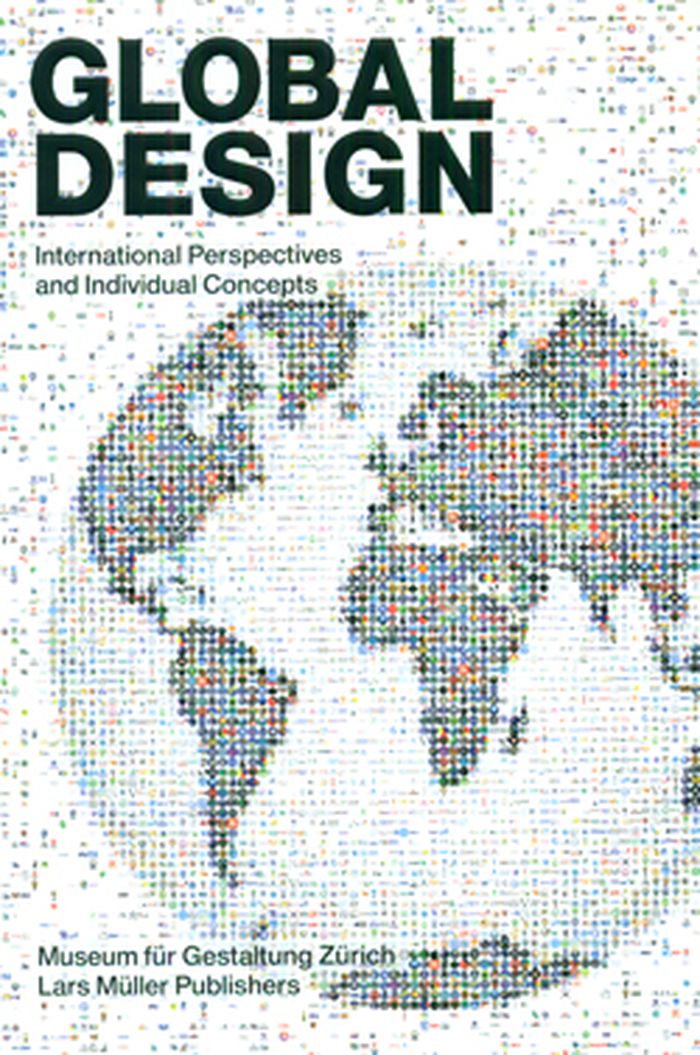
This volume surveys the ways in which our globalized world has manifested itself in design since ca 1970, and the ways in which design has evolved to serve a globalized world. The point of departure is a conception of design which encompasses -architecture, graphics, the media, fashion, product and industrial design, as well as the shaping of the manmade environment and of production processes. The focus is on the formation of global networks in the areas of communication, production, commerce, finance, and mobility. The diverse phenomena of globalization are visualized through film, products, clothing, images, and models by well-known artists such as Armin Linke, Fischli Weiss, Didier Faustino, and Thomas Demand. Alongside the shipping container, an indispensable element of globalization, the presentation provides insights into cultural transfer both in the present day and historically, and presents -globalization in relationship to regionalism as well as to worldwide trends.
Global design
Actions:
Price:
$60.00
(available to order)
Summary:
This volume surveys the ways in which our globalized world has manifested itself in design since ca 1970, and the ways in which design has evolved to serve a globalized world. The point of departure is a conception of design which encompasses -architecture, graphics, the media, fashion, product and industrial design, as well as the shaping of the manmade environment and of production processes. The focus is on the formation of global networks in the areas of communication, production, commerce, finance, and mobility. The diverse phenomena of globalization are visualized through film, products, clothing, images, and models by well-known artists such as Armin Linke, Fischli Weiss, Didier Faustino, and Thomas Demand. Alongside the shipping container, an indispensable element of globalization, the presentation provides insights into cultural transfer both in the present day and historically, and presents -globalization in relationship to regionalism as well as to worldwide trends.
Form:
books
books
Publication:
March 2010
March 2010
Subject:
Industrial Design
Industrial Design
Form:
books
books
Actions:
Price:
$39.95
(available to order)
Summary:
In postwar France, the aesthetics of appropriation and collage gave cultural form to a struggle over meaning. A new wave of avant-garde experimentation used - or stole, plagiarized, and expropriated - elements from advertising, journalism, literature, art, and other sources of common discourse (the ironically named "beautiful language" of this book's title, itself an(...)
$39.95
(available to order)
Summary:
In postwar France, the aesthetics of appropriation and collage gave cultural form to a struggle over meaning. A new wave of avant-garde experimentation used - or stole, plagiarized, and expropriated - elements from advertising, journalism, literature, art, and other sources of common discourse (the ironically named "beautiful language" of this book's title, itself an(...)
Publication:
February 2007, Cambridge (MA)
February 2007, Cambridge (MA)
Title:
The beautiful language of my century : reinventing the language of contestation in postwar France, 1945-1968
Actions:
Price:
$39.95
(available to order)
Summary:
In postwar France, the aesthetics of appropriation and collage gave cultural form to a struggle over meaning. A new wave of avant-garde experimentation used - or stole, plagiarized, and expropriated - elements from advertising, journalism, literature, art, and other sources of common discourse (the ironically named "beautiful language" of this book's title, itself an appropriation from Guy Debord's collaged Mémoires). Redeployed, often in startling or pointed juxtapositions, these elements took on newly oppositional meanings. A famous photograph taken inside the occupied Sorbonne in May 1968, for example, shows a massive academic painting altered by a clever cartoonish speech bubble that transforms the painting into a parody of itself and memorializes an event very different from the one captured by the original artist."The beautiful language of my century" describes the various forms of critical culture that culminated in the events of May 1968, and investigates the ways those forms have come down to us today. McDonough explores the montage practice developed by Guy Debord and his situationist colleagues under the name of détournement and its expression in the later fifties as a form of cultural theft. He addresses the influence of colonialism on these practices, examining a 1961 exhibit of torn posters of the Algerian War ("La France déchirée"), Godard's early film Le Petit Soldat, and Christo's Project for a Temporary Wall of Steel Drums. He discusses the French left's adoption in the mid-sixties of the "end of art" as a theoretical position and describes the leftist idea of the fête as a Rabelaisian and revolutionary upwelling of everything that is low. This influential conception, inspired equally by the American urban revolts of the sixties and the writings of theorists Marcel Mauss and Georges Bataille, coalesced into a new image of revolution, a new model of contestation, in the events of May 1968 - when the struggle over language and culture merged with a broader resistance to capitalist modernization.
The beautiful language of my century : reinventing the language of contestation in postwar France, 1945-1968
Actions:
Price:
$39.95
(available to order)
Summary:
In postwar France, the aesthetics of appropriation and collage gave cultural form to a struggle over meaning. A new wave of avant-garde experimentation used - or stole, plagiarized, and expropriated - elements from advertising, journalism, literature, art, and other sources of common discourse (the ironically named "beautiful language" of this book's title, itself an appropriation from Guy Debord's collaged Mémoires). Redeployed, often in startling or pointed juxtapositions, these elements took on newly oppositional meanings. A famous photograph taken inside the occupied Sorbonne in May 1968, for example, shows a massive academic painting altered by a clever cartoonish speech bubble that transforms the painting into a parody of itself and memorializes an event very different from the one captured by the original artist."The beautiful language of my century" describes the various forms of critical culture that culminated in the events of May 1968, and investigates the ways those forms have come down to us today. McDonough explores the montage practice developed by Guy Debord and his situationist colleagues under the name of détournement and its expression in the later fifties as a form of cultural theft. He addresses the influence of colonialism on these practices, examining a 1961 exhibit of torn posters of the Algerian War ("La France déchirée"), Godard's early film Le Petit Soldat, and Christo's Project for a Temporary Wall of Steel Drums. He discusses the French left's adoption in the mid-sixties of the "end of art" as a theoretical position and describes the leftist idea of the fête as a Rabelaisian and revolutionary upwelling of everything that is low. This influential conception, inspired equally by the American urban revolts of the sixties and the writings of theorists Marcel Mauss and Georges Bataille, coalesced into a new image of revolution, a new model of contestation, in the events of May 1968 - when the struggle over language and culture merged with a broader resistance to capitalist modernization.
Form:
books
books
Publication:
February 2007, Cambridge (MA)
February 2007, Cambridge (MA)
Form:
journals and magazines
journals and magazines
Title:
MAP 007: Orbit
MAP 007: Orbit
Actions:
Price:
$12.50
(available to order)
Summary:
MAP architects have been creating Manual of Architectural Possibilities since 2009. The publication aims to merge the fields of science and research on one hand, and architectural design on the other. It aims to exemplify this approach via it’s format. MAP presents itself as a folded A1, with only two pages. Research and data on one page, and architectural projects on the(...)
$12.50
(available to order)
Summary:
MAP architects have been creating Manual of Architectural Possibilities since 2009. The publication aims to merge the fields of science and research on one hand, and architectural design on the other. It aims to exemplify this approach via it’s format. MAP presents itself as a folded A1, with only two pages. Research and data on one page, and architectural projects on the(...)
Title:
MAP 007: Orbit
Actions:
Price:
$12.50
(available to order)
Summary:
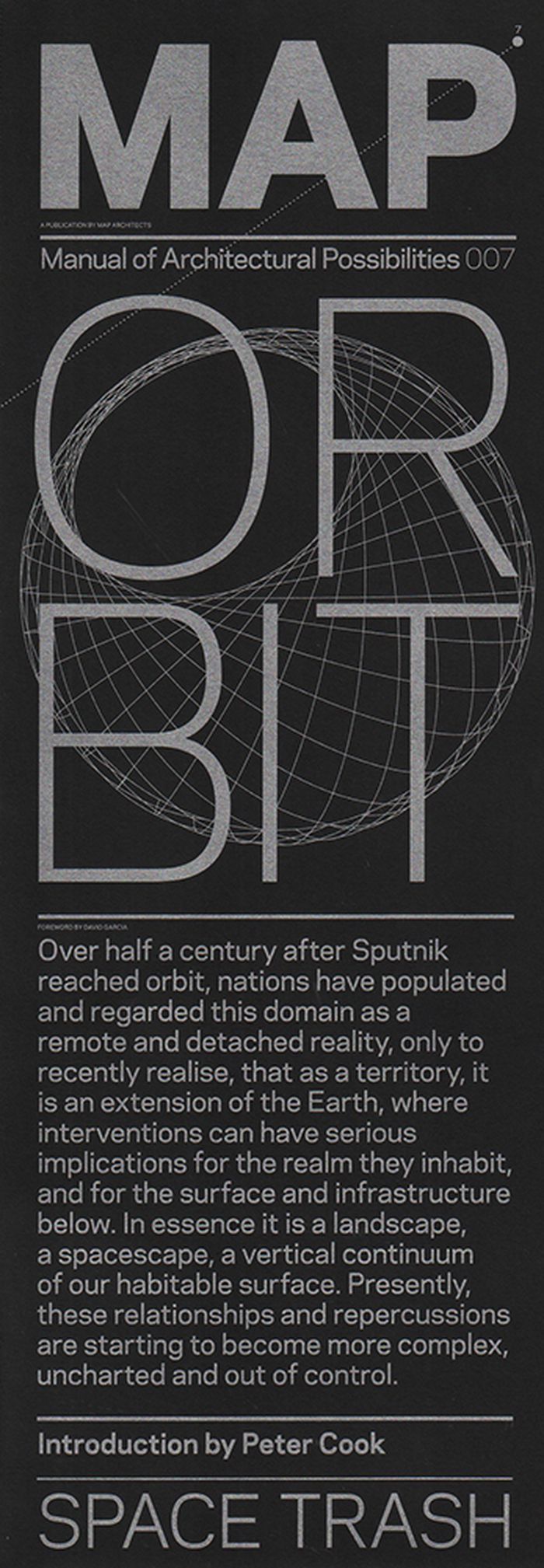
MAP architects have been creating Manual of Architectural Possibilities since 2009. The publication aims to merge the fields of science and research on one hand, and architectural design on the other. It aims to exemplify this approach via it’s format. MAP presents itself as a folded A1, with only two pages. Research and data on one page, and architectural projects on the other. Each issue deals with a single subject, sometimes abstract, sometimes concrete, which is placed under scrutiny through the collection of data and research from multiple perspectives. The architectural projects are a direct response to the research, sometimes pragmatic, sometimes critical or even ironic. No design is undertaken until the research phase is complete, which lasts about 3 months. MAP aims to exercise architecture in the realm of speculation, through the boundaries and directions set by research and investigations, carried out into a series of fields and themes with direct spatial implications.
MAP 007: Orbit
Actions:
Price:
$12.50
(available to order)
Summary:
MAP architects have been creating Manual of Architectural Possibilities since 2009. The publication aims to merge the fields of science and research on one hand, and architectural design on the other. It aims to exemplify this approach via it’s format. MAP presents itself as a folded A1, with only two pages. Research and data on one page, and architectural projects on the other. Each issue deals with a single subject, sometimes abstract, sometimes concrete, which is placed under scrutiny through the collection of data and research from multiple perspectives. The architectural projects are a direct response to the research, sometimes pragmatic, sometimes critical or even ironic. No design is undertaken until the research phase is complete, which lasts about 3 months. MAP aims to exercise architecture in the realm of speculation, through the boundaries and directions set by research and investigations, carried out into a series of fields and themes with direct spatial implications.
Form:
journals and magazines
journals and magazines
Publication:
May 2014
May 2014
Subject:
Magazines
Magazines
Form:
books
books
Title:
Don't build, rebuild
Don't build, rebuild
Actions:
Price:
$43.95
(available to order)
Summary:
As climate change has escalated into a crisis, the reuse of existing structures is the only way to even begin to preserve our wood, sand, silicon, and iron, let alone stop belching carbon monoxide into the air. Our housing crisis means that we need usable buildings now more than ever, but architect and critic Aaron Betsky shows that new construction—often seeking to(...)
$43.95
(available to order)
Summary:
As climate change has escalated into a crisis, the reuse of existing structures is the only way to even begin to preserve our wood, sand, silicon, and iron, let alone stop belching carbon monoxide into the air. Our housing crisis means that we need usable buildings now more than ever, but architect and critic Aaron Betsky shows that new construction—often seeking to(...)
Title:
Don't build, rebuild
Actions:
Price:
$43.95
(available to order)
Summary:
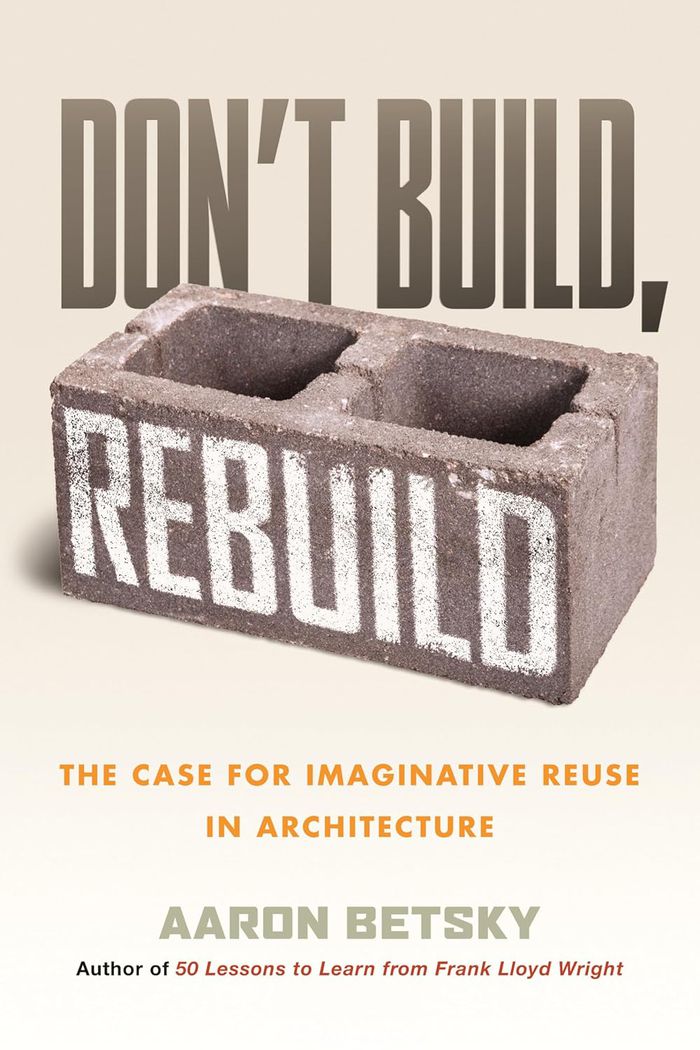
As climate change has escalated into a crisis, the reuse of existing structures is the only way to even begin to preserve our wood, sand, silicon, and iron, let alone stop belching carbon monoxide into the air. Our housing crisis means that we need usable buildings now more than ever, but architect and critic Aaron Betsky shows that new construction—often seeking to maximize profits rather than resources, often soulless in its feel—is not the answer. Whenever possible, it is better to repair, recycle, renovate, and reuse—not only from an environmental perspective, but culturally and artistically as well. Architectural reuse is as old as civilization itself. In the streets of Europe, you can find fragments from the Roman Empire. More recently, marginalized communities from New York to Detroit—queer people looking for places to gather or cruise, punks looking to make loud music, artists and displaced people looking for space to work and live—have taken over industrial spaces created then abandoned by capitalism, forging a unique style in the process. Their methods—from urban mining to dumpster diving—now inform architects transforming old structures today.
Don't build, rebuild
Actions:
Price:
$43.95
(available to order)
Summary:
As climate change has escalated into a crisis, the reuse of existing structures is the only way to even begin to preserve our wood, sand, silicon, and iron, let alone stop belching carbon monoxide into the air. Our housing crisis means that we need usable buildings now more than ever, but architect and critic Aaron Betsky shows that new construction—often seeking to maximize profits rather than resources, often soulless in its feel—is not the answer. Whenever possible, it is better to repair, recycle, renovate, and reuse—not only from an environmental perspective, but culturally and artistically as well. Architectural reuse is as old as civilization itself. In the streets of Europe, you can find fragments from the Roman Empire. More recently, marginalized communities from New York to Detroit—queer people looking for places to gather or cruise, punks looking to make loud music, artists and displaced people looking for space to work and live—have taken over industrial spaces created then abandoned by capitalism, forging a unique style in the process. Their methods—from urban mining to dumpster diving—now inform architects transforming old structures today.
Form:
books
books
Publication:
November 2024
November 2024
Subject:
Architectural Theory
Architectural Theory
Form:
books
books
Title:
Cartographic cinema
Cartographic cinema
Actions:
Price:
$31.50
(available to order)
Summary:
Cartography and cinema are what might be called locational machinery. Maps and movies tell their viewers where they are situated, what they are doing, and, to a strong degree, who they are. In this work,scholar Tom Conley establishes the ideological power of maps in classic, contemporary, and avant-garde cinema to shape the imaginary and mediated relations we hold with(...)
$31.50
(available to order)
Summary:
Cartography and cinema are what might be called locational machinery. Maps and movies tell their viewers where they are situated, what they are doing, and, to a strong degree, who they are. In this work,scholar Tom Conley establishes the ideological power of maps in classic, contemporary, and avant-garde cinema to shape the imaginary and mediated relations we hold with(...)
Title:
Cartographic cinema
Actions:
Price:
$31.50
(available to order)
Summary:
Cartography and cinema are what might be called locational machinery. Maps and movies tell their viewers where they are situated, what they are doing, and, to a strong degree, who they are. In this work,scholar Tom Conley establishes the ideological power of maps in classic, contemporary, and avant-garde cinema to shape the imaginary and mediated relations we hold with the world. "Cartographic cinema" examines the affinities of maps and movies through comparative theory and close analysis of films from the silent era to the French New Wave to Hollywood blockbusters. In doing so, Conley reveals that most of the movies we see contain maps of various kinds and almost invariably constitute a projective apparatus similar to cartography. In addition, he demonstrates that spatial signs in film foster a critical relation with the prevailing narrative and mimetic registers of cinema. Conley convincingly argues that the very act of watching films, and cinema itself, is actually a form of cartography. Unlike its function in an atlas, a map in a movie often causes the spectator to entertain broader questions—not only about cinema but also of the nature of space and being.
Cartographic cinema
Actions:
Price:
$31.50
(available to order)
Summary:
Cartography and cinema are what might be called locational machinery. Maps and movies tell their viewers where they are situated, what they are doing, and, to a strong degree, who they are. In this work,scholar Tom Conley establishes the ideological power of maps in classic, contemporary, and avant-garde cinema to shape the imaginary and mediated relations we hold with the world. "Cartographic cinema" examines the affinities of maps and movies through comparative theory and close analysis of films from the silent era to the French New Wave to Hollywood blockbusters. In doing so, Conley reveals that most of the movies we see contain maps of various kinds and almost invariably constitute a projective apparatus similar to cartography. In addition, he demonstrates that spatial signs in film foster a critical relation with the prevailing narrative and mimetic registers of cinema. Conley convincingly argues that the very act of watching films, and cinema itself, is actually a form of cartography. Unlike its function in an atlas, a map in a movie often causes the spectator to entertain broader questions—not only about cinema but also of the nature of space and being.
Form:
books
books
Publication:
December 2006, Minneapolis, London
December 2006, Minneapolis, London
Subject:
Architectural Theory
Architectural Theory
Form:
books
books
Title:
Book of ruins
Book of ruins
Actions:
Price:
$80.99
(available to order)
Summary:
''Book of ruins'' offers a survey – not encyclopedic, but substantial – of leading moments when the fact and idea of ruins were taken up by writers, travellers and artists: painters, film makers, landscape architects, and architects. Gathering together short texts and extracts that describe and reflect on ruins, dating from remote antiquity (Scipio shedding tears when(...)
$80.99
(available to order)
Summary:
''Book of ruins'' offers a survey – not encyclopedic, but substantial – of leading moments when the fact and idea of ruins were taken up by writers, travellers and artists: painters, film makers, landscape architects, and architects. Gathering together short texts and extracts that describe and reflect on ruins, dating from remote antiquity (Scipio shedding tears when(...)
Subject:
Architectural Theory
Architectural Theory
Publication:
September 2022
September 2022
Title:
Book of ruins
Actions:
Price:
$80.99
(available to order)
Summary:
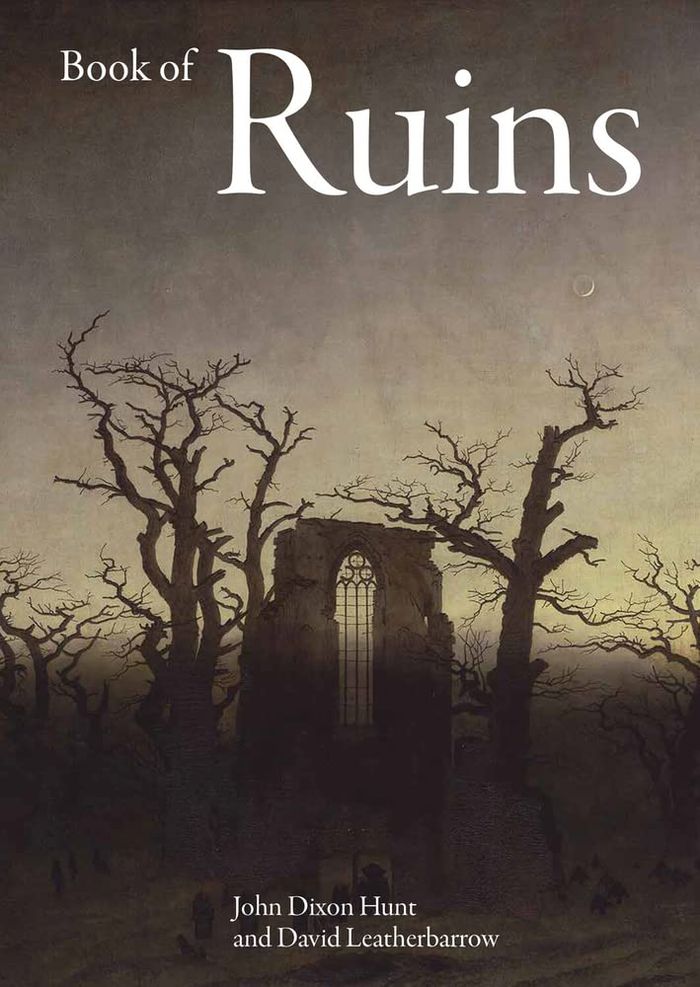
''Book of ruins'' offers a survey – not encyclopedic, but substantial – of leading moments when the fact and idea of ruins were taken up by writers, travellers and artists: painters, film makers, landscape architects, and architects. Gathering together short texts and extracts that describe and reflect on ruins, dating from remote antiquity (Scipio shedding tears when viewing the destruction of Carthage) to present times (the ruins of a modern city, portrayed in the film ''Requiem for Detroit''), it provides a perspective upon what the past has meant to different cultures at different times. Following an introductory essay, the book includes 70 entries, chronologically ordered, each including an indicative image (or two), an introductory commentary by the authors, and the text itself. The texts come from designers (from Bernini through Piranesi to David Chipperfield) as well as other artists (John Piper), and from literary figures (Goethe, Wordsworth, Byron and Shelley, Hugo, and Hardy). It concludes by discussing what we do with ruins by way of preservation, conservation, adaptive reuse and appropriation, and contemporary loss and ruin, as illustrated by 9/11 and the Neues Museum and highlighting the continuing relevance of the ruin.
Book of ruins
Actions:
Price:
$80.99
(available to order)
Summary:
''Book of ruins'' offers a survey – not encyclopedic, but substantial – of leading moments when the fact and idea of ruins were taken up by writers, travellers and artists: painters, film makers, landscape architects, and architects. Gathering together short texts and extracts that describe and reflect on ruins, dating from remote antiquity (Scipio shedding tears when viewing the destruction of Carthage) to present times (the ruins of a modern city, portrayed in the film ''Requiem for Detroit''), it provides a perspective upon what the past has meant to different cultures at different times. Following an introductory essay, the book includes 70 entries, chronologically ordered, each including an indicative image (or two), an introductory commentary by the authors, and the text itself. The texts come from designers (from Bernini through Piranesi to David Chipperfield) as well as other artists (John Piper), and from literary figures (Goethe, Wordsworth, Byron and Shelley, Hugo, and Hardy). It concludes by discussing what we do with ruins by way of preservation, conservation, adaptive reuse and appropriation, and contemporary loss and ruin, as illustrated by 9/11 and the Neues Museum and highlighting the continuing relevance of the ruin.
Form:
books
books
Publication:
September 2022
September 2022
Subject:
Architectural Theory
Architectural Theory


