


1059 Results
Form:
books
books
Title:
Architecture without walls
Architecture without walls
Actions:
Price:
$23.00
(available to order)
Summary:
The texts included in this book present five architectural designs realized by Vera Buhß, Giacomo Gianetta, Konstantin Schimanowski, Katharina Schmidt, and Sum-Sum Shen. Instead of being generated and displayed in graphic media and approaching the object of design visually, these architectural environments have been conceived through auditory and literary practices. The(...)
$23.00
(available to order)
Summary:
The texts included in this book present five architectural designs realized by Vera Buhß, Giacomo Gianetta, Konstantin Schimanowski, Katharina Schmidt, and Sum-Sum Shen. Instead of being generated and displayed in graphic media and approaching the object of design visually, these architectural environments have been conceived through auditory and literary practices. The(...)
Title:
Architecture without walls
Actions:
Price:
$23.00
(available to order)
Summary:
The texts included in this book present five architectural designs realized by Vera Buhß, Giacomo Gianetta, Konstantin Schimanowski, Katharina Schmidt, and Sum-Sum Shen. Instead of being generated and displayed in graphic media and approaching the object of design visually, these architectural environments have been conceived through auditory and literary practices. The designs presented in this book provide accessibility to new architectural entities not by showing their constructive conditions of emergence, but instead by describing the emergent qualities that configure them as environments. Alex Arteaga’s research integrates aesthetic and philosophical practices relating to the emergence of sense and knowledge, architectural and art practices through phenomenological and enactivist approaches. He studied piano, music theory, composition, electroacoustic music, and architecture in Berlin and Barcelona, and received a PhD in philosophy from the Humboldt University. He heads the Auditory Architecture Research at the Berlin University of the Arts. Boris Hassenstein runs his architectural studio based in Berlin. A strong focus of his work is set on the aspects of construction as a process and collaboration in the genesis of architecture. He studied architecture in Berlin. Currently he teaches at the MA Sound Studies and Sonic Arts at the Berlin University of the Arts and is a member of the Auditory Architecture Research Unit at the Berlin University of the Arts.
Architecture without walls
Actions:
Price:
$23.00
(available to order)
Summary:
The texts included in this book present five architectural designs realized by Vera Buhß, Giacomo Gianetta, Konstantin Schimanowski, Katharina Schmidt, and Sum-Sum Shen. Instead of being generated and displayed in graphic media and approaching the object of design visually, these architectural environments have been conceived through auditory and literary practices. The designs presented in this book provide accessibility to new architectural entities not by showing their constructive conditions of emergence, but instead by describing the emergent qualities that configure them as environments. Alex Arteaga’s research integrates aesthetic and philosophical practices relating to the emergence of sense and knowledge, architectural and art practices through phenomenological and enactivist approaches. He studied piano, music theory, composition, electroacoustic music, and architecture in Berlin and Barcelona, and received a PhD in philosophy from the Humboldt University. He heads the Auditory Architecture Research at the Berlin University of the Arts. Boris Hassenstein runs his architectural studio based in Berlin. A strong focus of his work is set on the aspects of construction as a process and collaboration in the genesis of architecture. He studied architecture in Berlin. Currently he teaches at the MA Sound Studies and Sonic Arts at the Berlin University of the Arts and is a member of the Auditory Architecture Research Unit at the Berlin University of the Arts.
Form:
books
books
Publication:
October 2016
October 2016
Subject:
Museology
Museology
Form:
books
books
Price:
$62.00
(available to order)
Summary:
An inquiry into emergent media's rich lineage, "Devices of Wonder" explores the artful machines humans have used to augment visual perception. The encyclopedic cabinet of curiosities serves as a model for this study of the archaic instruments lurking in state-of-the art technology. Featured in "Devices of Wonder" are android automata, lunar landscapes, perspective(...)
$62.00
(available to order)
Summary:
An inquiry into emergent media's rich lineage, "Devices of Wonder" explores the artful machines humans have used to augment visual perception. The encyclopedic cabinet of curiosities serves as a model for this study of the archaic instruments lurking in state-of-the art technology. Featured in "Devices of Wonder" are android automata, lunar landscapes, perspective(...)
Subject:
Architectural Theory
Architectural Theory
Publication:
November 2001, Los Angeles
November 2001, Los Angeles
Title:
Devices of wonder from the world in a box to images on a screen
Actions:
Price:
$62.00
(available to order)
Summary:
An inquiry into emergent media's rich lineage, "Devices of Wonder" explores the artful machines humans have used to augment visual perception. The encyclopedic cabinet of curiosities serves as a model for this study of the archaic instruments lurking in state-of-the art technology. Featured in "Devices of Wonder" are android automata, lunar landscapes, perspective theaters, vues d'optique, microscopes, magnetic games, magic lanterns, camera obscuras, boxes by Joseph Cornell, Lucas Samaras's Mirrored Room, Suzanne Anker's Zoosemiotics, Mark Tilden's UniBug 3.1, panoramic works by Jeff Wall and Giovanni Lusieri, paintings by Jean-Baptiste Chardin and Joseph Wright of Derby, projections by Diana Thater and James Turrell, and a pop-up book by Kara Walker. Barbara Stafford's introduction weaves these fascinating artifacts into a provocative narrative analyzing the complex links between old and new media. Her wide-ranging investigation is complemented by thirty-one short essays in which Frances Terpak tracks the often surprising connections among individual items. Like the cabinet of curiosities, "Devices of Wonder" functions as an analogical instrument, reframing the beautiful "eye machines" that continue to mediate our encounters with the world. This book is published in conjunction with an exhibition at the Getty from November 13, 2001, through February 6, 2002.
Devices of wonder from the world in a box to images on a screen
Actions:
Price:
$62.00
(available to order)
Summary:
An inquiry into emergent media's rich lineage, "Devices of Wonder" explores the artful machines humans have used to augment visual perception. The encyclopedic cabinet of curiosities serves as a model for this study of the archaic instruments lurking in state-of-the art technology. Featured in "Devices of Wonder" are android automata, lunar landscapes, perspective theaters, vues d'optique, microscopes, magnetic games, magic lanterns, camera obscuras, boxes by Joseph Cornell, Lucas Samaras's Mirrored Room, Suzanne Anker's Zoosemiotics, Mark Tilden's UniBug 3.1, panoramic works by Jeff Wall and Giovanni Lusieri, paintings by Jean-Baptiste Chardin and Joseph Wright of Derby, projections by Diana Thater and James Turrell, and a pop-up book by Kara Walker. Barbara Stafford's introduction weaves these fascinating artifacts into a provocative narrative analyzing the complex links between old and new media. Her wide-ranging investigation is complemented by thirty-one short essays in which Frances Terpak tracks the often surprising connections among individual items. Like the cabinet of curiosities, "Devices of Wonder" functions as an analogical instrument, reframing the beautiful "eye machines" that continue to mediate our encounters with the world. This book is published in conjunction with an exhibition at the Getty from November 13, 2001, through February 6, 2002.
Form:
books
books
Publication:
November 2001, Los Angeles
November 2001, Los Angeles
Subject:
Architectural Theory
Architectural Theory
Form:
books
books
Actions:
Price:
$34.99
(available to order)
Summary:
In an era when technology, biology, and culture are becoming ever more closely connected, The Dada Cyborg explains how the cyborg as we know it today actually developed between 1918 and 1933 when German artists gave visual form to their utopian hopes and fantasies in a fearful response to World War I. In what could be termed a prehistory of the posthuman, Matthew Biro(...)
$34.99
(available to order)
Summary:
In an era when technology, biology, and culture are becoming ever more closely connected, The Dada Cyborg explains how the cyborg as we know it today actually developed between 1918 and 1933 when German artists gave visual form to their utopian hopes and fantasies in a fearful response to World War I. In what could be termed a prehistory of the posthuman, Matthew Biro(...)
Title:
The Dada cyborg: vision of the new human in Weimar Berlin
Actions:
Price:
$34.99
(available to order)
Summary:
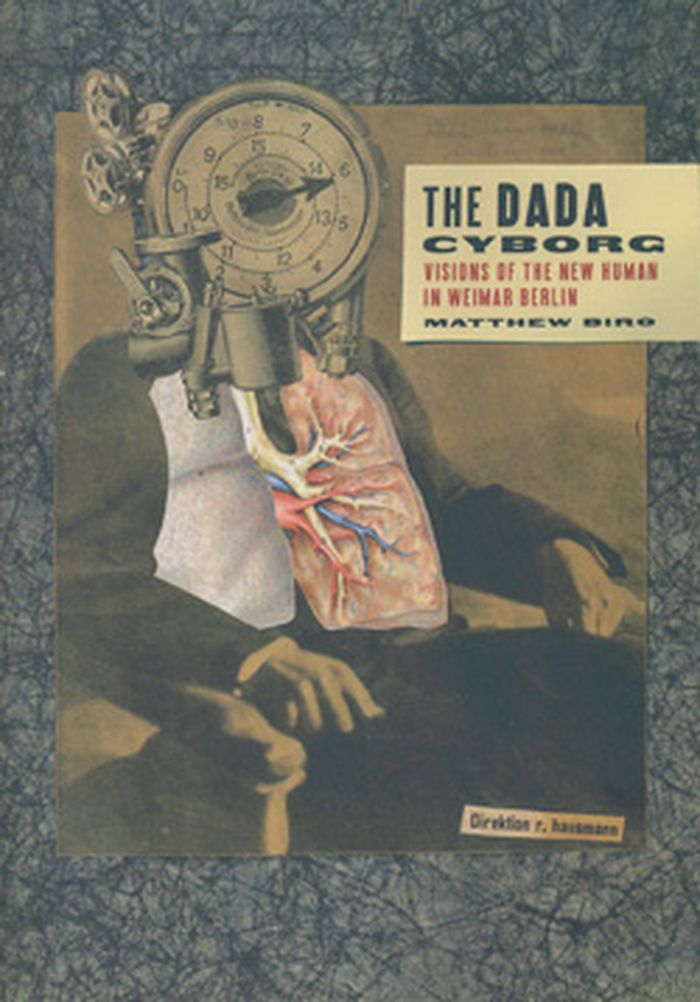
In an era when technology, biology, and culture are becoming ever more closely connected, The Dada Cyborg explains how the cyborg as we know it today actually developed between 1918 and 1933 when German artists gave visual form to their utopian hopes and fantasies in a fearful response to World War I. In what could be termed a prehistory of the posthuman, Matthew Biro shows the ways in which new forms of human existence were imagined in Germany between the two world wars through depictions of cyborgs. Examining the work of Hannah Höch, Raoul Hausmann, George Grosz, John Heartfield, Otto Dix, and Rudolf Schlichter, he reveals an innovative interpretation of the cyborg as a representative of hybrid identity, as well as a locus of new modes of awareness created by the impact of technology on human perception. Tracing the prevalence of cyborgs in German avant-garde art, Biro demonstrates how vision, hearing, touch, and embodiment were beginning to be reconceived during the Weimar Republic. Biro’s unique and interdisciplinary analysis offers a substantially new account of the Berlin Dada movement, one that integrates the group’s poetic, theoretical, and performative practices with its famous visual strategies of photomontage, assemblage, and mixed-media painting to reveal radical images of a “new human.”
The Dada cyborg: vision of the new human in Weimar Berlin
Actions:
Price:
$34.99
(available to order)
Summary:
In an era when technology, biology, and culture are becoming ever more closely connected, The Dada Cyborg explains how the cyborg as we know it today actually developed between 1918 and 1933 when German artists gave visual form to their utopian hopes and fantasies in a fearful response to World War I. In what could be termed a prehistory of the posthuman, Matthew Biro shows the ways in which new forms of human existence were imagined in Germany between the two world wars through depictions of cyborgs. Examining the work of Hannah Höch, Raoul Hausmann, George Grosz, John Heartfield, Otto Dix, and Rudolf Schlichter, he reveals an innovative interpretation of the cyborg as a representative of hybrid identity, as well as a locus of new modes of awareness created by the impact of technology on human perception. Tracing the prevalence of cyborgs in German avant-garde art, Biro demonstrates how vision, hearing, touch, and embodiment were beginning to be reconceived during the Weimar Republic. Biro’s unique and interdisciplinary analysis offers a substantially new account of the Berlin Dada movement, one that integrates the group’s poetic, theoretical, and performative practices with its famous visual strategies of photomontage, assemblage, and mixed-media painting to reveal radical images of a “new human.”
Form:
books
books
Publication:
May 2009
May 2009
Subject:
Art Theory
Art Theory
Form:
books
books
Actions:
Price:
$56.95
(available to order)
Summary:
How do we live well? The first sentence of ''Grace and gravity'' raises the fundamental question that constantly occupies our minds-and of all those who lived before us. Paradoxically, the impossibility of answering this question opens up the very room needed to find ways of living well. It is the gap where all disciplines fall short, where architecture does not fit its(...)
$56.95
(available to order)
Summary:
How do we live well? The first sentence of ''Grace and gravity'' raises the fundamental question that constantly occupies our minds-and of all those who lived before us. Paradoxically, the impossibility of answering this question opens up the very room needed to find ways of living well. It is the gap where all disciplines fall short, where architecture does not fit its(...)
Title:
Grace and gravity: Architectures of the figure
Actions:
Price:
$56.95
(available to order)
Summary:
How do we live well? The first sentence of ''Grace and gravity'' raises the fundamental question that constantly occupies our minds-and of all those who lived before us. Paradoxically, the impossibility of answering this question opens up the very room needed to find ways of living well. It is the gap where all disciplines fall short, where architecture does not fit its inhabitants, where economy is not based on shortage, where religion cannot be explained by its followers, and where technology works far beyond its own principles. According to Lars Spuybroek, the prize-winning former architect, this marks the point where the “paradoxical machine” of grace reveals its powers, a point where we “cannot say if we are moving or being moved”. Following the trail of grace leads him to a new form of analysis that transcends the age-old opposition between appearances and technology. Linking up a dazzling and often delightful variety of sources-monkeys, paintings, lamp posts, octopuses, tattoos, bleeding fingers, rose windows, robots, smart phones, spirits, saints, and fossils-with profound meditations on living, death, consciousness, and existence, ''Grace and gravity'' offers an eye-opening provocation to a wide range of art historians, architects, theologians, anthropologists, artists, media theorists and philosophers.
Grace and gravity: Architectures of the figure
Actions:
Price:
$56.95
(available to order)
Summary:
How do we live well? The first sentence of ''Grace and gravity'' raises the fundamental question that constantly occupies our minds-and of all those who lived before us. Paradoxically, the impossibility of answering this question opens up the very room needed to find ways of living well. It is the gap where all disciplines fall short, where architecture does not fit its inhabitants, where economy is not based on shortage, where religion cannot be explained by its followers, and where technology works far beyond its own principles. According to Lars Spuybroek, the prize-winning former architect, this marks the point where the “paradoxical machine” of grace reveals its powers, a point where we “cannot say if we are moving or being moved”. Following the trail of grace leads him to a new form of analysis that transcends the age-old opposition between appearances and technology. Linking up a dazzling and often delightful variety of sources-monkeys, paintings, lamp posts, octopuses, tattoos, bleeding fingers, rose windows, robots, smart phones, spirits, saints, and fossils-with profound meditations on living, death, consciousness, and existence, ''Grace and gravity'' offers an eye-opening provocation to a wide range of art historians, architects, theologians, anthropologists, artists, media theorists and philosophers.
Form:
books
books
Publication:
November 2020
November 2020
Subject:
Architectural Theory
Architectural Theory
Form:
books
books
Price:
$27.95
(available to order)
Summary:
This book will be a resource for all who believe in the importance of art in the wider educational realm. Framing the recent "educational turn" in the arts within a broad historical and social context, this anthology raises fundamental questions about how and what should be taught in an era of distributive rather than media-based practices. Among the many sources and(...)
$27.95
(available to order)
Summary:
This book will be a resource for all who believe in the importance of art in the wider educational realm. Framing the recent "educational turn" in the arts within a broad historical and social context, this anthology raises fundamental questions about how and what should be taught in an era of distributive rather than media-based practices. Among the many sources and(...)
Title:
Education
Actions:
Price:
$27.95
(available to order)
Summary:
This book will be a resource for all who believe in the importance of art in the wider educational realm. Framing the recent "educational turn" in the arts within a broad historical and social context, this anthology raises fundamental questions about how and what should be taught in an era of distributive rather than media-based practices. Among the many sources and arguments traced here is second-wave feminism, which questioned dominant notions of personal and institutional freedom as enacted through art teaching and practice. Similarly, education-based responses by the art community to the catastrophes of World War II and postcolonial conflict critically inform contemporary art confronting the interrelationships of education, power, market capitalism, and--as Michael Hardt and Antonio Negri describe it--the global condition of war. These writings by artists, philosophers, educators, poets, and activists center on three recurring and interrelated themes: the notion of "indiscipline" in theories and practices that challenge boundaries of all kinds; the present and future role of the art school; and the turn to pedagogy as medium in a diverse range of recent projects. Other writings address such issues as instrumentalism and control, liberation and equality, the production and the politics of culture, and the roots of research-based practice and experimental participatory works.
Education
Actions:
Price:
$27.95
(available to order)
Summary:
This book will be a resource for all who believe in the importance of art in the wider educational realm. Framing the recent "educational turn" in the arts within a broad historical and social context, this anthology raises fundamental questions about how and what should be taught in an era of distributive rather than media-based practices. Among the many sources and arguments traced here is second-wave feminism, which questioned dominant notions of personal and institutional freedom as enacted through art teaching and practice. Similarly, education-based responses by the art community to the catastrophes of World War II and postcolonial conflict critically inform contemporary art confronting the interrelationships of education, power, market capitalism, and--as Michael Hardt and Antonio Negri describe it--the global condition of war. These writings by artists, philosophers, educators, poets, and activists center on three recurring and interrelated themes: the notion of "indiscipline" in theories and practices that challenge boundaries of all kinds; the present and future role of the art school; and the turn to pedagogy as medium in a diverse range of recent projects. Other writings address such issues as instrumentalism and control, liberation and equality, the production and the politics of culture, and the roots of research-based practice and experimental participatory works.
Form:
books
books
Publication:
September 2011
September 2011
Subject:
Art Theory
Art Theory
Form:
books
books
Actions:
Price:
$35.00
(available to order)
Summary:
La découverte scientifique et la maîtrise de l'électricité ont bouleversé notre société au même titre que l'invention de l'écriture alphabétique durant l'Antiquité et de l'imprimerie à caractères mobiles au XVe siècle. Il ne s'agit pas seulement d'un phénomène naturel mis au service de l'homme par la science, mais d'un élément central de l'épistémè moderne : l'électricité(...)
$35.00
(available to order)
Summary:
La découverte scientifique et la maîtrise de l'électricité ont bouleversé notre société au même titre que l'invention de l'écriture alphabétique durant l'Antiquité et de l'imprimerie à caractères mobiles au XVe siècle. Il ne s'agit pas seulement d'un phénomène naturel mis au service de l'homme par la science, mais d'un élément central de l'épistémè moderne : l'électricité(...)
Subject:
Critical Theory
Critical Theory
Publication:
September 2011
September 2011
Title:
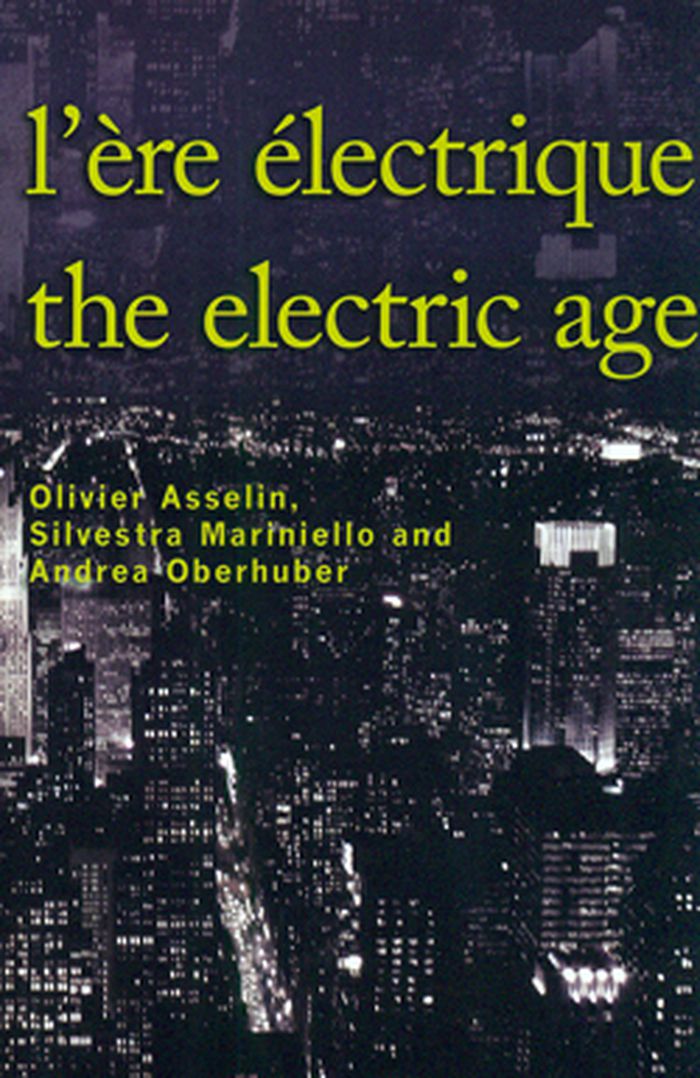
L'ère électrique / The electric age
Actions:
Price:
$35.00
(available to order)
Summary:
La découverte scientifique et la maîtrise de l'électricité ont bouleversé notre société au même titre que l'invention de l'écriture alphabétique durant l'Antiquité et de l'imprimerie à caractères mobiles au XVe siècle. Il ne s'agit pas seulement d'un phénomène naturel mis au service de l'homme par la science, mais d'un élément central de l'épistémè moderne : l'électricité a inspiré des écrivains et des artistes, a servi de force d'impulsion au monde de l'industrie et de l'innovation et a redéfini les comportements sociaux. En explorant l'incidence de l'électricité sur le savoir, les pratiques sociales, les médias, la vie sociale et les expériences personnelles, cet ouvrage tente d'en saisir les aspects techniques et culturels dans toute leur complexité. -- The scientific discovery and mastery of electricity created as many important changes in modern society as did the invention of alphabetical writing in antiquity and movable type in the fifteenth century. It is more than a natural phenomenon that science has harnessed for human use; it is a central feature of the modern episteme. It has inspired writers and artists, propelled industry and innovation, and reshaped human social behaviour. Looking at a variety of topics including film, politics, and contemporary art, this volume explores the impact of electricity on knowledge, social practices, media, community life, and subjective experience.
L'ère électrique / The electric age
Actions:
Price:
$35.00
(available to order)
Summary:
La découverte scientifique et la maîtrise de l'électricité ont bouleversé notre société au même titre que l'invention de l'écriture alphabétique durant l'Antiquité et de l'imprimerie à caractères mobiles au XVe siècle. Il ne s'agit pas seulement d'un phénomène naturel mis au service de l'homme par la science, mais d'un élément central de l'épistémè moderne : l'électricité a inspiré des écrivains et des artistes, a servi de force d'impulsion au monde de l'industrie et de l'innovation et a redéfini les comportements sociaux. En explorant l'incidence de l'électricité sur le savoir, les pratiques sociales, les médias, la vie sociale et les expériences personnelles, cet ouvrage tente d'en saisir les aspects techniques et culturels dans toute leur complexité. -- The scientific discovery and mastery of electricity created as many important changes in modern society as did the invention of alphabetical writing in antiquity and movable type in the fifteenth century. It is more than a natural phenomenon that science has harnessed for human use; it is a central feature of the modern episteme. It has inspired writers and artists, propelled industry and innovation, and reshaped human social behaviour. Looking at a variety of topics including film, politics, and contemporary art, this volume explores the impact of electricity on knowledge, social practices, media, community life, and subjective experience.
Form:
books
books
Publication:
September 2011
September 2011
Subject:
Critical Theory
Critical Theory
Form:
books
books
Actions:
Price:
$24.50
(available to order)
Summary:
In The Conspiracy of Art, Baudrillard questions the privilege attached to art by its practitioners. Art has lost all desire for illusion: feeding back endlessly into itself, it has turned its own vanishment into an art unto itself. Far from lamenting the "end of art," Baudrillard celebrates art's new function within the process of insider-trading. Spiraling from aesthetic(...)
$24.50
(available to order)
Summary:
In The Conspiracy of Art, Baudrillard questions the privilege attached to art by its practitioners. Art has lost all desire for illusion: feeding back endlessly into itself, it has turned its own vanishment into an art unto itself. Far from lamenting the "end of art," Baudrillard celebrates art's new function within the process of insider-trading. Spiraling from aesthetic(...)
Publication:
October 2005, Cambridge, London
October 2005, Cambridge, London
Title:
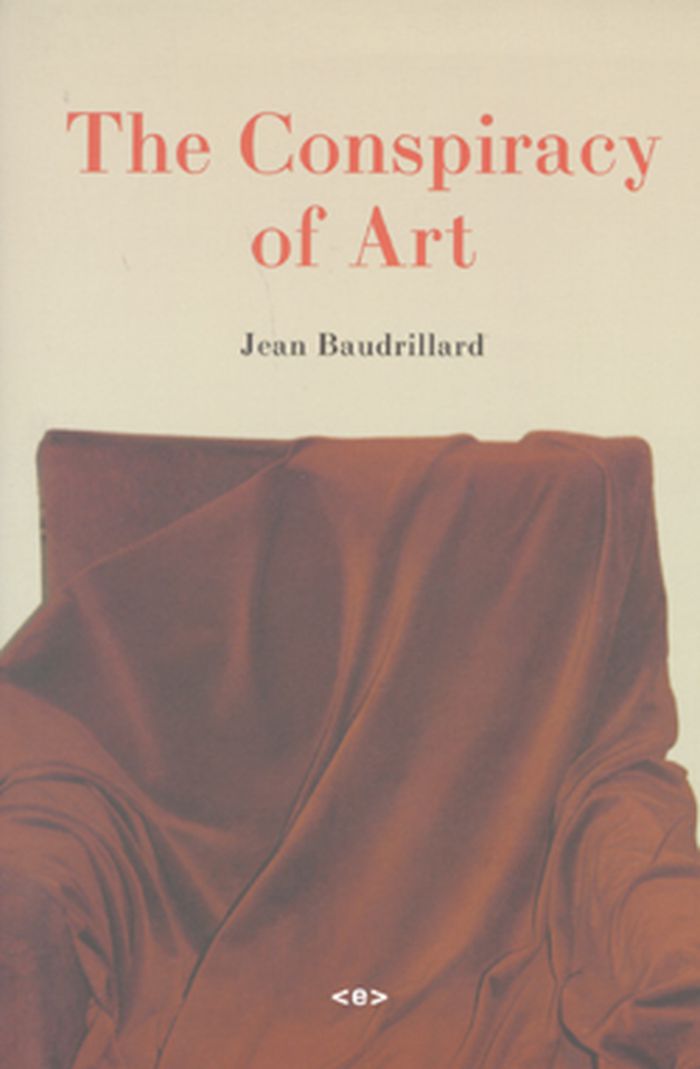
The conspiracy of art: manifestos, interviews, essays
Actions:
Price:
$24.50
(available to order)
Summary:
In The Conspiracy of Art, Baudrillard questions the privilege attached to art by its practitioners. Art has lost all desire for illusion: feeding back endlessly into itself, it has turned its own vanishment into an art unto itself. Far from lamenting the "end of art," Baudrillard celebrates art's new function within the process of insider-trading. Spiraling from aesthetic nullity to commercial frenzy, art has become transaesthetic, like society as a whole. Conceived and edited by life-long Baudrillard collaborator Sylvère Lotringer, The Conspiracy of Art presents Baudrillard's writings on art in a complicitous dance with politics, economics, and media. Culminating with "War Porn," a scathing analysis of the spectacular images from Abu Ghraib prison as a new genre of reality TV, the book folds back on itself to question the very nature of radical thought.
The conspiracy of art: manifestos, interviews, essays
Actions:
Price:
$24.50
(available to order)
Summary:
In The Conspiracy of Art, Baudrillard questions the privilege attached to art by its practitioners. Art has lost all desire for illusion: feeding back endlessly into itself, it has turned its own vanishment into an art unto itself. Far from lamenting the "end of art," Baudrillard celebrates art's new function within the process of insider-trading. Spiraling from aesthetic nullity to commercial frenzy, art has become transaesthetic, like society as a whole. Conceived and edited by life-long Baudrillard collaborator Sylvère Lotringer, The Conspiracy of Art presents Baudrillard's writings on art in a complicitous dance with politics, economics, and media. Culminating with "War Porn," a scathing analysis of the spectacular images from Abu Ghraib prison as a new genre of reality TV, the book folds back on itself to question the very nature of radical thought.
Form:
books
books
Publication:
October 2005, Cambridge, London
October 2005, Cambridge, London
Form:
books
books
Price:
$63.00
(available to order)
Summary:
This book, which accompanies a major exhibition at the Center for New Art and Media (ZKM) in Karlsruhe, Germany, invokes three disparate realms in which images have assumed the role of cultural weapons. Monotheistic religions, scientific theories, and contemporary arts have struggled with the contradictory urge to produce and also destroy images and emblems. Moving(...)
$63.00
(available to order)
Summary:
This book, which accompanies a major exhibition at the Center for New Art and Media (ZKM) in Karlsruhe, Germany, invokes three disparate realms in which images have assumed the role of cultural weapons. Monotheistic religions, scientific theories, and contemporary arts have struggled with the contradictory urge to produce and also destroy images and emblems. Moving(...)
Subject:
Architectural Theory
Architectural Theory
Publication:
July 2002, Cambridge, Mass.
July 2002, Cambridge, Mass.
Title:
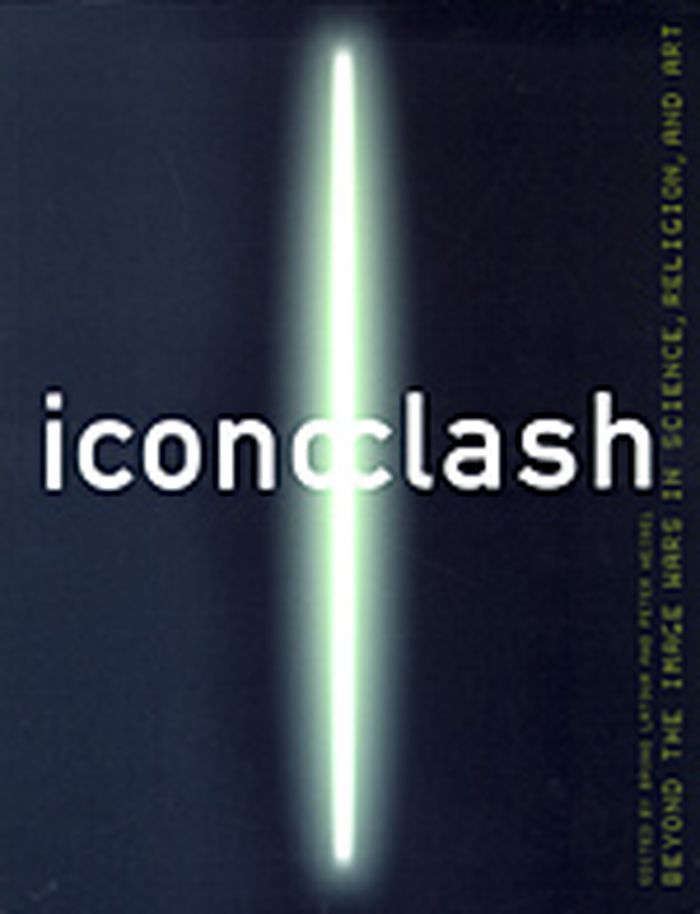
Iconoclash : beyond the image wars in science, religion, and art
Actions:
Price:
$63.00
(available to order)
Summary:
This book, which accompanies a major exhibition at the Center for New Art and Media (ZKM) in Karlsruhe, Germany, invokes three disparate realms in which images have assumed the role of cultural weapons. Monotheistic religions, scientific theories, and contemporary arts have struggled with the contradictory urge to produce and also destroy images and emblems. Moving beyond the image wars, ICONOCLASH shows that image destruction has always coexisted with a cascade of image production, visible in traditional Christian images as well as in scientific laboratories and the various experiments of contemporary art, music, cinema, and architecture. While iconoclasts have struggled against icon worshippers, another history of iconophily has always been at work. Investigating this alternative to the Western obsession with image worship and destruction allows useful comparisons with other cultures, in which images play a very different role. ICONOCLASH offers a variety of experiments on how to suspend the iconoclastic gesture and to renew the movement of images against any freeze-framing. The book includes major works by Art & Language, Willi Baumeister, Christian Boltanski, Daniel Buren, Lucas Cranach, Max Dean, Marcel Duchamp, Albrecht Dürer, Lucio Fontana, Francisco Goya, Hans Haacke, Richard Hamilton, Young Hay, Arata Isozaki, Asger Jorn, Martin Kippenberger, Imi Knoebel, Komar & Melamid, Joseph Kosuth, Gordon Matta-Clark, Tracey Moffat, Nam June Paik, Sigmar Polke, Stephen Prina, Man Ray, Sophie Ristelhueber, Hiroshi Sugimoto, and many others.
Iconoclash : beyond the image wars in science, religion, and art
Actions:
Price:
$63.00
(available to order)
Summary:
This book, which accompanies a major exhibition at the Center for New Art and Media (ZKM) in Karlsruhe, Germany, invokes three disparate realms in which images have assumed the role of cultural weapons. Monotheistic religions, scientific theories, and contemporary arts have struggled with the contradictory urge to produce and also destroy images and emblems. Moving beyond the image wars, ICONOCLASH shows that image destruction has always coexisted with a cascade of image production, visible in traditional Christian images as well as in scientific laboratories and the various experiments of contemporary art, music, cinema, and architecture. While iconoclasts have struggled against icon worshippers, another history of iconophily has always been at work. Investigating this alternative to the Western obsession with image worship and destruction allows useful comparisons with other cultures, in which images play a very different role. ICONOCLASH offers a variety of experiments on how to suspend the iconoclastic gesture and to renew the movement of images against any freeze-framing. The book includes major works by Art & Language, Willi Baumeister, Christian Boltanski, Daniel Buren, Lucas Cranach, Max Dean, Marcel Duchamp, Albrecht Dürer, Lucio Fontana, Francisco Goya, Hans Haacke, Richard Hamilton, Young Hay, Arata Isozaki, Asger Jorn, Martin Kippenberger, Imi Knoebel, Komar & Melamid, Joseph Kosuth, Gordon Matta-Clark, Tracey Moffat, Nam June Paik, Sigmar Polke, Stephen Prina, Man Ray, Sophie Ristelhueber, Hiroshi Sugimoto, and many others.
Form:
books
books
Publication:
July 2002, Cambridge, Mass.
July 2002, Cambridge, Mass.
Subject:
Architectural Theory
Architectural Theory
Form:
books
books
Actions:
Price:
$78.00
(available to order)
Summary:
Curious about how Alsop Architects managed to construct that flying, translucent rectangle at the Ontario College of Art and Design? Wonder about the sustainability of the Genzyme Building? The saying "the truth is in the details" reveals an essential quality of architectural design. How a staircase curves, a roof seemingly floats, or a concrete wall illuminates are(...)
$78.00
(available to order)
Summary:
Curious about how Alsop Architects managed to construct that flying, translucent rectangle at the Ontario College of Art and Design? Wonder about the sustainability of the Genzyme Building? The saying "the truth is in the details" reveals an essential quality of architectural design. How a staircase curves, a roof seemingly floats, or a concrete wall illuminates are(...)
Publication:
December 2006, New York
December 2006, New York
Title:
Details in contemporary architecture
Actions:
Price:
$78.00
(available to order)
Summary:
Curious about how Alsop Architects managed to construct that flying, translucent rectangle at the Ontario College of Art and Design? Wonder about the sustainability of the Genzyme Building? The saying "the truth is in the details" reveals an essential quality of architectural design. How a staircase curves, a roof seemingly floats, or a concrete wall illuminates are critical questions for architects looking at or creating new work. You might forgive designers for closely guarding their signature techniques. Fortunately, editors Christine Killory and René Davids culled an amazing collection of the best trade secrets in "Details in contemporary architecture". By looking at the best work of the past two years, the book demonstrates how complicated design problems have been handled by architects to achieve beautiful, functional, innovative, sustainable, and, where necessary, economical results. Including work by David Chipperfield, Herzog and de Meuron, Morphosis, ShoP, and many other well-known firms, "Details in contemporary architecture" extensively explores the common as well as more exotic architectural detailing (screens and walls, doors and windows, roofs, bridges, and stairs) that so often gets lost in the pages and photographs of the design media. "Details in contemporary architecture" is the first volume of a new series entitled "AsBuilt". AsBuilt features details from a representative range of building types and materials of recent built work in America. The series seeks to ground both practice and theory more deeply while fostering a better understanding of the relationships between architectural form and technology.
Details in contemporary architecture
Actions:
Price:
$78.00
(available to order)
Summary:
Curious about how Alsop Architects managed to construct that flying, translucent rectangle at the Ontario College of Art and Design? Wonder about the sustainability of the Genzyme Building? The saying "the truth is in the details" reveals an essential quality of architectural design. How a staircase curves, a roof seemingly floats, or a concrete wall illuminates are critical questions for architects looking at or creating new work. You might forgive designers for closely guarding their signature techniques. Fortunately, editors Christine Killory and René Davids culled an amazing collection of the best trade secrets in "Details in contemporary architecture". By looking at the best work of the past two years, the book demonstrates how complicated design problems have been handled by architects to achieve beautiful, functional, innovative, sustainable, and, where necessary, economical results. Including work by David Chipperfield, Herzog and de Meuron, Morphosis, ShoP, and many other well-known firms, "Details in contemporary architecture" extensively explores the common as well as more exotic architectural detailing (screens and walls, doors and windows, roofs, bridges, and stairs) that so often gets lost in the pages and photographs of the design media. "Details in contemporary architecture" is the first volume of a new series entitled "AsBuilt". AsBuilt features details from a representative range of building types and materials of recent built work in America. The series seeks to ground both practice and theory more deeply while fostering a better understanding of the relationships between architectural form and technology.
Form:
books
books
Publication:
December 2006, New York
December 2006, New York
Form:
books
books
Price:
$68.95
(available to order)
Summary:
This collection contains studies written by art historian James Ackerman over the past decade. Whereas Ackerman’s earlier work assumed a development of the arts as they responded to social, economic, political, and cultural change, his recent work reflects the poststructural critique of the presumption of progress that characterized Renaissance and modernist history and(...)
$68.95
(available to order)
Summary:
This collection contains studies written by art historian James Ackerman over the past decade. Whereas Ackerman’s earlier work assumed a development of the arts as they responded to social, economic, political, and cultural change, his recent work reflects the poststructural critique of the presumption of progress that characterized Renaissance and modernist history and(...)
Subject:
Architectural Theory
Architectural Theory
Publication:
November 2001, Cambridge, Mass.
November 2001, Cambridge, Mass.
Title:
Origins, imitation, conventions : representation in the visual arts
Actions:
Price:
$68.95
(available to order)
Summary:
This collection contains studies written by art historian James Ackerman over the past decade. Whereas Ackerman’s earlier work assumed a development of the arts as they responded to social, economic, political, and cultural change, his recent work reflects the poststructural critique of the presumption of progress that characterized Renaissance and modernist history and criticism. In this book he explores the tension between the authority of the past--which may act not only as a restraint but as a challenge and stimulus--and the potentially liberating gift of invention. He examines the ways in which artists and writers on art have related to ancestors and to established modes of representation, as well as to contemporary experiences. The "origins" studied here include the earliest art history and criticism; the beginnings of architectural drawing in the Middle Ages and Renaissance; Leonardo Da Vinci’s sketches for churches, the first in the Renaissance to propose supporting domes on sculpted walls and piers; and the first architectural photographs. "Imitation" refers to artistic achievements that in part depended on the imitation of forms established in practices outside the fine arts, such as ancient Roman rhetoric and print media. "Conventions," like language, facilitate communication between the artist and viewer, but are both more universal (understood across cultures) and more fixed (resisting variation that might diminish their clarity). The three categories are closely linked throughout the book, as most acts of representation partake to some degree of all three.
Origins, imitation, conventions : representation in the visual arts
Actions:
Price:
$68.95
(available to order)
Summary:
This collection contains studies written by art historian James Ackerman over the past decade. Whereas Ackerman’s earlier work assumed a development of the arts as they responded to social, economic, political, and cultural change, his recent work reflects the poststructural critique of the presumption of progress that characterized Renaissance and modernist history and criticism. In this book he explores the tension between the authority of the past--which may act not only as a restraint but as a challenge and stimulus--and the potentially liberating gift of invention. He examines the ways in which artists and writers on art have related to ancestors and to established modes of representation, as well as to contemporary experiences. The "origins" studied here include the earliest art history and criticism; the beginnings of architectural drawing in the Middle Ages and Renaissance; Leonardo Da Vinci’s sketches for churches, the first in the Renaissance to propose supporting domes on sculpted walls and piers; and the first architectural photographs. "Imitation" refers to artistic achievements that in part depended on the imitation of forms established in practices outside the fine arts, such as ancient Roman rhetoric and print media. "Conventions," like language, facilitate communication between the artist and viewer, but are both more universal (understood across cultures) and more fixed (resisting variation that might diminish their clarity). The three categories are closely linked throughout the book, as most acts of representation partake to some degree of all three.
Form:
books
books
Publication:
November 2001, Cambridge, Mass.
November 2001, Cambridge, Mass.
Subject:
Architectural Theory
Architectural Theory


