


1069 Results
Form:
books
books
Actions:
Price:
$56.95
(available in store)
Summary:
With its emphasis on permanence and stability, architecture at first resists an easy pairing with live performance, usually considered ephemeral and elusive. But architecture and performance share a core concern: the interplay of bodies and space. 'Bodybuilding' examines the use of live performance by architects. Looking past the unbuilt, utopian projects of the early(...)
$56.95
(available in store)
Summary:
With its emphasis on permanence and stability, architecture at first resists an easy pairing with live performance, usually considered ephemeral and elusive. But architecture and performance share a core concern: the interplay of bodies and space. 'Bodybuilding' examines the use of live performance by architects. Looking past the unbuilt, utopian projects of the early(...)
Subject:
Architectural Theory
Architectural Theory
Publication:
January 2019
January 2019
Title:
Bodybuilding: architecture and performance
Actions:
Price:
$56.95
(available in store)
Summary:
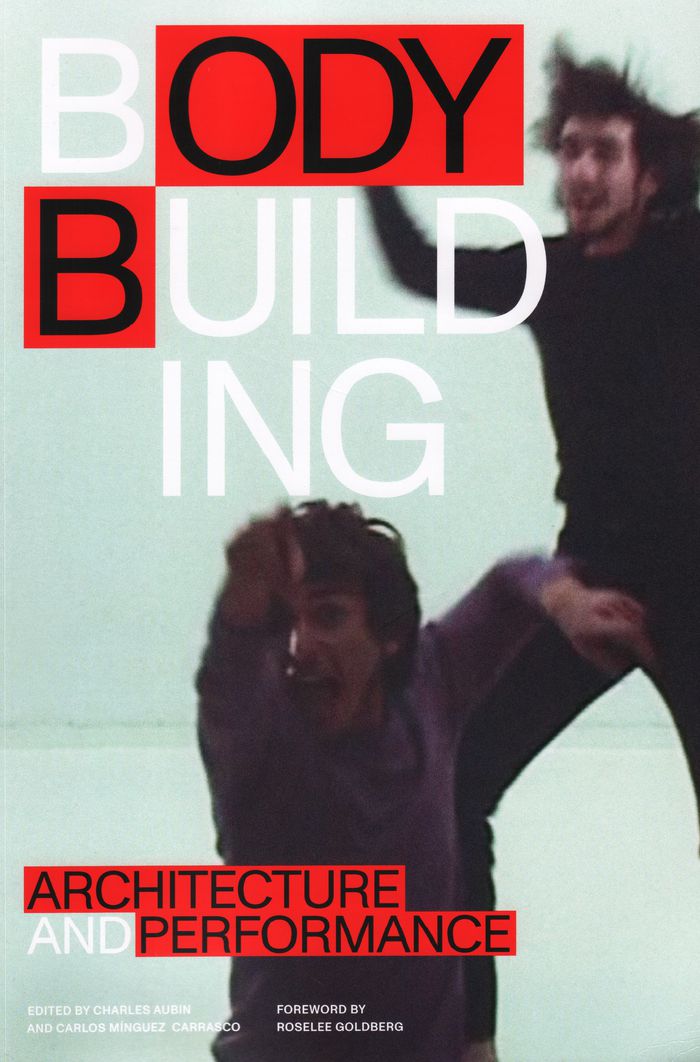
With its emphasis on permanence and stability, architecture at first resists an easy pairing with live performance, usually considered ephemeral and elusive. But architecture and performance share a core concern: the interplay of bodies and space. 'Bodybuilding' examines the use of live performance by architects. Looking past the unbuilt, utopian projects of the early modernists or the postwar avant-garde, the authors unearth an alternative canon of architects who actually employ performance to fortify the process of building, or else to explore architecture’s enmeshment with labor, security, race, migration, the environment, gentrification, and public assembly. For these architects, performance can be a tool, a method, or a heuristic device; in every case, performance is a blade that cuts into the matter of architecture. With rates of construction plummeting after the financial crisis of 2007–08, newly minted architects have had to find alternative ways to continue working within the field. 'Bodybuilding' grounds these new practices within a century of precedents, and insists that performance is a critical tool to rethink architecture’s agency, goals, and aesthetics.
Bodybuilding: architecture and performance
Actions:
Price:
$56.95
(available in store)
Summary:
With its emphasis on permanence and stability, architecture at first resists an easy pairing with live performance, usually considered ephemeral and elusive. But architecture and performance share a core concern: the interplay of bodies and space. 'Bodybuilding' examines the use of live performance by architects. Looking past the unbuilt, utopian projects of the early modernists or the postwar avant-garde, the authors unearth an alternative canon of architects who actually employ performance to fortify the process of building, or else to explore architecture’s enmeshment with labor, security, race, migration, the environment, gentrification, and public assembly. For these architects, performance can be a tool, a method, or a heuristic device; in every case, performance is a blade that cuts into the matter of architecture. With rates of construction plummeting after the financial crisis of 2007–08, newly minted architects have had to find alternative ways to continue working within the field. 'Bodybuilding' grounds these new practices within a century of precedents, and insists that performance is a critical tool to rethink architecture’s agency, goals, and aesthetics.
Form:
books
books
Publication:
January 2019
January 2019
Subject:
Architectural Theory
Architectural Theory
Form:
books
books

Title:
Mythologies
Mythologies
Actions:
Price:
$14.50
(available to order)
Summary:
"Mythologies" illustrates the beautiful generosity of Barthes's progressive interest in the meaning (his word is signification) of practically everything around him, not only the books and paintings of high art, but also the slogans, trivia, toys, food, and popular rituals (cruises, striptease, eating, wrestling matches) of contemporary life . . . For Barthes, words and(...)
$14.50
(available to order)
Summary:
"Mythologies" illustrates the beautiful generosity of Barthes's progressive interest in the meaning (his word is signification) of practically everything around him, not only the books and paintings of high art, but also the slogans, trivia, toys, food, and popular rituals (cruises, striptease, eating, wrestling matches) of contemporary life . . . For Barthes, words and(...)
Title:
Mythologies
Actions:
Price:
$14.50
(available to order)
Summary:
"Mythologies" illustrates the beautiful generosity of Barthes's progressive interest in the meaning (his word is signification) of practically everything around him, not only the books and paintings of high art, but also the slogans, trivia, toys, food, and popular rituals (cruises, striptease, eating, wrestling matches) of contemporary life . . . For Barthes, words and objects have in common the organized capacity to say something; at the same time, since they are signs, words and objects have the bad faith always to appear natural to their consumer, as if what they say is eternal, true, necessary, instead of arbitrary, made, contingent. Mythologies finds Barthes revealing the fashioned systems of ideas that make it possible, for example, for 'Einstein's brain' to stand for, be the myth of, 'a genius so lacking in magic that one speaks about his thought as a functional labor analogous to the mechanical making of sausages.' Each of the little essays in this book wrenches a definition out of a common but constructed object, making the object speak its hidden, but ever-so-present, reservoir of manufactured sense." -Edward W. Said
Mythologies
Actions:
Price:
$14.50
(available to order)
Summary:
"Mythologies" illustrates the beautiful generosity of Barthes's progressive interest in the meaning (his word is signification) of practically everything around him, not only the books and paintings of high art, but also the slogans, trivia, toys, food, and popular rituals (cruises, striptease, eating, wrestling matches) of contemporary life . . . For Barthes, words and objects have in common the organized capacity to say something; at the same time, since they are signs, words and objects have the bad faith always to appear natural to their consumer, as if what they say is eternal, true, necessary, instead of arbitrary, made, contingent. Mythologies finds Barthes revealing the fashioned systems of ideas that make it possible, for example, for 'Einstein's brain' to stand for, be the myth of, 'a genius so lacking in magic that one speaks about his thought as a functional labor analogous to the mechanical making of sausages.' Each of the little essays in this book wrenches a definition out of a common but constructed object, making the object speak its hidden, but ever-so-present, reservoir of manufactured sense." -Edward W. Said
Form:
books
books
Publication:
January 1993, New York
January 1993, New York
Subject:
Critical Theory
Critical Theory
Form:
books
books
Title:
Seeking spatial justice
Seeking spatial justice
Actions:
Price:
$27.50
(available to order)
Summary:
In Seeking Spatial Justice, Soja argues that justice has a geography and that the equitable distribution of resources, services, and access is a basic human right. Building on current concerns in critical geography and the new spatial consciousness, Soja interweaves theory and practice, offering new ways of understanding and changing the unjust geographies in which we(...)
$27.50
(available to order)
Summary:
In Seeking Spatial Justice, Soja argues that justice has a geography and that the equitable distribution of resources, services, and access is a basic human right. Building on current concerns in critical geography and the new spatial consciousness, Soja interweaves theory and practice, offering new ways of understanding and changing the unjust geographies in which we(...)
Title:
Seeking spatial justice
Actions:
Price:
$27.50
(available to order)
Summary:
In Seeking Spatial Justice, Soja argues that justice has a geography and that the equitable distribution of resources, services, and access is a basic human right. Building on current concerns in critical geography and the new spatial consciousness, Soja interweaves theory and practice, offering new ways of understanding and changing the unjust geographies in which we live. After tracing the evolution of spatial justice and the closely related notion of the right to the city in the influential work of Henri Lefebvre, David Harvey, and others, he demonstrates how these ideas are now being applied through a series of case studies in Los Angeles, the city at the forefront of this movement. Soja focuses on such innovative labor–community coalitions as Justice for Janitors, the Los Angeles Alliance for a New Economy, and the Right to the City Alliance; on struggles for rent control and environmental justice; and on the role that faculty and students in the UCLA Department of Urban Planning have played in both developing the theory of spatial justice and putting it into practice.
Seeking spatial justice
Actions:
Price:
$27.50
(available to order)
Summary:
In Seeking Spatial Justice, Soja argues that justice has a geography and that the equitable distribution of resources, services, and access is a basic human right. Building on current concerns in critical geography and the new spatial consciousness, Soja interweaves theory and practice, offering new ways of understanding and changing the unjust geographies in which we live. After tracing the evolution of spatial justice and the closely related notion of the right to the city in the influential work of Henri Lefebvre, David Harvey, and others, he demonstrates how these ideas are now being applied through a series of case studies in Los Angeles, the city at the forefront of this movement. Soja focuses on such innovative labor–community coalitions as Justice for Janitors, the Los Angeles Alliance for a New Economy, and the Right to the City Alliance; on struggles for rent control and environmental justice; and on the role that faculty and students in the UCLA Department of Urban Planning have played in both developing the theory of spatial justice and putting it into practice.
Form:
books
books
Publication:
March 2010
March 2010
Subject:
Urban Theory
Urban Theory
Form:
books
books
Title:
Urban centers and rural contexts in late antiquity / edited by Thomas S. Burns and John W. Eadie.
Urban centers and rural contexts in late antiquity / edited by Thomas S. Burns and John W. Eadie.
Actions:
Holdings:
Description:
xxvii, 379 pages : illustrations, maps ; 22 cm
Description:
xxvii, 379 pages : illustrations, maps ; 22 cm
Author:
Subject:
Publication:
East Lansing : Michigan State University Press, ©2001.
East Lansing : Michigan State University Press, ©2001.
Title:
Urban centers and rural contexts in late antiquity / edited by Thomas S. Burns and John W. Eadie.
Actions:
Holdings:
Description:
xxvii, 379 pages : illustrations, maps ; 22 cm
Urban centers and rural contexts in late antiquity / edited by Thomas S. Burns and John W. Eadie.
Actions:
Holdings:
Description:
xxvii, 379 pages : illustrations, maps ; 22 cm
Form:
books
books
Publication:
East Lansing : Michigan State University Press, ©2001.
East Lansing : Michigan State University Press, ©2001.
Author:
Subject:
Form:
books
books
Actions:
Price:
$80.00
(available to order)
Summary:
In this radical rethinking of the art of Louise Nevelson (1899–1988), Julia Bryan-Wilson provides a long-overdue critical account of a signature figure in postwar sculpture. A Ukraine-born Jewish immigrant, Nevelson persevered in the male-dominated New York art world. Nonetheless, her careful procedures of construction—in which she assembled found pieces of wood into(...)
$80.00
(available to order)
Summary:
In this radical rethinking of the art of Louise Nevelson (1899–1988), Julia Bryan-Wilson provides a long-overdue critical account of a signature figure in postwar sculpture. A Ukraine-born Jewish immigrant, Nevelson persevered in the male-dominated New York art world. Nonetheless, her careful procedures of construction—in which she assembled found pieces of wood into(...)
Title:
Louise Nevelson Sculpture: Drag, color, join, face
Actions:
Price:
$80.00
(available to order)
Summary:
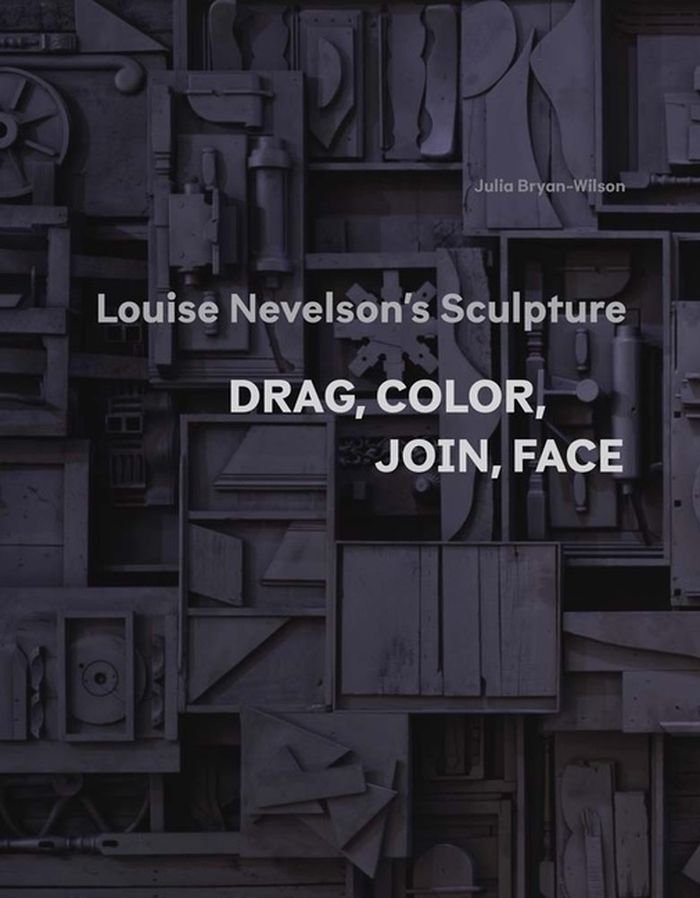
In this radical rethinking of the art of Louise Nevelson (1899–1988), Julia Bryan-Wilson provides a long-overdue critical account of a signature figure in postwar sculpture. A Ukraine-born Jewish immigrant, Nevelson persevered in the male-dominated New York art world. Nonetheless, her careful procedures of construction—in which she assembled found pieces of wood into elaborate structures, usually painted black—have been little studied. Organized around a series of key operations in Nevelson’s own process (dragging, coloring, joining, and facing), the book comprises four slipcased, individually bound volumes that can be read in any order. Both form and content thus echo Nevelson’s own modular sculptures, the gridded boxes of which the artist herself rearranged. Exploring how Nevelson’s making relates to domesticity, racialized matter, gendered labor, and the environment, Bryan-Wilson offers a sustained examination of the social and political implications of Nevelson’s art. The author also approaches Nevelson’s sculptures from her own embodied subjectivity as a queer feminist scholar. She forges an expansive art history that places Nevelson’s assemblages in dialogue with a wide array of marginalized worldmaking and underlines the artist’s proclamation of allegiance to blackness.
Louise Nevelson Sculpture: Drag, color, join, face
Actions:
Price:
$80.00
(available to order)
Summary:
In this radical rethinking of the art of Louise Nevelson (1899–1988), Julia Bryan-Wilson provides a long-overdue critical account of a signature figure in postwar sculpture. A Ukraine-born Jewish immigrant, Nevelson persevered in the male-dominated New York art world. Nonetheless, her careful procedures of construction—in which she assembled found pieces of wood into elaborate structures, usually painted black—have been little studied. Organized around a series of key operations in Nevelson’s own process (dragging, coloring, joining, and facing), the book comprises four slipcased, individually bound volumes that can be read in any order. Both form and content thus echo Nevelson’s own modular sculptures, the gridded boxes of which the artist herself rearranged. Exploring how Nevelson’s making relates to domesticity, racialized matter, gendered labor, and the environment, Bryan-Wilson offers a sustained examination of the social and political implications of Nevelson’s art. The author also approaches Nevelson’s sculptures from her own embodied subjectivity as a queer feminist scholar. She forges an expansive art history that places Nevelson’s assemblages in dialogue with a wide array of marginalized worldmaking and underlines the artist’s proclamation of allegiance to blackness.
Form:
books
books
Publication:
June 2023
June 2023
Subject:
Contemporary Art Monographs
Contemporary Art Monographs
Form:
books
books
Actions:
Price:
$69.95
(available in store)
Summary:
Architectural design and the curatorial share a non-disciplinary background, and aim to assemble diverse forms of knowledge rather than specializing. Inherently transdisciplinary, then, they are at odds with the increasing division of labor in all fields of knowledge and practice. In the face of professionalization, which limits our capacity to intervene comprehensively,(...)
$69.95
(available in store)
Summary:
Architectural design and the curatorial share a non-disciplinary background, and aim to assemble diverse forms of knowledge rather than specializing. Inherently transdisciplinary, then, they are at odds with the increasing division of labor in all fields of knowledge and practice. In the face of professionalization, which limits our capacity to intervene comprehensively,(...)
Title:
Curatorial design: A place between
Actions:
Price:
$69.95
(available in store)
Summary:
Architectural design and the curatorial share a non-disciplinary background, and aim to assemble diverse forms of knowledge rather than specializing. Inherently transdisciplinary, then, they are at odds with the increasing division of labor in all fields of knowledge and practice. In the face of professionalization, which limits our capacity to intervene comprehensively, design and the curatorial challenge specialization and produce relational knowledge. They intend to create an in-between place, as together they form a novel practice that—in combining heterogenous forms of knowledge—takes center stage rather than serving as a moderator or mediator of sorts. What unites them is the assertion of a relational form, the autonomy of which consists precisely in teasing out relations between different elements. What happens to architectural design when it consciously enters a relationship with the curatorial? The book is aimed at practitioners and educators in the field of architecture and design, as well as curators and exhibition makers. It contains three photo series by Armin Linke that accompany the three sections of the book: "Public School for Architecture", "Total Reconstruction," and "Designing for Co-Habitation."
Curatorial design: A place between
Actions:
Price:
$69.95
(available in store)
Summary:
Architectural design and the curatorial share a non-disciplinary background, and aim to assemble diverse forms of knowledge rather than specializing. Inherently transdisciplinary, then, they are at odds with the increasing division of labor in all fields of knowledge and practice. In the face of professionalization, which limits our capacity to intervene comprehensively, design and the curatorial challenge specialization and produce relational knowledge. They intend to create an in-between place, as together they form a novel practice that—in combining heterogenous forms of knowledge—takes center stage rather than serving as a moderator or mediator of sorts. What unites them is the assertion of a relational form, the autonomy of which consists precisely in teasing out relations between different elements. What happens to architectural design when it consciously enters a relationship with the curatorial? The book is aimed at practitioners and educators in the field of architecture and design, as well as curators and exhibition makers. It contains three photo series by Armin Linke that accompany the three sections of the book: "Public School for Architecture", "Total Reconstruction," and "Designing for Co-Habitation."
Form:
books
books
Publication:
March 2025
March 2025
Subject:
Museology
Museology
Form:
books
books

Title:
Hotel an american history
Hotel an american history
Actions:
Price:
$39.50
(available to order)
Summary:
In this lucid and creative work, Sandoval-Strausz, an assistant professor of history at the University of New Mexico, situates the rise of hotels within the history of the triumph of capitalism and of an increasingly mobile society. Hotels, he says, facilitated mobility and the integration of frontier lands into larger networks of capital and commerce. Hotels were also(...)
$39.50
(available to order)
Summary:
In this lucid and creative work, Sandoval-Strausz, an assistant professor of history at the University of New Mexico, situates the rise of hotels within the history of the triumph of capitalism and of an increasingly mobile society. Hotels, he says, facilitated mobility and the integration of frontier lands into larger networks of capital and commerce. Hotels were also(...)
Subject:
Commercial interiors, Building types
Commercial interiors, Building types
Publication:
November 2007, New York
November 2007, New York
Title:
Hotel an american history
Actions:
Price:
$39.50
(available to order)
Summary:
In this lucid and creative work, Sandoval-Strausz, an assistant professor of history at the University of New Mexico, situates the rise of hotels within the history of the triumph of capitalism and of an increasingly mobile society. Hotels, he says, facilitated mobility and the integration of frontier lands into larger networks of capital and commerce. Hotels were also part of the gradual process that dissociated people from particular places. If hotels solved some social problems, Sandoval-Strausz shows, they created others: guardians of domesticity, for example, worried about urban dwellers who chose to live full-time in hotels. In exploring the social and political meaning of hotels, the author pursues countless avenues, from menus to morals (Hotels were magnets for prostitution and other forms of illicit sex). There's a bit of labor history thrown in, too, since, in order to make good on the promise to be patrons' home away from home, hotels employed a huge number of workers, from cooks and launderers to janitors, Sandoval-Strausz also traces hotels' exclusion of Jews and blacks—the book ends with the 1964 Supreme Court case that desegregated public accommodations.
Hotel an american history
Actions:
Price:
$39.50
(available to order)
Summary:
In this lucid and creative work, Sandoval-Strausz, an assistant professor of history at the University of New Mexico, situates the rise of hotels within the history of the triumph of capitalism and of an increasingly mobile society. Hotels, he says, facilitated mobility and the integration of frontier lands into larger networks of capital and commerce. Hotels were also part of the gradual process that dissociated people from particular places. If hotels solved some social problems, Sandoval-Strausz shows, they created others: guardians of domesticity, for example, worried about urban dwellers who chose to live full-time in hotels. In exploring the social and political meaning of hotels, the author pursues countless avenues, from menus to morals (Hotels were magnets for prostitution and other forms of illicit sex). There's a bit of labor history thrown in, too, since, in order to make good on the promise to be patrons' home away from home, hotels employed a huge number of workers, from cooks and launderers to janitors, Sandoval-Strausz also traces hotels' exclusion of Jews and blacks—the book ends with the 1964 Supreme Court case that desegregated public accommodations.
Form:
books
books
Publication:
November 2007, New York
November 2007, New York
Subject:
Commercial interiors, Building types
Commercial interiors, Building types
Form:
books
books
Actions:
Price:
$46.50
(available to order)
Summary:
Are there significant variations in the ways planners in different nations have influenced urban, regional, and national development? Do such variations arise from differences in planning cultures, meaning the collective ethos and dominant attitude of planners in different nations towards the appropriate roles of the state, market forces, and civil society? How are such(...)
$46.50
(available to order)
Summary:
Are there significant variations in the ways planners in different nations have influenced urban, regional, and national development? Do such variations arise from differences in planning cultures, meaning the collective ethos and dominant attitude of planners in different nations towards the appropriate roles of the state, market forces, and civil society? How are such(...)
Title:
Comparative planning cultures
Actions:
Price:
$46.50
(available to order)
Summary:
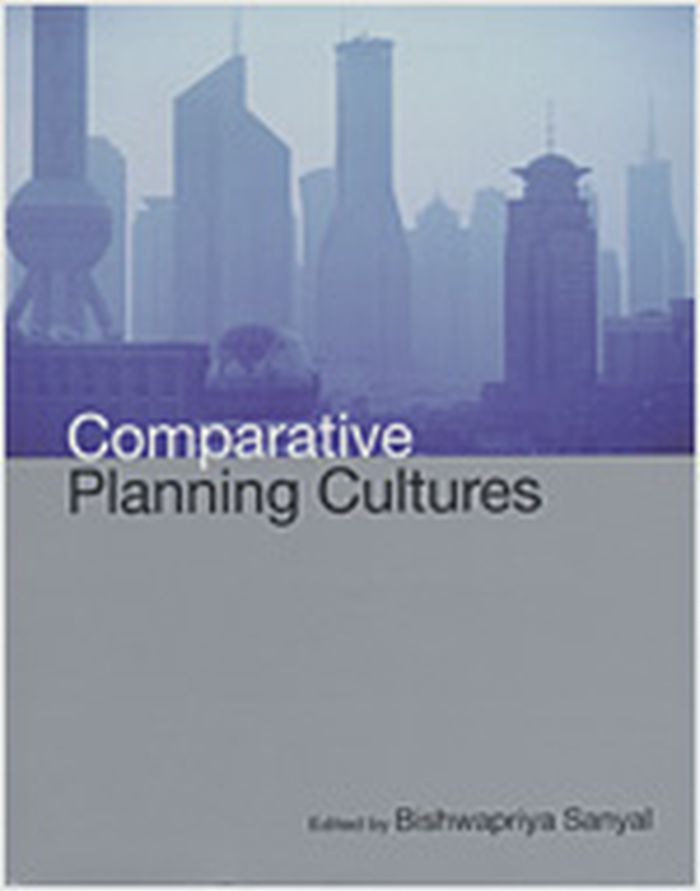
Are there significant variations in the ways planners in different nations have influenced urban, regional, and national development? Do such variations arise from differences in planning cultures, meaning the collective ethos and dominant attitude of planners in different nations towards the appropriate roles of the state, market forces, and civil society? How are such professional cultures formed? Are they indigenous and immutable, or do they evolve with social, political, and economic changes both within and outside the national territories? Specifically, what has been the impact of the intensification of global interconnectedness in trade, capital flows, labor migration, and technological connectivity on national planning cultures? "Comparative planning cultures" addresses these questions, drawing on the planning experience in ten nations and at different territorial levels. The result is an understanding of planning culture that is complex and dynamic-in contrast to traditional notions of culture that evoke a sense of immutability and inheritance of unchanging social attributes of planners. The volume concludes that there is no cultural nucleus or core planning culture, no social gene that can be decoded to reveal the cultural DNA of planning practice of any nation.
Comparative planning cultures
Actions:
Price:
$46.50
(available to order)
Summary:
Are there significant variations in the ways planners in different nations have influenced urban, regional, and national development? Do such variations arise from differences in planning cultures, meaning the collective ethos and dominant attitude of planners in different nations towards the appropriate roles of the state, market forces, and civil society? How are such professional cultures formed? Are they indigenous and immutable, or do they evolve with social, political, and economic changes both within and outside the national territories? Specifically, what has been the impact of the intensification of global interconnectedness in trade, capital flows, labor migration, and technological connectivity on national planning cultures? "Comparative planning cultures" addresses these questions, drawing on the planning experience in ten nations and at different territorial levels. The result is an understanding of planning culture that is complex and dynamic-in contrast to traditional notions of culture that evoke a sense of immutability and inheritance of unchanging social attributes of planners. The volume concludes that there is no cultural nucleus or core planning culture, no social gene that can be decoded to reveal the cultural DNA of planning practice of any nation.
Form:
books
books
Publication:
April 2005, New York / London
April 2005, New York / London
Subject:
Urban Theory
Urban Theory
Form:
books
books
Actions:
Price:
$38.00
(available to order)
Summary:
With essays by Hans-Ulrich Obrist, Lebbeus Woods, Philipp Oswalt, Stefano Boeri, Michael Sorkins, Gutierrez + Portefaix, Jerry Herron, Sean Snyder, Marjetica Potrc, and others. Foreword by Stephen Vogel. Introduction by Peter Lang. Under the confluence of nomadic economics, technologies, and industries - commonly known as "suburban sprawl" - the city of Detroit,(...)
$38.00
(available to order)
Summary:
With essays by Hans-Ulrich Obrist, Lebbeus Woods, Philipp Oswalt, Stefano Boeri, Michael Sorkins, Gutierrez + Portefaix, Jerry Herron, Sean Snyder, Marjetica Potrc, and others. Foreword by Stephen Vogel. Introduction by Peter Lang. Under the confluence of nomadic economics, technologies, and industries - commonly known as "suburban sprawl" - the city of Detroit,(...)
Title:
Urban ecology : Detroit and beyond
Actions:
Price:
$38.00
(available to order)
Summary:
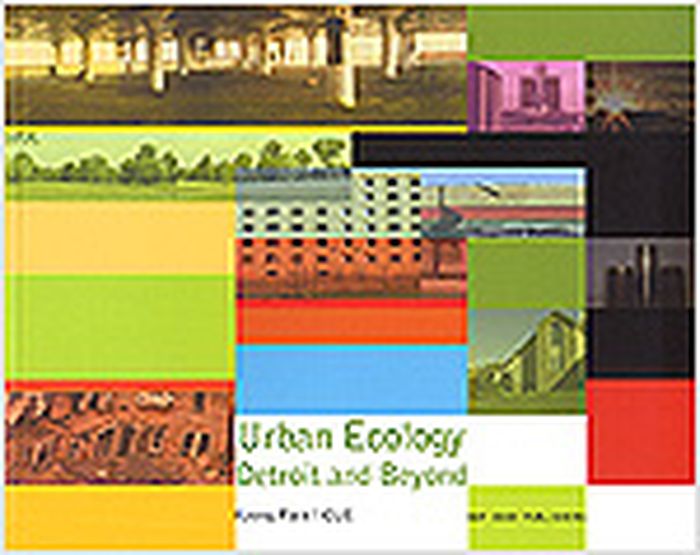
With essays by Hans-Ulrich Obrist, Lebbeus Woods, Philipp Oswalt, Stefano Boeri, Michael Sorkins, Gutierrez + Portefaix, Jerry Herron, Sean Snyder, Marjetica Potrc, and others. Foreword by Stephen Vogel. Introduction by Peter Lang. Under the confluence of nomadic economics, technologies, and industries - commonly known as "suburban sprawl" - the city of Detroit, segregated and isolated, constitutes one of the great monuments to decay by a modernist city. It is perhaps the clearest and earliest example of the effects of a globalized economy and labor market. "Urban ecology" contains a collection of projects generated by the International Center for Urban Ecology (iCUE), a nomadic laboratory for future cities. Since its founding in 1998 by Kyong Park, iCUE has accomplished five significant projects through international workshops like "Architecture of resistance," installations, videos, and urban designs. The laboratory investigation promotes discourse on the decomposition and possible reconstitution of a "moving city" - a more useful term through which to identify a city like Detroit. iCUE's projects have taken anti-architectural and non-urban perspectives, using multi-disciplinary processes and integrated collaboration with local communities and activists. "Urban ecology" brings together essays on Detroit and many other cities in crisis around the world.
Urban ecology : Detroit and beyond
Actions:
Price:
$38.00
(available to order)
Summary:
With essays by Hans-Ulrich Obrist, Lebbeus Woods, Philipp Oswalt, Stefano Boeri, Michael Sorkins, Gutierrez + Portefaix, Jerry Herron, Sean Snyder, Marjetica Potrc, and others. Foreword by Stephen Vogel. Introduction by Peter Lang. Under the confluence of nomadic economics, technologies, and industries - commonly known as "suburban sprawl" - the city of Detroit, segregated and isolated, constitutes one of the great monuments to decay by a modernist city. It is perhaps the clearest and earliest example of the effects of a globalized economy and labor market. "Urban ecology" contains a collection of projects generated by the International Center for Urban Ecology (iCUE), a nomadic laboratory for future cities. Since its founding in 1998 by Kyong Park, iCUE has accomplished five significant projects through international workshops like "Architecture of resistance," installations, videos, and urban designs. The laboratory investigation promotes discourse on the decomposition and possible reconstitution of a "moving city" - a more useful term through which to identify a city like Detroit. iCUE's projects have taken anti-architectural and non-urban perspectives, using multi-disciplinary processes and integrated collaboration with local communities and activists. "Urban ecology" brings together essays on Detroit and many other cities in crisis around the world.
Form:
books
books
Publication:
September 2004, Hong Kong
September 2004, Hong Kong
Subject:
Urban Theory
Urban Theory
Form:
books
books
Price:
$21.99
(available in store)
Summary:
Based on practical experiments, ''Unlearning with Translation'' posits the act of translation as a pedagogical tool, a political act, and ultimately a gesture of care in these tense cultural times. Written by French curator, writer, editor, and self-taught translatress Virginie Bobin, the essay revisits a series of workshops, exhibitions, and other collective activities(...)
$21.99
(available in store)
Summary:
Based on practical experiments, ''Unlearning with Translation'' posits the act of translation as a pedagogical tool, a political act, and ultimately a gesture of care in these tense cultural times. Written by French curator, writer, editor, and self-taught translatress Virginie Bobin, the essay revisits a series of workshops, exhibitions, and other collective activities(...)
Title:
Unlearning with translation: A critical and collective practice
Actions:
Price:
$21.99
(available in store)
Summary:
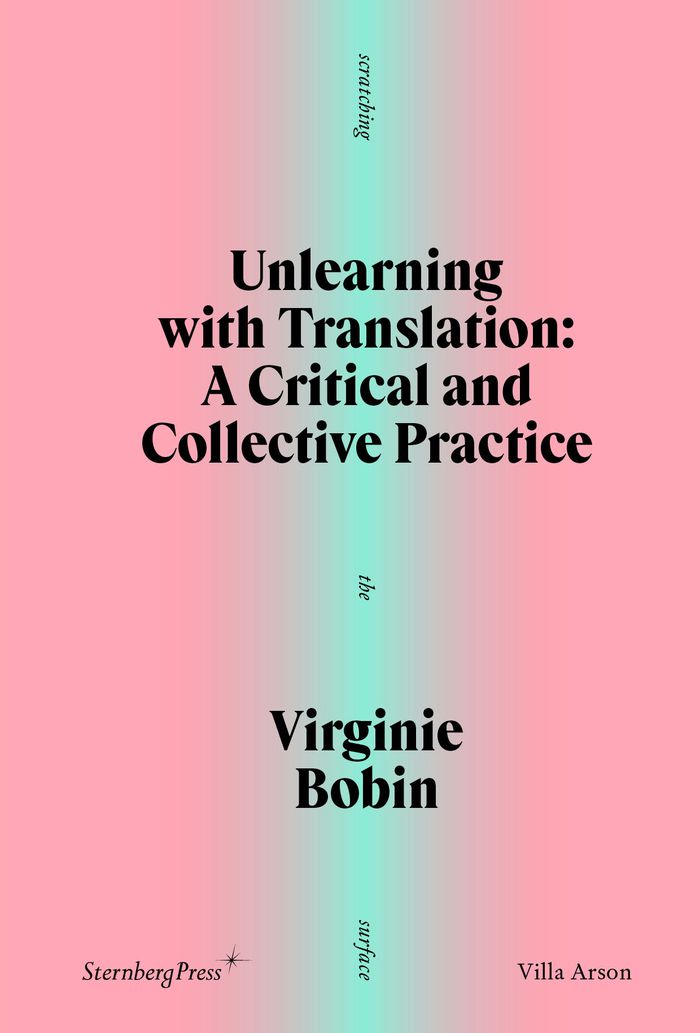
Based on practical experiments, ''Unlearning with Translation'' posits the act of translation as a pedagogical tool, a political act, and ultimately a gesture of care in these tense cultural times. Written by French curator, writer, editor, and self-taught translatress Virginie Bobin, the essay revisits a series of workshops, exhibitions, and other collective activities that took translation as both subject and method to unsettle entrenched conceptions of language, identity, and belonging. In particular, the ambiguous notion of "untranslatability" is used as a lens through which to examine the power relations at play in those institutional, economic, and political contexts inhabited by art workers. Alongside collaborations with artists including Mercedes Azpilicueta, Serena Lee, and Mounira Al Solh, Bobin's reflections are grounded in her experience co-founding and facilitating the editorial and curatorial platform Qalqalah, which relies on translation as a tool for the production and publication of situated knowledge in three languages—French, Arabic, and English. Informed by feminist genealogies and methodologies throughout, the book maintains that collective labor and relations are key aspects of any critical practice, as exemplified in the concluding correspondence with Andrea Ancira.
Unlearning with translation: A critical and collective practice
Actions:
Price:
$21.99
(available in store)
Summary:
Based on practical experiments, ''Unlearning with Translation'' posits the act of translation as a pedagogical tool, a political act, and ultimately a gesture of care in these tense cultural times. Written by French curator, writer, editor, and self-taught translatress Virginie Bobin, the essay revisits a series of workshops, exhibitions, and other collective activities that took translation as both subject and method to unsettle entrenched conceptions of language, identity, and belonging. In particular, the ambiguous notion of "untranslatability" is used as a lens through which to examine the power relations at play in those institutional, economic, and political contexts inhabited by art workers. Alongside collaborations with artists including Mercedes Azpilicueta, Serena Lee, and Mounira Al Solh, Bobin's reflections are grounded in her experience co-founding and facilitating the editorial and curatorial platform Qalqalah, which relies on translation as a tool for the production and publication of situated knowledge in three languages—French, Arabic, and English. Informed by feminist genealogies and methodologies throughout, the book maintains that collective labor and relations are key aspects of any critical practice, as exemplified in the concluding correspondence with Andrea Ancira.
Form:
books
books
Publication:
March 2026
March 2026
Subject:
Museology
Museology


