


35831 Results
Level of archival description:
Project
Project
Title:
Detroit Think Grid
Detroit Think Grid
Reference number:
AP144.S2.D73
Description:
File documents Detroit Think Grid, an unrealized project for a series of experiments which were to be developed by Price in collaboration with various groups in the Greater Detroit and Oakland area and implemented over a five-year period. Collaborators were to include the municipality, industry, commerce, and the existing education network, particularly Oakland County Community College in Detroit, Michigan. The principle aim of the Detroit Think Grid was to make the education "system" flexible and responsive to the needs of the community and readily accessible to everyone. Detroit Think Grid components include mobile units such as swimming pools, public learning booths and packaged workshops. Material in this group consists of existing conditions documentation concerning Oakland County and Oakland Community College campuses, such as aerial photographs of streets, zoning maps and maps of various townships, maps of traffic flow in Oakland County, and site plans of Oakland Community College campuses. Design development drawings include zoning plans showing present and projected uses of various zones, major transportation modes, patterns, and access points, and predictions for general population, school population, and retail growth within Oakland County. Material from this file was published in "Cedric Price Supplement No. 3", 'Architectural Design', vol. 41, (June 1971), 353-363 and 'Cedric Price-Works II' (London: Architectural Press, 1984), 54, 66. Material in this file was produced between 1957 and 1975, but predominantly between 1969 and 1971. Cedric Price presented a conference at the Cranbrook Institute of Science, in Michigan in 1968 and produced 2 reports for them titled 'Oakland Community College: An Investigation into Educational Servicing' (1968) and 'Oakland Community College: An Investigation into New Forms of Learning' (1968). File contains cartographic materials, design development drawings, photographic materials, reference drawings, and textual records.
AP144.S2.D73
Description:
File documents Detroit Think Grid, an unrealized project for a series of experiments which were to be developed by Price in collaboration with various groups in the Greater Detroit and Oakland area and implemented over a five-year period. Collaborators were to include the municipality, industry, commerce, and the existing education network, particularly Oakland County Community College in Detroit, Michigan. The principle aim of the Detroit Think Grid was to make the education "system" flexible and responsive to the needs of the community and readily accessible to everyone. Detroit Think Grid components include mobile units such as swimming pools, public learning booths and packaged workshops. Material in this group consists of existing conditions documentation concerning Oakland County and Oakland Community College campuses, such as aerial photographs of streets, zoning maps and maps of various townships, maps of traffic flow in Oakland County, and site plans of Oakland Community College campuses. Design development drawings include zoning plans showing present and projected uses of various zones, major transportation modes, patterns, and access points, and predictions for general population, school population, and retail growth within Oakland County. Material from this file was published in "Cedric Price Supplement No. 3", 'Architectural Design', vol. 41, (June 1971), 353-363 and 'Cedric Price-Works II' (London: Architectural Press, 1984), 54, 66. Material in this file was produced between 1957 and 1975, but predominantly between 1969 and 1971. Cedric Price presented a conference at the Cranbrook Institute of Science, in Michigan in 1968 and produced 2 reports for them titled 'Oakland Community College: An Investigation into Educational Servicing' (1968) and 'Oakland Community College: An Investigation into New Forms of Learning' (1968). File contains cartographic materials, design development drawings, photographic materials, reference drawings, and textual records.
People:
Date:
1957-1975, predominant 1969-1971
1957-1975, predominant 1969-1971
Title:
Detroit Think Grid
Actions:
AP144.S2.D73
Description:
File documents Detroit Think Grid, an unrealized project for a series of experiments which were to be developed by Price in collaboration with various groups in the Greater Detroit and Oakland area and implemented over a five-year period. Collaborators were to include the municipality, industry, commerce, and the existing education network, particularly Oakland County Community College in Detroit, Michigan. The principle aim of the Detroit Think Grid was to make the education "system" flexible and responsive to the needs of the community and readily accessible to everyone. Detroit Think Grid components include mobile units such as swimming pools, public learning booths and packaged workshops. Material in this group consists of existing conditions documentation concerning Oakland County and Oakland Community College campuses, such as aerial photographs of streets, zoning maps and maps of various townships, maps of traffic flow in Oakland County, and site plans of Oakland Community College campuses. Design development drawings include zoning plans showing present and projected uses of various zones, major transportation modes, patterns, and access points, and predictions for general population, school population, and retail growth within Oakland County. Material from this file was published in "Cedric Price Supplement No. 3", 'Architectural Design', vol. 41, (June 1971), 353-363 and 'Cedric Price-Works II' (London: Architectural Press, 1984), 54, 66. Material in this file was produced between 1957 and 1975, but predominantly between 1969 and 1971. Cedric Price presented a conference at the Cranbrook Institute of Science, in Michigan in 1968 and produced 2 reports for them titled 'Oakland Community College: An Investigation into Educational Servicing' (1968) and 'Oakland Community College: An Investigation into New Forms of Learning' (1968). File contains cartographic materials, design development drawings, photographic materials, reference drawings, and textual records.
Detroit Think Grid
Actions:
AP144.S2.D73
Description:
File documents Detroit Think Grid, an unrealized project for a series of experiments which were to be developed by Price in collaboration with various groups in the Greater Detroit and Oakland area and implemented over a five-year period. Collaborators were to include the municipality, industry, commerce, and the existing education network, particularly Oakland County Community College in Detroit, Michigan. The principle aim of the Detroit Think Grid was to make the education "system" flexible and responsive to the needs of the community and readily accessible to everyone. Detroit Think Grid components include mobile units such as swimming pools, public learning booths and packaged workshops. Material in this group consists of existing conditions documentation concerning Oakland County and Oakland Community College campuses, such as aerial photographs of streets, zoning maps and maps of various townships, maps of traffic flow in Oakland County, and site plans of Oakland Community College campuses. Design development drawings include zoning plans showing present and projected uses of various zones, major transportation modes, patterns, and access points, and predictions for general population, school population, and retail growth within Oakland County. Material from this file was published in "Cedric Price Supplement No. 3", 'Architectural Design', vol. 41, (June 1971), 353-363 and 'Cedric Price-Works II' (London: Architectural Press, 1984), 54, 66. Material in this file was produced between 1957 and 1975, but predominantly between 1969 and 1971. Cedric Price presented a conference at the Cranbrook Institute of Science, in Michigan in 1968 and produced 2 reports for them titled 'Oakland Community College: An Investigation into Educational Servicing' (1968) and 'Oakland Community College: An Investigation into New Forms of Learning' (1968). File contains cartographic materials, design development drawings, photographic materials, reference drawings, and textual records.
Level of archival description:
File 73
File 73
Date:
1957-1975, predominant 1969-1971
1957-1975, predominant 1969-1971
People:
Level of archival description:
Sub-series
Sub-series
Actions:
Reference number:
AP075.S3.SS2
Description:
This sub-series documents Cornelia Hahn Oberlander's administrative records of her practice as landscape architect from the end of the 1950s to the end ot the 2010s. It comprises material related to her consulting services on her own various landscape projects and urban planning projects, and also her consulting services for projects submitted as member of a larger project team for private or public projects. Her office records also contains documents related the planning of her work, her patents applications and designs for her own landscape or playground furnitures, and her professional correspondence. The sub-series also documents Oberlander press and promotional activities, such as interviews she gave, articles written about her, about her work as landscape architect, her statements or her activism for social and environmental causes or preservation landmark buildings and spaces. The sub-series contains documents related to Oberlander's consulting services, including requests for services, proposals by her or by the project team, correspondence, or documentation collected for projects calls of interest to Oberlander. Oberlander's office records for planning of projects and other activities includes professional correspondence files, agendas and planners, message books and notebooks, patents applications and plans for her designs, and office references, such landscape architecture regulations and guidelines, and landscape specifications templates. The sub-series also comprises promotional material, such as photographs of her previous projects, press clippings of articles or periodicals with articles about her or her work, promotional panels for some of her major projects, and brochures or leaflets on her most well known projects. It includes also contains recordings of interviews on TV or radio shows she gave, biographical information on Oberlander, versions of her CV's, portaits of her, and lists and project write-ups.
AP075.S3.SS2
Description:
This sub-series documents Cornelia Hahn Oberlander's administrative records of her practice as landscape architect from the end of the 1950s to the end ot the 2010s. It comprises material related to her consulting services on her own various landscape projects and urban planning projects, and also her consulting services for projects submitted as member of a larger project team for private or public projects. Her office records also contains documents related the planning of her work, her patents applications and designs for her own landscape or playground furnitures, and her professional correspondence. The sub-series also documents Oberlander press and promotional activities, such as interviews she gave, articles written about her, about her work as landscape architect, her statements or her activism for social and environmental causes or preservation landmark buildings and spaces. The sub-series contains documents related to Oberlander's consulting services, including requests for services, proposals by her or by the project team, correspondence, or documentation collected for projects calls of interest to Oberlander. Oberlander's office records for planning of projects and other activities includes professional correspondence files, agendas and planners, message books and notebooks, patents applications and plans for her designs, and office references, such landscape architecture regulations and guidelines, and landscape specifications templates. The sub-series also comprises promotional material, such as photographs of her previous projects, press clippings of articles or periodicals with articles about her or her work, promotional panels for some of her major projects, and brochures or leaflets on her most well known projects. It includes also contains recordings of interviews on TV or radio shows she gave, biographical information on Oberlander, versions of her CV's, portaits of her, and lists and project write-ups.
People:
Date:
1953-2018
1953-2018
Title:
Administrative records and promotional material
Actions:
AP075.S3.SS2
Description:
This sub-series documents Cornelia Hahn Oberlander's administrative records of her practice as landscape architect from the end of the 1950s to the end ot the 2010s. It comprises material related to her consulting services on her own various landscape projects and urban planning projects, and also her consulting services for projects submitted as member of a larger project team for private or public projects. Her office records also contains documents related the planning of her work, her patents applications and designs for her own landscape or playground furnitures, and her professional correspondence. The sub-series also documents Oberlander press and promotional activities, such as interviews she gave, articles written about her, about her work as landscape architect, her statements or her activism for social and environmental causes or preservation landmark buildings and spaces. The sub-series contains documents related to Oberlander's consulting services, including requests for services, proposals by her or by the project team, correspondence, or documentation collected for projects calls of interest to Oberlander. Oberlander's office records for planning of projects and other activities includes professional correspondence files, agendas and planners, message books and notebooks, patents applications and plans for her designs, and office references, such landscape architecture regulations and guidelines, and landscape specifications templates. The sub-series also comprises promotional material, such as photographs of her previous projects, press clippings of articles or periodicals with articles about her or her work, promotional panels for some of her major projects, and brochures or leaflets on her most well known projects. It includes also contains recordings of interviews on TV or radio shows she gave, biographical information on Oberlander, versions of her CV's, portaits of her, and lists and project write-ups.
Administrative records and promotional material
Actions:
AP075.S3.SS2
Description:
This sub-series documents Cornelia Hahn Oberlander's administrative records of her practice as landscape architect from the end of the 1950s to the end ot the 2010s. It comprises material related to her consulting services on her own various landscape projects and urban planning projects, and also her consulting services for projects submitted as member of a larger project team for private or public projects. Her office records also contains documents related the planning of her work, her patents applications and designs for her own landscape or playground furnitures, and her professional correspondence. The sub-series also documents Oberlander press and promotional activities, such as interviews she gave, articles written about her, about her work as landscape architect, her statements or her activism for social and environmental causes or preservation landmark buildings and spaces. The sub-series contains documents related to Oberlander's consulting services, including requests for services, proposals by her or by the project team, correspondence, or documentation collected for projects calls of interest to Oberlander. Oberlander's office records for planning of projects and other activities includes professional correspondence files, agendas and planners, message books and notebooks, patents applications and plans for her designs, and office references, such landscape architecture regulations and guidelines, and landscape specifications templates. The sub-series also comprises promotional material, such as photographs of her previous projects, press clippings of articles or periodicals with articles about her or her work, promotional panels for some of her major projects, and brochures or leaflets on her most well known projects. It includes also contains recordings of interviews on TV or radio shows she gave, biographical information on Oberlander, versions of her CV's, portaits of her, and lists and project write-ups.
Level of archival description:
Sub-series
Sub-series
Date:
1953-2018
1953-2018
People:
Level of archival description:
Project
Project
Actions:
Reference number:
AP198.S1.1997.PR01
Description:
Project records document OCEAN North’s design for their competition entry for the Töölö Football Stadium in Helsinki in 1997. The project was titled Open Arena by OCEAN North. The site for the football stadium was in the Töölö neighbourhood, between a park area including the Helsinki Olympic Stadium, and a residential area. OCEAN North’s entry was a building that would integrate with its natural surroundings while being able to accommodate a variety of activities and events. The structure for Open Arena has three topological surfaces. The first provides stadium access to the players and the public, and includes services such as restaurant, cafeteria, and bars. Its shape aims to integrate with the natural landscape. The second contains the audience seating areas, including VIP and press areas, and aimed to arrange the audience as if it was loosely dispersed on a hillside. The third topological surface consists of the roof. The Töölö Football Stadium marks the introduction of the Channelling Systems process, defining building’s integration to its surroundings and distributing functions across the structure. Records show different stages of the design process and include two digitized photographs of Plexiglas sections that were used to physically explore the design. Digital files are grouped under categories such as Board images, Board lay-out, Graft, Sections, Siteplans, digital model images, scanned plans and site images. This last directory contains digitized photographs of the grounds surrounding the Helsinki Olympic Stadium. All drawings are vector or raster images of the whole or parts of the structure, with some including the identifications of the structure’s parts. Project records also include preliminary or working plans. Most were drawn to scale on paper and some were printed from CAD drawings. They chiefly reflect the design work to define the surfaces and shapes of the stadium’s structure. Source: Ateljé Sotamaa. “Portfolio: Open Arena”. http://portfolio.sotamaa.net/Open-Arena accessed in February 2018.
AP198.S1.1997.PR01
Description:
Project records document OCEAN North’s design for their competition entry for the Töölö Football Stadium in Helsinki in 1997. The project was titled Open Arena by OCEAN North. The site for the football stadium was in the Töölö neighbourhood, between a park area including the Helsinki Olympic Stadium, and a residential area. OCEAN North’s entry was a building that would integrate with its natural surroundings while being able to accommodate a variety of activities and events. The structure for Open Arena has three topological surfaces. The first provides stadium access to the players and the public, and includes services such as restaurant, cafeteria, and bars. Its shape aims to integrate with the natural landscape. The second contains the audience seating areas, including VIP and press areas, and aimed to arrange the audience as if it was loosely dispersed on a hillside. The third topological surface consists of the roof. The Töölö Football Stadium marks the introduction of the Channelling Systems process, defining building’s integration to its surroundings and distributing functions across the structure. Records show different stages of the design process and include two digitized photographs of Plexiglas sections that were used to physically explore the design. Digital files are grouped under categories such as Board images, Board lay-out, Graft, Sections, Siteplans, digital model images, scanned plans and site images. This last directory contains digitized photographs of the grounds surrounding the Helsinki Olympic Stadium. All drawings are vector or raster images of the whole or parts of the structure, with some including the identifications of the structure’s parts. Project records also include preliminary or working plans. Most were drawn to scale on paper and some were printed from CAD drawings. They chiefly reflect the design work to define the surfaces and shapes of the stadium’s structure. Source: Ateljé Sotamaa. “Portfolio: Open Arena”. http://portfolio.sotamaa.net/Open-Arena accessed in February 2018.
People:
Date:
1997
1997
Title:
Open Arena – Töölö Football Stadium, international competition entry
Actions:
AP198.S1.1997.PR01
Description:
Project records document OCEAN North’s design for their competition entry for the Töölö Football Stadium in Helsinki in 1997. The project was titled Open Arena by OCEAN North. The site for the football stadium was in the Töölö neighbourhood, between a park area including the Helsinki Olympic Stadium, and a residential area. OCEAN North’s entry was a building that would integrate with its natural surroundings while being able to accommodate a variety of activities and events. The structure for Open Arena has three topological surfaces. The first provides stadium access to the players and the public, and includes services such as restaurant, cafeteria, and bars. Its shape aims to integrate with the natural landscape. The second contains the audience seating areas, including VIP and press areas, and aimed to arrange the audience as if it was loosely dispersed on a hillside. The third topological surface consists of the roof. The Töölö Football Stadium marks the introduction of the Channelling Systems process, defining building’s integration to its surroundings and distributing functions across the structure. Records show different stages of the design process and include two digitized photographs of Plexiglas sections that were used to physically explore the design. Digital files are grouped under categories such as Board images, Board lay-out, Graft, Sections, Siteplans, digital model images, scanned plans and site images. This last directory contains digitized photographs of the grounds surrounding the Helsinki Olympic Stadium. All drawings are vector or raster images of the whole or parts of the structure, with some including the identifications of the structure’s parts. Project records also include preliminary or working plans. Most were drawn to scale on paper and some were printed from CAD drawings. They chiefly reflect the design work to define the surfaces and shapes of the stadium’s structure. Source: Ateljé Sotamaa. “Portfolio: Open Arena”. http://portfolio.sotamaa.net/Open-Arena accessed in February 2018.
Open Arena – Töölö Football Stadium, international competition entry
Actions:
AP198.S1.1997.PR01
Description:
Project records document OCEAN North’s design for their competition entry for the Töölö Football Stadium in Helsinki in 1997. The project was titled Open Arena by OCEAN North. The site for the football stadium was in the Töölö neighbourhood, between a park area including the Helsinki Olympic Stadium, and a residential area. OCEAN North’s entry was a building that would integrate with its natural surroundings while being able to accommodate a variety of activities and events. The structure for Open Arena has three topological surfaces. The first provides stadium access to the players and the public, and includes services such as restaurant, cafeteria, and bars. Its shape aims to integrate with the natural landscape. The second contains the audience seating areas, including VIP and press areas, and aimed to arrange the audience as if it was loosely dispersed on a hillside. The third topological surface consists of the roof. The Töölö Football Stadium marks the introduction of the Channelling Systems process, defining building’s integration to its surroundings and distributing functions across the structure. Records show different stages of the design process and include two digitized photographs of Plexiglas sections that were used to physically explore the design. Digital files are grouped under categories such as Board images, Board lay-out, Graft, Sections, Siteplans, digital model images, scanned plans and site images. This last directory contains digitized photographs of the grounds surrounding the Helsinki Olympic Stadium. All drawings are vector or raster images of the whole or parts of the structure, with some including the identifications of the structure’s parts. Project records also include preliminary or working plans. Most were drawn to scale on paper and some were printed from CAD drawings. They chiefly reflect the design work to define the surfaces and shapes of the stadium’s structure. Source: Ateljé Sotamaa. “Portfolio: Open Arena”. http://portfolio.sotamaa.net/Open-Arena accessed in February 2018.
Level of archival description:
Project
Project
Date:
1997
1997
People:
Form:
archives
Level of archival description:
Fonds
archives
Level of archival description:
Fonds
Actions:
Reference number:
AP225
Synopsis:
The Roderick Robbie Katimavik project records describe Robbie's collaboration with his architectural partners at the Toronto-based firm Ashworth Robbie Vaughan and Williams to create Katimavik, an entry for the competition for the design of the Canadian Government’s pavilion at Expo 67. The records in this fonds relate to the project's design process, the reception of the completed structure in Canadian and international architectural discourse, reporting on the project to the Canadian government, and Expo 67 memerobilia.
AP225
Synopsis:
The Roderick Robbie Katimavik project records describe Robbie's collaboration with his architectural partners at the Toronto-based firm Ashworth Robbie Vaughan and Williams to create Katimavik, an entry for the competition for the design of the Canadian Government’s pavilion at Expo 67. The records in this fonds relate to the project's design process, the reception of the completed structure in Canadian and international architectural discourse, reporting on the project to the Canadian government, and Expo 67 memerobilia.
People:
Date:
1966-2017
1966-2017
Title:
Roderick Robbie Katimavik project records
Actions:
AP225
Synopsis:
The Roderick Robbie Katimavik project records describe Robbie's collaboration with his architectural partners at the Toronto-based firm Ashworth Robbie Vaughan and Williams to create Katimavik, an entry for the competition for the design of the Canadian Government’s pavilion at Expo 67. The records in this fonds relate to the project's design process, the reception of the completed structure in Canadian and international architectural discourse, reporting on the project to the Canadian government, and Expo 67 memerobilia.
Roderick Robbie Katimavik project records
Actions:
AP225
Synopsis:
The Roderick Robbie Katimavik project records describe Robbie's collaboration with his architectural partners at the Toronto-based firm Ashworth Robbie Vaughan and Williams to create Katimavik, an entry for the competition for the design of the Canadian Government’s pavilion at Expo 67. The records in this fonds relate to the project's design process, the reception of the completed structure in Canadian and international architectural discourse, reporting on the project to the Canadian government, and Expo 67 memerobilia.
Form:
archives
Level of archival description:
Fonds
archives
Level of archival description:
Fonds
Date:
1966-2017
1966-2017
People:
Form:
events
events

Title:
Mapping Rural Montréal
Mapping Rural Montréal
Actions:
Description:
On a tour of downtown Montréal, San Francisco-based artist Amy Franceschini shows participants ‘rural’ sites and activities and questions the dichotomy of country and city. Franceschini founded Futurefarmers, a collaborative and experimental studio that addresses ecological issues, as well as the online magazine, Atlas. Inspired by the exhibition Actions: What You Can Do(...)
On a tour of downtown Montréal, San Francisco-based artist Amy Franceschini shows participants ‘rural’ sites and activities and questions the dichotomy of country and city. Franceschini founded Futurefarmers, a collaborative and experimental studio that addresses ecological issues, as well as the online magazine, Atlas. Inspired by the exhibition Actions: What You Can Do(...)
Date:
4 April 2009
4 April 2009
Title:
Mapping Rural Montréal
Actions:
Description:
On a tour of downtown Montréal, San Francisco-based artist Amy Franceschini shows participants ‘rural’ sites and activities and questions the dichotomy of country and city. Franceschini founded Futurefarmers, a collaborative and experimental studio that addresses ecological issues, as well as the online magazine, Atlas. Inspired by the exhibition Actions: What You Can Do(...)
Mapping Rural Montréal
Actions:
Description:
On a tour of downtown Montréal, San Francisco-based artist Amy Franceschini shows participants ‘rural’ sites and activities and questions the dichotomy of country and city. Franceschini founded Futurefarmers, a collaborative and experimental studio that addresses ecological issues, as well as the online magazine, Atlas. Inspired by the exhibition Actions: What You Can Do(...)
Form:
events
events
Date:
4 April 2009
4 April 2009
Form:
events
events
Title:
Foraging in Montréal
Foraging in Montréal
Actions:
Description:
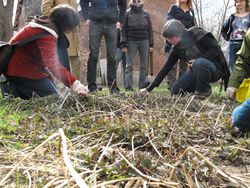
Chicago-based artist and forager Nance Klehm leads a foraging and tea-making expedition. Foraging is the practice of collecting plants that grow wild in urban and rural areas. Participants identify and collect edible plants growing in Montreal and then make tea from the foraged ingredients. Inspired by the exhibition Actions: What You Can Do With the City (2008), the CCA(...)
Chicago-based artist and forager Nance Klehm leads a foraging and tea-making expedition. Foraging is the practice of collecting plants that grow wild in urban and rural areas. Participants identify and collect edible plants growing in Montreal and then make tea from the foraged ingredients. Inspired by the exhibition Actions: What You Can Do With the City (2008), the CCA(...)
Date:
18 April 2009
18 April 2009
Title:
Foraging in Montréal
Actions:
Description:
Chicago-based artist and forager Nance Klehm leads a foraging and tea-making expedition. Foraging is the practice of collecting plants that grow wild in urban and rural areas. Participants identify and collect edible plants growing in Montreal and then make tea from the foraged ingredients. Inspired by the exhibition Actions: What You Can Do With the City (2008), the CCA(...)
Foraging in Montréal
Actions:
Description:
Chicago-based artist and forager Nance Klehm leads a foraging and tea-making expedition. Foraging is the practice of collecting plants that grow wild in urban and rural areas. Participants identify and collect edible plants growing in Montreal and then make tea from the foraged ingredients. Inspired by the exhibition Actions: What You Can Do With the City (2008), the CCA(...)
Form:
events
events
Date:
18 April 2009
18 April 2009
Form:
events
events
Title:
Speed Reading
Speed Reading
Actions:
Description:
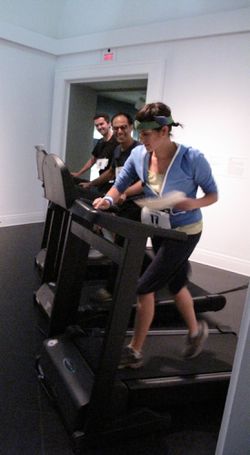
An afternoon reading marathon in which 20-25 people walk, jog, or run on a treadmill while reading aloud a text addressing the notion of speed. Reader-runners will share their preferred fast or slow manifesto, philosophical treatise, timetable, literary excerpt, slow-food recipe, biological notation, or space-time continuum in readings of 1 second to 4 minutes. Speed(...)
An afternoon reading marathon in which 20-25 people walk, jog, or run on a treadmill while reading aloud a text addressing the notion of speed. Reader-runners will share their preferred fast or slow manifesto, philosophical treatise, timetable, literary excerpt, slow-food recipe, biological notation, or space-time continuum in readings of 1 second to 4 minutes. Speed(...)
Location:
CCA Bookstore and galleries
CCA Bookstore and galleries
Date:
20 September 2009
20 September 2009
Title:
Speed Reading
Actions:
Description:
An afternoon reading marathon in which 20-25 people walk, jog, or run on a treadmill while reading aloud a text addressing the notion of speed. Reader-runners will share their preferred fast or slow manifesto, philosophical treatise, timetable, literary excerpt, slow-food recipe, biological notation, or space-time continuum in readings of 1 second to 4 minutes. Speed(...)
Speed Reading
Actions:
Description:
An afternoon reading marathon in which 20-25 people walk, jog, or run on a treadmill while reading aloud a text addressing the notion of speed. Reader-runners will share their preferred fast or slow manifesto, philosophical treatise, timetable, literary excerpt, slow-food recipe, biological notation, or space-time continuum in readings of 1 second to 4 minutes. Speed(...)
Form:
events
events
Date:
20 September 2009
20 September 2009
Location:
CCA Bookstore and galleries
CCA Bookstore and galleries
Form:
archives
Level of archival description:
Fonds
archives
Level of archival description:
Fonds
Reference number:
AP057
Synopsis:
The Institute for Architecture and Urban Studies (IAUS) fonds is composed primarily of textual and photographic material which document the activities of the IAUS from its inception in 1967 until its dissolution in 1983. Those activities include the publication of three periodicals (Oppositions, October and Skyline), as well as numerous books, conferences, lectures, exhibitions and educational programming. In addition, the IAUS fonds documents the activities of the IAUS' director, architect Peter Eisenman.
AP057
Synopsis:
The Institute for Architecture and Urban Studies (IAUS) fonds is composed primarily of textual and photographic material which document the activities of the IAUS from its inception in 1967 until its dissolution in 1983. Those activities include the publication of three periodicals (Oppositions, October and Skyline), as well as numerous books, conferences, lectures, exhibitions and educational programming. In addition, the IAUS fonds documents the activities of the IAUS' director, architect Peter Eisenman.
People:
Date:
1965-1984
1965-1984
Title:
Institute for Architecture and Urban Studies fonds
Actions:
AP057
Synopsis:
The Institute for Architecture and Urban Studies (IAUS) fonds is composed primarily of textual and photographic material which document the activities of the IAUS from its inception in 1967 until its dissolution in 1983. Those activities include the publication of three periodicals (Oppositions, October and Skyline), as well as numerous books, conferences, lectures, exhibitions and educational programming. In addition, the IAUS fonds documents the activities of the IAUS' director, architect Peter Eisenman.
Institute for Architecture and Urban Studies fonds
Actions:
AP057
Synopsis:
The Institute for Architecture and Urban Studies (IAUS) fonds is composed primarily of textual and photographic material which document the activities of the IAUS from its inception in 1967 until its dissolution in 1983. Those activities include the publication of three periodicals (Oppositions, October and Skyline), as well as numerous books, conferences, lectures, exhibitions and educational programming. In addition, the IAUS fonds documents the activities of the IAUS' director, architect Peter Eisenman.
Form:
archives
Level of archival description:
Fonds
archives
Level of archival description:
Fonds
Date:
1965-1984
1965-1984
People:
Form:
archives
Level of archival description:
Fonds
archives
Level of archival description:
Fonds
Title:
Marius Dufresne fonds
Marius Dufresne fonds
Reference number:
AP081
Synopsis:
Le fonds documente la formation et la pratique professionnelle de Marius Dufresne. Il contient ses cahiers de notes de cours et ses album de croquis à l'École polytechnique, datant de 1900 à 1905, ainsi que des manuels scolaires. Il contient également des dessins pour des projets d'architecture, notamment la résidence Dufresne à Montréal. On y retrouve aussi des cahiers d'arpentage (1910-1913) et des documents professionnels relatifs à la ville de Maisonneuve.
AP081
Synopsis:
Le fonds documente la formation et la pratique professionnelle de Marius Dufresne. Il contient ses cahiers de notes de cours et ses album de croquis à l'École polytechnique, datant de 1900 à 1905, ainsi que des manuels scolaires. Il contient également des dessins pour des projets d'architecture, notamment la résidence Dufresne à Montréal. On y retrouve aussi des cahiers d'arpentage (1910-1913) et des documents professionnels relatifs à la ville de Maisonneuve.
People:
Date:
1883-1945
1883-1945
Title:
Marius Dufresne fonds
Actions:
AP081
Synopsis:
Le fonds documente la formation et la pratique professionnelle de Marius Dufresne. Il contient ses cahiers de notes de cours et ses album de croquis à l'École polytechnique, datant de 1900 à 1905, ainsi que des manuels scolaires. Il contient également des dessins pour des projets d'architecture, notamment la résidence Dufresne à Montréal. On y retrouve aussi des cahiers d'arpentage (1910-1913) et des documents professionnels relatifs à la ville de Maisonneuve.
Marius Dufresne fonds
Actions:
AP081
Synopsis:
Le fonds documente la formation et la pratique professionnelle de Marius Dufresne. Il contient ses cahiers de notes de cours et ses album de croquis à l'École polytechnique, datant de 1900 à 1905, ainsi que des manuels scolaires. Il contient également des dessins pour des projets d'architecture, notamment la résidence Dufresne à Montréal. On y retrouve aussi des cahiers d'arpentage (1910-1913) et des documents professionnels relatifs à la ville de Maisonneuve.
Form:
archives
Level of archival description:
Fonds
archives
Level of archival description:
Fonds
Date:
1883-1945
1883-1945
People:
Form:
events
events
Title:
Making Seed Bombs
Making Seed Bombs
Actions:
Description:
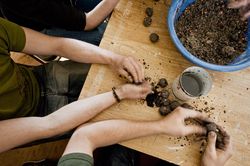
Montréal-based artist Gina Badger shows workshop participants how to make seed-bombs – balls of dirt, clay, water, and seeds that can be used to start gardens in the city. The workshop is presented in collaboration with DARE-DARE (Centre de diffusion d’art multidisciplinaire de Montréal). In conjunction with the exhibition Actions: What You Can Do With the City (2008),(...)
Montréal-based artist Gina Badger shows workshop participants how to make seed-bombs – balls of dirt, clay, water, and seeds that can be used to start gardens in the city. The workshop is presented in collaboration with DARE-DARE (Centre de diffusion d’art multidisciplinaire de Montréal). In conjunction with the exhibition Actions: What You Can Do With the City (2008),(...)
Date:
14 March 2009
14 March 2009
Title:
Making Seed Bombs
Actions:
Description:
Montréal-based artist Gina Badger shows workshop participants how to make seed-bombs – balls of dirt, clay, water, and seeds that can be used to start gardens in the city. The workshop is presented in collaboration with DARE-DARE (Centre de diffusion d’art multidisciplinaire de Montréal). In conjunction with the exhibition Actions: What You Can Do With the City (2008),(...)
Making Seed Bombs
Actions:
Description:
Montréal-based artist Gina Badger shows workshop participants how to make seed-bombs – balls of dirt, clay, water, and seeds that can be used to start gardens in the city. The workshop is presented in collaboration with DARE-DARE (Centre de diffusion d’art multidisciplinaire de Montréal). In conjunction with the exhibition Actions: What You Can Do With the City (2008),(...)
Form:
events
events
Date:
14 March 2009
14 March 2009


