


12622 Results
Level of archival description:
Project
Project
Reference number:
AP041.S1.1987.D1
Description:
The project series documents for Melvin Charney's design for the Canadian Centre for Architecture's garden in Montréal, Québec, realized between 1987 and 1995. The project series includes conceptual, presentation and working drawings, a presentation model and photographs showing the garden under construction and completed.
AP041.S1.1987.D1
Description:
The project series documents for Melvin Charney's design for the Canadian Centre for Architecture's garden in Montréal, Québec, realized between 1987 and 1995. The project series includes conceptual, presentation and working drawings, a presentation model and photographs showing the garden under construction and completed.
People:
Date:
1987-1995
1987-1995
Title:
Garden of the Canadian Centre for Architecture, Montréal, Québec
Actions:
AP041.S1.1987.D1
Description:
The project series documents for Melvin Charney's design for the Canadian Centre for Architecture's garden in Montréal, Québec, realized between 1987 and 1995. The project series includes conceptual, presentation and working drawings, a presentation model and photographs showing the garden under construction and completed.
Garden of the Canadian Centre for Architecture, Montréal, Québec
Actions:
AP041.S1.1987.D1
Description:
The project series documents for Melvin Charney's design for the Canadian Centre for Architecture's garden in Montréal, Québec, realized between 1987 and 1995. The project series includes conceptual, presentation and working drawings, a presentation model and photographs showing the garden under construction and completed.
Level of archival description:
Project
Project
Date:
1987-1995
1987-1995
People:
Level of archival description:
Series
Series
Reference number:
AP140.S2
Description:
Series documents the professional activities of James Stirling, James Gowan, Michael Wilford, and the successive firms of Stirling and Gowan; James Stirling; James Stirling and Partner; James Stirling, Michael Wilford, and Associates; Michael Wilford and Partners; as well as the firm of Michael Wilford GmbH. It chiefly illustrates the architectural and urban planning projects by James Stirling and the successive firms, including earlier theoretical and housing schemes, competition entries, major international commissions, as well as dead projects. The series also relates to exhibitions and publications of the firms' work, to writing and lecturing activities, to prizes, distinctions and honours received by the partners and the successive firms, and to other professional activities including participation to competition juries and teaching. Administrative and office activities are also documented in this series. Material in this series was produced between ca. 1948 and probably 2004. Series contains a large number of reference, conceptual, and design development drawings, publication and presentation drawings and panels, working drawings and several models. Series also contains photographic materials, textual records, film reels and other audiovisual materials, and artefacts.
AP140.S2
Description:
Series documents the professional activities of James Stirling, James Gowan, Michael Wilford, and the successive firms of Stirling and Gowan; James Stirling; James Stirling and Partner; James Stirling, Michael Wilford, and Associates; Michael Wilford and Partners; as well as the firm of Michael Wilford GmbH. It chiefly illustrates the architectural and urban planning projects by James Stirling and the successive firms, including earlier theoretical and housing schemes, competition entries, major international commissions, as well as dead projects. The series also relates to exhibitions and publications of the firms' work, to writing and lecturing activities, to prizes, distinctions and honours received by the partners and the successive firms, and to other professional activities including participation to competition juries and teaching. Administrative and office activities are also documented in this series. Material in this series was produced between ca. 1948 and probably 2004. Series contains a large number of reference, conceptual, and design development drawings, publication and presentation drawings and panels, working drawings and several models. Series also contains photographic materials, textual records, film reels and other audiovisual materials, and artefacts.
People:
Date:
[ca. 1948-2004?]
[ca. 1948-2004?]
Title:
James Stirling/Michael Wilford professional papers
Actions:
AP140.S2
Description:
Series documents the professional activities of James Stirling, James Gowan, Michael Wilford, and the successive firms of Stirling and Gowan; James Stirling; James Stirling and Partner; James Stirling, Michael Wilford, and Associates; Michael Wilford and Partners; as well as the firm of Michael Wilford GmbH. It chiefly illustrates the architectural and urban planning projects by James Stirling and the successive firms, including earlier theoretical and housing schemes, competition entries, major international commissions, as well as dead projects. The series also relates to exhibitions and publications of the firms' work, to writing and lecturing activities, to prizes, distinctions and honours received by the partners and the successive firms, and to other professional activities including participation to competition juries and teaching. Administrative and office activities are also documented in this series. Material in this series was produced between ca. 1948 and probably 2004. Series contains a large number of reference, conceptual, and design development drawings, publication and presentation drawings and panels, working drawings and several models. Series also contains photographic materials, textual records, film reels and other audiovisual materials, and artefacts.
James Stirling/Michael Wilford professional papers
Actions:
AP140.S2
Description:
Series documents the professional activities of James Stirling, James Gowan, Michael Wilford, and the successive firms of Stirling and Gowan; James Stirling; James Stirling and Partner; James Stirling, Michael Wilford, and Associates; Michael Wilford and Partners; as well as the firm of Michael Wilford GmbH. It chiefly illustrates the architectural and urban planning projects by James Stirling and the successive firms, including earlier theoretical and housing schemes, competition entries, major international commissions, as well as dead projects. The series also relates to exhibitions and publications of the firms' work, to writing and lecturing activities, to prizes, distinctions and honours received by the partners and the successive firms, and to other professional activities including participation to competition juries and teaching. Administrative and office activities are also documented in this series. Material in this series was produced between ca. 1948 and probably 2004. Series contains a large number of reference, conceptual, and design development drawings, publication and presentation drawings and panels, working drawings and several models. Series also contains photographic materials, textual records, film reels and other audiovisual materials, and artefacts.
Level of archival description:
Series 2
Series 2
Date:
[ca. 1948-2004?]
[ca. 1948-2004?]
People:
Form:
textual records
textual records
Actions:
Reference number:
ARCH255268
Description:
correspondence file on the Ruck-A-Chucky Bridge, with press clippings, a Progressive Architecture Award (1979), drawings by T.Y. Lin International and a 7 page presentation document with an original sketch by Goldsmith
ARCH255268
Description:
correspondence file on the Ruck-A-Chucky Bridge, with press clippings, a Progressive Architecture Award (1979), drawings by T.Y. Lin International and a 7 page presentation document with an original sketch by Goldsmith
People:
Date:
1962-1979
1962-1979
Title:
Correspondence file on the Ruck-A-Chucky Bridge, with press clippings
Actions:
ARCH255268
Description:
correspondence file on the Ruck-A-Chucky Bridge, with press clippings, a Progressive Architecture Award (1979), drawings by T.Y. Lin International and a 7 page presentation document with an original sketch by Goldsmith
Correspondence file on the Ruck-A-Chucky Bridge, with press clippings
Actions:
ARCH255268
Description:
correspondence file on the Ruck-A-Chucky Bridge, with press clippings, a Progressive Architecture Award (1979), drawings by T.Y. Lin International and a 7 page presentation document with an original sketch by Goldsmith
Form:
textual records
textual records
Date:
1962-1979
1962-1979
People:
Form:
archives
Level of archival description:
Fonds
archives
Level of archival description:
Fonds
Title:
Milton Parc fonds
Milton Parc fonds
Actions:
Reference number:
AP025
Synopsis:
The Milton Parc fonds, 1969 – 1989, documents the Société du patrimoine urbaine de Montréal’s (SPUM) planning, design and renovation of Montreal’s historic Milton Parc neighbourhood. Recognized as one of the largest co-operative rehabilitation projects completed in Canada, the Milton Parc housing project (1979-1982) renovated over 135 historic buildings and 597 dwelling units within Milton Parc’s 6-block radius. The fonds consists of the following materials: approximately 600 drawings, 85 l.m. of textual records, 0.6 l.m. of slides, 0.6 l.m.of photographs, 8 posters, 3 seals, 2 models, 2 rubber stamps, and 2 audio cassettes.
AP025
Synopsis:
The Milton Parc fonds, 1969 – 1989, documents the Société du patrimoine urbaine de Montréal’s (SPUM) planning, design and renovation of Montreal’s historic Milton Parc neighbourhood. Recognized as one of the largest co-operative rehabilitation projects completed in Canada, the Milton Parc housing project (1979-1982) renovated over 135 historic buildings and 597 dwelling units within Milton Parc’s 6-block radius. The fonds consists of the following materials: approximately 600 drawings, 85 l.m. of textual records, 0.6 l.m. of slides, 0.6 l.m.of photographs, 8 posters, 3 seals, 2 models, 2 rubber stamps, and 2 audio cassettes.
People:
Date:
1962-1989
1962-1989
Title:
Milton Parc fonds
Actions:
AP025
Synopsis:
The Milton Parc fonds, 1969 – 1989, documents the Société du patrimoine urbaine de Montréal’s (SPUM) planning, design and renovation of Montreal’s historic Milton Parc neighbourhood. Recognized as one of the largest co-operative rehabilitation projects completed in Canada, the Milton Parc housing project (1979-1982) renovated over 135 historic buildings and 597 dwelling units within Milton Parc’s 6-block radius. The fonds consists of the following materials: approximately 600 drawings, 85 l.m. of textual records, 0.6 l.m. of slides, 0.6 l.m.of photographs, 8 posters, 3 seals, 2 models, 2 rubber stamps, and 2 audio cassettes.
Milton Parc fonds
Actions:
AP025
Synopsis:
The Milton Parc fonds, 1969 – 1989, documents the Société du patrimoine urbaine de Montréal’s (SPUM) planning, design and renovation of Montreal’s historic Milton Parc neighbourhood. Recognized as one of the largest co-operative rehabilitation projects completed in Canada, the Milton Parc housing project (1979-1982) renovated over 135 historic buildings and 597 dwelling units within Milton Parc’s 6-block radius. The fonds consists of the following materials: approximately 600 drawings, 85 l.m. of textual records, 0.6 l.m. of slides, 0.6 l.m.of photographs, 8 posters, 3 seals, 2 models, 2 rubber stamps, and 2 audio cassettes.
Form:
archives
Level of archival description:
Fonds
archives
Level of archival description:
Fonds
Date:
1962-1989
1962-1989
People:
Form:
events
events
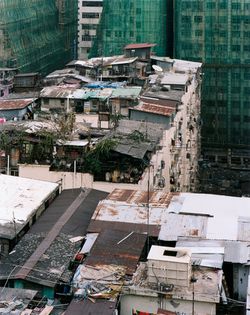
Title:
Learning from... Hong Kong
Learning from... Hong Kong
Actions:
Description:
Self-built settlements on the roofs of high-rise buildings have been an integral part of Hong Kong’s history for over half a century. Rooftop structures range from basic shelters for the disadvantaged to intricate multi-storey constructions equipped with the amenities of modern life. Rufina Wu and Stefan Canham use the tools of an architect and a photographer to document(...)
Self-built settlements on the roofs of high-rise buildings have been an integral part of Hong Kong’s history for over half a century. Rooftop structures range from basic shelters for the disadvantaged to intricate multi-storey constructions equipped with the amenities of modern life. Rufina Wu and Stefan Canham use the tools of an architect and a photographer to document(...)
Location:
Paul-Desmarais Theatre
Paul-Desmarais Theatre
Date:
3 May 2012 , 7pm
3 May 2012 , 7pm
Title:
Learning from... Hong Kong
Actions:
Description:
Self-built settlements on the roofs of high-rise buildings have been an integral part of Hong Kong’s history for over half a century. Rooftop structures range from basic shelters for the disadvantaged to intricate multi-storey constructions equipped with the amenities of modern life. Rufina Wu and Stefan Canham use the tools of an architect and a photographer to document(...)
Learning from... Hong Kong
Actions:
Description:
Self-built settlements on the roofs of high-rise buildings have been an integral part of Hong Kong’s history for over half a century. Rooftop structures range from basic shelters for the disadvantaged to intricate multi-storey constructions equipped with the amenities of modern life. Rufina Wu and Stefan Canham use the tools of an architect and a photographer to document(...)
Form:
events
events
Date:
3 May 2012
7pm
3 May 2012
7pm
Location:
Paul-Desmarais Theatre
Paul-Desmarais Theatre
Level of archival description:
Project
Project
Actions:
Reference number:
AP163.S2.SS1.D3
Description:
File documents Victor Prus's project for the International Calvert House Competition for the Canadian Home of Tomorrow, sponsored by the School of Architecture of McGill University and for which he obtained an honorable mention. Material in this file was produced in 1954. The file contains originals drawings and a presentation panel.
AP163.S2.SS1.D3
Description:
File documents Victor Prus's project for the International Calvert House Competition for the Canadian Home of Tomorrow, sponsored by the School of Architecture of McGill University and for which he obtained an honorable mention. Material in this file was produced in 1954. The file contains originals drawings and a presentation panel.
People:
Date:
1954
1954
Title:
International Calvert House Competition
Actions:
AP163.S2.SS1.D3
Description:
File documents Victor Prus's project for the International Calvert House Competition for the Canadian Home of Tomorrow, sponsored by the School of Architecture of McGill University and for which he obtained an honorable mention. Material in this file was produced in 1954. The file contains originals drawings and a presentation panel.
International Calvert House Competition
Actions:
AP163.S2.SS1.D3
Description:
File documents Victor Prus's project for the International Calvert House Competition for the Canadian Home of Tomorrow, sponsored by the School of Architecture of McGill University and for which he obtained an honorable mention. Material in this file was produced in 1954. The file contains originals drawings and a presentation panel.
Level of archival description:
File 3
File 3
Date:
1954
1954
People:
Level of archival description:
Project
Project
Reference number:
AP178.S1.1998.PR08
Description:
This project series documents the Biblioteca de Humanidades de la Universidade de Salamanca in Salamanca, Spain. While the records were held in the office’s archives this project was assigned the number 103/90. The office assigned the date 1998 to this project. The project site was located on the site of the Colegio Mayor de Cuenca near the Palacio de Congresos built by Juan Navarro Baldeweg. Previously on this site was the Convento de San Agustin, which was destroyed during the Peninsular War. During the construction of the Colegio Mayor de Cuence archeological artifacts were discovered. The library was originally part of Siza's intervention in Salamanca, including a building for the Fundación Caja Duero and a building for the Fundación Germán Sánchez Ruipérez. None of these projects were realized. The design for the library included three floors and a basement and integrates architectural vestiges. The project was not realized. Documenting this project are sketches, mechanical drawings, plumbing drawings, structural drawings and annotated plans. Textual materials include project documentation, correspondence, and details for the archaeological excavation. Photographic materials include panoramas and negatives showing the model.
AP178.S1.1998.PR08
Description:
This project series documents the Biblioteca de Humanidades de la Universidade de Salamanca in Salamanca, Spain. While the records were held in the office’s archives this project was assigned the number 103/90. The office assigned the date 1998 to this project. The project site was located on the site of the Colegio Mayor de Cuenca near the Palacio de Congresos built by Juan Navarro Baldeweg. Previously on this site was the Convento de San Agustin, which was destroyed during the Peninsular War. During the construction of the Colegio Mayor de Cuence archeological artifacts were discovered. The library was originally part of Siza's intervention in Salamanca, including a building for the Fundación Caja Duero and a building for the Fundación Germán Sánchez Ruipérez. None of these projects were realized. The design for the library included three floors and a basement and integrates architectural vestiges. The project was not realized. Documenting this project are sketches, mechanical drawings, plumbing drawings, structural drawings and annotated plans. Textual materials include project documentation, correspondence, and details for the archaeological excavation. Photographic materials include panoramas and negatives showing the model.
People:
Date:
1998-2008
1998-2008
Title:
Biblioteca de Humanidades de la Universidade de Salamanca [Humanities Library, University of Salamanca], Salamanca, Spain (1998)
Actions:
AP178.S1.1998.PR08
Description:
This project series documents the Biblioteca de Humanidades de la Universidade de Salamanca in Salamanca, Spain. While the records were held in the office’s archives this project was assigned the number 103/90. The office assigned the date 1998 to this project. The project site was located on the site of the Colegio Mayor de Cuenca near the Palacio de Congresos built by Juan Navarro Baldeweg. Previously on this site was the Convento de San Agustin, which was destroyed during the Peninsular War. During the construction of the Colegio Mayor de Cuence archeological artifacts were discovered. The library was originally part of Siza's intervention in Salamanca, including a building for the Fundación Caja Duero and a building for the Fundación Germán Sánchez Ruipérez. None of these projects were realized. The design for the library included three floors and a basement and integrates architectural vestiges. The project was not realized. Documenting this project are sketches, mechanical drawings, plumbing drawings, structural drawings and annotated plans. Textual materials include project documentation, correspondence, and details for the archaeological excavation. Photographic materials include panoramas and negatives showing the model.
Biblioteca de Humanidades de la Universidade de Salamanca [Humanities Library, University of Salamanca], Salamanca, Spain (1998)
Actions:
AP178.S1.1998.PR08
Description:
This project series documents the Biblioteca de Humanidades de la Universidade de Salamanca in Salamanca, Spain. While the records were held in the office’s archives this project was assigned the number 103/90. The office assigned the date 1998 to this project. The project site was located on the site of the Colegio Mayor de Cuenca near the Palacio de Congresos built by Juan Navarro Baldeweg. Previously on this site was the Convento de San Agustin, which was destroyed during the Peninsular War. During the construction of the Colegio Mayor de Cuence archeological artifacts were discovered. The library was originally part of Siza's intervention in Salamanca, including a building for the Fundación Caja Duero and a building for the Fundación Germán Sánchez Ruipérez. None of these projects were realized. The design for the library included three floors and a basement and integrates architectural vestiges. The project was not realized. Documenting this project are sketches, mechanical drawings, plumbing drawings, structural drawings and annotated plans. Textual materials include project documentation, correspondence, and details for the archaeological excavation. Photographic materials include panoramas and negatives showing the model.
Level of archival description:
Project
Project
Date:
1998-2008
1998-2008
People:
Level of archival description:
Project
Project
Reference number:
AP018.S1.1958.PR03
Description:
This project series documents the design and construction of Toronto City Hall and Civic Square in Toronto from 1958-1965. The office identified the project number as 5867. The design of Toronto's New City Hall, built next to its older counterpart, was realized through an international architectural competition that attracted more than 500 entries from around the world. Eventually, a unanimous jury chose Finnish architect Viljo Revell's design, cementing the age of modernist architecture in Toronto. However, the rules stated that if the winning architect was not part of the Ontario Association of Architects, they were required to partner with a local firm. In this way, John B. Parkin Associates was chosen as the associate architects for this project. The design was comprised of a concrete dome house, which contained the city council chambers, surrounded by two curved office towers, all perched on top of a podium, with a public square to the south, known as Nathan Phillips Square. The buildings were 816,000 square feet in size, the west tower having 18 office floors and the east tower with 25. The project is recorded through drawings, a mounted presentation photograph of the project and textual records dating from 1958-1966. The drawings are mostly reprographic copies, which include plans, elevations, sections, details and perspectives. The textual records consist of a competition synopsis book, a book of submission materials for the competition, and correspondence between Parkin and Revell.
AP018.S1.1958.PR03
Description:
This project series documents the design and construction of Toronto City Hall and Civic Square in Toronto from 1958-1965. The office identified the project number as 5867. The design of Toronto's New City Hall, built next to its older counterpart, was realized through an international architectural competition that attracted more than 500 entries from around the world. Eventually, a unanimous jury chose Finnish architect Viljo Revell's design, cementing the age of modernist architecture in Toronto. However, the rules stated that if the winning architect was not part of the Ontario Association of Architects, they were required to partner with a local firm. In this way, John B. Parkin Associates was chosen as the associate architects for this project. The design was comprised of a concrete dome house, which contained the city council chambers, surrounded by two curved office towers, all perched on top of a podium, with a public square to the south, known as Nathan Phillips Square. The buildings were 816,000 square feet in size, the west tower having 18 office floors and the east tower with 25. The project is recorded through drawings, a mounted presentation photograph of the project and textual records dating from 1958-1966. The drawings are mostly reprographic copies, which include plans, elevations, sections, details and perspectives. The textual records consist of a competition synopsis book, a book of submission materials for the competition, and correspondence between Parkin and Revell.
People:
Date:
1958-1966
1958-1966
Title:
Toronto City Hall and Civic Square, Toronto (1958)
Actions:
AP018.S1.1958.PR03
Description:
This project series documents the design and construction of Toronto City Hall and Civic Square in Toronto from 1958-1965. The office identified the project number as 5867. The design of Toronto's New City Hall, built next to its older counterpart, was realized through an international architectural competition that attracted more than 500 entries from around the world. Eventually, a unanimous jury chose Finnish architect Viljo Revell's design, cementing the age of modernist architecture in Toronto. However, the rules stated that if the winning architect was not part of the Ontario Association of Architects, they were required to partner with a local firm. In this way, John B. Parkin Associates was chosen as the associate architects for this project. The design was comprised of a concrete dome house, which contained the city council chambers, surrounded by two curved office towers, all perched on top of a podium, with a public square to the south, known as Nathan Phillips Square. The buildings were 816,000 square feet in size, the west tower having 18 office floors and the east tower with 25. The project is recorded through drawings, a mounted presentation photograph of the project and textual records dating from 1958-1966. The drawings are mostly reprographic copies, which include plans, elevations, sections, details and perspectives. The textual records consist of a competition synopsis book, a book of submission materials for the competition, and correspondence between Parkin and Revell.
Toronto City Hall and Civic Square, Toronto (1958)
Actions:
AP018.S1.1958.PR03
Description:
This project series documents the design and construction of Toronto City Hall and Civic Square in Toronto from 1958-1965. The office identified the project number as 5867. The design of Toronto's New City Hall, built next to its older counterpart, was realized through an international architectural competition that attracted more than 500 entries from around the world. Eventually, a unanimous jury chose Finnish architect Viljo Revell's design, cementing the age of modernist architecture in Toronto. However, the rules stated that if the winning architect was not part of the Ontario Association of Architects, they were required to partner with a local firm. In this way, John B. Parkin Associates was chosen as the associate architects for this project. The design was comprised of a concrete dome house, which contained the city council chambers, surrounded by two curved office towers, all perched on top of a podium, with a public square to the south, known as Nathan Phillips Square. The buildings were 816,000 square feet in size, the west tower having 18 office floors and the east tower with 25. The project is recorded through drawings, a mounted presentation photograph of the project and textual records dating from 1958-1966. The drawings are mostly reprographic copies, which include plans, elevations, sections, details and perspectives. The textual records consist of a competition synopsis book, a book of submission materials for the competition, and correspondence between Parkin and Revell.
Level of archival description:
Project
Project
Date:
1958-1966
1958-1966
People:
Level of archival description:
Sub-series
Sub-series
Title:
Europe = Europe
Europe = Europe
Reference number:
AP156.S3.SS1
Description:
La sous-série documente les projets architecturaux et d'urbanisme de Pierre Jeanneret et autres architectes en Europe durant les années 1940 jusqu'à la première moitié des années 1960. La sous-série inclut certains projets réalisés avec la Bureau Central de Construction, en Suisse, ainsi que ses projets indivuels dont le Centre d'apprentissage de Béziers, en France. Le matériel dans cette sous-série a probablement été produit entre 1940 et 1963. La sous-série contient des dessins, principalement des reprographies, donc des études, des dessins conceptuels, des dessins de développement du design, des dessins d'exécution et des dessins de présentation. La sous-série contient aussi des épreuves photomécaniques, une photographie et quelques chemises utilisées par Pierre Jeanneret pour classer ses dossiers de projets. Sub-series documents architectural and urban planning projects of Pierre Jeanneret and other architects in Europe in the 1940s to the first half of the 1960s. The sub-series includes some projects completed with the Bureau Central de la Construction, in Switzerland, and his individual projets including the Centre d'apprentissage in Béziers, France. The material in this sub-series was probably produced between 1940 to 1963. The sub-series contains drawings, predominantly reprographic copies, such as studies, conceptual drawings, design developement drawings, working drawings and presentation drawings. The sub-series also contains photomechanial prints, a photograph and some folder used by Pierre Jeanneret to organized his projects' files.
AP156.S3.SS1
Description:
La sous-série documente les projets architecturaux et d'urbanisme de Pierre Jeanneret et autres architectes en Europe durant les années 1940 jusqu'à la première moitié des années 1960. La sous-série inclut certains projets réalisés avec la Bureau Central de Construction, en Suisse, ainsi que ses projets indivuels dont le Centre d'apprentissage de Béziers, en France. Le matériel dans cette sous-série a probablement été produit entre 1940 et 1963. La sous-série contient des dessins, principalement des reprographies, donc des études, des dessins conceptuels, des dessins de développement du design, des dessins d'exécution et des dessins de présentation. La sous-série contient aussi des épreuves photomécaniques, une photographie et quelques chemises utilisées par Pierre Jeanneret pour classer ses dossiers de projets. Sub-series documents architectural and urban planning projects of Pierre Jeanneret and other architects in Europe in the 1940s to the first half of the 1960s. The sub-series includes some projects completed with the Bureau Central de la Construction, in Switzerland, and his individual projets including the Centre d'apprentissage in Béziers, France. The material in this sub-series was probably produced between 1940 to 1963. The sub-series contains drawings, predominantly reprographic copies, such as studies, conceptual drawings, design developement drawings, working drawings and presentation drawings. The sub-series also contains photomechanial prints, a photograph and some folder used by Pierre Jeanneret to organized his projects' files.
People:
Date:
1940-1963
1940-1963
Title:
Europe = Europe
Actions:
AP156.S3.SS1
Description:
La sous-série documente les projets architecturaux et d'urbanisme de Pierre Jeanneret et autres architectes en Europe durant les années 1940 jusqu'à la première moitié des années 1960. La sous-série inclut certains projets réalisés avec la Bureau Central de Construction, en Suisse, ainsi que ses projets indivuels dont le Centre d'apprentissage de Béziers, en France. Le matériel dans cette sous-série a probablement été produit entre 1940 et 1963. La sous-série contient des dessins, principalement des reprographies, donc des études, des dessins conceptuels, des dessins de développement du design, des dessins d'exécution et des dessins de présentation. La sous-série contient aussi des épreuves photomécaniques, une photographie et quelques chemises utilisées par Pierre Jeanneret pour classer ses dossiers de projets. Sub-series documents architectural and urban planning projects of Pierre Jeanneret and other architects in Europe in the 1940s to the first half of the 1960s. The sub-series includes some projects completed with the Bureau Central de la Construction, in Switzerland, and his individual projets including the Centre d'apprentissage in Béziers, France. The material in this sub-series was probably produced between 1940 to 1963. The sub-series contains drawings, predominantly reprographic copies, such as studies, conceptual drawings, design developement drawings, working drawings and presentation drawings. The sub-series also contains photomechanial prints, a photograph and some folder used by Pierre Jeanneret to organized his projects' files.
Europe = Europe
Actions:
AP156.S3.SS1
Description:
La sous-série documente les projets architecturaux et d'urbanisme de Pierre Jeanneret et autres architectes en Europe durant les années 1940 jusqu'à la première moitié des années 1960. La sous-série inclut certains projets réalisés avec la Bureau Central de Construction, en Suisse, ainsi que ses projets indivuels dont le Centre d'apprentissage de Béziers, en France. Le matériel dans cette sous-série a probablement été produit entre 1940 et 1963. La sous-série contient des dessins, principalement des reprographies, donc des études, des dessins conceptuels, des dessins de développement du design, des dessins d'exécution et des dessins de présentation. La sous-série contient aussi des épreuves photomécaniques, une photographie et quelques chemises utilisées par Pierre Jeanneret pour classer ses dossiers de projets. Sub-series documents architectural and urban planning projects of Pierre Jeanneret and other architects in Europe in the 1940s to the first half of the 1960s. The sub-series includes some projects completed with the Bureau Central de la Construction, in Switzerland, and his individual projets including the Centre d'apprentissage in Béziers, France. The material in this sub-series was probably produced between 1940 to 1963. The sub-series contains drawings, predominantly reprographic copies, such as studies, conceptual drawings, design developement drawings, working drawings and presentation drawings. The sub-series also contains photomechanial prints, a photograph and some folder used by Pierre Jeanneret to organized his projects' files.
Level of archival description:
Sous-série 1
Sous-série 1
Date:
1940-1963
1940-1963
People:
Form:
textual records
textual records
Reference number:
DR1995:0188:936-1056
Description:
correspondence, and four folders that include, building programme, poster, land use application, site plans, 1966 flyer of Glasgow Fun Palace, report on Pilot Project, trust deed, report on proposed arts centre in Manchester, notes and sketches on architectural sketches, report on Fun Palace Project, drawings, minutes of meeting, cost estimate for Pilot Project, photographs, draft notes on Children's Learning Garden, financial record of Summer Fair 1974, planning application forms, sketches of temporary project at Salway and Great Eastern Roads, grant application, questionnaire, report on land redevelopment, 'Bubble City' publication by Joan Littlewood, renovation proposal for Theatre Royal, poster, kids village colouring book, and application for children's playground
DR1995:0188:936-1056
Description:
correspondence, and four folders that include, building programme, poster, land use application, site plans, 1966 flyer of Glasgow Fun Palace, report on Pilot Project, trust deed, report on proposed arts centre in Manchester, notes and sketches on architectural sketches, report on Fun Palace Project, drawings, minutes of meeting, cost estimate for Pilot Project, photographs, draft notes on Children's Learning Garden, financial record of Summer Fair 1974, planning application forms, sketches of temporary project at Salway and Great Eastern Roads, grant application, questionnaire, report on land redevelopment, 'Bubble City' publication by Joan Littlewood, renovation proposal for Theatre Royal, poster, kids village colouring book, and application for children's playground
People:
Title:
Correspondence, and four folders that include, building programme
Actions:
DR1995:0188:936-1056
Description:
correspondence, and four folders that include, building programme, poster, land use application, site plans, 1966 flyer of Glasgow Fun Palace, report on Pilot Project, trust deed, report on proposed arts centre in Manchester, notes and sketches on architectural sketches, report on Fun Palace Project, drawings, minutes of meeting, cost estimate for Pilot Project, photographs, draft notes on Children's Learning Garden, financial record of Summer Fair 1974, planning application forms, sketches of temporary project at Salway and Great Eastern Roads, grant application, questionnaire, report on land redevelopment, 'Bubble City' publication by Joan Littlewood, renovation proposal for Theatre Royal, poster, kids village colouring book, and application for children's playground
Correspondence, and four folders that include, building programme
Actions:
DR1995:0188:936-1056
Description:
correspondence, and four folders that include, building programme, poster, land use application, site plans, 1966 flyer of Glasgow Fun Palace, report on Pilot Project, trust deed, report on proposed arts centre in Manchester, notes and sketches on architectural sketches, report on Fun Palace Project, drawings, minutes of meeting, cost estimate for Pilot Project, photographs, draft notes on Children's Learning Garden, financial record of Summer Fair 1974, planning application forms, sketches of temporary project at Salway and Great Eastern Roads, grant application, questionnaire, report on land redevelopment, 'Bubble City' publication by Joan Littlewood, renovation proposal for Theatre Royal, poster, kids village colouring book, and application for children's playground
Form:
textual records
textual records
People:


