


1083 Results
Form:
books
books
Actions:
Price:
$73.50
(available to order)
Summary:
Between the early 1930s and 1950s, modernist architecture underwent a spectacular change of fortune in Britain – from a small-scale avant-garde movement, to the official, state-funded architectural idiom of the post-1945 Welfare State. FRS Yorke (1906–62) was an architect who completely followed that trajectory. His book "The modern house" (1934) placed his detailed(...)
$73.50
(available to order)
Summary:
Between the early 1930s and 1950s, modernist architecture underwent a spectacular change of fortune in Britain – from a small-scale avant-garde movement, to the official, state-funded architectural idiom of the post-1945 Welfare State. FRS Yorke (1906–62) was an architect who completely followed that trajectory. His book "The modern house" (1934) placed his detailed(...)
Title:
FRS Yorke and the evolution of English modernism
Actions:
Price:
$73.50
(available to order)
Summary:
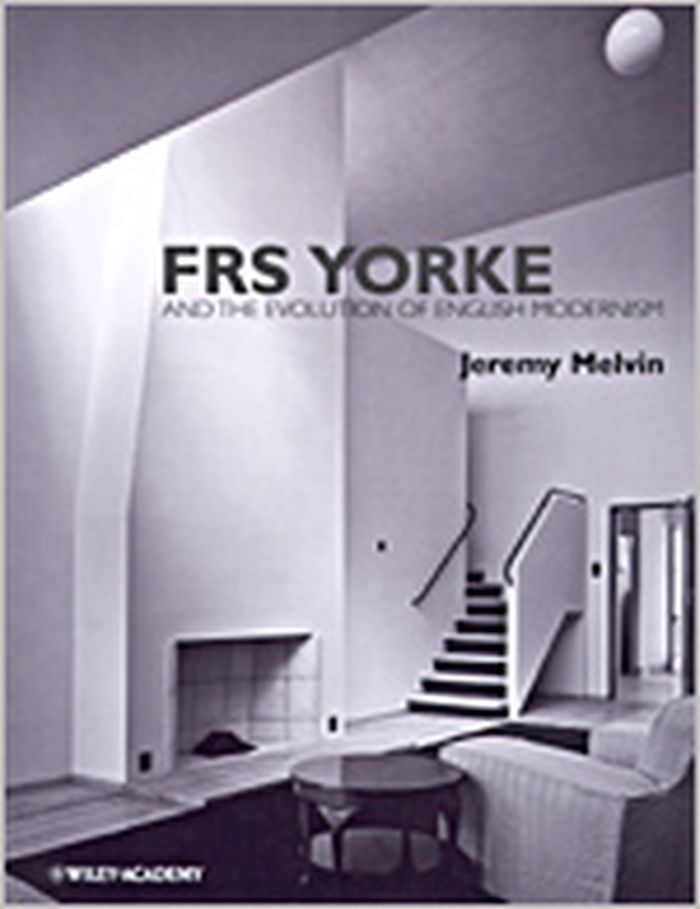
Between the early 1930s and 1950s, modernist architecture underwent a spectacular change of fortune in Britain – from a small-scale avant-garde movement, to the official, state-funded architectural idiom of the post-1945 Welfare State. FRS Yorke (1906–62) was an architect who completely followed that trajectory. His book "The modern house" (1934) placed his detailed knowledge of European architecture as an introduction to modern architecture for generations of architects, and provided inspiration for his own designs. But it was only after World War II, and the social and political change which came in its wake, that Yorke was able to turn his reputation as a modernist into commercial success. As his pre-War contemporaries gave up architecture or moved abroad, his practice – Yorke, Rosenberg and Mardall – drew on his experience of working on large, state-funded construction projects during the War, and participated in the transformation of Britain’s social and physical fabric with its new housing, hospitals, schools, universities and airports. This book concludes with a memoir by David Allford, who worked with Yorke and Yorke, Rosenberg and Mardall from 1952 until 1989.
FRS Yorke and the evolution of English modernism
Actions:
Price:
$73.50
(available to order)
Summary:
Between the early 1930s and 1950s, modernist architecture underwent a spectacular change of fortune in Britain – from a small-scale avant-garde movement, to the official, state-funded architectural idiom of the post-1945 Welfare State. FRS Yorke (1906–62) was an architect who completely followed that trajectory. His book "The modern house" (1934) placed his detailed knowledge of European architecture as an introduction to modern architecture for generations of architects, and provided inspiration for his own designs. But it was only after World War II, and the social and political change which came in its wake, that Yorke was able to turn his reputation as a modernist into commercial success. As his pre-War contemporaries gave up architecture or moved abroad, his practice – Yorke, Rosenberg and Mardall – drew on his experience of working on large, state-funded construction projects during the War, and participated in the transformation of Britain’s social and physical fabric with its new housing, hospitals, schools, universities and airports. This book concludes with a memoir by David Allford, who worked with Yorke and Yorke, Rosenberg and Mardall from 1952 until 1989.
Form:
books
books
Publication:
May 2003, Chichester
May 2003, Chichester
Subject:
Architecture Monographs
Architecture Monographs
Form:
books
books
Actions:
Price:
$50.50
(available in store)
Summary:
In the decades after World War II, from just prior to the revolution and into the mid-1980s, modernist architecture blossomed in Cuba, attracting both native talent and leading international architects from Europe. Havana Modern examines Cuban modernism’s highlights with a wealth of archival materials, photos and new scholarship. Edited by Rubén Gallo—author of Mexican(...)
$50.50
(available in store)
Summary:
In the decades after World War II, from just prior to the revolution and into the mid-1980s, modernist architecture blossomed in Cuba, attracting both native talent and leading international architects from Europe. Havana Modern examines Cuban modernism’s highlights with a wealth of archival materials, photos and new scholarship. Edited by Rubén Gallo—author of Mexican(...)
Title:
Havana modern: Critical readings in Cuban architecture
Actions:
Price:
$50.50
(available in store)
Summary:
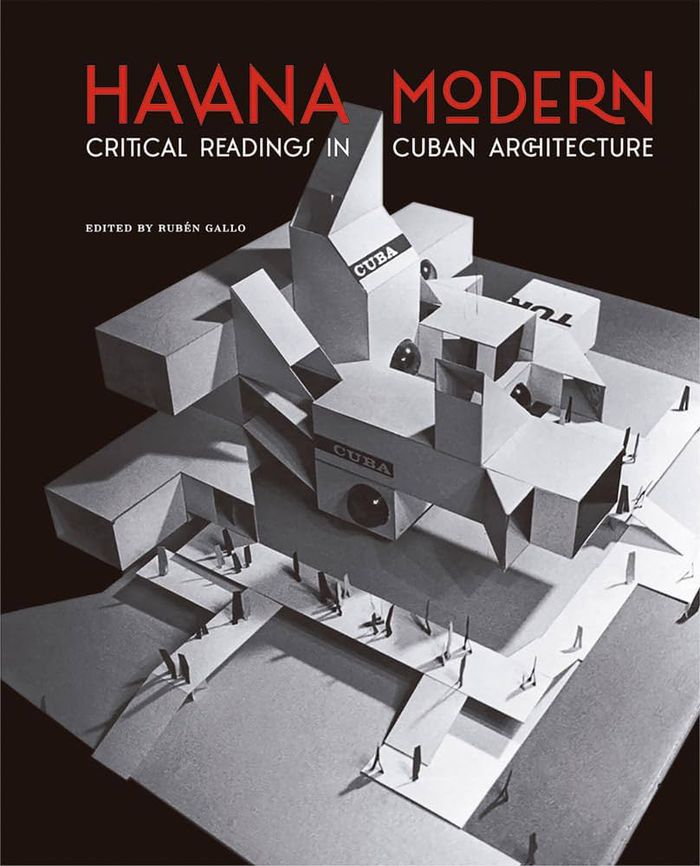
In the decades after World War II, from just prior to the revolution and into the mid-1980s, modernist architecture blossomed in Cuba, attracting both native talent and leading international architects from Europe. Havana Modern examines Cuban modernism’s highlights with a wealth of archival materials, photos and new scholarship. Edited by Rubén Gallo—author of Mexican Modernity (2005), Freud’s Mexico (2010) and Proust’s Latin Americans (2014)—the volume is arranged in 10 chapters authored by current and former Princeton faculty members and graduate students. These essays, which arose from seminars organized by Gallo and historian Beatriz Colomina, examine Max Abramovitz’s American Embassy; Richard Neutra’s De Schultess House; Martín Domínguez Esteban, Miguel Gastón and Emilio del Junco’s Radiocentro; Mies van Der Rohe’s office building for Ron Barcardí S.A.; Vittorio Garatti, Roberto Gottardi and Ricardo Porro’s National Art Schools for Havana; Mario Girona’s Coppelia Ice-cream parlor and park; Vittorio Garatti, Hugo D’Acosta and Sergio Baroni’s Cuban Pavilion at Expo 67; Antonio Quintana and Alberto Rodriguez’s "Edificio Experimental"; and Aleksandr Grigorievich Rochegov’s USRR Embassy. Havana Modern draws on history, politics, culture, literature and film to elucidate this outstandingly rich era in architectural history.
Havana modern: Critical readings in Cuban architecture
Actions:
Price:
$50.50
(available in store)
Summary:
In the decades after World War II, from just prior to the revolution and into the mid-1980s, modernist architecture blossomed in Cuba, attracting both native talent and leading international architects from Europe. Havana Modern examines Cuban modernism’s highlights with a wealth of archival materials, photos and new scholarship. Edited by Rubén Gallo—author of Mexican Modernity (2005), Freud’s Mexico (2010) and Proust’s Latin Americans (2014)—the volume is arranged in 10 chapters authored by current and former Princeton faculty members and graduate students. These essays, which arose from seminars organized by Gallo and historian Beatriz Colomina, examine Max Abramovitz’s American Embassy; Richard Neutra’s De Schultess House; Martín Domínguez Esteban, Miguel Gastón and Emilio del Junco’s Radiocentro; Mies van Der Rohe’s office building for Ron Barcardí S.A.; Vittorio Garatti, Roberto Gottardi and Ricardo Porro’s National Art Schools for Havana; Mario Girona’s Coppelia Ice-cream parlor and park; Vittorio Garatti, Hugo D’Acosta and Sergio Baroni’s Cuban Pavilion at Expo 67; Antonio Quintana and Alberto Rodriguez’s "Edificio Experimental"; and Aleksandr Grigorievich Rochegov’s USRR Embassy. Havana Modern draws on history, politics, culture, literature and film to elucidate this outstandingly rich era in architectural history.
Form:
books
books
Publication:
September 2023
September 2023
Subject:
Architecture since 1900, Americas
Architecture since 1900, Americas
Form:
books
books
Title:
Big, Formgiving
Big, Formgiving
Actions:
Price:
$70.00
(available to order)
Summary:
''Formgiving : an architectural future history,'' the new book by BIG (Bjarke Ingels Group), is a visionary attempt to look at the horizon of time. With ''Formgiving,'' BIG presents the third part of its TASCHEN trilogy, which began with ''Yes is More,'' one of the most successful architectural books of its generation, and continued with ''Hot to Cold.'' The book is(...)
$70.00
(available to order)
Summary:
''Formgiving : an architectural future history,'' the new book by BIG (Bjarke Ingels Group), is a visionary attempt to look at the horizon of time. With ''Formgiving,'' BIG presents the third part of its TASCHEN trilogy, which began with ''Yes is More,'' one of the most successful architectural books of its generation, and continued with ''Hot to Cold.'' The book is(...)
Title:
Big, Formgiving
Actions:
Price:
$70.00
(available to order)
Summary:
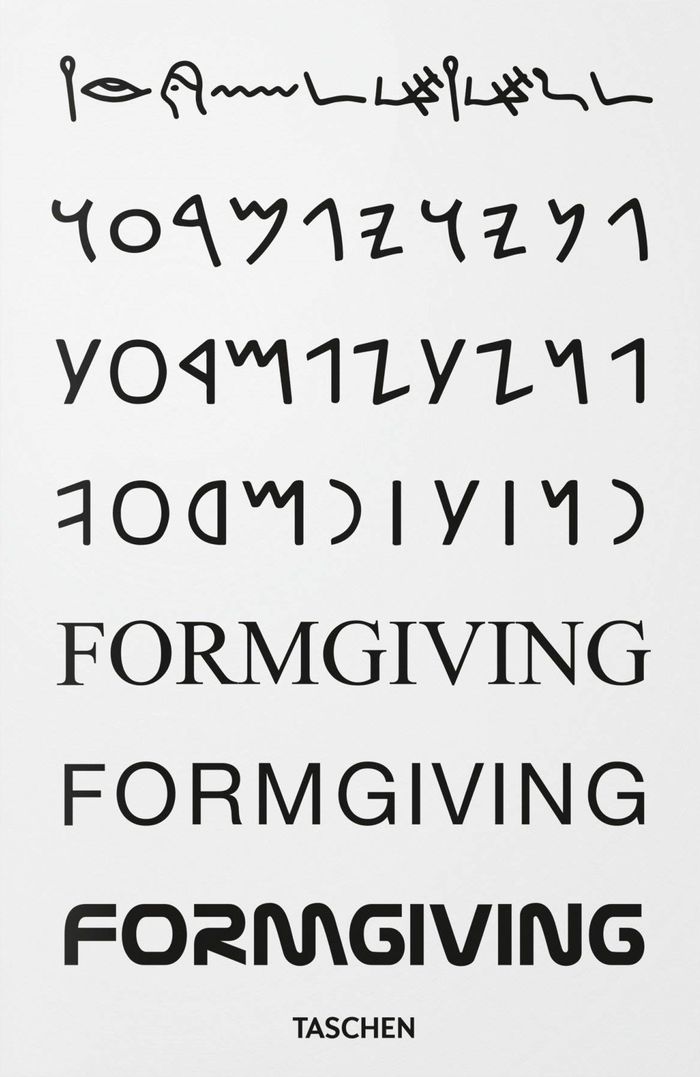
''Formgiving : an architectural future history,'' the new book by BIG (Bjarke Ingels Group), is a visionary attempt to look at the horizon of time. With ''Formgiving,'' BIG presents the third part of its TASCHEN trilogy, which began with ''Yes is More,'' one of the most successful architectural books of its generation, and continued with ''Hot to Cold.'' The book is presented in a timeline, stretching from the Big Bang into the most distant future. Projects are structured around six strands of evolution- ''Making,'' ''Sensing,'' ''Sustaining,'' ''Thinking,'' ''Healing,'' and ''Moving''- the multimedia-based, interdisciplinary concepts encompassing the building industry. Culture, climate, and landscape, as well as all the energies derived from the elements- the thermal mass of the ocean, the dynamics of currents, the energy and warmth of the sun, the power of the wind- are incorporated into these projects. Throughout more than 700 pages, Bjarke Ingels presents his personal selection of projects, including the 12,000-square-meter LEGO House in Denmark, the human-made ecosystems floating on oceans, the redesign of a World War II bunker into a contemplative museum, and the ski slope-infused power plant celebrating Copenhagen’s commitment to carbon neutrality. Through architecture and design, BIG gives shape to a sustainable and simultaneously colorful world.
Big, Formgiving
Actions:
Price:
$70.00
(available to order)
Summary:
''Formgiving : an architectural future history,'' the new book by BIG (Bjarke Ingels Group), is a visionary attempt to look at the horizon of time. With ''Formgiving,'' BIG presents the third part of its TASCHEN trilogy, which began with ''Yes is More,'' one of the most successful architectural books of its generation, and continued with ''Hot to Cold.'' The book is presented in a timeline, stretching from the Big Bang into the most distant future. Projects are structured around six strands of evolution- ''Making,'' ''Sensing,'' ''Sustaining,'' ''Thinking,'' ''Healing,'' and ''Moving''- the multimedia-based, interdisciplinary concepts encompassing the building industry. Culture, climate, and landscape, as well as all the energies derived from the elements- the thermal mass of the ocean, the dynamics of currents, the energy and warmth of the sun, the power of the wind- are incorporated into these projects. Throughout more than 700 pages, Bjarke Ingels presents his personal selection of projects, including the 12,000-square-meter LEGO House in Denmark, the human-made ecosystems floating on oceans, the redesign of a World War II bunker into a contemplative museum, and the ski slope-infused power plant celebrating Copenhagen’s commitment to carbon neutrality. Through architecture and design, BIG gives shape to a sustainable and simultaneously colorful world.
Form:
books
books
Publication:
December 2020
December 2020
Subject:
Architecture Monographs
Architecture Monographs


