


1097 Results
Form:
books
books
Price:
$81.50
(available to order)
Summary:
This book is the first devoted to the important innovations in architecture that took place in western Europe between the death of emperor Justinian in A.D. 565 and the tenth century. During this period of transition from Late Antiquity to the Middle Ages, the Early Christian basilica was transformed in both form and function. Charles B. McClendon draws on rich(...)
$81.50
(available to order)
Summary:
This book is the first devoted to the important innovations in architecture that took place in western Europe between the death of emperor Justinian in A.D. 565 and the tenth century. During this period of transition from Late Antiquity to the Middle Ages, the Early Christian basilica was transformed in both form and function. Charles B. McClendon draws on rich(...)
Subject:
History until 1900, Middle Ages
History until 1900, Middle Ages
Publication:
January 2005, New Haven
January 2005, New Haven
Title:
The origins of medieval architecture : building in Europe, A.D. 600-900
Actions:
Price:
$81.50
(available to order)
Summary:
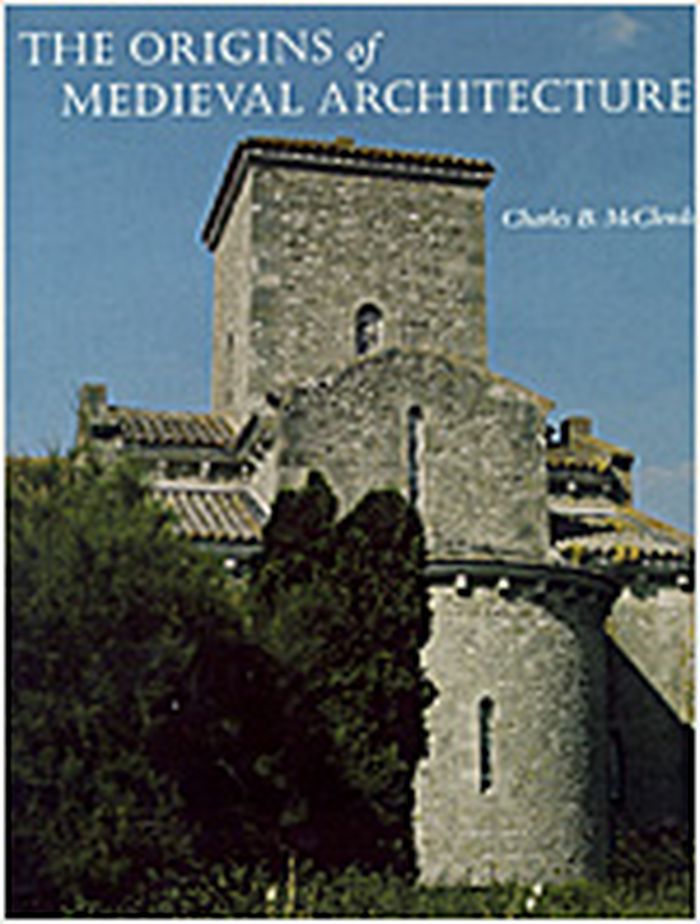
This book is the first devoted to the important innovations in architecture that took place in western Europe between the death of emperor Justinian in A.D. 565 and the tenth century. During this period of transition from Late Antiquity to the Middle Ages, the Early Christian basilica was transformed in both form and function. Charles B. McClendon draws on rich documentary evidence and archaeological data to show that the buildings of these three centuries, studied in isolation but rarely together, set substantial precedents for the future of medieval architecture. He looks at buildings of the so-called Dark Ages—monuments that reflected a new assimilation of seemingly antithetical “barbarian” and “classical” attitudes toward architecture and its decoration—and at the grand and innovative architecture of the Carolingian Empire. The great Romanesque and Gothic churches of subsequent centuries owe far more to the architectural achievements of the Early Middle Ages than has generally been recognized, the author argues.
The origins of medieval architecture : building in Europe, A.D. 600-900
Actions:
Price:
$81.50
(available to order)
Summary:
This book is the first devoted to the important innovations in architecture that took place in western Europe between the death of emperor Justinian in A.D. 565 and the tenth century. During this period of transition from Late Antiquity to the Middle Ages, the Early Christian basilica was transformed in both form and function. Charles B. McClendon draws on rich documentary evidence and archaeological data to show that the buildings of these three centuries, studied in isolation but rarely together, set substantial precedents for the future of medieval architecture. He looks at buildings of the so-called Dark Ages—monuments that reflected a new assimilation of seemingly antithetical “barbarian” and “classical” attitudes toward architecture and its decoration—and at the grand and innovative architecture of the Carolingian Empire. The great Romanesque and Gothic churches of subsequent centuries owe far more to the architectural achievements of the Early Middle Ages than has generally been recognized, the author argues.
Form:
books
books
Publication:
January 2005, New Haven
January 2005, New Haven
Subject:
History until 1900, Middle Ages
History until 1900, Middle Ages
Form:
books
books
Actions:
Price:
$31.95
(available in store)
Summary:
For Georges Didi-Huberman, artist James Turrell is an inventor of impossible spaces and unthinkable sites, of aporias, of fables. Creator of some of the most fascinating works of the late twentieth and early twenty-first century, Turrell uses as his medium the most elemental material of sight and art: light. One crucial aspect of his work is the fabulation of place and(...)
$31.95
(available in store)
Summary:
For Georges Didi-Huberman, artist James Turrell is an inventor of impossible spaces and unthinkable sites, of aporias, of fables. Creator of some of the most fascinating works of the late twentieth and early twenty-first century, Turrell uses as his medium the most elemental material of sight and art: light. One crucial aspect of his work is the fabulation of place and(...)
Title:
The man who walked in color: James Turrell
Actions:
Price:
$31.95
(available in store)
Summary:
For Georges Didi-Huberman, artist James Turrell is an inventor of impossible spaces and unthinkable sites, of aporias, of fables. Creator of some of the most fascinating works of the late twentieth and early twenty-first century, Turrell uses as his medium the most elemental material of sight and art: light. One crucial aspect of his work is the fabulation of place and vision with its foundation deep in history. Didi-Huberman takes the reader on a journey between the impossible limit of the horizon and the arrival into a site of reverie and light, from the story of Exodus to the Pala d’Oro of San Marco’s Basilica in Venice, through art history and the origins of religious worship, finally plunging into Turrell’s cadmium dust and light, into the Painted Desert of his installation Roden Crater. For the esteemed art historian, Turrell’s artistic practice becomes the equivalent of walking along endless pathways in the desert, in “minuscule cathedrals where man discovers himself walking in color.”
The man who walked in color: James Turrell
Actions:
Price:
$31.95
(available in store)
Summary:
For Georges Didi-Huberman, artist James Turrell is an inventor of impossible spaces and unthinkable sites, of aporias, of fables. Creator of some of the most fascinating works of the late twentieth and early twenty-first century, Turrell uses as his medium the most elemental material of sight and art: light. One crucial aspect of his work is the fabulation of place and vision with its foundation deep in history. Didi-Huberman takes the reader on a journey between the impossible limit of the horizon and the arrival into a site of reverie and light, from the story of Exodus to the Pala d’Oro of San Marco’s Basilica in Venice, through art history and the origins of religious worship, finally plunging into Turrell’s cadmium dust and light, into the Painted Desert of his installation Roden Crater. For the esteemed art historian, Turrell’s artistic practice becomes the equivalent of walking along endless pathways in the desert, in “minuscule cathedrals where man discovers himself walking in color.”
Form:
books
books
Publication:
May 2017
May 2017
Subject:
Art Theory
Art Theory
Form:
books
books
Actions:
Price:
$30.00
(available to order)
Summary:
Rome is not only enriched by the works that have led it to be known as the "eternal city", or with those monuments that still preserve the stories of a strong people, such as the Colosseum, the Roman Forum or Castel Sant'Angelo. It is not only the symbolic center of Christianity thanks to St. Peter's Basilica, or the central and figurative hub of the Italian Republic(...)
$30.00
(available to order)
Summary:
Rome is not only enriched by the works that have led it to be known as the "eternal city", or with those monuments that still preserve the stories of a strong people, such as the Colosseum, the Roman Forum or Castel Sant'Angelo. It is not only the symbolic center of Christianity thanks to St. Peter's Basilica, or the central and figurative hub of the Italian Republic(...)
Title:
Rome: on the road architecture guide
Actions:
Price:
$30.00
(available to order)
Summary:
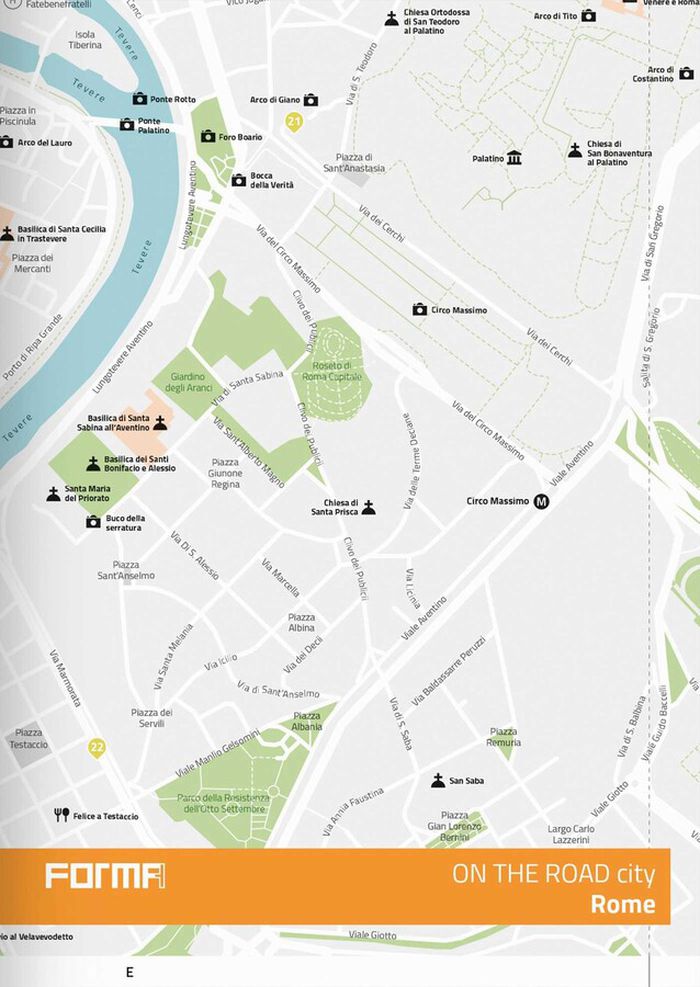
Rome is not only enriched by the works that have led it to be known as the "eternal city", or with those monuments that still preserve the stories of a strong people, such as the Colosseum, the Roman Forum or Castel Sant'Angelo. It is not only the symbolic center of Christianity thanks to St. Peter's Basilica, or the central and figurative hub of the Italian Republic because of the Palazzo del Quirinale. The history, art, and culture of Rome tell the story of a process of restoration and innovation that sees the participation of some timeless places and the birth of other contemporary community services that join those already known to the public. During 1930s, the social and cultural revolution and call for functionality and practicality are represented by impressive modern public and residential works, as well as by major operations from architectural protagonists in the urban change of the capital. Works such as the university city of Sapienza and its institutes, or the EUR district tell the story of the formal transition between modernity and contemporaneity.
Rome: on the road architecture guide
Actions:
Price:
$30.00
(available to order)
Summary:
Rome is not only enriched by the works that have led it to be known as the "eternal city", or with those monuments that still preserve the stories of a strong people, such as the Colosseum, the Roman Forum or Castel Sant'Angelo. It is not only the symbolic center of Christianity thanks to St. Peter's Basilica, or the central and figurative hub of the Italian Republic because of the Palazzo del Quirinale. The history, art, and culture of Rome tell the story of a process of restoration and innovation that sees the participation of some timeless places and the birth of other contemporary community services that join those already known to the public. During 1930s, the social and cultural revolution and call for functionality and practicality are represented by impressive modern public and residential works, as well as by major operations from architectural protagonists in the urban change of the capital. Works such as the university city of Sapienza and its institutes, or the EUR district tell the story of the formal transition between modernity and contemporaneity.
Form:
books
books
Publication:
November 2025
November 2025
Subject:
City Guides
City Guides
Form:
books
books
Actions:
Price:
$49.95
(available to order)
Summary:
In this first critical history of the National Gallery of Canada, Douglas Ord explores how, in the gallery's development, art has consistently been linked to notions of religious truth, national spirit, and hallowed atmosphere, culminating in Moshe Safdie's design for the institution's current building. Integrating accounts of political intrigue and public controversy(...)
$49.95
(available to order)
Summary:
In this first critical history of the National Gallery of Canada, Douglas Ord explores how, in the gallery's development, art has consistently been linked to notions of religious truth, national spirit, and hallowed atmosphere, culminating in Moshe Safdie's design for the institution's current building. Integrating accounts of political intrigue and public controversy(...)
Title:
The National Gallery of Canada : ideas and architecture
Actions:
Price:
$49.95
(available to order)
Summary:
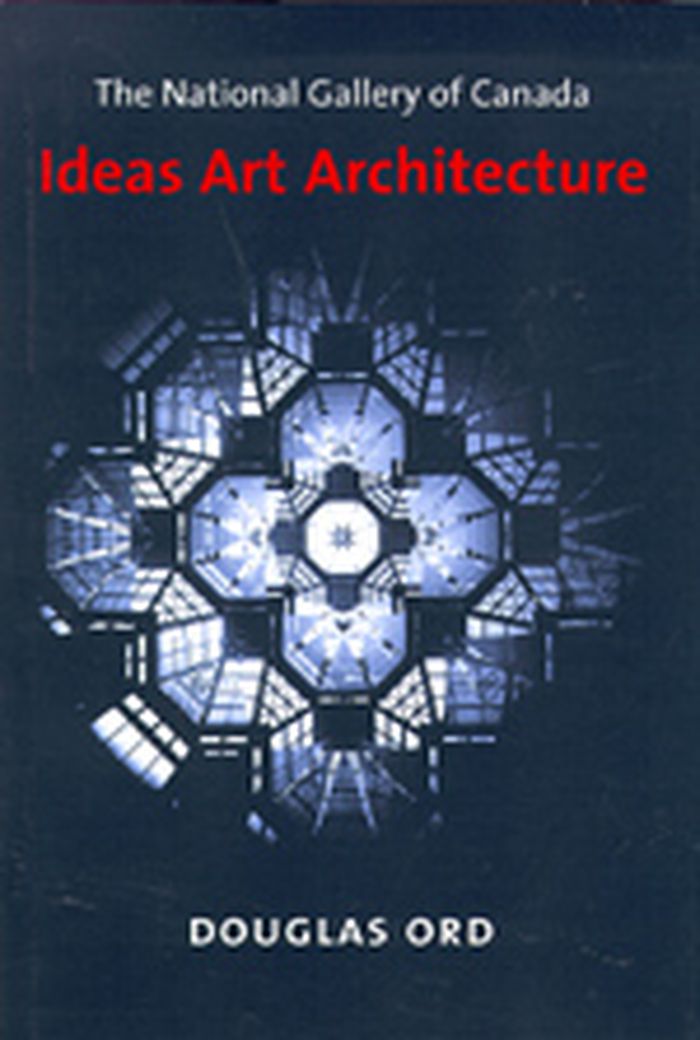
In this first critical history of the National Gallery of Canada, Douglas Ord explores how, in the gallery's development, art has consistently been linked to notions of religious truth, national spirit, and hallowed atmosphere, culminating in Moshe Safdie's design for the institution's current building. Integrating accounts of political intrigue and public controversy with philosophy, art theory, and architectural analysis, Ord provides vivid accounts of successive directors' struggles to obtain a permanent home for the nation's art. Ord looks at the gallery's historical and intellectual context - from 1910 when Eric Brown became the gallery's founding director, through Jean Sutherland Boggs, to Shirley Thomson - shedding light on its acquisitions, government policy towards the arts, and the public's deep-rooted suspicion of avant-garde art. In showing how Canadian art came to be housed in a building whose architectural and ideological sources include Gothic cathedrals, Islamic mosques, Egyptian temples, St Peter's Basilica, and the squared-stone facades of the Holy City of Jerusalem, The National Gallery of Canada insightfully explores the relationship of Canada's art and its National Gallery to the project of the Canadian nation state.
The National Gallery of Canada : ideas and architecture
Actions:
Price:
$49.95
(available to order)
Summary:
In this first critical history of the National Gallery of Canada, Douglas Ord explores how, in the gallery's development, art has consistently been linked to notions of religious truth, national spirit, and hallowed atmosphere, culminating in Moshe Safdie's design for the institution's current building. Integrating accounts of political intrigue and public controversy with philosophy, art theory, and architectural analysis, Ord provides vivid accounts of successive directors' struggles to obtain a permanent home for the nation's art. Ord looks at the gallery's historical and intellectual context - from 1910 when Eric Brown became the gallery's founding director, through Jean Sutherland Boggs, to Shirley Thomson - shedding light on its acquisitions, government policy towards the arts, and the public's deep-rooted suspicion of avant-garde art. In showing how Canadian art came to be housed in a building whose architectural and ideological sources include Gothic cathedrals, Islamic mosques, Egyptian temples, St Peter's Basilica, and the squared-stone facades of the Holy City of Jerusalem, The National Gallery of Canada insightfully explores the relationship of Canada's art and its National Gallery to the project of the Canadian nation state.
Form:
books
books
Publication:
June 2003, Montréal
June 2003, Montréal
Subject:
Architecture in Canada
Architecture in Canada
Form:
books
books
Actions:
Holdings:
Description:
[vi], [2], 72 pages, [44] double leaves of plates : illustrations (engravings) ; 54 cm (folio)
Description:
[vi], [2], 72 pages, [44] double leaves of plates : illustrations (engravings) ; 54 cm (folio)
Author:
Subject:
Publication:
A Rome : Chez Bouchard & Gravier Libraire françois ... de l'Imprimerie de Komarek, MDCCLXIII [1763]
A Rome : Chez Bouchard & Gravier Libraire françois ... de l'Imprimerie de Komarek, MDCCLXIII [1763]
Title:
Les plus beaux edifices de Rome moderne, ou, Recueil des plus belles vues des principales églises, places, palais, fontaines, &c. qui son dans Rome / dessinées par Jean Barbault, peintre, ancien pensionnaire du roy a Rome, et gravées en XLIV grandes planches et plusiers vignettes par d'habiles maitres ; avec la description historique de chaque edificie.
Actions:
Holdings:
Description:
[vi], [2], 72 pages, [44] double leaves of plates : illustrations (engravings) ; 54 cm (folio)
Les plus beaux edifices de Rome moderne, ou, Recueil des plus belles vues des principales églises, places, palais, fontaines, &c. qui son dans Rome / dessinées par Jean Barbault, peintre, ancien pensionnaire du roy a Rome, et gravées en XLIV grandes planches et plusiers vignettes par d'habiles maitres ; avec la description historique de chaque edificie.
Actions:
Holdings:
Description:
[vi], [2], 72 pages, [44] double leaves of plates : illustrations (engravings) ; 54 cm (folio)
Form:
books
books
Publication:
A Rome : Chez Bouchard & Gravier Libraire françois ... de l'Imprimerie de Komarek, MDCCLXIII [1763]
A Rome : Chez Bouchard & Gravier Libraire françois ... de l'Imprimerie de Komarek, MDCCLXIII [1763]
Author:
Subject:
Form:
books
books
Title:
Venice from the ground up
Venice from the ground up
Actions:
Price:
$34.95
(available to order)
Summary:
Venice came to life on spongy mudflats at the edge of the habitable world. Protected in a tidal estuary from barbarian invaders and Byzantine overlords, the fishermen, salt gatherers, and traders who settled there crafted an amphibious way of life unlike anything the Roman Empire had ever known. James H. S. McGregor recreates this world-turned-upside-down, with its(...)
$34.95
(available to order)
Summary:
Venice came to life on spongy mudflats at the edge of the habitable world. Protected in a tidal estuary from barbarian invaders and Byzantine overlords, the fishermen, salt gatherers, and traders who settled there crafted an amphibious way of life unlike anything the Roman Empire had ever known. James H. S. McGregor recreates this world-turned-upside-down, with its(...)
Subject:
History until 1900, Italy
History until 1900, Italy
Publication:
October 2006, Cambridge (MA), London
October 2006, Cambridge (MA), London
Title:
Venice from the ground up
Actions:
Price:
$34.95
(available to order)
Summary:
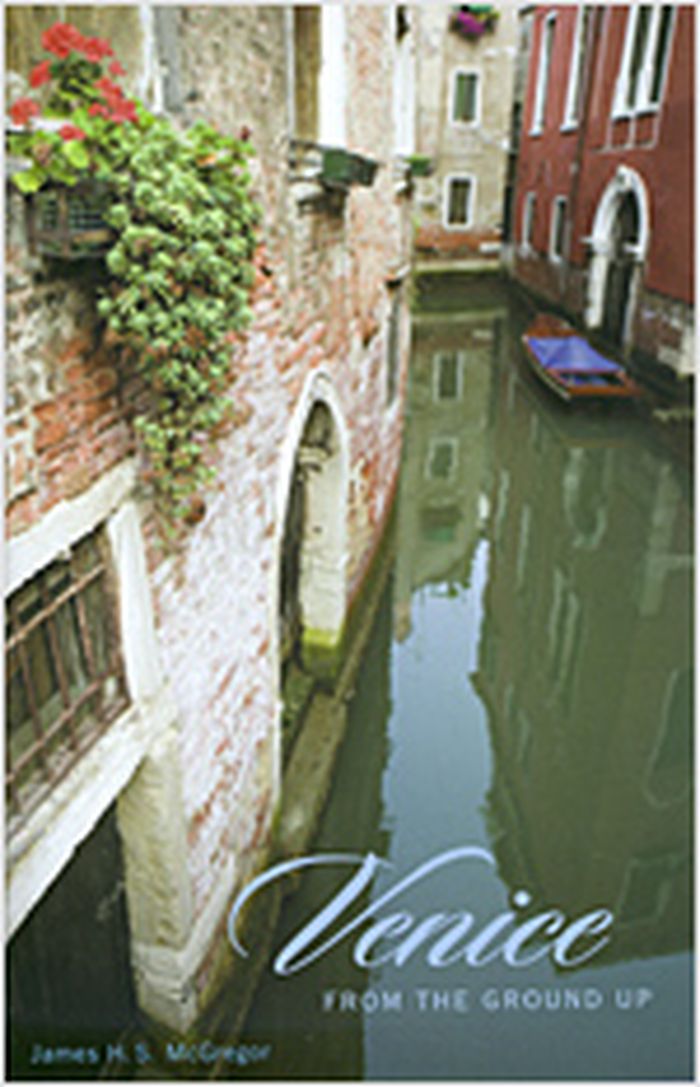
Venice came to life on spongy mudflats at the edge of the habitable world. Protected in a tidal estuary from barbarian invaders and Byzantine overlords, the fishermen, salt gatherers, and traders who settled there crafted an amphibious way of life unlike anything the Roman Empire had ever known. James H. S. McGregor recreates this world-turned-upside-down, with its waterways rather than roads, its boats tethered alongside dwellings, and its livelihood harvested from the sea. McGregor begins with the river currents that poured into the shallow Lagoon, carving channels in its bed and depositing islands of silt. He then describes the imaginative responses of Venetians to the demands and opportunities of this harsh environment - transforming the channels into canals, reclaiming salt marshes for the construction of massive churches, erecting a thriving marketplace and stately palaces along the Grand Canal. Through McGregor's eyes, we witness the flowering of Venice's restless creativity in the elaborate mosaics of St. Mark's soaring basilica, the expressive paintings in smaller neighborhood churches, and the colorful religious festivals - but also in theatrical productions, gambling casinos, and masked revelry, which reveal the city's less pious and orderly face. McGregor tells his unique history of Venice by drawing on a crumbling, tide-threatened cityscape and a treasure-trove of art that can still be seen in place today. The narrative follows both a chronological and geographical organization, so that readers can trace the city's evolution chapter by chapter and visitors can explore it district by district on foot and by boat.
Venice from the ground up
Actions:
Price:
$34.95
(available to order)
Summary:
Venice came to life on spongy mudflats at the edge of the habitable world. Protected in a tidal estuary from barbarian invaders and Byzantine overlords, the fishermen, salt gatherers, and traders who settled there crafted an amphibious way of life unlike anything the Roman Empire had ever known. James H. S. McGregor recreates this world-turned-upside-down, with its waterways rather than roads, its boats tethered alongside dwellings, and its livelihood harvested from the sea. McGregor begins with the river currents that poured into the shallow Lagoon, carving channels in its bed and depositing islands of silt. He then describes the imaginative responses of Venetians to the demands and opportunities of this harsh environment - transforming the channels into canals, reclaiming salt marshes for the construction of massive churches, erecting a thriving marketplace and stately palaces along the Grand Canal. Through McGregor's eyes, we witness the flowering of Venice's restless creativity in the elaborate mosaics of St. Mark's soaring basilica, the expressive paintings in smaller neighborhood churches, and the colorful religious festivals - but also in theatrical productions, gambling casinos, and masked revelry, which reveal the city's less pious and orderly face. McGregor tells his unique history of Venice by drawing on a crumbling, tide-threatened cityscape and a treasure-trove of art that can still be seen in place today. The narrative follows both a chronological and geographical organization, so that readers can trace the city's evolution chapter by chapter and visitors can explore it district by district on foot and by boat.
Form:
books
books
Publication:
October 2006, Cambridge (MA), London
October 2006, Cambridge (MA), London
Subject:
History until 1900, Italy
History until 1900, Italy
Form:
books
books
Actions:
Holdings:
Description:
374 pages : illustrations ; 24 cm
Description:
374 pages : illustrations ; 24 cm
Author:
Subject:
Publication:
Cambridge, Mass. : MIT Press, ©1996.
Cambridge, Mass. : MIT Press, ©1996.
Title:
Iconography and electronics upon a generic architecture : a view from the drafting room / Robert Venturi.
Actions:
Holdings:
Description:
374 pages : illustrations ; 24 cm
Iconography and electronics upon a generic architecture : a view from the drafting room / Robert Venturi.
Actions:
Holdings:
Description:
374 pages : illustrations ; 24 cm
Form:
books
books
Publication:
Cambridge, Mass. : MIT Press, ©1996.
Cambridge, Mass. : MIT Press, ©1996.
Author:
Subject:


