


142 Results
Form:
books
books
Actions:
Holdings:
Description:
246 pages : illustrations ; 21 cm
Description:
246 pages : illustrations ; 21 cm
Title:
Peisaj cu gradina si casa / Kázmér Kovács.
Actions:
Holdings:
Description:
246 pages : illustrations ; 21 cm
Peisaj cu gradina si casa / Kázmér Kovács.
Actions:
Holdings:
Description:
246 pages : illustrations ; 21 cm
Form:
books
books
Publication:
Bucuresti : Simetria, 2011
Bucuresti : Simetria, 2011
Form:
books
books
Actions:
Holdings:
Description:
207 pages : illustrations (chiefly color), plans (some color), color portraits ; 25 cm
Description:
207 pages : illustrations (chiefly color), plans (some color), color portraits ; 25 cm
Subject:
Publication:
Berlin : Jovis, [2012]
Berlin : Jovis, [2012]
Title:
Mehrwert Generalplanung : Architekten und Ingenieure planen interdisziplinär / Lothar Niederberghaus (Hrsg.).
Actions:
Holdings:
Description:
207 pages : illustrations (chiefly color), plans (some color), color portraits ; 25 cm
Mehrwert Generalplanung : Architekten und Ingenieure planen interdisziplinär / Lothar Niederberghaus (Hrsg.).
Actions:
Holdings:
Description:
207 pages : illustrations (chiefly color), plans (some color), color portraits ; 25 cm
Form:
books
books
Publication:
Berlin : Jovis, [2012]
Berlin : Jovis, [2012]
Form:
books
books
Holdings:
Description:
xxxii, 213 pages : illustrations ; 26 cm
Description:
xxxii, 213 pages : illustrations ; 26 cm
Subject:
- Lincoln, Abraham, 1809-1865 Monuments Washington (D.C.),
- Lincoln, Abraham, 1809-1865 Influence.,
- Lincoln, Abraham, 1809-1865,
- Lincoln, Abraham, (1809-1865) Monuments États-Unis Washington (D. C.),
- Lincoln Memorial (Washington, D.C.) History.,
- Memorials Social aspects United States.,
- Memorials Political aspects United States.,
- National characteristics, American.,
- Lincoln Memorial (Washington, D.C.) Histoire.,
- 21.62 history of architecture.,
- Buildings,
- Influence (Literary, artistic, etc.),
- Lincoln Memorial (Washington, D.C.),
- Memorials Social aspects,
- Monuments,
- Denkmal,
- Politische Kultur,
- Soziologie,
- Lincoln Memorial, Washington, D.C.,
- Gedenktekens.,
- Sociale aspecten.,
- Monuments commémoratifs Aspect social États-Unis.,
- Monuments commémoratifs Aspect politique États-Unis.,
- Caractère national américain.,
- Mémoire collective États-Unis.,
- Washington (D.C.) Buildings, structures, etc.,
- United States,
- Washington (D.C.),
- Lincoln Memorial,
- USA,
- Washington (D.C.) Lincoln Memorial.,
- Washington
Lincoln Memorial., - American Architects.,
- Memorials United States Washington (D.C.) 1910-2010.,
- Influence.,
- History
(See more)
Publication:
Princeton, N.J. : Princeton University Press, ©2002.
Princeton, N.J. : Princeton University Press, ©2002.
Title:
The Lincoln Memorial & American life / Christopher A. Thomas.
Actions:
Holdings:
Description:
xxxii, 213 pages : illustrations ; 26 cm
The Lincoln Memorial & American life / Christopher A. Thomas.
Actions:
Holdings:
Description:
xxxii, 213 pages : illustrations ; 26 cm
Form:
books
books
Publication:
Princeton, N.J. : Princeton University Press, ©2002.
Princeton, N.J. : Princeton University Press, ©2002.
Subject:
- Lincoln, Abraham, 1809-1865 Monuments Washington (D.C.),
- Lincoln, Abraham, 1809-1865 Influence.,
- Lincoln, Abraham, 1809-1865,
- Lincoln, Abraham, (1809-1865) Monuments États-Unis Washington (D. C.),
- Lincoln Memorial (Washington, D.C.) History.,
- Memorials Social aspects United States.,
- Memorials Political aspects United States.,
- National characteristics, American.,
- Lincoln Memorial (Washington, D.C.) Histoire.,
- 21.62 history of architecture.,
- Buildings,
- Influence (Literary, artistic, etc.),
- Lincoln Memorial (Washington, D.C.),
- Memorials Social aspects,
- Monuments,
- Denkmal,
- Politische Kultur,
- Soziologie,
- Lincoln Memorial, Washington, D.C.,
- Gedenktekens.,
- Sociale aspecten.,
- Monuments commémoratifs Aspect social États-Unis.,
- Monuments commémoratifs Aspect politique États-Unis.,
- Caractère national américain.,
- Mémoire collective États-Unis.,
- Washington (D.C.) Buildings, structures, etc.,
- United States,
- Washington (D.C.),
- Lincoln Memorial,
- USA,
- Washington (D.C.) Lincoln Memorial.,
- Washington
Lincoln Memorial., - American Architects.,
- Memorials United States Washington (D.C.) 1910-2010.,
- Influence.,
- History
(See more)
Form:
books
books
Actions:
Holdings:
Description:
335 pages : illustrations (some color) ; 24 cm
Description:
335 pages : illustrations (some color) ; 24 cm
Subject:
- Fuller, R. Buckminster (Richard Buckminster), 1895-1983.,
- Fuller, R. Buckminster.,
- Fuller, Richard Buckminster.,
- Fuller, Richard Buckminster 1895-1983,
- Fuller, Richard Buckminster, 1895-1983 Critique et interprétation.,
- Architecture United States History 20th century.,
- Visionary architecture United States.,
- Architecture États-Unis Histoire 20e siècle.,
- Architecture visionnaire États-Unis.,
- Architecture History United States 20th century.,
- Architecture.,
- Visionary architecture.,
- Utopies architecturales 20e siècle.,
- Ondes radioélectriques Effets de l'environnement.,
- United States.,
- History.
(See more)
Publication:
Zurich : Lars Müller Publishers, [2015]
Zurich : Lars Müller Publishers, [2015]
Title:
Buckminster Fuller Inc. : architecture in the age of radio / Mark Wigley.
Actions:
Holdings:
Description:
335 pages : illustrations (some color) ; 24 cm
Buckminster Fuller Inc. : architecture in the age of radio / Mark Wigley.
Actions:
Holdings:
Description:
335 pages : illustrations (some color) ; 24 cm
Form:
books
books
Publication:
Zurich : Lars Müller Publishers, [2015]
Zurich : Lars Müller Publishers, [2015]
Subject:
- Fuller, R. Buckminster (Richard Buckminster), 1895-1983.,
- Fuller, R. Buckminster.,
- Fuller, Richard Buckminster.,
- Fuller, Richard Buckminster 1895-1983,
- Fuller, Richard Buckminster, 1895-1983 Critique et interprétation.,
- Architecture United States History 20th century.,
- Visionary architecture United States.,
- Architecture États-Unis Histoire 20e siècle.,
- Architecture visionnaire États-Unis.,
- Architecture History United States 20th century.,
- Architecture.,
- Visionary architecture.,
- Utopies architecturales 20e siècle.,
- Ondes radioélectriques Effets de l'environnement.,
- United States.,
- History.
(See more)
Form:
books
books
Actions:
Holdings:
Description:
xviii, 308 pages : color illustrations ; 25 cm
Description:
xviii, 308 pages : color illustrations ; 25 cm
Subject:
- Walpole, Horace, 1717-1797 Aesthetics.,
- Walpole, Horace, 1717-1797 Homes and haunts England London.,
- Walpole, Horace, 1717-1797,
- Strawberry Hill (Twickenham, Londres, Angleterre),
- Aesthetics, British 18th century.,
- Esthétique britannique 18e siècle.,
- Aesthetics,
- Aesthetics, British,
- Buildings,
- Homes,
- Strawberry Hill (Twickenham, London, England),
- Twickenham (London, England) Buildings, structures, etc.,
- England Richmond upon Thames Strawberry Hill (Twickenham),
- England London,
- England Richmond upon Thames Twickenham
(See more)
Publication:
Farnham, Surrey, England ; Burlington, VT : Ashgate, ©2013.
Farnham, Surrey, England ; Burlington, VT : Ashgate, ©2013.
Title:
Place-making for the imagination : Horace Walpole and Strawberry Hill / Marion Harney.
Actions:
Holdings:
Description:
xviii, 308 pages : color illustrations ; 25 cm
Place-making for the imagination : Horace Walpole and Strawberry Hill / Marion Harney.
Actions:
Holdings:
Description:
xviii, 308 pages : color illustrations ; 25 cm
Form:
books
books
Publication:
Farnham, Surrey, England ; Burlington, VT : Ashgate, ©2013.
Farnham, Surrey, England ; Burlington, VT : Ashgate, ©2013.
Subject:
- Walpole, Horace, 1717-1797 Aesthetics.,
- Walpole, Horace, 1717-1797 Homes and haunts England London.,
- Walpole, Horace, 1717-1797,
- Strawberry Hill (Twickenham, Londres, Angleterre),
- Aesthetics, British 18th century.,
- Esthétique britannique 18e siècle.,
- Aesthetics,
- Aesthetics, British,
- Buildings,
- Homes,
- Strawberry Hill (Twickenham, London, England),
- Twickenham (London, England) Buildings, structures, etc.,
- England Richmond upon Thames Strawberry Hill (Twickenham),
- England London,
- England Richmond upon Thames Twickenham
(See more)
Form:
books
books
Actions:
Holdings:
Description:
xx, 259 pages : illustrations, maps ; 24 cm
Description:
xx, 259 pages : illustrations, maps ; 24 cm
Subject:
- Dema Wall (Greece),
- Regions & Countries Europe.,
- History & Archaeology.,
- Greece.,
- Mur de Dema (Grèce),
- 15.51 Antiquity.,
- Antiquities.,
- Vestingwerken.,
- Oorlogen.,
- Fortification Greece Attikē.,
- Fortifications Grèce Athènes (Grèce) Histoire 4e siècle av. J.-C.,
- Attikē (Greece) Antiquities.,
- Greece History Boeotian War, 378-375 B.C.,
- Athens (Greece) History.,
- Attique (Grèce) Antiquités.,
- Grèce Histoire 378-375 av. J.-C. (Guerre de Béotie),
- Greece Attikē.,
- Greece Dema Wall.,
- Greece History Boiotian war, 378-375 B.C.,
- Attikē (Greece) Defenses.,
- Attikē (Greece) Military antiquities.,
- Attique (Grèce) Histoire.,
- Grèce Histoire.,
- History.
(See more)
Publication:
Berkeley : University of California Press, ©1993.
Berkeley : University of California Press, ©1993.
Title:
The defense of Attica : the Dema wall and the Boiotian War of 378-375 B.C. / Mark H. Munn.
Actions:
Holdings:
Description:
xx, 259 pages : illustrations, maps ; 24 cm
The defense of Attica : the Dema wall and the Boiotian War of 378-375 B.C. / Mark H. Munn.
Actions:
Holdings:
Description:
xx, 259 pages : illustrations, maps ; 24 cm
Form:
books
books
Publication:
Berkeley : University of California Press, ©1993.
Berkeley : University of California Press, ©1993.
Subject:
- Dema Wall (Greece),
- Regions & Countries Europe.,
- History & Archaeology.,
- Greece.,
- Mur de Dema (Grèce),
- 15.51 Antiquity.,
- Antiquities.,
- Vestingwerken.,
- Oorlogen.,
- Fortification Greece Attikē.,
- Fortifications Grèce Athènes (Grèce) Histoire 4e siècle av. J.-C.,
- Attikē (Greece) Antiquities.,
- Greece History Boeotian War, 378-375 B.C.,
- Athens (Greece) History.,
- Attique (Grèce) Antiquités.,
- Grèce Histoire 378-375 av. J.-C. (Guerre de Béotie),
- Greece Attikē.,
- Greece Dema Wall.,
- Greece History Boiotian war, 378-375 B.C.,
- Attikē (Greece) Defenses.,
- Attikē (Greece) Military antiquities.,
- Attique (Grèce) Histoire.,
- Grèce Histoire.,
- History.
(See more)
Form:
books
books
Actions:
Holdings:
Description:
152 pages : illustrations (some color) ; 22 cm.
Description:
152 pages : illustrations (some color) ; 22 cm.
Subject:
Publication:
Chichester, West Sussex : Wiley, A John Wiley and Sons, Ltd, Publication, 2013.
Chichester, West Sussex : Wiley, A John Wiley and Sons, Ltd, Publication, 2013.
Title:
Performance-oriented architecture : rethinking architectural design and the built environment / Michael Hensel.
Actions:
Holdings:
Description:
152 pages : illustrations (some color) ; 22 cm.
Performance-oriented architecture : rethinking architectural design and the built environment / Michael Hensel.
Actions:
Holdings:
Description:
152 pages : illustrations (some color) ; 22 cm.
Form:
books
books
Publication:
Chichester, West Sussex : Wiley, A John Wiley and Sons, Ltd, Publication, 2013.
Chichester, West Sussex : Wiley, A John Wiley and Sons, Ltd, Publication, 2013.
Form:
books
books
Actions:
Price:
$51.00
(available to order)
Summary:
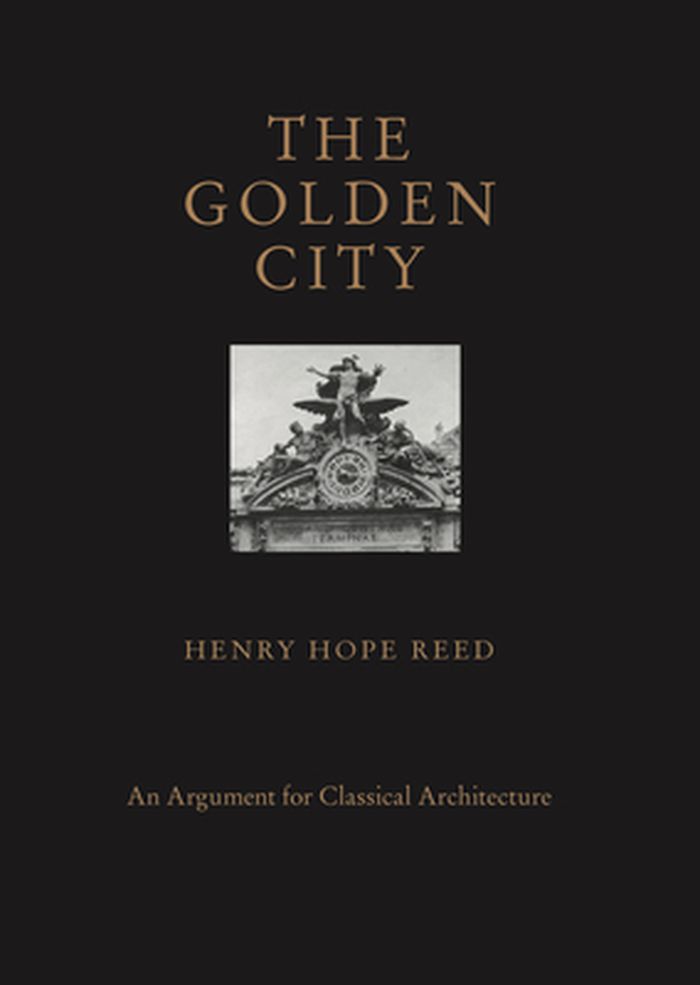
First published in 1959, 'The Golden City' is a seminal, critical document that developed one of the earliest and most compelling arguments against the then-dominant hegemony of modernism by reawakening interest in the value of our country’s built patrimony, particularly with respect to its notable classical architecture, classical sculpture, and ornament in the built(...)
$51.00
(available to order)
Summary:
First published in 1959, 'The Golden City' is a seminal, critical document that developed one of the earliest and most compelling arguments against the then-dominant hegemony of modernism by reawakening interest in the value of our country’s built patrimony, particularly with respect to its notable classical architecture, classical sculpture, and ornament in the built(...)
Title:
The golden city: an argument for classical architecture
Actions:
Price:
$51.00
(available to order)
Summary:
First published in 1959, 'The Golden City' is a seminal, critical document that developed one of the earliest and most compelling arguments against the then-dominant hegemony of modernism by reawakening interest in the value of our country’s built patrimony, particularly with respect to its notable classical architecture, classical sculpture, and ornament in the built environment. The book’s argument remains valuable today. 'The Golden City' can be credited with building the constituency for the preservation movement in the United States in general, and in New York City in particular. That constituency coalesced around Reed’s powerful polemic, eventually contributing to the formulation in 1965 of New York City’s groundbreaking Landmark Law, one of the most important milestones in the preservation movement in the United States.
The golden city: an argument for classical architecture
Actions:
Price:
$51.00
(available to order)
Summary:
First published in 1959, 'The Golden City' is a seminal, critical document that developed one of the earliest and most compelling arguments against the then-dominant hegemony of modernism by reawakening interest in the value of our country’s built patrimony, particularly with respect to its notable classical architecture, classical sculpture, and ornament in the built environment. The book’s argument remains valuable today. 'The Golden City' can be credited with building the constituency for the preservation movement in the United States in general, and in New York City in particular. That constituency coalesced around Reed’s powerful polemic, eventually contributing to the formulation in 1965 of New York City’s groundbreaking Landmark Law, one of the most important milestones in the preservation movement in the United States.
Form:
books
books
Publication:
May 2020
May 2020
Subject:
Urban Theory
Urban Theory
Form:
books
books
Actions:
Holdings:
Description:
xvi, 213 pages : illustrations ; 25 cm.
Description:
xvi, 213 pages : illustrations ; 25 cm.
Subject:
Publication:
College Station : Texas A & M University Press, ©2003.
College Station : Texas A & M University Press, ©2003.
Title:
The architectural project / by Alfonso Corona-Martinez ; edited by Malcolm Quantrill ; translated by Alfonso Corona-Martinez and Malcolm Quantrill.
Actions:
Holdings:
Description:
xvi, 213 pages : illustrations ; 25 cm.
The architectural project / by Alfonso Corona-Martinez ; edited by Malcolm Quantrill ; translated by Alfonso Corona-Martinez and Malcolm Quantrill.
Actions:
Holdings:
Description:
xvi, 213 pages : illustrations ; 25 cm.
Form:
books
books
Publication:
College Station : Texas A & M University Press, ©2003.
College Station : Texas A & M University Press, ©2003.
Form:
books
books
Actions:
Holdings:
Description:
xv, 157 pages : illustrations (chiefly color), maps ; 23 x 25 cm.
Description:
xv, 157 pages : illustrations (chiefly color), maps ; 23 x 25 cm.
Title:
Expanding disciplinarity in architectural practice : designing from the room to the city / Tom Holbrook.
Actions:
Holdings:
Description:
xv, 157 pages : illustrations (chiefly color), maps ; 23 x 25 cm.
Expanding disciplinarity in architectural practice : designing from the room to the city / Tom Holbrook.
Actions:
Holdings:
Description:
xv, 157 pages : illustrations (chiefly color), maps ; 23 x 25 cm.
Form:
books
books
Publication:
Abingdon, Oxon ; New York, NY : Routledge, 2017., ©2017
Abingdon, Oxon ; New York, NY : Routledge, 2017., ©2017


