


2979 Results
Form:
archives
Level of archival description:
Fonds
archives
Level of archival description:
Fonds
Actions:
Reference number:
AP176
Synopsis:
Karl Chu X PHYLUM project records, 1998-2014 (predominant 1998-2002), documents the development and design process of Chu’s project X PHYLUM. The archive consists exclusively of original born-digital material.
AP176
Synopsis:
Karl Chu X PHYLUM project records, 1998-2014 (predominant 1998-2002), documents the development and design process of Chu’s project X PHYLUM. The archive consists exclusively of original born-digital material.
People:
Date:
1998-2014
1998-2014
Title:
Karl Chu X Phylum project records
Actions:
AP176
Synopsis:
Karl Chu X PHYLUM project records, 1998-2014 (predominant 1998-2002), documents the development and design process of Chu’s project X PHYLUM. The archive consists exclusively of original born-digital material.
Karl Chu X Phylum project records
Actions:
AP176
Synopsis:
Karl Chu X PHYLUM project records, 1998-2014 (predominant 1998-2002), documents the development and design process of Chu’s project X PHYLUM. The archive consists exclusively of original born-digital material.
Form:
archives
Level of archival description:
Fonds
archives
Level of archival description:
Fonds
Date:
1998-2014
1998-2014
People:
Form:
archives
Level of archival description:
Fonds
archives
Level of archival description:
Fonds
Title:
Anyone Corporation fonds
Anyone Corporation fonds
Reference number:
AP116
Synopsis:
The Anyone Corporation fonds is composed primarily of textual and photographic records which document the activities of the Anyone Corporation over the course of its planned ten year life span from 1990 to 2001. The non-profit, New York City based organization, was founded by Peter Eisenman, Cynthia Davidson, Arata Isozaki, and Ignasi de Solà-Morales Rubio in order to stimulate a fruitful dialogue between architecture and general culture at the dawn of the new millennium. To this end, ANY (acronym for Architecture New York) organised ten international conferences and numerous public seminars, as well as publishing conference journals, a series of architecture related books, and ANY, a theory driven bi-monthly magazine.
AP116
Synopsis:
The Anyone Corporation fonds is composed primarily of textual and photographic records which document the activities of the Anyone Corporation over the course of its planned ten year life span from 1990 to 2001. The non-profit, New York City based organization, was founded by Peter Eisenman, Cynthia Davidson, Arata Isozaki, and Ignasi de Solà-Morales Rubio in order to stimulate a fruitful dialogue between architecture and general culture at the dawn of the new millennium. To this end, ANY (acronym for Architecture New York) organised ten international conferences and numerous public seminars, as well as publishing conference journals, a series of architecture related books, and ANY, a theory driven bi-monthly magazine.
People:
Date:
1990-2001
1990-2001
Title:
Anyone Corporation fonds
Actions:
AP116
Synopsis:
The Anyone Corporation fonds is composed primarily of textual and photographic records which document the activities of the Anyone Corporation over the course of its planned ten year life span from 1990 to 2001. The non-profit, New York City based organization, was founded by Peter Eisenman, Cynthia Davidson, Arata Isozaki, and Ignasi de Solà-Morales Rubio in order to stimulate a fruitful dialogue between architecture and general culture at the dawn of the new millennium. To this end, ANY (acronym for Architecture New York) organised ten international conferences and numerous public seminars, as well as publishing conference journals, a series of architecture related books, and ANY, a theory driven bi-monthly magazine.
Anyone Corporation fonds
Actions:
AP116
Synopsis:
The Anyone Corporation fonds is composed primarily of textual and photographic records which document the activities of the Anyone Corporation over the course of its planned ten year life span from 1990 to 2001. The non-profit, New York City based organization, was founded by Peter Eisenman, Cynthia Davidson, Arata Isozaki, and Ignasi de Solà-Morales Rubio in order to stimulate a fruitful dialogue between architecture and general culture at the dawn of the new millennium. To this end, ANY (acronym for Architecture New York) organised ten international conferences and numerous public seminars, as well as publishing conference journals, a series of architecture related books, and ANY, a theory driven bi-monthly magazine.
Form:
archives
Level of archival description:
Fonds
archives
Level of archival description:
Fonds
Date:
1990-2001
1990-2001
People:
Level of archival description:
Project
Project
Title:
Detroit Think Grid
Detroit Think Grid
Reference number:
AP144.S2.D73
Description:
File documents Detroit Think Grid, an unrealized project for a series of experiments which were to be developed by Price in collaboration with various groups in the Greater Detroit and Oakland area and implemented over a five-year period. Collaborators were to include the municipality, industry, commerce, and the existing education network, particularly Oakland County Community College in Detroit, Michigan. The principle aim of the Detroit Think Grid was to make the education "system" flexible and responsive to the needs of the community and readily accessible to everyone. Detroit Think Grid components include mobile units such as swimming pools, public learning booths and packaged workshops. Material in this group consists of existing conditions documentation concerning Oakland County and Oakland Community College campuses, such as aerial photographs of streets, zoning maps and maps of various townships, maps of traffic flow in Oakland County, and site plans of Oakland Community College campuses. Design development drawings include zoning plans showing present and projected uses of various zones, major transportation modes, patterns, and access points, and predictions for general population, school population, and retail growth within Oakland County. Material from this file was published in "Cedric Price Supplement No. 3", 'Architectural Design', vol. 41, (June 1971), 353-363 and 'Cedric Price-Works II' (London: Architectural Press, 1984), 54, 66. Material in this file was produced between 1957 and 1975, but predominantly between 1969 and 1971. Cedric Price presented a conference at the Cranbrook Institute of Science, in Michigan in 1968 and produced 2 reports for them titled 'Oakland Community College: An Investigation into Educational Servicing' (1968) and 'Oakland Community College: An Investigation into New Forms of Learning' (1968). File contains cartographic materials, design development drawings, photographic materials, reference drawings, and textual records.
AP144.S2.D73
Description:
File documents Detroit Think Grid, an unrealized project for a series of experiments which were to be developed by Price in collaboration with various groups in the Greater Detroit and Oakland area and implemented over a five-year period. Collaborators were to include the municipality, industry, commerce, and the existing education network, particularly Oakland County Community College in Detroit, Michigan. The principle aim of the Detroit Think Grid was to make the education "system" flexible and responsive to the needs of the community and readily accessible to everyone. Detroit Think Grid components include mobile units such as swimming pools, public learning booths and packaged workshops. Material in this group consists of existing conditions documentation concerning Oakland County and Oakland Community College campuses, such as aerial photographs of streets, zoning maps and maps of various townships, maps of traffic flow in Oakland County, and site plans of Oakland Community College campuses. Design development drawings include zoning plans showing present and projected uses of various zones, major transportation modes, patterns, and access points, and predictions for general population, school population, and retail growth within Oakland County. Material from this file was published in "Cedric Price Supplement No. 3", 'Architectural Design', vol. 41, (June 1971), 353-363 and 'Cedric Price-Works II' (London: Architectural Press, 1984), 54, 66. Material in this file was produced between 1957 and 1975, but predominantly between 1969 and 1971. Cedric Price presented a conference at the Cranbrook Institute of Science, in Michigan in 1968 and produced 2 reports for them titled 'Oakland Community College: An Investigation into Educational Servicing' (1968) and 'Oakland Community College: An Investigation into New Forms of Learning' (1968). File contains cartographic materials, design development drawings, photographic materials, reference drawings, and textual records.
People:
Date:
1957-1975, predominant 1969-1971
1957-1975, predominant 1969-1971
Title:
Detroit Think Grid
Actions:
AP144.S2.D73
Description:
File documents Detroit Think Grid, an unrealized project for a series of experiments which were to be developed by Price in collaboration with various groups in the Greater Detroit and Oakland area and implemented over a five-year period. Collaborators were to include the municipality, industry, commerce, and the existing education network, particularly Oakland County Community College in Detroit, Michigan. The principle aim of the Detroit Think Grid was to make the education "system" flexible and responsive to the needs of the community and readily accessible to everyone. Detroit Think Grid components include mobile units such as swimming pools, public learning booths and packaged workshops. Material in this group consists of existing conditions documentation concerning Oakland County and Oakland Community College campuses, such as aerial photographs of streets, zoning maps and maps of various townships, maps of traffic flow in Oakland County, and site plans of Oakland Community College campuses. Design development drawings include zoning plans showing present and projected uses of various zones, major transportation modes, patterns, and access points, and predictions for general population, school population, and retail growth within Oakland County. Material from this file was published in "Cedric Price Supplement No. 3", 'Architectural Design', vol. 41, (June 1971), 353-363 and 'Cedric Price-Works II' (London: Architectural Press, 1984), 54, 66. Material in this file was produced between 1957 and 1975, but predominantly between 1969 and 1971. Cedric Price presented a conference at the Cranbrook Institute of Science, in Michigan in 1968 and produced 2 reports for them titled 'Oakland Community College: An Investigation into Educational Servicing' (1968) and 'Oakland Community College: An Investigation into New Forms of Learning' (1968). File contains cartographic materials, design development drawings, photographic materials, reference drawings, and textual records.
Detroit Think Grid
Actions:
AP144.S2.D73
Description:
File documents Detroit Think Grid, an unrealized project for a series of experiments which were to be developed by Price in collaboration with various groups in the Greater Detroit and Oakland area and implemented over a five-year period. Collaborators were to include the municipality, industry, commerce, and the existing education network, particularly Oakland County Community College in Detroit, Michigan. The principle aim of the Detroit Think Grid was to make the education "system" flexible and responsive to the needs of the community and readily accessible to everyone. Detroit Think Grid components include mobile units such as swimming pools, public learning booths and packaged workshops. Material in this group consists of existing conditions documentation concerning Oakland County and Oakland Community College campuses, such as aerial photographs of streets, zoning maps and maps of various townships, maps of traffic flow in Oakland County, and site plans of Oakland Community College campuses. Design development drawings include zoning plans showing present and projected uses of various zones, major transportation modes, patterns, and access points, and predictions for general population, school population, and retail growth within Oakland County. Material from this file was published in "Cedric Price Supplement No. 3", 'Architectural Design', vol. 41, (June 1971), 353-363 and 'Cedric Price-Works II' (London: Architectural Press, 1984), 54, 66. Material in this file was produced between 1957 and 1975, but predominantly between 1969 and 1971. Cedric Price presented a conference at the Cranbrook Institute of Science, in Michigan in 1968 and produced 2 reports for them titled 'Oakland Community College: An Investigation into Educational Servicing' (1968) and 'Oakland Community College: An Investigation into New Forms of Learning' (1968). File contains cartographic materials, design development drawings, photographic materials, reference drawings, and textual records.
Level of archival description:
File 73
File 73
Date:
1957-1975, predominant 1969-1971
1957-1975, predominant 1969-1971
People:
Level of archival description:
Series
Series
Reference number:
AP185.S2
Description:
This project, 1994-2001, contains material related to the Ost/Kuttner Apartment, a built residential project in New York City. Described by its clients as “Cleopatra’s submarine,” the O/K Apartment converts two adjacent units in a pre-World War II building in New York into a single but divisible space. The Apartment is organized into areas defined less by their programmatic identity—bathroom, bedroom, living room—than by a series of undulating landscapes made up of custom, function-bridging forms, which KOL/MAC developed by digitally compositing cross-sections of everyday domestic objects. To produce the pieces, the architects worked intensively with contractors in a process directly informed by computer-aided fabrication in a variety of fields including ship-building, bobsled design, and stage design. The digital project records are largely in word processing formats, namely Microsoft Word for Mac and ClarisWorks, as well as images in TIF, JPEG, and Mac Pict image formats. There are also a large number of Microstation CAD drawings. There are two major groupings within the digital material: First, there is a body of video and still images. These consist of screen captures of renderings and other digital models. There are also images and HTML for a related website, a photograph viewer showing pictures of a built, physical model of the apartment. Of note, there are two videos which document the early construction of the Apartment, as well as the construction of the shower/bed. The second grouping consists of construction and design documentation. This consists of correspondence, invoices, and other word processing documents which show KOL/MAC’s work with the client, contractor, engineer, and other stakeholders. They also contain a large number of design files and images which document the evolving design of the Apartment. KOL/MAC versioned their working files at certain intervals, and each version represents a snapshot of the working files at a particular time. There is a substantial amount of duplication across these files. There is also a physical component to the records, including three material samples from the apartment, as well as 28 floorplans for the bid set, 6 floorplans, and 2 blueprints. There is also .3 linear meters of textual records which document KOL/MAC’s work with the client, contractor, and sub-contractor during construction.
AP185.S2
Description:
This project, 1994-2001, contains material related to the Ost/Kuttner Apartment, a built residential project in New York City. Described by its clients as “Cleopatra’s submarine,” the O/K Apartment converts two adjacent units in a pre-World War II building in New York into a single but divisible space. The Apartment is organized into areas defined less by their programmatic identity—bathroom, bedroom, living room—than by a series of undulating landscapes made up of custom, function-bridging forms, which KOL/MAC developed by digitally compositing cross-sections of everyday domestic objects. To produce the pieces, the architects worked intensively with contractors in a process directly informed by computer-aided fabrication in a variety of fields including ship-building, bobsled design, and stage design. The digital project records are largely in word processing formats, namely Microsoft Word for Mac and ClarisWorks, as well as images in TIF, JPEG, and Mac Pict image formats. There are also a large number of Microstation CAD drawings. There are two major groupings within the digital material: First, there is a body of video and still images. These consist of screen captures of renderings and other digital models. There are also images and HTML for a related website, a photograph viewer showing pictures of a built, physical model of the apartment. Of note, there are two videos which document the early construction of the Apartment, as well as the construction of the shower/bed. The second grouping consists of construction and design documentation. This consists of correspondence, invoices, and other word processing documents which show KOL/MAC’s work with the client, contractor, engineer, and other stakeholders. They also contain a large number of design files and images which document the evolving design of the Apartment. KOL/MAC versioned their working files at certain intervals, and each version represents a snapshot of the working files at a particular time. There is a substantial amount of duplication across these files. There is also a physical component to the records, including three material samples from the apartment, as well as 28 floorplans for the bid set, 6 floorplans, and 2 blueprints. There is also .3 linear meters of textual records which document KOL/MAC’s work with the client, contractor, and sub-contractor during construction.
People:
Date:
1994-2001
1994-2001
Title:
O/K Apartment (New York, N.Y.)
Actions:
AP185.S2
Description:
This project, 1994-2001, contains material related to the Ost/Kuttner Apartment, a built residential project in New York City. Described by its clients as “Cleopatra’s submarine,” the O/K Apartment converts two adjacent units in a pre-World War II building in New York into a single but divisible space. The Apartment is organized into areas defined less by their programmatic identity—bathroom, bedroom, living room—than by a series of undulating landscapes made up of custom, function-bridging forms, which KOL/MAC developed by digitally compositing cross-sections of everyday domestic objects. To produce the pieces, the architects worked intensively with contractors in a process directly informed by computer-aided fabrication in a variety of fields including ship-building, bobsled design, and stage design. The digital project records are largely in word processing formats, namely Microsoft Word for Mac and ClarisWorks, as well as images in TIF, JPEG, and Mac Pict image formats. There are also a large number of Microstation CAD drawings. There are two major groupings within the digital material: First, there is a body of video and still images. These consist of screen captures of renderings and other digital models. There are also images and HTML for a related website, a photograph viewer showing pictures of a built, physical model of the apartment. Of note, there are two videos which document the early construction of the Apartment, as well as the construction of the shower/bed. The second grouping consists of construction and design documentation. This consists of correspondence, invoices, and other word processing documents which show KOL/MAC’s work with the client, contractor, engineer, and other stakeholders. They also contain a large number of design files and images which document the evolving design of the Apartment. KOL/MAC versioned their working files at certain intervals, and each version represents a snapshot of the working files at a particular time. There is a substantial amount of duplication across these files. There is also a physical component to the records, including three material samples from the apartment, as well as 28 floorplans for the bid set, 6 floorplans, and 2 blueprints. There is also .3 linear meters of textual records which document KOL/MAC’s work with the client, contractor, and sub-contractor during construction.
O/K Apartment (New York, N.Y.)
Actions:
AP185.S2
Description:
This project, 1994-2001, contains material related to the Ost/Kuttner Apartment, a built residential project in New York City. Described by its clients as “Cleopatra’s submarine,” the O/K Apartment converts two adjacent units in a pre-World War II building in New York into a single but divisible space. The Apartment is organized into areas defined less by their programmatic identity—bathroom, bedroom, living room—than by a series of undulating landscapes made up of custom, function-bridging forms, which KOL/MAC developed by digitally compositing cross-sections of everyday domestic objects. To produce the pieces, the architects worked intensively with contractors in a process directly informed by computer-aided fabrication in a variety of fields including ship-building, bobsled design, and stage design. The digital project records are largely in word processing formats, namely Microsoft Word for Mac and ClarisWorks, as well as images in TIF, JPEG, and Mac Pict image formats. There are also a large number of Microstation CAD drawings. There are two major groupings within the digital material: First, there is a body of video and still images. These consist of screen captures of renderings and other digital models. There are also images and HTML for a related website, a photograph viewer showing pictures of a built, physical model of the apartment. Of note, there are two videos which document the early construction of the Apartment, as well as the construction of the shower/bed. The second grouping consists of construction and design documentation. This consists of correspondence, invoices, and other word processing documents which show KOL/MAC’s work with the client, contractor, engineer, and other stakeholders. They also contain a large number of design files and images which document the evolving design of the Apartment. KOL/MAC versioned their working files at certain intervals, and each version represents a snapshot of the working files at a particular time. There is a substantial amount of duplication across these files. There is also a physical component to the records, including three material samples from the apartment, as well as 28 floorplans for the bid set, 6 floorplans, and 2 blueprints. There is also .3 linear meters of textual records which document KOL/MAC’s work with the client, contractor, and sub-contractor during construction.
Level of archival description:
Series
Series
Date:
1994-2001
1994-2001
People:
Level of archival description:
Project
Project
Reference number:
AP018.S1.1971.PR07
Description:
This project series documents the design and construction of the Health Sciences Complex at Memorial University (MUN) in St. John’s, Newfoundland from 1971-1976. The office identified the project number as 7111. The Health Sciences Complex was built to replace the St. John’s General Hospital. Constructed on MUN’s north campus, the hospital would integrate the university’s medical school to create a teaching hospital. The design included classrooms, labs, and a library for the students. The St. John’s General Hospital and MUN medical school would retain their independence and authority while sharing the space. The proposed design called for a banal building that was always unfinished so that future expansions and changes could be easily accommodated. The project also included the construction of the Utilities Annex building, a separate building to house heating and cooling plants, generators and electrical distribution. Having these facilities in a separate building would allow them to expand the hospital without crucial systems getting in the way. The main expansion envisioned in the scope of this project was the Life Sciences Complex, a university building and hospital connected to the Health Sciences Complex. In the project materials, the project is often referred to as The Health and Life Sciences Complex, although only the Health Sciences Complex was constructed under this project number. The original budget for the project was $60 million, a figure which included the Life Sciences Complex. The project is recorded through drawings, photographic materials, boards of material samples, a painting and textual records dating from 1971-1978. The textual records include correspondence with the client and consultants, meeting minutes and reports, consultancy records, a systems report, food facilities planning records, outline specifications, product catalogues for hospital equipment, research, project proposals, financial documentation and schedules. All of the drawings issued for tender are arranged within the textual materials. There are also two presentation boards, one of a project painting and the other of a photograph of the site model. Box AP018.S1.1971.PR07.049 contains an index to the textual records, which was created by the office.
AP018.S1.1971.PR07
Description:
This project series documents the design and construction of the Health Sciences Complex at Memorial University (MUN) in St. John’s, Newfoundland from 1971-1976. The office identified the project number as 7111. The Health Sciences Complex was built to replace the St. John’s General Hospital. Constructed on MUN’s north campus, the hospital would integrate the university’s medical school to create a teaching hospital. The design included classrooms, labs, and a library for the students. The St. John’s General Hospital and MUN medical school would retain their independence and authority while sharing the space. The proposed design called for a banal building that was always unfinished so that future expansions and changes could be easily accommodated. The project also included the construction of the Utilities Annex building, a separate building to house heating and cooling plants, generators and electrical distribution. Having these facilities in a separate building would allow them to expand the hospital without crucial systems getting in the way. The main expansion envisioned in the scope of this project was the Life Sciences Complex, a university building and hospital connected to the Health Sciences Complex. In the project materials, the project is often referred to as The Health and Life Sciences Complex, although only the Health Sciences Complex was constructed under this project number. The original budget for the project was $60 million, a figure which included the Life Sciences Complex. The project is recorded through drawings, photographic materials, boards of material samples, a painting and textual records dating from 1971-1978. The textual records include correspondence with the client and consultants, meeting minutes and reports, consultancy records, a systems report, food facilities planning records, outline specifications, product catalogues for hospital equipment, research, project proposals, financial documentation and schedules. All of the drawings issued for tender are arranged within the textual materials. There are also two presentation boards, one of a project painting and the other of a photograph of the site model. Box AP018.S1.1971.PR07.049 contains an index to the textual records, which was created by the office.
People:
Date:
1970-1978
1970-1978
Title:
Memorial University of Newfoundland, Health Sciences Complex, St. Johns, Newfoundland (1971-1976)
Actions:
AP018.S1.1971.PR07
Description:
This project series documents the design and construction of the Health Sciences Complex at Memorial University (MUN) in St. John’s, Newfoundland from 1971-1976. The office identified the project number as 7111. The Health Sciences Complex was built to replace the St. John’s General Hospital. Constructed on MUN’s north campus, the hospital would integrate the university’s medical school to create a teaching hospital. The design included classrooms, labs, and a library for the students. The St. John’s General Hospital and MUN medical school would retain their independence and authority while sharing the space. The proposed design called for a banal building that was always unfinished so that future expansions and changes could be easily accommodated. The project also included the construction of the Utilities Annex building, a separate building to house heating and cooling plants, generators and electrical distribution. Having these facilities in a separate building would allow them to expand the hospital without crucial systems getting in the way. The main expansion envisioned in the scope of this project was the Life Sciences Complex, a university building and hospital connected to the Health Sciences Complex. In the project materials, the project is often referred to as The Health and Life Sciences Complex, although only the Health Sciences Complex was constructed under this project number. The original budget for the project was $60 million, a figure which included the Life Sciences Complex. The project is recorded through drawings, photographic materials, boards of material samples, a painting and textual records dating from 1971-1978. The textual records include correspondence with the client and consultants, meeting minutes and reports, consultancy records, a systems report, food facilities planning records, outline specifications, product catalogues for hospital equipment, research, project proposals, financial documentation and schedules. All of the drawings issued for tender are arranged within the textual materials. There are also two presentation boards, one of a project painting and the other of a photograph of the site model. Box AP018.S1.1971.PR07.049 contains an index to the textual records, which was created by the office.
Memorial University of Newfoundland, Health Sciences Complex, St. Johns, Newfoundland (1971-1976)
Actions:
AP018.S1.1971.PR07
Description:
This project series documents the design and construction of the Health Sciences Complex at Memorial University (MUN) in St. John’s, Newfoundland from 1971-1976. The office identified the project number as 7111. The Health Sciences Complex was built to replace the St. John’s General Hospital. Constructed on MUN’s north campus, the hospital would integrate the university’s medical school to create a teaching hospital. The design included classrooms, labs, and a library for the students. The St. John’s General Hospital and MUN medical school would retain their independence and authority while sharing the space. The proposed design called for a banal building that was always unfinished so that future expansions and changes could be easily accommodated. The project also included the construction of the Utilities Annex building, a separate building to house heating and cooling plants, generators and electrical distribution. Having these facilities in a separate building would allow them to expand the hospital without crucial systems getting in the way. The main expansion envisioned in the scope of this project was the Life Sciences Complex, a university building and hospital connected to the Health Sciences Complex. In the project materials, the project is often referred to as The Health and Life Sciences Complex, although only the Health Sciences Complex was constructed under this project number. The original budget for the project was $60 million, a figure which included the Life Sciences Complex. The project is recorded through drawings, photographic materials, boards of material samples, a painting and textual records dating from 1971-1978. The textual records include correspondence with the client and consultants, meeting minutes and reports, consultancy records, a systems report, food facilities planning records, outline specifications, product catalogues for hospital equipment, research, project proposals, financial documentation and schedules. All of the drawings issued for tender are arranged within the textual materials. There are also two presentation boards, one of a project painting and the other of a photograph of the site model. Box AP018.S1.1971.PR07.049 contains an index to the textual records, which was created by the office.
Level of archival description:
Project
Project
Date:
1970-1978
1970-1978
People:
Form:
events
events
Title:
Liquidated Architecture
Liquidated Architecture
Actions:
Description:
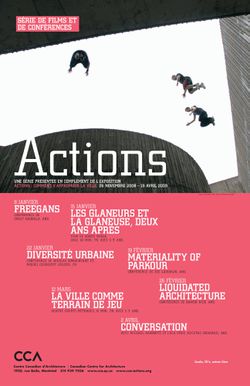
American urban planner and designer Damon Rich examines the links among politics, architecture, and history. His research analyses the evolution of the real estate market – foreclosures, mortgages, construction and zoning. He is also a collaborator of the Center for Urban Pedagogy (CUP), an organization based in Brooklyn that studies movements within cities and their(...)
American urban planner and designer Damon Rich examines the links among politics, architecture, and history. His research analyses the evolution of the real estate market – foreclosures, mortgages, construction and zoning. He is also a collaborator of the Center for Urban Pedagogy (CUP), an organization based in Brooklyn that studies movements within cities and their(...)
Location:
Paul Desmarais Theatre
Paul Desmarais Theatre
Date:
26 February 2009
26 February 2009
Title:
Liquidated Architecture
Actions:
Description:
American urban planner and designer Damon Rich examines the links among politics, architecture, and history. His research analyses the evolution of the real estate market – foreclosures, mortgages, construction and zoning. He is also a collaborator of the Center for Urban Pedagogy (CUP), an organization based in Brooklyn that studies movements within cities and their(...)
Liquidated Architecture
Actions:
Description:
American urban planner and designer Damon Rich examines the links among politics, architecture, and history. His research analyses the evolution of the real estate market – foreclosures, mortgages, construction and zoning. He is also a collaborator of the Center for Urban Pedagogy (CUP), an organization based in Brooklyn that studies movements within cities and their(...)
Form:
events
events
Date:
26 February 2009
26 February 2009
Location:
Paul Desmarais Theatre
Paul Desmarais Theatre
Level of archival description:
Project
Project
Reference number:
AP207.S1.1971.PR02
Description:
This project series documents five of the fifteen proposals submitted by Pettena for the Trigon competition in Graz, Austria, in 1971. The proposals documented in this project series are the following: Proposal n° 7 "Imprisonment" and "Architectural project #2 (Planes crossing)"; Proposal n° 11 "Instantaneous birth"; Proposal n° 12 "Conservazione"; Proposal n° 13 "Sedie e tavolo d’erba"; and Proposal n° 14 "Grass Architecture" I, II, and III. Pettena won the first prize for both his proposal "Imprisonment" and "Architectural Project #2" (Proposal n° 7) and for "Grass Architecture" I and II (Proposal n° 14). In these proposals, Pettena "questioned the temporal dimension of architecture as well as its relationship with nature." [1] The proposal "Grass Architecture" consists of shapes of grass rising from the ground, creating a perishable form of architecture coming from within and becoming part of the territory. The "Imprisonment" and "Architectural Project #2" proposals are a variation of Pettena's previous performance project "Cancellazione di uno stato" in 1970. These proposals consist of "trails of passing airplanes crisscrossing? the sky, creating the outlines of a grid of clouds. Here, the legacy of the grid in modern architecture is rendered formless, as if “naturalized” by the evaporation of the clouds, subject to chance and the freely drifting trails left by the airplanes." [2] The project series contains presentation drawings (five original drawings, seventeen reprographic copies, and four photographic reproductions), for Pettena's proposals "Imprisonment" and "Architectural project #2 (Planes crossing)", "Instantaneous birth", "Conservazione", "Sedie e tavolo d’erba", and "Grass Architecture" I, II, and III. The project series also includes photographs of models for the "Grass Architecture" proposal. Sources: [1] FRAC Centre-Val de Loire, http://www.frac-centre.fr/_en/art-and-architecture-collection/pettena-gianni/grass-architecture-317.html?authID=148&ensembleID=454 (last accessed 11 November 2019) [2] FRAC Centre-Val de Loire, http://www.frac-centre.fr/_en/art-and-architecture-collection/pettena-gianni/imprisonment-317.html?authID=148&ensembleID=115 (last accessed 11 November 2019)
AP207.S1.1971.PR02
Description:
This project series documents five of the fifteen proposals submitted by Pettena for the Trigon competition in Graz, Austria, in 1971. The proposals documented in this project series are the following: Proposal n° 7 "Imprisonment" and "Architectural project #2 (Planes crossing)"; Proposal n° 11 "Instantaneous birth"; Proposal n° 12 "Conservazione"; Proposal n° 13 "Sedie e tavolo d’erba"; and Proposal n° 14 "Grass Architecture" I, II, and III. Pettena won the first prize for both his proposal "Imprisonment" and "Architectural Project #2" (Proposal n° 7) and for "Grass Architecture" I and II (Proposal n° 14). In these proposals, Pettena "questioned the temporal dimension of architecture as well as its relationship with nature." [1] The proposal "Grass Architecture" consists of shapes of grass rising from the ground, creating a perishable form of architecture coming from within and becoming part of the territory. The "Imprisonment" and "Architectural Project #2" proposals are a variation of Pettena's previous performance project "Cancellazione di uno stato" in 1970. These proposals consist of "trails of passing airplanes crisscrossing? the sky, creating the outlines of a grid of clouds. Here, the legacy of the grid in modern architecture is rendered formless, as if “naturalized” by the evaporation of the clouds, subject to chance and the freely drifting trails left by the airplanes." [2] The project series contains presentation drawings (five original drawings, seventeen reprographic copies, and four photographic reproductions), for Pettena's proposals "Imprisonment" and "Architectural project #2 (Planes crossing)", "Instantaneous birth", "Conservazione", "Sedie e tavolo d’erba", and "Grass Architecture" I, II, and III. The project series also includes photographs of models for the "Grass Architecture" proposal. Sources: [1] FRAC Centre-Val de Loire, http://www.frac-centre.fr/_en/art-and-architecture-collection/pettena-gianni/grass-architecture-317.html?authID=148&ensembleID=454 (last accessed 11 November 2019) [2] FRAC Centre-Val de Loire, http://www.frac-centre.fr/_en/art-and-architecture-collection/pettena-gianni/imprisonment-317.html?authID=148&ensembleID=115 (last accessed 11 November 2019)
People:
Date:
1971-2017
1971-2017
Title:
Proposte per il concorso Trigon [Proposals for the Trigon competition] (1971)
Actions:
AP207.S1.1971.PR02
Description:
This project series documents five of the fifteen proposals submitted by Pettena for the Trigon competition in Graz, Austria, in 1971. The proposals documented in this project series are the following: Proposal n° 7 "Imprisonment" and "Architectural project #2 (Planes crossing)"; Proposal n° 11 "Instantaneous birth"; Proposal n° 12 "Conservazione"; Proposal n° 13 "Sedie e tavolo d’erba"; and Proposal n° 14 "Grass Architecture" I, II, and III. Pettena won the first prize for both his proposal "Imprisonment" and "Architectural Project #2" (Proposal n° 7) and for "Grass Architecture" I and II (Proposal n° 14). In these proposals, Pettena "questioned the temporal dimension of architecture as well as its relationship with nature." [1] The proposal "Grass Architecture" consists of shapes of grass rising from the ground, creating a perishable form of architecture coming from within and becoming part of the territory. The "Imprisonment" and "Architectural Project #2" proposals are a variation of Pettena's previous performance project "Cancellazione di uno stato" in 1970. These proposals consist of "trails of passing airplanes crisscrossing? the sky, creating the outlines of a grid of clouds. Here, the legacy of the grid in modern architecture is rendered formless, as if “naturalized” by the evaporation of the clouds, subject to chance and the freely drifting trails left by the airplanes." [2] The project series contains presentation drawings (five original drawings, seventeen reprographic copies, and four photographic reproductions), for Pettena's proposals "Imprisonment" and "Architectural project #2 (Planes crossing)", "Instantaneous birth", "Conservazione", "Sedie e tavolo d’erba", and "Grass Architecture" I, II, and III. The project series also includes photographs of models for the "Grass Architecture" proposal. Sources: [1] FRAC Centre-Val de Loire, http://www.frac-centre.fr/_en/art-and-architecture-collection/pettena-gianni/grass-architecture-317.html?authID=148&ensembleID=454 (last accessed 11 November 2019) [2] FRAC Centre-Val de Loire, http://www.frac-centre.fr/_en/art-and-architecture-collection/pettena-gianni/imprisonment-317.html?authID=148&ensembleID=115 (last accessed 11 November 2019)
Proposte per il concorso Trigon [Proposals for the Trigon competition] (1971)
Actions:
AP207.S1.1971.PR02
Description:
This project series documents five of the fifteen proposals submitted by Pettena for the Trigon competition in Graz, Austria, in 1971. The proposals documented in this project series are the following: Proposal n° 7 "Imprisonment" and "Architectural project #2 (Planes crossing)"; Proposal n° 11 "Instantaneous birth"; Proposal n° 12 "Conservazione"; Proposal n° 13 "Sedie e tavolo d’erba"; and Proposal n° 14 "Grass Architecture" I, II, and III. Pettena won the first prize for both his proposal "Imprisonment" and "Architectural Project #2" (Proposal n° 7) and for "Grass Architecture" I and II (Proposal n° 14). In these proposals, Pettena "questioned the temporal dimension of architecture as well as its relationship with nature." [1] The proposal "Grass Architecture" consists of shapes of grass rising from the ground, creating a perishable form of architecture coming from within and becoming part of the territory. The "Imprisonment" and "Architectural Project #2" proposals are a variation of Pettena's previous performance project "Cancellazione di uno stato" in 1970. These proposals consist of "trails of passing airplanes crisscrossing? the sky, creating the outlines of a grid of clouds. Here, the legacy of the grid in modern architecture is rendered formless, as if “naturalized” by the evaporation of the clouds, subject to chance and the freely drifting trails left by the airplanes." [2] The project series contains presentation drawings (five original drawings, seventeen reprographic copies, and four photographic reproductions), for Pettena's proposals "Imprisonment" and "Architectural project #2 (Planes crossing)", "Instantaneous birth", "Conservazione", "Sedie e tavolo d’erba", and "Grass Architecture" I, II, and III. The project series also includes photographs of models for the "Grass Architecture" proposal. Sources: [1] FRAC Centre-Val de Loire, http://www.frac-centre.fr/_en/art-and-architecture-collection/pettena-gianni/grass-architecture-317.html?authID=148&ensembleID=454 (last accessed 11 November 2019) [2] FRAC Centre-Val de Loire, http://www.frac-centre.fr/_en/art-and-architecture-collection/pettena-gianni/imprisonment-317.html?authID=148&ensembleID=115 (last accessed 11 November 2019)
Level of archival description:
Project
Project
Date:
1971-2017
1971-2017
People:
Level of archival description:
Series
Series
Title:
Architectural projects
Architectural projects
Reference number:
AP178.S1
Description:
Series AP178.S1 is the largest series of the Álvaro Siza fonds and documents over 200 of Siza’s built and unbuilt architectural projects. The series is divided into project series which are arranged chronologically by project year. Presently, materials in this series range from 1958-2012. The CCA will also receive materials documenting Siza’s more recent work in future additions. Documenting the projects are conceptual, design, presentation, and working drawings, as well as photographic materials, textual documentation, and models. Although the drawings for each project have been identified, Siza often sketches or doodles on textual documentation, such as minutes of meetings or notes. When possible, folders that include textual documents with sketches or doodles have been identified. Amounts and types of materials vary from project to project. Project documentation is usually in Portuguese, with some exceptions including French, English, German, and Dutch. Most project series include sketches, studies, and working drawings. Other drawings included are site plans, floor plans, topographic surveys, elevations, sections, as well as technical and mechanical details. Also documenting the projects are photographic materials and textual documentation, such as correspondence, building programs, contracts, notes, and other working details. Photographic materials found within this archive are slides, negatives, photomontages and photographs of project sites and models.The photomontages were often used to study the function of the project site. To fully understand Siza’s methodology, sketchbooks (Series AP178.S2) should be viewed alongside the project drawings, when possible. Each project series description highlights sketchbooks in series AP178.S2 which contain related sketches. It is important to note that not all projects are represented in the sketchbooks in Series AP178.S2. Moreover, project series descriptions only list related sketchbooks when sketches have been positively identified as related to the corresponding project. The Siza fonds will be processed in four phases. The materials processed in the first, second, and third phases are architectural projects from the 1950’s, 1960’s, and 1970’s; urban planning projects; Reconstrução do Chiado; Berlin projects submitted to the IBA competition; cultural institutions; individual houses; and the Plano de urbanização Deelgebied 5 Schilderswijk-West in The Hague. Among The Hague and the Berlin projects are the Punt en Komma social housing, Bonjour Tristesse, and the Residential settlement in Schilderswijk. This series is better understood in the context of how the records for architectural projects were arranged by Siza’s office. Earlier projects were initially numbered by Siza’s office and then received new project numbers by the office archivist, who joined the office in the 1990s. Project files have been kept in the order in which they were received by the CCA, which is how they were arranged by the office archivist. The project numbers and dates assigned by Siza’s office archivist are included in the descriptions for each project and form the basis for the arrangement of this series. The office archivist numbered projects consecutively by decade, for instance, 58/80 was the 58th project during the 1980s. Numbers which were included in square brackets, ex. [14]/75, show that the project was not a ‘full’ project and contains a small amount of documentation. When projects are followed by a letter (A, B, C) this signifies a project is connected to the first. When the project number is followed by a number (1, 2, 3) this signifies a separate building within a larger project. For the purposes of arrangement, project numbers that were assigned a letter or number are arranged as sub-series of the related project series. Exceptions to this numbering convention are projects 23/60, 25/60, 28/60, 33/60, 34/60 and 35/60. These projects were not in the office’s original project list and were not officially considered projects. The office archivist assembled documentation related to these projects and assigned them numbers. In the early 2000s a large number of photographic materials were gathered together by the office archivist from various correspondence files for a digitization project initiated by the office. These materials remained housed together as a photograph collection in the office. Not all of these materials were digitized by the office. Those that were digitized were assigned numbers which have been identified in the file descriptions. It is important to note that several photographic materials were left with the textual documentation or drawings. When this is the case they are identified in the file description. There are also several panoramic photomontages which were created by either gluing or taping several photographs together to make panoramas of project sites.
AP178.S1
Description:
Series AP178.S1 is the largest series of the Álvaro Siza fonds and documents over 200 of Siza’s built and unbuilt architectural projects. The series is divided into project series which are arranged chronologically by project year. Presently, materials in this series range from 1958-2012. The CCA will also receive materials documenting Siza’s more recent work in future additions. Documenting the projects are conceptual, design, presentation, and working drawings, as well as photographic materials, textual documentation, and models. Although the drawings for each project have been identified, Siza often sketches or doodles on textual documentation, such as minutes of meetings or notes. When possible, folders that include textual documents with sketches or doodles have been identified. Amounts and types of materials vary from project to project. Project documentation is usually in Portuguese, with some exceptions including French, English, German, and Dutch. Most project series include sketches, studies, and working drawings. Other drawings included are site plans, floor plans, topographic surveys, elevations, sections, as well as technical and mechanical details. Also documenting the projects are photographic materials and textual documentation, such as correspondence, building programs, contracts, notes, and other working details. Photographic materials found within this archive are slides, negatives, photomontages and photographs of project sites and models.The photomontages were often used to study the function of the project site. To fully understand Siza’s methodology, sketchbooks (Series AP178.S2) should be viewed alongside the project drawings, when possible. Each project series description highlights sketchbooks in series AP178.S2 which contain related sketches. It is important to note that not all projects are represented in the sketchbooks in Series AP178.S2. Moreover, project series descriptions only list related sketchbooks when sketches have been positively identified as related to the corresponding project. The Siza fonds will be processed in four phases. The materials processed in the first, second, and third phases are architectural projects from the 1950’s, 1960’s, and 1970’s; urban planning projects; Reconstrução do Chiado; Berlin projects submitted to the IBA competition; cultural institutions; individual houses; and the Plano de urbanização Deelgebied 5 Schilderswijk-West in The Hague. Among The Hague and the Berlin projects are the Punt en Komma social housing, Bonjour Tristesse, and the Residential settlement in Schilderswijk. This series is better understood in the context of how the records for architectural projects were arranged by Siza’s office. Earlier projects were initially numbered by Siza’s office and then received new project numbers by the office archivist, who joined the office in the 1990s. Project files have been kept in the order in which they were received by the CCA, which is how they were arranged by the office archivist. The project numbers and dates assigned by Siza’s office archivist are included in the descriptions for each project and form the basis for the arrangement of this series. The office archivist numbered projects consecutively by decade, for instance, 58/80 was the 58th project during the 1980s. Numbers which were included in square brackets, ex. [14]/75, show that the project was not a ‘full’ project and contains a small amount of documentation. When projects are followed by a letter (A, B, C) this signifies a project is connected to the first. When the project number is followed by a number (1, 2, 3) this signifies a separate building within a larger project. For the purposes of arrangement, project numbers that were assigned a letter or number are arranged as sub-series of the related project series. Exceptions to this numbering convention are projects 23/60, 25/60, 28/60, 33/60, 34/60 and 35/60. These projects were not in the office’s original project list and were not officially considered projects. The office archivist assembled documentation related to these projects and assigned them numbers. In the early 2000s a large number of photographic materials were gathered together by the office archivist from various correspondence files for a digitization project initiated by the office. These materials remained housed together as a photograph collection in the office. Not all of these materials were digitized by the office. Those that were digitized were assigned numbers which have been identified in the file descriptions. It is important to note that several photographic materials were left with the textual documentation or drawings. When this is the case they are identified in the file description. There are also several panoramic photomontages which were created by either gluing or taping several photographs together to make panoramas of project sites.
People:
Date:
1948-2012
1948-2012
Title:
Architectural projects
Actions:
AP178.S1
Description:
Series AP178.S1 is the largest series of the Álvaro Siza fonds and documents over 200 of Siza’s built and unbuilt architectural projects. The series is divided into project series which are arranged chronologically by project year. Presently, materials in this series range from 1958-2012. The CCA will also receive materials documenting Siza’s more recent work in future additions. Documenting the projects are conceptual, design, presentation, and working drawings, as well as photographic materials, textual documentation, and models. Although the drawings for each project have been identified, Siza often sketches or doodles on textual documentation, such as minutes of meetings or notes. When possible, folders that include textual documents with sketches or doodles have been identified. Amounts and types of materials vary from project to project. Project documentation is usually in Portuguese, with some exceptions including French, English, German, and Dutch. Most project series include sketches, studies, and working drawings. Other drawings included are site plans, floor plans, topographic surveys, elevations, sections, as well as technical and mechanical details. Also documenting the projects are photographic materials and textual documentation, such as correspondence, building programs, contracts, notes, and other working details. Photographic materials found within this archive are slides, negatives, photomontages and photographs of project sites and models.The photomontages were often used to study the function of the project site. To fully understand Siza’s methodology, sketchbooks (Series AP178.S2) should be viewed alongside the project drawings, when possible. Each project series description highlights sketchbooks in series AP178.S2 which contain related sketches. It is important to note that not all projects are represented in the sketchbooks in Series AP178.S2. Moreover, project series descriptions only list related sketchbooks when sketches have been positively identified as related to the corresponding project. The Siza fonds will be processed in four phases. The materials processed in the first, second, and third phases are architectural projects from the 1950’s, 1960’s, and 1970’s; urban planning projects; Reconstrução do Chiado; Berlin projects submitted to the IBA competition; cultural institutions; individual houses; and the Plano de urbanização Deelgebied 5 Schilderswijk-West in The Hague. Among The Hague and the Berlin projects are the Punt en Komma social housing, Bonjour Tristesse, and the Residential settlement in Schilderswijk. This series is better understood in the context of how the records for architectural projects were arranged by Siza’s office. Earlier projects were initially numbered by Siza’s office and then received new project numbers by the office archivist, who joined the office in the 1990s. Project files have been kept in the order in which they were received by the CCA, which is how they were arranged by the office archivist. The project numbers and dates assigned by Siza’s office archivist are included in the descriptions for each project and form the basis for the arrangement of this series. The office archivist numbered projects consecutively by decade, for instance, 58/80 was the 58th project during the 1980s. Numbers which were included in square brackets, ex. [14]/75, show that the project was not a ‘full’ project and contains a small amount of documentation. When projects are followed by a letter (A, B, C) this signifies a project is connected to the first. When the project number is followed by a number (1, 2, 3) this signifies a separate building within a larger project. For the purposes of arrangement, project numbers that were assigned a letter or number are arranged as sub-series of the related project series. Exceptions to this numbering convention are projects 23/60, 25/60, 28/60, 33/60, 34/60 and 35/60. These projects were not in the office’s original project list and were not officially considered projects. The office archivist assembled documentation related to these projects and assigned them numbers. In the early 2000s a large number of photographic materials were gathered together by the office archivist from various correspondence files for a digitization project initiated by the office. These materials remained housed together as a photograph collection in the office. Not all of these materials were digitized by the office. Those that were digitized were assigned numbers which have been identified in the file descriptions. It is important to note that several photographic materials were left with the textual documentation or drawings. When this is the case they are identified in the file description. There are also several panoramic photomontages which were created by either gluing or taping several photographs together to make panoramas of project sites.
Architectural projects
Actions:
AP178.S1
Description:
Series AP178.S1 is the largest series of the Álvaro Siza fonds and documents over 200 of Siza’s built and unbuilt architectural projects. The series is divided into project series which are arranged chronologically by project year. Presently, materials in this series range from 1958-2012. The CCA will also receive materials documenting Siza’s more recent work in future additions. Documenting the projects are conceptual, design, presentation, and working drawings, as well as photographic materials, textual documentation, and models. Although the drawings for each project have been identified, Siza often sketches or doodles on textual documentation, such as minutes of meetings or notes. When possible, folders that include textual documents with sketches or doodles have been identified. Amounts and types of materials vary from project to project. Project documentation is usually in Portuguese, with some exceptions including French, English, German, and Dutch. Most project series include sketches, studies, and working drawings. Other drawings included are site plans, floor plans, topographic surveys, elevations, sections, as well as technical and mechanical details. Also documenting the projects are photographic materials and textual documentation, such as correspondence, building programs, contracts, notes, and other working details. Photographic materials found within this archive are slides, negatives, photomontages and photographs of project sites and models.The photomontages were often used to study the function of the project site. To fully understand Siza’s methodology, sketchbooks (Series AP178.S2) should be viewed alongside the project drawings, when possible. Each project series description highlights sketchbooks in series AP178.S2 which contain related sketches. It is important to note that not all projects are represented in the sketchbooks in Series AP178.S2. Moreover, project series descriptions only list related sketchbooks when sketches have been positively identified as related to the corresponding project. The Siza fonds will be processed in four phases. The materials processed in the first, second, and third phases are architectural projects from the 1950’s, 1960’s, and 1970’s; urban planning projects; Reconstrução do Chiado; Berlin projects submitted to the IBA competition; cultural institutions; individual houses; and the Plano de urbanização Deelgebied 5 Schilderswijk-West in The Hague. Among The Hague and the Berlin projects are the Punt en Komma social housing, Bonjour Tristesse, and the Residential settlement in Schilderswijk. This series is better understood in the context of how the records for architectural projects were arranged by Siza’s office. Earlier projects were initially numbered by Siza’s office and then received new project numbers by the office archivist, who joined the office in the 1990s. Project files have been kept in the order in which they were received by the CCA, which is how they were arranged by the office archivist. The project numbers and dates assigned by Siza’s office archivist are included in the descriptions for each project and form the basis for the arrangement of this series. The office archivist numbered projects consecutively by decade, for instance, 58/80 was the 58th project during the 1980s. Numbers which were included in square brackets, ex. [14]/75, show that the project was not a ‘full’ project and contains a small amount of documentation. When projects are followed by a letter (A, B, C) this signifies a project is connected to the first. When the project number is followed by a number (1, 2, 3) this signifies a separate building within a larger project. For the purposes of arrangement, project numbers that were assigned a letter or number are arranged as sub-series of the related project series. Exceptions to this numbering convention are projects 23/60, 25/60, 28/60, 33/60, 34/60 and 35/60. These projects were not in the office’s original project list and were not officially considered projects. The office archivist assembled documentation related to these projects and assigned them numbers. In the early 2000s a large number of photographic materials were gathered together by the office archivist from various correspondence files for a digitization project initiated by the office. These materials remained housed together as a photograph collection in the office. Not all of these materials were digitized by the office. Those that were digitized were assigned numbers which have been identified in the file descriptions. It is important to note that several photographic materials were left with the textual documentation or drawings. When this is the case they are identified in the file description. There are also several panoramic photomontages which were created by either gluing or taping several photographs together to make panoramas of project sites.
Level of archival description:
Series
Series
Date:
1948-2012
1948-2012
People:
Form:
exhibitions
exhibitions
Actions:
Description:
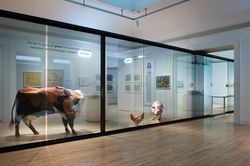
Health is a focus of contemporary political debate in a moment of historically high anxiety, but are architects, urban designers, and landscape architects seeking a new moral and political agenda within these concerns? Imperfect Health examines the complexity of today’s interrelated and emerging health problems juxtaposed with a variety of proposed architectural and urban(...)
Health is a focus of contemporary political debate in a moment of historically high anxiety, but are architects, urban designers, and landscape architects seeking a new moral and political agenda within these concerns? Imperfect Health examines the complexity of today’s interrelated and emerging health problems juxtaposed with a variety of proposed architectural and urban(...)
Location:
Main galleries Keyword(s):
imperfect health, giovanna borasi, mirko zardini, kersten geers, david van severen, office, kgdvs
Main galleries Keyword(s):
imperfect health, giovanna borasi, mirko zardini, kersten geers, david van severen, office, kgdvs
Date:
25 October 2011 to 15 April 2012
25 October 2011 to 15 April 2012
Title:
Imperfect Health: The Medicalization of Architecture
Actions:
Description:
Health is a focus of contemporary political debate in a moment of historically high anxiety, but are architects, urban designers, and landscape architects seeking a new moral and political agenda within these concerns? Imperfect Health examines the complexity of today’s interrelated and emerging health problems juxtaposed with a variety of proposed architectural and urban(...)
Imperfect Health: The Medicalization of Architecture
Actions:
Description:
Health is a focus of contemporary political debate in a moment of historically high anxiety, but are architects, urban designers, and landscape architects seeking a new moral and political agenda within these concerns? Imperfect Health examines the complexity of today’s interrelated and emerging health problems juxtaposed with a variety of proposed architectural and urban(...)
Form:
exhibitions
exhibitions
Date:
25 October 2011 to
15 April 2012
25 October 2011 to
15 April 2012
Location:
Main galleries Keyword(s):
imperfect health, giovanna borasi, mirko zardini, kersten geers, david van severen, office, kgdvs
Main galleries Keyword(s):
imperfect health, giovanna borasi, mirko zardini, kersten geers, david van severen, office, kgdvs
Level of archival description:
Series
Series
Actions:
Reference number:
CD041.S5
Description:
This series documents nine projects by the firm Vecsei Architects. In 1984, Eva Hollo Vecsei and André Vecsei opened a joint practice, Vecsei Architects. Both architects retired in 2005. Together they worked on several major planning studies, such as Les Hautières du Mont-Royal, Montréal, Québec (circa 1983-1988) and the Genome Centre and the Lorne M. Trottier Building, Montréal (1999-2000), documented in this series. Les Hautières du Mont-Royal was a residential complex adjacent to Montréal's Golden Square Mile, on Cedar Avenue. The project consisted of nine staggering buildings (29 villas) around a landscaped European-style courtyard on a sloping site facing Mount Royal while also preserving a turn of the century landmark situated within the Mount Royal Heritage Site . The project is also known as "Projet Cours Cedar". Through the Genome Centre, McGill University sought to fill a need for a modern and cross-disciplinary research space in genomics and proteomics. Vecsei Architects submitted a joint proposal with Dupuis, Le Tourneaux, architects, and NFOE et associés architectes. Ultimately, KPMB Architects and Fichten Soiferman et Associés, Architectes' proposal was chosen and built. The Lorne M. Trottier Building is a building for popular electrical engineering, computer science and telecommunications programs at McGill University. Vecsei Architects submitted a joint proposal for this project with Julian Jacobs Architectes and Architectes Lemay et associés. Jodoin Lamarre Pratte architectes and Marosi Troy's proposal was chosen and built. Also documented in this series are the following projects: Elementary school for College Marie de France, Montréal, Québec (circa 1984-1986); High-rise office tower, underground commercial centre tied to Montréal’s underground mall and subway network, Christ Church Cathedral, Montréal, Québec (circa 1987-1988); Seniors condominium, Manoir Montefiore, Côte-Saint-Luc, Québec (1988); Ark and artworks for the Beth Zion Synagogue, Côte-Saint-Luc, Québec (1989); Municipal library, Dollard-des-Ormeaux, Québec (circa 1990), Cultural Centre and extension of sport centre, Dollard-des-Ormeaux, Québec (circa 2001-2003); Renovation and new elevation for Schneider house, Montréal, Québec (2002). Collection material in this series was produced between 1983 and 2006. Documents include architectural records, such as presentation, conceptual, and design development drawings, and as well as photographs of facades and interior views. This series also includes digital material (mainly photographs), and a few project proposals and publications. The level of documentation varies greatly from project to project, from a single presentation drawing to complete project proposal.
CD041.S5
Description:
This series documents nine projects by the firm Vecsei Architects. In 1984, Eva Hollo Vecsei and André Vecsei opened a joint practice, Vecsei Architects. Both architects retired in 2005. Together they worked on several major planning studies, such as Les Hautières du Mont-Royal, Montréal, Québec (circa 1983-1988) and the Genome Centre and the Lorne M. Trottier Building, Montréal (1999-2000), documented in this series. Les Hautières du Mont-Royal was a residential complex adjacent to Montréal's Golden Square Mile, on Cedar Avenue. The project consisted of nine staggering buildings (29 villas) around a landscaped European-style courtyard on a sloping site facing Mount Royal while also preserving a turn of the century landmark situated within the Mount Royal Heritage Site . The project is also known as "Projet Cours Cedar". Through the Genome Centre, McGill University sought to fill a need for a modern and cross-disciplinary research space in genomics and proteomics. Vecsei Architects submitted a joint proposal with Dupuis, Le Tourneaux, architects, and NFOE et associés architectes. Ultimately, KPMB Architects and Fichten Soiferman et Associés, Architectes' proposal was chosen and built. The Lorne M. Trottier Building is a building for popular electrical engineering, computer science and telecommunications programs at McGill University. Vecsei Architects submitted a joint proposal for this project with Julian Jacobs Architectes and Architectes Lemay et associés. Jodoin Lamarre Pratte architectes and Marosi Troy's proposal was chosen and built. Also documented in this series are the following projects: Elementary school for College Marie de France, Montréal, Québec (circa 1984-1986); High-rise office tower, underground commercial centre tied to Montréal’s underground mall and subway network, Christ Church Cathedral, Montréal, Québec (circa 1987-1988); Seniors condominium, Manoir Montefiore, Côte-Saint-Luc, Québec (1988); Ark and artworks for the Beth Zion Synagogue, Côte-Saint-Luc, Québec (1989); Municipal library, Dollard-des-Ormeaux, Québec (circa 1990), Cultural Centre and extension of sport centre, Dollard-des-Ormeaux, Québec (circa 2001-2003); Renovation and new elevation for Schneider house, Montréal, Québec (2002). Collection material in this series was produced between 1983 and 2006. Documents include architectural records, such as presentation, conceptual, and design development drawings, and as well as photographs of facades and interior views. This series also includes digital material (mainly photographs), and a few project proposals and publications. The level of documentation varies greatly from project to project, from a single presentation drawing to complete project proposal.
People:
Date:
1983-2006
1983-2006
Title:
Vecsei Architects (1984-2005)
Actions:
CD041.S5
Description:
This series documents nine projects by the firm Vecsei Architects. In 1984, Eva Hollo Vecsei and André Vecsei opened a joint practice, Vecsei Architects. Both architects retired in 2005. Together they worked on several major planning studies, such as Les Hautières du Mont-Royal, Montréal, Québec (circa 1983-1988) and the Genome Centre and the Lorne M. Trottier Building, Montréal (1999-2000), documented in this series. Les Hautières du Mont-Royal was a residential complex adjacent to Montréal's Golden Square Mile, on Cedar Avenue. The project consisted of nine staggering buildings (29 villas) around a landscaped European-style courtyard on a sloping site facing Mount Royal while also preserving a turn of the century landmark situated within the Mount Royal Heritage Site . The project is also known as "Projet Cours Cedar". Through the Genome Centre, McGill University sought to fill a need for a modern and cross-disciplinary research space in genomics and proteomics. Vecsei Architects submitted a joint proposal with Dupuis, Le Tourneaux, architects, and NFOE et associés architectes. Ultimately, KPMB Architects and Fichten Soiferman et Associés, Architectes' proposal was chosen and built. The Lorne M. Trottier Building is a building for popular electrical engineering, computer science and telecommunications programs at McGill University. Vecsei Architects submitted a joint proposal for this project with Julian Jacobs Architectes and Architectes Lemay et associés. Jodoin Lamarre Pratte architectes and Marosi Troy's proposal was chosen and built. Also documented in this series are the following projects: Elementary school for College Marie de France, Montréal, Québec (circa 1984-1986); High-rise office tower, underground commercial centre tied to Montréal’s underground mall and subway network, Christ Church Cathedral, Montréal, Québec (circa 1987-1988); Seniors condominium, Manoir Montefiore, Côte-Saint-Luc, Québec (1988); Ark and artworks for the Beth Zion Synagogue, Côte-Saint-Luc, Québec (1989); Municipal library, Dollard-des-Ormeaux, Québec (circa 1990), Cultural Centre and extension of sport centre, Dollard-des-Ormeaux, Québec (circa 2001-2003); Renovation and new elevation for Schneider house, Montréal, Québec (2002). Collection material in this series was produced between 1983 and 2006. Documents include architectural records, such as presentation, conceptual, and design development drawings, and as well as photographs of facades and interior views. This series also includes digital material (mainly photographs), and a few project proposals and publications. The level of documentation varies greatly from project to project, from a single presentation drawing to complete project proposal.
Vecsei Architects (1984-2005)
Actions:
CD041.S5
Description:
This series documents nine projects by the firm Vecsei Architects. In 1984, Eva Hollo Vecsei and André Vecsei opened a joint practice, Vecsei Architects. Both architects retired in 2005. Together they worked on several major planning studies, such as Les Hautières du Mont-Royal, Montréal, Québec (circa 1983-1988) and the Genome Centre and the Lorne M. Trottier Building, Montréal (1999-2000), documented in this series. Les Hautières du Mont-Royal was a residential complex adjacent to Montréal's Golden Square Mile, on Cedar Avenue. The project consisted of nine staggering buildings (29 villas) around a landscaped European-style courtyard on a sloping site facing Mount Royal while also preserving a turn of the century landmark situated within the Mount Royal Heritage Site . The project is also known as "Projet Cours Cedar". Through the Genome Centre, McGill University sought to fill a need for a modern and cross-disciplinary research space in genomics and proteomics. Vecsei Architects submitted a joint proposal with Dupuis, Le Tourneaux, architects, and NFOE et associés architectes. Ultimately, KPMB Architects and Fichten Soiferman et Associés, Architectes' proposal was chosen and built. The Lorne M. Trottier Building is a building for popular electrical engineering, computer science and telecommunications programs at McGill University. Vecsei Architects submitted a joint proposal for this project with Julian Jacobs Architectes and Architectes Lemay et associés. Jodoin Lamarre Pratte architectes and Marosi Troy's proposal was chosen and built. Also documented in this series are the following projects: Elementary school for College Marie de France, Montréal, Québec (circa 1984-1986); High-rise office tower, underground commercial centre tied to Montréal’s underground mall and subway network, Christ Church Cathedral, Montréal, Québec (circa 1987-1988); Seniors condominium, Manoir Montefiore, Côte-Saint-Luc, Québec (1988); Ark and artworks for the Beth Zion Synagogue, Côte-Saint-Luc, Québec (1989); Municipal library, Dollard-des-Ormeaux, Québec (circa 1990), Cultural Centre and extension of sport centre, Dollard-des-Ormeaux, Québec (circa 2001-2003); Renovation and new elevation for Schneider house, Montréal, Québec (2002). Collection material in this series was produced between 1983 and 2006. Documents include architectural records, such as presentation, conceptual, and design development drawings, and as well as photographs of facades and interior views. This series also includes digital material (mainly photographs), and a few project proposals and publications. The level of documentation varies greatly from project to project, from a single presentation drawing to complete project proposal.
Level of archival description:
Series
Series
Date:
1983-2006
1983-2006
People:


