


7509 Results
Form:
events
events
Actions:
Description:
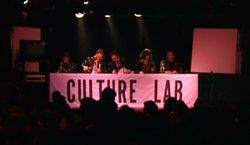
Brian Boigon ran Culture Lab at the back of a rock club in Toronto from 1991 to 1994. Participants from architecture, art, film, video, music, comedy, science and fashion were asked to push their discipline through their assigned thematic field out into the wilds of unknown propagation. Boigon’s talk addresses the temporal and social ramifications that led up and into the(...)
Brian Boigon ran Culture Lab at the back of a rock club in Toronto from 1991 to 1994. Participants from architecture, art, film, video, music, comedy, science and fashion were asked to push their discipline through their assigned thematic field out into the wilds of unknown propagation. Boigon’s talk addresses the temporal and social ramifications that led up and into the(...)
Location:
Paul-Desmarais Theatre
Paul-Desmarais Theatre
Date:
31 March 2016
31 March 2016
Title:
Fucking with Interoperability: Culture Lab 1991–94
Actions:
Description:
Brian Boigon ran Culture Lab at the back of a rock club in Toronto from 1991 to 1994. Participants from architecture, art, film, video, music, comedy, science and fashion were asked to push their discipline through their assigned thematic field out into the wilds of unknown propagation. Boigon’s talk addresses the temporal and social ramifications that led up and into the(...)
Fucking with Interoperability: Culture Lab 1991–94
Actions:
Description:
Brian Boigon ran Culture Lab at the back of a rock club in Toronto from 1991 to 1994. Participants from architecture, art, film, video, music, comedy, science and fashion were asked to push their discipline through their assigned thematic field out into the wilds of unknown propagation. Boigon’s talk addresses the temporal and social ramifications that led up and into the(...)
Form:
events
events
Date:
31 March 2016
31 March 2016
Location:
Paul-Desmarais Theatre
Paul-Desmarais Theatre
Form:
events
events
Actions:
Description:
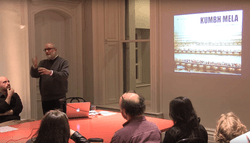
Ephemeral landscapes and pop-up settlements are continually increasing in scale and challenging the concept of the city as a stable and permanent entity. For this lecture Rahul Mehrotra, principal of architecture firm RMA Architects and Chair of Urban Planning and Design at the Harvard Graduate School of Design, presents his research on a pop-up settlement called the(...)
Ephemeral landscapes and pop-up settlements are continually increasing in scale and challenging the concept of the city as a stable and permanent entity. For this lecture Rahul Mehrotra, principal of architecture firm RMA Architects and Chair of Urban Planning and Design at the Harvard Graduate School of Design, presents his research on a pop-up settlement called the(...)
Location:
Shaughnessy House
Shaughnessy House
Date:
13 February 2013 to 12 February 2013
13 February 2013 to 12 February 2013
Title:
Rahul Mehrota: The Case of the Kumbh Mela in India
Actions:
Description:
Ephemeral landscapes and pop-up settlements are continually increasing in scale and challenging the concept of the city as a stable and permanent entity. For this lecture Rahul Mehrotra, principal of architecture firm RMA Architects and Chair of Urban Planning and Design at the Harvard Graduate School of Design, presents his research on a pop-up settlement called the(...)
Rahul Mehrota: The Case of the Kumbh Mela in India
Actions:
Description:
Ephemeral landscapes and pop-up settlements are continually increasing in scale and challenging the concept of the city as a stable and permanent entity. For this lecture Rahul Mehrotra, principal of architecture firm RMA Architects and Chair of Urban Planning and Design at the Harvard Graduate School of Design, presents his research on a pop-up settlement called the(...)
Form:
events
events
Date:
13 February 2013 to
12 February 2013
13 February 2013 to
12 February 2013
Location:
Shaughnessy House
Shaughnessy House
Form:
events
events
Actions:
Description:
Andreas Angelidakis describes his exhibition practice as a single continuous project that investigates the architecture of exhibiting. This talk will focus on the development of his practice across five exhibitions: the third Thessaloniki Biennial; The System of Objects at the DESTE Foundation in Athens; Every End Is a Beginning at the National Museum of Contemporary Art(...)
Andreas Angelidakis describes his exhibition practice as a single continuous project that investigates the architecture of exhibiting. This talk will focus on the development of his practice across five exhibitions: the third Thessaloniki Biennial; The System of Objects at the DESTE Foundation in Athens; Every End Is a Beginning at the National Museum of Contemporary Art(...)
Date:
15 October 2015 , 6pm
15 October 2015 , 6pm
Title:
Displaying Architecture: Andreas Angelidakis
Actions:
Description:
Andreas Angelidakis describes his exhibition practice as a single continuous project that investigates the architecture of exhibiting. This talk will focus on the development of his practice across five exhibitions: the third Thessaloniki Biennial; The System of Objects at the DESTE Foundation in Athens; Every End Is a Beginning at the National Museum of Contemporary Art(...)
Displaying Architecture: Andreas Angelidakis
Actions:
Description:
Andreas Angelidakis describes his exhibition practice as a single continuous project that investigates the architecture of exhibiting. This talk will focus on the development of his practice across five exhibitions: the third Thessaloniki Biennial; The System of Objects at the DESTE Foundation in Athens; Every End Is a Beginning at the National Museum of Contemporary Art(...)
Form:
events
events
Date:
15 October 2015
6pm
15 October 2015
6pm
Form:
events
events
Title:
Building Knowledge
Building Knowledge
Actions:
Description:
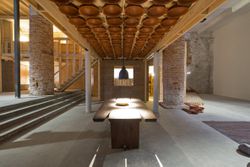
This lecture discusses a range of projects from Anupama Kundoo’s practice, research, and teaching. In these distinct but complementary areas of her work, she attempts to build collective knowledge in collaboration with engineers, masons, craftsmen, infrastructure providers, residents, material suppliers, and all other stakeholders involved in constructing and occupying(...)
This lecture discusses a range of projects from Anupama Kundoo’s practice, research, and teaching. In these distinct but complementary areas of her work, she attempts to build collective knowledge in collaboration with engineers, masons, craftsmen, infrastructure providers, residents, material suppliers, and all other stakeholders involved in constructing and occupying(...)
Location:
Paul-Desmarais Theatre
Paul-Desmarais Theatre
Date:
16 April 2015 , 6pm
16 April 2015 , 6pm
Title:
Building Knowledge
Actions:
Description:
This lecture discusses a range of projects from Anupama Kundoo’s practice, research, and teaching. In these distinct but complementary areas of her work, she attempts to build collective knowledge in collaboration with engineers, masons, craftsmen, infrastructure providers, residents, material suppliers, and all other stakeholders involved in constructing and occupying(...)
Building Knowledge
Actions:
Description:
This lecture discusses a range of projects from Anupama Kundoo’s practice, research, and teaching. In these distinct but complementary areas of her work, she attempts to build collective knowledge in collaboration with engineers, masons, craftsmen, infrastructure providers, residents, material suppliers, and all other stakeholders involved in constructing and occupying(...)
Form:
events
events
Date:
16 April 2015
6pm
16 April 2015
6pm
Location:
Paul-Desmarais Theatre
Paul-Desmarais Theatre
Level of archival description:
Series
Series
Actions:
Reference number:
AP170.S2
Description:
Series 2, Software and related documentation, 1990 – 2014, contains unique iterations of the ACDC, Aegis, and HypoSurface software, and contains roughly 45,000 digital files. The bulk of the files date from approximately 2000 – 2001. This series chiefly consists of the materials received from Xavier Robitaille. This includes a virtual machine and DOS emulator for Aegis HypoSurface, as well as ACDC and Aegis Simulator software for Microsoft DOS and Win32 for Hyposurface installations. There is also a small amount of email correspondence in MBOX format between Robitaille, Mark Goulthorpe, and other project members documenting their work on the project. Additionally, there are two computer backups in this series. One is for Goulthorpe’s computer. The files from the disk image were carved out and only unique files were kept. It includes his files for the Aegis HypoSurface project and reflects his working environment. The second backup is a disk image of Paul Steenhuisen’s Mac G5 computer. The Mac G5 computer is a clone of an earlier G4, and is included with the archive to allow demonstration of the interactive logic that was developed through CeBIT, the International Manufacturers Technology Show (IMTS), and the Biotechnology Industry Organization (BIO) conference at the Boston Convention Centre, including an interactive soundscape piece executed by artist Paul Steenhuisen. The G5 has a copy of FIELD, the user interface software developed for HypoSurface 2 and HypoSurface 3. The files from this computer were processed and made available in Series 3: Projects and events, and Series 4: Promotional materials. The disk image of the internal hard drive was retained in case future emulation is necessary. Because much of this series is software, roughly 42,000 files are or relate to executable programs. Formats for these materials are largely Java source code and Java object code, but also include HTML, plain text files, Aegis pattern files, and some unidentified formats. The remaining files in this series are chiefly vector and raster images referenced in the software. Notably, the Steenhuisen disk image is approximately 250 GB, and represents the largest part of this series. This series overlaps significantly with Series 3: Projects and events. This series contains software generally, while Series 3 contains any software related to a specific project or event.
AP170.S2
Description:
Series 2, Software and related documentation, 1990 – 2014, contains unique iterations of the ACDC, Aegis, and HypoSurface software, and contains roughly 45,000 digital files. The bulk of the files date from approximately 2000 – 2001. This series chiefly consists of the materials received from Xavier Robitaille. This includes a virtual machine and DOS emulator for Aegis HypoSurface, as well as ACDC and Aegis Simulator software for Microsoft DOS and Win32 for Hyposurface installations. There is also a small amount of email correspondence in MBOX format between Robitaille, Mark Goulthorpe, and other project members documenting their work on the project. Additionally, there are two computer backups in this series. One is for Goulthorpe’s computer. The files from the disk image were carved out and only unique files were kept. It includes his files for the Aegis HypoSurface project and reflects his working environment. The second backup is a disk image of Paul Steenhuisen’s Mac G5 computer. The Mac G5 computer is a clone of an earlier G4, and is included with the archive to allow demonstration of the interactive logic that was developed through CeBIT, the International Manufacturers Technology Show (IMTS), and the Biotechnology Industry Organization (BIO) conference at the Boston Convention Centre, including an interactive soundscape piece executed by artist Paul Steenhuisen. The G5 has a copy of FIELD, the user interface software developed for HypoSurface 2 and HypoSurface 3. The files from this computer were processed and made available in Series 3: Projects and events, and Series 4: Promotional materials. The disk image of the internal hard drive was retained in case future emulation is necessary. Because much of this series is software, roughly 42,000 files are or relate to executable programs. Formats for these materials are largely Java source code and Java object code, but also include HTML, plain text files, Aegis pattern files, and some unidentified formats. The remaining files in this series are chiefly vector and raster images referenced in the software. Notably, the Steenhuisen disk image is approximately 250 GB, and represents the largest part of this series. This series overlaps significantly with Series 3: Projects and events. This series contains software generally, while Series 3 contains any software related to a specific project or event.
People:
Date:
1990 - 2014
1990 - 2014
Title:
Software and related documentation
Actions:
AP170.S2
Description:
Series 2, Software and related documentation, 1990 – 2014, contains unique iterations of the ACDC, Aegis, and HypoSurface software, and contains roughly 45,000 digital files. The bulk of the files date from approximately 2000 – 2001. This series chiefly consists of the materials received from Xavier Robitaille. This includes a virtual machine and DOS emulator for Aegis HypoSurface, as well as ACDC and Aegis Simulator software for Microsoft DOS and Win32 for Hyposurface installations. There is also a small amount of email correspondence in MBOX format between Robitaille, Mark Goulthorpe, and other project members documenting their work on the project. Additionally, there are two computer backups in this series. One is for Goulthorpe’s computer. The files from the disk image were carved out and only unique files were kept. It includes his files for the Aegis HypoSurface project and reflects his working environment. The second backup is a disk image of Paul Steenhuisen’s Mac G5 computer. The Mac G5 computer is a clone of an earlier G4, and is included with the archive to allow demonstration of the interactive logic that was developed through CeBIT, the International Manufacturers Technology Show (IMTS), and the Biotechnology Industry Organization (BIO) conference at the Boston Convention Centre, including an interactive soundscape piece executed by artist Paul Steenhuisen. The G5 has a copy of FIELD, the user interface software developed for HypoSurface 2 and HypoSurface 3. The files from this computer were processed and made available in Series 3: Projects and events, and Series 4: Promotional materials. The disk image of the internal hard drive was retained in case future emulation is necessary. Because much of this series is software, roughly 42,000 files are or relate to executable programs. Formats for these materials are largely Java source code and Java object code, but also include HTML, plain text files, Aegis pattern files, and some unidentified formats. The remaining files in this series are chiefly vector and raster images referenced in the software. Notably, the Steenhuisen disk image is approximately 250 GB, and represents the largest part of this series. This series overlaps significantly with Series 3: Projects and events. This series contains software generally, while Series 3 contains any software related to a specific project or event.
Software and related documentation
Actions:
AP170.S2
Description:
Series 2, Software and related documentation, 1990 – 2014, contains unique iterations of the ACDC, Aegis, and HypoSurface software, and contains roughly 45,000 digital files. The bulk of the files date from approximately 2000 – 2001. This series chiefly consists of the materials received from Xavier Robitaille. This includes a virtual machine and DOS emulator for Aegis HypoSurface, as well as ACDC and Aegis Simulator software for Microsoft DOS and Win32 for Hyposurface installations. There is also a small amount of email correspondence in MBOX format between Robitaille, Mark Goulthorpe, and other project members documenting their work on the project. Additionally, there are two computer backups in this series. One is for Goulthorpe’s computer. The files from the disk image were carved out and only unique files were kept. It includes his files for the Aegis HypoSurface project and reflects his working environment. The second backup is a disk image of Paul Steenhuisen’s Mac G5 computer. The Mac G5 computer is a clone of an earlier G4, and is included with the archive to allow demonstration of the interactive logic that was developed through CeBIT, the International Manufacturers Technology Show (IMTS), and the Biotechnology Industry Organization (BIO) conference at the Boston Convention Centre, including an interactive soundscape piece executed by artist Paul Steenhuisen. The G5 has a copy of FIELD, the user interface software developed for HypoSurface 2 and HypoSurface 3. The files from this computer were processed and made available in Series 3: Projects and events, and Series 4: Promotional materials. The disk image of the internal hard drive was retained in case future emulation is necessary. Because much of this series is software, roughly 42,000 files are or relate to executable programs. Formats for these materials are largely Java source code and Java object code, but also include HTML, plain text files, Aegis pattern files, and some unidentified formats. The remaining files in this series are chiefly vector and raster images referenced in the software. Notably, the Steenhuisen disk image is approximately 250 GB, and represents the largest part of this series. This series overlaps significantly with Series 3: Projects and events. This series contains software generally, while Series 3 contains any software related to a specific project or event.
Level of archival description:
Series
Series
Date:
1990 - 2014
1990 - 2014
People:
Form:
events
events
Actions:
Description:
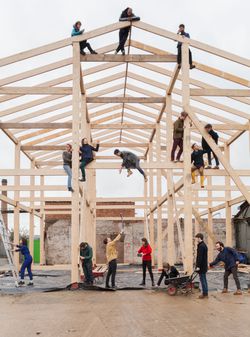
Lewis Jones and Jane Hall are founding members of Assemble, a multi-disciplinary collective of fifteen members based in London working across the fields of architecture, design and art. In this talk they will explain the background to Assemble and their working practices, which involve many collaborators and often occur outside of the traditional role of the architect.(...)
Lewis Jones and Jane Hall are founding members of Assemble, a multi-disciplinary collective of fifteen members based in London working across the fields of architecture, design and art. In this talk they will explain the background to Assemble and their working practices, which involve many collaborators and often occur outside of the traditional role of the architect.(...)
Location:
Paul-Desmarais Theatre
Paul-Desmarais Theatre
Date:
21 January 2016
21 January 2016
Title:
Assemble: Collective Practice
Actions:
Description:
Lewis Jones and Jane Hall are founding members of Assemble, a multi-disciplinary collective of fifteen members based in London working across the fields of architecture, design and art. In this talk they will explain the background to Assemble and their working practices, which involve many collaborators and often occur outside of the traditional role of the architect.(...)
Assemble: Collective Practice
Actions:
Description:
Lewis Jones and Jane Hall are founding members of Assemble, a multi-disciplinary collective of fifteen members based in London working across the fields of architecture, design and art. In this talk they will explain the background to Assemble and their working practices, which involve many collaborators and often occur outside of the traditional role of the architect.(...)
Form:
events
events
Date:
21 January 2016
21 January 2016
Location:
Paul-Desmarais Theatre
Paul-Desmarais Theatre
Form:
events
events
Actions:
Description:
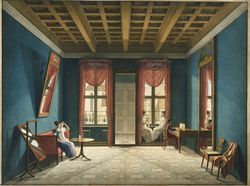
Seeing, perceiving, viewing, envisioning: each is a form of framing that mediates between inside and outside, public and private, what’s evident and what’s hidden. Georges Teyssot, Professor at Université Laval’s School of Architecture in Quebec City and author of A Topology of Everyday Constellations (The MIT Press, 2013), analyzes how the notions of window, door, frame,(...)
Seeing, perceiving, viewing, envisioning: each is a form of framing that mediates between inside and outside, public and private, what’s evident and what’s hidden. Georges Teyssot, Professor at Université Laval’s School of Architecture in Quebec City and author of A Topology of Everyday Constellations (The MIT Press, 2013), analyzes how the notions of window, door, frame,(...)
Location:
Shaughnessy House
Shaughnessy House
Date:
19 February 2015 , 6pm
19 February 2015 , 6pm
Title:
Windows and Screens: Georges Teyssot
Actions:
Description:
Seeing, perceiving, viewing, envisioning: each is a form of framing that mediates between inside and outside, public and private, what’s evident and what’s hidden. Georges Teyssot, Professor at Université Laval’s School of Architecture in Quebec City and author of A Topology of Everyday Constellations (The MIT Press, 2013), analyzes how the notions of window, door, frame,(...)
Windows and Screens: Georges Teyssot
Actions:
Description:
Seeing, perceiving, viewing, envisioning: each is a form of framing that mediates between inside and outside, public and private, what’s evident and what’s hidden. Georges Teyssot, Professor at Université Laval’s School of Architecture in Quebec City and author of A Topology of Everyday Constellations (The MIT Press, 2013), analyzes how the notions of window, door, frame,(...)
Form:
events
events
Date:
19 February 2015
6pm
19 February 2015
6pm
Location:
Shaughnessy House
Shaughnessy House
Form:
articles
articles
Actions:
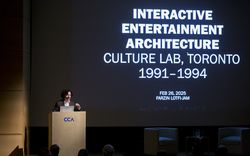
Farzin Lotfi-Jam discusses the legacy of Culture Lab with Brian Boigon
Published:
9 March 2026
9 March 2026
Title:
What is the architecture of interactive entertainment?
Farzin Lotfi-Jam discusses the legacy of Culture Lab with Brian Boigon
Actions:
What is the architecture of interactive entertainment?
Farzin Lotfi-Jam discusses the legacy of Culture Lab with Brian Boigon
Actions:
Actions:
Reference number:
DR2006:0092
Description:
negatives for many of Cedric Price's projects, views of drawings, office events and parties, travel, and negatives for material in Series 3, including Alfred Place and Staff (AP144.S3.D2), Lectures and Conferences (AP144.S3.D13), Personal/Miscellaneous (AP144.S3.D21), Staff Enquiries (AP144.S3.D22), and Jobs Pending (AP144.S3.D24)
DR2006:0092
Description:
negatives for many of Cedric Price's projects, views of drawings, office events and parties, travel, and negatives for material in Series 3, including Alfred Place and Staff (AP144.S3.D2), Lectures and Conferences (AP144.S3.D13), Personal/Miscellaneous (AP144.S3.D21), Staff Enquiries (AP144.S3.D22), and Jobs Pending (AP144.S3.D24)
People:
Title:
Negatives for many of Cedric Price's projects, views of drawings
Actions:
DR2006:0092
Description:
negatives for many of Cedric Price's projects, views of drawings, office events and parties, travel, and negatives for material in Series 3, including Alfred Place and Staff (AP144.S3.D2), Lectures and Conferences (AP144.S3.D13), Personal/Miscellaneous (AP144.S3.D21), Staff Enquiries (AP144.S3.D22), and Jobs Pending (AP144.S3.D24)
Negatives for many of Cedric Price's projects, views of drawings
Actions:
DR2006:0092
Description:
negatives for many of Cedric Price's projects, views of drawings, office events and parties, travel, and negatives for material in Series 3, including Alfred Place and Staff (AP144.S3.D2), Lectures and Conferences (AP144.S3.D13), Personal/Miscellaneous (AP144.S3.D21), Staff Enquiries (AP144.S3.D22), and Jobs Pending (AP144.S3.D24)
People:
Form:
events
events
Actions:
Description:
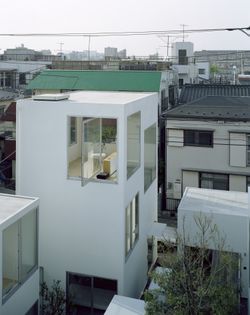
Japanese architect Ryue Nishizawa speaks about his work and the CCA exhibition Some Ideas on Living in London and Tokyo by Stephen Taylor and Ryue Nishizawa (2008). The exhibition marks the first North American presentation of residential projects by Stephen Taylor and Ryue Nishizawa and reveals their distinctive solutions to the challenges of building homes in existing(...)
Japanese architect Ryue Nishizawa speaks about his work and the CCA exhibition Some Ideas on Living in London and Tokyo by Stephen Taylor and Ryue Nishizawa (2008). The exhibition marks the first North American presentation of residential projects by Stephen Taylor and Ryue Nishizawa and reveals their distinctive solutions to the challenges of building homes in existing(...)
Location:
Paul Desmarais Theatre
Paul Desmarais Theatre
Date:
14 May 2008
14 May 2008
Title:
Ryue Nishizawa: Some Ideas on Living
Actions:
Description:
Japanese architect Ryue Nishizawa speaks about his work and the CCA exhibition Some Ideas on Living in London and Tokyo by Stephen Taylor and Ryue Nishizawa (2008). The exhibition marks the first North American presentation of residential projects by Stephen Taylor and Ryue Nishizawa and reveals their distinctive solutions to the challenges of building homes in existing(...)
Ryue Nishizawa: Some Ideas on Living
Actions:
Description:
Japanese architect Ryue Nishizawa speaks about his work and the CCA exhibition Some Ideas on Living in London and Tokyo by Stephen Taylor and Ryue Nishizawa (2008). The exhibition marks the first North American presentation of residential projects by Stephen Taylor and Ryue Nishizawa and reveals their distinctive solutions to the challenges of building homes in existing(...)
Form:
events
events
Date:
14 May 2008
14 May 2008
Location:
Paul Desmarais Theatre
Paul Desmarais Theatre


