


35831 Results
Form:
archives
Level of archival description:
Fonds
archives
Level of archival description:
Fonds
Title:
Marcel Parizeau fonds
Marcel Parizeau fonds
Actions:
Reference number:
AP104
Synopsis:
Le Fonds Marcel Parizeau contient des documents relatifs à la formation et à la vie de professionnel de Marcel Parizeau. Il contient aussi des œuvres d'art réalisées par ce dernier. Le fonds est composé de dessins d'architecture et de meubles, de carnets de croquis, de tableaux, de manuscrits, de correspondances, ainsi que quelques autres documents.
AP104
Synopsis:
Le Fonds Marcel Parizeau contient des documents relatifs à la formation et à la vie de professionnel de Marcel Parizeau. Il contient aussi des œuvres d'art réalisées par ce dernier. Le fonds est composé de dessins d'architecture et de meubles, de carnets de croquis, de tableaux, de manuscrits, de correspondances, ainsi que quelques autres documents.
People:
Date:
1917-1955
1917-1955
Title:
Marcel Parizeau fonds
Actions:
AP104
Synopsis:
Le Fonds Marcel Parizeau contient des documents relatifs à la formation et à la vie de professionnel de Marcel Parizeau. Il contient aussi des œuvres d'art réalisées par ce dernier. Le fonds est composé de dessins d'architecture et de meubles, de carnets de croquis, de tableaux, de manuscrits, de correspondances, ainsi que quelques autres documents.
Marcel Parizeau fonds
Actions:
AP104
Synopsis:
Le Fonds Marcel Parizeau contient des documents relatifs à la formation et à la vie de professionnel de Marcel Parizeau. Il contient aussi des œuvres d'art réalisées par ce dernier. Le fonds est composé de dessins d'architecture et de meubles, de carnets de croquis, de tableaux, de manuscrits, de correspondances, ainsi que quelques autres documents.
Form:
archives
Level of archival description:
Fonds
archives
Level of archival description:
Fonds
Date:
1917-1955
1917-1955
People:
Level of archival description:
Project
Project
Reference number:
AP056.S1.2000.PR08
Description:
This project series documents buildings for Concordia University's downtown campus in Montréal from 2000-2009. The office identified the project number as 0004. This project eventually became known as Le Quartier Concordia. This project was the winning submission of an architectural competition by Kuwabara Payne McKenna Blumberg Architects, in joint-venture with Fichten Soiferman et Associés Architectes, to design an integrated, vertical campus to revitalize and reinvent the University. This project consisted of three interconnected high-rise buildings on either side of Montreal's Guy Street, below De Maisonneuve Boulevard, to rehouse three important faculties: Visual Arts, Engineering and Computer Science, and the John Molson School of Business. These three buildings had glazed curtain wall exteriors with copper-coloured metal lines that created visual consistency inside and outside of all three buildings. Large art installations were also included on the façades. Triple-height atriums on the ground floors of the Engineering Building and the John Molson building added welcoming, public areas to the campus, and connected pedestrians to the Guy-Concordia metro station below. The tops of these two buildings featured massive north-south canopies that pointed from Montreal's Mont Royal down to the St. Lawrence River. The shorter Visual Arts building was directly connected to the Engineering building and today they are known together as the EV Building. The building interiors, comprised largely of stone tiles and concrete, featured large, multi-storey spiral staircases in a nod to the famous exterior spiral stairs of Montreal homes.[1] The Engineering and Visual Arts buildings were completed in 2005 and the John Molson building in 2009. Recladding of the exterior of another campus building to match these was completed in 2011.[2] It should be noted that these project materials were donated to the CCA part way through the project's realization. The project is recorded through drawings and textual records dating from 2000-2003. The drawings are mostly originals but reprographic copies and printouts of CAD drawings are also included. The drawings consist of sketches, digital renderings, plans, elevations, sections, perspectives, details and construction drawings. The textual records are arranged within the drawings and consist of research. [1]Contributions from Phyllis Lambert et al., The Architecture of Kuwabara, Payne, McKenna, Blumberg (Boston, MA: Birkhäuser-Publishers for Architecture, 2004), 180. [2]"Le Quartier Concordia." KPMB. Accessed July 11, 2019. http://www.kpmb.com/project/concordia-university-john-molson-school-of-business/
AP056.S1.2000.PR08
Description:
This project series documents buildings for Concordia University's downtown campus in Montréal from 2000-2009. The office identified the project number as 0004. This project eventually became known as Le Quartier Concordia. This project was the winning submission of an architectural competition by Kuwabara Payne McKenna Blumberg Architects, in joint-venture with Fichten Soiferman et Associés Architectes, to design an integrated, vertical campus to revitalize and reinvent the University. This project consisted of three interconnected high-rise buildings on either side of Montreal's Guy Street, below De Maisonneuve Boulevard, to rehouse three important faculties: Visual Arts, Engineering and Computer Science, and the John Molson School of Business. These three buildings had glazed curtain wall exteriors with copper-coloured metal lines that created visual consistency inside and outside of all three buildings. Large art installations were also included on the façades. Triple-height atriums on the ground floors of the Engineering Building and the John Molson building added welcoming, public areas to the campus, and connected pedestrians to the Guy-Concordia metro station below. The tops of these two buildings featured massive north-south canopies that pointed from Montreal's Mont Royal down to the St. Lawrence River. The shorter Visual Arts building was directly connected to the Engineering building and today they are known together as the EV Building. The building interiors, comprised largely of stone tiles and concrete, featured large, multi-storey spiral staircases in a nod to the famous exterior spiral stairs of Montreal homes.[1] The Engineering and Visual Arts buildings were completed in 2005 and the John Molson building in 2009. Recladding of the exterior of another campus building to match these was completed in 2011.[2] It should be noted that these project materials were donated to the CCA part way through the project's realization. The project is recorded through drawings and textual records dating from 2000-2003. The drawings are mostly originals but reprographic copies and printouts of CAD drawings are also included. The drawings consist of sketches, digital renderings, plans, elevations, sections, perspectives, details and construction drawings. The textual records are arranged within the drawings and consist of research. [1]Contributions from Phyllis Lambert et al., The Architecture of Kuwabara, Payne, McKenna, Blumberg (Boston, MA: Birkhäuser-Publishers for Architecture, 2004), 180. [2]"Le Quartier Concordia." KPMB. Accessed July 11, 2019. http://www.kpmb.com/project/concordia-university-john-molson-school-of-business/
People:
Date:
2000-2003
2000-2003
Title:
Concordia University, Montréal (2000-2009)
Actions:
AP056.S1.2000.PR08
Description:
This project series documents buildings for Concordia University's downtown campus in Montréal from 2000-2009. The office identified the project number as 0004. This project eventually became known as Le Quartier Concordia. This project was the winning submission of an architectural competition by Kuwabara Payne McKenna Blumberg Architects, in joint-venture with Fichten Soiferman et Associés Architectes, to design an integrated, vertical campus to revitalize and reinvent the University. This project consisted of three interconnected high-rise buildings on either side of Montreal's Guy Street, below De Maisonneuve Boulevard, to rehouse three important faculties: Visual Arts, Engineering and Computer Science, and the John Molson School of Business. These three buildings had glazed curtain wall exteriors with copper-coloured metal lines that created visual consistency inside and outside of all three buildings. Large art installations were also included on the façades. Triple-height atriums on the ground floors of the Engineering Building and the John Molson building added welcoming, public areas to the campus, and connected pedestrians to the Guy-Concordia metro station below. The tops of these two buildings featured massive north-south canopies that pointed from Montreal's Mont Royal down to the St. Lawrence River. The shorter Visual Arts building was directly connected to the Engineering building and today they are known together as the EV Building. The building interiors, comprised largely of stone tiles and concrete, featured large, multi-storey spiral staircases in a nod to the famous exterior spiral stairs of Montreal homes.[1] The Engineering and Visual Arts buildings were completed in 2005 and the John Molson building in 2009. Recladding of the exterior of another campus building to match these was completed in 2011.[2] It should be noted that these project materials were donated to the CCA part way through the project's realization. The project is recorded through drawings and textual records dating from 2000-2003. The drawings are mostly originals but reprographic copies and printouts of CAD drawings are also included. The drawings consist of sketches, digital renderings, plans, elevations, sections, perspectives, details and construction drawings. The textual records are arranged within the drawings and consist of research. [1]Contributions from Phyllis Lambert et al., The Architecture of Kuwabara, Payne, McKenna, Blumberg (Boston, MA: Birkhäuser-Publishers for Architecture, 2004), 180. [2]"Le Quartier Concordia." KPMB. Accessed July 11, 2019. http://www.kpmb.com/project/concordia-university-john-molson-school-of-business/
Concordia University, Montréal (2000-2009)
Actions:
AP056.S1.2000.PR08
Description:
This project series documents buildings for Concordia University's downtown campus in Montréal from 2000-2009. The office identified the project number as 0004. This project eventually became known as Le Quartier Concordia. This project was the winning submission of an architectural competition by Kuwabara Payne McKenna Blumberg Architects, in joint-venture with Fichten Soiferman et Associés Architectes, to design an integrated, vertical campus to revitalize and reinvent the University. This project consisted of three interconnected high-rise buildings on either side of Montreal's Guy Street, below De Maisonneuve Boulevard, to rehouse three important faculties: Visual Arts, Engineering and Computer Science, and the John Molson School of Business. These three buildings had glazed curtain wall exteriors with copper-coloured metal lines that created visual consistency inside and outside of all three buildings. Large art installations were also included on the façades. Triple-height atriums on the ground floors of the Engineering Building and the John Molson building added welcoming, public areas to the campus, and connected pedestrians to the Guy-Concordia metro station below. The tops of these two buildings featured massive north-south canopies that pointed from Montreal's Mont Royal down to the St. Lawrence River. The shorter Visual Arts building was directly connected to the Engineering building and today they are known together as the EV Building. The building interiors, comprised largely of stone tiles and concrete, featured large, multi-storey spiral staircases in a nod to the famous exterior spiral stairs of Montreal homes.[1] The Engineering and Visual Arts buildings were completed in 2005 and the John Molson building in 2009. Recladding of the exterior of another campus building to match these was completed in 2011.[2] It should be noted that these project materials were donated to the CCA part way through the project's realization. The project is recorded through drawings and textual records dating from 2000-2003. The drawings are mostly originals but reprographic copies and printouts of CAD drawings are also included. The drawings consist of sketches, digital renderings, plans, elevations, sections, perspectives, details and construction drawings. The textual records are arranged within the drawings and consist of research. [1]Contributions from Phyllis Lambert et al., The Architecture of Kuwabara, Payne, McKenna, Blumberg (Boston, MA: Birkhäuser-Publishers for Architecture, 2004), 180. [2]"Le Quartier Concordia." KPMB. Accessed July 11, 2019. http://www.kpmb.com/project/concordia-university-john-molson-school-of-business/
Level of archival description:
Project
Project
Date:
2000-2003
2000-2003
People:
Form:
textual records
textual records
Form:
textual records
textual records
Reference number:
ARCH253601
Description:
Publication
ARCH253601
Description:
Publication
People:
Date:
1968
1968
Form:
textual records
textual records
Date:
1968
1968
People:
Form:
exhibitions
exhibitions
Actions:
Description:
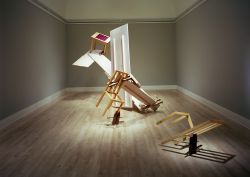
Parables and Other Allegories: The Work of Melvin Charney 1975–1990 comprises approximately 100 drawings, including many large-scale, sketches, photographs, and three large constructions. By assembling works from various public and private collections, including the CCA, the exhibition permits a comprehensive analysis of Charney’s artistic process to reveal the dialogue(...)
Parables and Other Allegories: The Work of Melvin Charney 1975–1990 comprises approximately 100 drawings, including many large-scale, sketches, photographs, and three large constructions. By assembling works from various public and private collections, including the CCA, the exhibition permits a comprehensive analysis of Charney’s artistic process to reveal the dialogue(...)
Location:
Main galleries
Main galleries
Date:
9 October 1991 to 12 January 1992
9 October 1991 to 12 January 1992
Title:
Parables and Other Allegories: The Work of Melvin Charney, 1975-1990
Actions:
Description:
Parables and Other Allegories: The Work of Melvin Charney 1975–1990 comprises approximately 100 drawings, including many large-scale, sketches, photographs, and three large constructions. By assembling works from various public and private collections, including the CCA, the exhibition permits a comprehensive analysis of Charney’s artistic process to reveal the dialogue(...)
Parables and Other Allegories: The Work of Melvin Charney, 1975-1990
Actions:
Description:
Parables and Other Allegories: The Work of Melvin Charney 1975–1990 comprises approximately 100 drawings, including many large-scale, sketches, photographs, and three large constructions. By assembling works from various public and private collections, including the CCA, the exhibition permits a comprehensive analysis of Charney’s artistic process to reveal the dialogue(...)
Form:
exhibitions
exhibitions
Date:
9 October 1991 to
12 January 1992
9 October 1991 to
12 January 1992
Location:
Main galleries
Main galleries
Form:
events
events

Actions:
Description:
Rebecca Solnit, 2008 CCA Mellon Senior Fellow, is an independent writer, historian, and activist with a particular interest in geography, landscape, slowness, insurrection, photography, indirect routes and subjects that escape category. She lives in San Francisco, has received various awards, including the Lannan, a Guggenheim, and the Western Writers of America Spur(...)
Rebecca Solnit, 2008 CCA Mellon Senior Fellow, is an independent writer, historian, and activist with a particular interest in geography, landscape, slowness, insurrection, photography, indirect routes and subjects that escape category. She lives in San Francisco, has received various awards, including the Lannan, a Guggenheim, and the Western Writers of America Spur(...)
Date:
9 October 2008
9 October 2008
Title:
Rebecca Solnit: The Ruins of Hope, Hope in the Ruins
Actions:
Description:
Rebecca Solnit, 2008 CCA Mellon Senior Fellow, is an independent writer, historian, and activist with a particular interest in geography, landscape, slowness, insurrection, photography, indirect routes and subjects that escape category. She lives in San Francisco, has received various awards, including the Lannan, a Guggenheim, and the Western Writers of America Spur(...)
Rebecca Solnit: The Ruins of Hope, Hope in the Ruins
Actions:
Description:
Rebecca Solnit, 2008 CCA Mellon Senior Fellow, is an independent writer, historian, and activist with a particular interest in geography, landscape, slowness, insurrection, photography, indirect routes and subjects that escape category. She lives in San Francisco, has received various awards, including the Lannan, a Guggenheim, and the Western Writers of America Spur(...)
Form:
events
events
Date:
9 October 2008
9 October 2008
Title:
Châtelaine
Châtelaine
Actions:
Reference number:
ARCH199122
Description:
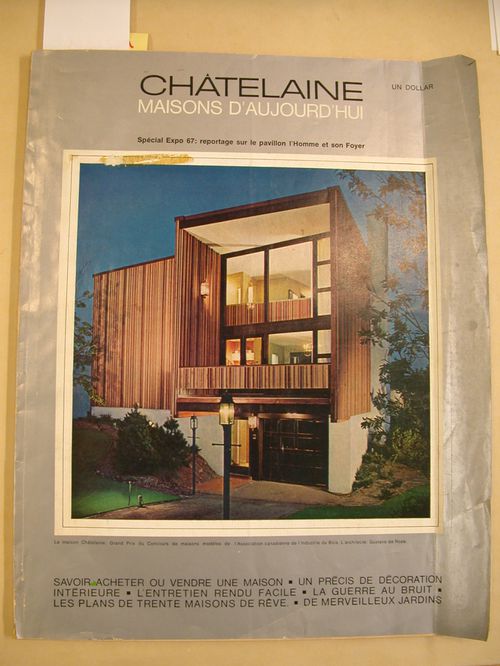
Publication: Châtelaine 1967
ARCH199122
Description:
Publication: Châtelaine 1967
People:
Level of archival description:
Project
Project
Reference number:
AP143.S4.D65
Description:
File documents the unexecuted project for the University Art Museum, Long Beach, California. Material in this file was produced between 1986 and 1988. California State University, Long Beach (CSULB), commissioned Eisenman/Robertson Architects to design an art museum adjacent to the main campus entrance. The 67,500-square-foot building was to comprise four galleries, a black-box theater, an auditorium, a cafe, conference rooms, a library, offices, preparation spaces, and storage vaults. The project, sited on a 23-acre arboretum, included landscaping; terraced sculpture courtyards, botanical gardens, and a two-acre pond. Eisenman linked the northern and southern parts of the arboretum by an elevated public walkway through the museum. Sets of drawings were presented on 8 and 30 April, 2 June, and 5 Aug. In the first design phase Eisenman explores the cartographic figures which form the basis of his artificial excavation when superposed: a series of sketches establishes the analogical relationships which fix the relative scales of the plans and produce the superpositions; another series contextualizes the superposed figures by placing them within the museum site (DR1987:0859:087-090). The second phase concerns the building; the working model shows the building carved out of a square pit, from which spring an oil derrick and a reconstruction of a recreational pier (Rainbow Pier, 1920s) used here as circulatory bridge (DR1987:0859:160). In the third phase the architect systematizes his archeological procedure by using five significant cartographic dates - 1849, 1889, 1949, 1989, 2049 - each corresponding to a specific superposition (see DR1987:0859:274-277). In the fourth phase, Eisenman simplifies the superposition of 2049 to a few iconic colour-coded forms: ranch (green), ranch house (blue), campus site (red), and water forms (river and pond) (gold). Material for the fourth phase includes three relief models, four presentation drawings, and a model (property of the CSULB) (relief models: DR1987:0859:001-003; drawings: DR1987:0859:004-008). Eisenman "inhabits" his artifical archeology by detailed planning of interior spaces, and gives substance to the cartographic traces in a series of sketch sections, perspectives, and working models. Working models reveal how the central "canal" area gradually became the museum's access point (DR1987:0859:484-490); the museum, galleries, offices, and preparation areas are on one side of this deep cut, while the cafeteria and black-box theater are on the other. The upper level was to house offices, meeting rooms, and the library. File contains audiovisual material, conceptual drawings, design development drawings, presentation drawings, reference drawings, working drawings, photographic materials, and textual records.
AP143.S4.D65
Description:
File documents the unexecuted project for the University Art Museum, Long Beach, California. Material in this file was produced between 1986 and 1988. California State University, Long Beach (CSULB), commissioned Eisenman/Robertson Architects to design an art museum adjacent to the main campus entrance. The 67,500-square-foot building was to comprise four galleries, a black-box theater, an auditorium, a cafe, conference rooms, a library, offices, preparation spaces, and storage vaults. The project, sited on a 23-acre arboretum, included landscaping; terraced sculpture courtyards, botanical gardens, and a two-acre pond. Eisenman linked the northern and southern parts of the arboretum by an elevated public walkway through the museum. Sets of drawings were presented on 8 and 30 April, 2 June, and 5 Aug. In the first design phase Eisenman explores the cartographic figures which form the basis of his artificial excavation when superposed: a series of sketches establishes the analogical relationships which fix the relative scales of the plans and produce the superpositions; another series contextualizes the superposed figures by placing them within the museum site (DR1987:0859:087-090). The second phase concerns the building; the working model shows the building carved out of a square pit, from which spring an oil derrick and a reconstruction of a recreational pier (Rainbow Pier, 1920s) used here as circulatory bridge (DR1987:0859:160). In the third phase the architect systematizes his archeological procedure by using five significant cartographic dates - 1849, 1889, 1949, 1989, 2049 - each corresponding to a specific superposition (see DR1987:0859:274-277). In the fourth phase, Eisenman simplifies the superposition of 2049 to a few iconic colour-coded forms: ranch (green), ranch house (blue), campus site (red), and water forms (river and pond) (gold). Material for the fourth phase includes three relief models, four presentation drawings, and a model (property of the CSULB) (relief models: DR1987:0859:001-003; drawings: DR1987:0859:004-008). Eisenman "inhabits" his artifical archeology by detailed planning of interior spaces, and gives substance to the cartographic traces in a series of sketch sections, perspectives, and working models. Working models reveal how the central "canal" area gradually became the museum's access point (DR1987:0859:484-490); the museum, galleries, offices, and preparation areas are on one side of this deep cut, while the cafeteria and black-box theater are on the other. The upper level was to house offices, meeting rooms, and the library. File contains audiovisual material, conceptual drawings, design development drawings, presentation drawings, reference drawings, working drawings, photographic materials, and textual records.
People:
Date:
1986-1988
1986-1988
Title:
University Art Museum
Actions:
AP143.S4.D65
Description:
File documents the unexecuted project for the University Art Museum, Long Beach, California. Material in this file was produced between 1986 and 1988. California State University, Long Beach (CSULB), commissioned Eisenman/Robertson Architects to design an art museum adjacent to the main campus entrance. The 67,500-square-foot building was to comprise four galleries, a black-box theater, an auditorium, a cafe, conference rooms, a library, offices, preparation spaces, and storage vaults. The project, sited on a 23-acre arboretum, included landscaping; terraced sculpture courtyards, botanical gardens, and a two-acre pond. Eisenman linked the northern and southern parts of the arboretum by an elevated public walkway through the museum. Sets of drawings were presented on 8 and 30 April, 2 June, and 5 Aug. In the first design phase Eisenman explores the cartographic figures which form the basis of his artificial excavation when superposed: a series of sketches establishes the analogical relationships which fix the relative scales of the plans and produce the superpositions; another series contextualizes the superposed figures by placing them within the museum site (DR1987:0859:087-090). The second phase concerns the building; the working model shows the building carved out of a square pit, from which spring an oil derrick and a reconstruction of a recreational pier (Rainbow Pier, 1920s) used here as circulatory bridge (DR1987:0859:160). In the third phase the architect systematizes his archeological procedure by using five significant cartographic dates - 1849, 1889, 1949, 1989, 2049 - each corresponding to a specific superposition (see DR1987:0859:274-277). In the fourth phase, Eisenman simplifies the superposition of 2049 to a few iconic colour-coded forms: ranch (green), ranch house (blue), campus site (red), and water forms (river and pond) (gold). Material for the fourth phase includes three relief models, four presentation drawings, and a model (property of the CSULB) (relief models: DR1987:0859:001-003; drawings: DR1987:0859:004-008). Eisenman "inhabits" his artifical archeology by detailed planning of interior spaces, and gives substance to the cartographic traces in a series of sketch sections, perspectives, and working models. Working models reveal how the central "canal" area gradually became the museum's access point (DR1987:0859:484-490); the museum, galleries, offices, and preparation areas are on one side of this deep cut, while the cafeteria and black-box theater are on the other. The upper level was to house offices, meeting rooms, and the library. File contains audiovisual material, conceptual drawings, design development drawings, presentation drawings, reference drawings, working drawings, photographic materials, and textual records.
University Art Museum
Actions:
AP143.S4.D65
Description:
File documents the unexecuted project for the University Art Museum, Long Beach, California. Material in this file was produced between 1986 and 1988. California State University, Long Beach (CSULB), commissioned Eisenman/Robertson Architects to design an art museum adjacent to the main campus entrance. The 67,500-square-foot building was to comprise four galleries, a black-box theater, an auditorium, a cafe, conference rooms, a library, offices, preparation spaces, and storage vaults. The project, sited on a 23-acre arboretum, included landscaping; terraced sculpture courtyards, botanical gardens, and a two-acre pond. Eisenman linked the northern and southern parts of the arboretum by an elevated public walkway through the museum. Sets of drawings were presented on 8 and 30 April, 2 June, and 5 Aug. In the first design phase Eisenman explores the cartographic figures which form the basis of his artificial excavation when superposed: a series of sketches establishes the analogical relationships which fix the relative scales of the plans and produce the superpositions; another series contextualizes the superposed figures by placing them within the museum site (DR1987:0859:087-090). The second phase concerns the building; the working model shows the building carved out of a square pit, from which spring an oil derrick and a reconstruction of a recreational pier (Rainbow Pier, 1920s) used here as circulatory bridge (DR1987:0859:160). In the third phase the architect systematizes his archeological procedure by using five significant cartographic dates - 1849, 1889, 1949, 1989, 2049 - each corresponding to a specific superposition (see DR1987:0859:274-277). In the fourth phase, Eisenman simplifies the superposition of 2049 to a few iconic colour-coded forms: ranch (green), ranch house (blue), campus site (red), and water forms (river and pond) (gold). Material for the fourth phase includes three relief models, four presentation drawings, and a model (property of the CSULB) (relief models: DR1987:0859:001-003; drawings: DR1987:0859:004-008). Eisenman "inhabits" his artifical archeology by detailed planning of interior spaces, and gives substance to the cartographic traces in a series of sketch sections, perspectives, and working models. Working models reveal how the central "canal" area gradually became the museum's access point (DR1987:0859:484-490); the museum, galleries, offices, and preparation areas are on one side of this deep cut, while the cafeteria and black-box theater are on the other. The upper level was to house offices, meeting rooms, and the library. File contains audiovisual material, conceptual drawings, design development drawings, presentation drawings, reference drawings, working drawings, photographic materials, and textual records.
Level of archival description:
File 65
File 65
Date:
1986-1988
1986-1988
People:
Form:
archives
Level of archival description:
Fonds
archives
Level of archival description:
Fonds
Title:
Aldo Rossi fonds
Aldo Rossi fonds
Reference number:
AP142
Synopsis:
The Aldo Rossi fonds documents the professional practice of architect Aldo Rossi and that of his firm, Studio di Architettura (SDA). Drawings of nearly every project by Rossi and SDA are present, with significant Italian, German and Japanese projects particularly well represented. The fonds also includes material relating to exhibitions and some material on publications that feature the work of Rossi and his firm. Material in this fonds was produced between 1953 and 1997.
AP142
Synopsis:
The Aldo Rossi fonds documents the professional practice of architect Aldo Rossi and that of his firm, Studio di Architettura (SDA). Drawings of nearly every project by Rossi and SDA are present, with significant Italian, German and Japanese projects particularly well represented. The fonds also includes material relating to exhibitions and some material on publications that feature the work of Rossi and his firm. Material in this fonds was produced between 1953 and 1997.
People:
Date:
1953-1997, predominant 1962-1997
1953-1997, predominant 1962-1997
Title:
Aldo Rossi fonds
Actions:
AP142
Synopsis:
The Aldo Rossi fonds documents the professional practice of architect Aldo Rossi and that of his firm, Studio di Architettura (SDA). Drawings of nearly every project by Rossi and SDA are present, with significant Italian, German and Japanese projects particularly well represented. The fonds also includes material relating to exhibitions and some material on publications that feature the work of Rossi and his firm. Material in this fonds was produced between 1953 and 1997.
Aldo Rossi fonds
Actions:
AP142
Synopsis:
The Aldo Rossi fonds documents the professional practice of architect Aldo Rossi and that of his firm, Studio di Architettura (SDA). Drawings of nearly every project by Rossi and SDA are present, with significant Italian, German and Japanese projects particularly well represented. The fonds also includes material relating to exhibitions and some material on publications that feature the work of Rossi and his firm. Material in this fonds was produced between 1953 and 1997.
Form:
archives
Level of archival description:
Fonds
archives
Level of archival description:
Fonds
Date:
1953-1997, predominant 1962-1997
1953-1997, predominant 1962-1997
People:
Form:
books
books
Reference number:
ARCH221053
Description:
I.I.T. publication
ARCH221053
Description:
I.I.T. publication
People:
Date:
1978
1978
Title:
The heritage of Illinois Institute of Technology
Actions:
ARCH221053
Description:
I.I.T. publication
The heritage of Illinois Institute of Technology
Actions:
ARCH221053
Description:
I.I.T. publication
Form:
books
books
Date:
1978
1978
People:


