


7509 Results
Form:
events
events

Title:
Learning from... Calgary
Learning from... Calgary
Actions:
Description:
Andrew Nikiforuk presents a talk entitled The political architecture of extreme oil, on the rapid development of bitumen in northern Alberta and its effects on the character of the region, and the country. Although the problems of oil exporting countries are well studied, Canada has yet to consider them or prepare for future oil price shocks. A journalist, Andrew(...)
Andrew Nikiforuk presents a talk entitled The political architecture of extreme oil, on the rapid development of bitumen in northern Alberta and its effects on the character of the region, and the country. Although the problems of oil exporting countries are well studied, Canada has yet to consider them or prepare for future oil price shocks. A journalist, Andrew(...)
Location:
Théâtre Paul-Desmarais
Théâtre Paul-Desmarais
Date:
17 March 2011 , 7pm
17 March 2011 , 7pm
Title:
Learning from... Calgary
Actions:
Description:
Andrew Nikiforuk presents a talk entitled The political architecture of extreme oil, on the rapid development of bitumen in northern Alberta and its effects on the character of the region, and the country. Although the problems of oil exporting countries are well studied, Canada has yet to consider them or prepare for future oil price shocks. A journalist, Andrew(...)
Learning from... Calgary
Actions:
Description:
Andrew Nikiforuk presents a talk entitled The political architecture of extreme oil, on the rapid development of bitumen in northern Alberta and its effects on the character of the region, and the country. Although the problems of oil exporting countries are well studied, Canada has yet to consider them or prepare for future oil price shocks. A journalist, Andrew(...)
Form:
events
events
Date:
17 March 2011
7pm
17 March 2011
7pm
Location:
Théâtre Paul-Desmarais
Théâtre Paul-Desmarais
Form:
drawings
drawings
Actions:
Reference number:
DR2007:0018:002
Description:
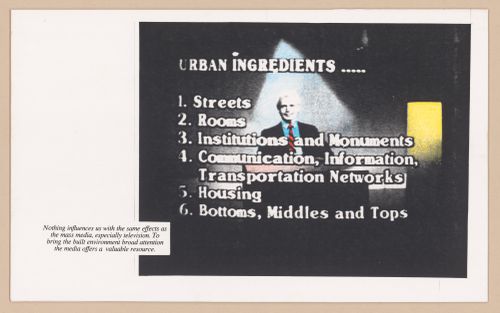
Page bound essay, "The Positive and Negative Influences of Electronic Systems on Architecture", 8 1/2" x 14", April 1983; summary presented at international conference in Warsaw, Poland, spring 1983; essay published as "Enjoying Electronic Mannerisms" in the journal CRIT, Fall 1984, pp. 14-18, as part of a special issue on "The Next Architecture" by Aaron Betsky; essay also published as "Sony Walkman-Adorned Teleriders Moving Through Cable Networks of Computerized Cottage Land, Under the Skies of Overcrowded Orbital Slots: Enjoying Electronic Mannerisms", The Fifth Column, Vo. 5, winter 1984 (Montreal); and parts of this project were discussed by Christopher Hume in The Toronto Star, January 19, 1985. Also, five original collage and colour pencil drawings on illustration board, each 8 1/2" x 14" that were the source of illustrations for the bound essay and the subsequent publications.
DR2007:0018:002
Description:
Page bound essay, "The Positive and Negative Influences of Electronic Systems on Architecture", 8 1/2" x 14", April 1983; summary presented at international conference in Warsaw, Poland, spring 1983; essay published as "Enjoying Electronic Mannerisms" in the journal CRIT, Fall 1984, pp. 14-18, as part of a special issue on "The Next Architecture" by Aaron Betsky; essay also published as "Sony Walkman-Adorned Teleriders Moving Through Cable Networks of Computerized Cottage Land, Under the Skies of Overcrowded Orbital Slots: Enjoying Electronic Mannerisms", The Fifth Column, Vo. 5, winter 1984 (Montreal); and parts of this project were discussed by Christopher Hume in The Toronto Star, January 19, 1985. Also, five original collage and colour pencil drawings on illustration board, each 8 1/2" x 14" that were the source of illustrations for the bound essay and the subsequent publications.
People:
Date:
1983
1983
Title:
Untitled work for the essay "The Positive and Negative Influences of Electronic Systems on Architecture"
Actions:
DR2007:0018:002
Description:
Page bound essay, "The Positive and Negative Influences of Electronic Systems on Architecture", 8 1/2" x 14", April 1983; summary presented at international conference in Warsaw, Poland, spring 1983; essay published as "Enjoying Electronic Mannerisms" in the journal CRIT, Fall 1984, pp. 14-18, as part of a special issue on "The Next Architecture" by Aaron Betsky; essay also published as "Sony Walkman-Adorned Teleriders Moving Through Cable Networks of Computerized Cottage Land, Under the Skies of Overcrowded Orbital Slots: Enjoying Electronic Mannerisms", The Fifth Column, Vo. 5, winter 1984 (Montreal); and parts of this project were discussed by Christopher Hume in The Toronto Star, January 19, 1985. Also, five original collage and colour pencil drawings on illustration board, each 8 1/2" x 14" that were the source of illustrations for the bound essay and the subsequent publications.
Untitled work for the essay "The Positive and Negative Influences of Electronic Systems on Architecture"
Actions:
DR2007:0018:002
Description:
Page bound essay, "The Positive and Negative Influences of Electronic Systems on Architecture", 8 1/2" x 14", April 1983; summary presented at international conference in Warsaw, Poland, spring 1983; essay published as "Enjoying Electronic Mannerisms" in the journal CRIT, Fall 1984, pp. 14-18, as part of a special issue on "The Next Architecture" by Aaron Betsky; essay also published as "Sony Walkman-Adorned Teleriders Moving Through Cable Networks of Computerized Cottage Land, Under the Skies of Overcrowded Orbital Slots: Enjoying Electronic Mannerisms", The Fifth Column, Vo. 5, winter 1984 (Montreal); and parts of this project were discussed by Christopher Hume in The Toronto Star, January 19, 1985. Also, five original collage and colour pencil drawings on illustration board, each 8 1/2" x 14" that were the source of illustrations for the bound essay and the subsequent publications.
Form:
drawings
drawings
Date:
1983
1983
People:
Form:
drawings
drawings
Actions:
Reference number:
DR2007:0018:003
Description:
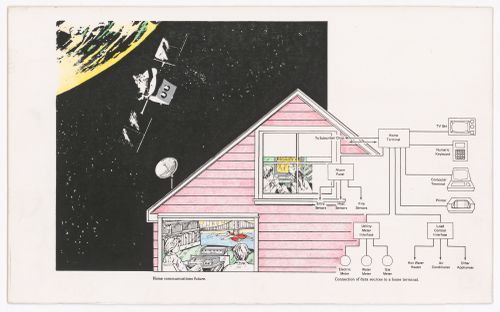
Page bound essay, "The Positive and Negative Influences of Electronic Systems on Architecture", 8 1/2" x 14", April 1983; summary presented at international conference in Warsaw, Poland, spring 1983; essay published as "Enjoying Electronic Mannerisms" in the journal CRIT, Fall 1984, pp. 14-18, as part of a special issue on "The Next Architecture" by Aaron Betsky; essay also published as "Sony Walkman-Adorned Teleriders Moving Through Cable Networks of Computerized Cottage Land, Under the Skies of Overcrowded Orbital Slots: Enjoying Electronic Mannerisms", The Fifth Column, Vo. 5, winter 1984 (Montreal); and parts of this project were discussed by Christopher Hume in The Toronto Star, January 19, 1985. Also, five original collage and colour pencil drawings on illustration board, each 8 1/2" x 14" that were the source of illustrations for the bound essay and the subsequent publications.
DR2007:0018:003
Description:
Page bound essay, "The Positive and Negative Influences of Electronic Systems on Architecture", 8 1/2" x 14", April 1983; summary presented at international conference in Warsaw, Poland, spring 1983; essay published as "Enjoying Electronic Mannerisms" in the journal CRIT, Fall 1984, pp. 14-18, as part of a special issue on "The Next Architecture" by Aaron Betsky; essay also published as "Sony Walkman-Adorned Teleriders Moving Through Cable Networks of Computerized Cottage Land, Under the Skies of Overcrowded Orbital Slots: Enjoying Electronic Mannerisms", The Fifth Column, Vo. 5, winter 1984 (Montreal); and parts of this project were discussed by Christopher Hume in The Toronto Star, January 19, 1985. Also, five original collage and colour pencil drawings on illustration board, each 8 1/2" x 14" that were the source of illustrations for the bound essay and the subsequent publications.
People:
Date:
1983
1983
Title:
Untitled work for the essay "The Positive and Negative Influences of Electronic Systems on Architecture"
Actions:
DR2007:0018:003
Description:
Page bound essay, "The Positive and Negative Influences of Electronic Systems on Architecture", 8 1/2" x 14", April 1983; summary presented at international conference in Warsaw, Poland, spring 1983; essay published as "Enjoying Electronic Mannerisms" in the journal CRIT, Fall 1984, pp. 14-18, as part of a special issue on "The Next Architecture" by Aaron Betsky; essay also published as "Sony Walkman-Adorned Teleriders Moving Through Cable Networks of Computerized Cottage Land, Under the Skies of Overcrowded Orbital Slots: Enjoying Electronic Mannerisms", The Fifth Column, Vo. 5, winter 1984 (Montreal); and parts of this project were discussed by Christopher Hume in The Toronto Star, January 19, 1985. Also, five original collage and colour pencil drawings on illustration board, each 8 1/2" x 14" that were the source of illustrations for the bound essay and the subsequent publications.
Untitled work for the essay "The Positive and Negative Influences of Electronic Systems on Architecture"
Actions:
DR2007:0018:003
Description:
Page bound essay, "The Positive and Negative Influences of Electronic Systems on Architecture", 8 1/2" x 14", April 1983; summary presented at international conference in Warsaw, Poland, spring 1983; essay published as "Enjoying Electronic Mannerisms" in the journal CRIT, Fall 1984, pp. 14-18, as part of a special issue on "The Next Architecture" by Aaron Betsky; essay also published as "Sony Walkman-Adorned Teleriders Moving Through Cable Networks of Computerized Cottage Land, Under the Skies of Overcrowded Orbital Slots: Enjoying Electronic Mannerisms", The Fifth Column, Vo. 5, winter 1984 (Montreal); and parts of this project were discussed by Christopher Hume in The Toronto Star, January 19, 1985. Also, five original collage and colour pencil drawings on illustration board, each 8 1/2" x 14" that were the source of illustrations for the bound essay and the subsequent publications.
Form:
drawings
drawings
Date:
1983
1983
People:
Form:
textual records
textual records
Actions:
Reference number:
DR2007:0018
Description:
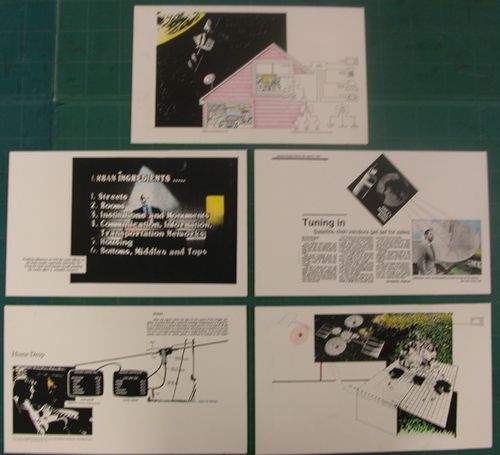
35-page bound essay, "The Positive and Negative Influences of Electronic Systems on Architecture", 8 1/2" x 14", April 1983; summary presented at international conference in Warsaw, Poland, spring 1983; essay published as "Enjoying Electronic Mannerisms" in the journal CRIT, Fall 1984, pp. 14-18, as part of a special issue on "The Next Architecture" by Aaron Betsky; essay also published as "Sony Walkman-Adorned Teleriders Moving Through Cable Networks of Computerized Cottage Land, Under the Skies of Overcrowded Orbital Slots: Enjoying Electronic Mannerisms", The Fifth Column, Vo. 5, winter 1984 (Montreal); and parts of this project were discussed by Christopher Hume in The Toronto Star, January 19, 1985. Also, five original collage and colour pencil drawings on illustration board, each 8 1/2" x 14" that were the source of illustrations for the bound essay and the subsequent publications.
DR2007:0018
Description:
35-page bound essay, "The Positive and Negative Influences of Electronic Systems on Architecture", 8 1/2" x 14", April 1983; summary presented at international conference in Warsaw, Poland, spring 1983; essay published as "Enjoying Electronic Mannerisms" in the journal CRIT, Fall 1984, pp. 14-18, as part of a special issue on "The Next Architecture" by Aaron Betsky; essay also published as "Sony Walkman-Adorned Teleriders Moving Through Cable Networks of Computerized Cottage Land, Under the Skies of Overcrowded Orbital Slots: Enjoying Electronic Mannerisms", The Fifth Column, Vo. 5, winter 1984 (Montreal); and parts of this project were discussed by Christopher Hume in The Toronto Star, January 19, 1985. Also, five original collage and colour pencil drawings on illustration board, each 8 1/2" x 14" that were the source of illustrations for the bound essay and the subsequent publications.
People:
Date:
1983
1983
Title:
The Positive and Negative Influences of Electronic Systems on Architecture, 1983
Actions:
DR2007:0018
Description:
35-page bound essay, "The Positive and Negative Influences of Electronic Systems on Architecture", 8 1/2" x 14", April 1983; summary presented at international conference in Warsaw, Poland, spring 1983; essay published as "Enjoying Electronic Mannerisms" in the journal CRIT, Fall 1984, pp. 14-18, as part of a special issue on "The Next Architecture" by Aaron Betsky; essay also published as "Sony Walkman-Adorned Teleriders Moving Through Cable Networks of Computerized Cottage Land, Under the Skies of Overcrowded Orbital Slots: Enjoying Electronic Mannerisms", The Fifth Column, Vo. 5, winter 1984 (Montreal); and parts of this project were discussed by Christopher Hume in The Toronto Star, January 19, 1985. Also, five original collage and colour pencil drawings on illustration board, each 8 1/2" x 14" that were the source of illustrations for the bound essay and the subsequent publications.
The Positive and Negative Influences of Electronic Systems on Architecture, 1983
Actions:
DR2007:0018
Description:
35-page bound essay, "The Positive and Negative Influences of Electronic Systems on Architecture", 8 1/2" x 14", April 1983; summary presented at international conference in Warsaw, Poland, spring 1983; essay published as "Enjoying Electronic Mannerisms" in the journal CRIT, Fall 1984, pp. 14-18, as part of a special issue on "The Next Architecture" by Aaron Betsky; essay also published as "Sony Walkman-Adorned Teleriders Moving Through Cable Networks of Computerized Cottage Land, Under the Skies of Overcrowded Orbital Slots: Enjoying Electronic Mannerisms", The Fifth Column, Vo. 5, winter 1984 (Montreal); and parts of this project were discussed by Christopher Hume in The Toronto Star, January 19, 1985. Also, five original collage and colour pencil drawings on illustration board, each 8 1/2" x 14" that were the source of illustrations for the bound essay and the subsequent publications.
Form:
textual records
textual records
Date:
1983
1983
People:
Form:
events
events
Description:
In this lecture, Amy Kulper locates architecture’s “digital turn” in 1988, when Thomas Knoll invented Photoshop. Originally developed as an image-editing software, Photoshop fit neatly within the long history of optical correction in the discipline. Yet its ubiquity today also prompts new questions. Does Photoshop simply introduce logics of adjustment, correction, and(...)
In this lecture, Amy Kulper locates architecture’s “digital turn” in 1988, when Thomas Knoll invented Photoshop. Originally developed as an image-editing software, Photoshop fit neatly within the long history of optical correction in the discipline. Yet its ubiquity today also prompts new questions. Does Photoshop simply introduce logics of adjustment, correction, and(...)
Location:
Paul Desmarais Theatre
Paul Desmarais Theatre
Date:
9 June 2016, 6pm
9 June 2016, 6pm
Title:
Amy Kulper: Architecture’s Digital Turn and the Advent of Photoshop
Actions:
Description:
In this lecture, Amy Kulper locates architecture’s “digital turn” in 1988, when Thomas Knoll invented Photoshop. Originally developed as an image-editing software, Photoshop fit neatly within the long history of optical correction in the discipline. Yet its ubiquity today also prompts new questions. Does Photoshop simply introduce logics of adjustment, correction, and(...)
Amy Kulper: Architecture’s Digital Turn and the Advent of Photoshop
Actions:
Description:
In this lecture, Amy Kulper locates architecture’s “digital turn” in 1988, when Thomas Knoll invented Photoshop. Originally developed as an image-editing software, Photoshop fit neatly within the long history of optical correction in the discipline. Yet its ubiquity today also prompts new questions. Does Photoshop simply introduce logics of adjustment, correction, and(...)
Form:
events
events
Date:
9 June 2016
6pm
9 June 2016
6pm
Location:
Paul Desmarais Theatre
Paul Desmarais Theatre
Form:
events
events
Actions:
Description:
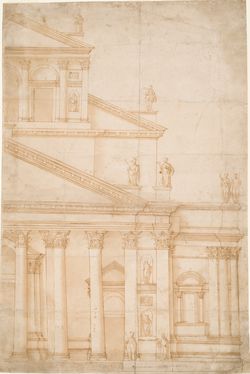
The history of architecture addresses the relationships between spaces, buildings, urban geometries, and social practices—it tells us how an experience of space corresponds to an experience of the world. To this end, this lecture will analyze the sixteenth-century debate around the completion of the facade of the Basilica of San Petronio in Bologna, partially built in the(...)
The history of architecture addresses the relationships between spaces, buildings, urban geometries, and social practices—it tells us how an experience of space corresponds to an experience of the world. To this end, this lecture will analyze the sixteenth-century debate around the completion of the facade of the Basilica of San Petronio in Bologna, partially built in the(...)
Location:
Paul Desmarais Theatre Keyword(s):
Guido Beltramini, church of San Petronio, Bologna, Andrea Palladio, Baldassare Peruzzi, Giacomo da Vignola
Paul Desmarais Theatre Keyword(s):
Guido Beltramini, church of San Petronio, Bologna, Andrea Palladio, Baldassare Peruzzi, Giacomo da Vignola
Date:
5 October 2017, 6:30pm
5 October 2017, 6:30pm
Title:
Guido Beltramini, what was history for patrons and architects in Bologna in 1579?
Actions:
Description:
The history of architecture addresses the relationships between spaces, buildings, urban geometries, and social practices—it tells us how an experience of space corresponds to an experience of the world. To this end, this lecture will analyze the sixteenth-century debate around the completion of the facade of the Basilica of San Petronio in Bologna, partially built in the(...)
Guido Beltramini, what was history for patrons and architects in Bologna in 1579?
Actions:
Description:
The history of architecture addresses the relationships between spaces, buildings, urban geometries, and social practices—it tells us how an experience of space corresponds to an experience of the world. To this end, this lecture will analyze the sixteenth-century debate around the completion of the facade of the Basilica of San Petronio in Bologna, partially built in the(...)
Form:
events
events
Date:
5 October 2017
6:30pm
5 October 2017
6:30pm
Location:
Paul Desmarais Theatre Keyword(s):
Guido Beltramini, church of San Petronio, Bologna, Andrea Palladio, Baldassare Peruzzi, Giacomo da Vignola
Paul Desmarais Theatre Keyword(s):
Guido Beltramini, church of San Petronio, Bologna, Andrea Palladio, Baldassare Peruzzi, Giacomo da Vignola
Level of archival description:
Project
Project
Title:
O.C.H. Feasibility Study
O.C.H. Feasibility Study
Reference number:
AP144.S2.D59
Description:
File documents a feasibility study commissioned by J. Lyons Co. Ltd for the conversion of the Oxford Corner House, in London, England, United Kingdom, into a combined information, education and skill centre. The unrealized project was to include a 'self-pace public skill and information hive' with facilities for conferences, teaching, exhibitions, computer use, planetarium, audio-visual library, and public eating areas. The project included a movable floor system and projection screens. Reference material includes plans and details of London Electric Railway subway line, alterations to Oxford Street Corner House by J. Lyons and Co. Ltd., field notes, photographs and photomontages of site. Conceptual diagrammatic plans explore designs for the organization of activities. Charts show variables, including number of people, monitors/screens, and study carrels; circulation patterns; and maximization of viewing capacity. Preliminary presentation boards illustrate project feasibility and include photographs of model and existing conditions. Design development drawings include floor plans, plans exploring the relationships between various activities, analysis of building volumes and networks, comparative plans showing main structural grid, sections, diagrammatic sections for public activity areas, axonometric drawings of roof, perspectives of projection screens and moveable floor system, progress charts, and diagrams and graphs of communication and travel modes, routes, and time into central London from outlying areas. Some material in this file was published in Price, Cedric. 'Cedric Price-Works II' (London: Architectural Press, 1984), 11, 54, 112; Landau, Royston. 'New Directions in British Architecture'. New York: George Braziller, 1968. 108-111; and 'Self-Pace Public Skill and Information Hive.' 'Architectural Design'. (May 1968), 237-239. Material in this file was produced between 1927 and 1967, but predominantly between 1965 and 1966. Group DR1995:0224:001-013 contains reference drawings attributed to London Transport Architect's Department and J. Lyons & Company Limited Architect's Office. Group DR1995:0224:333-341 contains drawings attributed to Richard Sutcliffe Limited, Felix J. Samuely & Partners, and G.E.C. (Process Engineering) Ltd. File contains conceptual drawings, consultant drawings, design development drawings, presentation drawings, presentation panels, reference drawings, photographic material, and textual records.
AP144.S2.D59
Description:
File documents a feasibility study commissioned by J. Lyons Co. Ltd for the conversion of the Oxford Corner House, in London, England, United Kingdom, into a combined information, education and skill centre. The unrealized project was to include a 'self-pace public skill and information hive' with facilities for conferences, teaching, exhibitions, computer use, planetarium, audio-visual library, and public eating areas. The project included a movable floor system and projection screens. Reference material includes plans and details of London Electric Railway subway line, alterations to Oxford Street Corner House by J. Lyons and Co. Ltd., field notes, photographs and photomontages of site. Conceptual diagrammatic plans explore designs for the organization of activities. Charts show variables, including number of people, monitors/screens, and study carrels; circulation patterns; and maximization of viewing capacity. Preliminary presentation boards illustrate project feasibility and include photographs of model and existing conditions. Design development drawings include floor plans, plans exploring the relationships between various activities, analysis of building volumes and networks, comparative plans showing main structural grid, sections, diagrammatic sections for public activity areas, axonometric drawings of roof, perspectives of projection screens and moveable floor system, progress charts, and diagrams and graphs of communication and travel modes, routes, and time into central London from outlying areas. Some material in this file was published in Price, Cedric. 'Cedric Price-Works II' (London: Architectural Press, 1984), 11, 54, 112; Landau, Royston. 'New Directions in British Architecture'. New York: George Braziller, 1968. 108-111; and 'Self-Pace Public Skill and Information Hive.' 'Architectural Design'. (May 1968), 237-239. Material in this file was produced between 1927 and 1967, but predominantly between 1965 and 1966. Group DR1995:0224:001-013 contains reference drawings attributed to London Transport Architect's Department and J. Lyons & Company Limited Architect's Office. Group DR1995:0224:333-341 contains drawings attributed to Richard Sutcliffe Limited, Felix J. Samuely & Partners, and G.E.C. (Process Engineering) Ltd. File contains conceptual drawings, consultant drawings, design development drawings, presentation drawings, presentation panels, reference drawings, photographic material, and textual records.
People:
Date:
1927-1967, predominant 1965-1966
1927-1967, predominant 1965-1966
Title:
O.C.H. Feasibility Study
Actions:
AP144.S2.D59
Description:
File documents a feasibility study commissioned by J. Lyons Co. Ltd for the conversion of the Oxford Corner House, in London, England, United Kingdom, into a combined information, education and skill centre. The unrealized project was to include a 'self-pace public skill and information hive' with facilities for conferences, teaching, exhibitions, computer use, planetarium, audio-visual library, and public eating areas. The project included a movable floor system and projection screens. Reference material includes plans and details of London Electric Railway subway line, alterations to Oxford Street Corner House by J. Lyons and Co. Ltd., field notes, photographs and photomontages of site. Conceptual diagrammatic plans explore designs for the organization of activities. Charts show variables, including number of people, monitors/screens, and study carrels; circulation patterns; and maximization of viewing capacity. Preliminary presentation boards illustrate project feasibility and include photographs of model and existing conditions. Design development drawings include floor plans, plans exploring the relationships between various activities, analysis of building volumes and networks, comparative plans showing main structural grid, sections, diagrammatic sections for public activity areas, axonometric drawings of roof, perspectives of projection screens and moveable floor system, progress charts, and diagrams and graphs of communication and travel modes, routes, and time into central London from outlying areas. Some material in this file was published in Price, Cedric. 'Cedric Price-Works II' (London: Architectural Press, 1984), 11, 54, 112; Landau, Royston. 'New Directions in British Architecture'. New York: George Braziller, 1968. 108-111; and 'Self-Pace Public Skill and Information Hive.' 'Architectural Design'. (May 1968), 237-239. Material in this file was produced between 1927 and 1967, but predominantly between 1965 and 1966. Group DR1995:0224:001-013 contains reference drawings attributed to London Transport Architect's Department and J. Lyons & Company Limited Architect's Office. Group DR1995:0224:333-341 contains drawings attributed to Richard Sutcliffe Limited, Felix J. Samuely & Partners, and G.E.C. (Process Engineering) Ltd. File contains conceptual drawings, consultant drawings, design development drawings, presentation drawings, presentation panels, reference drawings, photographic material, and textual records.
O.C.H. Feasibility Study
Actions:
AP144.S2.D59
Description:
File documents a feasibility study commissioned by J. Lyons Co. Ltd for the conversion of the Oxford Corner House, in London, England, United Kingdom, into a combined information, education and skill centre. The unrealized project was to include a 'self-pace public skill and information hive' with facilities for conferences, teaching, exhibitions, computer use, planetarium, audio-visual library, and public eating areas. The project included a movable floor system and projection screens. Reference material includes plans and details of London Electric Railway subway line, alterations to Oxford Street Corner House by J. Lyons and Co. Ltd., field notes, photographs and photomontages of site. Conceptual diagrammatic plans explore designs for the organization of activities. Charts show variables, including number of people, monitors/screens, and study carrels; circulation patterns; and maximization of viewing capacity. Preliminary presentation boards illustrate project feasibility and include photographs of model and existing conditions. Design development drawings include floor plans, plans exploring the relationships between various activities, analysis of building volumes and networks, comparative plans showing main structural grid, sections, diagrammatic sections for public activity areas, axonometric drawings of roof, perspectives of projection screens and moveable floor system, progress charts, and diagrams and graphs of communication and travel modes, routes, and time into central London from outlying areas. Some material in this file was published in Price, Cedric. 'Cedric Price-Works II' (London: Architectural Press, 1984), 11, 54, 112; Landau, Royston. 'New Directions in British Architecture'. New York: George Braziller, 1968. 108-111; and 'Self-Pace Public Skill and Information Hive.' 'Architectural Design'. (May 1968), 237-239. Material in this file was produced between 1927 and 1967, but predominantly between 1965 and 1966. Group DR1995:0224:001-013 contains reference drawings attributed to London Transport Architect's Department and J. Lyons & Company Limited Architect's Office. Group DR1995:0224:333-341 contains drawings attributed to Richard Sutcliffe Limited, Felix J. Samuely & Partners, and G.E.C. (Process Engineering) Ltd. File contains conceptual drawings, consultant drawings, design development drawings, presentation drawings, presentation panels, reference drawings, photographic material, and textual records.
Level of archival description:
File 59
File 59
Date:
1927-1967, predominant 1965-1966
1927-1967, predominant 1965-1966
People:
Form:
events
events
Title:
Visiting Scholar Seminar: Aglaya Glebova
Revolution on a Human Scale: Photography and Vkhutemas
Visiting Scholar Seminar: Aglaya Glebova
Revolution on a Human Scale: Photography and Vkhutemas
Actions:
Description:
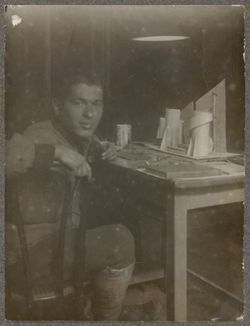
Visiting Scholar Aglaya Glebova presents her research: Vkhutemas, or Higher Art and Technical Studios, was a state-funded institute that sought to prepare a new generation of revolutionary artists and architects for the construction of a properly Soviet modernity. Dissolved under political pressure in 1930, the school never had a dedicated department of photography, but(...)
Visiting Scholar Aglaya Glebova presents her research: Vkhutemas, or Higher Art and Technical Studios, was a state-funded institute that sought to prepare a new generation of revolutionary artists and architects for the construction of a properly Soviet modernity. Dissolved under political pressure in 1930, the school never had a dedicated department of photography, but(...)
Location:
Shaughnessy House
Shaughnessy House
Date:
29 June 2017, 6pm
29 June 2017, 6pm
Title:
Visiting Scholar Seminar: Aglaya Glebova
Actions:
Description:
Visiting Scholar Aglaya Glebova presents her research: Vkhutemas, or Higher Art and Technical Studios, was a state-funded institute that sought to prepare a new generation of revolutionary artists and architects for the construction of a properly Soviet modernity. Dissolved under political pressure in 1930, the school never had a dedicated department of photography, but(...)
Visiting Scholar Seminar: Aglaya Glebova
Actions:
Description:
Visiting Scholar Aglaya Glebova presents her research: Vkhutemas, or Higher Art and Technical Studios, was a state-funded institute that sought to prepare a new generation of revolutionary artists and architects for the construction of a properly Soviet modernity. Dissolved under political pressure in 1930, the school never had a dedicated department of photography, but(...)
Form:
events
events
Date:
29 June 2017
6pm
29 June 2017
6pm
Location:
Shaughnessy House
Shaughnessy House
Form:
events
events
Description:
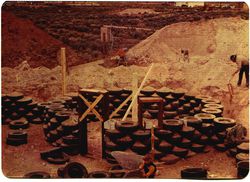
In the Yesterday Today lecture series, American architect Michael Reynolds discusses Earthship houses, which use recycled materials and sustainable energy technologies to create autonomous dwellings. The structure and systems of Earthships are integrated so that all materials have a secondary use, from the greywater system in bathrooms and kitchens to planter boxes in(...)
In the Yesterday Today lecture series, American architect Michael Reynolds discusses Earthship houses, which use recycled materials and sustainable energy technologies to create autonomous dwellings. The structure and systems of Earthships are integrated so that all materials have a secondary use, from the greywater system in bathrooms and kitchens to planter boxes in(...)
Location:
Paul-Desmarais Theatre
Paul-Desmarais Theatre
Date:
15 November 2007
15 November 2007
Title:
Michael Reynolds: The Earthship Sustainable Housing Concept
Actions:
Description:
In the Yesterday Today lecture series, American architect Michael Reynolds discusses Earthship houses, which use recycled materials and sustainable energy technologies to create autonomous dwellings. The structure and systems of Earthships are integrated so that all materials have a secondary use, from the greywater system in bathrooms and kitchens to planter boxes in(...)
Michael Reynolds: The Earthship Sustainable Housing Concept
Actions:
Description:
In the Yesterday Today lecture series, American architect Michael Reynolds discusses Earthship houses, which use recycled materials and sustainable energy technologies to create autonomous dwellings. The structure and systems of Earthships are integrated so that all materials have a secondary use, from the greywater system in bathrooms and kitchens to planter boxes in(...)
Form:
events
events
Date:
15 November 2007
15 November 2007
Location:
Paul-Desmarais Theatre
Paul-Desmarais Theatre
Form:
drawings
drawings
Actions:
Reference number:
DR2007:0018:001
Description:
Page bound essay, "The Positive and Negative Influences of Electronic Systems on Architecture", 8 1/2" x 14", April 1983; summary presented at international conference in Warsaw, Poland, spring 1983; essay published as "Enjoying Electronic Mannerisms" in the journal CRIT, Fall 1984, pp. 14-18, as part of a special issue on "The Next Architecture" by Aaron Betsky; essay also published as "Sony Walkman-Adorned Teleriders Moving Through Cable Networks of Computerized Cottage Land, Under the Skies of Overcrowded Orbital Slots: Enjoying Electronic Mannerisms", The Fifth Column, Vo. 5, winter 1984 (Montreal); and parts of this project were discussed by Christopher Hume in The Toronto Star, January 19, 1985. Also, five original collage and colour pencil drawings on illustration board, each 8 1/2" x 14" that were the source of illustrations for the bound essay and the subsequent publications.
DR2007:0018:001
Description:
Page bound essay, "The Positive and Negative Influences of Electronic Systems on Architecture", 8 1/2" x 14", April 1983; summary presented at international conference in Warsaw, Poland, spring 1983; essay published as "Enjoying Electronic Mannerisms" in the journal CRIT, Fall 1984, pp. 14-18, as part of a special issue on "The Next Architecture" by Aaron Betsky; essay also published as "Sony Walkman-Adorned Teleriders Moving Through Cable Networks of Computerized Cottage Land, Under the Skies of Overcrowded Orbital Slots: Enjoying Electronic Mannerisms", The Fifth Column, Vo. 5, winter 1984 (Montreal); and parts of this project were discussed by Christopher Hume in The Toronto Star, January 19, 1985. Also, five original collage and colour pencil drawings on illustration board, each 8 1/2" x 14" that were the source of illustrations for the bound essay and the subsequent publications.
People:
Date:
1983
1983
Title:
Untitled work for the essay "The Positive and Negative Influences of Electronic Systems on Architecture"
Actions:
DR2007:0018:001
Description:
Page bound essay, "The Positive and Negative Influences of Electronic Systems on Architecture", 8 1/2" x 14", April 1983; summary presented at international conference in Warsaw, Poland, spring 1983; essay published as "Enjoying Electronic Mannerisms" in the journal CRIT, Fall 1984, pp. 14-18, as part of a special issue on "The Next Architecture" by Aaron Betsky; essay also published as "Sony Walkman-Adorned Teleriders Moving Through Cable Networks of Computerized Cottage Land, Under the Skies of Overcrowded Orbital Slots: Enjoying Electronic Mannerisms", The Fifth Column, Vo. 5, winter 1984 (Montreal); and parts of this project were discussed by Christopher Hume in The Toronto Star, January 19, 1985. Also, five original collage and colour pencil drawings on illustration board, each 8 1/2" x 14" that were the source of illustrations for the bound essay and the subsequent publications.
Untitled work for the essay "The Positive and Negative Influences of Electronic Systems on Architecture"
Actions:
DR2007:0018:001
Description:
Page bound essay, "The Positive and Negative Influences of Electronic Systems on Architecture", 8 1/2" x 14", April 1983; summary presented at international conference in Warsaw, Poland, spring 1983; essay published as "Enjoying Electronic Mannerisms" in the journal CRIT, Fall 1984, pp. 14-18, as part of a special issue on "The Next Architecture" by Aaron Betsky; essay also published as "Sony Walkman-Adorned Teleriders Moving Through Cable Networks of Computerized Cottage Land, Under the Skies of Overcrowded Orbital Slots: Enjoying Electronic Mannerisms", The Fifth Column, Vo. 5, winter 1984 (Montreal); and parts of this project were discussed by Christopher Hume in The Toronto Star, January 19, 1985. Also, five original collage and colour pencil drawings on illustration board, each 8 1/2" x 14" that were the source of illustrations for the bound essay and the subsequent publications.
Form:
drawings
drawings
Date:
1983
1983
People:


