


124 Results
Form:
books
books
Actions:
Price:
$85.00
(available to order)
Summary:
Alone Street brings together two major bodies of work by Gregory Crewdson, Cathedral of the Pines (Aperture, 2016) and An Eclipse of Moths (Aperture, 2020), in a single, elegant, and affordable monograph. Both series expand on the artist’s obsessive exploration of the psychogeography of small-town, post-industrial New England and underscore the precision and depth of(...)
$85.00
(available to order)
Summary:
Alone Street brings together two major bodies of work by Gregory Crewdson, Cathedral of the Pines (Aperture, 2016) and An Eclipse of Moths (Aperture, 2020), in a single, elegant, and affordable monograph. Both series expand on the artist’s obsessive exploration of the psychogeography of small-town, post-industrial New England and underscore the precision and depth of(...)
Title:
Gregory Crewdson: Alone street
Actions:
Price:
$85.00
(available to order)
Summary:
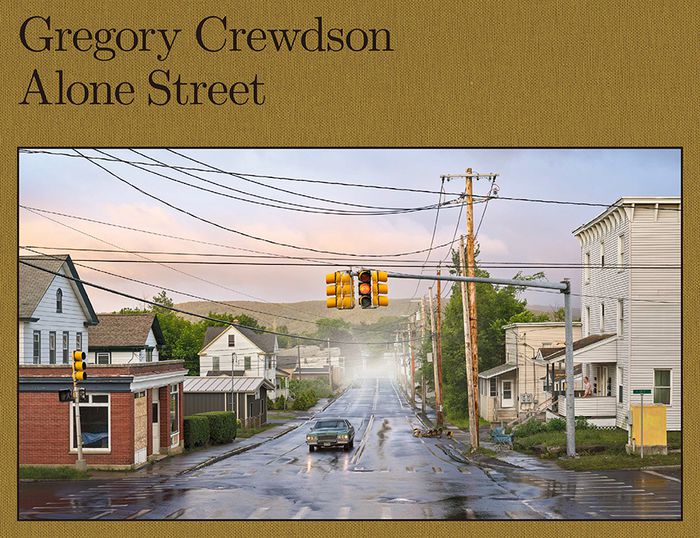
Alone Street brings together two major bodies of work by Gregory Crewdson, Cathedral of the Pines (Aperture, 2016) and An Eclipse of Moths (Aperture, 2020), in a single, elegant, and affordable monograph. Both series expand on the artist’s obsessive exploration of the psychogeography of small-town, post-industrial New England and underscore the precision and depth of Crewdson’s unique mode of photographic storytelling. In each image, light, color, and carefully crafted scenography evoke the feeling that, as art historian Alexander Nemerov has astutely described, “all that ever happened in these places seems crystallized in his tableaux, as if the quiet melancholy of Crewdson’s scenes gathered the unruly sorrows and other little-guessed feelings of people long-gone who once stood on those spots.” In addition to the full set of images from each series, Alone Street, presents a selection of behind-the-scenes images and storyboards, revealing the extensive preparation and planning that went into the making of each work.
Gregory Crewdson: Alone street
Actions:
Price:
$85.00
(available to order)
Summary:
Alone Street brings together two major bodies of work by Gregory Crewdson, Cathedral of the Pines (Aperture, 2016) and An Eclipse of Moths (Aperture, 2020), in a single, elegant, and affordable monograph. Both series expand on the artist’s obsessive exploration of the psychogeography of small-town, post-industrial New England and underscore the precision and depth of Crewdson’s unique mode of photographic storytelling. In each image, light, color, and carefully crafted scenography evoke the feeling that, as art historian Alexander Nemerov has astutely described, “all that ever happened in these places seems crystallized in his tableaux, as if the quiet melancholy of Crewdson’s scenes gathered the unruly sorrows and other little-guessed feelings of people long-gone who once stood on those spots.” In addition to the full set of images from each series, Alone Street, presents a selection of behind-the-scenes images and storyboards, revealing the extensive preparation and planning that went into the making of each work.
Form:
books
books
Publication:
November 2021
November 2021
Subject:
Photography monographs
Photography monographs
Form:
books
books

Actions:
Price:
$24.95
(available to order)
Summary:
When Guy Debord identified the image consumerism of “the society of the spectacle” in the 1960s, he could not have forecast that language would threaten to eclipse the image in the medium of personal technology, creating a world of ubiquitous legibility. Today, we read anytime and anywhere, on screens of all sizes; we read not only newspaper articles, but also databases,(...)
$24.95
(available to order)
Summary:
When Guy Debord identified the image consumerism of “the society of the spectacle” in the 1960s, he could not have forecast that language would threaten to eclipse the image in the medium of personal technology, creating a world of ubiquitous legibility. Today, we read anytime and anywhere, on screens of all sizes; we read not only newspaper articles, but also databases,(...)
Title:
I read where I am : exploring new information cultures
Actions:
Price:
$24.95
(available to order)
Summary:
When Guy Debord identified the image consumerism of “the society of the spectacle” in the 1960s, he could not have forecast that language would threaten to eclipse the image in the medium of personal technology, creating a world of ubiquitous legibility. Today, we read anytime and anywhere, on screens of all sizes; we read not only newspaper articles, but also databases, online archives, search engine results and navigational structures. We read while out on the street, at home or in the office, with a complete library to hand - but less and less we read a book at home on the couch. In other words, we are, or are becoming, a different kind of reader. I Read Where I Am contains texts about the future of reading and the status of the word in the digital age from designers, philosophers, journalists and politicians, looking at both sides of the argument for printed and digital reading matter.
I read where I am : exploring new information cultures
Actions:
Price:
$24.95
(available to order)
Summary:
When Guy Debord identified the image consumerism of “the society of the spectacle” in the 1960s, he could not have forecast that language would threaten to eclipse the image in the medium of personal technology, creating a world of ubiquitous legibility. Today, we read anytime and anywhere, on screens of all sizes; we read not only newspaper articles, but also databases, online archives, search engine results and navigational structures. We read while out on the street, at home or in the office, with a complete library to hand - but less and less we read a book at home on the couch. In other words, we are, or are becoming, a different kind of reader. I Read Where I Am contains texts about the future of reading and the status of the word in the digital age from designers, philosophers, journalists and politicians, looking at both sides of the argument for printed and digital reading matter.
Form:
books
books
Publication:
September 2011
September 2011
Subject:
Epistemology
Epistemology
Form:
books
books
Actions:
Price:
$43.95
(available to order)
Summary:
Jaipur, in Rajasthan, is renowned for its palaces and museums, its craft traditions and its distinctive pink shops and houses. A planned city within walls, it was built in pre-modern times according to a distinctive Indian theory of architecture known as vastu vidya. As architecture subsequently developed in India, in response to British and latterly post-colonial(...)
$43.95
(available to order)
Summary:
Jaipur, in Rajasthan, is renowned for its palaces and museums, its craft traditions and its distinctive pink shops and houses. A planned city within walls, it was built in pre-modern times according to a distinctive Indian theory of architecture known as vastu vidya. As architecture subsequently developed in India, in response to British and latterly post-colonial(...)
Subject:
Arch Southwest Asia & North Africa
Arch Southwest Asia & North Africa
Publication:
September 2002, London
September 2002, London
Title:
Building Jaipur : the making of an Indian city
Actions:
Price:
$43.95
(available to order)
Summary:
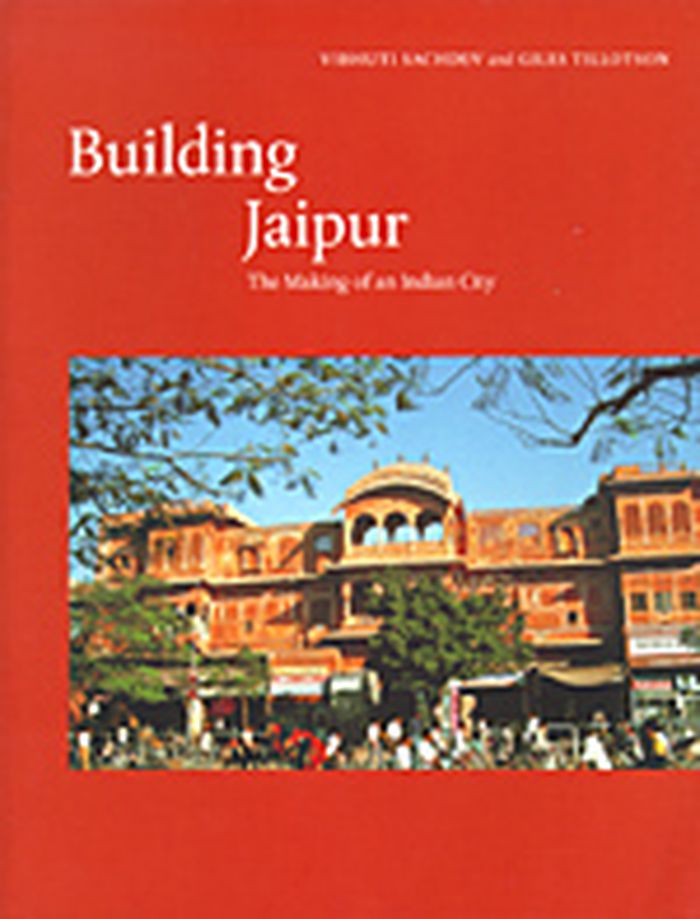
Jaipur, in Rajasthan, is renowned for its palaces and museums, its craft traditions and its distinctive pink shops and houses. A planned city within walls, it was built in pre-modern times according to a distinctive Indian theory of architecture known as vastu vidya. As architecture subsequently developed in India, in response to British and latterly post-colonial policies, this system became increasingly marginalized and fragmented, decreasingly practised and understood. Taking Jaipur as a test case, the authors use this lost tradition to explain historic Indian buildings according to the rationale of their original architects. The authors also examine the place of traditional architectural theory in a modern context – Post-Modern architecture in India has often sought to recapture a spirit of the past, and yet been reluctant to engage with traditional theory. By chronicling the gradual eclipse of Indian architectural theory, the authors explain how this reluctance arose; they also describe the need and the terms for a fresh engagement with it. The result is an architectural biography of a city, and a concise history of Indian architectural theory over the last 300 years.
Building Jaipur : the making of an Indian city
Actions:
Price:
$43.95
(available to order)
Summary:
Jaipur, in Rajasthan, is renowned for its palaces and museums, its craft traditions and its distinctive pink shops and houses. A planned city within walls, it was built in pre-modern times according to a distinctive Indian theory of architecture known as vastu vidya. As architecture subsequently developed in India, in response to British and latterly post-colonial policies, this system became increasingly marginalized and fragmented, decreasingly practised and understood. Taking Jaipur as a test case, the authors use this lost tradition to explain historic Indian buildings according to the rationale of their original architects. The authors also examine the place of traditional architectural theory in a modern context – Post-Modern architecture in India has often sought to recapture a spirit of the past, and yet been reluctant to engage with traditional theory. By chronicling the gradual eclipse of Indian architectural theory, the authors explain how this reluctance arose; they also describe the need and the terms for a fresh engagement with it. The result is an architectural biography of a city, and a concise history of Indian architectural theory over the last 300 years.
Form:
books
books
Publication:
September 2002, London
September 2002, London
Subject:
Arch Southwest Asia & North Africa
Arch Southwest Asia & North Africa
Form:
books
books
Price:
$13.95
(available to order)
Summary:
Now that we 'curate' even lunch, what happens to the role of the connoisseur in contemporary culture? 'Curate' is now a buzzword, applied to everything from music festivals to artisanal cheese. Inside the art world, the curator reigns supreme, acting as the face of high-profile group shows and biennials in a way that can eclipse and assimilate the contributions of(...)
$13.95
(available to order)
Summary:
Now that we 'curate' even lunch, what happens to the role of the connoisseur in contemporary culture? 'Curate' is now a buzzword, applied to everything from music festivals to artisanal cheese. Inside the art world, the curator reigns supreme, acting as the face of high-profile group shows and biennials in a way that can eclipse and assimilate the contributions of(...)
Title:
Curationism: how curating took over the art world and everything else
Actions:
Price:
$13.95
(available to order)
Summary:
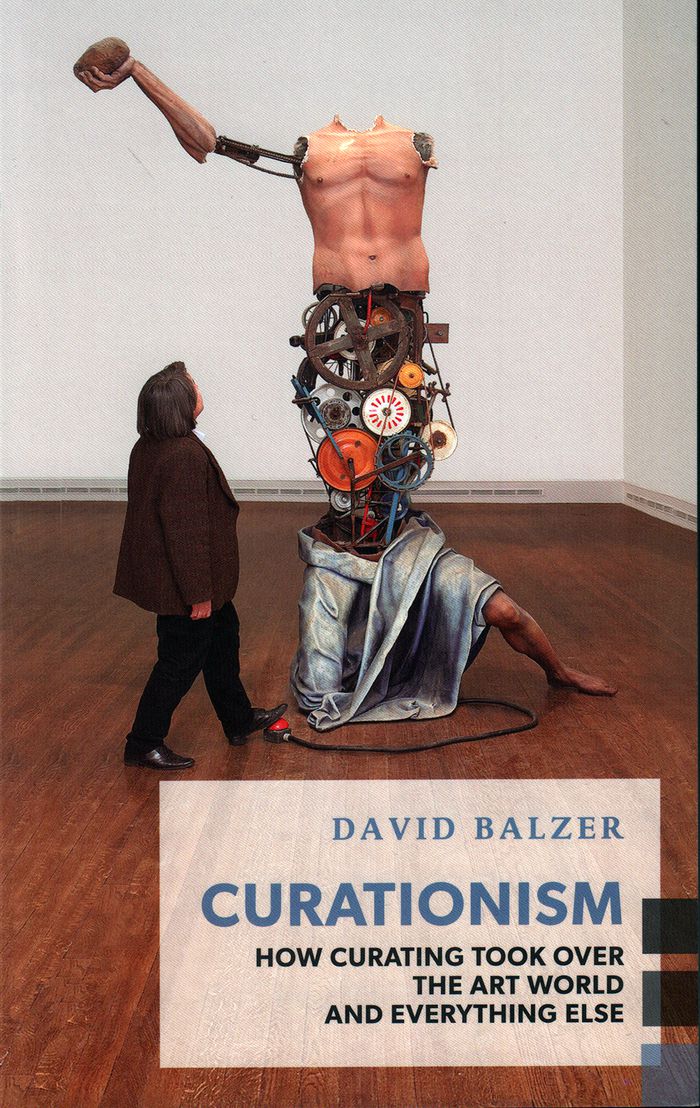
Now that we 'curate' even lunch, what happens to the role of the connoisseur in contemporary culture? 'Curate' is now a buzzword, applied to everything from music festivals to artisanal cheese. Inside the art world, the curator reigns supreme, acting as the face of high-profile group shows and biennials in a way that can eclipse and assimilate the contributions of individual artists. Curatorial-studies programs continue to grow, and the business world is adopting curation as a means of adding value to content. Everyone, it seems, is a curator. But what is a curator, exactly? And what does the explosive popularity of curating say about our culture's relationship with taste, labour and the avant-garde? In this vibrant, revelatory and original study, David Balzer travels through art history and around the globe to explore the cult of curation, from superstar curator Hans Ulrich Obrist's war with sleep to Subway's 'sandwich artists.' Recalling such landmark works of cultural criticism as Tom Wolfe's The Painted Word and John Berger's Ways of Seeing, Curationism will change the way you look at art - and maybe even the way you see yourself.
Curationism: how curating took over the art world and everything else
Actions:
Price:
$13.95
(available to order)
Summary:
Now that we 'curate' even lunch, what happens to the role of the connoisseur in contemporary culture? 'Curate' is now a buzzword, applied to everything from music festivals to artisanal cheese. Inside the art world, the curator reigns supreme, acting as the face of high-profile group shows and biennials in a way that can eclipse and assimilate the contributions of individual artists. Curatorial-studies programs continue to grow, and the business world is adopting curation as a means of adding value to content. Everyone, it seems, is a curator. But what is a curator, exactly? And what does the explosive popularity of curating say about our culture's relationship with taste, labour and the avant-garde? In this vibrant, revelatory and original study, David Balzer travels through art history and around the globe to explore the cult of curation, from superstar curator Hans Ulrich Obrist's war with sleep to Subway's 'sandwich artists.' Recalling such landmark works of cultural criticism as Tom Wolfe's The Painted Word and John Berger's Ways of Seeing, Curationism will change the way you look at art - and maybe even the way you see yourself.
Form:
books
books
Publication:
September 2014
September 2014
Subject:
Museology
Museology


