


12622 Results
Form:
exhibitions
exhibitions
Actions:
Description:
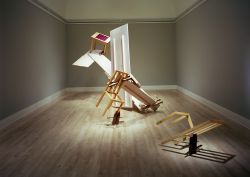
Parables and Other Allegories: The Work of Melvin Charney 1975–1990 comprises approximately 100 drawings, including many large-scale, sketches, photographs, and three large constructions. By assembling works from various public and private collections, including the CCA, the exhibition permits a comprehensive analysis of Charney’s artistic process to reveal the dialogue(...)
Parables and Other Allegories: The Work of Melvin Charney 1975–1990 comprises approximately 100 drawings, including many large-scale, sketches, photographs, and three large constructions. By assembling works from various public and private collections, including the CCA, the exhibition permits a comprehensive analysis of Charney’s artistic process to reveal the dialogue(...)
Location:
Main galleries
Main galleries
Date:
9 October 1991 to 12 January 1992
9 October 1991 to 12 January 1992
Title:
Parables and Other Allegories: The Work of Melvin Charney, 1975-1990
Actions:
Description:
Parables and Other Allegories: The Work of Melvin Charney 1975–1990 comprises approximately 100 drawings, including many large-scale, sketches, photographs, and three large constructions. By assembling works from various public and private collections, including the CCA, the exhibition permits a comprehensive analysis of Charney’s artistic process to reveal the dialogue(...)
Parables and Other Allegories: The Work of Melvin Charney, 1975-1990
Actions:
Description:
Parables and Other Allegories: The Work of Melvin Charney 1975–1990 comprises approximately 100 drawings, including many large-scale, sketches, photographs, and three large constructions. By assembling works from various public and private collections, including the CCA, the exhibition permits a comprehensive analysis of Charney’s artistic process to reveal the dialogue(...)
Form:
exhibitions
exhibitions
Date:
9 October 1991 to
12 January 1992
9 October 1991 to
12 January 1992
Location:
Main galleries
Main galleries
Form:
drawings
drawings
Actions:
Reference number:
ARCH268752
Description:
Contains elevations, plans, sections and site plans of differents projects by Abalos & Herreros. According to an inscription on the folder, this selection of drawings was for their editor G.G. (Gustavo Gili). The serial 2G: international architecture review, no. 22, has published or has planned to use the plans in an issue on Abalos & Herreros.
ARCH268752
Description:
Contains elevations, plans, sections and site plans of differents projects by Abalos & Herreros. According to an inscription on the folder, this selection of drawings was for their editor G.G. (Gustavo Gili). The serial 2G: international architecture review, no. 22, has published or has planned to use the plans in an issue on Abalos & Herreros.
People:
Date:
between 1990 and 1998
between 1990 and 1998
Title:
Elevations, plans, sections and site plans of differents projects by Abalos & Herreros
Actions:
ARCH268752
Description:
Contains elevations, plans, sections and site plans of differents projects by Abalos & Herreros. According to an inscription on the folder, this selection of drawings was for their editor G.G. (Gustavo Gili). The serial 2G: international architecture review, no. 22, has published or has planned to use the plans in an issue on Abalos & Herreros.
Elevations, plans, sections and site plans of differents projects by Abalos & Herreros
Actions:
ARCH268752
Description:
Contains elevations, plans, sections and site plans of differents projects by Abalos & Herreros. According to an inscription on the folder, this selection of drawings was for their editor G.G. (Gustavo Gili). The serial 2G: international architecture review, no. 22, has published or has planned to use the plans in an issue on Abalos & Herreros.
Form:
drawings
drawings
Date:
between 1990 and 1998
between 1990 and 1998
People:
Level of archival description:
Project
Project
Reference number:
AP056.S1.1987.PR04
Description:
This project series documents the restoration and redevelopmet of King James Place in Toronto, Ontario. The office assigned the number 8722 to this project. King James Place is located on King St. East between Jarvis St. and Church St. and was completed in 1839. Construction on the project began in 1990. Drawings in the project series show the changes made to the floor plans and interiors while preserving the historic facade. The project received a Governor General's Award for Architecture in 1992, the Toronto Urban Design Award in 1993, and the Heritage Toronto Award in 1994. The project is recorded through sketches, original plans, elevations, sections, several perspectives, as well as presentation drawings. Also included are two photographs of the finished exterior and a model.
AP056.S1.1987.PR04
Description:
This project series documents the restoration and redevelopmet of King James Place in Toronto, Ontario. The office assigned the number 8722 to this project. King James Place is located on King St. East between Jarvis St. and Church St. and was completed in 1839. Construction on the project began in 1990. Drawings in the project series show the changes made to the floor plans and interiors while preserving the historic facade. The project received a Governor General's Award for Architecture in 1992, the Toronto Urban Design Award in 1993, and the Heritage Toronto Award in 1994. The project is recorded through sketches, original plans, elevations, sections, several perspectives, as well as presentation drawings. Also included are two photographs of the finished exterior and a model.
People:
Date:
1987-1996
1987-1996
Title:
King James Place, Toronto, Ontario (1987-1991)
Actions:
AP056.S1.1987.PR04
Description:
This project series documents the restoration and redevelopmet of King James Place in Toronto, Ontario. The office assigned the number 8722 to this project. King James Place is located on King St. East between Jarvis St. and Church St. and was completed in 1839. Construction on the project began in 1990. Drawings in the project series show the changes made to the floor plans and interiors while preserving the historic facade. The project received a Governor General's Award for Architecture in 1992, the Toronto Urban Design Award in 1993, and the Heritage Toronto Award in 1994. The project is recorded through sketches, original plans, elevations, sections, several perspectives, as well as presentation drawings. Also included are two photographs of the finished exterior and a model.
King James Place, Toronto, Ontario (1987-1991)
Actions:
AP056.S1.1987.PR04
Description:
This project series documents the restoration and redevelopmet of King James Place in Toronto, Ontario. The office assigned the number 8722 to this project. King James Place is located on King St. East between Jarvis St. and Church St. and was completed in 1839. Construction on the project began in 1990. Drawings in the project series show the changes made to the floor plans and interiors while preserving the historic facade. The project received a Governor General's Award for Architecture in 1992, the Toronto Urban Design Award in 1993, and the Heritage Toronto Award in 1994. The project is recorded through sketches, original plans, elevations, sections, several perspectives, as well as presentation drawings. Also included are two photographs of the finished exterior and a model.
Level of archival description:
Project
Project
Date:
1987-1996
1987-1996
People:
Level of archival description:
Project
Project
Actions:
Reference number:
CI007.S1.1943.PR01
Description:
This project series documents Mies van der Rohe concept design of the unexectuted project Museum for a Small City for the publication Architecture Forum in 1943 and documents related to a graduate thesis for a small museum by George Danforth, student of Mies van der Rohe. The material in this series was produced between 1941 and 1943. The series contains sketches by Mies van der Rohe, research notes and text for a graduate thesis for a small museum and two porfolio of drawings of Illinois Institute of Technology students' projects, including Museum of a Small City.
CI007.S1.1943.PR01
Description:
This project series documents Mies van der Rohe concept design of the unexectuted project Museum for a Small City for the publication Architecture Forum in 1943 and documents related to a graduate thesis for a small museum by George Danforth, student of Mies van der Rohe. The material in this series was produced between 1941 and 1943. The series contains sketches by Mies van der Rohe, research notes and text for a graduate thesis for a small museum and two porfolio of drawings of Illinois Institute of Technology students' projects, including Museum of a Small City.
People:
Date:
1943
1943
Title:
Museum for a Small City (1943)
Actions:
CI007.S1.1943.PR01
Description:
This project series documents Mies van der Rohe concept design of the unexectuted project Museum for a Small City for the publication Architecture Forum in 1943 and documents related to a graduate thesis for a small museum by George Danforth, student of Mies van der Rohe. The material in this series was produced between 1941 and 1943. The series contains sketches by Mies van der Rohe, research notes and text for a graduate thesis for a small museum and two porfolio of drawings of Illinois Institute of Technology students' projects, including Museum of a Small City.
Museum for a Small City (1943)
Actions:
CI007.S1.1943.PR01
Description:
This project series documents Mies van der Rohe concept design of the unexectuted project Museum for a Small City for the publication Architecture Forum in 1943 and documents related to a graduate thesis for a small museum by George Danforth, student of Mies van der Rohe. The material in this series was produced between 1941 and 1943. The series contains sketches by Mies van der Rohe, research notes and text for a graduate thesis for a small museum and two porfolio of drawings of Illinois Institute of Technology students' projects, including Museum of a Small City.
Level of archival description:
project
project
Date:
1943
1943
People:
Level of archival description:
Project
Project
Actions:
Reference number:
AP075.S1.2007.PR02
Description:
Project series documents Cornelia Hahn Oberlander's work for the renewal of Robson Square in Vancouver. This project series concerns work on Robson Square grounds starting from the mid 2000s to early 2010s to which Oberlander participated as landscape architect or consultaing landscape architect. Oberlander worked with Arthur Erickson on the earliest revitalisation projects, but also with other architectural firms, including Grout McTavish Architects. It includes revitisation works, such as sunken plaza revitalization, the Nelson Street Plaza revitalisation, addition of a 'grass wave' or a mound in 2008 for the North Plaza, renovations for the 2010 Vancouver Olympic and Paralympic Games, and Ice Rink Expansion and Revitalisation of Ice Rink Plaza. The project series contains predominantly textual records, including correspondence with client, architects, consultants and contractors, specifications, including landscape specifications, minutes of projects meetings, inspections reports and press clippings and articles on the revitalisation projects. The project is also documented through landscape drawings, such as planting plans, irrigation and grading plans, landscape sections, and details for planters. It also includes sets of building plans used as reference and digital photographs of planting and landscape maintenance. Project series comprises documents related to the preservation of Robson Square, including documentation, articles and clippings, and correspondence.
AP075.S1.2007.PR02
Description:
Project series documents Cornelia Hahn Oberlander's work for the renewal of Robson Square in Vancouver. This project series concerns work on Robson Square grounds starting from the mid 2000s to early 2010s to which Oberlander participated as landscape architect or consultaing landscape architect. Oberlander worked with Arthur Erickson on the earliest revitalisation projects, but also with other architectural firms, including Grout McTavish Architects. It includes revitisation works, such as sunken plaza revitalization, the Nelson Street Plaza revitalisation, addition of a 'grass wave' or a mound in 2008 for the North Plaza, renovations for the 2010 Vancouver Olympic and Paralympic Games, and Ice Rink Expansion and Revitalisation of Ice Rink Plaza. The project series contains predominantly textual records, including correspondence with client, architects, consultants and contractors, specifications, including landscape specifications, minutes of projects meetings, inspections reports and press clippings and articles on the revitalisation projects. The project is also documented through landscape drawings, such as planting plans, irrigation and grading plans, landscape sections, and details for planters. It also includes sets of building plans used as reference and digital photographs of planting and landscape maintenance. Project series comprises documents related to the preservation of Robson Square, including documentation, articles and clippings, and correspondence.
People:
Date:
1994-2016
1994-2016
Title:
Robson Square Renewal, Vancouver, British Columbia (2007)
Actions:
AP075.S1.2007.PR02
Description:
Project series documents Cornelia Hahn Oberlander's work for the renewal of Robson Square in Vancouver. This project series concerns work on Robson Square grounds starting from the mid 2000s to early 2010s to which Oberlander participated as landscape architect or consultaing landscape architect. Oberlander worked with Arthur Erickson on the earliest revitalisation projects, but also with other architectural firms, including Grout McTavish Architects. It includes revitisation works, such as sunken plaza revitalization, the Nelson Street Plaza revitalisation, addition of a 'grass wave' or a mound in 2008 for the North Plaza, renovations for the 2010 Vancouver Olympic and Paralympic Games, and Ice Rink Expansion and Revitalisation of Ice Rink Plaza. The project series contains predominantly textual records, including correspondence with client, architects, consultants and contractors, specifications, including landscape specifications, minutes of projects meetings, inspections reports and press clippings and articles on the revitalisation projects. The project is also documented through landscape drawings, such as planting plans, irrigation and grading plans, landscape sections, and details for planters. It also includes sets of building plans used as reference and digital photographs of planting and landscape maintenance. Project series comprises documents related to the preservation of Robson Square, including documentation, articles and clippings, and correspondence.
Robson Square Renewal, Vancouver, British Columbia (2007)
Actions:
AP075.S1.2007.PR02
Description:
Project series documents Cornelia Hahn Oberlander's work for the renewal of Robson Square in Vancouver. This project series concerns work on Robson Square grounds starting from the mid 2000s to early 2010s to which Oberlander participated as landscape architect or consultaing landscape architect. Oberlander worked with Arthur Erickson on the earliest revitalisation projects, but also with other architectural firms, including Grout McTavish Architects. It includes revitisation works, such as sunken plaza revitalization, the Nelson Street Plaza revitalisation, addition of a 'grass wave' or a mound in 2008 for the North Plaza, renovations for the 2010 Vancouver Olympic and Paralympic Games, and Ice Rink Expansion and Revitalisation of Ice Rink Plaza. The project series contains predominantly textual records, including correspondence with client, architects, consultants and contractors, specifications, including landscape specifications, minutes of projects meetings, inspections reports and press clippings and articles on the revitalisation projects. The project is also documented through landscape drawings, such as planting plans, irrigation and grading plans, landscape sections, and details for planters. It also includes sets of building plans used as reference and digital photographs of planting and landscape maintenance. Project series comprises documents related to the preservation of Robson Square, including documentation, articles and clippings, and correspondence.
Level of archival description:
Project
Project
Date:
1994-2016
1994-2016
People:
Level of archival description:
Project
Project
Actions:
Reference number:
AP075.S1.1995.PR02
Description:
Project series documents Cornelia Hahn Oberlander's project for landscape master plan of Smith College campus, Northampton, Massachusetts. Oberlander worked on this project from 1995-1997 in collaboration with Shavaun Towers from landscape architectural firm Rolland/Towers. The project required to preserve the historic landscaping, initially design by Frederick Law Olsmsted, while also taking into account future growth of the campus. In this idea Oberlander and Towers bases their landscape master plan on six key concepts: to preserve the sacred spaces of the campus, to restore Olmsted vision, to develope open spaces in an hierarchical fashion, to limite vehicular traffic and separate it from pedestrian circulation, to provide stronger pedestrian connexions and commun spaces for social interactions, and to expande and enhance the Botanic Garden on the campus. The project series contains concept notes by Oberlander, research and reference material, proposal, meetings notes, contract, correspondence, mostly with landscape architects, clients and consultants, and financial documents. The project is also documented through landscape master plans for Oberlander and Towers proposal and campus landscape plans and previous landscape working drawings used as reference.The project series also contains photographic materials, such as slides and photographs, of the college landscaping, and postcards of Smith College.
AP075.S1.1995.PR02
Description:
Project series documents Cornelia Hahn Oberlander's project for landscape master plan of Smith College campus, Northampton, Massachusetts. Oberlander worked on this project from 1995-1997 in collaboration with Shavaun Towers from landscape architectural firm Rolland/Towers. The project required to preserve the historic landscaping, initially design by Frederick Law Olsmsted, while also taking into account future growth of the campus. In this idea Oberlander and Towers bases their landscape master plan on six key concepts: to preserve the sacred spaces of the campus, to restore Olmsted vision, to develope open spaces in an hierarchical fashion, to limite vehicular traffic and separate it from pedestrian circulation, to provide stronger pedestrian connexions and commun spaces for social interactions, and to expande and enhance the Botanic Garden on the campus. The project series contains concept notes by Oberlander, research and reference material, proposal, meetings notes, contract, correspondence, mostly with landscape architects, clients and consultants, and financial documents. The project is also documented through landscape master plans for Oberlander and Towers proposal and campus landscape plans and previous landscape working drawings used as reference.The project series also contains photographic materials, such as slides and photographs, of the college landscaping, and postcards of Smith College.
People:
Date:
1974-2012
1974-2012
Title:
Smith College, Northampton, Massachusetts (1995-1997)
Actions:
AP075.S1.1995.PR02
Description:
Project series documents Cornelia Hahn Oberlander's project for landscape master plan of Smith College campus, Northampton, Massachusetts. Oberlander worked on this project from 1995-1997 in collaboration with Shavaun Towers from landscape architectural firm Rolland/Towers. The project required to preserve the historic landscaping, initially design by Frederick Law Olsmsted, while also taking into account future growth of the campus. In this idea Oberlander and Towers bases their landscape master plan on six key concepts: to preserve the sacred spaces of the campus, to restore Olmsted vision, to develope open spaces in an hierarchical fashion, to limite vehicular traffic and separate it from pedestrian circulation, to provide stronger pedestrian connexions and commun spaces for social interactions, and to expande and enhance the Botanic Garden on the campus. The project series contains concept notes by Oberlander, research and reference material, proposal, meetings notes, contract, correspondence, mostly with landscape architects, clients and consultants, and financial documents. The project is also documented through landscape master plans for Oberlander and Towers proposal and campus landscape plans and previous landscape working drawings used as reference.The project series also contains photographic materials, such as slides and photographs, of the college landscaping, and postcards of Smith College.
Smith College, Northampton, Massachusetts (1995-1997)
Actions:
AP075.S1.1995.PR02
Description:
Project series documents Cornelia Hahn Oberlander's project for landscape master plan of Smith College campus, Northampton, Massachusetts. Oberlander worked on this project from 1995-1997 in collaboration with Shavaun Towers from landscape architectural firm Rolland/Towers. The project required to preserve the historic landscaping, initially design by Frederick Law Olsmsted, while also taking into account future growth of the campus. In this idea Oberlander and Towers bases their landscape master plan on six key concepts: to preserve the sacred spaces of the campus, to restore Olmsted vision, to develope open spaces in an hierarchical fashion, to limite vehicular traffic and separate it from pedestrian circulation, to provide stronger pedestrian connexions and commun spaces for social interactions, and to expande and enhance the Botanic Garden on the campus. The project series contains concept notes by Oberlander, research and reference material, proposal, meetings notes, contract, correspondence, mostly with landscape architects, clients and consultants, and financial documents. The project is also documented through landscape master plans for Oberlander and Towers proposal and campus landscape plans and previous landscape working drawings used as reference.The project series also contains photographic materials, such as slides and photographs, of the college landscaping, and postcards of Smith College.
Level of archival description:
Project
Project
Date:
1974-2012
1974-2012
People:
Level of archival description:
Project
Project
Reference number:
AP148.S1.1988.PR02
Description:
Project series comprises material related to a design entry for a 1988 competition on the environmental redevelopment of the San Carlo quarry in the comune of Castelnuovo Berardenga near Siena, Italy. Poli dates this project as 1988, though most of the material is undated (only 2 drawings are dated 1988). However, the project description text includes a bibliography making reference to 1991 publications, though it is possible that this document was created later than the drawings. Project material includes numerous drawings and collages, some which are overlayed with wax, one which features a metal object, and some drawn directly onto topographical maps. Project material also includes a model, a photomontage featuring images of the quarry site and geological strata, and a typed project description. Parts of the text in the project description also appear on some of the drawings. Many of the drawings feature a circular design that is repeated throughout the drawing material in this series. Poli's proposal for the redevelopment seemed to involve the addition of trees to the area and the development of a passageway. One of Poli's drawings makes reference to the earth moon highway featured in an earlier project, Interplanetary Architecture (see AP148.S1.1970.PR02).
AP148.S1.1988.PR02
Description:
Project series comprises material related to a design entry for a 1988 competition on the environmental redevelopment of the San Carlo quarry in the comune of Castelnuovo Berardenga near Siena, Italy. Poli dates this project as 1988, though most of the material is undated (only 2 drawings are dated 1988). However, the project description text includes a bibliography making reference to 1991 publications, though it is possible that this document was created later than the drawings. Project material includes numerous drawings and collages, some which are overlayed with wax, one which features a metal object, and some drawn directly onto topographical maps. Project material also includes a model, a photomontage featuring images of the quarry site and geological strata, and a typed project description. Parts of the text in the project description also appear on some of the drawings. Many of the drawings feature a circular design that is repeated throughout the drawing material in this series. Poli's proposal for the redevelopment seemed to involve the addition of trees to the area and the development of a passageway. One of Poli's drawings makes reference to the earth moon highway featured in an earlier project, Interplanetary Architecture (see AP148.S1.1970.PR02).
People:
Date:
1988
1988
Title:
Ideas competition, Riqualificazione cava di San Carlo [Redevelopment San Carlo quarry], San Vincenzo, Livorno, Italy (1988)
Actions:
AP148.S1.1988.PR02
Description:
Project series comprises material related to a design entry for a 1988 competition on the environmental redevelopment of the San Carlo quarry in the comune of Castelnuovo Berardenga near Siena, Italy. Poli dates this project as 1988, though most of the material is undated (only 2 drawings are dated 1988). However, the project description text includes a bibliography making reference to 1991 publications, though it is possible that this document was created later than the drawings. Project material includes numerous drawings and collages, some which are overlayed with wax, one which features a metal object, and some drawn directly onto topographical maps. Project material also includes a model, a photomontage featuring images of the quarry site and geological strata, and a typed project description. Parts of the text in the project description also appear on some of the drawings. Many of the drawings feature a circular design that is repeated throughout the drawing material in this series. Poli's proposal for the redevelopment seemed to involve the addition of trees to the area and the development of a passageway. One of Poli's drawings makes reference to the earth moon highway featured in an earlier project, Interplanetary Architecture (see AP148.S1.1970.PR02).
Ideas competition, Riqualificazione cava di San Carlo [Redevelopment San Carlo quarry], San Vincenzo, Livorno, Italy (1988)
Actions:
AP148.S1.1988.PR02
Description:
Project series comprises material related to a design entry for a 1988 competition on the environmental redevelopment of the San Carlo quarry in the comune of Castelnuovo Berardenga near Siena, Italy. Poli dates this project as 1988, though most of the material is undated (only 2 drawings are dated 1988). However, the project description text includes a bibliography making reference to 1991 publications, though it is possible that this document was created later than the drawings. Project material includes numerous drawings and collages, some which are overlayed with wax, one which features a metal object, and some drawn directly onto topographical maps. Project material also includes a model, a photomontage featuring images of the quarry site and geological strata, and a typed project description. Parts of the text in the project description also appear on some of the drawings. Many of the drawings feature a circular design that is repeated throughout the drawing material in this series. Poli's proposal for the redevelopment seemed to involve the addition of trees to the area and the development of a passageway. One of Poli's drawings makes reference to the earth moon highway featured in an earlier project, Interplanetary Architecture (see AP148.S1.1970.PR02).
Level of archival description:
Project
Project
Date:
1988
1988
People:
Form:
drawings
drawings
Actions:
Reference number:
DR1988:0361
Description:
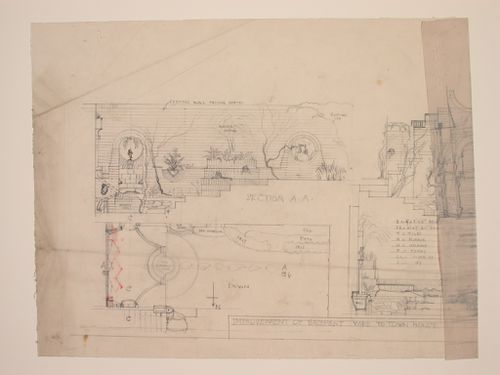
- This drawing shows a design for improvements to a townhouse garden, including garden walls, bath and fountain. Plant species are also identified. - The style of many of these drawings and reprographic copies by Henry Hyams (DR1988:0332 - DR1988:0414) suggests that they were possibly for periodical illustrations. Hyams contributed articles to the periodicals 'The Builder' and 'The Architect'. Two objects in the CCA collections can be linked to the article "Music in Stone" published prior to 1926 in 'The Architect'; a reprographic copy (DR1988:0357) and a drawing (DR1988:0364) (Who's Who in Architecture, 161).
DR1988:0361
Description:
- This drawing shows a design for improvements to a townhouse garden, including garden walls, bath and fountain. Plant species are also identified. - The style of many of these drawings and reprographic copies by Henry Hyams (DR1988:0332 - DR1988:0414) suggests that they were possibly for periodical illustrations. Hyams contributed articles to the periodicals 'The Builder' and 'The Architect'. Two objects in the CCA collections can be linked to the article "Music in Stone" published prior to 1926 in 'The Architect'; a reprographic copy (DR1988:0357) and a drawing (DR1988:0364) (Who's Who in Architecture, 161).
People:
Subject:
landscape architecture
landscape architecture
Date:
1920s or 1930s
1920s or 1930s
Title:
Sketch sections, plan, and elevation for improvements to a town house yard
Actions:
DR1988:0361
Description:
- This drawing shows a design for improvements to a townhouse garden, including garden walls, bath and fountain. Plant species are also identified. - The style of many of these drawings and reprographic copies by Henry Hyams (DR1988:0332 - DR1988:0414) suggests that they were possibly for periodical illustrations. Hyams contributed articles to the periodicals 'The Builder' and 'The Architect'. Two objects in the CCA collections can be linked to the article "Music in Stone" published prior to 1926 in 'The Architect'; a reprographic copy (DR1988:0357) and a drawing (DR1988:0364) (Who's Who in Architecture, 161).
Sketch sections, plan, and elevation for improvements to a town house yard
Actions:
DR1988:0361
Description:
- This drawing shows a design for improvements to a townhouse garden, including garden walls, bath and fountain. Plant species are also identified. - The style of many of these drawings and reprographic copies by Henry Hyams (DR1988:0332 - DR1988:0414) suggests that they were possibly for periodical illustrations. Hyams contributed articles to the periodicals 'The Builder' and 'The Architect'. Two objects in the CCA collections can be linked to the article "Music in Stone" published prior to 1926 in 'The Architect'; a reprographic copy (DR1988:0357) and a drawing (DR1988:0364) (Who's Who in Architecture, 161).
Form:
drawings
drawings
Date:
1920s or 1930s
1920s or 1930s
People:
Subject:
landscape architecture
landscape architecture
Level of archival description:
Project
Project
Reference number:
AP178.S1.1983.PR02
Description:
The project series documents the 1983 design entry for the competition of the Prinz-Albrecht-Palais Monument to Gestapo victims. While the records were held in the office’s archives this project was assigned the number 18/80. The office assigned the date 1983 for this project. This project was submitted to the International Architectural Exhibition Berlin competition (International Bauaustellung, IBA, circa 1979-1987), an urban renewal strategy for West Berlin, Germany. Siza had previously submitted four other projects to this competition: the Görtlitzer Bad swimming pool, Block 70 and 89 (Fränkelufer residential complex), Bonjour Tristesse (Block 121), and Block 11-12. He would also submit a design proposal to the IBA competition for the Kulturforum. According to the documentation from the IBA competition, entries for the memorial were to include a pedestrian walkway that cut through the memorial parallel to Schöneberger strasse leading to Kochstrasse. Entries were also to include a playground and along Stresemann strasse there was to be the addition of a two storey building and a corner building. Other requested components included a parking lot and a partial reconstruction of the Fine Arts School. Documenting the design proposal are conceptual and design development drawings, including studies, a site axonometric drawing, ground plan, site plan and north, south, and east elevations. Also included is textual documentation on the competition as well as correspondence from IBA officials such as Marion Wilbert. Photographic materials consist of slides of plans, sections and elevations.
AP178.S1.1983.PR02
Description:
The project series documents the 1983 design entry for the competition of the Prinz-Albrecht-Palais Monument to Gestapo victims. While the records were held in the office’s archives this project was assigned the number 18/80. The office assigned the date 1983 for this project. This project was submitted to the International Architectural Exhibition Berlin competition (International Bauaustellung, IBA, circa 1979-1987), an urban renewal strategy for West Berlin, Germany. Siza had previously submitted four other projects to this competition: the Görtlitzer Bad swimming pool, Block 70 and 89 (Fränkelufer residential complex), Bonjour Tristesse (Block 121), and Block 11-12. He would also submit a design proposal to the IBA competition for the Kulturforum. According to the documentation from the IBA competition, entries for the memorial were to include a pedestrian walkway that cut through the memorial parallel to Schöneberger strasse leading to Kochstrasse. Entries were also to include a playground and along Stresemann strasse there was to be the addition of a two storey building and a corner building. Other requested components included a parking lot and a partial reconstruction of the Fine Arts School. Documenting the design proposal are conceptual and design development drawings, including studies, a site axonometric drawing, ground plan, site plan and north, south, and east elevations. Also included is textual documentation on the competition as well as correspondence from IBA officials such as Marion Wilbert. Photographic materials consist of slides of plans, sections and elevations.
People:
Date:
1983-1984
1983-1984
Title:
Monumento às vítimas da Gestapo [Monument to Gestapo victims], Prinz-Albrecht-Palais, Berlin, Germany (1983)
Actions:
AP178.S1.1983.PR02
Description:
The project series documents the 1983 design entry for the competition of the Prinz-Albrecht-Palais Monument to Gestapo victims. While the records were held in the office’s archives this project was assigned the number 18/80. The office assigned the date 1983 for this project. This project was submitted to the International Architectural Exhibition Berlin competition (International Bauaustellung, IBA, circa 1979-1987), an urban renewal strategy for West Berlin, Germany. Siza had previously submitted four other projects to this competition: the Görtlitzer Bad swimming pool, Block 70 and 89 (Fränkelufer residential complex), Bonjour Tristesse (Block 121), and Block 11-12. He would also submit a design proposal to the IBA competition for the Kulturforum. According to the documentation from the IBA competition, entries for the memorial were to include a pedestrian walkway that cut through the memorial parallel to Schöneberger strasse leading to Kochstrasse. Entries were also to include a playground and along Stresemann strasse there was to be the addition of a two storey building and a corner building. Other requested components included a parking lot and a partial reconstruction of the Fine Arts School. Documenting the design proposal are conceptual and design development drawings, including studies, a site axonometric drawing, ground plan, site plan and north, south, and east elevations. Also included is textual documentation on the competition as well as correspondence from IBA officials such as Marion Wilbert. Photographic materials consist of slides of plans, sections and elevations.
Monumento às vítimas da Gestapo [Monument to Gestapo victims], Prinz-Albrecht-Palais, Berlin, Germany (1983)
Actions:
AP178.S1.1983.PR02
Description:
The project series documents the 1983 design entry for the competition of the Prinz-Albrecht-Palais Monument to Gestapo victims. While the records were held in the office’s archives this project was assigned the number 18/80. The office assigned the date 1983 for this project. This project was submitted to the International Architectural Exhibition Berlin competition (International Bauaustellung, IBA, circa 1979-1987), an urban renewal strategy for West Berlin, Germany. Siza had previously submitted four other projects to this competition: the Görtlitzer Bad swimming pool, Block 70 and 89 (Fränkelufer residential complex), Bonjour Tristesse (Block 121), and Block 11-12. He would also submit a design proposal to the IBA competition for the Kulturforum. According to the documentation from the IBA competition, entries for the memorial were to include a pedestrian walkway that cut through the memorial parallel to Schöneberger strasse leading to Kochstrasse. Entries were also to include a playground and along Stresemann strasse there was to be the addition of a two storey building and a corner building. Other requested components included a parking lot and a partial reconstruction of the Fine Arts School. Documenting the design proposal are conceptual and design development drawings, including studies, a site axonometric drawing, ground plan, site plan and north, south, and east elevations. Also included is textual documentation on the competition as well as correspondence from IBA officials such as Marion Wilbert. Photographic materials consist of slides of plans, sections and elevations.
Level of archival description:
Project
Project
Date:
1983-1984
1983-1984
People:
Level of archival description:
Project
Project
Reference number:
AP075.S1.2008.PR02
Description:
Project series documents Cornelia Hahn Oberlander's project for the Inuvik School, later known as East Three School, in Inuvik, Northwest Territories. The project consisted in the landscape design and a playground design for the new school replacing the Sir Alexander MacKenzie elementary school and the Samuel Herne Secondary School. Oberlander worked on this project from 2008 to 2012 with architects Pin/Taylor. During her design process, Oberlander consulted the teachers, parents, staff and students on ways to express their culture in the landscape design. She also had to adapt her design to the extreme climate of the region. Oberlander located the play court at the angle of the two buildings of the elementary school and the secondary school, to shelter it from the wind, and allowing small children to play outside. The plant selection was made by "harvesting local site and surrounding area for plant material" [1] and was also inspired by traditional cuisine. The project was completed in 2012. The project series also includes some documents related to a project possibly unrealized of the Jim Koe Park also in Inuvik, near the school. The project series contains design development drawings and working drawings, such as planting plans, irrigation plans, grading plans, landscape sections, and site plans. The drawings also includes sets of building plans used as reference. The project is also documented through correspondence, including with architects, suppliers, and consultants, specifications, scope of work, schematic design and design reports from architectural firm, minutes of meetings, and research material. Source: [1] Herrington, Susan. Cornelia Hahn Oberlander: Making the Modern Landscape, University of Virginia Press, 2014, 304 pages, p. 197.
AP075.S1.2008.PR02
Description:
Project series documents Cornelia Hahn Oberlander's project for the Inuvik School, later known as East Three School, in Inuvik, Northwest Territories. The project consisted in the landscape design and a playground design for the new school replacing the Sir Alexander MacKenzie elementary school and the Samuel Herne Secondary School. Oberlander worked on this project from 2008 to 2012 with architects Pin/Taylor. During her design process, Oberlander consulted the teachers, parents, staff and students on ways to express their culture in the landscape design. She also had to adapt her design to the extreme climate of the region. Oberlander located the play court at the angle of the two buildings of the elementary school and the secondary school, to shelter it from the wind, and allowing small children to play outside. The plant selection was made by "harvesting local site and surrounding area for plant material" [1] and was also inspired by traditional cuisine. The project was completed in 2012. The project series also includes some documents related to a project possibly unrealized of the Jim Koe Park also in Inuvik, near the school. The project series contains design development drawings and working drawings, such as planting plans, irrigation plans, grading plans, landscape sections, and site plans. The drawings also includes sets of building plans used as reference. The project is also documented through correspondence, including with architects, suppliers, and consultants, specifications, scope of work, schematic design and design reports from architectural firm, minutes of meetings, and research material. Source: [1] Herrington, Susan. Cornelia Hahn Oberlander: Making the Modern Landscape, University of Virginia Press, 2014, 304 pages, p. 197.
People:
Date:
1999-2014
1999-2014
Title:
Inuvik School, Inuvik, Northwest Territories (2008)
Actions:
AP075.S1.2008.PR02
Description:
Project series documents Cornelia Hahn Oberlander's project for the Inuvik School, later known as East Three School, in Inuvik, Northwest Territories. The project consisted in the landscape design and a playground design for the new school replacing the Sir Alexander MacKenzie elementary school and the Samuel Herne Secondary School. Oberlander worked on this project from 2008 to 2012 with architects Pin/Taylor. During her design process, Oberlander consulted the teachers, parents, staff and students on ways to express their culture in the landscape design. She also had to adapt her design to the extreme climate of the region. Oberlander located the play court at the angle of the two buildings of the elementary school and the secondary school, to shelter it from the wind, and allowing small children to play outside. The plant selection was made by "harvesting local site and surrounding area for plant material" [1] and was also inspired by traditional cuisine. The project was completed in 2012. The project series also includes some documents related to a project possibly unrealized of the Jim Koe Park also in Inuvik, near the school. The project series contains design development drawings and working drawings, such as planting plans, irrigation plans, grading plans, landscape sections, and site plans. The drawings also includes sets of building plans used as reference. The project is also documented through correspondence, including with architects, suppliers, and consultants, specifications, scope of work, schematic design and design reports from architectural firm, minutes of meetings, and research material. Source: [1] Herrington, Susan. Cornelia Hahn Oberlander: Making the Modern Landscape, University of Virginia Press, 2014, 304 pages, p. 197.
Inuvik School, Inuvik, Northwest Territories (2008)
Actions:
AP075.S1.2008.PR02
Description:
Project series documents Cornelia Hahn Oberlander's project for the Inuvik School, later known as East Three School, in Inuvik, Northwest Territories. The project consisted in the landscape design and a playground design for the new school replacing the Sir Alexander MacKenzie elementary school and the Samuel Herne Secondary School. Oberlander worked on this project from 2008 to 2012 with architects Pin/Taylor. During her design process, Oberlander consulted the teachers, parents, staff and students on ways to express their culture in the landscape design. She also had to adapt her design to the extreme climate of the region. Oberlander located the play court at the angle of the two buildings of the elementary school and the secondary school, to shelter it from the wind, and allowing small children to play outside. The plant selection was made by "harvesting local site and surrounding area for plant material" [1] and was also inspired by traditional cuisine. The project was completed in 2012. The project series also includes some documents related to a project possibly unrealized of the Jim Koe Park also in Inuvik, near the school. The project series contains design development drawings and working drawings, such as planting plans, irrigation plans, grading plans, landscape sections, and site plans. The drawings also includes sets of building plans used as reference. The project is also documented through correspondence, including with architects, suppliers, and consultants, specifications, scope of work, schematic design and design reports from architectural firm, minutes of meetings, and research material. Source: [1] Herrington, Susan. Cornelia Hahn Oberlander: Making the Modern Landscape, University of Virginia Press, 2014, 304 pages, p. 197.
Level of archival description:
Project
Project
Date:
1999-2014
1999-2014
People:


