


5600 Results
Form:
textual records
textual records
Title:
[untitled]
[untitled]
Actions:
Reference number:
ARCH253818
Description:
report: Prototype Terminal Unit Research Project for the Department of Transport, Ottawa. Prepared by van Ginkel Associates in association with Kates, Peat, Marwick and Co.; Foundation of Canada Engineering Corporation Ltd; Baracs and Gunther, Consulting Engineers; Hanscomb Roy Associates; Irnes Inc.; Shector, Barbacki, Forte and Associates; and Langlois, Crossey, Côté, Leclair. Section 2: Concepts.
ARCH253818
Description:
report: Prototype Terminal Unit Research Project for the Department of Transport, Ottawa. Prepared by van Ginkel Associates in association with Kates, Peat, Marwick and Co.; Foundation of Canada Engineering Corporation Ltd; Baracs and Gunther, Consulting Engineers; Hanscomb Roy Associates; Irnes Inc.; Shector, Barbacki, Forte and Associates; and Langlois, Crossey, Côté, Leclair. Section 2: Concepts.
People:
Date:
1969
1969
Title:
[untitled]
Actions:
ARCH253818
Description:
report: Prototype Terminal Unit Research Project for the Department of Transport, Ottawa. Prepared by van Ginkel Associates in association with Kates, Peat, Marwick and Co.; Foundation of Canada Engineering Corporation Ltd; Baracs and Gunther, Consulting Engineers; Hanscomb Roy Associates; Irnes Inc.; Shector, Barbacki, Forte and Associates; and Langlois, Crossey, Côté, Leclair. Section 2: Concepts.
[untitled]
Actions:
ARCH253818
Description:
report: Prototype Terminal Unit Research Project for the Department of Transport, Ottawa. Prepared by van Ginkel Associates in association with Kates, Peat, Marwick and Co.; Foundation of Canada Engineering Corporation Ltd; Baracs and Gunther, Consulting Engineers; Hanscomb Roy Associates; Irnes Inc.; Shector, Barbacki, Forte and Associates; and Langlois, Crossey, Côté, Leclair. Section 2: Concepts.
Form:
textual records
textual records
Date:
1969
1969
People:
Form:
exhibitions
exhibitions
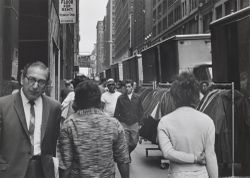
Title:
West 37th Street, Manhattan, photographed by John Veltri between 13 September and 18 September 1966
West 37th Street, Manhattan, photographed by John Veltri between 13 September and 18 September 1966
Actions:
Description:
This exhibition highlights a work that the New York engineering firm Leonard S. Wegman Co. commissioned in 1966 from John Veltri. Veltri was to photograph every building, parking area, and shaftway on West 37th Street between 8th and 9th Avenues, at the heart of Manhattan’s busy Garment District. The photographs Veltri made in connection with Wegman Co.’s redevelopment(...)
This exhibition highlights a work that the New York engineering firm Leonard S. Wegman Co. commissioned in 1966 from John Veltri. Veltri was to photograph every building, parking area, and shaftway on West 37th Street between 8th and 9th Avenues, at the heart of Manhattan’s busy Garment District. The photographs Veltri made in connection with Wegman Co.’s redevelopment(...)
Location:
Octagonal gallery
Octagonal gallery
Date:
11 December 2003 to 7 March 2004
11 December 2003 to 7 March 2004
Title:
West 37th Street, Manhattan, photographed by John Veltri between 13 September and 18 September 1966
Actions:
Description:
This exhibition highlights a work that the New York engineering firm Leonard S. Wegman Co. commissioned in 1966 from John Veltri. Veltri was to photograph every building, parking area, and shaftway on West 37th Street between 8th and 9th Avenues, at the heart of Manhattan’s busy Garment District. The photographs Veltri made in connection with Wegman Co.’s redevelopment(...)
West 37th Street, Manhattan, photographed by John Veltri between 13 September and 18 September 1966
Actions:
Description:
This exhibition highlights a work that the New York engineering firm Leonard S. Wegman Co. commissioned in 1966 from John Veltri. Veltri was to photograph every building, parking area, and shaftway on West 37th Street between 8th and 9th Avenues, at the heart of Manhattan’s busy Garment District. The photographs Veltri made in connection with Wegman Co.’s redevelopment(...)
Form:
exhibitions
exhibitions
Date:
11 December 2003 to
7 March 2004
11 December 2003 to
7 March 2004
Location:
Octagonal gallery
Octagonal gallery
Level of archival description:
Project
Project
Title:
Water Wall
Water Wall
Reference number:
AP144.S2.D94
Description:
File documents an unrealized project for a breakwater in Abu Dhabi, United Arab Emirates. Cedric Price collaborated with civil and structural engineering firm, Harris & Sutherland, to make a floating breakwater into a 'sea garden'. The design integrates the breakwater, which protects the beach, with imaginative leisure activities: moorings for 800 boats, a pontoon composed of a continuous chain of dinghies, an illuminated "time" fountain, a floating grand stand, drifting feature buoys, a coral walk and water garden. Cedric Price describes the breakwater as "effortlessly towing its floating leisure facilities and toys along it" (Cedric Price-Works II, 72). Design development diagrams and charts explore the various components and activities. Many conceptual drawings and perspective sketches are included within the textual records. Some material in this file was published in 'Cedric Price-Works II' (London: Architectural Press, 1984), 72, 77. Material in this file was produced between 1971 and 1989, but predominantly between 1973 and 1976. File contains design development drawings, presentation drawings, and textual records.
AP144.S2.D94
Description:
File documents an unrealized project for a breakwater in Abu Dhabi, United Arab Emirates. Cedric Price collaborated with civil and structural engineering firm, Harris & Sutherland, to make a floating breakwater into a 'sea garden'. The design integrates the breakwater, which protects the beach, with imaginative leisure activities: moorings for 800 boats, a pontoon composed of a continuous chain of dinghies, an illuminated "time" fountain, a floating grand stand, drifting feature buoys, a coral walk and water garden. Cedric Price describes the breakwater as "effortlessly towing its floating leisure facilities and toys along it" (Cedric Price-Works II, 72). Design development diagrams and charts explore the various components and activities. Many conceptual drawings and perspective sketches are included within the textual records. Some material in this file was published in 'Cedric Price-Works II' (London: Architectural Press, 1984), 72, 77. Material in this file was produced between 1971 and 1989, but predominantly between 1973 and 1976. File contains design development drawings, presentation drawings, and textual records.
People:
Date:
1971-1989, predominant 1973-1976
1971-1989, predominant 1973-1976
Title:
Water Wall
Actions:
AP144.S2.D94
Description:
File documents an unrealized project for a breakwater in Abu Dhabi, United Arab Emirates. Cedric Price collaborated with civil and structural engineering firm, Harris & Sutherland, to make a floating breakwater into a 'sea garden'. The design integrates the breakwater, which protects the beach, with imaginative leisure activities: moorings for 800 boats, a pontoon composed of a continuous chain of dinghies, an illuminated "time" fountain, a floating grand stand, drifting feature buoys, a coral walk and water garden. Cedric Price describes the breakwater as "effortlessly towing its floating leisure facilities and toys along it" (Cedric Price-Works II, 72). Design development diagrams and charts explore the various components and activities. Many conceptual drawings and perspective sketches are included within the textual records. Some material in this file was published in 'Cedric Price-Works II' (London: Architectural Press, 1984), 72, 77. Material in this file was produced between 1971 and 1989, but predominantly between 1973 and 1976. File contains design development drawings, presentation drawings, and textual records.
Water Wall
Actions:
AP144.S2.D94
Description:
File documents an unrealized project for a breakwater in Abu Dhabi, United Arab Emirates. Cedric Price collaborated with civil and structural engineering firm, Harris & Sutherland, to make a floating breakwater into a 'sea garden'. The design integrates the breakwater, which protects the beach, with imaginative leisure activities: moorings for 800 boats, a pontoon composed of a continuous chain of dinghies, an illuminated "time" fountain, a floating grand stand, drifting feature buoys, a coral walk and water garden. Cedric Price describes the breakwater as "effortlessly towing its floating leisure facilities and toys along it" (Cedric Price-Works II, 72). Design development diagrams and charts explore the various components and activities. Many conceptual drawings and perspective sketches are included within the textual records. Some material in this file was published in 'Cedric Price-Works II' (London: Architectural Press, 1984), 72, 77. Material in this file was produced between 1971 and 1989, but predominantly between 1973 and 1976. File contains design development drawings, presentation drawings, and textual records.
Level of archival description:
File 94
File 94
Date:
1971-1989, predominant 1973-1976
1971-1989, predominant 1973-1976
People:
Form:
drawings
Quantity:
18 File
drawings
Quantity:
18 File
Title:
General Offices
General Offices
Actions:
Reference number:
ARCH41057
Description:
General Offices; structure, dental clinic, pipe trench: Signal and A.S.D.I.C. basement toilets, dimensioned block plans, pedestal cuspidor and operating light, Machine Shop and Engineering Building expansion joints, wall details of barracks buildings, water pipe lines, Hospital pipe branches and steel stack, hospital pipe trench and water main, manhole, exterior sewer of Torpedo and Gunnery School
ARCH41057
Description:
General Offices; structure, dental clinic, pipe trench: Signal and A.S.D.I.C. basement toilets, dimensioned block plans, pedestal cuspidor and operating light, Machine Shop and Engineering Building expansion joints, wall details of barracks buildings, water pipe lines, Hospital pipe branches and steel stack, hospital pipe trench and water main, manhole, exterior sewer of Torpedo and Gunnery School
People:
Title:
General Offices
Actions:
ARCH41057
Description:
General Offices; structure, dental clinic, pipe trench: Signal and A.S.D.I.C. basement toilets, dimensioned block plans, pedestal cuspidor and operating light, Machine Shop and Engineering Building expansion joints, wall details of barracks buildings, water pipe lines, Hospital pipe branches and steel stack, hospital pipe trench and water main, manhole, exterior sewer of Torpedo and Gunnery School
General Offices
Actions:
ARCH41057
Description:
General Offices; structure, dental clinic, pipe trench: Signal and A.S.D.I.C. basement toilets, dimensioned block plans, pedestal cuspidor and operating light, Machine Shop and Engineering Building expansion joints, wall details of barracks buildings, water pipe lines, Hospital pipe branches and steel stack, hospital pipe trench and water main, manhole, exterior sewer of Torpedo and Gunnery School
Form:
drawings
Quantity:
18 File
drawings
Quantity:
18 File
People:
Form:
textual records
textual records
Actions:
Reference number:
ARCH257641
Description:
4 files (concerning exit stairs, lobby and furniture, guard rails, dry wall problems), notes, sketches, memos, transmittals, correspondence, The Vancouver Museums report (1965), Engineering report on acoustics, Fort Camp Feasibility Study report (1971), 5 binders of notes and miscellaneous information, Storm Darinage Requirements report (1963), Soil Conditions report (1970), Museum of Man Functional Program (1972)
ARCH257641
Description:
4 files (concerning exit stairs, lobby and furniture, guard rails, dry wall problems), notes, sketches, memos, transmittals, correspondence, The Vancouver Museums report (1965), Engineering report on acoustics, Fort Camp Feasibility Study report (1971), 5 binders of notes and miscellaneous information, Storm Darinage Requirements report (1963), Soil Conditions report (1970), Museum of Man Functional Program (1972)
People:
Date:
1973-1976
1973-1976
Title:
Notes, sketches, memos, transmittals, correspondence
Actions:
ARCH257641
Description:
4 files (concerning exit stairs, lobby and furniture, guard rails, dry wall problems), notes, sketches, memos, transmittals, correspondence, The Vancouver Museums report (1965), Engineering report on acoustics, Fort Camp Feasibility Study report (1971), 5 binders of notes and miscellaneous information, Storm Darinage Requirements report (1963), Soil Conditions report (1970), Museum of Man Functional Program (1972)
Notes, sketches, memos, transmittals, correspondence
Actions:
ARCH257641
Description:
4 files (concerning exit stairs, lobby and furniture, guard rails, dry wall problems), notes, sketches, memos, transmittals, correspondence, The Vancouver Museums report (1965), Engineering report on acoustics, Fort Camp Feasibility Study report (1971), 5 binders of notes and miscellaneous information, Storm Darinage Requirements report (1963), Soil Conditions report (1970), Museum of Man Functional Program (1972)
Form:
textual records
textual records
Date:
1973-1976
1973-1976
People:
Form:
textual records
textual records
Title:
[untitled]
[untitled]
Actions:
Reference number:
ARCH253819
Description:
report: Prototype Terminal Unit Research Project for the Department of Transport, Ottawa. Prepared by van Ginkel Associates in association with Kates, Peat, Marwick and Co.; Foundation of Canada Engineering Corporation Ltd; Baracs and Gunther, Consulting Engineers; Hanscomb Roy Associates; Irnes Inc.; Shector, Barbacki, Forte and Associates; and Langlois, Crossey, Côté, Leclair. Section 3: Application, parts 1.
ARCH253819
Description:
report: Prototype Terminal Unit Research Project for the Department of Transport, Ottawa. Prepared by van Ginkel Associates in association with Kates, Peat, Marwick and Co.; Foundation of Canada Engineering Corporation Ltd; Baracs and Gunther, Consulting Engineers; Hanscomb Roy Associates; Irnes Inc.; Shector, Barbacki, Forte and Associates; and Langlois, Crossey, Côté, Leclair. Section 3: Application, parts 1.
People:
Date:
1969
1969
Title:
[untitled]
Actions:
ARCH253819
Description:
report: Prototype Terminal Unit Research Project for the Department of Transport, Ottawa. Prepared by van Ginkel Associates in association with Kates, Peat, Marwick and Co.; Foundation of Canada Engineering Corporation Ltd; Baracs and Gunther, Consulting Engineers; Hanscomb Roy Associates; Irnes Inc.; Shector, Barbacki, Forte and Associates; and Langlois, Crossey, Côté, Leclair. Section 3: Application, parts 1.
[untitled]
Actions:
ARCH253819
Description:
report: Prototype Terminal Unit Research Project for the Department of Transport, Ottawa. Prepared by van Ginkel Associates in association with Kates, Peat, Marwick and Co.; Foundation of Canada Engineering Corporation Ltd; Baracs and Gunther, Consulting Engineers; Hanscomb Roy Associates; Irnes Inc.; Shector, Barbacki, Forte and Associates; and Langlois, Crossey, Côté, Leclair. Section 3: Application, parts 1.
Form:
textual records
textual records
Date:
1969
1969
People:
Form:
textual records
textual records
Title:
[untitled]
[untitled]
Actions:
Reference number:
ARCH253820
Description:
report: Prototype Terminal Unit Research Project for the Department of Transport, Ottawa. Prepared by van Ginkel Associates in association with Kates, Peat, Marwick and Co.; Foundation of Canada Engineering Corporation Ltd; Baracs and Gunther, Consulting Engineers; Hanscomb Roy Associates; Irnes Inc.; Shector, Barbacki, Forte and Associates; and Langlois, Crossey, Côté, Leclair. Section 3: Application, parts 2.
ARCH253820
Description:
report: Prototype Terminal Unit Research Project for the Department of Transport, Ottawa. Prepared by van Ginkel Associates in association with Kates, Peat, Marwick and Co.; Foundation of Canada Engineering Corporation Ltd; Baracs and Gunther, Consulting Engineers; Hanscomb Roy Associates; Irnes Inc.; Shector, Barbacki, Forte and Associates; and Langlois, Crossey, Côté, Leclair. Section 3: Application, parts 2.
People:
Date:
1969
1969
Title:
[untitled]
Actions:
ARCH253820
Description:
report: Prototype Terminal Unit Research Project for the Department of Transport, Ottawa. Prepared by van Ginkel Associates in association with Kates, Peat, Marwick and Co.; Foundation of Canada Engineering Corporation Ltd; Baracs and Gunther, Consulting Engineers; Hanscomb Roy Associates; Irnes Inc.; Shector, Barbacki, Forte and Associates; and Langlois, Crossey, Côté, Leclair. Section 3: Application, parts 2.
[untitled]
Actions:
ARCH253820
Description:
report: Prototype Terminal Unit Research Project for the Department of Transport, Ottawa. Prepared by van Ginkel Associates in association with Kates, Peat, Marwick and Co.; Foundation of Canada Engineering Corporation Ltd; Baracs and Gunther, Consulting Engineers; Hanscomb Roy Associates; Irnes Inc.; Shector, Barbacki, Forte and Associates; and Langlois, Crossey, Côté, Leclair. Section 3: Application, parts 2.
Form:
textual records
textual records
Date:
1969
1969
People:
Form:
textual records
textual records
Title:
[untitled]
[untitled]
Actions:
Reference number:
ARCH253821
Description:
report: Prototype Terminal Unit Research Project for the Department of Transport, Ottawa. Prepared by van Ginkel Associates in association with Kates, Peat, Marwick and Co.; Foundation of Canada Engineering Corporation Ltd; Baracs and Gunther, Consulting Engineers; Hanscomb Roy Associates; Irnes Inc.; Shector, Barbacki, Forte and Associates; and Langlois, Crossey, Côté, Leclair. Section 3: Application, parts 2.
ARCH253821
Description:
report: Prototype Terminal Unit Research Project for the Department of Transport, Ottawa. Prepared by van Ginkel Associates in association with Kates, Peat, Marwick and Co.; Foundation of Canada Engineering Corporation Ltd; Baracs and Gunther, Consulting Engineers; Hanscomb Roy Associates; Irnes Inc.; Shector, Barbacki, Forte and Associates; and Langlois, Crossey, Côté, Leclair. Section 3: Application, parts 2.
People:
Date:
1969
1969
Title:
[untitled]
Actions:
ARCH253821
Description:
report: Prototype Terminal Unit Research Project for the Department of Transport, Ottawa. Prepared by van Ginkel Associates in association with Kates, Peat, Marwick and Co.; Foundation of Canada Engineering Corporation Ltd; Baracs and Gunther, Consulting Engineers; Hanscomb Roy Associates; Irnes Inc.; Shector, Barbacki, Forte and Associates; and Langlois, Crossey, Côté, Leclair. Section 3: Application, parts 2.
[untitled]
Actions:
ARCH253821
Description:
report: Prototype Terminal Unit Research Project for the Department of Transport, Ottawa. Prepared by van Ginkel Associates in association with Kates, Peat, Marwick and Co.; Foundation of Canada Engineering Corporation Ltd; Baracs and Gunther, Consulting Engineers; Hanscomb Roy Associates; Irnes Inc.; Shector, Barbacki, Forte and Associates; and Langlois, Crossey, Côté, Leclair. Section 3: Application, parts 2.
Form:
textual records
textual records
Date:
1969
1969
People:
Level of archival description:
Project
Project
Title:
Toronto International Airport, Terminal Two Parking Structures, Mississauga, Ontario (1974-1975)
Toronto International Airport, Terminal Two Parking Structures, Mississauga, Ontario (1974-1975)
Actions:
Reference number:
AP018.S1.1974.PR19
Description:
This project series documents a parking structure for the Toronto International Airport in Mississauga, Ontario from 1974-1975. The office identified the project number as 7425. This project consisted of a five-level, above ground parking garage with a capacity of approximately 5000 vehicles. The parking structure was designed for Terminal Two at the airport (now known as Toronto Pearson International Airport) and would connect departing and arriving passengers from the airport to the structure via tunnels. Parkin Architect Planners were hired as the consulting architects for this project by Fenco-Barton Engineers. Fenco Barton was awarded with the Prestressed Concrete Institute Award in 1979 to for excellence in architectural and engineering design using precast and prestressed concrete. The project is recorded through drawings, photographic materials and textual records dating from 1974-1975. The drawings are mostly original sketches of the design. Photographs and negatives show research on other parking structures. The textual records consist of correspondence, conference reports, interoffice letters and project notes. Box AP018.S1.1974.PR19.009 contains an index to the textual records, which was created by the office
AP018.S1.1974.PR19
Description:
This project series documents a parking structure for the Toronto International Airport in Mississauga, Ontario from 1974-1975. The office identified the project number as 7425. This project consisted of a five-level, above ground parking garage with a capacity of approximately 5000 vehicles. The parking structure was designed for Terminal Two at the airport (now known as Toronto Pearson International Airport) and would connect departing and arriving passengers from the airport to the structure via tunnels. Parkin Architect Planners were hired as the consulting architects for this project by Fenco-Barton Engineers. Fenco Barton was awarded with the Prestressed Concrete Institute Award in 1979 to for excellence in architectural and engineering design using precast and prestressed concrete. The project is recorded through drawings, photographic materials and textual records dating from 1974-1975. The drawings are mostly original sketches of the design. Photographs and negatives show research on other parking structures. The textual records consist of correspondence, conference reports, interoffice letters and project notes. Box AP018.S1.1974.PR19.009 contains an index to the textual records, which was created by the office
People:
Date:
1974-1975
1974-1975
Title:
Toronto International Airport, Terminal Two Parking Structures, Mississauga, Ontario (1974-1975)
Actions:
AP018.S1.1974.PR19
Description:
This project series documents a parking structure for the Toronto International Airport in Mississauga, Ontario from 1974-1975. The office identified the project number as 7425. This project consisted of a five-level, above ground parking garage with a capacity of approximately 5000 vehicles. The parking structure was designed for Terminal Two at the airport (now known as Toronto Pearson International Airport) and would connect departing and arriving passengers from the airport to the structure via tunnels. Parkin Architect Planners were hired as the consulting architects for this project by Fenco-Barton Engineers. Fenco Barton was awarded with the Prestressed Concrete Institute Award in 1979 to for excellence in architectural and engineering design using precast and prestressed concrete. The project is recorded through drawings, photographic materials and textual records dating from 1974-1975. The drawings are mostly original sketches of the design. Photographs and negatives show research on other parking structures. The textual records consist of correspondence, conference reports, interoffice letters and project notes. Box AP018.S1.1974.PR19.009 contains an index to the textual records, which was created by the office
Toronto International Airport, Terminal Two Parking Structures, Mississauga, Ontario (1974-1975)
Actions:
AP018.S1.1974.PR19
Description:
This project series documents a parking structure for the Toronto International Airport in Mississauga, Ontario from 1974-1975. The office identified the project number as 7425. This project consisted of a five-level, above ground parking garage with a capacity of approximately 5000 vehicles. The parking structure was designed for Terminal Two at the airport (now known as Toronto Pearson International Airport) and would connect departing and arriving passengers from the airport to the structure via tunnels. Parkin Architect Planners were hired as the consulting architects for this project by Fenco-Barton Engineers. Fenco Barton was awarded with the Prestressed Concrete Institute Award in 1979 to for excellence in architectural and engineering design using precast and prestressed concrete. The project is recorded through drawings, photographic materials and textual records dating from 1974-1975. The drawings are mostly original sketches of the design. Photographs and negatives show research on other parking structures. The textual records consist of correspondence, conference reports, interoffice letters and project notes. Box AP018.S1.1974.PR19.009 contains an index to the textual records, which was created by the office
Level of archival description:
Project
Project
Date:
1974-1975
1974-1975
People:
Level of archival description:
Series
Series
Reference number:
AP181.S1
Description:
Series 1, BMW Welt development and construction records, 1994-2015, documents the design development and construction phases of COOP HIMMELB(L)AU BMW Welt building, located nearby the BMW headquarters in Munich. This series also contains some materials from the competition phase, corresponding to less than 2000 digital files, and models from the third phase of the competition. More than half of the records were created from 2003 to 2006. Records show how COOP HIMMELB(L)AU, and the numerous consultants on the project, materialized the original concept, from Wolf Prix sketch, of this cloud-like roof emerging from a double cone suggesting an hurricane eye. To achieve this, extensive digital structural testing was done with engineers Bollinger + Grohmann. Consultants list also include: - Hans Lechner ZT GmbH for in-house project management; - Schmitt, Stumpf, Frühauf + Partner for construction documents of concrete works, interior fittings, tender and construction administration; - Emmer Pfenninger + Partner AG for the facade; - Transsolar, Klima Engineering for the photovoltaic plant on the roof; - PRO, Elektroplan for electrical systems and lifts; - AG-Licht for lighting; - Büro Dr. Pfeiler for structural physics or building physics; - Theater Projekte Daberto+Kollegen for the stage and auditorium; - PBB Planungsbüro Balke for kitchen technology - realgruen Landschaftsarchitekten for lansdcape design; - Kersken & Kirchner for fire protection; - TAW Weisse for height accessibility planning, in consideration for maintenance access; - Lang & Brukhardt for traffic engineering; - Ingenieurbüro Schoenenberg for civil engineering and road construction; - Büro für Gestaltung / Wangler & Abele for signage; - And Zilch, Müller, Henneke as inspection engineers. The approximately 52,400 digital files include raster images, CAD drawings and 3D digital models, plotter files, standard office documents, databases, and scripts. Design files are predominantly in AutoCAD, but the archive also includes over 1,100 Rhinoceros files (primarily in Rhino version 2, with some files in versions 3 and 4) and a smaller number of files in Maya, 3D Studio, Microstation, form*Z, and Revit formats. Because the firm’s computing environment included Macs, the archive also includes a few AppleDouble resource forks. Often, CAD drawings were also saved as PDF files. Photographs and screen captures were most times saved as JPEG files. Finally, design files also include wireframes and renderings. Most often, design files are plans of a designated area, a complete level of the building for example, but they also often show very specific and technical details, such as a few millimetres to be corrected on a panel or a structural element. These types of corrections are frequently shown in PDF files where annotations were either made digitally, or they were handwritten on a printed version which would then be digitized. Design files document all parts of the building including the facade, the roof, the double cone (Doppelkegel), the restaurants, the shops, the exhibition areas, the auditorium, etc. Accompanying textual records are at times quite technical in their content, such as lists of construction elements required in a given room, or analysis reports from consulting engineers. They also take into account the organization and planning of the work, for example including documentation’s exchange or meeting agendas. Finally, they show the design development through presentations, either PDF or Powerpoint files, and through a portfolio of the project and the preparation of the book Dynamic Forces. The archive’s physical component includes 52 physical study models, which were used in combination with digital modeling tools to iteratively refine the building’s design. These are a selection made by the firm of study models from the later stages of the competition and the early stages of the design development. Source: Feireiss, Kristin, editor. “Dynamic Forces, BMW WELT Munich”. Munich: Prestel Verlag, 2007.
AP181.S1
Description:
Series 1, BMW Welt development and construction records, 1994-2015, documents the design development and construction phases of COOP HIMMELB(L)AU BMW Welt building, located nearby the BMW headquarters in Munich. This series also contains some materials from the competition phase, corresponding to less than 2000 digital files, and models from the third phase of the competition. More than half of the records were created from 2003 to 2006. Records show how COOP HIMMELB(L)AU, and the numerous consultants on the project, materialized the original concept, from Wolf Prix sketch, of this cloud-like roof emerging from a double cone suggesting an hurricane eye. To achieve this, extensive digital structural testing was done with engineers Bollinger + Grohmann. Consultants list also include: - Hans Lechner ZT GmbH for in-house project management; - Schmitt, Stumpf, Frühauf + Partner for construction documents of concrete works, interior fittings, tender and construction administration; - Emmer Pfenninger + Partner AG for the facade; - Transsolar, Klima Engineering for the photovoltaic plant on the roof; - PRO, Elektroplan for electrical systems and lifts; - AG-Licht for lighting; - Büro Dr. Pfeiler for structural physics or building physics; - Theater Projekte Daberto+Kollegen for the stage and auditorium; - PBB Planungsbüro Balke for kitchen technology - realgruen Landschaftsarchitekten for lansdcape design; - Kersken & Kirchner for fire protection; - TAW Weisse for height accessibility planning, in consideration for maintenance access; - Lang & Brukhardt for traffic engineering; - Ingenieurbüro Schoenenberg for civil engineering and road construction; - Büro für Gestaltung / Wangler & Abele for signage; - And Zilch, Müller, Henneke as inspection engineers. The approximately 52,400 digital files include raster images, CAD drawings and 3D digital models, plotter files, standard office documents, databases, and scripts. Design files are predominantly in AutoCAD, but the archive also includes over 1,100 Rhinoceros files (primarily in Rhino version 2, with some files in versions 3 and 4) and a smaller number of files in Maya, 3D Studio, Microstation, form*Z, and Revit formats. Because the firm’s computing environment included Macs, the archive also includes a few AppleDouble resource forks. Often, CAD drawings were also saved as PDF files. Photographs and screen captures were most times saved as JPEG files. Finally, design files also include wireframes and renderings. Most often, design files are plans of a designated area, a complete level of the building for example, but they also often show very specific and technical details, such as a few millimetres to be corrected on a panel or a structural element. These types of corrections are frequently shown in PDF files where annotations were either made digitally, or they were handwritten on a printed version which would then be digitized. Design files document all parts of the building including the facade, the roof, the double cone (Doppelkegel), the restaurants, the shops, the exhibition areas, the auditorium, etc. Accompanying textual records are at times quite technical in their content, such as lists of construction elements required in a given room, or analysis reports from consulting engineers. They also take into account the organization and planning of the work, for example including documentation’s exchange or meeting agendas. Finally, they show the design development through presentations, either PDF or Powerpoint files, and through a portfolio of the project and the preparation of the book Dynamic Forces. The archive’s physical component includes 52 physical study models, which were used in combination with digital modeling tools to iteratively refine the building’s design. These are a selection made by the firm of study models from the later stages of the competition and the early stages of the design development. Source: Feireiss, Kristin, editor. “Dynamic Forces, BMW WELT Munich”. Munich: Prestel Verlag, 2007.
People:
Date:
1994-2015
1994-2015
Title:
BMW Welt development and construction records
Actions:
AP181.S1
Description:
Series 1, BMW Welt development and construction records, 1994-2015, documents the design development and construction phases of COOP HIMMELB(L)AU BMW Welt building, located nearby the BMW headquarters in Munich. This series also contains some materials from the competition phase, corresponding to less than 2000 digital files, and models from the third phase of the competition. More than half of the records were created from 2003 to 2006. Records show how COOP HIMMELB(L)AU, and the numerous consultants on the project, materialized the original concept, from Wolf Prix sketch, of this cloud-like roof emerging from a double cone suggesting an hurricane eye. To achieve this, extensive digital structural testing was done with engineers Bollinger + Grohmann. Consultants list also include: - Hans Lechner ZT GmbH for in-house project management; - Schmitt, Stumpf, Frühauf + Partner for construction documents of concrete works, interior fittings, tender and construction administration; - Emmer Pfenninger + Partner AG for the facade; - Transsolar, Klima Engineering for the photovoltaic plant on the roof; - PRO, Elektroplan for electrical systems and lifts; - AG-Licht for lighting; - Büro Dr. Pfeiler for structural physics or building physics; - Theater Projekte Daberto+Kollegen for the stage and auditorium; - PBB Planungsbüro Balke for kitchen technology - realgruen Landschaftsarchitekten for lansdcape design; - Kersken & Kirchner for fire protection; - TAW Weisse for height accessibility planning, in consideration for maintenance access; - Lang & Brukhardt for traffic engineering; - Ingenieurbüro Schoenenberg for civil engineering and road construction; - Büro für Gestaltung / Wangler & Abele for signage; - And Zilch, Müller, Henneke as inspection engineers. The approximately 52,400 digital files include raster images, CAD drawings and 3D digital models, plotter files, standard office documents, databases, and scripts. Design files are predominantly in AutoCAD, but the archive also includes over 1,100 Rhinoceros files (primarily in Rhino version 2, with some files in versions 3 and 4) and a smaller number of files in Maya, 3D Studio, Microstation, form*Z, and Revit formats. Because the firm’s computing environment included Macs, the archive also includes a few AppleDouble resource forks. Often, CAD drawings were also saved as PDF files. Photographs and screen captures were most times saved as JPEG files. Finally, design files also include wireframes and renderings. Most often, design files are plans of a designated area, a complete level of the building for example, but they also often show very specific and technical details, such as a few millimetres to be corrected on a panel or a structural element. These types of corrections are frequently shown in PDF files where annotations were either made digitally, or they were handwritten on a printed version which would then be digitized. Design files document all parts of the building including the facade, the roof, the double cone (Doppelkegel), the restaurants, the shops, the exhibition areas, the auditorium, etc. Accompanying textual records are at times quite technical in their content, such as lists of construction elements required in a given room, or analysis reports from consulting engineers. They also take into account the organization and planning of the work, for example including documentation’s exchange or meeting agendas. Finally, they show the design development through presentations, either PDF or Powerpoint files, and through a portfolio of the project and the preparation of the book Dynamic Forces. The archive’s physical component includes 52 physical study models, which were used in combination with digital modeling tools to iteratively refine the building’s design. These are a selection made by the firm of study models from the later stages of the competition and the early stages of the design development. Source: Feireiss, Kristin, editor. “Dynamic Forces, BMW WELT Munich”. Munich: Prestel Verlag, 2007.
BMW Welt development and construction records
Actions:
AP181.S1
Description:
Series 1, BMW Welt development and construction records, 1994-2015, documents the design development and construction phases of COOP HIMMELB(L)AU BMW Welt building, located nearby the BMW headquarters in Munich. This series also contains some materials from the competition phase, corresponding to less than 2000 digital files, and models from the third phase of the competition. More than half of the records were created from 2003 to 2006. Records show how COOP HIMMELB(L)AU, and the numerous consultants on the project, materialized the original concept, from Wolf Prix sketch, of this cloud-like roof emerging from a double cone suggesting an hurricane eye. To achieve this, extensive digital structural testing was done with engineers Bollinger + Grohmann. Consultants list also include: - Hans Lechner ZT GmbH for in-house project management; - Schmitt, Stumpf, Frühauf + Partner for construction documents of concrete works, interior fittings, tender and construction administration; - Emmer Pfenninger + Partner AG for the facade; - Transsolar, Klima Engineering for the photovoltaic plant on the roof; - PRO, Elektroplan for electrical systems and lifts; - AG-Licht for lighting; - Büro Dr. Pfeiler for structural physics or building physics; - Theater Projekte Daberto+Kollegen for the stage and auditorium; - PBB Planungsbüro Balke for kitchen technology - realgruen Landschaftsarchitekten for lansdcape design; - Kersken & Kirchner for fire protection; - TAW Weisse for height accessibility planning, in consideration for maintenance access; - Lang & Brukhardt for traffic engineering; - Ingenieurbüro Schoenenberg for civil engineering and road construction; - Büro für Gestaltung / Wangler & Abele for signage; - And Zilch, Müller, Henneke as inspection engineers. The approximately 52,400 digital files include raster images, CAD drawings and 3D digital models, plotter files, standard office documents, databases, and scripts. Design files are predominantly in AutoCAD, but the archive also includes over 1,100 Rhinoceros files (primarily in Rhino version 2, with some files in versions 3 and 4) and a smaller number of files in Maya, 3D Studio, Microstation, form*Z, and Revit formats. Because the firm’s computing environment included Macs, the archive also includes a few AppleDouble resource forks. Often, CAD drawings were also saved as PDF files. Photographs and screen captures were most times saved as JPEG files. Finally, design files also include wireframes and renderings. Most often, design files are plans of a designated area, a complete level of the building for example, but they also often show very specific and technical details, such as a few millimetres to be corrected on a panel or a structural element. These types of corrections are frequently shown in PDF files where annotations were either made digitally, or they were handwritten on a printed version which would then be digitized. Design files document all parts of the building including the facade, the roof, the double cone (Doppelkegel), the restaurants, the shops, the exhibition areas, the auditorium, etc. Accompanying textual records are at times quite technical in their content, such as lists of construction elements required in a given room, or analysis reports from consulting engineers. They also take into account the organization and planning of the work, for example including documentation’s exchange or meeting agendas. Finally, they show the design development through presentations, either PDF or Powerpoint files, and through a portfolio of the project and the preparation of the book Dynamic Forces. The archive’s physical component includes 52 physical study models, which were used in combination with digital modeling tools to iteratively refine the building’s design. These are a selection made by the firm of study models from the later stages of the competition and the early stages of the design development. Source: Feireiss, Kristin, editor. “Dynamic Forces, BMW WELT Munich”. Munich: Prestel Verlag, 2007.
Level of archival description:
Series
Series
Date:
1994-2015
1994-2015
People:


