


44140 Results
Form:
drawings, textual records, photographs
drawings, textual records, photographs
Actions:
Reference number:
DR2004:1311
Description:
photographs, meeting notes, site plan, fire certificate, notes, office memoranda, reference drawings for work with respect to Yorkshire House, at Grosvenor Crescent, London possibly for Sir Robert McAlpine & Sons Ltd, where most of the material in this file is labelled McVance (see AP144.S2.D176)
DR2004:1311
Description:
photographs, meeting notes, site plan, fire certificate, notes, office memoranda, reference drawings for work with respect to Yorkshire House, at Grosvenor Crescent, London possibly for Sir Robert McAlpine & Sons Ltd, where most of the material in this file is labelled McVance (see AP144.S2.D176)
People:
Date:
1996-1997
1996-1997
Title:
Photographs, meeting notes, site plan, fire certificate
Actions:
DR2004:1311
Description:
photographs, meeting notes, site plan, fire certificate, notes, office memoranda, reference drawings for work with respect to Yorkshire House, at Grosvenor Crescent, London possibly for Sir Robert McAlpine & Sons Ltd, where most of the material in this file is labelled McVance (see AP144.S2.D176)
Photographs, meeting notes, site plan, fire certificate
Actions:
DR2004:1311
Description:
photographs, meeting notes, site plan, fire certificate, notes, office memoranda, reference drawings for work with respect to Yorkshire House, at Grosvenor Crescent, London possibly for Sir Robert McAlpine & Sons Ltd, where most of the material in this file is labelled McVance (see AP144.S2.D176)
Form:
drawings, textual records, photographs
drawings, textual records, photographs
Date:
1996-1997
1996-1997
People:
Level of archival description:
Sub-series
Sub-series
Title:
Gianni Pettena Website
Gianni Pettena Website
Actions:
Reference number:
AP207.S3.SS09
Description:
The sub-series documents the production of Pettena's professional website, predominantly the "Dialogue with" section where Pettena presents the work of artists-architects of interest to him. This web page is divided into two themes: "Radical" and "Environment". It includes a section on Hans Hollein, Archigram, Gordon Matta-Clark and Robert Smithson. The sub-series contains texts on each of the architects and image selections.
AP207.S3.SS09
Description:
The sub-series documents the production of Pettena's professional website, predominantly the "Dialogue with" section where Pettena presents the work of artists-architects of interest to him. This web page is divided into two themes: "Radical" and "Environment". It includes a section on Hans Hollein, Archigram, Gordon Matta-Clark and Robert Smithson. The sub-series contains texts on each of the architects and image selections.
People:
Date:
2003-2006
2003-2006
Title:
Gianni Pettena Website
Actions:
AP207.S3.SS09
Description:
The sub-series documents the production of Pettena's professional website, predominantly the "Dialogue with" section where Pettena presents the work of artists-architects of interest to him. This web page is divided into two themes: "Radical" and "Environment". It includes a section on Hans Hollein, Archigram, Gordon Matta-Clark and Robert Smithson. The sub-series contains texts on each of the architects and image selections.
Gianni Pettena Website
Actions:
AP207.S3.SS09
Description:
The sub-series documents the production of Pettena's professional website, predominantly the "Dialogue with" section where Pettena presents the work of artists-architects of interest to him. This web page is divided into two themes: "Radical" and "Environment". It includes a section on Hans Hollein, Archigram, Gordon Matta-Clark and Robert Smithson. The sub-series contains texts on each of the architects and image selections.
Level of archival description:
Subseries
Subseries
Date:
2003-2006
2003-2006
People:
Reference number:
PHCON2002:0016:002:009
Description:
Response to a letter asking if Matta-Clark would be interested in trading rather than selling his work; Mackler was impressed by Matta-Clark's "trees"; Also written on the back of the envelope in Matta-Clark's handwriting: Miquel Rojas Mic / Calle Mira Flores 556 / Santiago De Chile
PHCON2002:0016:002:009
Description:
Response to a letter asking if Matta-Clark would be interested in trading rather than selling his work; Mackler was impressed by Matta-Clark's "trees"; Also written on the back of the envelope in Matta-Clark's handwriting: Miquel Rojas Mic / Calle Mira Flores 556 / Santiago De Chile
People:
Date:
11 April 1971
11 April 1971
Title:
Letter from Craig Mackler to Gordon Matta-Clark
Actions:
PHCON2002:0016:002:009
Description:
Response to a letter asking if Matta-Clark would be interested in trading rather than selling his work; Mackler was impressed by Matta-Clark's "trees"; Also written on the back of the envelope in Matta-Clark's handwriting: Miquel Rojas Mic / Calle Mira Flores 556 / Santiago De Chile
Letter from Craig Mackler to Gordon Matta-Clark
Actions:
PHCON2002:0016:002:009
Description:
Response to a letter asking if Matta-Clark would be interested in trading rather than selling his work; Mackler was impressed by Matta-Clark's "trees"; Also written on the back of the envelope in Matta-Clark's handwriting: Miquel Rojas Mic / Calle Mira Flores 556 / Santiago De Chile
Date:
11 April 1971
11 April 1971
People:
Form:
drawings, textual records
drawings, textual records
Reference number:
DR1995:0255:752-881
Description:
tide tables, ordnance maps, drawings, correspondence, meteorological data tables, planning application and appeal forms, appraisal, notes, consultant's reports, work timetables, drafts and final version of Two Tree Island 'Logbook' (May 1973), including notes and drawings, and mock-up of Two Tree Island report (September 1972)
DR1995:0255:752-881
Description:
tide tables, ordnance maps, drawings, correspondence, meteorological data tables, planning application and appeal forms, appraisal, notes, consultant's reports, work timetables, drafts and final version of Two Tree Island 'Logbook' (May 1973), including notes and drawings, and mock-up of Two Tree Island report (September 1972)
People:
Title:
Tide tables, ordnance maps, drawings, correspondence
Actions:
DR1995:0255:752-881
Description:
tide tables, ordnance maps, drawings, correspondence, meteorological data tables, planning application and appeal forms, appraisal, notes, consultant's reports, work timetables, drafts and final version of Two Tree Island 'Logbook' (May 1973), including notes and drawings, and mock-up of Two Tree Island report (September 1972)
Tide tables, ordnance maps, drawings, correspondence
Actions:
DR1995:0255:752-881
Description:
tide tables, ordnance maps, drawings, correspondence, meteorological data tables, planning application and appeal forms, appraisal, notes, consultant's reports, work timetables, drafts and final version of Two Tree Island 'Logbook' (May 1973), including notes and drawings, and mock-up of Two Tree Island report (September 1972)
Form:
drawings, textual records
drawings, textual records
People:
Level of archival description:
Sub-series
Sub-series
Actions:
Reference number:
AP032.S1.SS1.D2
Description:
Documents relating to Goldsmith's education at Crane Technical High School, Chicago (graduated 1935), the Armour Institute of Technology (1935-1939), and the Illinois Institute of Technology, Chicago (1947-1953) and the University of Rome, Italy (1953-1955). Includes student papers, lecture and research notes, manuscripts, and material related to Goldsmith's work in the office of Mies van der Rohe (1946-1953).
AP032.S1.SS1.D2
Description:
Documents relating to Goldsmith's education at Crane Technical High School, Chicago (graduated 1935), the Armour Institute of Technology (1935-1939), and the Illinois Institute of Technology, Chicago (1947-1953) and the University of Rome, Italy (1953-1955). Includes student papers, lecture and research notes, manuscripts, and material related to Goldsmith's work in the office of Mies van der Rohe (1946-1953).
People:
Date:
[ca. 1933-1956]
[ca. 1933-1956]
Title:
Student Records and Research Notes
Actions:
AP032.S1.SS1.D2
Description:
Documents relating to Goldsmith's education at Crane Technical High School, Chicago (graduated 1935), the Armour Institute of Technology (1935-1939), and the Illinois Institute of Technology, Chicago (1947-1953) and the University of Rome, Italy (1953-1955). Includes student papers, lecture and research notes, manuscripts, and material related to Goldsmith's work in the office of Mies van der Rohe (1946-1953).
Student Records and Research Notes
Actions:
AP032.S1.SS1.D2
Description:
Documents relating to Goldsmith's education at Crane Technical High School, Chicago (graduated 1935), the Armour Institute of Technology (1935-1939), and the Illinois Institute of Technology, Chicago (1947-1953) and the University of Rome, Italy (1953-1955). Includes student papers, lecture and research notes, manuscripts, and material related to Goldsmith's work in the office of Mies van der Rohe (1946-1953).
Level of archival description:
File 2
File 2
Date:
[ca. 1933-1956]
[ca. 1933-1956]
People:
Level of archival description:
Series
Series
Title:
Hermann Finsterlin
Hermann Finsterlin
Reference number:
AP162.S1
Description:
Series documents the contribution of artist Hermann Finsterlin to the correspondence circle of Die gläserne Kette. Finsterlin wrote under the pseudonym Prometh (sometime appears as "Prometheus"). Born in Munich in 1897, Finsterlin studied at Munich University in chemistry, then in physics and medicine, and later in philosophy. He studied painting at the Kunstakademie in Munich in 1917 and 1918 and exhibited his work at the Ausstlelling für unbekannte Architekten. He published in "Frühlich", a magazine edited by Bruno Taut in which works by some members of Die gläserne Kette were featured. He painted frescoes in Tripoli, Majorca, and Tenerife. During the Nazi period, Finsterlin was commissionned to paint frescoes and portraits for the regime, but most of his work was destroyed during the war. He died in Stuttgart, Germany, in 1973. (Source: Ian Boyd Whyte, Bruno Taut and the Architecture of Activism. Cambridge: Cambridge University Press, 1982) The series comprises part of the correspondence of Hermann Finsterlin to the Die gläserne Kette circle, including a postcard. The series also includes some drawings by Finsterlin.
AP162.S1
Description:
Series documents the contribution of artist Hermann Finsterlin to the correspondence circle of Die gläserne Kette. Finsterlin wrote under the pseudonym Prometh (sometime appears as "Prometheus"). Born in Munich in 1897, Finsterlin studied at Munich University in chemistry, then in physics and medicine, and later in philosophy. He studied painting at the Kunstakademie in Munich in 1917 and 1918 and exhibited his work at the Ausstlelling für unbekannte Architekten. He published in "Frühlich", a magazine edited by Bruno Taut in which works by some members of Die gläserne Kette were featured. He painted frescoes in Tripoli, Majorca, and Tenerife. During the Nazi period, Finsterlin was commissionned to paint frescoes and portraits for the regime, but most of his work was destroyed during the war. He died in Stuttgart, Germany, in 1973. (Source: Ian Boyd Whyte, Bruno Taut and the Architecture of Activism. Cambridge: Cambridge University Press, 1982) The series comprises part of the correspondence of Hermann Finsterlin to the Die gläserne Kette circle, including a postcard. The series also includes some drawings by Finsterlin.
People:
Date:
1919-1923
1919-1923
Title:
Hermann Finsterlin
Actions:
AP162.S1
Description:
Series documents the contribution of artist Hermann Finsterlin to the correspondence circle of Die gläserne Kette. Finsterlin wrote under the pseudonym Prometh (sometime appears as "Prometheus"). Born in Munich in 1897, Finsterlin studied at Munich University in chemistry, then in physics and medicine, and later in philosophy. He studied painting at the Kunstakademie in Munich in 1917 and 1918 and exhibited his work at the Ausstlelling für unbekannte Architekten. He published in "Frühlich", a magazine edited by Bruno Taut in which works by some members of Die gläserne Kette were featured. He painted frescoes in Tripoli, Majorca, and Tenerife. During the Nazi period, Finsterlin was commissionned to paint frescoes and portraits for the regime, but most of his work was destroyed during the war. He died in Stuttgart, Germany, in 1973. (Source: Ian Boyd Whyte, Bruno Taut and the Architecture of Activism. Cambridge: Cambridge University Press, 1982) The series comprises part of the correspondence of Hermann Finsterlin to the Die gläserne Kette circle, including a postcard. The series also includes some drawings by Finsterlin.
Hermann Finsterlin
Actions:
AP162.S1
Description:
Series documents the contribution of artist Hermann Finsterlin to the correspondence circle of Die gläserne Kette. Finsterlin wrote under the pseudonym Prometh (sometime appears as "Prometheus"). Born in Munich in 1897, Finsterlin studied at Munich University in chemistry, then in physics and medicine, and later in philosophy. He studied painting at the Kunstakademie in Munich in 1917 and 1918 and exhibited his work at the Ausstlelling für unbekannte Architekten. He published in "Frühlich", a magazine edited by Bruno Taut in which works by some members of Die gläserne Kette were featured. He painted frescoes in Tripoli, Majorca, and Tenerife. During the Nazi period, Finsterlin was commissionned to paint frescoes and portraits for the regime, but most of his work was destroyed during the war. He died in Stuttgart, Germany, in 1973. (Source: Ian Boyd Whyte, Bruno Taut and the Architecture of Activism. Cambridge: Cambridge University Press, 1982) The series comprises part of the correspondence of Hermann Finsterlin to the Die gläserne Kette circle, including a postcard. The series also includes some drawings by Finsterlin.
Level of archival description:
series
series
Date:
1919-1923
1919-1923
People:
Level of archival description:
Project
Project
Reference number:
AP178.S1.1963.PR01
Description:
This project series documents the Casa Rui Feijó house in Caminha, Portugal. While the records were held in the office’s archives this project was assigned the number 11/60. In the past the office identified the project as number 108. The office assigned the date 1963 to this project. Drawings suggest an L-shaped, single-storey building. This project was a vacation house with three bedrooms, a bathroom, kitchen, living-room, service bedroom, exterior annex, garage, lounge and terrace. The project was developed for the client Rui Feijó, however work on the project was halted in its prelimary phase. Siza used this prelimiary work to develop his submission for his CODA (Concurso para a Obtenção do Diploma de Arquitecto), which is also documented in this fonds (see project series AP178.S1.1965.PR01). Documenting this project are sketches, plans, elevations and details, as well as correspondence with the city of Caminha and competition documentation.
AP178.S1.1963.PR01
Description:
This project series documents the Casa Rui Feijó house in Caminha, Portugal. While the records were held in the office’s archives this project was assigned the number 11/60. In the past the office identified the project as number 108. The office assigned the date 1963 to this project. Drawings suggest an L-shaped, single-storey building. This project was a vacation house with three bedrooms, a bathroom, kitchen, living-room, service bedroom, exterior annex, garage, lounge and terrace. The project was developed for the client Rui Feijó, however work on the project was halted in its prelimary phase. Siza used this prelimiary work to develop his submission for his CODA (Concurso para a Obtenção do Diploma de Arquitecto), which is also documented in this fonds (see project series AP178.S1.1965.PR01). Documenting this project are sketches, plans, elevations and details, as well as correspondence with the city of Caminha and competition documentation.
People:
Date:
1963-1965
1963-1965
Title:
Casa Rui Feijó [Rui Feijó house], Moledo do Minho, Caminha, Portugal (1963)
Actions:
AP178.S1.1963.PR01
Description:
This project series documents the Casa Rui Feijó house in Caminha, Portugal. While the records were held in the office’s archives this project was assigned the number 11/60. In the past the office identified the project as number 108. The office assigned the date 1963 to this project. Drawings suggest an L-shaped, single-storey building. This project was a vacation house with three bedrooms, a bathroom, kitchen, living-room, service bedroom, exterior annex, garage, lounge and terrace. The project was developed for the client Rui Feijó, however work on the project was halted in its prelimary phase. Siza used this prelimiary work to develop his submission for his CODA (Concurso para a Obtenção do Diploma de Arquitecto), which is also documented in this fonds (see project series AP178.S1.1965.PR01). Documenting this project are sketches, plans, elevations and details, as well as correspondence with the city of Caminha and competition documentation.
Casa Rui Feijó [Rui Feijó house], Moledo do Minho, Caminha, Portugal (1963)
Actions:
AP178.S1.1963.PR01
Description:
This project series documents the Casa Rui Feijó house in Caminha, Portugal. While the records were held in the office’s archives this project was assigned the number 11/60. In the past the office identified the project as number 108. The office assigned the date 1963 to this project. Drawings suggest an L-shaped, single-storey building. This project was a vacation house with three bedrooms, a bathroom, kitchen, living-room, service bedroom, exterior annex, garage, lounge and terrace. The project was developed for the client Rui Feijó, however work on the project was halted in its prelimary phase. Siza used this prelimiary work to develop his submission for his CODA (Concurso para a Obtenção do Diploma de Arquitecto), which is also documented in this fonds (see project series AP178.S1.1965.PR01). Documenting this project are sketches, plans, elevations and details, as well as correspondence with the city of Caminha and competition documentation.
Level of archival description:
Project
Project
Date:
1963-1965
1963-1965
People:
Form:
archives
Level of archival description:
Fonds
archives
Level of archival description:
Fonds
Title:
Wayfarers' Chapel fonds
Wayfarers' Chapel fonds
Reference number:
AP151
Synopsis:
The Wayfarers' Chapel fonds documents Lloyd Wright's design of this executed project, its additions, as well as related unbuilt projects. The fonds contains over 300 drawings and reprographic copies and 1.7 l.m. of textual records, including correspondence and photographs. Material in the fonds was produced between 1937 and 1979.
AP151
Synopsis:
The Wayfarers' Chapel fonds documents Lloyd Wright's design of this executed project, its additions, as well as related unbuilt projects. The fonds contains over 300 drawings and reprographic copies and 1.7 l.m. of textual records, including correspondence and photographs. Material in the fonds was produced between 1937 and 1979.
People:
Date:
1937-1979
1937-1979
Title:
Wayfarers' Chapel fonds
Actions:
AP151
Synopsis:
The Wayfarers' Chapel fonds documents Lloyd Wright's design of this executed project, its additions, as well as related unbuilt projects. The fonds contains over 300 drawings and reprographic copies and 1.7 l.m. of textual records, including correspondence and photographs. Material in the fonds was produced between 1937 and 1979.
Wayfarers' Chapel fonds
Actions:
AP151
Synopsis:
The Wayfarers' Chapel fonds documents Lloyd Wright's design of this executed project, its additions, as well as related unbuilt projects. The fonds contains over 300 drawings and reprographic copies and 1.7 l.m. of textual records, including correspondence and photographs. Material in the fonds was produced between 1937 and 1979.
Form:
archives
Level of archival description:
Fonds
archives
Level of archival description:
Fonds
Date:
1937-1979
1937-1979
People:
Level of archival description:
Series
Series
Title:
Architectural projects
Architectural projects
Reference number:
CI005.S1
Description:
The Projects series, 1911-1973, consists of Oud's work on 67 projects, mainly within The Netherlands, as well as within Germany, Czechoslovakia and the United States. The Projects Series includes Oud's early conceptual drawings, such as sketches, as well as design development drawings, such as elevations and plans. The series includes photographs of Oud’s realized buildings as well as photographs of Oud's designs. The Projects Series is particularly strong in Oud's work on social housing projects while he served as municipal architect for the Rotterdam Housing Authority from 1918-1933, including his works on standardization and mass produced housing estates for low income residents. The series is also strong in Oud's designs for major public buildings and post-World War Two reconstruction, such as the Hofplein design. The series includes Oud's designs for private residences, World War Two memorials and competitions. The series also includes photographs taken of Oud exhibit models and his interior designs. Taverne, Ed, Martien De. Vletter, and Cor Wagenaar. J.J.P. Oud, Poetic Functionalist: The Complete Works, 1890-1963. Rotterdam: NAi Publishers, 2001.
CI005.S1
Description:
The Projects series, 1911-1973, consists of Oud's work on 67 projects, mainly within The Netherlands, as well as within Germany, Czechoslovakia and the United States. The Projects Series includes Oud's early conceptual drawings, such as sketches, as well as design development drawings, such as elevations and plans. The series includes photographs of Oud’s realized buildings as well as photographs of Oud's designs. The Projects Series is particularly strong in Oud's work on social housing projects while he served as municipal architect for the Rotterdam Housing Authority from 1918-1933, including his works on standardization and mass produced housing estates for low income residents. The series is also strong in Oud's designs for major public buildings and post-World War Two reconstruction, such as the Hofplein design. The series includes Oud's designs for private residences, World War Two memorials and competitions. The series also includes photographs taken of Oud exhibit models and his interior designs. Taverne, Ed, Martien De. Vletter, and Cor Wagenaar. J.J.P. Oud, Poetic Functionalist: The Complete Works, 1890-1963. Rotterdam: NAi Publishers, 2001.
People:
Date:
1908-1963 (1911-1963 predominant)
1908-1963 (1911-1963 predominant)
Title:
Architectural projects
CI005.S1
Description:
The Projects series, 1911-1973, consists of Oud's work on 67 projects, mainly within The Netherlands, as well as within Germany, Czechoslovakia and the United States. The Projects Series includes Oud's early conceptual drawings, such as sketches, as well as design development drawings, such as elevations and plans. The series includes photographs of Oud’s realized buildings as well as photographs of Oud's designs. The Projects Series is particularly strong in Oud's work on social housing projects while he served as municipal architect for the Rotterdam Housing Authority from 1918-1933, including his works on standardization and mass produced housing estates for low income residents. The series is also strong in Oud's designs for major public buildings and post-World War Two reconstruction, such as the Hofplein design. The series includes Oud's designs for private residences, World War Two memorials and competitions. The series also includes photographs taken of Oud exhibit models and his interior designs. Taverne, Ed, Martien De. Vletter, and Cor Wagenaar. J.J.P. Oud, Poetic Functionalist: The Complete Works, 1890-1963. Rotterdam: NAi Publishers, 2001.
Architectural projects
CI005.S1
Description:
The Projects series, 1911-1973, consists of Oud's work on 67 projects, mainly within The Netherlands, as well as within Germany, Czechoslovakia and the United States. The Projects Series includes Oud's early conceptual drawings, such as sketches, as well as design development drawings, such as elevations and plans. The series includes photographs of Oud’s realized buildings as well as photographs of Oud's designs. The Projects Series is particularly strong in Oud's work on social housing projects while he served as municipal architect for the Rotterdam Housing Authority from 1918-1933, including his works on standardization and mass produced housing estates for low income residents. The series is also strong in Oud's designs for major public buildings and post-World War Two reconstruction, such as the Hofplein design. The series includes Oud's designs for private residences, World War Two memorials and competitions. The series also includes photographs taken of Oud exhibit models and his interior designs. Taverne, Ed, Martien De. Vletter, and Cor Wagenaar. J.J.P. Oud, Poetic Functionalist: The Complete Works, 1890-1963. Rotterdam: NAi Publishers, 2001.
Level of archival description:
series
series
Date:
1908-1963 (1911-1963 predominant)
1908-1963 (1911-1963 predominant)
People:
Form:
articles
articles
Actions:
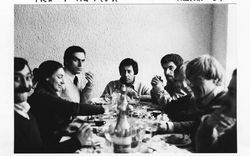
Irina Davidovici and Katrin Albrecht on Flora Ruchat-Roncati's life and work
Title:
Convivium: Flora Ruchat-Roncati’s Practice
Irina Davidovici and Katrin Albrecht on Flora Ruchat-Roncati's life and work
Actions:
Convivium: Flora Ruchat-Roncati’s Practice
Irina Davidovici and Katrin Albrecht on Flora Ruchat-Roncati's life and work
Actions:
Issue:
Of Migration
Of Migration


