


1326 Results
Form:
books
books
Actions:
Holdings:
Description:
[32] etch. plates ; 42.2 cm (2)̲
Description:
[32] etch. plates ; 42.2 cm (2)̲
Author:
Subject:
Publication:
London: Pubd. Feby. 1822, By R. Bridgens, [1822]
London: Pubd. Feby. 1822, By R. Bridgens, [1822]
Title:
Sefton Church with part of the interior decorations.
Actions:
Holdings:
Description:
[32] etch. plates ; 42.2 cm (2)̲
Sefton Church with part of the interior decorations.
Actions:
Holdings:
Description:
[32] etch. plates ; 42.2 cm (2)̲
Form:
books
books
Publication:
London: Pubd. Feby. 1822, By R. Bridgens, [1822]
London: Pubd. Feby. 1822, By R. Bridgens, [1822]
Author:
Subject:
Form:
books
books
Actions:
Holdings:
Description:
xix, 517 pages : illustrations, maps, plans ; 24 cm
Description:
xix, 517 pages : illustrations, maps, plans ; 24 cm
Author:
Subject:
Publication:
London : E & FN Spon, 1994.
London : E & FN Spon, 1994.
Title:
The urban experience : a people environment perspective : proceedings of the 13th conference of the International Association for People - Environment Studies held on 13-15 July 1994 / edited by S.J. Neary, M.S. Symes and F.E. Brown.
Actions:
Holdings:
Description:
xix, 517 pages : illustrations, maps, plans ; 24 cm
The urban experience : a people environment perspective : proceedings of the 13th conference of the International Association for People - Environment Studies held on 13-15 July 1994 / edited by S.J. Neary, M.S. Symes and F.E. Brown.
Actions:
Holdings:
Description:
xix, 517 pages : illustrations, maps, plans ; 24 cm
Form:
books
books
Publication:
London : E & FN Spon, 1994.
London : E & FN Spon, 1994.
Author:
Subject:
Form:
audio
audio
Title:
Lattina.
Lattina.
Actions:
Description:
1 online resource.
Author:
Subject:
Publication:
[Place of publication not identified] : Lateral Addition, 2015.
[Place of publication not identified] : Lateral Addition, 2015.
Form:
audio
audio
Publication:
[Place of publication not identified] : Lateral Addition, 2015.
[Place of publication not identified] : Lateral Addition, 2015.
Author:
Subject:
Form:
books
books
Actions:
Price:
$22.99
(available to order)
Summary:
In an era of increasing individualism, we have never been more isolated and dispirited. A paradox confronts us. While research and technology find new ways to measure contentment and popular culture encourages us to think of happiness as a human right, misery is abundant. Segal believes we have lost the art of “radical happiness”—the liberation that comes with(...)
$22.99
(available to order)
Summary:
In an era of increasing individualism, we have never been more isolated and dispirited. A paradox confronts us. While research and technology find new ways to measure contentment and popular culture encourages us to think of happiness as a human right, misery is abundant. Segal believes we have lost the art of “radical happiness”—the liberation that comes with(...)
Title:
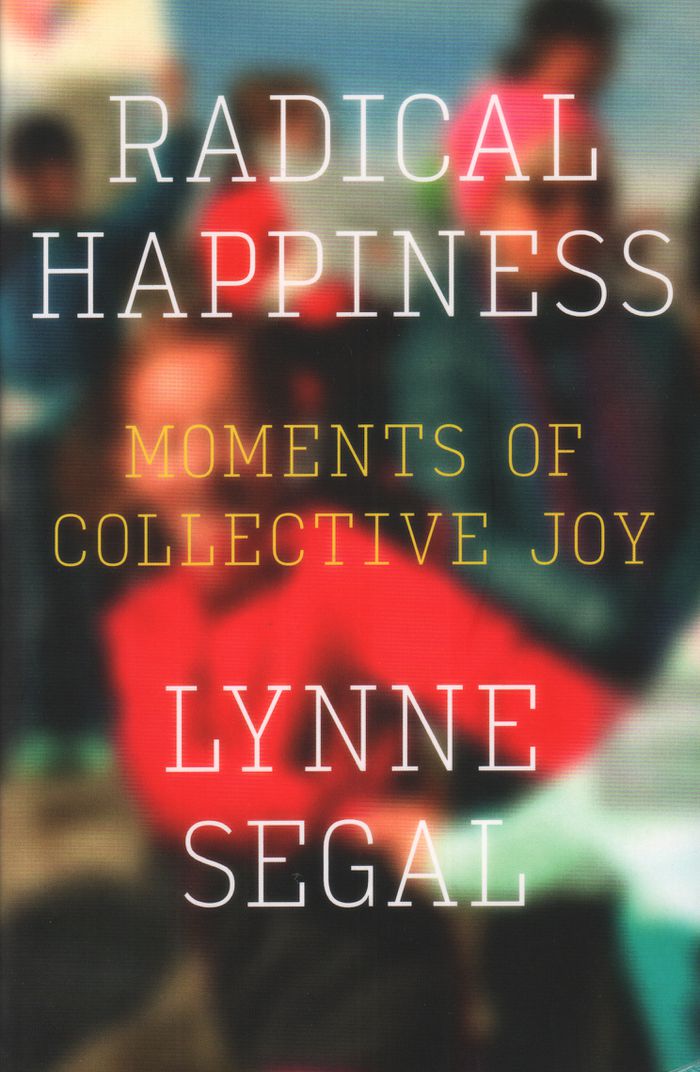
Radical happiness: moments of collective joy
Actions:
Price:
$22.99
(available to order)
Summary:
In an era of increasing individualism, we have never been more isolated and dispirited. A paradox confronts us. While research and technology find new ways to measure contentment and popular culture encourages us to think of happiness as a human right, misery is abundant. Segal believes we have lost the art of “radical happiness”—the liberation that comes with transformative, collective joy. She argues that instead of obsessing about our own well-being we should seek fulfilment in the lives of others. Examining her own experience in the women’s movement, Segal looks at the relationship between love and sex, and the scope for utopian thinking as a means to a better future. She also shows how the gaps in care that come from the diminishing role of the welfare state must be replaced by alternative ways of living together and looking after one another.
Radical happiness: moments of collective joy
Actions:
Price:
$22.99
(available to order)
Summary:
In an era of increasing individualism, we have never been more isolated and dispirited. A paradox confronts us. While research and technology find new ways to measure contentment and popular culture encourages us to think of happiness as a human right, misery is abundant. Segal believes we have lost the art of “radical happiness”—the liberation that comes with transformative, collective joy. She argues that instead of obsessing about our own well-being we should seek fulfilment in the lives of others. Examining her own experience in the women’s movement, Segal looks at the relationship between love and sex, and the scope for utopian thinking as a means to a better future. She also shows how the gaps in care that come from the diminishing role of the welfare state must be replaced by alternative ways of living together and looking after one another.
Form:
books
books
Publication:
November 2018
November 2018
Subject:
Social
Social
Form:
books
books
Actions:
Price:
$63.00
(available to order)
Summary:
In this book, Edwin Heathcote looks at the cultural impact of street furniture using photography as a measure of how these things have become indispensable components of the cityscape. Based mainly in and on London – but including New York, Paris and Budapest – Heathcote uses history, personal reflection and the lenses of photographers to examine the status of these urban(...)
$63.00
(available to order)
Summary:
In this book, Edwin Heathcote looks at the cultural impact of street furniture using photography as a measure of how these things have become indispensable components of the cityscape. Based mainly in and on London – but including New York, Paris and Budapest – Heathcote uses history, personal reflection and the lenses of photographers to examine the status of these urban(...)
Title:
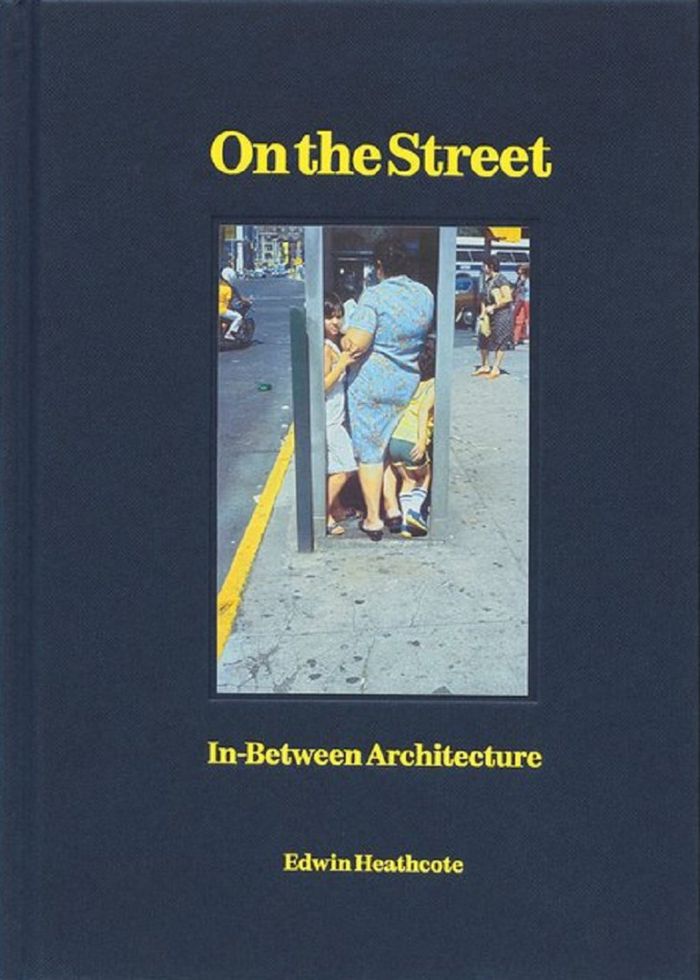
On the street- In-between architecture
Actions:
Price:
$63.00
(available to order)
Summary:
In this book, Edwin Heathcote looks at the cultural impact of street furniture using photography as a measure of how these things have become indispensable components of the cityscape. Based mainly in and on London – but including New York, Paris and Budapest – Heathcote uses history, personal reflection and the lenses of photographers to examine the status of these urban artefacts in both the contemporary imagination and the city streets themselves. It looks at the changing landscape of the cityscape and the way in which street furniture has been adapted to address new technologies, the culture of surveillance and shifts in taste, orthodoxy and material culture. On the Street looks at the language of street furniture reflected through the gaze of photography and contemporary culture. It is a book about the elements of the streetscape which can exert an increasing impact on our interaction with the cities we inhabit.
On the street- In-between architecture
Actions:
Price:
$63.00
(available to order)
Summary:
In this book, Edwin Heathcote looks at the cultural impact of street furniture using photography as a measure of how these things have become indispensable components of the cityscape. Based mainly in and on London – but including New York, Paris and Budapest – Heathcote uses history, personal reflection and the lenses of photographers to examine the status of these urban artefacts in both the contemporary imagination and the city streets themselves. It looks at the changing landscape of the cityscape and the way in which street furniture has been adapted to address new technologies, the culture of surveillance and shifts in taste, orthodoxy and material culture. On the Street looks at the language of street furniture reflected through the gaze of photography and contemporary culture. It is a book about the elements of the streetscape which can exert an increasing impact on our interaction with the cities we inhabit.
Form:
books
books
Publication:
February 2023
February 2023
Subject:
Public Space
Public Space
Form:
audio
audio
Actions:
Description:
1 online resource.
Author:
Subject:
Publication:
[Place of publication not identified] : Lateral Addition, 2019.
[Place of publication not identified] : Lateral Addition, 2019.
Form:
audio
audio
Publication:
[Place of publication not identified] : Lateral Addition, 2019.
[Place of publication not identified] : Lateral Addition, 2019.
Author:
Subject:
Form:
books
books
Holdings:
Description:
xix, 520 pages : illustrations ; 27 cm
Description:
xix, 520 pages : illustrations ; 27 cm
Author:
Subject:
Publication:
New York : F. Ungar Pub. Co., 1964.
New York : F. Ungar Pub. Co., 1964.
Title:
The arts in the Middle Ages and the Renaissance / Paul Lacroix.
Actions:
Holdings:
Description:
xix, 520 pages : illustrations ; 27 cm
The arts in the Middle Ages and the Renaissance / Paul Lacroix.
Actions:
Holdings:
Description:
xix, 520 pages : illustrations ; 27 cm
Form:
books
books
Publication:
New York : F. Ungar Pub. Co., 1964.
New York : F. Ungar Pub. Co., 1964.
Author:
Subject:
Form:
audio
audio
Title:
Apophanies.
Apophanies.
Actions:
Description:
1 online resource.
Author:
Subject:
Publication:
[Place of publication not identified] : Lateral Addition, 2022.
[Place of publication not identified] : Lateral Addition, 2022.
Form:
audio
audio
Publication:
[Place of publication not identified] : Lateral Addition, 2022.
[Place of publication not identified] : Lateral Addition, 2022.
Author:
Subject:
Form:
books
books
Title:
Public 22/23 : cities/scenes
Public 22/23 : cities/scenes
Actions:
Price:
$20.00
(available to order)
Summary:
This issue of Public is devoted to the study of "scenes," treating these as phenomenal elements in the cultural life of cities. Both memorable and ephemeral, scenes conjugate a history of urban places by enacting a dramatic visibility. They are a measure of the decline, vitality and distinctiveness of a city. A century or more of theorizing has subdivided city cultures(...)
$20.00
(available to order)
Summary:
This issue of Public is devoted to the study of "scenes," treating these as phenomenal elements in the cultural life of cities. Both memorable and ephemeral, scenes conjugate a history of urban places by enacting a dramatic visibility. They are a measure of the decline, vitality and distinctiveness of a city. A century or more of theorizing has subdivided city cultures(...)
Title:
Public 22/23 : cities/scenes
Actions:
Price:
$20.00
(available to order)
Summary:
This issue of Public is devoted to the study of "scenes," treating these as phenomenal elements in the cultural life of cities. Both memorable and ephemeral, scenes conjugate a history of urban places by enacting a dramatic visibility. They are a measure of the decline, vitality and distinctiveness of a city. A century or more of theorizing has subdivided city cultures into communities, subcultures, networks and innumerable other unities. "Scenes" are both the haziest of such unities and some of the most productive. Amidst an explosion of writing on all aspects of urban culture, our focus on scenes has served to constrain and inspire the studies contained in this issue. Contributors: Adrian Blackwell, Alan Blum, Jenny Burman, Jean-François Côté, Jonathan Gainer, Elke Grenzer, Janet Jones, Ryan Kamstra, Janine Marchessault, Paul Moore, Brian Poole, James N. Porter, John Porter, Peter Shevlin, Johanne Sloane, Geoff Stahl, Will Straw, Tom Taylor, Kathryn Walter, Margaux Williamson, Kelly Wood. Originally priced at $20.00.
Public 22/23 : cities/scenes
Actions:
Price:
$20.00
(available to order)
Summary:
This issue of Public is devoted to the study of "scenes," treating these as phenomenal elements in the cultural life of cities. Both memorable and ephemeral, scenes conjugate a history of urban places by enacting a dramatic visibility. They are a measure of the decline, vitality and distinctiveness of a city. A century or more of theorizing has subdivided city cultures into communities, subcultures, networks and innumerable other unities. "Scenes" are both the haziest of such unities and some of the most productive. Amidst an explosion of writing on all aspects of urban culture, our focus on scenes has served to constrain and inspire the studies contained in this issue. Contributors: Adrian Blackwell, Alan Blum, Jenny Burman, Jean-François Côté, Jonathan Gainer, Elke Grenzer, Janet Jones, Ryan Kamstra, Janine Marchessault, Paul Moore, Brian Poole, James N. Porter, John Porter, Peter Shevlin, Johanne Sloane, Geoff Stahl, Will Straw, Tom Taylor, Kathryn Walter, Margaux Williamson, Kelly Wood. Originally priced at $20.00.
Form:
books
books
Publication:
January 2002, Toronto
January 2002, Toronto
Subject:
sale books
sale books
Form:
books
books
Title:
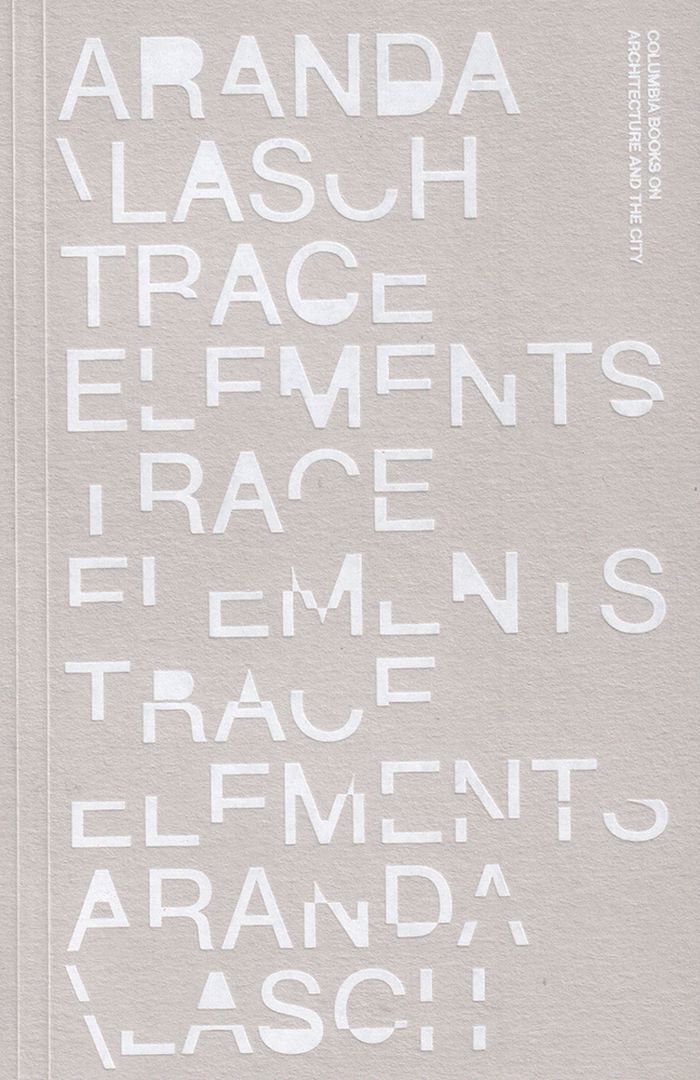
Aranda/Lasch: Trace elements
Aranda/Lasch: Trace elements
Actions:
Price:
$26.95
(available to order)
Summary:
"Trace elements" are minerals that exist in minute quantities necessary for the growth and development of cells. Exposure to excessive quantities is toxic, but without them our bodies would atrophy. They are the crystalline structures that support life. Over the past decade, Aranda\Lasch has focused obsessively on these structures as a form of both organization and(...)
$26.95
(available to order)
Summary:
"Trace elements" are minerals that exist in minute quantities necessary for the growth and development of cells. Exposure to excessive quantities is toxic, but without them our bodies would atrophy. They are the crystalline structures that support life. Over the past decade, Aranda\Lasch has focused obsessively on these structures as a form of both organization and(...)
Title:
Aranda/Lasch: Trace elements
Actions:
Price:
$26.95
(available to order)
Summary:
"Trace elements" are minerals that exist in minute quantities necessary for the growth and development of cells. Exposure to excessive quantities is toxic, but without them our bodies would atrophy. They are the crystalline structures that support life. Over the past decade, Aranda\Lasch has focused obsessively on these structures as a form of both organization and expression for architecture. Their projects explore the interplay between rule-based systems and human ritual. In scale, this work lies somewhere between furniture and building, so that what is built, drawn, and projected gives human measure to procedural thinking. Published on the occasion of the studio's exhibition "Meeting the Clouds Halfway" at the Museum of Contemporary Art (MOCA) Tucson, this book is a collection of recent explorations into modularity, craft, pattern, rhythm, material, and memory. Trace Elements documents a wide-ranging and yet sharply focused body of work from an office dedicated both to intellectual exploration and the honing of a distinct design sensibility.
Aranda/Lasch: Trace elements
Actions:
Price:
$26.95
(available to order)
Summary:
"Trace elements" are minerals that exist in minute quantities necessary for the growth and development of cells. Exposure to excessive quantities is toxic, but without them our bodies would atrophy. They are the crystalline structures that support life. Over the past decade, Aranda\Lasch has focused obsessively on these structures as a form of both organization and expression for architecture. Their projects explore the interplay between rule-based systems and human ritual. In scale, this work lies somewhere between furniture and building, so that what is built, drawn, and projected gives human measure to procedural thinking. Published on the occasion of the studio's exhibition "Meeting the Clouds Halfway" at the Museum of Contemporary Art (MOCA) Tucson, this book is a collection of recent explorations into modularity, craft, pattern, rhythm, material, and memory. Trace Elements documents a wide-ranging and yet sharply focused body of work from an office dedicated both to intellectual exploration and the honing of a distinct design sensibility.
Form:
books
books
Publication:
August 2017
August 2017
Subject:
Contemporary Art Monographs
Contemporary Art Monographs


