


1307 Results
Form:
books
books
Price:
$68.95
(available to order)
Summary:
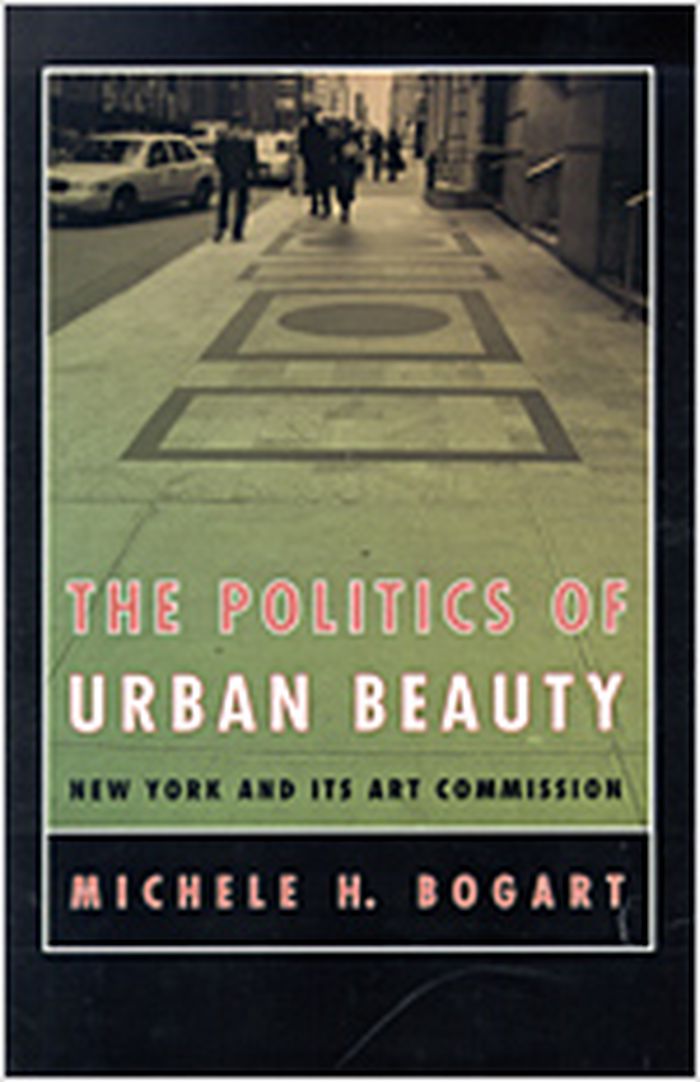
Since its founding in 1898, the Art Commission of the City of New York (ACNY) has served as the city’s aesthetic gatekeeper, evaluating all works of art intended for display on city property. And over the years, the commission’s domain has expanded dramatically to include everything from parks and courthouses to trash cans and sidewalks. In "The politics of urban beauty",(...)
Title:
The politics of urban beauty : New York and its art commission
Actions:
Price:
$68.95
(available to order)
Summary:
Since its founding in 1898, the Art Commission of the City of New York (ACNY) has served as the city’s aesthetic gatekeeper, evaluating all works of art intended for display on city property. And over the years, the commission’s domain has expanded dramatically to include everything from parks and courthouses to trash cans and sidewalks. In "The politics of urban beauty", Michele H. Bogart argues that this unprecedented authority has made the commission host to some complex negotiations — involving artists, architects, business leaders, activists, and politicians — about not only the role of art in urban design, but also the shape and meaning of the city and its public spaces. A former vice president of the ACNY, Bogart tells its story here from an insider’s perspective, tracing the commission’s history from its origins as an outgrowth of progressive reform to its role in New York’s reconstruction after 9/11. Drawing on archival correspondence, drawings, and photographs from commission collections, Bogart presents examples of works — ranging from New Deal murals to Louis Kahn’s unbuilt Memorial to Six Million Jewish Martyrs — that illuminate the ACNY’s role in shaping New York’s identity. The Politics of Urban Beauty is thus a fascinating history of a New York art world that paralleled—and sometimes unpredictably intersected with—the more familiar realm of prominent architects, painters, galleries, and museums. Bogart’s fresh view adds a critical dimension to our understanding of “the city beautiful” and makes an important and lively contribution to the study of art history, urban design, and New York City itself.
Form:
books
books
Publication:
November 2006, Chicago, London
November 2006, Chicago, London
Subject:
Urban Theory
Urban Theory
Form:
books
books
Price:
$74.95
(available to order)
Summary:
This lavishly illustrated book looks at the art and architecture of episcopal palaces as expressions of power and ideology. Tracing the history of the bishop's residence in the urban centers of northern Italy over the Middle Ages, Maureen C. Miller asks why this once(...)
Title:
The bishop's palace : architecture and authority in medieval Italy
Actions:
Price:
$74.95
(available to order)
Summary:
This lavishly illustrated book looks at the art and architecture of episcopal palaces as expressions of power and ideology. Tracing the history of the bishop's residence in the urban centers of northern Italy over the Middle Ages, Maureen C. Miller asks why this once rudimentary and highly fortified structure called a domus became a complex and elegant "palace" (palatium) by the late twelfth century. Miller argues that the change reflects both the emergence of a distinct clerical culture and the attempts of bishops to maintain authority in public life. She relates both to the Gregorian reform movement, which set new standards for clerical deportment and at the same time undercut episcopal claims to secular power. As bishops lost temporal authority in their cities to emerging communal governments, they compensated architecturally and competed with the communes for visual and spatial dominance in the urban center. This rivalry left indelible marks on the layout and character of Italian cities. Moreover, Miller contends, this struggle for power had highly significant, but mixed, results for western Christianity. On the one hand, as bishops lost direct governing authority in their cities, they devised ways to retain status, influence, and power through cultural practices. This response to loss was highly creative. On the other hand, their loss of secular control led bishops to emphasize their spiritual powers and to use them to obtain temporal ends. The coercive use of spiritual authority contributed to the emergence of a "persecuting society" in the central Middle Ages.
Form:
books
books
Publication:
May 2000, Ithaca
May 2000, Ithaca
Subject:
History until 1900
History until 1900
Form:
books
books
Price:
$46.50
(available to order)
Summary:
This lavishly illustrated book looks at the art and architecture of episcopal palaces as expressions of power and ideology. Tracing the history of the bishop's residence in the urban centers of northern Italy over the Middle Ages, Maureen C. Miller asks why this once rudimentary and highly fortified structure called a domus became a complex and elegant "palace" (palatium)(...)
Title:
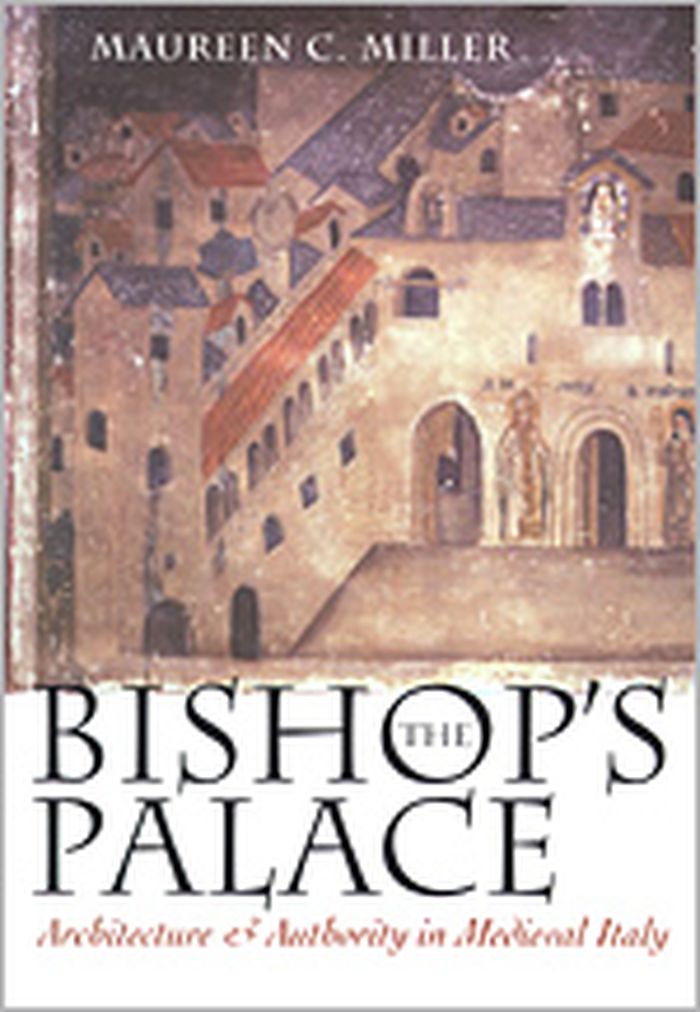
The bishop's palace : architecture & authority in medieval Italy
Actions:
Price:
$46.50
(available to order)
Summary:
This lavishly illustrated book looks at the art and architecture of episcopal palaces as expressions of power and ideology. Tracing the history of the bishop's residence in the urban centers of northern Italy over the Middle Ages, Maureen C. Miller asks why this once rudimentary and highly fortified structure called a domus became a complex and elegant "palace" (palatium) by the late twelfth century. Miller argues that the change reflects both the emergence of a distinct clerical culture and the attempts of bishops to maintain authority in public life. She relates both to the Gregorian reform movement, which set new standards for clerical deportment and at the same time undercut episcopal claims to secular power. As bishops lost temporal authority in their cities to emerging communal governments, they compensated architecturally and competed with the communes for visual and spatial dominance in the urban center. This rivalry left indelible marks on the layout and character of Italian cities. Moreover, Miller contends, this struggle for power had highly significant, but mixed, results for western Christianity. On the one hand, as bishops lost direct governing authority in their cities, they devised ways to retain status, influence, and power through cultural practices. This response to loss was highly creative. On the other hand, their loss of secular control led bishops to emphasize their spiritual powers and to use them to obtain temporal ends. The coercive use of spiritual authority contributed to the emergence of a "persecuting society" in the central Middle Ages.
Form:
books
books
Publication:
December 2002, Ithaca, N.Y.
December 2002, Ithaca, N.Y.
Subject:
History until 1900
History until 1900
Form:
books
books
Actions:
Holdings:
Description:
volumes 1, 4 : illustrations (some color) ; 24 cm
Description:
volumes 1, 4 : illustrations (some color) ; 24 cm
Author:
Subject:
Publication:
Cambridge, Mass. : Belknap Press of Harvard University Press, 1987-
Cambridge, Mass. : Belknap Press of Harvard University Press, 1987-
Title:
A history of private life / Philippe Ariès and Georges Duby, general editors.
Actions:
Holdings:
Description:
volumes 1, 4 : illustrations (some color) ; 24 cm
A history of private life / Philippe Ariès and Georges Duby, general editors.
Actions:
Holdings:
Description:
volumes 1, 4 : illustrations (some color) ; 24 cm
Form:
books
books
Publication:
Cambridge, Mass. : Belknap Press of Harvard University Press, 1987-
Cambridge, Mass. : Belknap Press of Harvard University Press, 1987-
Author:
Subject:
Form:
books
books
Actions:
Holdings:
Description:
270 pages : illustrations ; 24 cm
Description:
270 pages : illustrations ; 24 cm
Author:
Subject:
Publication:
Bruxelles (Belgique) : Éditions de l'Université de Bruxelles, [2021]
Bruxelles (Belgique) : Éditions de l'Université de Bruxelles, [2021]
Title:
Le plan libre de Le Corbusier, ou, L'architecture mise en tension / Patrick Burniat.
Actions:
Holdings:
Description:
270 pages : illustrations ; 24 cm
Le plan libre de Le Corbusier, ou, L'architecture mise en tension / Patrick Burniat.
Actions:
Holdings:
Description:
270 pages : illustrations ; 24 cm
Form:
books
books
Publication:
Bruxelles (Belgique) : Éditions de l'Université de Bruxelles, [2021]
Bruxelles (Belgique) : Éditions de l'Université de Bruxelles, [2021]
Author:
Subject:
Form:
video
video
Actions:
Description:
1 online resource (1 video file (29 minutes)) : sound, color
Author:
Subject:
Publication:
London, England : Pidgeon Digital, 1980.
London, England : Pidgeon Digital, 1980.
Title:
The story of a quest / [presented by] Richard Buckminster Fuller (Fuller & Sadao Inc.).
Actions:
Description:
1 online resource (1 video file (29 minutes)) : sound, color
The story of a quest / [presented by] Richard Buckminster Fuller (Fuller & Sadao Inc.).
Actions:
Description:
1 online resource (1 video file (29 minutes)) : sound, color
Form:
video
video
Publication:
London, England : Pidgeon Digital, 1980.
London, England : Pidgeon Digital, 1980.
Author:
Subject:
Form:
books
books
Actions:
Subject:
Publication:
Open Humanities Press 2015
Open Humanities Press 2015
Form:
books
books
Publication:
Open Humanities Press 2015
Open Humanities Press 2015
Subject:
Form:
books
books
Actions:
Holdings:
Description:
117 pages : illustrations (some color), facsimiles, plans ; 16 cm
Description:
117 pages : illustrations (some color), facsimiles, plans ; 16 cm
Author:
Subject:
Publication:
[Paris] : Éditions B2, [2018], ©2018
[Paris] : Éditions B2, [2018], ©2018
Title:
Mai 68 : l'architecture aussi! / commissariat, Caroline Maniaque, Éléonore Marantz, Jean-Louis Violeau.
Actions:
Holdings:
Description:
117 pages : illustrations (some color), facsimiles, plans ; 16 cm
Mai 68 : l'architecture aussi! / commissariat, Caroline Maniaque, Éléonore Marantz, Jean-Louis Violeau.
Actions:
Holdings:
Description:
117 pages : illustrations (some color), facsimiles, plans ; 16 cm
Form:
books
books
Publication:
[Paris] : Éditions B2, [2018], ©2018
[Paris] : Éditions B2, [2018], ©2018
Author:
Subject:
Form:
books
books
Actions:
Price:
$71.95
(available to order)
Summary:
Victorian cities evoke images of crowded tenements where social unrest and epidemic disease were rampant. Conditions in nineteenth-century London, in particular, sparked efforts to find alternative plans for urban development. The most influential alternative to the Victorian city was Ebenezer Howard's Garden City, an idea he sketched in his modest book «To-morrow : a(...)
Subject:
Urban Theory
Urban Theory
Publication:
November 2002, Baltimore / London
November 2002, Baltimore / London
Title:
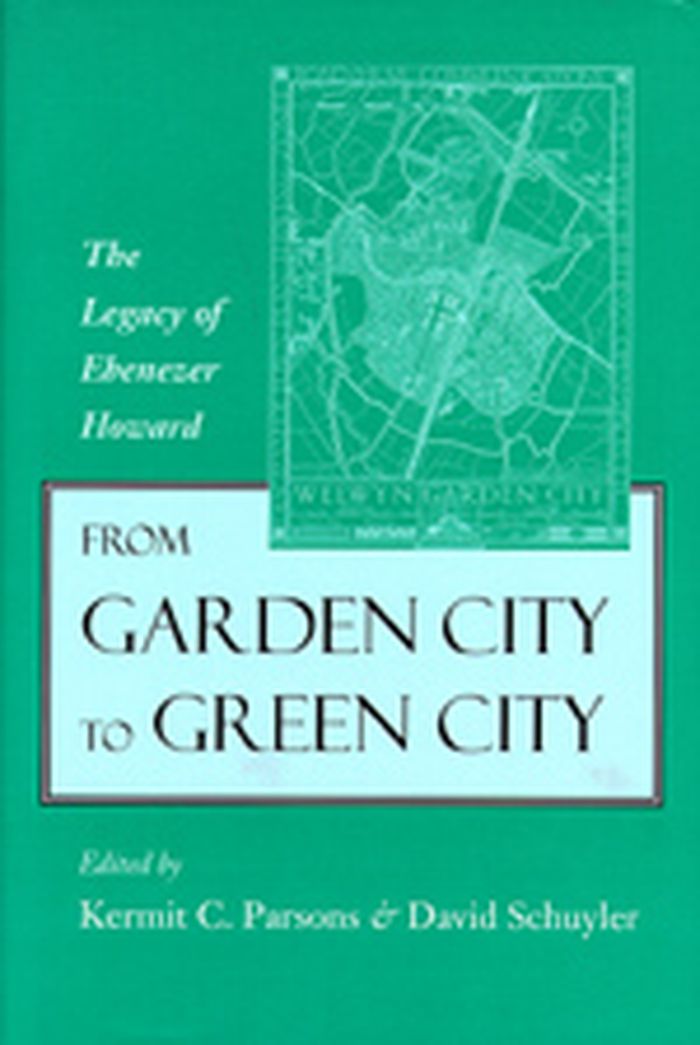
The legacy of Ebenezer Howard from garden city to green city
Actions:
Price:
$71.95
(available to order)
Summary:
Victorian cities evoke images of crowded tenements where social unrest and epidemic disease were rampant. Conditions in nineteenth-century London, in particular, sparked efforts to find alternative plans for urban development. The most influential alternative to the Victorian city was Ebenezer Howard's Garden City, an idea he sketched in his modest book «To-morrow : a peaceful path to real reform». First published in 1898, To-Morrow attempted to improve the material condition of working-class families through a vision of new communities which would provide a better quality of life. Howard's legacy grew throughout the twentieth century in garden cities, suburbs, and green towns; a century later, architects and planners are still motivated by his ideas. Published on the one hundredth anniversary of Garden Cities of To-Morrow (1902), the more familiar version of Howard's pathbreaking book, the ten essays in this new volume place Howard's legacy in its historic context and show its continuing relevance for urban, regional, and environmental planners. Following a biographical essay, three articles trace the influence of Howard's ideas on the development of the modern metropolis, while another four address his concepts regarding the arrangement of housing and community life and show how they have influenced subsequent development. Two closing essays assess critical aspects of Howard's legacy for the twenty-first century. The contributors focus on the timeless significance of Howard's ideas about limits to growth, the effectiveness of agricultural greenbelts in growth management, and the use of physical space to promote human interaction, as well as the relevance of Howard's work to the new urbanism and sustainability movements.
Form:
books
books
Publication:
November 2002, Baltimore / London
November 2002, Baltimore / London
Subject:
Urban Theory
Urban Theory
Form:
books
books
Actions:
Holdings:
Description:
xxx, 270 pages : illustrations ; 29 cm
Description:
xxx, 270 pages : illustrations ; 29 cm
Author:
Subject:
Publication:
University Park, Pa. : Pennsylvania State University Press, ©1996.
University Park, Pa. : Pennsylvania State University Press, ©1996.
Title:
Cathedrals under siege : cathedrals in English society, 1600-1700 / Stanford E. Lehmberg.
Actions:
Holdings:
Description:
xxx, 270 pages : illustrations ; 29 cm
Cathedrals under siege : cathedrals in English society, 1600-1700 / Stanford E. Lehmberg.
Actions:
Holdings:
Description:
xxx, 270 pages : illustrations ; 29 cm
Form:
books
books
Publication:
University Park, Pa. : Pennsylvania State University Press, ©1996.
University Park, Pa. : Pennsylvania State University Press, ©1996.
Author:
Subject:


