


3892 Results
Form:
drawings
drawings
Actions:
Reference number:
DR1988:0180
Description:
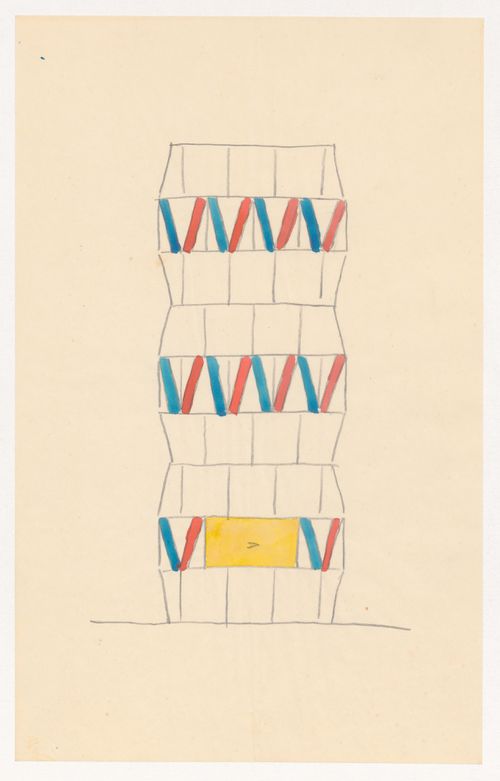
- Design for a tall, rectangular tiled stove, with three horizontal bands of a red and blue geometric pattern. The yellow rectangle near the bottom probably represents the stove door. - The subject of this drawing is identified as a tiled stove by comparison with similar drawings in the group DR1988:0155 - DR1988:0209. Several of these drawings have identifying inscriptions, such as "Ofen" (stove) and "Kachelofen" (tiled stove), which are probably by the draughtsman. Henze illustrates examples of "Kachelofen" which are similar to this one in size and proportion (fig. 105, p. 98 and fig. 114, p. 103).
DR1988:0180
Description:
- Design for a tall, rectangular tiled stove, with three horizontal bands of a red and blue geometric pattern. The yellow rectangle near the bottom probably represents the stove door. - The subject of this drawing is identified as a tiled stove by comparison with similar drawings in the group DR1988:0155 - DR1988:0209. Several of these drawings have identifying inscriptions, such as "Ofen" (stove) and "Kachelofen" (tiled stove), which are probably by the draughtsman. Henze illustrates examples of "Kachelofen" which are similar to this one in size and proportion (fig. 105, p. 98 and fig. 114, p. 103).
People:
Subject:
interior design
interior design
Date:
circa 1920-1921
circa 1920-1921
Title:
Design for a tiled stove with faceted sides
Actions:
DR1988:0180
Description:
- Design for a tall, rectangular tiled stove, with three horizontal bands of a red and blue geometric pattern. The yellow rectangle near the bottom probably represents the stove door. - The subject of this drawing is identified as a tiled stove by comparison with similar drawings in the group DR1988:0155 - DR1988:0209. Several of these drawings have identifying inscriptions, such as "Ofen" (stove) and "Kachelofen" (tiled stove), which are probably by the draughtsman. Henze illustrates examples of "Kachelofen" which are similar to this one in size and proportion (fig. 105, p. 98 and fig. 114, p. 103).
Design for a tiled stove with faceted sides
Actions:
DR1988:0180
Description:
- Design for a tall, rectangular tiled stove, with three horizontal bands of a red and blue geometric pattern. The yellow rectangle near the bottom probably represents the stove door. - The subject of this drawing is identified as a tiled stove by comparison with similar drawings in the group DR1988:0155 - DR1988:0209. Several of these drawings have identifying inscriptions, such as "Ofen" (stove) and "Kachelofen" (tiled stove), which are probably by the draughtsman. Henze illustrates examples of "Kachelofen" which are similar to this one in size and proportion (fig. 105, p. 98 and fig. 114, p. 103).
Form:
drawings
drawings
Date:
circa 1920-1921
circa 1920-1921
People:
Subject:
interior design
interior design
Reference number:
PH1986:0900.15
Description:
Album PH1986:0900.15 comprises 30 photographs of the Banque Libre, Manufactures de Glaces de Saint-Gobain, and a housing project all by Michel Roux-Spitz in Lyon, France. Views of the Banque Libre de Lyon show the wrought iron entrance door, the ground floor façade, the wrought iron gate and detail of its motif. Views of the Manufactures de Glaces de Saint-Gobain, Aniche, Boussois, Entrepôt de Lyon (Lyon warehouses) show the staircase in the exhibition hall on the ground floor, the exhibition hall (one with display unit showing glass samples), the salesroom on first floor, the storage hall, view of an office, a console, the entrance door of the warehouse and a glass panel. Views of the housing project on avenue Jean Jaurès show the development plan (plan d'ensemble) of the ground floor bearing the title 'Les Fils de Jules Weitz. Groupe d'Immeubles à petits logis hygiéniques et modernes. Plan d'ensemble du rez-de-chaussée', the façade on the south-east side and ground floor plan, first floor plan on the north side, the ground floor plan on the north side and cross-sections of buildings.
PH1986:0900.15
Description:
Album PH1986:0900.15 comprises 30 photographs of the Banque Libre, Manufactures de Glaces de Saint-Gobain, and a housing project all by Michel Roux-Spitz in Lyon, France. Views of the Banque Libre de Lyon show the wrought iron entrance door, the ground floor façade, the wrought iron gate and detail of its motif. Views of the Manufactures de Glaces de Saint-Gobain, Aniche, Boussois, Entrepôt de Lyon (Lyon warehouses) show the staircase in the exhibition hall on the ground floor, the exhibition hall (one with display unit showing glass samples), the salesroom on first floor, the storage hall, view of an office, a console, the entrance door of the warehouse and a glass panel. Views of the housing project on avenue Jean Jaurès show the development plan (plan d'ensemble) of the ground floor bearing the title 'Les Fils de Jules Weitz. Groupe d'Immeubles à petits logis hygiéniques et modernes. Plan d'ensemble du rez-de-chaussée', the façade on the south-east side and ground floor plan, first floor plan on the north side, the ground floor plan on the north side and cross-sections of buildings.
People:
Subject:
architecture, exhibition design, ornament
architecture, exhibition design, ornament
Date:
1925-1926
1925-1926
Title:
Banque Libre - Saint Gobain - Logements Salubres - 1925-1926
Actions:
PH1986:0900.15
Description:
Album PH1986:0900.15 comprises 30 photographs of the Banque Libre, Manufactures de Glaces de Saint-Gobain, and a housing project all by Michel Roux-Spitz in Lyon, France. Views of the Banque Libre de Lyon show the wrought iron entrance door, the ground floor façade, the wrought iron gate and detail of its motif. Views of the Manufactures de Glaces de Saint-Gobain, Aniche, Boussois, Entrepôt de Lyon (Lyon warehouses) show the staircase in the exhibition hall on the ground floor, the exhibition hall (one with display unit showing glass samples), the salesroom on first floor, the storage hall, view of an office, a console, the entrance door of the warehouse and a glass panel. Views of the housing project on avenue Jean Jaurès show the development plan (plan d'ensemble) of the ground floor bearing the title 'Les Fils de Jules Weitz. Groupe d'Immeubles à petits logis hygiéniques et modernes. Plan d'ensemble du rez-de-chaussée', the façade on the south-east side and ground floor plan, first floor plan on the north side, the ground floor plan on the north side and cross-sections of buildings.
Banque Libre - Saint Gobain - Logements Salubres - 1925-1926
Actions:
PH1986:0900.15
Description:
Album PH1986:0900.15 comprises 30 photographs of the Banque Libre, Manufactures de Glaces de Saint-Gobain, and a housing project all by Michel Roux-Spitz in Lyon, France. Views of the Banque Libre de Lyon show the wrought iron entrance door, the ground floor façade, the wrought iron gate and detail of its motif. Views of the Manufactures de Glaces de Saint-Gobain, Aniche, Boussois, Entrepôt de Lyon (Lyon warehouses) show the staircase in the exhibition hall on the ground floor, the exhibition hall (one with display unit showing glass samples), the salesroom on first floor, the storage hall, view of an office, a console, the entrance door of the warehouse and a glass panel. Views of the housing project on avenue Jean Jaurès show the development plan (plan d'ensemble) of the ground floor bearing the title 'Les Fils de Jules Weitz. Groupe d'Immeubles à petits logis hygiéniques et modernes. Plan d'ensemble du rez-de-chaussée', the façade on the south-east side and ground floor plan, first floor plan on the north side, the ground floor plan on the north side and cross-sections of buildings.
Date:
1925-1926
1925-1926
People:
Subject:
architecture, exhibition design, ornament
architecture, exhibition design, ornament
Form:
drawings
drawings
Actions:
Reference number:
DR1988:0168
Description:
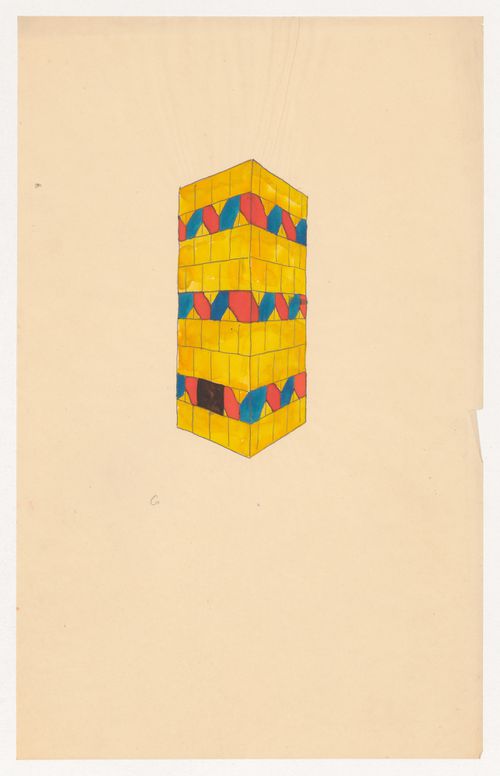
- Design for a tall, rectangular tiled stove, decorated with a red and blue geometric pattern against a yellow background. The brown rectangle near the bottom on the left side probably represents the stove door. - The subject of this drawing is identified as a tiled stove by comparison with similar drawings in the group DR1988:0155 - DR1988:0209. Several of these drawings have identifying inscriptions, such as "Ofen" (stove) and "Kachelofen" (tiled stove), which are probably by the draughtsman. Henze illustrates examples of "Kachelofen" which are similar to this one in size and proportion (fig. 105, p. 98 and fig. 114, p. 103).
DR1988:0168
Description:
- Design for a tall, rectangular tiled stove, decorated with a red and blue geometric pattern against a yellow background. The brown rectangle near the bottom on the left side probably represents the stove door. - The subject of this drawing is identified as a tiled stove by comparison with similar drawings in the group DR1988:0155 - DR1988:0209. Several of these drawings have identifying inscriptions, such as "Ofen" (stove) and "Kachelofen" (tiled stove), which are probably by the draughtsman. Henze illustrates examples of "Kachelofen" which are similar to this one in size and proportion (fig. 105, p. 98 and fig. 114, p. 103).
People:
Subject:
interior design
interior design
Date:
circa 1920-1921
circa 1920-1921
Title:
Design for a yellow tiled stove decorated with a red and blue geometric pattern
Actions:
DR1988:0168
Description:
- Design for a tall, rectangular tiled stove, decorated with a red and blue geometric pattern against a yellow background. The brown rectangle near the bottom on the left side probably represents the stove door. - The subject of this drawing is identified as a tiled stove by comparison with similar drawings in the group DR1988:0155 - DR1988:0209. Several of these drawings have identifying inscriptions, such as "Ofen" (stove) and "Kachelofen" (tiled stove), which are probably by the draughtsman. Henze illustrates examples of "Kachelofen" which are similar to this one in size and proportion (fig. 105, p. 98 and fig. 114, p. 103).
Design for a yellow tiled stove decorated with a red and blue geometric pattern
Actions:
DR1988:0168
Description:
- Design for a tall, rectangular tiled stove, decorated with a red and blue geometric pattern against a yellow background. The brown rectangle near the bottom on the left side probably represents the stove door. - The subject of this drawing is identified as a tiled stove by comparison with similar drawings in the group DR1988:0155 - DR1988:0209. Several of these drawings have identifying inscriptions, such as "Ofen" (stove) and "Kachelofen" (tiled stove), which are probably by the draughtsman. Henze illustrates examples of "Kachelofen" which are similar to this one in size and proportion (fig. 105, p. 98 and fig. 114, p. 103).
Form:
drawings
drawings
Date:
circa 1920-1921
circa 1920-1921
People:
Subject:
interior design
interior design
Form:
drawings
drawings
Actions:
Reference number:
DR1988:0191
Description:
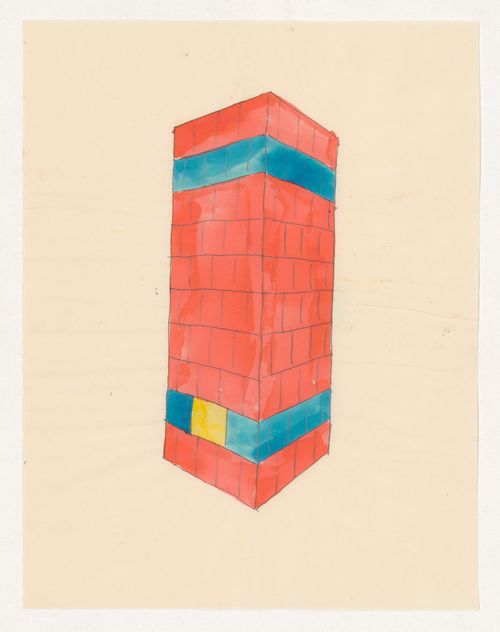
- Design for a tall, rectangular tiled stove, decorated with two blue horizontal bands against a red background. The yellow rectangle near the bottom left probably represents the stove door. - The subject of this drawing is identified as a tiled stove by comparison with similar drawings in the group DR1988:0155 - DR1988:0209. Several of these drawings have identifying inscriptions, such as "Ofen" (stove) and "Kachelofen" (tiled stove), which are probably by the draughtsman. Henze illustrates examples of "Kachelofen" which are similar to this one in size and proportion (fig. 105, p. 98 and fig. 114, p. 103).
DR1988:0191
Description:
- Design for a tall, rectangular tiled stove, decorated with two blue horizontal bands against a red background. The yellow rectangle near the bottom left probably represents the stove door. - The subject of this drawing is identified as a tiled stove by comparison with similar drawings in the group DR1988:0155 - DR1988:0209. Several of these drawings have identifying inscriptions, such as "Ofen" (stove) and "Kachelofen" (tiled stove), which are probably by the draughtsman. Henze illustrates examples of "Kachelofen" which are similar to this one in size and proportion (fig. 105, p. 98 and fig. 114, p. 103).
People:
Subject:
interior design
interior design
Date:
circa 1920-1921
circa 1920-1921
Title:
Perspective sketch for a red and blue tiled stove
Actions:
DR1988:0191
Description:
- Design for a tall, rectangular tiled stove, decorated with two blue horizontal bands against a red background. The yellow rectangle near the bottom left probably represents the stove door. - The subject of this drawing is identified as a tiled stove by comparison with similar drawings in the group DR1988:0155 - DR1988:0209. Several of these drawings have identifying inscriptions, such as "Ofen" (stove) and "Kachelofen" (tiled stove), which are probably by the draughtsman. Henze illustrates examples of "Kachelofen" which are similar to this one in size and proportion (fig. 105, p. 98 and fig. 114, p. 103).
Perspective sketch for a red and blue tiled stove
Actions:
DR1988:0191
Description:
- Design for a tall, rectangular tiled stove, decorated with two blue horizontal bands against a red background. The yellow rectangle near the bottom left probably represents the stove door. - The subject of this drawing is identified as a tiled stove by comparison with similar drawings in the group DR1988:0155 - DR1988:0209. Several of these drawings have identifying inscriptions, such as "Ofen" (stove) and "Kachelofen" (tiled stove), which are probably by the draughtsman. Henze illustrates examples of "Kachelofen" which are similar to this one in size and proportion (fig. 105, p. 98 and fig. 114, p. 103).
Form:
drawings
drawings
Date:
circa 1920-1921
circa 1920-1921
People:
Subject:
interior design
interior design
Form:
drawings
drawings
Actions:
Reference number:
DR1988:0208
Description:
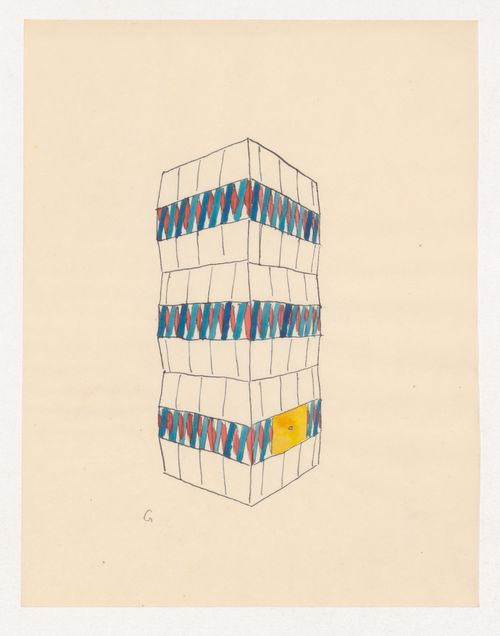
- Design for a tall, rectangular tiled stove with faceted sides, decorated with three horizontal bands of a red and blue geometric pattern. The yellow rectangle near the bottom probably represents the stove door. - The subject of this drawing is identified as a tiled stove by comparison with similar drawings in the group DR1988:0155 - DR1988:0209. Several of these drawings have identifying inscriptions, such as "Ofen" (stove) and "Kachelofen" (tiled stove), which are probably by the draughtsman. Henze illustrates examples of "Kachelofen" which are similar to this one in size and proportion (fig. 105, p. 98 and fig. 114, p. 103).
DR1988:0208
Description:
- Design for a tall, rectangular tiled stove with faceted sides, decorated with three horizontal bands of a red and blue geometric pattern. The yellow rectangle near the bottom probably represents the stove door. - The subject of this drawing is identified as a tiled stove by comparison with similar drawings in the group DR1988:0155 - DR1988:0209. Several of these drawings have identifying inscriptions, such as "Ofen" (stove) and "Kachelofen" (tiled stove), which are probably by the draughtsman. Henze illustrates examples of "Kachelofen" which are similar to this one in size and proportion (fig. 105, p. 98 and fig. 114, p. 103).
People:
Subject:
interior design
interior design
Date:
circa 1920-1921
circa 1920-1921
Title:
Perspective sketch for a tiled stove with faceted sides
Actions:
DR1988:0208
Description:
- Design for a tall, rectangular tiled stove with faceted sides, decorated with three horizontal bands of a red and blue geometric pattern. The yellow rectangle near the bottom probably represents the stove door. - The subject of this drawing is identified as a tiled stove by comparison with similar drawings in the group DR1988:0155 - DR1988:0209. Several of these drawings have identifying inscriptions, such as "Ofen" (stove) and "Kachelofen" (tiled stove), which are probably by the draughtsman. Henze illustrates examples of "Kachelofen" which are similar to this one in size and proportion (fig. 105, p. 98 and fig. 114, p. 103).
Perspective sketch for a tiled stove with faceted sides
Actions:
DR1988:0208
Description:
- Design for a tall, rectangular tiled stove with faceted sides, decorated with three horizontal bands of a red and blue geometric pattern. The yellow rectangle near the bottom probably represents the stove door. - The subject of this drawing is identified as a tiled stove by comparison with similar drawings in the group DR1988:0155 - DR1988:0209. Several of these drawings have identifying inscriptions, such as "Ofen" (stove) and "Kachelofen" (tiled stove), which are probably by the draughtsman. Henze illustrates examples of "Kachelofen" which are similar to this one in size and proportion (fig. 105, p. 98 and fig. 114, p. 103).
Form:
drawings
drawings
Date:
circa 1920-1921
circa 1920-1921
People:
Subject:
interior design
interior design
Form:
drawings
drawings
Actions:
Reference number:
DR1988:0209
Description:
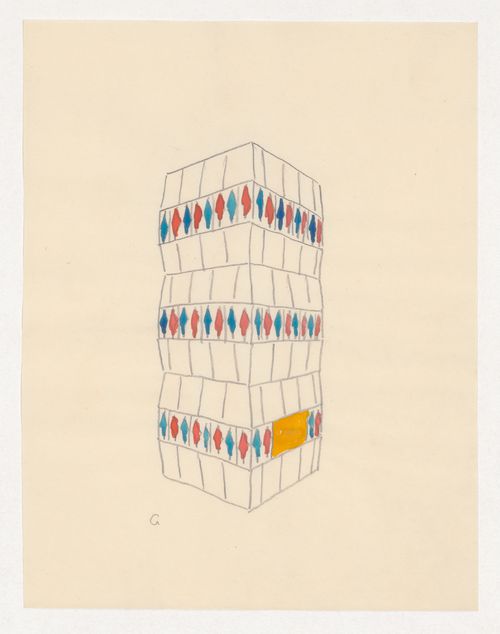
- Design for a tall, rectangular tiled stove with faceted sides, decorated with three horizontal bands of red and blue lozenges. The dark yellow rectangle near the bottom probably represents the stove door. - The subject of this drawing is identified as a tiled stove by comparison with similar drawings in the group DR1988:0155 - DR1988:0209. Several of these drawings have identifying inscriptions, such as "Ofen" (stove) and "Kachelofen" (tiled stove), which are probably by the draughtsman. Henze illustrates examples of "Kachelofen" which are similar to this one in size and proportion (fig. 105, p. 98 and fig. 114, p. 103).
DR1988:0209
Description:
- Design for a tall, rectangular tiled stove with faceted sides, decorated with three horizontal bands of red and blue lozenges. The dark yellow rectangle near the bottom probably represents the stove door. - The subject of this drawing is identified as a tiled stove by comparison with similar drawings in the group DR1988:0155 - DR1988:0209. Several of these drawings have identifying inscriptions, such as "Ofen" (stove) and "Kachelofen" (tiled stove), which are probably by the draughtsman. Henze illustrates examples of "Kachelofen" which are similar to this one in size and proportion (fig. 105, p. 98 and fig. 114, p. 103).
People:
Subject:
interior design
interior design
Date:
circa 1920-1921
circa 1920-1921
Title:
Perspective sketch for a tiled stove with faceted sides
Actions:
DR1988:0209
Description:
- Design for a tall, rectangular tiled stove with faceted sides, decorated with three horizontal bands of red and blue lozenges. The dark yellow rectangle near the bottom probably represents the stove door. - The subject of this drawing is identified as a tiled stove by comparison with similar drawings in the group DR1988:0155 - DR1988:0209. Several of these drawings have identifying inscriptions, such as "Ofen" (stove) and "Kachelofen" (tiled stove), which are probably by the draughtsman. Henze illustrates examples of "Kachelofen" which are similar to this one in size and proportion (fig. 105, p. 98 and fig. 114, p. 103).
Perspective sketch for a tiled stove with faceted sides
Actions:
DR1988:0209
Description:
- Design for a tall, rectangular tiled stove with faceted sides, decorated with three horizontal bands of red and blue lozenges. The dark yellow rectangle near the bottom probably represents the stove door. - The subject of this drawing is identified as a tiled stove by comparison with similar drawings in the group DR1988:0155 - DR1988:0209. Several of these drawings have identifying inscriptions, such as "Ofen" (stove) and "Kachelofen" (tiled stove), which are probably by the draughtsman. Henze illustrates examples of "Kachelofen" which are similar to this one in size and proportion (fig. 105, p. 98 and fig. 114, p. 103).
Form:
drawings
drawings
Date:
circa 1920-1921
circa 1920-1921
People:
Subject:
interior design
interior design
Form:
drawings
drawings
Reference number:
ARCH193434
Description:
Contains the following drawings: 100 C Location plan, 101 C Plan of ground floor and fireplace details, 102 C Plan of upper level and door frame details, 103 C Sections and elevations, 104 C Interior stair-case details, 105 C Details snack-bar area, 106 C Coffee bar and locker room details, 107 C Details service rooms, snack-bar, 108 C Wall sections and vestibule screen details, 109 C Roof plan and roof drain details, 110 C Public and staff lavatories, and misc. details, and 111 C Section Y-Y.
ARCH193434
Description:
Contains the following drawings: 100 C Location plan, 101 C Plan of ground floor and fireplace details, 102 C Plan of upper level and door frame details, 103 C Sections and elevations, 104 C Interior stair-case details, 105 C Details snack-bar area, 106 C Coffee bar and locker room details, 107 C Details service rooms, snack-bar, 108 C Wall sections and vestibule screen details, 109 C Roof plan and roof drain details, 110 C Public and staff lavatories, and misc. details, and 111 C Section Y-Y.
People:
Date:
1955-1959
1955-1959
Title:
Site plan, floor plans, details, sections and elevations, Beaver Lake Pavilion, Montréal, Québec
Actions:
ARCH193434
Description:
Contains the following drawings: 100 C Location plan, 101 C Plan of ground floor and fireplace details, 102 C Plan of upper level and door frame details, 103 C Sections and elevations, 104 C Interior stair-case details, 105 C Details snack-bar area, 106 C Coffee bar and locker room details, 107 C Details service rooms, snack-bar, 108 C Wall sections and vestibule screen details, 109 C Roof plan and roof drain details, 110 C Public and staff lavatories, and misc. details, and 111 C Section Y-Y.
Site plan, floor plans, details, sections and elevations, Beaver Lake Pavilion, Montréal, Québec
Actions:
ARCH193434
Description:
Contains the following drawings: 100 C Location plan, 101 C Plan of ground floor and fireplace details, 102 C Plan of upper level and door frame details, 103 C Sections and elevations, 104 C Interior stair-case details, 105 C Details snack-bar area, 106 C Coffee bar and locker room details, 107 C Details service rooms, snack-bar, 108 C Wall sections and vestibule screen details, 109 C Roof plan and roof drain details, 110 C Public and staff lavatories, and misc. details, and 111 C Section Y-Y.
Form:
drawings
drawings
Date:
1955-1959
1955-1959
People:
Level of archival description:
Project
Project
Reference number:
AP178.S1.1988.PR07
Description:
This project series documents the Reconstrução do Chiado in Lisbon, Portugal. The office's archives identified this project as 58/80. The office assigned the dates 1988-1998 for this project. Chiado is a historic district in the center of Lisbon, Portugal, and a linchpin between the Baixa Pombalina and the Bairro Alto Hill. After a devastating earthquake in 1755, the city was rebuilt and reorganized by military architects and engineers. The Pombaline style, specific to Lisbon, includes pre-fabricated anti-seismic structure and sober style. On August 25, 1988, a fire started in one of the oldest department stores of Lisbon, the Grandella building, damaging partially or totally seventeen buildings, between the Rua Do Carmo, Rua Nova do Almada and Rua Garret. Álvaro Siza was selected by the mayor of Lisbon, Nuno Krus Abecasis, to reorganize and rebuild the district. After public consultations, it was decided to maintain the historic image of the Chiado by restoring the façades and ornamentations. Adjustments by Siza include introducing residential and cultural functions to the district, with the exception of the Grandes Armazéns building and the Grandella building, which had their own program. As Siza said himself: "It’s not about drawing a new section of the city, but rather just introducing corrections and adjustments, reinforce the whole city." Siza started to work on the layout plan in January 1989 and presented it to the municipal authorities of Lisbon in April 1990. The reconstruction of the Chiado had several goals, but there were two general concepts behind his plan. The aesthetic aspect of the program included restorations of buildings to reinstitute the historical spirit of the district. The spatial reorganization, in a really Siza way, focused on finding architectural solutions that would bring more functionality to the city. The idea was to think of the reconstruction in relation with the urban revitalization of the Baixa Pombalina and to maintain as much as possible the patrimonial value of the district. Siza's intentions were to stimulate the commercial and residential functions of the district, which was on the decline over the last years prior to the fire. Some of the measures taken were: improving the traffic fluidity; creating parking spaces for the future residents and shopkeepers, improving the access to stores and others facilities, creating a staired passageway between Rua do Crucifixo and Rua Nova do Almada, and a pedestrian passageway between the rear of those buildings giving onto Rua Garret and Rua Do Carmo. They also studied the integration of a subway station to the district. Municipal authorities decided to rebuild or restore the original facades, reorganize the interior and improve the safety of the buildings. The biggest challenge was to convert the Grandes Armazéns do Chiado into a hotel and rebuild the Grandella with its original 20th century façade, while rethinking the interior division(s?) in order to add different functions to the building, including offices and leisure and cultural facilities. The reconstruction plan was divided into six distinct blocks: Bloco A, Bloco B, Bloco C, Bloco D, Bloco E, and Bloco F. Each Block includes several buildings and each was individually numbered. The first three blocks (A, B, C) were the most damaged, and required massive work, stonework, technical and mechanical work, replacing doors and windows, as well as repainting, repaving, and restoring decorative elements. Reconstruction for Blocks D, E, and F, which are less documented in the fonds, focused on making changes that complemented the neighboring building. Siza also worked specifically on the Edifício Castro e Melo, Câmara Chaves, Edifício Leonel, Edifício Grandella, and Recuperaçäo do Edifício dos Grandes Armazéns. The rest of the buildings were restored by other architects and firms. "Chiado" is often referring to two different things: the districts between the Baixa Pombalina and the Bairro Alto Hill, as well as a building, also known as the Hotel do Chiado. To avoid confusion, in this finding aid the term "Chiado" is always referring to the district, and the Chiado building will be referred to as the Grandes Armazéns do Chiado building. To fully understand the nature of the project, it is important to comprehend the reconstruction of the Chiado as a whole project, rather than as individual components. Siza himself saw the Chiado as one big building. Bloco A (plots 7,8,9,10,11 and 20) Bloco B (plots 12, 13, 14/15 and 16) Bloco C (plots 2, 3 and 6) Bloco D (plots 4 and 5) Bloco E (plots 1,17,18 and 19) This project series includes eleven subseries : Subseries 1) AP178.S1.1988.PR07.SS1 Master plans and exterior spaces, Reconstruction of Chiado, 2) AP178.S1.1988.PR07.SS2 Bloco A, 3) AP178.S1.1988.PR07.SS3 Edificio Camara Chaves building, 4) AP178.S1.1988.PR07.SS4 Edifício Castro e Melo, 5) AP178.S1.1988.PR07.SS5 Bloco B, 6) AP178.S1.1988.PR07.SS6– Bloco, B Chiado, Edifício Leonel, Lisboa, Portugal (1988-1998), 7) AP178.S1.1988.PR07.SS7 Bloco C, 8) AP178.S1.1988.PR07.SS8 - Bloco C, Chiado, Recuperaçäo do Edifício Grandella, 9) AP178.S1.1988.PR07.SS9 - Bloco C, Chiado, Recuperaçäo do Edifício dos Grandes Armazéns, 10) AP178.S1.1988.PR07.SS10 Ligacao Pedonal do Patio B, 11) AP178.S1.1988.PR07.SS11 Chiado, Estação de Metropolitano Baixa Chiado. It is important to note that the project AP178.S1.1994.PR08 Renovação do Elevador de Santa Justa, Chiado, 1994 is also related to the Reconstruction of the Chiado. All documentation for this project series, including the project subseries, has been kept together to maintain the office's arrangement.
AP178.S1.1988.PR07
Description:
This project series documents the Reconstrução do Chiado in Lisbon, Portugal. The office's archives identified this project as 58/80. The office assigned the dates 1988-1998 for this project. Chiado is a historic district in the center of Lisbon, Portugal, and a linchpin between the Baixa Pombalina and the Bairro Alto Hill. After a devastating earthquake in 1755, the city was rebuilt and reorganized by military architects and engineers. The Pombaline style, specific to Lisbon, includes pre-fabricated anti-seismic structure and sober style. On August 25, 1988, a fire started in one of the oldest department stores of Lisbon, the Grandella building, damaging partially or totally seventeen buildings, between the Rua Do Carmo, Rua Nova do Almada and Rua Garret. Álvaro Siza was selected by the mayor of Lisbon, Nuno Krus Abecasis, to reorganize and rebuild the district. After public consultations, it was decided to maintain the historic image of the Chiado by restoring the façades and ornamentations. Adjustments by Siza include introducing residential and cultural functions to the district, with the exception of the Grandes Armazéns building and the Grandella building, which had their own program. As Siza said himself: "It’s not about drawing a new section of the city, but rather just introducing corrections and adjustments, reinforce the whole city." Siza started to work on the layout plan in January 1989 and presented it to the municipal authorities of Lisbon in April 1990. The reconstruction of the Chiado had several goals, but there were two general concepts behind his plan. The aesthetic aspect of the program included restorations of buildings to reinstitute the historical spirit of the district. The spatial reorganization, in a really Siza way, focused on finding architectural solutions that would bring more functionality to the city. The idea was to think of the reconstruction in relation with the urban revitalization of the Baixa Pombalina and to maintain as much as possible the patrimonial value of the district. Siza's intentions were to stimulate the commercial and residential functions of the district, which was on the decline over the last years prior to the fire. Some of the measures taken were: improving the traffic fluidity; creating parking spaces for the future residents and shopkeepers, improving the access to stores and others facilities, creating a staired passageway between Rua do Crucifixo and Rua Nova do Almada, and a pedestrian passageway between the rear of those buildings giving onto Rua Garret and Rua Do Carmo. They also studied the integration of a subway station to the district. Municipal authorities decided to rebuild or restore the original facades, reorganize the interior and improve the safety of the buildings. The biggest challenge was to convert the Grandes Armazéns do Chiado into a hotel and rebuild the Grandella with its original 20th century façade, while rethinking the interior division(s?) in order to add different functions to the building, including offices and leisure and cultural facilities. The reconstruction plan was divided into six distinct blocks: Bloco A, Bloco B, Bloco C, Bloco D, Bloco E, and Bloco F. Each Block includes several buildings and each was individually numbered. The first three blocks (A, B, C) were the most damaged, and required massive work, stonework, technical and mechanical work, replacing doors and windows, as well as repainting, repaving, and restoring decorative elements. Reconstruction for Blocks D, E, and F, which are less documented in the fonds, focused on making changes that complemented the neighboring building. Siza also worked specifically on the Edifício Castro e Melo, Câmara Chaves, Edifício Leonel, Edifício Grandella, and Recuperaçäo do Edifício dos Grandes Armazéns. The rest of the buildings were restored by other architects and firms. "Chiado" is often referring to two different things: the districts between the Baixa Pombalina and the Bairro Alto Hill, as well as a building, also known as the Hotel do Chiado. To avoid confusion, in this finding aid the term "Chiado" is always referring to the district, and the Chiado building will be referred to as the Grandes Armazéns do Chiado building. To fully understand the nature of the project, it is important to comprehend the reconstruction of the Chiado as a whole project, rather than as individual components. Siza himself saw the Chiado as one big building. Bloco A (plots 7,8,9,10,11 and 20) Bloco B (plots 12, 13, 14/15 and 16) Bloco C (plots 2, 3 and 6) Bloco D (plots 4 and 5) Bloco E (plots 1,17,18 and 19) This project series includes eleven subseries : Subseries 1) AP178.S1.1988.PR07.SS1 Master plans and exterior spaces, Reconstruction of Chiado, 2) AP178.S1.1988.PR07.SS2 Bloco A, 3) AP178.S1.1988.PR07.SS3 Edificio Camara Chaves building, 4) AP178.S1.1988.PR07.SS4 Edifício Castro e Melo, 5) AP178.S1.1988.PR07.SS5 Bloco B, 6) AP178.S1.1988.PR07.SS6– Bloco, B Chiado, Edifício Leonel, Lisboa, Portugal (1988-1998), 7) AP178.S1.1988.PR07.SS7 Bloco C, 8) AP178.S1.1988.PR07.SS8 - Bloco C, Chiado, Recuperaçäo do Edifício Grandella, 9) AP178.S1.1988.PR07.SS9 - Bloco C, Chiado, Recuperaçäo do Edifício dos Grandes Armazéns, 10) AP178.S1.1988.PR07.SS10 Ligacao Pedonal do Patio B, 11) AP178.S1.1988.PR07.SS11 Chiado, Estação de Metropolitano Baixa Chiado. It is important to note that the project AP178.S1.1994.PR08 Renovação do Elevador de Santa Justa, Chiado, 1994 is also related to the Reconstruction of the Chiado. All documentation for this project series, including the project subseries, has been kept together to maintain the office's arrangement.
People:
Date:
1942-2012
1942-2012
Title:
Reconstrução do Chiado [Reconstruction of the Chiado area], Lisbon, Portugal (1988-1998)
Actions:
AP178.S1.1988.PR07
Description:
This project series documents the Reconstrução do Chiado in Lisbon, Portugal. The office's archives identified this project as 58/80. The office assigned the dates 1988-1998 for this project. Chiado is a historic district in the center of Lisbon, Portugal, and a linchpin between the Baixa Pombalina and the Bairro Alto Hill. After a devastating earthquake in 1755, the city was rebuilt and reorganized by military architects and engineers. The Pombaline style, specific to Lisbon, includes pre-fabricated anti-seismic structure and sober style. On August 25, 1988, a fire started in one of the oldest department stores of Lisbon, the Grandella building, damaging partially or totally seventeen buildings, between the Rua Do Carmo, Rua Nova do Almada and Rua Garret. Álvaro Siza was selected by the mayor of Lisbon, Nuno Krus Abecasis, to reorganize and rebuild the district. After public consultations, it was decided to maintain the historic image of the Chiado by restoring the façades and ornamentations. Adjustments by Siza include introducing residential and cultural functions to the district, with the exception of the Grandes Armazéns building and the Grandella building, which had their own program. As Siza said himself: "It’s not about drawing a new section of the city, but rather just introducing corrections and adjustments, reinforce the whole city." Siza started to work on the layout plan in January 1989 and presented it to the municipal authorities of Lisbon in April 1990. The reconstruction of the Chiado had several goals, but there were two general concepts behind his plan. The aesthetic aspect of the program included restorations of buildings to reinstitute the historical spirit of the district. The spatial reorganization, in a really Siza way, focused on finding architectural solutions that would bring more functionality to the city. The idea was to think of the reconstruction in relation with the urban revitalization of the Baixa Pombalina and to maintain as much as possible the patrimonial value of the district. Siza's intentions were to stimulate the commercial and residential functions of the district, which was on the decline over the last years prior to the fire. Some of the measures taken were: improving the traffic fluidity; creating parking spaces for the future residents and shopkeepers, improving the access to stores and others facilities, creating a staired passageway between Rua do Crucifixo and Rua Nova do Almada, and a pedestrian passageway between the rear of those buildings giving onto Rua Garret and Rua Do Carmo. They also studied the integration of a subway station to the district. Municipal authorities decided to rebuild or restore the original facades, reorganize the interior and improve the safety of the buildings. The biggest challenge was to convert the Grandes Armazéns do Chiado into a hotel and rebuild the Grandella with its original 20th century façade, while rethinking the interior division(s?) in order to add different functions to the building, including offices and leisure and cultural facilities. The reconstruction plan was divided into six distinct blocks: Bloco A, Bloco B, Bloco C, Bloco D, Bloco E, and Bloco F. Each Block includes several buildings and each was individually numbered. The first three blocks (A, B, C) were the most damaged, and required massive work, stonework, technical and mechanical work, replacing doors and windows, as well as repainting, repaving, and restoring decorative elements. Reconstruction for Blocks D, E, and F, which are less documented in the fonds, focused on making changes that complemented the neighboring building. Siza also worked specifically on the Edifício Castro e Melo, Câmara Chaves, Edifício Leonel, Edifício Grandella, and Recuperaçäo do Edifício dos Grandes Armazéns. The rest of the buildings were restored by other architects and firms. "Chiado" is often referring to two different things: the districts between the Baixa Pombalina and the Bairro Alto Hill, as well as a building, also known as the Hotel do Chiado. To avoid confusion, in this finding aid the term "Chiado" is always referring to the district, and the Chiado building will be referred to as the Grandes Armazéns do Chiado building. To fully understand the nature of the project, it is important to comprehend the reconstruction of the Chiado as a whole project, rather than as individual components. Siza himself saw the Chiado as one big building. Bloco A (plots 7,8,9,10,11 and 20) Bloco B (plots 12, 13, 14/15 and 16) Bloco C (plots 2, 3 and 6) Bloco D (plots 4 and 5) Bloco E (plots 1,17,18 and 19) This project series includes eleven subseries : Subseries 1) AP178.S1.1988.PR07.SS1 Master plans and exterior spaces, Reconstruction of Chiado, 2) AP178.S1.1988.PR07.SS2 Bloco A, 3) AP178.S1.1988.PR07.SS3 Edificio Camara Chaves building, 4) AP178.S1.1988.PR07.SS4 Edifício Castro e Melo, 5) AP178.S1.1988.PR07.SS5 Bloco B, 6) AP178.S1.1988.PR07.SS6– Bloco, B Chiado, Edifício Leonel, Lisboa, Portugal (1988-1998), 7) AP178.S1.1988.PR07.SS7 Bloco C, 8) AP178.S1.1988.PR07.SS8 - Bloco C, Chiado, Recuperaçäo do Edifício Grandella, 9) AP178.S1.1988.PR07.SS9 - Bloco C, Chiado, Recuperaçäo do Edifício dos Grandes Armazéns, 10) AP178.S1.1988.PR07.SS10 Ligacao Pedonal do Patio B, 11) AP178.S1.1988.PR07.SS11 Chiado, Estação de Metropolitano Baixa Chiado. It is important to note that the project AP178.S1.1994.PR08 Renovação do Elevador de Santa Justa, Chiado, 1994 is also related to the Reconstruction of the Chiado. All documentation for this project series, including the project subseries, has been kept together to maintain the office's arrangement.
Reconstrução do Chiado [Reconstruction of the Chiado area], Lisbon, Portugal (1988-1998)
Actions:
AP178.S1.1988.PR07
Description:
This project series documents the Reconstrução do Chiado in Lisbon, Portugal. The office's archives identified this project as 58/80. The office assigned the dates 1988-1998 for this project. Chiado is a historic district in the center of Lisbon, Portugal, and a linchpin between the Baixa Pombalina and the Bairro Alto Hill. After a devastating earthquake in 1755, the city was rebuilt and reorganized by military architects and engineers. The Pombaline style, specific to Lisbon, includes pre-fabricated anti-seismic structure and sober style. On August 25, 1988, a fire started in one of the oldest department stores of Lisbon, the Grandella building, damaging partially or totally seventeen buildings, between the Rua Do Carmo, Rua Nova do Almada and Rua Garret. Álvaro Siza was selected by the mayor of Lisbon, Nuno Krus Abecasis, to reorganize and rebuild the district. After public consultations, it was decided to maintain the historic image of the Chiado by restoring the façades and ornamentations. Adjustments by Siza include introducing residential and cultural functions to the district, with the exception of the Grandes Armazéns building and the Grandella building, which had their own program. As Siza said himself: "It’s not about drawing a new section of the city, but rather just introducing corrections and adjustments, reinforce the whole city." Siza started to work on the layout plan in January 1989 and presented it to the municipal authorities of Lisbon in April 1990. The reconstruction of the Chiado had several goals, but there were two general concepts behind his plan. The aesthetic aspect of the program included restorations of buildings to reinstitute the historical spirit of the district. The spatial reorganization, in a really Siza way, focused on finding architectural solutions that would bring more functionality to the city. The idea was to think of the reconstruction in relation with the urban revitalization of the Baixa Pombalina and to maintain as much as possible the patrimonial value of the district. Siza's intentions were to stimulate the commercial and residential functions of the district, which was on the decline over the last years prior to the fire. Some of the measures taken were: improving the traffic fluidity; creating parking spaces for the future residents and shopkeepers, improving the access to stores and others facilities, creating a staired passageway between Rua do Crucifixo and Rua Nova do Almada, and a pedestrian passageway between the rear of those buildings giving onto Rua Garret and Rua Do Carmo. They also studied the integration of a subway station to the district. Municipal authorities decided to rebuild or restore the original facades, reorganize the interior and improve the safety of the buildings. The biggest challenge was to convert the Grandes Armazéns do Chiado into a hotel and rebuild the Grandella with its original 20th century façade, while rethinking the interior division(s?) in order to add different functions to the building, including offices and leisure and cultural facilities. The reconstruction plan was divided into six distinct blocks: Bloco A, Bloco B, Bloco C, Bloco D, Bloco E, and Bloco F. Each Block includes several buildings and each was individually numbered. The first three blocks (A, B, C) were the most damaged, and required massive work, stonework, technical and mechanical work, replacing doors and windows, as well as repainting, repaving, and restoring decorative elements. Reconstruction for Blocks D, E, and F, which are less documented in the fonds, focused on making changes that complemented the neighboring building. Siza also worked specifically on the Edifício Castro e Melo, Câmara Chaves, Edifício Leonel, Edifício Grandella, and Recuperaçäo do Edifício dos Grandes Armazéns. The rest of the buildings were restored by other architects and firms. "Chiado" is often referring to two different things: the districts between the Baixa Pombalina and the Bairro Alto Hill, as well as a building, also known as the Hotel do Chiado. To avoid confusion, in this finding aid the term "Chiado" is always referring to the district, and the Chiado building will be referred to as the Grandes Armazéns do Chiado building. To fully understand the nature of the project, it is important to comprehend the reconstruction of the Chiado as a whole project, rather than as individual components. Siza himself saw the Chiado as one big building. Bloco A (plots 7,8,9,10,11 and 20) Bloco B (plots 12, 13, 14/15 and 16) Bloco C (plots 2, 3 and 6) Bloco D (plots 4 and 5) Bloco E (plots 1,17,18 and 19) This project series includes eleven subseries : Subseries 1) AP178.S1.1988.PR07.SS1 Master plans and exterior spaces, Reconstruction of Chiado, 2) AP178.S1.1988.PR07.SS2 Bloco A, 3) AP178.S1.1988.PR07.SS3 Edificio Camara Chaves building, 4) AP178.S1.1988.PR07.SS4 Edifício Castro e Melo, 5) AP178.S1.1988.PR07.SS5 Bloco B, 6) AP178.S1.1988.PR07.SS6– Bloco, B Chiado, Edifício Leonel, Lisboa, Portugal (1988-1998), 7) AP178.S1.1988.PR07.SS7 Bloco C, 8) AP178.S1.1988.PR07.SS8 - Bloco C, Chiado, Recuperaçäo do Edifício Grandella, 9) AP178.S1.1988.PR07.SS9 - Bloco C, Chiado, Recuperaçäo do Edifício dos Grandes Armazéns, 10) AP178.S1.1988.PR07.SS10 Ligacao Pedonal do Patio B, 11) AP178.S1.1988.PR07.SS11 Chiado, Estação de Metropolitano Baixa Chiado. It is important to note that the project AP178.S1.1994.PR08 Renovação do Elevador de Santa Justa, Chiado, 1994 is also related to the Reconstruction of the Chiado. All documentation for this project series, including the project subseries, has been kept together to maintain the office's arrangement.
Level of archival description:
Project
Project
Date:
1942-2012
1942-2012
People:
Form:
drawings
drawings
Actions:
Reference number:
DR1988:0414
Description:
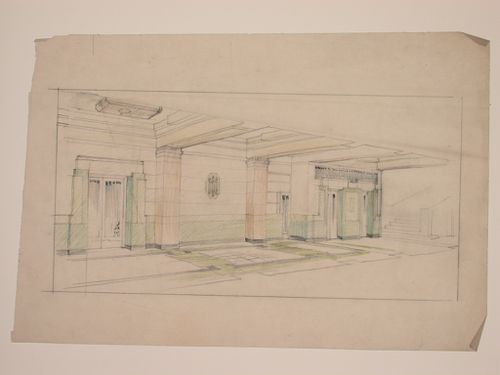
- This drawing shows a hall with two doorways along the back wall and a stairwell off to the left. Some of the elements, such as pillars, door frames, and tiles, are finished with coloured pencil. - The style of many of these drawings and reprographic copies by Henry Hyams (DR1988:0332 - DR1988:0414) suggests that they were possibly for periodical illustrations. Hyams contributed articles to the periodicals 'The Builder' and 'The Architect'. Two objects in the CCA collections can be linked to the article "Music in Stone" published prior to 1926 in 'The Architect'; a reprographic copy (DR1988:0357) and a drawing (DR1988:0364) (Who's Who in Architecture, 161).
DR1988:0414
Description:
- This drawing shows a hall with two doorways along the back wall and a stairwell off to the left. Some of the elements, such as pillars, door frames, and tiles, are finished with coloured pencil. - The style of many of these drawings and reprographic copies by Henry Hyams (DR1988:0332 - DR1988:0414) suggests that they were possibly for periodical illustrations. Hyams contributed articles to the periodicals 'The Builder' and 'The Architect'. Two objects in the CCA collections can be linked to the article "Music in Stone" published prior to 1926 in 'The Architect'; a reprographic copy (DR1988:0357) and a drawing (DR1988:0364) (Who's Who in Architecture, 161).
People:
Subject:
architecture, interior design
architecture, interior design
Date:
1920s or 1930s
1920s or 1930s
Title:
Perspective view showing the interior of a hall
Actions:
DR1988:0414
Description:
- This drawing shows a hall with two doorways along the back wall and a stairwell off to the left. Some of the elements, such as pillars, door frames, and tiles, are finished with coloured pencil. - The style of many of these drawings and reprographic copies by Henry Hyams (DR1988:0332 - DR1988:0414) suggests that they were possibly for periodical illustrations. Hyams contributed articles to the periodicals 'The Builder' and 'The Architect'. Two objects in the CCA collections can be linked to the article "Music in Stone" published prior to 1926 in 'The Architect'; a reprographic copy (DR1988:0357) and a drawing (DR1988:0364) (Who's Who in Architecture, 161).
Perspective view showing the interior of a hall
Actions:
DR1988:0414
Description:
- This drawing shows a hall with two doorways along the back wall and a stairwell off to the left. Some of the elements, such as pillars, door frames, and tiles, are finished with coloured pencil. - The style of many of these drawings and reprographic copies by Henry Hyams (DR1988:0332 - DR1988:0414) suggests that they were possibly for periodical illustrations. Hyams contributed articles to the periodicals 'The Builder' and 'The Architect'. Two objects in the CCA collections can be linked to the article "Music in Stone" published prior to 1926 in 'The Architect'; a reprographic copy (DR1988:0357) and a drawing (DR1988:0364) (Who's Who in Architecture, 161).
Form:
drawings
drawings
Date:
1920s or 1930s
1920s or 1930s
People:
Subject:
architecture, interior design
architecture, interior design
Title:
Album on South Asian domestic architecture showing ornaments, crafts and trade advertisements
Album on South Asian domestic architecture showing ornaments, crafts and trade advertisements
Actions:
Reference number:
PH1979:0432
Description:
This album titled Indian Domestic Architecture, is by Lockwood de Forest and a combination architectural book and trade catalogue. It reflects de Forest's goal to ensure the preservation of the arts, crafts and trades (with a particular attention given to carving) of South Asian workmen. 25 heliotype plates show Indian architecture and ornaments and the final 14 pages show advertisements, in the Indian graphic style, for various New York building craftsmen and home furnishers. The album comprises a title page, an Introduction by Lockwood de Forest, a list of contents, plates by Heliotype Printing Co., Boston and engravings. Contents I. House at Ahmedabad, 16th century II. House at Ahmedabad, 17th century III. House at Ahmedabad, 18th century IV. Copy of one of the Bhudder windows at Ahmedabad, full size 7 ff. x 10 ft. made by Mr. de Forest's men and sold to the South Kensington Museum V. Copy of the second Bhudder window in Mr. De Forest's possession in New York. VI. Front of a house at Ajmere VII. Tomb of the time of Akbar, red sandstone VIII. Marble tracery in the palace, Delhi IX. Window of a house at Amritza X. Brass door at Amritza XI. Front of a house at Lahore XII. Front of a house at Lahore XIII. Front of a house at Lahore XIV. Doorway of house, red sandstone, Multan XV. Front of a house at Multan XVI. Door of house, Multan XVII. Window of tomb in tile at Multan XVIII. Doorway of house, red sandstone, Multan XIX. Mr. De Forest's rooms, 9 East 17th Street, New York XX. Mr. De Forest's rooms, 9 East 17th Street, New York XXI. Door of a house at Ahmedabad, 19th century XXII. House at Ahmedabad, early 17th century XXIII. Window of a house at Lahore XXIV. Tomb of Ala-Ud-Din Khilji, old Delhi XXV. Marble Gateway of a tomb at Gualior
PH1979:0432
Description:
This album titled Indian Domestic Architecture, is by Lockwood de Forest and a combination architectural book and trade catalogue. It reflects de Forest's goal to ensure the preservation of the arts, crafts and trades (with a particular attention given to carving) of South Asian workmen. 25 heliotype plates show Indian architecture and ornaments and the final 14 pages show advertisements, in the Indian graphic style, for various New York building craftsmen and home furnishers. The album comprises a title page, an Introduction by Lockwood de Forest, a list of contents, plates by Heliotype Printing Co., Boston and engravings. Contents I. House at Ahmedabad, 16th century II. House at Ahmedabad, 17th century III. House at Ahmedabad, 18th century IV. Copy of one of the Bhudder windows at Ahmedabad, full size 7 ff. x 10 ft. made by Mr. de Forest's men and sold to the South Kensington Museum V. Copy of the second Bhudder window in Mr. De Forest's possession in New York. VI. Front of a house at Ajmere VII. Tomb of the time of Akbar, red sandstone VIII. Marble tracery in the palace, Delhi IX. Window of a house at Amritza X. Brass door at Amritza XI. Front of a house at Lahore XII. Front of a house at Lahore XIII. Front of a house at Lahore XIV. Doorway of house, red sandstone, Multan XV. Front of a house at Multan XVI. Door of house, Multan XVII. Window of tomb in tile at Multan XVIII. Doorway of house, red sandstone, Multan XIX. Mr. De Forest's rooms, 9 East 17th Street, New York XX. Mr. De Forest's rooms, 9 East 17th Street, New York XXI. Door of a house at Ahmedabad, 19th century XXII. House at Ahmedabad, early 17th century XXIII. Window of a house at Lahore XXIV. Tomb of Ala-Ud-Din Khilji, old Delhi XXV. Marble Gateway of a tomb at Gualior
People:
Subject:
architecture, ornament
architecture, ornament
Date:
1885
1885
Title:
Album on South Asian domestic architecture showing ornaments, crafts and trade advertisements
Actions:
PH1979:0432
Description:
This album titled Indian Domestic Architecture, is by Lockwood de Forest and a combination architectural book and trade catalogue. It reflects de Forest's goal to ensure the preservation of the arts, crafts and trades (with a particular attention given to carving) of South Asian workmen. 25 heliotype plates show Indian architecture and ornaments and the final 14 pages show advertisements, in the Indian graphic style, for various New York building craftsmen and home furnishers. The album comprises a title page, an Introduction by Lockwood de Forest, a list of contents, plates by Heliotype Printing Co., Boston and engravings. Contents I. House at Ahmedabad, 16th century II. House at Ahmedabad, 17th century III. House at Ahmedabad, 18th century IV. Copy of one of the Bhudder windows at Ahmedabad, full size 7 ff. x 10 ft. made by Mr. de Forest's men and sold to the South Kensington Museum V. Copy of the second Bhudder window in Mr. De Forest's possession in New York. VI. Front of a house at Ajmere VII. Tomb of the time of Akbar, red sandstone VIII. Marble tracery in the palace, Delhi IX. Window of a house at Amritza X. Brass door at Amritza XI. Front of a house at Lahore XII. Front of a house at Lahore XIII. Front of a house at Lahore XIV. Doorway of house, red sandstone, Multan XV. Front of a house at Multan XVI. Door of house, Multan XVII. Window of tomb in tile at Multan XVIII. Doorway of house, red sandstone, Multan XIX. Mr. De Forest's rooms, 9 East 17th Street, New York XX. Mr. De Forest's rooms, 9 East 17th Street, New York XXI. Door of a house at Ahmedabad, 19th century XXII. House at Ahmedabad, early 17th century XXIII. Window of a house at Lahore XXIV. Tomb of Ala-Ud-Din Khilji, old Delhi XXV. Marble Gateway of a tomb at Gualior
Album on South Asian domestic architecture showing ornaments, crafts and trade advertisements
Actions:
PH1979:0432
Description:
This album titled Indian Domestic Architecture, is by Lockwood de Forest and a combination architectural book and trade catalogue. It reflects de Forest's goal to ensure the preservation of the arts, crafts and trades (with a particular attention given to carving) of South Asian workmen. 25 heliotype plates show Indian architecture and ornaments and the final 14 pages show advertisements, in the Indian graphic style, for various New York building craftsmen and home furnishers. The album comprises a title page, an Introduction by Lockwood de Forest, a list of contents, plates by Heliotype Printing Co., Boston and engravings. Contents I. House at Ahmedabad, 16th century II. House at Ahmedabad, 17th century III. House at Ahmedabad, 18th century IV. Copy of one of the Bhudder windows at Ahmedabad, full size 7 ff. x 10 ft. made by Mr. de Forest's men and sold to the South Kensington Museum V. Copy of the second Bhudder window in Mr. De Forest's possession in New York. VI. Front of a house at Ajmere VII. Tomb of the time of Akbar, red sandstone VIII. Marble tracery in the palace, Delhi IX. Window of a house at Amritza X. Brass door at Amritza XI. Front of a house at Lahore XII. Front of a house at Lahore XIII. Front of a house at Lahore XIV. Doorway of house, red sandstone, Multan XV. Front of a house at Multan XVI. Door of house, Multan XVII. Window of tomb in tile at Multan XVIII. Doorway of house, red sandstone, Multan XIX. Mr. De Forest's rooms, 9 East 17th Street, New York XX. Mr. De Forest's rooms, 9 East 17th Street, New York XXI. Door of a house at Ahmedabad, 19th century XXII. House at Ahmedabad, early 17th century XXIII. Window of a house at Lahore XXIV. Tomb of Ala-Ud-Din Khilji, old Delhi XXV. Marble Gateway of a tomb at Gualior
Date:
1885
1885
People:
Subject:
architecture, ornament
architecture, ornament


