


12622 Results
Form:
drawings
drawings
Reference number:
DR1988:0340
Description:
- This reprographic copy shows a storefront for a three storey building, with plate glass windows at the street level. - The style of many of these drawings and reprographic copies by Henry Hyams (DR1988:0332 - DR1988:0414) suggests that they were possibly for periodical illustrations. Hyams contributed articles to the periodicals 'The Builder' and 'The Architect'. Two objects in the CCA collections can be linked to the article "Music in Stone" published prior to 1926 in 'The Architect'; a reprographic copy (DR1988:0357) and a drawing (DR1988:0364) (Who's Who in Architecture, 161).
DR1988:0340
Description:
- This reprographic copy shows a storefront for a three storey building, with plate glass windows at the street level. - The style of many of these drawings and reprographic copies by Henry Hyams (DR1988:0332 - DR1988:0414) suggests that they were possibly for periodical illustrations. Hyams contributed articles to the periodicals 'The Builder' and 'The Architect'. Two objects in the CCA collections can be linked to the article "Music in Stone" published prior to 1926 in 'The Architect'; a reprographic copy (DR1988:0357) and a drawing (DR1988:0364) (Who's Who in Architecture, 161).
People:
Subject:
architecture
architecture
Date:
printed in the 1920s or 1930s
printed in the 1920s or 1930s
Title:
Elevation showing a storefront for Eyre and Sons, Ltd., England
Actions:
DR1988:0340
Description:
- This reprographic copy shows a storefront for a three storey building, with plate glass windows at the street level. - The style of many of these drawings and reprographic copies by Henry Hyams (DR1988:0332 - DR1988:0414) suggests that they were possibly for periodical illustrations. Hyams contributed articles to the periodicals 'The Builder' and 'The Architect'. Two objects in the CCA collections can be linked to the article "Music in Stone" published prior to 1926 in 'The Architect'; a reprographic copy (DR1988:0357) and a drawing (DR1988:0364) (Who's Who in Architecture, 161).
Elevation showing a storefront for Eyre and Sons, Ltd., England
Actions:
DR1988:0340
Description:
- This reprographic copy shows a storefront for a three storey building, with plate glass windows at the street level. - The style of many of these drawings and reprographic copies by Henry Hyams (DR1988:0332 - DR1988:0414) suggests that they were possibly for periodical illustrations. Hyams contributed articles to the periodicals 'The Builder' and 'The Architect'. Two objects in the CCA collections can be linked to the article "Music in Stone" published prior to 1926 in 'The Architect'; a reprographic copy (DR1988:0357) and a drawing (DR1988:0364) (Who's Who in Architecture, 161).
Form:
drawings
drawings
Date:
printed in the 1920s or 1930s
printed in the 1920s or 1930s
People:
Subject:
architecture
architecture
Level of archival description:
Project
Project
Reference number:
AP164.S1.1999.D10
Description:
The project series documents the competition entry for the mixed-use tower “El Mirador” in the Bay of Algeciras. The firm was invited to submit their design proposal which won second prize. The competition was organised by the Algeciras City Council. The firm identified this project as number 123. “The project attempts to express, with an architectural gesture, the beauty of the geography of Algeciras: the bay, the port, the Rock and the Straits of Gibraltar, the proximity of Ceuta and Africa, the cork-oak forests that surround the town. For this [Abalos & Herreros] propose a building that, from a single body, opens out into two towers from one great public viewing platform. This form has strategic holes giving onto the more notable topographical features, establishing a physical relationship with them, while the section is organized as a gradient of privacy that increases with height. The competition […] proposed a mixed programme in a posture parallel to the great avenue of the harbour of Algeciras. An evanescent building apparently fragile appears to let one being stimulated by the effects of the climate and the atmospheric phenomenons with an appearance changing with the function of the hours of the day or the season. Its layered section attends ascending to the different landscapes of the city: first public space, second the cities skyline and at last the 360° horizon rising above the city.” (ARCH270975) Abalos & Herreros worked with Ángel Jaramillo, Renata Sentkiewicz, Jakob Hense. Documenting this project are conceptual, design development and presentation drawings, cartographic and graphic materials, and competition records.
AP164.S1.1999.D10
Description:
The project series documents the competition entry for the mixed-use tower “El Mirador” in the Bay of Algeciras. The firm was invited to submit their design proposal which won second prize. The competition was organised by the Algeciras City Council. The firm identified this project as number 123. “The project attempts to express, with an architectural gesture, the beauty of the geography of Algeciras: the bay, the port, the Rock and the Straits of Gibraltar, the proximity of Ceuta and Africa, the cork-oak forests that surround the town. For this [Abalos & Herreros] propose a building that, from a single body, opens out into two towers from one great public viewing platform. This form has strategic holes giving onto the more notable topographical features, establishing a physical relationship with them, while the section is organized as a gradient of privacy that increases with height. The competition […] proposed a mixed programme in a posture parallel to the great avenue of the harbour of Algeciras. An evanescent building apparently fragile appears to let one being stimulated by the effects of the climate and the atmospheric phenomenons with an appearance changing with the function of the hours of the day or the season. Its layered section attends ascending to the different landscapes of the city: first public space, second the cities skyline and at last the 360° horizon rising above the city.” (ARCH270975) Abalos & Herreros worked with Ángel Jaramillo, Renata Sentkiewicz, Jakob Hense. Documenting this project are conceptual, design development and presentation drawings, cartographic and graphic materials, and competition records.
People:
Date:
circa 1999
circa 1999
Title:
El mirador: torre mixta en la Bahía de Algeciras, Spain (1999)
Actions:
AP164.S1.1999.D10
Description:
The project series documents the competition entry for the mixed-use tower “El Mirador” in the Bay of Algeciras. The firm was invited to submit their design proposal which won second prize. The competition was organised by the Algeciras City Council. The firm identified this project as number 123. “The project attempts to express, with an architectural gesture, the beauty of the geography of Algeciras: the bay, the port, the Rock and the Straits of Gibraltar, the proximity of Ceuta and Africa, the cork-oak forests that surround the town. For this [Abalos & Herreros] propose a building that, from a single body, opens out into two towers from one great public viewing platform. This form has strategic holes giving onto the more notable topographical features, establishing a physical relationship with them, while the section is organized as a gradient of privacy that increases with height. The competition […] proposed a mixed programme in a posture parallel to the great avenue of the harbour of Algeciras. An evanescent building apparently fragile appears to let one being stimulated by the effects of the climate and the atmospheric phenomenons with an appearance changing with the function of the hours of the day or the season. Its layered section attends ascending to the different landscapes of the city: first public space, second the cities skyline and at last the 360° horizon rising above the city.” (ARCH270975) Abalos & Herreros worked with Ángel Jaramillo, Renata Sentkiewicz, Jakob Hense. Documenting this project are conceptual, design development and presentation drawings, cartographic and graphic materials, and competition records.
El mirador: torre mixta en la Bahía de Algeciras, Spain (1999)
Actions:
AP164.S1.1999.D10
Description:
The project series documents the competition entry for the mixed-use tower “El Mirador” in the Bay of Algeciras. The firm was invited to submit their design proposal which won second prize. The competition was organised by the Algeciras City Council. The firm identified this project as number 123. “The project attempts to express, with an architectural gesture, the beauty of the geography of Algeciras: the bay, the port, the Rock and the Straits of Gibraltar, the proximity of Ceuta and Africa, the cork-oak forests that surround the town. For this [Abalos & Herreros] propose a building that, from a single body, opens out into two towers from one great public viewing platform. This form has strategic holes giving onto the more notable topographical features, establishing a physical relationship with them, while the section is organized as a gradient of privacy that increases with height. The competition […] proposed a mixed programme in a posture parallel to the great avenue of the harbour of Algeciras. An evanescent building apparently fragile appears to let one being stimulated by the effects of the climate and the atmospheric phenomenons with an appearance changing with the function of the hours of the day or the season. Its layered section attends ascending to the different landscapes of the city: first public space, second the cities skyline and at last the 360° horizon rising above the city.” (ARCH270975) Abalos & Herreros worked with Ángel Jaramillo, Renata Sentkiewicz, Jakob Hense. Documenting this project are conceptual, design development and presentation drawings, cartographic and graphic materials, and competition records.
Level of archival description:
Project
Project
Date:
circa 1999
circa 1999
People:
Level of archival description:
Project
Project
Actions:
Reference number:
AP018.S1.1981.PR16
Description:
This project series documents the construction of the Victoria and Grey Trust Company office in Stratford, Ontario from 1981-1984. The office identified the project number as 8116. This project consisted of an office building and computer center to be the new head office of Victoria and Grey Trust Company. Originally, the building was proposed as an eleven-storey office tower, but eventually the design was scaled back to five storeys with a basement and penthouse. Once construction commenced, the building became even shorter and included a parking garage. The building was located at 60 Erie Street. This project documents only the construction of this office building; the design was completed under a different project number assigned by the office (see project series AP018.S1.1980.PR14 in this fonds). The project is recorded through drawings, photographic materials and textual records dating from 1981-1984. The drawings are mostly reprographic copies arranged within the textual materials. There are some original detail drawings arranged within the textual materials. Some drawings were produced by architecture firm Routhwaite and Fairfield. The photographic materials show the construction progress of the project. The textual records consist of correspondence, conference and site reports, authority and detail documentation, financial documents, supplementary instructions, change orders and specifications.
AP018.S1.1981.PR16
Description:
This project series documents the construction of the Victoria and Grey Trust Company office in Stratford, Ontario from 1981-1984. The office identified the project number as 8116. This project consisted of an office building and computer center to be the new head office of Victoria and Grey Trust Company. Originally, the building was proposed as an eleven-storey office tower, but eventually the design was scaled back to five storeys with a basement and penthouse. Once construction commenced, the building became even shorter and included a parking garage. The building was located at 60 Erie Street. This project documents only the construction of this office building; the design was completed under a different project number assigned by the office (see project series AP018.S1.1980.PR14 in this fonds). The project is recorded through drawings, photographic materials and textual records dating from 1981-1984. The drawings are mostly reprographic copies arranged within the textual materials. There are some original detail drawings arranged within the textual materials. Some drawings were produced by architecture firm Routhwaite and Fairfield. The photographic materials show the construction progress of the project. The textual records consist of correspondence, conference and site reports, authority and detail documentation, financial documents, supplementary instructions, change orders and specifications.
People:
Date:
1981-1984
1981-1984
Title:
Victoria and Grey Trust Company, Head Office Construction, Stratford, Ontario (1981-1982)
Actions:
AP018.S1.1981.PR16
Description:
This project series documents the construction of the Victoria and Grey Trust Company office in Stratford, Ontario from 1981-1984. The office identified the project number as 8116. This project consisted of an office building and computer center to be the new head office of Victoria and Grey Trust Company. Originally, the building was proposed as an eleven-storey office tower, but eventually the design was scaled back to five storeys with a basement and penthouse. Once construction commenced, the building became even shorter and included a parking garage. The building was located at 60 Erie Street. This project documents only the construction of this office building; the design was completed under a different project number assigned by the office (see project series AP018.S1.1980.PR14 in this fonds). The project is recorded through drawings, photographic materials and textual records dating from 1981-1984. The drawings are mostly reprographic copies arranged within the textual materials. There are some original detail drawings arranged within the textual materials. Some drawings were produced by architecture firm Routhwaite and Fairfield. The photographic materials show the construction progress of the project. The textual records consist of correspondence, conference and site reports, authority and detail documentation, financial documents, supplementary instructions, change orders and specifications.
Victoria and Grey Trust Company, Head Office Construction, Stratford, Ontario (1981-1982)
Actions:
AP018.S1.1981.PR16
Description:
This project series documents the construction of the Victoria and Grey Trust Company office in Stratford, Ontario from 1981-1984. The office identified the project number as 8116. This project consisted of an office building and computer center to be the new head office of Victoria and Grey Trust Company. Originally, the building was proposed as an eleven-storey office tower, but eventually the design was scaled back to five storeys with a basement and penthouse. Once construction commenced, the building became even shorter and included a parking garage. The building was located at 60 Erie Street. This project documents only the construction of this office building; the design was completed under a different project number assigned by the office (see project series AP018.S1.1980.PR14 in this fonds). The project is recorded through drawings, photographic materials and textual records dating from 1981-1984. The drawings are mostly reprographic copies arranged within the textual materials. There are some original detail drawings arranged within the textual materials. Some drawings were produced by architecture firm Routhwaite and Fairfield. The photographic materials show the construction progress of the project. The textual records consist of correspondence, conference and site reports, authority and detail documentation, financial documents, supplementary instructions, change orders and specifications.
Level of archival description:
Project
Project
Date:
1981-1984
1981-1984
People:
Form:
archives
Level of archival description:
Fonds
archives
Level of archival description:
Fonds
Title:
Kaiman Lee fonds
Kaiman Lee fonds
Reference number:
AP222
Synopsis:
The Kaiman Lee fonds, circa 1965 – 2006, documents the professional and academic career of Dr. Kaiman Lee. The material in the fonds also represents the publishing activities of the Environmental Design and Research Center, and the Center for Environmental Research, both based in Boston. The fonds also covers Lee’s academic pursuits as a student and lecturer. The fonds also contains computer parts related to the ARK Two computer-aided design system which Lee worked on during his time at the Boston-based firm Perry, Dean and Stewart Architects. The records within the fonds largely consists of photographic materials, publications, and artefacts.
AP222
Synopsis:
The Kaiman Lee fonds, circa 1965 – 2006, documents the professional and academic career of Dr. Kaiman Lee. The material in the fonds also represents the publishing activities of the Environmental Design and Research Center, and the Center for Environmental Research, both based in Boston. The fonds also covers Lee’s academic pursuits as a student and lecturer. The fonds also contains computer parts related to the ARK Two computer-aided design system which Lee worked on during his time at the Boston-based firm Perry, Dean and Stewart Architects. The records within the fonds largely consists of photographic materials, publications, and artefacts.
People:
Date:
circa 1965 - 2006
circa 1965 - 2006
Title:
Kaiman Lee fonds
Actions:
AP222
Synopsis:
The Kaiman Lee fonds, circa 1965 – 2006, documents the professional and academic career of Dr. Kaiman Lee. The material in the fonds also represents the publishing activities of the Environmental Design and Research Center, and the Center for Environmental Research, both based in Boston. The fonds also covers Lee’s academic pursuits as a student and lecturer. The fonds also contains computer parts related to the ARK Two computer-aided design system which Lee worked on during his time at the Boston-based firm Perry, Dean and Stewart Architects. The records within the fonds largely consists of photographic materials, publications, and artefacts.
Kaiman Lee fonds
Actions:
AP222
Synopsis:
The Kaiman Lee fonds, circa 1965 – 2006, documents the professional and academic career of Dr. Kaiman Lee. The material in the fonds also represents the publishing activities of the Environmental Design and Research Center, and the Center for Environmental Research, both based in Boston. The fonds also covers Lee’s academic pursuits as a student and lecturer. The fonds also contains computer parts related to the ARK Two computer-aided design system which Lee worked on during his time at the Boston-based firm Perry, Dean and Stewart Architects. The records within the fonds largely consists of photographic materials, publications, and artefacts.
Form:
archives
Level of archival description:
Fonds
archives
Level of archival description:
Fonds
Date:
circa 1965 - 2006
circa 1965 - 2006
People:
Form:
exhibitions
exhibitions
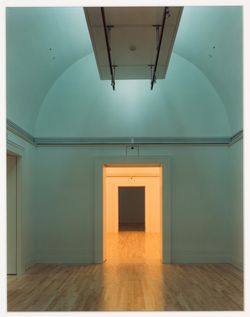
Description:
Celebrating the opening of the CCAs new building, Canadian Centre for Architecture: Building and Gardens reveals the potential of a museum of architecture as a statement: about the nature of the works it collects and exhibits; about its role in the life of a culture or a city; and about architecture itself. Both the restoration of the nineteenth-century Shaughnessy House(...)
Celebrating the opening of the CCAs new building, Canadian Centre for Architecture: Building and Gardens reveals the potential of a museum of architecture as a statement: about the nature of the works it collects and exhibits; about its role in the life of a culture or a city; and about architecture itself. Both the restoration of the nineteenth-century Shaughnessy House(...)
Location:
Octagonal gallery
Octagonal gallery
Date:
7 May 1989 to 25 March 1990
7 May 1989 to 25 March 1990
Title:
Canadian Centre for Architecture: Building and Gardens
Actions:
Description:
Celebrating the opening of the CCAs new building, Canadian Centre for Architecture: Building and Gardens reveals the potential of a museum of architecture as a statement: about the nature of the works it collects and exhibits; about its role in the life of a culture or a city; and about architecture itself. Both the restoration of the nineteenth-century Shaughnessy House(...)
Canadian Centre for Architecture: Building and Gardens
Actions:
Description:
Celebrating the opening of the CCAs new building, Canadian Centre for Architecture: Building and Gardens reveals the potential of a museum of architecture as a statement: about the nature of the works it collects and exhibits; about its role in the life of a culture or a city; and about architecture itself. Both the restoration of the nineteenth-century Shaughnessy House(...)
Form:
exhibitions
exhibitions
Date:
7 May 1989 to
25 March 1990
7 May 1989 to
25 March 1990
Location:
Octagonal gallery
Octagonal gallery
Level of archival description:
Project
Project
Actions:
Reference number:
AP018.S1.1964.PR03
Description:
This project series documents the Natural Sciences Building at York University in North York, Ontario from 1964-1965. The office identified the project number as 6406. This project consisted of a three-storey brick and concrete building with a flat roof line. The building was mostly rectangular in shape, with some rectangular wings extending off the building. to house the natural Sciences This project was built by John B. Parkin Associates, in a joint venture with Gordon S. Adamson Associates and Shore & Moffat and Partners. These three architecture firms formed a joint venture known as UPACE (University Planners Architects And Consulting Engineer). This project was part of a larger master plan by UPACE, which built more than a dozen buildings for the university during this time. The project is recorded through reprographic copies of drawings dating from 1964. These were a set of plans, elevations, sections, details, schedules and structural, electrical and mechanical drawings.
AP018.S1.1964.PR03
Description:
This project series documents the Natural Sciences Building at York University in North York, Ontario from 1964-1965. The office identified the project number as 6406. This project consisted of a three-storey brick and concrete building with a flat roof line. The building was mostly rectangular in shape, with some rectangular wings extending off the building. to house the natural Sciences This project was built by John B. Parkin Associates, in a joint venture with Gordon S. Adamson Associates and Shore & Moffat and Partners. These three architecture firms formed a joint venture known as UPACE (University Planners Architects And Consulting Engineer). This project was part of a larger master plan by UPACE, which built more than a dozen buildings for the university during this time. The project is recorded through reprographic copies of drawings dating from 1964. These were a set of plans, elevations, sections, details, schedules and structural, electrical and mechanical drawings.
People:
Date:
1964
1964
Title:
York University Natural Sciences Building (Biology), North York, Ontario (1964-1965)
Actions:
AP018.S1.1964.PR03
Description:
This project series documents the Natural Sciences Building at York University in North York, Ontario from 1964-1965. The office identified the project number as 6406. This project consisted of a three-storey brick and concrete building with a flat roof line. The building was mostly rectangular in shape, with some rectangular wings extending off the building. to house the natural Sciences This project was built by John B. Parkin Associates, in a joint venture with Gordon S. Adamson Associates and Shore & Moffat and Partners. These three architecture firms formed a joint venture known as UPACE (University Planners Architects And Consulting Engineer). This project was part of a larger master plan by UPACE, which built more than a dozen buildings for the university during this time. The project is recorded through reprographic copies of drawings dating from 1964. These were a set of plans, elevations, sections, details, schedules and structural, electrical and mechanical drawings.
York University Natural Sciences Building (Biology), North York, Ontario (1964-1965)
Actions:
AP018.S1.1964.PR03
Description:
This project series documents the Natural Sciences Building at York University in North York, Ontario from 1964-1965. The office identified the project number as 6406. This project consisted of a three-storey brick and concrete building with a flat roof line. The building was mostly rectangular in shape, with some rectangular wings extending off the building. to house the natural Sciences This project was built by John B. Parkin Associates, in a joint venture with Gordon S. Adamson Associates and Shore & Moffat and Partners. These three architecture firms formed a joint venture known as UPACE (University Planners Architects And Consulting Engineer). This project was part of a larger master plan by UPACE, which built more than a dozen buildings for the university during this time. The project is recorded through reprographic copies of drawings dating from 1964. These were a set of plans, elevations, sections, details, schedules and structural, electrical and mechanical drawings.
Level of archival description:
Project
Project
Date:
1964
1964
People:
Form:
drawings
drawings
Actions:
Reference number:
DR1988:0363
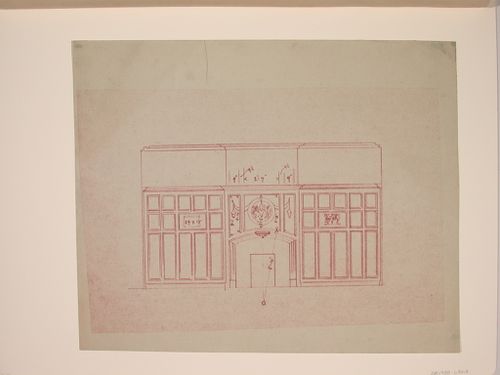
Description:
- This drawing shows a design for wainscoting on a wall with a fireplace. The panels above the fireplace contain decorative designs, possibly for plasterwork, while two small panels to either side of the fireplace contain sketches suggesting that they would be decorated. - The style of many of these drawings and reprographic copies by Henry Hyams (DR1988:0332 - DR1988:0414) suggests that they were possibly for periodical illustrations. Hyams contributed articles to the periodicals 'The Builder' and 'The Architect'. Two objects in the CCA collections can be linked to the article "Music in Stone" published prior to 1926 in 'The Architect'; a reprographic copy (DR1988:0357) and a drawing (DR1988:0364) (Who's Who in Architecture, 161).
DR1988:0363
Description:
- This drawing shows a design for wainscoting on a wall with a fireplace. The panels above the fireplace contain decorative designs, possibly for plasterwork, while two small panels to either side of the fireplace contain sketches suggesting that they would be decorated. - The style of many of these drawings and reprographic copies by Henry Hyams (DR1988:0332 - DR1988:0414) suggests that they were possibly for periodical illustrations. Hyams contributed articles to the periodicals 'The Builder' and 'The Architect'. Two objects in the CCA collections can be linked to the article "Music in Stone" published prior to 1926 in 'The Architect'; a reprographic copy (DR1988:0357) and a drawing (DR1988:0364) (Who's Who in Architecture, 161).
People:
Subject:
interior design
interior design
Date:
printed in the 1920s or 1930s
printed in the 1920s or 1930s
Title:
Elevation for an interior wall with wainscoting
Actions:
DR1988:0363
Description:
- This drawing shows a design for wainscoting on a wall with a fireplace. The panels above the fireplace contain decorative designs, possibly for plasterwork, while two small panels to either side of the fireplace contain sketches suggesting that they would be decorated. - The style of many of these drawings and reprographic copies by Henry Hyams (DR1988:0332 - DR1988:0414) suggests that they were possibly for periodical illustrations. Hyams contributed articles to the periodicals 'The Builder' and 'The Architect'. Two objects in the CCA collections can be linked to the article "Music in Stone" published prior to 1926 in 'The Architect'; a reprographic copy (DR1988:0357) and a drawing (DR1988:0364) (Who's Who in Architecture, 161).
Elevation for an interior wall with wainscoting
Actions:
DR1988:0363
Description:
- This drawing shows a design for wainscoting on a wall with a fireplace. The panels above the fireplace contain decorative designs, possibly for plasterwork, while two small panels to either side of the fireplace contain sketches suggesting that they would be decorated. - The style of many of these drawings and reprographic copies by Henry Hyams (DR1988:0332 - DR1988:0414) suggests that they were possibly for periodical illustrations. Hyams contributed articles to the periodicals 'The Builder' and 'The Architect'. Two objects in the CCA collections can be linked to the article "Music in Stone" published prior to 1926 in 'The Architect'; a reprographic copy (DR1988:0357) and a drawing (DR1988:0364) (Who's Who in Architecture, 161).
Form:
drawings
drawings
Date:
printed in the 1920s or 1930s
printed in the 1920s or 1930s
People:
Subject:
interior design
interior design
Form:
drawings
drawings
Actions:
Reference number:
DR1988:0393
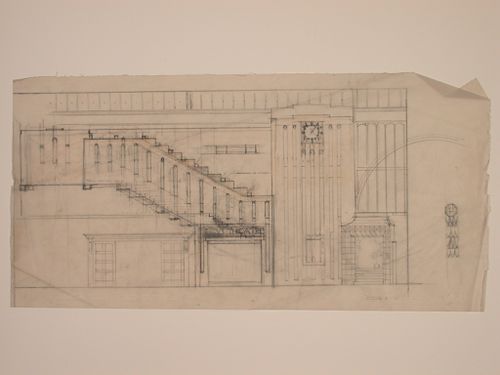
Description:
- Although this drawing is unclear, the entrance area on the left suggests that it is an elevation for an exterior of a building, presumably a theatre, as indicated by the inscription "NEWS TH[E]ATRE". There is a small sketch of a decorative detail to the right of the elevation. - The style of many of these drawings and reprographic copies by Henry Hyams (DR1988:0332 - DR1988:0414) suggests that they were possibly for periodical illustrations. Hyams contributed articles to the periodicals 'The Builder' and 'The Architect'. Two objects in the CCA collections can be linked to the article "Music in Stone" published prior to 1926 in 'The Architect'; a reprographic copy (DR1988:0357) and a drawing (DR1988:0364) (Who's Who in Architecture, 161).
DR1988:0393
Description:
- Although this drawing is unclear, the entrance area on the left suggests that it is an elevation for an exterior of a building, presumably a theatre, as indicated by the inscription "NEWS TH[E]ATRE". There is a small sketch of a decorative detail to the right of the elevation. - The style of many of these drawings and reprographic copies by Henry Hyams (DR1988:0332 - DR1988:0414) suggests that they were possibly for periodical illustrations. Hyams contributed articles to the periodicals 'The Builder' and 'The Architect'. Two objects in the CCA collections can be linked to the article "Music in Stone" published prior to 1926 in 'The Architect'; a reprographic copy (DR1988:0357) and a drawing (DR1988:0364) (Who's Who in Architecture, 161).
People:
Subject:
architecture, interior design
architecture, interior design
Date:
1920s or 1930s
1920s or 1930s
Title:
Elevation, probably for a theatre
Actions:
DR1988:0393
Description:
- Although this drawing is unclear, the entrance area on the left suggests that it is an elevation for an exterior of a building, presumably a theatre, as indicated by the inscription "NEWS TH[E]ATRE". There is a small sketch of a decorative detail to the right of the elevation. - The style of many of these drawings and reprographic copies by Henry Hyams (DR1988:0332 - DR1988:0414) suggests that they were possibly for periodical illustrations. Hyams contributed articles to the periodicals 'The Builder' and 'The Architect'. Two objects in the CCA collections can be linked to the article "Music in Stone" published prior to 1926 in 'The Architect'; a reprographic copy (DR1988:0357) and a drawing (DR1988:0364) (Who's Who in Architecture, 161).
Elevation, probably for a theatre
Actions:
DR1988:0393
Description:
- Although this drawing is unclear, the entrance area on the left suggests that it is an elevation for an exterior of a building, presumably a theatre, as indicated by the inscription "NEWS TH[E]ATRE". There is a small sketch of a decorative detail to the right of the elevation. - The style of many of these drawings and reprographic copies by Henry Hyams (DR1988:0332 - DR1988:0414) suggests that they were possibly for periodical illustrations. Hyams contributed articles to the periodicals 'The Builder' and 'The Architect'. Two objects in the CCA collections can be linked to the article "Music in Stone" published prior to 1926 in 'The Architect'; a reprographic copy (DR1988:0357) and a drawing (DR1988:0364) (Who's Who in Architecture, 161).
Form:
drawings
drawings
Date:
1920s or 1930s
1920s or 1930s
People:
Subject:
architecture, interior design
architecture, interior design
Level of archival description:
Series
Series
Title:
Professional work in Canada
Professional work in Canada
Reference number:
AP163.S2
Description:
Series documents Victor Prus's projects, including his early work when he arrived in Canada, in 1952, and his projects dating from the time that he created his own pratice in Montréal in 1954 to the mid 1990s. Material includes competition entries, built and unbuilt projects and conceptual projects. The series contains commissions from the early 1950s, such as single-family residences for individual clients or friends, housing design competitions and building design competitions, including unrealized projects. The majority of the documents in the series are related to his major projects such as the Centre commercial Rockland (1960), the Mont-Royal and Bonaventure Metro Stations (1966), the Expo'67 Stadium (1967), St. Augustine's Church and James Lyng High School (1968), the Royal Canadian Air Force Memorial (1969), Brudenell River Recreational Park (1970), the Langelier Metro Station (1971), the Grand Théâtre de Québec (1971) and the Palais des Congrès de Montréal (1983). The series also documents Victor Prus's activities as visiting professor or professor at the École d'architecture de Québec or at McGill University as well as his lectures. Promotional documents from Victor Prus and Associates are also included in the series. The series contains conceptual, design development, working and presentation drawings, presentation panels (particularly for competitions), study and presentation models and photographs. A significant amount of textual records related to most of his projects are included. The series also contains publications, such as issues of periodicals, and index cards and microfiches listing some of Prus's architectural projects.
AP163.S2
Description:
Series documents Victor Prus's projects, including his early work when he arrived in Canada, in 1952, and his projects dating from the time that he created his own pratice in Montréal in 1954 to the mid 1990s. Material includes competition entries, built and unbuilt projects and conceptual projects. The series contains commissions from the early 1950s, such as single-family residences for individual clients or friends, housing design competitions and building design competitions, including unrealized projects. The majority of the documents in the series are related to his major projects such as the Centre commercial Rockland (1960), the Mont-Royal and Bonaventure Metro Stations (1966), the Expo'67 Stadium (1967), St. Augustine's Church and James Lyng High School (1968), the Royal Canadian Air Force Memorial (1969), Brudenell River Recreational Park (1970), the Langelier Metro Station (1971), the Grand Théâtre de Québec (1971) and the Palais des Congrès de Montréal (1983). The series also documents Victor Prus's activities as visiting professor or professor at the École d'architecture de Québec or at McGill University as well as his lectures. Promotional documents from Victor Prus and Associates are also included in the series. The series contains conceptual, design development, working and presentation drawings, presentation panels (particularly for competitions), study and presentation models and photographs. A significant amount of textual records related to most of his projects are included. The series also contains publications, such as issues of periodicals, and index cards and microfiches listing some of Prus's architectural projects.
People:
Date:
1952-1993
1952-1993
Title:
Professional work in Canada
Actions:
AP163.S2
Description:
Series documents Victor Prus's projects, including his early work when he arrived in Canada, in 1952, and his projects dating from the time that he created his own pratice in Montréal in 1954 to the mid 1990s. Material includes competition entries, built and unbuilt projects and conceptual projects. The series contains commissions from the early 1950s, such as single-family residences for individual clients or friends, housing design competitions and building design competitions, including unrealized projects. The majority of the documents in the series are related to his major projects such as the Centre commercial Rockland (1960), the Mont-Royal and Bonaventure Metro Stations (1966), the Expo'67 Stadium (1967), St. Augustine's Church and James Lyng High School (1968), the Royal Canadian Air Force Memorial (1969), Brudenell River Recreational Park (1970), the Langelier Metro Station (1971), the Grand Théâtre de Québec (1971) and the Palais des Congrès de Montréal (1983). The series also documents Victor Prus's activities as visiting professor or professor at the École d'architecture de Québec or at McGill University as well as his lectures. Promotional documents from Victor Prus and Associates are also included in the series. The series contains conceptual, design development, working and presentation drawings, presentation panels (particularly for competitions), study and presentation models and photographs. A significant amount of textual records related to most of his projects are included. The series also contains publications, such as issues of periodicals, and index cards and microfiches listing some of Prus's architectural projects.
Professional work in Canada
Actions:
AP163.S2
Description:
Series documents Victor Prus's projects, including his early work when he arrived in Canada, in 1952, and his projects dating from the time that he created his own pratice in Montréal in 1954 to the mid 1990s. Material includes competition entries, built and unbuilt projects and conceptual projects. The series contains commissions from the early 1950s, such as single-family residences for individual clients or friends, housing design competitions and building design competitions, including unrealized projects. The majority of the documents in the series are related to his major projects such as the Centre commercial Rockland (1960), the Mont-Royal and Bonaventure Metro Stations (1966), the Expo'67 Stadium (1967), St. Augustine's Church and James Lyng High School (1968), the Royal Canadian Air Force Memorial (1969), Brudenell River Recreational Park (1970), the Langelier Metro Station (1971), the Grand Théâtre de Québec (1971) and the Palais des Congrès de Montréal (1983). The series also documents Victor Prus's activities as visiting professor or professor at the École d'architecture de Québec or at McGill University as well as his lectures. Promotional documents from Victor Prus and Associates are also included in the series. The series contains conceptual, design development, working and presentation drawings, presentation panels (particularly for competitions), study and presentation models and photographs. A significant amount of textual records related to most of his projects are included. The series also contains publications, such as issues of periodicals, and index cards and microfiches listing some of Prus's architectural projects.
Level of archival description:
Series 2
Series 2
Date:
1952-1993
1952-1993
People:
Level of archival description:
Sub-series
Sub-series
Title:
Domestic Commissions
Domestic Commissions
Reference number:
CI001.S2.D2
Description:
Hubert and Charles Rohault de Fleury received domestic commissions for both urban housing -hôtel particuliers and apartment houses- and rural dwellings -châteaux, country houses and estates. Hubert also executed designs for furniture and garden pavilions. Hubert' work is characterized by restrained classical exteriors and luxurious Empire style interiors; both Charles' exteriors and interiors, especially those for Hôtels Sauvage and Soltykoff, reflect the exuberance of the Second Empire. The CCA albums include drawings from all stages of the design process but with an emphasis on design development drawings. Hubert's albums contain cost calculations and estimates, notes and letters. In general, the drawings by Charles are from a more developed phase of design than Hubert's; Hubert's commissions are more varied than Charles'. Charles' Hôtel Soltykoff (1854)(DR1974:0002:003:001-105) is exemplary of the Second Empire not only in its architectural language, programme and interior decoration, but also its use of mixed stone and iron construction. The album for Hôtel Soltykoff is one of the most comprehensive in the CCA collection. The drawings incorporate several phases of the design process from conceptual ideas to post-construction revisions. Numerous drawings for the structure and exterior ornamentation are included as well as drawings for the embellishment of the interior spaces. The interior drawings are especially interesting for evidence they provide of the palette of colours and ornamental motifs utilized in the Second Empire. Several prints (plates XIX - XXIII) in 'Oeuvre de C. Rohault de Fleury, architecte', which include general plans and elevations (few of which are included in the Hôtel Solytkoff album), are a useful complement to more specific drawings in the album. The Hôtel Sauvage (ca. 1862) album (DR1974:0002:006:001-024) - a set of 24 contract drawings- consists exclusively general plans, sections and elevations. This group of drawings give a good overall sense of both the interior and exterior. Hôtel Sauvage, like Hôtel Soltykoff is also typical of the Second Empire in style and programme. Château de Marcoussis (ca. 1861), for which a group of drawings were acquired in 1986, diverges somewhat in character from the other examples of Charles' domestic works represented in the CCA collection (DR1986:0379 - DR1986:0413). While most of the other houses are strictly classical in planning and design, for Château de Marcoussis, Charles adopted a more romantic asymmetrical château style design. The domestic commissions (1838-1856) in album, DR1974:0002:002:001-094, roughly fall into two categories. The first category consists of single residences - both town and country. The regimentation of plans and façades in the hôtel particular and country houses manifests the continued influence of Durand, yet Charles was also clearly affected by the Second Empire propensity for elaborate façade treatments with decoratively-shaped windows, complex mouldings and extensive rustication. The second category consists of urban apartment building with stores or occasionally offices on the ground floor, apartments, generally two per floor, above and often servants' rooms in the attic. These buildings are articulated in a restrained manner with mouldings, decorative ironwork and some stone ornament.
CI001.S2.D2
Description:
Hubert and Charles Rohault de Fleury received domestic commissions for both urban housing -hôtel particuliers and apartment houses- and rural dwellings -châteaux, country houses and estates. Hubert also executed designs for furniture and garden pavilions. Hubert' work is characterized by restrained classical exteriors and luxurious Empire style interiors; both Charles' exteriors and interiors, especially those for Hôtels Sauvage and Soltykoff, reflect the exuberance of the Second Empire. The CCA albums include drawings from all stages of the design process but with an emphasis on design development drawings. Hubert's albums contain cost calculations and estimates, notes and letters. In general, the drawings by Charles are from a more developed phase of design than Hubert's; Hubert's commissions are more varied than Charles'. Charles' Hôtel Soltykoff (1854)(DR1974:0002:003:001-105) is exemplary of the Second Empire not only in its architectural language, programme and interior decoration, but also its use of mixed stone and iron construction. The album for Hôtel Soltykoff is one of the most comprehensive in the CCA collection. The drawings incorporate several phases of the design process from conceptual ideas to post-construction revisions. Numerous drawings for the structure and exterior ornamentation are included as well as drawings for the embellishment of the interior spaces. The interior drawings are especially interesting for evidence they provide of the palette of colours and ornamental motifs utilized in the Second Empire. Several prints (plates XIX - XXIII) in 'Oeuvre de C. Rohault de Fleury, architecte', which include general plans and elevations (few of which are included in the Hôtel Solytkoff album), are a useful complement to more specific drawings in the album. The Hôtel Sauvage (ca. 1862) album (DR1974:0002:006:001-024) - a set of 24 contract drawings- consists exclusively general plans, sections and elevations. This group of drawings give a good overall sense of both the interior and exterior. Hôtel Sauvage, like Hôtel Soltykoff is also typical of the Second Empire in style and programme. Château de Marcoussis (ca. 1861), for which a group of drawings were acquired in 1986, diverges somewhat in character from the other examples of Charles' domestic works represented in the CCA collection (DR1986:0379 - DR1986:0413). While most of the other houses are strictly classical in planning and design, for Château de Marcoussis, Charles adopted a more romantic asymmetrical château style design. The domestic commissions (1838-1856) in album, DR1974:0002:002:001-094, roughly fall into two categories. The first category consists of single residences - both town and country. The regimentation of plans and façades in the hôtel particular and country houses manifests the continued influence of Durand, yet Charles was also clearly affected by the Second Empire propensity for elaborate façade treatments with decoratively-shaped windows, complex mouldings and extensive rustication. The second category consists of urban apartment building with stores or occasionally offices on the ground floor, apartments, generally two per floor, above and often servants' rooms in the attic. These buildings are articulated in a restrained manner with mouldings, decorative ironwork and some stone ornament.
People:
Date:
[between 1838 and 1861]
[between 1838 and 1861]
Title:
Domestic Commissions
CI001.S2.D2
Description:
Hubert and Charles Rohault de Fleury received domestic commissions for both urban housing -hôtel particuliers and apartment houses- and rural dwellings -châteaux, country houses and estates. Hubert also executed designs for furniture and garden pavilions. Hubert' work is characterized by restrained classical exteriors and luxurious Empire style interiors; both Charles' exteriors and interiors, especially those for Hôtels Sauvage and Soltykoff, reflect the exuberance of the Second Empire. The CCA albums include drawings from all stages of the design process but with an emphasis on design development drawings. Hubert's albums contain cost calculations and estimates, notes and letters. In general, the drawings by Charles are from a more developed phase of design than Hubert's; Hubert's commissions are more varied than Charles'. Charles' Hôtel Soltykoff (1854)(DR1974:0002:003:001-105) is exemplary of the Second Empire not only in its architectural language, programme and interior decoration, but also its use of mixed stone and iron construction. The album for Hôtel Soltykoff is one of the most comprehensive in the CCA collection. The drawings incorporate several phases of the design process from conceptual ideas to post-construction revisions. Numerous drawings for the structure and exterior ornamentation are included as well as drawings for the embellishment of the interior spaces. The interior drawings are especially interesting for evidence they provide of the palette of colours and ornamental motifs utilized in the Second Empire. Several prints (plates XIX - XXIII) in 'Oeuvre de C. Rohault de Fleury, architecte', which include general plans and elevations (few of which are included in the Hôtel Solytkoff album), are a useful complement to more specific drawings in the album. The Hôtel Sauvage (ca. 1862) album (DR1974:0002:006:001-024) - a set of 24 contract drawings- consists exclusively general plans, sections and elevations. This group of drawings give a good overall sense of both the interior and exterior. Hôtel Sauvage, like Hôtel Soltykoff is also typical of the Second Empire in style and programme. Château de Marcoussis (ca. 1861), for which a group of drawings were acquired in 1986, diverges somewhat in character from the other examples of Charles' domestic works represented in the CCA collection (DR1986:0379 - DR1986:0413). While most of the other houses are strictly classical in planning and design, for Château de Marcoussis, Charles adopted a more romantic asymmetrical château style design. The domestic commissions (1838-1856) in album, DR1974:0002:002:001-094, roughly fall into two categories. The first category consists of single residences - both town and country. The regimentation of plans and façades in the hôtel particular and country houses manifests the continued influence of Durand, yet Charles was also clearly affected by the Second Empire propensity for elaborate façade treatments with decoratively-shaped windows, complex mouldings and extensive rustication. The second category consists of urban apartment building with stores or occasionally offices on the ground floor, apartments, generally two per floor, above and often servants' rooms in the attic. These buildings are articulated in a restrained manner with mouldings, decorative ironwork and some stone ornament.
Domestic Commissions
CI001.S2.D2
Description:
Hubert and Charles Rohault de Fleury received domestic commissions for both urban housing -hôtel particuliers and apartment houses- and rural dwellings -châteaux, country houses and estates. Hubert also executed designs for furniture and garden pavilions. Hubert' work is characterized by restrained classical exteriors and luxurious Empire style interiors; both Charles' exteriors and interiors, especially those for Hôtels Sauvage and Soltykoff, reflect the exuberance of the Second Empire. The CCA albums include drawings from all stages of the design process but with an emphasis on design development drawings. Hubert's albums contain cost calculations and estimates, notes and letters. In general, the drawings by Charles are from a more developed phase of design than Hubert's; Hubert's commissions are more varied than Charles'. Charles' Hôtel Soltykoff (1854)(DR1974:0002:003:001-105) is exemplary of the Second Empire not only in its architectural language, programme and interior decoration, but also its use of mixed stone and iron construction. The album for Hôtel Soltykoff is one of the most comprehensive in the CCA collection. The drawings incorporate several phases of the design process from conceptual ideas to post-construction revisions. Numerous drawings for the structure and exterior ornamentation are included as well as drawings for the embellishment of the interior spaces. The interior drawings are especially interesting for evidence they provide of the palette of colours and ornamental motifs utilized in the Second Empire. Several prints (plates XIX - XXIII) in 'Oeuvre de C. Rohault de Fleury, architecte', which include general plans and elevations (few of which are included in the Hôtel Solytkoff album), are a useful complement to more specific drawings in the album. The Hôtel Sauvage (ca. 1862) album (DR1974:0002:006:001-024) - a set of 24 contract drawings- consists exclusively general plans, sections and elevations. This group of drawings give a good overall sense of both the interior and exterior. Hôtel Sauvage, like Hôtel Soltykoff is also typical of the Second Empire in style and programme. Château de Marcoussis (ca. 1861), for which a group of drawings were acquired in 1986, diverges somewhat in character from the other examples of Charles' domestic works represented in the CCA collection (DR1986:0379 - DR1986:0413). While most of the other houses are strictly classical in planning and design, for Château de Marcoussis, Charles adopted a more romantic asymmetrical château style design. The domestic commissions (1838-1856) in album, DR1974:0002:002:001-094, roughly fall into two categories. The first category consists of single residences - both town and country. The regimentation of plans and façades in the hôtel particular and country houses manifests the continued influence of Durand, yet Charles was also clearly affected by the Second Empire propensity for elaborate façade treatments with decoratively-shaped windows, complex mouldings and extensive rustication. The second category consists of urban apartment building with stores or occasionally offices on the ground floor, apartments, generally two per floor, above and often servants' rooms in the attic. These buildings are articulated in a restrained manner with mouldings, decorative ironwork and some stone ornament.
Level of archival description:
File 2
File 2
Date:
[between 1838 and 1861]
[between 1838 and 1861]
People:


