


44145 Results
Level of archival description:
Series
Series
Title:
Wenzel Hablik
Wenzel Hablik
Actions:
Reference number:
AP162.S3
Description:
Series documents the contribution of architect Wenzel Hablik to the correspondence circle of Die gläserne Kette. Hablik participated using the pseudonym W.H.. Born in Brüx, Germany, (now Most, in Czech Republic) in 1881, Hablik worked as a porcelina painter from 1895 to 1897 and later as architectural draftsman. Between 1897 to 1902 he studied architecture at the Faschsdule für Tonindustrie und verwandte Gewerbe in Teplitz-Schönau, and at the Kungstgewerbeschule in Vienna in 1902. Between 1905 and 1906, he studied painting at the Akademie für bildenbe Künste in Prague. He worked in Itzehoe, Germany, after an invitation by a patron, Richard Biel, in 1907, where he start collaborating on textile designs with Elisabeth Lindemann, who he married in 1917. His work was exhibited at the Austellung für unbekannte Architeckten in 1919. The same year he joined the Arbeitsrat für Kunst lead by Bruno Taut. In 1925, Hablik published "Zyklus Architektur" an artist folio presenting some of his etched architectural fantasies. He worked for the family workshop by designing textiles and wall hangings. He died in 1934 in Itzehoe. (Source: Ian Boyd Whyte, Bruno Taut and the Architecture of Activism. Cambridge: Cambridge University Press, 1982) The series comprises letters and a drawing by Wenzel Hablik.
AP162.S3
Description:
Series documents the contribution of architect Wenzel Hablik to the correspondence circle of Die gläserne Kette. Hablik participated using the pseudonym W.H.. Born in Brüx, Germany, (now Most, in Czech Republic) in 1881, Hablik worked as a porcelina painter from 1895 to 1897 and later as architectural draftsman. Between 1897 to 1902 he studied architecture at the Faschsdule für Tonindustrie und verwandte Gewerbe in Teplitz-Schönau, and at the Kungstgewerbeschule in Vienna in 1902. Between 1905 and 1906, he studied painting at the Akademie für bildenbe Künste in Prague. He worked in Itzehoe, Germany, after an invitation by a patron, Richard Biel, in 1907, where he start collaborating on textile designs with Elisabeth Lindemann, who he married in 1917. His work was exhibited at the Austellung für unbekannte Architeckten in 1919. The same year he joined the Arbeitsrat für Kunst lead by Bruno Taut. In 1925, Hablik published "Zyklus Architektur" an artist folio presenting some of his etched architectural fantasies. He worked for the family workshop by designing textiles and wall hangings. He died in 1934 in Itzehoe. (Source: Ian Boyd Whyte, Bruno Taut and the Architecture of Activism. Cambridge: Cambridge University Press, 1982) The series comprises letters and a drawing by Wenzel Hablik.
People:
Date:
circa 1919-1920
circa 1919-1920
Title:
Wenzel Hablik
Actions:
AP162.S3
Description:
Series documents the contribution of architect Wenzel Hablik to the correspondence circle of Die gläserne Kette. Hablik participated using the pseudonym W.H.. Born in Brüx, Germany, (now Most, in Czech Republic) in 1881, Hablik worked as a porcelina painter from 1895 to 1897 and later as architectural draftsman. Between 1897 to 1902 he studied architecture at the Faschsdule für Tonindustrie und verwandte Gewerbe in Teplitz-Schönau, and at the Kungstgewerbeschule in Vienna in 1902. Between 1905 and 1906, he studied painting at the Akademie für bildenbe Künste in Prague. He worked in Itzehoe, Germany, after an invitation by a patron, Richard Biel, in 1907, where he start collaborating on textile designs with Elisabeth Lindemann, who he married in 1917. His work was exhibited at the Austellung für unbekannte Architeckten in 1919. The same year he joined the Arbeitsrat für Kunst lead by Bruno Taut. In 1925, Hablik published "Zyklus Architektur" an artist folio presenting some of his etched architectural fantasies. He worked for the family workshop by designing textiles and wall hangings. He died in 1934 in Itzehoe. (Source: Ian Boyd Whyte, Bruno Taut and the Architecture of Activism. Cambridge: Cambridge University Press, 1982) The series comprises letters and a drawing by Wenzel Hablik.
Wenzel Hablik
Actions:
AP162.S3
Description:
Series documents the contribution of architect Wenzel Hablik to the correspondence circle of Die gläserne Kette. Hablik participated using the pseudonym W.H.. Born in Brüx, Germany, (now Most, in Czech Republic) in 1881, Hablik worked as a porcelina painter from 1895 to 1897 and later as architectural draftsman. Between 1897 to 1902 he studied architecture at the Faschsdule für Tonindustrie und verwandte Gewerbe in Teplitz-Schönau, and at the Kungstgewerbeschule in Vienna in 1902. Between 1905 and 1906, he studied painting at the Akademie für bildenbe Künste in Prague. He worked in Itzehoe, Germany, after an invitation by a patron, Richard Biel, in 1907, where he start collaborating on textile designs with Elisabeth Lindemann, who he married in 1917. His work was exhibited at the Austellung für unbekannte Architeckten in 1919. The same year he joined the Arbeitsrat für Kunst lead by Bruno Taut. In 1925, Hablik published "Zyklus Architektur" an artist folio presenting some of his etched architectural fantasies. He worked for the family workshop by designing textiles and wall hangings. He died in 1934 in Itzehoe. (Source: Ian Boyd Whyte, Bruno Taut and the Architecture of Activism. Cambridge: Cambridge University Press, 1982) The series comprises letters and a drawing by Wenzel Hablik.
Level of archival description:
series
series
Date:
circa 1919-1920
circa 1919-1920
People:
Level of archival description:
Project
Project
Actions:
Reference number:
AP018.S1.1977.PR06
Description:
This project series documents the building maintenance program for the IBM headquarters building at 1150 Eglington Avenue in North York, Ontario in 1970. The office identified the project number as 7707. This project consisted of maintenance to existing sidewalk slabs, roof restoration work and retrofitting, and a possible thermal upgrade of the headquarters, which had been built by the firm John B. Parkin Associates beginning in 1965. The project is recorded through correspondence dating from 1977-1978.
AP018.S1.1977.PR06
Description:
This project series documents the building maintenance program for the IBM headquarters building at 1150 Eglington Avenue in North York, Ontario in 1970. The office identified the project number as 7707. This project consisted of maintenance to existing sidewalk slabs, roof restoration work and retrofitting, and a possible thermal upgrade of the headquarters, which had been built by the firm John B. Parkin Associates beginning in 1965. The project is recorded through correspondence dating from 1977-1978.
People:
Date:
1977-1978
1977-1978
Title:
IBM Headquarters Building, Building Maintenance Program, North York, Ontario (1977)
Actions:
AP018.S1.1977.PR06
Description:
This project series documents the building maintenance program for the IBM headquarters building at 1150 Eglington Avenue in North York, Ontario in 1970. The office identified the project number as 7707. This project consisted of maintenance to existing sidewalk slabs, roof restoration work and retrofitting, and a possible thermal upgrade of the headquarters, which had been built by the firm John B. Parkin Associates beginning in 1965. The project is recorded through correspondence dating from 1977-1978.
IBM Headquarters Building, Building Maintenance Program, North York, Ontario (1977)
Actions:
AP018.S1.1977.PR06
Description:
This project series documents the building maintenance program for the IBM headquarters building at 1150 Eglington Avenue in North York, Ontario in 1970. The office identified the project number as 7707. This project consisted of maintenance to existing sidewalk slabs, roof restoration work and retrofitting, and a possible thermal upgrade of the headquarters, which had been built by the firm John B. Parkin Associates beginning in 1965. The project is recorded through correspondence dating from 1977-1978.
Level of archival description:
Project
Project
Date:
1977-1978
1977-1978
People:
Level of archival description:
Project
Project
Actions:
Reference number:
AP018.S1.1981.PR24
Description:
This project series documents work for the Canadian Coast Guard College in Sydney, Nova Scotia from 1981-1982. The office identified the project number as 8129. This project consisted of an investigation regarding problems related to drifting snow on and around the College's buildings. The project is recorded through textual records and drawings dating from 1981-1982. The drawings are reprographic copies arranged within the textual materials. The textual records consist of specifications and the snow control study.
AP018.S1.1981.PR24
Description:
This project series documents work for the Canadian Coast Guard College in Sydney, Nova Scotia from 1981-1982. The office identified the project number as 8129. This project consisted of an investigation regarding problems related to drifting snow on and around the College's buildings. The project is recorded through textual records and drawings dating from 1981-1982. The drawings are reprographic copies arranged within the textual materials. The textual records consist of specifications and the snow control study.
People:
Date:
1981-1982
1981-1982
Title:
Canadian Coast Guard College, Canopies and Snow Baffles, Sydney, Nova Scotia (1981)
Actions:
AP018.S1.1981.PR24
Description:
This project series documents work for the Canadian Coast Guard College in Sydney, Nova Scotia from 1981-1982. The office identified the project number as 8129. This project consisted of an investigation regarding problems related to drifting snow on and around the College's buildings. The project is recorded through textual records and drawings dating from 1981-1982. The drawings are reprographic copies arranged within the textual materials. The textual records consist of specifications and the snow control study.
Canadian Coast Guard College, Canopies and Snow Baffles, Sydney, Nova Scotia (1981)
Actions:
AP018.S1.1981.PR24
Description:
This project series documents work for the Canadian Coast Guard College in Sydney, Nova Scotia from 1981-1982. The office identified the project number as 8129. This project consisted of an investigation regarding problems related to drifting snow on and around the College's buildings. The project is recorded through textual records and drawings dating from 1981-1982. The drawings are reprographic copies arranged within the textual materials. The textual records consist of specifications and the snow control study.
Level of archival description:
Project
Project
Date:
1981-1982
1981-1982
People:
Form:
textual records
textual records
Reference number:
DR1995:0263:032-032
Description:
includes 9 folders and one sealed envelope containing trade catalogues, brochures, correspondence, clippings, drawings, office memoranda, calculations, estimates, samples, pamphlet, minutes of meetings, specifications, and notes. - Folders in this group are labelled with the following titles: 'PAL system'; 'Services: General'; 'Heating, Cooling'; 'Protected walkway'; 'On Site Handling'; 'Chairs'; 'Work Zone / Processes'; 'P.E.P. Tables'.
DR1995:0263:032-032
Description:
includes 9 folders and one sealed envelope containing trade catalogues, brochures, correspondence, clippings, drawings, office memoranda, calculations, estimates, samples, pamphlet, minutes of meetings, specifications, and notes. - Folders in this group are labelled with the following titles: 'PAL system'; 'Services: General'; 'Heating, Cooling'; 'Protected walkway'; 'On Site Handling'; 'Chairs'; 'Work Zone / Processes'; 'P.E.P. Tables'.
People:
Title:
9 folders and one sealed envelope containing trade catalogues
Actions:
DR1995:0263:032-032
Description:
includes 9 folders and one sealed envelope containing trade catalogues, brochures, correspondence, clippings, drawings, office memoranda, calculations, estimates, samples, pamphlet, minutes of meetings, specifications, and notes. - Folders in this group are labelled with the following titles: 'PAL system'; 'Services: General'; 'Heating, Cooling'; 'Protected walkway'; 'On Site Handling'; 'Chairs'; 'Work Zone / Processes'; 'P.E.P. Tables'.
9 folders and one sealed envelope containing trade catalogues
Actions:
DR1995:0263:032-032
Description:
includes 9 folders and one sealed envelope containing trade catalogues, brochures, correspondence, clippings, drawings, office memoranda, calculations, estimates, samples, pamphlet, minutes of meetings, specifications, and notes. - Folders in this group are labelled with the following titles: 'PAL system'; 'Services: General'; 'Heating, Cooling'; 'Protected walkway'; 'On Site Handling'; 'Chairs'; 'Work Zone / Processes'; 'P.E.P. Tables'.
Form:
textual records
textual records
People:
Form:
exhibitions
exhibitions
Description:
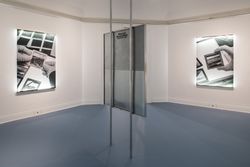
In the first iteration of the Out of the Box: Amancio Williams series, Gilles Delalex and Yves Moreau of Studio Muoto explore the infrastructural dimensions of Williams’ work, with a focus on his unrealized projects for an airport on the coast of Buenos Aires (1945) and the church Cruz en el Río de la Plata (1978‒1980), both of which establish a dialogue with the horizon.
In the first iteration of the Out of the Box: Amancio Williams series, Gilles Delalex and Yves Moreau of Studio Muoto explore the infrastructural dimensions of Williams’ work, with a focus on his unrealized projects for an airport on the coast of Buenos Aires (1945) and the church Cruz en el Río de la Plata (1978‒1980), both of which establish a dialogue with the horizon.
Location:
Octagonal gallery Keyword(s):
Amancio Williams, Studio Muoto, Gilles Delalex, Yves Moreau, Buenos Aires, Out of the box, infrastructure, Argentina, horizon
Octagonal gallery Keyword(s):
Amancio Williams, Studio Muoto, Gilles Delalex, Yves Moreau, Buenos Aires, Out of the box, infrastructure, Argentina, horizon
Date:
23 June 2023 to 17 September 2023
23 June 2023 to 17 September 2023
Title:
On the Horizon: Amancio Williams selected by Studio Muoto
Actions:
Description:
In the first iteration of the Out of the Box: Amancio Williams series, Gilles Delalex and Yves Moreau of Studio Muoto explore the infrastructural dimensions of Williams’ work, with a focus on his unrealized projects for an airport on the coast of Buenos Aires (1945) and the church Cruz en el Río de la Plata (1978‒1980), both of which establish a dialogue with the horizon.
On the Horizon: Amancio Williams selected by Studio Muoto
Actions:
Description:
In the first iteration of the Out of the Box: Amancio Williams series, Gilles Delalex and Yves Moreau of Studio Muoto explore the infrastructural dimensions of Williams’ work, with a focus on his unrealized projects for an airport on the coast of Buenos Aires (1945) and the church Cruz en el Río de la Plata (1978‒1980), both of which establish a dialogue with the horizon.
Form:
exhibitions
exhibitions
Date:
23 June 2023 to
17 September 2023
23 June 2023 to
17 September 2023
Location:
Octagonal gallery Keyword(s):
Amancio Williams, Studio Muoto, Gilles Delalex, Yves Moreau, Buenos Aires, Out of the box, infrastructure, Argentina, horizon
Octagonal gallery Keyword(s):
Amancio Williams, Studio Muoto, Gilles Delalex, Yves Moreau, Buenos Aires, Out of the box, infrastructure, Argentina, horizon
Level of archival description:
Project
Project
Title:
Weavers' Studio
Weavers' Studio
Reference number:
AP182.S1.2013.D2
Description:
File documents a project for a live-work complex in Dehradun, Uttarakhand, India. Commissioned by Chiaki Maki, a Japanese textile weaver who spends a portion of each year in northern India, this complex in the Himalayan foothills provides working space for a studio of twenty-five weavers from all over the country. It is conceived as a cyclical, self-sufficient farm system that integrates all aspects of the weaving process, from cultivating indigo and henna for dye to gathering silk from cocoons and spinning wool. The site had been previously cultivated, and the design works with the landscape's existing pathways, terraces, and mango groves. Nearly all construction materials--including the brick, limestone, and phosphorescent river stones used in the foundation and to treat the brick walls--come from within a two-kilometre radius of the studio. The five-sided building occupying the centre of the site is the workshop itself, which frames a courtyard for gatherings (of weavers, children, etc.). A gallery in the complex displays the weavers' work, while the linear buildings accommodate motorcycle parking, a guest house, and residences for Maki and her partner as well as the site caretaker and his family. File contains artefacts and realia, models, photographs, drawings, site reports, and a video recording.
AP182.S1.2013.D2
Description:
File documents a project for a live-work complex in Dehradun, Uttarakhand, India. Commissioned by Chiaki Maki, a Japanese textile weaver who spends a portion of each year in northern India, this complex in the Himalayan foothills provides working space for a studio of twenty-five weavers from all over the country. It is conceived as a cyclical, self-sufficient farm system that integrates all aspects of the weaving process, from cultivating indigo and henna for dye to gathering silk from cocoons and spinning wool. The site had been previously cultivated, and the design works with the landscape's existing pathways, terraces, and mango groves. Nearly all construction materials--including the brick, limestone, and phosphorescent river stones used in the foundation and to treat the brick walls--come from within a two-kilometre radius of the studio. The five-sided building occupying the centre of the site is the workshop itself, which frames a courtyard for gatherings (of weavers, children, etc.). A gallery in the complex displays the weavers' work, while the linear buildings accommodate motorcycle parking, a guest house, and residences for Maki and her partner as well as the site caretaker and his family. File contains artefacts and realia, models, photographs, drawings, site reports, and a video recording.
People:
Date:
2012-2015
2012-2015
Title:
Weavers' Studio
Actions:
AP182.S1.2013.D2
Description:
File documents a project for a live-work complex in Dehradun, Uttarakhand, India. Commissioned by Chiaki Maki, a Japanese textile weaver who spends a portion of each year in northern India, this complex in the Himalayan foothills provides working space for a studio of twenty-five weavers from all over the country. It is conceived as a cyclical, self-sufficient farm system that integrates all aspects of the weaving process, from cultivating indigo and henna for dye to gathering silk from cocoons and spinning wool. The site had been previously cultivated, and the design works with the landscape's existing pathways, terraces, and mango groves. Nearly all construction materials--including the brick, limestone, and phosphorescent river stones used in the foundation and to treat the brick walls--come from within a two-kilometre radius of the studio. The five-sided building occupying the centre of the site is the workshop itself, which frames a courtyard for gatherings (of weavers, children, etc.). A gallery in the complex displays the weavers' work, while the linear buildings accommodate motorcycle parking, a guest house, and residences for Maki and her partner as well as the site caretaker and his family. File contains artefacts and realia, models, photographs, drawings, site reports, and a video recording.
Weavers' Studio
Actions:
AP182.S1.2013.D2
Description:
File documents a project for a live-work complex in Dehradun, Uttarakhand, India. Commissioned by Chiaki Maki, a Japanese textile weaver who spends a portion of each year in northern India, this complex in the Himalayan foothills provides working space for a studio of twenty-five weavers from all over the country. It is conceived as a cyclical, self-sufficient farm system that integrates all aspects of the weaving process, from cultivating indigo and henna for dye to gathering silk from cocoons and spinning wool. The site had been previously cultivated, and the design works with the landscape's existing pathways, terraces, and mango groves. Nearly all construction materials--including the brick, limestone, and phosphorescent river stones used in the foundation and to treat the brick walls--come from within a two-kilometre radius of the studio. The five-sided building occupying the centre of the site is the workshop itself, which frames a courtyard for gatherings (of weavers, children, etc.). A gallery in the complex displays the weavers' work, while the linear buildings accommodate motorcycle parking, a guest house, and residences for Maki and her partner as well as the site caretaker and his family. File contains artefacts and realia, models, photographs, drawings, site reports, and a video recording.
Level of archival description:
Project
Project
Date:
2012-2015
2012-2015
People:
Form:
drawings, textual records
drawings, textual records
Actions:
Reference number:
AP178.S1.1980.PR03.008
Description:
Original file title: 1979 Frankelufer Block 70 und 89 1980 Kottbusser Damm Block 11 e 12. Note that documentation for Block 70 and 89 is also included in this file. The file includes a work contract from the IBA signed by Siza and IBA official Hardt-Waltherr Hämer, as well as several notes and calculations.
AP178.S1.1980.PR03.008
Description:
Original file title: 1979 Frankelufer Block 70 und 89 1980 Kottbusser Damm Block 11 e 12. Note that documentation for Block 70 and 89 is also included in this file. The file includes a work contract from the IBA signed by Siza and IBA official Hardt-Waltherr Hämer, as well as several notes and calculations.
People:
Date:
circa 1979-1981
circa 1979-1981
Title:
Documentation, notes, contracts for Block 11-12, Kottbusser Damm, Berlin
Actions:
AP178.S1.1980.PR03.008
Description:
Original file title: 1979 Frankelufer Block 70 und 89 1980 Kottbusser Damm Block 11 e 12. Note that documentation for Block 70 and 89 is also included in this file. The file includes a work contract from the IBA signed by Siza and IBA official Hardt-Waltherr Hämer, as well as several notes and calculations.
Documentation, notes, contracts for Block 11-12, Kottbusser Damm, Berlin
Actions:
AP178.S1.1980.PR03.008
Description:
Original file title: 1979 Frankelufer Block 70 und 89 1980 Kottbusser Damm Block 11 e 12. Note that documentation for Block 70 and 89 is also included in this file. The file includes a work contract from the IBA signed by Siza and IBA official Hardt-Waltherr Hämer, as well as several notes and calculations.
Form:
drawings, textual records
drawings, textual records
Date:
circa 1979-1981
circa 1979-1981
People:
Level of archival description:
Project
Project
Title:
Afella
Afella
Reference number:
AP144.S2.D162
Description:
File documents Cedric Price's involvement in an exhibition of his works held at the Building Centre in Camden, London, England. The exhibition focussed on three projects in particular: Duck Land (AP144.S2.D153), Stratton (AP144.S2.D155) and Haven (AP144.S2.D165). This file also contains material relating to a research fellowship, jointly sponsored by the Architectural Association and the Building Centre, which funded Price's work on the Duck Land project. Material in this file was produced between 1992 and 1995, but predominantly between 1992 and 1994. File contains a conceptual drawing and textual records.
AP144.S2.D162
Description:
File documents Cedric Price's involvement in an exhibition of his works held at the Building Centre in Camden, London, England. The exhibition focussed on three projects in particular: Duck Land (AP144.S2.D153), Stratton (AP144.S2.D155) and Haven (AP144.S2.D165). This file also contains material relating to a research fellowship, jointly sponsored by the Architectural Association and the Building Centre, which funded Price's work on the Duck Land project. Material in this file was produced between 1992 and 1995, but predominantly between 1992 and 1994. File contains a conceptual drawing and textual records.
People:
Date:
1992-1995, predominant 1992-1994
1992-1995, predominant 1992-1994
Title:
Afella
Actions:
AP144.S2.D162
Description:
File documents Cedric Price's involvement in an exhibition of his works held at the Building Centre in Camden, London, England. The exhibition focussed on three projects in particular: Duck Land (AP144.S2.D153), Stratton (AP144.S2.D155) and Haven (AP144.S2.D165). This file also contains material relating to a research fellowship, jointly sponsored by the Architectural Association and the Building Centre, which funded Price's work on the Duck Land project. Material in this file was produced between 1992 and 1995, but predominantly between 1992 and 1994. File contains a conceptual drawing and textual records.
Afella
Actions:
AP144.S2.D162
Description:
File documents Cedric Price's involvement in an exhibition of his works held at the Building Centre in Camden, London, England. The exhibition focussed on three projects in particular: Duck Land (AP144.S2.D153), Stratton (AP144.S2.D155) and Haven (AP144.S2.D165). This file also contains material relating to a research fellowship, jointly sponsored by the Architectural Association and the Building Centre, which funded Price's work on the Duck Land project. Material in this file was produced between 1992 and 1995, but predominantly between 1992 and 1994. File contains a conceptual drawing and textual records.
Level of archival description:
File 162
File 162
Date:
1992-1995, predominant 1992-1994
1992-1995, predominant 1992-1994
People:
Form:
events
events
Actions:
Description:
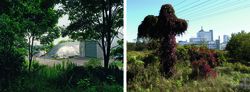
Blake Fitzpatrick and Robert Del Tredici talk about their investigations of Port Hope in a conversation moderated by Louise Désy, CCA Curator, Photographs. Port Hope is Canada’s premier atomic town and the nation’s conduit to the nuclear world. In 1932, Eldorado Nuclear Ltd. built a radium refinery a stone’s throw from the town’s Main Street. After shifting to uranium(...)
Blake Fitzpatrick and Robert Del Tredici talk about their investigations of Port Hope in a conversation moderated by Louise Désy, CCA Curator, Photographs. Port Hope is Canada’s premier atomic town and the nation’s conduit to the nuclear world. In 1932, Eldorado Nuclear Ltd. built a radium refinery a stone’s throw from the town’s Main Street. After shifting to uranium(...)
Location:
Main galleries
Main galleries
Date:
25 March 2017, 3pm
25 March 2017, 3pm
Title:
Port Hope in the Age of Nuclear Waste
Actions:
Description:
Blake Fitzpatrick and Robert Del Tredici talk about their investigations of Port Hope in a conversation moderated by Louise Désy, CCA Curator, Photographs. Port Hope is Canada’s premier atomic town and the nation’s conduit to the nuclear world. In 1932, Eldorado Nuclear Ltd. built a radium refinery a stone’s throw from the town’s Main Street. After shifting to uranium(...)
Port Hope in the Age of Nuclear Waste
Actions:
Description:
Blake Fitzpatrick and Robert Del Tredici talk about their investigations of Port Hope in a conversation moderated by Louise Désy, CCA Curator, Photographs. Port Hope is Canada’s premier atomic town and the nation’s conduit to the nuclear world. In 1932, Eldorado Nuclear Ltd. built a radium refinery a stone’s throw from the town’s Main Street. After shifting to uranium(...)
Form:
events
events
Date:
25 March 2017
3pm
25 March 2017
3pm
Location:
Main galleries
Main galleries
Level of archival description:
Sub-series
Sub-series
Actions:
Reference number:
AP075.S3.SS2
Description:
This sub-series documents Cornelia Hahn Oberlander's administrative records of her practice as landscape architect from the end of the 1950s to the end ot the 2010s. It comprises material related to her consulting services on her own various landscape projects and urban planning projects, and also her consulting services for projects submitted as member of a larger project team for private or public projects. Her office records also contains documents related the planning of her work, her patents applications and designs for her own landscape or playground furnitures, and her professional correspondence. The sub-series also documents Oberlander press and promotional activities, such as interviews she gave, articles written about her, about her work as landscape architect, her statements or her activism for social and environmental causes or preservation landmark buildings and spaces. The sub-series contains documents related to Oberlander's consulting services, including requests for services, proposals by her or by the project team, correspondence, or documentation collected for projects calls of interest to Oberlander. Oberlander's office records for planning of projects and other activities includes professional correspondence files, agendas and planners, message books and notebooks, patents applications and plans for her designs, and office references, such landscape architecture regulations and guidelines, and landscape specifications templates. The sub-series also comprises promotional material, such as photographs of her previous projects, press clippings of articles or periodicals with articles about her or her work, promotional panels for some of her major projects, and brochures or leaflets on her most well known projects. It includes also contains recordings of interviews on TV or radio shows she gave, biographical information on Oberlander, versions of her CV's, portaits of her, and lists and project write-ups.
AP075.S3.SS2
Description:
This sub-series documents Cornelia Hahn Oberlander's administrative records of her practice as landscape architect from the end of the 1950s to the end ot the 2010s. It comprises material related to her consulting services on her own various landscape projects and urban planning projects, and also her consulting services for projects submitted as member of a larger project team for private or public projects. Her office records also contains documents related the planning of her work, her patents applications and designs for her own landscape or playground furnitures, and her professional correspondence. The sub-series also documents Oberlander press and promotional activities, such as interviews she gave, articles written about her, about her work as landscape architect, her statements or her activism for social and environmental causes or preservation landmark buildings and spaces. The sub-series contains documents related to Oberlander's consulting services, including requests for services, proposals by her or by the project team, correspondence, or documentation collected for projects calls of interest to Oberlander. Oberlander's office records for planning of projects and other activities includes professional correspondence files, agendas and planners, message books and notebooks, patents applications and plans for her designs, and office references, such landscape architecture regulations and guidelines, and landscape specifications templates. The sub-series also comprises promotional material, such as photographs of her previous projects, press clippings of articles or periodicals with articles about her or her work, promotional panels for some of her major projects, and brochures or leaflets on her most well known projects. It includes also contains recordings of interviews on TV or radio shows she gave, biographical information on Oberlander, versions of her CV's, portaits of her, and lists and project write-ups.
People:
Date:
1953-2018
1953-2018
Title:
Administrative records and promotional material
Actions:
AP075.S3.SS2
Description:
This sub-series documents Cornelia Hahn Oberlander's administrative records of her practice as landscape architect from the end of the 1950s to the end ot the 2010s. It comprises material related to her consulting services on her own various landscape projects and urban planning projects, and also her consulting services for projects submitted as member of a larger project team for private or public projects. Her office records also contains documents related the planning of her work, her patents applications and designs for her own landscape or playground furnitures, and her professional correspondence. The sub-series also documents Oberlander press and promotional activities, such as interviews she gave, articles written about her, about her work as landscape architect, her statements or her activism for social and environmental causes or preservation landmark buildings and spaces. The sub-series contains documents related to Oberlander's consulting services, including requests for services, proposals by her or by the project team, correspondence, or documentation collected for projects calls of interest to Oberlander. Oberlander's office records for planning of projects and other activities includes professional correspondence files, agendas and planners, message books and notebooks, patents applications and plans for her designs, and office references, such landscape architecture regulations and guidelines, and landscape specifications templates. The sub-series also comprises promotional material, such as photographs of her previous projects, press clippings of articles or periodicals with articles about her or her work, promotional panels for some of her major projects, and brochures or leaflets on her most well known projects. It includes also contains recordings of interviews on TV or radio shows she gave, biographical information on Oberlander, versions of her CV's, portaits of her, and lists and project write-ups.
Administrative records and promotional material
Actions:
AP075.S3.SS2
Description:
This sub-series documents Cornelia Hahn Oberlander's administrative records of her practice as landscape architect from the end of the 1950s to the end ot the 2010s. It comprises material related to her consulting services on her own various landscape projects and urban planning projects, and also her consulting services for projects submitted as member of a larger project team for private or public projects. Her office records also contains documents related the planning of her work, her patents applications and designs for her own landscape or playground furnitures, and her professional correspondence. The sub-series also documents Oberlander press and promotional activities, such as interviews she gave, articles written about her, about her work as landscape architect, her statements or her activism for social and environmental causes or preservation landmark buildings and spaces. The sub-series contains documents related to Oberlander's consulting services, including requests for services, proposals by her or by the project team, correspondence, or documentation collected for projects calls of interest to Oberlander. Oberlander's office records for planning of projects and other activities includes professional correspondence files, agendas and planners, message books and notebooks, patents applications and plans for her designs, and office references, such landscape architecture regulations and guidelines, and landscape specifications templates. The sub-series also comprises promotional material, such as photographs of her previous projects, press clippings of articles or periodicals with articles about her or her work, promotional panels for some of her major projects, and brochures or leaflets on her most well known projects. It includes also contains recordings of interviews on TV or radio shows she gave, biographical information on Oberlander, versions of her CV's, portaits of her, and lists and project write-ups.
Level of archival description:
Sub-series
Sub-series
Date:
1953-2018
1953-2018
People:


