


5600 Results
Level of archival description:
Project
Project
Title:
BMI/HQ
BMI/HQ
Reference number:
AP144.S2.D74
Description:
File documents the unexecuted design for the headquarters of the Birmingham and Midland Institute (BMI), in Birmingham, England. This project is related to the Shantasea Development (AP144.S2.D72) from which Cedric Price resigned as architect to take on the role of architect for BMI, one of the proposed tenants for the Shantasea project. Cedric Price proposed a municipal and regional "nerve centre" to house seminar and study rooms, workshops, galleries, film, television and music studios, a library, a planetarium, and a theatre. A flexible life-cycle plan (expansion, static, contraction) for the building and the activities would allow BMI to expand in the short and medium term, and to shrink in the long term, when it was assumed that many of its roles would be replaced by the UK's Open University plan (Works II, 42). Work on the project came to a stop in 1970 under a new city council (Architectural Design, June 1971, 368). Existing conditions material consists of maps and a survey of Birmingham. Conceptual sketches and drawings include: annotated diagrammatic plans and sections used to develop the building's massing and the horizontal/vertical relationships between functional areas; axonometric views showing the building's general form/functions; plans used for calculating square footage; diagrams showing visual and physical movement through the building; information and movement charts; and flow charts showing the building's organization. Design development drawings consist of graphs showing how functional areas might be used over time. Design development and working drawings include: diagrammatic plans and sections; exploded axonometric views of the functional relationships between areas; exterior axonometric views; sectional perspectives; space allocation plans; circulation drawings; diagrams showing activities throughout the day; furniture equipment schedules; theatre seating and stair studies; and elevations for exterior cladding. Charts show links between activities/actions; activity distribution; activity/capacity; progress of pre-contract work; and the telephone network. File also includes drawings by engineering consultants Felix Samuely and Partners and Zisman, Bowyer and Partners. Presentation material includes: newspaper clippings and text concerning the project; diagrammatic plans, sections, and charts; and a photo collage of the site; and a text by Cedric Price entitled "The Present Position". Some materials in this file were published in "Cedric Price Supplement No. 3", 'Architectural Design', vol. 41, (June 1971), 364-368, and 'Cedric Price-Works II' (London: Architectural Press, 1984), 36, 42. Material in this file was produced between 1967 and 1971. Zisman Bowyer and Partners appear as the mechanical and electrical consulting engineers; Silk and Frazier as the quantity surveyors; and Versa-Serve Ltd as the catering consultants on this project. File contains cartographic materials, conceptual drawings, design development drawings, panels, photographic materials, presentation drawings, presentation panels, publication drawings, technical drawings, and textual records.
AP144.S2.D74
Description:
File documents the unexecuted design for the headquarters of the Birmingham and Midland Institute (BMI), in Birmingham, England. This project is related to the Shantasea Development (AP144.S2.D72) from which Cedric Price resigned as architect to take on the role of architect for BMI, one of the proposed tenants for the Shantasea project. Cedric Price proposed a municipal and regional "nerve centre" to house seminar and study rooms, workshops, galleries, film, television and music studios, a library, a planetarium, and a theatre. A flexible life-cycle plan (expansion, static, contraction) for the building and the activities would allow BMI to expand in the short and medium term, and to shrink in the long term, when it was assumed that many of its roles would be replaced by the UK's Open University plan (Works II, 42). Work on the project came to a stop in 1970 under a new city council (Architectural Design, June 1971, 368). Existing conditions material consists of maps and a survey of Birmingham. Conceptual sketches and drawings include: annotated diagrammatic plans and sections used to develop the building's massing and the horizontal/vertical relationships between functional areas; axonometric views showing the building's general form/functions; plans used for calculating square footage; diagrams showing visual and physical movement through the building; information and movement charts; and flow charts showing the building's organization. Design development drawings consist of graphs showing how functional areas might be used over time. Design development and working drawings include: diagrammatic plans and sections; exploded axonometric views of the functional relationships between areas; exterior axonometric views; sectional perspectives; space allocation plans; circulation drawings; diagrams showing activities throughout the day; furniture equipment schedules; theatre seating and stair studies; and elevations for exterior cladding. Charts show links between activities/actions; activity distribution; activity/capacity; progress of pre-contract work; and the telephone network. File also includes drawings by engineering consultants Felix Samuely and Partners and Zisman, Bowyer and Partners. Presentation material includes: newspaper clippings and text concerning the project; diagrammatic plans, sections, and charts; and a photo collage of the site; and a text by Cedric Price entitled "The Present Position". Some materials in this file were published in "Cedric Price Supplement No. 3", 'Architectural Design', vol. 41, (June 1971), 364-368, and 'Cedric Price-Works II' (London: Architectural Press, 1984), 36, 42. Material in this file was produced between 1967 and 1971. Zisman Bowyer and Partners appear as the mechanical and electrical consulting engineers; Silk and Frazier as the quantity surveyors; and Versa-Serve Ltd as the catering consultants on this project. File contains cartographic materials, conceptual drawings, design development drawings, panels, photographic materials, presentation drawings, presentation panels, publication drawings, technical drawings, and textual records.
People:
Date:
1967-1971
1967-1971
Title:
BMI/HQ
Actions:
AP144.S2.D74
Description:
File documents the unexecuted design for the headquarters of the Birmingham and Midland Institute (BMI), in Birmingham, England. This project is related to the Shantasea Development (AP144.S2.D72) from which Cedric Price resigned as architect to take on the role of architect for BMI, one of the proposed tenants for the Shantasea project. Cedric Price proposed a municipal and regional "nerve centre" to house seminar and study rooms, workshops, galleries, film, television and music studios, a library, a planetarium, and a theatre. A flexible life-cycle plan (expansion, static, contraction) for the building and the activities would allow BMI to expand in the short and medium term, and to shrink in the long term, when it was assumed that many of its roles would be replaced by the UK's Open University plan (Works II, 42). Work on the project came to a stop in 1970 under a new city council (Architectural Design, June 1971, 368). Existing conditions material consists of maps and a survey of Birmingham. Conceptual sketches and drawings include: annotated diagrammatic plans and sections used to develop the building's massing and the horizontal/vertical relationships between functional areas; axonometric views showing the building's general form/functions; plans used for calculating square footage; diagrams showing visual and physical movement through the building; information and movement charts; and flow charts showing the building's organization. Design development drawings consist of graphs showing how functional areas might be used over time. Design development and working drawings include: diagrammatic plans and sections; exploded axonometric views of the functional relationships between areas; exterior axonometric views; sectional perspectives; space allocation plans; circulation drawings; diagrams showing activities throughout the day; furniture equipment schedules; theatre seating and stair studies; and elevations for exterior cladding. Charts show links between activities/actions; activity distribution; activity/capacity; progress of pre-contract work; and the telephone network. File also includes drawings by engineering consultants Felix Samuely and Partners and Zisman, Bowyer and Partners. Presentation material includes: newspaper clippings and text concerning the project; diagrammatic plans, sections, and charts; and a photo collage of the site; and a text by Cedric Price entitled "The Present Position". Some materials in this file were published in "Cedric Price Supplement No. 3", 'Architectural Design', vol. 41, (June 1971), 364-368, and 'Cedric Price-Works II' (London: Architectural Press, 1984), 36, 42. Material in this file was produced between 1967 and 1971. Zisman Bowyer and Partners appear as the mechanical and electrical consulting engineers; Silk and Frazier as the quantity surveyors; and Versa-Serve Ltd as the catering consultants on this project. File contains cartographic materials, conceptual drawings, design development drawings, panels, photographic materials, presentation drawings, presentation panels, publication drawings, technical drawings, and textual records.
BMI/HQ
Actions:
AP144.S2.D74
Description:
File documents the unexecuted design for the headquarters of the Birmingham and Midland Institute (BMI), in Birmingham, England. This project is related to the Shantasea Development (AP144.S2.D72) from which Cedric Price resigned as architect to take on the role of architect for BMI, one of the proposed tenants for the Shantasea project. Cedric Price proposed a municipal and regional "nerve centre" to house seminar and study rooms, workshops, galleries, film, television and music studios, a library, a planetarium, and a theatre. A flexible life-cycle plan (expansion, static, contraction) for the building and the activities would allow BMI to expand in the short and medium term, and to shrink in the long term, when it was assumed that many of its roles would be replaced by the UK's Open University plan (Works II, 42). Work on the project came to a stop in 1970 under a new city council (Architectural Design, June 1971, 368). Existing conditions material consists of maps and a survey of Birmingham. Conceptual sketches and drawings include: annotated diagrammatic plans and sections used to develop the building's massing and the horizontal/vertical relationships between functional areas; axonometric views showing the building's general form/functions; plans used for calculating square footage; diagrams showing visual and physical movement through the building; information and movement charts; and flow charts showing the building's organization. Design development drawings consist of graphs showing how functional areas might be used over time. Design development and working drawings include: diagrammatic plans and sections; exploded axonometric views of the functional relationships between areas; exterior axonometric views; sectional perspectives; space allocation plans; circulation drawings; diagrams showing activities throughout the day; furniture equipment schedules; theatre seating and stair studies; and elevations for exterior cladding. Charts show links between activities/actions; activity distribution; activity/capacity; progress of pre-contract work; and the telephone network. File also includes drawings by engineering consultants Felix Samuely and Partners and Zisman, Bowyer and Partners. Presentation material includes: newspaper clippings and text concerning the project; diagrammatic plans, sections, and charts; and a photo collage of the site; and a text by Cedric Price entitled "The Present Position". Some materials in this file were published in "Cedric Price Supplement No. 3", 'Architectural Design', vol. 41, (June 1971), 364-368, and 'Cedric Price-Works II' (London: Architectural Press, 1984), 36, 42. Material in this file was produced between 1967 and 1971. Zisman Bowyer and Partners appear as the mechanical and electrical consulting engineers; Silk and Frazier as the quantity surveyors; and Versa-Serve Ltd as the catering consultants on this project. File contains cartographic materials, conceptual drawings, design development drawings, panels, photographic materials, presentation drawings, presentation panels, publication drawings, technical drawings, and textual records.
Level of archival description:
File 74
File 74
Date:
1967-1971
1967-1971
People:
Form:
drawings, textual records, born digital
drawings, textual records, born digital
Actions:
Reference number:
AP181.S1.002
Description:
Original directory name: "02_0_Bauherr". File content relates to the monitoring of the development of the design for BMW Welt. Records are from different working groups involving both COOP HIMMELB(L)AU and the client BMW, as well as representatives from the various consulting firms on the project. Records consist of presentations, meeting minutes (chiefly dated 2004-2006), reports, renderings, born-digital plans and digitized plans with hand-written annotations. Among the program areas documented by the records are the financial center, shops, delivery box, junior campus, briefing center, ticketing counter, and landscaping, though the level of detail varies for each. Records document engineering requirements and analysis, and also the visitors’ anticipated experience in BMW Welt. Renderings and plans are mostly in PDF, TIF, or JPEG file formats. Most textual records are also in the PDF file format. Most common file formats: Acrobat PDF 1.2 - Portable Document Format, Acrobat PDF 1.3 - Portable Document Format, Acrobat PDF 1.4 - Portable Document Format, Microsoft Powerpoint Presentation, Tagged Image File Format
AP181.S1.002
Description:
Original directory name: "02_0_Bauherr". File content relates to the monitoring of the development of the design for BMW Welt. Records are from different working groups involving both COOP HIMMELB(L)AU and the client BMW, as well as representatives from the various consulting firms on the project. Records consist of presentations, meeting minutes (chiefly dated 2004-2006), reports, renderings, born-digital plans and digitized plans with hand-written annotations. Among the program areas documented by the records are the financial center, shops, delivery box, junior campus, briefing center, ticketing counter, and landscaping, though the level of detail varies for each. Records document engineering requirements and analysis, and also the visitors’ anticipated experience in BMW Welt. Renderings and plans are mostly in PDF, TIF, or JPEG file formats. Most textual records are also in the PDF file format. Most common file formats: Acrobat PDF 1.2 - Portable Document Format, Acrobat PDF 1.3 - Portable Document Format, Acrobat PDF 1.4 - Portable Document Format, Microsoft Powerpoint Presentation, Tagged Image File Format
People:
Date:
2002-2006
2002-2006
Title:
Meetings and presentations with BMW, BMW Welt, Munich
Actions:
AP181.S1.002
Description:
Original directory name: "02_0_Bauherr". File content relates to the monitoring of the development of the design for BMW Welt. Records are from different working groups involving both COOP HIMMELB(L)AU and the client BMW, as well as representatives from the various consulting firms on the project. Records consist of presentations, meeting minutes (chiefly dated 2004-2006), reports, renderings, born-digital plans and digitized plans with hand-written annotations. Among the program areas documented by the records are the financial center, shops, delivery box, junior campus, briefing center, ticketing counter, and landscaping, though the level of detail varies for each. Records document engineering requirements and analysis, and also the visitors’ anticipated experience in BMW Welt. Renderings and plans are mostly in PDF, TIF, or JPEG file formats. Most textual records are also in the PDF file format. Most common file formats: Acrobat PDF 1.2 - Portable Document Format, Acrobat PDF 1.3 - Portable Document Format, Acrobat PDF 1.4 - Portable Document Format, Microsoft Powerpoint Presentation, Tagged Image File Format
Meetings and presentations with BMW, BMW Welt, Munich
Actions:
AP181.S1.002
Description:
Original directory name: "02_0_Bauherr". File content relates to the monitoring of the development of the design for BMW Welt. Records are from different working groups involving both COOP HIMMELB(L)AU and the client BMW, as well as representatives from the various consulting firms on the project. Records consist of presentations, meeting minutes (chiefly dated 2004-2006), reports, renderings, born-digital plans and digitized plans with hand-written annotations. Among the program areas documented by the records are the financial center, shops, delivery box, junior campus, briefing center, ticketing counter, and landscaping, though the level of detail varies for each. Records document engineering requirements and analysis, and also the visitors’ anticipated experience in BMW Welt. Renderings and plans are mostly in PDF, TIF, or JPEG file formats. Most textual records are also in the PDF file format. Most common file formats: Acrobat PDF 1.2 - Portable Document Format, Acrobat PDF 1.3 - Portable Document Format, Acrobat PDF 1.4 - Portable Document Format, Microsoft Powerpoint Presentation, Tagged Image File Format
Form:
drawings, textual records, born digital
drawings, textual records, born digital
Date:
2002-2006
2002-2006
People:
Level of archival description:
Project
Project
Actions:
Reference number:
AP194.S1.1995.PR01
Description:
Project records consist of records documenting the three phases of the Synthetic Landscape project (1995-2000) as worked on by Johan Bettum and OCEAN North. The project was initially developed and submitted in 1995 for the Membrane Design International Competition held in Japan by the Taiyo Kogyo Corporation. The entry showcases a children’s playscape in the setting of Oslo’s Tøyen Park, joining both its urban surroundings and its natural landscape into a synthetic space. Afterwards, the project was exhibited at the Architecture Association (AA) in London, where Johan Bettum and Kivi Sotamaa met. This eventually led to Bettum and Sotamaa collaborating on projects, along with their respective OCEAN teams in Oslo and Helsinki. The Synthetic Landscape project continued as a research project, with a second phase in 1996 and a third phase which ran from 1997 through 2000 and integrated design methods (particle streaming, Channelling Systems) from the work made on the Töölö and Jyväskylä projects. In the third phase, a pavilion was also added to the setting. Aside from one drawing, all records for this project are in a digital format. Drawings and models from phase 1 show parts or the whole of a shell-like structure. A color scheme seems to be associated to the different components of the structure. A report on phases 1 and 2 discusses the use of synthetic and composite materials for the structure, explaining the concept for the site. Phase 2 textual records include a working plan, site charts and program. Additional drawings and models show an evolution in the shape of the landscape. Most records are related to the third phase of Synthetic Landscape. They are largely drawings and models showing textures and coloured grafts used in the design process, section and surfaces studies, as well as site plans. Other files of the third phase consist of animated renderings of Channelling Systems studies within the Synthetic Landscape topology, saved as Quicktime MOV files. Additionally, the third phase of Synthetic Landscape has files related to the FEM (finite element method) analysis process utilized in the project’s engineering. This particular section includes raster images showing vectorial drawings and data appearing to be surface studies. These were likely created with the software Mathematica. The bulk of textual documentation on the project’s scope and outcomes may be found in AP194.S1.1995.PR01.001 for phases 1 and 2, and in AP194.S1.1995.PR01.005 for phase 3. The latter file also contains documentation related to a grant application to The Research Council of Norway; a proposal for a conference and exhibition at the AA; and administrative records such as budgets, correspondence, invoices, progress reports, meeting agendas and minutes. For all project phases, records related to the design process consist of CAD models saved in a variety of modelling formats (iges, fmz, dgn, 3dm, dxf) as well as raster or vector images (tiff, jpeg, png, eps, pict, etc.). In some cases, only these raster or vector images of the original CAD drawings are present in the archive.
AP194.S1.1995.PR01
Description:
Project records consist of records documenting the three phases of the Synthetic Landscape project (1995-2000) as worked on by Johan Bettum and OCEAN North. The project was initially developed and submitted in 1995 for the Membrane Design International Competition held in Japan by the Taiyo Kogyo Corporation. The entry showcases a children’s playscape in the setting of Oslo’s Tøyen Park, joining both its urban surroundings and its natural landscape into a synthetic space. Afterwards, the project was exhibited at the Architecture Association (AA) in London, where Johan Bettum and Kivi Sotamaa met. This eventually led to Bettum and Sotamaa collaborating on projects, along with their respective OCEAN teams in Oslo and Helsinki. The Synthetic Landscape project continued as a research project, with a second phase in 1996 and a third phase which ran from 1997 through 2000 and integrated design methods (particle streaming, Channelling Systems) from the work made on the Töölö and Jyväskylä projects. In the third phase, a pavilion was also added to the setting. Aside from one drawing, all records for this project are in a digital format. Drawings and models from phase 1 show parts or the whole of a shell-like structure. A color scheme seems to be associated to the different components of the structure. A report on phases 1 and 2 discusses the use of synthetic and composite materials for the structure, explaining the concept for the site. Phase 2 textual records include a working plan, site charts and program. Additional drawings and models show an evolution in the shape of the landscape. Most records are related to the third phase of Synthetic Landscape. They are largely drawings and models showing textures and coloured grafts used in the design process, section and surfaces studies, as well as site plans. Other files of the third phase consist of animated renderings of Channelling Systems studies within the Synthetic Landscape topology, saved as Quicktime MOV files. Additionally, the third phase of Synthetic Landscape has files related to the FEM (finite element method) analysis process utilized in the project’s engineering. This particular section includes raster images showing vectorial drawings and data appearing to be surface studies. These were likely created with the software Mathematica. The bulk of textual documentation on the project’s scope and outcomes may be found in AP194.S1.1995.PR01.001 for phases 1 and 2, and in AP194.S1.1995.PR01.005 for phase 3. The latter file also contains documentation related to a grant application to The Research Council of Norway; a proposal for a conference and exhibition at the AA; and administrative records such as budgets, correspondence, invoices, progress reports, meeting agendas and minutes. For all project phases, records related to the design process consist of CAD models saved in a variety of modelling formats (iges, fmz, dgn, 3dm, dxf) as well as raster or vector images (tiff, jpeg, png, eps, pict, etc.). In some cases, only these raster or vector images of the original CAD drawings are present in the archive.
People:
Date:
1995-2000
1995-2000
Title:
Synthetic Landscape research project, Oslo, Norway (1995-2000)
Actions:
AP194.S1.1995.PR01
Description:
Project records consist of records documenting the three phases of the Synthetic Landscape project (1995-2000) as worked on by Johan Bettum and OCEAN North. The project was initially developed and submitted in 1995 for the Membrane Design International Competition held in Japan by the Taiyo Kogyo Corporation. The entry showcases a children’s playscape in the setting of Oslo’s Tøyen Park, joining both its urban surroundings and its natural landscape into a synthetic space. Afterwards, the project was exhibited at the Architecture Association (AA) in London, where Johan Bettum and Kivi Sotamaa met. This eventually led to Bettum and Sotamaa collaborating on projects, along with their respective OCEAN teams in Oslo and Helsinki. The Synthetic Landscape project continued as a research project, with a second phase in 1996 and a third phase which ran from 1997 through 2000 and integrated design methods (particle streaming, Channelling Systems) from the work made on the Töölö and Jyväskylä projects. In the third phase, a pavilion was also added to the setting. Aside from one drawing, all records for this project are in a digital format. Drawings and models from phase 1 show parts or the whole of a shell-like structure. A color scheme seems to be associated to the different components of the structure. A report on phases 1 and 2 discusses the use of synthetic and composite materials for the structure, explaining the concept for the site. Phase 2 textual records include a working plan, site charts and program. Additional drawings and models show an evolution in the shape of the landscape. Most records are related to the third phase of Synthetic Landscape. They are largely drawings and models showing textures and coloured grafts used in the design process, section and surfaces studies, as well as site plans. Other files of the third phase consist of animated renderings of Channelling Systems studies within the Synthetic Landscape topology, saved as Quicktime MOV files. Additionally, the third phase of Synthetic Landscape has files related to the FEM (finite element method) analysis process utilized in the project’s engineering. This particular section includes raster images showing vectorial drawings and data appearing to be surface studies. These were likely created with the software Mathematica. The bulk of textual documentation on the project’s scope and outcomes may be found in AP194.S1.1995.PR01.001 for phases 1 and 2, and in AP194.S1.1995.PR01.005 for phase 3. The latter file also contains documentation related to a grant application to The Research Council of Norway; a proposal for a conference and exhibition at the AA; and administrative records such as budgets, correspondence, invoices, progress reports, meeting agendas and minutes. For all project phases, records related to the design process consist of CAD models saved in a variety of modelling formats (iges, fmz, dgn, 3dm, dxf) as well as raster or vector images (tiff, jpeg, png, eps, pict, etc.). In some cases, only these raster or vector images of the original CAD drawings are present in the archive.
Synthetic Landscape research project, Oslo, Norway (1995-2000)
Actions:
AP194.S1.1995.PR01
Description:
Project records consist of records documenting the three phases of the Synthetic Landscape project (1995-2000) as worked on by Johan Bettum and OCEAN North. The project was initially developed and submitted in 1995 for the Membrane Design International Competition held in Japan by the Taiyo Kogyo Corporation. The entry showcases a children’s playscape in the setting of Oslo’s Tøyen Park, joining both its urban surroundings and its natural landscape into a synthetic space. Afterwards, the project was exhibited at the Architecture Association (AA) in London, where Johan Bettum and Kivi Sotamaa met. This eventually led to Bettum and Sotamaa collaborating on projects, along with their respective OCEAN teams in Oslo and Helsinki. The Synthetic Landscape project continued as a research project, with a second phase in 1996 and a third phase which ran from 1997 through 2000 and integrated design methods (particle streaming, Channelling Systems) from the work made on the Töölö and Jyväskylä projects. In the third phase, a pavilion was also added to the setting. Aside from one drawing, all records for this project are in a digital format. Drawings and models from phase 1 show parts or the whole of a shell-like structure. A color scheme seems to be associated to the different components of the structure. A report on phases 1 and 2 discusses the use of synthetic and composite materials for the structure, explaining the concept for the site. Phase 2 textual records include a working plan, site charts and program. Additional drawings and models show an evolution in the shape of the landscape. Most records are related to the third phase of Synthetic Landscape. They are largely drawings and models showing textures and coloured grafts used in the design process, section and surfaces studies, as well as site plans. Other files of the third phase consist of animated renderings of Channelling Systems studies within the Synthetic Landscape topology, saved as Quicktime MOV files. Additionally, the third phase of Synthetic Landscape has files related to the FEM (finite element method) analysis process utilized in the project’s engineering. This particular section includes raster images showing vectorial drawings and data appearing to be surface studies. These were likely created with the software Mathematica. The bulk of textual documentation on the project’s scope and outcomes may be found in AP194.S1.1995.PR01.001 for phases 1 and 2, and in AP194.S1.1995.PR01.005 for phase 3. The latter file also contains documentation related to a grant application to The Research Council of Norway; a proposal for a conference and exhibition at the AA; and administrative records such as budgets, correspondence, invoices, progress reports, meeting agendas and minutes. For all project phases, records related to the design process consist of CAD models saved in a variety of modelling formats (iges, fmz, dgn, 3dm, dxf) as well as raster or vector images (tiff, jpeg, png, eps, pict, etc.). In some cases, only these raster or vector images of the original CAD drawings are present in the archive.
Level of archival description:
Project
Project
Date:
1995-2000
1995-2000
People:
Form:
drawings, textual records, born digital
drawings, textual records, born digital
Actions:
Reference number:
AP181.S1.003
Description:
Original directory name:"02_1_Berater BMW". Records relate to construction and planning issues where BMW, as the client, was either in charge or more involved in the decision making. There is at least one report mentioning a BMW Design Planning Office. Bulk dates run from 2002 to 2007. There are sixteen consultants’ files, identified primarily with the firm or consultant name and expertise. These include Interbrand Zintzmeyer & Lux on corporate identity, ECE Projektmanagement GmbH on logistics, Stangl AG on facility management, Ingenieurbüro Georg Ziegler IGVB for surveying, GHTM AG on lightning protection, Schottenhamel & Kiening on restaurants cuisine and atmosphere planning, and bp solar on the inclusion of solar panels on the roof. Records consist of plans and drawings in CAD and PDF formats, renderings saved as JPEG, photographs, and textual records, such as correspondence, engineering reports, and presentations by the consultants. Most common file formats: AutoCAD Drawing, JPEG File Interchange Format, Acrobat PDF 1.4 - Portable Document Format, Acrobat PDF 1.2 - Portable Document Format, Acrobat PDF 1.3 - Portable Document Format
AP181.S1.003
Description:
Original directory name:"02_1_Berater BMW". Records relate to construction and planning issues where BMW, as the client, was either in charge or more involved in the decision making. There is at least one report mentioning a BMW Design Planning Office. Bulk dates run from 2002 to 2007. There are sixteen consultants’ files, identified primarily with the firm or consultant name and expertise. These include Interbrand Zintzmeyer & Lux on corporate identity, ECE Projektmanagement GmbH on logistics, Stangl AG on facility management, Ingenieurbüro Georg Ziegler IGVB for surveying, GHTM AG on lightning protection, Schottenhamel & Kiening on restaurants cuisine and atmosphere planning, and bp solar on the inclusion of solar panels on the roof. Records consist of plans and drawings in CAD and PDF formats, renderings saved as JPEG, photographs, and textual records, such as correspondence, engineering reports, and presentations by the consultants. Most common file formats: AutoCAD Drawing, JPEG File Interchange Format, Acrobat PDF 1.4 - Portable Document Format, Acrobat PDF 1.2 - Portable Document Format, Acrobat PDF 1.3 - Portable Document Format
People:
Date:
1999-2012
1999-2012
Title:
BMW consultants files, BMW Welt, Munich
Actions:
AP181.S1.003
Description:
Original directory name:"02_1_Berater BMW". Records relate to construction and planning issues where BMW, as the client, was either in charge or more involved in the decision making. There is at least one report mentioning a BMW Design Planning Office. Bulk dates run from 2002 to 2007. There are sixteen consultants’ files, identified primarily with the firm or consultant name and expertise. These include Interbrand Zintzmeyer & Lux on corporate identity, ECE Projektmanagement GmbH on logistics, Stangl AG on facility management, Ingenieurbüro Georg Ziegler IGVB for surveying, GHTM AG on lightning protection, Schottenhamel & Kiening on restaurants cuisine and atmosphere planning, and bp solar on the inclusion of solar panels on the roof. Records consist of plans and drawings in CAD and PDF formats, renderings saved as JPEG, photographs, and textual records, such as correspondence, engineering reports, and presentations by the consultants. Most common file formats: AutoCAD Drawing, JPEG File Interchange Format, Acrobat PDF 1.4 - Portable Document Format, Acrobat PDF 1.2 - Portable Document Format, Acrobat PDF 1.3 - Portable Document Format
BMW consultants files, BMW Welt, Munich
Actions:
AP181.S1.003
Description:
Original directory name:"02_1_Berater BMW". Records relate to construction and planning issues where BMW, as the client, was either in charge or more involved in the decision making. There is at least one report mentioning a BMW Design Planning Office. Bulk dates run from 2002 to 2007. There are sixteen consultants’ files, identified primarily with the firm or consultant name and expertise. These include Interbrand Zintzmeyer & Lux on corporate identity, ECE Projektmanagement GmbH on logistics, Stangl AG on facility management, Ingenieurbüro Georg Ziegler IGVB for surveying, GHTM AG on lightning protection, Schottenhamel & Kiening on restaurants cuisine and atmosphere planning, and bp solar on the inclusion of solar panels on the roof. Records consist of plans and drawings in CAD and PDF formats, renderings saved as JPEG, photographs, and textual records, such as correspondence, engineering reports, and presentations by the consultants. Most common file formats: AutoCAD Drawing, JPEG File Interchange Format, Acrobat PDF 1.4 - Portable Document Format, Acrobat PDF 1.2 - Portable Document Format, Acrobat PDF 1.3 - Portable Document Format
Form:
drawings, textual records, born digital
drawings, textual records, born digital
Date:
1999-2012
1999-2012
People:
Form:
photographs
photographs
Actions:
Reference number:
ARCH255750
ARCH255750
People:
Date:
1967?
1967?
Form:
photographs
photographs
Date:
1967?
1967?
People:
Level of archival description:
Project
Project
Title:
Generator
Generator
Reference number:
AP144.S2.D100
Description:
File documents Generator, an unexecuted project for the Gilman Paper Company, at the White Oak Plantation, in Yulee, Florida. After an initial investigation Cedric Price proposed a complex that could accommodate company activities, cultural events, and artist residencies and would provide "a menu of items for individual and group demands of space, control, containment and delight. A place to work, create, think, and stare." ('Architectural Review', Jan. 1980, 16). The design called for timber-framed structures with variable infill panels and cladding, along with screens, to be placed on a grid of concrete pads by cranes with the help of computers in response to users' needs. Conceptual, schematic and design development drawings show grid placement, site layout, landscaping, designs for cubes and components, proposed activities, axonometric views, and design notes with sketches. Development sketches, site plans, and charts include site analysis examining future growth, activity charts, shadow study plans, and axonometric details. Drawings of the structures include: plans, elevations, details, and perspective views for cubes, screens, and cladding; shadow studies for cube variations; and axonometric views of cube arrangements. Other drawings include: site plans and sections; landscaping and parking layouts; plans for circulation patterns; drawings for boardwalks; and electrical and drainage plans. Charts study design validity, activities, networks, project feasibility, component life-cycle, and cube and component placement/construction sequencing. Computer generated printouts by John Frazer, et al show perspective views of cubes from various viewpoints. Two sets of annotated reprographic copies show details for a typical cube and the foundation. Presentation and publication materials include: photographs and reprographic copies of design models; coloured reprographic copies of computer parts and facilities; a coloured air-brushed rendering of cubes and screens by "Jeremie '77"; two perspective renderings; and reprographic copies made from published material. Some material in this file was published in 'Building Design', 23 February 1979; 'Building Design', 9 November 1979; 'Architectural Review' (January 1980), 16-17; 'L'Architecture d'Aujourd'hui', December 1980; 'Techniques et Architecture', December 1980; 'Design', January 1981; 'New Scientist', 19 March 1981; 'Schemes: Cedric Price' (ex. cat.; London: Waddington Galleries, 1981); 'Cedric Price-Works II' (London: Architectural Press, 1984), 90, 92-97. Material in this file was produced between 1959 and 1995, but predominantly between 1976 and 1980. Main consultants for Generator in the United Kingdom include Felix J. Samuely & Partners, consulting engineers; Baker, Wilkins and Smith, quantity surveyors; John Frazer, computer modelling and systems; Sandy Brown Associates, acoustic consultants. Main consultants in the United States include Marvin Boutwell; Law Engineering Testing Company as consulting engineers; and WTCA; Robertson Ward Jr., as architects. Computer printouts in group DR1995:0280:538-552 in Generator (AP144.S2.D100) are attributed to John and Julia Frazer, Art and Design Research, Ulster Polytechnic and the Department of Architecture, Liverpool Polytechnic. Some material in group DR1995:0280:567-576 is attributed to Felix J. Samuely & Partners. File contains conceptual drawings, design, development drawings, presentation drawings, photographic materials, boxes, an artefact, models, and textual records.
AP144.S2.D100
Description:
File documents Generator, an unexecuted project for the Gilman Paper Company, at the White Oak Plantation, in Yulee, Florida. After an initial investigation Cedric Price proposed a complex that could accommodate company activities, cultural events, and artist residencies and would provide "a menu of items for individual and group demands of space, control, containment and delight. A place to work, create, think, and stare." ('Architectural Review', Jan. 1980, 16). The design called for timber-framed structures with variable infill panels and cladding, along with screens, to be placed on a grid of concrete pads by cranes with the help of computers in response to users' needs. Conceptual, schematic and design development drawings show grid placement, site layout, landscaping, designs for cubes and components, proposed activities, axonometric views, and design notes with sketches. Development sketches, site plans, and charts include site analysis examining future growth, activity charts, shadow study plans, and axonometric details. Drawings of the structures include: plans, elevations, details, and perspective views for cubes, screens, and cladding; shadow studies for cube variations; and axonometric views of cube arrangements. Other drawings include: site plans and sections; landscaping and parking layouts; plans for circulation patterns; drawings for boardwalks; and electrical and drainage plans. Charts study design validity, activities, networks, project feasibility, component life-cycle, and cube and component placement/construction sequencing. Computer generated printouts by John Frazer, et al show perspective views of cubes from various viewpoints. Two sets of annotated reprographic copies show details for a typical cube and the foundation. Presentation and publication materials include: photographs and reprographic copies of design models; coloured reprographic copies of computer parts and facilities; a coloured air-brushed rendering of cubes and screens by "Jeremie '77"; two perspective renderings; and reprographic copies made from published material. Some material in this file was published in 'Building Design', 23 February 1979; 'Building Design', 9 November 1979; 'Architectural Review' (January 1980), 16-17; 'L'Architecture d'Aujourd'hui', December 1980; 'Techniques et Architecture', December 1980; 'Design', January 1981; 'New Scientist', 19 March 1981; 'Schemes: Cedric Price' (ex. cat.; London: Waddington Galleries, 1981); 'Cedric Price-Works II' (London: Architectural Press, 1984), 90, 92-97. Material in this file was produced between 1959 and 1995, but predominantly between 1976 and 1980. Main consultants for Generator in the United Kingdom include Felix J. Samuely & Partners, consulting engineers; Baker, Wilkins and Smith, quantity surveyors; John Frazer, computer modelling and systems; Sandy Brown Associates, acoustic consultants. Main consultants in the United States include Marvin Boutwell; Law Engineering Testing Company as consulting engineers; and WTCA; Robertson Ward Jr., as architects. Computer printouts in group DR1995:0280:538-552 in Generator (AP144.S2.D100) are attributed to John and Julia Frazer, Art and Design Research, Ulster Polytechnic and the Department of Architecture, Liverpool Polytechnic. Some material in group DR1995:0280:567-576 is attributed to Felix J. Samuely & Partners. File contains conceptual drawings, design, development drawings, presentation drawings, photographic materials, boxes, an artefact, models, and textual records.
People:
Date:
1959-1995, predominant 1976-1980
1959-1995, predominant 1976-1980
Title:
Generator
Actions:
AP144.S2.D100
Description:
File documents Generator, an unexecuted project for the Gilman Paper Company, at the White Oak Plantation, in Yulee, Florida. After an initial investigation Cedric Price proposed a complex that could accommodate company activities, cultural events, and artist residencies and would provide "a menu of items for individual and group demands of space, control, containment and delight. A place to work, create, think, and stare." ('Architectural Review', Jan. 1980, 16). The design called for timber-framed structures with variable infill panels and cladding, along with screens, to be placed on a grid of concrete pads by cranes with the help of computers in response to users' needs. Conceptual, schematic and design development drawings show grid placement, site layout, landscaping, designs for cubes and components, proposed activities, axonometric views, and design notes with sketches. Development sketches, site plans, and charts include site analysis examining future growth, activity charts, shadow study plans, and axonometric details. Drawings of the structures include: plans, elevations, details, and perspective views for cubes, screens, and cladding; shadow studies for cube variations; and axonometric views of cube arrangements. Other drawings include: site plans and sections; landscaping and parking layouts; plans for circulation patterns; drawings for boardwalks; and electrical and drainage plans. Charts study design validity, activities, networks, project feasibility, component life-cycle, and cube and component placement/construction sequencing. Computer generated printouts by John Frazer, et al show perspective views of cubes from various viewpoints. Two sets of annotated reprographic copies show details for a typical cube and the foundation. Presentation and publication materials include: photographs and reprographic copies of design models; coloured reprographic copies of computer parts and facilities; a coloured air-brushed rendering of cubes and screens by "Jeremie '77"; two perspective renderings; and reprographic copies made from published material. Some material in this file was published in 'Building Design', 23 February 1979; 'Building Design', 9 November 1979; 'Architectural Review' (January 1980), 16-17; 'L'Architecture d'Aujourd'hui', December 1980; 'Techniques et Architecture', December 1980; 'Design', January 1981; 'New Scientist', 19 March 1981; 'Schemes: Cedric Price' (ex. cat.; London: Waddington Galleries, 1981); 'Cedric Price-Works II' (London: Architectural Press, 1984), 90, 92-97. Material in this file was produced between 1959 and 1995, but predominantly between 1976 and 1980. Main consultants for Generator in the United Kingdom include Felix J. Samuely & Partners, consulting engineers; Baker, Wilkins and Smith, quantity surveyors; John Frazer, computer modelling and systems; Sandy Brown Associates, acoustic consultants. Main consultants in the United States include Marvin Boutwell; Law Engineering Testing Company as consulting engineers; and WTCA; Robertson Ward Jr., as architects. Computer printouts in group DR1995:0280:538-552 in Generator (AP144.S2.D100) are attributed to John and Julia Frazer, Art and Design Research, Ulster Polytechnic and the Department of Architecture, Liverpool Polytechnic. Some material in group DR1995:0280:567-576 is attributed to Felix J. Samuely & Partners. File contains conceptual drawings, design, development drawings, presentation drawings, photographic materials, boxes, an artefact, models, and textual records.
Generator
Actions:
AP144.S2.D100
Description:
File documents Generator, an unexecuted project for the Gilman Paper Company, at the White Oak Plantation, in Yulee, Florida. After an initial investigation Cedric Price proposed a complex that could accommodate company activities, cultural events, and artist residencies and would provide "a menu of items for individual and group demands of space, control, containment and delight. A place to work, create, think, and stare." ('Architectural Review', Jan. 1980, 16). The design called for timber-framed structures with variable infill panels and cladding, along with screens, to be placed on a grid of concrete pads by cranes with the help of computers in response to users' needs. Conceptual, schematic and design development drawings show grid placement, site layout, landscaping, designs for cubes and components, proposed activities, axonometric views, and design notes with sketches. Development sketches, site plans, and charts include site analysis examining future growth, activity charts, shadow study plans, and axonometric details. Drawings of the structures include: plans, elevations, details, and perspective views for cubes, screens, and cladding; shadow studies for cube variations; and axonometric views of cube arrangements. Other drawings include: site plans and sections; landscaping and parking layouts; plans for circulation patterns; drawings for boardwalks; and electrical and drainage plans. Charts study design validity, activities, networks, project feasibility, component life-cycle, and cube and component placement/construction sequencing. Computer generated printouts by John Frazer, et al show perspective views of cubes from various viewpoints. Two sets of annotated reprographic copies show details for a typical cube and the foundation. Presentation and publication materials include: photographs and reprographic copies of design models; coloured reprographic copies of computer parts and facilities; a coloured air-brushed rendering of cubes and screens by "Jeremie '77"; two perspective renderings; and reprographic copies made from published material. Some material in this file was published in 'Building Design', 23 February 1979; 'Building Design', 9 November 1979; 'Architectural Review' (January 1980), 16-17; 'L'Architecture d'Aujourd'hui', December 1980; 'Techniques et Architecture', December 1980; 'Design', January 1981; 'New Scientist', 19 March 1981; 'Schemes: Cedric Price' (ex. cat.; London: Waddington Galleries, 1981); 'Cedric Price-Works II' (London: Architectural Press, 1984), 90, 92-97. Material in this file was produced between 1959 and 1995, but predominantly between 1976 and 1980. Main consultants for Generator in the United Kingdom include Felix J. Samuely & Partners, consulting engineers; Baker, Wilkins and Smith, quantity surveyors; John Frazer, computer modelling and systems; Sandy Brown Associates, acoustic consultants. Main consultants in the United States include Marvin Boutwell; Law Engineering Testing Company as consulting engineers; and WTCA; Robertson Ward Jr., as architects. Computer printouts in group DR1995:0280:538-552 in Generator (AP144.S2.D100) are attributed to John and Julia Frazer, Art and Design Research, Ulster Polytechnic and the Department of Architecture, Liverpool Polytechnic. Some material in group DR1995:0280:567-576 is attributed to Felix J. Samuely & Partners. File contains conceptual drawings, design, development drawings, presentation drawings, photographic materials, boxes, an artefact, models, and textual records.
Level of archival description:
File 100
File 100
Date:
1959-1995, predominant 1976-1980
1959-1995, predominant 1976-1980
People:
Level of archival description:
Project
Project
Title:
Guardiola House
Guardiola House
Actions:
Reference number:
AP143.S4.D73
Description:
File documents the unexecuted project for Guardiola House, Cádiz, Spain. Material in this file was produced in 1988. File contains conceptual drawings, design development drawings, photographic material, presentation drawings, working drawings, models, and textual records. Drawings by Eisenman include conceptual sketches (DR1994:0147:001-004), and a drawing and final presentation drawing of the transformation process (DR1994:0147:279; DR1994:0147:635). Drawings by Eisenman's office include: samples for serigraphed drawings (DR1994:0147:644-669); drawings for house model construction (DR1994:0147:387-438); and presentation drawings in coloured film on KC5 (DR1994:0147:635-643). A schematic set shows an early scheme for the house: a site and situation plan, two longitudinal sections, floor and roof plans, transverse sections and a section showing construction materials (DR1994:0147:361-367). Four "record blueprint sets" of working drawings are dated between April and May 1988 (DR1994:0147:606-609). Documents include a list of security procedures for Eisenman's office, a schedule for Guardiola House, a report from Static engineering firm, Barcelona, a copy of the Aedes Gallery catalogue on Guardiola House, a filing index and list of the drawings, an address directory, a description of the project, correspondance, and a contract between the architect and client (DR1994:0147:1069-1071). Photographs and photocopies document an early working model of the house which no longer exists (photographs: DR1994:0147:1054-1056; photocopies: DR1994:0147:1056-1067). Miscellaneous drawings in this group include: an incomplete set of blueprints of Alvaro Siza's project for the same site (DR1994:0147:1073); a set of working drawings by Spanish architects for a project in Barcelona which Eisenman referred to when developing this project (DR1994:0147:1074); and Eisenman's designs for a lamp and carpet for Cleto Munari (not part of this project; DR1994:0147:894-1049). Conceptual drawings include plans, site plans, elevations, sections, and axonometrics - mostly black felt-tip pen and/or graphite on white or yellow tracing paper. Design development drawings include plans, site plans, elevations, sections, perspectives and axonometrics - some graphite on tracing vellum; sets - many blueline prints on wove paper; and reprographic copies - some photocopies on tracing vellum or wove paper. Presentation drawings include plans, elevations, and sections - all translucent adhesive coloured film on stats; reprographic copies - all stats; and screen prints on wove paper. Working drawings include plans, site plans, elevations, sections, and details - some pen and black ink on mylar; sets - many coloured pencil on blueline prints on wove paper; and reprographic copies - some photocopies on wove paper. Furniture drawings include plans and elevations for a lamp and carpets - many black felt-tip pen on yellow tracing paper; reprographic copies - mostly photocopies on wove paper; and a manuscript - one typescript on wove paper. Parts of models include - all grey paint on cardboard; photographs of a model; and reprographic copies - all photocopies of photographs of models. Textual records include project files, notes, correspondence, and project files - mostly typescripts on wove paper; sets include copies of drawings - many photocopies on wove paper; and reprographic copies - one photocopy on wove paper. Models include one grey paint on wood and cardboard model.
AP143.S4.D73
Description:
File documents the unexecuted project for Guardiola House, Cádiz, Spain. Material in this file was produced in 1988. File contains conceptual drawings, design development drawings, photographic material, presentation drawings, working drawings, models, and textual records. Drawings by Eisenman include conceptual sketches (DR1994:0147:001-004), and a drawing and final presentation drawing of the transformation process (DR1994:0147:279; DR1994:0147:635). Drawings by Eisenman's office include: samples for serigraphed drawings (DR1994:0147:644-669); drawings for house model construction (DR1994:0147:387-438); and presentation drawings in coloured film on KC5 (DR1994:0147:635-643). A schematic set shows an early scheme for the house: a site and situation plan, two longitudinal sections, floor and roof plans, transverse sections and a section showing construction materials (DR1994:0147:361-367). Four "record blueprint sets" of working drawings are dated between April and May 1988 (DR1994:0147:606-609). Documents include a list of security procedures for Eisenman's office, a schedule for Guardiola House, a report from Static engineering firm, Barcelona, a copy of the Aedes Gallery catalogue on Guardiola House, a filing index and list of the drawings, an address directory, a description of the project, correspondance, and a contract between the architect and client (DR1994:0147:1069-1071). Photographs and photocopies document an early working model of the house which no longer exists (photographs: DR1994:0147:1054-1056; photocopies: DR1994:0147:1056-1067). Miscellaneous drawings in this group include: an incomplete set of blueprints of Alvaro Siza's project for the same site (DR1994:0147:1073); a set of working drawings by Spanish architects for a project in Barcelona which Eisenman referred to when developing this project (DR1994:0147:1074); and Eisenman's designs for a lamp and carpet for Cleto Munari (not part of this project; DR1994:0147:894-1049). Conceptual drawings include plans, site plans, elevations, sections, and axonometrics - mostly black felt-tip pen and/or graphite on white or yellow tracing paper. Design development drawings include plans, site plans, elevations, sections, perspectives and axonometrics - some graphite on tracing vellum; sets - many blueline prints on wove paper; and reprographic copies - some photocopies on tracing vellum or wove paper. Presentation drawings include plans, elevations, and sections - all translucent adhesive coloured film on stats; reprographic copies - all stats; and screen prints on wove paper. Working drawings include plans, site plans, elevations, sections, and details - some pen and black ink on mylar; sets - many coloured pencil on blueline prints on wove paper; and reprographic copies - some photocopies on wove paper. Furniture drawings include plans and elevations for a lamp and carpets - many black felt-tip pen on yellow tracing paper; reprographic copies - mostly photocopies on wove paper; and a manuscript - one typescript on wove paper. Parts of models include - all grey paint on cardboard; photographs of a model; and reprographic copies - all photocopies of photographs of models. Textual records include project files, notes, correspondence, and project files - mostly typescripts on wove paper; sets include copies of drawings - many photocopies on wove paper; and reprographic copies - one photocopy on wove paper. Models include one grey paint on wood and cardboard model.
People:
Date:
1988
1988
Title:
Guardiola House
Actions:
AP143.S4.D73
Description:
File documents the unexecuted project for Guardiola House, Cádiz, Spain. Material in this file was produced in 1988. File contains conceptual drawings, design development drawings, photographic material, presentation drawings, working drawings, models, and textual records. Drawings by Eisenman include conceptual sketches (DR1994:0147:001-004), and a drawing and final presentation drawing of the transformation process (DR1994:0147:279; DR1994:0147:635). Drawings by Eisenman's office include: samples for serigraphed drawings (DR1994:0147:644-669); drawings for house model construction (DR1994:0147:387-438); and presentation drawings in coloured film on KC5 (DR1994:0147:635-643). A schematic set shows an early scheme for the house: a site and situation plan, two longitudinal sections, floor and roof plans, transverse sections and a section showing construction materials (DR1994:0147:361-367). Four "record blueprint sets" of working drawings are dated between April and May 1988 (DR1994:0147:606-609). Documents include a list of security procedures for Eisenman's office, a schedule for Guardiola House, a report from Static engineering firm, Barcelona, a copy of the Aedes Gallery catalogue on Guardiola House, a filing index and list of the drawings, an address directory, a description of the project, correspondance, and a contract between the architect and client (DR1994:0147:1069-1071). Photographs and photocopies document an early working model of the house which no longer exists (photographs: DR1994:0147:1054-1056; photocopies: DR1994:0147:1056-1067). Miscellaneous drawings in this group include: an incomplete set of blueprints of Alvaro Siza's project for the same site (DR1994:0147:1073); a set of working drawings by Spanish architects for a project in Barcelona which Eisenman referred to when developing this project (DR1994:0147:1074); and Eisenman's designs for a lamp and carpet for Cleto Munari (not part of this project; DR1994:0147:894-1049). Conceptual drawings include plans, site plans, elevations, sections, and axonometrics - mostly black felt-tip pen and/or graphite on white or yellow tracing paper. Design development drawings include plans, site plans, elevations, sections, perspectives and axonometrics - some graphite on tracing vellum; sets - many blueline prints on wove paper; and reprographic copies - some photocopies on tracing vellum or wove paper. Presentation drawings include plans, elevations, and sections - all translucent adhesive coloured film on stats; reprographic copies - all stats; and screen prints on wove paper. Working drawings include plans, site plans, elevations, sections, and details - some pen and black ink on mylar; sets - many coloured pencil on blueline prints on wove paper; and reprographic copies - some photocopies on wove paper. Furniture drawings include plans and elevations for a lamp and carpets - many black felt-tip pen on yellow tracing paper; reprographic copies - mostly photocopies on wove paper; and a manuscript - one typescript on wove paper. Parts of models include - all grey paint on cardboard; photographs of a model; and reprographic copies - all photocopies of photographs of models. Textual records include project files, notes, correspondence, and project files - mostly typescripts on wove paper; sets include copies of drawings - many photocopies on wove paper; and reprographic copies - one photocopy on wove paper. Models include one grey paint on wood and cardboard model.
Guardiola House
Actions:
AP143.S4.D73
Description:
File documents the unexecuted project for Guardiola House, Cádiz, Spain. Material in this file was produced in 1988. File contains conceptual drawings, design development drawings, photographic material, presentation drawings, working drawings, models, and textual records. Drawings by Eisenman include conceptual sketches (DR1994:0147:001-004), and a drawing and final presentation drawing of the transformation process (DR1994:0147:279; DR1994:0147:635). Drawings by Eisenman's office include: samples for serigraphed drawings (DR1994:0147:644-669); drawings for house model construction (DR1994:0147:387-438); and presentation drawings in coloured film on KC5 (DR1994:0147:635-643). A schematic set shows an early scheme for the house: a site and situation plan, two longitudinal sections, floor and roof plans, transverse sections and a section showing construction materials (DR1994:0147:361-367). Four "record blueprint sets" of working drawings are dated between April and May 1988 (DR1994:0147:606-609). Documents include a list of security procedures for Eisenman's office, a schedule for Guardiola House, a report from Static engineering firm, Barcelona, a copy of the Aedes Gallery catalogue on Guardiola House, a filing index and list of the drawings, an address directory, a description of the project, correspondance, and a contract between the architect and client (DR1994:0147:1069-1071). Photographs and photocopies document an early working model of the house which no longer exists (photographs: DR1994:0147:1054-1056; photocopies: DR1994:0147:1056-1067). Miscellaneous drawings in this group include: an incomplete set of blueprints of Alvaro Siza's project for the same site (DR1994:0147:1073); a set of working drawings by Spanish architects for a project in Barcelona which Eisenman referred to when developing this project (DR1994:0147:1074); and Eisenman's designs for a lamp and carpet for Cleto Munari (not part of this project; DR1994:0147:894-1049). Conceptual drawings include plans, site plans, elevations, sections, and axonometrics - mostly black felt-tip pen and/or graphite on white or yellow tracing paper. Design development drawings include plans, site plans, elevations, sections, perspectives and axonometrics - some graphite on tracing vellum; sets - many blueline prints on wove paper; and reprographic copies - some photocopies on tracing vellum or wove paper. Presentation drawings include plans, elevations, and sections - all translucent adhesive coloured film on stats; reprographic copies - all stats; and screen prints on wove paper. Working drawings include plans, site plans, elevations, sections, and details - some pen and black ink on mylar; sets - many coloured pencil on blueline prints on wove paper; and reprographic copies - some photocopies on wove paper. Furniture drawings include plans and elevations for a lamp and carpets - many black felt-tip pen on yellow tracing paper; reprographic copies - mostly photocopies on wove paper; and a manuscript - one typescript on wove paper. Parts of models include - all grey paint on cardboard; photographs of a model; and reprographic copies - all photocopies of photographs of models. Textual records include project files, notes, correspondence, and project files - mostly typescripts on wove paper; sets include copies of drawings - many photocopies on wove paper; and reprographic copies - one photocopy on wove paper. Models include one grey paint on wood and cardboard model.
Level of archival description:
File 73
File 73
Date:
1988
1988
People:
Form:
textual records
textual records
Actions:
Reference number:
AP140.S2.SS5.P1
Description:
certificates, including Diploma, Award of a Medal for good design in Housing, presented to James Stirling and James Gowan for the Housing redevelopment in Avenham, Preston in 1963; American Institute of Architects, Certificate of Honor, The 1965 R. S. Reynolds Memorial Award, presented to James Stirling and James Gowan and to Leicester University for the Leicester University Engineering Building; Concrete Society Award, presented to James Stirling for the Students' residences, University of St. Andrews, in 1969; American Institute of Architects, Certificate of Honorary Fellowship presented to James Stirling in 1976; National Institute of Arts and Letters, Prize in Architecture, Arnold W. Brunner Award, presented to James Stirling in 1976; Bund Deutscher Architekten BDA, Honorary Membership; Bund Deutscher Architekten BDA, Landesverband Baden-Württemberg, Auszeichnung guter Bauten for the State Gallery Addition and New Chamber Theatre Competition project, presented in 1987; Royal Institute of British Architects, Regional Award 1988, Architecture Award, London Region, for the Clore Gallery in 1988; Bund Deutscher Architekten BDA, Hugo-Häring-Preis, awarded for the State Gallery Addition and New Chamber Theatre Competition project, in 1988; Civic Trust Awards, certificate awarded for the Clore Gallery in 1989.
AP140.S2.SS5.P1
Description:
certificates, including Diploma, Award of a Medal for good design in Housing, presented to James Stirling and James Gowan for the Housing redevelopment in Avenham, Preston in 1963; American Institute of Architects, Certificate of Honor, The 1965 R. S. Reynolds Memorial Award, presented to James Stirling and James Gowan and to Leicester University for the Leicester University Engineering Building; Concrete Society Award, presented to James Stirling for the Students' residences, University of St. Andrews, in 1969; American Institute of Architects, Certificate of Honorary Fellowship presented to James Stirling in 1976; National Institute of Arts and Letters, Prize in Architecture, Arnold W. Brunner Award, presented to James Stirling in 1976; Bund Deutscher Architekten BDA, Honorary Membership; Bund Deutscher Architekten BDA, Landesverband Baden-Württemberg, Auszeichnung guter Bauten for the State Gallery Addition and New Chamber Theatre Competition project, presented in 1987; Royal Institute of British Architects, Regional Award 1988, Architecture Award, London Region, for the Clore Gallery in 1988; Bund Deutscher Architekten BDA, Hugo-Häring-Preis, awarded for the State Gallery Addition and New Chamber Theatre Competition project, in 1988; Civic Trust Awards, certificate awarded for the Clore Gallery in 1989.
People:
Date:
1963-1989
1963-1989
Title:
Certificates, including diploma and a medal, for various awards and honours
Actions:
AP140.S2.SS5.P1
Description:
certificates, including Diploma, Award of a Medal for good design in Housing, presented to James Stirling and James Gowan for the Housing redevelopment in Avenham, Preston in 1963; American Institute of Architects, Certificate of Honor, The 1965 R. S. Reynolds Memorial Award, presented to James Stirling and James Gowan and to Leicester University for the Leicester University Engineering Building; Concrete Society Award, presented to James Stirling for the Students' residences, University of St. Andrews, in 1969; American Institute of Architects, Certificate of Honorary Fellowship presented to James Stirling in 1976; National Institute of Arts and Letters, Prize in Architecture, Arnold W. Brunner Award, presented to James Stirling in 1976; Bund Deutscher Architekten BDA, Honorary Membership; Bund Deutscher Architekten BDA, Landesverband Baden-Württemberg, Auszeichnung guter Bauten for the State Gallery Addition and New Chamber Theatre Competition project, presented in 1987; Royal Institute of British Architects, Regional Award 1988, Architecture Award, London Region, for the Clore Gallery in 1988; Bund Deutscher Architekten BDA, Hugo-Häring-Preis, awarded for the State Gallery Addition and New Chamber Theatre Competition project, in 1988; Civic Trust Awards, certificate awarded for the Clore Gallery in 1989.
Certificates, including diploma and a medal, for various awards and honours
Actions:
AP140.S2.SS5.P1
Description:
certificates, including Diploma, Award of a Medal for good design in Housing, presented to James Stirling and James Gowan for the Housing redevelopment in Avenham, Preston in 1963; American Institute of Architects, Certificate of Honor, The 1965 R. S. Reynolds Memorial Award, presented to James Stirling and James Gowan and to Leicester University for the Leicester University Engineering Building; Concrete Society Award, presented to James Stirling for the Students' residences, University of St. Andrews, in 1969; American Institute of Architects, Certificate of Honorary Fellowship presented to James Stirling in 1976; National Institute of Arts and Letters, Prize in Architecture, Arnold W. Brunner Award, presented to James Stirling in 1976; Bund Deutscher Architekten BDA, Honorary Membership; Bund Deutscher Architekten BDA, Landesverband Baden-Württemberg, Auszeichnung guter Bauten for the State Gallery Addition and New Chamber Theatre Competition project, presented in 1987; Royal Institute of British Architects, Regional Award 1988, Architecture Award, London Region, for the Clore Gallery in 1988; Bund Deutscher Architekten BDA, Hugo-Häring-Preis, awarded for the State Gallery Addition and New Chamber Theatre Competition project, in 1988; Civic Trust Awards, certificate awarded for the Clore Gallery in 1989.
Form:
textual records
textual records
Date:
1963-1989
1963-1989
People:
Form:
photographs
photographs
Title:
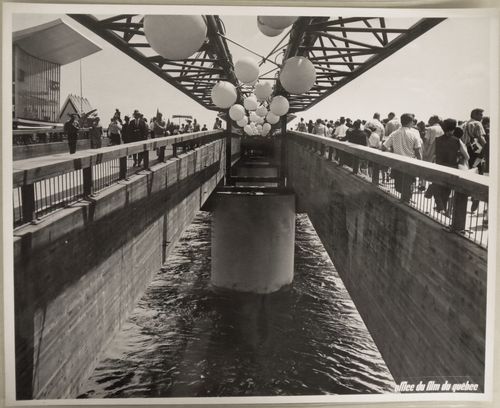
View of the Cosmos Walk with the Pavilion of the Soviet Union on the left, Expo 67, Montréal, Québec
View of the Cosmos Walk with the Pavilion of the Soviet Union on the left, Expo 67, Montréal, Québec
Actions:
Reference number:
ARCH255857
ARCH255857
People:
Date:
1967
1967
Form:
photographs
photographs
Date:
1967
1967
People:
Form:
photographs
photographs
Actions:
Reference number:
ARCH255818
ARCH255818
People:
Date:
1967
1967
Form:
photographs
photographs
Date:
1967
1967
People:


