


890 Results
Form:
archives
Level of archival description:
Fonds
archives
Level of archival description:
Fonds
Title:
Álvaro Siza fonds
Álvaro Siza fonds
Reference number:
AP178
Description:
The Álvaro Siza fonds documents the architectural work of Portuguese architect Álvaro Siza. Records in this fonds document Siza’s projects from 1958-2012, including built and unbuilt designs. A collaborative project was established between the Canadian Centre for Architecture (CCA), Fundação de Serralves, and Fundação Calouste Gulbenkian to allow for international research and access to the archive. The archive is shared by the three institutions with each institution holding different projects while collaborating on the descriptive work and increasing the visibility of the archive. The holdings at both the Fundação de Serralves and Fundação Calouste Gulbenkian focus on Siza’s Portuguese projects, while the portion of the archive held by the CCA mainly includes Siza’s projects abroad. All three institutions are committed to describing the archive and making it accessible for scholarly research. The processing of the Siza archive held by the CCA has been divided into four phases to allow for access to parts of the archive while still in process. For the first, second, and third phases, the processing archivist has described the projects from the fifties, sixties, and seventies, as well as projects for the IBA competition in Berlin, urban renewal projects in The Hague from the eighties, urban plans, museums, and individual houses between 1980 and 2000. The processing archivist has also described approximately 203 sketchbooks. Many of these sketchbooks include sketches related to architectural projects which were processed. The complete list of projects processed by the CCA to date can be found in series AP178.S1. The bulk of the Álvaro Siza fonds is arranged in Series AP178.S1, which contains documentation for over 200 of Siza’s architectural projects. Records in this archive are predominantly from 1970 to 2000. Series AP178.S1 mainly contains conceptual, design development, presentation, and working drawings. Also included are photographic materials, models, born digital records, and textual documentation, which include correspondence, project proposals, and notes. The architect’s creative process is captured in 282 sketchbooks arranged in Series AP178.S2. In all there are approximately 60 000 drawings, 3000 folders of textual documentation, 9.46 linear meters of photographs and negatives, 6,545 slides, 250 CD-ROMS, 101 floppy disks, and 371 models that document the architectural activities of Siza and his office. Among the drawings are sketches by Siza on various items, such as napkins, receipts, envelopes, or on the back of working drawings. The fonds contains several types of architectural projects including residential buildings, museums, universities, urban plans, offices, and city restorations. Of particular significance are the sketchbooks, comprised of sketches for architectural projects, Siza’s travels, people, and animals as well as notes and draft letters. The sketchbooks are organized in chronological order, starting in the late 1970’s to the beginning of the 2000’s. Locations, notes, and dates have also been identified on the front of each sketchbook along with the sketchbook number. The sketchbooks provide a unique perspective of Siza’s use of drawing as part of his work process.
AP178
Description:
The Álvaro Siza fonds documents the architectural work of Portuguese architect Álvaro Siza. Records in this fonds document Siza’s projects from 1958-2012, including built and unbuilt designs. A collaborative project was established between the Canadian Centre for Architecture (CCA), Fundação de Serralves, and Fundação Calouste Gulbenkian to allow for international research and access to the archive. The archive is shared by the three institutions with each institution holding different projects while collaborating on the descriptive work and increasing the visibility of the archive. The holdings at both the Fundação de Serralves and Fundação Calouste Gulbenkian focus on Siza’s Portuguese projects, while the portion of the archive held by the CCA mainly includes Siza’s projects abroad. All three institutions are committed to describing the archive and making it accessible for scholarly research. The processing of the Siza archive held by the CCA has been divided into four phases to allow for access to parts of the archive while still in process. For the first, second, and third phases, the processing archivist has described the projects from the fifties, sixties, and seventies, as well as projects for the IBA competition in Berlin, urban renewal projects in The Hague from the eighties, urban plans, museums, and individual houses between 1980 and 2000. The processing archivist has also described approximately 203 sketchbooks. Many of these sketchbooks include sketches related to architectural projects which were processed. The complete list of projects processed by the CCA to date can be found in series AP178.S1. The bulk of the Álvaro Siza fonds is arranged in Series AP178.S1, which contains documentation for over 200 of Siza’s architectural projects. Records in this archive are predominantly from 1970 to 2000. Series AP178.S1 mainly contains conceptual, design development, presentation, and working drawings. Also included are photographic materials, models, born digital records, and textual documentation, which include correspondence, project proposals, and notes. The architect’s creative process is captured in 282 sketchbooks arranged in Series AP178.S2. In all there are approximately 60 000 drawings, 3000 folders of textual documentation, 9.46 linear meters of photographs and negatives, 6,545 slides, 250 CD-ROMS, 101 floppy disks, and 371 models that document the architectural activities of Siza and his office. Among the drawings are sketches by Siza on various items, such as napkins, receipts, envelopes, or on the back of working drawings. The fonds contains several types of architectural projects including residential buildings, museums, universities, urban plans, offices, and city restorations. Of particular significance are the sketchbooks, comprised of sketches for architectural projects, Siza’s travels, people, and animals as well as notes and draft letters. The sketchbooks are organized in chronological order, starting in the late 1970’s to the beginning of the 2000’s. Locations, notes, and dates have also been identified on the front of each sketchbook along with the sketchbook number. The sketchbooks provide a unique perspective of Siza’s use of drawing as part of his work process.
People:
Date:
1958-2002
1958-2002
Title:
Álvaro Siza fonds
Actions:
AP178
Description:
The Álvaro Siza fonds documents the architectural work of Portuguese architect Álvaro Siza. Records in this fonds document Siza’s projects from 1958-2012, including built and unbuilt designs. A collaborative project was established between the Canadian Centre for Architecture (CCA), Fundação de Serralves, and Fundação Calouste Gulbenkian to allow for international research and access to the archive. The archive is shared by the three institutions with each institution holding different projects while collaborating on the descriptive work and increasing the visibility of the archive. The holdings at both the Fundação de Serralves and Fundação Calouste Gulbenkian focus on Siza’s Portuguese projects, while the portion of the archive held by the CCA mainly includes Siza’s projects abroad. All three institutions are committed to describing the archive and making it accessible for scholarly research. The processing of the Siza archive held by the CCA has been divided into four phases to allow for access to parts of the archive while still in process. For the first, second, and third phases, the processing archivist has described the projects from the fifties, sixties, and seventies, as well as projects for the IBA competition in Berlin, urban renewal projects in The Hague from the eighties, urban plans, museums, and individual houses between 1980 and 2000. The processing archivist has also described approximately 203 sketchbooks. Many of these sketchbooks include sketches related to architectural projects which were processed. The complete list of projects processed by the CCA to date can be found in series AP178.S1. The bulk of the Álvaro Siza fonds is arranged in Series AP178.S1, which contains documentation for over 200 of Siza’s architectural projects. Records in this archive are predominantly from 1970 to 2000. Series AP178.S1 mainly contains conceptual, design development, presentation, and working drawings. Also included are photographic materials, models, born digital records, and textual documentation, which include correspondence, project proposals, and notes. The architect’s creative process is captured in 282 sketchbooks arranged in Series AP178.S2. In all there are approximately 60 000 drawings, 3000 folders of textual documentation, 9.46 linear meters of photographs and negatives, 6,545 slides, 250 CD-ROMS, 101 floppy disks, and 371 models that document the architectural activities of Siza and his office. Among the drawings are sketches by Siza on various items, such as napkins, receipts, envelopes, or on the back of working drawings. The fonds contains several types of architectural projects including residential buildings, museums, universities, urban plans, offices, and city restorations. Of particular significance are the sketchbooks, comprised of sketches for architectural projects, Siza’s travels, people, and animals as well as notes and draft letters. The sketchbooks are organized in chronological order, starting in the late 1970’s to the beginning of the 2000’s. Locations, notes, and dates have also been identified on the front of each sketchbook along with the sketchbook number. The sketchbooks provide a unique perspective of Siza’s use of drawing as part of his work process.
Álvaro Siza fonds
Actions:
AP178
Description:
The Álvaro Siza fonds documents the architectural work of Portuguese architect Álvaro Siza. Records in this fonds document Siza’s projects from 1958-2012, including built and unbuilt designs. A collaborative project was established between the Canadian Centre for Architecture (CCA), Fundação de Serralves, and Fundação Calouste Gulbenkian to allow for international research and access to the archive. The archive is shared by the three institutions with each institution holding different projects while collaborating on the descriptive work and increasing the visibility of the archive. The holdings at both the Fundação de Serralves and Fundação Calouste Gulbenkian focus on Siza’s Portuguese projects, while the portion of the archive held by the CCA mainly includes Siza’s projects abroad. All three institutions are committed to describing the archive and making it accessible for scholarly research. The processing of the Siza archive held by the CCA has been divided into four phases to allow for access to parts of the archive while still in process. For the first, second, and third phases, the processing archivist has described the projects from the fifties, sixties, and seventies, as well as projects for the IBA competition in Berlin, urban renewal projects in The Hague from the eighties, urban plans, museums, and individual houses between 1980 and 2000. The processing archivist has also described approximately 203 sketchbooks. Many of these sketchbooks include sketches related to architectural projects which were processed. The complete list of projects processed by the CCA to date can be found in series AP178.S1. The bulk of the Álvaro Siza fonds is arranged in Series AP178.S1, which contains documentation for over 200 of Siza’s architectural projects. Records in this archive are predominantly from 1970 to 2000. Series AP178.S1 mainly contains conceptual, design development, presentation, and working drawings. Also included are photographic materials, models, born digital records, and textual documentation, which include correspondence, project proposals, and notes. The architect’s creative process is captured in 282 sketchbooks arranged in Series AP178.S2. In all there are approximately 60 000 drawings, 3000 folders of textual documentation, 9.46 linear meters of photographs and negatives, 6,545 slides, 250 CD-ROMS, 101 floppy disks, and 371 models that document the architectural activities of Siza and his office. Among the drawings are sketches by Siza on various items, such as napkins, receipts, envelopes, or on the back of working drawings. The fonds contains several types of architectural projects including residential buildings, museums, universities, urban plans, offices, and city restorations. Of particular significance are the sketchbooks, comprised of sketches for architectural projects, Siza’s travels, people, and animals as well as notes and draft letters. The sketchbooks are organized in chronological order, starting in the late 1970’s to the beginning of the 2000’s. Locations, notes, and dates have also been identified on the front of each sketchbook along with the sketchbook number. The sketchbooks provide a unique perspective of Siza’s use of drawing as part of his work process.
Form:
archives
Level of archival description:
Fonds
archives
Level of archival description:
Fonds
Date:
1958-2002
1958-2002
People:
Form:
archives
Level of archival description:
Fonds
archives
Level of archival description:
Fonds
Title:
Umberto Riva fonds
Umberto Riva fonds
Reference number:
AP180
Synopsis:
The Umberto Riva fonds documents Riva’s work as an architect and designer, predominantly in Italy, between the 1960s to the early 2010s. Included are drawings related to over 80 architectural projects, furniture designs, and exhibition designs.
AP180
Synopsis:
The Umberto Riva fonds documents Riva’s work as an architect and designer, predominantly in Italy, between the 1960s to the early 2010s. Included are drawings related to over 80 architectural projects, furniture designs, and exhibition designs.
People:
Date:
1959-2012
1959-2012
Title:
Umberto Riva fonds
Actions:
AP180
Synopsis:
The Umberto Riva fonds documents Riva’s work as an architect and designer, predominantly in Italy, between the 1960s to the early 2010s. Included are drawings related to over 80 architectural projects, furniture designs, and exhibition designs.
Umberto Riva fonds
Actions:
AP180
Synopsis:
The Umberto Riva fonds documents Riva’s work as an architect and designer, predominantly in Italy, between the 1960s to the early 2010s. Included are drawings related to over 80 architectural projects, furniture designs, and exhibition designs.
Form:
archives
Level of archival description:
Fonds
archives
Level of archival description:
Fonds
Date:
1959-2012
1959-2012
People:
Form:
archives
Level of archival description:
Fonds
archives
Level of archival description:
Fonds
Title:
Melvin Charney fonds
Melvin Charney fonds
Reference number:
AP041
Synopsis:
The Melvin Charney fonds documents Charney's career from the 1950s to the 2012 over 70 architectural and artistics projects, records related to exhibitions he designed, exhibition in which his projects were presented, his teaching activities, and his writings. The fonds contains a considerable amount of textual records, architectural drawings, photographic materials, some models, and a small number of artefacts related to his projects.
AP041
Synopsis:
The Melvin Charney fonds documents Charney's career from the 1950s to the 2012 over 70 architectural and artistics projects, records related to exhibitions he designed, exhibition in which his projects were presented, his teaching activities, and his writings. The fonds contains a considerable amount of textual records, architectural drawings, photographic materials, some models, and a small number of artefacts related to his projects.
People:
Date:
1947-2012
1947-2012
Title:
Melvin Charney fonds
Actions:
AP041
Synopsis:
The Melvin Charney fonds documents Charney's career from the 1950s to the 2012 over 70 architectural and artistics projects, records related to exhibitions he designed, exhibition in which his projects were presented, his teaching activities, and his writings. The fonds contains a considerable amount of textual records, architectural drawings, photographic materials, some models, and a small number of artefacts related to his projects.
Melvin Charney fonds
Actions:
AP041
Synopsis:
The Melvin Charney fonds documents Charney's career from the 1950s to the 2012 over 70 architectural and artistics projects, records related to exhibitions he designed, exhibition in which his projects were presented, his teaching activities, and his writings. The fonds contains a considerable amount of textual records, architectural drawings, photographic materials, some models, and a small number of artefacts related to his projects.
Form:
archives
Level of archival description:
Fonds
archives
Level of archival description:
Fonds
Date:
1947-2012
1947-2012
People:
Level of archival description:
Sub-series
Sub-series
Title:
Education
Education
Reference number:
CI001.S1.D1
Description:
Hubert Rohault de Fleury studied under Jean-Nicolas-Louis Durand at the École polytechnique and with Julien-David Leroy at the École des beaux-arts. The confluence of their respective pedagogies is evident in albums DR1974:0002:012:001-049 and DR1974:0002:013:001-008 where Durand's` "rationalized" methodology of design is applied to Leroy's vocabulary of antiquity(1). Hubert's two albums of student drawings for the École des Beaux-Arts (DR1974:0002:012:001-049 and DR1974:0002:013:001-008) are complimentary. The former contains competition drawings and programmes for the monthly competitions (Concours d'emulation) as well as drawing, prints, and programmes for the 1800 (2e), 1801, and 1802 (1er) Grand Prix competitions, each of which trace the entire process from "Concours d'essai" and "esquisse", up to and including, studies for final renderings. The latter album contains large-scale final renderings for the 1800, 1801, and possibly the 1798 Grand prix competitions. As in Durand's "mecanisme de la composition", Hubert proceeds from the simple to the complex, often utilizing the graph paper or hand drawn grid particular to Durand's design methodology (codified in his book 'Precis des Lecons' 1802). This process is readily apparent in both Hubert's "Concours d'emulation" drawings, and, more completely, in the drawings for the Grand Prix competitions. The studies for Hubert's winning 1802 Grand Prix entry for a'Foire' indicate that he isolated and studied different building types before combining them into the unified complex evident in his final renderings. The original final renderings of the Grand Prix winners were kept by the École des beaux-arts. Album DR1974:0002:012:001-049 contains only the prints of the final renderings. The success of Hubert in the Grand Prix competitions is not surprising. His large wash final renderings for the 1800 and 1801 competitions (DR1974:0002:013:001-008) indicate that the neo-classical simplicity then favoured by the judges at the École des beaux-arts dovetailed with the notions of economy implicit in Durand's functionalist approach to design. (1) Barry Bergdoll, "Hubert Rohault de Fleury: Architectural Education", 'CCA Research Report', n.d.
CI001.S1.D1
Description:
Hubert Rohault de Fleury studied under Jean-Nicolas-Louis Durand at the École polytechnique and with Julien-David Leroy at the École des beaux-arts. The confluence of their respective pedagogies is evident in albums DR1974:0002:012:001-049 and DR1974:0002:013:001-008 where Durand's` "rationalized" methodology of design is applied to Leroy's vocabulary of antiquity(1). Hubert's two albums of student drawings for the École des Beaux-Arts (DR1974:0002:012:001-049 and DR1974:0002:013:001-008) are complimentary. The former contains competition drawings and programmes for the monthly competitions (Concours d'emulation) as well as drawing, prints, and programmes for the 1800 (2e), 1801, and 1802 (1er) Grand Prix competitions, each of which trace the entire process from "Concours d'essai" and "esquisse", up to and including, studies for final renderings. The latter album contains large-scale final renderings for the 1800, 1801, and possibly the 1798 Grand prix competitions. As in Durand's "mecanisme de la composition", Hubert proceeds from the simple to the complex, often utilizing the graph paper or hand drawn grid particular to Durand's design methodology (codified in his book 'Precis des Lecons' 1802). This process is readily apparent in both Hubert's "Concours d'emulation" drawings, and, more completely, in the drawings for the Grand Prix competitions. The studies for Hubert's winning 1802 Grand Prix entry for a'Foire' indicate that he isolated and studied different building types before combining them into the unified complex evident in his final renderings. The original final renderings of the Grand Prix winners were kept by the École des beaux-arts. Album DR1974:0002:012:001-049 contains only the prints of the final renderings. The success of Hubert in the Grand Prix competitions is not surprising. His large wash final renderings for the 1800 and 1801 competitions (DR1974:0002:013:001-008) indicate that the neo-classical simplicity then favoured by the judges at the École des beaux-arts dovetailed with the notions of economy implicit in Durand's functionalist approach to design. (1) Barry Bergdoll, "Hubert Rohault de Fleury: Architectural Education", 'CCA Research Report', n.d.
People:
Date:
1800-1807
1800-1807
Title:
Education
CI001.S1.D1
Description:
Hubert Rohault de Fleury studied under Jean-Nicolas-Louis Durand at the École polytechnique and with Julien-David Leroy at the École des beaux-arts. The confluence of their respective pedagogies is evident in albums DR1974:0002:012:001-049 and DR1974:0002:013:001-008 where Durand's` "rationalized" methodology of design is applied to Leroy's vocabulary of antiquity(1). Hubert's two albums of student drawings for the École des Beaux-Arts (DR1974:0002:012:001-049 and DR1974:0002:013:001-008) are complimentary. The former contains competition drawings and programmes for the monthly competitions (Concours d'emulation) as well as drawing, prints, and programmes for the 1800 (2e), 1801, and 1802 (1er) Grand Prix competitions, each of which trace the entire process from "Concours d'essai" and "esquisse", up to and including, studies for final renderings. The latter album contains large-scale final renderings for the 1800, 1801, and possibly the 1798 Grand prix competitions. As in Durand's "mecanisme de la composition", Hubert proceeds from the simple to the complex, often utilizing the graph paper or hand drawn grid particular to Durand's design methodology (codified in his book 'Precis des Lecons' 1802). This process is readily apparent in both Hubert's "Concours d'emulation" drawings, and, more completely, in the drawings for the Grand Prix competitions. The studies for Hubert's winning 1802 Grand Prix entry for a'Foire' indicate that he isolated and studied different building types before combining them into the unified complex evident in his final renderings. The original final renderings of the Grand Prix winners were kept by the École des beaux-arts. Album DR1974:0002:012:001-049 contains only the prints of the final renderings. The success of Hubert in the Grand Prix competitions is not surprising. His large wash final renderings for the 1800 and 1801 competitions (DR1974:0002:013:001-008) indicate that the neo-classical simplicity then favoured by the judges at the École des beaux-arts dovetailed with the notions of economy implicit in Durand's functionalist approach to design. (1) Barry Bergdoll, "Hubert Rohault de Fleury: Architectural Education", 'CCA Research Report', n.d.
Education
CI001.S1.D1
Description:
Hubert Rohault de Fleury studied under Jean-Nicolas-Louis Durand at the École polytechnique and with Julien-David Leroy at the École des beaux-arts. The confluence of their respective pedagogies is evident in albums DR1974:0002:012:001-049 and DR1974:0002:013:001-008 where Durand's` "rationalized" methodology of design is applied to Leroy's vocabulary of antiquity(1). Hubert's two albums of student drawings for the École des Beaux-Arts (DR1974:0002:012:001-049 and DR1974:0002:013:001-008) are complimentary. The former contains competition drawings and programmes for the monthly competitions (Concours d'emulation) as well as drawing, prints, and programmes for the 1800 (2e), 1801, and 1802 (1er) Grand Prix competitions, each of which trace the entire process from "Concours d'essai" and "esquisse", up to and including, studies for final renderings. The latter album contains large-scale final renderings for the 1800, 1801, and possibly the 1798 Grand prix competitions. As in Durand's "mecanisme de la composition", Hubert proceeds from the simple to the complex, often utilizing the graph paper or hand drawn grid particular to Durand's design methodology (codified in his book 'Precis des Lecons' 1802). This process is readily apparent in both Hubert's "Concours d'emulation" drawings, and, more completely, in the drawings for the Grand Prix competitions. The studies for Hubert's winning 1802 Grand Prix entry for a'Foire' indicate that he isolated and studied different building types before combining them into the unified complex evident in his final renderings. The original final renderings of the Grand Prix winners were kept by the École des beaux-arts. Album DR1974:0002:012:001-049 contains only the prints of the final renderings. The success of Hubert in the Grand Prix competitions is not surprising. His large wash final renderings for the 1800 and 1801 competitions (DR1974:0002:013:001-008) indicate that the neo-classical simplicity then favoured by the judges at the École des beaux-arts dovetailed with the notions of economy implicit in Durand's functionalist approach to design. (1) Barry Bergdoll, "Hubert Rohault de Fleury: Architectural Education", 'CCA Research Report', n.d.
Level of archival description:
File 1
File 1
Date:
1800-1807
1800-1807
People:
Form:
exhibitions
exhibitions
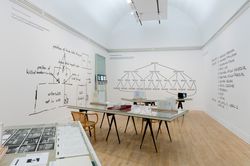
Title:
The Other Architect
The Other Architect
Actions:
Description:
For as long as architecture has been reduced to a service to society or an “industry” whose ultimate goal is only to build, there have been others who imagine it instead as a field of intellectual research: energetic, critical, and radical. From a set of varied approaches drawn from many people, places, and times, the other architect emerges: searching for different(...)
For as long as architecture has been reduced to a service to society or an “industry” whose ultimate goal is only to build, there have been others who imagine it instead as a field of intellectual research: energetic, critical, and radical. From a set of varied approaches drawn from many people, places, and times, the other architect emerges: searching for different(...)
Date:
28 October 2015 to 10 April 2016
28 October 2015 to 10 April 2016
Title:
The Other Architect
Actions:
Description:
For as long as architecture has been reduced to a service to society or an “industry” whose ultimate goal is only to build, there have been others who imagine it instead as a field of intellectual research: energetic, critical, and radical. From a set of varied approaches drawn from many people, places, and times, the other architect emerges: searching for different(...)
The Other Architect
Actions:
Description:
For as long as architecture has been reduced to a service to society or an “industry” whose ultimate goal is only to build, there have been others who imagine it instead as a field of intellectual research: energetic, critical, and radical. From a set of varied approaches drawn from many people, places, and times, the other architect emerges: searching for different(...)
Form:
exhibitions
exhibitions
Date:
28 October 2015 to
10 April 2016
28 October 2015 to
10 April 2016
Level of archival description:
Project
Project
Reference number:
AP143.S4.D106
Description:
In 1993, the CCA invited Peter Eisenman to design an installation for the exhibition 'Cities of Artificial Excavation: The Work of Peter Eisenman, 1978-1988'. The exhibition was presented at the CCA from 2 March to 29 May 1994. The drawings and models of this group document the development of Eisenman's installation design from late 1993 through March 1994, as well as the various processes used by the architect in his investigation of the 'Cities of Artificial Excavation'. Material in this file was produced between 1993 and 1994. File contains conceptual drawings, design development drawings, installation drawings, measured drawings, presentation drawings, publication drawings, record drawings, textual records, and models. Documents by Eisenman's office include material for schemes A and B, the first and second proposals for the installation, as well as material for the exhibition installation. Material for scheme A includes conceptual drawings (DR1994:0030:001-005), hardline design development drawings (DR1994:0030:006-011), design development computer-aided drawings (DR1994:0030:012-027), and fully developed drawings (DR1994:0030:028-034). Material for scheme B, a design which is closer to the final project, includes hardline drawings (DR1994:0030:035-044) and computer-aided drawings (DR1994:0030:045-069). Material for the exhibition installation includes: computer-aided drawings (DR1994:0030:070-196), which were generated to construct models for the installation, notably a preliminary model (DR1994:0035) and the final model (DR1994:0036), which was used for planning the exhibition layout; hardline drawings which are the final drawings for the installation (DR1994:0030:262-265); a preliminary exhibition layout (DR1994:0030:280); and Iris colour prints of computer-aided conceptual axonometrics (DR1994:0030:281-282). Three working models show different stages of the design development (DR1994:0031 - DR1994:0034). File contains photographs of the completed installation by Richard Pare (DR1994:0037:001-028), fragments of the installation preserved after its demolition (DR1994:0038:001-0028) and paint samples (DR1994:0038:035-037). File contains Cities of Artificial Excavation exhibition Catalogue Cover Design layouts and trial proofs. This group of material by Eisenman's office includes freehand drawings and collages for early proposals for the cover (DR1994:0029:001-003), ink drawings on Mylar of the floor plans of the four principal projects presented in the exhibition traced from diazotypes (diazotypes: DR1994:0029:014-019; ink drawings: DR1994:0029:004-010), and Iris colour prints of computer-aided drawings which Eisenman's staff used to test different colour schemes (DR1994:0029:020-030). Offset prints for the cover proposing different colour schemes were used to select the cover design used for publication (DR1994:0029:036-039).
AP143.S4.D106
Description:
In 1993, the CCA invited Peter Eisenman to design an installation for the exhibition 'Cities of Artificial Excavation: The Work of Peter Eisenman, 1978-1988'. The exhibition was presented at the CCA from 2 March to 29 May 1994. The drawings and models of this group document the development of Eisenman's installation design from late 1993 through March 1994, as well as the various processes used by the architect in his investigation of the 'Cities of Artificial Excavation'. Material in this file was produced between 1993 and 1994. File contains conceptual drawings, design development drawings, installation drawings, measured drawings, presentation drawings, publication drawings, record drawings, textual records, and models. Documents by Eisenman's office include material for schemes A and B, the first and second proposals for the installation, as well as material for the exhibition installation. Material for scheme A includes conceptual drawings (DR1994:0030:001-005), hardline design development drawings (DR1994:0030:006-011), design development computer-aided drawings (DR1994:0030:012-027), and fully developed drawings (DR1994:0030:028-034). Material for scheme B, a design which is closer to the final project, includes hardline drawings (DR1994:0030:035-044) and computer-aided drawings (DR1994:0030:045-069). Material for the exhibition installation includes: computer-aided drawings (DR1994:0030:070-196), which were generated to construct models for the installation, notably a preliminary model (DR1994:0035) and the final model (DR1994:0036), which was used for planning the exhibition layout; hardline drawings which are the final drawings for the installation (DR1994:0030:262-265); a preliminary exhibition layout (DR1994:0030:280); and Iris colour prints of computer-aided conceptual axonometrics (DR1994:0030:281-282). Three working models show different stages of the design development (DR1994:0031 - DR1994:0034). File contains photographs of the completed installation by Richard Pare (DR1994:0037:001-028), fragments of the installation preserved after its demolition (DR1994:0038:001-0028) and paint samples (DR1994:0038:035-037). File contains Cities of Artificial Excavation exhibition Catalogue Cover Design layouts and trial proofs. This group of material by Eisenman's office includes freehand drawings and collages for early proposals for the cover (DR1994:0029:001-003), ink drawings on Mylar of the floor plans of the four principal projects presented in the exhibition traced from diazotypes (diazotypes: DR1994:0029:014-019; ink drawings: DR1994:0029:004-010), and Iris colour prints of computer-aided drawings which Eisenman's staff used to test different colour schemes (DR1994:0029:020-030). Offset prints for the cover proposing different colour schemes were used to select the cover design used for publication (DR1994:0029:036-039).
People:
Date:
1993-1994
1993-1994
Title:
Cities of Artificial Excavation: The Work of Peter Eisenman, 1978-1988 (1994)
Actions:
AP143.S4.D106
Description:
In 1993, the CCA invited Peter Eisenman to design an installation for the exhibition 'Cities of Artificial Excavation: The Work of Peter Eisenman, 1978-1988'. The exhibition was presented at the CCA from 2 March to 29 May 1994. The drawings and models of this group document the development of Eisenman's installation design from late 1993 through March 1994, as well as the various processes used by the architect in his investigation of the 'Cities of Artificial Excavation'. Material in this file was produced between 1993 and 1994. File contains conceptual drawings, design development drawings, installation drawings, measured drawings, presentation drawings, publication drawings, record drawings, textual records, and models. Documents by Eisenman's office include material for schemes A and B, the first and second proposals for the installation, as well as material for the exhibition installation. Material for scheme A includes conceptual drawings (DR1994:0030:001-005), hardline design development drawings (DR1994:0030:006-011), design development computer-aided drawings (DR1994:0030:012-027), and fully developed drawings (DR1994:0030:028-034). Material for scheme B, a design which is closer to the final project, includes hardline drawings (DR1994:0030:035-044) and computer-aided drawings (DR1994:0030:045-069). Material for the exhibition installation includes: computer-aided drawings (DR1994:0030:070-196), which were generated to construct models for the installation, notably a preliminary model (DR1994:0035) and the final model (DR1994:0036), which was used for planning the exhibition layout; hardline drawings which are the final drawings for the installation (DR1994:0030:262-265); a preliminary exhibition layout (DR1994:0030:280); and Iris colour prints of computer-aided conceptual axonometrics (DR1994:0030:281-282). Three working models show different stages of the design development (DR1994:0031 - DR1994:0034). File contains photographs of the completed installation by Richard Pare (DR1994:0037:001-028), fragments of the installation preserved after its demolition (DR1994:0038:001-0028) and paint samples (DR1994:0038:035-037). File contains Cities of Artificial Excavation exhibition Catalogue Cover Design layouts and trial proofs. This group of material by Eisenman's office includes freehand drawings and collages for early proposals for the cover (DR1994:0029:001-003), ink drawings on Mylar of the floor plans of the four principal projects presented in the exhibition traced from diazotypes (diazotypes: DR1994:0029:014-019; ink drawings: DR1994:0029:004-010), and Iris colour prints of computer-aided drawings which Eisenman's staff used to test different colour schemes (DR1994:0029:020-030). Offset prints for the cover proposing different colour schemes were used to select the cover design used for publication (DR1994:0029:036-039).
Cities of Artificial Excavation: The Work of Peter Eisenman, 1978-1988 (1994)
Actions:
AP143.S4.D106
Description:
In 1993, the CCA invited Peter Eisenman to design an installation for the exhibition 'Cities of Artificial Excavation: The Work of Peter Eisenman, 1978-1988'. The exhibition was presented at the CCA from 2 March to 29 May 1994. The drawings and models of this group document the development of Eisenman's installation design from late 1993 through March 1994, as well as the various processes used by the architect in his investigation of the 'Cities of Artificial Excavation'. Material in this file was produced between 1993 and 1994. File contains conceptual drawings, design development drawings, installation drawings, measured drawings, presentation drawings, publication drawings, record drawings, textual records, and models. Documents by Eisenman's office include material for schemes A and B, the first and second proposals for the installation, as well as material for the exhibition installation. Material for scheme A includes conceptual drawings (DR1994:0030:001-005), hardline design development drawings (DR1994:0030:006-011), design development computer-aided drawings (DR1994:0030:012-027), and fully developed drawings (DR1994:0030:028-034). Material for scheme B, a design which is closer to the final project, includes hardline drawings (DR1994:0030:035-044) and computer-aided drawings (DR1994:0030:045-069). Material for the exhibition installation includes: computer-aided drawings (DR1994:0030:070-196), which were generated to construct models for the installation, notably a preliminary model (DR1994:0035) and the final model (DR1994:0036), which was used for planning the exhibition layout; hardline drawings which are the final drawings for the installation (DR1994:0030:262-265); a preliminary exhibition layout (DR1994:0030:280); and Iris colour prints of computer-aided conceptual axonometrics (DR1994:0030:281-282). Three working models show different stages of the design development (DR1994:0031 - DR1994:0034). File contains photographs of the completed installation by Richard Pare (DR1994:0037:001-028), fragments of the installation preserved after its demolition (DR1994:0038:001-0028) and paint samples (DR1994:0038:035-037). File contains Cities of Artificial Excavation exhibition Catalogue Cover Design layouts and trial proofs. This group of material by Eisenman's office includes freehand drawings and collages for early proposals for the cover (DR1994:0029:001-003), ink drawings on Mylar of the floor plans of the four principal projects presented in the exhibition traced from diazotypes (diazotypes: DR1994:0029:014-019; ink drawings: DR1994:0029:004-010), and Iris colour prints of computer-aided drawings which Eisenman's staff used to test different colour schemes (DR1994:0029:020-030). Offset prints for the cover proposing different colour schemes were used to select the cover design used for publication (DR1994:0029:036-039).
Level of archival description:
File 106
File 106
Date:
1993-1994
1993-1994
People:
Form:
archives
Level of archival description:
Collection
archives
Level of archival description:
Collection
Actions:
Reference number:
AP172
Description:
The Mies in America Research Collection documents an exhibition and publication project produced by Curator and Architectural Historian, Phyllis Lambert (1927-), and associated researchers between 1996-2002. The project explored German-born architect Ludwig Mies van der Rohe's (1886-1969) contributions to the American architectural landscape following his immigration from Germany to Chicago in 1938. The resulting book, a collaboration between the Canadian Centre for Architecture and the Whitney Museum of American Art, was published in 2001. The exhibition ran from 2001-2002 with stops at the Whitney Museum of American Art (New York), the Canadian Centre for Architecture, (Montreal), and the Museum of Contemporary Art (Chicago). The Mies in America research collection consists of correspondence, research, and administrative, manuscript, and curatorial files created by Phyllis Lambert and the project team for the book and exhibition project Mies in America, originally housed in the Mies research office at the Canadian Centre for Architecture. Throughout the process, the team of researchers consulted previously unstudied material on Mies van der Rhoe from major repositories across North America, including drawings, collages, photographs, project documents, letters, and extensive interviews , which are represented in photocopy throughout the collection to document the research activities as well as curatorial choices and manuscript development. Subsequent curatorial decisions based on this research are detailed through notes, correspondence, manuscript drafts, and object lists as the book and exhibition projects took shape. Original annotations, edits, and comments made by Phyllis Lambert and her research associates are present throughout. The administrative activities of the research team are also documented through correspondence, research assistant assignments, research trips, and photography requests. Files from the assistant curator (Cammie McAtee), and research assistants (primarily Elspeth Cowell, Nathalie Senecal, and Deborah Miller) are integrated throughout the collection.
AP172
Description:
The Mies in America Research Collection documents an exhibition and publication project produced by Curator and Architectural Historian, Phyllis Lambert (1927-), and associated researchers between 1996-2002. The project explored German-born architect Ludwig Mies van der Rohe's (1886-1969) contributions to the American architectural landscape following his immigration from Germany to Chicago in 1938. The resulting book, a collaboration between the Canadian Centre for Architecture and the Whitney Museum of American Art, was published in 2001. The exhibition ran from 2001-2002 with stops at the Whitney Museum of American Art (New York), the Canadian Centre for Architecture, (Montreal), and the Museum of Contemporary Art (Chicago). The Mies in America research collection consists of correspondence, research, and administrative, manuscript, and curatorial files created by Phyllis Lambert and the project team for the book and exhibition project Mies in America, originally housed in the Mies research office at the Canadian Centre for Architecture. Throughout the process, the team of researchers consulted previously unstudied material on Mies van der Rhoe from major repositories across North America, including drawings, collages, photographs, project documents, letters, and extensive interviews , which are represented in photocopy throughout the collection to document the research activities as well as curatorial choices and manuscript development. Subsequent curatorial decisions based on this research are detailed through notes, correspondence, manuscript drafts, and object lists as the book and exhibition projects took shape. Original annotations, edits, and comments made by Phyllis Lambert and her research associates are present throughout. The administrative activities of the research team are also documented through correspondence, research assistant assignments, research trips, and photography requests. Files from the assistant curator (Cammie McAtee), and research assistants (primarily Elspeth Cowell, Nathalie Senecal, and Deborah Miller) are integrated throughout the collection.
People:
Date:
1957-2002
1957-2002
Title:
Mies in America Research Collection
Actions:
AP172
Description:
The Mies in America Research Collection documents an exhibition and publication project produced by Curator and Architectural Historian, Phyllis Lambert (1927-), and associated researchers between 1996-2002. The project explored German-born architect Ludwig Mies van der Rohe's (1886-1969) contributions to the American architectural landscape following his immigration from Germany to Chicago in 1938. The resulting book, a collaboration between the Canadian Centre for Architecture and the Whitney Museum of American Art, was published in 2001. The exhibition ran from 2001-2002 with stops at the Whitney Museum of American Art (New York), the Canadian Centre for Architecture, (Montreal), and the Museum of Contemporary Art (Chicago). The Mies in America research collection consists of correspondence, research, and administrative, manuscript, and curatorial files created by Phyllis Lambert and the project team for the book and exhibition project Mies in America, originally housed in the Mies research office at the Canadian Centre for Architecture. Throughout the process, the team of researchers consulted previously unstudied material on Mies van der Rhoe from major repositories across North America, including drawings, collages, photographs, project documents, letters, and extensive interviews , which are represented in photocopy throughout the collection to document the research activities as well as curatorial choices and manuscript development. Subsequent curatorial decisions based on this research are detailed through notes, correspondence, manuscript drafts, and object lists as the book and exhibition projects took shape. Original annotations, edits, and comments made by Phyllis Lambert and her research associates are present throughout. The administrative activities of the research team are also documented through correspondence, research assistant assignments, research trips, and photography requests. Files from the assistant curator (Cammie McAtee), and research assistants (primarily Elspeth Cowell, Nathalie Senecal, and Deborah Miller) are integrated throughout the collection.
Mies in America Research Collection
Actions:
AP172
Description:
The Mies in America Research Collection documents an exhibition and publication project produced by Curator and Architectural Historian, Phyllis Lambert (1927-), and associated researchers between 1996-2002. The project explored German-born architect Ludwig Mies van der Rohe's (1886-1969) contributions to the American architectural landscape following his immigration from Germany to Chicago in 1938. The resulting book, a collaboration between the Canadian Centre for Architecture and the Whitney Museum of American Art, was published in 2001. The exhibition ran from 2001-2002 with stops at the Whitney Museum of American Art (New York), the Canadian Centre for Architecture, (Montreal), and the Museum of Contemporary Art (Chicago). The Mies in America research collection consists of correspondence, research, and administrative, manuscript, and curatorial files created by Phyllis Lambert and the project team for the book and exhibition project Mies in America, originally housed in the Mies research office at the Canadian Centre for Architecture. Throughout the process, the team of researchers consulted previously unstudied material on Mies van der Rhoe from major repositories across North America, including drawings, collages, photographs, project documents, letters, and extensive interviews , which are represented in photocopy throughout the collection to document the research activities as well as curatorial choices and manuscript development. Subsequent curatorial decisions based on this research are detailed through notes, correspondence, manuscript drafts, and object lists as the book and exhibition projects took shape. Original annotations, edits, and comments made by Phyllis Lambert and her research associates are present throughout. The administrative activities of the research team are also documented through correspondence, research assistant assignments, research trips, and photography requests. Files from the assistant curator (Cammie McAtee), and research assistants (primarily Elspeth Cowell, Nathalie Senecal, and Deborah Miller) are integrated throughout the collection.
Form:
archives
Level of archival description:
Collection 172
archives
Level of archival description:
Collection 172
Date:
1957-2002
1957-2002
People:
Level of archival description:
Sub-series
Sub-series
Actions:
Reference number:
AP041.S3.SS06
Description:
The sub-series documents Melvin Charney’s solo exhibition "Parables and other allegories: the work of Melvin Charney, 1975-1990", originally held at the Canadian Centre for Architecture in 1991. The exhibition presents Melvin Charney works from 1975 to 1990 with his drawings, photographs and installations showing Charney's artistic process. It includes correspondence, exhibition plans, printouts of artworks, notes, press clippings, and invitation list to exhibition related events.
AP041.S3.SS06
Description:
The sub-series documents Melvin Charney’s solo exhibition "Parables and other allegories: the work of Melvin Charney, 1975-1990", originally held at the Canadian Centre for Architecture in 1991. The exhibition presents Melvin Charney works from 1975 to 1990 with his drawings, photographs and installations showing Charney's artistic process. It includes correspondence, exhibition plans, printouts of artworks, notes, press clippings, and invitation list to exhibition related events.
People:
Date:
1991
1991
Title:
Parables and other allegories: the work of Melvin Charney, 1975-1990
Actions:
AP041.S3.SS06
Description:
The sub-series documents Melvin Charney’s solo exhibition "Parables and other allegories: the work of Melvin Charney, 1975-1990", originally held at the Canadian Centre for Architecture in 1991. The exhibition presents Melvin Charney works from 1975 to 1990 with his drawings, photographs and installations showing Charney's artistic process. It includes correspondence, exhibition plans, printouts of artworks, notes, press clippings, and invitation list to exhibition related events.
Parables and other allegories: the work of Melvin Charney, 1975-1990
Actions:
AP041.S3.SS06
Description:
The sub-series documents Melvin Charney’s solo exhibition "Parables and other allegories: the work of Melvin Charney, 1975-1990", originally held at the Canadian Centre for Architecture in 1991. The exhibition presents Melvin Charney works from 1975 to 1990 with his drawings, photographs and installations showing Charney's artistic process. It includes correspondence, exhibition plans, printouts of artworks, notes, press clippings, and invitation list to exhibition related events.
Level of archival description:
Subseries
Subseries
Date:
1991
1991
People:
Form:
graphic materials
graphic materials
Title:
4Flight
4Flight
Actions:
Reference number:
PH2023:0002:001-100
Description:
Set of 100 different postcards created for the CCA for the exhibition The Lives of Documents—Photography as Project, on view from 3 May 2023 to 7 April 2024.
PH2023:0002:001-100
Description:
Set of 100 different postcards created for the CCA for the exhibition The Lives of Documents—Photography as Project, on view from 3 May 2023 to 7 April 2024.
People:
Date:
2000 (printed 2023)
2000 (printed 2023)
Title:
4Flight
Actions:
PH2023:0002:001-100
Description:
Set of 100 different postcards created for the CCA for the exhibition The Lives of Documents—Photography as Project, on view from 3 May 2023 to 7 April 2024.
4Flight
Actions:
PH2023:0002:001-100
Description:
Set of 100 different postcards created for the CCA for the exhibition The Lives of Documents—Photography as Project, on view from 3 May 2023 to 7 April 2024.
Form:
graphic materials
graphic materials
Date:
2000 (printed 2023)
2000 (printed 2023)
People:
Form:
archives
Level of archival description:
Fonds
archives
Level of archival description:
Fonds
Title:
Jean-Louis Cohen fonds
Jean-Louis Cohen fonds
Actions:
Reference number:
AP210
Synopsis:
The Jean-Louis Cohen fonds, 1968 – 2023, documents the projects and activities of historian, curator, professor, and architect Jean-Louis Cohen (1949 – 2023). Cohen’s research focus was largely modern architecture and transnational architectural exchange, particularly between and among the United States, Europe, and the former Soviet Union in the 20th century. Through physical and digital records, this fonds documents his academic, publishing, and curatorial work along with his professional activities within architectural research and heritage organizations, as well as his architectural practice.
AP210
Synopsis:
The Jean-Louis Cohen fonds, 1968 – 2023, documents the projects and activities of historian, curator, professor, and architect Jean-Louis Cohen (1949 – 2023). Cohen’s research focus was largely modern architecture and transnational architectural exchange, particularly between and among the United States, Europe, and the former Soviet Union in the 20th century. Through physical and digital records, this fonds documents his academic, publishing, and curatorial work along with his professional activities within architectural research and heritage organizations, as well as his architectural practice.
People:
Date:
1968 - 2023
1968 - 2023
Title:
Jean-Louis Cohen fonds
Actions:
AP210
Synopsis:
The Jean-Louis Cohen fonds, 1968 – 2023, documents the projects and activities of historian, curator, professor, and architect Jean-Louis Cohen (1949 – 2023). Cohen’s research focus was largely modern architecture and transnational architectural exchange, particularly between and among the United States, Europe, and the former Soviet Union in the 20th century. Through physical and digital records, this fonds documents his academic, publishing, and curatorial work along with his professional activities within architectural research and heritage organizations, as well as his architectural practice.
Jean-Louis Cohen fonds
Actions:
AP210
Synopsis:
The Jean-Louis Cohen fonds, 1968 – 2023, documents the projects and activities of historian, curator, professor, and architect Jean-Louis Cohen (1949 – 2023). Cohen’s research focus was largely modern architecture and transnational architectural exchange, particularly between and among the United States, Europe, and the former Soviet Union in the 20th century. Through physical and digital records, this fonds documents his academic, publishing, and curatorial work along with his professional activities within architectural research and heritage organizations, as well as his architectural practice.
Form:
archives
Level of archival description:
Fonds
archives
Level of archival description:
Fonds
Date:
1968 - 2023
1968 - 2023
People:


