


1693 Results
Form:
books
books
Title:
25 halles de marché
25 halles de marché
Actions:
Price:
$82.95
(available to order)
Summary:
Les 25 halles contemporaines présentées dans cet ouvrage montrent comment les architectes, assimilant les fortes contraintes programmatiques et techniques aussi bien que les règlements, notamment sur le plan sanitaire, réinterprètent aujourd'hui une forme très marquée par la tradition; la halle en effet symbolise depuis le Moyen Âge l'activité économique de la commune. (...)
$82.95
(available to order)
Summary:
Les 25 halles contemporaines présentées dans cet ouvrage montrent comment les architectes, assimilant les fortes contraintes programmatiques et techniques aussi bien que les règlements, notamment sur le plan sanitaire, réinterprètent aujourd'hui une forme très marquée par la tradition; la halle en effet symbolise depuis le Moyen Âge l'activité économique de la commune. (...)
Title:
25 halles de marché
Actions:
Price:
$82.95
(available to order)
Summary:
Les 25 halles contemporaines présentées dans cet ouvrage montrent comment les architectes, assimilant les fortes contraintes programmatiques et techniques aussi bien que les règlements, notamment sur le plan sanitaire, réinterprètent aujourd'hui une forme très marquée par la tradition; la halle en effet symbolise depuis le Moyen Âge l'activité économique de la commune. Ces réalisations, pour la plupart réalisées en France mais aussi en Italie, en Espagne, en Suisse et aux Pays-Bas, présentent une grande diversité d'échelle, de systèmes constructifs, de matériaux et d'aménagements; halles neuves ou réhabilitées, seulement alimentaires ou polyvalentes, associées ou non à d'autres équipements publics, souvent intégrées dans un projet de requalification d'un quartier, elles témoignent toutes d'une inventive recherche architecturale.
25 halles de marché
Actions:
Price:
$82.95
(available to order)
Summary:
Les 25 halles contemporaines présentées dans cet ouvrage montrent comment les architectes, assimilant les fortes contraintes programmatiques et techniques aussi bien que les règlements, notamment sur le plan sanitaire, réinterprètent aujourd'hui une forme très marquée par la tradition; la halle en effet symbolise depuis le Moyen Âge l'activité économique de la commune. Ces réalisations, pour la plupart réalisées en France mais aussi en Italie, en Espagne, en Suisse et aux Pays-Bas, présentent une grande diversité d'échelle, de systèmes constructifs, de matériaux et d'aménagements; halles neuves ou réhabilitées, seulement alimentaires ou polyvalentes, associées ou non à d'autres équipements publics, souvent intégrées dans un projet de requalification d'un quartier, elles témoignent toutes d'une inventive recherche architecturale.
Form:
books
books
Publication:
June 2004, Paris
June 2004, Paris
Subject:
Commercial interiors, Building types
Commercial interiors, Building types
Form:
books
books
Actions:
Price:
$34.95
(available to order)
Summary:
The newest title in the Princeton Architectural Press Campus Guide series takes readers on a tour of Illinois Institute of Technology, one of the landmarks of modern American architecture. With a master plan and twenty renowned buildings by Mies van der Rohe, IIT has long been a pilgrimage site for architects and students of design. Thousands of visitors arrive each year(...)
$34.95
(available to order)
Summary:
The newest title in the Princeton Architectural Press Campus Guide series takes readers on a tour of Illinois Institute of Technology, one of the landmarks of modern American architecture. With a master plan and twenty renowned buildings by Mies van der Rohe, IIT has long been a pilgrimage site for architects and students of design. Thousands of visitors arrive each year(...)
Subject:
Commercial interiors, Building types
Commercial interiors, Building types
Publication:
January 2005, New York
January 2005, New York
Title:
Illinois Institute of Technology : the campus guide - an architectural tour
Actions:
Price:
$34.95
(available to order)
Summary:
The newest title in the Princeton Architectural Press Campus Guide series takes readers on a tour of Illinois Institute of Technology, one of the landmarks of modern American architecture. With a master plan and twenty renowned buildings by Mies van der Rohe, IIT has long been a pilgrimage site for architects and students of design. Thousands of visitors arrive each year to see International Style masterpieces such as S. R. Crown Hall, home of IIT's College of Architecture and one of Mies's greatest works. Today, IIT is in the midst of an exciting new chapter in its design history. A new student centre designed by Rem Koolhaas and his Office for Metropolitan Architecture has once again put IIT at the forefront of the design world. Meanwhile, a new master plan for the campus, new landscaping, and a residence-hall complex by Helmut Jahn have reinvigorated student life and revitalized the surrounding community of Chicago's South Side. Featuring archival images of the Mies buildings as well as newly commissioned photographs of IIT's latest additions, this beautifully produced guide presents a comprehensive architectural walk through America's most distinguished modern campus.
Illinois Institute of Technology : the campus guide - an architectural tour
Actions:
Price:
$34.95
(available to order)
Summary:
The newest title in the Princeton Architectural Press Campus Guide series takes readers on a tour of Illinois Institute of Technology, one of the landmarks of modern American architecture. With a master plan and twenty renowned buildings by Mies van der Rohe, IIT has long been a pilgrimage site for architects and students of design. Thousands of visitors arrive each year to see International Style masterpieces such as S. R. Crown Hall, home of IIT's College of Architecture and one of Mies's greatest works. Today, IIT is in the midst of an exciting new chapter in its design history. A new student centre designed by Rem Koolhaas and his Office for Metropolitan Architecture has once again put IIT at the forefront of the design world. Meanwhile, a new master plan for the campus, new landscaping, and a residence-hall complex by Helmut Jahn have reinvigorated student life and revitalized the surrounding community of Chicago's South Side. Featuring archival images of the Mies buildings as well as newly commissioned photographs of IIT's latest additions, this beautifully produced guide presents a comprehensive architectural walk through America's most distinguished modern campus.
Form:
books
books
Publication:
January 2005, New York
January 2005, New York
Subject:
Commercial interiors, Building types
Commercial interiors, Building types
Form:
books
books
Actions:
Price:
$126.00
(available to order)
Summary:
Consacré à l'architecture des bibliothèques contemporaines, cet ouvrage retrace le parcours historique des modèles d'organisation d'espaces dédiés à la conservation de la mémoire écrite ; il s'interroge sur les schémas actuels de fonctionnement d'une institution vieille de plus de deux mille ans et pourtant en perpétuelle évolution. Partant des premiers rouleaux cachés(...)
$126.00
(available to order)
Summary:
Consacré à l'architecture des bibliothèques contemporaines, cet ouvrage retrace le parcours historique des modèles d'organisation d'espaces dédiés à la conservation de la mémoire écrite ; il s'interroge sur les schémas actuels de fonctionnement d'une institution vieille de plus de deux mille ans et pourtant en perpétuelle évolution. Partant des premiers rouleaux cachés(...)
Title:
Bibliothèques : architectures 1995-2005
Actions:
Price:
$126.00
(available to order)
Summary:
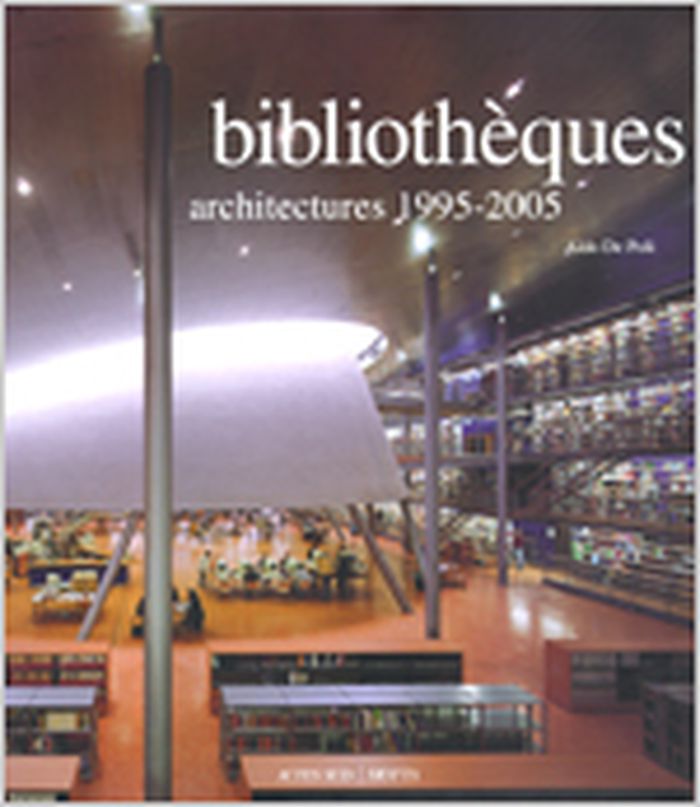
Consacré à l'architecture des bibliothèques contemporaines, cet ouvrage retrace le parcours historique des modèles d'organisation d'espaces dédiés à la conservation de la mémoire écrite ; il s'interroge sur les schémas actuels de fonctionnement d'une institution vieille de plus de deux mille ans et pourtant en perpétuelle évolution. Partant des premiers rouleaux cachés dans les niches des temples, Aldo De Poli analyse les origines lointaines de l'édifice "bibliothèque". Du Moyen Age à la Renaissance, il nous fait découvrir ces espaces, toujours plus identifiables et mieux conçus, destinés à devenir au fil du temps des institutions ouvertes au public.
Bibliothèques : architectures 1995-2005
Actions:
Price:
$126.00
(available to order)
Summary:
Consacré à l'architecture des bibliothèques contemporaines, cet ouvrage retrace le parcours historique des modèles d'organisation d'espaces dédiés à la conservation de la mémoire écrite ; il s'interroge sur les schémas actuels de fonctionnement d'une institution vieille de plus de deux mille ans et pourtant en perpétuelle évolution. Partant des premiers rouleaux cachés dans les niches des temples, Aldo De Poli analyse les origines lointaines de l'édifice "bibliothèque". Du Moyen Age à la Renaissance, il nous fait découvrir ces espaces, toujours plus identifiables et mieux conçus, destinés à devenir au fil du temps des institutions ouvertes au public.
Form:
books
books
Publication:
May 2004, Arles
May 2004, Arles
Subject:
Commercial interiors, Building types
Commercial interiors, Building types
Form:
books
books
Title:
Retail & interior design
Retail & interior design
Actions:
Price:
$43.50
(available to order)
Summary:
"Retail & Interior Design" is about branding, design, experience and emotion, theatricality, continuity and sustainability. Developments in interior architecture and retail design in the last decade have been gripping. Although architecture has long been renowned as the ‘mother of the art’, interior architecture has always been regarded as a tradition of decoration or(...)
$43.50
(available to order)
Summary:
"Retail & Interior Design" is about branding, design, experience and emotion, theatricality, continuity and sustainability. Developments in interior architecture and retail design in the last decade have been gripping. Although architecture has long been renowned as the ‘mother of the art’, interior architecture has always been regarded as a tradition of decoration or(...)
Subject:
Commercial interiors, Building types
Commercial interiors, Building types
Publication:
March 2004, Rotterdam
March 2004, Rotterdam
Title:
Retail & interior design
Actions:
Price:
$43.50
(available to order)
Summary:
"Retail & Interior Design" is about branding, design, experience and emotion, theatricality, continuity and sustainability. Developments in interior architecture and retail design in the last decade have been gripping. Although architecture has long been renowned as the ‘mother of the art’, interior architecture has always been regarded as a tradition of decoration or arrangement, but retail design has extended its boundaries beyond the arrangement or decoration of space. The design process starts with analysis of the brand identity and finishes only when delivery is completed. Included in and completing this process are components such as visual merchandising, lighting, circulation and all forms of communication relevant to the retail space. The essays in "Retail & Interior Design" give an impression of the diversity of retail design, the profession of retail designer and the MA course Retail & Interior Design at the Piet Zwart Institute, Rotterdam. The publication contains contributions by Lieven De Cauter, Marc Dubois, Mark van der Geest, Rodney Fitch, Patrick Kruithof, Hans van der Loo, Luc Pauwels, and Michel van Tongeren.
Retail & interior design
Actions:
Price:
$43.50
(available to order)
Summary:
"Retail & Interior Design" is about branding, design, experience and emotion, theatricality, continuity and sustainability. Developments in interior architecture and retail design in the last decade have been gripping. Although architecture has long been renowned as the ‘mother of the art’, interior architecture has always been regarded as a tradition of decoration or arrangement, but retail design has extended its boundaries beyond the arrangement or decoration of space. The design process starts with analysis of the brand identity and finishes only when delivery is completed. Included in and completing this process are components such as visual merchandising, lighting, circulation and all forms of communication relevant to the retail space. The essays in "Retail & Interior Design" give an impression of the diversity of retail design, the profession of retail designer and the MA course Retail & Interior Design at the Piet Zwart Institute, Rotterdam. The publication contains contributions by Lieven De Cauter, Marc Dubois, Mark van der Geest, Rodney Fitch, Patrick Kruithof, Hans van der Loo, Luc Pauwels, and Michel van Tongeren.
Form:
books
books
Publication:
March 2004, Rotterdam
March 2004, Rotterdam
Subject:
Commercial interiors, Building types
Commercial interiors, Building types
Form:
books
books
Actions:
Price:
$34.95
(available to order)
Summary:
Many schools have to contend with the tension between an inflexible building and constantly changing requirements for use. With this in mind, WiMBY! (Welcome into My Backyard!, a Rotterdam-based organization for revitalizing post-war housing areas) commissioned three designers to develop "SchoolParasites" as an attractive alternative to the usual trailer-type provisional(...)
$34.95
(available to order)
Summary:
Many schools have to contend with the tension between an inflexible building and constantly changing requirements for use. With this in mind, WiMBY! (Welcome into My Backyard!, a Rotterdam-based organization for revitalizing post-war housing areas) commissioned three designers to develop "SchoolParasites" as an attractive alternative to the usual trailer-type provisional(...)
Title:
Not the trailer : provisional classrooms for primary schools
Actions:
Price:
$34.95
(available to order)
Summary:
Many schools have to contend with the tension between an inflexible building and constantly changing requirements for use. With this in mind, WiMBY! (Welcome into My Backyard!, a Rotterdam-based organization for revitalizing post-war housing areas) commissioned three designers to develop "SchoolParasites" as an attractive alternative to the usual trailer-type provisional classrooms. "SchoolParasites" are provisional structures, flexible in application and striking in design; the first three were erected in the Rotterdam suburb of Hoogvliet in spring 2004. The aim of the program is to put these models into production and to make them available to every school in the Netherlands and abroad. Not the Trailer documents the designs of Barend Koolhaas, Onix, and Christoph Seyferth. It also considers far-reaching questions on the interaction of education and architecture, on the inventiveness of the schools themselves, on permanence and temporariness, and on how intelligent, flexible solutions can play a role in the restructuring of post-war urban areas.
Not the trailer : provisional classrooms for primary schools
Actions:
Price:
$34.95
(available to order)
Summary:
Many schools have to contend with the tension between an inflexible building and constantly changing requirements for use. With this in mind, WiMBY! (Welcome into My Backyard!, a Rotterdam-based organization for revitalizing post-war housing areas) commissioned three designers to develop "SchoolParasites" as an attractive alternative to the usual trailer-type provisional classrooms. "SchoolParasites" are provisional structures, flexible in application and striking in design; the first three were erected in the Rotterdam suburb of Hoogvliet in spring 2004. The aim of the program is to put these models into production and to make them available to every school in the Netherlands and abroad. Not the Trailer documents the designs of Barend Koolhaas, Onix, and Christoph Seyferth. It also considers far-reaching questions on the interaction of education and architecture, on the inventiveness of the schools themselves, on permanence and temporariness, and on how intelligent, flexible solutions can play a role in the restructuring of post-war urban areas.
Form:
books
books
Publication:
March 2004, Rotterdam
March 2004, Rotterdam
Subject:
Commercial interiors, Building types
Commercial interiors, Building types
Form:
books
books
Actions:
Price:
$56.95
(available to order)
Summary:
Film noir remains one of the most enduring legacies of 1940's and 1950's Hollywood. Populated by double-crossing, unsavory characters, this pioneering film style explored a shadow side of American life during a period of tremendous prosperity and optimism. Edward Dimendberg compellingly demonstrates how film noir is preoccupied with modernity, particularly the urban(...)
$56.95
(available to order)
Summary:
Film noir remains one of the most enduring legacies of 1940's and 1950's Hollywood. Populated by double-crossing, unsavory characters, this pioneering film style explored a shadow side of American life during a period of tremendous prosperity and optimism. Edward Dimendberg compellingly demonstrates how film noir is preoccupied with modernity, particularly the urban(...)
Subject:
Commercial interiors, Building types
Commercial interiors, Building types
Publication:
April 2004, Cambridge, Mass.
April 2004, Cambridge, Mass.
Title:
Film noir and the spaces of modernity
Actions:
Price:
$56.95
(available to order)
Summary:
Film noir remains one of the most enduring legacies of 1940's and 1950's Hollywood. Populated by double-crossing, unsavory characters, this pioneering film style explored a shadow side of American life during a period of tremendous prosperity and optimism. Edward Dimendberg compellingly demonstrates how film noir is preoccupied with modernity, particularly the urban landscape. The originality of Dimendberg's approach lies in his examining these films in tandem with historical developments in architecture, city planning, and modern communications systems. He confirms that noir is not simply a reflection of modernity but a virtual continuation of the spaces of the metropolis. He convincingly shows that Hollywood's dark thrillers of the postwar decades were determined by the same forces that shaped the city itself. Exploring classic examples of film noir such as "The Asphalt Jungle", "Double Indemnity", "Kiss Me Deadly", and "The Naked City" alongside many lesser-known works, Dimendberg masterfully interweaves film history and urban history while perceptively analyzing works by Raymond Chandler, Edward Hopper, Siegfried Kracauer, and Henri Lefebvre. A bold intervention in cultural studies and a major contribution to film history, Film Noir and the Spaces of Modernity will provoke debate by cinema scholars, urban historians, and students of modern culture - and will captivate admirers of a vital period in American cinema.
Film noir and the spaces of modernity
Actions:
Price:
$56.95
(available to order)
Summary:
Film noir remains one of the most enduring legacies of 1940's and 1950's Hollywood. Populated by double-crossing, unsavory characters, this pioneering film style explored a shadow side of American life during a period of tremendous prosperity and optimism. Edward Dimendberg compellingly demonstrates how film noir is preoccupied with modernity, particularly the urban landscape. The originality of Dimendberg's approach lies in his examining these films in tandem with historical developments in architecture, city planning, and modern communications systems. He confirms that noir is not simply a reflection of modernity but a virtual continuation of the spaces of the metropolis. He convincingly shows that Hollywood's dark thrillers of the postwar decades were determined by the same forces that shaped the city itself. Exploring classic examples of film noir such as "The Asphalt Jungle", "Double Indemnity", "Kiss Me Deadly", and "The Naked City" alongside many lesser-known works, Dimendberg masterfully interweaves film history and urban history while perceptively analyzing works by Raymond Chandler, Edward Hopper, Siegfried Kracauer, and Henri Lefebvre. A bold intervention in cultural studies and a major contribution to film history, Film Noir and the Spaces of Modernity will provoke debate by cinema scholars, urban historians, and students of modern culture - and will captivate admirers of a vital period in American cinema.
Form:
books
books
Publication:
April 2004, Cambridge, Mass.
April 2004, Cambridge, Mass.
Subject:
Commercial interiors, Building types
Commercial interiors, Building types
Form:
books
books
Price:
$35.95
(available to order)
Summary:
Now in paperback, "The Inspired Workspace" takes readers behind closed doors into the creative soul of more than forty successful firms, offering a rare and intimate look at work environments that contribute to the bottom line. From Paris to New York to Beijing, from the home studio to the office cubical to corporate headquarters, this book shows readers how to set the(...)
$35.95
(available to order)
Summary:
Now in paperback, "The Inspired Workspace" takes readers behind closed doors into the creative soul of more than forty successful firms, offering a rare and intimate look at work environments that contribute to the bottom line. From Paris to New York to Beijing, from the home studio to the office cubical to corporate headquarters, this book shows readers how to set the(...)
Subject:
Commercial interiors, Building types
Commercial interiors, Building types
Publication:
March 2004, Gloucester, Mass.
March 2004, Gloucester, Mass.
Title:
The inspired workspace : designs for creativity and productivity
Actions:
Price:
$35.95
(available to order)
Summary:
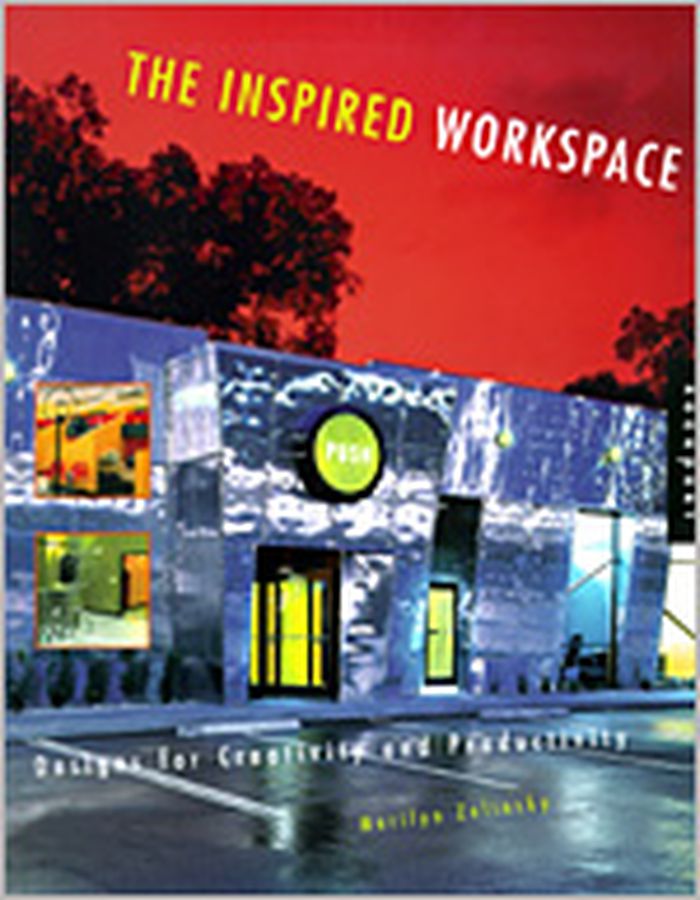
Now in paperback, "The Inspired Workspace" takes readers behind closed doors into the creative soul of more than forty successful firms, offering a rare and intimate look at work environments that contribute to the bottom line. From Paris to New York to Beijing, from the home studio to the office cubical to corporate headquarters, this book shows readers how to set the stage for creativity. The "Inspired Workspace" is a must for architects, designers, managers, employees, business owners, CEO's, and the self-employed everywhere. It feature more than 200 full-color photographs illustrating unique approaches to work and creativity in both private and public workspaces. This elegant book is the book that provides the ins and outs for creating a truly inspired workspace.
The inspired workspace : designs for creativity and productivity
Actions:
Price:
$35.95
(available to order)
Summary:
Now in paperback, "The Inspired Workspace" takes readers behind closed doors into the creative soul of more than forty successful firms, offering a rare and intimate look at work environments that contribute to the bottom line. From Paris to New York to Beijing, from the home studio to the office cubical to corporate headquarters, this book shows readers how to set the stage for creativity. The "Inspired Workspace" is a must for architects, designers, managers, employees, business owners, CEO's, and the self-employed everywhere. It feature more than 200 full-color photographs illustrating unique approaches to work and creativity in both private and public workspaces. This elegant book is the book that provides the ins and outs for creating a truly inspired workspace.
Form:
books
books
Publication:
March 2004, Gloucester, Mass.
March 2004, Gloucester, Mass.
Subject:
Commercial interiors, Building types
Commercial interiors, Building types
Form:
books
books
Actions:
Price:
$49.95
(available to order)
Summary:
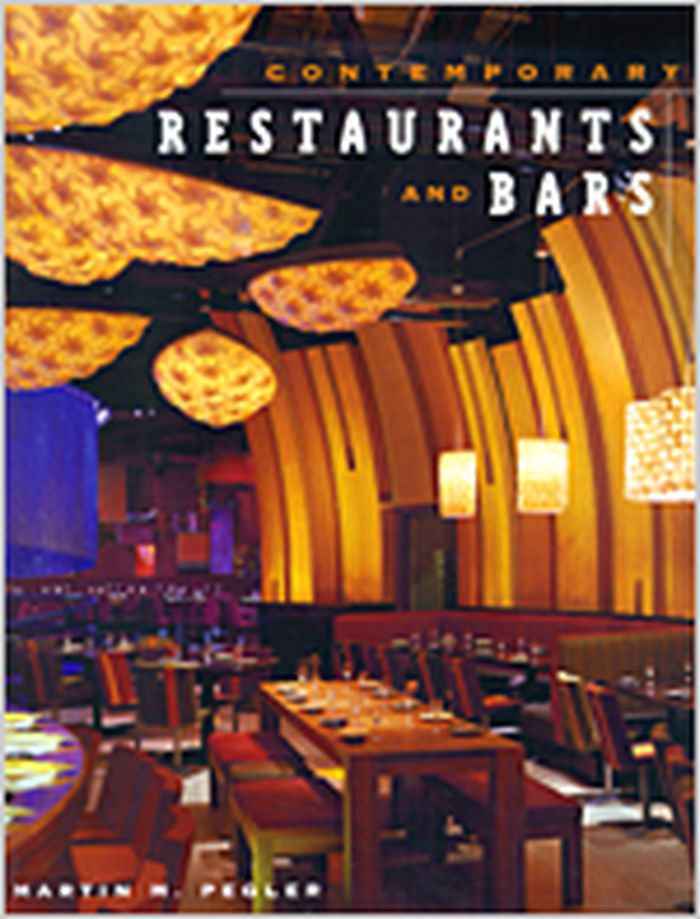
More than 60 design solutions for restaurants and bars from across the United States and around the world are presented in "Contemporary Restaurants and Bars". A cross section of themes and ideas from the romantic to eclectic, featuring the exhilirating integration of food, art, and architecture. Designers are taken on a journey to explore the newest and most creatively(...)
$49.95
(available to order)
Summary:
More than 60 design solutions for restaurants and bars from across the United States and around the world are presented in "Contemporary Restaurants and Bars". A cross section of themes and ideas from the romantic to eclectic, featuring the exhilirating integration of food, art, and architecture. Designers are taken on a journey to explore the newest and most creatively(...)
Subject:
Commercial interiors, Building types
Commercial interiors, Building types
Publication:
April 2004, New York
April 2004, New York
Title:
Contemporary restaurants and bars
Actions:
Price:
$49.95
(available to order)
Summary:
More than 60 design solutions for restaurants and bars from across the United States and around the world are presented in "Contemporary Restaurants and Bars". A cross section of themes and ideas from the romantic to eclectic, featuring the exhilirating integration of food, art, and architecture. Designers are taken on a journey to explore the newest and most creatively designed and conceived restaurants and bars, ranging from modest to the more elaborate and sophisticated.
Contemporary restaurants and bars
Actions:
Price:
$49.95
(available to order)
Summary:
More than 60 design solutions for restaurants and bars from across the United States and around the world are presented in "Contemporary Restaurants and Bars". A cross section of themes and ideas from the romantic to eclectic, featuring the exhilirating integration of food, art, and architecture. Designers are taken on a journey to explore the newest and most creatively designed and conceived restaurants and bars, ranging from modest to the more elaborate and sophisticated.
Form:
books
books
Publication:
April 2004, New York
April 2004, New York
Subject:
Commercial interiors, Building types
Commercial interiors, Building types
Form:
books
books
Title:
Healthcare spaces no.2
Healthcare spaces no.2
Actions:
Price:
$89.95
(available to order)
Summary:
Healthcare spaces is a showcase of new work by some of the leading architects and interior designers serving american health care institutions. More than 50 design firms present 170+ projects ranging from neighborhood clinics, surgery centers and medical offices to replacement hospitals and vast medical campuses.
$89.95
(available to order)
Summary:
Healthcare spaces is a showcase of new work by some of the leading architects and interior designers serving american health care institutions. More than 50 design firms present 170+ projects ranging from neighborhood clinics, surgery centers and medical offices to replacement hospitals and vast medical campuses.
Title:
Healthcare spaces no.2
Actions:
Price:
$89.95
(available to order)
Summary:
Healthcare spaces is a showcase of new work by some of the leading architects and interior designers serving american health care institutions. More than 50 design firms present 170+ projects ranging from neighborhood clinics, surgery centers and medical offices to replacement hospitals and vast medical campuses.
Healthcare spaces no.2
Actions:
Price:
$89.95
(available to order)
Summary:
Healthcare spaces is a showcase of new work by some of the leading architects and interior designers serving american health care institutions. More than 50 design firms present 170+ projects ranging from neighborhood clinics, surgery centers and medical offices to replacement hospitals and vast medical campuses.
Form:
books
books
Publication:
April 2004, New York
April 2004, New York
Subject:
Commercial interiors, Building types
Commercial interiors, Building types
Form:
books
books
Title:
Patrimoine hospitalier
Patrimoine hospitalier
Actions:
Price:
$96.00
(available to order)
Summary:
En portant un regard appuyé sur le devenir des bâtiments hospitaliers, cet ouvrage choisit de privilégier une approche dynamique d’un patrimoine en perpétuelle évolution. Au travers d’une trentaine de monographies largement illustrées, cet ouvrage inscrit l’hôpital dans sa relation au monde social, politique, médical et économique. Maladrerie, hospice, Hôtel-Dieu,(...)
$96.00
(available to order)
Summary:
En portant un regard appuyé sur le devenir des bâtiments hospitaliers, cet ouvrage choisit de privilégier une approche dynamique d’un patrimoine en perpétuelle évolution. Au travers d’une trentaine de monographies largement illustrées, cet ouvrage inscrit l’hôpital dans sa relation au monde social, politique, médical et économique. Maladrerie, hospice, Hôtel-Dieu,(...)
Subject:
Commercial interiors, Building types
Commercial interiors, Building types
Publication:
October 2004, Paris
October 2004, Paris
Title:
Patrimoine hospitalier
Actions:
Price:
$96.00
(available to order)
Summary:
En portant un regard appuyé sur le devenir des bâtiments hospitaliers, cet ouvrage choisit de privilégier une approche dynamique d’un patrimoine en perpétuelle évolution. Au travers d’une trentaine de monographies largement illustrées, cet ouvrage inscrit l’hôpital dans sa relation au monde social, politique, médical et économique. Maladrerie, hospice, Hôtel-Dieu, charité, hôpital général, asile, lazaret, clinique, sanatorium, centre héliomarin ou centre hospitalier, tous ces lieux portent en eux la fonction vitale de l’hôpital. Dans un large tour de France, mêlant des présentations d’hôpitaux en activité et de bâtiments réaffectés, il invite le lecteur à prendre conscience de la fragilité d’un patrimoine peu connu, de plus en plus menacé, qui peine à se moderniser. Après l’abandon des hôpitaux médiévaux, la transformation des hôpitaux généraux, pointe désormais la disparition des hôpitaux pavillonnaires. Que faire alors d’un patrimoine de qualité qui ne remplit plus ses fonctions ? Le reconvertir à des fins publiques, le remettre sur le marché ou le démolir et reconstruire la ville sur elle-même ?
Patrimoine hospitalier
Actions:
Price:
$96.00
(available to order)
Summary:
En portant un regard appuyé sur le devenir des bâtiments hospitaliers, cet ouvrage choisit de privilégier une approche dynamique d’un patrimoine en perpétuelle évolution. Au travers d’une trentaine de monographies largement illustrées, cet ouvrage inscrit l’hôpital dans sa relation au monde social, politique, médical et économique. Maladrerie, hospice, Hôtel-Dieu, charité, hôpital général, asile, lazaret, clinique, sanatorium, centre héliomarin ou centre hospitalier, tous ces lieux portent en eux la fonction vitale de l’hôpital. Dans un large tour de France, mêlant des présentations d’hôpitaux en activité et de bâtiments réaffectés, il invite le lecteur à prendre conscience de la fragilité d’un patrimoine peu connu, de plus en plus menacé, qui peine à se moderniser. Après l’abandon des hôpitaux médiévaux, la transformation des hôpitaux généraux, pointe désormais la disparition des hôpitaux pavillonnaires. Que faire alors d’un patrimoine de qualité qui ne remplit plus ses fonctions ? Le reconvertir à des fins publiques, le remettre sur le marché ou le démolir et reconstruire la ville sur elle-même ?
Form:
books
books
Publication:
October 2004, Paris
October 2004, Paris
Subject:
Commercial interiors, Building types
Commercial interiors, Building types


