


1360 Results
Form:
books
books
Actions:
Holdings:
Description:
255 pages : illustrations (some color) ; 26 x 27 cm
Description:
255 pages : illustrations (some color) ; 26 x 27 cm
Author:
Subject:
Publication:
New York, New York : The Rutledge Press, 1981.
New York, New York : The Rutledge Press, 1981.
Title:
The politics of architecture : a perspective on Nelson A. Rockefeller / by Samuel E. Bleecker ; special photography by Ezra Stoller ; commentary by George A. Dudley.
Actions:
Holdings:
Description:
255 pages : illustrations (some color) ; 26 x 27 cm
The politics of architecture : a perspective on Nelson A. Rockefeller / by Samuel E. Bleecker ; special photography by Ezra Stoller ; commentary by George A. Dudley.
Actions:
Holdings:
Description:
255 pages : illustrations (some color) ; 26 x 27 cm
Form:
books
books
Publication:
New York, New York : The Rutledge Press, 1981.
New York, New York : The Rutledge Press, 1981.
Author:
Subject:
Form:
archives
archives
Actions:
Holdings:
Description:
217 items, 0.06 l.m. of textual documents., The fonds is organized in 2 series.
Description:
217 items, 0.06 l.m. of textual documents., The fonds is organized in 2 series.
Author:
Subject:
Title:
Fonds Marcel Parizeau, 1917-1955 ca. 1923-1944.
Actions:
Holdings:
Description:
217 items, 0.06 l.m. of textual documents., The fonds is organized in 2 series.
Fonds Marcel Parizeau, 1917-1955 ca. 1923-1944.
Actions:
Holdings:
Description:
217 items, 0.06 l.m. of textual documents., The fonds is organized in 2 series.
Form:
archives
archives
Author:
Subject:
Form:
books
books
Title:
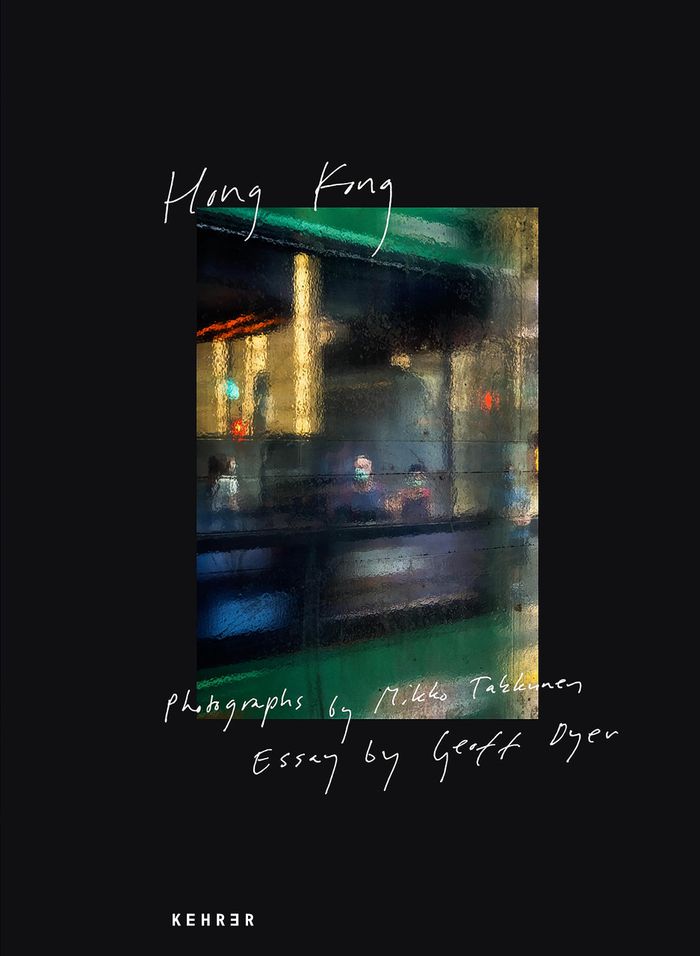
Mikko Takkunen: Hong Kong
Mikko Takkunen: Hong Kong
Actions:
Price:
$69.95
(available to order)
Summary:
With his first photobook ''Hong Kong'', The New York Times’ photo editor Mikko Takkunen captured one of the world’s greatest metropolises during a time of political uncertainty and the pandemic. As the city was still recovering from the aftermath of the anti-government protests of 2019, Takkunen began to concentrate on the purity of seeing and capturing the world anew.(...)
$69.95
(available to order)
Summary:
With his first photobook ''Hong Kong'', The New York Times’ photo editor Mikko Takkunen captured one of the world’s greatest metropolises during a time of political uncertainty and the pandemic. As the city was still recovering from the aftermath of the anti-government protests of 2019, Takkunen began to concentrate on the purity of seeing and capturing the world anew.(...)
Title:
Mikko Takkunen: Hong Kong
Actions:
Price:
$69.95
(available to order)
Summary:
With his first photobook ''Hong Kong'', The New York Times’ photo editor Mikko Takkunen captured one of the world’s greatest metropolises during a time of political uncertainty and the pandemic. As the city was still recovering from the aftermath of the anti-government protests of 2019, Takkunen began to concentrate on the purity of seeing and capturing the world anew. Inspired by the masters of the New York School, like Faurer, Stettner, and Leiter, the Finnish photographer sought to capture Hong Kong in a fresh and innovative way, revealing hidden perspectives and moods that many have yet to see. His photos are both documentary and subjective, creating a narrative of the city that‘s as captivating as it is beautiful. From the vibrant colors to the stunning tonalities, each photograph is carefully curated to take you on an offbeat journey through the magnificent city.
Mikko Takkunen: Hong Kong
Actions:
Price:
$69.95
(available to order)
Summary:
With his first photobook ''Hong Kong'', The New York Times’ photo editor Mikko Takkunen captured one of the world’s greatest metropolises during a time of political uncertainty and the pandemic. As the city was still recovering from the aftermath of the anti-government protests of 2019, Takkunen began to concentrate on the purity of seeing and capturing the world anew. Inspired by the masters of the New York School, like Faurer, Stettner, and Leiter, the Finnish photographer sought to capture Hong Kong in a fresh and innovative way, revealing hidden perspectives and moods that many have yet to see. His photos are both documentary and subjective, creating a narrative of the city that‘s as captivating as it is beautiful. From the vibrant colors to the stunning tonalities, each photograph is carefully curated to take you on an offbeat journey through the magnificent city.
Form:
books
books
Publication:
May 2024
May 2024
Subject:
Photography monographs
Photography monographs
Form:
books
books
Actions:
Price:
$37.95
(available to order)
Summary:
How and why America's inner cities have begun recovering from the pervasive crime and social disorder that plagued them only a decade ago. "Comeback Cities" shows how innovative, pragmatic tactics for ameliorating the nation's urban ills have produced results beyond anyone's expectations, reawakening(...)
$37.95
(available to order)
Summary:
How and why America's inner cities have begun recovering from the pervasive crime and social disorder that plagued them only a decade ago. "Comeback Cities" shows how innovative, pragmatic tactics for ameliorating the nation's urban ills have produced results beyond anyone's expectations, reawakening(...)
Title:
Comeback cities : a blueprint for urban neighborhood revival
Actions:
Price:
$37.95
(available to order)
Summary:
How and why America's inner cities have begun recovering from the pervasive crime and social disorder that plagued them only a decade ago. "Comeback Cities" shows how innovative, pragmatic tactics for ameliorating the nation's urban ills have produced results beyond anyone's expectations, reawakening America's toughest neighborhoods. In the past, big government and business working separately were unable to solve the inner city crisis. Rather, a blend of public-private partnerships, grassroots nonprofit organizations, and a willingness to experiment characterize what is best among the new approaches to urban problem solving. Pragmatism, not dogma, has produced the charter school movement and the police's new focus on "quality-of-life" issues. The new breed of big city mayors has welcomed business back into the city, stressed performance and results at city agencies, downplayed divisive racial politics, and cracked down on symptoms of social disorder. As a consequence, America's inner cities are becoming vital communities once again.
Comeback cities : a blueprint for urban neighborhood revival
Actions:
Price:
$37.95
(available to order)
Summary:
How and why America's inner cities have begun recovering from the pervasive crime and social disorder that plagued them only a decade ago. "Comeback Cities" shows how innovative, pragmatic tactics for ameliorating the nation's urban ills have produced results beyond anyone's expectations, reawakening America's toughest neighborhoods. In the past, big government and business working separately were unable to solve the inner city crisis. Rather, a blend of public-private partnerships, grassroots nonprofit organizations, and a willingness to experiment characterize what is best among the new approaches to urban problem solving. Pragmatism, not dogma, has produced the charter school movement and the police's new focus on "quality-of-life" issues. The new breed of big city mayors has welcomed business back into the city, stressed performance and results at city agencies, downplayed divisive racial politics, and cracked down on symptoms of social disorder. As a consequence, America's inner cities are becoming vital communities once again.
Form:
books
books
Publication:
September 2000, Boulder
September 2000, Boulder
Subject:
Urban Theory
Urban Theory
Form:
books
books
Actions:
Holdings:
Description:
viii, 635 pages : illustrations ; 17 cm
Description:
viii, 635 pages : illustrations ; 17 cm
Author:
Subject:
Publication:
Cambridge : Harvard University Press ; London : Heinemann, 1929.
Cambridge : Harvard University Press ; London : Heinemann, 1929.
Title:
Timaeus ; Critias ; Cleitophon ; Menexenus ; Epistles / Plato ; with an English translation by R.G. Bury.
Actions:
Holdings:
Description:
viii, 635 pages : illustrations ; 17 cm
Timaeus ; Critias ; Cleitophon ; Menexenus ; Epistles / Plato ; with an English translation by R.G. Bury.
Actions:
Holdings:
Description:
viii, 635 pages : illustrations ; 17 cm
Form:
books
books
Publication:
Cambridge : Harvard University Press ; London : Heinemann, 1929.
Cambridge : Harvard University Press ; London : Heinemann, 1929.
Author:
Subject:
Form:
books
books
Actions:
Price:
$22.95
(available to order)
Summary:
Focusing on 35 distinct areas of the city, this book presents the new face of the German capital including the former West, the new center, and the government district with stunning photographs that look at the startling contrasts between old and new. Both local and international architects have carried out rebuilding projects, most famously Renzo Piano ’s Daimler(...)
$22.95
(available to order)
Summary:
Focusing on 35 distinct areas of the city, this book presents the new face of the German capital including the former West, the new center, and the government district with stunning photographs that look at the startling contrasts between old and new. Both local and international architects have carried out rebuilding projects, most famously Renzo Piano ’s Daimler(...)
Subject:
Architecture since 1900, Europe
Architecture since 1900, Europe
Publication:
June 2002, München / Berlin / London / New York
June 2002, München / Berlin / London / New York
Title:
Berlin Heute - today - aujourd'hui
Actions:
Price:
$22.95
(available to order)
Summary:
Focusing on 35 distinct areas of the city, this book presents the new face of the German capital including the former West, the new center, and the government district with stunning photographs that look at the startling contrasts between old and new. Both local and international architects have carried out rebuilding projects, most famously Renzo Piano ’s Daimler Chrysler project, Michael Wilford ’s British Embassy in Berlin, Norman Foster ’s Reichstagconversion, Helmut Jahn ’s piece for Sony, Daniel Libeskind ’s Jewish Museum Berlin. Architectural historian Christiane Kruse examines Berlin ’s vibrant, checkered past, offering surprising insights into its rebirth as a thriving, thoroughly modern metropolis and using texts that place current developments in a historical context. Rare, archive photographs from the GDR and before the war show the transformation of the city.
Berlin Heute - today - aujourd'hui
Actions:
Price:
$22.95
(available to order)
Summary:
Focusing on 35 distinct areas of the city, this book presents the new face of the German capital including the former West, the new center, and the government district with stunning photographs that look at the startling contrasts between old and new. Both local and international architects have carried out rebuilding projects, most famously Renzo Piano ’s Daimler Chrysler project, Michael Wilford ’s British Embassy in Berlin, Norman Foster ’s Reichstagconversion, Helmut Jahn ’s piece for Sony, Daniel Libeskind ’s Jewish Museum Berlin. Architectural historian Christiane Kruse examines Berlin ’s vibrant, checkered past, offering surprising insights into its rebirth as a thriving, thoroughly modern metropolis and using texts that place current developments in a historical context. Rare, archive photographs from the GDR and before the war show the transformation of the city.
Form:
books
books
Publication:
June 2002, München / Berlin / London / New York
June 2002, München / Berlin / London / New York
Subject:
Architecture since 1900, Europe
Architecture since 1900, Europe
Form:
books
books
Actions:
Holdings:
Description:
285 pages, plates : color illustrations, plans ; 30 cm
Description:
285 pages, plates : color illustrations, plans ; 30 cm
Author:
Subject:
Publication:
Berlin : ArchiTangle, [2023]
Berlin : ArchiTangle, [2023]
Title:
Marina Tabassum : architecture, my journey.
Actions:
Holdings:
Description:
285 pages, plates : color illustrations, plans ; 30 cm
Marina Tabassum : architecture, my journey.
Actions:
Holdings:
Description:
285 pages, plates : color illustrations, plans ; 30 cm
Form:
books
books
Publication:
Berlin : ArchiTangle, [2023]
Berlin : ArchiTangle, [2023]
Author:
Subject:
Form:
books
books
Title:
The battle for Gotham
The battle for Gotham
Actions:
Price:
$35.50
(available to order)
Summary:
In the 1970s, New York City hit rock bottom. Crime was at its highest, the middle class exodus was in high gear, and bankruptcy loomed. Many people credit New York's master builder Robert Moses with turning Gotham around, despite his brutal, undemocratic and demolition-heavy ways. Urban critic and journalist Roberta Brandes Gratz contradicts this conventional view. New(...)
$35.50
(available to order)
Summary:
In the 1970s, New York City hit rock bottom. Crime was at its highest, the middle class exodus was in high gear, and bankruptcy loomed. Many people credit New York's master builder Robert Moses with turning Gotham around, despite his brutal, undemocratic and demolition-heavy ways. Urban critic and journalist Roberta Brandes Gratz contradicts this conventional view. New(...)
Title:
The battle for Gotham
Actions:
Price:
$35.50
(available to order)
Summary:
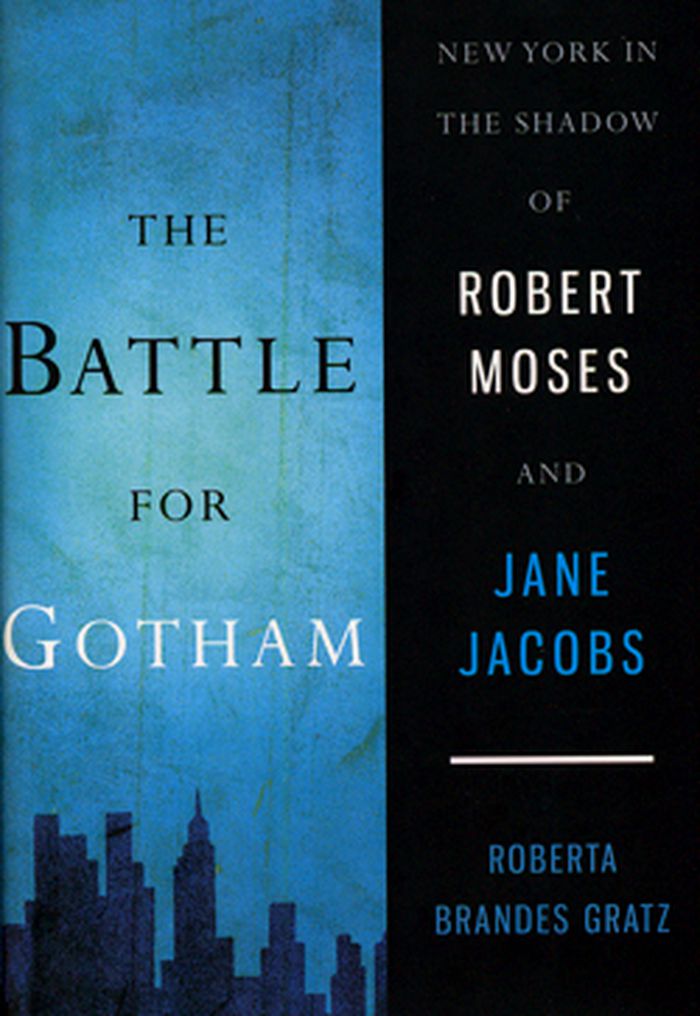
In the 1970s, New York City hit rock bottom. Crime was at its highest, the middle class exodus was in high gear, and bankruptcy loomed. Many people credit New York's master builder Robert Moses with turning Gotham around, despite his brutal, undemocratic and demolition-heavy ways. Urban critic and journalist Roberta Brandes Gratz contradicts this conventional view. New York City, Gratz argues, recovered precisely because of the waning power of Moses. His decline in the late 1960s and the drying up of big government funding for urban renewal projects allowed New York to organically regenerate according to the precepts defined by Jane Jacobs in her classic, The Death and Life of Great American Cities, and in contradiction to Moses's urban philosophy. As American cities face a devastating economic crisis, Jacobs's philosophy is again vital for the redevelopment of metropolitan life.
The battle for Gotham
Actions:
Price:
$35.50
(available to order)
Summary:
In the 1970s, New York City hit rock bottom. Crime was at its highest, the middle class exodus was in high gear, and bankruptcy loomed. Many people credit New York's master builder Robert Moses with turning Gotham around, despite his brutal, undemocratic and demolition-heavy ways. Urban critic and journalist Roberta Brandes Gratz contradicts this conventional view. New York City, Gratz argues, recovered precisely because of the waning power of Moses. His decline in the late 1960s and the drying up of big government funding for urban renewal projects allowed New York to organically regenerate according to the precepts defined by Jane Jacobs in her classic, The Death and Life of Great American Cities, and in contradiction to Moses's urban philosophy. As American cities face a devastating economic crisis, Jacobs's philosophy is again vital for the redevelopment of metropolitan life.
Form:
books
books
Publication:
April 2010
April 2010
Subject:
Urban Theory
Urban Theory
Form:
books
books

Actions:
Price:
$24.95
(available to order)
Summary:
Industrialization created cities of Dickensian squalor that were crowded, smoky, dirty, and disease-ridden. By the beginning of the twentieth century, urban visionaries were looking for ways to improve living and working conditions in industrial cities. In "Invented Edens", Robert Kargon and Arthur Molella trace the arc of one form of urban design, which they term the(...)
$24.95
(available to order)
Summary:
Industrialization created cities of Dickensian squalor that were crowded, smoky, dirty, and disease-ridden. By the beginning of the twentieth century, urban visionaries were looking for ways to improve living and working conditions in industrial cities. In "Invented Edens", Robert Kargon and Arthur Molella trace the arc of one form of urban design, which they term the(...)
Subject:
Green Architecture
Green Architecture
Publication:
October 2005, Cambridge (MA), London
October 2005, Cambridge (MA), London
Title:
Invented Edens : techno-cities of the twentieth century
Actions:
Price:
$24.95
(available to order)
Summary:
Industrialization created cities of Dickensian squalor that were crowded, smoky, dirty, and disease-ridden. By the beginning of the twentieth century, urban visionaries were looking for ways to improve living and working conditions in industrial cities. In "Invented Edens", Robert Kargon and Arthur Molella trace the arc of one form of urban design, which they term the techno-city : a planned city developed in conjunction with large industrial or technological enterprises, blending the technological and the pastoral, the mill town and the garden city. Techno-cities of the twentieth century range from factory towns in Mussolini's Italy to the Disney creation of Celebration, Florida. Kargon and Molella show that the techno-city represents an experiment in integrating modern technology into the world of ideal life. Techno-cities mirror society's understanding of current technologies and, at the same time, seek to regain the lost virtues of the edenic pre-industrial village. The idea of the techno-city transcended ideologies, crossed national borders, and spanned the entire twentieth century. Kargon and Molella map the concept through a series of exemplars. These include Norris, Tennessee, home to the Tennessee Valley Authority; Torviscosa, Italy, built by Italy's Fascist government to accommodate synthetic textile manufacturing (and featured in an early short by Michelangelo Antonioni); Ciudad Guayana, Venezuela, planned by a team from MIT and Harvard; and, finally, Disney's Celebration - perhaps the ultimate techno-city, a fantasy city reflecting an era in which virtual experiences are rapidly replacing actual ones.
Invented Edens : techno-cities of the twentieth century
Actions:
Price:
$24.95
(available to order)
Summary:
Industrialization created cities of Dickensian squalor that were crowded, smoky, dirty, and disease-ridden. By the beginning of the twentieth century, urban visionaries were looking for ways to improve living and working conditions in industrial cities. In "Invented Edens", Robert Kargon and Arthur Molella trace the arc of one form of urban design, which they term the techno-city : a planned city developed in conjunction with large industrial or technological enterprises, blending the technological and the pastoral, the mill town and the garden city. Techno-cities of the twentieth century range from factory towns in Mussolini's Italy to the Disney creation of Celebration, Florida. Kargon and Molella show that the techno-city represents an experiment in integrating modern technology into the world of ideal life. Techno-cities mirror society's understanding of current technologies and, at the same time, seek to regain the lost virtues of the edenic pre-industrial village. The idea of the techno-city transcended ideologies, crossed national borders, and spanned the entire twentieth century. Kargon and Molella map the concept through a series of exemplars. These include Norris, Tennessee, home to the Tennessee Valley Authority; Torviscosa, Italy, built by Italy's Fascist government to accommodate synthetic textile manufacturing (and featured in an early short by Michelangelo Antonioni); Ciudad Guayana, Venezuela, planned by a team from MIT and Harvard; and, finally, Disney's Celebration - perhaps the ultimate techno-city, a fantasy city reflecting an era in which virtual experiences are rapidly replacing actual ones.
Form:
books
books
Publication:
October 2005, Cambridge (MA), London
October 2005, Cambridge (MA), London
Subject:
Green Architecture
Green Architecture
Form:
books
books
Price:
$25.00
(available to order)
Summary:
New York City is home to some of the most recognizable places in the world. As familiar as the sight of New Year’s Eve in Times Square or a protest in front of City Hall may be to us, do we understand who controls what happens there? Kristine Miller delves into six of New York’s most important public spaces to trace how design influences their complicated lives. Miller(...)
$25.00
(available to order)
Summary:
New York City is home to some of the most recognizable places in the world. As familiar as the sight of New Year’s Eve in Times Square or a protest in front of City Hall may be to us, do we understand who controls what happens there? Kristine Miller delves into six of New York’s most important public spaces to trace how design influences their complicated lives. Miller(...)
Title:
Designs on the Public : The private lives of New York's public spaces
Actions:
Price:
$25.00
(available to order)
Summary:
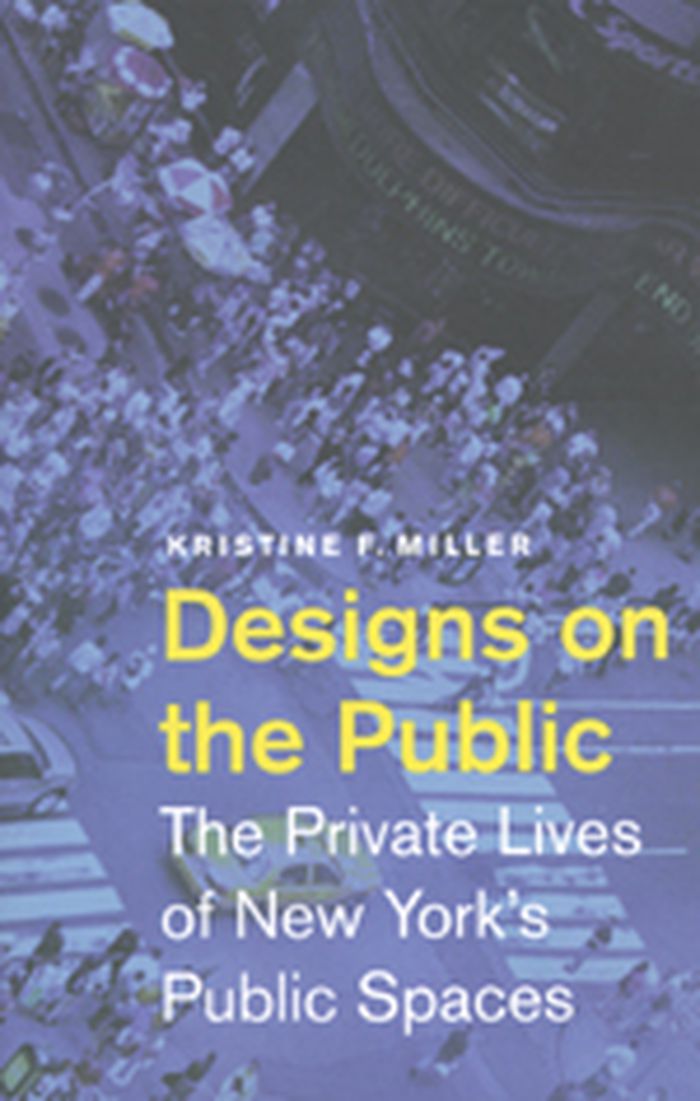
New York City is home to some of the most recognizable places in the world. As familiar as the sight of New Year’s Eve in Times Square or a protest in front of City Hall may be to us, do we understand who controls what happens there? Kristine Miller delves into six of New York’s most important public spaces to trace how design influences their complicated lives. Miller chronicles controversies in the histories of New York locations including Times Square, Trump Tower, the IBM Atrium, and Sony Plaza. The story of each location reveals that public space is not a concrete or fixed reality, but rather a constantly changing situation open to the forces of law, corporations, bureaucracy, and government. The qualities of public spaces we consider essential, including accessibility, public ownership, and ties to democratic life, are, at best, temporary conditions and often completely absent. Design is, in Miller’s view, complicit in regulation of public spaces in New York City to exclude undesirables, restrict activities, and privilege commercial interests, and in this work she shows how design can reactivate public space and public life.
Designs on the Public : The private lives of New York's public spaces
Actions:
Price:
$25.00
(available to order)
Summary:
New York City is home to some of the most recognizable places in the world. As familiar as the sight of New Year’s Eve in Times Square or a protest in front of City Hall may be to us, do we understand who controls what happens there? Kristine Miller delves into six of New York’s most important public spaces to trace how design influences their complicated lives. Miller chronicles controversies in the histories of New York locations including Times Square, Trump Tower, the IBM Atrium, and Sony Plaza. The story of each location reveals that public space is not a concrete or fixed reality, but rather a constantly changing situation open to the forces of law, corporations, bureaucracy, and government. The qualities of public spaces we consider essential, including accessibility, public ownership, and ties to democratic life, are, at best, temporary conditions and often completely absent. Design is, in Miller’s view, complicit in regulation of public spaces in New York City to exclude undesirables, restrict activities, and privilege commercial interests, and in this work she shows how design can reactivate public space and public life.
Form:
books
books
Publication:
December 2007, Minneapolis
December 2007, Minneapolis
Subject:
Urban Theory
Urban Theory


