


1360 Results
Form:
books
books
Actions:
Holdings:
Description:
lxxii, 297 pages : illustrations ; 23 cm
Description:
lxxii, 297 pages : illustrations ; 23 cm
Author:
Subject:
Publication:
Cambridge, Massachusetts : The MIT Press, [2024]
Cambridge, Massachusetts : The MIT Press, [2024]
Title:
Longevity hubs : regional innovation for global aging / edited by Joseph F. Coughlin and Luke Yoquinto.
Actions:
Holdings:
Description:
lxxii, 297 pages : illustrations ; 23 cm
Longevity hubs : regional innovation for global aging / edited by Joseph F. Coughlin and Luke Yoquinto.
Actions:
Holdings:
Description:
lxxii, 297 pages : illustrations ; 23 cm
Form:
books
books
Publication:
Cambridge, Massachusetts : The MIT Press, [2024]
Cambridge, Massachusetts : The MIT Press, [2024]
Author:
Subject:
Form:
books
books
Title:
Toronto sprawls
Toronto sprawls
Actions:
Price:
$24.95
(available to order)
Summary:
With a landmass spanning approximately 7000 square kilometres and a population of roughly five million, the Greater Toronto Area is Canada’s largest metropolitan centre. How did a small nineteenth-century colonial capital become this sprawling urban giant, and how did government policies shape the contours of its landscape? In Toronto Sprawls, Lawrence Solomon examines(...)
$24.95
(available to order)
Summary:
With a landmass spanning approximately 7000 square kilometres and a population of roughly five million, the Greater Toronto Area is Canada’s largest metropolitan centre. How did a small nineteenth-century colonial capital become this sprawling urban giant, and how did government policies shape the contours of its landscape? In Toronto Sprawls, Lawrence Solomon examines(...)
Title:
Toronto sprawls
Actions:
Price:
$24.95
(available to order)
Summary:
With a landmass spanning approximately 7000 square kilometres and a population of roughly five million, the Greater Toronto Area is Canada’s largest metropolitan centre. How did a small nineteenth-century colonial capital become this sprawling urban giant, and how did government policies shape the contours of its landscape? In Toronto Sprawls, Lawrence Solomon examines the great migration from farm to the city that occurred in the last half of the nineteenth century. During this period, a disproportionate number of single women came to Toronto, while at the same time, immigration from abroad was swelling the city’s urban boundaries. Labour unions were also increasingly successful in recruiting urban workers in these years. Governments responded to these perceived threats with a series of policies designed to foster order. To promote single family dwellings conducive to the traditional family, buildings in high-density areas were razed and apartment buildings banned. To discourage returning First World War veterans from settling in cities, the government offered grants to spur rural settlement. These policies and others dispersed the city’s population and promoted sprawl. An illuminating read, Toronto Sprawls makes a convincing case that urban sprawl in Toronto was not caused by market forces, but rather policies and programs designed to disperse Toronto’s urban population.
Toronto sprawls
Actions:
Price:
$24.95
(available to order)
Summary:
With a landmass spanning approximately 7000 square kilometres and a population of roughly five million, the Greater Toronto Area is Canada’s largest metropolitan centre. How did a small nineteenth-century colonial capital become this sprawling urban giant, and how did government policies shape the contours of its landscape? In Toronto Sprawls, Lawrence Solomon examines the great migration from farm to the city that occurred in the last half of the nineteenth century. During this period, a disproportionate number of single women came to Toronto, while at the same time, immigration from abroad was swelling the city’s urban boundaries. Labour unions were also increasingly successful in recruiting urban workers in these years. Governments responded to these perceived threats with a series of policies designed to foster order. To promote single family dwellings conducive to the traditional family, buildings in high-density areas were razed and apartment buildings banned. To discourage returning First World War veterans from settling in cities, the government offered grants to spur rural settlement. These policies and others dispersed the city’s population and promoted sprawl. An illuminating read, Toronto Sprawls makes a convincing case that urban sprawl in Toronto was not caused by market forces, but rather policies and programs designed to disperse Toronto’s urban population.
Form:
books
books
Publication:
April 2007, Toronto
April 2007, Toronto
Subject:
Architecture in Canada
Architecture in Canada
Form:
books
books
Actions:
Price:
$39.99
(available to order)
Summary:
Why Don't American Cities Burn? traces the collision of urban transformation with the rightward-moving social politics of late twentieth- and early twenty-first-century America. He shows how the bifurcation of black social structures produced a new African American inequality and traces the shift from images of a pathological black "underclass" to praise of the(...)
$39.99
(available to order)
Summary:
Why Don't American Cities Burn? traces the collision of urban transformation with the rightward-moving social politics of late twentieth- and early twenty-first-century America. He shows how the bifurcation of black social structures produced a new African American inequality and traces the shift from images of a pathological black "underclass" to praise of the(...)
Title:
Why don't American cities burn?
Actions:
Price:
$39.99
(available to order)
Summary:
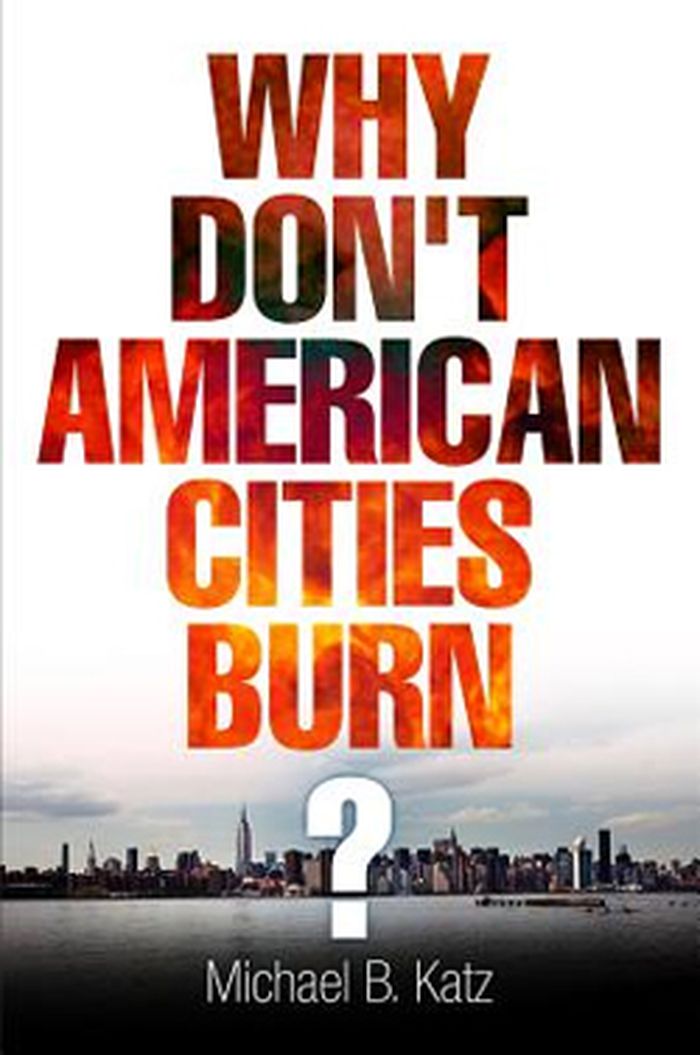
Why Don't American Cities Burn? traces the collision of urban transformation with the rightward-moving social politics of late twentieth- and early twenty-first-century America. He shows how the bifurcation of black social structures produced a new African American inequality and traces the shift from images of a pathological black "underclass" to praise of the entrepreneurial poor who take advantage of new technologies of poverty work to find the beginning of the path to the middle class. He explores the reasons American cities since the early 1970s have remained relatively free of collective violence while black men in bleak inner-city neighborhoods have turned their rage inward on one another rather than on the agents and symbols of a culture and political economy that exclude them. The book ends with a meditation on how the political left and right have come to believe that urban transformation is inevitably one of failure and decline abetted by the response of government to deindustrialization, poverty, and race. How, Katz asks, can we construct a new narrative that acknowledges the dark side of urban history even as it demonstrates the capacity of government to address the problems of cities and their residents? How can we create a politics of modest hope?
Why don't American cities burn?
Actions:
Price:
$39.99
(available to order)
Summary:
Why Don't American Cities Burn? traces the collision of urban transformation with the rightward-moving social politics of late twentieth- and early twenty-first-century America. He shows how the bifurcation of black social structures produced a new African American inequality and traces the shift from images of a pathological black "underclass" to praise of the entrepreneurial poor who take advantage of new technologies of poverty work to find the beginning of the path to the middle class. He explores the reasons American cities since the early 1970s have remained relatively free of collective violence while black men in bleak inner-city neighborhoods have turned their rage inward on one another rather than on the agents and symbols of a culture and political economy that exclude them. The book ends with a meditation on how the political left and right have come to believe that urban transformation is inevitably one of failure and decline abetted by the response of government to deindustrialization, poverty, and race. How, Katz asks, can we construct a new narrative that acknowledges the dark side of urban history even as it demonstrates the capacity of government to address the problems of cities and their residents? How can we create a politics of modest hope?
Form:
books
books
Publication:
October 2011
October 2011
Subject:
Urban Theory
Urban Theory
Form:
books
books

Actions:
Price:
$19.95
(available to order)
Summary:
Japan today protects one-seventh of its land surface in parks, which are visited by well over a billion people each year. Parkscapes analyzes the origins, development, and distinctive features of these public spaces. Green zones were created by the government beginning in the late nineteenth century for state purposes but eventually evolved into sites of negotiation(...)
$19.95
(available to order)
Summary:
Japan today protects one-seventh of its land surface in parks, which are visited by well over a billion people each year. Parkscapes analyzes the origins, development, and distinctive features of these public spaces. Green zones were created by the government beginning in the late nineteenth century for state purposes but eventually evolved into sites of negotiation(...)
Title:
Parkscapes: green spaces in modern Japan
Actions:
Price:
$19.95
(available to order)
Summary:
Japan today protects one-seventh of its land surface in parks, which are visited by well over a billion people each year. Parkscapes analyzes the origins, development, and distinctive features of these public spaces. Green zones were created by the government beginning in the late nineteenth century for state purposes but eventually evolved into sites of negotiation between bureaucrats and ordinary citizens who use them for demonstrations, riots, and shelters, as well as recreation. Thomas Havens shows how revolutionary officials in the 1870s seized private properties and converted them into public parks for educating and managing citizens in the new emperor-sanctioned state. Rebuilding Tokyo and Yokohama after the earthquake and fires of 1923 spurred the spread of urban parklands both in the capital and other cities. According to Havens, the growth of suburbs, the national mobilization of World War II, and the post-1945 American occupation helped speed the creation of more urban parks, setting the stage for vast increases in public green spaces during Japan’s golden age of affluence from the 1960s through the 1980s. Since the 1990s the Japanese public has embraced a heightened ecological consciousness and become deeply involved in the design and management of both city and natural parks—realms once monopolized by government bureaucrats.
Parkscapes: green spaces in modern Japan
Actions:
Price:
$19.95
(available to order)
Summary:
Japan today protects one-seventh of its land surface in parks, which are visited by well over a billion people each year. Parkscapes analyzes the origins, development, and distinctive features of these public spaces. Green zones were created by the government beginning in the late nineteenth century for state purposes but eventually evolved into sites of negotiation between bureaucrats and ordinary citizens who use them for demonstrations, riots, and shelters, as well as recreation. Thomas Havens shows how revolutionary officials in the 1870s seized private properties and converted them into public parks for educating and managing citizens in the new emperor-sanctioned state. Rebuilding Tokyo and Yokohama after the earthquake and fires of 1923 spurred the spread of urban parklands both in the capital and other cities. According to Havens, the growth of suburbs, the national mobilization of World War II, and the post-1945 American occupation helped speed the creation of more urban parks, setting the stage for vast increases in public green spaces during Japan’s golden age of affluence from the 1960s through the 1980s. Since the 1990s the Japanese public has embraced a heightened ecological consciousness and become deeply involved in the design and management of both city and natural parks—realms once monopolized by government bureaucrats.
Form:
books
books
Publication:
April 2011
April 2011
Subject:
Landscape Theory
Landscape Theory
Form:
books
books
Actions:
Price:
$130.00
(available to order)
Summary:
Designated by King George V to replace Calcutta as capital of British India, New Delhi was constructed between 1912 and 1929 under the eye of architect Sir Edward Lutyens who sought to bring to this British colony a sense of classicism, order, and institutional beauty. With more than 300 colour and black and white illustrations, plans and photographs, this book presents(...)
$130.00
(available to order)
Summary:
Designated by King George V to replace Calcutta as capital of British India, New Delhi was constructed between 1912 and 1929 under the eye of architect Sir Edward Lutyens who sought to bring to this British colony a sense of classicism, order, and institutional beauty. With more than 300 colour and black and white illustrations, plans and photographs, this book presents(...)
Subject:
Arch Southwest Asia & North Africa
Arch Southwest Asia & North Africa
Publication:
October 2002, Munich
October 2002, Munich
Title:
Imperial Delhi : the British capital of the Indian Empire
Actions:
Price:
$130.00
(available to order)
Summary:
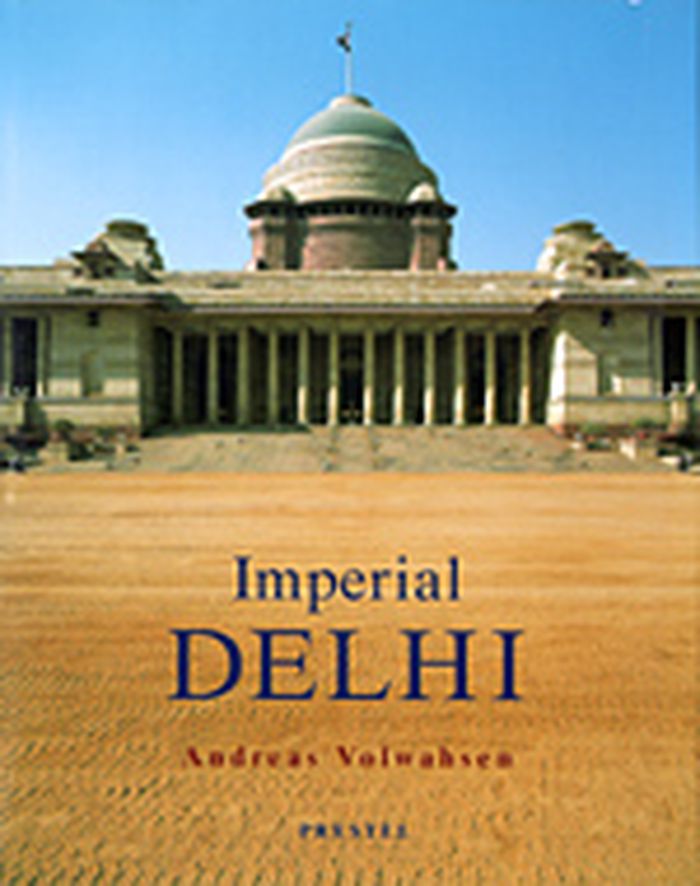
Designated by King George V to replace Calcutta as capital of British India, New Delhi was constructed between 1912 and 1929 under the eye of architect Sir Edward Lutyens who sought to bring to this British colony a sense of classicism, order, and institutional beauty. With more than 300 colour and black and white illustrations, plans and photographs, this book presents the most comprehensive examination to date of how this city was envisioned, planned, and constructed. From the massive war memorial arch and resplendent sandstone and marble government house to the spacious gardens and the gloriously imposing Viceroy's House, the evidence of Lutyen’s architectural genius is everywhere throughout New Delhi. As architectural historian Andreas Volwahsen discusses the importance of Lutyen’s work he provides a fascinating account of the making of a city: the contentious debates and cultural considerations, the inspiration and the painstaking construction, and finally the ways in which New Delhi has evolved into a modern city. With the growing interest in the preservation of historic sights worldwide, this magnificently detailed yet highly accessible history is certain to become a classic in the fields of architecture and urban design.
Imperial Delhi : the British capital of the Indian Empire
Actions:
Price:
$130.00
(available to order)
Summary:
Designated by King George V to replace Calcutta as capital of British India, New Delhi was constructed between 1912 and 1929 under the eye of architect Sir Edward Lutyens who sought to bring to this British colony a sense of classicism, order, and institutional beauty. With more than 300 colour and black and white illustrations, plans and photographs, this book presents the most comprehensive examination to date of how this city was envisioned, planned, and constructed. From the massive war memorial arch and resplendent sandstone and marble government house to the spacious gardens and the gloriously imposing Viceroy's House, the evidence of Lutyen’s architectural genius is everywhere throughout New Delhi. As architectural historian Andreas Volwahsen discusses the importance of Lutyen’s work he provides a fascinating account of the making of a city: the contentious debates and cultural considerations, the inspiration and the painstaking construction, and finally the ways in which New Delhi has evolved into a modern city. With the growing interest in the preservation of historic sights worldwide, this magnificently detailed yet highly accessible history is certain to become a classic in the fields of architecture and urban design.
Form:
books
books
Publication:
October 2002, Munich
October 2002, Munich
Subject:
Arch Southwest Asia & North Africa
Arch Southwest Asia & North Africa
Form:
books
books
Price:
$12.50
(available to order)
Summary:
This book brings together 17 Kahn projects, ranging from private housing to commercial architecture, religious buildings, exhibition spaces, and government buildings. With the Jonas Salk Institute in La Jolla, California (1959–1965) Kahn created a workspace with superb functional and aesthetic qualities; the institute’s Minimalist elements radiate a sense of eternal(...)
$12.50
(available to order)
Summary:
This book brings together 17 Kahn projects, ranging from private housing to commercial architecture, religious buildings, exhibition spaces, and government buildings. With the Jonas Salk Institute in La Jolla, California (1959–1965) Kahn created a workspace with superb functional and aesthetic qualities; the institute’s Minimalist elements radiate a sense of eternal(...)
Title:
Kahn
Actions:
Price:
$12.50
(available to order)
Summary:
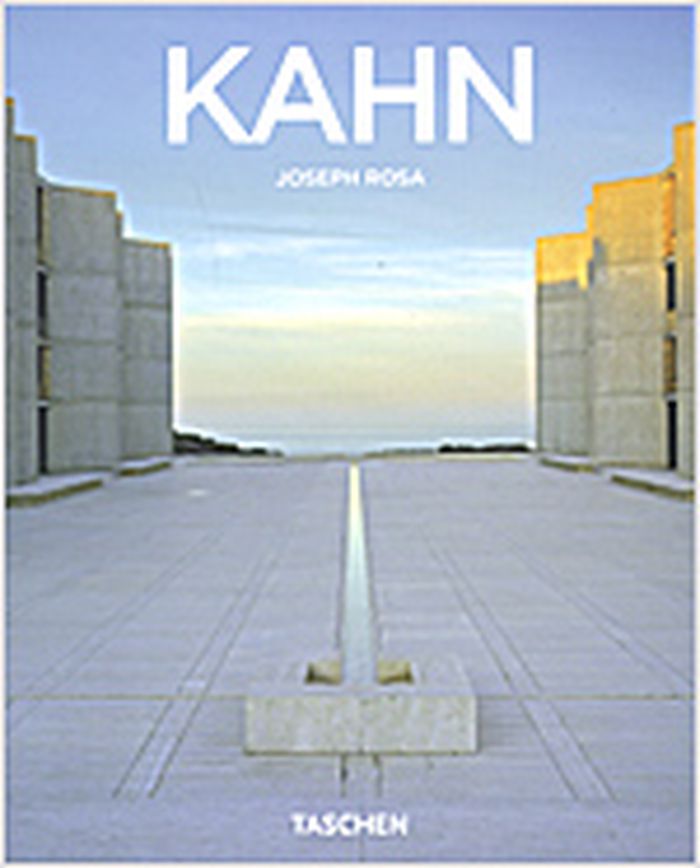
This book brings together 17 Kahn projects, ranging from private housing to commercial architecture, religious buildings, exhibition spaces, and government buildings. With the Jonas Salk Institute in La Jolla, California (1959–1965) Kahn created a workspace with superb functional and aesthetic qualities; the institute’s Minimalist elements radiate a sense of eternal beauty. The Kimbell Art Museum in Fort Worth (1966–1972) occupies the somewhat faceless city like an island of spiritual space, an effect that is achieved by simplicity in design and materials. Also, the Indian Institute of Management in Ahmedabad (1962–1974) and the Sher-e-Bangla Nagar, National Assembly of Bangladesh in Dhaka that was finished after his death are buildings of monumental importance, demonstrating the vision the architect.
Kahn
Actions:
Price:
$12.50
(available to order)
Summary:
This book brings together 17 Kahn projects, ranging from private housing to commercial architecture, religious buildings, exhibition spaces, and government buildings. With the Jonas Salk Institute in La Jolla, California (1959–1965) Kahn created a workspace with superb functional and aesthetic qualities; the institute’s Minimalist elements radiate a sense of eternal beauty. The Kimbell Art Museum in Fort Worth (1966–1972) occupies the somewhat faceless city like an island of spiritual space, an effect that is achieved by simplicity in design and materials. Also, the Indian Institute of Management in Ahmedabad (1962–1974) and the Sher-e-Bangla Nagar, National Assembly of Bangladesh in Dhaka that was finished after his death are buildings of monumental importance, demonstrating the vision the architect.
Form:
books
books
Publication:
July 2006, Köln
July 2006, Köln
Subject:
Architecture Monographs
Architecture Monographs
Form:
books
books
Title:
Paris, 1200
Paris, 1200
Actions:
Price:
$27.95
(available in store)
Summary:
Paris in 1200 was a city in transition. The great cathedral of Notre Dame was halfway through its construction and walls were being built to enclose the new, larger limits of the city. Pope Innocent III ordered all French churches closed to punish King Philip Augustus for his remarriage; the king himself negotiated an unprecedented truce with the English; and the students(...)
$27.95
(available in store)
Summary:
Paris in 1200 was a city in transition. The great cathedral of Notre Dame was halfway through its construction and walls were being built to enclose the new, larger limits of the city. Pope Innocent III ordered all French churches closed to punish King Philip Augustus for his remarriage; the king himself negotiated an unprecedented truce with the English; and the students(...)
Title:
Paris, 1200
Actions:
Price:
$27.95
(available in store)
Summary:
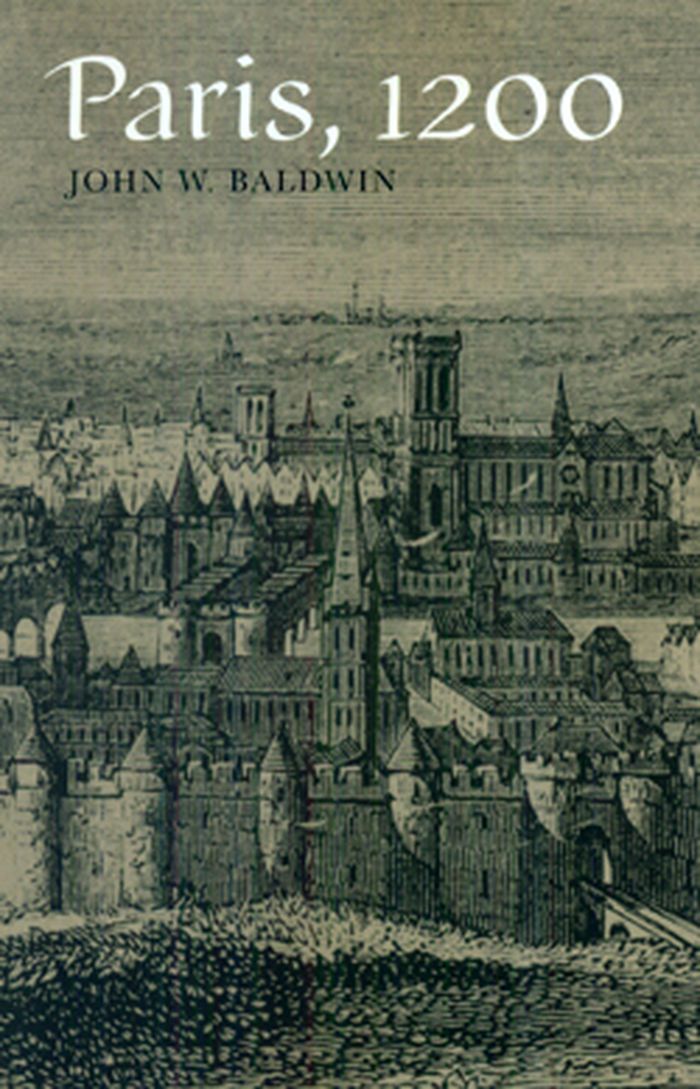
Paris in 1200 was a city in transition. The great cathedral of Notre Dame was halfway through its construction and walls were being built to enclose the new, larger limits of the city. Pope Innocent III ordered all French churches closed to punish King Philip Augustus for his remarriage; the king himself negotiated an unprecedented truce with the English; and the students of Paris threatened a general strike, punctuated with incidents of violence, to protest infringements of their rights. John W. Baldwin resurrects this key moment in Parisian history using documents only from 1190 to 1210 — a narrow focus made possible by the availability of collections of the Capetian monarchy and the medieval scholastic thinkers. This unique approach results in a vivid snapshot of the city at the turn of the thirteenth century. "Paris, 1200" introduces the reader to the city itself and its inhabitants. Three "faces" exemplify these inhabitants : that of the celebrated scholar Pierre the Chanter, of King Philip Augustus, and of the more deeply hidden visages of women. The book examines the city's primary institutions : the royal government, the Church, and its celebrated schools that evolved into the university at Paris. Finally, it offers an account of the delights and pleasures, as well as the fears and sorrows, of Parisian life in this period.
Paris, 1200
Actions:
Price:
$27.95
(available in store)
Summary:
Paris in 1200 was a city in transition. The great cathedral of Notre Dame was halfway through its construction and walls were being built to enclose the new, larger limits of the city. Pope Innocent III ordered all French churches closed to punish King Philip Augustus for his remarriage; the king himself negotiated an unprecedented truce with the English; and the students of Paris threatened a general strike, punctuated with incidents of violence, to protest infringements of their rights. John W. Baldwin resurrects this key moment in Parisian history using documents only from 1190 to 1210 — a narrow focus made possible by the availability of collections of the Capetian monarchy and the medieval scholastic thinkers. This unique approach results in a vivid snapshot of the city at the turn of the thirteenth century. "Paris, 1200" introduces the reader to the city itself and its inhabitants. Three "faces" exemplify these inhabitants : that of the celebrated scholar Pierre the Chanter, of King Philip Augustus, and of the more deeply hidden visages of women. The book examines the city's primary institutions : the royal government, the Church, and its celebrated schools that evolved into the university at Paris. Finally, it offers an account of the delights and pleasures, as well as the fears and sorrows, of Parisian life in this period.
Form:
books
books
Publication:
October 2010
October 2010
Subject:
History until 1900, France
History until 1900, France
Form:
books
books
Actions:
Price:
$31.50
(available to order)
Summary:
Published to mark the 800th anniversary in 2007 of the founding of modern Liverpool by King John, Liverpool 800 is the definitive biography of this magnificent world city. Contributors explore the life of Liverpool over eight centuries, looking at the town’s early development, the eighteenth-century foundations of its mercantile economy, the golden period of the(...)
$31.50
(available to order)
Summary:
Published to mark the 800th anniversary in 2007 of the founding of modern Liverpool by King John, Liverpool 800 is the definitive biography of this magnificent world city. Contributors explore the life of Liverpool over eight centuries, looking at the town’s early development, the eighteenth-century foundations of its mercantile economy, the golden period of the(...)
Subject:
Architecture since 1900, Europe
Architecture since 1900, Europe
Publication:
September 2006, Liverpool
September 2006, Liverpool
Title:
Liverpool 800 : culture, character & history
Actions:
Price:
$31.50
(available to order)
Summary:
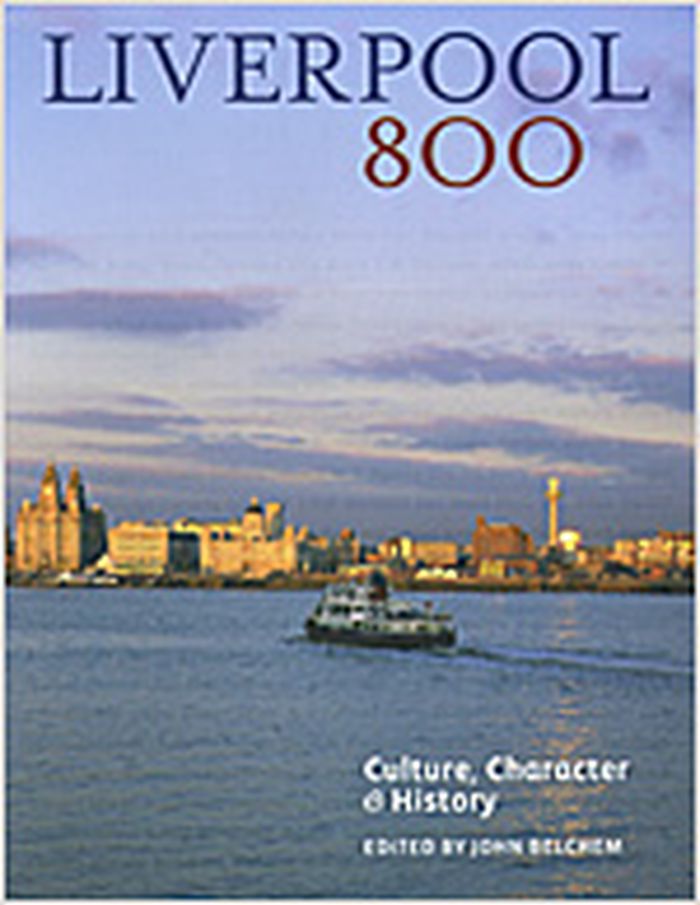
Published to mark the 800th anniversary in 2007 of the founding of modern Liverpool by King John, Liverpool 800 is the definitive biography of this magnificent world city. Contributors explore the life of Liverpool over eight centuries, looking at the town’s early development, the eighteenth-century foundations of its mercantile economy, the golden period of the nineteenth and early twentieth centuries, the difficult inter-war years, the fifties boom and the subsequent disastrous and seemingly irreversible decline – seemingly, because the winning of European Capital of Culture status for 2008 reflects Liverpool’s contemporary renaissance, an aspect of current history which is also reflected upon by the contributors. Ranging widely over politics and government, famous and infamous personalities, domestic lives and global connections, and culture both high and low, "Liverpool 800" offers a warts and all portrait of a city which has inspired contempt (‘a black spot on the Mersey’) and adulation (‘the centre of consciousness of the human universe’) but rarely indifference. This publication includes over 300 illustrations, many of which have never been published before.
Liverpool 800 : culture, character & history
Actions:
Price:
$31.50
(available to order)
Summary:
Published to mark the 800th anniversary in 2007 of the founding of modern Liverpool by King John, Liverpool 800 is the definitive biography of this magnificent world city. Contributors explore the life of Liverpool over eight centuries, looking at the town’s early development, the eighteenth-century foundations of its mercantile economy, the golden period of the nineteenth and early twentieth centuries, the difficult inter-war years, the fifties boom and the subsequent disastrous and seemingly irreversible decline – seemingly, because the winning of European Capital of Culture status for 2008 reflects Liverpool’s contemporary renaissance, an aspect of current history which is also reflected upon by the contributors. Ranging widely over politics and government, famous and infamous personalities, domestic lives and global connections, and culture both high and low, "Liverpool 800" offers a warts and all portrait of a city which has inspired contempt (‘a black spot on the Mersey’) and adulation (‘the centre of consciousness of the human universe’) but rarely indifference. This publication includes over 300 illustrations, many of which have never been published before.
Form:
books
books
Publication:
September 2006, Liverpool
September 2006, Liverpool
Subject:
Architecture since 1900, Europe
Architecture since 1900, Europe
Form:
books
books
Title:
The Shenzhen experiment
The Shenzhen experiment
Actions:
Price:
$50.00
(available to order)
Summary:
Shenzhen is ground zero for the economic transformation China has seen in recent decades. In 1979, driven by China’s widespread poverty, Deng Xiaoping supported a bold proposal to experiment with economic policies in a rural borderland next to Hong Kong. The site was designated as the City of Shenzhen and soon after became China’s first Special Economic Zone (SEZ). Four(...)
$50.00
(available to order)
Summary:
Shenzhen is ground zero for the economic transformation China has seen in recent decades. In 1979, driven by China’s widespread poverty, Deng Xiaoping supported a bold proposal to experiment with economic policies in a rural borderland next to Hong Kong. The site was designated as the City of Shenzhen and soon after became China’s first Special Economic Zone (SEZ). Four(...)
Title:
The Shenzhen experiment
Actions:
Price:
$50.00
(available to order)
Summary:
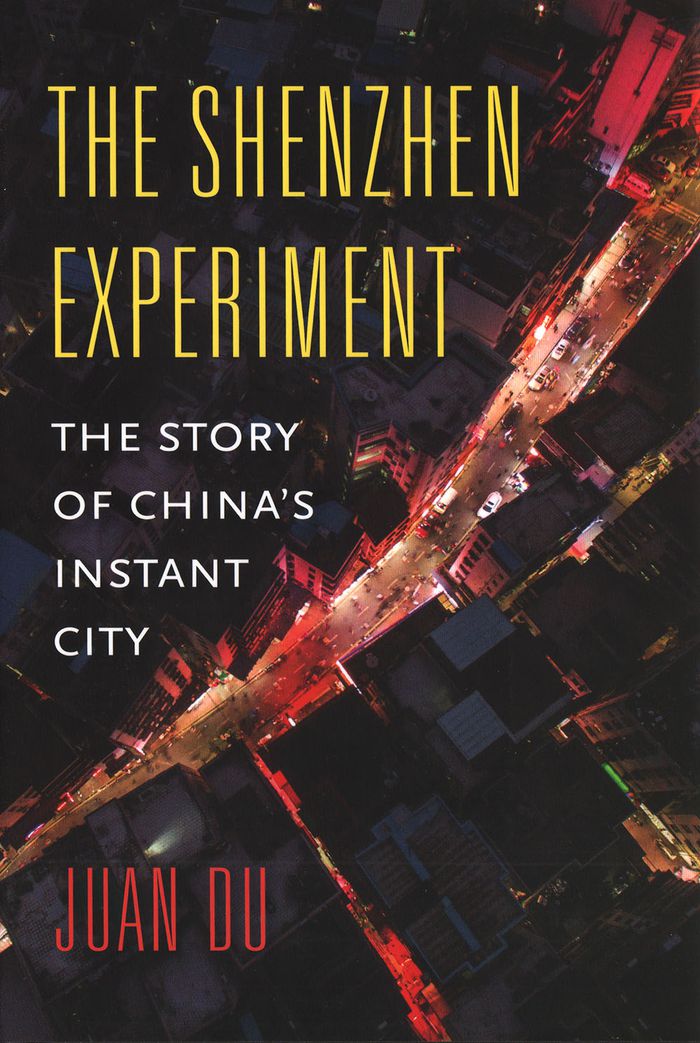
Shenzhen is ground zero for the economic transformation China has seen in recent decades. In 1979, driven by China’s widespread poverty, Deng Xiaoping supported a bold proposal to experiment with economic policies in a rural borderland next to Hong Kong. The site was designated as the City of Shenzhen and soon after became China’s first Special Economic Zone (SEZ). Four decades later, Shenzhen is a megacity of twenty million, an internationally recognized digital technology hub, and the world’s most successful economic zone. Some see it as a modern miracle city that seemingly came from nowhere, attributing its success solely to centralized planning and Shenzhen’s proximity to Hong Kong. The Chinese government has built hundreds of new towns using the Shenzhen model, yet none has come close to replicating the city’s level of economic success. But is it true that Shenzhen has no meaningful history? That the city was planned on a tabula rasa? That the region’s rural past has had no significant impact on the urban present? Juan Du unravels the myth of Shenzhen and shows us how this world-famous “instant city” has a surprising history—filled with oyster fishermen, villages that remain encased within city blocks, a secret informal housing system—and how it has been catapulted to success as much by the ingenuity of its original farmers as by Beijing’s policy makers. “The Shenzhen Experiment” is an important story for all rapidly urbanizing and industrializing nations around the world seeking to replicate China’s economic success in the twenty-first century.
The Shenzhen experiment
Actions:
Price:
$50.00
(available to order)
Summary:
Shenzhen is ground zero for the economic transformation China has seen in recent decades. In 1979, driven by China’s widespread poverty, Deng Xiaoping supported a bold proposal to experiment with economic policies in a rural borderland next to Hong Kong. The site was designated as the City of Shenzhen and soon after became China’s first Special Economic Zone (SEZ). Four decades later, Shenzhen is a megacity of twenty million, an internationally recognized digital technology hub, and the world’s most successful economic zone. Some see it as a modern miracle city that seemingly came from nowhere, attributing its success solely to centralized planning and Shenzhen’s proximity to Hong Kong. The Chinese government has built hundreds of new towns using the Shenzhen model, yet none has come close to replicating the city’s level of economic success. But is it true that Shenzhen has no meaningful history? That the city was planned on a tabula rasa? That the region’s rural past has had no significant impact on the urban present? Juan Du unravels the myth of Shenzhen and shows us how this world-famous “instant city” has a surprising history—filled with oyster fishermen, villages that remain encased within city blocks, a secret informal housing system—and how it has been catapulted to success as much by the ingenuity of its original farmers as by Beijing’s policy makers. “The Shenzhen Experiment” is an important story for all rapidly urbanizing and industrializing nations around the world seeking to replicate China’s economic success in the twenty-first century.
Form:
books
books
Publication:
January 2020
January 2020
Subject:
Contemporary Asian Architecture
Contemporary Asian Architecture
Form:
audio
audio
Description:
1 online resource.
Author:
Subject:
Publication:
[Place of publication not identified] : Lateral Addition, 2018.
[Place of publication not identified] : Lateral Addition, 2018.
Title:
June 21, 2018 : Listening for Southwest Key in San Diego.
Actions:
Description:
1 online resource.
June 21, 2018 : Listening for Southwest Key in San Diego.
Actions:
Description:
1 online resource.
Form:
audio
audio
Publication:
[Place of publication not identified] : Lateral Addition, 2018.
[Place of publication not identified] : Lateral Addition, 2018.
Author:
Subject:


