


1365 Results
Form:
books
books

Actions:
Price:
$22.95
(available to order)
Summary:
In the middle of the salt-frosted Afghan desert, in a village so remote that Google can’t find it, a woman squats on top of a loom, making flowers bloom in the thousand threads she knots by hand. Here, where heroin is cheaper than rice, every day is a fast day. B-52s pass overhead—a sign of America’s omnipotence or its vulnerability, the villagers are unsure. They know,(...)
$22.95
(available to order)
Summary:
In the middle of the salt-frosted Afghan desert, in a village so remote that Google can’t find it, a woman squats on top of a loom, making flowers bloom in the thousand threads she knots by hand. Here, where heroin is cheaper than rice, every day is a fast day. B-52s pass overhead—a sign of America’s omnipotence or its vulnerability, the villagers are unsure. They know,(...)
Title:
The World is a Carpet: Four seasons in an afghan village
Actions:
Price:
$22.95
(available to order)
Summary:
In the middle of the salt-frosted Afghan desert, in a village so remote that Google can’t find it, a woman squats on top of a loom, making flowers bloom in the thousand threads she knots by hand. Here, where heroin is cheaper than rice, every day is a fast day. B-52s pass overhead—a sign of America’s omnipotence or its vulnerability, the villagers are unsure. They know, though, that the earth is flat—like a carpet. Anna Badkhen first traveled to this country in 2001, as a war correspondent. She has returned many times since, drawn by a land that geography has made a perpetual battleground, and by a people who sustain an exquisite tradition there. Through the four seasons in which a new carpet is woven by the women and children of Oqa, she immortalizes their way of life much as the carpet does—from the petal half-finished where a hungry infant needs care to the interruptions when the women trade sex jokes or go fill in for wedding musicians scared away by the Taliban.
The World is a Carpet: Four seasons in an afghan village
Actions:
Price:
$22.95
(available to order)
Summary:
In the middle of the salt-frosted Afghan desert, in a village so remote that Google can’t find it, a woman squats on top of a loom, making flowers bloom in the thousand threads she knots by hand. Here, where heroin is cheaper than rice, every day is a fast day. B-52s pass overhead—a sign of America’s omnipotence or its vulnerability, the villagers are unsure. They know, though, that the earth is flat—like a carpet. Anna Badkhen first traveled to this country in 2001, as a war correspondent. She has returned many times since, drawn by a land that geography has made a perpetual battleground, and by a people who sustain an exquisite tradition there. Through the four seasons in which a new carpet is woven by the women and children of Oqa, she immortalizes their way of life much as the carpet does—from the petal half-finished where a hungry infant needs care to the interruptions when the women trade sex jokes or go fill in for wedding musicians scared away by the Taliban.
Form:
books
books
Publication:
November 2014
November 2014
Subject:
Literature and poetry
Literature and poetry
Form:
books
books
Actions:
Price:
$39.99
(available to order)
Summary:
Today we live in a world that can no longer be read as a two-dimensional map, but must now be understood as a series of vertical strata that reach from the satellites that encircle our planet to the tunnels deep within the ground. In "Vertical", Stephen Graham rewrites the city at every level: how the geography of inequality, politics, and identity is determined in terms(...)
$39.99
(available to order)
Summary:
Today we live in a world that can no longer be read as a two-dimensional map, but must now be understood as a series of vertical strata that reach from the satellites that encircle our planet to the tunnels deep within the ground. In "Vertical", Stephen Graham rewrites the city at every level: how the geography of inequality, politics, and identity is determined in terms(...)
Title:
Vertical : the city from satellites to bunkers
Actions:
Price:
$39.99
(available to order)
Summary:
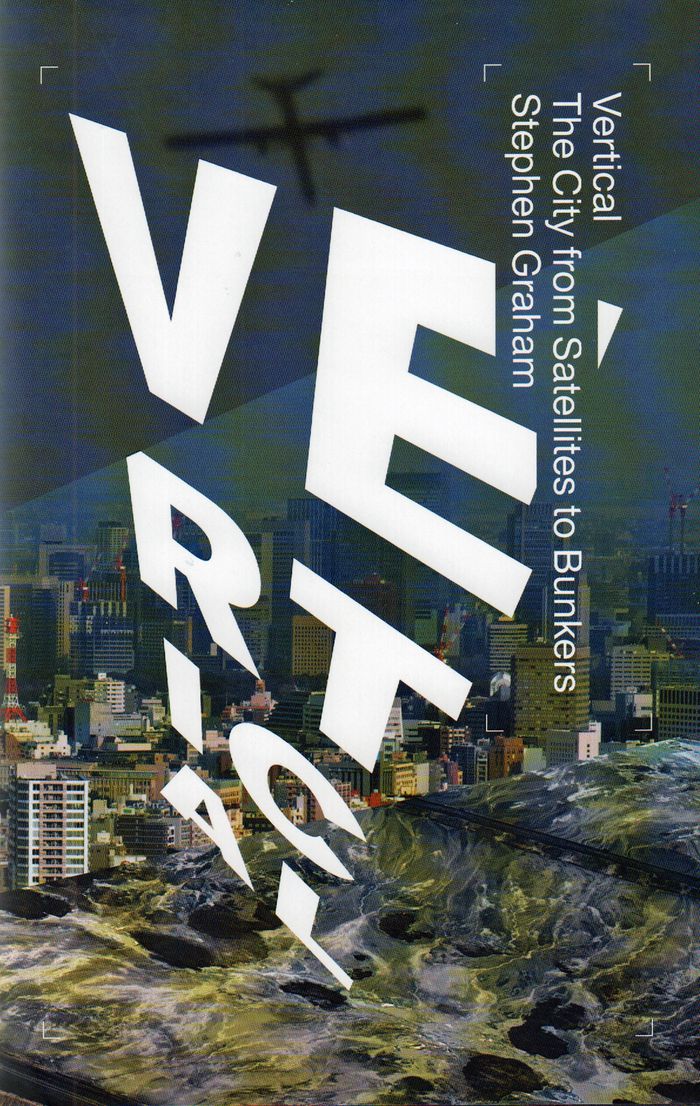
Today we live in a world that can no longer be read as a two-dimensional map, but must now be understood as a series of vertical strata that reach from the satellites that encircle our planet to the tunnels deep within the ground. In "Vertical", Stephen Graham rewrites the city at every level: how the geography of inequality, politics, and identity is determined in terms of above and below. Starting at the edge of earth’s atmosphere and, in a series of riveting studies, descending through each layer, Graham explores the world of drones, the city from the viewpoint of an aerial bomber, the design of sidewalks and the hidden depths of underground bunkers. He asks: why was Dubai built to be seen from Google Earth? How do the super-rich in São Paulo live in their penthouses far above the street? Why do London billionaires build vast subterranean basements? And how do the technology of elevators and subversive urban explorers shape life on the surface and subsurface of the earth?
Vertical : the city from satellites to bunkers
Actions:
Price:
$39.99
(available to order)
Summary:
Today we live in a world that can no longer be read as a two-dimensional map, but must now be understood as a series of vertical strata that reach from the satellites that encircle our planet to the tunnels deep within the ground. In "Vertical", Stephen Graham rewrites the city at every level: how the geography of inequality, politics, and identity is determined in terms of above and below. Starting at the edge of earth’s atmosphere and, in a series of riveting studies, descending through each layer, Graham explores the world of drones, the city from the viewpoint of an aerial bomber, the design of sidewalks and the hidden depths of underground bunkers. He asks: why was Dubai built to be seen from Google Earth? How do the super-rich in São Paulo live in their penthouses far above the street? Why do London billionaires build vast subterranean basements? And how do the technology of elevators and subversive urban explorers shape life on the surface and subsurface of the earth?
Form:
books
books
Publication:
November 2016
November 2016
Subject:
Urban Theory
Urban Theory
Form:
journals and magazines
journals and magazines
Actions:
Description:
1 online resource (volumes)
Author:
Subject:
Publication:
[Pietermaritzburg, South Africa] : [Association for the Study of Religion in Southern Africa], [©1988]-
[Pietermaritzburg, South Africa] : [Association for the Study of Religion in Southern Africa], [©1988]-
Form:
journals and magazines
journals and magazines
Publication:
[Pietermaritzburg, South Africa] : [Association for the Study of Religion in Southern Africa], [©1988]-
[Pietermaritzburg, South Africa] : [Association for the Study of Religion in Southern Africa], [©1988]-
Author:
Subject:
Form:
books
books
Actions:
Price:
$43.50
(available to order)
Summary:
This is the definitive guide to using typography in visual communication. Covering the essentials of typography, this book explores everything from typefaces and type families to kerning and tracking to grids and layout principles. Ellen Lupton provides clear and focused guidance on how letters, words, and paragraphs should be aligned, spaced, ordered, and shaped.(...)
$43.50
(available to order)
Summary:
This is the definitive guide to using typography in visual communication. Covering the essentials of typography, this book explores everything from typefaces and type families to kerning and tracking to grids and layout principles. Ellen Lupton provides clear and focused guidance on how letters, words, and paragraphs should be aligned, spaced, ordered, and shaped.(...)
Title:
Thinking with type. 3rd edition
Actions:
Price:
$43.50
(available to order)
Summary:
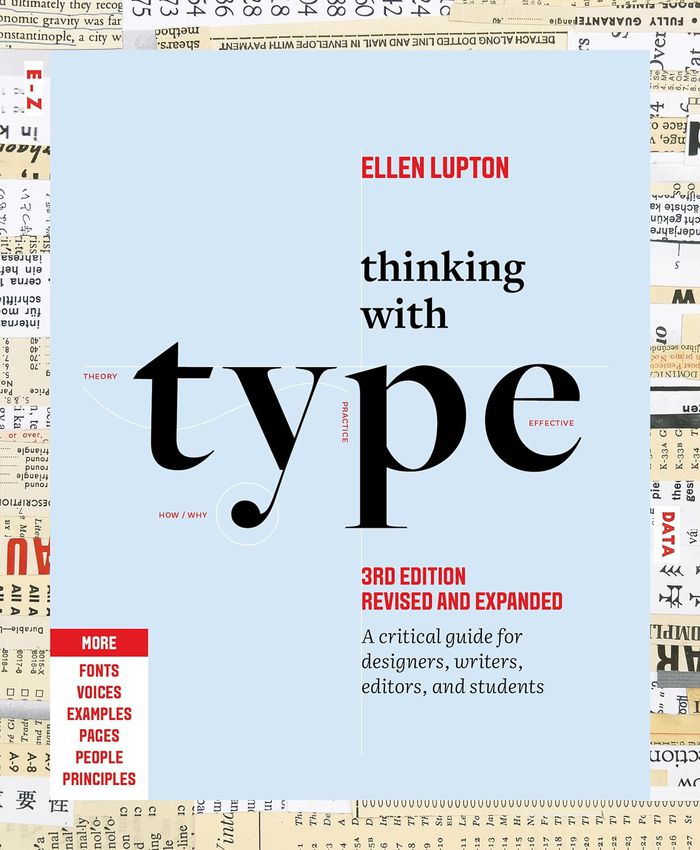
This is the definitive guide to using typography in visual communication. Covering the essentials of typography, this book explores everything from typefaces and type families to kerning and tracking to grids and layout principles. Ellen Lupton provides clear and focused guidance on how letters, words, and paragraphs should be aligned, spaced, ordered, and shaped. Historical and contemporary examples of graphic design show how to learn the rules and how to break them. Critical essays, eye-opening diagrams, helpful exercises, and dozens of examples and illustrations show readers how to be inventive within systems that inform and communicate.Featuring 32 pages of new content, the third edition is revised and refined from cover to cover: More fonts, old fonts, new fonts, weird fonts, libre fonts, Google fonts, Adobe fonts, fonts from independent foundries, and fonts and lettering by women and BIPOC designers; Introductions to diverse writing systems, contributed by expert typographers from around the world; Demonstrations of basic design principles, such as visual balance, Gestalt grouping, and responsive layout; Current approaches to typeface design, including variable fonts and optical sizes; Tips for readability, legibility, and accessibility.
Thinking with type. 3rd edition
Actions:
Price:
$43.50
(available to order)
Summary:
This is the definitive guide to using typography in visual communication. Covering the essentials of typography, this book explores everything from typefaces and type families to kerning and tracking to grids and layout principles. Ellen Lupton provides clear and focused guidance on how letters, words, and paragraphs should be aligned, spaced, ordered, and shaped. Historical and contemporary examples of graphic design show how to learn the rules and how to break them. Critical essays, eye-opening diagrams, helpful exercises, and dozens of examples and illustrations show readers how to be inventive within systems that inform and communicate.Featuring 32 pages of new content, the third edition is revised and refined from cover to cover: More fonts, old fonts, new fonts, weird fonts, libre fonts, Google fonts, Adobe fonts, fonts from independent foundries, and fonts and lettering by women and BIPOC designers; Introductions to diverse writing systems, contributed by expert typographers from around the world; Demonstrations of basic design principles, such as visual balance, Gestalt grouping, and responsive layout; Current approaches to typeface design, including variable fonts and optical sizes; Tips for readability, legibility, and accessibility.
Form:
books
books
Publication:
March 2024
March 2024
Subject:
Graphic Design and Typography
Graphic Design and Typography
Form:
books
books

Actions:
Price:
$22.00
(available to order)
Summary:
This book is an attempt to tell a story from the closest point of a source. Before it is supposed to be a gossip. Before the juice is added and still is a bit boring and stiff. When looking up at reliable sources like Wikipedia and Google, the word gossip: ''Originates from God-sib, he Godparent of one's child, referring to a relationship of close friendship'' and it(...)
$22.00
(available to order)
Summary:
This book is an attempt to tell a story from the closest point of a source. Before it is supposed to be a gossip. Before the juice is added and still is a bit boring and stiff. When looking up at reliable sources like Wikipedia and Google, the word gossip: ''Originates from God-sib, he Godparent of one's child, referring to a relationship of close friendship'' and it(...)
Subject:
Design Theory
Design Theory
Publication:
March 2008, London, Amsterdam, New York
March 2008, London, Amsterdam, New York
Title:
'' I heard they ripped it off ''
Actions:
Price:
$22.00
(available to order)
Summary:
This book is an attempt to tell a story from the closest point of a source. Before it is supposed to be a gossip. Before the juice is added and still is a bit boring and stiff. When looking up at reliable sources like Wikipedia and Google, the word gossip: ''Originates from God-sib, he Godparent of one's child, referring to a relationship of close friendship'' and it is also: '' An event between loose mouthed assholes, that happens as soon as you get into high-school, and follows you all the way to your death bed. It never ends.'' It is also: '' In it's form one of the oldest and most common means of spreading and sharing facts, with a reputation of errors and other variations'' This we of course found highly interesting so we did this book based on that, about the variations of a story when it comes from the same source. To try it out we asked people from the graphics design department in the Rietveld Academy, to re-tell us a story we are supposed to know better than others.
'' I heard they ripped it off ''
Actions:
Price:
$22.00
(available to order)
Summary:
This book is an attempt to tell a story from the closest point of a source. Before it is supposed to be a gossip. Before the juice is added and still is a bit boring and stiff. When looking up at reliable sources like Wikipedia and Google, the word gossip: ''Originates from God-sib, he Godparent of one's child, referring to a relationship of close friendship'' and it is also: '' An event between loose mouthed assholes, that happens as soon as you get into high-school, and follows you all the way to your death bed. It never ends.'' It is also: '' In it's form one of the oldest and most common means of spreading and sharing facts, with a reputation of errors and other variations'' This we of course found highly interesting so we did this book based on that, about the variations of a story when it comes from the same source. To try it out we asked people from the graphics design department in the Rietveld Academy, to re-tell us a story we are supposed to know better than others.
Form:
books
books
Publication:
March 2008, London, Amsterdam, New York
March 2008, London, Amsterdam, New York
Subject:
Design Theory
Design Theory
Form:
books
books
Actions:
Price:
$225.00
(available to order)
Summary:
L'Atlas Phaidon de l architecture contemporaine mondiale, publié en 2004, fut un fantastique succès. Cinq ans après sa publication, cette toute nouvelle édition, l'Atlas Phaidon de l'architecture mondiale du XXIe siècle, réunit dans un seul et même volume 1037 ouvrages architecturaux remarquables construits depuis 2000 à travers 89 pays dans le monde par 653 architectes(...)
$225.00
(available to order)
Summary:
L'Atlas Phaidon de l architecture contemporaine mondiale, publié en 2004, fut un fantastique succès. Cinq ans après sa publication, cette toute nouvelle édition, l'Atlas Phaidon de l'architecture mondiale du XXIe siècle, réunit dans un seul et même volume 1037 ouvrages architecturaux remarquables construits depuis 2000 à travers 89 pays dans le monde par 653 architectes(...)
Title:
Atlas Phaidon de l'architecture mondiale du du XXIe siècle
Actions:
Price:
$225.00
(available to order)
Summary:
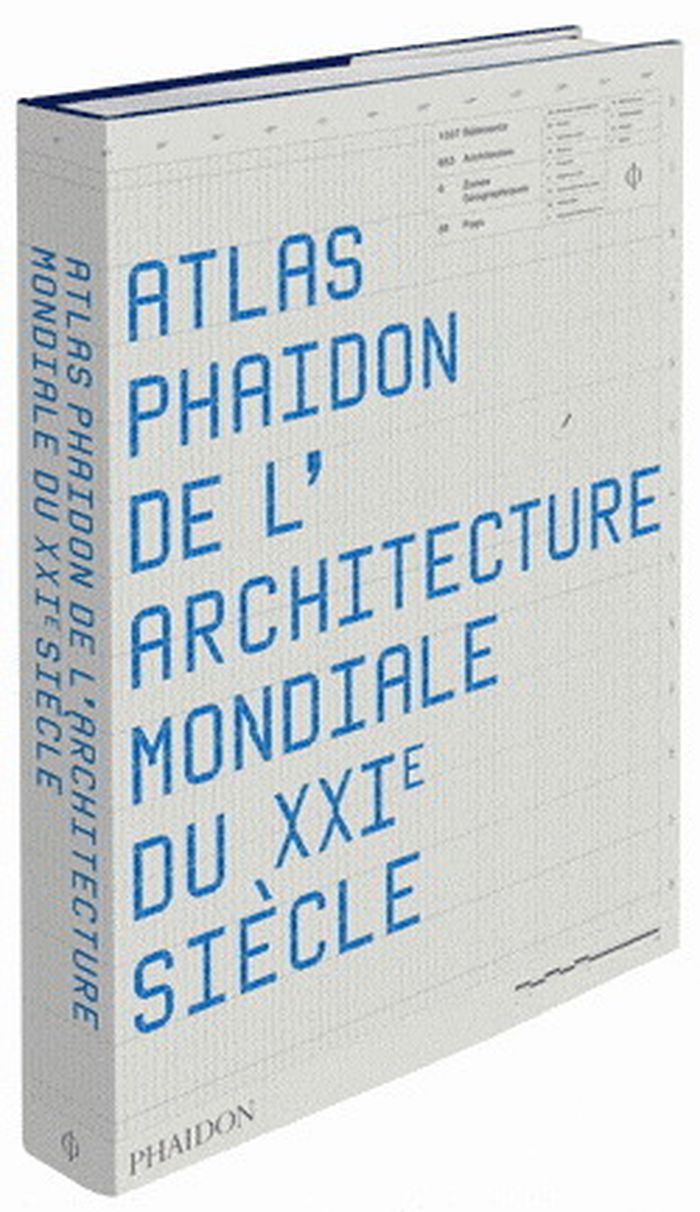
L'Atlas Phaidon de l architecture contemporaine mondiale, publié en 2004, fut un fantastique succès. Cinq ans après sa publication, cette toute nouvelle édition, l'Atlas Phaidon de l'architecture mondiale du XXIe siècle, réunit dans un seul et même volume 1037 ouvrages architecturaux remarquables construits depuis 2000 à travers 89 pays dans le monde par 653 architectes et agences d architecture. L'ouvrage présente tous les types de bâtiments possibles, depuis les plus petites maisons individuelles ou l abribus, jusqu aux projets de construction à grande échelle tels que musées, usines ou aéroports, dans le monde entier. Pour chaque projet, l'Atlas présente les données clés : maître d ouvrage, superficie, coût de la construction et, nouveauté par rapport au précédent atlas, les coordonnées précises permettant de localiser le bâtiment via Google Earth ®. Illustré par de nombreux plans, coupés et élévations ainsi que des photographies intérieures et extérieures, chacun des bâtiments est décrit et analysé dans un texte court et clair qui souligne à la fois les singularités du projet et les contraintes auxquelles les plus grands architectes actuels comme ceux de la jeune génération ont trouvé des solutions pertinentes et innovantes.
Atlas Phaidon de l'architecture mondiale du du XXIe siècle
Actions:
Price:
$225.00
(available to order)
Summary:
L'Atlas Phaidon de l architecture contemporaine mondiale, publié en 2004, fut un fantastique succès. Cinq ans après sa publication, cette toute nouvelle édition, l'Atlas Phaidon de l'architecture mondiale du XXIe siècle, réunit dans un seul et même volume 1037 ouvrages architecturaux remarquables construits depuis 2000 à travers 89 pays dans le monde par 653 architectes et agences d architecture. L'ouvrage présente tous les types de bâtiments possibles, depuis les plus petites maisons individuelles ou l abribus, jusqu aux projets de construction à grande échelle tels que musées, usines ou aéroports, dans le monde entier. Pour chaque projet, l'Atlas présente les données clés : maître d ouvrage, superficie, coût de la construction et, nouveauté par rapport au précédent atlas, les coordonnées précises permettant de localiser le bâtiment via Google Earth ®. Illustré par de nombreux plans, coupés et élévations ainsi que des photographies intérieures et extérieures, chacun des bâtiments est décrit et analysé dans un texte court et clair qui souligne à la fois les singularités du projet et les contraintes auxquelles les plus grands architectes actuels comme ceux de la jeune génération ont trouvé des solutions pertinentes et innovantes.
Form:
books
books
Publication:
November 2009
November 2009
Subject:
History since 1900, Reference Books
History since 1900, Reference Books
Form:
books
books
Title:
Blind maps and blue dots: the blurring of the producer-user divide in the production of visual
Blind maps and blue dots: the blurring of the producer-user divide in the production of visual
Actions:
Price:
$56.00
(available to order)
Summary:
Mapmaking has been an essential part of human development since ancient times: through the art of cartography, people have been able to record geographical explorations and communicate spatial information in relation to themselves and the land around them, using fixed points and lived experiences as references. In the digital age, maps are just as likely to convey the(...)
$56.00
(available to order)
Summary:
Mapmaking has been an essential part of human development since ancient times: through the art of cartography, people have been able to record geographical explorations and communicate spatial information in relation to themselves and the land around them, using fixed points and lived experiences as references. In the digital age, maps are just as likely to convey the(...)
Title:
Blind maps and blue dots: the blurring of the producer-user divide in the production of visual
Actions:
Price:
$56.00
(available to order)
Summary:
Mapmaking has been an essential part of human development since ancient times: through the art of cartography, people have been able to record geographical explorations and communicate spatial information in relation to themselves and the land around them, using fixed points and lived experiences as references. In the digital age, maps are just as likely to convey the relationships between individual users and amorphous data as they are to depict the relationships between human beings and the stars and planets above. "Blind maps and blue dots" examines the impact of the omnipresent computer on current understandings of data visualization and graphic design, in which the boundaries between producers and users of maps has become increasingly blurred. This text is structured around three contemporary mapmaking practices: Google Maps' location function, referred to as the Blue Dot; a global map that displays the physical activity of users of the fitness app Strava; and the 'Situation in Syria' maps series, a regularly updated map of the Syrian conflict designed by an Amsterdam teenager. Like every other field, graphic design must evolve to reflect the modern world and the needs of its people. "Blind maps and blue dots" offers a new approach that acknowledges and even encourages the breakdown of the binary between producer and user.
Blind maps and blue dots: the blurring of the producer-user divide in the production of visual
Actions:
Price:
$56.00
(available to order)
Summary:
Mapmaking has been an essential part of human development since ancient times: through the art of cartography, people have been able to record geographical explorations and communicate spatial information in relation to themselves and the land around them, using fixed points and lived experiences as references. In the digital age, maps are just as likely to convey the relationships between individual users and amorphous data as they are to depict the relationships between human beings and the stars and planets above. "Blind maps and blue dots" examines the impact of the omnipresent computer on current understandings of data visualization and graphic design, in which the boundaries between producers and users of maps has become increasingly blurred. This text is structured around three contemporary mapmaking practices: Google Maps' location function, referred to as the Blue Dot; a global map that displays the physical activity of users of the fitness app Strava; and the 'Situation in Syria' maps series, a regularly updated map of the Syrian conflict designed by an Amsterdam teenager. Like every other field, graphic design must evolve to reflect the modern world and the needs of its people. "Blind maps and blue dots" offers a new approach that acknowledges and even encourages the breakdown of the binary between producer and user.
Form:
books
books
Publication:
June 2021
June 2021
Subject:
Graphic Design and Typography
Graphic Design and Typography
Form:
books
books
Actions:
Description:
1 online resource (369 pages)
Author:
Subject:
Publication:
[Amsterdam] : Amsterdam University Press, ©2007.
[Amsterdam] : Amsterdam University Press, ©2007.
Title:
Moving forward, looking back : the European avant-garde and the invention of film culture, 1919-1939 / Malte Hagener.
Actions:
Description:
1 online resource (369 pages)
Moving forward, looking back : the European avant-garde and the invention of film culture, 1919-1939 / Malte Hagener.
Actions:
Description:
1 online resource (369 pages)
Form:
books
books
Publication:
[Amsterdam] : Amsterdam University Press, ©2007.
[Amsterdam] : Amsterdam University Press, ©2007.
Author:
Subject:
Form:
books
books
Price:
$33.95
(available to order)
Summary:
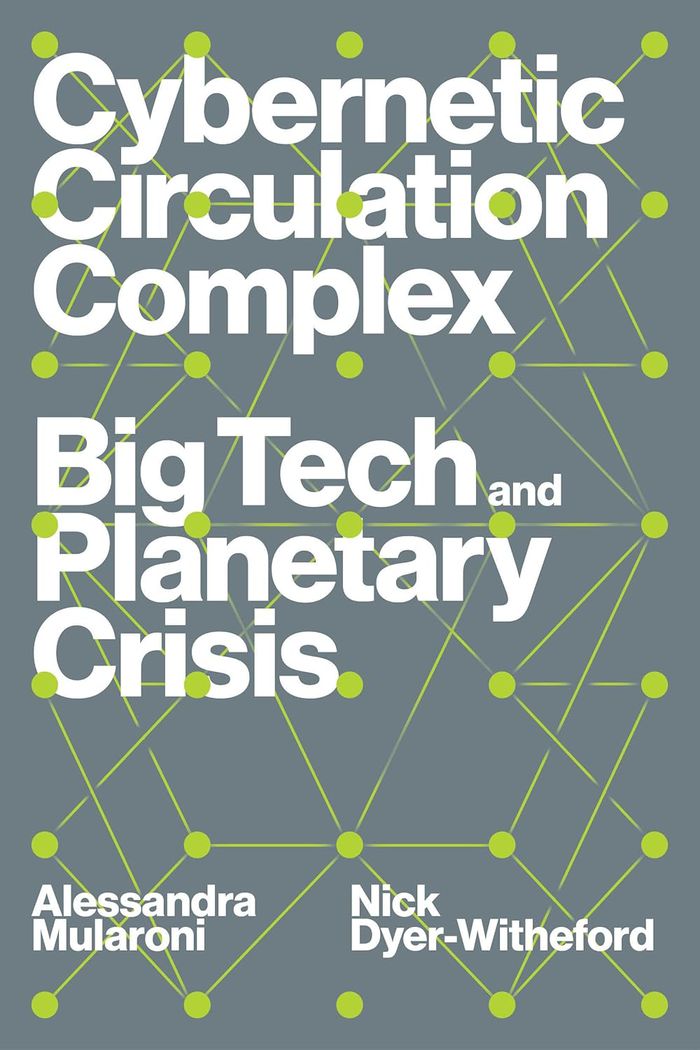
Big Tech firms dominate the global economy. But what value do they actually produce? In this brilliant survey of global tech economy, Nick Dyer-Witheford and Alessandra Mularoni argue that the role of firms like Amazon and Google, Palantir and Uber, is in the automation of circulation. By applying digital technologies to processes of market exchange—everything from(...)
$33.95
(available to order)
Summary:
Big Tech firms dominate the global economy. But what value do they actually produce? In this brilliant survey of global tech economy, Nick Dyer-Witheford and Alessandra Mularoni argue that the role of firms like Amazon and Google, Palantir and Uber, is in the automation of circulation. By applying digital technologies to processes of market exchange—everything from(...)
Title:
Cybernetic circulation complex: Big tech and planetary crisis
Actions:
Price:
$33.95
(available to order)
Summary:
Big Tech firms dominate the global economy. But what value do they actually produce? In this brilliant survey of global tech economy, Nick Dyer-Witheford and Alessandra Mularoni argue that the role of firms like Amazon and Google, Palantir and Uber, is in the automation of circulation. By applying digital technologies to processes of market exchange—everything from advertising and shopping, to logistics and financial services—Big Tech aims to subject these activities to the level of control and predictability that capital has secured in industrial production. But there is a way out of the multiple crises that Big Tech has helped precipitate. If we are to break their grip on the global economy then it’ll take more than just antitrust legislation or reducing individual time online. By understanding the central role Big Tech plays in contemporary capitalism, Dyer-Witheford and Mularoni argue that what is required instead is a new, ambitious and comprehensive program of democratic collective planning that can move us beyond capitalism. ''Cybernetic Circulation Complex'' offers not only a compelling analysis of the power of Big Tech and their role in our current global crises, but a roadmap for a new form of life: biocommunism, a digital degrowth that can help us steer between the double boundaries of ecological sustainability and equitable social development.
Cybernetic circulation complex: Big tech and planetary crisis
Actions:
Price:
$33.95
(available to order)
Summary:
Big Tech firms dominate the global economy. But what value do they actually produce? In this brilliant survey of global tech economy, Nick Dyer-Witheford and Alessandra Mularoni argue that the role of firms like Amazon and Google, Palantir and Uber, is in the automation of circulation. By applying digital technologies to processes of market exchange—everything from advertising and shopping, to logistics and financial services—Big Tech aims to subject these activities to the level of control and predictability that capital has secured in industrial production. But there is a way out of the multiple crises that Big Tech has helped precipitate. If we are to break their grip on the global economy then it’ll take more than just antitrust legislation or reducing individual time online. By understanding the central role Big Tech plays in contemporary capitalism, Dyer-Witheford and Mularoni argue that what is required instead is a new, ambitious and comprehensive program of democratic collective planning that can move us beyond capitalism. ''Cybernetic Circulation Complex'' offers not only a compelling analysis of the power of Big Tech and their role in our current global crises, but a roadmap for a new form of life: biocommunism, a digital degrowth that can help us steer between the double boundaries of ecological sustainability and equitable social development.
Form:
books
books
Publication:
February 2025
February 2025
Subject:
Social
Social
Form:
books
books
Price:
$40.00
(available to order)
Summary:
More than an exhibition catalogue, this reference book is lavishly illustrated with the works from the 25 exhibitions of the event, and includes essays by leading commentators on contemporary art and technology. The camera is not a tool just waiting to be picked up and used, but a sophisticated instrument with its own laws, its own ways of working, and even its own life.(...)
$40.00
(available to order)
Summary:
More than an exhibition catalogue, this reference book is lavishly illustrated with the works from the 25 exhibitions of the event, and includes essays by leading commentators on contemporary art and technology. The camera is not a tool just waiting to be picked up and used, but a sophisticated instrument with its own laws, its own ways of working, and even its own life.(...)
Title:
Drone: The automated image. Le Mois de la photo à Montréal 2013
Actions:
Price:
$40.00
(available to order)
Summary:
More than an exhibition catalogue, this reference book is lavishly illustrated with the works from the 25 exhibitions of the event, and includes essays by leading commentators on contemporary art and technology. The camera is not a tool just waiting to be picked up and used, but a sophisticated instrument with its own laws, its own ways of working, and even its own life. With the incorporation of automatic devices – and, more recently, computers – the camera has its own agency. It can see what is invisible to the human eye; it can work continuously; it can travel to places that humans would find impossible or dangerous to visit; it can enter the human body and travel into outer space. It has been taken for granted that the photographic image is the most important aspect of the photographic process. However, the artists and writers in Drone: The Automated Image suggest something completely different. At the centre of their concerns is the changing relationship between the camera and the body and how the camera can function with little human involvement. As humans rely more and more on technology to extend vision, the camera takes on behaviours associated with the body. From CCTV to Google Street View, from remote cameras to robots, and from photo booths to drones, cameras are remaking the conditions of human existence.
Drone: The automated image. Le Mois de la photo à Montréal 2013
Actions:
Price:
$40.00
(available to order)
Summary:
More than an exhibition catalogue, this reference book is lavishly illustrated with the works from the 25 exhibitions of the event, and includes essays by leading commentators on contemporary art and technology. The camera is not a tool just waiting to be picked up and used, but a sophisticated instrument with its own laws, its own ways of working, and even its own life. With the incorporation of automatic devices – and, more recently, computers – the camera has its own agency. It can see what is invisible to the human eye; it can work continuously; it can travel to places that humans would find impossible or dangerous to visit; it can enter the human body and travel into outer space. It has been taken for granted that the photographic image is the most important aspect of the photographic process. However, the artists and writers in Drone: The Automated Image suggest something completely different. At the centre of their concerns is the changing relationship between the camera and the body and how the camera can function with little human involvement. As humans rely more and more on technology to extend vision, the camera takes on behaviours associated with the body. From CCTV to Google Street View, from remote cameras to robots, and from photo booths to drones, cameras are remaking the conditions of human existence.
Form:
books
books
Publication:
September 2013
September 2013


