


1390 Results
Form:
books
books

Price:
$31.95
(available to order)
Summary:
The underground has been a dominant image of modern life since the late eighteenth century. A site of crisis, fascination, and hidden truth, the underground is a space at once more immediate and more threatening than the ordinary world above. In Subterranean Cities, David L. Pike explores the representation of underground space in the nineteenth and early twentieth(...)
$31.95
(available to order)
Summary:
The underground has been a dominant image of modern life since the late eighteenth century. A site of crisis, fascination, and hidden truth, the underground is a space at once more immediate and more threatening than the ordinary world above. In Subterranean Cities, David L. Pike explores the representation of underground space in the nineteenth and early twentieth(...)
Title:
subterranean cities : the world beneath Paris and London, 1800-1945
Actions:
Price:
$31.95
(available to order)
Summary:
The underground has been a dominant image of modern life since the late eighteenth century. A site of crisis, fascination, and hidden truth, the underground is a space at once more immediate and more threatening than the ordinary world above. In Subterranean Cities, David L. Pike explores the representation of underground space in the nineteenth and early twentieth centuries, a period during which technology and heavy industry transformed urban life. The metropolis had long been considered a moral underworld of iniquity and dissolution. As the complex drainage systems, underground railways, utility tunnels, and storage vaults of the modern cityscape superseded the countryside of caverns and mines as the principal location of actual subterranean spaces, ancient and modern converged in a mythic space that was nevertheless rooted in the everyday life of the contemporary city. Writers and artists from Felix Nadar and Charles Baudelaire to Charles Dickens and Alice Meynell, Gustave Doré and Victor Hugo, George Gissing and Emile Zola, and Jules Verne and H. G. Wells integrated images of the urban underworld into their portrayals of the anatomy of modern society. Illustrated with photographs, movie stills, prints, engravings, paintings, cartoons, maps, and drawings of actual and imagined urban spaces, Subterranean Cities documents the emergence of a novel space in the subterranean obsessions and anxieties within nineteenth-century urban culture. Chapters on the subways, sewers, and cemeteries of Paris and London provide a detailed analysis of these competing centers of urban modernity. A concluding chapter considers the enduring influence of these spaces on urban culture at the turn of the twenty-first century.
subterranean cities : the world beneath Paris and London, 1800-1945
Actions:
Price:
$31.95
(available to order)
Summary:
The underground has been a dominant image of modern life since the late eighteenth century. A site of crisis, fascination, and hidden truth, the underground is a space at once more immediate and more threatening than the ordinary world above. In Subterranean Cities, David L. Pike explores the representation of underground space in the nineteenth and early twentieth centuries, a period during which technology and heavy industry transformed urban life. The metropolis had long been considered a moral underworld of iniquity and dissolution. As the complex drainage systems, underground railways, utility tunnels, and storage vaults of the modern cityscape superseded the countryside of caverns and mines as the principal location of actual subterranean spaces, ancient and modern converged in a mythic space that was nevertheless rooted in the everyday life of the contemporary city. Writers and artists from Felix Nadar and Charles Baudelaire to Charles Dickens and Alice Meynell, Gustave Doré and Victor Hugo, George Gissing and Emile Zola, and Jules Verne and H. G. Wells integrated images of the urban underworld into their portrayals of the anatomy of modern society. Illustrated with photographs, movie stills, prints, engravings, paintings, cartoons, maps, and drawings of actual and imagined urban spaces, Subterranean Cities documents the emergence of a novel space in the subterranean obsessions and anxieties within nineteenth-century urban culture. Chapters on the subways, sewers, and cemeteries of Paris and London provide a detailed analysis of these competing centers of urban modernity. A concluding chapter considers the enduring influence of these spaces on urban culture at the turn of the twenty-first century.
Form:
books
books
Publication:
September 2005, Ithaca / London
September 2005, Ithaca / London
Subject:
Urban Theory
Urban Theory
Form:
books
books
Price:
$36.95
(available to order)
Summary:
By United Nations estimates, 60 percent of the world's population will be urban by 2030. With the increasing speed of urbanization, especially in the developing world, scholars are now rethinking standard concepts and histories of modern cities. "The Spaces of the Modern City" historicizes the contemporary discussion of urbanism, highlighting the local and global breadth(...)
$36.95
(available to order)
Summary:
By United Nations estimates, 60 percent of the world's population will be urban by 2030. With the increasing speed of urbanization, especially in the developing world, scholars are now rethinking standard concepts and histories of modern cities. "The Spaces of the Modern City" historicizes the contemporary discussion of urbanism, highlighting the local and global breadth(...)
Subject:
Urban Theory
Urban Theory
Publication:
February 2008, Princeton, Oxford
February 2008, Princeton, Oxford
Title:
The Spaces of the Modern city : imaginaries, politics, and everyday life
Actions:
Price:
$36.95
(available to order)
Summary:
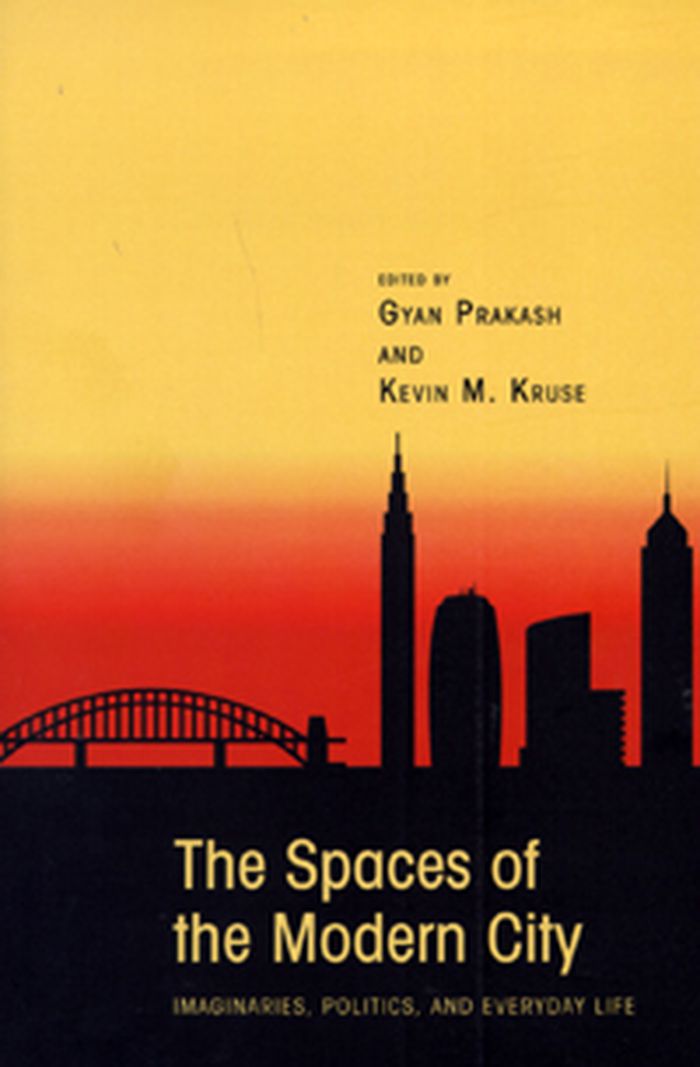
By United Nations estimates, 60 percent of the world's population will be urban by 2030. With the increasing speed of urbanization, especially in the developing world, scholars are now rethinking standard concepts and histories of modern cities. "The Spaces of the Modern City" historicizes the contemporary discussion of urbanism, highlighting the local and global breadth of the city landscape. This interdisciplinary collection examines how the city develops in the interactions of space and imagination. The essays focus on issues such as street design in Vienna, the motion picture industry in Los Angeles, architecture in Marseilles and Algiers, and the kaleidoscopic paradox of post-apartheid Johannesburg. They explore the nature of spatial politics, examining the disparate worlds of eighteenth-century Baghdad, nineteenth-century Morelia, Cold War-era West Berlin, and postwar Los Angeles. They also show the meaning of everyday spaces to urban life, illuminating issues such as crime in metropolitan London, youth culture in Dakar, "memory projects" in Tokyo, and Bombay cinema. Informed by a range of theoretical writings, this collection offers a fresh and truly global perspective on the nature of the modern city. The contributors are Sheila Crane, Belinda Davis, Mamadou Diouf, Philip J. Ethington, David Frisby, Christina M. Jiménez, Dina Rizk Khoury, Ranjani Mazumdar, Frank Mort, Martin Murray, Jordan Sand, and Sarah Schrank.
The Spaces of the Modern city : imaginaries, politics, and everyday life
Actions:
Price:
$36.95
(available to order)
Summary:
By United Nations estimates, 60 percent of the world's population will be urban by 2030. With the increasing speed of urbanization, especially in the developing world, scholars are now rethinking standard concepts and histories of modern cities. "The Spaces of the Modern City" historicizes the contemporary discussion of urbanism, highlighting the local and global breadth of the city landscape. This interdisciplinary collection examines how the city develops in the interactions of space and imagination. The essays focus on issues such as street design in Vienna, the motion picture industry in Los Angeles, architecture in Marseilles and Algiers, and the kaleidoscopic paradox of post-apartheid Johannesburg. They explore the nature of spatial politics, examining the disparate worlds of eighteenth-century Baghdad, nineteenth-century Morelia, Cold War-era West Berlin, and postwar Los Angeles. They also show the meaning of everyday spaces to urban life, illuminating issues such as crime in metropolitan London, youth culture in Dakar, "memory projects" in Tokyo, and Bombay cinema. Informed by a range of theoretical writings, this collection offers a fresh and truly global perspective on the nature of the modern city. The contributors are Sheila Crane, Belinda Davis, Mamadou Diouf, Philip J. Ethington, David Frisby, Christina M. Jiménez, Dina Rizk Khoury, Ranjani Mazumdar, Frank Mort, Martin Murray, Jordan Sand, and Sarah Schrank.
Form:
books
books
Publication:
February 2008, Princeton, Oxford
February 2008, Princeton, Oxford
Subject:
Urban Theory
Urban Theory
Form:
books
books
Title:
The Black geographic
The Black geographic
Actions:
Price:
$38.95
(available to order)
Summary:
The contributors to ''The Black geographic'' explore the theoretical innovations of Black Geographies scholarship and how it approaches Blackness as historically and spatially situated. In studies that span from Oakland to the Alabama Black Belt to Senegal to Brazil, the contributors draw on ethnography, archival records, digital humanities, literary criticism, and art to(...)
$38.95
(available to order)
Summary:
The contributors to ''The Black geographic'' explore the theoretical innovations of Black Geographies scholarship and how it approaches Blackness as historically and spatially situated. In studies that span from Oakland to the Alabama Black Belt to Senegal to Brazil, the contributors draw on ethnography, archival records, digital humanities, literary criticism, and art to(...)
Title:
The Black geographic
Actions:
Price:
$38.95
(available to order)
Summary:
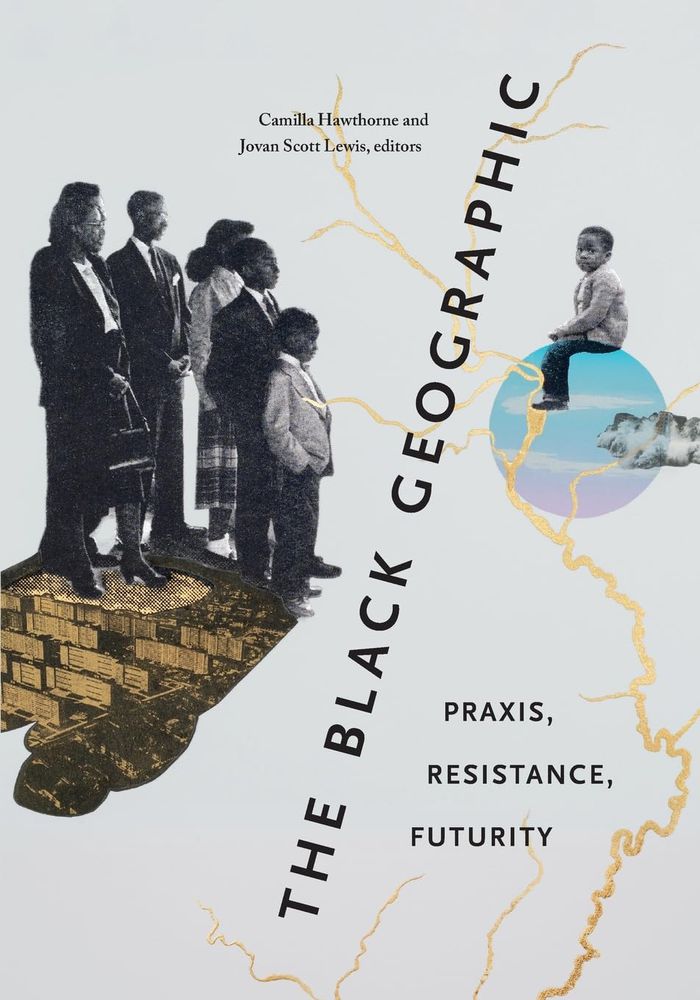
The contributors to ''The Black geographic'' explore the theoretical innovations of Black Geographies scholarship and how it approaches Blackness as historically and spatially situated. In studies that span from Oakland to the Alabama Black Belt to Senegal to Brazil, the contributors draw on ethnography, archival records, digital humanities, literary criticism, and art to show how understanding the spatial dimensions of Black life contributes to a broader understanding of race and space. They examine key sites of inquiry: Black spatial imaginaries, resistance to racial violence, the geographies of racial capitalism, and struggles over urban space. Throughout, the contributors demonstrate that Blackness is itself a situating and place-making force, even as it is shaped by spatial processes and diasporic routes. Whether discussing eighteenth- and nineteenth-century abolitionist print records or migration and surveillance in Niger, this volume demonstrates that Black Geographies is a mode of analyzing Blackness that fundamentally challenges the very foundations of the field of geography and its historical entwinement with colonialism, enslavement, and imperialism. In short, it marks a new step in the evolution of the field.
The Black geographic
Actions:
Price:
$38.95
(available to order)
Summary:
The contributors to ''The Black geographic'' explore the theoretical innovations of Black Geographies scholarship and how it approaches Blackness as historically and spatially situated. In studies that span from Oakland to the Alabama Black Belt to Senegal to Brazil, the contributors draw on ethnography, archival records, digital humanities, literary criticism, and art to show how understanding the spatial dimensions of Black life contributes to a broader understanding of race and space. They examine key sites of inquiry: Black spatial imaginaries, resistance to racial violence, the geographies of racial capitalism, and struggles over urban space. Throughout, the contributors demonstrate that Blackness is itself a situating and place-making force, even as it is shaped by spatial processes and diasporic routes. Whether discussing eighteenth- and nineteenth-century abolitionist print records or migration and surveillance in Niger, this volume demonstrates that Black Geographies is a mode of analyzing Blackness that fundamentally challenges the very foundations of the field of geography and its historical entwinement with colonialism, enslavement, and imperialism. In short, it marks a new step in the evolution of the field.
Form:
books
books
Publication:
October 2023
October 2023
Subject:
Social
Social
Form:
books
books

Actions:
Price:
$12.50
(available to order)
Summary:
Has corporate business overtaken the art world? It's no secret that art and business have always mixed, but their relationship today sparks more questions than ever. "Museum, inc." describes the new art conglomerates from an insider's perspective, probing how their roots run deep into corporate culture. Paul Werner draws on his nine years at the Guggenheim Museum to(...)
$12.50
(available to order)
Summary:
Has corporate business overtaken the art world? It's no secret that art and business have always mixed, but their relationship today sparks more questions than ever. "Museum, inc." describes the new art conglomerates from an insider's perspective, probing how their roots run deep into corporate culture. Paul Werner draws on his nine years at the Guggenheim Museum to(...)
Title:
Museum, inc : inside the global art world
Actions:
Price:
$12.50
(available to order)
Summary:
Has corporate business overtaken the art world? It's no secret that art and business have always mixed, but their relationship today sparks more questions than ever. "Museum, inc." describes the new art conglomerates from an insider's perspective, probing how their roots run deep into corporate culture. Paul Werner draws on his nine years at the Guggenheim Museum to reveal that contemporary art museums have not broken radically with the past, as often claimed. Rather, Werner observes, they are the logical outcome of the evolution of cultural institutions rooted in the eighteenth-century Enlightenment, the colonial expansion of the liberal nation-state, and the rhetoric of democracy. Werner critically analyzes today's art institutions and reframes the public's accepted view of them, exposing how their apparent success belies the troubling forces operating within them. He ultimately argues that the art museum we know and love may have already run its course. An engaging discourse structured as an informal gallery talk, "Museum, inc." is a thought-provoking and passionate polemic that offers ideas for a new, more democratic museum.
Museum, inc : inside the global art world
Actions:
Price:
$12.50
(available to order)
Summary:
Has corporate business overtaken the art world? It's no secret that art and business have always mixed, but their relationship today sparks more questions than ever. "Museum, inc." describes the new art conglomerates from an insider's perspective, probing how their roots run deep into corporate culture. Paul Werner draws on his nine years at the Guggenheim Museum to reveal that contemporary art museums have not broken radically with the past, as often claimed. Rather, Werner observes, they are the logical outcome of the evolution of cultural institutions rooted in the eighteenth-century Enlightenment, the colonial expansion of the liberal nation-state, and the rhetoric of democracy. Werner critically analyzes today's art institutions and reframes the public's accepted view of them, exposing how their apparent success belies the troubling forces operating within them. He ultimately argues that the art museum we know and love may have already run its course. An engaging discourse structured as an informal gallery talk, "Museum, inc." is a thought-provoking and passionate polemic that offers ideas for a new, more democratic museum.
Form:
books
books
Publication:
November 2005, Chicago
November 2005, Chicago
Subject:
Museums and Universal Exhibitions
Museums and Universal Exhibitions
Form:
books
books
Actions:
Price:
$56.50
(available to order)
Summary:
In this illustrated volume, Bernard Herman provides a history of urban dwellings and the people who built and lived in them in early America. In the eighteenth century, cities were constant objects of idealization, often viewed as the outward manifestations of an organized, civil society. As the physical objects that composed the largest portion of urban settings, town(...)
$56.50
(available to order)
Summary:
In this illustrated volume, Bernard Herman provides a history of urban dwellings and the people who built and lived in them in early America. In the eighteenth century, cities were constant objects of idealization, often viewed as the outward manifestations of an organized, civil society. As the physical objects that composed the largest portion of urban settings, town(...)
Subject:
History until 1900, North America
History until 1900, North America
Publication:
November 2005, Chapel Hill, North Carolina
November 2005, Chapel Hill, North Carolina
Title:
Town house : architecture and material life in the early american city, 1780-1830
Actions:
Price:
$56.50
(available to order)
Summary:
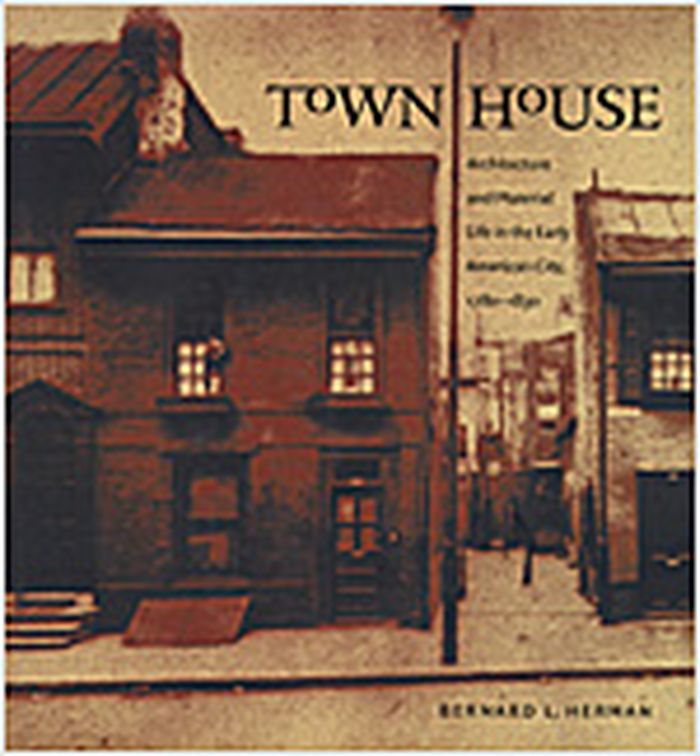
In this illustrated volume, Bernard Herman provides a history of urban dwellings and the people who built and lived in them in early America. In the eighteenth century, cities were constant objects of idealization, often viewed as the outward manifestations of an organized, civil society. As the physical objects that composed the largest portion of urban settings, town houses contained and signified different aspects of city life, argues Herman. Taking a material culture approach, Herman examines urban domestic buildings from Charleston, South Carolina, to Portsmouth, New Hampshire, as well as those in English cities and towns, to better understand why people built the houses they did and how their homes informed everyday city life. Working with buildings and documentary sources as diverse as court cases and recipes, Herman interprets town houses as lived experience. Chapters consider an array of domestic spaces, including the merchant family's house, the servant's quarter, and the widow's dower. Herman demonstrates that city houses served as sites of power as well as complex and often conflicted artifacts mapping the everyday negotiations of social identity and the display of sociability.
Town house : architecture and material life in the early american city, 1780-1830
Actions:
Price:
$56.50
(available to order)
Summary:
In this illustrated volume, Bernard Herman provides a history of urban dwellings and the people who built and lived in them in early America. In the eighteenth century, cities were constant objects of idealization, often viewed as the outward manifestations of an organized, civil society. As the physical objects that composed the largest portion of urban settings, town houses contained and signified different aspects of city life, argues Herman. Taking a material culture approach, Herman examines urban domestic buildings from Charleston, South Carolina, to Portsmouth, New Hampshire, as well as those in English cities and towns, to better understand why people built the houses they did and how their homes informed everyday city life. Working with buildings and documentary sources as diverse as court cases and recipes, Herman interprets town houses as lived experience. Chapters consider an array of domestic spaces, including the merchant family's house, the servant's quarter, and the widow's dower. Herman demonstrates that city houses served as sites of power as well as complex and often conflicted artifacts mapping the everyday negotiations of social identity and the display of sociability.
Form:
books
books
Publication:
November 2005, Chapel Hill, North Carolina
November 2005, Chapel Hill, North Carolina
Subject:
History until 1900, North America
History until 1900, North America
Form:
books
books
Actions:
Price:
$22.50
(available to order)
Summary:
Collaboration with the greatest botanists of his time, an instinctive humanitarianism, and a natural ingenuity in landscape design combined to make Thomas Jefferson a pioneer in American landscape architecture. Frederick D. Nichols and Ralph E. Griswold, in this close study of Jefferson’s many notes, letters, and sketches, present a clear and detailed interpretation of(...)
$22.50
(available to order)
Summary:
Collaboration with the greatest botanists of his time, an instinctive humanitarianism, and a natural ingenuity in landscape design combined to make Thomas Jefferson a pioneer in American landscape architecture. Frederick D. Nichols and Ralph E. Griswold, in this close study of Jefferson’s many notes, letters, and sketches, present a clear and detailed interpretation of(...)
Subject:
Landscape Architecture, Monographs
Landscape Architecture, Monographs
Publication:
June 2003, Charlottesville
June 2003, Charlottesville
Title:
Thomas Jefferson, landscape architect
Actions:
Price:
$22.50
(available to order)
Summary:
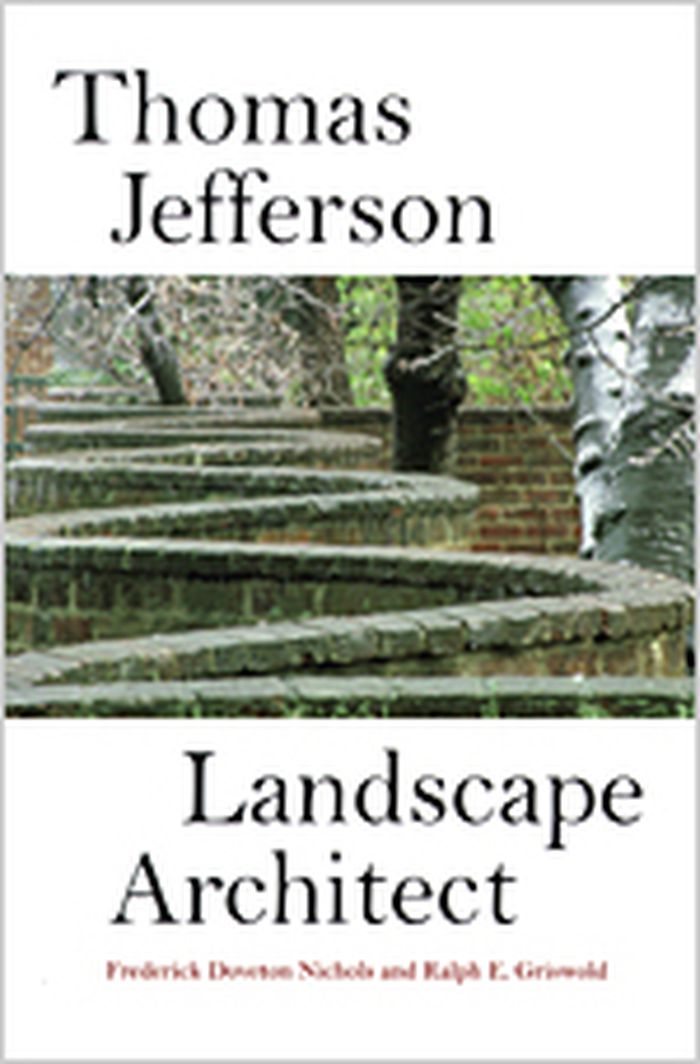
Collaboration with the greatest botanists of his time, an instinctive humanitarianism, and a natural ingenuity in landscape design combined to make Thomas Jefferson a pioneer in American landscape architecture. Frederick D. Nichols and Ralph E. Griswold, in this close study of Jefferson’s many notes, letters, and sketches, present a clear and detailed interpretation of his extraordinary accomplishments in the field. "Thomas Jefferson, Landscape Architect" investigates the many influences on — and of — the Jeffersonian legacy in architecture. Jefferson’s personality, friendships, and convictions, complemented by his extensive reading and travels, clearly influenced his architectural work. His fresh approach to incorporating foreign elements into domestic designs, his revolutionary approach to relating the house to the surrounding land, and his profound influences on the architectural character of the District of Columbia are just a few of Jefferson’s contributions to the American landscape. Eighteenth- and nineteenth-century maps, plans, and drawings, as well as pictures of the species of trees that Jefferson used for his designs, generously illustrate the engaging narrative in "Thomas Jefferson, Landscape Architect".
Thomas Jefferson, landscape architect
Actions:
Price:
$22.50
(available to order)
Summary:
Collaboration with the greatest botanists of his time, an instinctive humanitarianism, and a natural ingenuity in landscape design combined to make Thomas Jefferson a pioneer in American landscape architecture. Frederick D. Nichols and Ralph E. Griswold, in this close study of Jefferson’s many notes, letters, and sketches, present a clear and detailed interpretation of his extraordinary accomplishments in the field. "Thomas Jefferson, Landscape Architect" investigates the many influences on — and of — the Jeffersonian legacy in architecture. Jefferson’s personality, friendships, and convictions, complemented by his extensive reading and travels, clearly influenced his architectural work. His fresh approach to incorporating foreign elements into domestic designs, his revolutionary approach to relating the house to the surrounding land, and his profound influences on the architectural character of the District of Columbia are just a few of Jefferson’s contributions to the American landscape. Eighteenth- and nineteenth-century maps, plans, and drawings, as well as pictures of the species of trees that Jefferson used for his designs, generously illustrate the engaging narrative in "Thomas Jefferson, Landscape Architect".
Form:
books
books
Publication:
June 2003, Charlottesville
June 2003, Charlottesville
Subject:
Landscape Architecture, Monographs
Landscape Architecture, Monographs
Form:
books
books

Actions:
Price:
$31.50
(available to order)
Summary:
Published to mark the 800th anniversary in 2007 of the founding of modern Liverpool by King John, Liverpool 800 is the definitive biography of this magnificent world city. Contributors explore the life of Liverpool over eight centuries, looking at the town’s early development, the eighteenth-century foundations of its mercantile economy, the golden period of the(...)
$31.50
(available to order)
Summary:
Published to mark the 800th anniversary in 2007 of the founding of modern Liverpool by King John, Liverpool 800 is the definitive biography of this magnificent world city. Contributors explore the life of Liverpool over eight centuries, looking at the town’s early development, the eighteenth-century foundations of its mercantile economy, the golden period of the(...)
Subject:
Architecture since 1900, Europe
Architecture since 1900, Europe
Publication:
September 2006, Liverpool
September 2006, Liverpool
Title:
Liverpool 800 : culture, character & history
Actions:
Price:
$31.50
(available to order)
Summary:
Published to mark the 800th anniversary in 2007 of the founding of modern Liverpool by King John, Liverpool 800 is the definitive biography of this magnificent world city. Contributors explore the life of Liverpool over eight centuries, looking at the town’s early development, the eighteenth-century foundations of its mercantile economy, the golden period of the nineteenth and early twentieth centuries, the difficult inter-war years, the fifties boom and the subsequent disastrous and seemingly irreversible decline – seemingly, because the winning of European Capital of Culture status for 2008 reflects Liverpool’s contemporary renaissance, an aspect of current history which is also reflected upon by the contributors. Ranging widely over politics and government, famous and infamous personalities, domestic lives and global connections, and culture both high and low, "Liverpool 800" offers a warts and all portrait of a city which has inspired contempt (‘a black spot on the Mersey’) and adulation (‘the centre of consciousness of the human universe’) but rarely indifference. This publication includes over 300 illustrations, many of which have never been published before.
Liverpool 800 : culture, character & history
Actions:
Price:
$31.50
(available to order)
Summary:
Published to mark the 800th anniversary in 2007 of the founding of modern Liverpool by King John, Liverpool 800 is the definitive biography of this magnificent world city. Contributors explore the life of Liverpool over eight centuries, looking at the town’s early development, the eighteenth-century foundations of its mercantile economy, the golden period of the nineteenth and early twentieth centuries, the difficult inter-war years, the fifties boom and the subsequent disastrous and seemingly irreversible decline – seemingly, because the winning of European Capital of Culture status for 2008 reflects Liverpool’s contemporary renaissance, an aspect of current history which is also reflected upon by the contributors. Ranging widely over politics and government, famous and infamous personalities, domestic lives and global connections, and culture both high and low, "Liverpool 800" offers a warts and all portrait of a city which has inspired contempt (‘a black spot on the Mersey’) and adulation (‘the centre of consciousness of the human universe’) but rarely indifference. This publication includes over 300 illustrations, many of which have never been published before.
Form:
books
books
Publication:
September 2006, Liverpool
September 2006, Liverpool
Subject:
Architecture since 1900, Europe
Architecture since 1900, Europe
Form:
books
books
Price:
$34.95
(available to order)
Summary:
Scale is perhaps the most spectacularly overlooked aspect of artistic production. As photographic and digital reproductions have essentially dematerialized art, critical and historical research dealing with scale—both within the American critical tradition and abroad—has become scattered and insufficiently theorized. However, by posing a specific challenge, such research(...)
$34.95
(available to order)
Summary:
Scale is perhaps the most spectacularly overlooked aspect of artistic production. As photographic and digital reproductions have essentially dematerialized art, critical and historical research dealing with scale—both within the American critical tradition and abroad—has become scattered and insufficiently theorized. However, by posing a specific challenge, such research(...)
Title:
Scale
Actions:
Price:
$34.95
(available to order)
Summary:
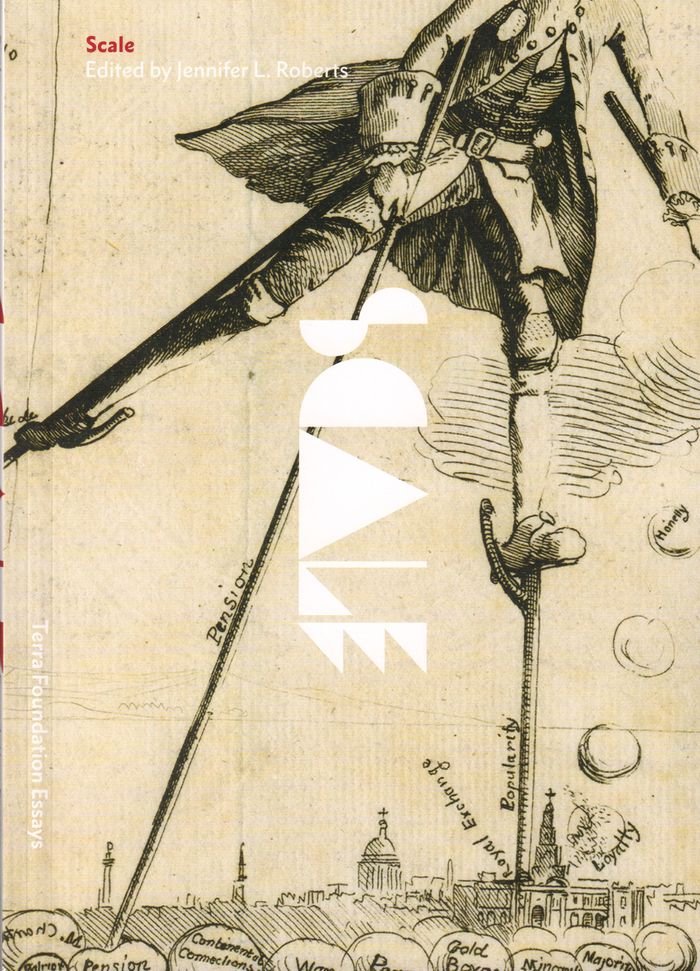
Scale is perhaps the most spectacularly overlooked aspect of artistic production. As photographic and digital reproductions have essentially dematerialized art, critical and historical research dealing with scale—both within the American critical tradition and abroad—has become scattered and insufficiently theorized. However, by posing a specific challenge, such research forces a heightened recognition of both the properties of materials and the deep technical knowledge of makers. A reconsideration of scalar relationships in American art and visual culture therefore reveals original insights. "Scale" is the second volume in the Terra Foundation Essays series. With eighty color illustrations and a wealth of new research from Glenn Adamson, Wendy Bellion, Wouter Davidts, Darcy Grimaldo Grigsby, Christopher P. Heuer, Joshua G. Stein, and Jason Weems, it explores viewers’ physical relationship to Barnett Newman’s abstract canvases, the arduous engineering behind the creation of Mount Rushmore, and the charged significance of liberty poles in the landscape of eighteenth-century New York, among other topics that range from studies of specific works of art to significant conceptual and theoretical concerns.
Scale
Actions:
Price:
$34.95
(available to order)
Summary:
Scale is perhaps the most spectacularly overlooked aspect of artistic production. As photographic and digital reproductions have essentially dematerialized art, critical and historical research dealing with scale—both within the American critical tradition and abroad—has become scattered and insufficiently theorized. However, by posing a specific challenge, such research forces a heightened recognition of both the properties of materials and the deep technical knowledge of makers. A reconsideration of scalar relationships in American art and visual culture therefore reveals original insights. "Scale" is the second volume in the Terra Foundation Essays series. With eighty color illustrations and a wealth of new research from Glenn Adamson, Wendy Bellion, Wouter Davidts, Darcy Grimaldo Grigsby, Christopher P. Heuer, Joshua G. Stein, and Jason Weems, it explores viewers’ physical relationship to Barnett Newman’s abstract canvases, the arduous engineering behind the creation of Mount Rushmore, and the charged significance of liberty poles in the landscape of eighteenth-century New York, among other topics that range from studies of specific works of art to significant conceptual and theoretical concerns.
Form:
books
books
Publication:
November 2016
November 2016
Subject:
Art Theory
Art Theory
Form:
books
books
Title:
Objectivity
Objectivity
Actions:
Price:
$42.00
(available to order)
Summary:
Objectivity has a history, and it is full of surprises. In Objectivity, Lorraine Daston and Peter Galison chart the emergence of objectivity in the mid-nineteenth-century sciences—and show how the concept differs from its alternatives, truth-to-nature and trained judgment. This is a story of lofty epistemic ideals fused with workaday practices in the making of scientific(...)
$42.00
(available to order)
Summary:
Objectivity has a history, and it is full of surprises. In Objectivity, Lorraine Daston and Peter Galison chart the emergence of objectivity in the mid-nineteenth-century sciences—and show how the concept differs from its alternatives, truth-to-nature and trained judgment. This is a story of lofty epistemic ideals fused with workaday practices in the making of scientific(...)
Title:
Objectivity
Actions:
Price:
$42.00
(available to order)
Summary:
Objectivity has a history, and it is full of surprises. In Objectivity, Lorraine Daston and Peter Galison chart the emergence of objectivity in the mid-nineteenth-century sciences—and show how the concept differs from its alternatives, truth-to-nature and trained judgment. This is a story of lofty epistemic ideals fused with workaday practices in the making of scientific images. From the eighteenth through the early twenty-first centuries, the images that reveal the deepest commitments of the empirical sciences—from anatomy to crystallography—are those featured in scientific atlases, the compendia that teach practitioners what is worth looking at and how to look at it. Galison and Daston use atlas images to uncover a hidden history of scientific objectivity and its rivals. Whether an atlas maker idealizes an image to capture the essentials in the name of truth-to-nature or refuses to erase even the most incidental detail in the name of objectivity or highlights patterns in the name of trained judgment is a decision enforced by an ethos as well as by an epistemology.
Objectivity
Actions:
Price:
$42.00
(available to order)
Summary:
Objectivity has a history, and it is full of surprises. In Objectivity, Lorraine Daston and Peter Galison chart the emergence of objectivity in the mid-nineteenth-century sciences—and show how the concept differs from its alternatives, truth-to-nature and trained judgment. This is a story of lofty epistemic ideals fused with workaday practices in the making of scientific images. From the eighteenth through the early twenty-first centuries, the images that reveal the deepest commitments of the empirical sciences—from anatomy to crystallography—are those featured in scientific atlases, the compendia that teach practitioners what is worth looking at and how to look at it. Galison and Daston use atlas images to uncover a hidden history of scientific objectivity and its rivals. Whether an atlas maker idealizes an image to capture the essentials in the name of truth-to-nature or refuses to erase even the most incidental detail in the name of objectivity or highlights patterns in the name of trained judgment is a decision enforced by an ethos as well as by an epistemology.
Form:
books
books
Publication:
January 2007
January 2007
Subject:
Architectural Theory
Architectural Theory
Form:
books
books
Title:
Objectivity
Objectivity
Actions:
Price:
$38.00
(available to order)
Summary:
Objectivity has a history, and it is full of surprises. In Objectivity, Lorraine Daston and Peter Galison chart the emergence of objectivity in the mid-nineteenth-century sciences—and show how the concept differs from its alternatives, truth-to-nature and trained judgment. This is a story of lofty epistemic ideals fused with workaday practices in the making of scientific(...)
$38.00
(available to order)
Summary:
Objectivity has a history, and it is full of surprises. In Objectivity, Lorraine Daston and Peter Galison chart the emergence of objectivity in the mid-nineteenth-century sciences—and show how the concept differs from its alternatives, truth-to-nature and trained judgment. This is a story of lofty epistemic ideals fused with workaday practices in the making of scientific(...)
Publication:
October 2010
October 2010
Title:
Objectivity
Actions:
Price:
$38.00
(available to order)
Summary:
Objectivity has a history, and it is full of surprises. In Objectivity, Lorraine Daston and Peter Galison chart the emergence of objectivity in the mid-nineteenth-century sciences—and show how the concept differs from its alternatives, truth-to-nature and trained judgment. This is a story of lofty epistemic ideals fused with workaday practices in the making of scientific images. From the eighteenth through the early twenty-first centuries, the images that reveal the deepest commitments of the empirical sciences—from anatomy to crystallography—are those featured in scientific atlases, the compendia that teach practitioners what is worth looking at and how to look at it. Galison and Daston use atlas images to uncover a hidden history of scientific objectivity and its rivals. Whether an atlas maker idealizes an image to capture the essentials in the name of truth-to-nature or refuses to erase even the most incidental detail in the name of objectivity or highlights patterns in the name of trained judgment is a decision enforced by an ethos as well as by an epistemology.
Objectivity
Actions:
Price:
$38.00
(available to order)
Summary:
Objectivity has a history, and it is full of surprises. In Objectivity, Lorraine Daston and Peter Galison chart the emergence of objectivity in the mid-nineteenth-century sciences—and show how the concept differs from its alternatives, truth-to-nature and trained judgment. This is a story of lofty epistemic ideals fused with workaday practices in the making of scientific images. From the eighteenth through the early twenty-first centuries, the images that reveal the deepest commitments of the empirical sciences—from anatomy to crystallography—are those featured in scientific atlases, the compendia that teach practitioners what is worth looking at and how to look at it. Galison and Daston use atlas images to uncover a hidden history of scientific objectivity and its rivals. Whether an atlas maker idealizes an image to capture the essentials in the name of truth-to-nature or refuses to erase even the most incidental detail in the name of objectivity or highlights patterns in the name of trained judgment is a decision enforced by an ethos as well as by an epistemology.
Form:
books
books
Publication:
October 2010
October 2010


