


1390 Results
Form:
books
books

Actions:
Price:
$39.95
(available to order)
Summary:
In this contribution to contemporary media studies, acclaimed theorist Francesco Casetti advances a provocative hypothesis: instead of being prostheses that expand or extend our perceptions, modern screen-based media are in fact apparatuses that shelter and protect us from exposure to the world. Rather than bringing us closer to external reality, dominant forms of visual(...)
$39.95
(available to order)
Summary:
In this contribution to contemporary media studies, acclaimed theorist Francesco Casetti advances a provocative hypothesis: instead of being prostheses that expand or extend our perceptions, modern screen-based media are in fact apparatuses that shelter and protect us from exposure to the world. Rather than bringing us closer to external reality, dominant forms of visual(...)
Title:
Screening fears: On protective media
Actions:
Price:
$39.95
(available to order)
Summary:
In this contribution to contemporary media studies, acclaimed theorist Francesco Casetti advances a provocative hypothesis: instead of being prostheses that expand or extend our perceptions, modern screen-based media are in fact apparatuses that shelter and protect us from exposure to the world. Rather than bringing us closer to external reality, dominant forms of visual media function as barriers or enclosures that defend against the apparent threats and dangers that seem increasingly to surround us. Working with an original historical overview that begins with the Phantasmagoria of the late eighteenth century, then the shared interior spaces of the movie theater in the early to mid-twentieth century, and finally the solitary digital milieus of the present, Casetti traces the outlines of the protective 'bubbles' that disconnect us from our immediate surroundings. To be provided with a shield of immunity to the hazards and uncertainties of the world while experiencing them at a safe remove might seem a positive development. But, he asks, what if these media, instead of providing invulnerability, ensnare individuals in a suffocating enclosure? What if, in their effort to keep reality under control, they exercise a violence equal to that of the dangers they resist? In a dialectical exercise, and through a vivid range of cultural artifacts, ''Screening fears'' traces the emergence of modern protective media and the way they changed our forms of mediation with the world in which we live.
Screening fears: On protective media
Actions:
Price:
$39.95
(available to order)
Summary:
In this contribution to contemporary media studies, acclaimed theorist Francesco Casetti advances a provocative hypothesis: instead of being prostheses that expand or extend our perceptions, modern screen-based media are in fact apparatuses that shelter and protect us from exposure to the world. Rather than bringing us closer to external reality, dominant forms of visual media function as barriers or enclosures that defend against the apparent threats and dangers that seem increasingly to surround us. Working with an original historical overview that begins with the Phantasmagoria of the late eighteenth century, then the shared interior spaces of the movie theater in the early to mid-twentieth century, and finally the solitary digital milieus of the present, Casetti traces the outlines of the protective 'bubbles' that disconnect us from our immediate surroundings. To be provided with a shield of immunity to the hazards and uncertainties of the world while experiencing them at a safe remove might seem a positive development. But, he asks, what if these media, instead of providing invulnerability, ensnare individuals in a suffocating enclosure? What if, in their effort to keep reality under control, they exercise a violence equal to that of the dangers they resist? In a dialectical exercise, and through a vivid range of cultural artifacts, ''Screening fears'' traces the emergence of modern protective media and the way they changed our forms of mediation with the world in which we live.
Form:
books
books
Publication:
August 2023
August 2023
Subject:
Critical Theory
Critical Theory
Form:
books
books
Actions:
Price:
$22.95
(available to order)
Summary:
Charles Sheeler (1883-1965) is recognized as one of the founders of American modernism and one of the master photographers of the twentieth century. His work is synonymous with precisionism, a crisp, clean, hard-edged style that reconciled cubist abstraction and the machine aesthetic of Marcel Duchamp with American subject matter. Trained in industrial drawing, decorative(...)
$22.95
(available to order)
Summary:
Charles Sheeler (1883-1965) is recognized as one of the founders of American modernism and one of the master photographers of the twentieth century. His work is synonymous with precisionism, a crisp, clean, hard-edged style that reconciled cubist abstraction and the machine aesthetic of Marcel Duchamp with American subject matter. Trained in industrial drawing, decorative(...)
Title:
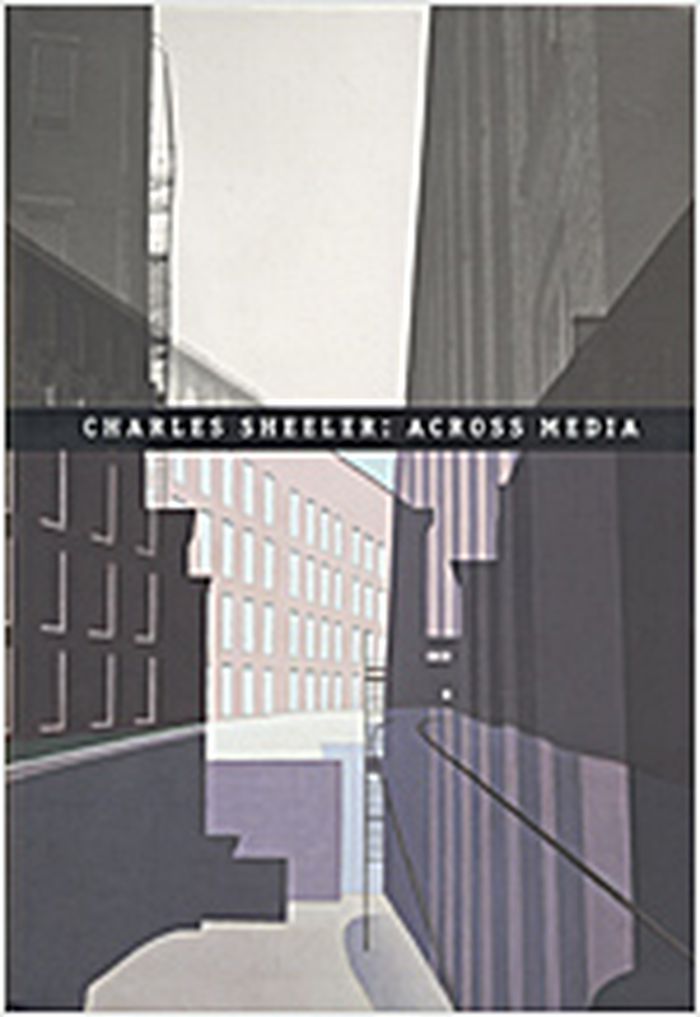
Charles Sheeler : across media
Actions:
Price:
$22.95
(available to order)
Summary:
Charles Sheeler (1883-1965) is recognized as one of the founders of American modernism and one of the master photographers of the twentieth century. His work is synonymous with precisionism, a crisp, clean, hard-edged style that reconciled cubist abstraction and the machine aesthetic of Marcel Duchamp with American subject matter. Trained in industrial drawing, decorative painting, and applied art at the School of Industrial Art in Philadelphia, Sheeler also attended the Pennsylvania Academy of the Fine Arts, where he learned an impressionistic, painterly style. He later embraced European modernism and taught himself photography. Sheeler fully absorbed the lessons of each discipline and forged his own singular approach. This illustrated book, created to accompany a traveling exhibition of Sheeler's work, features detailed analyses of the artist's mediums and working methods. Focusing on the complex, often paradoxical, relationships among photography, film, drawing, printmaking, and painting that were central to Sheeler's art, this book traces critical points in Sheeler's trajectory, beginning with a small selection of Sheeler's seminal photographs, circa 1917, of the interior of an eighteenth-century Quaker fieldstone house in Doylestown, Pennsylvania. Sections are also devoted to the 1920 film Manhatta, made in collaboration with Paul Strand; a series of commercial photographs of the Ford Motor Company's River Rogue factory (1927); the enigmatic painting The Artist Looks at Nature (1943) and its related works; and finally a group of mill subjects from the 1940s and 1950s that experiments with photomontage.
Charles Sheeler : across media
Actions:
Price:
$22.95
(available to order)
Summary:
Charles Sheeler (1883-1965) is recognized as one of the founders of American modernism and one of the master photographers of the twentieth century. His work is synonymous with precisionism, a crisp, clean, hard-edged style that reconciled cubist abstraction and the machine aesthetic of Marcel Duchamp with American subject matter. Trained in industrial drawing, decorative painting, and applied art at the School of Industrial Art in Philadelphia, Sheeler also attended the Pennsylvania Academy of the Fine Arts, where he learned an impressionistic, painterly style. He later embraced European modernism and taught himself photography. Sheeler fully absorbed the lessons of each discipline and forged his own singular approach. This illustrated book, created to accompany a traveling exhibition of Sheeler's work, features detailed analyses of the artist's mediums and working methods. Focusing on the complex, often paradoxical, relationships among photography, film, drawing, printmaking, and painting that were central to Sheeler's art, this book traces critical points in Sheeler's trajectory, beginning with a small selection of Sheeler's seminal photographs, circa 1917, of the interior of an eighteenth-century Quaker fieldstone house in Doylestown, Pennsylvania. Sections are also devoted to the 1920 film Manhatta, made in collaboration with Paul Strand; a series of commercial photographs of the Ford Motor Company's River Rogue factory (1927); the enigmatic painting The Artist Looks at Nature (1943) and its related works; and finally a group of mill subjects from the 1940s and 1950s that experiments with photomontage.
Form:
books
books
Publication:
July 2006, Berkeley, Los Angeles, London
July 2006, Berkeley, Los Angeles, London
Subject:
sale books
sale books
Form:
books
books
Title:
The artist & the garden
The artist & the garden
Actions:
Price:
$75.00
(available to order)
Summary:
This extraordinarily beautiful book gathers together and examines for the first time a delightful collection of English gardens rendered by artists from 1540 to the early nineteenth century, many of which are unknown. Sir Roy Strong, widely recognized for his(...)
$75.00
(available to order)
Summary:
This extraordinarily beautiful book gathers together and examines for the first time a delightful collection of English gardens rendered by artists from 1540 to the early nineteenth century, many of which are unknown. Sir Roy Strong, widely recognized for his(...)
Title:
The artist & the garden
Actions:
Price:
$75.00
(available to order)
Summary:
This extraordinarily beautiful book gathers together and examines for the first time a delightful collection of English gardens rendered by artists from 1540 to the early nineteenth century, many of which are unknown. Sir Roy Strong, widely recognized for his expertise in both art history and garden history, surveys garden pictures ranging from Elizabethan miniatures to eighteenth-century alfresco conversation pieces, from suites of paintings of a single garden to amateur watercolors. He inquires into the origin of the English garden picture genre, its development prior to the invention of photography, its greatest exponents, its reliability as historical evidence of actual gardens, and its place within the larger European tradition of picturing the garden. The English, Strong observes, were slow in picturing the reality of their gardens. Until well into the Stuart age, the garden in art served as a symbol, and only gradually did this give way to the impulse to record the facts of contemporary garden-making. In the backgrounds of portraits of Jacobean and Caroline garden owners, the garden is no longer an emblem; it becomes instead a document demonstrating the owners' pride in their gardens made in the new Renaissance manner. By the Georgian age the garden has moved from the back to the foreground of pictures, and whole families place themselves amid the glory of their self-fashioned landscapes. Both house and garden at this point assume a separate identity, each calling for an individual record. And by the nineteenth century, the author shows, the garden detaches itself from owner and house to be recorded for its own sake, as a single image at first, and later in a series. With some 350 fully annotated illustrations, this lovely book offers a unique record of three hundred years of English gardens and what they meant to those who owned and portrayed them.
The artist & the garden
Actions:
Price:
$75.00
(available to order)
Summary:
This extraordinarily beautiful book gathers together and examines for the first time a delightful collection of English gardens rendered by artists from 1540 to the early nineteenth century, many of which are unknown. Sir Roy Strong, widely recognized for his expertise in both art history and garden history, surveys garden pictures ranging from Elizabethan miniatures to eighteenth-century alfresco conversation pieces, from suites of paintings of a single garden to amateur watercolors. He inquires into the origin of the English garden picture genre, its development prior to the invention of photography, its greatest exponents, its reliability as historical evidence of actual gardens, and its place within the larger European tradition of picturing the garden. The English, Strong observes, were slow in picturing the reality of their gardens. Until well into the Stuart age, the garden in art served as a symbol, and only gradually did this give way to the impulse to record the facts of contemporary garden-making. In the backgrounds of portraits of Jacobean and Caroline garden owners, the garden is no longer an emblem; it becomes instead a document demonstrating the owners' pride in their gardens made in the new Renaissance manner. By the Georgian age the garden has moved from the back to the foreground of pictures, and whole families place themselves amid the glory of their self-fashioned landscapes. Both house and garden at this point assume a separate identity, each calling for an individual record. And by the nineteenth century, the author shows, the garden detaches itself from owner and house to be recorded for its own sake, as a single image at first, and later in a series. With some 350 fully annotated illustrations, this lovely book offers a unique record of three hundred years of English gardens and what they meant to those who owned and portrayed them.
Form:
books
books
Publication:
October 2000, New Haven
October 2000, New Haven
Subject:
Gardens
Gardens
Form:
books
books

Title:
Italy and the Grand Tour
Italy and the Grand Tour
Actions:
Price:
$52.50
(available to order)
Summary:
For members of the social elite in eighteenth-century England, extended travel for pleasure came to be considered part of an ideal education as well as an important symbol of social status. Italy, and especially Rome—a fashionable, exciting, and comfortable city—became the focus of such early tourists’ interest. In this distinctive book, historian Jeremy Black recreates(...)
$52.50
(available to order)
Summary:
For members of the social elite in eighteenth-century England, extended travel for pleasure came to be considered part of an ideal education as well as an important symbol of social status. Italy, and especially Rome—a fashionable, exciting, and comfortable city—became the focus of such early tourists’ interest. In this distinctive book, historian Jeremy Black recreates(...)
Title:
Italy and the Grand Tour
Actions:
Price:
$52.50
(available to order)
Summary:
For members of the social elite in eighteenth-century England, extended travel for pleasure came to be considered part of an ideal education as well as an important symbol of social status. Italy, and especially Rome—a fashionable, exciting, and comfortable city—became the focus of such early tourists’ interest. In this distinctive book, historian Jeremy Black recreates the actual tourist experiences of those who traveled to Italy on a Grand Tour. Relying on the private diaries and personal letters of travelers, rather than on the self-conscious accounts of literary travelers who wrote for wider audiences, the book presents a fresh and authentic picture of how British tourists experienced Italy, its landscapes, women, food, music, Catholicism, and more. Using material from archives across Britain and a generous selection of illustrations, the book highlights the discrepancy between the idealized view of the Grand Tour and its reality: what people were meant to do was not necessarily what they did, what the guide books described as splendid was not always so perceived. Black discusses what Italian experiences meant to British visitors, and he considers the effects of tourism on British culture during this most exciting of centuries.
Italy and the Grand Tour
Actions:
Price:
$52.50
(available to order)
Summary:
For members of the social elite in eighteenth-century England, extended travel for pleasure came to be considered part of an ideal education as well as an important symbol of social status. Italy, and especially Rome—a fashionable, exciting, and comfortable city—became the focus of such early tourists’ interest. In this distinctive book, historian Jeremy Black recreates the actual tourist experiences of those who traveled to Italy on a Grand Tour. Relying on the private diaries and personal letters of travelers, rather than on the self-conscious accounts of literary travelers who wrote for wider audiences, the book presents a fresh and authentic picture of how British tourists experienced Italy, its landscapes, women, food, music, Catholicism, and more. Using material from archives across Britain and a generous selection of illustrations, the book highlights the discrepancy between the idealized view of the Grand Tour and its reality: what people were meant to do was not necessarily what they did, what the guide books described as splendid was not always so perceived. Black discusses what Italian experiences meant to British visitors, and he considers the effects of tourism on British culture during this most exciting of centuries.
Form:
books
books
Publication:
January 1900, New Haven
January 1900, New Haven
Subject:
History until 1900
History until 1900
Form:
journals and magazines
journals and magazines
Title:
Cabinet 27 : mountains
Cabinet 27 : mountains
Actions:
Price:
$12.00
(available to order)
Summary:
Looming large in both geological fact and sociocultural significance, mountains promise grandeur, picturesque natural beauty, good health and the chance to literally rise above the everyday - yet they also menace our imaginations with their harsh conditions, dangerous terrain and deep sense of isolation. These multivalent moods have proved an enticement to sportsmen,(...)
$12.00
(available to order)
Summary:
Looming large in both geological fact and sociocultural significance, mountains promise grandeur, picturesque natural beauty, good health and the chance to literally rise above the everyday - yet they also menace our imaginations with their harsh conditions, dangerous terrain and deep sense of isolation. These multivalent moods have proved an enticement to sportsmen,(...)
Title:
Cabinet 27 : mountains
Actions:
Price:
$12.00
(available to order)
Summary:
Looming large in both geological fact and sociocultural significance, mountains promise grandeur, picturesque natural beauty, good health and the chance to literally rise above the everyday - yet they also menace our imaginations with their harsh conditions, dangerous terrain and deep sense of isolation. These multivalent moods have proved an enticement to sportsmen, scientists, poets and philosophers. Indeed, our modern notion of the "sublime" was born in the Alps - where, as the English critic John Dennis wrote in 1693, nature was revealed as not solely a "delight that is consistent with reason," but also an experience "mingled with Horrours, and sometimes almost with despair." Cabinet 27 features Brian Dillon on the Cold War fact and Faustian fiction of Germany's Brocken; Allen S. Weiss on Petrarch and the winds of Mount Ventoux; and Jeffrey Kastner on the eighteenth-century Alpine panoramas of Hans Conrad Escher von der Linth. It also features Christopher Turner on the "lunar photographs" of James Nasmyth; Viktoria Tkaczyk on scientist Robert Hooke; biologist J.S.B. Haldane on being the right size; artist projects by Casey Logan and Walead Beshty; and Peter Lamborn Wilson's examination of the alchemical properties of building materials.
Cabinet 27 : mountains
Actions:
Price:
$12.00
(available to order)
Summary:
Looming large in both geological fact and sociocultural significance, mountains promise grandeur, picturesque natural beauty, good health and the chance to literally rise above the everyday - yet they also menace our imaginations with their harsh conditions, dangerous terrain and deep sense of isolation. These multivalent moods have proved an enticement to sportsmen, scientists, poets and philosophers. Indeed, our modern notion of the "sublime" was born in the Alps - where, as the English critic John Dennis wrote in 1693, nature was revealed as not solely a "delight that is consistent with reason," but also an experience "mingled with Horrours, and sometimes almost with despair." Cabinet 27 features Brian Dillon on the Cold War fact and Faustian fiction of Germany's Brocken; Allen S. Weiss on Petrarch and the winds of Mount Ventoux; and Jeffrey Kastner on the eighteenth-century Alpine panoramas of Hans Conrad Escher von der Linth. It also features Christopher Turner on the "lunar photographs" of James Nasmyth; Viktoria Tkaczyk on scientist Robert Hooke; biologist J.S.B. Haldane on being the right size; artist projects by Casey Logan and Walead Beshty; and Peter Lamborn Wilson's examination of the alchemical properties of building materials.
Form:
journals and magazines
journals and magazines
Publication:
October 2007, Brooklyn
October 2007, Brooklyn
Subject:
Magazines
Magazines
Form:
books
books

Actions:
Price:
$35.00
(available to order)
Summary:
Benjamin Franklin secretly loved London more than Philadelphia: it was simply the most exciting place to be in the British Empire. And in the decade before the outbreak of the American Revolution, thousands of his fellow colonists flocked to the Georgian city in its first big wave of American visitors. At the very point of political rupture, mother country and colonies(...)
$35.00
(available to order)
Summary:
Benjamin Franklin secretly loved London more than Philadelphia: it was simply the most exciting place to be in the British Empire. And in the decade before the outbreak of the American Revolution, thousands of his fellow colonists flocked to the Georgian city in its first big wave of American visitors. At the very point of political rupture, mother country and colonies(...)
Title:
When London was capital of America
Actions:
Price:
$35.00
(available to order)
Summary:
Benjamin Franklin secretly loved London more than Philadelphia: it was simply the most exciting place to be in the British Empire. And in the decade before the outbreak of the American Revolution, thousands of his fellow colonists flocked to the Georgian city in its first big wave of American visitors. At the very point of political rupture, mother country and colonies were socially and culturally closer than ever before. In this first-ever portrait of eighteenth-century London as the capital of America, Julie Flavell recreates the famous city's heyday as the centre of an empire that encompassed North America and the West Indies. The momentous years before independence saw more colonial Americans than ever on London's streets: wealthy Southern plantation owners in quest of culture, slaves hoping for a chance of freedom, Yankee businessmen looking for opportunities in the city, even Ben Franklin seeking a second, more distinguished career. The stories of the colonials, no innocents abroad, vividly recreate a time when Americans saw London as their own and remind us of the complex, multiracial - at times even decadent - nature of America's colonial British heritage.
When London was capital of America
Actions:
Price:
$35.00
(available to order)
Summary:
Benjamin Franklin secretly loved London more than Philadelphia: it was simply the most exciting place to be in the British Empire. And in the decade before the outbreak of the American Revolution, thousands of his fellow colonists flocked to the Georgian city in its first big wave of American visitors. At the very point of political rupture, mother country and colonies were socially and culturally closer than ever before. In this first-ever portrait of eighteenth-century London as the capital of America, Julie Flavell recreates the famous city's heyday as the centre of an empire that encompassed North America and the West Indies. The momentous years before independence saw more colonial Americans than ever on London's streets: wealthy Southern plantation owners in quest of culture, slaves hoping for a chance of freedom, Yankee businessmen looking for opportunities in the city, even Ben Franklin seeking a second, more distinguished career. The stories of the colonials, no innocents abroad, vividly recreate a time when Americans saw London as their own and remind us of the complex, multiracial - at times even decadent - nature of America's colonial British heritage.
Form:
books
books
Publication:
June 2010
June 2010
Subject:
History until 1900, Great Britain
History until 1900, Great Britain
Form:
books
books

Actions:
Price:
$39.95
(available to order)
Summary:
Paul Shepheard's previous book, What is Architecture?, was about making real, material things in the world -- landscapes, buildings, and machines. The Cultivated Wilderness is about those landscapes, and about the strategies that govern what we've done in shaping them.In the author's words, this book is about "seeing things that are too big to see." His emphasis on(...)
$39.95
(available to order)
Summary:
Paul Shepheard's previous book, What is Architecture?, was about making real, material things in the world -- landscapes, buildings, and machines. The Cultivated Wilderness is about those landscapes, and about the strategies that govern what we've done in shaping them.In the author's words, this book is about "seeing things that are too big to see." His emphasis on(...)
Title:
The cultivated wilderness or, what is landscape?
Actions:
Price:
$39.95
(available to order)
Summary:
Paul Shepheard's previous book, What is Architecture?, was about making real, material things in the world -- landscapes, buildings, and machines. The Cultivated Wilderness is about those landscapes, and about the strategies that govern what we've done in shaping them.In the author's words, this book is about "seeing things that are too big to see." His emphasis on strategy makes landscape fundamental -- he says that every architectural move is set in a landscape. Norman England, for example, was constructed as a network of strong points, in a strategy of occupation. The eighteenth-century grid cities of the New World reflect a strategy of reason. Our current strategy is the economic exploitation of the Earth, an intricately woven blanket of commerce that covers up a multitude of other possibilities, many other ways to treat the surface of the globe -- some of which are the landscapes revealed in this book.In a series of first-person narratives, reminiscent of his last book, the author pairs six landscapes, in order of descending scale from global to local, from the seven wonders of the ancient world to the condensed destruction of World War I's Western Front. In an engaging style, Shepheard takes the reader on an odyssey through these landscapes, meeting people and seeing places. He states that now, at the end of a century in which the appropriate landscape was sought but never found, the strategy of turning the land to profit is under review -- and offers this book as his contribution to that review.
The cultivated wilderness or, what is landscape?
Actions:
Price:
$39.95
(available to order)
Summary:
Paul Shepheard's previous book, What is Architecture?, was about making real, material things in the world -- landscapes, buildings, and machines. The Cultivated Wilderness is about those landscapes, and about the strategies that govern what we've done in shaping them.In the author's words, this book is about "seeing things that are too big to see." His emphasis on strategy makes landscape fundamental -- he says that every architectural move is set in a landscape. Norman England, for example, was constructed as a network of strong points, in a strategy of occupation. The eighteenth-century grid cities of the New World reflect a strategy of reason. Our current strategy is the economic exploitation of the Earth, an intricately woven blanket of commerce that covers up a multitude of other possibilities, many other ways to treat the surface of the globe -- some of which are the landscapes revealed in this book.In a series of first-person narratives, reminiscent of his last book, the author pairs six landscapes, in order of descending scale from global to local, from the seven wonders of the ancient world to the condensed destruction of World War I's Western Front. In an engaging style, Shepheard takes the reader on an odyssey through these landscapes, meeting people and seeing places. He states that now, at the end of a century in which the appropriate landscape was sought but never found, the strategy of turning the land to profit is under review -- and offers this book as his contribution to that review.
Form:
books
books
Publication:
March 1997, Cambridge, Mass.
March 1997, Cambridge, Mass.
Subject:
Landscape Theory
Landscape Theory
Form:
books
books
Title:
L'esprit d'escalier
L'esprit d'escalier
Actions:
Price:
$85.00
(available in store)
Summary:
Stairs, ladders and lifts are the motifs of Thomas Demand's latest monograph, L'Esprit d'Escalier, which is published on the occasion of his show at the Irish Museum of Modern Art in Dublin. The title actually refers to so-called "staircase wit," that concise French expression for the chagrin of missed retorts--those hapless comebacks one only ever thinks up belatedly(...)
$85.00
(available in store)
Summary:
Stairs, ladders and lifts are the motifs of Thomas Demand's latest monograph, L'Esprit d'Escalier, which is published on the occasion of his show at the Irish Museum of Modern Art in Dublin. The title actually refers to so-called "staircase wit," that concise French expression for the chagrin of missed retorts--those hapless comebacks one only ever thinks up belatedly(...)
Title:
L'esprit d'escalier
Actions:
Price:
$85.00
(available in store)
Summary:
Stairs, ladders and lifts are the motifs of Thomas Demand's latest monograph, L'Esprit d'Escalier, which is published on the occasion of his show at the Irish Museum of Modern Art in Dublin. The title actually refers to so-called "staircase wit," that concise French expression for the chagrin of missed retorts--those hapless comebacks one only ever thinks up belatedly (i.e. when already descending the stairs): "I should've said (fill in blank)!" etc. One of Demand's ironic allusions to his title is a new work titled "Landing," which shows the shards of broken Qing vases on a staircase--a mishap caused by a visitor to The Fitzwilliam Museum Cambridge in January 2006, who stumbled on his shoelaces and crashed into the three eighteenth-century vases, smashing them to pieces. As ever, Demand combines conceptual rigor and exacting craft in his painstakingly re-created sets, with their eerie edge of artifice. L'Esprit d'Escalier presents an overview of his current work in 23 large photographs, plus a film project and an architectural installation specially prepared for his Irish Museum exhibition. Alongside an excerpt from David Foster Wallace's Girl with Curious Hair, it also includes commissioned writings by Dave Eggers, Paul Oliver, Caoimhin Mac Giolla Leith, Rachael Thomas and Enrique Juncosa.
L'esprit d'escalier
Actions:
Price:
$85.00
(available in store)
Summary:
Stairs, ladders and lifts are the motifs of Thomas Demand's latest monograph, L'Esprit d'Escalier, which is published on the occasion of his show at the Irish Museum of Modern Art in Dublin. The title actually refers to so-called "staircase wit," that concise French expression for the chagrin of missed retorts--those hapless comebacks one only ever thinks up belatedly (i.e. when already descending the stairs): "I should've said (fill in blank)!" etc. One of Demand's ironic allusions to his title is a new work titled "Landing," which shows the shards of broken Qing vases on a staircase--a mishap caused by a visitor to The Fitzwilliam Museum Cambridge in January 2006, who stumbled on his shoelaces and crashed into the three eighteenth-century vases, smashing them to pieces. As ever, Demand combines conceptual rigor and exacting craft in his painstakingly re-created sets, with their eerie edge of artifice. L'Esprit d'Escalier presents an overview of his current work in 23 large photographs, plus a film project and an architectural installation specially prepared for his Irish Museum exhibition. Alongside an excerpt from David Foster Wallace's Girl with Curious Hair, it also includes commissioned writings by Dave Eggers, Paul Oliver, Caoimhin Mac Giolla Leith, Rachael Thomas and Enrique Juncosa.
Form:
books
books
Publication:
July 2007, Dublin
July 2007, Dublin
Subject:
Photography monographs
Photography monographs
Form:
journals and magazines
journals and magazines
Title:
Cabinet 21 : electricity
Cabinet 21 : electricity
Actions:
Price:
$12.00
(available to order)
Summary:
Electricity manifests itself in every facet of our lives--from the tiny shock received by touching a doorknob to the explosive power of a lightning strike, from the modest Hoover dustbuster to the industrial grandeur of the Hoover Dam. As a force that has given human beings seemingly unlimited power over nature and refashioned our understanding of day and night, and as a(...)
$12.00
(available to order)
Summary:
Electricity manifests itself in every facet of our lives--from the tiny shock received by touching a doorknob to the explosive power of a lightning strike, from the modest Hoover dustbuster to the industrial grandeur of the Hoover Dam. As a force that has given human beings seemingly unlimited power over nature and refashioned our understanding of day and night, and as a(...)
Title:
Cabinet 21 : electricity
Actions:
Price:
$12.00
(available to order)
Summary:
Electricity manifests itself in every facet of our lives--from the tiny shock received by touching a doorknob to the explosive power of a lightning strike, from the modest Hoover dustbuster to the industrial grandeur of the Hoover Dam. As a force that has given human beings seemingly unlimited power over nature and refashioned our understanding of day and night, and as a metaphor for the social currents flowing among individuals and communities, electricity has been our invisible yet ubiquitous ally in the creation of a contemporary "technological sublime." Cabinet No. 21 includes an interview with Sharon Beder on electricity and modernity in America; Margaret Wertheim on Lichtenberg figures, frozen lightning captured in acrylic blocks; Michael Sanchez on Francisco Salva's shocking proposal for an eighteenth-century human telegraphy system; an interview with Marcello Pera on how a frog triggered a decisive scientific debate between Enlightenment "electricians" Galvani and Volta; an essay on Benjamin Franklin's promotion of Ebenezer Kinnersley's electrified "magical picture"; and a firsthand account by a survivor of multiple lightning strikes. Also Tom Vanderbilt on Stasi scent samples; an interview with Sam Chwat, the foremost accent elimination coach in the United States; and artist projects by Andrea Geyer and Rachel Watson.
Cabinet 21 : electricity
Actions:
Price:
$12.00
(available to order)
Summary:
Electricity manifests itself in every facet of our lives--from the tiny shock received by touching a doorknob to the explosive power of a lightning strike, from the modest Hoover dustbuster to the industrial grandeur of the Hoover Dam. As a force that has given human beings seemingly unlimited power over nature and refashioned our understanding of day and night, and as a metaphor for the social currents flowing among individuals and communities, electricity has been our invisible yet ubiquitous ally in the creation of a contemporary "technological sublime." Cabinet No. 21 includes an interview with Sharon Beder on electricity and modernity in America; Margaret Wertheim on Lichtenberg figures, frozen lightning captured in acrylic blocks; Michael Sanchez on Francisco Salva's shocking proposal for an eighteenth-century human telegraphy system; an interview with Marcello Pera on how a frog triggered a decisive scientific debate between Enlightenment "electricians" Galvani and Volta; an essay on Benjamin Franklin's promotion of Ebenezer Kinnersley's electrified "magical picture"; and a firsthand account by a survivor of multiple lightning strikes. Also Tom Vanderbilt on Stasi scent samples; an interview with Sam Chwat, the foremost accent elimination coach in the United States; and artist projects by Andrea Geyer and Rachel Watson.
Form:
journals and magazines
journals and magazines
Publication:
April 2006, New York
April 2006, New York
Subject:
Magazines
Magazines
Form:
books
books
Price:
$63.95
(available to order)
Summary:
This book investigates the state of panoptic art at a time when issues of security and civil liberties are on many people’s minds. Traditional imaging and tracking systems have given way to infinitely more powerful “dataveillance” technologies, as an evolving arsenal of surrogate eyes and ears in our society shifts its focus from military to domestic space. Taking as its(...)
$63.95
(available to order)
Summary:
This book investigates the state of panoptic art at a time when issues of security and civil liberties are on many people’s minds. Traditional imaging and tracking systems have given way to infinitely more powerful “dataveillance” technologies, as an evolving arsenal of surrogate eyes and ears in our society shifts its focus from military to domestic space. Taking as its(...)
Subject:
Contemporary Art Monographs
Contemporary Art Monographs
Publication:
March 2002, Karlsruhe, Germany / Cambridge, Massachusett
March 2002, Karlsruhe, Germany / Cambridge, Massachusett
Title:
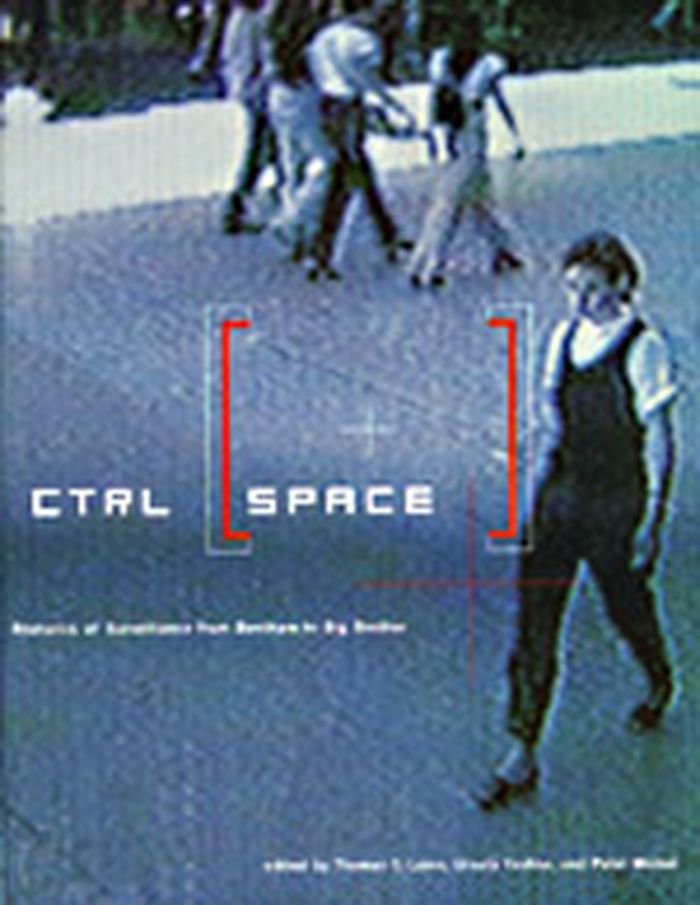
CTRL (space) : rhetorics of surveillance from Bentham to big brother
Actions:
Price:
$63.95
(available to order)
Summary:
This book investigates the state of panoptic art at a time when issues of security and civil liberties are on many people’s minds. Traditional imaging and tracking systems have given way to infinitely more powerful “dataveillance” technologies, as an evolving arsenal of surrogate eyes and ears in our society shifts its focus from military to domestic space. Taking as its point of departure an architectural drawing by Jeremy Bentham that became the model for an entire social regime, CTRL [SPACE] looks at the shifting relationships between design and power, imaging and oppression, from the eighteenth to the twenty-first centuries. From the photographs taken with hidden cameras by Walker Evans and Paul Strand in the early twentieth century to the appropriation of military satellite technology by Marko Peljhan a hundred years later, the works of a wide range of artists have explored the dynamics of watching and being watched. The artists whose panoptical preoccupations are featured include, among others, Sophie Calle, Diller + Scofidio, Dan Graham, Pierre Huyghe, Michael Klier, Rem Koolhaas, Bruce Nauman, Yoko Ono, Thomas Ruff, Julia Scher, Andy Warhol, and Peter Weibel. This book, along with the exhibition it accompanies, is the first state-of-the-art survey of panopticism--in digital culture, architecture, television, video, cinema, painting, photography, conceptual art, installation work, robotics, and satellite imaging.
CTRL (space) : rhetorics of surveillance from Bentham to big brother
Actions:
Price:
$63.95
(available to order)
Summary:
This book investigates the state of panoptic art at a time when issues of security and civil liberties are on many people’s minds. Traditional imaging and tracking systems have given way to infinitely more powerful “dataveillance” technologies, as an evolving arsenal of surrogate eyes and ears in our society shifts its focus from military to domestic space. Taking as its point of departure an architectural drawing by Jeremy Bentham that became the model for an entire social regime, CTRL [SPACE] looks at the shifting relationships between design and power, imaging and oppression, from the eighteenth to the twenty-first centuries. From the photographs taken with hidden cameras by Walker Evans and Paul Strand in the early twentieth century to the appropriation of military satellite technology by Marko Peljhan a hundred years later, the works of a wide range of artists have explored the dynamics of watching and being watched. The artists whose panoptical preoccupations are featured include, among others, Sophie Calle, Diller + Scofidio, Dan Graham, Pierre Huyghe, Michael Klier, Rem Koolhaas, Bruce Nauman, Yoko Ono, Thomas Ruff, Julia Scher, Andy Warhol, and Peter Weibel. This book, along with the exhibition it accompanies, is the first state-of-the-art survey of panopticism--in digital culture, architecture, television, video, cinema, painting, photography, conceptual art, installation work, robotics, and satellite imaging.
Form:
books
books
Publication:
March 2002, Karlsruhe, Germany / Cambridge, Massachusett
March 2002, Karlsruhe, Germany / Cambridge, Massachusett
Subject:
Contemporary Art Monographs
Contemporary Art Monographs


