


143 Results
Form:
books
books
Price:
$36.95
(available to order)
Summary:
By United Nations estimates, 60 percent of the world's population will be urban by 2030. With the increasing speed of urbanization, especially in the developing world, scholars are now rethinking standard concepts and histories of modern cities. "The Spaces of the Modern City" historicizes the contemporary discussion of urbanism, highlighting the local and global breadth(...)
$36.95
(available to order)
Summary:
By United Nations estimates, 60 percent of the world's population will be urban by 2030. With the increasing speed of urbanization, especially in the developing world, scholars are now rethinking standard concepts and histories of modern cities. "The Spaces of the Modern City" historicizes the contemporary discussion of urbanism, highlighting the local and global breadth(...)
Subject:
Urban Theory
Urban Theory
Publication:
February 2008, Princeton, Oxford
February 2008, Princeton, Oxford
Title:
The Spaces of the Modern city : imaginaries, politics, and everyday life
Actions:
Price:
$36.95
(available to order)
Summary:
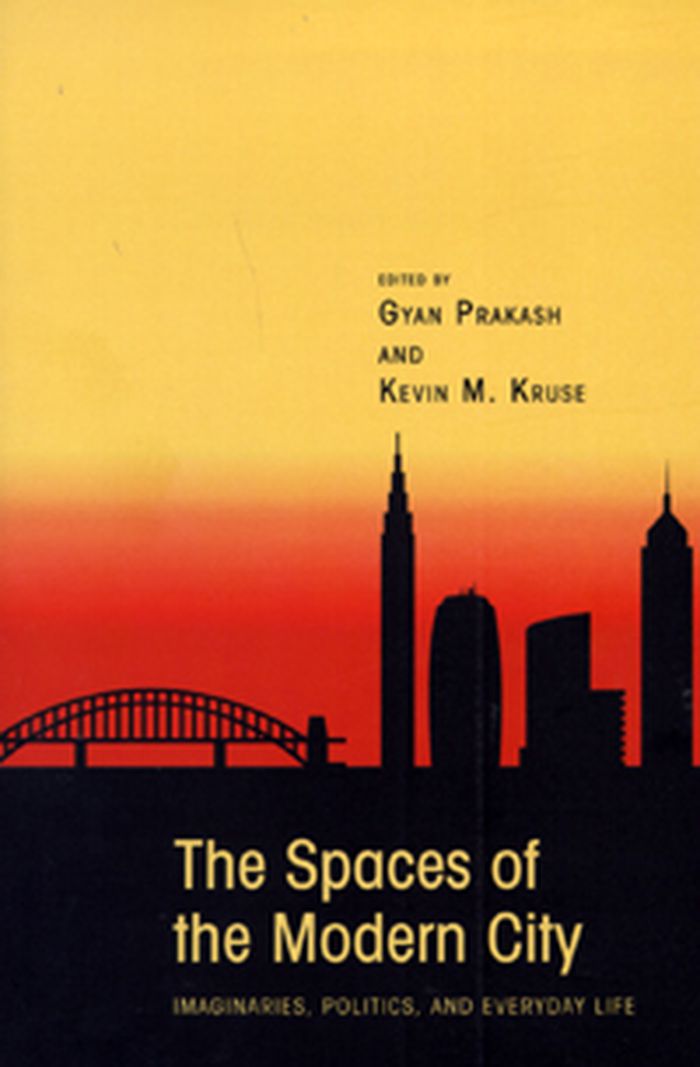
By United Nations estimates, 60 percent of the world's population will be urban by 2030. With the increasing speed of urbanization, especially in the developing world, scholars are now rethinking standard concepts and histories of modern cities. "The Spaces of the Modern City" historicizes the contemporary discussion of urbanism, highlighting the local and global breadth of the city landscape. This interdisciplinary collection examines how the city develops in the interactions of space and imagination. The essays focus on issues such as street design in Vienna, the motion picture industry in Los Angeles, architecture in Marseilles and Algiers, and the kaleidoscopic paradox of post-apartheid Johannesburg. They explore the nature of spatial politics, examining the disparate worlds of eighteenth-century Baghdad, nineteenth-century Morelia, Cold War-era West Berlin, and postwar Los Angeles. They also show the meaning of everyday spaces to urban life, illuminating issues such as crime in metropolitan London, youth culture in Dakar, "memory projects" in Tokyo, and Bombay cinema. Informed by a range of theoretical writings, this collection offers a fresh and truly global perspective on the nature of the modern city. The contributors are Sheila Crane, Belinda Davis, Mamadou Diouf, Philip J. Ethington, David Frisby, Christina M. Jiménez, Dina Rizk Khoury, Ranjani Mazumdar, Frank Mort, Martin Murray, Jordan Sand, and Sarah Schrank.
The Spaces of the Modern city : imaginaries, politics, and everyday life
Actions:
Price:
$36.95
(available to order)
Summary:
By United Nations estimates, 60 percent of the world's population will be urban by 2030. With the increasing speed of urbanization, especially in the developing world, scholars are now rethinking standard concepts and histories of modern cities. "The Spaces of the Modern City" historicizes the contemporary discussion of urbanism, highlighting the local and global breadth of the city landscape. This interdisciplinary collection examines how the city develops in the interactions of space and imagination. The essays focus on issues such as street design in Vienna, the motion picture industry in Los Angeles, architecture in Marseilles and Algiers, and the kaleidoscopic paradox of post-apartheid Johannesburg. They explore the nature of spatial politics, examining the disparate worlds of eighteenth-century Baghdad, nineteenth-century Morelia, Cold War-era West Berlin, and postwar Los Angeles. They also show the meaning of everyday spaces to urban life, illuminating issues such as crime in metropolitan London, youth culture in Dakar, "memory projects" in Tokyo, and Bombay cinema. Informed by a range of theoretical writings, this collection offers a fresh and truly global perspective on the nature of the modern city. The contributors are Sheila Crane, Belinda Davis, Mamadou Diouf, Philip J. Ethington, David Frisby, Christina M. Jiménez, Dina Rizk Khoury, Ranjani Mazumdar, Frank Mort, Martin Murray, Jordan Sand, and Sarah Schrank.
Form:
books
books
Publication:
February 2008, Princeton, Oxford
February 2008, Princeton, Oxford
Subject:
Urban Theory
Urban Theory
Form:
books
books

Actions:
Price:
$22.00
(available to order)
Summary:
Cities participate in the production of meaning by providing places populated with objects for words to refer to. Inscriptions on these objects (labels, billboards, newspapers, graffiti) provide another layer of meaning. And today, the flow of digital information - from one device to another in the urban scene - creates a digital network that also exists in physical(...)
$22.00
(available to order)
Summary:
Cities participate in the production of meaning by providing places populated with objects for words to refer to. Inscriptions on these objects (labels, billboards, newspapers, graffiti) provide another layer of meaning. And today, the flow of digital information - from one device to another in the urban scene - creates a digital network that also exists in physical(...)
Subject:
Architectural Theory
Architectural Theory
Publication:
January 1900, Cambridge, Mass.
January 1900, Cambridge, Mass.
Title:
Placing words : symbols, space and the city
Actions:
Price:
$22.00
(available to order)
Summary:
Cities participate in the production of meaning by providing places populated with objects for words to refer to. Inscriptions on these objects (labels, billboards, newspapers, graffiti) provide another layer of meaning. And today, the flow of digital information - from one device to another in the urban scene - creates a digital network that also exists in physical space. "Placing Words" examines this emerging system of spaces, flows, and practices in a series of short essays - snapshots of the city in the twenty-first century. Mitchell questions the necessity of flashy downtown office towers in an age of corporate web sites. He casts the shocked-and-awed Baghdad as a contemporary Guernica. He describes architectural makeovers throughout history, listing Le Corbusier's Fab Five Points of difference between new and old architecture, and he discusses the architecture of Manolo Blahniks. He pens an open letter to the Secretary of Defense recommending architectural features to include in torture chambers. He compares Baudelaire, the Parisian flaneur, to Spiderman, the Manhattan traceur. He describes the iPod-like galleries of the renovated MoMA and he recognizes the camera phone as the latest step in a process of image mobilization that began when artists stopped painting on walls and began making pictures on small pieces of wood, canvas, or paper. The endless flow of information, he makes clear, is not only more pervasive and efficient than ever, it is also generating new cultural complexities.
Placing words : symbols, space and the city
Actions:
Price:
$22.00
(available to order)
Summary:
Cities participate in the production of meaning by providing places populated with objects for words to refer to. Inscriptions on these objects (labels, billboards, newspapers, graffiti) provide another layer of meaning. And today, the flow of digital information - from one device to another in the urban scene - creates a digital network that also exists in physical space. "Placing Words" examines this emerging system of spaces, flows, and practices in a series of short essays - snapshots of the city in the twenty-first century. Mitchell questions the necessity of flashy downtown office towers in an age of corporate web sites. He casts the shocked-and-awed Baghdad as a contemporary Guernica. He describes architectural makeovers throughout history, listing Le Corbusier's Fab Five Points of difference between new and old architecture, and he discusses the architecture of Manolo Blahniks. He pens an open letter to the Secretary of Defense recommending architectural features to include in torture chambers. He compares Baudelaire, the Parisian flaneur, to Spiderman, the Manhattan traceur. He describes the iPod-like galleries of the renovated MoMA and he recognizes the camera phone as the latest step in a process of image mobilization that began when artists stopped painting on walls and began making pictures on small pieces of wood, canvas, or paper. The endless flow of information, he makes clear, is not only more pervasive and efficient than ever, it is also generating new cultural complexities.
Form:
books
books
Publication:
January 1900, Cambridge, Mass.
January 1900, Cambridge, Mass.
Subject:
Architectural Theory
Architectural Theory
Form:
books
books
Price:
$37.50
(available to order)
Summary:
Although the seemingly apocalyptic scale of the World Trade Center disaster continues to haunt people across the globe, it is only the most recent example of a city tragically wounded. Cities are, in fact, perpetually caught up in cycles of degeneration and renewal. As with the WTC, from time to time these cycles are severely ruptured by a sudden, unpredictable event.(...)
$37.50
(available to order)
Summary:
Although the seemingly apocalyptic scale of the World Trade Center disaster continues to haunt people across the globe, it is only the most recent example of a city tragically wounded. Cities are, in fact, perpetually caught up in cycles of degeneration and renewal. As with the WTC, from time to time these cycles are severely ruptured by a sudden, unpredictable event.(...)
Title:
Wounded cities : destruction and reconstruction in a globalized world
Actions:
Price:
$37.50
(available to order)
Summary:
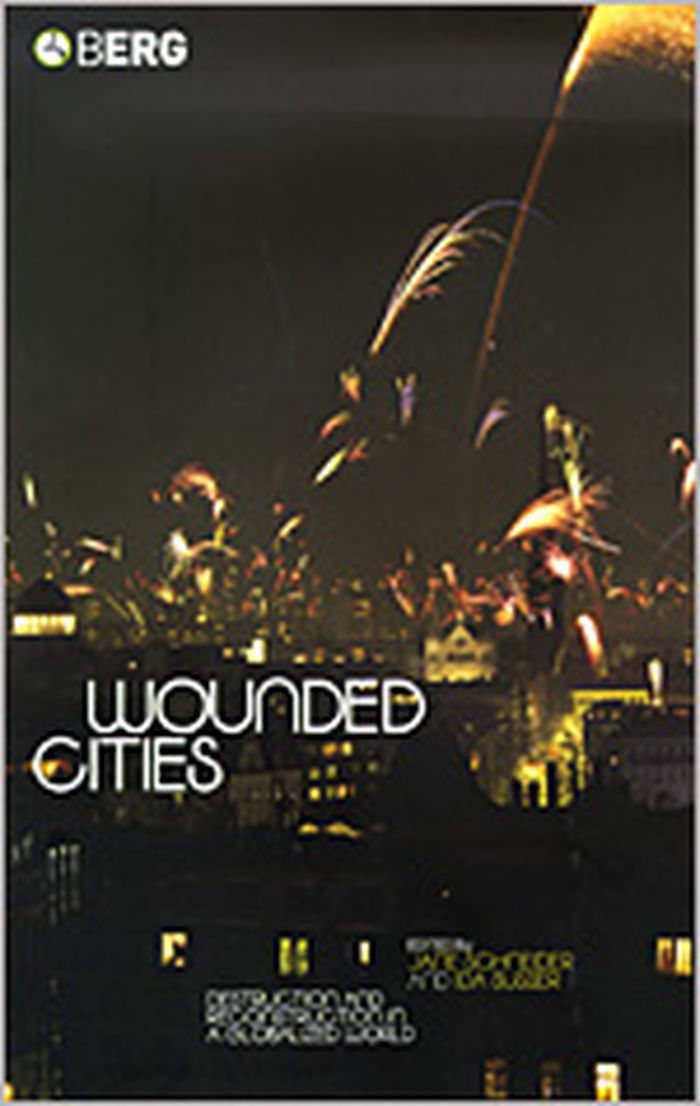
Although the seemingly apocalyptic scale of the World Trade Center disaster continues to haunt people across the globe, it is only the most recent example of a city tragically wounded. Cities are, in fact, perpetually caught up in cycles of degeneration and renewal. As with the WTC, from time to time these cycles are severely ruptured by a sudden, unpredictable event. In the wake of recent terrorist activities, this timely book explores how urban populations are affected by "wounds" inflicted through violence, civil wars, overbuilding, drug trafficking, and the collapse of infrastructures, as well as "natural" disasters such as earthquakes. Mexico City, New York, Beirut, Belfast, Bangkok and Baghdad are just a few examples of cities riddled with problems that undermine, on a daily basis, the quality of urban life. What does it mean for urban dwellers when the infrastructure of a city collapses – transport, communication grids, heat, light, roads, water, and sanitation? What are the effects of foreign investment and huge construction projects on urban populations and how does this change the "look" and character of a city? How does drug trafficking intersect with class, race, and gender, and what impact does it have on vulnerable urban communities? How do political corruption and mafia networks distort the built environment? Drawing on in-depth case studies from across the globe, this book answers these intriguing questions through its rigorous consideration of changing global and national contexts, social movements, and corrosive urban events. Adopting a "grass roots up" approach, it places emphasis on people’s experiences of uneven development and inequality, their engagement with memory in the face of continual change, and the relevance of political activism to bettering their lives. It is especially attentive to the historical interaction of particular cities with wider political and economic forces, as these interactions have shaped local governance over time. Imagining each city as a "body politic", the authors consider its capacity both to mediate local conflict and to broach the healing of wounds.
Wounded cities : destruction and reconstruction in a globalized world
Actions:
Price:
$37.50
(available to order)
Summary:
Although the seemingly apocalyptic scale of the World Trade Center disaster continues to haunt people across the globe, it is only the most recent example of a city tragically wounded. Cities are, in fact, perpetually caught up in cycles of degeneration and renewal. As with the WTC, from time to time these cycles are severely ruptured by a sudden, unpredictable event. In the wake of recent terrorist activities, this timely book explores how urban populations are affected by "wounds" inflicted through violence, civil wars, overbuilding, drug trafficking, and the collapse of infrastructures, as well as "natural" disasters such as earthquakes. Mexico City, New York, Beirut, Belfast, Bangkok and Baghdad are just a few examples of cities riddled with problems that undermine, on a daily basis, the quality of urban life. What does it mean for urban dwellers when the infrastructure of a city collapses – transport, communication grids, heat, light, roads, water, and sanitation? What are the effects of foreign investment and huge construction projects on urban populations and how does this change the "look" and character of a city? How does drug trafficking intersect with class, race, and gender, and what impact does it have on vulnerable urban communities? How do political corruption and mafia networks distort the built environment? Drawing on in-depth case studies from across the globe, this book answers these intriguing questions through its rigorous consideration of changing global and national contexts, social movements, and corrosive urban events. Adopting a "grass roots up" approach, it places emphasis on people’s experiences of uneven development and inequality, their engagement with memory in the face of continual change, and the relevance of political activism to bettering their lives. It is especially attentive to the historical interaction of particular cities with wider political and economic forces, as these interactions have shaped local governance over time. Imagining each city as a "body politic", the authors consider its capacity both to mediate local conflict and to broach the healing of wounds.
Form:
books
books
Publication:
August 2003, Oxford
August 2003, Oxford
Subject:
Urban Theory
Urban Theory


