


163 Results
Form:
books
books
Title:
Mies van der Rohe at work.
Mies van der Rohe at work.
Actions:
Holdings:
Description:
196 pages illustrations 26 x 30 cm
Description:
196 pages illustrations 26 x 30 cm
Author:
Subject:
Publication:
[London] Pall Mall Press [1974]
[London] Pall Mall Press [1974]
Title:
Mies van der Rohe at work.
Actions:
Holdings:
Description:
196 pages illustrations 26 x 30 cm
Mies van der Rohe at work.
Actions:
Holdings:
Description:
196 pages illustrations 26 x 30 cm
Form:
books
books
Publication:
[London] Pall Mall Press [1974]
[London] Pall Mall Press [1974]
Author:
Subject:
Form:
books
books
Price:
$58.95
(available to order)
Summary:
While Mies van der Rohe’s pavilion at the International Exposition in Barcelona in 1929 went unnoticed by most of the visitors to the fairgrounds, contemporary critics enthusiastically hailed it as the most convincing statement of the Modern Age. This book presents 100 selected texts about this much discussed building, written then and now: from the opening speech by(...)
$58.95
(available to order)
Summary:
While Mies van der Rohe’s pavilion at the International Exposition in Barcelona in 1929 went unnoticed by most of the visitors to the fairgrounds, contemporary critics enthusiastically hailed it as the most convincing statement of the Modern Age. This book presents 100 selected texts about this much discussed building, written then and now: from the opening speech by(...)
Title:
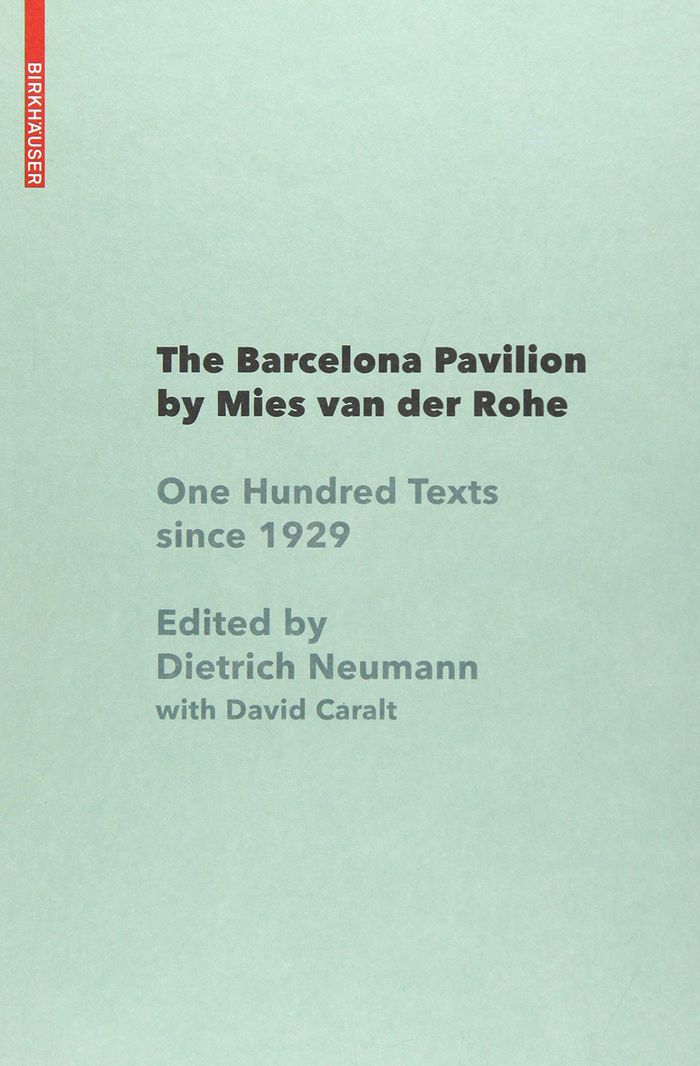
The Barcelona Pavilion by Mies van der Rohe: one hundred texts 1929 - 2019
Actions:
Price:
$58.95
(available to order)
Summary:
While Mies van der Rohe’s pavilion at the International Exposition in Barcelona in 1929 went unnoticed by most of the visitors to the fairgrounds, contemporary critics enthusiastically hailed it as the most convincing statement of the Modern Age. This book presents 100 selected texts about this much discussed building, written then and now: from the opening speech by the Spanish king, to newspaper articles and private letters, voices of contemporary architects, architecture critics and historians, and even a text by artist Ai Weiwei, who created an installation in the outdoor area of the pavilion in 2010.
The Barcelona Pavilion by Mies van der Rohe: one hundred texts 1929 - 2019
Actions:
Price:
$58.95
(available to order)
Summary:
While Mies van der Rohe’s pavilion at the International Exposition in Barcelona in 1929 went unnoticed by most of the visitors to the fairgrounds, contemporary critics enthusiastically hailed it as the most convincing statement of the Modern Age. This book presents 100 selected texts about this much discussed building, written then and now: from the opening speech by the Spanish king, to newspaper articles and private letters, voices of contemporary architects, architecture critics and historians, and even a text by artist Ai Weiwei, who created an installation in the outdoor area of the pavilion in 2010.
Form:
books
books
Publication:
December 2020
December 2020
Subject:
Architecture Monographs
Architecture Monographs
Form:
books
books
Actions:
Holdings:
Description:
239 pages : illustrations (chiefly color), plans (chiefly color) ; 30 cm
Description:
239 pages : illustrations (chiefly color), plans (chiefly color) ; 30 cm
Author:
Subject:
Publication:
Barcelona, Spain : Hoaki Books, S.L., 2021., ©2021
Barcelona, Spain : Hoaki Books, S.L., 2021., ©2021
Title:
Sustainable architecture : contemporary architecture in detail / edited by The Plan ; translators, Kieren Edward Bailey, Mariarosa Cirillo, Stephanie Johnson, Chris Turner.
Actions:
Holdings:
Description:
239 pages : illustrations (chiefly color), plans (chiefly color) ; 30 cm
Sustainable architecture : contemporary architecture in detail / edited by The Plan ; translators, Kieren Edward Bailey, Mariarosa Cirillo, Stephanie Johnson, Chris Turner.
Actions:
Holdings:
Description:
239 pages : illustrations (chiefly color), plans (chiefly color) ; 30 cm
Form:
books
books
Publication:
Barcelona, Spain : Hoaki Books, S.L., 2021., ©2021
Barcelona, Spain : Hoaki Books, S.L., 2021., ©2021
Author:
Subject:
Form:
books
books
Subject:
Publication:
dpr-barcelona Future Architecture Platform 2018
dpr-barcelona Future Architecture Platform 2018
Form:
books
books
Publication:
dpr-barcelona Future Architecture Platform 2018
dpr-barcelona Future Architecture Platform 2018
Subject:
Form:
books
books
Actions:
Subject:
Publication:
dpr-barcelona Future Architecture Platform 2020
dpr-barcelona Future Architecture Platform 2020
Form:
books
books
Publication:
dpr-barcelona Future Architecture Platform 2020
dpr-barcelona Future Architecture Platform 2020
Subject:
Form:
books
books
Actions:
Holdings:
Description:
144 pages : illustrations (some colour) ; 21 cm
Description:
144 pages : illustrations (some colour) ; 21 cm
Author:
Subject:
Publication:
Hudson, NY : Princeton Architectural Press, [2020]
Hudson, NY : Princeton Architectural Press, [2020]
Title:
Paul Rudolph : inspiration and process in architecture / introduction by John Morris Dixon, edited by Eugenia Bell.
Actions:
Holdings:
Description:
144 pages : illustrations (some colour) ; 21 cm
Paul Rudolph : inspiration and process in architecture / introduction by John Morris Dixon, edited by Eugenia Bell.
Actions:
Holdings:
Description:
144 pages : illustrations (some colour) ; 21 cm
Form:
books
books
Publication:
Hudson, NY : Princeton Architectural Press, [2020]
Hudson, NY : Princeton Architectural Press, [2020]
Author:
Subject:
Form:
books
books
Actions:
Holdings:
Description:
253 pages : color illustrations, plans (some color) ; 23 cm
Description:
253 pages : color illustrations, plans (some color) ; 23 cm
Author:
Subject:
Publication:
Barcelona, Spain : Links Books, ©2008.
Barcelona, Spain : Links Books, ©2008.
Title:
Container architecture / author, Jure Kotnik.
Actions:
Holdings:
Description:
253 pages : color illustrations, plans (some color) ; 23 cm
Container architecture / author, Jure Kotnik.
Actions:
Holdings:
Description:
253 pages : color illustrations, plans (some color) ; 23 cm
Form:
books
books
Publication:
Barcelona, Spain : Links Books, ©2008.
Barcelona, Spain : Links Books, ©2008.
Author:
Subject:
Form:
books
books
Actions:
Price:
$78.95
(available to order)
Summary:
The contributors to this volume, devoted entirely to Mies van der Rohe’s Barcelona Pavilion of 1929, address here for the first time the forgotten contexts of the Pavilion’s genesis. Habitually thought of as an abstract, unpolluted, and splendidly isolated building—a precursor of Mies’s American period—the Pavilion is revealed here as a thoroughly European work, perhaps(...)
$78.95
(available to order)
Summary:
The contributors to this volume, devoted entirely to Mies van der Rohe’s Barcelona Pavilion of 1929, address here for the first time the forgotten contexts of the Pavilion’s genesis. Habitually thought of as an abstract, unpolluted, and splendidly isolated building—a precursor of Mies’s American period—the Pavilion is revealed here as a thoroughly European work, perhaps(...)
Title:
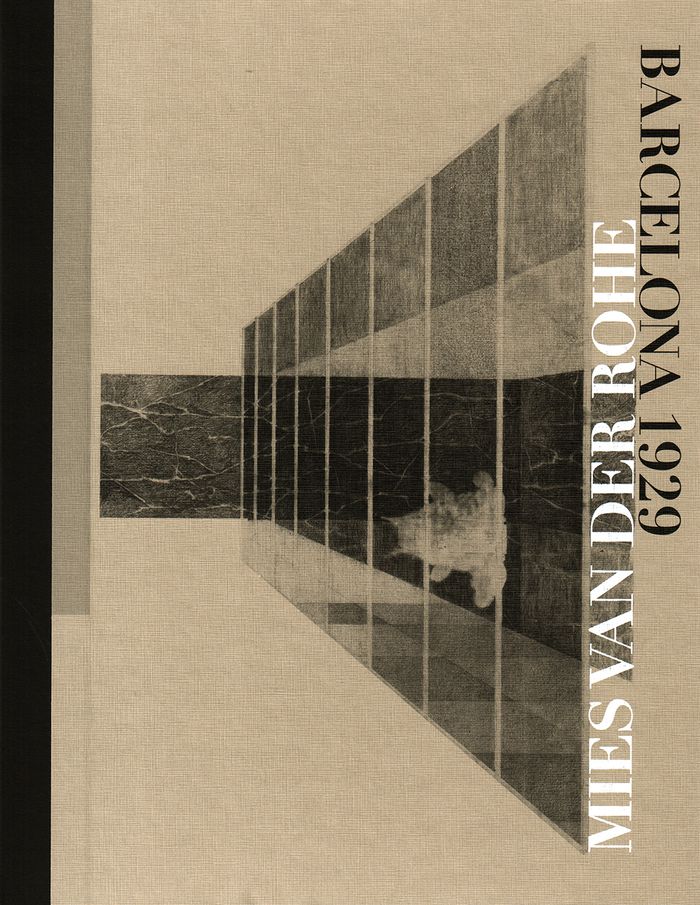
Mies van der Rohe: Barcelona-1929
Actions:
Price:
$78.95
(available to order)
Summary:
The contributors to this volume, devoted entirely to Mies van der Rohe’s Barcelona Pavilion of 1929, address here for the first time the forgotten contexts of the Pavilion’s genesis. Habitually thought of as an abstract, unpolluted, and splendidly isolated building—a precursor of Mies’s American period—the Pavilion is revealed here as a thoroughly European work, perhaps less pristine but more authentic. Mies and Lilly Reich were commissioned to design not only the Pavilion but also more than one hundred thousand square feet of German stands spread throughout the Exposition. By examining that work in addition to the Pavilion itself, the contributors present a far-reaching reinterpretation of the whole. They also explore connections with the mass media, highlight the work’s antecedents and meaning in the history of architecture, and analyze the current pavilion, a reconstruction of the original built in 1986.
Mies van der Rohe: Barcelona-1929
Actions:
Price:
$78.95
(available to order)
Summary:
The contributors to this volume, devoted entirely to Mies van der Rohe’s Barcelona Pavilion of 1929, address here for the first time the forgotten contexts of the Pavilion’s genesis. Habitually thought of as an abstract, unpolluted, and splendidly isolated building—a precursor of Mies’s American period—the Pavilion is revealed here as a thoroughly European work, perhaps less pristine but more authentic. Mies and Lilly Reich were commissioned to design not only the Pavilion but also more than one hundred thousand square feet of German stands spread throughout the Exposition. By examining that work in addition to the Pavilion itself, the contributors present a far-reaching reinterpretation of the whole. They also explore connections with the mass media, highlight the work’s antecedents and meaning in the history of architecture, and analyze the current pavilion, a reconstruction of the original built in 1986.
Form:
books
books
Publication:
April 2018
April 2018
Subject:
Architecture Monographs
Architecture Monographs
Form:
books
books
Price:
$70.00
(available to order)
Summary:
With the temporary exhibition pavilion of the German Reich at the 1929 International Exposition in Barcelona, Mies van der Rohe designed an architectural icon, but also a controversial monument of the way the Weimar Republic portrayed itself. The building is one of the most unusual success stories in the history of architecture: Despite its short existence, its(...)
$70.00
(available to order)
Summary:
With the temporary exhibition pavilion of the German Reich at the 1929 International Exposition in Barcelona, Mies van der Rohe designed an architectural icon, but also a controversial monument of the way the Weimar Republic portrayed itself. The building is one of the most unusual success stories in the history of architecture: Despite its short existence, its(...)
Title:
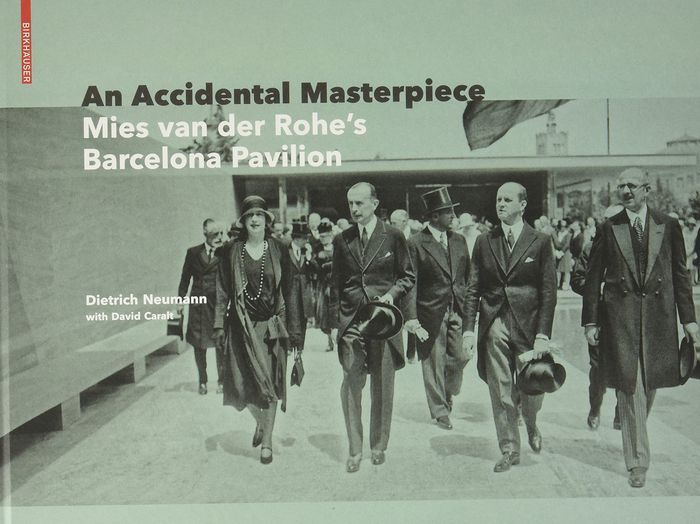
An accidental masterpiece : Mies Van Der Rohe's Barcelona-Pavillion
Actions:
Price:
$70.00
(available to order)
Summary:
With the temporary exhibition pavilion of the German Reich at the 1929 International Exposition in Barcelona, Mies van der Rohe designed an architectural icon, but also a controversial monument of the way the Weimar Republic portrayed itself. The building is one of the most unusual success stories in the history of architecture: Despite its short existence, its reputation grew steadily in the following decades, thanks in part to magnificent photographs. It was soon considered the constructed manifesto of the Modern Age, and its spatial and "ideational" ambitions were called "a milestone of Modern architecture." This comprehensively, broadly researched book portrays the building’s complex history and its political entanglement- up to and including its reconstruction according to van der Rohe’s plans at the original site between 1983 and 1986.
An accidental masterpiece : Mies Van Der Rohe's Barcelona-Pavillion
Actions:
Price:
$70.00
(available to order)
Summary:
With the temporary exhibition pavilion of the German Reich at the 1929 International Exposition in Barcelona, Mies van der Rohe designed an architectural icon, but also a controversial monument of the way the Weimar Republic portrayed itself. The building is one of the most unusual success stories in the history of architecture: Despite its short existence, its reputation grew steadily in the following decades, thanks in part to magnificent photographs. It was soon considered the constructed manifesto of the Modern Age, and its spatial and "ideational" ambitions were called "a milestone of Modern architecture." This comprehensively, broadly researched book portrays the building’s complex history and its political entanglement- up to and including its reconstruction according to van der Rohe’s plans at the original site between 1983 and 1986.
Form:
books
books
Publication:
November 2020
November 2020
Subject:
Architecture Monographs
Architecture Monographs
Form:
books
books
Price:
$46.95
(available to order)
Summary:
This is the first attempt to understand how sculpture and architecture have come to be fused in such an intriguing alliance. Mies van der Rohe's pioneering Barcelona Pavilion (1929) is taken as the point of departure and a leitmotif for the book, which concludes with Dan Graham's hybrid pavilion sculptures of the 1980s and 90s. It identifies the special status which(...)
$46.95
(available to order)
Summary:
This is the first attempt to understand how sculpture and architecture have come to be fused in such an intriguing alliance. Mies van der Rohe's pioneering Barcelona Pavilion (1929) is taken as the point of departure and a leitmotif for the book, which concludes with Dan Graham's hybrid pavilion sculptures of the 1980s and 90s. It identifies the special status which(...)
Title:
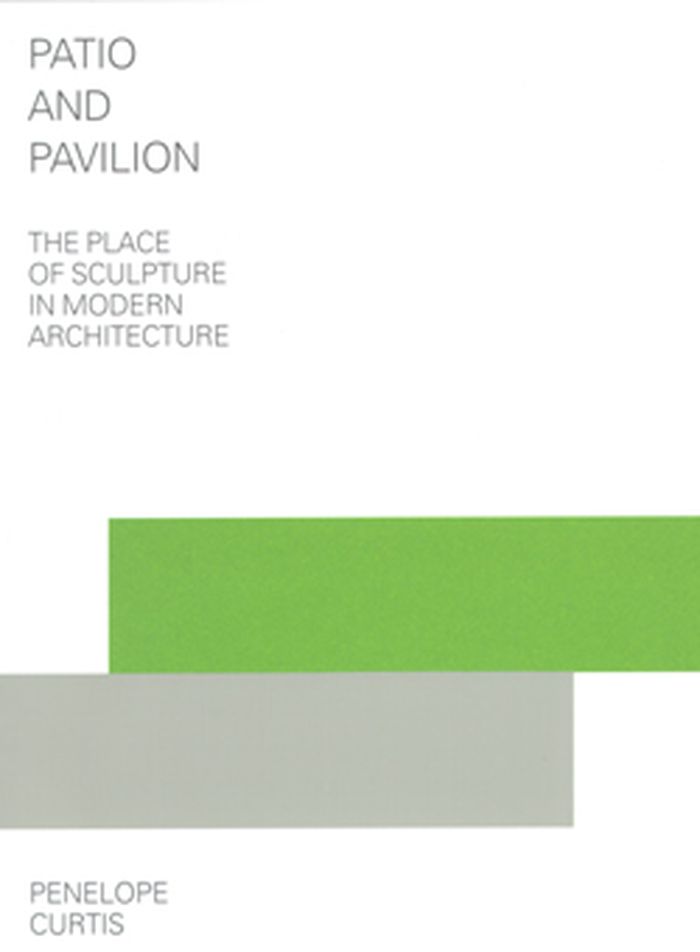
Patio and pavilion: the place of sculpture in modern architecture
Actions:
Price:
$46.95
(available to order)
Summary:
This is the first attempt to understand how sculpture and architecture have come to be fused in such an intriguing alliance. Mies van der Rohe's pioneering Barcelona Pavilion (1929) is taken as the point of departure and a leitmotif for the book, which concludes with Dan Graham's hybrid pavilion sculptures of the 1980s and 90s. It identifies the special status which pre-war architects assigned to sculpture, and examines spaces for display and the independent sculptures which they housed: Eliel Saarinen's Cranbrook Campus, Edoardo Persico's Pavilion at the Milan Triennale, and Mies van der Rohe's celebrated paper project for a Museum for a Small City. Three further case studies show how architecture came to predominate over the sculpture which it housed: Philip Johnson's sculpture court for MoMA, Carlo Scarpa's extension to the Canova Gipsoteca; and the pavilions for Sonsbeek by Gerrit Rietveld and Aldo van Eyck.
Patio and pavilion: the place of sculpture in modern architecture
Actions:
Price:
$46.95
(available to order)
Summary:
This is the first attempt to understand how sculpture and architecture have come to be fused in such an intriguing alliance. Mies van der Rohe's pioneering Barcelona Pavilion (1929) is taken as the point of departure and a leitmotif for the book, which concludes with Dan Graham's hybrid pavilion sculptures of the 1980s and 90s. It identifies the special status which pre-war architects assigned to sculpture, and examines spaces for display and the independent sculptures which they housed: Eliel Saarinen's Cranbrook Campus, Edoardo Persico's Pavilion at the Milan Triennale, and Mies van der Rohe's celebrated paper project for a Museum for a Small City. Three further case studies show how architecture came to predominate over the sculpture which it housed: Philip Johnson's sculpture court for MoMA, Carlo Scarpa's extension to the Canova Gipsoteca; and the pavilions for Sonsbeek by Gerrit Rietveld and Aldo van Eyck.
Form:
books
books
Publication:
April 2008, London, The J. Paul Getty Trust
April 2008, London, The J. Paul Getty Trust
Subject:
Sculpture
Sculpture


